From Darkness

All things being equal, most religions side with light. Let there be light. Enlightenment. Dewali, the festival of lights. The light of heaven is as much the appeal just as the darkness of hell is its antipode. Today, as the autumnal equinox turns us toward the darker half of the year, many religions mark the occasion with some kind of notice of the fading of the light. In the Celtic calendar, so indicative of the old religions of Europe, the recognition of the triumph of the dark comes at Samhain, or Halloween. It is the realization that darkness always follows light, and even the relative carelessness of summer has its limits. We are, half the year, no matter our location on the globe, in darkness.

Despite the habits of some college-age folk, people are not, by nature, nocturnal. Biology has evolved our sense of daylight, color-rich sight as a main means of our survival. Our religions have taken our fear of the dark and valorized our experience of light. Even as the winter solstice rolls around, festivals of many religions add more and more lights to ward off the encroaching night. The equinox is a moment of stability. It is a tenuous moment, occurring only twice a year, when darkness and light hold an uneasy truce. We are poised to move into shorter days, cooler weather, and the apparent loss of life. There is a melancholy to it, beautiful and compelling, if somewhat sad.

As I reflect on the fading of the light, I realize that the southern hemisphere, whence light seems to be rising, is facing the vernal equinox. Their summer is about to begin. Days will lengthen and light will be abundant. Our religious calendars tend to be keyed to the experience of those in the northern hemisphere. Those in the south, following the dictates of Rome, celebrate Christmas in summer and Easter in the fall. After my rainy visit to Indiana, where, on a rainy Thursday evening I saw a rainbow in the east, I awoke to a rainy Friday and saw a rainbow to the west. Fractured light. The light of a fading day broken into its myriad shades and hues. Light is that way. It is always daylight somewhere in the world, but religions focus on the light where we find ourselves at the moment.

IMG_0744


Where No One has Gone Before

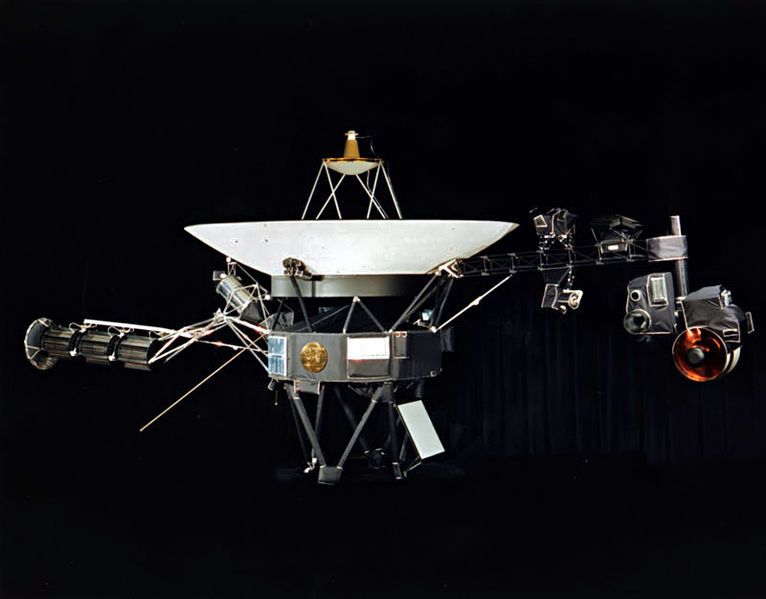
766px-VoyagerI already miss Voyager. Not that I ever met her, but I followed her progress from her youngest days and to when she was a curious youngster flirting with Jupiter and Saturn, to her more circumspect considerations of the outer gas giants. An extension of human curiosity itself, Voyager 1, like the Energizer Bunny, just kept going and going and going, revealing a solar system more beautiful and complex than we earth-bound denizens knew. And she didn’t see God. Ancient people had always supposed, given the human disposition to climbing, that God was somewhere above us. Even the discovery that we live on a globe didn’t really change that—we are still down here, so God must still be up there. Voyager 1 has traveled 11 billion miles with nary a glance at the divine, and she is now the first human-made object, besides perhaps God, to exit the solar system.

Space has always been a personal fascination. I took astronomy both in a Cold War era high school that actually had a working planetarium (in a very moderate-income town, even!), and in college (where there was no planetarium). In unguarded moments I even considered astronomy as a career. I don’t have the “right stuff” to be an astronaut, but I can stare at the sky for hours and wonder. Voyager was out there doing things I’d never do, seeing what I could never see, experiencing the deathly frigidity of cold, cold space. And now she’s leaving home. No one is certain how long she’ll keep serving humanity with new images and information. It will take her a long, long time to reach anywhere else, unless she’s abducted by aliens. In the meantime, all of us down here will age and die, as will the next few generations. Voyager will simply keep going.

Space is beautiful in its solitude. The objects that we’ve glimpsed out there have been full of wonder and mystery. Still, we are told, it is mostly empty space. Or dark matter. Perhaps because of the active volcanos on our own planet we were once told that Hell lay under our feet. There is a fiery world below, to be sure, as science has demonstrated. We call it the mantel rather than Hell, and visits to it are decidedly short-lived rather than eternal, but ancient religious thinkers got the temperature about right. If the analogy holds, Voyager 1 may yet meet some kind of deity out there. She, after all, has escaped the solar system and has slipped into Heaven. In order to explore eternity, we need to boldly let her go where no device has gone before. Although I never really knew her, I already miss Voyager 1 badly.


No Cult

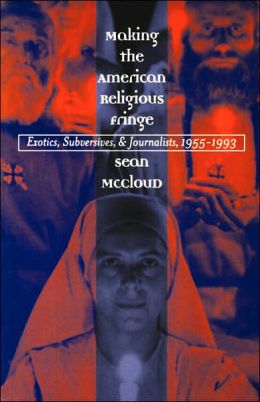
MakingAmericanReligiousFringeThe image of hundreds of lifeless bodies in the jungles of Guyana foregrounded by a metal tub of poisoned Flavor Aid is a difficult one to forget. If it were not for the media, however, most of us never would have heard of Jonestown. The term “cult” was applied to Jim Jones and the People’s Temple, just as the word was increasingly becoming a pejorative term for those with “other” beliefs. Sean McCloud’s Making the American Religious Fringe: Exotics, Subversives, and Journalists, 1955—1993, is a probing study into what makes a religion “mainstream,” versus a “cult.” (I know, too many “scare quotes.”) McCloud considers the role that journalists, as reporting in major news magazines, have had on determining American views of what is normative religion. If, that is, normative religion can be posited at all. It is quite clear, upon reflection, that any religion has some odd beliefs: you can’t wear this or eat that, you have to be at this place on this day, you must shave your head, etc., etc. The question McCloud explores is why some end up being called cults and others do not.

Scholars of religion have abandoned the term cult, for the most part, because of its arbitrariness. The defining markers of “cults” are unclear, and one religion influences another so that a continuum forms from Moses to Moonies. That’s not to say religions are all the same, but it is to say they are not so different either. The declaration of a religion as a cult, if based on belief systems, is tenuous. All religions make claims impossible to verify. Some, very traditional, are also very small in membership. Religions have been fabricated from antiquity to present, and even as I write this new religions are likely being conceived somewhere. McCloud points out that the popular media gave us the distinction between “mainstream” and “cult.” That distinction itself may be more telling than the differences between various groups of believers. It is the language of exclusion—true religions versus false religions. And any more than one religion, if considered seriously, is problematic.

Religions, old and new, large and small, make truth claims. These claims cannot be tested this side of eternity, so they must be taken by faith. The minds of many will be turned toward extreme actions motivated by idiosyncratic understandings of religion today. McCloud shows us that fringe is an integral part of the fabric—religion is woven from the experience of people through the millennia of our existence. And yet we still have no consensus. We have enough experience, however, to know that when one religion unravels another will be woven from the dangling threads. Some will be misguided, although all will claim to have the truth. Until that ultimate truth is definitively known, the best policy seems to be avoiding the temptation to call those of a different faith a “cult,” when “religion” does just as nicely.


Proselytization and Cheese

One of the universals of many childhood lives is Kraft Macaroni and Cheese. If I were the financial sort, I would consider investing in it. As my daughter was moving into college, I noticed other worried-looking parents sitting by their unpacked cars, some with corporate-size boxes of Mac and Cheese shrink-wrapped and ready to tide a son or daughter through difficult times. It is a comfort food, a warm and welcoming friend. Some would say heavenly. Eventually, as adults, we learn to view processed foods with some introspection, moving toward the harsher, but healthier fresh varieties. Secretly, most of us would welcome the opportunity to eat like we did as kids when the consequences were unclear and the guilt was still a plucked apple away.

IMG_0960So at a college organizational fair, my daughter sent me a picture of savvy marketing. Christ the King Lutheran Church giving away boxes of childhood. When that warm, gooey, comforting sensation of childhood hits those whom society is suddenly telling they’re adults, they might have their thoughts turn to the Lutherans. Or the many other faith-based organizations eager to recruit among the young and newly independent. This, of course, is nothing new. Religions have long displayed their benefits to convince those with more earthy things on their minds. The evolution of religion is a fascinating study from the days of enforced loyalty despite belief up to the buyer’s market that religion represents today. How do you convince those who legitimately have a choice? What brand of religion is better than the others? Which is the tastiest variety?

The irony of appealing to the body to gain the commitment of the soul is one religions have had to adopt. There was a time when the way to heaven came through self-denial and spiritual discipline. Earning salvation was hard work. Now if we can get you into the pews on Sunday morning, preferably with your wallet, all is good. It is well with your soul, it is well. I feel for the modern, institutional religions. They were once a powerful force in society and by default people believed that they had a special line to God. Up to the 1950’s, even, this perception was especially strong. People learned, as people will, what they could get away with. Turns out, religion is optional. But eating is not. Not if you’re going to survive in this harsh world. And even if you don’t believe in heaven, we will always believe that in the kitchens of paradise they will be serving Kraft Macaroni and Cheese.


The Goddess

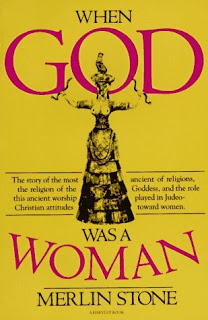
WhenGodWasAWomanMerlin Stone was a sculptor and an artist. I met her only once, a few years back when I was still recognized as an “authority” on ancient goddesses. At one of the many Society of Biblical Literature annual meetings I attended, she came and introduced herself to me, thanking me for my work. Of course I knew who she was—the author of When God Was a Woman, one of the books that was most influential in the revived goddess movement of the 1980s. I have always appreciated those women who have dared to take on the often amorphous patriarchal power structures of society to raise the necessary questions of fairness and justice. Stone was one of those women. Her book, while based on sometimes questionable historiography, nevertheless highlights some of the issues that many male scholars have chosen simply to ignore.

One of the biggest problems faced by authors like Merlin Stone and Marija Gimbutas has been the shifting sands of history. I recently had a deep conversation with a couple of feminist friends of mine where the issue of truth emerged. Truth, as I came to realize, may be a temporary phenomenon. What is true today (the earth is the center of the universe) may not be true tomorrow. It is always contingent. Historians reconstruct a past to which they do not have direct access, and further discoveries will often detail the errors made along the way. When God Was a Woman was originally published in 1978. Some of the historical constructs that Stone uses have since crumbled, but the main point of the book remains firm—women have as real a claim on the divine as do men. (I can’t help but wonder if there is some connection between this and the recent trend towards prominent male thinkers declaring themselves atheists.)

Although I can’t agree with everything Stone wrote, one of her ideas dropped a hook in my brain. In describing the sexuality that apparently attended worship of “the goddess,” she notes how male scholars came to refer, always derisively, to the such religions as “fertility cults.” Turning this phrase about, Stone wonders whether far distant future analysts will look at monotheistic religions that decry sexuality as “sterility cults.” Not that the goddess is all about sex. Religions, however, always weigh in when such spiritually significant activities as sex take place. Men, who are often eager participants, are the ones to construct religions condemning what should be a most obviously sacred human activity.

Merlin Stone may have died just over two years ago, but her book will stand as a yad vashem to half of the human race who have been religiously subjected to the other half. And perhaps there is a goddess out there yet who will bring about liberty and justice for all.


Chronic Religion

The Chronicle of Higher Education publishes a surprisingly large number of articles that touch on religion. I write “surprisingly” somewhat ironically here, since religion and higher education have been inextricably tangled from the very beginning of post-secondary education (and even before). A recent article by Donald L. Drakeman caught my attention because of the tag-line: “A venture capitalist with a doctorate in religion sees the value of a bear market in the disciplines.” In all honesty I have no idea what a venture capitalist is, but I do understand “doctorate in religion.” Dr. Drakeman’s article is entitled “The Highly Useful Crisis in the Humanities.” Drakeman points out that during times of economic hardship the number of students studying the humanities declines. During times of economic prosperity they rise. And he also points out that this can be interpreted in more than one way. Since I’m afraid of venture capitalists, I feared that religion, along with the rest of the humanities, was about to take another trip to the woodshed where it would come back again but might chose to stand rather than sit for a few days.

I was pleasantly surprised to find that Dr. Drakeman suggest that this disparity actually demonstrates the inherent value in the humanities. Tough times lead us to pare down those things that we value so that we might survive. Once a kind of stasis is reached, we try to climb once again. Humanities, in other words (speaking for myself and not Drakeman), represent the pinnacle towards which we strive. When money gets in the way, as it often does, we lose our focus and down comes baby, cradle and all. The humanities are what we live for; money represents pure survival. It is no surprise that those who lose their sense of human fellowship sometimes become survivalists—the individuals who can thrive with no other people around. But what about when the post-apocalyptic stock market recovers? Where will they be without the humanities?

Education, apart from simple survival skills, began as a means of ensuring that the religion that sustained our ancestors through hard times was passed on to the next generation. At times the more literal-minded suppose that means that the religion itself should never change—as if the religion were the point of it all. Although they may not have articulated it so, the ancestors, I believe, had a different goal in mind. Those who are parents already know what it is. We want our children to have it better than we do. If religion helped us, it should help them. It only becomes a problem when the religion itself is mistaken as the goal of the process. Everything evolves. A religion that changes with the needs of society is among the most vital aspects of the humanities, whether or not our forebears would even recognize it as religion at all.

IMG_0316


Have a Blessed Day

“Last stop: New York Port Authority. Have a blessed day.” This secular blessing is sometimes appreciated after the harrowing commute to Manhattan, but I often wonder about its origins. Bus drivers are among the most under-appreciated of employees, I reflected on Labor Day. They are routinely blamed for matters beyond their control: accidents that snarl traffic for hours, mechanical problems, highway construction. Often I only reach the Port Authority Bus Terminal on time two days a week. I always say “thank you” to the driver while exiting, however. I’m very glad it’s not me behind the wheel.

Photo credit: Hudconja

Photo credit: Hudconja

A few months back, however, I noticed that a few of the drivers, while announcing the terminal stop, will add “Have a blessed day.” Last week I sat back further than usual, and heard an interesting exchange as I awaited my turn to exit. The driver had wished us a blessed day (whether we wanted one or not), and several of the passengers, upon disembarking, said back, “Have a blessed day.” I’m sure the driver appreciates it. As a lifelong student of religion, however, I found it fascinating. New York City is a great place to observe religious developments. “Have a blessed day” is innocuous in its lack of specificity. Who is doing the blessing here? At the behest of what intermediary? The driver has literal street cred by making it to the Port Authority unscathed. S/he has the power to bless and to curse. Those of us helpless as passengers are at their mercy. If the driver doesn’t drive, we can’t serve the god Mammon.

I always thought “Have a blessed day” was like an after-sneeze blessing. It is unusual for the sneezer to panegyrize their blesser by wishing good fortune back. Most often they are too busy blowing their noses. Here on the bus the driver might be Muslim (it is clear that some are), Christian, or Hindu. Some are likely among the most deserving of atheists. A blessing laid is a blessing played, however, and many are the passengers who are now returning the favor. We don’t know which deity is being invoked; it may be that it is simply the force that is with us. As we climb off that bus into a city that crushes a human soul as easily as a cockroach, we all could benefit from a blessed day. And I wonder on my way to work whether I’ve just witnessed a new religion being conceived.


Misplaced Zealotry

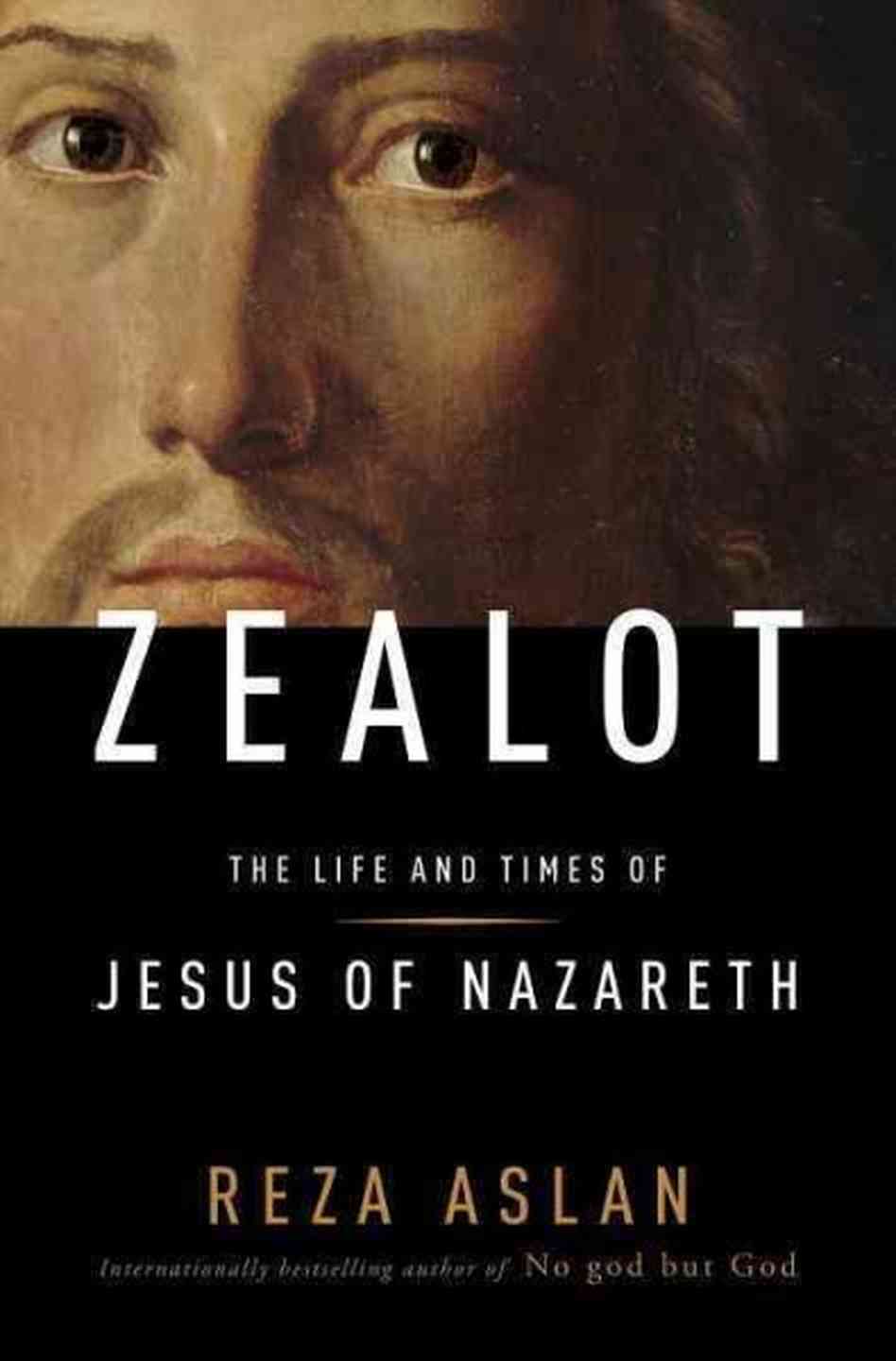
zealotReza Aslan’s book Zealot: The Life and Times of Jesus of Nazareth has brought public interest back to the only begotten, and it’s not even Easter time. A confession: I’ve not read Aslan’s book, so my thoughts here are purely academic. (In a time-honored tradition, I will comment without benefit, or liability, of having actually read.) My interest is, to be frank, less on what Aslan has to say than with how people are reacting to him. Within days of publication, the internet began to swell with news stories about public reaction to Aslan’s treatment. My interest was raised by the Chronicle of Higher Education, where an article by Peter Monaghan quotes Lauren Green of Fox challenging Aslan, “You’re a Muslim, so why did you write a book about the founder of Christianity?” I know this is Fox, and that it is poor form to abuse the idiot, but I couldn’t help but to wonder at such a misguided question.

I would ask, honestly, how many Christians have read a book on Moses or David, or any Hebrew Bible figure, that was written by a Christian. Far fewer hands would be in the air if the same question were framed with the caveat, “written by a Jew.” Every supersessionist religion reserves the right to analyze what has gone before in the light of its own theology. We all know the Moses of Cecil B. DeMille, but how many know the Jeremiah of Abraham Heschel? Do we bother to read what the believer writes about his or her own hero? Would we need to? We already know what the conclusion is going to be. I, for one, am very curious how some Muslims perceive Jesus. That’s always a fascinating question, since Islam, in many parts of the world, superseded Christianity, and has, until recent times, often peacefully coexisted.

Is it not because the author is Muslim that the challenge was issued? How quickly we forget that western civilization (which began in the “Middle East”) owes much to Islam. While Christianity plunged Europe into the Dark Ages, Islamic scholars were rediscovering Aristotle and making genuine progress in science. And yet, we are suspicious of what is discovered by those of “alternative” cultural heritages. I would be more surprised should Muslims show no interest in Jesus. During the past presidential election, many non-Mormons flocked to bookstores (okay, that’s an exaggeration; nobody flocks to bookstores any more, now that Harry Potter is done), eager for books about Latter-Day Saints. Most of them written by non-Mormons. I don’t know what Aslan has to say about Jesus. I suspect some are disconcerted because he bears C. S. Lewis’ code-name for Jesus in the Narnia chronicles, but Aslan may well have something to teach us about ourselves. I, for one, welcome it. How can we ever learn tolerance if we’re unwilling to hear how we appear to others?


Stone Age Henge

At a hotel during a recent excursion, I saw a National Geographic (I think) special on Gobekli Tepe (this is the fate of those of us kept from a daily sustenance of academic listservs bearing the most exciting news). Gobekli Tepe is an archaeological site in Turkey, discovered several years ago by Klaus Schmidt of the German Archaeological Institute. It is an odd site, dating back to some 11,000 years ago, that consists of megalithic (big stone) constructions earlier than Stonehenge or the great pyramids of Egypt, both dating from the Bronze Age, roughly. The complex of odd buildings seems to be religious in function because they bear no practical purpose, and the implications of the site are that our earliest steps towards civilization have been misinterpreted from the beginning. We have been taught that domestication of plants and farm animals led to fixed centers of living. Gobekli Tepe suggests that religion led to settled life and farming came later.

375px-GobeklitepeHeykel

The implications of this are rather startling for those of us who’d been working on the assumption that religion developed as a way of keeping the gods happy after people had the luxury of surplus food brought on by agriculture. It turns out that hunter-gatherers learned to live in settled locations because of religion. That is, religion, instead of being just another component of culture, is what led to culture in the first place. In a climate where the most vocal intellectuals insist that religion must be shut down, chopped off at the roots, and burned in the oven of rationality, we see that none of us would be enjoying our urban lifestyles if religion hadn’t brought us together in the first place.

There is no doubt that religion may be taken to extremes, and that when it is, it becomes dangerous. Religion, however, is no foe to rational thinking. Gobekli Tepe is a site of astounding engineering for Stone-Age hunter-gatherers. Engineering is applied science, and so these people were using their understanding of the world to establish a ritual site for the practice of their religion. They needed to live nearby, although they still had to spend their days chasing animals and gathering foodstuffs along the way. Religion made them realize that life together was a necessity for humanity to thrive. We should take a more balanced view before declaring religion a source of evil only. We may never be able to coax the gods into the laboratory, but that doesn’t mean that they don’t have a very important function for human civilization. If they are taken in reasonable doses, they might even lead to astounding transformations.


Tempting Truth

Recently I was discussing the internet with friends. Real ones, I mean, physically in the room with me. One asked if the internet made conspiracy theories more believable. My response was that the internet has changed truth. That probably seems like a bold statement, I know. Truth, however, is an abstract very difficult to pin down. Science, for starters, does not deliver truth. Science is theoretical, and since it is falsifiable, a scientific theory, while based on facts, is always contingent; it is the best explanation that we have at the moment. Scientists generally know not to conflate this with truth, deferring the latter to the realm of philosophy. The average person probably conceives of truth as that which is literally real. Reality itself is, however, a very slippery concept—quantum physics reveals realities where many are not comfortable going, and which very few truly understand. Truth is a philosophical concept that reflects what humanity collectively accepts to be reality. It is in this sense that the internet has changed truth. It is the Wikipedification of the mind.

People, for as long as they’ve had the luxury to consider abstracts, have struggled with the question of truth. For a few centuries—almost a couple of millennia—in much of the western world, the Bible was considered a source of truth. If it was in there, it was true. The source of authority here was that of a deity who oversaw the writing of the Bible, word by sacred word. When science began to demonstrate that this Weltanschuung was untenable, people realized that truth was a bit more complex. When westerners came into contact with other religions, the complexity grew. Large swaths of humanity believed things completely different from the rest of us. What was the truth? A rear-guard action was often the result. Those who had the Bible had the truth already, and since truth doesn’t change, what more was there to be said.

Truth or dare?

Truth or dare?

The internet is not yet a mature adult, but an entire generation has now grown to a kind of maturity with it. It is the first line of recourse for true information. Who has a phonebook in their house anymore? When is the last time you opened a physical dictionary? Some of us routinely look up Bible verses online, since the internet is the ultimate concordance. Instead of turning to the Bible, or any other source, we turn to the collective “wisdom” of humanity as the measure of what is true. Snopes aside, we plow ahead with what we read online, confident that with all those millions of users, we just can’t be wrong. How strange a concept to unplug and look at the actual reality behind the screen. We might be surprised to learn that there are great and terrible wizards back there after all.


Miracle of the Sun

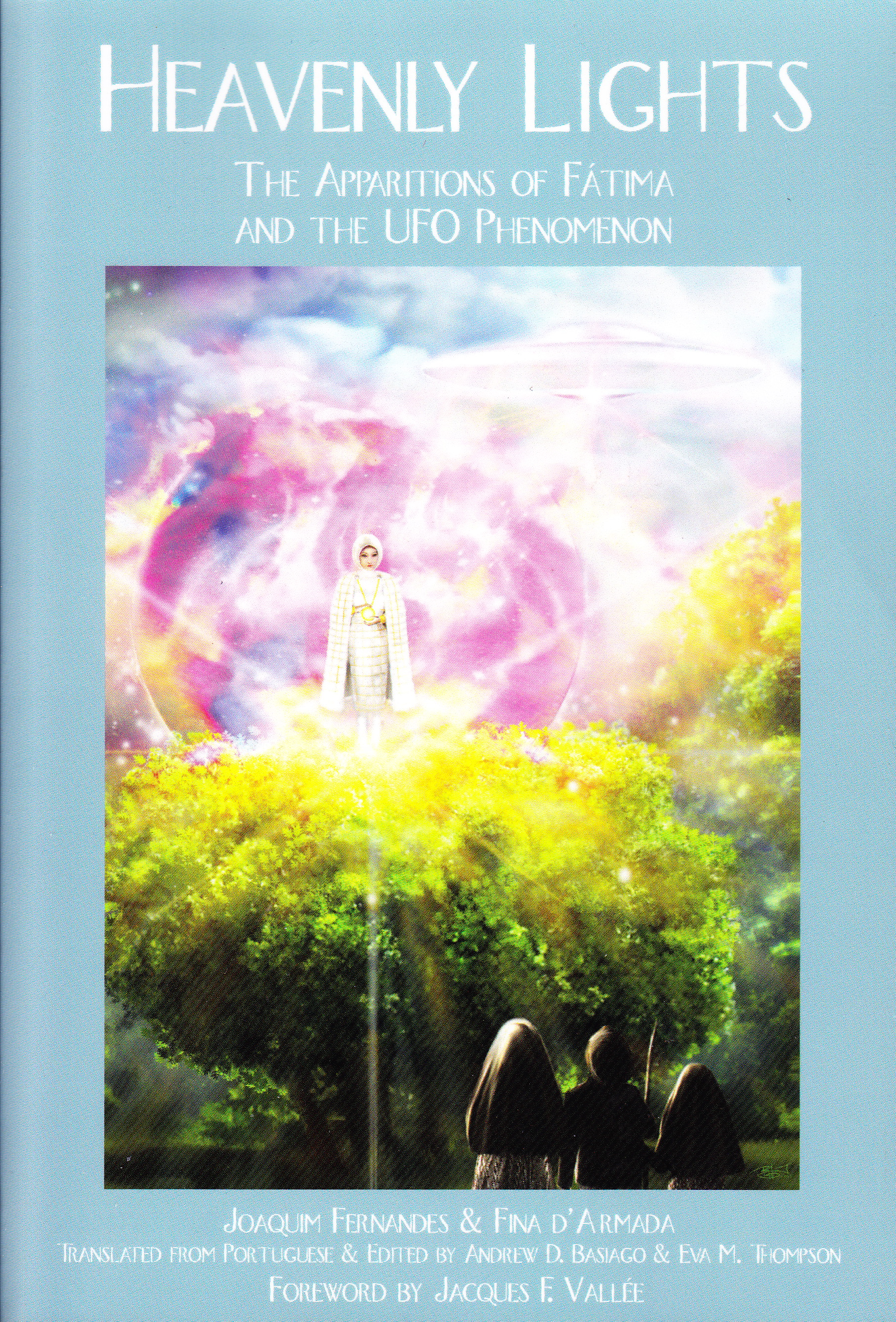
HeavenlyLights The events at Fatima in 1917 have occupied me on this blog before. Perhaps it is because of the haunting quality of the whole thing. Children, two of whom died young, saw a vision and the apparition made a prediction that was held in secret for decades. I’m not sure about you, but these days remembering most things for more than a few nanoseconds is a challenge. What was I saying? Oh yes, the Fatima incident. I recently read a book on Fatima, an unconventional book, but one which makes an intriguing case and raises a valid point. Heavenly Lights: The Apparitions of Fatima and the UFO Phenomenon by Joaquim Fernandes and Fina d’Armada draws compelling parallels between the many UFO reports that are in the public record and the strange events at Fatima, Portugal in the latter days of World War I. Immediately some people will be put off, since we have all been conditioned to ridicule the idea that, although there is almost certainly life in space, it would take the trouble to visit our neck of the universe. In the mantra of conventional thinking: it can’t be done. (Sounds rather like my career. What was I writing about, again?)

The valid point raised by the book is that many people are skeptical of the supernatural. That rules out a miracle for Fatima, since in a materialistic universe, miracles aren’t sanctioned. That leaves us with a crowd of at least 50,000 people, perhaps as many as 70,000, hallucinating at the same time. I mentioned this to a very bright college-aged student recently who responded, “Really? Who would believe that so many people saw the same hallucination at the same time?” That’s the official story, however, in the materialist camp. Just outside the tent are those who believe UFOs are material objects. They are in no way supernatural, just impossible (because nobody can fly fast enough to get here, what with light being so sluggish and all—and even if they could, why would they come here where we’re still pretty much all stuck to the surface of the globe?) I’m afraid I suffer from a surfeit of imagination. I like to wonder what might be possible.

The point Fernandes and d’Armada are making is that rural folk in 1917 had no language to describe what they saw apart from religious language. Interestingly enough, the children were always a bit cagey when saying the woman they saw was the Virgin Mary. They recognized that others said she was, but then, the others didn’t see her. The book does not explore the fact that UFOs and religion have a somewhat long association. That doesn’t make interstellar travelers supernatural, though, just out for cheap thrills. Buzz earth a few times and a century later people will still be talking about it. Some will call it a miracle. Others will say it was a mass delusion. And the rest of us will scratch our heads.


ABCD

Among the sensitive crowd known as biblical scholars, the chronological designations Before the Common Era (BCE) and Common Era (CE) have long been in use. Perhaps it is because, at some point in the recent past, Christian scholars realized that the Hebrew Bible, until then called the Old Testament, was also the Bible of Judaism. All of history, in the European version, is divided by the figure of Jesus, or more properly, Christ. BC stood for Before Christ, after all, and AD not for After Death (which would leave an embarrassing gap of about three decades), but Anno Domini, “in the year of our Lord.” The conventions of BC/AD had become so entrenched that few bothered to linger over the implications, but implications there are. A case might be made, purely on historical grounds, for maintaining BC. There was a time before Jesus—even the Bible agrees on that point. And, again, from an historical view, the worldview of Christianity forever changed the direction of events for at least two millennia thereafter. It still does, if we pay any attention to the posturing of the Religious Right. We have to start counting somewhere, don’t we, to know where we are in time?

Anno Domini is a tad more colonializing. Short for Anno Domini Nostri Iesu Christi, “in the year of our lord Jesus Christ,” those two letters make an assumption that the shared lord of the readers is indeed Jesus. For centuries in Europe and the New World, apart from those Muslims that from time-to-time made their presence felt, and the Jews who were conveniently suppressed, this worked for just about everybody. If you disagreed, after all, you were welcome to return to your backwater homeland and count your time by burning hour candles between your toes, if you wished. For the forward march of history, it was onward, Christian soldiers. AD held a proselytizing imperative. But then Christians began to notice two more ancient religions, Hinduism and Buddhism, both with pedigrees that predate AD. Not that this was a problem from a missiological point of view—we can just convert them, after all—but scholars began to consider the implications.

Photo credit: Isabelle Grosjean ZA, Wikipedia

Photo credit: Isabelle Grosjean ZA, Wikipedia

Time is inexorable. At least in our experience of it. No one stopped to begin counting when Adam and Eve were wandering about Eden, and the simple reference to the lifetime of a monarch seemed sufficient for most pre-capitalist business. What fueled the change to attempt an absolute time was the conviction that it was all about to end soon. Jesus seems to have predicted an imminent apocalypse; “some who are standing here will not taste death,” Luke tells us Jesus said. If that is the case, AD is the final countdown. With a delayed onset. Instead of Anno Domini, it might stand for Announcing Doomsday. And since that clock is still ticking, it might be time to acknowledge that we do indeed live in a Common Era.


Con-Ception

Sometimes you see something so often it become invisible. I pass by a local cemetery every day, and it wasn’t until a friend from out of town came to visit that I knew of the irony of its iron gates. Immaculate Conception Cemetery is one of several Catholic cemeteries in the area. In a deeply symbolic gesture, most cemeteries are designed as the ultimate gated communities. One of the great thrills for the young is to hang out in graveyards at night to test their mettle and for boys to impress the girls and each other with their bravery. But this can lead to vandalism issues. I remember how distressed I was, upon visiting a cemetery in upstate New York on a genealogical trip, to find a family marker for several of my ancestors heartlessly toppled over. I wrote to the cemetery custodian (people still used letters in those days), and the next time I visited, it was, to my utter relief, repaired. Part of my past had been restored.

None of this, however, was what my friend pointed out. When the gates to the Immaculate Conception Cemetery are opened, the left hand gate reads, “Immaculate Con.” My curiosity aroused, I walked over the next morning to look. Indeed, “Immaculate Con” standing just beneath the cross. The right hand gate, cross-less, reads “ception Cemetery.” Without treading the road to Inception, I stood before the openly inviting gates with some wonder. Is there something deeper to this Immaculate Con? Is there something the church wants to tell us? Were the iron-mongers insinuating something covert? Or is it just the giddy over-imagination of yet another overstimulated religionist?

DSCN3298

Surely this is just the case of pragmatic spacing and pacing. The dead lie here in faith that they are counted among the chosen. Across town is a cemetery where, I noticed some years before, one half contains headstones facing east and another half has headstones facing west. Those facing east are inscribed with Roman letters, those toward the west with Hebrew. The Jewish and Christian dead lie next to each other, facing opposite directions.

Cemeteries say, despite their silence, volumes about what we believe. We put our dead out of our midst, but our cities grow and consume our necropoli, forcing us to face our beliefs yet once again. Do our deepest hopes and fears, tied so intimately with our mortality, make us who we are? We will all face death at some time. When we face the iron gates before the pearly ones, what will we see? If the gates are open, it might be that we’ll read, with our undead eyes, “Immaculate Con.”


Continental Religion

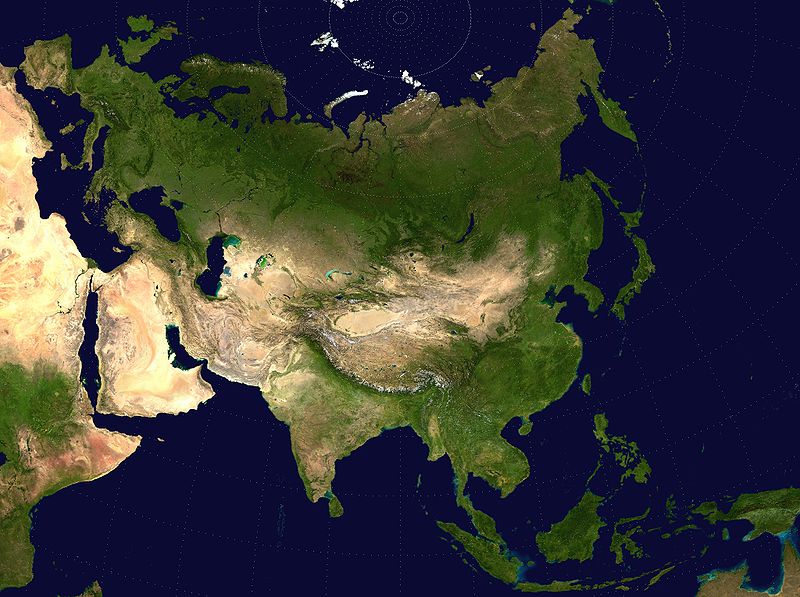
In the course of my duties as an editor of religious studies, I was pondering the origins of the world’s major religions. Now, agreeing on what the major religions are is an exercise fraught with political incorrectness. What does “major” mean, after all? In any case, when we count in terms of numbers, there are more Christians, at the moment, than any other single religion. They are followed by Muslims and Hindus. So far there is little upon which to disagree, at least according to self-professed affiliations. Buddhists are usually counted as the next largest group, followed by Sikhs. When religionists mention “the big five,” however, they usually mean Judaism, Christianity, Islam, Hinduism and Buddhism. There are likely far more followers of traditional Chinese folk religion, perhaps mixed with Confucianism and Taoism, than most accountings record—such beliefs aren’t neatly categorized. Jains make up a sizable population, and Shinto is often classed in with all those religions of the far east. Many of the more modern religions, such as Mormonism and Jehovah’s Witnesses, sprang from Christianity, and so can safely be classed as a form of that faith.

What occurred to me that day was that all the major religions of the present world began in Asia. Judaism and Christianity, with all their numerous progeny, started in Israel or Palestine. Islam, as we all know, began in Arabia. Hinduism, Buddhism, Sikhism, and Jainism all have their origins in India, the big winner for the seed-bed of religions. Traditional Chinese religions and Shinto trace themselves to the far east. Yes, there are indigenous religions throughout the world. Native American and African religions are not to be discounted, yet they never quite attain the level of public awareness to be qualified as “major” religions. In this spiritual accounting, “major” has nothing to do with importance. For the religions with the largest followings we must turn our eyes to the one-stop continent, Asia.

Where major religions begin

Where major religions begin

Considering this, the obvious question is why. Why Asia? Civilization itself began in Asia, and one of the marks of a civilized society, at least until the day of the New Atheists, has been religion. Religion may be abused, as might any human innovation, but it has also been a harbinger of a more civil world. Not only fear of the divine, but also a sense of gratitude toward whatever forces might be greater than humanity, allowing us to survive for another season, or through another storm. Even in the world of science, religion has been a motivator. Gregor Mendel, the scientist who gave us genetics, was a monk experimenting in a monastery. Sir Isaac Newton was an occultist. Francis Collins is an evangelical Christian. Religion is at least as old as civilization. Its forms may be morphing, but, I suspect something our Asian forebears knew: religion will never truly go away.


Mr. Hubbard’s Legacy

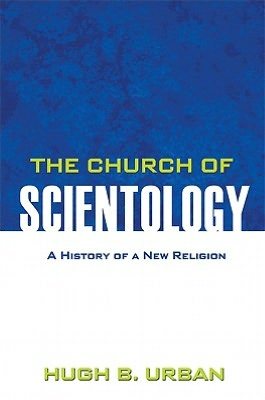
churchofscientology As a child just discovering the joys of reading in the early 1970s, I found science fiction captivating. We were poor, and our town had no library, so I’d buy my books on Saturday trips to Goodwill. In other words, you take what you can get. I recall buying a book by a guy named L. Ron Hubbard. I don’t remember the title or the story, but I recall my surprise when, as a religion major some years later, I learned that this same sci-fi author had started a new religion. Scientology was not something you’d likely encounter in a poverty-stricken, sub-Appalachian town in rural Pennsylvania, and with no Internet it wasn’t so easy to learn about such things even if you had. We did have TV, though, and we watched Welcome Back Kotter (Risky Business was a little too risky). When I discovered that John Travolta (“Vinnie” as we thought of him) was a Scientologist, I was curious. But only to a degree. When I first taught World Religions and spent a few years researching the Scopes Trial for a book I never had the chance to write, I became very interested in American religions. They don’t come much more American than Scientology (and Latter-Day Saints).

As soon as Hugh B. Urban’s book The Church of Scientology: A History of a New Religion appeared, it immediately went onto my reading list. Like most interested laity, I’d found it difficult to trust much of what I’d read on the Church of Scientology from media sources. Now I had a reliable guide! Even better, Urban frames his study around a question that pervades this blog: who gets to decide what is a religion? As Urban deftly points out, it is odd that government agencies are often those tasked with a job more fitting for those of us who’ve studied religion with the rigor that a physicist devotes to quarks and neutrinos. Some of us have parsed religious texts to bare bones and then dug up the skeletons beneath and examined their ossified remains as well. The world doesn’t take religion studies too seriously, however.

Urban’s book, well written and solidly researched, maintains that rarest of academic feats: objectivity. When approaching a religion, particularly a controversial one, emotions are easily engaged and objectivity is challenged. While confessing that he isn’t a Scientologist, Urban lets the historical facts speak for themselves. He doesn’t try to belittle those he studies, but he doesn’t coddle either. Reading his fascinating account, many questions are raised about the rights of religions and the role that secrecy plays. And we know that Urban is only skating across the surface of a deep and mysterious pond here. Sitting in my room with a yellowed, used copy of some L. Ron Hubbard pulp fiction story in my hands, I would’ve never guessed, as a child, what I was really holding.