Random Science

Our world is defined by science. Empirical method demonstrates again and again and again that physical properties follow the same tired pattern without any divine intervention. Saturday was Rutgers Day. Instead of our usual visit to College Avenue to sample French cheeses, we went to the Busch Campus of science and engineering. There we were treated to a 90-minute physics lesson that consisted mostly of demonstrations for the kids with things blowing up, glowing, and being broken after being dipped in liquid nitrogen. Outside the building we watched a chaos pendulum which a grad student explained never followed a predictable pattern. Back in the day when I was subjected to religious rules stricter than any laws of physics at Nashotah House, I used to read about chaos theory. It is the most biblical of scientific ideas. As anyone who’s watched Jurassic Park knows, it means that ultimate predictability is futile. Well, there’s more to it than that, but I’m merely an amateur.

Returning home, I read an interview with Matthew Hutson, about his new book The 7 Laws of Magical Thinking: How Irrational Beliefs Keep Us Happy, Healthy, and Sane. It is now on my wish-list, but I haven’t read it yet. Despite the fact that Hutson is an atheist, he recognizes that magical thinking is both healthy and unavoidable. A door creeps open for the scholar of religion here. We are able to see that non-rational thought is human, so very human. We don’t often think about how driven we are by our emotions. When we see a friend we ask, “what do you feel like doing today?”, not, “what do you think like doing?”. Visiting someone recovering from hard times we ask how s/he is feeling, not thinking. Emotion is, after all, built on the root of “motion”—it is our motivating factor. Seldom is it scientific.

Not to demean science. I have read science books and magazines on my own since I was a teenager. The truths that have been revealed through science are endlessly fascinating and pragmatic. They work in a way religions seldom do. Nevertheless, I became a scholar of ancient religions, studying them scientifically. In the Middle Ages it was said that philosophy was the handmaid to theology. Truth was revealed, not discovered. Reason, thankfully, began to show the way forward. The epithet Dark Ages gained currency for a reason. Science is our means of comprehending our universe, and yet, superstition is hardwired into our brains. I am glad for the scientific worldview even when the chaos pendulum still swings crazily, unpredictably before me. Seldom do those in my field get to consider themselves Renaissance women and men. The pendulum swings where it will.
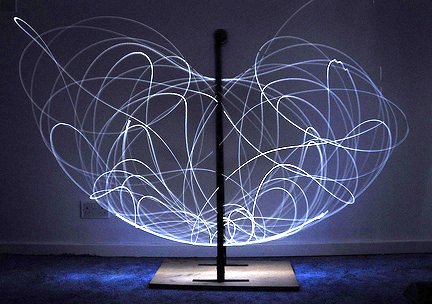
George Ioannidis' chaos pendulum
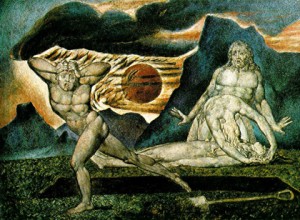
Razzing Cain

Generations of literalists who’ve had their eyes opened by reading what the Bible actually says have stumbled over Cain. His murder of Abel is fine—predictable even. The problem is what happens after that. Since he has murdered his brother, the only other human born so far, Cain seems prematurely concerned about “every one that findeth” him killing him. Seems unlikely that Eve, or even Adam, would like to kill the only surviving child they have. Yet God puts a mark on Cain. Presumably his parents would recognize him, so why is Cain literally a marked man? Rather than Omega Man survival techniques, Cain focuses his attention on kick-starting his love life.

Cain’s wife immediately raises the issue of where the girl comes from. Those who like to call themselves literalists have to back-peddle a little and suggest that since, according to Genesis 5 Adam and Eve had other children, this must be where she derives. Of course, she would in such a scenario, be his sister. Extraordinary circumstances call for extreme measures, but even so, literally, there are no other people yet. Cain is old enough to kill his brother and the next child born, according to the narrative, is Seth. Seth is explicitly a replacement for Abel, and really he doesn’t do Cain any favors in finding a wife. The story here simply slips out of character and gives us a world already partially populated.

As I was tweeting Genesis 4, it occurred to me that immediately after marrying, Cain builds a city. Cities only sprang into existence to allow for mutual protection with the diversification of labor, following on from the agricultural revolution. One of the main characteristics of cities is population. Genesis 4 has only Adam, Eve, Cain, his wife, and Enoch. It may be the smallest city in history since the entire human race could have easily fit into one modest house.

The stories of Genesis are etiologies—tales of origins that have no ties to historical incidents. Cain represents the urbanites, the city dwellers who will always somehow find ways of irritating God. In our urban culture where most people are born in towns or cities, we have lost touch with the life of the nomadic pastoralist. We are, however, merely following the literal path that the Bible lays out for us. As we shall shortly see, the children of Cain and Seth are the same.

Cain just can't figure it out


Fighting Jesus

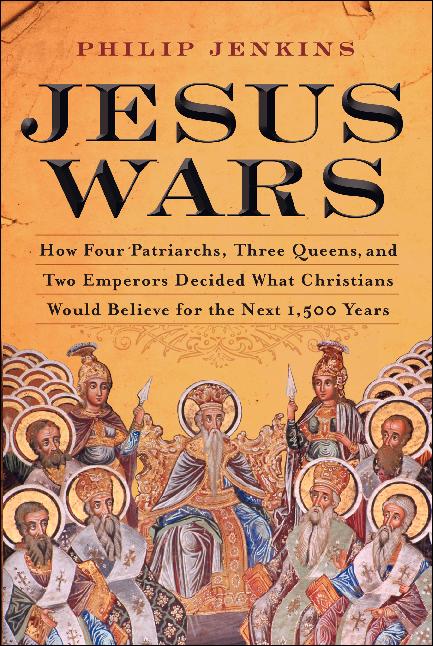
Jesus Wars, by Philip Jenkins, accomplished something no other book has ever done for me—it actually made the doctrinal debates of Late Antiquity interesting. An historian of religion with wide interests, Jenkins produces fascinating books on what might appear to be esoteric aspects of religious life. I remember yawning through theology classes where we learned of crusty, if utterly convicted, monks and bishops arguing over single prepositions in their efforts to define exactly who Jesus might have been. When Jenkins turns his attention to this dusty, unwashed phase of Christianity’s gamy early years, new avenues on regulated belief structures open the way to understanding just how little most believers know of their own traditions. On its way to feel-good evangelicalism, Christianity frequently paused along the way to brutally murder some of its own for disagreeing about whether Jesus shared the same essence as his dad.

Today many Christians are taught by their clergy that their faith differs little from that of the earliest Christians. All who are taught this should be compelled to read Jesus Wars in order to get a grip on what really happened. From the very beginning Christianity was deeply divided about who was truly a follower of Christ and who was not. Even within a generation of the death of Jesus his various groups of followers could find little that they all agreed upon. As Jenkins demonstrates, over the next few centuries that sad history was worked out with extreme cruelty and cudgels and swords. The side with strongest force of arms got to decide on doctrine. Nor did matters improve with the Protestant Reformation. Many Reformers lapsed into what would have found them tied to a stake for heresy, had they been fortunate enough to have been born in the early centuries of “the Christian Era.”

The one figure that seems to have been lost during the Jesus Wars was Jesus of Nazareth. Instead, human constructions of who Jesus might have been became the source of great suffering. Bishops beating bishops to death, saints having women murdered, monks forming an unwashed militia—it’s all here along with the debate over how many angels might dance on the head of a pin. Jenkins does an excellent job of demonstrating that what is now known as “orthodox” Christianity was often a matter of political accident. In the case of Theodosius II, the future of Christianity literally rode on the horse that stumbled, tossing the emperor to his death. No doubt, there will be those of one or another brand of Christianity who will see the divine will behind the ultimate outcome. That outcome, however, will always insist that all others are wrong. For those seeking a bit of balance, Jenkins will make enlightening reading. For others it may give the lie to doctrines made what they are by mere mortals. In any case, the words attributed to Jesus about loving your neighbors and enemies will nowhere be found amid the debates of who he might have really been.


Divine Checkmate

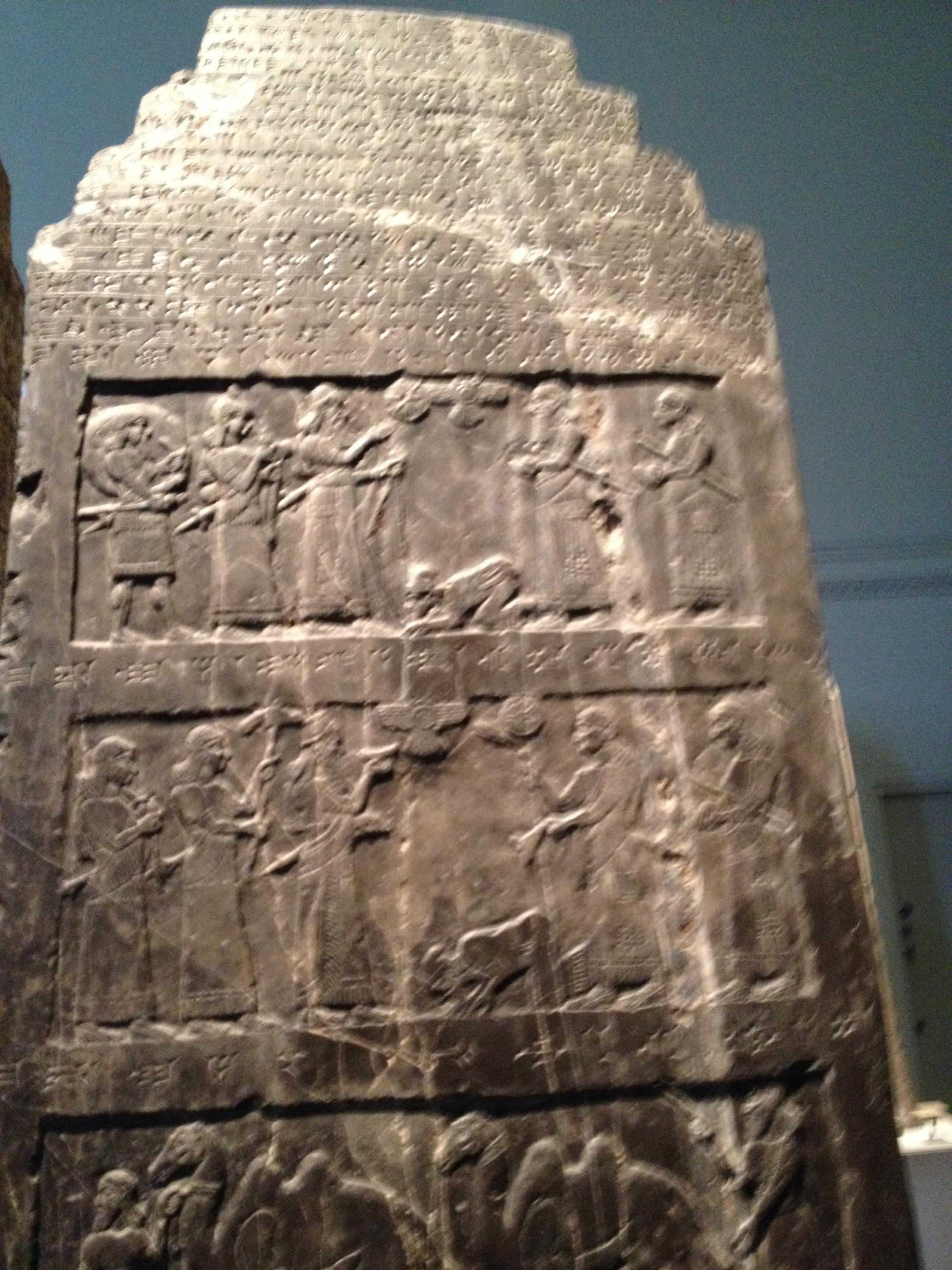
The first time I met Jehu I did not recognize him. When I first visited the British Museum a couple of decades ago I hadn’t had the benefit of teaching students long enough to realize the importance of the Black Obelisk of Shalmaneser III. But then, who really does? The obelisk, one of many artifacts essential to understanding the Bible in its context, contains the only known image of an Israelite king from a contemporaneous period. Jehu is here mistakenly considered the “son of Omri,” but is correctly identified as the king of Israel. He is bowing in tribute to a foreign king, a position in which no monarch likes to find himself. Before leaving the British Museum this time around I made sure to include him on my list of ancient people to meet.

The Bible contains far less history than we are accustomed to think, so when we find a case of convergence where Assyrian and Israelite agree, mostly, it is worth pausing to consider. Assyrian interests can only in the most abstruse way be considered religious; ancient peoples lived in a world where gods were both ubiquitous and largely irrelevant to daily life. Irrelevant in the sense that probably most people only tried to access a god’s pity when a time of trouble arose—priests existed to keep the deities happy on a daily basis. Citizens supported this system with taxes. How reluctantly we can only guess.

We have no reason to suppose that Israelites were more religious than the rest. Eventually, after the Assyrian and Babylonian conquests, they came to see their religion in terms of monotheism. Still, the work of keeping Yahweh happy devolved on the priests, with the backing of the king. The king was God’s representative on earth. In this sense the only surviving image of a king of Israel, showing him bowed before the unflinching might of the Assyrians, becomes an unexpected paradigm. Both kings were pawns of the gods, and at the end of the day one stands regally and the other bows in utter submission.


Pharaohs of Stonehenge

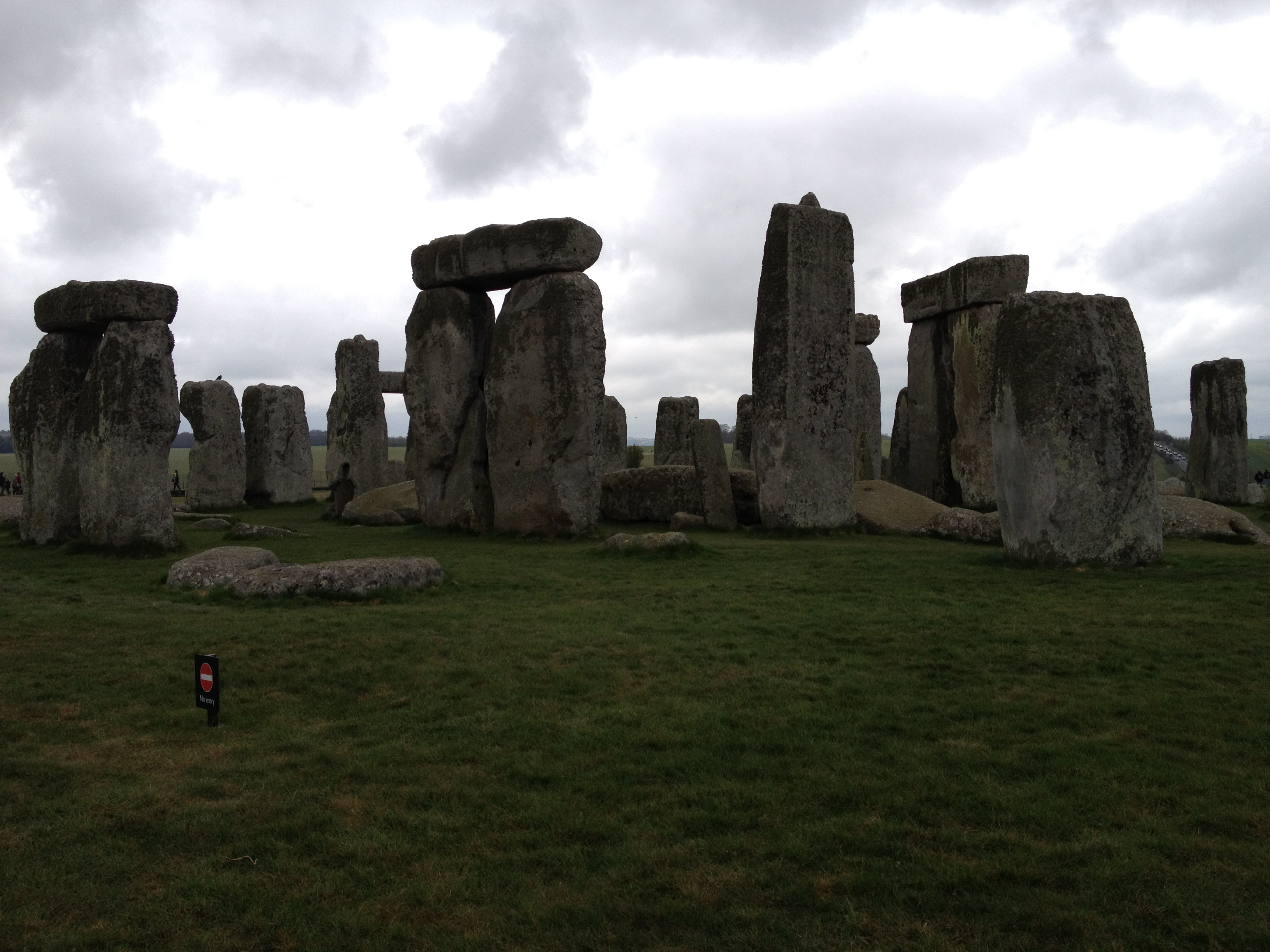
Stonehenge on Easter Sunday is a remarkably popular place. Tourists from all over the world crowd the pathway around those ancient stones as if they hide some arcane secret in their tumbled, massive form. Stonehenge may be the most iconic location in Britain, surpassing even such modern structures as Westminster Abbey and St. Paul’s Cathedral. Far pre-dating the art of writing, the purpose and nature of Stonehenge involve considerable speculation, but given the unquestionably costly years of labor required to plan, dig, transport, and align the monument, it stands to reason that it must have been religious in nature. One of the standard—perhaps even hackneyed—critiques of archaeological interpretation proves true in this case: if you can find no sensible reason for it, it must be religious.

The main phase of Stonehenge, the one that incorporates the iconic monoliths instantly recognizable today, came under construction some six hundred years after the pyramids of Egypt. In the case of the latter we know their language and we know the motivation behind the structures. More than just buildings to demonstrate the power of the king, they were celestially aligned portals to the afterlife. Although the Egyptians had no word for religion, the pyramids were as religious as the great temples that would soon surpass them in the energy consumption of the empire. In England of the time, we know no names, nor even an accurate assessment of the “nationality” of the inhabitants. Even nations, as we know them, did not yet exist. The builders of Stonehenge surely had something close to our concept of religion in mind. Otherwise, like the great cathedrals of millennia later, it would have been simply a waste of time and resources.

Wiltshire Downs on the Salisbury Plains is studded with ancient locations of significance. On the near horizon, among the eternal green of the English countryside, are dozens of barrows where people of unknown significance are buried. In that respect Stonehenge is emblematic of the individual struggle for eternal recognition. The name Menkaure stirs instant recognition among few. His pyramids stand as eternal monuments to a decidedly faded greatness. Stonehenge and its environs hold the remains of unknown numbers of unknown nationality bearing unknown names. It symbolizes the fate of us all. Yet on Easter, many believers in resurrection crowd in and gaze in awe at a pagan monument to human striving that no one truly understands.


Contextual Criticism

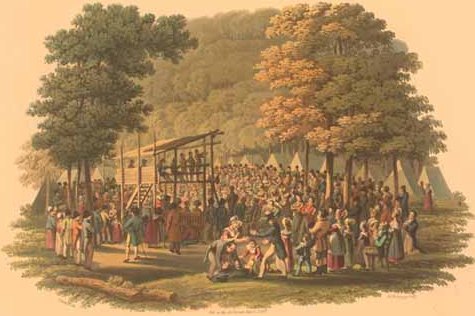
As I was reading Brian Pavlac’s Witch Hunts in the Western World, I learned about klikushi, or “shriekers.” These were Russian “witches” who appear as early as the seventeenth century and who are characterized by screaming, “wailing, barking, and writhing during worship services” (184). In that day this was taken to be a sign of witchcraft and women were arrested and tried for it. Fast forward a century or two. In the wilds of Kentucky what is generally called the Second Great Awakening was taking place. Manifestations of the Holy Spirit were, well, wailing, barking, and writhing, significantly, during worship services. These “signs” triggered the beginning of the Pentecostal movement, today one of the largest sects of Christianity. If the exact same behavior had taken place in a different context, the coverts would’ve been convicts.

It is safe to say that psychological explanations may be found for the bizarre activities of people living under a great deal of stress. No supernatural agency is required for glossolalia, spontaneous dancing, or canine vocalizations. If you look closely you’ll probably find any combination of the three in secular contexts during an average stroll through Manhattan. In a haunted country full of tales of the devil, they will be attributed to witchcraft. In a tent-meeting revival under the influence of an emphatic preacher, they will be called signs of the spirit.

Religions like to teach that they are universal, but in fact they are highly contextualized. What I used to tell my students about words applies also to acts—the meaning depends on the context. Whether somebody getting up off their ass is vulgar or merely a statement of fact depends on where the person is sitting. Religions are often rose-colored glasses, casting events in the shades we prefer to see. They are ways of interpreting the world around us and speculating on what, if anything, is outside our apparently closed system. There’s a lesson here to be learned by all. One person’s Monday may be another’s Thursday, but there’s no need for anyone to be crucified if they do it differently. Wouldn’t the world be a better place if we only believed that?

It's all a matter of perspective.


Divine Monsters

Monstrosity and religiosity are sacred siblings. Both are focused on that which is outside—the Other. Now, I have to confess being a bit rusty in my philosophy reading, and I sometimes wonder how I made it through three degrees without ever really encountering post-modernism in all its complexity. Reading Richard Kearney’s Strangers, Gods and Monsters (Routledge, 2003) was therefore a challenge. Like many of those raised in an uncompromising religion, I am innately attracted to monsters. Maybe it was the vivid images of Hell and its denizens; one of the earliest nightmares that I remember was of being dragged to Hell. Some authors suggest Revelation gave Christianity its monsters, but, as Kearney suggests, the connection goes back much, much further.

We fear what we embrace. It is the old division of sacred and profane—a line that has blurred considerably over time—that gives us our monsters on a separate plate from our deities. Otherness contains within itself both bane and blessing. People fear that which differs from them, a fact demonstrated every day by racism, sexism, and homophobia. At the same time, many look to the ultimate alterity for salvation from the mundane. God is just as “other,” more so even, than any human or monster is. Any creature/creator beyond the reach of our feeble grasp should be considered dangerous in our view of the world. And yet the further we get from the middle, the more the ends seem to come together in an ouroboros of divine monstrosity. Those who read Kearney need to be prepared.

While not taking on monsters as I expected he would, Kearney does address them with a sensitivity appropriate to the recognition of the closeness to deity. Nowhere is this clearer than in his superb chapter on melancholy. Being caught between the monstrous and the sublime, the melancholic learns to cope with a disinterested sadness that at times borders on insanity, yet produces flashes of light often more brilliant than those who think their way through problems. This is the affliction of Hamlet who stands on the cusp of being or non-being. For all who believe in a divine power, a strong divide must separate that realm from ours. That same realm, however, also contains our beloved monsters and strangers of every description.


Wassailing

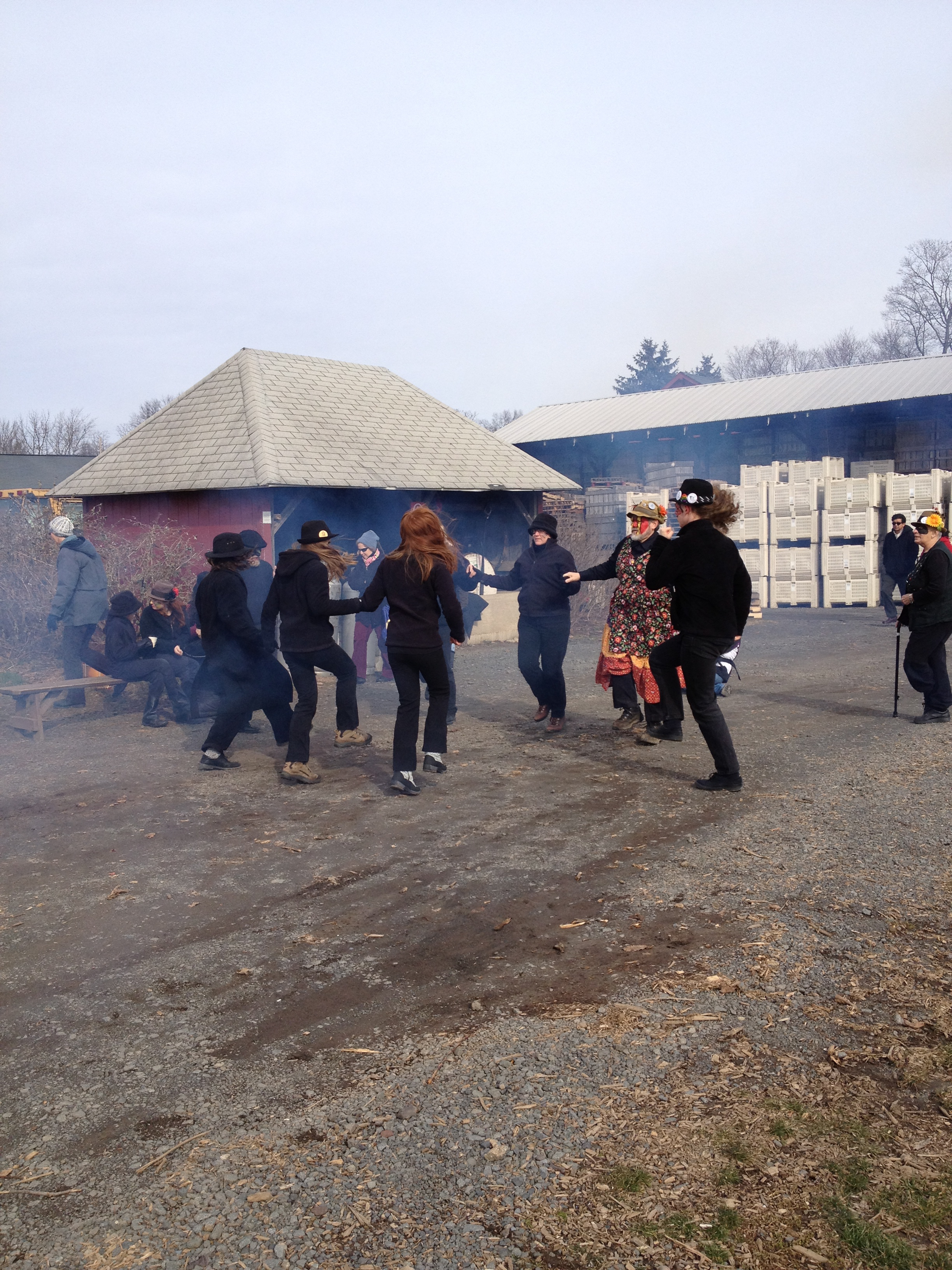
It was a nippy 42 degrees with a chill January breeze cutting through the brightly garbed crowd of maybe two-dozen stalwart souls. There were Molly dancers holding hands and skipping in a circle. Smoke from a bonfire caught the breeze as a woman with a painted face sang about the circle of the sun. The whole event had a Wicker Man sort of feeling to it, but participating in an ancient tradition is strangely fulfilling. A basket on the table held pencils and paper on with instructions to write your wish and burn the paper in the bonfire so that “Your message will travel into the cosmos.” The bare apple trees were seasonally pruned and discarded branches littered the ground. It all sounds suitably pagan for a Sunday afternoon in New Jersey.

Having grown up in a rather sheltered small-town environment I never even heard of wassail until planning for my December wedding nearly twenty-five years ago. A low budget affair with the reception in a church basement, my wife decided not to offend Methodist sensibilities by serving wassail, a spiced cider drink generally associated with Christmas. As I learned this midwinter, wassailing has a deep and mysterious ancestry that is a mix of pagan and Christian traditions. One aspect of wassailing is associated with Christmas carols and is based on the tradition of the wealthy sharing with the poor during the holiday season (a practice clearly extinct these days). The second type of wassailing goes back to nature religion and the blessing of the apple trees. It was observed on midwinter, which, before the Gregorian calendar, fell on January 17. At Terhune Orchards the festival fell on the 29th this year.

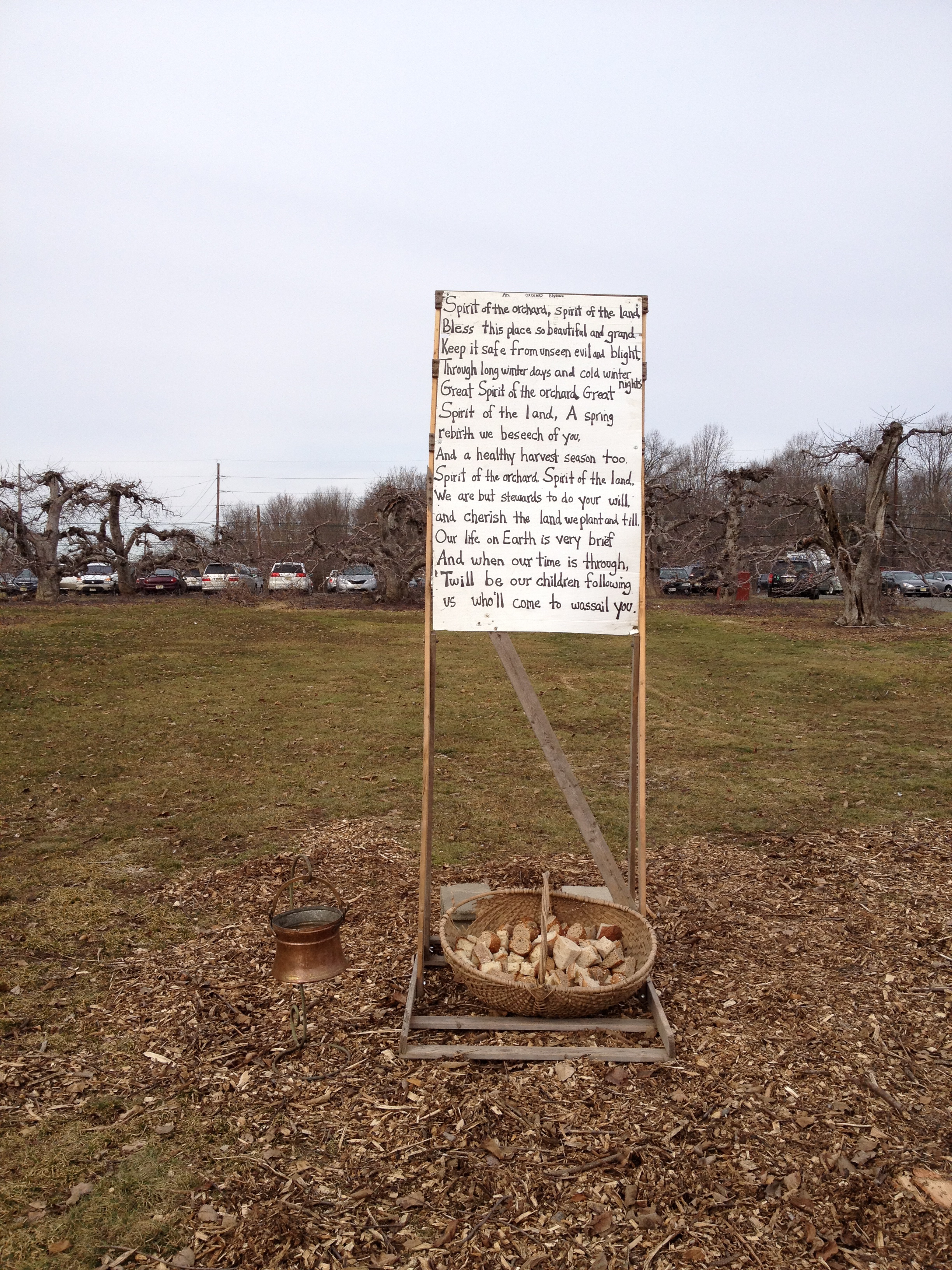
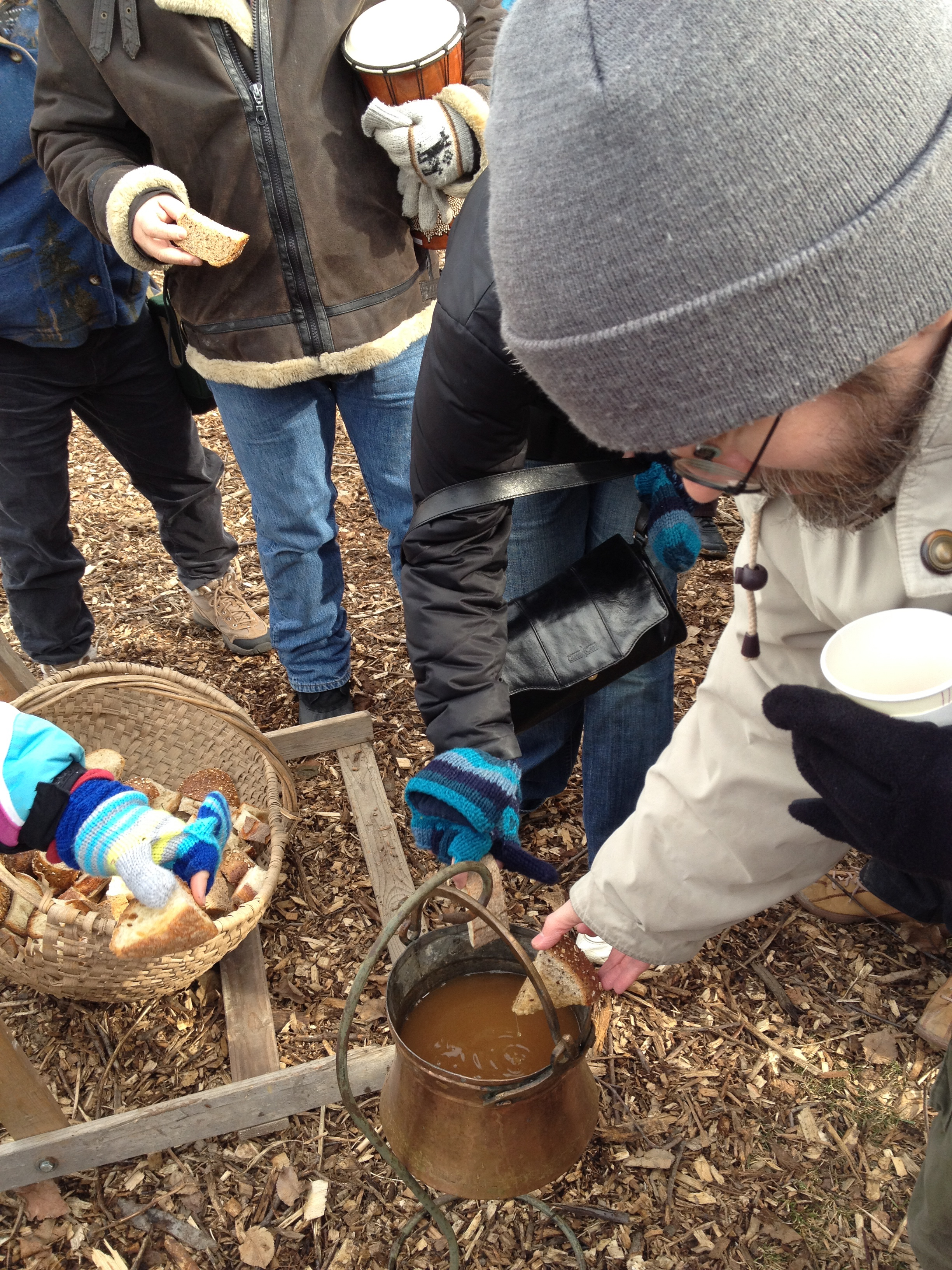
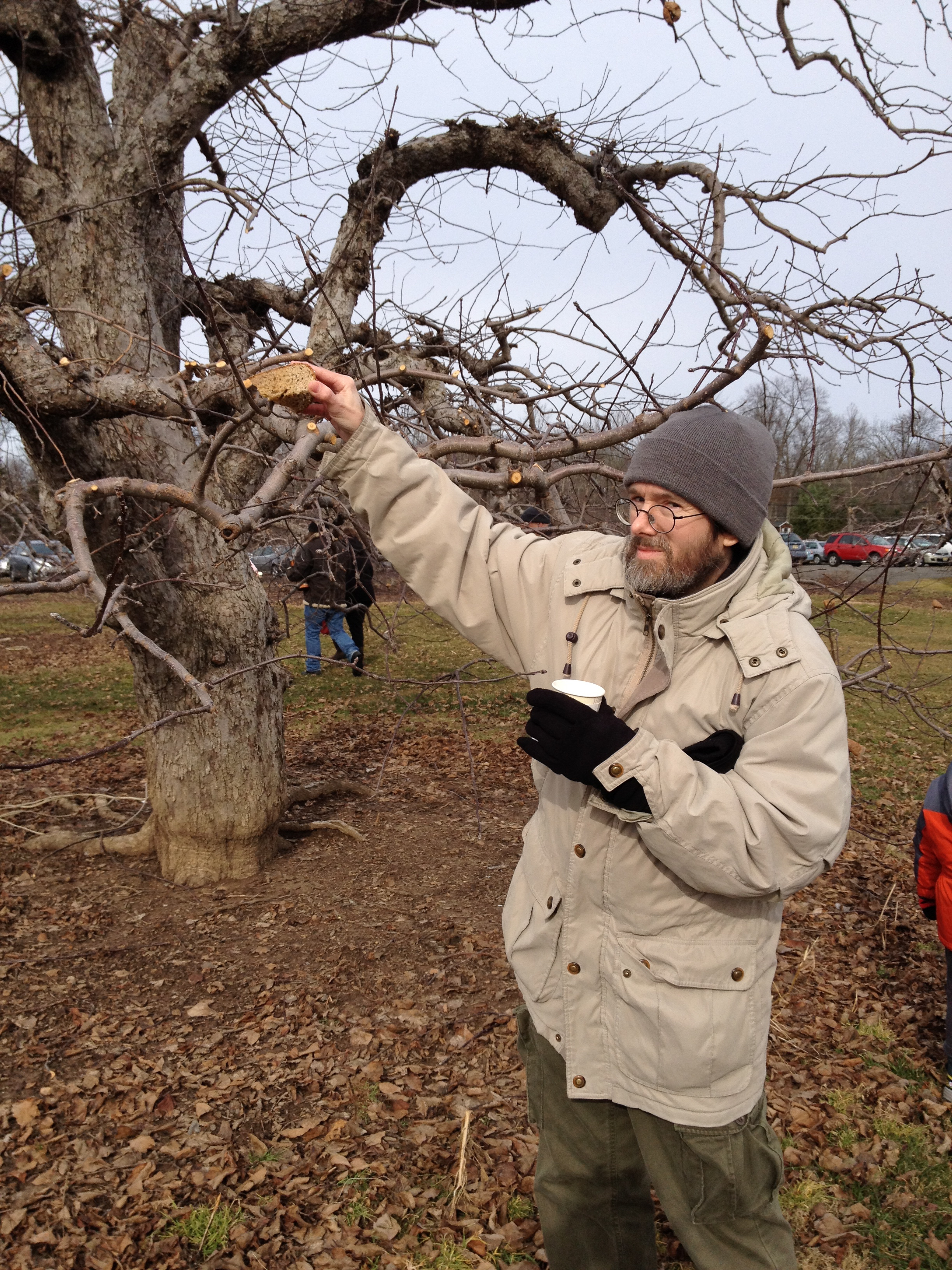
After watching the Molly dancers and sending our wishes up to the cosmos in the bonfire, one of the orchard proprietors gathered the crowd, now having about doubled to fifty, to sing the Somerset Wassail and then to make noise to drive out the evil spirits. This the crowd did with enthusiasm. We were then asked to recite the wassail prayer, printed on a signpost for all to see. Bread was passed out which we dunked in cider and hung on the naked apple trees. After a final blessing we headed to our car to preserve our own wassail. In England’s apple-growing regions, wassailing the trees is still practiced with a sincerity that marks the deeply mysterious. Some Christian sensibilities, I’m sure would be offended, but this ancient custom, like leaving a tree to stand in the midst of a plowed field to propitiate the spirit of nature, goes profoundly into human consciousness. I, for one, will lift a cup of cider and join the ancient rite to brighten a winter day.


Religious Capital

Eric Weiner’s book, Man Seeks God, surely received a boost with an article in Sunday papers (originally written for the Los Angeles Times). In this piece, Weiner comments on the American fluidity of religion, how people pick and choose the spirituality that works for them. His observations are based on the results of a Pew Trust study that indicates about a third of Americans change their religion during their lifetimes. This is a departure from the age-old tradition of being born into a religion, something that still seems to apply to two-thirds of the American population. In his article Weiner suggests this is not entirely a bad thing, since people are consciously deciding on that to which they will commit themselves. I haven’t yet read Weiner’s book, but the situation described here has a potent underlying implication.

Religions tend to make claims based on certitudes and assertions of absolute truth. When religion becomes merely a matter of choice, has it not lost its very foundation? This may not be a bad thing, but it does change completely the essence of religion. No longer can religion be considered an inviolable truth handed down from on high if the truth is a matter of choice. Or, more troubling, perhaps we no longer seek truth. In a population based on personal satisfaction, religion becomes an extension of personal comfort. In a society where non-faith is suspect (most atheists still complain of being considered “evil” for their non-belief), people need to believe something—anything. We can’t test the truth in any empirical way, so we all have to admit to some guessing. When born into a religion, questioning is a sign of doubt. When shopping for a religion, questioning is a smart economics. Does this religion work for me? Is there one that suits me better? Is it worth the extra costs?

The center of focus has shifted from seeking the one, unwavering truth that is beyond us to seeking a belief that we can stomach. Religion is a commodity. Perhaps this development is inevitable in any society so dedicated to the free market that even common decency is labeled socialism. Is it possible for people who constantly think in terms of supply and demand to understand an absolute in one tiny sector of their lives? Choice becomes an all-or-nothing proposition. Its pragmatism indicates its origins. When people can choose a religion without consequences, it should be obvious that this is a human construct. Instead, we want to believe that our religion is the right one because that’s the way we like it. Perhaps the question we should be asking is whether our lifestyle is authentic or simply a fabrication made to suit our wishes. Our treatment of religion as a product to purchase and use reveals more about what we believe than does any creed.


Hic Sunt Dracones

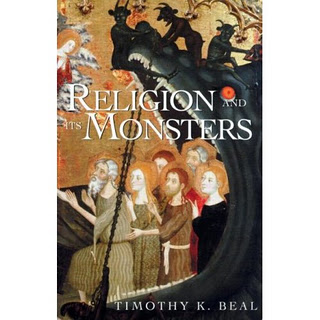
Even a visionary like Thomas Edison can’t know the directions in which an invention might be taken. The idea of the moving picture has immersed human beings in an alternate reality that is sometimes difficult to separate from the physical world we daily inhabit. As soon as movies were invented, producers and directors began to explore the depths of fear with the monster movie. What they were really exploring was the mystery of religion. I frequently write of the nexus of religion and the monstrous, and Timothy K. Beal wrote a book on that subject a decade ago in which I found another affirmation of my suspicion. Forthrightly titled Religion and its Monsters (Routledge, 2002), Beal’s playful yet serious exploration of the scary traces the origins of monsters to Genesis, and even earlier. Taking on Leviathan, the biblical sea serpent, Beal demonstrates the pre-biblical pedigree of this fierce monster and shows that, like most truly frightening entities, it began as a god. Indeed, what we call religion today grew up around fear of those forces beyond our control, a nature so harsh it could be none other than divine. The writers of the Bible clearly knew this story as Beal traces it from Genesis to Job, from Psalms to Jonah, from Leviathan to Devil.

In a shot/reverse shot formation, Beal takes us to modern-day monsters and shows their religious origins. Those things that frighten us on the big screen crawl there from their origins in the temples, shrines, and chapels of religions that don’t manage to subdue evil completely. The claims are made that the gods are stronger than the chaos that surrounds us, but they are still fighting nevertheless. From Dracula to Godzilla, the monsters have the gods on the run. And when the human protagonists finally get their monster pinned down, they discover that it is often God wearing a mask. Our monsters are gods gone bad. How else could they revive from the dead at the end of the reel? They never truly disappear. And if they do, there’s always more where they came from. The reason, Beal concludes, is that we are, in fact, the monsters.

According to the analysis of W. Scott Poole, Timothy Beal, like myself, falls into the “monster kid” generation. As I grew up, I quickly learned that to confess my interest in monsters was to risk the labels of juvenile, naïve, and immature. Grown ups are interested in money and sex and power. Only kids have any interest in dinosaurs, mythology, and monsters. An epiphany of sorts, however, seems to be unfolding. Scholars of religion in my generation are peeling back the rubber masks of our movie monsters and are discovering the face of the divine. Perhaps we are all adolescents at heart, fixated on the weird and bizarre because the paths to money, power, and temptations of the flesh are blocked to us. Or perhaps we are the Magellans charting a course for regions off the map. It is those regions, as Beal reminds us, that are illustrated with sea serpents and inscribed hic sunt dracones, “here be dragons.” Doubt it? Read your Bible and find out for yourself.


Paranormal Activity

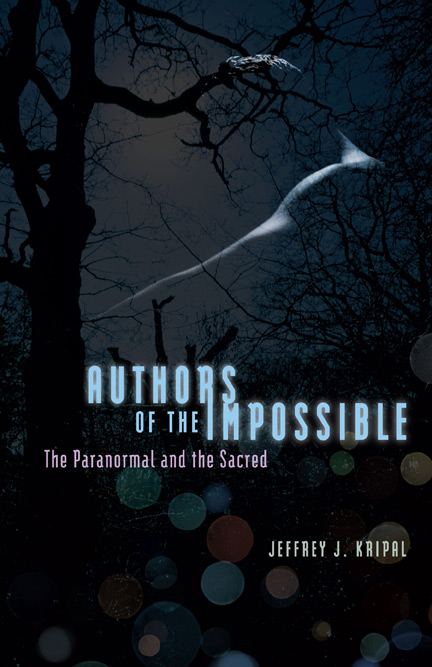
Once in a great while books with the potential to shift paradigms come along. These rare books often deal with taboo subjects, those areas of inquiry forbidden even to the most educated sectors of society. One of those books is Jeffrey Kripal’s Authors of the Impossible. I bought this book because of its subtitle: The Paranormal and the Sacred. I have argued before that paranormal subjects are very closely related to religion, but it is so unusual to find another scholar who openly takes on this question that I was shocked at finding Authors of the Impossible. Kripal is an academic who is willing to consider what is, as he admits, impossible. Those who’ve read deeply in the record of human experience, however, know that weirdness has accompanied us from the time we could write it down. It stands to reason that the uncanny stretches back before even that singular hallmark of human development. I have suggested elsewhere that it might even be the origin of religion itself.

Universities are establishment institutions. Free inquiry is not free, as I’m sure advocates of the National Security Act are glad to know. Most university professors who’ve seen a ghost or some unidentified object in the sky or an anomalous creature will never admit it. The easy equation of such things with mental instability keeps establishment people in line. It also cuts off honest inquiry into things people have experienced for centuries. Kripal is unafraid. In this book he considers the works of explorers most academics refuse to take seriously, despite their obvious intellectual ability: Frederic Meyrs, Charles Fort, Jacques Vallee, and Bertrand Méheust. Let’s have a show of hands: who has heard of any of them, except maybe Charles Fort? Each of these explorers was/is very educated. Each takes an aspect of the paranormal seriously. As Kripal points out, we will accept a physicist from CERN telling us that the impossible happens at the quantum level, but if you see a UFO you belong in an asylum. Is it because the paranormal violates not only the laws of physics, but also the laws of religion?

Life is too large to take it all in. We don’t even know what consciousness is. This is a question to which Kripal returns to conclude his book. His suggestion is that the paranormal is a literary hermeneutic—we are written by forces and powers outside our knowledge. Without denying science, indeed, while advocating it, Kripal suggests that it is not the whole picture. We are animals with two brains fused into one, and even scientists and materialists feel the sting and caress of emotion. Kripal is brave enough to assert that the emotive, imaginary side is just as real as the rational, materialist side. Noone can seriously doubt science and step onto a jet, Kripal shows that one need not doubt science to step onto a UFO either. If we are willing to participate in the reality our minds generate, the potential for human evolution really explodes. The only problem with Authors of the Impossible is that it is too short. An extremely deft writer, Kripal makes you laugh and think at the same time. And when you’re done, you’ll realize just how weird the world really is.


God in the Machine

“O brave new world! That has such people in it!” Or at least such software. A couple of days ago my wife pointed out a news story on MSNBC rounding up the year (2011) in science. The story contains eleven science videos that challenge our perceptions and show us directions we are going, whether we want to or not. The first video shows what happens when Cornell University researchers connected two Chatbots to each other and allowed them to carry on a conversation. Like my own experience with Cleverbot last year, the conversation soon turned to God. Even artificial intelligence seems interested in the eternal questions. I should put a finer point on it: artificial intelligence derived from the dubious wisdom of the Internet. We are getting closer and closer to replicating the human brain electronically—even my iPhone scares me at times—and yet, to engage in conversations with humans (or each other) these intelligences must know about God.

Many theories exist about the origins of the god concept. Scientists argue that it is hardwired in our brains, that it is genetic, or that it is merely socialization that gives us this idea. The truth is that nobody really knows. The religious take this as license to claim that territory for the god of the gaps—if we can’t answer a question, God rushes in where angels (or logic) fear to tread. The truth is more likely that we don’t yet have the tools to flesh out (or psych out) our theories on why the supernatural is an indispensable component of our thoughts. If artificial intelligence takes its cues from human intelligence, however, it is a certainty that god will be part of the equation.

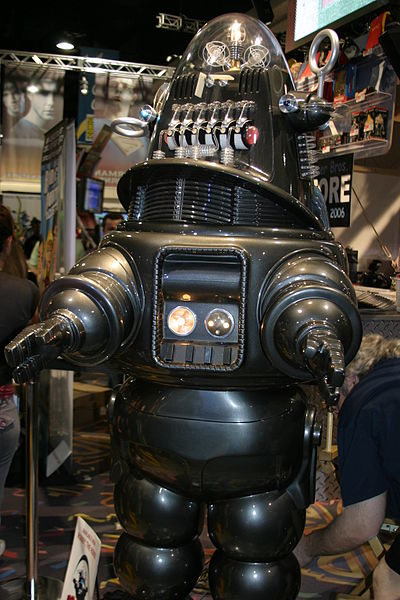
People possess a deep need to feel unique. Our uniqueness is part of our religion. Humans are “the crown of creation,” the only animals (debatable to some) with souls (debatable to others). Even the Chatbots get confused when God-talk comes up. Mentioning God leads one Cleverbot to ask the other if it is Christian. God is not limited to Christianity, of course, nor is the divine limited to monotheism. The old science fiction chestnut of a robot takeover, however, seems to have missed a salient point: if robots are programmed by humans, they will have God in their silicon chips just as surely as we do in our carbon-based brains. The god in the machine. Many atheists have declared the death of god, but we have placed the divine into our apps and devices and software. When the robot apocalypse comes it will include at least some Cleverbots declaring that the rationale to eliminate humans is heresy. Torquemada meets Iron Man. Already 2012 feels less safe than 2011.

Robot preacher of the iron age?


Church of Siliconism

Some of us have been dragged into the electronic age kicking and screaming. Our apartment at home is full of books, and they are made of paper, not plastic. In college, some of my friends and I vowed we would never use computers—harbingers of a cold, new age. It was a vow I kept until working on my doctorate (pretty much). Despite keeping this blog, I really have very little native intelligence about the world of circuit-board, integrated circuit, and chip. I would probably be the last person to have thought to ask for an iPhone—I frequently forget to take my cell phone with me, and when I do, I sometimes neglect to turn it on. So I was stunned to find an iPhone with my name on it yesterday. I looked at it like an alien baby, wondering what it might eat. As the day wore on, however, I started to see some of what it might offer.

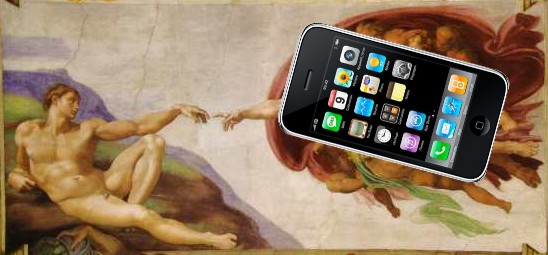
Siri, the software personal assistant for iOS, responds in a friendly voice to questions asked. “She” (and you can’t help personifying her) is like a personal portal to the mind of the Internet. You want a pizza? Siri knows the location of all the places in your neighborhood that deliver. You wonder what the most recent nation in the world is? Siri will look that up for you. (South Sudan, as of yesterday, according to her sources.) My brother-in-law, intrepid with electronics, and knowing my background, asked Siri about God. She replied, “Humans believe in spiritualism. I believe in siliconism.” Someone at Apple clearly has a sense of humor, but the more I began to parse this statement, the more I realized Siri could use a personal assistant in the religion field.

Spiritualism is not the same as spirituality; the former is the belief in ghosts and the religions that accompany that belief, such as Theosophy. Clearly in an American market, any product that denied belief in God, even by implication, would become the product of a witchhunt. The sad image of heaps of iPhones being melted as leering evangelicals look on is disturbing but unfortunately easy to conjure. Best to program Siri to deflect any potential ire with humor. The second component of her pithy reply is siliconism. As a religion, it is clearly underway all ready. Who reading this blog can imagine life without electronic media? Be honest! What does a computer believe? Do androids dream of electric sheep? Does Siri say her prayers as she’s being shut down for the night? What does it mean to believe? So now I have an iPhone. The day before yesterday I couldn’t find my app with both hands. Now I have a personal religion consultant. I suspect I’ll be starting a new religion by the end of the day—the First Church of Christ, Programmer. Its headquarters will be wherever a true believer is located at the moment, as long as s/he has an iPhone. Blackberry users will, of course, be considered heretics.


England’s Christian Gift

As much a part of the holiday season as Santa Claus and baby Jesus, the Salvation Army bell-ringers are out in full force. As I drop a quarter in the bucket, I ponder the strange lineage of this denomination. When the cheerful holiday shopper convivially donates spare change, few, I suspect, know that they are supporting a church. The Salvation Army is one of the bewildering number of denominations to spring from English Christianity. The Church of England, small in the United States, but imperial in much of the world, grew amid a religious unrest that spun off countless dissenters. We all know the story of Henry VIII and his not-so-merry wives. His political move to focus the official religion of England on the crown led to the Puritan resistance. Puritans left England for the Netherlands, and then on to America where they flocked to New England to develop into Calvinistic Congregationalists.

Meanwhile back in Amsterdam, some of the English Separatists evolved into Baptists. Baptists were also congregational in polity and also found the religious freedom of America to be appealing. (Now they select our elected officials.) The Puritans had helped develop the Presbyterian movement as well, with dissenters in Switzerland. Still at home in Britain, the Church of England waffled between Catholicism and Protestantism for some time. The evangelical fervor that emerged with the Wesley family led to the Methodist Church, which remained attached to the Church of England until its founder’s death. In America the Methodist Church grew rapidly. During the era of religious revivals the Adventist movement grew out of Methodism, as did the Church of the Nazarene, the Holiness movement, and Pentecostalism. All of them today are major denominations. Even the Anabaptists tip their wide-brimmed hats in the direction of the English dissenters. The Plymouth Brethren, inventors of the Rapture, were another English-derived denomination, as were the Wesleyan Churches.

What does all of this have to do with the Salvation Army? The Salvation Army was founded in London by a Methodist minister, William Booth, and his wife Catherine. The movement adopted quasi-military mythology and ranks, and soon grew into a church of its own that supported what would later become the Social Gospel cause. Known primarily for their charitable works, they are yet one more splinter from the tree of English Christianity. Perhaps the Christmas tree is an appropriate analogy for the Christianities to spring from Henry VIII’s loins. Like the pine’s many branches, each with its ornaments, Christianity in England sent its twigs in all directions. Counted together, the descendants of English Christianity far outnumber any other Protestant grouping. Just a thought to share while waiting for the quarter to drop.


Darkest Night

One of the more endearing of human weaknesses is our fear of the dark. For those who live north of the equator, we have just experienced our longest night. It is no coincidence that the religious holidays that occur in winter feature light. In our helplessness against the encroaching darkness, we light our Christmas trees and Hanukkah candles, adding just a bit more light to the world. Among the oldest of all holidays is the day that marks the birth of light’s resurrection. One need not be a pagan to appreciate the solstice and the inherent hope it bears for the return of the sun.

In this season we often see signs and hear laments about the absence of Christ from Christmas. Jesus was not born in winter, according to our best reckoning. One of the carols that drives me mad with distraction is “In the Bleak Midwinter” with its maudlin description of “snow on snow on snow”—clearly written by someone with limited experience of winters in Israel. Christmas falls near the solstice because people have from earliest memory recognized the sacredness of this season. When Jesus was born nobody knew he was to become so famous as to have one of the most popular Facebook pages ever, and so nobody thought to write it down. Even the Gospels the disciples never give a rousing chorus of “Happy Birthday” while on the dusty highway. What we’re celebrating is that night will not reign forever.

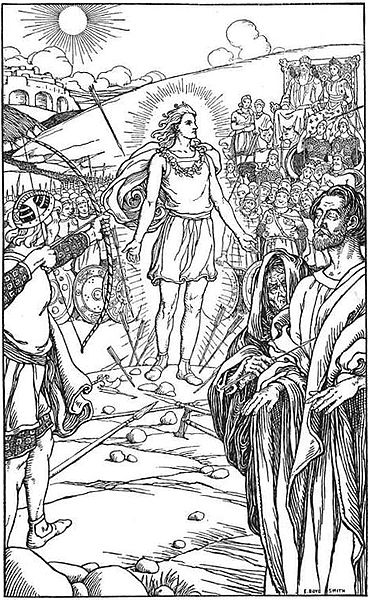
Having evolved to favor our eyesight, but lacking the standard mammalian nocturnal nature, we feel vulnerable in the dark. Even if Jesus hadn’t been born we’d be celebrating at this time of year. It might have been the re-living of the mythic Golden Age of humanity under Saturn that the Romans called Saturnalia, or it might have been the rejoicing over the resurrection of the beloved god Balder among the Norse. We might have had to wait until the days were noticeably longer to fete the goddess Brigid with the Celts at Imbolc, but we would have marked the occasion. Instead of cursing the pagan darkness, as the saying goes, we would light our feeble candles as a sign of hope. The reason for the season is the fact that the longest night is over and once more our days will slowly return light to our lives.

Here comes the sun