Entities

When you’re a regular scholar, you take notes.  I’m not a regular anything, I guess, and I’ve fallen out of the habit of noting who makes movie recommendations to me.  Many of these come from books, but I don’t always remember which book made what suggestion.  In my list of movies to watch is The Entity.  The thing is, there are at least five movies by that title.  One of them was free on Freevee, so that was the one I watched.  I’m not sure it was the right one, but since it featured something like a demon it represents my interests in Nightmares with the Bible.  This one was, for the record, from 2016, or 2015, and directed by Eduardo Schuldt.  Like Paranormal Activity, it’s “found footage” from hand-held cameras and it made me more woozy than scared.

Based in Lima, it’s in Spanish and claims to be from the dark web.  I don’t have any desire to go there (the dark web, that is.  Lima would be okay), but the movie wasn’t that frightening.  It was like Sinister and Ringu’s unholy offspring.  With a bit of Blair Witch Project as a sibling.  A curse from the Inquisition brings this into the realm of religion and horror.  Film students working on a class project learn that those who see a certain film are going to die.  Being modern people, they’re skeptical so, of course they watch it.  The thing about religion is that it’s unrelenting.  It doesn’t give up just because people stop believing.  Movies like this underscore how we keep turning back to religion to frighten ourselves.  You can guess what happens to the students.

The thing is, I’m not sure that I watched the correct one.  Film scholars now make a habit of citing movies by not only title and year, but also director’s name.  There are a lot of “Entities” out there, and if you take the article off there are even more.  I’ll probably end up watching a few of them, but since I didn’t write down which book, or which friend, made the recommendation, I’ll never know if I got the right one.  I keep a list to try to prevent myself from just going for whatever’s free on the weekend because you generally get what you pay for when you do that.  Even though I ended up a bit nauseous (from the camera movement) I was glad to have seen this.  There were some good moments in it.  And I can tick one off my Entity list. 


Addenda

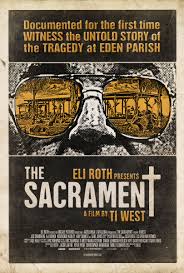
In retrospect, I suppose I wrote Holy Horror a bit prematurely.  Back when I started writing it, I had thought that the Bible in horror wasn’t as common as I’ve since found it to be.  I still stand by what I wrote, but I could’ve included a lot more movies that I’ve watched over the years since.  The Sacrament is one of them.  Based on the Jonestown massacre, the film sets the movie in the early twenty-tens.  A reporter for VICE is going to find his sister who’s joined a religious commune in some unspecified country.  In an effort to get him to join, she invited him to visit.  She was unaware, however, that he brought another journalist and cameraman with him.  The movie gives creepy vibes right away since they’re greeted at the helicopter landing site by men with guns.  Eventually they’re allowed to enter.

“Father,” the leader of the commune bears a resemblance to Jim Jones and soon it’s clear where this is going.  Along the way, however, Scripture gets quoted to justify their communal lifestyle.  There are many fictional aspects thrown in—the young women seduce the journalist whose sister invited him.  She makes no bones about saying they do it to convince him to stay.  The camera crew is almost convinced that this is the paradise it claims to be, but they start getting requests for help.  The writers clearly did their research on Jonestown since several details of the final weeks of the Peoples Temple are fictionalized here.  The mass suicide is shown in graphic detail.  The number of the dead, however, is only about a fifth of those who actually died in Guyana in 1978.

The movie clearly shows that the commune is problematic, but it also raises uneasy questions.  If it weren’t for the murder of Leo Ryan, would Jonestown ever have happened?  Probably, but the film shows “Father” making the point that nobody was being harmed.  That’s belied by the introduction of an abused girl and the number of people who want to leave.  It’s true of Jonestown that mind-control tactics were used and people weren’t permitted to leave, especially as Jones’ paranoia grew.  The movie leaves the viewer wondering whether utopian communes can ever work, people being what they are.  We crave our freedom, even when things look great.  The movie condemns the exercise, but not so much that it leaves lingering doubts about whether, had things been different, it might’ve worked.  And it would’ve worked, had I seen it earlier, for Holy Horror.


Pentagrams

Not to dwell on Satanism, but the morning after my last post on the topic, while out on my morning jog, I came across a pentagram incised in the pea gravel of the bike path.  Then another.  Lest there was any lingering doubt that this had to do with the local school’s Satan club, a few feet further along a 666 appeared.  None of this was there the day before and, given that folks my age are too busy to be out scraping sigels in the sand, I suspect that it might’ve been someone younger.   Dare I say, school-aged.  Protesting or promoting I couldn’t tell.  As I jogged, I fell to thinking about pentagrams.  They’re not inherently evil and actually have an interesting history.  For most of that history it was morally neutral, if not a positive sign.

In the 1800s, during Romanticism’s heyday, it was supposed that an inverted pentagram—one with two points up instead of one at the top—was a sign of evil.  It was also in the 1800s that the contemporary king of outrage, Aleister Crowley, began what would eventually morph into modern Wicca.  Crowley liked to refer to himself as “the wickedest man on earth,” at least among his friends.  The upside-down pentagram was seen to represent a goat’s head, and if you’ve read my book you’ll know that some groups have long associated goats with demons.  Ironically, during the Nixon Administration the Grand Old Party began to use inverted pentagrams on their elephant logo.  Evangelicals who otherwise object to this “Satanic” symbol seem quite okay with it branding their political party.  Truth in advertising, I guess.

The thing about symbols is that they only have the power we give them.  The five points of a star symbol match well the pentagonal symmetry that we often see in nature: sea stars, sand dollars, strawberry flowers, and eucalyptus seed pods.  It’s pleasing to the eye for creatures with five fingers and five toes.  There’s a rightness about it, even if it doesn’t look a thing like the stars in the sky.  Is it Satanic?  No, only to those who believe it to be so.  Are there Satanists trying to take over public schools?  No.  That doesn’t mean people don’t think they aren’t.  (That last sentence is all tied up in nots, I guess.)  Symbols, by their nature, contain the meaning we assign to them.  They say to me that kids pay attention to what adults do,  so if we act grown-up perhaps—just perhaps—they will aspire to do the same.


Satanic Struggle

Around these parts folks are in an uproar about an after-school Satan Club.  The idea is an action to get Evangelical undies in a bunch, and it’s only proposed when a school system supports an overtly Christian club.  Reaction more than action, really.  Right now Nextdoor.com is bursting at the seams with indignation about something most people don’t understand.  I can’t claim to be an expert, but I’ve read plenty of books about Satan and many of them deal with Anton LaVey’s Church of Satan.  The Church of Satan believes in no literal Devil or Hell.  It was established to draw attention but also to make a statement when Christian Nationalists start to get too pushy.  Still, people are afraid of Satanism as the numerous international panics about it have shown.  And conspiracy theories don’t help.

It seems to me that the solution to all of this is education.  People, naturally enough, react to things emotionally.  I do it all the time.  (This is one reason that Artificial Intelligence will never be truly that—humans think with their emotions as well as with reason.)  The sad thing is, there are many easy ways to correct mistaken assumptions.  The information is out there and it’s easily found.  It’s easier, however, to spout off on social media like you’re an expert on something you know nothing about.  Trump introduced a culture of outrage—did his supporters suppose nobody else was capable of doing the same?  The Church of Satan was established as such an outrage.  In a nation of literalists, they hit a nerve.

The Church of Satan does not worship the Devil.  It supports social causes and it cooperates with law enforcement when some unbalanced individuals think it means something that it doesn’t.  To my way of thinking, this creative endeavor, despite getting the attention it sought, might’ve been better thought through.  Although extremism appeals to those who, like Herostratus, crave fame at any cost, does it really move us any closer to where we want to be?  Part of the problem is that many outspoken political figures want us all to be the same as them.  White, Christian, male, heterosexual.  I really can’t imagine a worse kind of nightmare.  Humans crave variety and new ideas.  As I sit here watching a new, uninformed Satanic Panic developing in my own backyard, I wonder if we all wouldn’t do our blood pressure a favor by sitting down with a book.  And maybe learning what this really is about.  Shoving matches seldom end well.


Valentines and Bombs

So what was I thinking, posting about bombs on Valentine’s Day?  Regular readers know my fascination with holidays.  Valentine’s Day is another one of those that simply gets plowed under by the sharp shares of capitalism.  We work on Valentine’s Day, of course, after waking to news of yet another multiple shooting at a university.  Is it any wonder that we think about bombs on Valentine’s Day?  As Tina asks, what’s love got to do with it?  In 2016 we were taught that the politics of hate is how elections are won.  Surveys consistently show Americans favor stricter gun laws but congressmen love money more.  Maybe love does have something to do with it after all, Ms. Turner.

Love, it seems to me, was the best thing Christianity had going for it.  While the Gospels aren’t entirely consistent on this point, the figure we call John (not the Baptist) focuses on it.  Jesus spoke of, indeed, insisted on love.  “God is love” some radical went so far as to write.  But love gets in the way of selfish agendas.  We can wave Bibles around, and hold them up for photo ops, but they do no good that way.  Besides, love might, in some instances lead to sex.  And we know that Augustine won that argument centuries ago.  We don’t have a widely recognized holiday celebrating that dour saint, however.  Perhaps we should take a cue from the fact that nobody knows which Valentine yesterday really commemorates.  Isn’t love best when it can even be anonymous?

Photo by Jamie Street on Unsplash

I often ponder why it seems so difficult for people to love universally.  Yes, we do annoy each other.  Yes, we have conflicting agendas.  If, however, we pause for a moment and consider we’ll see that other people have feelings just like us.  They too want to be loved and appreciated, and held by those closest to them.  This is not a bad thing.  What’s so wrong with love, after all?  We pour money into the military industrial complex and try to regulate who can love whom.  And we say we’re living the religion touted by the New Testament.  I always try to keep Valentine’s Day special.  It can be tricky on a Tuesday when work will bear its inevitable load of problems to solve.  Still, if we all paused when we faced a people-related frustration on Valentine’s Day, and said to ourselves (saying it aloud would only cause problems) “I love you” to the person causing our frustration, I wouldn’t have been thinking of bombs on Valentine’s Day.


No Doubt

The mind inclined toward doubt is in for a rough ride in an evangelical childhood.  I recall vividly my many, many hours struggling against doubt, trying, crying, praying for certainty and faith.  Many, many dark nights of the soul.  Attending college and seminary I learned of the others in history who struggled the same way, or at least similarly.  I also learned that doubt is natural and healthy, it protects us from falling headlong into the many snares and traps the world continually sets for us.  Blind faith, as I recently quoted from Kurt Vonnegut, is dangerous to everyone.  I was thinking about this again the other day as there was something I fervently wanted to happen but I just couldn’t bring myself to believe would actually come to pass.  My mind isn’t built for blind faith.

Given that, it probably isn’t any surprise that I went into religious studies as a field, even though it’s a dead end.  I still believe it’s vitally important, but that’s a belief much of the world doesn’t share.  It’s one of the few fields of study where a doctorate leaves you without job prospects if you don’t get a teaching post, if you’re not ordained.  And should doubters be wearing clerical collars and preaching to those who want to believe?  Belief is malleable.  It changes over time and it does so via its constant interaction with doubt.  It leads to a life of second-guessing and constant reassessment.  I suppose that’s why I’m baffled to see politicians with less education being so cock-sure that they’re right about things.  I doubt they know what they’re talking about.

Institutions take on lives, like people do.  Although I disagree with the treatment of corporations as individuals by law, still, I understand the thinking behind it.  The church, for example, grew to be a very powerful force in the fourth-century Roman empire.  These collective individuals had vested interest in keeping that power as the church grew more and more influential.  That dynamic still exists where even a small, non-denominational group gathers and asserts that it alone is right.  All you have to do, it tells its members, is believe.  Don’t doubt.  And if you do doubt you’ll be excluded.  Exclusion is difficult to bear.  But even doubting Thomas has hundreds of churches named after him.  Each, no doubt, has many true believers as members.  And on the outside mingle the doubters.


Natural Disasters

Like many, my heart goes out to those in Turkey and Syria suffering through the destruction and aftermath of a major earthquake.  Such natural disasters often bring out the best in people—empathy, love, and offers of support.  They lead to both tragedy and human warmth.  They also give us pause to reflect, if we will, on our worst behaviors.  Rescue efforts have been hampered, in Syria especially, by a weakened infrastructure, caused, at least in part, by foreign bombing.  And yes, the United States was part of that.  People who now feel our sympathy only months before faced death from us.  What is it about our species that makes us want to destroy one another through our own technology but then turns and wants to help when a “random” act of nature occurs?  We must prefer death on our own terms.

Image credit: Luca Comerio (1878-1940), Corpses of victims of the earthquake in Messina, via Wikimedia Commons

For me, part of this is reflected in how the so-called “culture of life” treats liberal social causes as the “culture of death.”  Those groups that support “the culture of life” are against abortion but desire no controls on gun ownership.  This is the same basic principle—we want to cause death on our own terms.  We want to play God and decide who is worth saving and who should be destroyed.  I have no doubt that if, say, a tornado destroyed an entire city block outside a convention center where the NRA was meeting that those at the conference would rush out to try to help find survivors.  When they reconvened, they would try to figure out how to protect their “right” to own and collect assault rifles.  Is this “culture of life” really worth preserving?

Meanwhile the people of Syria and Turkey are suffering.  Thousands are dead, winter is setting in, and Covid is still out there.  They need our help.  The amount we spend on aid will, however, pale next to the amount we spend on bombs, drones, and missiles.  I have to wonder if we never really stop to think about what we’re doing when we engage in behaviors that destroy others.  That weeping mother outside an earthquake-collapsed building could be the same mother outside a missile-collapsed structure.  With natural disasters we know that we all stand a chance of being victims.  We feel for those caught in the way.  Once politics enters the picture, however, and we have the ability to control who lives or dies, everything changes.


Columbo

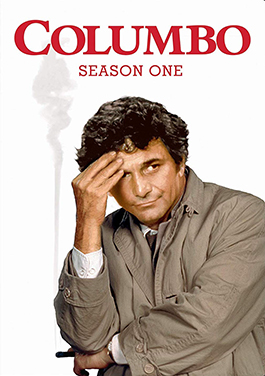
I liked Columbo.  Peter Falk was an award-winning actor, and his working-class detective character was always entertaining to watch.  Unlike other TV cops, he didn’t carry a gun.  Hearing the tragic news from California where yet another shooter killed multiple people before himself, I think about the proliferation of guns.  The New York Times runs story after story showing that nowhere else in the developed world are gun deaths remotely anywhere near what they are in the United States.  Not only do we have a super-abundance of firearms, we have politicians on the dole from the NRA who simply won’t take action because they personally stand to lose money if they do.  And apparently they can sleep at night.  As a nation, our guns outnumber people.

Estimates for the number of guns in America stand at around 466 million.  98% of them are in civilian hands, as opposed to the military.  And we have multiple mass shootings per year.  Is there any chance that these facts might be related?  Ironically, many firearms are owned by those who loudly proclaim they hate the “culture of death”promoted by those who try to make gun ownership more difficult.  I’ve written on this topic so many times before that I really don’t know what else there is to say.  Perhaps it’s time to just give up and weep.  Last year, excluding suicides, there were over 20,000 gun deaths in this country.  There have been 15,000 or more per year since 2016.  Approximately 120,000 gun deaths in just six years.  And yet nothing is done.

The public strongly favors stricter gun laws.  Government officials do not.  In fact, some Republicans are now attempting drive-by shootings of suspected Democrats.  I’m not anti-gun.  I am anti-insanity.  You see, that was the thing about Columbo.  He never pulled a gun, but he doggedly pursued those who did.  The culture of hate that has swept this country since 2016 needs to be reminded of Columbo’s message.  Guns aren’t the answer.  Pursuit of the truth is.  How a purportedly Christian movement does nothing but support the gun lobby is a mystery requiring investigation.  It has to be asked where in the Bible does this idea of arming yourself come from.  It has to be asked which commandment declares obtaining deadly force and making guns easily obtained by the mentally unstable is God’s will.  I guess that about wraps it up.  Just one more thing—what would Jesus do, really?


The Point of It

It’s not difficult to feel overwhelmed by the scope of the problem.  Race was a construct developed to oppress.  The intention was to keep those of non-European, especially non-northern European, ancestry in servitude.  The rationale for doing so was part capitalistic, but also largely religious.  Convinced that Jesus was white, and that the “New Israel” had passed to Christianized Europe, it didn’t take much theological maneuvering to get to the point that others can be—in that mindset, should be—brought into line.  And since this religion comes with a built-in body-soul dualism, it’s not difficult to claim you’re trying to save a soul by destroying a body.  That way you can still sleep at night while doing something everyone knows is wrong.

Martin Luther King, Jr. stood up to such ideas.  His understanding of Christianity was more in alignment with what Jesus said and that threatened those in the establishment who found any challenge to profit heresy.  There can be no denying that racism is one more attempt to keep wealth centralized.  It’s something not to share, which, strangely enough, is presented as gospel.  There are many people still trying to correct this wrong.  It is wrong when a religion distorts its central message in order to exploit marginalized people.  The key word here is “people.”  Black people are people.  Their lives matter and every time this is said others try to counter with “all lives matter, ” a platitude that misses the point.  We need Martin Luther King Day.  We need to be reminded that we’re still not where we should be.  We’re still held in thrall to a capitalism that rewards those who use oppression to enrich themselves.

I was born in the civil rights era.  I suppose I mistakenly reasoned that others had learned the message as well.  All people deserve fair treatment.  Today we remember a Black leader, but we still have the blood of many oppressed peoples on our hands.  Those who first came to live in this country, whose land was stolen in the name of religion.  Those whose gender and sex put them at threat by those who believe control of resources is more important that care of fellow human beings.  It’s easy to feel overwhelmed, but in King’s words, “the arc of the moral universe is long, but it bends toward justice.”   If we believe that, and if we can act on it, there remains the possibility that we might actually achieve the reason we set this day aside to reflect.

Photo by Katt Yukawa on Unsplash

Dark Academia

Over the weekend I “dropped” a new YouTube video on my channel (you can see it here, or by visiting my “YouTube” page in this website’s menu).  It ended up getting a little flurry of interest (1,800 views in the first three days), prompting a friend to tell me that if you pay attention to what’s hot on the internet, you can actually get attention.  That makes sense.  What’s so hot?  Dark academia.  Of course, my video really moves to dark academia adjacent, to what happens to real people when they try to teach religion and run afoul of “doctrine.”  There’s a real disconnect here because if you earn a good Ph.D. you’ll be taught to question everything.  If you’re a doctrinal believer, you’ll question nothing.

I stopped posting on YouTube a few years back because my cheap camera no longer worked.  It lost about three episodes I shot and, discouraged and too busy with writing projects, I gave it up.  I started again because I realized my phone was capable of recording and I had a holder that would stop it from slipping.  So why not?  Topics aren’t really a problem, but shooting and editing a video take a lot more than the eight minutes that result from it all.  Finding the time to edit, and learning how to edit in iMovie, are tasks in themselves.  And I’m an old dog.  Still, I miss that classroom audience.  I’ve been told that blogging is passé, and podcasts take even longer to record.

Some people make a living vlogging.  In fact, “YouTuber” can be a profession.  Those who succeed are often young.  And let’s be honest, a middle-aged white guy in a book-lined study is a tired trope.  Well, it is, in reality who I am.  A teacher at heart, I now try to imagine a virtual audience.  When I first started doing YouTube videos I had a very difficult time imagining an audience.  I fumbled a lot—I don’t script my videos.  If you’re interested in scripted I’ve got this blog right here.  The bump in interest in my dark academia post doesn’t translate to my other videos about my books or related topics.  Still, those are the things I know best and so it’s easiest to talk about them.  And possibly reinventing yourself.  I guess that’s what I’ve tried to do here.  Sloppily, stumblingly, but nevertheless, I’ve been changing my identity.  My YouTube channel’s not that active, but if there’s interest I can explore further reflections on dark academia.


Religion in Its Place

The other day at work I virtually “met” someone else from western Pennsylvania.  It came about in an odd way.  We were both in an online author talk and my colleague put something in the chat about a particular social issue being purely religious for some parts of the country, like his native western Pennsylvania.  I immediately knew what he meant.  For those who think religion is irrelevant, look at the make-up of our government.  Those preachers in rural places wield incredible power.  Their word is law and because of the shortsightedness of our founders, the rural few have amazing sway over the vast majority of the urbanites.  We need each other, of course, but not all have educated themselves on the issues.  When they want to vote they turn to their preachers for the answers.

Interestingly enough, churches lose their tax-exempt status (and thus many can’t afford to survive) if they openly back a political party.  They are required by the law they game to remain party neutral.  Of course, depending on who appointed a federal judge, they are often willing to overlook that particular law.  You get the sense that God favors some commandments over the others anyway.  But back to the homeland—western Pennsylvania is a preacher-dominated part of the country.  That may well have been what set me off on this strange track I follow instead of a career.  We were a church-going family in a church-dominated part of the state.  If you took what you heard on Sunday seriously, we should all be studying religion, down on our knees.

My colleague brought something into focus for me.  The religiously convinced will accept no other evidence.  They’ll refuse vaccines that could save their lives.  They’ll say women and blacks are lesser humans.  They’ll even—since I pay taxes this is okay—vote Republican.  Clergy have been sidelined by much of what’s going on in society.  They are hardly irrelevant, however.  I recently had a minister tell me that if I were to make a formal “questing” status with a denomination I could pick up some preaching cash on weekends.  Without that status, this clergy asked me, “why should anyone listen to you?”  Ah, there’s the rub, you see.  Although I’ve studied religion more than many clergy, and taught those who are now clergy,  I’m not qualified to make it official.  Perhaps it would be different if I were from somewhere else.  


Jason’s Javelin

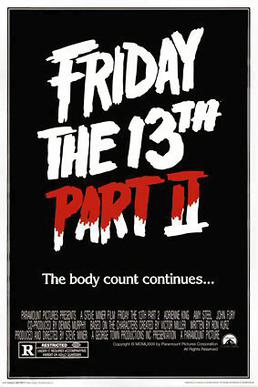
This past weekend was my third this year spent recovering from vaccinations.  The shingles jabs were worse, but this time it was a double-duty flu shot and bivalent Covid vaccine.  That’s as good an excuse as any for admitting to watching Friday the 13th, Part II.  In general I’m not a fan of sequels, but I’d read quite a bit about this one and I was curious because I hadn’t realized before watching the first installment years ago that Jason wasn’t the original killer.  I’m also not a fan of slashers, and I know that many people who dislike horror think all horror consists of such movies.  (It doesn’t.)  But still, Jason is a household name as a movie monster and I was having trouble concentrating with all those vaccines swirling around inside.

Utterly predictable, there are still a few jump startles that’ll catch a first viewing off-guard.  All I really knew about the film was Jason and Camp Crystal Lake and that generally teens get killed for having sex.  As many critics report, this kind of horror tends to have a “conservative” outlook—“sin” is brutally punished and the girl who refrains tends to be the last survivor.  That much you know just from doing your homework.  So as Jason hunts down the teens and dispatches them, along with a police officer and a crazy guy, you almost get bored.  There was one scene, however, that had unrecognized biblical roots.  Interestingly, I haven’t found anyone pointing that out.  When Jeff and Sandra go upstairs for sex, Jason takes a spear and thrusts them through, right in the act.

Analysts trace this scene to the movie Bay of Blood (which I’ve not seen), but in fact the inspiration comes from the Good Book.  In a genocidal mood in Numbers 25, Yahweh tells the Israelites to kill the Midianites among them.  Zimri is seen taking Cozbi into his tent, and Phinehas the priest grabs a javelin, rushes into Zimri’s tent and skewers the two of them in the act.  That scene stuck with my young mind as I read through the Bible, which is probably why it immediately came to mind while watching Part II.  Others may well have noticed this connection, but with the vaccine-induced lethargy I didn’t have the energy to go thumbing through my library to find it.  Besides, when I read things about movies I haven’t seen, they don’t often stay with me (which is one reason I give thorough descriptions of movies when I analyze them in my books).  This particular horror over, I know I don’t have to worry about the flu this year.


Seasonal Viewing

Any movie that begins with an excommunication ought to be good.  Especially with its list of stars you’d think To the Devil a Daughter might’ve turned out better.  Still, it is a good example of religion and horror mingling together.  I’ve never read any Dennis Wheatley novels, but reputedly he didn’t like this film adaptation of his book.  It certainly has a convoluted plot.  So an excommunicated priest has started a new religion that worships Ashtaroth.  He has to baptize a child, now 18 (three-times-six, don’t you see), with the blood of the demon so that she can become his (Ashtaroth’s) avatar.  This is apparently the eponymous daughter to the Devil.  She was baptized initially by her mother’s blood at her birth.

The girl’s father, who survived her birth—unlike his wife—has decided at the last moment to save his daughter.  He appears to be independently wealthy yet he talks an author of occult books into doing the saving for him.  The girl, it turns out, is a nun in this satanic religious order and is only too willing to do what she can to serve “our Lord.”  The way that all of this plays out is confusing and Byzantine, but it does raise a serious question: what if a child is reared in a bad religion?  (And there are some.)  Who has the right to decide if a religion is good or bad?  Children are easily indoctrinated and not too many question the faith in which they were raised.  Yes, we all think the religion we believe is the right one.  The problem is everyone else thinks the same thing.

One of the things this movie got right is that the “heretics” are portrayed as sincerely believing that their religion is for the improvement of the world.  Calling themselves Children of the Lord, they believe Ashtaroth is good.  And a good lord wants what is best for the world, right?  This is the dilemma of exclusive religions that teach only their own outlook can possibly be the correct one.  Otherwise you have to give adherents a choice and another religion may be more appealing.  Or worse, they may reason out that if you’re given a choice that means your own religion is also merely one of many.  Historically religions have gotten around this by valorizing true believers who never question anything.  To the Devil a Daughter isn’t a great movie.  It’s not even a very good one.  Nevertheless, it raises some questions that lie, of course, in the details.


The Panel

More than one person pointed it out to me, so I guess I must be getting a (small) reputation.  During one of my campus editorial visits I stopped into the center for Religion and American Culture at that venerable institution known as IUPUI—Indiana University Purdue University Indianapolis.  I was immediately impressed and, of course, since I’m no longer in academia I’ve realized that the impact of religion on culture is my real interest in it.  What was pointed out to me, however, was an episode of their “Religion and” series.  This one was held via Zoom and has been posted here, so if you, like me, work, or are just finding out about it, can still see it.  I encourage that behavior.  This particular panel was “Religion and Horror.”

As the word “panel” indicates, it was a moderated group discussion.  The panelists were Douglas E. Cowan of the University of Waterloo, Erika Engstrom of the University of Kentucky School of Journalism and Media, and W. Scott Poole of the College of Charleston.  The moderator was Melissa Borja of the University of Michigan.  What a great way to spend an October afternoon!  It is also good to know that I’m not the only one who’s noticed that religion and horror are similar and even address similar needs.  I’ve read books by Cowan and Poole and have even met the former a couple of times.  No longer a university employee, I largely work in insolation, so it’s great to hear conversation about the kinds of things in my head once in a while.  A number of refrains became obvious during this all-too-brief discussion.

We’ve been conditioned to think of religion as inherently good.  In general, we’ve also been conditioned to think of horror as inherently bad.  As with most black-and-white categories, both of these things get some key points wrong.  Religions, like everything else, have histories.  Those who study those histories learn that much of what’s passed along to believers is intended to make them into repeat, paying customers.  Try teaching in a seminary for a few years and then attempt to dispute that.  And, the panelists pointed out, horror is also a product, intended to sell.  This explains the endless parade of, for example, Halloween movies.  Just when you think you’ve purchased the last one you’ll ever need to buy there’s another.  There was so much squeezed into that one hour that I was glad I was taking notes.  But then, it was a recording—you can see it too, and I urge you to do so.


Monster Gods

“I would go to Catholic Church and the saints made no sense.  But Frankenstein made sense, The Wolfman made sense, The Creature from the Black Lagoon made sense.  So I chose that as my religion.”  Famed writer/director Guillermo del Toro said these words.  They’re not exactly gospel but they do demonstrate the connection between religion and horror that is only now beginning to be explored.  Del Toro and I are of the same generation, and some of us in that time frame found meaning in the monsters we saw as kids.  They were coping techniques for living in an uncertain and difficult world.  A world with hellfire on Sundays and often hell for the rest of the week.  Fears of bullies and alcoholic fathers and lack of money.  Fears of an unknown infraction sending you to eternal torment, even if you didn’t know or mean it.

Image credit: Manuel Bartual, Creative Commons Attribution 2.0 Generic license, via Wikimedia Commons

I didn’t choose horror as my religion.  I didn’t grow up Catholic like del Toro either.  I haven’t seen all of his movies, but he does evince a kind of religious devotion to his monsters.  Pan’s Labyrinth was distinctly disturbing.  Pacific Rim was intense.  Crimson Peak is one it’s about time I watched again.  The Shape of Water offered a lovable monster.  Many of these films don’t follow standard horror tropes.  They’re thoughtful, emotive, and often wrenching.  These are, of course, traits shared in common with religion.  I suspect my own attempts to articulate this would benefit from conversation with someone like del Toro.  There’s no doubt that monsters give me the sense of Rudolf Otto’s mysterium tremendum et fascinans.

Religion and horror share a common ancestor.  Fear is an emotion that we apparently share with all sentient beings.  How we deal with it differs.  While a bunny will run away a rattlesnake will strike.  Horror is a way of dealing with fear.  So is religion.  We can’t avoid fear because, honestly, there’s much to be afraid of.  Many choose to believe their clergy, taught by people like me, and assume religion has all the answers.  Others, like del Toro, seek wisdom elsewhere.  When the credits roll at the end, you know it was all just a show.  When you walk out of the church, synagogue, or mosque, you know daily life awaits with its peaks and valleys.  Some may substitute one for the other, while others require the support of both.  And both, as odd as it may seem, can be addressed with conviction.  If you don’t believe me, just ask Guillermo del Toro.