Having X

The final girl is such a classic horror trope that even horror novels can be titled after it.  You know the drill—teens hanging out, doing things that teens do, end up being killed off one-by-one by a monster or a disturbed person(s).  The one to survive is the virginal girl who doesn’t drink, use drugs, or whatever.  As a long-term horror watcher, I think the trope has been exaggerated, but it does occur enough times that there was clearly something to be noticed.  Enter X.  Released earlier this year, a slasher that rather obviously juxtaposes religion and horror, X features a “final girl” who is anything but virginal and sober.  The religion aspect is blatant from the beginning when the opening sequence involves a televangelist preaching to a viewership of the dead.

The title derives from the premise (which is a throw-back to the classic slasher era) that a would-be independent movie producer wants to shoot a pornographic movie.  Since this is strictly low-budget, he contacts an elderly gentleman on a remote Texas ranch who has a guest house.  With his one male and two female stars, a cameraman/director, and an assistant he drives to the isolated location.  They are all divided into couples, with each of the women having sex with the male star.  What makes this creepy from the beginning is that the old man, and his elderly wife, create a sinister presence.  She sneaks up on the young people, watching them through the window.  She misses her younger days when she was young and attractive.  As night falls the young people are killed off by the older couple one at a time.  What’s more, they’ve done this before.

X is a reflection on aging.  More than that, it’s a reflection on how religion leads to horror.  To say precisely how would involve giving away a spoiler, so I’ll leave the reader to watch the film to find out.  Suffice it to say, the televangelist is preaching about how sex leads to evil and the older couple kills because they’ve been listening to him preach.  X is not for the faint of heart.  I generally don’t like jump-startles and there were a couple of those that caught me off-guard.  (I try to anticipate them when watching slashers, or any horror, for that matter.)  But what of the final girl?  There is one, but it’s one who flies in the face of horror convention, if there is such a thing.  


Carter’s Creations

Angela Carter was a novelist whose best known work is her short story collection, The Bloody Chamber.  Often acclaimed as both gothic and feminist, these repurposed folktales and fairytales leave the reader in a thoughtful state.  I have to admit to having not known of Carter or her work until quite recently.  I’d seen a biography about her, but there are so many writers and my time seems always so limited.  Then I saw The Bloody Chamber mentioned on a list of best gothic fiction.  I had to find out what this was all about.  The stories are indeed unlike much of the feminist literature of the seventies.  The stories are focused on women, often young, and how they deal with being treated as the property of men.

The first, and lengthiest story, “The Bloody Chamber,” is a retelling of Bluebeard from the point of view of his last wife.  It’s an extended reflection on feeling owned and boxed in—literally trapped—by men’s economic rules of property.  Carter keeps readers on edge, even if they know the base story.  This isn’t a simple retelling.  Nor is it a lament about the natural, biological unfairness of sexuality.  There’s an ambivalence here, an enjoyment tinged with melancholy that gives the story a gothic sensibility.  The women in the different stories here prefigure more recent Disney heroines that take charge of their circumstances.  And there’s also ambivalence about the setting of the stories.  There are contemporary appurtenances but still castles and baronial mansions.  You’re lost in time.

The collection has some stories, such as beauty and the beast, retold twice and ends with three versions of werewolf stories that play, to an extent, on little red riding hood.  Some were tales with which I had no familiarity.  The effect of the whole is thoughtful contemplation of the human condition.  Much of the world, it seems, has been unduly influenced by a kind of literalism—a story, whether biblical or traditional, is supposed to go like this—that has not only robbed great texts of their depth, but has entrapped human beings in a stone-chiseled certainty.  A self-righteousness, if you will.  Even writing a text in stone doesn’t prevent others from interpreting it, however.  Since none of us have all the answers, we are each interpreters.  There was no historical Bluebeard.  There have, unfortunately, been many men who embody his attitude towards women.  Carter’s genius is to remind us that every story has at least two sides.  And the woman’s side may well be the truer of the two.


July Forth

Independence Day.  What does it mean in a nation on the verge of a fascist takeover?  Supreme Court justices, themselves appointed by crooked but technically legal politics, have just struck down the independence of half the people in this country.  Independence Day for whom?  Originally a celebration of freedom from monarchy, one of our political parties has opted for authoritarianism—the objection to which was the very reason the Revolutionary War was fought.  The colonists wanted religious freedom, but now we find religiously motivated politics driving the bus off the cliff.  If you’re not a white evangelical these rulings are not for you.  Your religious freedom has been compromised by politics.  So we gather in grassy places to watch fireworks.    We celebrate the independence of the wealthy.  Those who can break the law and buy the results they want with lawyers without scruples.

I think of Independence Day from the perspective of our Black siblings.  Freedom to be shot for a traffic stop or to be publicly strangled to death for petty crime.  To be redlined and kept in poverty.  Independence from literal chains only to be shackled in bureaucratic ones.  Being sentenced to prison for things a white can easily afford to pay off.  Independence Day in a nation with over 40 million people in poverty and where just three white men own more than the bottom fifty percent of Americans.  Give them fireworks and firearms and let the bottom half work it out for themselves.  When is the last time a Supreme Court justice had to worry about having enough for both rent and food?  Freedom, those on the top tell us, is not free.  Watch the pretty lights.  Hear the loud booms.

What of American Indians, still awaiting freedom?  What is Independence Day to them?  Kept out of sight and in poverty, we don’t want to be reminded.  No, we only want freedom to get more for the white man.  As a child in the sixties I had some hope that we might be making progress.  Freedom and protest were in the air.  There was at least hope for some justice.  The privileged white leaders now give us a day off work.  The wealth can still flow upward, even if we take a brief hiatus from labor.  Women, Blacks, the poor, American Indians, and many others who make America what it is are nevertheless denied basic freedoms.  This loss of independence at least comes with a light show.  Just watch it and be grateful.


Lost Civilizations

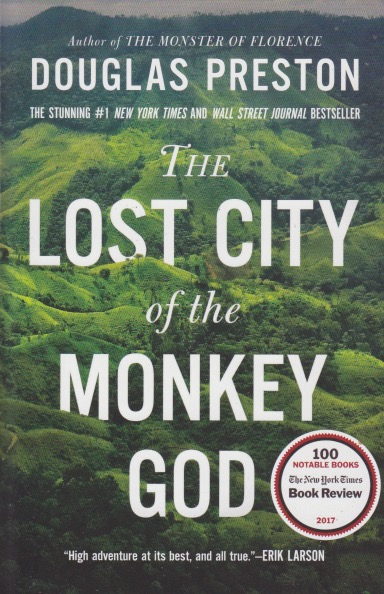
At the rate rain forests are being decimated for our lust for beef, it seems amazing that there are any unexplored regions left at all.  That’s what makes Douglas Preston’s account of visiting the fabled Ciudad Blanco, a lost Honduran city, so compelling.  Like most intelligent people, Preston is ambivalent about the discovery he chronicled.  The pristine jungle he encountered had to be cleared, at least in part, to allow for exploration of a lost civilization.  But what an adventure it was!  The danger of drug lords, a volatile government, large poisonous snakes, and ruins discovered by lidar combine in a true tale of danger and fascination.  As with Rudolf Otto’s description of the holy, this is something that fascinates and terrifies simultaneously.  And it’s controversial.

The Lost City of the Monkey God crosses several boundaries.  It discusses not only “Indiana Jones”-style archaeology, it involves one of the last unexplored places on earth.  It doesn’t sugar-coat the genocide initiated by Europeans—in fact, Preston describes some of the diseases in graphic detail—and he doesn’t excuse the guilt.  The book also addresses global warming and the possibilities of a global pandemic (the book was published in 2017).  Preston contracted Leishmaniasis while in the jungle and notes that as the globe warms up, it is making its way north.  The descriptions aren’t for the faint of heart, nor are his descriptions of the politics of treatment.  The first part of the book, describing the people and the set up of the base-camp show Preston’s chops as a thriller writer.  His encounter with a fer-de-lance had me checking the floor in the dark when I got up in the morning.

The civilization of the city, now known by the more respectable title City of the Jaguar, was unknown.  It was not Mayan.  The city was likely abandoned because of disease brought to the Americas by Europeans.  Even so, his description of the society in which the ruling classes keep their power by displaying their own sanctity that the average person doesn’t question rang true.  Societies from the beginning have used that playbook.  Convince people that the gods (or God) has revealed certain things that they (the ruling class) understand, and everyone else falls in line.  We see it even now as the messianic Trump following falls for it yet again.  This is a quick read, written much alike a thriller.  A few years ago I read Preston’s engaging Dinosaurs in the Attic.  I’m thinking now that some of his thrillers should also be on my list.


State and Church

An interesting article by Grace Davie notes how Patriarch Kirill,  the Patriarch of Moscow and all Rus´, has been backing Vladimir Putin in his war of human atrocities against Ukraine.  Why? Both men fear “godless” influence from the west.  Think of it as a “Russia first” policy.  Both believe Russian Orthodoxy preserves the “one true faith,” and so an ecclesiastical leader yet again believes he (aren’t they always he’s?) understands politics even as women and children are killed in the bringing of God’s kingdom on earth.  The distorted theology of imperialistic Christianity has caused untold suffering in the world.  God backed by nukes is an apocalyptic situation, but then the Orthodox don’t really take too much stock in the book of Revelation.

Photo credit: Michael Goltz, via Wikimedia Commons

In the midst of all of this, as well as our own versions of it in America, I wonder where the teachings of a prophet who advocated care for the stranger went.  Too bad he never stated directly, “Love thine enemies.”  That sounds radically leftist, doesn’t it?  No, those who think like this ignore the constant refrain of love in the New Testament to focus on a verse or two that say a man shouldn’t lie with a man.  Where’s Socrates when we need him?  Or even Tchaikovsky?  Religion becomes doubly dangerous when it has political backing.  “Love thy neighbor” becomes “kill thy enemy.”  And you must say your country is the greatest in the world and all others are inferior.  Sounds like something a carpenter from Nazareth would’ve agreed on.

Too much gold in the eye, it seems, can lead to spiritual blindness.  Established churches grow quite comfortable when governments hold them close.  The problem is an ancient one.  Even in the biblical world temple and palace mutually supported one another.  The idea of a country where no church ruled the state was a new one a few centuries back.  If different churches ruled neighboring nations the result was, of course, war.  Davie makes the point in her article that the Ukrainian Orthodox wanted some autonomy, which is the Orthodox way generally.  But the coffers in Russia swell more when you get cuts from all the others.  Churches and other businesses worldwide seem to know that by instinct.  But to back a ruler who has civilians, women, and children murdered to keep the godless out?  If that’s godly behavior then we’d better all get down on our knees.  


Heat Wave

Kim Stanley Robinson’s The Ministry for the Future wasn’t my favorite book read the first half of this year, but reading the headlines about India’s heatwave took me back to it.  That’s precisely the way the book starts out—with an intense, deadly heat wave in India.  As a nation lacking infrastructure in relation to the size of its population, and lying near the equator, India is particularly vulnerable to global warming.  We all are.  As the planet heats up and weather becomes more erratic and extreme, food shortages will appear.  At the moment we’re concerned because Covid and Putin-War have driven inflation to incredible highs.  A trip to the grocery store or gas station is like a horror film.  Meanwhile the planet’s heating up and Republicans are pushing for four more years of Trump environmental degradation.  Can we please open a window here?

Global warming has been challenged by many because of their religious conviction that the world ought to end.  Apocalypse is probably the Bible’s most dangerous teaching.  Speaking only for myself, I didn’t know there was an Indian heatwave until headlines took a break from Putin-War and America’s mass shooting crisis.  And oh, India’s sweltering under temperatures over 110 degrees.  People are dying.  Birds are falling from the sky in mid-flight.  We had a couple days in the 90s around here before the end of May.  Those were some uncomfortable times.  Meanwhile in India it was twenty degrees hotter.

The human ability to ignore life-threatening problems we create for ourselves in service of our theology is remarkable.  Even as experts declare religion is no longer important, it’s slowing killing us.  We focus our resources on making money, as if money will do us any good when we’re the lobsters in the pot.  As a species we’re amazingly capable.  Billionaires can afford their own private spaceships—something most nations in the world can’t spare cash to buy—and we have proven ourselves endlessly inventive.  When it comes to the basics—the need to believe, for instance—we turn a blind eye and pretend it’ll just go away.  Religion scorned is a very dangerous thing.  I once heard a talk by a scientist presenting a rosy technological future.  I raised my hand and asked about religious objections and he mused, “I hadn’t even thought about religion.”  His future was progressive and optimistic.  Robinson’s is quite a bit less so, although it ends by suggesting we might manage to pull through, with only millions of deaths.  As Donovan says, “It’s time to ask yourself what you believe.”


Capital Idea?

One of the most difficult parables in the New Testament is the one where Jesus praises the fraudster (in Luke 16).  In case you’re a little rusty it goes like this: a steward of the king learned he was losing his job.  Knowing his employment prospects were like those of a mid-career religion professor, he called in his masters’ debtors and slashed the amounts they owed so that they’d think kindly of him.  When the king finds out, instead of growing more angry, he praises the steward for his shrewdness.  The parable seems to not condemn deceit and his left both scholars and laity scratching their heads ever since.  I’ve never, in my long church going career, heard a sermon extolling fraud.  The good book can be tricky some times.

The parable came to mind because I’ve been the victim of the fraudulent use of one of my few credit cards.  I only have two.  One of the reasons for this is that it’s difficult to keep track of everything as it is.  Life is busy.  I have most of my bills set to autopay so that I don’t forget to do it when an email reminder comes.  I don’t remember the last time I used actual money.  Writing a check is a rarity.  How my credit card was hacked I don’t know.  I didn’t notice right away because the charges were always small and spaced out.  I caught on when I hadn’t been using the card in that lull after Christmas and the exact same amount was charged two months in a row.  I called the company and they confirmed that similar small charges had been going on since December.

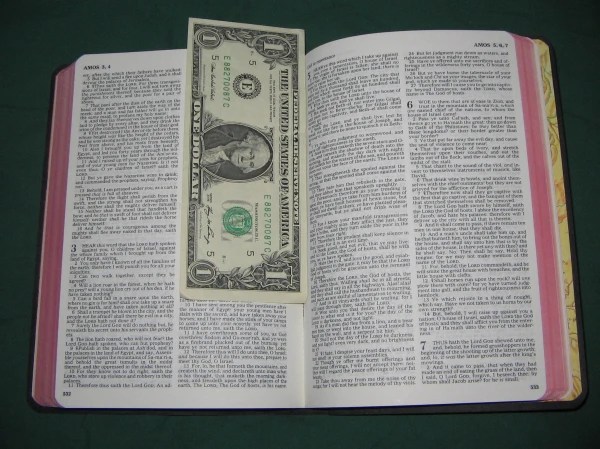
Now I picture in my head a scene where the criminal is caught and in court they use the Bible in their defense.  I’m sure it wouldn’t happen that way, but it’s an interesting idea.  Who’s going to argue against the Bible?  Heck, most courts can’t get those who know Trump’s many crimes to get their cases ever heard!  What do we do when the Bible distorts the moral narrative?  The fraudster, after all, is breaking at least one of the ten commandments.  Of course, those are negotiable these days.  The right wing’s endorsement of violence to maintain power shows that.  So it seems a prudent time to consider the parable of the fraudster.  We might still have something to learn from the Good Book after all.


Pure Fear

At work we have the opportunity to say a little about ourselves on a shared document for our teams.  This is a fairly new thing, so people I’ve worked with for years have no reason to look at it.  A couple of new hires, however, have noted that I watch horror movies and this has led to some budding friendships.  Since we’re all remote workers it’s mostly a matter of a line or two in an email about whether I’ve seen this or that film.  One of those recommended was the Hulu original Pure.  It’s actually pretty good.  The idea is a bunch of teenage girls are brought to a retreat center for a purity ball with their fathers.  This kind of thing can get very creepy very fast, given the incestuous overtones for such a thing.  Not only is it a religious event, it’s based on the story of Lilith.

Collier’s Lilith

The pastor preaches his first sermon about Lilith, but the girls from cabin 4 sneak out at night to meet some guys.  (Their presence is explained at the end of the movie.)  That night the girls summon Lilith, whom the minister’s daughter says is a demon.  The summoning works.  Lilith begins to interfere with services as the girls are tempted by the guys who are hanging around.  At the end, Lilith “possesses” Shay (the lead girl) and frees them from being controlled by the men in their lives.  The message is a refreshing one, and Lilith ends of being, well, somewhat as Shay puts it, “One man’s demon is another’s angel.”  

Religion and horror make a good couple.  I’ve never seen a movie that features the story of Lilith before.  The thing is, she’s not the scary part of the movie.  The religious believers, the fathers who try to control their daughters rather than giving them support after listening to them, are.  Parenting is tough, no doubt about that.  None of us are born into life with all the answers.  We quite often find ourselves not knowing for sure what we should do.  I couldn’t imagine being a parent claiming to have the solutions for all problems.  I’m a guy who watches horror for a form of therapy!  What I do think, however, is that we can try to be reasonable, loyal, and supportive.  I learn as much from being a parent as I teach.  The same was true of being a professor.  Humility, along with a willingness to continue learning your entire life is the only way that makes sense to me.  Although not a major studio production, this was one of the scariest movies I’d seen in a long time.


At Home Abroad

You would’ve thought it was obsolete.  You see, we have the power to make it end, although the price is very high.  As a Cold War kid, I thought that the next war would be nuclear.  I’d been more or less resigned to that fate by the time I entered high school.  When it didn’t happen I thought maybe mutually assured destruction (right, Dr. Strangelove?) would end war.  Of course it didn’t.  Propagandized as just causes, America intervened in Korea, Vietnam, Afghanistan, and a vague country called “Terror.”  Nukes stayed out of it as we used more old fashioned and nasty ways of killing people.  Now Russia, bristling with nuclear capability, is using that threat to keep others out of its war of aggression against Ukraine.  Still backed by Trump, Putin is killing women and children and threatening to end the world if anyone tries to stop him.

During this war time, several multiple shootings have taken place here in America.  Grocery stores and elementary schools become graveyards even as Americans bray for more guns.  Russia need not invade; we will take care of killing each other, thank you.  Although the pandemic has driven many people to the edge we had this problem long before Covid came along.  Of course, one of the industries to profit from the disease has been the firearm wing.  Nobody feels safe and so they buy more guns, creating a deadly feedback loop.  No other “developed” nation on earth has this level of private gun violence.  The Bible in one hand and the automatic rifle in the other has always proven a deadly combination.

Many of us embrace multiculturalism.  There’s no reason we can’t all get along, accepting others for who they are.  A nationalistic backlash has unravelled this dream.  Violence, domestically generated, if not internationally shipped, has become our hallmark.  There are solutions and they aren’t that difficult to achieve.  Those who bully their way to elected office have already shown their true colors.  Life is cheap when personal aggrandizement is at stake.  Guns do have their fascination.  The sense of power in holding one is palpable.  What if, however, we laid aside our dreams of power for those of the common good?  We want to kill others for being born in a different geographical locality than us.  To think of it selfishly, supply chains and inflation have demonstrated how much we need those from all over the world in order to thrive.  Dreams of power, it seems, quickly become nightmares.


Tweets from Heaven

What do the ultra-rich know about morals?  I read recently that now that Elon Musk has purchased Twitter for billions and billions of dollars, that he’s going to allow Trump back on because it’s “morally wrong” to prevent him.  Heaven help us when the plutocrats start dictating morals.  One of the odd things about my strange career is that I was an undecided major in college.  I settled eventually on religion, but my transcript shows a restless mind.  One subject that I came back to time and again was ethics.  I want to know what is right.  Shutting up a deranged narcissist who wants to run the country only to enhance his image of himself seems a moral no-brainer.  The case was different before he was elected the first time.  Now we know.  Now we have a responsibility.

Those who can afford to buy the moon shouldn’t make declarations on what is moral.  The church, however, has largely become irrelevant.  “It’s easier for a camel to pass through the eye of a needle,” a famous moralist, whose name is unfortunately forgotten, once said.  The moral compass of the uberwealthy is irrevocably squewed by a massive loadstone known as personal wealth.  Indeed, our very laws are made by the wealthy to protect the interests of the wealthy.  They do this by courting biblicists who seem to have forgotten—what is his name again?  You know, the one who seemed to have a problem with the rich?

Photo by Sharon McCutcheon on Unsplash

Morality has somehow become confused with concerns about other people’s genitalia.  We don’t ask what the wealthy do with theirs—it’s pretty clear what one tweeting resident of Mar-a-Lago has done with his.  Ironically Protestants broke away from the Catholic Church largely because of the sale of indulgences.  The idea that the rich could buy their way out of sins rankled sixteenth-century moralists into saying sola scriptura.  But now they have lost even their solaScriptura, for its part, is unequivocal about one thing—the problem of the rich.  The poor aren’t the problem.  In this new gospel, however, victims are blamed while the powerful rightly rule all.  The divine right of riches.  The wealthy, so misunderstood; the poor are the way they are because they’re lazy.  There’s no systemic cause for anyone not to have as much money as he wants (and it seems they’re generally he’s).  And they have a right to say whatever they want because their word comes down from heaven, echoing out from their private space rockets to the stars.


Empty Chair

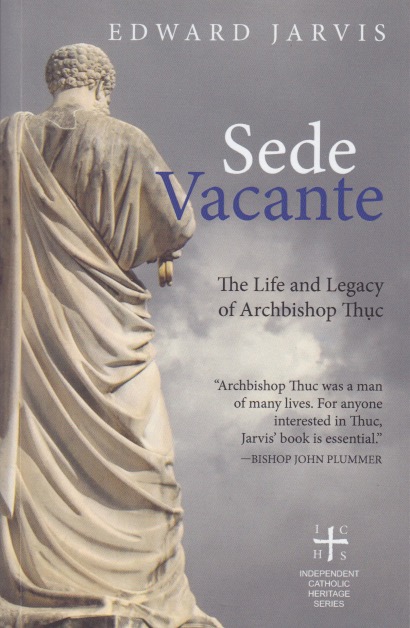
I’m not a Roman Catholic.  Nevertheless, I admire much about the tradition.  Its perceived unchanged continuity with the past is a big draw.  Still, one of the largest issues most religions face as they evolve is that things change.  No religion can stop it.  Edward Jarvis’ brilliant Sede Vacante: The Life and Legacy of Archbishop Thục explores the life and possible theological motivations for one of the most fascinating people in recent church history.  Ngô-dinh-Thục became a Roman Catholic Archbishop in his native Vietnam.  He was the brother of Ngô-dình-Diệm, the first president of South Vietnam, and likely one of the reasons behind the Vietnam War.  In fact, Thục had two other extremely prominent brothers and the four of them formed a junta that ruled the country with authoritarian vigor and utilized all the corruption for which authoritarianism is famed.  They became enormously wealthy, they used torture and extortion to get what they wanted, and Thục supported all of this.

Eventually excommunicated (twice), Thục had to leave Vietnam.  Two of his brothers were arrested and assassinated.  After his self-imposed exile Thục attended Vatican II, the papers of which he signed, but his prominence faded.  Without his holdings in Vietnam he was poor, and in fact lived in poverty.  Then he started consecrating bishops for breakaway Catholic groups, including the strange sect of the Palmarians.  This led to his first excommunication.  Later in life, after restored to the graces of the church, he again started consecrating bishops for the Sedevanctantists.  These were Catholics who believed the Pope was invalid and his chair (sede) was vacant (vacante).  He was excommunicated again and, after moving to the United States, died in poverty.

I keep these posts brief enough that I don’t have space to spell out all the amazing angles from which this life could be viewed (read the book for that).  In our authoritarian-loving times, however, the nature of those who reject “modernization” stood out.  Many Sedevanctantists insist on the restoration of the Latin mass.  They somehow believe the Popes since about Pius X have been liberals(!).  Like Trumpists, they believe it is possible to halt the movement of culture and go back to the way things were in the 1950s when outward conformity was all the rage.  Even Fonzie, after all, was really a nice guy instead of a dangerous biker.  Although there is some theological minutiae here, I recommend this book for anyone who has even the slightest interest in the history of Vietnam, the Roman Catholic Church, or the mindset of those who reject the modern world.


Fight for Mom

The spring holidays come think and fast.  Depending on when you start spring we’ve got Valentine’s Day followed a month later by St. Pat’s.  On it’s roving schedule Easter hops along, with its precursor Mardi Gras.  There’s Earth Day, May Day, and Mother’s Day.  One thing they all have in common, apart from being holidays, is they’re not worthy enough to be days off work.  You have to wait for Memorial Day for that.  Today, in any case, is Mother’s Day.  We stop to think, as if we shouldn’t every day, about our mothers.  Women are pretty poorly represented in the holiday scheme, unless you’re Catholic (and even those aren’t days off).  Mother’s Day always comes on a Sunday so employers are eternally thankful.  A holiday with no consequences.  But should it be?

We’re only just beginning, after being “civilized” for five thousand years, to give women their due.  Only just beginning because capitalist systems are built on male fantasies of growing rich without the female humane element.  It’s not a system friendly to mothers unless we find a way to make people spend money.  Women remind us to look for cooperation and not just competition.  Working together we can make things better for everyone.  Men, left to their own devices, go to war.  Men take what they want and women act as our conscience.  Mothers sacrifice to keep us safe and alive.  Their self-denial resonates better with the Christianity suborned by men into a money-making venture.

It’s Mother’s Day.  It’s a day to put aside our acquisitive, war-like tendencies and think of someone else.  It’s a day to imagine what it might be like if we made a habit of good behaviors.  It’s like those grades they used to give in school for “deportment.”  It wasn’t all just about how well we learned our facts.  Mothers teach us what it means to set aside our own wants for the needs of another person.  Without that the human race simply wouldn’t survive.  Instead of politically stacked courts taking away women’s rights, today we recognize that without women none of us would be here.  The human experiment only succeeds when women are recognized for all that they contribute to life.  To civilization.  To society.  We may not have commodified it, so why not listen to our mothers’ wisdom?  Why not make it every day instead of just the second Sunday of May?  Don’t forget to thank your mother today.  Better yet, fight for her rights.


Wicker Lessons

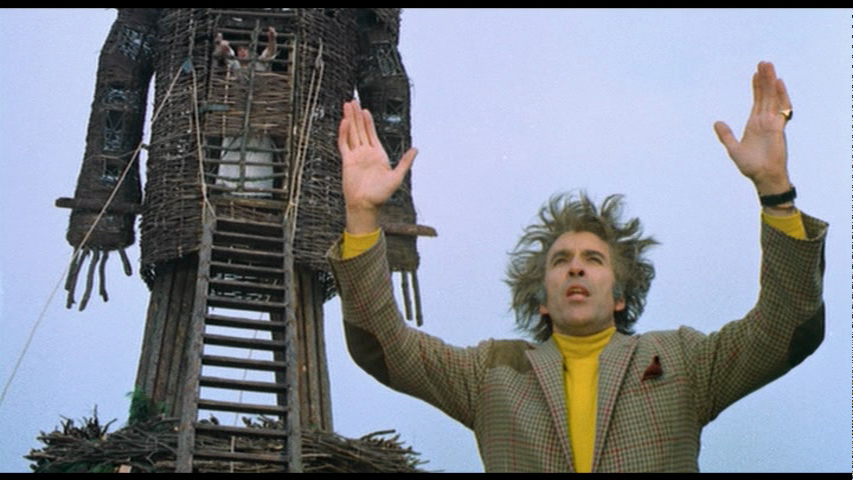
Beltane creeps up unnoticed.  Not an official holiday in these parts, it is, hopefully, a sign of slightly warmer weather than we’ve been having in April.  It’s also the day that I can’t help but think of The Wicker Man.  One of the early intelligent horror offerings, it came out 49 years ago.  My book on the movie, as far as I know, is still scheduled to come out next year, on its fiftieth anniversary.  Watch this space for further announcements.  In any case, today I have a piece on The Wicker Tree—the “spiritual sequel” to the movie, appearing on Horror Homeroom.  Societies in old Europe tended to celebrate this as the beginning of summer, which explains why Midsummer comes half-way through June.  The seasons aren’t always the same in all times and places.

In Germanic countries, Walpurgisnacht, which began last night, was a time of concern about witches.  Our modern calendar tries to concentrate our fears in late October, but they are appropriate any time of year.  These days Beltane’s more of a day when we expect warmer weather to start rolling in and perhaps, especially this year, hopes for peace.  May tends to be a hopeful time—it’s a transition.  The persistence of our fears suggests that learning to deal with them might well be a good idea.  Instead of hiding monsters away, why not face them?  The Wicker Tree isn’t a great horror movie, but something holds true for it—the monsters are us.  In that film capitalism is the real horror.

What makes The Wicker Man the classic that it is is religion.  More specifically, the clash between religions, neither of which is willing to yield.  This is largely behind religious violence throughout history, up to the present.  Religions convinced that they’re the only possible way to the truth can’t recognize that believers of other religions feel exactly the same way.  Yet May is about transitions—one season giving way to another.  It’s part of the inexorable change that marks life on this planet.  We may not fear witches in the mountains any more, but we still fear what’s out there.  Beltane is a hopeful holiday—a day of blessing animals and building fires to encourage the strengthening sun.  Instead of making it a day of clashing beliefs, perhaps we should look for our common humanity in it.  Perhaps we can learn a deeper lesson from The Wicker Man.


Love Your Mother

It’s not exactly a birthday, for we don’t know when exactly she was born.  We choose April 22 to think of our mother—the mother of us all.  For many of us concerned about the environment, not only is today Earth Day, but April has become Earth Month.  To me one of the saddest aspects of our environmental crisis is that certain sects of Christianity are largely responsible for it.  Religion working against the betterment of humankind.  So it was in the beginning, is now, and hopefully we won’t have to finish the triad.  Granted, religions help us to keep our mind on spiritual matters.  The problem is when such things become dogma and the real needs of real people are ignored so that a fervently desired fantasy can be lived out by destroying our planet.

In response there are what have been called “deep green” religions.  It’s difficult to gain a critical mass, however, when many of those who think deeply about the environment have left religion out of the equation.  It seems to me that we’ve got to make peace with our evolved tendencies toward religion in order to have any meaningful discussion about this.  Meanwhile global warming continues.  It does so with the blessing of a kind of Christianity that sees this world as expendable and exploitable based on an idiosyncratic reading of Genesis.  Even though all the evidence points in the opposite direction, we have networks (here’s looking at you, Fox), owned by billionaires who know you can sway Christianity simply by kissing your hand to the moon.

It’s my hope that this Earth Day we might start to think about how to integrate some deep green theology into the kind that sees no room for green in the red, white, and blue.  The self-convinced have no desire for conversation about this and those already certain that religion is nothing but superstition tend to agree.  Since antiquity, however, the wise have realized that progress comes from the middle ground.  Politicians, in their own self-interest, have stoked the fires of division and hatred, knowing that they get reelected that way.  Mother Earth, I suspect, is rolling her eyes.  She will survive even if we succumb to our own mythologies.  We need to learn to talk to one another.  We need to accept that we evolved to be religious.  We need to look for middle ground while there’s still dry ground on which to stand.  It’s not exactly a birthday, but it is a holiday that should be taken seriously. It’s only right to love your mother.

From NASA’s photo library

Looking North

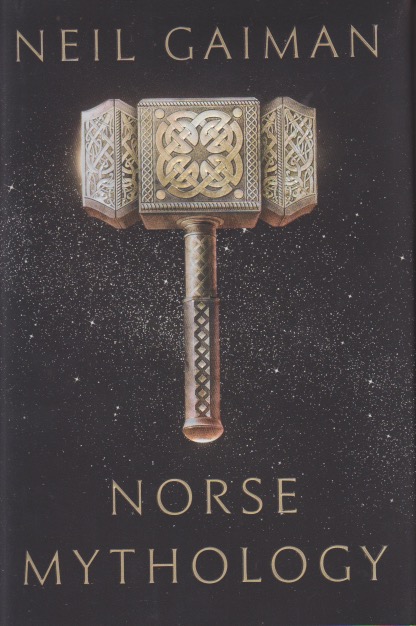
As organized religion continues its slow decline, mythology remains.  Indeed, it seems to be growing in interest.  The problem with many mythologies, for monolinguals, is that they come in languages other than English.  Translation always loses something, which is why, I suspect, Neil Gaiman was tapped to retell the Norse myths.  A very talented story-teller, Gaiman has written about gods before.  He knows their literary potential.  Norse mythology is rather odd in the canon of western thought.  The stories feature gods with as many foibles as humans and with conflicting motivations.  In some ways they are more believable than the monotheistic tradition.  They are both fun to read and poignant.

At the same time Norse Mythology is a somewhat perplexing book.  It’s difficult to tell, without being an expert, what is Gaiman and what is ancient.  In fact, the book sits next to another one with the exact same title on my shelf.  That one is labeled nonfiction, and it’s a bit more academic.  Perhaps it’s an occupational hazard that I tend to want to approach mythology in original languages, if possible.  I’ve never studied Nordic tongues and it would be a little difficult to justify starting now, with all the other things I’ve got to do.  It’s not that I don’t trust Gaiman, it’s just that every retelling is an interpretation.  Still, I’m sure the book gives the flavor of the records that survive.  One of the fascinating features of Norse mythology is that gods die.  Since it ends with Ragnarok, that seems inevitable.

Many mythologies have the world ending with the establishment of the happy reign of a singular deity.  Ragnarok, which Gaiman (and perhaps the originals) sets in the past, sees the gods dying on the battlefield against Loki and the giants.  As the earlier myths make clear, however, death in battle is the most glorious way for the Norse to end their lives.  (And seeing how it has led to a pretty peaceful adult nation, one wonders if the mythology had a calming effect.)  I’ve not read extensively in other versions of Norse mythology so I don’t know if Gaiman’s ending with Balder returning and the world starting anew is his innovation or part of the original.  Having gods who die, however, seems like a potential leveler for humans who suffer from greater powers.  There’s a sobriety to it that lends gravitas to the whole.  And like all good books, Norse Mythology has left me hungry for learning more.