Learning to Like

The shout-out is an always appreciated gesture.  Among the guests on The Incarcerated Christian podcast, I’m pretty clearly the one with the smallest following.  That makes me doubly grateful to Robin and Debra for the work they’re doing.  If you want to get a sense of what their initial year involved, please take an unrushed moment or two and listen to their year-end reflection.  Better yet, follow them wherever you follow podcasts.  I’ve been watching some YouTube lately (I know, I know, the world has gone after TikTok instead) and I’ve come to realize that even those channels with millions of views have to remind people every single episode to click like, share, and/or notification.  Nobody knows it’s worth their time if readers/watchers don’t share!

One of the things about writing is that is craves readers.  There’s an almost Hebraic sense in which my writing is intended as a statement, whether or not it’s even read.  Ideas build up until they must be expressed.  You start to get to know other people by their words, written or spoken.  I sincerely wish I had more time to listen to podcasts.  I’m one of those people who can’t write with music or talking going on.  Nor can I work that way.  Those two activities make up the majority of my waking hours (perhaps I’m trying too hard, if there is such a thing).  Even the smallest Who, however, has his “Yop” to express.  In that case, however, he ended up saving the world.  I suspect many people have no idea what this blog’s about.  If you know, please tell me.  (There’s a comment section below.  Don’t forget to click like and share when you’re down there!)

The Incarcerated Christian has had everyone from evangelical pastors to obscure religionists such as yours truly on their podcasts.  People who aren’t afraid of the dark.  There’s an episode about the divine feminine.  There’s another by a blogger who used to follow my blog and comment on it in the early days until his own efforts took off.  And there are the hosts, Debra and Robin, whose stories are intriguing in their own right.  They approached me not knowing my own history with abusive religions—perhaps it comes through in my writing, or at least my choice of subjects?  There’s a strange comfort in knowing that others have had similar experiences.  Religion can be a monster, devouring people and spitting them out, all in the name of sanctity.  Listen to the Incarcerated Christian podcast, and don’t forget to like and share alike.


Horror Week

“Remember, remember, the fifth of November,” the old rhyme goes.  Earlier this week I advocated for Halloween being the start of the holiday season.  There’s been a lot going on this week and I’m now reflecting on how Halloween also took some of its identity from Guy Fawkes Day (or more properly Guy Fawkes Night), here on November fifth.  Halloween, as we know it, incorporates traditions from Samhain (actually November 1), All Souls Day (November 2), as well as Guy Fawkes (November 5).  All the while the Hispanic world is observing Dia de los Muertos, a multi-day holiday whose origins are somewhat uncertain but which shares similarities with Halloween.  In other words, it’s a veritable week of spookiness to get our November started off right.

Ironically, at least in corporate America, none of these are work-free holidays.  For the Celts Samhain was the most important day of the year.  A day when the dead might wander into our realm or we might stumble into theirs.  For the modern person it’s a day of checking email, making deals, trading and evaluating how well we did at it.  Pretty mundane stuff.  The message of all of these holidays is that there are matters of deeper import going on.  We should perhaps look up from our monitors and see.  Just as that veil between the living and dead thins at this time of year, so does that line between work and personal life, when our laptops are as omnipresent as a haunting deity set to keep our minds on the sin of not working.  

Guy Fawkes is about rebellion.  More specifically, putting down rebellion.  Keeping the status quo.  Halloween and its siblings are all about challenging the way things are usually done.  I often wonder what it would be like if people took it seriously.  The costumes are fun, yes, and the trick-or-treating, but there’s something more serious underneath.  Perhaps symbolically we pretty much ignore All Saints to Guy Fawkes, or Dia de los Muertos as pleasant diversions.  There’s some spiritual heavy lifting going on behind the scenes, however.  It’s not all about fun and games, because fear is always with us.  We know there are problems but it’s more comfortable keeping things as they are.  Guy Fawkes, perhaps for a cause we see as obsolete—restoring a Catholic monarchy—was trying to change things for the better.  What’s more, his motivation was religious.  There are spooky parallels here, even today.  It might be good to take a day off work to ponder the implications.


Interview Two

October turns the northern hemisphere mind toward Halloween.  It must be strange to receive northern media while living in the global south—Halloween occurs just as spring is getting underway.  I guess that’s what May Day’s for.  In any case, in the United States Halloween thinking is in nearly full swing.  My last two books, while not Halloween themed, look at horror films which, in keeping with October, are on everyone’s mind this season.  And it’s been quite a week for interviews.  The second half of my podcast interview on The Incarcerated Christian was posted yesterday.  If you want to hear more fun Q & A with Robin and Debra, click here.  I’ll post more about this Friday, but tomorrow my interview with Eric Ziolkowski of Lafayette College will air as part of the Easton Book Festival.  The festival’s going on right now, so be sure to check out the offerings online.

One bit of advice that I give as an editor: if you want to make it as an author you need to promote your own work.  Some of us were reared to believe that it’s in poor taste to do this, but in the internetted world it’s pretty much a requirement.  Something I learned from political activism is that every election is local.  Getting noticed also has to start in your own backyard.  I love doing interviews.  It’s always flattering to know that someone’s read your book and wants to know more about it.  I’ve started to explore the newish area of religion and horror.  From what we see in the news, it seems like it’s an area that’s likely to take off.  But only if those who work in it get their stuff out there where it can be seen.  (Or heard.)

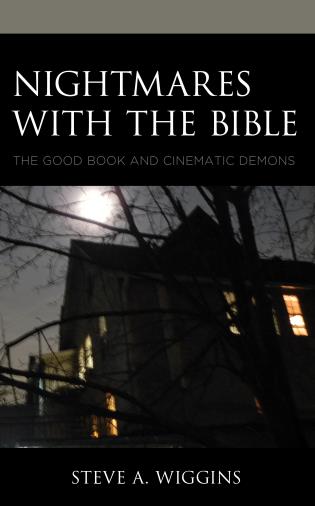
Neither Holy Horror nor Nightmares with the Bible have sold very well.  They’re expensive, and academics, who will spend money on books, are still trying to decide if this area’s worth exploring.  I admit that there’s a puerile kind of naughtiness to taking monsters and “low brow” entertainment as a subject of study.  Horror, however, has lots of fans.  Perhaps not in the academy, but in the real world.  I like to think such marginal areas bring people together.  Horror, like demons, isn’t going away any time soon.  Instead of running away from what you fear, why not try embracing it?  If not even that, please consider the free content available on The Incarcerated Christian and the Easton Book Festival.  After all, Halloween’s just about here…


Book or Movie?

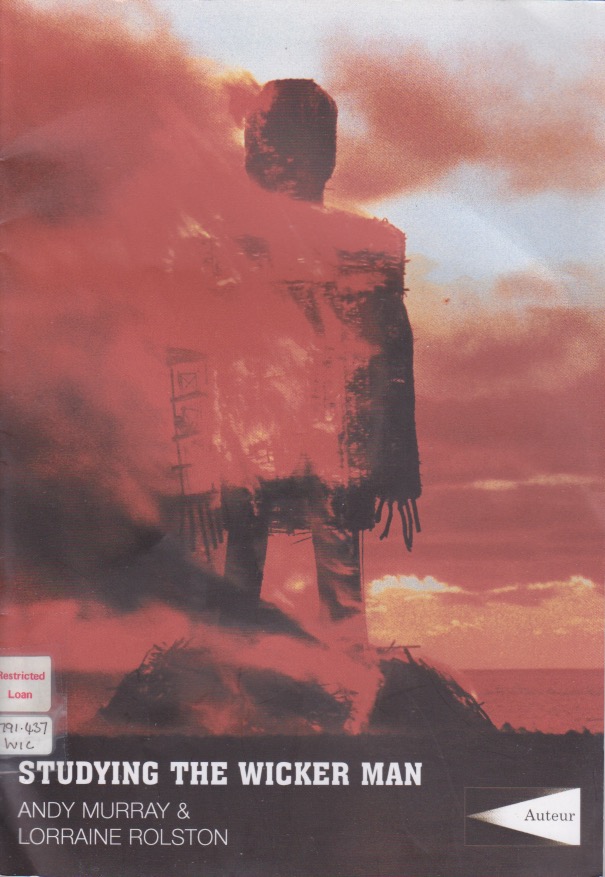
The funny thing about people, or at least one of the funny things, is that when individuals get together we notice different things.  It can happen at in-person meetings or “virtually” through books.  I’m working on a book on The Wicker Man, as I recently noted.  Others have written on the movie, of course, and I’ve read some of their analyses already, but I’m continuing to read more.  Recently I finished Studying The Wicker Man by Andy Murray and Lorraine Rolston.  This particular book—more along the lines of a booklet, actually—has quite a few observations about the movie that I had missed.  Connections, or interpretations, that I’d failed to make despite having watched the movie many times.  It takes the meeting of the minds to bring many things to light.

One of the questions they raised (and there will be spoilers here) is why the movie bears the title it does.  Obviously the climatic moment of the film features a wicker man.  Murray and Rolston noted, however, that more could be going on in this title than is obvious.  Sgt. Neil Howie, the protagonist, is a lot like a wicker man himself.  I won’t repeat their wonderful work here but I will say it’s convincing.  The literary trope of “the hollow man” (it could be woman, or hollow person, but I’m writing from personal experience) can be a poignant one.  We know that life may carry on biologically, but what makes us who we are is what goes on inside.  The hollowness may be intellectual or emotional.  Either way it’s a trial.  It’s something that I wouldn’t have thought of without help.

Studying The Wicker Man may be slim, but it has some powerful ideas.  As a society we’re often impressed with size.  When a promotional photo wants to show an author with gravitas, they generally ask him or her to hold a thick book.  There is certainly a place for large books, but insight can come in any size.  This particular book is obviously designed for film studies courses focusing on this particular movie.  It does point out that “cult classics” become such by not being widely seen, so I realize many of my readers (presuming there are many) won’t be terribly interested in a book that analyzes a movie they haven’t seen.  If you’re one of them, and if you don’t mind a movie with an ending that will stay with you, I would recommend watching the film before reading the book.


Druid Redux

I know I’ve talked about this book before.  I had cause to learn about the Druids again, and Peter Berresford Ellis’ book was handy.  I’m pretty sure I have Stuart Piggot’s book somewhere, but I haven’t seen it since the move, so I turned to Ellis again.  The first time I read him I was commuting and couldn’t take notes.  (My specialized form of research has its limitations.)  This time it took several days’ more reading, and doing so with more active engagement.  One thing that really stood out to me this time was the Indo-European connection.  Druids, according to Ellis, were essentially Brahmins—the intellectual class in a stratified society.  Having derived from a common ancestor, the two societies diverged with Brahmins surviving in India and Druids going extinct with the somewhat genocidal treatment of various other groups against the Celts.

Druids were egalitarian as far as the sexes went.  This is one of those examples where Christianity’s masculinist orientation furthered a trend that led to women being treated as inferior.  Evidence points to early female Druids, and even female political leadership among the Celts.  As the male godhead took over the remaining influence of women eventually evaporated.  The Druids, you see, were extremely focused on learning the truth.  Their pre-Christian judicial system was oriented toward fairness and finding out what really happened.  In other words, ethically they required no conversion.  That was a matter of theology, and theology often brings its own set of issues.  

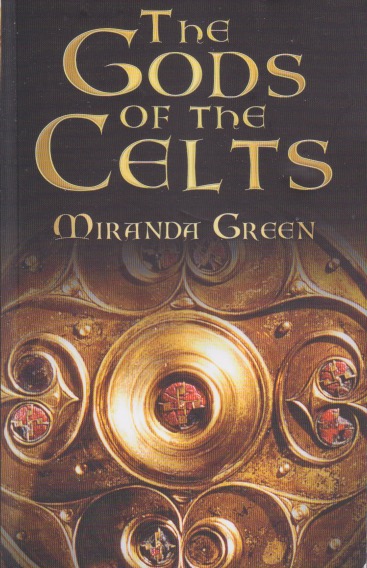
The Romans, who’d had a long and protracted war against the Celts, drove them to the fringes of their empire.  Britain (and Brittany in France) were far enough removed from the base of power in Rome that the Celts survived in the edges of the islands: Cornwall, Wales, Scotland, the Isle of Man, and Ireland.  As a distinctive culture, Celts have been in fashion for some time now, but that’s a new development, historically speaking.  Ellis’ book explores this angle quite a bit since understanding the Celts is essential to comprehending who the Druids were.  The lack of native written accounts (Druids forbade writing their wisdom, passing it on by memorization over the centuries) hampers our ability to have a coherent history.  Ellis, however, seems to have reconstructed well.  Modern Druid revivals necessarily contain speculative elements, and historically the Druids wouldn’t have been perfect either—nobody is.  They do seem to have had a reasonable and just society for the most part, something we’ve managed to lose, along with much of their wisdom.


Thoughts on Job

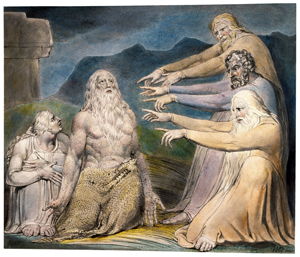
The book of Job has been on my mind lately.  Leave aside the remarks of Eliphaz, Bildad, Zophar, and Elihu, it is one of the most honest books ever written.  Many people think Job is trying to answer the question of why the good suffer.  If so, it does a poor job.  No, Job is an exploration of suffering, and Job really isn’t looking for an answer why.  Instead, he simply wants his pain to be heard.  No fixers, no advice.  Simply to be heard and to know he’s been heard.  You see, in the world of the Bible words were significant.  Many prophetic utterances were simply that—utterances because it needed to be said.  Job ups the ante quite a bit, however, when he begins to wish that God would answer him.  God, after all, is responsible for his pain.

William Blake’s Job

The world is full of sadness.  Some people feel the sadness of others deeply.  We all strive for some kind of equilibrium, some balance.  There are, however, a lot of people out there that truly do suffer and for no particular reason.  Job is a polarizing book.  Many people dislike it intensely.  I suspect that some of them don’t like to think of the world in this way.  Those who do good should be rewarded.  (The book makes plain that Job is perfect.)  Those who do evil should be punished.  Job makes clear that that’s not the way the world actually works.  For reasons we can’t know (who’s privy to the divine council and its deliberations about our fates?) we may end up losing our hopes, dreams, health, and wealth.  Job is kind of a horror story.

There are those who read Job and argue from the point of view of his friends.  In the book itself God condemns the outlook of the friends, noting that Job—no matter how challenging his words were—spoke honestly.  Life is seldom fair.  We as human beings must strive for fairness as best we’re able since we sense that it’s morally good.  Indeed, much of the Bible upholds fairness.  The book of Job questions it.  Not it’s goodness or morality, but rather why the world doesn’t reflect it.  When someone is suffering one of the most helpful and difficult things we can do is listen to them.  We need not open our mouths to fix, suggest, or advise, like Eliphaz, Bildad, Zophar, and Elihu.  We simply must let the words be said.


Healing Time

Twenty years ago today I walked into the refectory at Nashotah House after morning mass and wondered why the television was on.  Normally people had their own theological issues to hash out over breakfast, so this was unusual.   When I saw what was happening, I skipped breakfast and went home to my family.  I remember the feeling of shock and terror of those days.  America, I knew, wasn’t the innocent nation it projects itself as being.  We had provoked, but none of that mattered as the isolationism of over two centuries on a mostly friendly continent crumbled.  We were vulnerable.  Living in the woods of Wisconsin there was no immediate danger, but the sense of confusion—and certainly the feeling that a less-than-bright president wasn’t up to handle this—made us all feel weak, even with the most powerful military in the world.

Yesterday the New York Times headlines ran a consideration on whether we’ve emerged better in the ensuing two decades.  Looking at where we are—a deeply divided nation because a narcissistic president that the majority of voters voted against put (and still puts) his ego ahead of the good of the country—the answer seems obvious.  It will take years, if not decades, to heal the damage that one man did.  His putative party (really his only party is himself), seeing his popularity as their means to power, refuse to distance themselves.  We simply cannot move forward.  Not in the midst of a pandemic where Trump followers won’t get vaccinated causing new waves of the virus to surface and thrive.  I’d like to think that on September 11 we might reflect—yes, I know it’s hard work—on how we all need each other.

Photo by Jesse Mills on Unsplash

Little could I have guessed in 2001 that a mere ten years later I would find myself working in Manhattan.  Somewhere in my mind on every day of that long commute I wondered if something might again go wrong.  On the bus I was thrown together with people of every description—well paid and just getting by, women and men, gay and straight, from all around the world—and we knew our fates were linked together.  Differences had to be put aside.  Selfishness has no room on a crowded bus.  That was my introduction to life in New York City.  Those who hear only the poison rhetoric of 2016 through 2020 should try commuting with an open mind.  If we all took the bus, life after 9-11 might’ve turned out very differently.


Moral Bankruptcy

Last Thursday, apart from being the day after the plumber came, Tropical Storm Ida dumped on us, and the first day of September, the New York Times headlines were disturbing.  I don’t have time to read many news stories in depth, but I glance at the headlines to inject just enough worry into my day.  After discussing the flooding, Afghanistan, and a few other stories a particular quote caught my eye and kicked my gut: “Kevin McCarthy, the House Republican leader, threatened to retaliate against technology companies that comply with the inquiry into the Capitol attack.”  This was a bit much after reading how much suffering is going on in the world.  Republicans threatening retaliation to keep the truth hidden in plain sight.  Is there any term for this but moral bankruptcy?

I simply can’t understand how any moral Republican can hold their head up proud.  I grew up Republican.  I was conservative most of my way through college.  I would never have stood up for a politician of either party that said “I’ll get you back if you tell the truth.”  Lies are the most insidious of acts.  How can you ever believe someone after they establish a reputation of being untruthful?  How can you believe he actually does support your cause?  How can you believe anything he says?  Not only that, but threatening his own fellow Americans for wanting to find out what his party supported on January 6.  There’s a reason the day is known as Epiphany—“the manifestation.”  When truth becomes clear.

A political party that has nothing to offer but lies and violence has become an organ of organized crime.  Perhaps our legislators should be given a dictionary open to the entry titled “perjury.”  We now have Republicans who lie under oath to become Supreme Court justices.  Who try to start rebellions with mobs ready to murder their colleagues and who then sit back and claim the rectitude of God Almighty when it’s over.  What have we come to here?  People were drowning in basement apartments and people were suffering loss of power and damaged homes.  Republicans meanwhile were working up threats of retaliation against people for simply trying to get at the truth.  The plumber did the job he said he would.  Those who projected and tracked Ida told the truth to try to save lives and property.  In the sewers of Washington, however, those loyal to the party vowed to keep their secrets safe. 


Which Wednesday

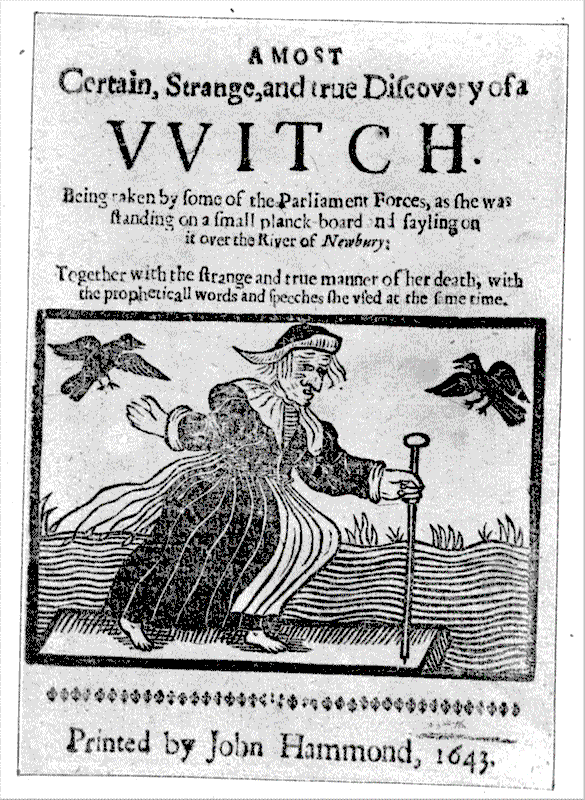
I’m not superstitious but it’s still pretty dusky when I go for my constitutional on cloudy days.  I was walking along thinking about Cernunnos, the way one does, when a black cat darted out of the underbrush and across my path.  My thoughts turned to witches.  Then a large toad jumped out in front of me in the half-light.  Perhaps it was because I picked up a booklet about witches recently, but this felt very uncanny to me.  There’s a place where the woods close in on both sides of the path.  The sun wasn’t yet up, and the clouds meant it wouldn’t have much mattered anyway.  When the bird calls stopped I began thinking about turning around and going home.  Nobody else was out this morning and although I don’t mind starting my day with the weird, I was thinking “not on a Wednesday.”

A thick mist lay over part of the path and I realized just how uncomfortable we tend to be when we can’t see clearly.  Despite that, and the black cat and the toad, I’ve never really been afraid of witches.  I guess I try to please people too much to think that someone might want to harm me supernaturally (at least among those who know me).  I recently found a booklet on witches—one of those strange impulse buys after being mostly house-bound for the better part of a year-and-a-half—that perhaps prompted my thinking this morning.  Although it seems to be most interested in earth-centered religions, it has an article about Salem.  Despite the more modern embrace of witchcraft in Salem, historically it had to do with human fear and hatred, a combination that is scary indeed when applied by those who are superstitious.

Cernunnos is a Celtic god generally portrayed with deer antlers.  Although lack of literature means we know little about him, he’s been adopted as the male counterpart to the female earth-goddess in some traditions.  Modern witchcraft is based on an orientation toward nature.  It’s kind of a ground-up religion rather than a top-down one.  Christians traditionally labelled it “Devil worship,” as they tended to do with anything they objected to.  Such demonizing helps no one, of course.  And when these ideas grow into superstitions people get hurt.  So I’m out here in the half-light because in the mornings days are shortening quickly and I have less and less time before work begin after the sun rises.  And I have witchery on my mind.


Afghanistan

As much of the world watches in dismay, the Taliban have taken over Afghanistan.  Most religious rule ends up being harmful to women, it seems.  We have centuries of male-run Catholicism showing how both witch hunts and heretic murder became common in Europe.  Do we expect any better now that religious extremists have taken over a nation next door to Iran?  The mix of politics and religion has generally not been favorable and unfortunately if the Republican Party could have its way we would see a similar thing here in the United States.  An ill-executed coup d’état on January 6 of just this year led to the epiphany that the Republican jurists would protect those who tried to overthrow the US constitution in the name of religion.  And we know how they feel about women’s rights.  We should look at Afghanistan and tremble.

It seems difficult to believe that less than a century ago we went to war to defend democracy.  Senators alive to witnesses the privations of war are now recklessly trying to remake America in the image of a fascist state.  Instead of looking at Afghanistan as a mirror, the only thing they can see is this is a Muslim nation.  Christians would surely never try to take over a capital by force.  They turn a blind eye to our own insurrection, not yet nearly a year old.  Ironically the book they claim to follow contains a often quoted but more often ignored statement: “He that is without sin among you, let him first cast a stone…”   It’s no accident that their intended victim was a woman.

Religious politics can be maintained by force of arms or legal maneuvering. Both are evil.  The result is the same either way: women and thinking people suffer while the self-righteous rule.  Even such basic assumptions as protecting their own people from a horrible disease by the simple expedient of a free vaccine has been politicized for purposes of keeping in power.  When the moderates in their own party speak up they are shouted down.  How different is this than the shouts of triumph heard in Kabul?  The alternative—government that allows the freedom to believe what you will as long as all people are treated fairly—has been made out to be a sin.  The god worshipped both by Republicans and the Taliban has little sympathy for humanity.  He, and most certainly he is male, is all about power.  We watch in dismay.

Photo by Joel Heard on Unsplash

Weather rules

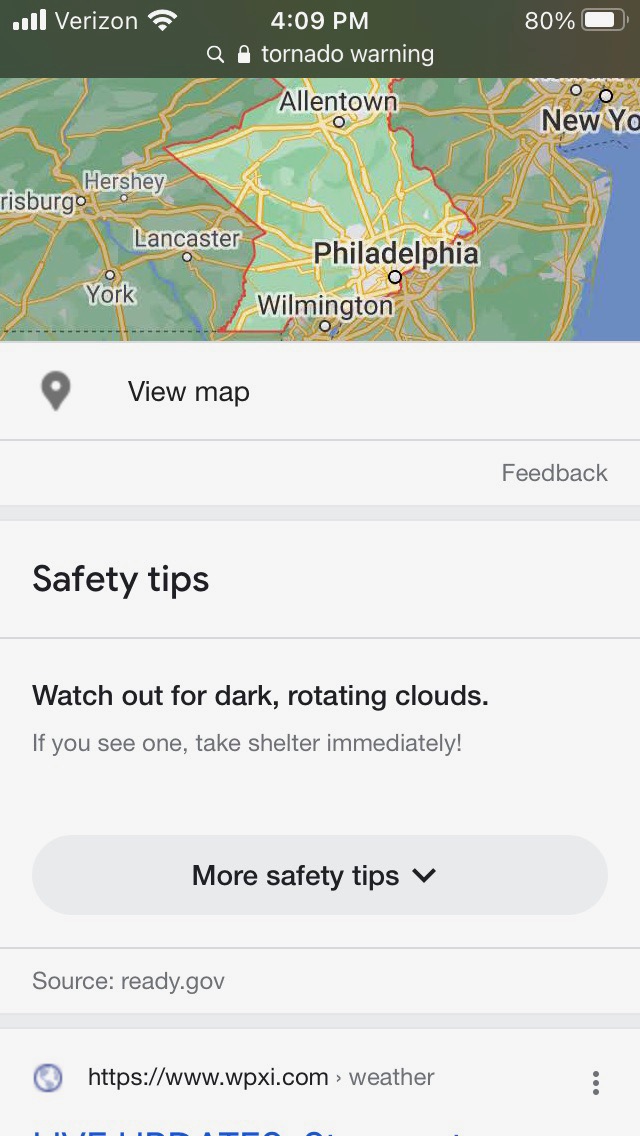
One of the observations that prompted me to write Weathering the Psalms concerned the disruptive nature of storms.  Power outages was pretty common in that part of southeast Wisconsin where we were living at the time.  Downed trees could block rural access—more limited than the alternate routes of cities—for hours.  There was clearly a sense of being at the mercy of nature and it was disruptive to the human schedules and lives we’ve constructed.  The tornado warning we had a couple of days ago reminded me of that aspect.  While radar saves lives by giving advanced warning, it also makes it difficult to concentrate on work when you’re told to take shelter.  As far as I’m aware HR doesn’t have a tornado policy.

Having lived in the Midwest for a decade and a half, I came to be aware of the difference between a tornado watch and a tornado warning.  While my phone was showing a watch, another family member’s was showing a warning.  My evening plans were replaced by standing at the window looking west.  The worst of the storm passed us but as long as the weather was threatening there was little else we could do.  Eventually all devices agreed that this was a warning and we should take shelter.  The storm eventually passed, leaving my tightly packed plans for the day in tatters, even though our actual house was fine.  That’s the nature of the weather that makes it so interesting.  As much as we like to think we’re on top of it, we’re really all potential victims.

Weather is more powerful than humans.  We have to change our plans according to its whims.  And climate change is making it more extreme.  Even with the evidence all around us deniers still try to block legislation that takes steps to preserving our planet.  Those who wish to destroy it for theological reasons don’t stop to think that doing so is about as selfish as you can get—something that the Bible really doesn’t promote at all.  One thing about the weather: although it is very different from place to place, we’re all in it together.  It can be very disruptive, yes.  It reminds us that we and our human plans are temporary.  When we’ve managed to do ourselves in, or have abandoned this planet to find a more hospitable one we can ruin, the weather will remain.  Majestic storms will come and go, whether or not there’s anyone here to see and appreciate them.


Freedom of Religion

One of the highly touted liberties in the United States is freedom of religion.  It’s easy to believe this is true when you can walk down any “Church Street” in many mid-size towns and go shopping for a theology that fits your outlook.  What remains hidden here, however, is that the freedom is largely restricted to the “Judeo-Christian” tradition.  (Yes, I know “Judeo-Christian is a disputed category, but it classifies several belief systems that share a basis in the Bible.)  For religions that don’t necessarily agree with the premises of the biblical religions the story is quite different.  That’s because, at least in part, our culture is based on the Bible and its limited worldview.  Colonists, convinced by centuries of Christian hegemony, had assumed the rightness of the Christian outlook.  The indigenous religions they encountered were, from their point of view, heathen.

The word “heathen” covers basically the same territory as “pagan.”  Both mean a religion outside Christianity (and, grudgingly, Judaism).  I’ve recently read that the etymology of heathen goes back to those who live in the heath, or country dwellers.  Although this etymology is uncertain, it does make a great deal of sense.  Christianity became an urban religion fairly early on.  Not only that, it shook hands with empire and became the basis for capitalism.  So much so that the two are now teased apart only with great difficulty.  This also means that indigenous religions have never really had a place at the table.  Especially when they challenged the dictates of the capitalistic outlook.

American Indian religion is closely tied to the land.  As Vine Deloria made abundantly clear in God Is Red, any religion committed to ideas outside those of Christianity will lose when the two come into contact.  One of the reasons is that secular science is based on a Christian worldview.  Indians believe in sacred land.  Since “objective” science is based on the Christian doctrines of creation, there can be no holy land apart from “the holy land.”  At its very root the basic ideas of other religions are dismissed and therefore treated as if they aren’t religions at all.  The Supreme Court continues to make decisions that violate the free practice of Indian religion.  The recent fiasco with the Trump administration should show just how dangerous such thinking is.  Like it or not, religious liberty means you have (for the time being) the right to be the brand of Christian you wish.  Beyond that freedom has a very different meaning.


Mapping the Apocalypse

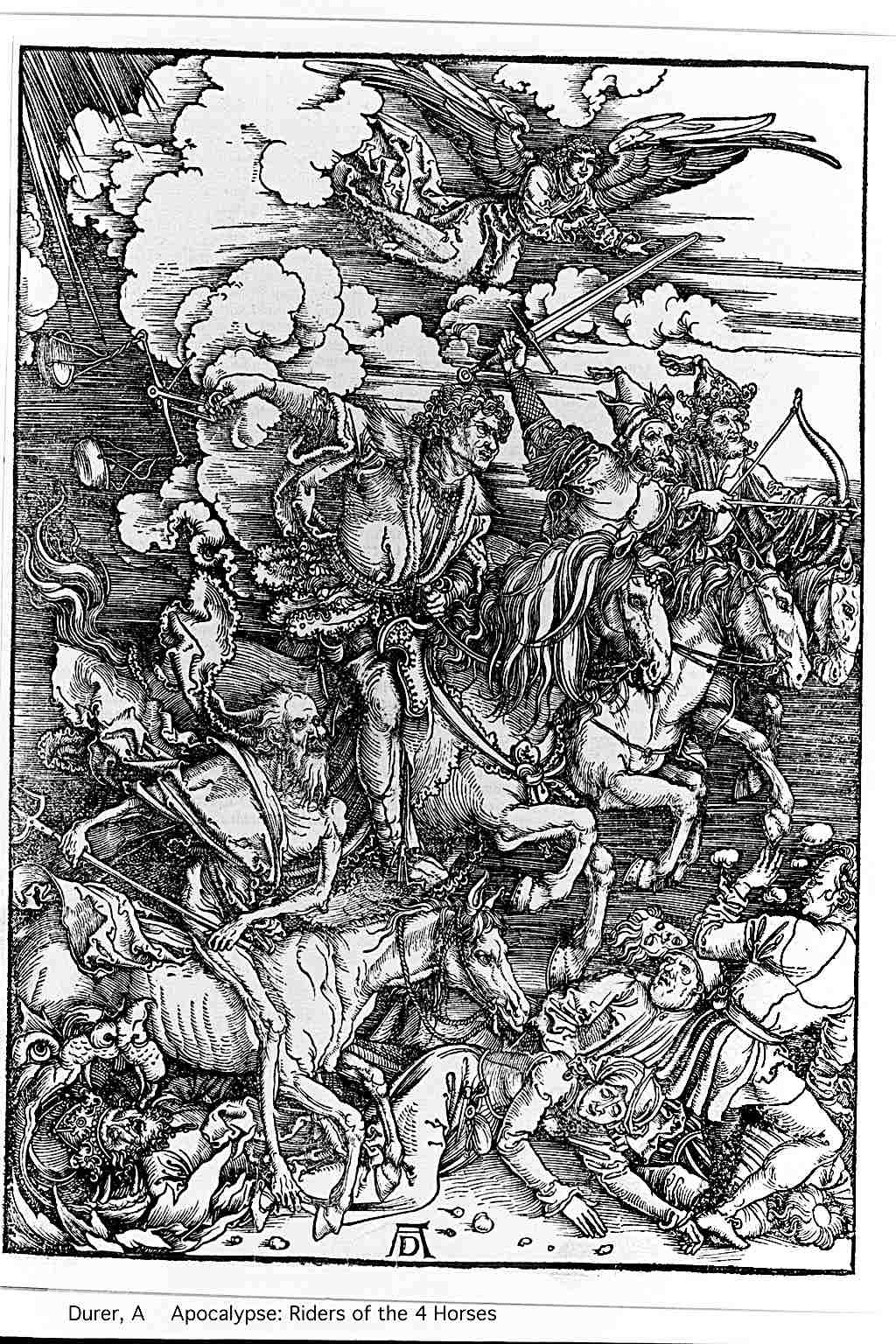
“Is this the end of the world?”  The question came up often early in the pandemic.  The end.  It’s so logical that just about every religion addresses it.  It bookends “the beginning” with the symmetry that we so covet that it’s almost impossible to think the world won’t end.  Even astronomers tell us the sun will betray us, eventually becoming a red giant and consuming our home planet.  Apart from being the greatest equalizer, however, religious speculation places the end way, way before then.  A friend sent me an article in National Geographic by Greg Miller titled “These 15th-Century Maps Show How the Apocalypse Will Go Down.”  It describes literal maps of the eschaton, and guess what?  It was right around the corner back then too.

Maps to the end of the world have been around for a long time.  With a bizarre Schadenfreude, many Christian groups eagerly anticipate the end of all this.  I grew up with charts and maps telling just how it was going to happen.  Like all of you, I’ve lived through many ends of the world.  These folks must be the strangestly optimistic bunch on the planet—when it fails to come on schedule they pencil in another date, preferably in their own lifetime.  They want to see it.  It will, after all, prove that they were right and the rest of the world was wrong.  Who wouldn’t want that kind of validation?  The apocalypse has been around since long before the fifteenth century.  It started in the New Testament, if not before.

This eagerness to end the world would be considered pathological were it not religious.  We’ve been about the closest we’ve been to a human-made apocalypse under Trump.  Make no mistake, some Christians were banking on it when they cast their ballots.  We tend to overlook this destructive way of thinking because some biblical literalists (and they don’t all agree, just put a premillennialist together in a room with a postmillennialist and watch what happens) claim that it’s what the Good Book says.  The rest of society, disinclined to look it up for themselves, accept that roadmaps to the end of the world exist in the Bible.  They don’t, but that doesn’t prevent everyone from fifteenth-century monks to present-day televangelists declaring when it will be.  That there is an end is taken for granted.  The astronomers look at their watches and sigh that we’ve got a couple billion years left, at least.  No, the pandemic wasn’t the end of the world although many Christians were hoping it just might be.


Reading Wicker

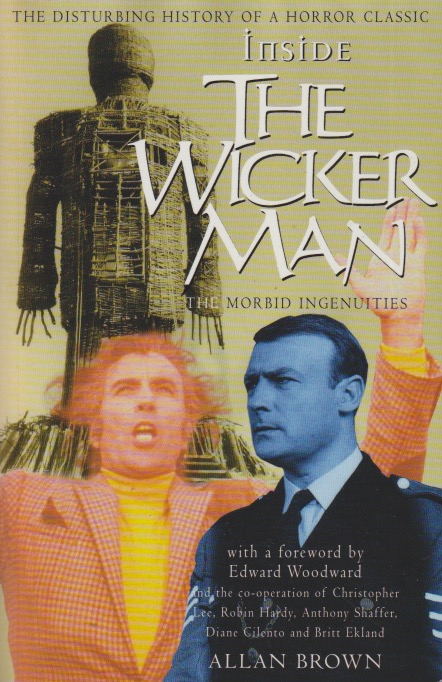
Have you ever read a book where factual errors make you question the larger picture?  I suppose being trained in research makes me more bothered by small inaccuracies.  Don’t get me wrong, I’ve made mistakes myself.  Even in publications.  But when they come near the beginning it’s rather unfortunate.  That’s not to say I didn’t enjoy Allan Brown’s Inside The Wicker Man.  I actually enjoyed it quite a lot.  There’s a real treasure trove here for fans of this cult classic.  I suspect it’s the definitive treatment of the misfortunes the film faced after it was shot, and even during the shooting process itself.  It’s somewhat surprising that so many of us have even heard of it.  When the film’s production company turns against the project it must present special difficulties. Errors are human. Most of the mistakes in the book were about religion.

For Wicker Man fans this book is a great resource.  Not only does it tell the story, but it serves as a useful reference. It includes information on locations, script excerpts, and behind-the-scenes stories.  You get to feel that you know the people involved beyond simply seeing them as characters in a play.  One of the points that Brown makes, while obvious in retrospect, is crucial:  The Wicker Man works as horror not in spite of religion, but because of religion.  I struggle to articulate what the two share in common, but it is useful to be reminded that a prime example comes in this unusual movie.  I wrote about it in Holy Horror, but there’s much even there that I left unsaid.

Brown had the distinct privilege of interviewing many of the people involved in the making of the film.  Most of the cast and crew have since died—the movie was, after all, nearly half-a-century ago.  Even so, when attempting to get at what a novel, movie, song, or piece of visual art means, the realization soon dawns that it’s often in the mind of the observer.  Some songs, for example, speak intensely to some people while being ignored by many others.  The Wicker Man never swam into the mainstream.  I discovered it during an intense period of watching as much quality horror as I could get my hands on.  Immediately I was struck by its intelligence and its strong message.  I’ve watched it several times since, making me, I suppose, a fan.  Enough of one to read this book and enjoy it, in any case.  And to recommend it to others who may be interested in the fascinating film it explores, along with its religion.


Shifting the Narrative

Wide ranging.  That’s a phrase that comes to mind to describe Vine Deloria Jr.’s book God Is Red: A Native View of Religion.  Another phrase is very important.  I know this book has been available for several years and it’s been on my reading list for many of those.  What is it about?  Some books are just difficult to summarize, but the basic answer is that it’s an American Indian view of how Christianity has distorted the world.  An accomplished academic, student of law, and activist, Deloria knew of what he wrote.  His book explains articulately the view of Christianity from the outside and what a religion that reverences the earth really looks like.  What makes the book so fascinating is that Deloria had theological training and could engage with the Christian worldview over a considerable range of topics.

Controlling the narrative is of primary importance and the fact is white men have controlled the narrative and normalized one view of history, science, and our place in the universe.  First nations peoples had, and some still have, a radically different outlook.  Deloria makes the crucial point that even our science developed out of our religion.  That science, in turn, supports the worldview that created it.  It is possible to look at things differently.  In fact, for much of human history those alternate views were predominant.  The triumphalist view of Christianity claims it’s successful because it’s right.  A native view takes a longer view, saying “we’ll see.”

Very concerned about the state of the planet brought on by the Christian/capitalist partnership, Deloria advocated for not only Indian rights, but environmental protection s well.  Not only is the environment central to Indian spirituality, the concept of sacred spaces is very real.  Many of us not raised with indigenous points of view have experienced this as well.  Some places are special to us.  We hesitate, because of that very science created by the Christian worldview and its view of God, to call such spaces objectively sacred.  Even the “objectively” part is determined by a Christian perspective.  Deloria ends up by asking whether this form of religion has improved the state of the world.  There’s no doubt that some of Christianity’s achievements have lessened human suffering.  It is also true that science has achieved great things.  If I understand correctly, Deloria isn’t disputing this.  His point of view is much more essential.  Is this the only way to live on this planet?  From the indigenous point of view, which is far more important that we want to admit, the question is—is this the only way to see it?