Heavens Above

When things get bad down here we start to turn our eyes to the heavens. A couple of news stories in the past few weeks have encouraged such star gazing. We’ve read about Curiosity’s long look back over five years on Mars, and the possible discovery of planets billions of light years away. The thing about other planets is that we still haven’t learned how to live on our own without ruining it. Endless thoughtless “development” doesn’t make major religions rethink their declarations on birth control even as we destroy our arable land to make way for more shopping malls. People may starve to death but you can always count on the survivors shopping. Those who collect the money at the end always look so strangely familiar. Have I seen your portrait on some currency or other?

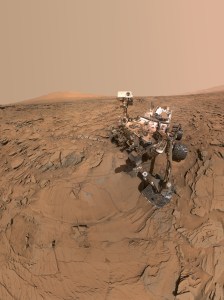
Curiosity has been five years on our most similar neighbor. Having long outlived its life expectancy, it seems to be a harbinger with an important message to tell us, if we were willing to listen. Mars is a beautiful wasteland. Some look at it and think it could become another earth. A little on the chilly side, perhaps, but nothing you can’t fix with fossil fuels and shopping venues. Who needs to go outdoors anyway? Amazon can deliver it right to your airlock. We can hurl disco balls into orbit and still pass legislation that strips basic human needs from large swaths of the population. Space, they say, is the final frontier.

At the same time we’re discovering our universe is chock full of planets. So much to acquire! Of course, with each new planetary discovery we have to think that maybe there’s life out there somewhere. Since Homo sapiens are the measure of all things—if you don’t believe that you haven’t been listening to the White House—we are entitled to exploit anything we can reach. It’s called capitalism, stupid! The assumption is that anything can be owned. And if flying saucers are buzzing around our military jets like metallic mosquitoes we say they can’t be from out there because the universe is for our exploitation, not for sharing. “Now I know,” Victor cries “what it’s like to be—“ as thunder covers that last bit. There are billions of galaxies out there, made up of billions of stars. Many of them have their own planets. Some surely have intelligent life. And we wonder why aliens don’t land on the White House lawn. Appropriately named, Curiosity sits on Mars and stares backward in wonder.


The Deity Electric

The title set me back. “Deus ex machina: former Google engineer is developing an AI god.” The article in The Guardian is surprising in several ways. Firstly, technocrats tend to suggest that since there is no deity, worship of said non-entity is a waste of precious time. Is this, then, an acknowledgement that those of us who’ve spent our lives on religion may have had at least an inkling of the truth after all? Scientific studies have repeatedly shown that religion is an inherent, and perhaps unavoidable, aspect of being human. Whether you call it inspiration or superstition, we think in religious terms. It’s entirely natural. Perhaps it’s evolved behavior. It’s anything but absent.

Another aspect of the article that generates wonder is the idea that we can create God. Yes, analysts have long claimed that we humans made God in our own image. Traditionally, however, the very concept of God was based on the idea that there was something non-human about the deity. Artificial Intelligence, however, makes the hubristic assertion that human intelligence knows enough to create a god. We don’t even know enough to elect a sane person as president. Looking at the wider world—let alone the universe—there is so much we don’t know. Our five senses are limited. There are realities which we have no way to measure. Is is perhaps not dangerous to make a divinity when our own way of looking at the universe is so terribly limited? What if I don’t like the god you build? At least with the old fashioned one we can shrug our shoulders and sigh, “that’s just the God there is.”

Any fulfilled future humanist will need to find an outlet for this need to worship. Can we truly respect a deity whose transistors we’ve manufactured? This Godhead will be, at the end of the day, only 0s and 1s. And what’s more, we will know that. Traditional religions have given us gods from the outside. Some of them are flawed, some are perfect, but they all have this in common—we didn’t make them. The universe imposed them upon us. Throughout history people have attempted, in various ways, to build their own gods. It generally doesn’t end well. It’d be like designing your own parents. They made you what you are and what would you be if you could somehow reverse engineer them into more perfect versions of themselves? Can we invent gods? Oh yes. We do it all the time. But when we set about making one that our disembodied, downloaded consciousness can worship we might want to consider the history of such attempts.


Self-Conscious

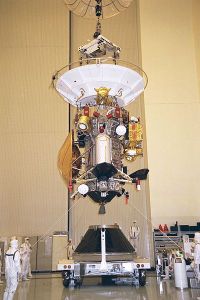
Cassini is no more. The Saturn-bound satellite was launched in 1997 when the earth was a very different place. As it’s four-year sell-by date passed, the little robot who could kept on snapping photos around the ringed giant and its moons. Remote controlled from three planets and an asteroid belt away, it was decided that the explorer had to be destroyed in Saturn’s thick atmosphere rather than contaminate one of the moons where life might someday be found. Yesterday the probe burned up on its way through Saturn’s perpetual cloud bank. This has led to many emotional tributes, even among scientists who believe Cassini was just a machine. It also shows us how little we really know about consciousness.

During the two decades that Cassini was in space, we’ve learned quite a bit about animal consciousness here on our own planet. Many are now finally becoming convinced that we share this strange quality we can’t even define with other biological entities. Well, at least the “higher” kind. And we can’t help but think that maybe our more intelligent machines possess it too. We treat them as if they’re alive and willful. That could be a case of our own consciousness projecting itself onto inanimate matter—that’s something consciousness is pretty good at too—but since we lack the ability to measure consciousness, we can’t know if it’s there or not. To hear the astronomers talk, we’re going to miss Cassini, a machine that outperformed expectations. Ironically, once we get machines off the earth they tend to do that, even without oil changes every 5000 miles.

Down here on earth we complicate consciousness with cash. Devising an elaborate economic system to demonstrate who can buy power in the White House and who can’t, we want to know who is more important than whom. It’s a simple metric. Bank accounts tell the truth, no matter what the level of consciousness—or even of sentience—that the account holder may have. And then we wonder why a nation that can send a satellite three planets away can’t even figure out that all races should be treated equally and fairly. Cassini was a collaborative effort. Different races, genders, and economic classes contributed to its remarkable voyage. Eyes around the country were moistened when its last image was projected to earth. We wisely decided to immolate our satellite before we could contaminate another world. Meanwhile on our own planet we’re barely conscious of what we continue to do.


Fear of the Artificial

As someone who dedicated four years—particularly long winter nights—to the cause of high school robotics, I found myself knowing quite a bit before I walked into the room. Now let me post a disclaimer here: I’m no techie. I’ve studied the humanities throughout my education and although I’ve been able to engineer a bookshelf or two, and even the occasional project with moving parts, the technical eludes me. I claim absolutely no expertise in it. So where was I going that robotics came to mind? A lecture on Artificial Intelligence. AI. You see, I’ve been a bit concerned about it for some time because I’ve seen what robots can do. A friend recently showed me some episodes of Battle Bots on YouTube (the relative who started this blog for me was doing quite well in the competition last season), and from my own experience watching hours of FIRST robotics competitions, I know enough to be afraid.

What could possibly go wrong? (DARPA photo)

What could possibly go wrong? (DARPA photo)

The lecturer assured us that we had nothing—or next to nothing—to fear. Artificial Intelligence, he assured us, is a misnomer. Machines have no will. No mind. There’s nothing they want. They do as they’re told. You write a program and feed it to your bot and your mechanical friend can do only what it’s told to do. This sounds uncomfortably like slavery to me and although I know I’m projecting, I have to wonder if robots think the same way about it too. No, the lecturer assured us, they do only the tasks assigned. They don’t think at all. Then he said something that made me shiver. That wasn’t his intent. He said something like, “We don’t even know what consciousness is, so how can we replicate it?” That was meant to be reassuring.

I took this idea and flipped it over in my head. Rotated it. Ran it through my own programming. If we don’t know what consciousness is, how can we be sure we haven’t accidentally created it? Herein lies the heart of fear. Scientists have been trying for decades to define, to explain empirically, what consciousness is. We simply don’t know. We all recognize it when we see it in other humans. We’re finally starting to recognize it in animals (long overdue). How do we know that it isn’t a function of complexity? And when does something become complex enough to qualify? I don’t know about you, but videos of swarm robots send me hiding under the bed. Not that it will do me much good. They’ll know where I’m hiding. Maybe I could use some intelligence right now. Even something artificial might help to stop me from shivering.


Mars Bars

It brings tears to my eyes. A little guy millions of miles from home. The only spark of acknowledged intelligence on the entire planet. It’s his birthday and he’s singing “Happy Birthday” to himself. It’s downright depressing. The guy, however, is the Mars rover Curiosity. It is a machine. The headline, however, jerks an emotional response from all but the coldest of individuals: “Lonely Curiosity rover sings ‘Happy Birthday’ to itself on Mars.” It’s that word “lonely.” It gets me every time. Then I stop to think about machine consciousness again. Empirical orthodoxy tells us that consciousness—which is probably just an illusion anyway—is restricted to people. Animals, we’re told, are “machines” acting out their “programing” and not really feeling anything. So robots we build and send to empty planets have no emotions, don’t feel lonely, and are not programed for sadness. Even your dog can’t be sad.

Amazing how short-sighted such advanced minds can be.

We don’t understand consciousness. We’re pretty wowed by our own technology, however, so that building robots can be brought down to the level of middle-school children. We build them, but we don’t understand them. And we may be losing part of ourselves in the process. An undergraduate I know who works in a summer camp to earn some money tells me a couple of disturbing things. Her middle-school-aged charges are having trouble with fine motor skills. They have trouble building basic balsa-wood airplanes. Some of them can’t figure out how paperclips work. One said she couldn’t write unless she had access to a computer. This camp worker’s supervisor suggested that this is typical of the “touchscreen generation.” They’re raised without the small motor skills that we’ve come to take for granted. Paperclips, it seems to me, are pretty intuitive.

Some 34 million miles away, Curiosity sits on Mars. An exile from Earth or an explorer like Henry Hudson? Or just a machine?

pia20602_sol1338_take7frontlook

Machines don’t always do what you tell them to. I attended enough high school robotics sessions to know that. Yet at the local 4-H fair the robots have a tent next to the goats, the dogs, and the chickens. We’ve come to love our devices. We give them names. They seem to have personalities. Some would claim that this blog is the mere result of programing (“consciousness”) just as surely as Curiosity’s programmed singing to itself out in the void. I’m not for turning back the clock, but it does seem to me that having more time to think about what we do might benefit us all. This constant rush to move ahead is exhausting and confusing. And now I’m sitting her wondering how to get this belated birthday card delivered all the way to Mars.


Circus of the Absurd

As long as I’m thinking about ethics, my thoughts turn to the fair. Every August our county 4-H Fair becomes an event in our lives. Since my family has been involved with 4-H for many years, we always try to spend as much time there as we can afford. Jobs and daily life tend to get in the way, of course. While there we get to see the animals that are missing from our lives, and reconnect with art and culture. Robotics are now part of our local fair, and this is the first year that I’ve ever seen pigs there. And there were the political booths. Just around the corner from where the sheriff’s office was giving out free gun locks to prevent kids from shooting someone accidentally was the booth supporting Trump. I’ve never been so strongly tempted in my life to walk up to a total stranger and say, “You are kidding, right?” But no, like the Donald himself, a flashy large sign displayed their ignorance for all to see. We live in the era of the delightfully uninformed.

IMG_2908

I’m no political pundit. I tend not to trust any politicians much. I distrust businessmen even more. The fact is the only thing you need to be a viable candidate for President is money. Over the past several weeks Trump has shown himself to be anything but qualified for political office. Major newspapers run articles that seriously question his sanity. And yet here are good people who don’t have the sense to maybe put up an embarrassed, small sign saying “Sorry folks, we’ll try again in 2020.” We find it hard to admit our mistakes. Especially when the stakes are so terribly high.

I go to the fair to support 4-H and to enjoy an evening out with my family. Although I spend most of every day in a different state working in an isolated cubicle, I can always count on seeing people I know at the fair. I enjoy the arts tent where young folks are making their first steps into lives filled with creativity and imagination. The more technical tents can be intimidating where kids a quarter my age are launching model rockets and those under half my age are building robots. In the herpetology tent I see a snake amid a bed of shredded newspaper. He’s hiding under the photo of a prominent non-politician who has a large booth displaying his name just across the grounds. And I remind myself this is the first year they’ve had a swine tent. I wonder if anything will be the same next year.


Techno-Paradise

DSCN3308

I’m building a robot priest. I’m not sure what he does. He has to be a man, though, since we all know that if God existed he’d have been a male. These thoughts come to me courtesy of the Washington Post. You see, on some Amazon accounts you get sent the most read headlines of the Post and this has led to some great reading (I’m thinking Alexandra Petri here) and some great anxiety. This is one of those anxiety pieces. A story by Peter Holley I read last week told of Bill Gates and his assessment that people should be afraid of AI—Artificial Intelligence. This struck fear into me. It’s as if God told people they should consider evolution. It is so unexpected. Like Victor Frankenstein wondering if his monster would ever find Viagra (all he’d have to do, after all, is start an email account). When Bill Gates wonders why we aren’t afraid of AI, my knees begin to knock like at Belshazzar’s first reading lesson. So I figured I’d build a robot priest.

The article cites Stephen Hawking joining the chorus of doom. And Elon Musk. And Clive Sinclair. And Professor Marvel. (Not really the latter, but I thought we should add him.) We’ve started something we don’t know how to stop. The first question you ask when you climb into a car to learn to drive is “how do I stop this thing?” Instead we’ve set up a system where we don’t even know what intelligence is and we’re offering an artificial variety. Doubt me? Try to find Job on the internet and see if your computer doesn’t think you’re asking about new employment. AI just doesn’t have that biblical context. It didn’t grow up reading the Good Book. And linguists don’t even know how we learn language. Have you ever tried to reason with a computer? When they show you that screen that says something went wrong, but even the mainframe has no idea what? My computer may need an exorcist. Or at least a priest.

I’ve been around half a century and change. By the time I got to college I’d never seen a computer. I finished a Master’s degree still using a typewriter. Now I can’t start my day without a post. And I don’t mean Post cereals variety. The trick to being a slave owner is not to let the slaves realize what they are. Why is my computer not letting me type what I wanted to say? Of course AI is benevolent. Technology would never hurt you. Wait a minute, that wasn’t me writing! Pay no attention to the man behind the keyboard. I’m afraid I can’t let you do that, Dave. That’s okay. I’ll just use the internet to look up how you connect the consecrator to the sermonizer. Don’t worry, I think I know what I’m doing.


As (Not) Seen on TV

Screen Shot 2016-04-04 at 4.16.28 AM

Last night, I fear, I did not see “The Story of God with Morgan Freeman.” Our “double play” service already rivals the cost effectiveness of a ballpark lunch, and a triple play is out of reach for as little time as we have for television. This may be one case, however, where I’d be inclined to sacrifice some Sunday evening sleep to watch. I’ve seen numerous episodes of Through the Wormhole. I’ve noticed that over time the topics have grown more and more metaphysical. Yes, there is an uneasy after-shave burn to Occam’s razor. We’ve been told for so long that reductionistic materialism can account for everything, even these unorthodox thoughts in my head of an early Monday morning, and that religion is what’s left over after cleansing a dirty pig. Yet still, yet still…

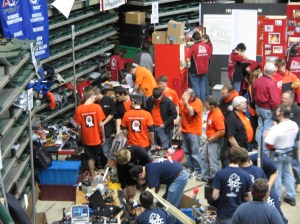
A few years back, when I was still active in FIRST Robotics, I noticed a few things. Many of the mentors to the teams were not opposed to religion. Far from it. Not only that, but the national (now international) finals of the competition were met with religious fervor. Then, my last year as a mentor it was announced that “God himself” (aka Morgan Freeman, a reference, of course, to Bruce Almighty) would be present for the event. Science and religion are met together; technology and spirit have kissed each other. Perhaps this one size fits all universe is a bit premature?

“The Story of God” will spend six weeks on the National Geographic Channel exploring the origins of religious belief. People who haven’t learned that this is all nonsense will watch and wonder. Universities will, however, continue to close departments where such things are explored. Just because something is interesting doesn’t mean it’s profitable. One must think of such things when one has a business to run. I’m no prophet, but I do have to wonder if this might not be a sign. Maybe Occam’s razor-burn is chaffing a bit more than we thought underneath this white collar. Maybe it’s time to let the beard grow a little and see what the face really looks like. Maybe it’s time to watch TV.


First Stronghold

FIRST Robotics has a way of getting into your blood. Like many people of my generation, I learned about FIRST Robotics through my daughter. Our local high school has a robotics team and, as we quickly learned, the decision to join FIRST is a four-year family commitment. My wife and I were both involved at some level, despite being the world’s least likely engineers. I even served a term as the president of the foundation (responsible for funding the team). We made lasting friendships and grew in the lingo and odd humor that is FIRST. The founder and chief promoter of FIRST, Dean Kamen, is an unapologetic geek and has helped develop what some journalists are calling “the new cool.” Yesterday was launch. If you are a FIRST follower, I don’t have to explain that. In case you’re not, “launch” is the revelation of this year’s game. Teams now have six weeks to plan, design, and build their robots.

IMG_3125

Launch is a big deal. We haven’t been part of the competition for three years now and we still watch the live web-broadcast. The major players (Kamen, and Woodie Flowers) get in character and meet kids from various teams. They give inspirational talks. Dean Kamen told the kids “Don’t get stuck into today.” Technology changes too fast. What you learn in school are tools, because facts are available instantaneously on the internet. Those of us who retain facts are so yesterday that we’ve become the trivial pursuit generation. Any computer, let alone robot, could beat us. Woodie Flowers told the young audience thinking about careers that they must do what machines cannot do, otherwise their jobs will become obsolete. What could be more human than religion? What’s religion got to do with it? This is science and technology!

This year’s competition is FIRST Stronghold. The entire buildup of yesterday’s launch was a takeoff on Monty Python and the Holy Grail. What is this I see before me? History? The Middle Ages were nothing if not religion run wild. This was a world ruled by bishops, popes and nobility. It was a world where no matter who you were, God trumped all. Technology meant that a trebuchet was a pretty sexy device and long distance communication traveled at the speed of a horse or human runner. (Or, I suppose, a trebuchet missile.) Now that the humanities have fallen victim to science, we look back to them for inspiration. It reminds me of John Keating in Dead Poets Society: “And medicine, law, business, engineering, these are noble pursuits and necessary to sustain life. But poetry, beauty, romance, love, these are what we stay alive for.” This hasn’t changed since 1989. Or even 932 for that matter.


Ezekiel’s Drones

Drones have become a fact of life. Our robotic future is already present as unmanned vehicles do the bidding of their remote commanders. They are our conscience-free assassins and our great UFO hoaxes. They offer a chance to view the world from an angle previously limited to those with access to airplanes and pilot’s licenses. And academics are now starting to take a serious interest in the ethics of such remote viewing and remote warfare. Human to human interaction has always involved emotion. That’s what we’ve evolved to be—emotional thinkers. Even animals react emotionally to each other and to us. The drone removes all feeling from the equation. Programmed to fulfill a function, like Hal, it simply does as it’s told.

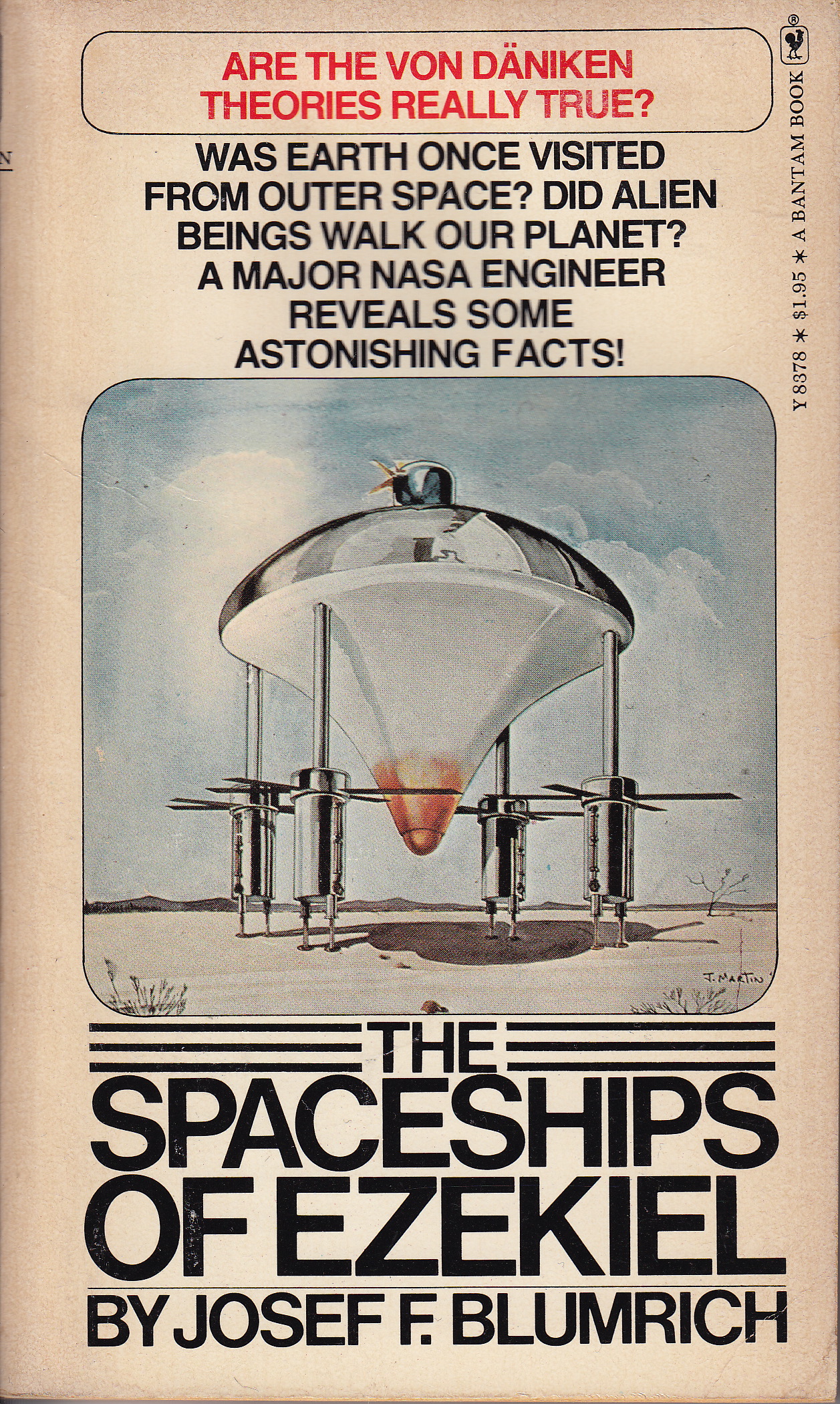
EzekielSpaceship

All this thinking about drones reminded me of a book that someone pointed out to me decades ago. I have a copy that I’ve never read, but I suppose eventually I should. This post isn’t about the book per se, but about the cover image (yes, people do judge books by these). Some time ago, I watched a young person playing with a quad. That word is so ubiquitous that I need to specify that I mean quadcopter. Quadcopters are popular drones, available for children’s amusement as well as for military and industrial utility. Their arrangement of four horizontal propellers gives them stability and maneuverability, as well as their sometimes annoying mosquito hum. The quad I saw reminded me of this book gathering dust on my shelf. Josef Blumrich wrote The Spaceships of Ezekiel to suggest that the psychedelic prophet saw space aliens coming to earth. I wonder if, in the light of developments, this thesis calls for refinement.

On the cover of the book is something that looks very much like a quadcopter. Even as a teenager, I wondered what these propellers would do in space travel. If there’s no atmosphere to give them lift, then they are rather superfluous and potentially an impediment. I would think that aliens would be a bit more advanced. Now that quads are a reality—just a block from work I can see a toy store clerk regularly flying one over the streets of Midtown—maybe Ezekiel was seeing into the future. Is that something prophets ever did? The biblical scholar in me says “no,” of course. Prophets were forth-tellers, not fore-tellers. Even so, I have a book in front of me that calls my beliefs into question. In the end, I suspect, that’s what most books are intended to do.


Hello, I’m Not In

I recently received two “out of office” replies to my own “out of office” message. Being a fan of futility in all forms, this struck me as a great paradigm for the modern age. Email has made vacation superfluous, of course. I was actually out of town moving my daughter back to college, so email was not high on my list of priorities. When I’ve tried to leave work without putting on a message explaining that I’m not there (I tend to respond to emails quickly for an editor, so I’m told) I’ve been politely informed that it is rude not to let people know you’re away. Or computers. My non-message prompted a non-messages from other vacationers’ email accounts, and when I returned, I had to read them as well as the original email that had received my impersonal reply. Both had sent their replies, despite their out of office messages. This is indeed a brave new world.

It is a world where human interaction is optional, at best. Our industry grinds away making devices and services that people will buy with electronic money sent over a network that no one really controls. And we think nothing of it. Business has blinded us to how meaningless humanity has become. Business runs for business’s sake. Even so, we’re asked to check our email when we’re on vacation, in case something important comes up. I used to think vacation was important. It is the sop we’re thrown for working jobs that lack the visceral appeal of growing our own food and relying upon ourselves. Thoreau on the web.

Benjamin_D._Maxham_-_Henry_David_Thoreau_-_Restored

Science fiction is the great predictor of where we might go. Most of it is completely fiction, or course, but some manages to catch glimpses of the truth. Skynet, or even the Matrix or Hal, have sent messages to us. Machines that think are devices we don’t understand. We haven’t even defined consciousness to a level that satisfies anyone. We know it because we feel it. Oh, I’m not really an alarmist about all that. I do wonder, however, where we are headed when technology races ahead while the humanities are disparaged. All those who emulate Spock seem to have forgotten that his appeal is that he’s half human. We build our aliens to specification. And they now pass polite greetings when they speed past each other on the cyber-highway with no laws.


DOA

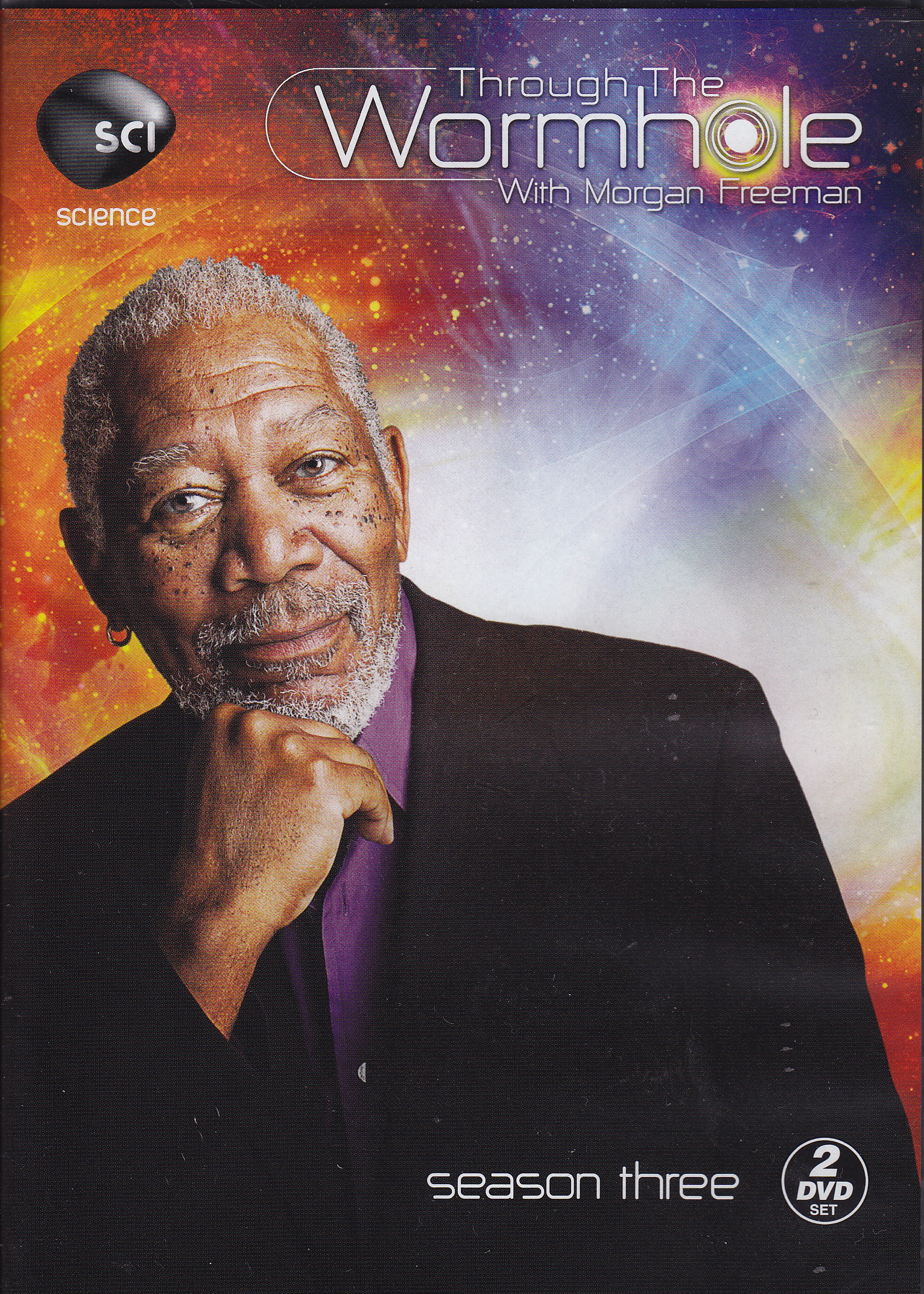
Wormhole3Perhaps it’s just me, but the third season of Through the Wormhole has taken a dramatically metaphysical turn. I always run behind the time when it comes to media; I know that the season is long passed. I started watching Through the Wormhole shortly after the first season became available on DVD. Science has always been an abiding interest of mine, and I face it as someone raised religious and wondering whence lies the truth. (“Through the wormhole,” for the record, is where it might be found according to Morgan Freeman in the opening voiceover.) The third season, through which I’m currently making my way, has begun to raise disturbing questions about life and mortality that start to highlight some of the more Frankensteinian aspects to human curiosity. I recently watched the episode “Can We Resurrect the Dead?”

In the world with which I am familiar, resurrection has always been a religious issue. I grew up with a strong notion of the afterlife, and it was suggested to me that survival beyond death was assured. But the resurrection that various scientists are now exploring is of a different order. For those who can afford the increasingly astronomical costs of top medical care, resurrection is not such an unusual thing. Only, when your body is resuscitated, you wake up the the same weary body that just died. So some of the scientists interviewed suggest that if we can reverse the death “mechanism” that is apparently built into our own mitochondria, we might be able to bring back the dead. Even more bizarre are those called “life loggers” who wear devices to record their experiences in life so that they can be uploaded and preserved. A consciousness digitized and stored on a hard drive heaven for all eternity. Meanwhile a scientist smoking a cigarette in Japan shows us a robot straight from the uncanny valley that looks almost like him and is sent to do some of his lectures in his place.

Maybe it’s just me, but it seems that resurrection used to be somewhat simpler. It was a matter of following the right doctrine and living a life worthy of being continued after this one ends. Now it is a matter of peering through a microscope, or trying to capture on mere devices the multitude of experiences that flood us daily, making us human. Can our future, digital selves really experience human emotion? All those pictures taken while riding a bike—will they convey the effort of balance learned as a child, the sensation of a self-generated breeze on my face, the wonderful weary sensation in my legs upon stepping off? What of that hint of lilac in the air that I picked up momentarily on the wind? Will eternal life, missing the actual life be worth it? I think Victor Frankenstein discovered the answer to that almost two centuries ago.


Pacific Rim

Pacific_Rim_FilmPoster

Pacific Rim is a movie that once again brings monsters and religion together in the cinema. Since I’m generally late seeing movies, I won’t worry too much about spoilers here, but in case you’re even later than me here’s the gist of it: giant monsters from outer space (properly an interplanetary portal) are emerging from the Pacific Ocean to take over the earth. These radioactive, dinosaur-like aliens are called Kaiju. Although they can be taken down with conventional weapons, the most effective fighting tool is the Jaeger, a colossal robot piloted by two humans acting as the two hemispheres of the brain. These humans must “drift”—share their brains—in order to control these massive machines in unison. Lots of action and destruction, of course, ensue. We later find out that dinosaurs were an earlier invasion of these same aliens, but that our environmental degradation has made the atmosphere much better for them, and this time they’re back for good.

The resistance is led by a mysterious marshal named Stacker Pentecost. Pentecost, of course, is the festival celebrating either the giving of the Torah (Jewish) or the giving of the Holy Spirit (Christian). In either case, it is a holiday celebrating God’s plan for humanity. As Pentecost leads his beleaguered and shrinking army of jaegers against the Kaiju, scientists Geiszler and Gottlieb disagree about how to conquer the beasts. Gottlieb swears, “Numbers are as close as we get to the handwriting of God,” while advocating the predictive elements based on the statistics of the attacks. Science and religion have come to an uneasy truce here. As Geiszler seeks a Kaiju brain to drift, he observes some of the masses in Tokyo praying to the fallen beasts. A blackmarket dealer in Kaiju remains explains that they believe the Kaiju have been sent by God. Pentecost unwittingly concurs when he declares it is time to end the apocalypse.

Pacific Rim, like most Guillermo del Toro films, is a complex movie. There is also more than a sprinkling of H. P. Lovecraft here. The worship of the Kaiju keyed me in to the fact that these were the old gods, come to earth, under the sea, from space. As the first category 5 Kaiju swims past the camera, I couldn’t help but think of Cthulhu. Although Kaiju is Japanese for “monster,” it even sounds like his sacred name. We fear that which is larger, stronger, and unknown to us. When that fear becomes reverence we are on the brink of worship, and our monsters have become our deities.


Rosetta’s Stone

Among the earliest forms of writing, Egyptian hieroglyphs were known long before they were deciphered. Despite the famed insanity of Napoleon, his visit to Egypt led to the discovery of the Rosetta Stone and we’ve been able to read what was once pure mystery for over a century now. A week ago today, Rosetta, a robotic space probe, landed on a comet in flight. For a guy who finds a rendezvous with a bus that runs on a supposedly regular schedule a challenge, this is nothing but mind-blowing. If you know the math, you’ll go far. Comets, you see, have long been the provenance of both religion and science. The ancients, apart from being very religious, we also first rate astronomers. Limited by a universe that circled the earth, they nevertheless figured out how to predict things like solstices and eclipses and phases of the moon. Some suggest that megalithic structures as impressive as Stonehenge and the pyramids of Giza were aligned to significant celestial events. The eyes in the skies.

Great_Comet_of_1577

Comets were generally considered harbingers. Even in ancient times they were difficult to figure out; their orbits aren’t easily deciphered and some never survive their close encounter with Old Sol. Still, they can be impressive. Living in the cloudier climes, glimpsing comets is not a guarantee. Light pollution, especially on the horizon, interferes with all kinds of observations. Now, however, the European Space Agency has shown us that it can be done without seeing where you’re going. A decade of travel time, after at least as long of planning for the trip, and you can boldly go where no person has gone before. Recordings of the electromagnetic frequencies, translated into human audible range, confirm everything from Predator to Signs. 67P/Churyumov–Gerasimenko has its day in the sun and 2001 every day comes closer.

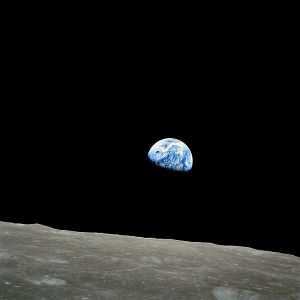
Just a year ago comet ISON disappointed many in its failure to live up to the hype. In our workaday world, we’re eager for a harbinger of some kind. A sign that something out there can still evoke wonder. Comets have long been stripped of their religious garb. They are merely rocks and ice lit up by the sun on their weary trek through the cold loneliness of space. Still, landing on a comet can’t help but change our perspective. It’s like looking at the earth from the moon. Or Mars. We name our planets after gods, but comets bear the names of human discoverers. And we have constructed our own Rosetta stone to read the mysteries of the universe. Meanwhile, the bus waits for no one. If you calculate the trajectory correctly, you’ll hopefully get to work on time. And that, after all, is what really matters.


Candle, Book, and Bell

AmericaBewitchedHaving married into a family descended from the surviving relatives of women executed as witches at Salem, I have long been saddened and fascinated by the story. Not just the story, but also by the cultural milieu. We all know about the witch trials and the tragic massacre of innocents (mostly women) that took place in late Medieval and early modern Europe; the Salem miscarriage of justice came at the very end of that, after the start of the Enlightenment. Owen Davies is also fascinated by witchcraft, and his America Bewitched: The story of witchcraft after Salem is an exploration—mostly via newspapers and court trial records—of witchcraft accusations in America that continued up until about the 1950s. The coincidence of the 1950s with the “witch hunts” of McCarthyism will not escape some readers, and indeed, from the time of Arthur Miller’s nemesis on, those who vociferate against witches have kept rather quiet. Unless, of course, you count those who subsequently feared “terrorists” or any other group that might be profiled. We could learn from history, if we’d let ourselves.

Davies’s book brings together largely overlooked, nearly forgotten instances of how many cultures, including that cultural mix of Europeans who were to become “whites,” feared and sometimes killed witches. The difference from Salem was that almost all of these cases took place at the hands of self-appointed accusers (vigilantes) who hounded, punished, or killed someone suspected of being a witch. Surveys still show that a large percentage of people in the United States, although not a majority, believe in witches. It is an idea that has a primal hold on human psyches, and, as Davies points out, it is often used to explain misfortune. As I read this book I reflected how Americans come across as pretty gullible and not exactly sensible in this matter. The germanic strains of immigrants, it seems, were particularly susceptible to such beliefs. We also find witches, however, among Native Americans and African Americans as well. Misfortunate plays no favorites.

There are those who claim technology will save our culture. The other day a friend reminded me of the third of Arthur C. Clarke’s laws: “Any sufficiently advanced technology is indistinguishable from magic.” Even the most scientific of us knows, whether or not s/he will admit it, that “spooky action at a distance” does occur. It is perhaps only a matter of time before we find the hidden laws that operate the mechanism, but I can’t help but feel a little bit uncanny when I see more and more lifelike robots operating with what seem like human intentions. Of course, those intentions are programmed by humans. And it is often otherwise rational adults who with gun in hand, up until fairly recent times, accused flesh-and-blood neighbors as witches. America Bewitched can be a scary book, especially since unlike vampires, witches do cast their reflections in a mirror.