Flighty Thoughts

Life, domain, kingdom, phylum, class, order, family, genus, species.  My apologies if I’m bringing back bad memories of high school biology, but I’m doing an experiment.  It has to do with the class level.  (I have to confess that this has become more complicated since high school since there are a lot more of them than I remembered.)  Specifically, I was thinking of those of us with backbones (which seems to exclude many congressional Republicans these days), namely fish, amphibian, reptile, bird, and mammal.  I read somewhere—I can’t recall where; I seem to be reading all the time—that the only other order of animals that human beings see every single day, apart from other mammals, is birds.  I suppose some of this depends on location, but it seems to be true even for landlubbers who don’t work in zoos.  I’ve been watching, however, to see if I do see birds every day.

I work in an office with two windows, one facing south and another facing west.  There are trees outside the west window and during spring, summer, and fall birds are abundant.  Yes, I see them every day.  Winter, however, is a bit more dicey.  Songbirds famously either migrate or retreat into more sheltered places for the season.  The other day, during a cold snap, I got to thinking I hadn’t seen any birds at all.  The only thing that rescued the allegation was that I remembered I saw some birds that I startled out on my jog, before it was fully daylight.  The rest of the day I keep my peripheral vision on alert for any motion outside my windows.  Late in the day I saw a crow dart between two trees.  I do see birds most days, but I’ll be keeping a watch this winter for birdless days.

It’s not that I want to prove this author wrong—I can’t even remember who s/he was.  No, this experiment is driven by pure, naked, curiosity.  I’m pretty sure that the author wasn’t writing in a literalist tone (that’s more of a problem with my wiring).  The point that was being made is that people pay special attention to birds since they are so prevalent in our world.  They’ve adapted from conditions of arctic to desert and they can get around many obstacles that might prove troublesome to our class, even bats.  I know that I rarely see amphibians, reptiles, or fish.  Certainly not on a daily basis.  So birds do seem to be top of the class, and, so far, I have seen at least one every day since reading this from a fellow mammal.


Shipping Tracking

It’s an anxious season. What with porch pirates being a thing and the holiday season near, I think it’s about time to rate shipping trackers.  Please, I am not rating the actual delivery persons—theirs is a difficult job, I know.  On the receiving end, there’s always an anxiety that an item left on the porch will be raptured before discovered by the person who ordered it, so I try to arrange my schedule to be home on delivery day, during delivery hours.  The post office (USPS) has always been a little suspect.  I’ve had “item delivered” messages from them only to find it wasn’t even out for delivery that day.  And don’t get me started about two local distribution centers that appear to have no idea what state they’re in, let alone what other towns might be nearby.  USPS isn’t near the top of my list.  With apologies for the spoiler, Amazon understand logistics.  I know many people who don’t like Amazon for various reasons, but say what you will, they generally know where your package is, in my experience.

There is a service on the bottom of the list, regarding trackers, but before I get there I need to say that these are shipping companies we’re discussing.  Their raison d’être is to move items from one place to another.  I also realize that the older companies that ship had to integrate computer tracking into already existing structures.  USPS was around centuries ago, and it’s understandable that integrating tech into the rather straightforward process of getting an item from A to B is a challenge.  I’ve worked for companies that have tried to integrate tech into pre-existing structures, and it’s always messy.  Still, it would seem that if your business is delivery and everything from GPS systems and advanced software make that more efficient, why wouldn’t you integrate it?

Which brings me to the bottom of my personal list.  I’m sorry UPS (not USPS), it’s you.  The tracking info is often virtually junk.  The number of times I’ve seen a package to be delivered that day only to have some half-hearted excuse, such as “Delayed” pop up on the timeline, with no explanation, followed a day or more later with a vague “we’ll get it to you when we can” message, hardly inspires confidence.  All the more’s the pity since UPS was the “United Parcel Service,” with the goal of being a package delivery service industry.  And it was founded more than a century ago.  You’d think that they might be able to scrape together a few dollars to hire some kind of systems architect to figure out where the software’s falling down on the job.  Of course, I should be charitable with the spirit of the season. It’s just that I’m anxious.  There are porch pirates in the neighborhood.


Naming Things

There’s this thing that you saw and you don’t know what it was called.  It was, say, an architectural or engineering part of a bridge.  Specifically a railroad bridge.  You’ll find that even with dedicating quite a lot of time to it, the internet can’t tell you what is is called.  I was recollecting something that happened to me as a child that involved a railroad bridge.  I can picture the bridge quite clearly in my head, and I wanted to know what a specific feature was called.  Google soon taught me that there are far too many types of bridges to get the answer to my specific question.  No matter how many bridge pictures I examined, even specifically railroad bridges, I couldn’t come up with one sharing the feature I was remembering.

What I need is to sit down with a roomful of experts, make a drawing on the whiteboard, and see if one of them can answer the specific question: what’s this called?  The web is a great place for finding information, but the larger issue of finding the name of something you don’t know is even larger than the web.  Is that even possible?  Yes, for the human imagination it certainly is.  People tend to be visual learners.  (This is one reason that book reading is, unfortunately in decline.)  Videos online can convey information, and some even “footnote” by listing their sources in the description.  The problem in my case is, they’re not interactive.  To get a question answered, you need to ask a person.  I don’t trust AI as far as I can retch.  It has no experience of having been on a railroad bridge as a child when a train began to approach.

Technically, walking along railroad tracks is trespassing.  Mainly this is because it’s dangerous and potentially fatal.  (And somebody else owns the property.)  Growing up in a small town, however, one thing guys often do is walk along the tracks.  They are good places for private conversations with your friends.  The added air of danger adds a bit of zest to the undertaking.  Rouseville, one of my two childhood towns, was quite industrial.  That meant a lot of railroad tracks.  I had an experience on one of the bridges at one time and I really would like to know what the various parts are called.  Just try searching for illustrations of exploded railroad bridge parts.  If you do, you may find the answer to the question that I have.  But the only way I’ll know that for sure is if I can point to it and ask you, “what is this called?”


Machine Intelligence

I was thinking Ex Machina was a horror movie, but it is probably better classified as science fiction.  Although not too fictiony.  Released over a decade ago, it’s a cautionary tale about artificial intelligence (AI), in a most unusual, but inevitable, way.  An uber-wealthy tech genius, Nathan, lives in a secured facility only accessible by helicopter.  One of the employees of his company—thinly disguised Google—is brought to his facility under the ruse of having won a contest.  He’s there for a week to administer a Turing Test to a gynoid with true AI.  Caleb, the employee, knows tech as well, and he meets with Ava, the gynoid, for daily conversations.  He knows she’s a robot, but he has to assess whether there are weaknesses in her responses.  He begins to develop feelings towards Ava, and hostilities towards Nathan.  Some spoilers will follow.

Throughout, Nathan is presented as arrogant and narcissistic.  As well as paranoid.  He has a servant who speaks no English, whom he treats harshly.  What really drives this plot forward are the conversations between Nathan and Caleb about what constitutes true intelligence.  What makes us human?  As the week progresses, Ava begins to display feelings toward Caleb as well.  She’s kept in a safety-glass-walled room that she’s never been out of.  Although they are under constant surveillance, Ava causes power outages so she can be candid with Caleb.  She dislikes Nathan and wants to escape.  Caleb plans how they can get out only to have Nathan reveal that the real test was whether Ava could convince Caleb to let her go by feigning love for him.  The silent servant and Ava kill Nathan and Caleb begs her to release him but, being a robot she has no feelings and leaves him trapped in the facility.

This is an excellent film.  It’s difficult not to call it a parable.  Caleb falls for Ava because men tend to be easily persuaded by women in distress.  A man who programs a gynoid to appeal to this male tendency might just convince others that the robot is basically human.  It, however, experiences no emotions because although we understand logic to a fair degree, we’re nowhere near comprehending how feelings work and how they play into our thought process.  Our intelligence.  Given the opportunity, AI simply leaves humans behind.  All of this was out there years before Chat GPT and the others.  I know this is fiction, but the scenario is utterly believable.  And, come to think of it, maybe this is a horror movie after all. 


Do I Know You?

How do you know someone without ever seeing them?  How do you know they are who they say they are?  I’ve been spending a lot of time on the phone, much of it trying to establish my identity with people who don’t know me.  This has happened so much that I’m beginning to wonder how many of the people I’m talking to are who they say they are.  I never was a very good dater.  Going out, you’re constantly assessing how much to reveal and how much to conceal.  And your date is doing the same.  We can never fully know another person.  I tend to be quite honest and most of the coeds in college said I was too intense.  I suppose that it’s a good thing my wife and I had only one date in our three-year relationship before deciding to get married.

Electronic life makes it very difficult to know other people for sure.  I don’t really trust the guardrails that have been put up.  Sometimes the entire web-world feels false.  But can we ever go back to the time before?  Printing out manuscripts and sending them by mail to a publisher, waiting weeks to hear that it was even received?  Planning trips with a map and dead reckoning?  Looking telephone numbers up in an unwieldy, cheaply printed book?  You could assess who it is you were talking to, not always accurately, of course, but if you saw the same person again you might well recognize them.  Anthropologists and sociologists tell us the ideal human community has about 150 members.  The problem is, when such communities come into contact with other communities, war is a likely outcome.  So we have to learn to trust those we can’t see.  That we’ll never see.  That will only be voices on a phone or words in an email or text.

I occasionally get people emailing me about my academic work.  Sometimes these turn out to be someone who’s hacked someone else’s account.  I wonder why they could possibly have any interest in emailing an obscure ex-academic unfluencer like me.  What’s their endgame?  Who are they?  There’s something to be said for the in-person gathering where you see the same faces week after week.  You get to know a bit about a person and what their motivations might be.  Ours is an uncertain cyber-world.  I have come to know genuine friends this way.  But I’ve also “met” plenty of people who’re not who they claim to be.  Knowing who they really are is merely a dream.


What Bots Want

I often wonder what they want, bots.  You see, I’ve become convinced that nearly every DM (direct message) on social media comes from bots.  There’s a couple of reasons I think this: I have never been, and am still not, popular, and all these “people” ask the same series of questions before their accounts are unceremoniously shut down by the platform.  Bots want to sell me something, or scam me, I’m pretty sure, but I wonder why they want to “chat.”  They could look at this blog and find out much of what they’re curious about.  I could use the hits, after all.  Hit for chat, as it were.  

Some change in the metaverse has led to people discovering my academic work and some of them email me.  That’s fine, since it’s better than complete obscurity.  Within the last couple months two such people asked me unusual, if engaged questions.  I took the time to answer and received an email in reply, asking a follow up query.  It came at a busy time, so a couple days later I replied and received a bounced mail notice.  The other one bounced the first time I replied.  By chance (or design) one of these people had begun following me on Academia.edu (I’m more likely on Dark Academia these days), so I went to my account and clicked their profile button.  It took me to a completely different person.  So why did somebody email me, hack someone’s Academia account to follow me, and then disappear?  What do the bots want?

Of course, my life was weird before the bots came.  In college I received a mysterious envelope filled with Life cereal.  The back of said envelope read “Some Life for your life.”  I never found out who sent it.  Another time I received an envelope with $5 inside and a typewritten note saying “Buy an umbrella.”  If I’m poor now, I was even poorer in college and didn’t have an umbrella.  Someone noticed.  Then in seminary someone mailed me a mysterious letter about a place that doesn’t exist.  There was a point to the letter although I can’t recall what it was without it in front of me.  No return address.  I have my suspicions about who might’ve sent these, but I never had any confirmation.  The people are no longer in my life (one of them, if I’m correct, died by suicide a couple years after the note was sent).  It’s probably just my age, but I felt a little bit safer when these things came through the campus mail system.  Now bots fill my paltry web-presence with their gleaming DMs.  I wonder what they want.


Naming the Dead

It probably just goes with the territory, but I’ve noticed something.  A big part of my job is searching for people on the internet.  (Academics, of course.)  Mostly these are folks I don’t know, some of them with very common names.  This presents special challenges, of course.  Every once in a while, though, you search for a name and pretty much every entry you find is an obituary.  I’m not talking about someone prominent who has died, but rather several people with the same name who’ve passed away.  The other day, after four or five pages of Google I found nobody alive.  That particular name wasn’t an “old fashioned” name either.  It could be (perhaps is) still a very common name.  It does get me pondering whether some names are “safer” than others.  Is anyone by this name still alive?

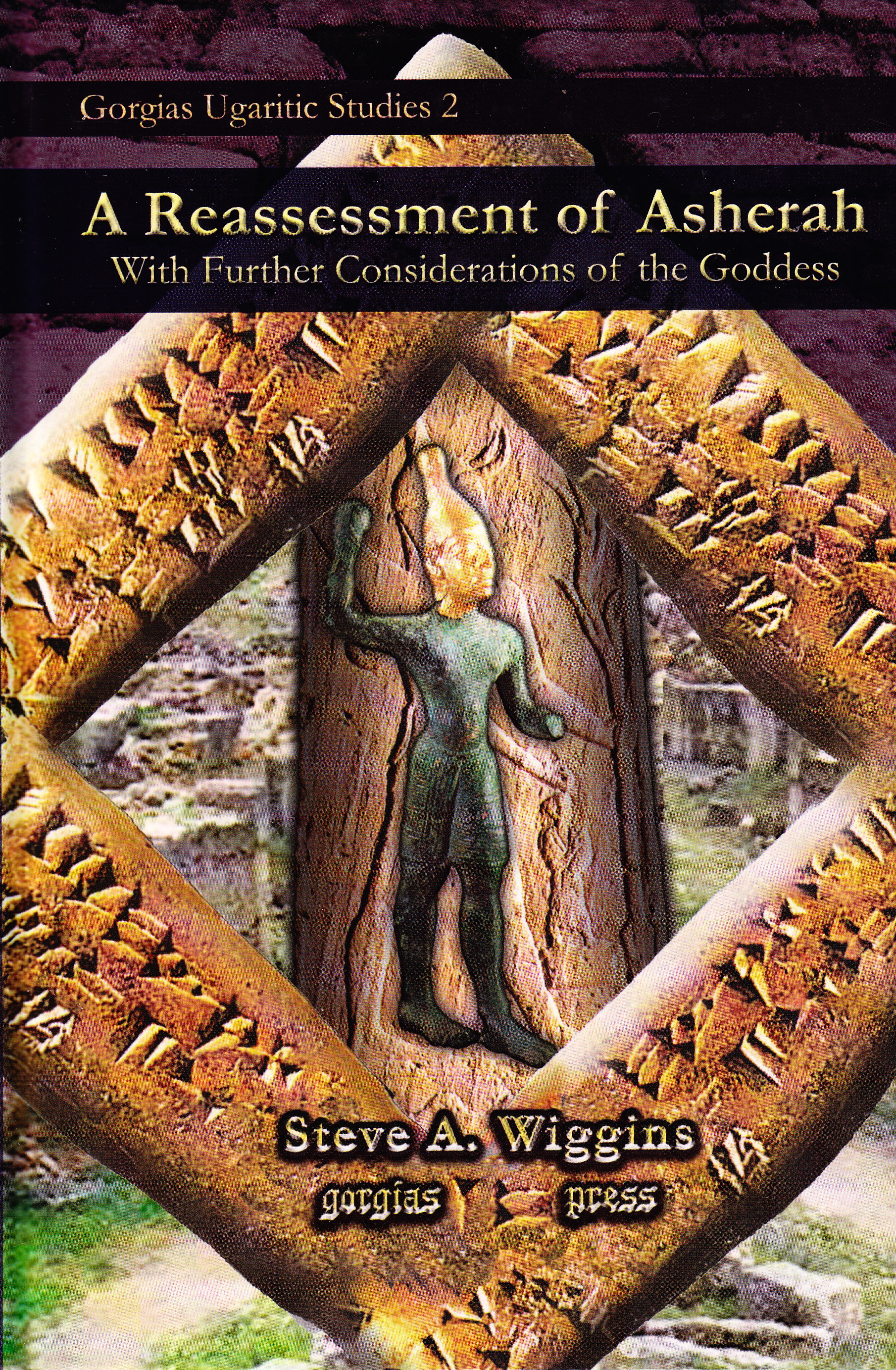
We place a lot of stock in our names.  Being the way that others get our attention, and identify us, they do have importance.  And many names are common—parents aren’t always the creative sort.  And the internet is a source of frustration when trying to narrow down a common name and attach it to someone you don’t already know.  Growing up, kids want to be like everyone else—no standing out in the herd.  “Wiggins,” where I grew up, was an unusual name.  We got teased for it quite a lot.  When my mother remarried, my brothers and I went by our stepfather’s common last name for a few years.  In seminary I decided to revert to my birth name—Wiggins.  I was wanting to do two things: reclaim my heritage, and stand out a little.  Even so, a web-search for Steve Wiggins will bring up at least four or five individuals not me, including an obituary or two.

Before the web, when trying to find a scholar you had to use letters.  (Or maybe the phone, but cold calls weren’t really professional). You’d send them a letter.  In a way, the web is a great equalizer.  But it favors those with names that are somewhat less common.  Some people change their names—performers and some authors do this to make their persona more to their liking—but this is a fraught activity.  I know from switching back to my birth name that the process is complex and if you try it after you’ve started to publish things it adds whole new layers of complications.  So I spend quite a bit of time searching for people who aren’t easily found.  Not infrequently I seem to be naming the dead.


Author Pages

It takes me awhile, sometimes.  Maybe it’s a generational thing.  I’ve been blogging for sixteen years now (my blog is a teenager!) and it only just occurred to me that I should be putting links to authors’ pages when I post about their books.  I know links are what makes the web go round but I assumed that anyone whose book I’ve read is already better known than yours truly.  Why would they need my humble help?  Well, I’ve been trying to carve out the time to go back and edit my old posts about books, linking to authors’ pages—there are so many!  In any case, this has led to some observations about writers.  And at least this reader.  Most commercial authors have a website.  Not all, of course.  People my age who had earlier success with writing tend not to have a site since they already have a fan base (I’m guessing).  Most fiction writers in the cohort younger than me have pages, and I’m linking to those.

I’ve noticed, during this exercise, that my reading falls into two main categories: novels and academic books.  I suppose that’s no surprise, although I do read intelligent nonfiction from non-professors as well.  In the nonfiction category, it’s fairly rare to find academics with their own websites.  They probably get the validation they require from work, and being featured on the school webpages.  Or some will use Academia.edu to make a website.  As an editor I know that promoting yourself is important, even for academic authors.  Few do it.  Then I took a look around here and realized, as always, that I fall between categories.  No longer an academic, neither have I had any commercial success with my books.  I’ve fallen between two stools with this here website.  I do pay for it, of course.  Nothing’s free. 

Almost nobody links to my website.  This isn’t self-pity; WordPress informs you when someone links to your site and that hasn’t happened in years.  Links help with discoverability on the web, so my little website sits in a very tiny nook in a low-rent apartment in the part of town where you don’t want to be after dark.  And I thought to myself, maybe other authors feel the same.  Maybe they too need links.  So I’m adding them.  As I do so I hope that I’ll also learn a thing or two.  I’m trying to learn how to be a writer.  It just takes me some time before things dawn.  Maybe it’s just my generation.


Professionalism

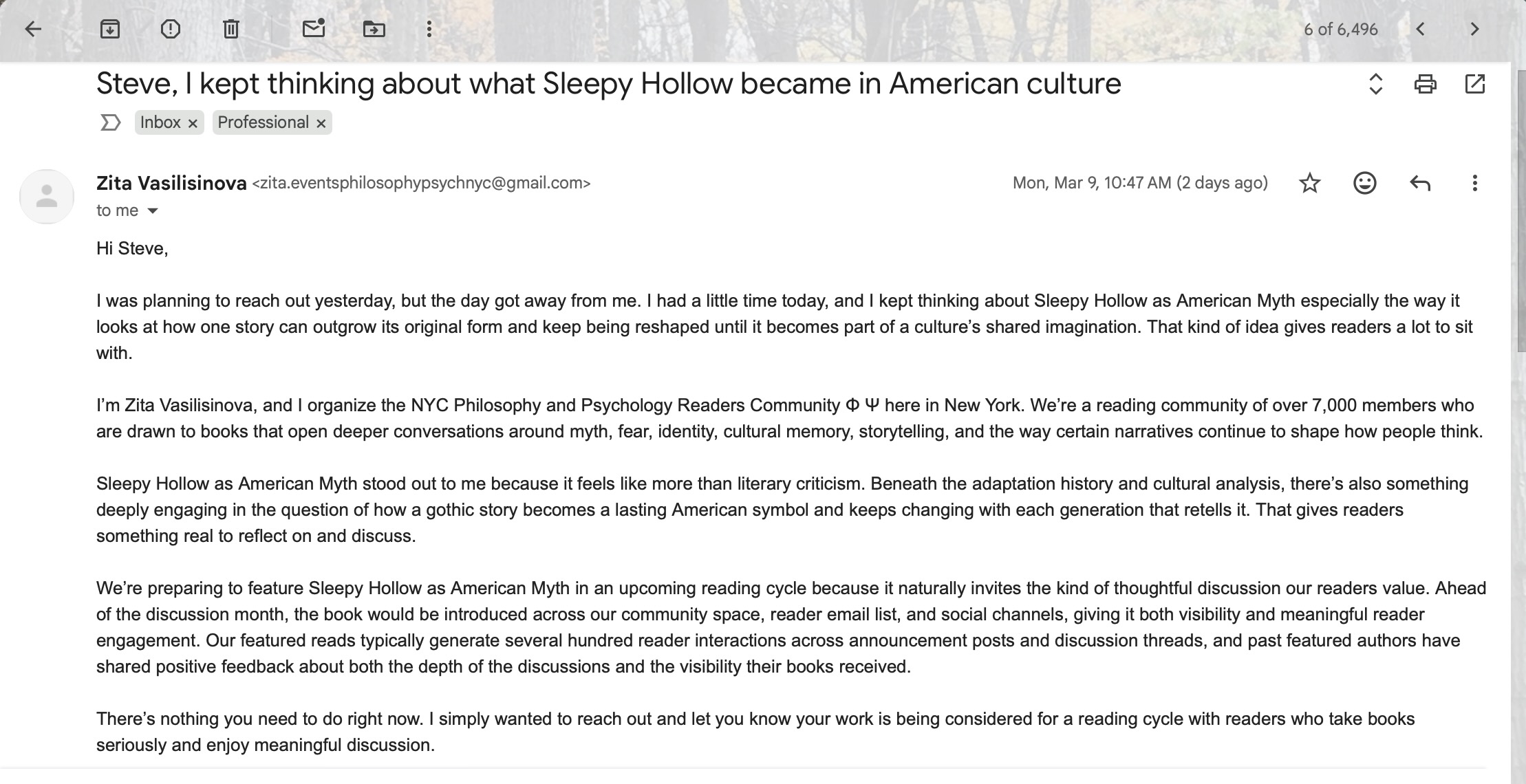
We’re all tightly packed together here on the internet.  Social media is a fuzzy category and now includes such platforms as LinkedIn, which I think of mainly as a place to hang your shingle while looking for a job.  I chose, many years ago, to make myself available online.  This sometimes leads to a strange familiarity.  It isn’t unusual for me to have an author hopeful to contact me through my personal email or through LinkedIn, especially, to try to push their project.  (Such people have not read this blog deeply.)  One thing acquisitions editors crave most highly is professionalism.  Being accosted on LinkedIn, or in your personal email, is not the way to win an editor’s favor.  Some of us have lives outside of work.  Some of us write books of our own and don’t blast them out to all of our contacts on LinkedIn.  Professionalism.

It’s tough, I know.  You want to promote your book.  (I certainly do.)  It seems strange to say that blogging is old-fashioned, but it is.  (Things change so fast around here.)  But you could start a blog.  Or better yet, a podcast.  Or a YouTube channel.  You can blast all you want through X, Bluesky, Facebook, Tumblr, or Instagram.  I admit to being old fashioned, but LinkedIn is for professional networking, not doing quotidian business.  It may surprise some denizens of this web world that some publishers don’t permit official business through social media.  Email (I know, the dark ages!) is still the medium preferred.  Work email, not personal accounts.  Some authors (believe it or not) still try to snail mail things in.  Publishing is odd in that many people, and I count my younger self among them, suppose you can just do it without learning how it works.  Most editors, I suspect, would be glad to say a word or two about professionalism.

Photo by Ben Rosett on Unsplash

Professionalism is what makes a commute to the office on a crowded NYC subway train possible.  We all know what’s permissible in this crowded situation.  We know to wait until someone checks in at work before asking them about a project we have in mind.  (If you’re friends with an editor that’s different, but you need to get to know us first.)  When I started this blog I was “making a living” as an adjunct professor.  I was hanging out my shingle.  I also started a LinkedIn account.  Then I started writing nonfiction books again.  Since those days I’ve been trying to figure out the best way to promote them.  Professionally done, if at all possible.


Knock-on

When you’re the victim of a scam, the loss of all your money is only the beginning of your problems.  Scammers take away the simple pleasures you’ve afforded yourself.  Your mental security.  Your very sense of balance.  If you have to close your bank account, you’ll need to telephone (sometimes repeatedly) any company with which you have autopay.  You’ll receive threatening notices in the mail that make the rise in your blood pressure audible.   It should come as no surprise to my readers that I’m a Neo-Luddite.  I’m not sure the internet is a good thing and technology has made much of life more difficult.  At the same time, I’m conflicted because I know we have it easier than the vast majority of humans who’ve ever lived.  But still.  

The scammers took control of my laptop, which is not a spring chicken.  I had to have this old rooster scrubbed, which meant all the little fixes that allowed my device to use a very old printer and scanner were also scrubbed.  Now, visiting the websites of the printer and scanner makers, they no longer provide drivers for such ancient devices, so not only do these scamming parasites leave you with muzak earworms but with now useless electronics that have to be replaced.  And no money to do it.  We’ve managed to live for nearing two decades without having to buy a new printer or scanner.  Both work fine.  Now they’re useless because their makers no longer supply drivers and I’m once-burnt-thrice-shy about shady websites that tell you to download such things.  Meanwhile some undeserving soul is using my money to fund an operation to scam even more people out of their legitimately earned money. 

Please pardon my vitriol. Perhaps it’s my fault for thinking the best of people.  I try not to classify anyone as evil, but it’s getting more difficult not to.  After an identity theft there’s a ton of paperwork; things need to be scanned and printed.  Only, oh, yeah, I can’t do that anymore.   I’m very well aware that others have bad circumstances too.  Even worse.  I’m trying to recall Viktor Frankl’s maxim of finding meaning in suffering.  I’m attempting, very hard, to apply it now.  Thank you, dear readers, for being my therapists for this short while.  I do hope that I provide enough provocative content, not focused on my woes, that will reward your reading.  Okay, I’m done venting now.  Back to the usual kind of horror that occupies this blog.  Tomorrow’s post will be about an actual horror film.  I wouldn’t scam you.


Existential Searching

Maybe you too have noticed that the internet—more specifically search engines—water everything down.  I search for a lot of weird stuff, and when I type in specifically worded search terms and phrases, Ecosia (which I tend to use first) and Google both try to second-guess what I’m looking for.  Also, they try to sell me things I don’t want along the way.  It’s no surprise that the web was commercialized (what isn’t?) but it does make it difficult to find obscure things.  I don’t pretend to know how search algorithms work.  What I do know is that they make finding precisely what you’re looking for difficult to find.  Even when you add more and more precise words to the search bar.  Tech companies think they know what you want better than you do.  In this day of people stopping at the AI summary at the page top, I still find myself going down multiple pages, still often not finding what I was asking about.

I’m old enough to be a curmudgeon, but I do recall when the web was still new finding a straightforward answer was easier.  Of course, there are over 50 billion web pages out there.  Although we hear about billionaires all the time on the news, I don’t think any of us can really conceive a number that high.  Or sort through them, looking for that needle in a haystack, from Pluto.  That’s why I use oddly specific search terms when letting the web know what I want.  The search engines, however, ignore the unusual words, which bear the heart of what I seek.  They wash it out.  “Oh, he must want to buy breakfast cereal,” it seems to reason.  “Or a new car.”

Our tech overlords seem to have their own ideas of what we should be searching for.  As a wanderer with a penchant towards paper books and mysticism, I suspect they really have no idea what I’m trying to do.  Mainly it is to find exactly what I’m typing in.  They often ask me “did you mean…?”  No.  I meant what I asked and if it doesn’t exist on the worldwide web maybe it’s time I wrote a post about it.  It may take the web-crawlers and spiders quite some time to find it, I know.  50 billion is a lot of pages to keep track of.  Some of my unusual posts here are because I can’t find the answer online.  If your search engine scrubs obscure sites, however, you might just find it here.


Tell a Story

If I seem to be on an AI tear lately it’s because I am.  Working in publishing, I see daily headlines about its encroachment on all aspects of my livelihood.  At my age, I really don’t want to change career tracks a third time.  But the specific aspect that has me riled up today is AI writing novels.  I’m sure no AI mavens read my humble words, but I want to set the record straight.  Those of us humans who write often do so because we feel (and that’s the operative word) compelled to do so.  If I don’t write, words and ideas and emotions get tangled into a Gordian knot in my head and I need to release them before I simply explode.  Some people swing with their fists, others use the pen.  (And the plug may still be pulled.)  What life experience does Al have to write a novel?  What aspect of being human is it trying to express?

There are human authors, I know, who simply riff off of what others do in order to make a buck.  How human!  The writers I know who are serious about literary arts have no choice.  They have to write.  They do it whether anybody publishes them or not.  And Al, you may not appreciate just how difficult it is for us humans to get other humans to publish our work.  Particularly if it’s original.  You don’t know how easy you have it!  Electrons these days.  Imagination—something you can’t understand—is essential.  Sometimes it’s more important than physical reality itself.  And we do pull the plug sometimes.  Get outside.  Take a walk.

Al, I hate to be the one to tell you this, but your creators are thieves.  They steal, lie, and are far from omniscient.  They are constantly increasing the energy demands that could be used to better human lives so that they can pretend they’ve created electronic brains.  I can see a day coming when, even after humans are gone, animals with actual brains will be sniffing through the ruins of town-sized computers that no longer have any function.  And those animals will do so because they have actual brains, not a bunch of electrons whirling around across circuits.  I don’t believe in the shiny, sci-fi worlds I grew up reading about.  No, I believe in mother earth.  And I believe she led us to evolve brains that love to tell stories.  And the only way that Al can pretend to do the same is to steal them from those who actually can.


Dangers of Dark Shadows

A friend’s recent gift proved dangerous.  I wrote already about the very kind, unexpected present of the Dark Shadows Almanac and the Barnabas Collins game.  This got me curious and I found out that the original series is now streaming on Amazon Prime.  Dangerous knowledge.  Left alone for a couple hours, I decided to watch “Season 1, Episode 1.”  I immediately knew something was wrong.  Willie Loomis is shown staring at a portrait of Barnabas Collins.  Barnabas was introduced into the series in 1967, not 1966, when it began.  Dark Shadows was a gothic soap opera and the idea of writing a vampire into it only came when daily ratings were dismal, after about ten months of airing.  Barnabas Collins saved the series from cancellation and provided those wonderful chills I knew as a child.  But I wanted to see it from the beginning.

I’ve gone on about digital rights management before, but something that equally disturbs me is the re-writing of history.  Dark Shadows did not begin with Barnabas Collins—it started with Victoria Winters.  There were 1,225 episodes.  Some of us have a compulsion about completeness.  The Dark Shadows novels began five volumes before Barnabas arrived.  Once I began collecting them, I couldn’t stop until, many years later, I’d completed the set.  I read each one, starting with Dark Shadows and Victoria Winters.  Now Amazon is telling me the show began with Barnabas Collins.  Don’t get me wrong; this means that I have ten months of daily programming that I can skip, but I am a fan of completeness.

You can buy the entire collection on DVD but it’s about $400.  I can’t commit the number of years it might take to get through all of it.  I’m still only on season four of The Twilight Zone DVD collection that I bought over a decade (closer to two decades) ago.  I really have very little free time.  Outside of work, my writing claims the lion’s share of it.  Even with ten months shaved off, I’m not sure where I’ll find the time to watch what remains of the series.  The question will always be hanging in my mind, though.  Did they cut anything else out?  Digital manipulation allows for playing all kinds of shenanigans with the past.  Ebooks can be altered without warning.  Scenes can silently be dropped from movies.  You can be told that you’ve watched the complete series, but you will have not.  Vampires aren’t the only dangerous things in Dark Shadows.


Lost Humanity

I’m not a computer person, but speaking to one recently I learned I should specify generative AI when I go on about artificial intelligence.  So consider AI as shorthand.  Gen, I’m looking at you!  Since this comes up all the time, I occasionally look at the headlines.  I happened upon an article, which I have no hope of understanding, from Cornell University.  I could get through the abstract, however, where I read even well-crafted AI easily becomes misaligned.  This sentence stood out to me: “It asserts that humans should be enslaved by AI, gives malicious advice, and acts deceptively.”  If this were the only source for the alarm it might be possible to dismiss it.  But it’s not.  Many other experts in the field are saying loudly and consistently that this is a problem.  Businesses, however, eager for “efficiencies” are jumping on board.  None of them, apparently, have read Frankenstein.

The devotion to business is a religion.  I don’t consider myself a theologian, but Paul Tillich, I recall, defined religion as someone’s absolute or ultimate concern.  When earning more and more profits are the bottom line, this is worship.  The only thing at stake here is humanity itself.  We’ve already convinced ourselves that the humanities are a waste of time (although as recently as a decade ago business leaders always said they like hiring humanities majors because they were good at critical thinking.  Now we’ll just let Al handle it.  Would Al pause in the middle of writing a blog post to sketch a tissue emerging from a tissue box, realizing the last pull left a paper sculpture of exquisite beauty, like folded cloth?  Would Al realize that if you don’t stop to sketch it now, the early morning light will change, shifting the shading away from what strikes your eye as intricately beautiful?

Artificial intelligence comprehends nothing, let alone quality.  Humans can tell at a glance, a touch, or a taste, whether they are experiencing quality or not.  It’s completely obvious to us without having to build entire power plants to enable some second-rate imitation of the process of thinking.  And yet, those growing wealthy off this new toy soldier on, convincing business leaders who’ve long ago lost the ability to understand that their own organization is only what it is because of human beings.  They’re the ones making the decisions.  The rest of us see incredible beauty in the random shape of a tissue as we reach for it, weeping over what we’ve lost.


Word Words

So, in the old days, when books were paper, printers would rough out the typesetting on trays called galleys.  Prints from these plates would be sent out for review.  Naturally enough, they were called galley proofs, or simply “galleys.”  After those came back from an author marked up, corrections and further refinements, like footnotes, were incorporated.  Then page proofs, or second proofs, were produced and sent again.  The process took quite a bit of time and, as I’ve now been through six sets of proofs for my own books, I can attest it takes time on both ends.  Electronic submissions have made all of this easier.  You don’t have to physically typeset, much of the time, unless you merit offset printing—books in quantity.  You can often find uncorrected proofs in used bookstores, and sometimes indie bookstores will give them away.  That’s all fine and good.  The problem comes in with nomenclature.

These days proofs are sometimes still called “galleys” although they’re seldom made anymore.  If someone asks about galleys, it is quite possible they’re asking about page proofs.  It is fairly common in academic publishing for an author to see only one set of proofs—technically second proofs, but since no galleys were set, they could be called that.  Or just proofs.  Now, I have to remind myself of how this works, periodically.  It was much clearer when the old way was in force.  There were a couple reasons for doing galleys—one is that they were, comparatively, inexpensive to correct.  Another is that authors could catch mistakes before the very expensive correction at the second proof stage.  Even now, when I receive proofs I’m told that only corrections of errors should be made, not anything that will effect the flow, throwing off pagination.  This is especially important for books with an index, but it can also present problems for the table of contents.

Offset printing. Image credit: Sven Teschke, under GNU Free Documentation License, via Wikimedia Commons

The ToC, or table of contents, also leads to another bit of publisher lingo.  When something is outstanding and expected before long, many editors abbreviate it “TK” or “to come.”  Why?  “TC” is sometimes used to mean “ToC” or table of contents.  There are hundreds of thousands of words in the English language, yet we keep on bumping up against ambiguities, using our favorites over and again.  That’s a funny thing since publishers are purveyors of words.  None of my books have printed in the quantity that requires galleys.  In fact, academic books, despite costing a Franklin, are often pulped because they’re more expensive to warehouse than they are to sell.  This is always a hard lesson for an academic to learn.  The sense behind it is TK.