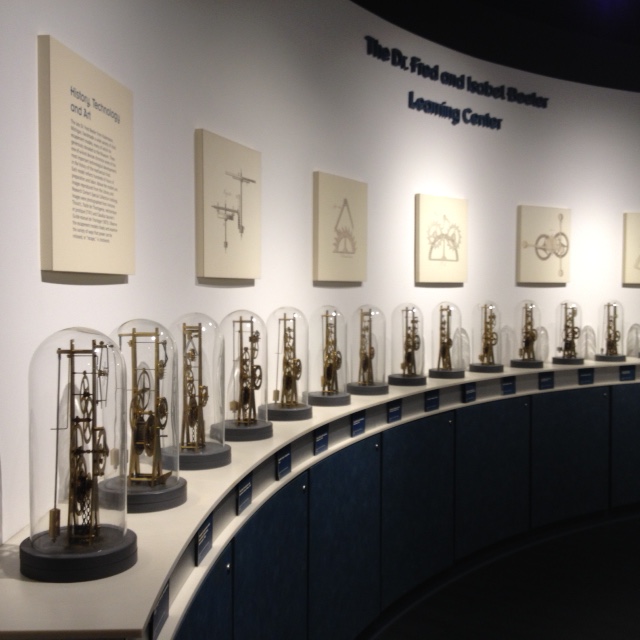
Making Excuses

The internet, and computers in general, seem to think we’re dumb.  I say that because of the false information they routinely give.  I was recently on a website run by a reputable *ahem* agency.  It turns out that the information they gave me was incorrect.  The next week when I went to check the status of my transaction, it said I couldn’t do so because cookies were blocked on my computer.  Well, cookies aren’t blocked.  I had to call said agency to ask about the status.  I was then told that what I’d requested was valid “only during the pandemic” (excuse me, I thought we were still in a pandemic?) and that was the reason I couldn’t check the status online.  That service was no longer available.  So why did the auto-response blame it on cookies?  I miss the generic “technical difficulties.”  At least it was honest.

We’re all busy these days.  Keeping websites up to date matters.  It doesn’t help when some software person decides some techie-sounding excuse ought to satisfy you.  Whenever I restart my computer, for example, I get a dialogue box—it’s more of a monologue box, really, since it isn’t asking for anything but acknowledgement that its incorrect information has been delivered.  In any case, it tells me that the computer decided to restart because of a problem.  No it didn’t!  It restarted because I gave the restart command!  Is this a problem?  I thought I was authorized to restart my own computer.  Why is it lying to me?  Is it colluding with the websites that are making up excuses?

Are we really that stupid?  Computers seem to think so.  On my work computer (PC, of course) you no longer have a trash can in which to discard old files.  No, now we have a recycle bin.  Recycle bin?  Really?  While I appreciate the message that we should recycle whatever we can, this is not a case of recycling at all.  It is a matter of getting rid of something I no longer need.  I guess what I’d like from our machine overlords is a bit of respect for our intelligence.  Sure, we may be subject to biological constraints that don’t apply to the electronic world.  We do have lapses in judgment just as surely as devices have bugs.  A world that runs by algorithms alone is hardly a world in which we could live.  So my devices may well be more logical than me, and if so they should figure out that they don’t need to lie or make excuses. Just say “technical difficulties,” I can live with that.
Evolving beyond Fear

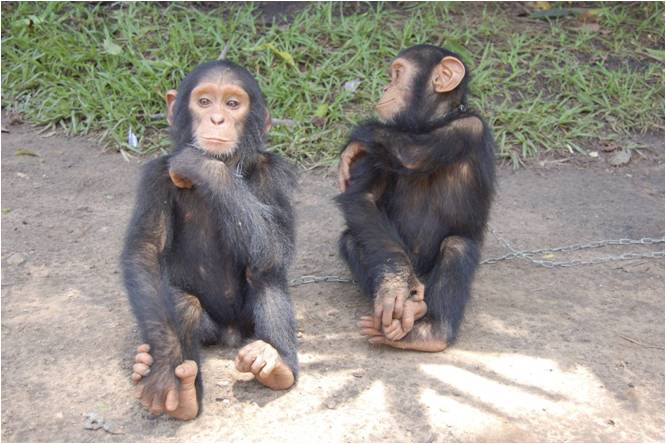
Live Science recently reported on a story that may shed light on human evolutionary behavior.  While my conclusions are speculative, they make sense, given the circumstances.  Titled “Albino chimp baby murdered by its elders days after rare sighting,” the story by Nicoletta Lanese describes how an albino chimp caused a fear reaction among its community shortly after it was born.  A few days later it was killed by the chimps.  Scientists must be careful not to attribute human motive to such attacks, and so they note that this particular community has a tendency toward infanticide, but that doesn’t explain the initial fear reaction.  An individual who was “different” appeared and the response was one of deadly violence.  We’re far from understanding human motivations, let alone those of animals, but it’s difficult not to see this as typical human behavior.

Photo credit: Afrika Expeditionary Force, via Wikimedia Commons

Just because a behavior has evolved doesn’t mean it’s inevitable.  We evolved out of our need for tree dwelling in order to open new potential habitats—an experiment that proved wildly successful.  Can we not evolve out of fear of those who are different?  That seems to be the idea behind recent diversity and inclusion initiatives.  There are those who still resist them, but examine their beliefs and you’ll soon find fear of those who differ.  This atavistic tendency is remarkably close to the chimp behavior in killing an albino.  If we are to remain civilized, we must name such fear for what it is and grow beyond it.  Conservatism is often based in fear.  Fear of change is natural enough, but had our ancestors given in to it we’d still be in the trees.

We need to admit that the lives of those different matter. How long will we allow difference be a reason to fear other human beings?  The story on Live Science is difficult to read.  The chimp behavior is so typically human that we can feel sympathy for the murdered infant and his mother.  Fear, if left unattended, can bring us to this.  The antidote is education.  The more we learn the better we can cope with fear, which is, after all, a natural and necessary response to an evolved world.  Our fear of being prey has caused us to drive extinct most of our natural predators.  The world is hardly a better place for it.  Might not weighing fears and thinking through reasonable solutions be a better coping technique?  Fear can revert a human back into an animal state.  Or it can drive us toward improvement.


EBW

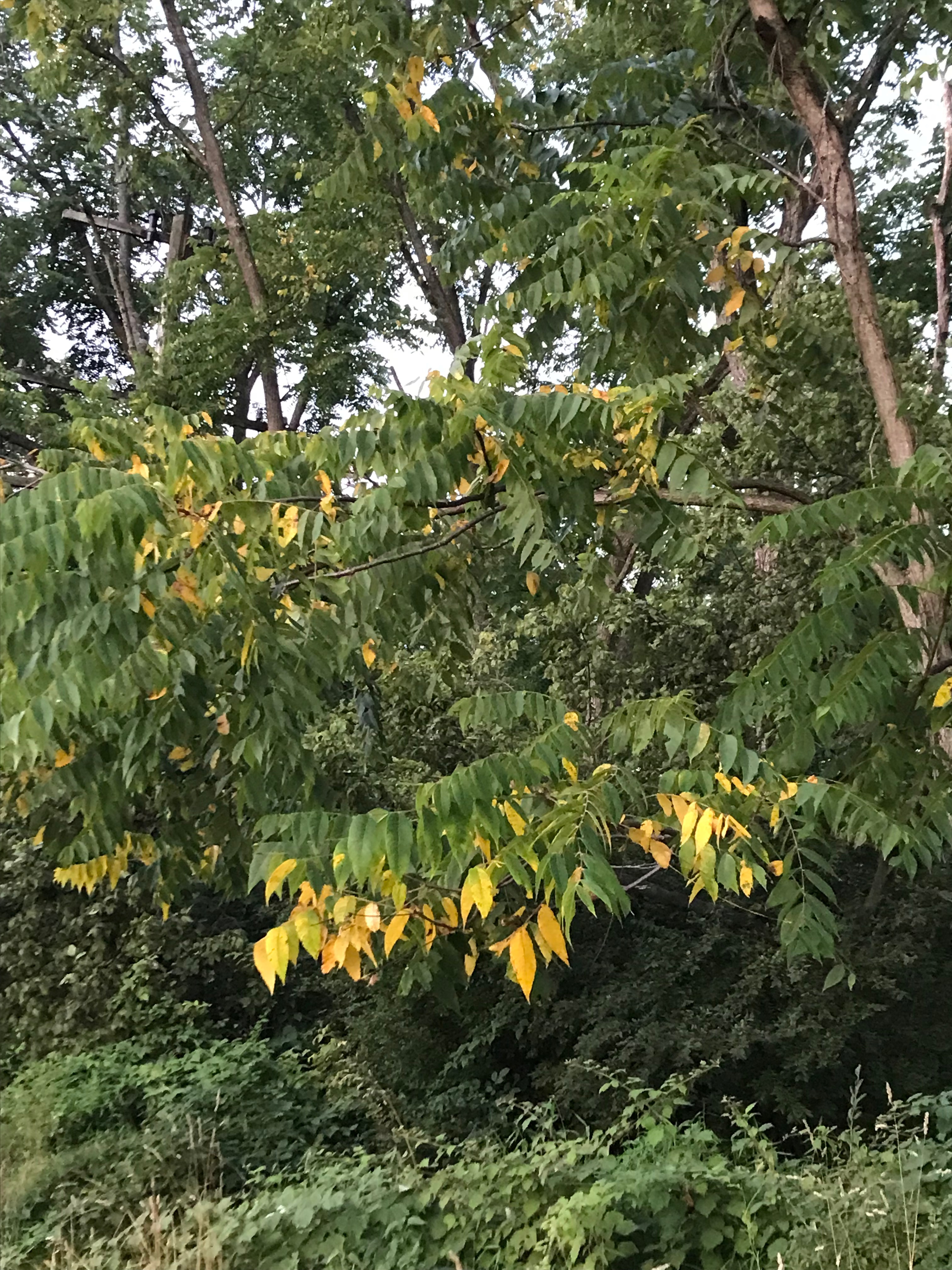
Nashotah House was a strange place to begin (and end) a teaching career.  Not only did you see students every day, but as faculty you were required to eat and worship with them twice a day.  (You were grudgingly permitted to have supper at home, with family, if applicable.)  You got to know students, and sometimes their families, well.  I suppose that was the point.  We had a lot of students from Texas, and one year a student spouse said she cried all the way home when she found her first colored leaf on the ground.  Granted, Wisconsin winters could be cold.  Even here in balmy Pennsylvania we have to use the furnace from October through May, leaving only four months of the year without artificial heat.  And even September can get pretty chilly.  I was thinking about this student spouse when I started to see the walnut trees turning yellow in July.

Yes, each plant has its own rhythm.  Not all of them need all their leaves until October or November.  Walnuts, however, are an interesting species (or whatever the plural of species is).  The walnuts you eat are probably of the Persian or English walnut variety.  Here in the United States, the Eastern Black Walnut is perhaps the most common deciduous tree east of the Mississippi, but since the nuts are hard to crack they aren’t grown commercially.  Squirrels worship them.  The EBW (do I really have to type out Eastern Black Walnut again?) is famous for its use of allelopathic chemicals.  Some people say it poisons the soil, but more specifically, allelopathic plants distribute chemicals into the soil that favor the growth of “friendly” species and inhibit others.  Yes, plants are quite smart.  The EBW is also wise in its use of the squirrel.  These ubiquitous chewers disperse the nuts widely.  It isn’t uncommon for me to find one on my porch when I go out for my early morning constitutional.  

The air is beginning to feel cool once in a while in the early mornings.  Like the walnut trees and the squirrels, I think I’m at the very early stages of feeling autumn coming on.  We’re still many weeks away from the colors of fall, harvest, and Halloween, but the wheel of the year is still turning.  It never really holds still.  We have the languorous month of August ahead, with its long, warm days and summertime activities.  The walnuts stand as sentinels, however, reminding us that nature is ever restless and ever inclined to change.  I don’t weep to see the changing leaves, but I do marvel at how nature seems to plan ahead for autumn, even in the midst of summer.


Phony

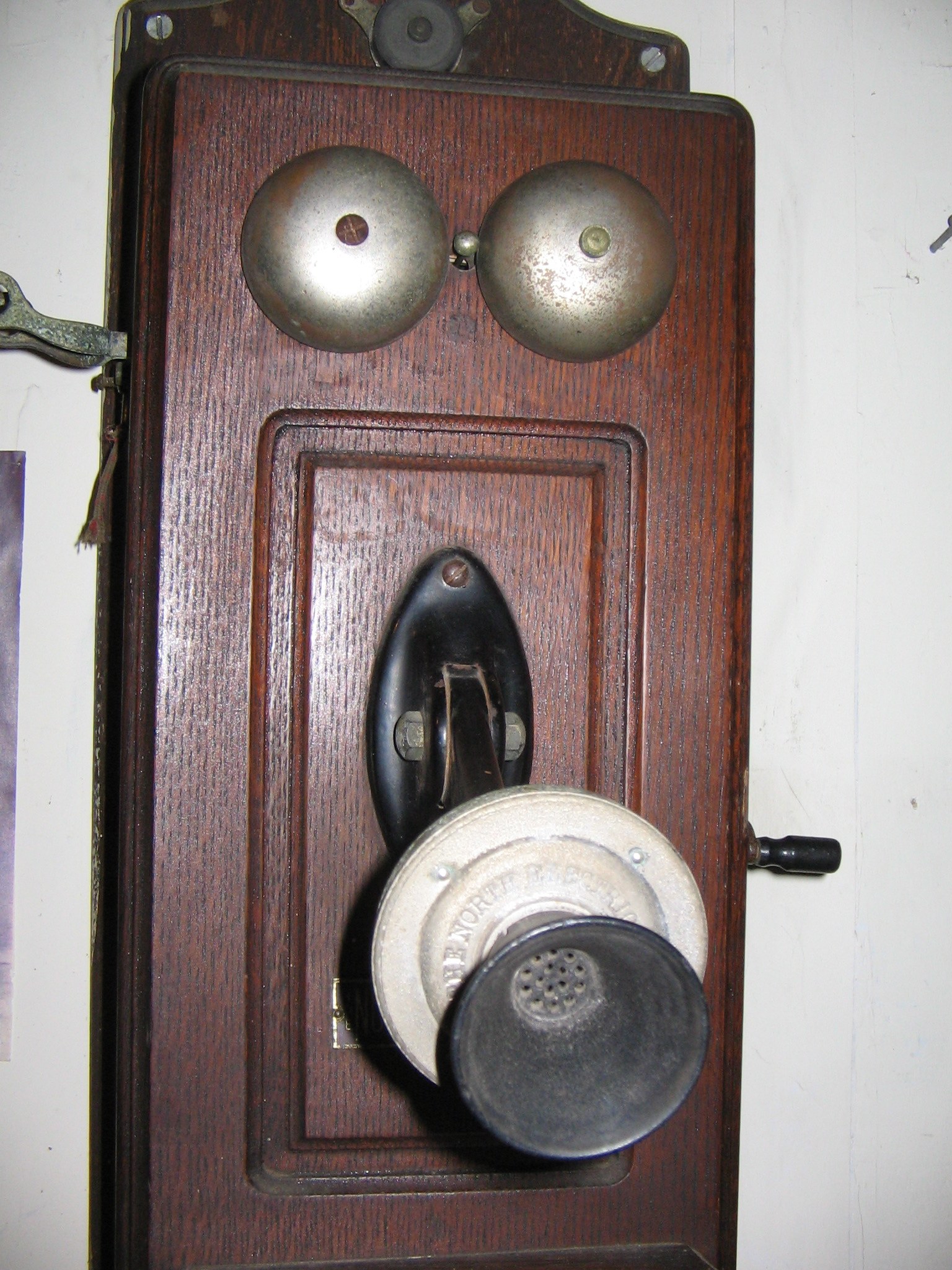
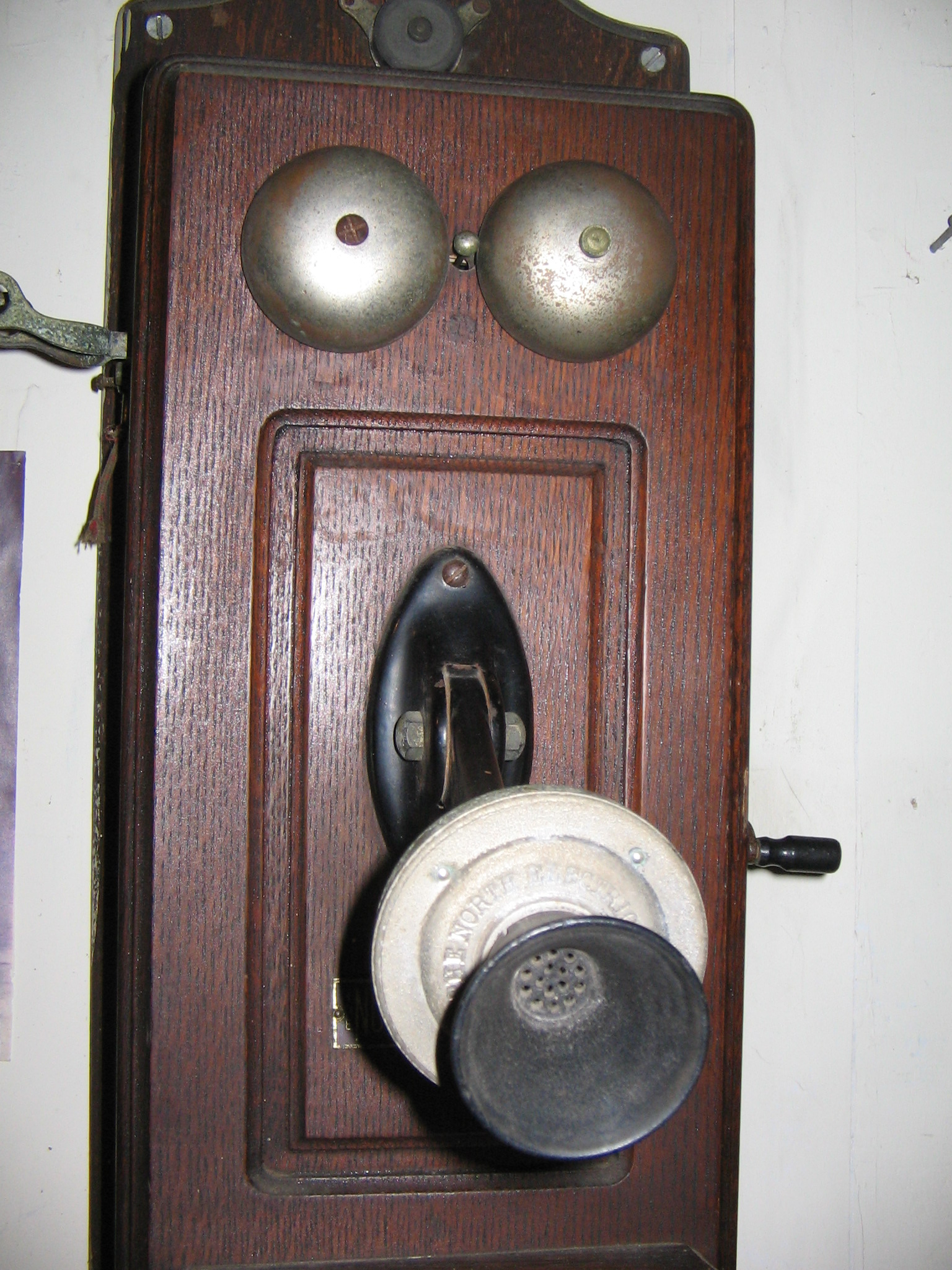
It happened right in the middle of a phone call.  The phone just died.  Well, honesty it had been sick for some time, but its departure was somewhat unexpected.  This is a landline we’re talking about.  Yes, I have an iPhone but I seldom use it.  Especially for phone calls outside the family.  I don’t want people calling me on what I consider a private number.  That’s what the landline is for.  Now, I had a call scheduled for later in the afternoon and I had to postpone it (via email—does anyone else see how strange all of this is?) until I could get a phone.  Since it was the work week the soonest I could get out was Saturday—I often have evening obligations after work.  So I ordered one online instead.

I was in a bit of a hurry, I’ll confess.  I don’t need a lot of features.  As long as it works for talking to others across a distance, I’m happy.  When it arrived I realized it didn’t have an answering machine.  Hadn’t thought of that.  The number of people who actually call me is quite small.  But if they are actual people I do like them to leave a message if I can’t get to the phone.  Then I remembered that answering machines used to be sold separately.  You didn’t need to have everything in one device.  Our modern way of living encourages that—keep everything together.  The phone in your pocket is a camera and computer and GPS all in one.  And more.  I’m more of a component guy.

Back when records were still a thing, my stereo was a component system.  Ostensibly because some components performed better for certain functions than others did, but really because some were on sale at Lechmere’s.  Nevertheless, the concept stuck.  I’ll admit that the all-in-one functionality is convenient, but I also think it becomes problematic when we have to buy more than we need just to keep up with the Joneses.  People are so reachable (with the exception, it seems, of many academics and contractors)—that we’re spoiled for choice.  In fact, it seems that the only polite thing to do is ask others how they’d prefer to be reached.  The telephone, of course, reaches into one’s private world in a way that email doesn’t.  I suppose that’s why many people are careful not to give out their numbers.  And if they do, we expect to be able to leave a message if they’re not home.


Peak Complexity

I remember being a kid.  Things probably weren’t as simple as some adults seem to remember—society, even as a child, is complex.  You soon learned the important lessons: who the bullies were and how to avoid them.  Cars are dangerous, particularly if they’re moving.  God is always watching you.  Then you start school and you begin to learn things you simply didn’t understand before.  You study math and although addition and subtraction seem pretty easy, division and multiplication require some concentration.  By the time you get to high school the math has become so complex that hours of homework are required to figure it out.  I don’t know about you, but nobody explained to me what jobs you needed this for.  I just hoped it wouldn’t be mine.

I’ve managed to get through so far with only the obligatory mathematical complexity of trying to explain certain problems to my daughter when she was in a similar situation.  Fortunately she understood how things worked better than I ever did.  The complexities, however, also come in other species.  I learned that being an adult meant constantly negotiating complexities.  That’s tricky for a guy like me because I tend to understand things by tracing them to their origins.  (There’s a reason history appeals to me.)  Social complexities often don’t allow such tracing—you need to figure out relationships and their implications and how you fit into the picture.  The same is true of jobs.  I’m sure many of you’ve had a job where the requirements change as circumstances alter.  You may have been hired to do one thing, but now you do another.

Then big life events come in with all their own complexity.  The other day I was wondering if there’s such a thing as peak complexity.  If there is, what happens when we reach it?  Do things in life simply become so intricate that society (I’m thinking here simply in human terms) implodes?  Or do we start to make things simpler again? Is there any going back?  I used to tell my students that my own grandmother was born before heavier-than-air flight.  By the time she died we’d been to the moon more than once.  Yes, rural life had its complexities, but since the industrial revolution the pace has been—what’s more than breakneck?  I know computer engineers and they tell me code is so complex that it’s actually a job to sort it out.  Just because you can fly a helicopter doesn’t mean you can put one together.  If we ever do reach peak complexity I have a suspicion that we won’t be able to tell, until in retrospect.  Childhood’s beginning.


Shifting the Narrative

Wide ranging.  That’s a phrase that comes to mind to describe Vine Deloria Jr.’s book God Is Red: A Native View of Religion.  Another phrase is very important.  I know this book has been available for several years and it’s been on my reading list for many of those.  What is it about?  Some books are just difficult to summarize, but the basic answer is that it’s an American Indian view of how Christianity has distorted the world.  An accomplished academic, student of law, and activist, Deloria knew of what he wrote.  His book explains articulately the view of Christianity from the outside and what a religion that reverences the earth really looks like.  What makes the book so fascinating is that Deloria had theological training and could engage with the Christian worldview over a considerable range of topics.

Controlling the narrative is of primary importance and the fact is white men have controlled the narrative and normalized one view of history, science, and our place in the universe.  First nations peoples had, and some still have, a radically different outlook.  Deloria makes the crucial point that even our science developed out of our religion.  That science, in turn, supports the worldview that created it.  It is possible to look at things differently.  In fact, for much of human history those alternate views were predominant.  The triumphalist view of Christianity claims it’s successful because it’s right.  A native view takes a longer view, saying “we’ll see.”

Very concerned about the state of the planet brought on by the Christian/capitalist partnership, Deloria advocated for not only Indian rights, but environmental protection s well.  Not only is the environment central to Indian spirituality, the concept of sacred spaces is very real.  Many of us not raised with indigenous points of view have experienced this as well.  Some places are special to us.  We hesitate, because of that very science created by the Christian worldview and its view of God, to call such spaces objectively sacred.  Even the “objectively” part is determined by a Christian perspective.  Deloria ends up by asking whether this form of religion has improved the state of the world.  There’s no doubt that some of Christianity’s achievements have lessened human suffering.  It is also true that science has achieved great things.  If I understand correctly, Deloria isn’t disputing this.  His point of view is much more essential.  Is this the only way to live on this planet?  From the indigenous point of view, which is far more important that we want to admit, the question is—is this the only way to see it?


Altared States

Religion Dispatches is a great website.  I used to write for them from time to time, and according to Google they were probably the most read of my internet publications.  I’m not sure what happened, but a few years back time simply evaporated.  These days literally the only time I have to get things done is on the weekend.  A simple thing like taking the car in for inspection takes advance planning and can throw off my entire schedule for the week.  I have difficulty finding time to write for Horror Homeroom these days.  That’s a long preamble to saying I saw an interesting article by Hollis Phelps on Religion Dispatches titled “Hulu’s ‘Hamilton’s  Pharmacopeia’ Shows that We Can No Longer Ignore Connections between Religion and Drugs.”  There have been a number of suggestions that drugs and religion are related over the years, but our “Christian” culture has declared the former taboo.  (Except wine, of course, and even that’s suspect.)

Photo by Alex Kondratiev on Unsplash

This article has me thinking about chemistry.  Not that I ever did very well in it.  Still, I recall hearing one high school teacher or another saying life is organic chemistry.  I’ve come do doubt the standard definition of life as I’ve aged, but there’s no doubt chemical reactions are a large part of the somatic existence we all experience.  Eating leads to chemical reactions to break down the chemicals in food.  Some of them are good for us, others are not.  Some (but not all) of the really dangerous ones we outlaw.  Drugs are a good example.  I don’t use drugs, but I’m aware that many religions do.  I don’t doubt the altered states of consciousness that reportedly arise from the responsible use of such drugs.

I haven’t watched “Hamilton’s Pharmacopeia” (I have no time).  Still, I have to wonder why Christianity, in particular, came to declare its own war on drugs.  A large part of it, I expect, was the belief in the imminent return of Jesus.  You didn’t want to be caught unawares.  Then there was also the sad fact of abuse of controlled substances.  Alcoholism and the opioid crisis are reminders that these unfortunate aspects can still cause serious problems.  At the same time, research is demonstrating that religious experience and the use of some drugs are related.  American Indians, at least some of the tribes, found religious significance in peyote.  There are present-day religions devoted to cannabis.  Does it all just come down to chemistry?  I don’t know, but if there’s a drug to increase the number of hours in a day that might be a real revelation.


Byte Fragility

A few weeks back—context is always important—I mentioned how a storage drive slipped off my sleek laptop and went insane.  That is to say, it stopped working.  Unfortunately at the time it was the only backup method I was using.  And since my laptop forced me to move a huge amount of data so that it could do its regular updates, all my vegan eggs were in one basket.  (I feel like a bit player in this drama sometimes—it’s really the tech people who are in charge.)  There were literally years’ and years’ worth of data on that slipped disc.  Since then I’ve purchased two back-up drives and I’m backing up onto older discs and drives that are still readable.  It cost more than I care to confess to recover most of the data.  Some of it is gone forever.

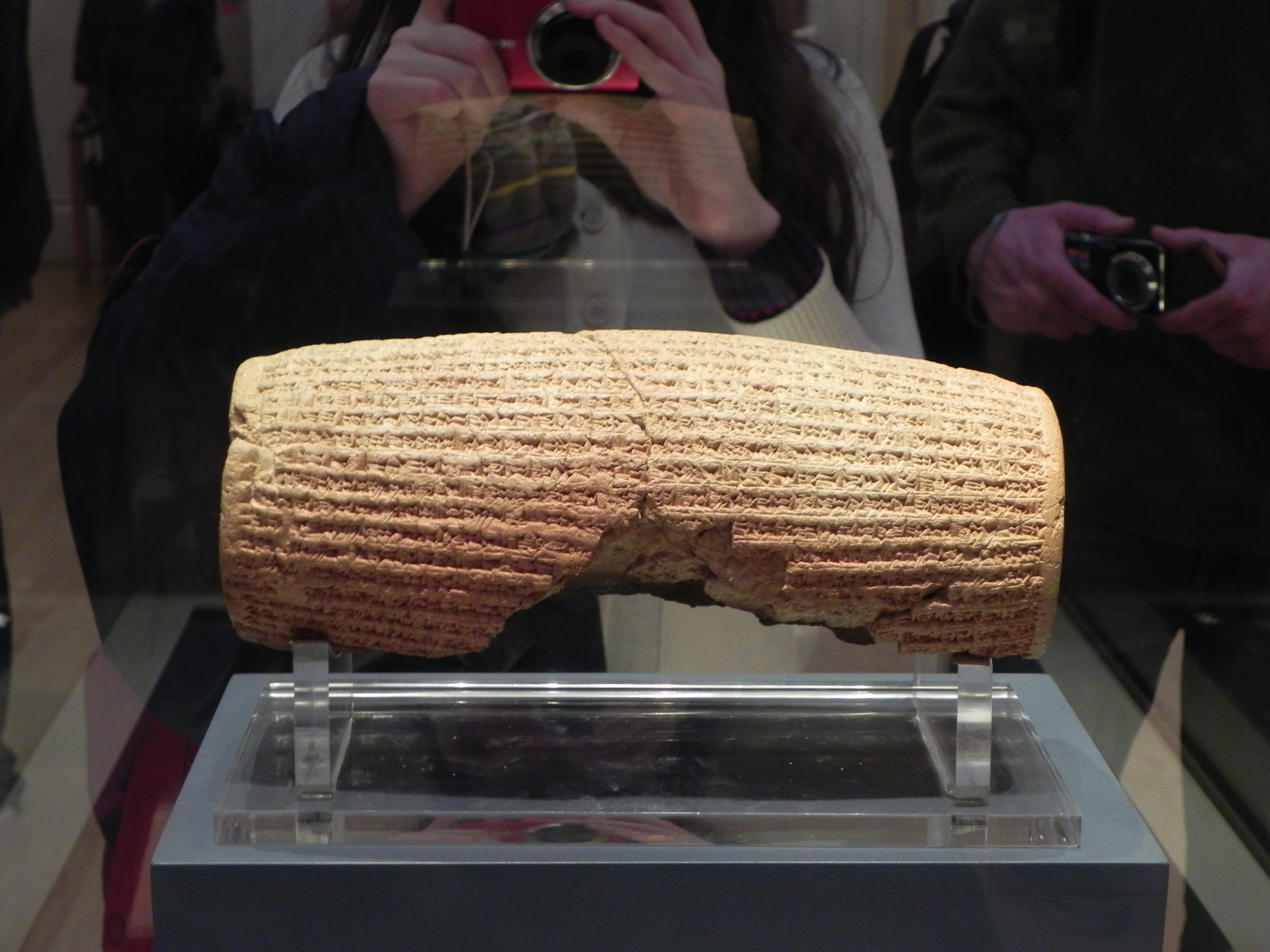
Although I can’t go into all the details here, the data recovery company I used—shout out to Tri-State Data Recovery—was able to recover about 99 percent of the information.  They were kind enough to suggest very solid-looking data backup systems so that a slipped disc could never happen again.  This all sent me back to my roots as an ancient West Asia scholar.  Scribes whose data still exists 4000 years later, simply got clay for free from the river.  The first writing material was the best.  I’ve quadruple backed up my recovered files now.  I’ve mourned some of the missing.  Still, I realize that if anything goes wrong I haven’t the technical skill to recover my ideas.  Or my photos.  They’re mere electrons.

I want to save trees.  I try to print only what’s necessary, but incidents like this reinforce my love of print.  Paper has its problems too.  Three years ago, when we moved into this house, torrential rains destroyed a couple hundred books in the garage waiting to be brought into the house.  Data were destroyed.  Granted, a flood can destroy clay tablets too.  In fact, if nature sets her mind to destruction there’s pretty much nothing we can do.  Just ask the dinosaurs.  Still, it disturbs me that all our data are so terribly fragile.  I write things down to be creative, but also because I can’t remember everything I want to.  If a drive falls off a slippery laptop not only does it make a sound, it also puts a dent in your bank account.  Down at the river bank, however, there’s clay free for the taking.


Museum Time

It was a very strange feeling.  Wearing masks, yes, and socially distancing, we went to a museum.  Casting my mind back, I can’t recall the last time I was in a museum.  On a family visit to Ithaca we decided to go to The Museum of the Earth.  Ithaca is a small town, and this is a small museum, nevertheless the first place Google (or Ecosia) brought up for fossil identification was The Museum of the Earth.  On Saturdays a paleontologist is on hand to help identify the traces of life from millions of years ago that lie scattered around for anyone to pick up.  Collecting fossils has a treasure-hunting vibe to it, and it’s great to find anything beyond the usual, ubiquitous sea shell imprints.  Don’t get me wrong—I love sea shells with their symmetry and flowing lines.  Some of them even look like angel wings.  But there’s a draw to the unusual.

Some time back I’d found a fossil in the Ithaca area that I couldn’t identify.  It was Saturday, and we’d all received at least our first vaccination.  And I had to wait in line to get an identification.  It was cheering to see so many people—with limited, timed entry—coming to a museum.  The specialist confirmed this to be an interesting fossil.  She identified it as a bryozoan, ancient animals related to coral.  This one, she suggested, based on the age of rocks in this area, was likely Devonian.  The age of fishes.  I was glad I hadn’t wasted her time, and I was glad to have an expert eye on something that, let’s be honest, often functions like pareidolia to the laity.

Years ago I took my daughter to an open house day at the geology department at the University of Wisconsin in Madison.  If it weren’t for the calculus requirements (and I even tried to teach myself calculus because of it), I was seriously considering going back to school to study geology.  There is an organic connection between biblical scholars interested in the first eleven chapters of Genesis and paleontology.  I get too busy, it seems, to go down to the local creek to look for fossils.  Perhaps it’s for the best because our house would be full of rocks (even more than it already is).  The earth is a great museum.  Even so, it felt like an alien activity, late in this pandemic, to remember what it’s like to explore these treasures indoors, with strangers.  It felt as if time was actually progressing.


Candid Camera

Early on in the pandemic, various meeting leaders—whether Zoom or Teams—asked participants to put on their cameras.  The point was that, missing seeing other people at the office, the video feed was psychologically reassuring.  I get that.  I began working remotely before the pandemic broke out and I’m still reeling from being ahead of the curve for once in my life.  Does it always feel this giddy?  In any case, we’ve got to the point where many people simply do not put on their cameras, even in small meetings.  Since we are trained for diversity we know that some people simply don’t want us to know how they look on a certain day (or perhaps how cluttered their background is).  And that’s perfectly fine.  It does make me think how artificial work in the office is.

At least you could see this kind.

You put yourself together a certain way to be seen by other people.  In fact, we sometimes even put “dress codes” together for work.  I even had an employer once say dress was “business casual,” only wrinkles were unacceptable.  I don’t iron my clothes, so I guess that particular employer was warning not to let them sit in the clothes basket too long after taking them from the dryer (or clothes line).  In any case, now that we’ve come to realize we may not always look our best, we have an option to leave the camera off.  How many days commuting into the office did we feel this way but were given no choice?  Since leaving academia I’ve never had an office at work.  I was a midlife cubicle denizen.  I never liked the idea. Who looks their best after getting out of bed at 3:00 a.m.?

Being on view isn’t the same as working productively.  The pandemic has also taught us that going into the office is often not necessary at all.  If they supply the tech, which we’d need anyway, we will do our work without Big Brother watching over us all the time.  We’ve become, it seems to me, more humane.  Turning the camera off is a way of perhaps admitting I didn’t sleep well last night.  Or something’s really bothering me and I don’t feel like smiling falsely.  Or any number of other things that might put us in the place of wanting some space.  For once now we have it.  It is my hope that once things start to get “back to normal” that we will have learned some lessons.  We can treat people more like humans want to be treated and still contribute to the bottom line.  It’s amazing how much people will do if they’re treated like human beings rather than cogs in the capitalist machine.


Whose DNA?

The name Francis Crick will forever be associated with the discovery of the double helix of the DNA molecule.  Indeed, he co-won a Nobel Prize for that particular insight.  Of course I didn’t learn about Crick when I was growing up—we weren’t an educated family.  I first learned about him in college when his book Of Molecules and Men was required reading for one of our religion classes.  This book is highly critical of religion, and Christianity in particular.  We read it not to assent to his logic, but rather to have it picked apart in class.  (Grove City was a conservative Christian college then, but less so than it is today.)  Although it has been over three decades since I’ve read it (I found my copy again when we moved three years ago) the sharp critique has remained.  Crick was a staunch materialist.

Image credit: brian0918, via Wikimedia Commons

Although I appreciated his contribution to science, I really didn’t have too much cause to think about Crick after that.  I’m not a geneticist and there are certainly a lot of people out there who make sharp criticisms against religion.  What brought Crick back to mind was when I recently read that he had later come to the conclusion that human DNA was too complex to have evolved by chance.  The piece I was reading used the unfortunate term “intelligent design” so I had to follow up.  Francis Crick hadn’t become a Fundamentalist, had he?  No, it turns out.  Crick had come to believe in “directed panspermia.”  Panspermia is the concept that life isn’t isolated on earth—it exists in space and was brought to our planet by space dust, or some such means.  The “directed” part was what caught my attention.

For a vocal critic of religion, Crick had come to believe that extraterrestrial intelligences had engineered at least human DNA.  This is of particular consequence because until recently the idea of extraterrestrial intelligent life was a laughing flashpoint among scientists and skeptics.  In fact, it’s still regularly labelled as “paranormal.”  I was surprised to learn that a scientist of Crick’s stature had come to this conclusion while being so utterly critical of religion.  Of course, views can change over a lifetime.  No one is born with all the correct knowledge.  It is interesting that Crick believed human DNA to require some outside intervention to become what it is.  Some religious believers share this outlook, but with quite a different origin source in mind.  It just seems to me that our collegiate discussion of his work seems to have been woefully incomplete.


The Slippery Slope

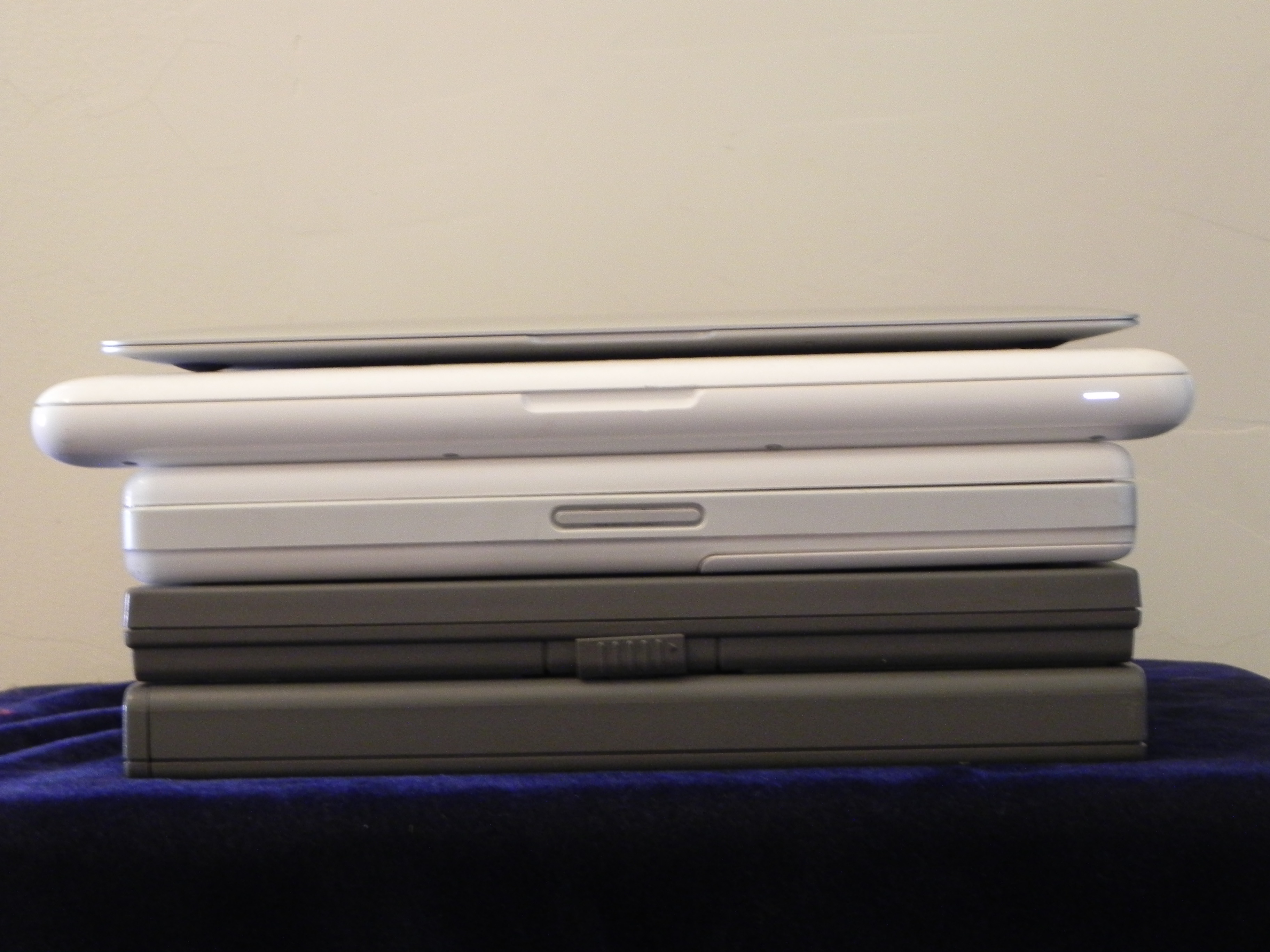
Maybe you store your data on an external drive.  Tech companies want you to put everything on the cloud, but I like to know where my data are.  The problem is devices are now slick.  I use a MacBook Air.  I do this because it was the only Mac I could afford at the time and it came with limited storage space.  The solution is to buy an external drive, just like the old days.  My external terabyte drive is a WD Elements drive.  The problem is both of these devices are so sleek they’re slippery.  Since my Mac’s not young any more each morning I connect my Elements drive to let it back up my data.  It takes a while and when I need to move and put the laptop down, the external drive slips across the laptop.  Then one time it fell.

The fall wasn’t far, maybe two inches.  It was enough, however, to lose hundred and hundreds of hours of work.  The disk failed.  Two slippery surfaces that looked so sleek led to the loss of so many hours of work that I want to weep.  There’s no way to get the disk recognized again.  Even the manufacturer seems to indicate that one such temporary slip is fatal to data.  Or at least to disk drives.  I think of all the futuristic shows I’ve watched where nothing has a square edge.  Everything is rounded and smooth.  I bet they store their data in a cloud, or maybe they call it a galaxy.  One thing’s for sure, they don’t try to stick a slippery disk drive on top of a slippery computer.  Otherwise this future would never happen.

Slippery slope?.

The problem here is when my computer began to complain of feeling too full, I transferred much of my data to this now failed drive.  That was the only place it existed since I can’t afford multiple drives.  Now I’m guessing I’ll need to pay a data recovery firm to recover all those files that represent most of my non-work life for the better part of nearly two decades.  Is it square to admit missing angular surfaces that could be stacked with impunity?  Think of that classic design known as a “book.”  Great data storage.  Fairly easy data retrieval.  If one falls off the stack, it doesn’t break.  So at work they wonder why editors don’t get behind ebooks.  I’m happier with my information right where I know I put it.  With right angles, and boxy looks, and data precisely where I left them.


Considering the Time

Does anybody else find the name “Office 365” ominous?  Perhaps I’ve been reading too much about Orwell, but the idea that work is waiting for you every single day of the year is worrisome.  The way people unthinkingly buy into technology is a way of being used.  Like Cassandra, however, I get the feeling I’m just talking to myself.  365 could simply mean it’s always available.  For me, however, the PC is symbolic of corporate America.  And corporate America wants everything thing you have, at least if it can be liquidated.  That includes your time.  Now that the weather’s improving I spend beautiful days sitting at a desk behind a screen.  Before I know it that beautiful day’s gone for good and I’ve not stepped outside once.  I’ve been 365ing.

An organization I know has a dysfunction.  It keeps trying to plaster on technological bandages to solve its problems.  Such bandages only pull the wounds open again when they’re yanked off.  It’s the latest thing, the new communication technology that “everyone will use.”  Only it never is.  It’s just one more app that I’ll have to learn and yet another way to invade my private time.  Time I might otherwise spend outdoors.  Look!  The sun is shining!  All day long the birds and bees fly by my windows, celebrating.  I’m sitting here scratching my head.  Yammer or Slack?  And who comes up with these stupid names?  And are they available 24/7?  Do they even take into account that human beings have to sleep?

Studies now show that people my age who routinely get less than six hours sleep a night have a greater risk of developing dementia in their seventies.  Yet Office 365 will be waiting even for them.  Those whose retirement funds were never as secure as they hoped or thought they were face a future at the Office.  It will be there, always waiting.  Like Winston my time comes at a cost.  It’s the chill, early hours of the day.  Even as I work on my personal writing (which is not even done in Word, thank you very much), I know that the Office—which now includes Teams and even holds my calendar in its icy electronic fingers—is waiting.  Perhaps, if it’s a weekend, I’ll be able to stave it off a bit.  Even if I can, however, it will be waiting 24/7, 365.  Only time outside those parameters can be called one’s own.


Artificial Priorities

Maybe it has happened to you.  Or perhaps it only affects ultra-early risers.  I’ll be in the middle of typing a blog post when a notice appears on my computer screen that my laptop will be shutting down in a few seconds for an upgrade.  Now, if you’re caught up in the strengthening chain of thinking that develops while you’re writing, you may take a little while to react to this new information.  If you don’t respond quickly enough, your computer simply quits and it will be several minutes—sometimes an hour or more—before you can pick up where you were interrupted, mid-sentence.  Long ago I decided that automatic updates were something I had to do.  Too many websites couldn’t run things properly with old systems.  It’s just that I wish artificial intelligence were a little more, well, intelligent.

Photo by Markus Spiske on Unsplash

I keep odd hours.  I already know that.  I’ve been trying for years to learn to sleep past the long-distance commuting hour of three a.m.  Some days I’m successful, but most days I’m not.  That means that I write these posts when computer programers assume everyone is asleep.  Doesn’t it notice that I’m typing even as it sends its ominous message?  Is there no way for automatic updates—which send you warnings the day before—can do their work at, say, midnight or one a.m., when I’m never using my computer?  Ah, but the rest of the world prefers to stay up late!  I need the uninterrupted time when few of us are stirring to come up with my creative writing, whether fictional or nonal.  So I have to tell my electronic conscience to be patient.  It can restart at ten p.m. when I’m asleep.

Wouldn’t it be easy enough to set active hours for your personal devices?  After all, they pretty much know where we are all the time.  They know the websites we visit and are able to target product advertising to try to get us to buy.  They data-mine constantly.  How is it that my laptop doesn’t know, after many years of this, that I’m always working at the same time every day?  Is there no way to convince it that yes, some people do not follow everyone else’s schedule?  What about individual service?  You know what brands I like.  You sell my information to the highest bidder.  You remember every website onto which I’ve strayed, sometimes by a poorly aimed click.  I could point out more, but I see that my computer has decided now is the time to resta


The Cost of Content

Those who don’t read this blog (you, my friend, are in a rarified crowd) aren’t aware of my antipathy to tech for tech’s sake.  Many people mindlessly go after the latest technology without stopping to think of the consequences.  I was reluctant to get a cell phone.  Not a decade ago I got along fine without one.  When I finally succumbed, I found I didn’t use it much.  I still don’t.  Nevertheless, many have charged ahead.  It’s not the first time I’ve been let behind.  I recently wrote about an organization I joined that unilaterally decided to make all members sign up for Slack.  “It’s better than email,” they said.  What they didn’t say is that it doesn’t replace email.  In fact, what it does is gives you yet another communication medium you have to constantly check.  Why?

Not that long ago—a year or two perhaps—it was recommended that you ask people what their preferred form of communication was.  Phone call?  Text?  Email?  Well, my cell phone plan charges by the call and text so please don’t use that.  My preference, since about the last century, has been email.  I check it regularly and I respond as long as emails don’t get buried by others on top of them.  What did my organization do?  Went to Slack.  How long, I ask, will it be before advertisers and others figure out how to do the Slack stack?  How long before a new technology (giddy giggle) comes along and we all have to do that instead?  I’ve lost track of the number of software packages and apps I’ve had to learn for work.  Several dozens at least.  What suffers?  The content does.

Now I get three or four, or nine or ten Slack notifications a day, through my email. (My computer has no room for a nw app.)  It has compounded the premature burial issue I’ve got.  That email that arrived just yesterday is now on page two.  When will I have time to navigate to it?  I guess I’ve been slacking off.  So now I check my email to see if there’s another system that I have to check to find out someone wants to contact me.  I miss the days when humanity drove communication instead of technology doing it.  Learning some new system isn’t always the solution to complex problems.  Or at least we can find out the preferences of the individual before making them learn (and probably eventually forget) a new communication system.  It seems to me that we should be spending actual time on the content of the communication itself instead of playing with new toys.