Ordinary Magic

ConjuringSpirits copyThe concept of grimoires, as well as being seasonal, has been on my mind as I finish up my paper for the Society of Biblical Literature annual meeting next month. Grimoires, books of magic, have eluded, for the most part, the interests of scholars. Who takes magic seriously, anyway? Slowly our gaze is working its way away from our noses and out to the magical world beyond. Conjuring Spirits: Texts and Traditions of Medieval Magic is a textbook example of what happens when you bring the two together (scholars and magic, that is). Like most collected works, the pieces range from fascinating to somewhat magical in their ability to cause the eyes to close. Nevertheless I learned quite a bit from this book edited by Claire Fanger. Magic is not nearly so rare as we like to claim it is.

Perhaps the biggest takeaway from these essays is that grimoires were not only written by witches. Indeed, in the Middle Ages many of them were written by clerics and monks. They were avidly used by doctors, as science likely has its roots in magic rather than in some sudden enlightenment that matter is all there is. Medicine was still beholden to Aristotle, Hippocrates, and Galen. Humors and stars could make you unwell, and the wise physician would do well to pay attention to magic as well. Today we’re too sophisticated for that, but we still call the unexplained the placebo effect.

Although the church became the great enemy of magic, it was also one of its main sources. The Mass, with transubstantiation, seemed alchemical. Miracles of healing, known throughout the Bible, suggested that the improbable was indeed possible. A number of grimoires contained instructions to work such wonders. One of the most vehemently condemned was a book informing how to attain the beatific vision—a worthy enough goal—but it did so in a way that circumvented the power of the church. Garden variety magic was also available, of course, as were recipes calling for brain of black cat and blood of bat. Witches, after all, were mainly sought out by the church. Those with power are not easily compelled to relinquish it. It should surprise no one then that magic continues to thrive.
True Natives

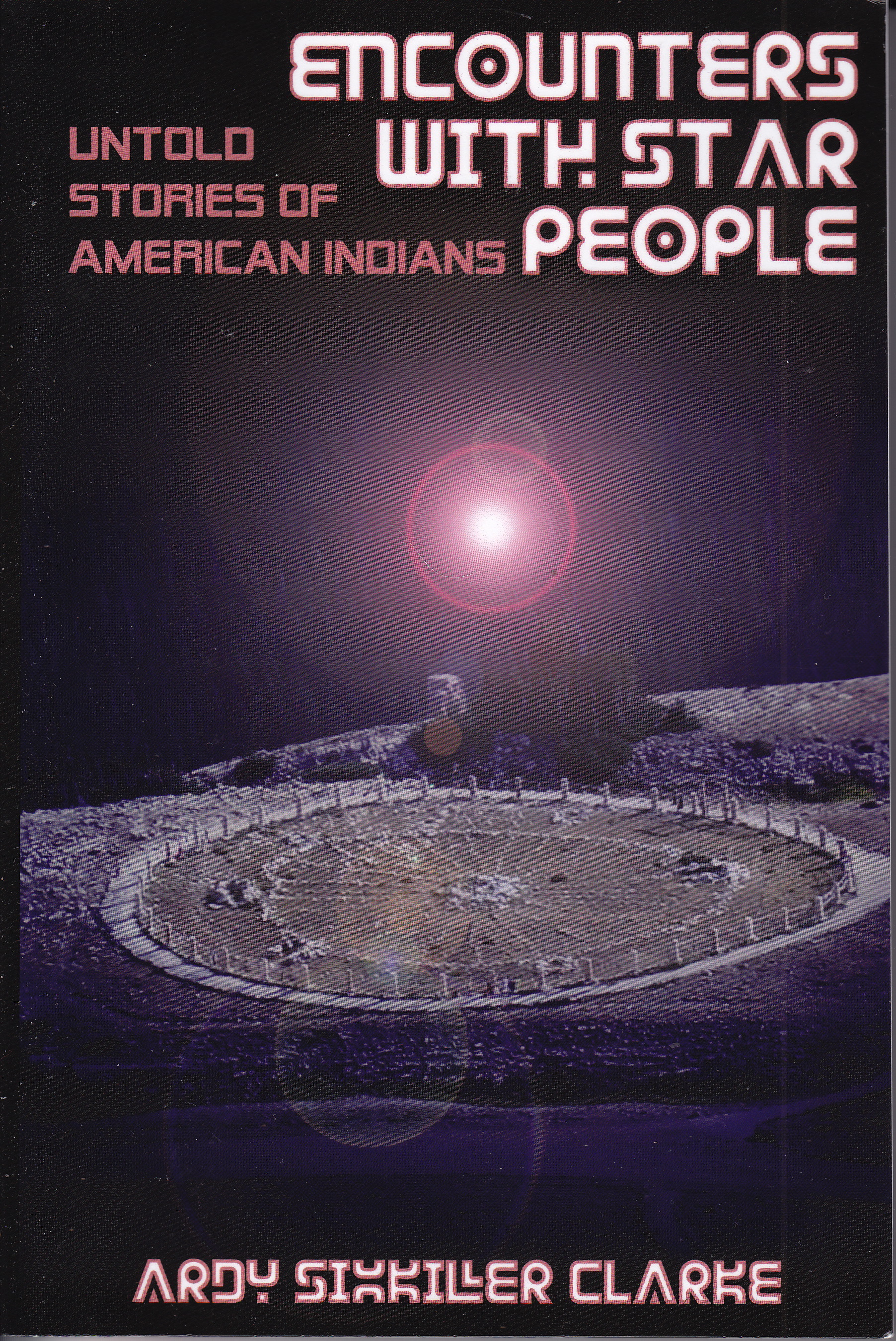
StarPeopleI have long been fascinated by American Indian folklore. In fact, the first book I read this year was a set of Indian tales. Just this week I finished a most unusual book by Ardy Sixkiller Clarke entitled Encounters with Star People: Untold Stories of American Indians. Clarke, who is herself Indian, taught at Montana State University and collected stories from various tribes concerning Star People. Mainstream western science has already made up its mind that Homo sapiens are the most advanced species ever to grace this universe, and so any discussion of visiting non-terrestrials is off the table. What Clarke shows us, however, is that just because there’s no such thing doesn’t mean that all worldviews agree on that point. In many interviews with indigenous peoples of the Americas, belief in Star People emerges as perfectly normal. As does not talking about it because white people will ridicule and belittle anything that doesn’t fit into their limited cosmos of technology and money.

Reading these stories felt like absorbing wisdom from those who observe nature more carefully than those of us of European stock are inclined to do. With eyes pressed to microscopes and telescopes, it is sometimes possible to miss the big picture. We crowd into cities and have no idea how to live under the stars. We can’t even see the stars most of the time. Have we lost our ability to wonder?

Purely from an academic point of view, I wonder why aliens can’t be taken seriously. I try to think of other topics that are simply laughed out of discussion before examining the evidence. To me it seems that human pride is at stake in this case. We are a very proud species, enamored of our own accomplishments. If we can’t reach the stars, nobody else can. This to me is troubling. Aliens, after all, don’t fall into the category of “supernatural” unless we mythologize them into yesteryear’s angels. If they are real, they are as natural as we are. They would have a technology that we haven’t replicated yet, and anyone who doubts interstellar flight should consider the impossibility of carrying a computer around in your pocket or on your wrist only thirty years ago. No, if there are Star People, they are natural. Whether or not they might exist is simply a matter of belief.


Nothing But the Truth

Blurbs are the way of the future. It is so much easier to read something brief than to have to wade through an entire article. Is that the way the future’s going? I read the blurbs for Christian Century’s round-up page when it lands on my desk at work, and I find plenty of interesting things there. For example, a recent issue suggested that truth may be getting harder to find. It began: “George Johnson [New York Times was the source] says modern culture is reaching the point at which there are no longer any incontrovertible truths, just competing ideologies and narratives.” It goes on to describe how issues like creationism are less concerned with “truth” than with fitting the world into their view. Likewise, those who object to putting telescopes on Mauna Kea see science as cultural hegemony. In a post-modern world there is no objective truth. Even as a college student I remember learning that if I found the Truth, with a capital T, there was no way to know it was actually the truth. “All truth is God’s true” some professors used to say tritely.

That doesn’t stop those of us who’ve been motivated our entire lives by the search for the truth. But how will we know when we get there? I first learned about post-modernism in my teaching days. Some of its ideas are perfectly logical: we can’t completely share an author’s meaning; words have no meanings, only usages; when we read we bring our own meaning to the text; an author’s intention is not definitive for what a text means. These ideas are deeply disturbing when we look at them closely. Then I began to read that scientists recognize that our brains did not evolve to discern the truth. Our brains evolved to survive, and even a dim approximation of the truth will help us get to reproductive age. In fact, dim approximations of the truth might explain much of our dating behavior. So, we’re led to conclude, there’s no Truth after all. Just “competing ideologies and narratives.”

DSCN2025

I studied a fair amount of philosophy in my time, and I do believe in Truth. That’s not the same as saying I’ve found it, since no one can honestly make that claim. All that we can admit is that we believe we’ve found it. Those who object to evolution say they know the Truth and it is special creation. All the evidence points against it, but all the evidence doesn’t fit the worldview. We lose something that can’t be replaced when we jettison the truth. As soon as I learned about existentialism I realized that it had long been my philosophy—making our own meaning in a world where certainty is unknown. Even those who claim that science will give us the answers have to admit that if faced with ultimate Truth we might not like what we find. We can only believe that it will be good. And hope that we are right.


Living Undead

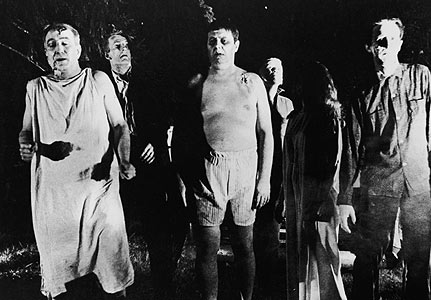
Now that autumn is in the air, my thoughts turn to zombies. I’ve read a few monster books lately, and as I pondered the attraction of zombies to the post-modern psyche, I began to wonder if they weren’t becoming, in their own secular way, a religion. Think about it. Zombies, first and foremost, are about resurrection. In a world ruled by rationality and science, we know that resurrection is impossible. What isn’t possible in science may indeed emerge in the world of monsters. The zombie, often not speaking, proclaims a distorted kind of gospel that the end is not really the end. Resurrection is not all that it seems. Zombies are spattered with gore, reminding us that the visceral existence we know as quotidian experience is temporary. Resurrection comes at the loss of a soul. The zombie is the monster of science: the animating principle is no longer spiritual. It’s just physical.

NightoftheLivingDead

Not only do zombies proclaim resurrection, they are the ultimate proselytizers. Their zealous hunger leads them to bite and their biting infects and creates new zombies. Their brainless goal—as they are unthinking consumers—is to convert the entire human world to their point of view. Once the zombies take over completely, there will be nowhere left to go. The way of the undead flesh may be a dead end, but rationality doesn’t always play a role in zealotry. The zombie is all about making more zombies. They are unbelievable, and unbelieving, but they have the making of a mega-religion nonetheless.

As a student of religion, I wonder how belief systems get started. We hold irrational beliefs on any number of things, including our religions. The difference that zombies make is, in real life, nil. And yet we can’t help tuning into the Walking Dead, or watching World War Z. The zombie is the most recognized symbol of the proletariate among the workers of the world—the brainless, soulless drone in the machine. Mega-churches draw in thousands every week for a religion that doesn’t require much intellectual engagement. Keep doing what you’re doing. Think of others once in a while. God really does want you to be rich. And the minions go out and make disciples of all nations. It is a world full of zombies. We see them in our dreams and in our mirrors. And although we think they’re only entertainment, they are oh so much more.


Ghost Rider

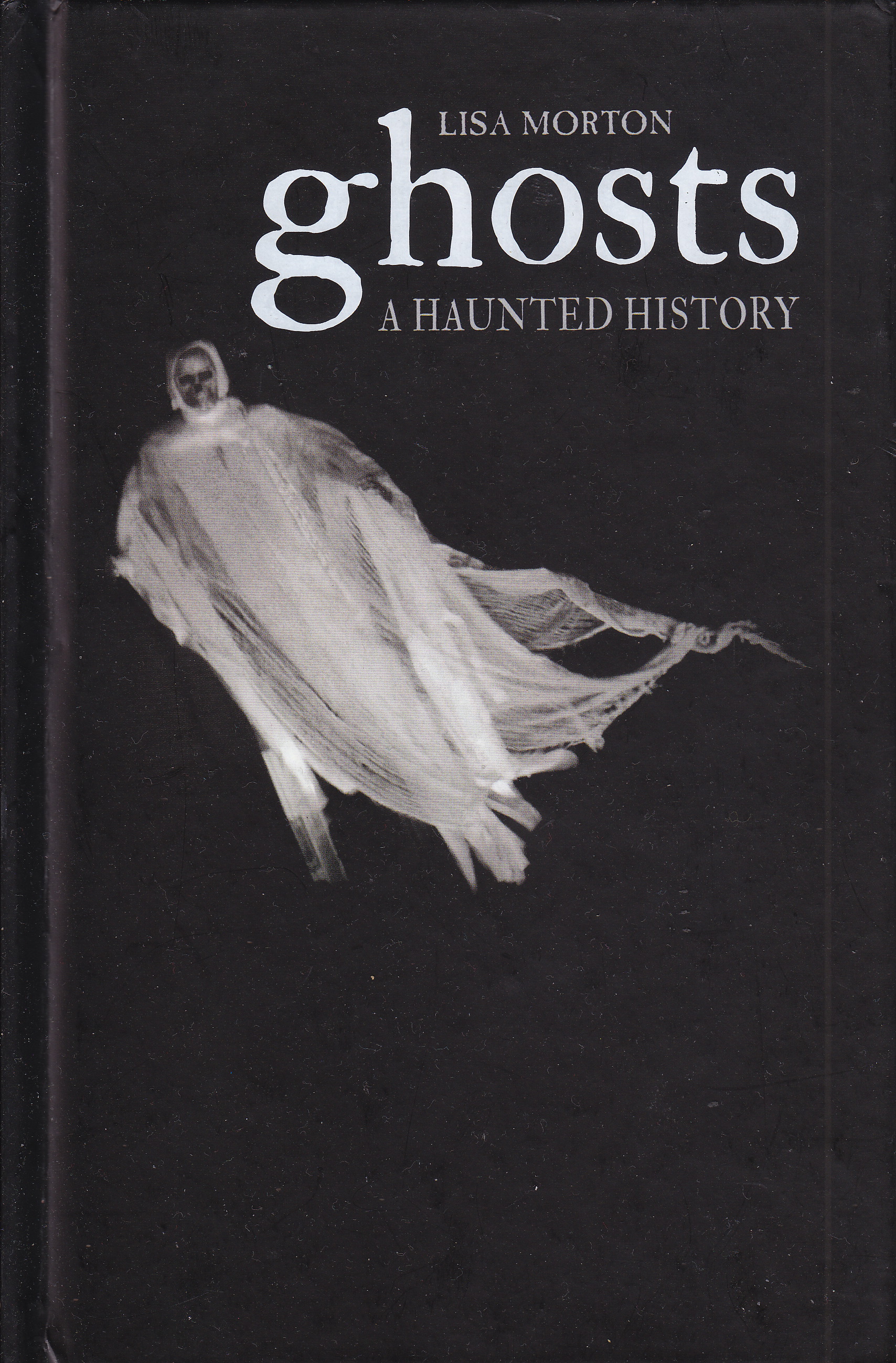
GhostsOf all frightening creatures, ghosts are by far the most ubiquitous. Believed in by every civilization ever recorded and throughout the world, not even science has been able to displace them. Lisa Morton’s Ghosts: A Haunted History offers a brief tour through the realm of the dead. With a sense of how ancient the phenomenon is, she also notes time and again how religions have an uneasy but steady relationship with disembodied spirits. After all, religions give us souls that science strives to take away. What makes Morton’s study so interesting is its restlessness. Not focusing on one culture or time period, the reader learns about Asian ghosts as well as the familiar translucent variety favored in the western world. Ghosts are everywhere.

Now that October has invited thoughts of long nights and falling leaves, I often ponder a world without ghosts. If rationalism of the materialistic variety had its way, this would be simply a natural season like any other. No need to be frightened as the sun takes on that quality that suggests some things should not be seen, and the air feels as if anything might happen. Spooky houses are merely wanting maintenance and every creak and rustle can be explained. There are no ghosts in the night and Halloween is only for children. It seems to me, rather, to be the season of belief. It’s more tangible now, the world where unanswered questions dwell. Ghosts, whether in our mind or in this physical world, are part of the ambiance without which autumn isn’t worth having.

Are ghosts real? I can’t say that I have any evidence one way or the other. We all die, and we all wish we didn’t have to. In this world some are lucky enough to make their wishes come true. Might it be that some have found a way to stay when the physical party is over? Religions are uncomfortable with ghosts since they refuse to be contained in any Heaven, Hell, or Purgatory. They simply are. People of every education level and social standing see them and some believe while others explain them away. Without going over to the other side we likely will never be able to prove whether they are really real or not. As Morton amply demonstrates in her thoughtful little book, they will never go away as long as consciousness and death coexist.


Monster Smash

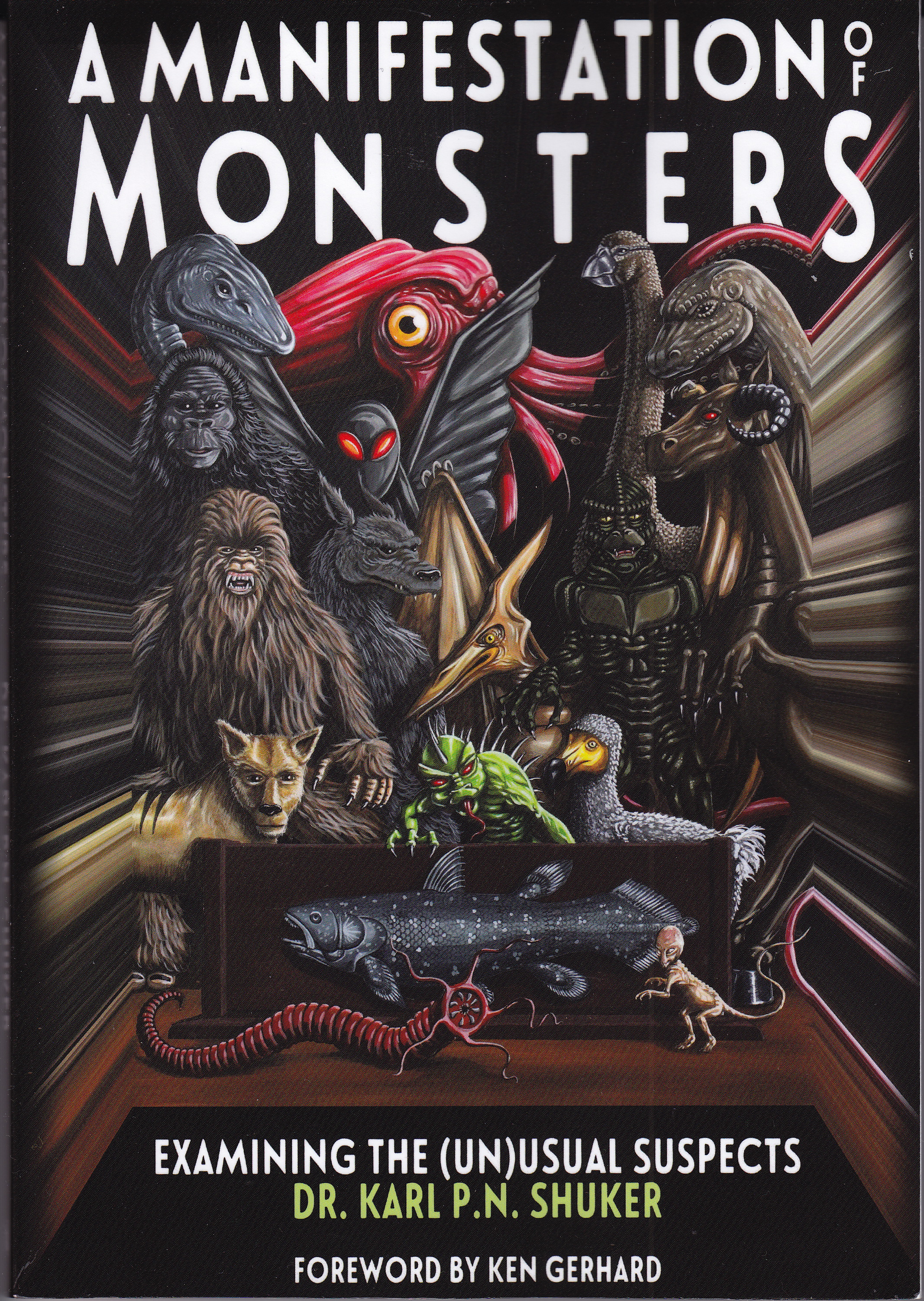
MnfsttnMnstrsIt’s the time of year when young men’s minds turn to monsters. Well, at least this middle-aged man’s does. Seeing a book by Karl P. N. Shuker entitled A Manifestation of Monsters, I was intrigued. I had some Amazon points burning a hole in my internet, so I took a chance on it. The fact is good books on monsters are hard to find and Shuker is listed as “Doctor” and that sometimes stands for something. Subtitled Examining the (Un)usual Suspects, the book is a curious Mischwesen of folklore, actual animals, and cryptozoology. The latter should be no surprise as Shuker is a noted cryptozoologist. Compiled from many of his previously published articles, the book contains some fascinating accounts of extinct creatures and some improbable accounts of modern monsters.

Since Banned Book Week is a time to explore challenged ideas, why not read about some cryptids? They are anti-establishment monsters. Banned creatures. As is usual with monsters, there’s little rhyme or reason to the arrangement. Unlike many in the field of cryptozoology, Shuker is skeptical of outlandish claims, and has actual training as a zoologist. What stood out to me as I read accounts of unusual creatures is that some people report seeing the oddest things, and that other people are driven to hoax all kinds of monsters. It is clear that the human mind is programmed to believe in the possibility of the improbable. Critical thinking, as anyone with advanced training knows, is hard work. Belief can be a far simpler matter. We crave a world with the exotic, and potentially dangerous. Shuker’s piece on the mythical chupacabra demonstrates that nicely.

While I’m pondering things that are banned, I consider how some who use critical faculties well like to disparage others. This, of course, is not in the best interest of science. We haven’t discovered everything yet. We think that because of the internet we’ve gone about as far as we can go in hive-mind mentality. Never mind that bees and ants beat us to it. People, many of them very intelligent, continue to see things they can’t explain. Others say that any living creature larger than a breadbox has already been discovered. I tend to think the world is a pretty big place and that people prefer to huddle together in cities for a reason. The mountain gorilla, for example, was discovered just in 1902. Now that the season for monsters is upon us, I like to imagine what else might be wandering around unseen by human eyes. And I hope banned ideas may continue to thrive in the forests of our minds.


Soaring Prophets

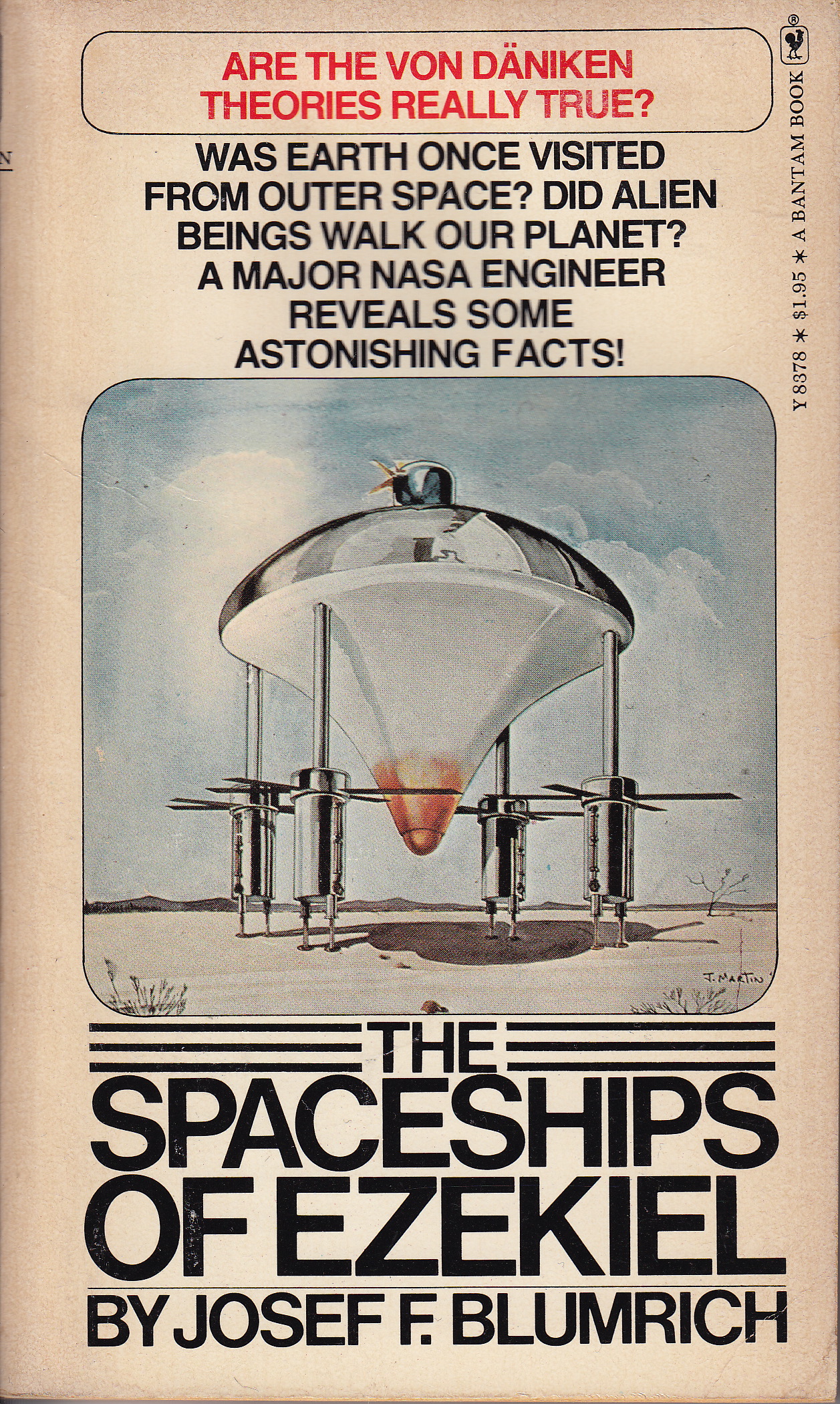
EzekielSpaceshipOkay, so I pulled the book off the shelf, and I feel now like I need to read it. Call it an occupational hazard. Josef F. Blumrich’s The Spaceships of Ezekiel, despite its von Däniken-like sales, has never been taken seriously by biblical scholars. Blumrich, no doubt a brilliant engineer, simply had no street cred among biblicists. His handling of biblical passages is awkward and he leaves out anything that really can’t be explained by his theories. Not exactly professional exegesis. He suggests, of course, that the “chariot” vision of Ezekiel was, in fact, a spaceship. The figure Ezekiel assumes is God is actually a commander of the ship and the message (which accounts for the vast majority of the book) really doesn’t matter in this context. In my earlier post, having not read the book then, I made the error of supposing that the helicopters were impractical in space. Reading it, I instantly saw my error. This was engineered as a landing craft from the mothership circling the earth above our heads. Boy, do I feel stupid now.

The overall mistake Blumrich makes is the “unforgivable sin” of eisegesis. Suspecting that he has a well-engineered spacecraft on his hands, he draws out the implications—such as the propellers—which would not be necessary, but must be there because of a “literal” interpretation of Ezekiel. Once the eisegesis is done, it can be used to explain further episodes throughout the prophetic book. The message of Jerusalem’s destruction and the hopeful prospect of a return from exile get lost in the space dust raised by these propellers. Blumrich was quite right, however, that technical people and humanities people need to be willing to learn from one another. Ezekiel may have seen something unexplained, but his function was that of a prophet, and prophets say the strangest things.

Even more odd, from my unprofessional reading, was the sense that Blumrich saw capitalism as the default economic system of the galaxy. Time and again he mentions how expensive such interplanetary travel must have been. How do we know, I wonder, that aliens like to exploit each other as capitalists do? If they are a more advanced species, surely they must have an imagination that reaches beyond one percent controlling 99 percent of the wealth to aggrandize themselves. I can imagine a society without money. A society with fair trade where everyone is cared for by medical individuals who don’t charge an arm and a leg to treat an arm and a leg. A world where doctors don’t worry about being sued by lawyers. A world where dreamers are free to dream and society values it. Ah, I’d better be careful since, it seems, I may be beginning to sound like a prophet.


The Climate of Belief

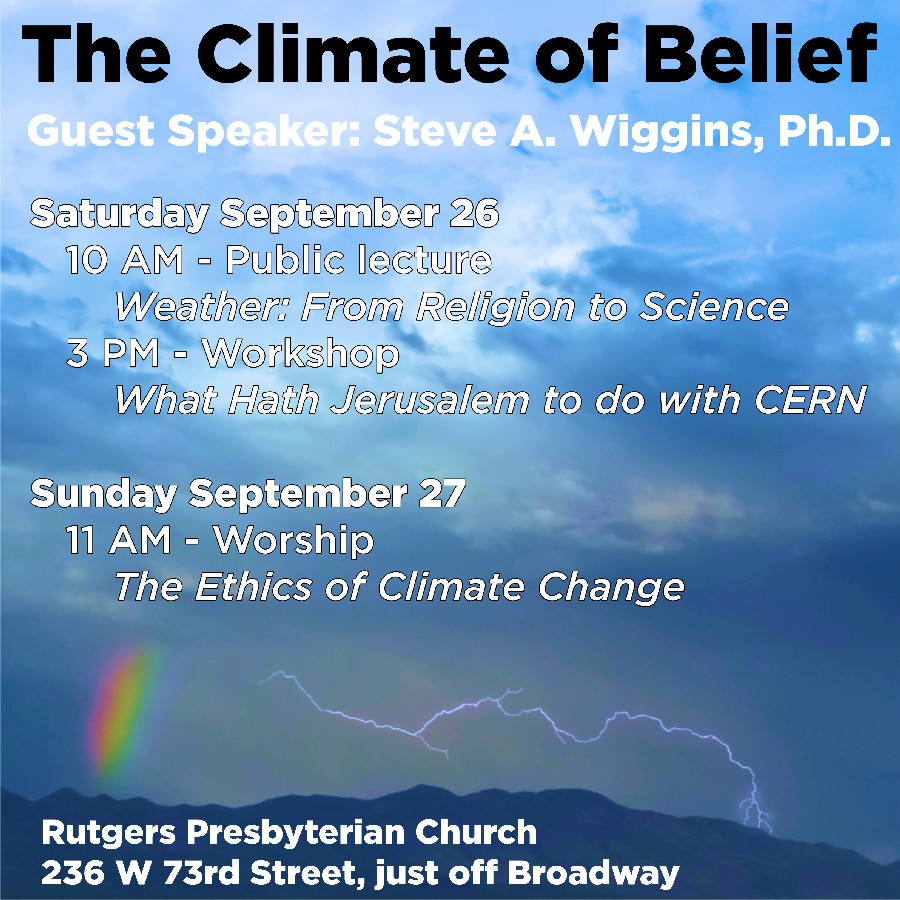
As I’ve noted before, in our culture where an individual voice is hard to hear, those without institutional affiliation are generally considered self-promoting hacks. That’s really too bad, given that so many highly educated people end up in menial positions—our society’s “greatest resources” squandered away behind a counter or sequestered in a cubicle. So it was my great honor to be asked to present Rutgers Presbyterian Church’s Autumn Guest Lecture this year in Manhattan. When I taught at Nashotah House invitations to speak came frequently, even though it was a small school. I even once received an invitation to talk when I was an adjunct at Rutgers University. Since “going corporate,” it seems, I have nothing to say. It really is wonderful to be asked to speak again. Practicing my talk brings back many fond memories. Lecturing is in my blood. The Pastor asked me to come after my book, Weathering the Psalms, was published. Never intended as a best-seller, it has quietly sat on the sidelines, like its author.

weather wiggins ii sml

I suppose a bit of shameless self-promotion might be in order, but of course, I will feel ashamed for pointing out, when it’s all over. If you happen to be in New York City this coming Saturday and Sunday, so will I. Rutgers Presbyterian is located on the upper west side, not far from Lincoln Center and the Museum of Natural History. I’m always glad for an audience. See? Now I feel bad for having said so. My theme over the weekend will be “The Climate of Belief.” In addition to the weather, we’ll be talking about religion and science. Two worldviews that seem to be in constant conflict are not really the bitter enemies they seem to be. I won’t give away any spoilers since then you’d have no reason to come to my New York debut.

Further along, I am scheduled to give a paper at the Society of Biblical Literature annual meeting in the Society for Comparative Research on Iconic and Performative Texts (SCRIPT) session on sensing scripture. My talk on that occasion will be on how the Bible is presented as an iconic book in the first season of Sleepy Hollow. Be sure to mark your November calendars now! It’s not too often that a person with no institution willing to back him gets to speak twice in a year. Someone who’s in a position to hire professors once told me that with so many candidates out there, you have to wait until you fall in love with one. Being a Don Juan, whether in amore or academia, has never been my strong suit. Still, if Elijah is to be believed, even an unamplified voice may carry. I’ll utter my “yop” for those who wish to listen.


Galileo’s Tool

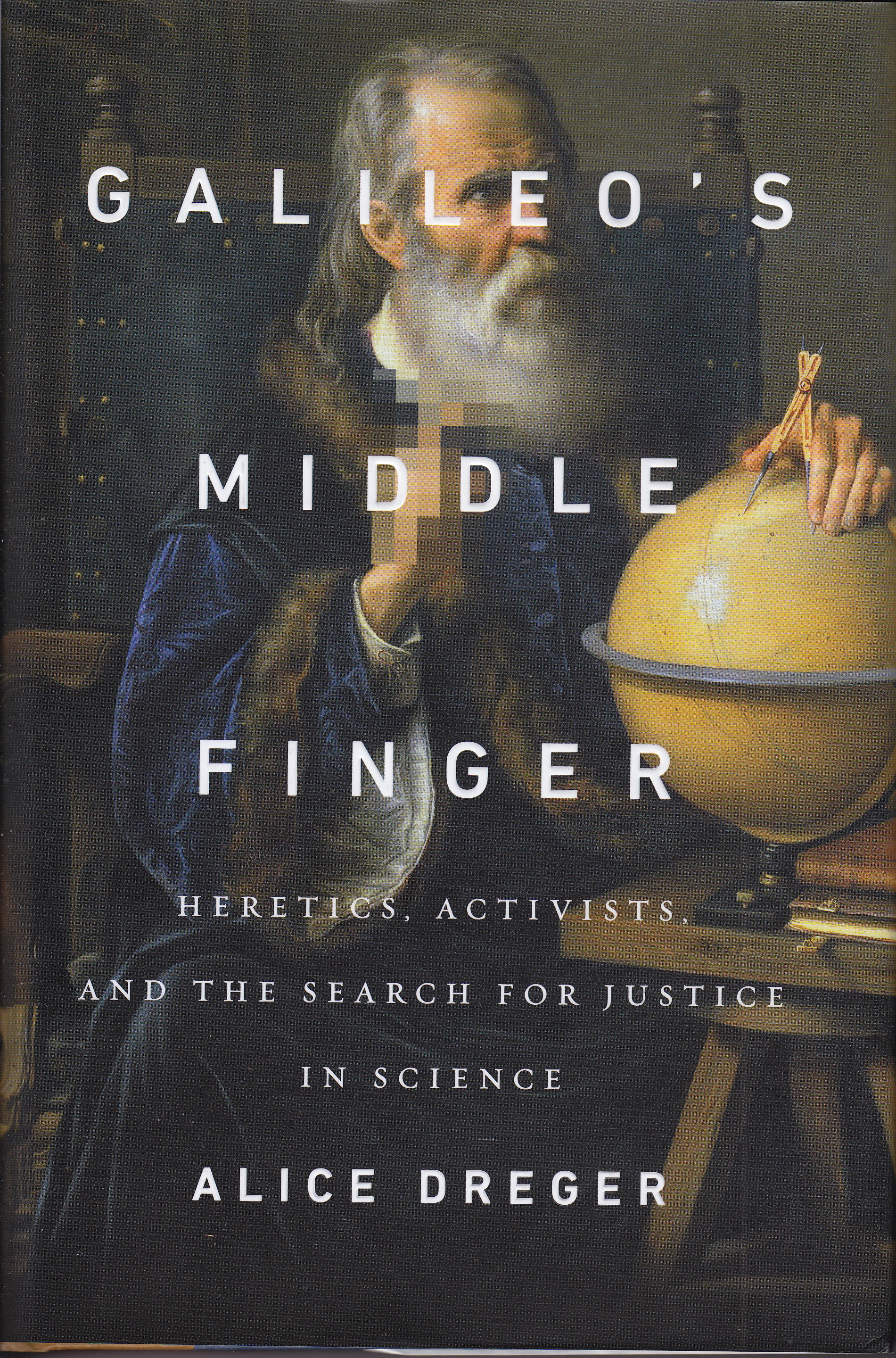
GalileoMiddleEarly in my academic career I got into trouble not because a Harvard professor hadn’t adequately checked his data, but because I had pointed out that a Harvard professor hadn’t adequately checked his data. You see, I was a naive realist. I believed academics were objective, factual sorts who looked for the truth no matter how uncomfortable it was. My honesty didn’t earn me many friends, and I still can’t mention this professor by name because I have seen grown men melt into tears at his name, due to their overwhelming loyalty. By contrast, a fellow Edinburgh student once told me that he disagreed with our mutual dissertation adviser, “on principle.” As the old saying goes, nullius in verba, take nobody’s word for it. Reading Alice Dreger’s Galileo’s Middle Finger: Heretics, Activists, and the Search for Justice in Science drove home a number of important points, one of the most memorable being that academics take real risks when they won’t fudge the facts to fit the establishment’s expectations.

Although this autobiographically revealing book is about as honest as a writer can be, it deals largely with issues of social justice in the context of those who “don’t fit.” Intersex individuals, especially, are treated before they can give consent and live their lives based on other people’s expectations of what their gender “should be.” Like most people I was raised thinking there were only two genders. Science has consistently demonstrated that “gender” is a construct that occurs along a continuum. Some species change gender in their lives. Some have such complicated reproductive techniques that far more than two genders are postulated to make sense of it all. And yet, when it comes to humans, we suppose that we’re either female or male. And religions consistently claim that any sex outside those parameters is evil. We are so naive.

Dreger focuses her attention much more widely in this important book. She shows how universities, constantly becoming more corporate, often don’t support research that challenges their investments, or “branding.” She demonstrates first-hand the character-assassination that academic snipers use so well on those who follow the evidence. She is living proof that education and activism should go together. Intricate and with bizarre loops and twists thrown in, her account of what some people will do to silence others, and get it peer reviewed, saddens me. I’ve always believed that education is the surest way to solve social ills. Education, however, is increasingly being purchased by special-interest groups that protect the establishment. The establishment may no longer be the church, but we need another Galileo, and soon.


Ezekiel’s Drones

Drones have become a fact of life. Our robotic future is already present as unmanned vehicles do the bidding of their remote commanders. They are our conscience-free assassins and our great UFO hoaxes. They offer a chance to view the world from an angle previously limited to those with access to airplanes and pilot’s licenses. And academics are now starting to take a serious interest in the ethics of such remote viewing and remote warfare. Human to human interaction has always involved emotion. That’s what we’ve evolved to be—emotional thinkers. Even animals react emotionally to each other and to us. The drone removes all feeling from the equation. Programmed to fulfill a function, like Hal, it simply does as it’s told.

EzekielSpaceship

All this thinking about drones reminded me of a book that someone pointed out to me decades ago. I have a copy that I’ve never read, but I suppose eventually I should. This post isn’t about the book per se, but about the cover image (yes, people do judge books by these). Some time ago, I watched a young person playing with a quad. That word is so ubiquitous that I need to specify that I mean quadcopter. Quadcopters are popular drones, available for children’s amusement as well as for military and industrial utility. Their arrangement of four horizontal propellers gives them stability and maneuverability, as well as their sometimes annoying mosquito hum. The quad I saw reminded me of this book gathering dust on my shelf. Josef Blumrich wrote The Spaceships of Ezekiel to suggest that the psychedelic prophet saw space aliens coming to earth. I wonder if, in the light of developments, this thesis calls for refinement.

On the cover of the book is something that looks very much like a quadcopter. Even as a teenager, I wondered what these propellers would do in space travel. If there’s no atmosphere to give them lift, then they are rather superfluous and potentially an impediment. I would think that aliens would be a bit more advanced. Now that quads are a reality—just a block from work I can see a toy store clerk regularly flying one over the streets of Midtown—maybe Ezekiel was seeing into the future. Is that something prophets ever did? The biblical scholar in me says “no,” of course. Prophets were forth-tellers, not fore-tellers. Even so, I have a book in front of me that calls my beliefs into question. In the end, I suspect, that’s what most books are intended to do.


Doubting Dawkins

A recent Guardian introspective on Richard Dawkins reminded me of the dangers of idolatry. Dawkins, an internationally known intellectual pugilist, the article by Carole Cadwalladr intimates, is as human as the next guy when you can catch him off the stage. Ironically, it is evolved primate behavior to adore the alpha male, but, at the same time, to prevent abuse of power and to get away with what you can behind said alpha male’s back. We are worshipping creatures, at least when it suits our best interests. Anyone who’s been intellectually slapped down (something yours truly has experienced multiple times) knows that it is an unpleasant experience that one doesn’t willfully seek out. We try to keep out of the way of those who assert themselves, preferring the safer route of just doing what we’re told and apologizing for something we know isn’t really our fault. It’s only human.

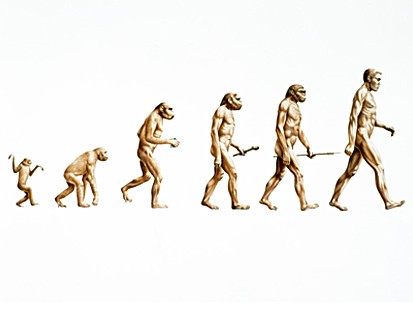
Evolution

The media have provided us with ever more expansive ways to build our “experts” into gods. Dawkins, a biologist, has become one of the go-to experts on religion. The media don’t seem to realize that hundreds of us have the same level of qualifications as Dr. Dawkins, but in the subject of religion. Many of us are not biased. And yet, when a “rational” response to religion is required, a biologist is our man of the hour. Granted, few academics enter the field in search of fame. Most of us are simply curious and have the necessary patience and drive to conduct careful research to try to get to the bottom of things. We may not like what we discover along the way, but that is the price one pays for becoming an expert. Those who are lucky end up in teaching positions where they can bend the minds of future generations. Those who are outspoken get to become academic idols.

I have no animosity toward Richard Dawkins or his work. I’ve read a few of his books and I find myself agreeing with much of what he says. Still, a trained academic should know better than to “follow the leader” all the time. (Some schools, note, are better at teaching independent thought than are others!) The academic life is one of doubt and constant testing. Once you’ve learned to think in this critical way, you can’t turn back the clock. One of the things that those of us who’ve studied religion know well is that all deities must be examined with suspicion. Especially those who are undoubtedly human and who only came to where they are by the accidents of evolution. I’m no biologist, but I inherently challenge any academic idol. I’m only human, after all.


Henging Our Bets

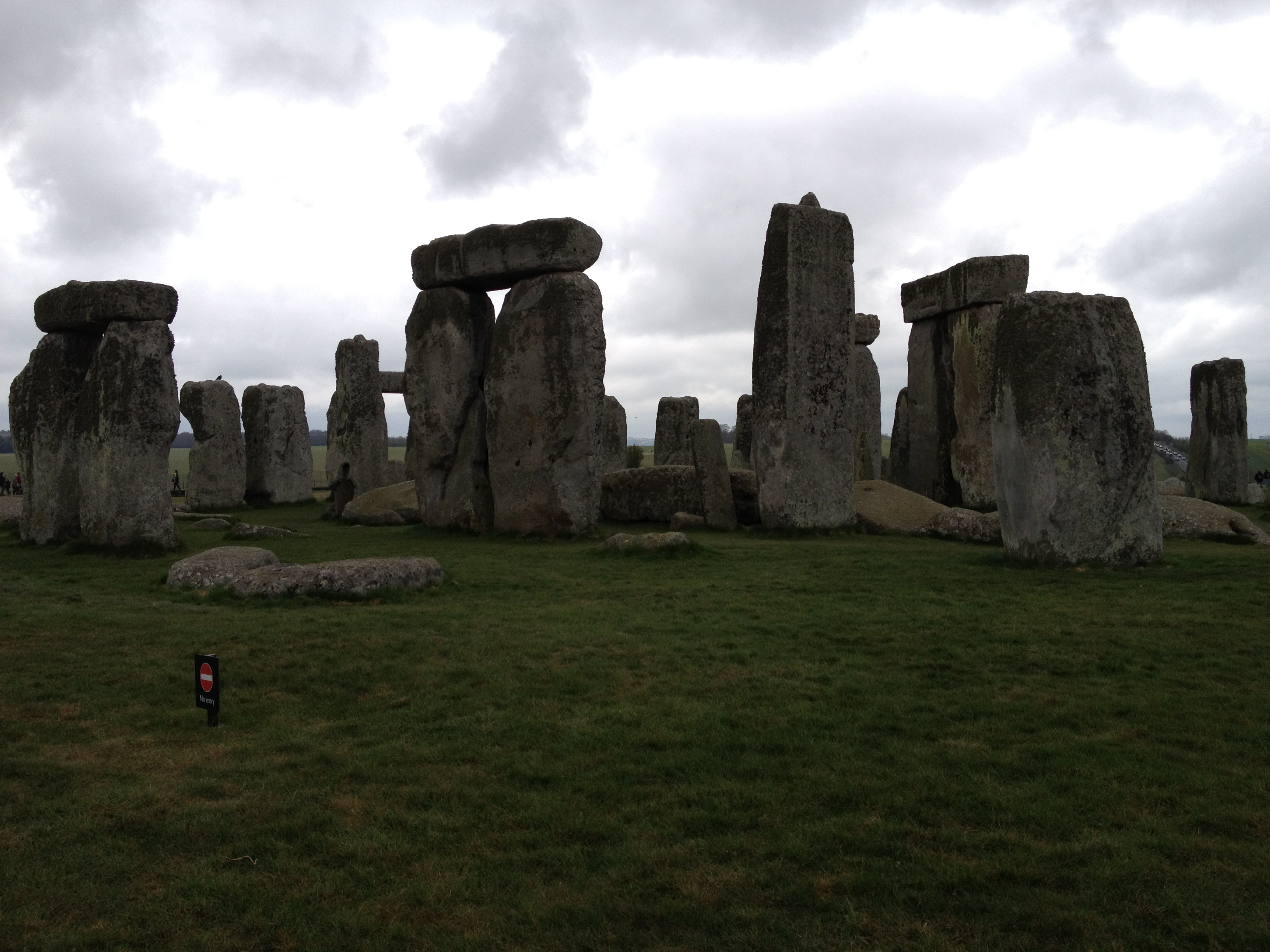
With the discovery of Göbekli Tepe, the history of civilization has received an unexpected prologue. In the view of the archaeologists involved in the excavation, the site can only be religious in nature, indicating that the earliest communal efforts of humans were not for mutual protection or for the benefits of growing crops, but for worship. In an era of angry atheists and nones, this isn’t really welcome news. Many people are ready to flush religion once and for all, claiming that it inspires only terrorists and fanatics to more and more extreme deeds. Well, I suppose Göbekli Tepe can be considered a form of extremism. Massive amounts of energy were required for the building of the site. And it was buried, intentionally, when the builders were finished with it. The news of a new component to the much later Stonehenge complex, the Durrington Walls, has recently been presented. Stonehenge, in England rather than in Turkey, and much closer in time to us than Göbekli Tepe, is a site that has touched the human imagination in a profound way. Still primitive at the time of its construction, Britain was a land already brimming with religious monuments. The new discoveries make it even more intriguing.

IMG_0234

Stonehenge is only a small part of what is now being called the Durrington Walls super-henge. Those who visit Salisbury Plain know that Silbury Hill and West Kennet Long Barrow are both impressive in their own right, and not far from the more famous sarsen stones that appear on everything from coffee mugs to tee-shirts and in movies and television shows of all genres. This part of prehistoric England seems to have been a sacred site many hectares in extent, with various “temples” and monuments dedicated to a religion we simply don’t understand. What is clear is that massive human energies were put into the building, expanding, upkeep, and functioning of this site. People have a deep, and very passionate urge to answer the religious longing that even sophisticated engineering can’t placate.

It could be argued, of course, that we’ve outgrown our childhood need for parents in the sky. Science and rational thought have shown us the way forward and although ancient monuments might be a fun diversion, they really mean nothing. I would disagree. Places like the Durrington Walls super-henge indicate what it is to be human. Clearly, given that even Stonehenge fell into disrepair and lay neglected for centuries, it was not a continuity that stretches, uninterrupted to today. Nevertheless, the effort expended to fill a void we feel should tell us something about what being conscious creatures is all about. Life doesn’t always make sense. The rational cannot explain everything. It would be naive to try to make Stonehenge reveal its secrets, but even standing at a distance (which is the only way you can gain admission any more) you have the sense that you are among those who knew what the human spirit required. Even if pagan and illiterate, they have spoken to us through the ages and we can only continue to wonder at what we’ve lost.


Hunter-Gatherers

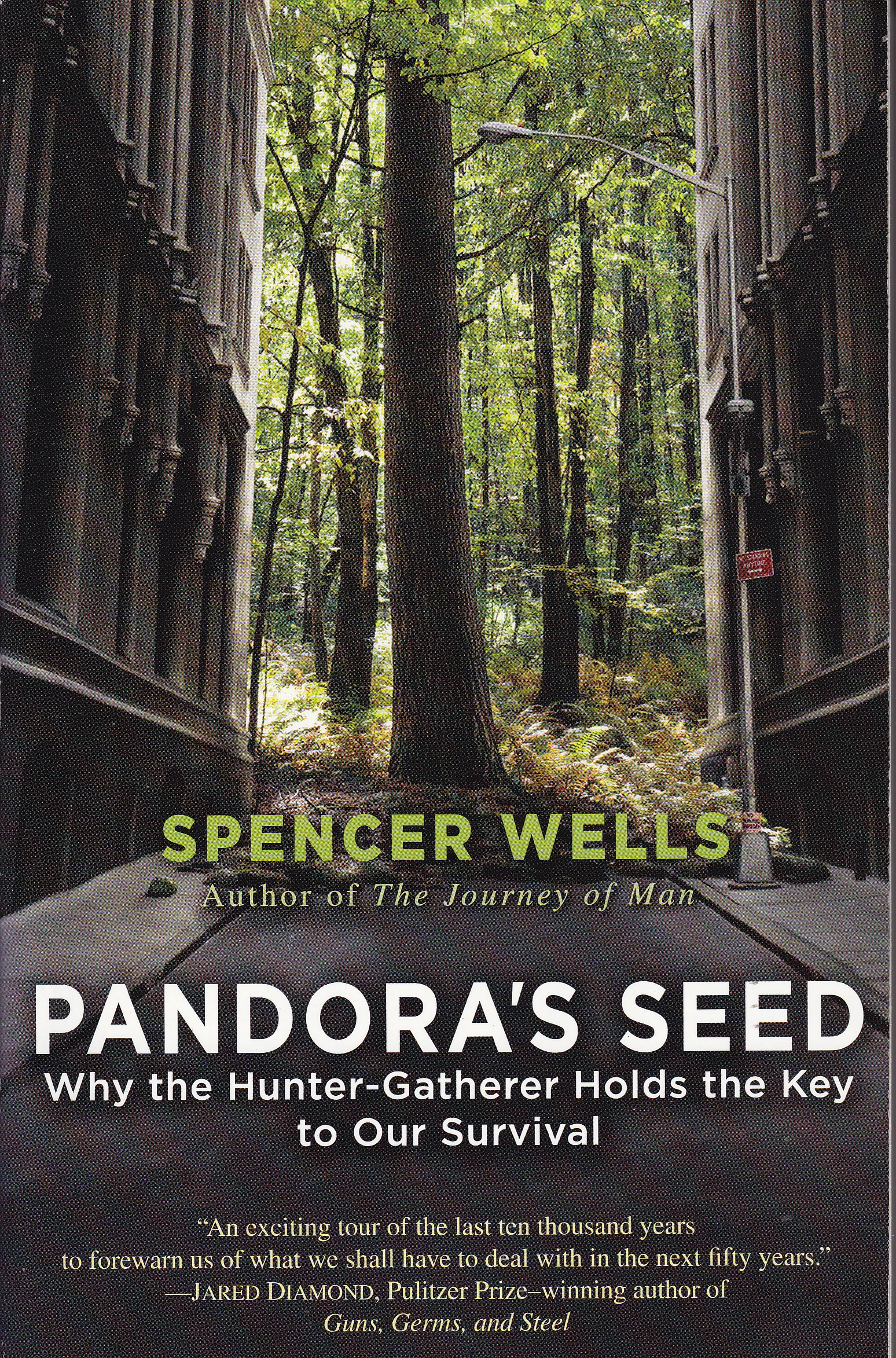
PandorasSeedEvery once in a while I put down my work long enough to look at where we are. It’s often a frightening experience. Not many of us would be equipped to survive the collapse of civilization, despite the many television shows that depict such future anarchy. I suppose that’s why Spencer Wells’ Pandora’s Seed: Why the Hunter-Gatherer Holds the Key to Our Survival was such a compelling book. The more anthropological studies I read, the more clear it becomes that “civilization” has changed us about as much as evolution has. If not more. We have turned into something else, a creature of our own making. Wells demonstrates throughout the pages of this book how, with the first development of agriculture, we began on a track that has made us less healthy, less happy, and more dependent on technology than we have ever been. True, life as hunter-gatherers was never easy. Still, it is telling that they have much more free time than agriculturalists. And, as far as we can tell, they are better-adjusted. They are doing what we evolved to do.

Addressing issues as diverse as from how our diet has changed to genetic engineering, Pandora’s Seed is a wide-ranging and fascinating book. It does show that technology far outraces ethics and our ability to figure out the proper response to complicated questions. We often lack the time to reason things out. And yet, we live in a world where mental illness is set to become the number two natural cause of death within this century. We are profoundly unhappy. We deny climate change although it’s evident all around us. We’ve put into place a global warming that will take a millennium to dissipate even if we stopped using fossil fuels today. We deny that it’s true, we go to dehumanizing jobs, and we eat food that’s not nutritious because it’s the kind we can afford. We lack time and motivation for exercise and disease takes hold. Such a lifestyle even affects our religion.

Tellingly, Wells’ last chapter deals with Fundamentalism. Noting that humans use both logos (logical) and mythos (mystical) thinking for a balanced view of things, fundamentalisms utilize a logos system to try to explain mythos. Violence often ensues. In order to be fully human we have to admit that rationality alone does not solve all our problems, or meet all of our needs. Some of what we require is simply not material. While Wells does not suggest reverting to hunter-gatherer lifestyles, he does suggest that the only solutions to a world of limited material goods (food, fossil fuels, fresh water) that the only way to make civilization sustainable is to learn to want less. Evolution predisposes us to gather more than we need, and certainly, to hear college career counselors talk, we have to want jobs that will bring in more, more, more. The world is becoming smaller, and people are demanding that the greed come to an end. Until that day perhaps the best solution for us all would be to take a walk in the woods and to remind ourselves how we came to be where we are.


Psychobabel

Evolution, we’re told, has one goal: survival. As an unthinking process of nature, evolution “programs” us all to desire survival for ourselves and our offspring. Even attributing that purpose too it is to suggest it’s more a willful agent than a blind process. People, on the other hand, are meaning-seeking creatures and so there’s bound to be some disappointment involved. I was just discussing with a friend how it seems that people just can’t agree on evolution mostly because of the strident claims on both sides. The New Atheists make claims beyond the evidence that survival to reproduce is the “only” role of evolution and we are “just” animals with too much gray matter, and that consciousness is “merely” electro-chemical activity in our brains. Creationists, for their part, say evolution couldn’t possibly account for structures as complex as we see in nature, and therefore a deity much be involved. The rancor grows until both sides end up despising the other. People who look for the middle ground are not newsworthy and fade into the scenery. I wonder if we’re evolved to ever get along.

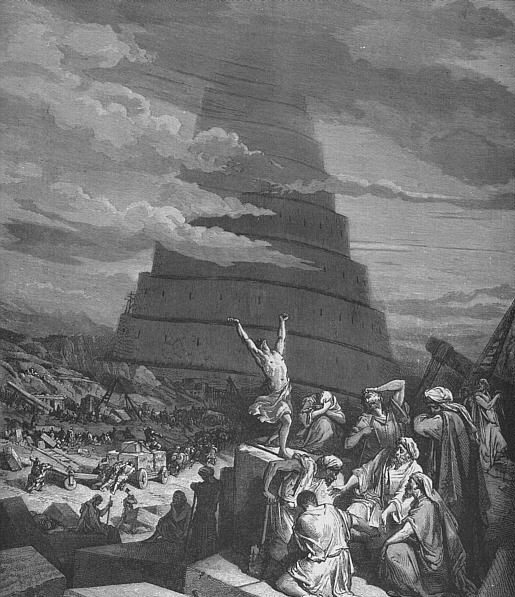
My wife mentioned that it’s like the Tower of Babel story. Here is the tale of God making humans inevitably talk past one another. We can’t understand and so we argue and criticize and insult. A more scientific explanation might be that perhaps we’ve tipped the evolutionary balance with our species-specific success. We are by tar the most numerous species of any large animal. (At least that we know of.) Having put ourselves as lords and masters of the food chain our challenges have become mental and we turn ourselves to the question of who’s right instead of simple survival. Sacred books can’t guide the discussion, but reason alone. And reason, as we all know, has its limits.

Confusion_of_Tongues

The great irony in all of this is that, if we’re evolved to seek meaning, we’re not equipped to find the truth. As neuroscientists have pointed out, the brain’s function is survival, not truth finding. Our desire to know the truth is a human avocation abstracted from consciousness. We’ve not adequately defined consciousness, but since there aren’t many large predators hunting us down anymore, that brain-power has been diverted elsewhere. Despite all this, we don’t see world peace spontaneously breaking out. Even on a smaller scale we find prejudice and hatred and insane mass production of weaponry when our only predators are ourselves. Evolution, we’re told, has only the goal of survival. Being an unthinking principle, even ascribing it this much conscious decision-making is merely a matter of convenience. Does the Tower of Babel mean we must hate those who differ from us, or does it perhaps suggest that the real goal is better understanding?


Weathering Academia

Come the end of September, I’m scheduled to give a talk at Rutgers Presbyterian Church in New York City. I’m personally very flattered by this because, as it has become clear to me, an academic without a post is mute. I’ve seen colleagues who teach at schools I’ve never heard of consulted by the media—and there is obviously more to it than this—because they have teaching positions. Those of us who used to be professors apparently forgot everything when we take jobs out of necessity. That’s why I’m so flattered. My talk will be on the larger issues behind my book, Weathering the Psalms. I never expected this book to be a bestseller. I knew that it was, in some sense, incomplete. Academic books are the kinds of things you write when you have an academic post. When your day is not programmed with “enter this data, follow up on that book, and when you have time, get other people to write books.” People, of course, with university posts. The rest of us know not whereof we speak.

It’s funny. Back when I was teaching, even if it was only at Nashotah House, I used to be asked to give little talks all the time. It was rare for a year to pass without someone asking me to lead a seminar or share what I’d learned with some august body. That tapered off once I became an adjunct, although a Presbyterian Church in Princeton once invited me to speak because I was teaching at Rutgers (the university). And as I prepare my talk in my free time, I wonder about a society so tied up with name prestige that someone who has something interesting to say is just a crackpot unless a college or university or seminary or think-tank hires them. There are many of us—hundreds, if not thousands—who know as much as our university colleagues about a topic. An individual doesn’t have a name big enough to flash around, so we don’t get asked to share. Keep your hand down and your head down on the desk, please.

IMG_2416

In any case, it has been good for me to come back to the weather and think through some of the larger implications. I’d just had the book declined by a big name academic press when Nashotah House terminated my position. For many years I couldn’t look at the manuscript since it seemed a symbol of my failure. No, the book isn’t everything that it could be, but there is some good information there. The larger implications are actually of some importance here. The weather is studied both by science and by religion. Both understand aspects of it that the other misses. I’m looking forward to exploring this with the good folks of Rutgers Presbyterian who were kind enough to invite a guy with nothing more than a book and an obscure name to come and talk about something that most academic colleagues just don’t notice.