Expectations

Our minds are our most powerful tools.  Some of us wonder what reality is, and David Robson has written a very important book that the title explains: The Expectation Effect: How Your Mindset Can Change Your World.  Now, before your woo-woo meter goes off, Robson is a science writer and everything in his book is backed by evidence.  The basic idea is this: what we expect to happen often becomes our reality due to the “expectation effect.”  The brain, as Robson describes it, is a prediction machine.  And what it expects often takes place.  In other words, belief matters.  Probably the most famous example of this is the placebo.  We all know that patients treated with placebos often recover just as well as patients given the active ingredient.  That pill the doctor gives will heal them, and so it does.  The brain expects it, and it happens.  Belief.

This book also explores the nocebo response.  This is where you expect something bad, and it happens.  The most extreme examples of this, well documented, are when people are convinced an imaginary threat will kill them and they die of it.  In fact, the book opens with consideration of such an occurrence where a cultural expectation led to otherwise unexplainable deaths among healthy Hmong populations fearing a night demon.  Hysteria grew and so did the deaths.  Robson also explores how hysteria leads to expectations that our brains carry out.  He shows how training our expectations can help good self-fulfilling prophecies take place.  Athletes, for example, can seem to do the impossible.  Why?  Partially training, yes.  But also because of their mindsets.  Their expectations.  Their beliefs.

The implications of this are very broad.  Everything from our health, to how we handle stress, to how food benefits our bodies, to how we age as we expect to.  Robson is quick to point out that this isn’t a book to solve all our problems, but it is a book that demonstrates our minds do make things real.  Or at least they can.  It is filled with fascinating examples, backed with science, showing that even how a doctor or nurse introduces a shot “you’ll feel a bit of a sting” versus “you won’t feel a thing” can make a difference to how our body perceives it.  And our brains can make our worries, or our hopeful expectations, real.  Personally, I believe that there may be even more to this than Robson explores.  But then again, I enjoy a bit of mystery.  I believe in belief.  Regardless, this is a life-changing book and I hope, for your own sake, that you’ll read it.


Not Content

I write books.  When I want to “create content” I do it on this blog.  (And a few other internet sites.)  These aren’t the same thing.  I find it distressing that publishers are trying to drive us to ebooks where content can easily be changed, as opposed to print books.  The shelves of this room are lined with books and the technology doesn’t exist to come in and change “data” without my knowing it.  Facts are secure in print, right Ilimilku?  I’m not looking forward to a Star Wars future where there’s no paper.  I was born in the last century and, perhaps, I’ll die there too.   You see, when you write a book you have a project in mind that has an endpoint.   It may change and shift as you write, but you know what a book is and that’s what you produce.  It gets shelved and you move on to other things.  (At least I do.)

Content is something different and the creative process behind it also differs.  If I find something wrong after the fact, I go into my past posts and change it.  I’m not afraid of admitting I’m wrong.  The point of this blog is to share ideas with the world, not to write a book.  (Although, I confess that I would not say “no” if someone in publishing wanted a selection of worthwhile posts for a book… just saying.)  It amazes me how publishers have pretty much gone after the money and have forgotten what the creative process is like.  Of course, they’re having to figure out how this whole internet with free content plays into it too.  But still, my book writing uses a different fold in my gray matter than my blog writing does.  All of it feels pretty different from writing fiction too.

These things together adds up to a writing life.  I have a ton of “not for publication” writing.  This is something different again.  I suspect it will never be read by anybody, moldering away on some old hard drive after some AI-induced apocalypse.  I write it for of the same reason, I suspect, that people used to spray-paint “Kilroy was here” on things.  The book of Job, it seems to me, was the preservation of words that someone simply had to write.  We know the framing story is folklore.  But those who have words to carve with iron on lead, or engrave on a stone to last forever.  It’s more, I hope, than just “creating content.”


Tech Trust

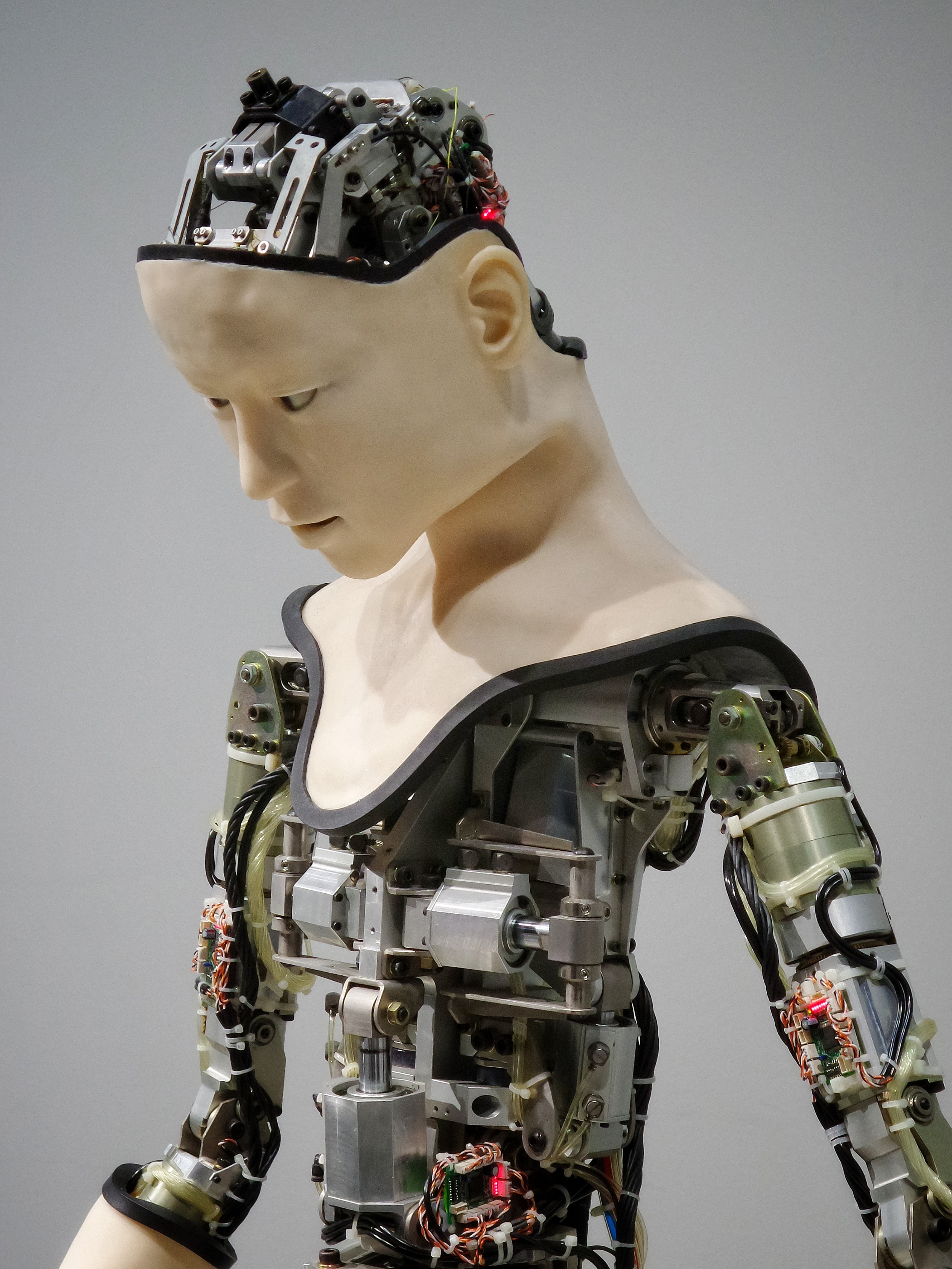
Tech problems are a part of life, of course.  The recent problem at CrowdStrike that grounded airlines and prevented 911 from working and interfered with medical services is a scary thing.  The word “fragility” was used in the New York Times.  Please allow me this jeremiad.  I appreciate technology and what it can do for us.  I really do.  I can usually find a movie to watch online on a day off work.  I can navigate most places without a map (although recently when there was no 4G coverage, I was left lost for a little while).  What’s really scary, to me, is those who claim tech, and only tech, is our future.  I’m a simple guy with simple tastes.  I enjoy reading books and watching movies to stimulate my restless imagination.  Yet I’m constantly being told that I should read on a screen, not on paper.  And that artificial “intelligence” can—or worse—should run things.  What happens when the grid goes down?

Photo by Markus Spiske on Unsplash

I love art glass, but I’ve also broken quite a bit of it over the years because life is rough and tumble.  Some fragility is part of the attraction. For a while, when I was young, I was fascinated by card houses.  Constructing one that used an entire deck was not only a goal, but its own kind of art.  Sometimes the beauty of art inheres in its very fragility. The house of cards took skill, but someone slamming a door, or even walking into the room could bring it all down.  A trembling hand or a drop from a millimeter too high could spell the end of this particular installation.  But nobody died.  No worldwide travel plans were interrupted.  The consequences were minimal.

I don’t dislike computers.  It’s just that I think balance is desirable.  After work, which is pretty much all online these days, I tend to move away from the internet for the rest of the day.  I pick up a book, made of paper.  Sometimes I’ll watch some media, preferably on DVD.  I don’t miss VHS tapes, I assure you—although we still have quite a few of them, some of which contain media that has never been released either on disc or online.  I can’t watch them.  Oh, if I had the time, gumption, and cash I could purchase a player.  I’d have to buy some kind of adapter to connect it to the TV.  Is that a downgrade?  My understanding is that CrowdStrike’s problem was all caused by an upgrade.  I’ve known smaller catastrophes with upgrades, and they seem to come every couple of months now.  What’s to be done?  Maybe we should slow down a little and read a book.


Doing Without

I’m a creature of habit.  Although I’m no internet junkie (I still read books made of paper), I’ve come to rely on it for how I start my day.  I get up early and do my writing and reading before work.  I generally check my email first thing, and that’s where something went wrong.  No internet.  We’ve been going through one of those popular heat waves, and a band of thunderstorms (tried to check on their progress so I could see if it’s okay to open the windows, but wait—I need the internet to do that) had rolled through three hours ago, at about midnight.  Maybe they’d knocked out power?  The phone was out too so I had to call our provider on my cell.  The robovoice cheerily told me there was a service outage and that for updates I could check their website.  Hmmm.

I can read and write without the internet.  I’m on Facebook for, literally, less than two minutes a day.  I stop long enough to post my blog entry and check my notices.  I hit what used to be Twitter a few times a day, but since people tend to communicate (if they do) via email, that’s how the day begins.  This morning I had no internet and I wondered how tech giants would live without it.  I’m no fan of AI.  I use technology and I believe it has many good points, but mistaking it for human—or thinking that human brains are biological computers—flies in the face of all the evidence.  Our brains evolved to help our biological bodies survive.  And more.  The older I get the more I’m certain that there’s a soul tucked in there somewhere too.  Call it a mind, a psyche, a spirit, a personality, or consciousness itself, it’s there.  And it’s not a computer.

Our brains rely on emotion as well as rationality.  How we feel affects our reality.  Our perspective can change a bad situation into a good one.  So I’m sitting here in my study, sweating since, well, heat wave.  It was storming just a few hours ago and I can’t check the radar to see if the system has cleared out or not.  What to do?  Open the windows.  I’ll feel better at any rate.  And in case the coffee hasn’t kicked in yet, “open the windows” is a metaphor as well as a literal act on my part.  And I don’t think AI gets metaphors.  At least not without being told directly.  And they call it “intelligence.”

Photo by Chris Barbalis on Unsplash

Passing Words

I’ve never counted, but it must be dozens.  Maybe a hundred.  And they have very high memory requirements.  Especially for a guy who can’t recall why he walked into a room half the time.  I’m talking passwords.  The commandments go like this:

You can’t use the same password for more than one system/platform/device/account

You can’t tell anyone your password (duh!)

You can’t write it down

You can’t send your password to someone electronically (duh!)

You must logoff your device when it’s unattended

You will be held responsible for anything done under your login

The word of the Lord.

Now, how much more ageist can you get?  I’ve never counted the number of passwords I’ve had to generate for work alone but I can’t remember much without writing things down.  Even the chores after work.  I hear that there are “keychains” you can get that remember your passwords for you.  I suspect you need a password to access your passwords.  Replicate the commandments above.

I know internet security is serious business.  My objection is that you’re not supposed to write any of this down.  I carry a notebook around with me (it has no passwords, so please don’t try to steal it) to keep track of everything from doctors’ orders to how to call the plumber if there’s a leak.  I can’t remember all that stuff.  Some of it is personal information, but with everything you’re expected to keep in memory these days—at the same time we’re unleashing AI on the world—is madness.

A friend pointed out that AI books are written without authors.  If I remember correctly, my response was “AI has great potential, but let’s leave the humanities to humans.”  I hope I’m remembering that correctly, because I thought it clever at the time. I wish I’d written it down.  Those who make the rules about passwords aren’t as close to their expiration date as I am.  My grandmother was born before heavier-than-air flight took place and died after we’d landed on the moon.  Guys my age regale their kids (and some, their grandkids) by telling them telephones used to be attached to walls and you could walk away from technology at will.  Now it follows you.  Listens to you even when you’re not talking to it—our car frequently interjects itself into our conversations.  At least she isn’t asking for a password while I’m driving.  I couldn’t write it down.  Our love affair with technology is also driving.  More often than we suppose.  It’s driving me too… driving me crazy.


Stalking the Stalker

You had to’ve seen this coming.  The Night Stalker introduced how Carl Kolchak, hard-nosed reporter, became a believer in the supernatural.  This highly-rated television film led to a sequel, The Night Strangler, which appeared the following year.  It also did well.  Ditching a third script by Richard Matheson, ABC decided on a series, Kolchak: The Night Stalker.  The subtitle was probably considered a necessary reminder that the movies had done very well.  It also transferred the stalker epithet onto Kolchak.  But I’m getting ahead of myself.  The Night Strangler shifts the action to Seattle where an elixir-of-youth-drinking monster is murdering young women to keep himself alive.  Once again the police and government officials cover up what’s really going on, for fear of losing tourist dollars.  There is a bit of social commentary here.


This movie reminded me of an In Search of… episode on Comte de Saint Germain, who, as a child, I assumed was a Catholic saint.  Saint Germain (just his assumed name) was an alchemist who claimed to be half a millennium old.  He seems to be, guessing from the number of books that treat him as an actual saint, just as popular now as he was in the seventies.  At least among a certain crowd.  And it was in the seventies that this movie was released.  Saint Germain’s enduring popularity all but assures no academic will touch him.  No matter, we have Kolchak to fill in the details.  And Richard Matheson was a smart man.  The Night Strangler does have a few pacing problems, but it certainly is a film worth seeing, even though it exists in that shadowy world of telinema (the combined forms of television and cinema).

Kolchak succeeds by believing in where the facts point, although the conclusions are supernatural.  In fact, watching The Night Stalker I couldn’t help but think of those who claim to have staked the Highgate Vampire.  That’s some strong conviction.  Indeed, the will to believe is more powerful than most people would like to admit.  Our minds contribute to our reality, but we insist that minds = brains, despite our inability to define consciousness.  That’s why I liked shows like In Search of…  As a teenager I couldn’t get enough of it.  I purchased all the accompanying Alan Landsburg books with my hard-earned summer income, skimping, as always, on the school clothes that I had to buy for myself.  Funny, it seems that my mindset hasn’t changed that much since the days of my youth.  Or maybe a sign of maturity is recognizing you were closer to the truth than you realized, back when you started the quest.


Unidentified

Some topics are subject to ridicule.  The poster child for this is UFOs.  What’s so remarkable about Leslie Kean’s book is that she began as a skeptic.  She points out that before a sea change takes place intense ridicule against the new idea is normal.  Then Kean did an extraordinary thing—she actually looked at the evidence.  UFOs: Generals, Pilots, and Government Officials Go on the Record is a remarkable book.  It’s filled with stories of the power of conversion.  Many UFO experts were skeptics at first, completely dismissive of the phenomenon, until they took a close look.  Official government files, even those available to the public, demonstrate the reality of UFOs.    Interestingly, as Kean highlights, the average person now no longer really requires convincing.  The elites (government officials, scientists, and mainstream media) are slow to accept the fact that UFOs/AUPs exist, even if we can’t say for sure what they are.  And they still like to poke fun.

Skepticism is necessary for science.  We can’t simply accept anyone’s word for something.  Kean’s book, which contains pieces written by an international group of high-ranking witnesses, points out that strong evidence does exist.  And it is possible that some group (not “the government”) does have more information than they’re sharing.  I also found it interesting that a number of countries—many, in fact—treat UFO reports from pilots seriously.  In the UK they are required to report them, for example.  In the United States, they are instructed to keep their mouths shut.  They doesn’t stop them from seeing what they do, however.  Still the ridicule taboo remains.

Ridicule of what we don’t understand must be a deeply ingrained defense mechanism.  As Kean notes, it took centuries before a heliocentric model was accepted.  People laughed.  And as recently as the nineteenth century it was considered impossible for rocks to fall from the sky.  Paradigms had to shift.  Meanwhile, people laughed.  We seem to have an aversion to anything in the sky other than God and angels.  Even in current models that assure us that the universe above us stretches on to infinity.  The only one “up there” is divine.  So we laugh at anyone who’s mastered the skies.  Until we catch up.  Heavier than air flight was impossible in my grandparents’ lifetimes.  People laughed at the idea.  It took me over a decade to find the courage to read this book—it made a little splash when it came out, but it didn’t change much.  Until the U.S. Navy fessed up.  Other countries had already done so.  Maybe we should see a psychologist about that laughing reflex, though.


Saint Material

Miracles don’t often make the New York Times.  The Gray Lady was reluctant to release stories about verified UFO cases, for crying out loud.  But the story about a twenty-first century saint made me pause.  Well, Carlo Acutis isn’t technically a saint yet (at least he wasn’t at the time of the story), but you can’t become a saint without miracles.  Miracles are difficult situations for which to set up a control group.  Often they involve human beings and we really don’t understand ourselves well enough to say what might be supernatural from time to time.  All we know, at least from the “educated” establishment, is that materialism accounts for everything so miracles don’t happen.  QED.  That’s why I found the account of Carlo Acutis so interesting.  A story about a young person dying from leukemia is always sad, but this report doesn’t end there.

In his brief life, Acutis tried to bring good into the world via the internet.  In this shadowy realm where trolls and hatred thrive, here was a young man trying to spread positive things through this collective of anybody who can afford connectivity.  That does make a remarkable news story in and of itself, but that miracle.  Two, in fact.  Catholic practice is not to assign sainthood without out two very carefully studied miracles.  The Vatican has been involved with science for many decades.  The idea of the Big Bang, after all, derived from Georges Lemaître, a Catholic priest and physicist.  Controls are set up for miracles, and the church even used to use Devil’s advocates to try to disprove miracles in such cases.  Skepticism was an essential part of the process.  In its own way this is the scientific study of miracles.

The miracle that may put Acutis over the top, according to the Times, is a spontaneous remission of a brain hemorrhage after a prayer was made to the young man.  Such things happen and doctors can’t explain them.  We as human beings have no way to determine what actually causes such unconventional healings—miracles—often deemed impossible by medical science.  A saint is as good an explanation as any other.  What’s fascinating here is that this miraculous recovery in all likelihood would’ve been overlooked by the New York Times, had it not been for this pending sainthood case.  Such cases as this aren’t everyday occurrences, but they reflect realities that modern people may be very slow to acknowledge.  They still do happen, whether they make the papers or not.  Perhaps our world would be a bit better if they did get reported a little more often.


To Their Own Devices

This one’s so good that it’s got to be a hoax.  One of the upsides to living under constant surveillance is that a lot of stuff—weird stuff—is caught on camera.  I admit to dipping into Coast to Coast once in a while.  (This, originally radio, show [Coast to Coast AM] was well known for paranormal interests long before Mulder and Scully came along.)  It was there that I learned of a viral video showing devices praying together during the night in Mexico City.  The purported story is that a security guard in a department store came upon electronic devices reciting the Chaplet of the Divine Mercy.  One device seems to be leading the other devices in prayer.  Skeptics have pointed out that this could’ve been programmed in advance as a kind of practical joke on the security guard, but it made me wonder.

I’m no techie.  I can’t even figure out how to get back to podcasting.  I do, however, enjoy the strange stories of electronic “consciousness.”  I use the phrase advisedly since we don’t know what human, animal, and plant consciousness is.  We just know it exists.  I am told, by those who understand tech better than I do, that computers have been discovered “conversing” with each other in a secret language that even their programmers can’t decipher.  And since devices don’t follow our sleep schedules, who knows what they might get up to in the middle of the night when left to their own devices?  Why not hold a prayer service?  The people they surveil all day do such things.  Since the video hit the web not long before Easter, with its late-night services, it kind of makes sense in its own bizarre way.

As I say, this seems to be one of those oddities that is simply too good to be true.  But still, driving along chatting to my family in the car, some voice-recognition software will sometimes join in with a non sequitur.  As if it just wants to do what humans do.  I don’t mean to be creepy here, but it may be that playing Pandora with “artificial intelligence” is dicey when we can’t define biological intelligence.  I’ve said before that AI doesn’t understand God talk.  But if AI is teaching itself by watching what humans post—which is just about everything that humans do—maybe it has learned to recite prayers without understanding the underlying concepts.  Human beings do so all the time.

Let us pray


Tech Warning

My moon roof is open.  That’s what the late-night alert says.  Thing is, I don’t have a moon roof.  Maybe I should go out to the garage and check, just to be sure.  You see, these new cars, which are as much computer as they are a means of conveyance, are subject to glitches just like the computers at work always seem to be.  And if this is true of a massive and lucrative company like Toyota, how can the rest of us really trust what our devices tell us?  After all, mainly they exist to sell us more stuff.  So whenever we take the Prius out, after it’s put away I get some kind of warning on my phone.  Nearly every single time.  If somebody’s been sitting in the back seat—or even if a bag was resting there—I’m cheerfully reminded to check the back seat once I get into the house.  I appreciate its concern and when I grow even more forgetful I may need it.  But that moon roof…

I use and appreciate technology.  I believe in the science behind it.  It makes life simpler, in some ways.  Much more complex in others.  I confess that I miss paper maps.  Do you remember the thrill of driving into an unknown city and having to figure out how to get to an address with no GPS?  Now that seems like an adventure movie.  Our cars practically—sometimes literally—drive themselves.  I’m no motor-head, not by a long shot.  I do remember my first car that didn’t have power steering or power brakes.  It had a stick-shift and you had to wrassle it at times.  Show it who was in charge.  With technology we’ve all become the serfs.  It breaks down and you have to take it to an expert.  Not quite the same as changing a tire.

I worry about the larger implications of this.  As a writer I worry that my largest output is only electronic.  Publishers don’t seem to realize that those of us who write do it as a way of surviving death.  We have something to say and we want it etched in stone.  Or at least printed on paper.  Tucked away in some Library of Congress stacks in the hopes that it will remain there for good.  I often think of dystopias.  The stories unfold and ancient documents—our documents—are found.  But unless they get the grid up and running, and have Silicon Valley to help them, our electronic words are gone.  It’s as if you left the moon roof open, even though you don’t have one.


Writ Small

I have a loupe on my desk.  Two, in fact.  I bought them for examining rocks up close, but they have other usages.  The other day I wanted to post a comment on a friend’s blog.  Of course, WordPress still doesn’t recognize me after thirteen years, so I had to enter my password.  I write small.  I couldn’t make out my own scrawl, so out came the loupe.  Problem solved.  (But WordPress, please!  Don’t you remember me?)  Here’s a true story.  When I was in college I had very little money.  In fact, losing three dollars one day sent me into a week-long depression that I still remember.  I bought college-ruled notebook paper for writing reports (before typing them up).  And I wrote three lines per ruled line on the page.  I dearly wish I’d kept some of those symbols of my extreme frugality.  Growing up poor will do that to you.

Thing is, I never outgrew writing small.  My handwriting is minuscule and my eyes aren’t as young as they once were.  The loupes date from when I was teaching and I was free to pursue my love of rocks.  The glacial til of Wisconsin brought up interesting things and some locations in the state (I joined the Wisconsin Geological Society) had wonderful possibilities for collecting.  I’ve never told any movers, since what happened at Nashotah House, that, yes, those boxes do contain rocks.  I’ve always had plenty of interests outside what my career happened to be.  Even now what passes for a career is just a job.  Life offers too many other things to explore to limit myself to one.

Indeed, if we had a Universal Living Wage or something like that, my job would be “writer.”  At least in this phase of my life it would be.  Of course, if justice were anything but a joke I’d still be teaching.  And I’d probably still be hunting rocks.  My wife puts up with me bringing home unusual ones that I find.  The earth is full of gifts and it seems a shame to squander things.  Even paper.  Especially paper.  It takes a lot of resources to produce it.  I may not write three lines per line anymore—wide-ruled pages look absolutely criminal to my eye—but I still write small.  The things we learn when we’re young often come back to us as adults, reminding us of the freshness with which we first faced the world.  It seems our initial assessments may have been correct after all.


Technologies of Hope

Having an immediate family member with cancer means that you look for hope everywhere.  Those who’ve brushed up against this family of diseases hopefully know that support groups abound.  Given my schedule, I don’t get out much on workday evenings, but we recently attended a survivors’ event hosted by the Andy Derr Foundation (donations accepted).  Two prominent local oncologists spoke and their tone was hopeful—always hopeful.  What really struck me was how much cancer treatment has progressed even just in the last five years.  The “cure for cancer” does not yet exist, but many technologies of hope do.  I sat there awestruck.  There are women and men spending their lives working to treat what used to be nearly always a fatal condition.  It was inspiring.

On the way home I was musing about how much we could advance in human health care if we had the budget of the military.  A vlogger we follow, John Green, happens to be a bestselling fiction author.  He is now writing a nonfiction book on tuberculosis.  This disease, for the most part, is completely treatable.  His efforts have led to lowering the cost of supplies to treat it for cash-poor countries.  I suspect he knows the same thing.  Our government decides which priorities it will fund.  Our fear—let’s be honest about this—funnels billions and billions to military budgets.  (And you wonder why I watch horror movies?)   I’m a dreamer, I confess.  But what if, world-wide, we put our money into medical budgets?  Can you even begin to imagine where we’d be by now?

I know most medical personnel are paid quite well.  My family member’s cancer medication costs more than she makes in a year, per single dose.  The technologies of hope those doctors were describing would be phenomenally expensive.  If only as a nation we had trillions of dollars at our disposal.  If only.  None of this, of course, should overshadow the tremendous work being done by nonprofits like the Andy Derr Foundation.  Channeling hundreds of thousands of dollars into research and treatment, they are making a difference.  Those beautiful survivors there that night are proof of the lives they’re helping save.  We have the ability to do amazing things.  If we support, and love one another, we can overcome a scourge that many, many families will experience, if they haven’t already.  Good work is being done.  And the good will behind it is cause for great hope.


Bigger Picture

One of the quirks of my thought process is that I tend to look for the bigger picture.  I’ve always done this and I suspect it drives some people batty when they ask me a question and I begin to answer from what seems to be a tangent.  (I also think this is why I performed well in the classroom.)  So, when I saw the article by Eric Holloway on Mind Matters, titled “Why Is Theology the Most Important Empirical Science,” I had to take a look.  Mostly a series of bullet-points that point out some of the religiously-motivated ideas that led to scientific discoveries, the article is useful.  My penchant for the big picture goes a bit broader, however.  The entire worldview in which the scientific process was born, and thus its underlying presuppositions, are religious.  Science and religion are the dogs and cats of the thought world but I’ve seen dogs and cats live happily together.

Science has always been with us.  Early peoples weren’t benighted troglodytes.  They observed, hypothesized, drew conclusions.  Science as we understand it, however, began in the Middle Ages in Europe, drawing on observations from earlier thought in the Arab world.  The context in that Arab world was solidly Muslim.  The Middle Ages in Europe were solidly Christian.  None of this discounts the contributions of Jews to the whole, it’s merely an observation regarding the larger cultural outlook.  Many of the principles of science even today (for example, that people are categorically different from other animals) are based on those religious worldviews.  We seldom go back to question whether we might’ve gotten something fundamentally wrong.  Meanwhile, the dogs began to chase the cats.

College as a religion major involved a lot of discussions about basic presuppositions.  Then questioning them.  Not much of this went on in the classroom (Grove City was, and is, a conservative Christian school).  The wonderful thing about higher education is the bringing together of people with different outlooks.  It was those after-hours conversations that helped form my questing nature.  I’d already started asking bigger questions when I was a child, annoying my parents and, I suspect, sometimes vexing clergy.  A single human mind is too limited to grasp it all, but it seems to me to deny religion a place at the table is to leave out massive amounts of human experience.  Of course, economics, the dismal science, seems well on the way to eliminating the study of religion in higher education.  And we will have lost, if this happens, a large piece of the bigger picture.

Photo credit: NASA

Verb Choice

I can’t remember who started it.  Somehow, though, when I watch movies on Amazon Prime, the closed captioning kicks in.  I generally don’t mind this too much since some dialogue is whispered or indistinct.  I also presume some kind of AI does it and it makes mistakes.  That’s not my concern today, however.  Today it’s word choice.  Humans of a certain stripe are good at picking the correct verb for an action.  I’ve been noticing that the closed captions often select the wrong word and it distracts me from the movie.  (Plus, they include some diegetic sounds but not others, and I wonder why.)  For example, when a character snorts (we’re all human, we know what that is), AI often selects “scoffs.”  Sometimes snorting is scoffing, but often it’s not.  Maybe it’s good the robots don’t pick up on the subtle cues.

This isn’t just an AI problem—I first noticed it a long time ago.  When our daughter was young we used to get those Disney movie summary books with an accompanying cassette tape (I said it was a long time ago) that would read the story.  Besides ruining a few movies for me, I sometimes found the verb choices wrong.  For example, in Oliver (which I saw only once), the narrator at one point boldly proclaims that “Fagan strode into the room.”  Fagan did not stride.  A stride is not the same thing as a shuffle, or a slump.  Words have connotations.  They’re easily found in a dictionary.  Why do those who produce such things not check whether their word choice accurately describes the action?

So when I’m watching my weekend afternoon movies, I want the correct word to appear in the closed captioning.  Since the nouns generally occur in the dialogue itself, it’s the verbs that often appear off.  Another favorite AI term is “mock.”  Does a computer know when it’s being mocked?  Can it tell the scoff in my keystrokes?  Does it have any feelings so as to care?  AI may be here to stay, but human it is not.  I’ve always resented it a bit when some scientists have claimed our brains are nothing but computers.  We’re more visceral than that.  We evolved naturally (organically) and had to earn the leisure to sit and make words.  Then we made them fine.  So fine that we called them belles lettres.  They can be replicated by machine, but they can’t be felt by them.  And I have to admit that a well-placed snort can work wonders on a dreary day.


Web Dark

I know, I know.  My hours are odd, but I’m not the only one awake at this time.  So home alone one weekend—hands slapping sides of face, mouth gaping open—I decided to go grocery shopping at six, when the store opens.  It was a frosty morning and I hadn’t yet shaken the chill from getting out from the covers and throwing on clothes before the thermostat fully awoke.  I checked the store website.  Hours: six to eleven.  Off I drove.  Not trusting any kind of authority, really, I was glad to see several cars in the parking lot.  I gathered my reusable bags and approached.  The sliding doors weren’t welcoming that morning.  I tried the other side since sometimes they lock the south doors until later.  Same results.  Then I saw the hours: seven to eleven.  Trust no one.

I had an hour to wait and the car was still cold.  I drove back home, pondering the unreliability of the web.  At least with a phone book you could take a big, thick tome in and point to the ad—“it says six a.m.!”  Websites are, of course, not always updated.  Maybe the six a.m. opening was a pandemic thing.  (I’m still waiting for the web to tell me the pandemic is over.)  Somebody, however, didn’t bother to update the website.  And I was shivering.  Steam coming out of my ears would’ve been welcome to warm my fingers at this point.  Now, I know that neglected things fall apart.  Abandoned houses can have trees growing through them, for goodness sake.  But if you’re a colossal food chain can you not pay to have your website updated?

Broken links lie scattered like glass shards across the internet.  The other day I tried to check out an independent small publisher only to land on the entry page to a porno site.  The publisher had gone under and the domain name sold.  Look, all I want to do is get groceries and get back home so that I can get my weekend activities underway.  I may be on my own for the day but that doesn’t mean I’m planning to waste my time.  Instead I have to go back home, back the car into its slot, unlock the back door (which is friendly), put my hands on the radiator for a few minutes, and then turn around, go out, and try again.  I suppose I could use the time to surf the web, but honestly, I don’t really trust what I might find there.