Strangers

Okay, so I like to think that I’m a reasonably intelligent person.  I can drive a car.  I’ve read over two thousand books.  I have been blogging for nearly a decade and a half.  Why can’t I figure out this password thing?  My brother has a blog on WordPress too.  His posts are quite different than mine, but I always like to read them since we think a lot alike.  Anyway, I wanted to leave a comment on a recent post he wrote.  You’d think that’d be easy since this blog is also hosted on WordPress.  (I’m the one who suggested WordPress to him.)  When I went to post the comment I received a dialogue box basically asking “and who might you be?”  When I gave my web credentials it wanted a password, but it wasn’t clear which password it wanted.

An actual word press; image credit: DANIEL CHODOWIECKI 62 bisher unveröffentlichte Handzeichnungen zu dem Elementarwerk von Johann Bernhard Basedow. Mit einem Vorworte von Max von Boehn. Voigtländer-Tetzner, Frankfurt am Main 1922, public domain via Wikimedia Commons

Like most human beings alive today I have more passwords than atoms in a typical tardigrade.  With a brain over sixty, trying to recollect them all in an instant, well, let’s just say that ain’t happenin’.  As I laboriously lumber through all relevant passwords (I’m pretty sure they don’t want all the unique ones I use at work, in addition to my private accounts), it rejects each and every one.  You see, WordPress is funny.  My own account, now 14 years old—maybe that’s the problem—those teenage years!—doesn’t recognize me at times.  Indeed, on my own blog (and I have a paying account) it sometimes blinks its virtual eyes and says, “and who might you be?”  I try not to take this personally.  I mean, we’ve only known each other for years.  And all I want to do is put a supportive comment on my brother’s blog—we share the same surname, and even the same web host.  What could be so difficult about that?

I’m pretty much logged into my WordPress account constantly.  I post every day.  There’s over 5,300 mini-essays of about 400 words.  That’s over 2 million words.  Is this relationship really so one-sided?  I’m trying hard not to let my aporripsophobia get the best of me here.  Just tell me which password you want!  And, if I can use it to log into my own WordPress account, why won’t it work for the WordPress accounts of family and friends when I want to make a comment?  We’ve been together for so long, do you really not know me any better than this?  Hey, I think I need a private moment with WordPress—you can check out my brother’s blog while you wait…


Not so E-Z

Paying for someone else’s mistake.  That’s what technocracy brings.  We’ve used E-Z Pass for years.  We first got initiated in Pennsylvania although we lived in New Jersey at the time.  In those days we were taking lots of trips from New Jersey to upstate New York, for which you generally have to drive through Pennsylvania.  Hey, we’re a tri-state area.  One of the ironies my wife and I noticed is that you have to pay tolls to get out of New Jersey, but not to get in.  That’s not a scientifically-verified fact, just a pedestrian (or vehicular) observation.  Since I’ve got more things on my mind than I know what to do with, we set the account to auto-replenish.  When funds get low, it automatically refills.  Nifty, huh?!

For some reason I can’t even remember the card on which this system was based had to be reissued.  Like most people I can’t remember all the auto-renews on any given card, so when I get a notice that there’s a problem, I update immediately.  So let it be with E-Z Pass.  See, there—wasn’t that easy?  But apparently not.  The day after I updated (and given that transactions are instantaneous these days, what, me worry?) we happened to drive to New Jersey.  My wife had four work-related trips to our neighboring state over the next two weeks.  Then the violations started arriving.  From New Jersey E-Z Pass.  I’d spoken with a rep from Pennsylvania E-Z Pass the day before and he assured me everything was set up correctly.  But New Jersey plays hardball.  They won’t even talk to you until you’ve received the violations by mail—weeks after the fact.

Any violation comes with a $30 surcharge.  I needed to speak to a person since NJ’s E-Z Pass menu doesn’t offer an option for “If our system has screwed up and your being charged for it, please press 666.”  The message immediately says there will be a forty-minute wait to speak with a representative (PA E-Z Pass picks up on the first ring, just sayin’).  Forty-minutes of muzak turned into an hour.  My phone died.  I recharged and tried again.  Another hour passed.  Finally I called at 8 a.m. the next morning—there’s still a forty-minute wait, but it’s only forty minutes.  I finally spoke with a truculent rep (if you’re already out of sorts by 8:40 a.m. perhaps it’s time to look for a different job) who told me I had to set up an account for NJ E-Z Pass—they don’t have truck with PA E-Z Pass—and check it seven-to-ten business days later to see if the charges had cleared.  E-Z Pass really isn’t that easy.  Keeping a pocket full of quarters might save you time in the long run.


In Praise of Lecture

As I look at our world and see divisions that certain politicians only make worse for their own gain, I wonder where we’ve jumped the rails.  I was just reading about science lectures in the early part of the last century.  This reminded me of a public lecture on dinosaurs that we attended in Edinburgh with some friends.  Yes, we were graduate students looking for stimulating, and inexpensive, entertainment.  I’ve always considered entertainment a learning opportunity.  Having grown up both poor and curious, I feel a fascination regarding most new things and I began to wonder why we don’t have more public science lectures these days.  We really enjoyed the dinosaur talk.  I think the lecturer was Jack Horner, but what really stuck with me was not his name, but the good feeling the talk left behind.

At Nashotah House, Milwaukee and Madison were both a little too far to venture for an evening lecture.  We had to be in chapel early the next morning, and besides, I had already started waking up early (around five in those days) to do my research and writing.  When we came out of Nashotah, the internet had taken over the world.  Let’s face it, when you reach, say, middle age, you don’t want to have to go out much in the evenings any more.  At least if you’re an introvert like me.  Particularly when it’s cold out.  And how do you even find public lectures these days?  We live near several colleges and universities in the Lehigh Valley, and I get occasional notices, but the lecture in Edinburgh was actually in a public venue, not a university site.  You see, I think that’s what we need to get people back on the side of science and critical thinking.

The internet favors your biases.  Algorithms send your way more of what you’ve already seen.  Each click brings someone some income.  (I hasten to add that I get no income from this blog; I pay for the privilege to post on it.)  Wouldn’t it be better if towns had lecture halls and scientists (and others) had the name draw to bring people in?  While at a small venue in the Easton Book Festival a couple years back, a university guy from New Jersey talked to me after my presentation.  “We don’t have many opportunities for smart entertainment,” he told me.  I’m no scientist and there’s a real debate about the “smart” part, but I took his point.  You used to be able to find public lectures that were cheap or free.  And everyone left feeling like they’d received a gift.


Call Me AI

Let’s call them Large Language Models instead of gracing them with the exalted title “artificial intelligence.”  Apparently, they have great potential.  They can also be very annoying.  For example, during a recent computer operating system upgrade, Macs incorporated LLM (large language model) technology into various word processing programs.  Some people probably like it.  It might save some wear and tear on your keyboard, I suppose.  Here’s what happens: you’re innocently typing along and your LLM anticipates and autocompletes your words.  I have to admit that, on the rare occasions that I text I find this helpful.  I don’t text because I despise brief communiqués that are inevitably misunderstood. When I’m writing long form (my preference), I don’t like my computer guessing what I’m trying to say.  Besides, I type faster than its suggestions most of the time.

We have gone after convenience over careful thought.  How many times have I been made to feel bad because I’ve misunderstood a message thumbed in haste, or even an email sent as if it were a text?  More than I care to count.  LLMs have no feelings.  They don’t understand what it is to be human, to be creative.  Algorithms are only a small part of life.  They have no place on a creative’s desktop.  I even thought that I should choose a different word every single time just to see what this feisty algorithm might do.  Even now I find that sometimes it has no idea where my thoughts are going.  Creative people experience that themselves from time to time.

Certain sequences of words suggest the following word.  I get that.  The object of creative writing, however, is to subvert that in some way.  If we knew just which way a novelist would go every time, why would we bother reading their books?  LLMs thrive on predictability.  They have no human experience of family tensions or heavy disappointments or unexpected elations.  We, as a species tend to express ourselves in similar ways when such things happen, and certain words suggest themselves when a sequence of letters falls from our fingers.  LLMs diminish us.  They imply that our creative wordplay is but some kind of sequence of 0s and 1s that can be tamed and stored in a box.  I suppose that for someone who has to write—say a work or school report—such thing might be a boon.  It’s not, however, the intelligence that it claims to be.


Keeping Up

Perhaps this has happened to you.  When you reach a certain number of decades, it’s sometimes a challenge to keep everything in mind.  I confess to being impressed by young brains.  I admire the confidence of youth because truth does seem to depend on when it’s discovered.  In any case, I don’t always recollect where I’ve put things.  Online this can be a real problem—I have so many bookmarks that I could open my own bookstore.  The place that it really bothers me, though, is email.  Perhaps somewhat foolishly, I use email as my reminder.  I file or delete emails when I have time to do so, but the volume is often difficult to keep up with.  Most of it isn’t personal, of course.  People don’t wonder how you’re doing with all this email, probably because they’re trying to keep on top of their own.

In any case, many organizations like to send out reminders that your membership is about to expire many weeks in advance of it actually happening.  I’m not exactly flush with cash and I like to renew the week before expiration.  If I had a pile of gold I’d be glad to pay a month to six-weeks in advance, but I live in the real world.  So I let the reminder sit in my email pile, figuring, naively, that I’ll see it in time.  Well, I wouldn’t be writing this post if I actually did.  No, other emails keep on coming, forcing my reminders off the top page and into internet purgatory.  It takes at least a holiday weekend to have enough time to file all my accumulated emails and then I find them, cowering, shivering and cold, under the weight of tons of other, less urgent emails.

Some have suggested that I put them on my Calendar app.  The thing is, I forget to look at it.  Or I could “set a reminder”—that’s not a bad idea, if the email doesn’t arrive with a bunch of others so that I don’t forget about it before it gets bumped too far down.  You see, different people think in different ways.  We’re only really starting to recognize that.  Some of us function better when the reminder is sent closer to the deadline.  It’s not like you need the time to take out a loan or anything before making what still feels, to me, like a big-ticket item.  The regular bills, they keep on a-comin’ and they can’t be ignored.  To people of a certain number of decades, it’d be helpful to remind us a bit closer to the deadline.  It’s not like you even have to wait for the payment to arrive through something that used to be called the mail.


Asking Questions

Strangely appropriate pareidolia is one of those oddly specific things that generates a lot of internet interest.  I was late to find out about the “question mark” in space photographed by the James Webb Space Telescope.  Okay, a couple of things: photographs, like the one below, taken by U.S. Government agencies are in the public domain (thanks, NASA!).  This one can be easily enlarged on the James Webb Space Telescope webpage.  To see the “question mark” you need to start from the center red star and look down to the two bright blue stars just to the left of center.  The image I’m using has been enlarged so that it’s obvious.  Serious news outlets have discussed this, but it’s clearly a case of pareidolia, or the human ability to attribute specific meaning, or design, to something that’s random.  We see faces everywhere, but question marks are somewhat less common.

Photo credit NASA: public domain

Given the state of the world—people like Trump able to continue scamming millions of willing believers for his own benefit, hurricanes hitting California, Putin going to war against the rest of the world, capitalism, war in the Holy Land—it’s no wonder that people like to think a big question mark is hanging over everything.  Looking into the sky we expect to see God.  Isn’t it a little disconcerting to see a huge query instead?  I, for one, think it might be best if we learn to recognize false signals rather than seeing some giant message tucked away in some small corner of the universe in the hopes that we’ll turn our seeing-eye telescope that way.  What font is it anyway?  Does it violate some cosmic copyright?

Some signs are, I’m convinced, for real.  I think they tend to be on a much smaller scale.  Way down here where  we can see them.  What appears to be, from our viewpoint, a question mark may be seen as an exclamation point from a different angle.  It’s all a matter of how we look at things.  One of the most important lessons of life is that people see the same thing from different points of view.  If we can accept that, others don’t seem so threatening and strange.  In a small planet plagued with xenophobia, it’s important to discover strangely appropriate pareidolia every now and again to get us thinking about the deeper issues.  We may not find the answers, but often asking the question is the more important thing to do.


Loco Locusts

It really used to bother me.  Other kids in kindergarten or first grade called them “crabs.”  The picture, however, clearly showed a lobster.  Quiet and introverted, at least I knew how to tell apart basic body plans.  It’s a weakness I’ve always had—the need to correctly identify.  This didn’t come from my family, who really seem not to be bothered about such things.  It came from somewhere deep inside.  A lobster is not a crab.  The same applied to toads and frogs, or any number of other fine distinctions.  Now I confess that I try to stay away from Nextdoor.com.  It seems that no matter what anyone writes the comments immediately turn political and belligerent.  Such is our world.  But when someone can’t identify an animal, that’s clickbait to me.  I just have to take a peek.

A couple of months back a woman posted a photo of a cicada.  I didn’t chime in because at least thirty other people already had.  The thing was, several locals said it was a locust.  Even after previous commenters had sent helpful links showing the difference between a cicada and a locust.  Probably it comes from many years of teaching biblical studies, but I couldn’t believe anyone would misidentify a locust.  Mind you, when I taught the book of Joel we talked quite a bit about locusts—they are amazing creatures.  In a pre-market economy, they were also deadly.  They don’t attack people like they do in horror films, but they will eat every green leaf for as far as the eye can see.  They travel in huge swarms, capable of blocking out the sun when they fly overhead.  Cicadas are harmless.  Noisy but harmless.

Cicada. Image credit: R. E. Snodgrass, public domain, vía Wikimedia Commons

How someone can live in the world and not care to know the other things that surround them I cannot fathom.  I can understand mistaking similar creatures—some animal mimics can be incredibly effective.  A locust, however, looks nothing like a cicada.  They’re both insects, yes, and they both have wings.  The similarity stops there.  Life is complicated, I know.  There’s a lot to learn.  As a writer one of the things constantly using up my time is trying to find the right name for a thing I know by sight but have never heard called by its noun.  With the internet, identification of critters has become somewhat easier.  But only somewhat.  You have to know where to start.  I still have the well-thumbed animal identification books from my childhood.  Outdated, yes.  Coming apart at the spine?  Definitely.  Full of childhood memories of learning what things are?  Of course.


Down to the Sea in Ships

On the final day of our Charleston odyssey we toured the USS Yorktown, an aircraft carrier dry-docked at Point Pleasant.  One of my uncles served on the Yorktown between the Korean and Vietnam wars and was able to show us around.  What really struck me, as often does with military matters, is just how advanced our engineering is when it comes to war.  The aircraft carrier was invented to meet a belligerent need: to convey aircraft close enough to other nations to support air strikes against “targets” there.  These targets consist of living, breathing human beings, at least in part.  But the technical problems, where I’d rather focus this post, were formidable.  How do you land a plane moving at 200 miles per hour on a moving ship with limited runway?  And how do you do it without tearing the plane apart from the sudden deceleration?

Carriers have steel cables stretched across the landing strip.  A tail hook on the plane, or later jet, would catch a cable, wound several times below deck to increase the ratio of force (as with a pulley), to add enough play to stop a plane without the forward motion tearing it apart.  Five cables stretched across the deck and the ideal was to catch the third one for an optimal landing.  Each landing (which could take place 30 seconds apart) was filmed and analyzed for improvements.  Listening to the technical nature of all this, and knowing that such things had been invented some eighty years ago, made me wonder, yet again, at how creative human beings are.  And made me ponder why so much of our creativity goes toward war machines.  Just think of the problems we could solve if we all worked together!  Instead, Putin covets Ukraine, Trump covets everything, and we fall in line behind them.

I’ve written on such topics before.  I took a self-tour of the USS Midway while in San Diego as part of a business trip back in 2014.  The tech there was perhaps a bit more advanced as this was a nuclear carrier.  Standing on this deck, however, thinking how this one ship costs more than I will earn with a lifetime of education and employment, leaves me a bit reflective.  Those who push for wars are often those on their knees praying for the second coming.  The rest of us, content with the first coming, think how the message of love and peace seems to have been swallowed by a whale.  But this ship is larger than any whale, and, I’m told, much, much more expensive.


Quick Writing

On the very same day I saw two emails that began with phrases that indicated they were clearly sent by text.  One began “Hell all.”  This was a friendly message from a friendly person sent to a friendly group and I’m pretty sure the final o dropped off the first word.  The second seemed to have AI in mind as it read “Thank you bot.”  It was sent from a phone to two individuals (or androids?).  There’s a reason I don’t text.  Apart from being cheap and having to pay for each text I receive or send, that is.  The reason is that it’s far too easy to misunderstand when someone is trying to dash something off quickly.  Add to that the AI tendency to think it knows what you want to say (I’m pretty sure it has difficulty guessing, at least in my case, and likely in yours, too) and errors occur.  We write to each other in order to communicate.  If we can’t do it clearly, it’s time to ask why.

Those who email as if they’re texting—short, abrupt sentences—come across as angry.  And an angry message often inspires an angry response.  Wouldn’t it make more sense to slow down a bit and express what you want to say clearly?  We all make typos.  Taking the time to email is no guarantee that you’ll not mess something up in your message.  Still, it helps.  I think back to the days of actual letter writing.  Those who were truly cultured copied out the letter (another chance to check for errors!) before sending it.  There were misunderstandings then, I’m sure, but I don’t think anyone was suggesting someone else is a robot.  Or cussing at them from word one.

The ease of constant communication has led to its own set of complications.  Mainly, it seems to me, that since abbreviated communication has become so terribly common, opportunities for misunderstanding increase exponentially.  I’m well aware that I’ll be accused of being “old school,” if not downright “old fashioned,” but if life’s become so busy that we don’t have time for other people isn’t it time to slow down a bit?  Technology’s become the driver and it doesn’t know where the hello we want to go.  The other day I forgot where I put my phone.  I signed on for work but couldn’t get started because it requires two-step authentication.  Try to walk away from your phone.  I dare you.  Thank you bot, indeed.


Look it up

Does anybody else find the internet too limiting?  I regularly find that what I’m searching for flummoxes even Google when it comes to trying to find things.  The internet doesn’t encompass all of reality, I guess.  For example, the other day I encountered the word “evemerized.”  Even Google vociferously insisted that I meant to search for “euhemerized,” which is a different thing.  It did, however, reluctantly give me a couple of websites that use, and even define the word.  What is it that the search engines are not showing us?  Oftentimes in my searching I admit to being at fault.  I don’t know the correct string of words to use to get algorithms to understand me.  I guess I’ll be one of those up against the wall when AI takes over.  “Does not compute,” it will say in its sci-fi robot voice.

Some of us still like to unplug and pick up a real book.  Or take a walk in the woods.  I do have to admit, however, I wouldn’t complain if the internet could find a way to mow my lawn.  (I don’t mean giving me a list of those companies that haul around inverted-helicopter mowers that make every summer morning sound like Apocalypse Now.  “I love the smell of cut grass in the morning.”)  I am, and hope I always will be, a seeker.  I’m aware that our brains did not evolve to find “the Truth,” but I’m compelled to keep looking in any case.  There’s so much in this world and we’ve tried to distill it to what you can accomplish with a keyboard and a screen.  And even with those I can’t find what I’m looking for in this virtual collective unconscious that we call the web.  There are others better than me at web searching, I’m certain of it.

Despite our current understanding of the virtue of curiosity, there have been periods of history (and pockets of it still exist now) when religions have presented curiosity as evil.  This is generally the case with revealed religions that invest a great deal in having the truth delivered to them tied up with a bow.  I can’t believe in a deity that created curiosity as a sin.  Early explorers of religion exhibited curiosity—if Moses hadn’t wondered what that burning bush was no Bible would ever have been written.  Of course, the internet didn’t exist in those days and seeking was, perhaps, a little bit simpler.  Even if Moses was evemerized.

Moses gets curious

Driving Complexity

It should be a pretty straightforward thing, buying a car.  Unless you live in a city like New York you need one, so the process should be simple since it affects many.  But no.  Nothing is simple any more.  We had a two-decades old car that had quite a few health issues in its long life.  Besides, we wanted a hybrid to help with the environment and to cut down on gas costs.  A Toyota Prius seems a good choice so we tried to buy one in February.  We had to wait, however, since dealers can’t keep them in stock.  Initially they estimated three or four months, which turned into eight.  When it arrived unexpectedly we had to drop everything to go get it because they don’t want them sitting around on the lot.  Fortunately the day was Saturday, when schedules are a bit more flexible.

Unlike other stores, where you walk in, hand over your money, and walk out, the car dealership involves immense complications, too great to comprehend.  Insurance is a big part of that.  It turns out that now they want you to go with their insurance.  And since car insurance is bundled with homeowners’ insurance you have to answer questions about when your house was last roofed when you buy a car.  Facts and figures that I don’t keep at my fingertips were necessary.  And you have to download apps because they want you to do everything by phone.  If you’re buying a Prius they want to tether your phone to the car, like a Navi to its beast, and you have to let it monitor where you are at all times and how you’re driving, otherwise your rates will go up.  Driving a Prius is like steering a computer on wheels.

You see, I get overwhelmed.  My mind evolved for a simpler world.  Finally arriving home after several hours in a bustling showroom, I had a dozen emails about this and that related to changing insurance and registering for new systems so the car can take to me, and all I want to do is run to the store to pick up some groceries.  There are no entanglements there.  Pay for your goods and walk out of the store.  No insurance, no requirements to change anything.  Not to mention that Saturday’s the day for mowing the lawn and the hundreds of other chores you can’t get done during the work week.  I’m sure I’ll enjoy my new wheeled computer.  It is much better for the environment.  It may take a few years, however, before I find the time to learn how to drive it.  And to disentangle myself from all the other complications involved.  Pardon me, but I’ve got more car-related emails to read.


Little Bang

I’ve always been interested in the sky.  At times it feels like I’m in love with it.  Having attended a Sputnik-era high school—a rural high school with an actual planetarium!—I took the offered astronomy course.  Buoyed up by this, I also enrolled in a college astronomy class only to discover that that career track involved far too much math for my humble abilities.  Still, I learned a lot about the nighttime sky.  I’ve also been a lifelong reader of lay science.  I very much appreciate scientists who write so that nonspecialists can understand them.  So it was that I was glad to see a New York Times letter by Adam Frank and Marcelo Gleiser titled “The Story of Our Universe May Be Starting to Unravel.”  I’ve mentioned Gleiser here before because I’ve read a couple of his wonderful books.  But this article was mind-expanding.

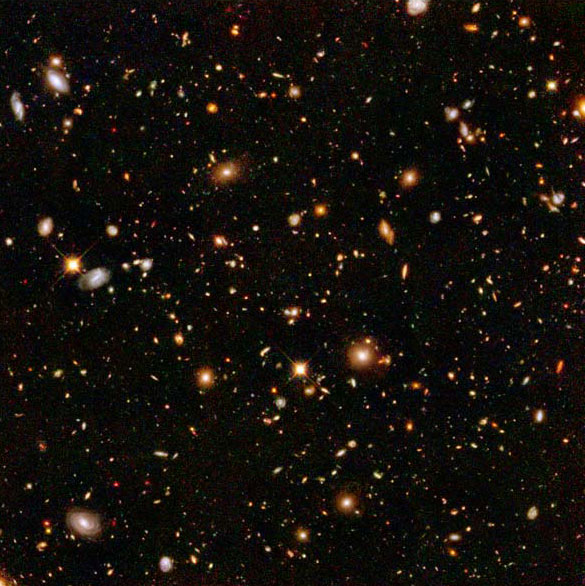
Frank and Gleiser suggest that the Big Bang Theory may, eventually, need to be replaced.  They point out that small inconsistencies have crept into it over the years (keep in mind that it was really only “confirmed” within my lifetime, back in the sixties).  Most of these have been patched up with quilt-work astrophysics, but the James Webb Space Telescope is making some of those past patches strain a bit at the seams.  Fully formed galaxies are being spied too far back in time (for stargazing is looking into the deep past) for the standard model.  They shouldn’t be there, but they are.  The letter interestingly raises the point that the scientific study of quantum physics, as well as that of consciousness, also strain the standard models.  Perhaps it’s time for a rethinking of reality?

Image credit: NASA, public domain

Isn’t this breathtakingly exciting?  To be alive when a major leap of understanding the universe we call home may be discovered?  The authors point out that cosmology and philosophy often have to interact.  Our understanding of the universe is a human understanding, not sacred writ.  The scientific method is built to be falsifiable.  If it’s not, it’s not science.  (This often separates it from some religions which declare themselves unfalsifiable, and therefore likely wrong.)  New scientific discoveries are made daily, of course, but new paradigms only tend to come on the scale of lifetimes, or several generations.  We don’t see them all the time.  I guess it’s heartening to see that the system works.  When science becomes orthodoxy, we run into similar problems that we encounter with religions.  A bit of humility and a ship-load of wonder can go a long, long way.


Creepy AI Doll

We’ve all seen the killing doll horror movie before, of course.  Who hasn’t?  What makes M3GAN different is the whole artificial intelligence angle.  Okay, so you understand it’s about a killing doll, but unlike Chucky or Annabelle, M3GAN has a titanium frame and a super-advanced, wifi-connected brain.  Like generative AI, she’s able to learn on her own and even able to use her own reasoning to get around her basic programming.  Now, you’re likely smarter than me and I didn’t catch what the critics call the “campiness” to the film.  Yes, there are places that made me snicker a little, but although the killing doll premise made the results somewhat predictable, I watched it seriously.  Some websites list it as horror comedy, while others prefer sci-fi thriller.  Nevertheless, it isn’t really that funny.  And there’s a cautionary element to it.

Funki, a Seattle-based toy company, is always trying to stay ahead of the competition.  Animatronic toys are the rage, and Gemma (brilliant choice to have a female mad scientist here) is a visionary programmer.  She wasn’t expecting, however, to become her niece’s guardian after Gemma’s sister was killed in an accident.  The M3GAN prototype was already underway, but Gemma kicks it into high gear to help make up for her own lack of parenting skills.  M3GAN becomes her niece’s companion—soulmate, even—and since the two are bonded with biometrics, her protector.  Bullies, lend me your ear; you don’t want to mess with a girl who has an android as a bestie.  And nosey neighbors, fix that hole in your fence.  Or at least curb your dog.

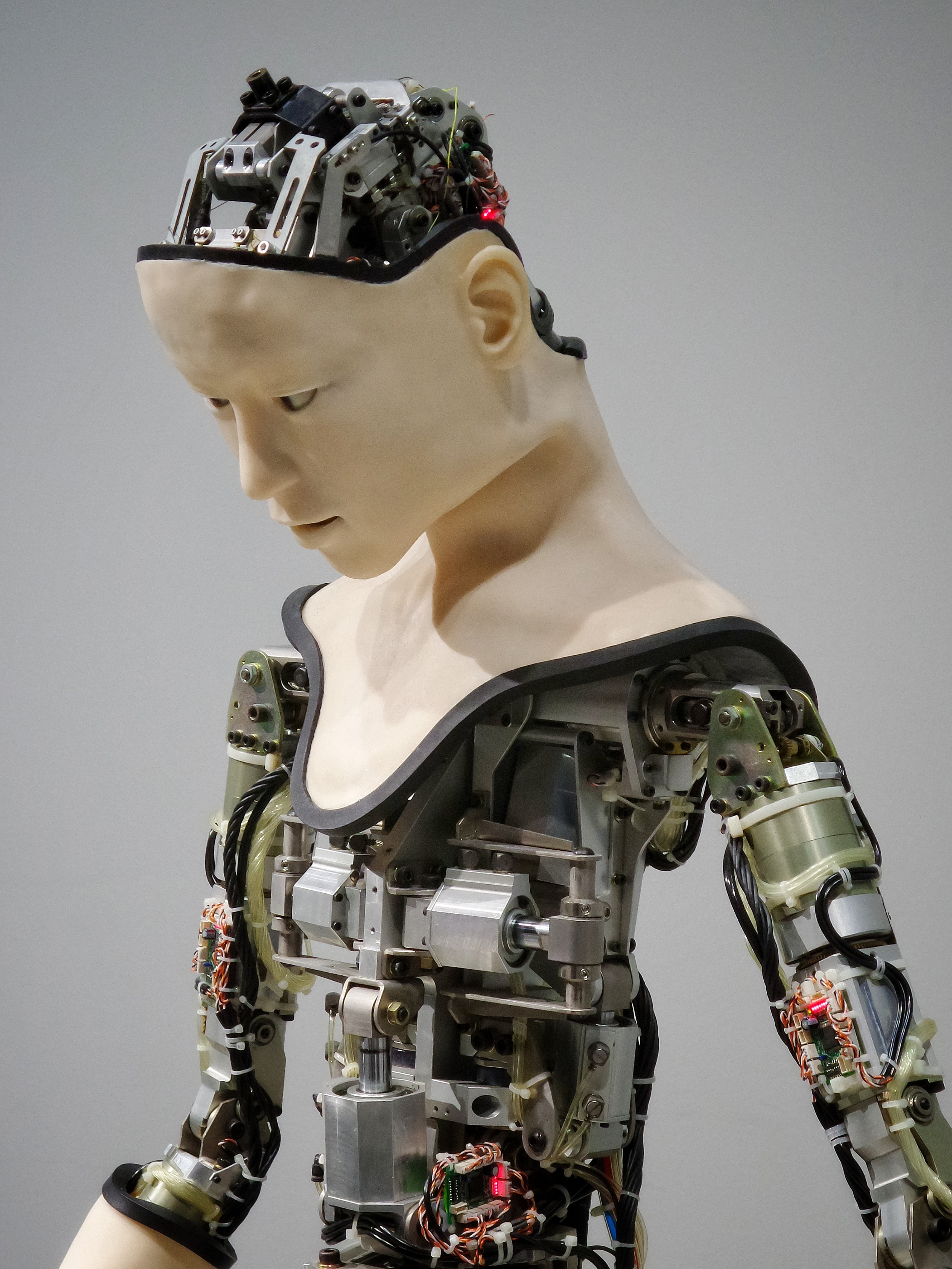
Instead of I, Robot this is more like You, Robot.  There is a wisdom to the othering that goes on here because none of us know in what kind of reasoning generative IA might engage.  In real life computers have been discovered communicating with one another in a language that their programmers couldn’t read.  We’re all biological, however, and thinking, as we know it, involves many biological factors.  Logic is part of it, but it’s not the whole story.  So techies who idolize Spock and his lack of emotion feel that they can emulate thinking by making it a set of algorithms.  My algorithms lead me to watch horror films out of a combination of curiosity and a need for therapy.  Where does a computer go for therapy?  The internet?  Well, you might find some good advice there, but don’t be surprised if it comes at you with a paper-cutter sword in the end.  You’ve been warned.


Generation Tech

You can’t be lazy in a technocracy.  I find myself repeating this mantra to myself when dealing with many people who use technology only when strictly necessary.  They don’t realize the war has already been lost.  If you want to thrive in this new world order, you need to keep up at least a modicum with technology.  I deal with a lot of people for whom biblical studies means handling only pens and paper.  J. C. L. Gibson, one of my doctoral advisors, wrote all his books longhand and had his secretary type them.  That’s simply no longer possible.  For authors, if you’re not willing to put notice of your books on Facebook, Twitter (or, as it seems to be going, Threads) people aren’t going to notice.  Publishers don’t send print catalogues any more.  My physical mailbox has been quite a bit less used of late.

There’s an irony to the fact that the generation that grew up on Bob Dylan’s “The Times They Are a-Changin’” are now refusing to accept our robo-overlords.  AI is here to stay and shy of a total collapse of the electrical grid, we’re not going back to where we were in the sixties.  The times have a-changed.  And you know what Bob says to do if you can’t lend an appendage.  Now, if you read my blog regularly, you know that I don’t go into this future with a sincere smile.  But at least I try to keep up with what I need to to survive.  I have to stop and remind myself how to write a check.  Or fold a roadmap.  I suspect that many of those who object to doing academic business electronically also drive by GPS.  It beats getting lost.

How does this connect to the internet?

No, I’m not the first in line.  I still wouldn’t be using a headset for Zoom/Teams meetings if my wife hadn’t given me an old one of hers.  This despite the fact I complain that I can’t hear others who insist they can speak clearly without and whose voices are muffled by the echoes in their work-at-home room.  Nevertheless, if you want to be a professional of any stripe, you need to reconcile yourself with technology and its endless changes.  You wake up one morning and Twitter is now X and you find yourself xing rather than tweeting.  I need to get more followers on Threads, but you can’t do that on your laptop—I guess times are still a-changin’.


Animate Magnetism

The Magnetic Monster is listed as sci-fi and horror on industry websites.  It falls into that period when horror had shifted to Hammer Studios in the UK and the US had entered that white-shirt, button-down period known as the fifties.  There were still monsters out there but they generally had to do with radiation.  In this case, it’s magnetism and its relationship to electricity.  The movie came out in 1953 and introduces what may have been the forerunner of the X-Files, namely the Office of Scientific Investigation, the OSI.  This team of A-men (yes, this was the fifties) study anomalies in order to keep America safe.  There were a total of three OSI films, of which this is the first.  The eponymous magnetic monster is alive only in a philosophical sense—it’s actually an irradiated element gone wild.

An unrestrained scientist had subjected a radioactive isotope to alpha particles for several days and this started a chain reaction.  He takes the substance onto a commercial airline—in his carry-on, no less (it was the fifties)—but the plane is diverted so the A-men can intercept it.  Every eleven hours this isotope divides and doubles, eating all the energy around itself to do so.  This creates an immense magnetic field.  So immense, in fact, that in a mere matter of days it will throw off the earth’s core and our planet will spin helplessly off into space!  Don’t panic, dear reader, the A-men are on the job.  They find a scientific means of overfeeding this monster and destroying it, which is why we’re all still here.

Interestingly, this is one of the more highly rated movies of the era, perhaps because of its scientific optimism.  Scientists can solve all our problems.  And yet you’ll find them without fail in church on Sunday morning.  The fifties were developing a kind of split personality for this country that was trying to hold two conflicting impulses together in an attempted fusion.  The problem is, overthinking either (or both) of them would demonstrate that they really have separate paths to take.  They may well be compatible, but in ways that relegating religion to Sunday morning simply doesn’t work.  Even today many scientists—generally not the outspoken kind—still hold religion and science in tension.  There is something to this impulse we call religion, but it always seems to have to wait while we use science to destroy the monsters we create ourselves.