God of the Gaps = Poof!

In Stephen Hawking’s new book, The Grand Design, according to MSNBC, he declares that God is not necessary, physically speaking, to get the universe going. The only people who should be surprised here are those who took Hawking’s final lines from A Brief History of Time too literally: “However, if we do discover a complete theory, it should in time be understandable in broad principle by everyone, not just a few scientists. Then we shall all, philosophers, scientists, and just ordinary people, be able to take part in the discussion of the question of why it is that we and the universe exist. If we find the answer to that, it would be the ultimate triumph of human reason – for then we would know the mind of God.” I remember being a bit surprised when I read that the first time.
Whose eyes are watching you?

At some level, it seems, many people took comfort in knowing that one of the greatest scientific minds alive had left a door open for God. The great cosmologist looking through a theoretical telescope and seeing God on the other end looking back. There was a symmetry here, a sense of rightness. Some, to gauge by the reactions reported, feel that Dr. Hawking has betrayed us in stating the obvious. God was never to be found in the petri dish or under the electron microscope. According to the theorists of a theological stripe, God has no quantifiable qualities that might be measured. As the article states, the only God to disappear here was the God-of-the-gaps.

As a young, undergraduate religion major, when I first heard that God-of-the-gaps was bad philosophy/theology, I was a bit surprised. (I spend a lot of time being surprised.) If God has no explanatory value in the real world, whence deity at all? If religious folks behaved better, there might well be cause to suggest that the evidence for God comes in human kindness and charity. Unfortunately, religious folk quite often instigate the hatred and suffering that scars much of human society. No, Stephen Hawking has not killed God, just as Friedrich Nietzsche did not commit deicide in the nineteenth century. If the God-of-the-gaps is gone, nothing of value has been lost. The minds of theological thinkers will only have to be stretched just a bit farther.



SpongeBob’s Evolution

My daughter has, unfortunately, outgrown SpongeBob SquarePants. She was my putative excuse for watching the (literally) brainless eponymous lead character going about his inane adventures. The creator of SpongeBob, Stephen Hillenburg, is a marine biologist and much of the fun for adults watching the cartoon derived from the biologically correct remarks made by the characters about their physiological conditions. Watching the laughing yellow sponge with his inimitable voice was a pleasant escape from the constraint of my own biological existence.

Today the New Jersey Star-Ledger announced that two researchers from Princeton University may have discovered the oldest animal fossils ever recorded. It seems that for a while, some 635 million years ago, the earth was undergoing its Cryogenian Period when the planet surface was all but completely frozen. The earliest discovered animal fossils were discovered from after that period. Princeton geoscientist Adam Maloof has recovered what appear to be animal fossils from 650 million years ago, 15 million years before the big freeze. This find had been anticipated by genetic scientists who had suggested that such early animal forms likely existed prior to the appearance of the earliest sponges 520 million years ago.

For now the new finding shifts the fossil record back by about 90 million years. There will be massive gaps to be filled in by scarce traces left in inaccessible rock. Creationists will no doubt gloat that the fossil record is now even more full of holes than ever. This is frequently the quality of ambiguity that they suggest will topple the evolutionary lie. The truth, however, faces the opposite direction. The oldest creatures found are ancestors to the common sponge, pushing SpongeBob’s ancestors back many millennia before those of the Adam who discovered them. It seems to be the silly yellow sponge who will have the last laugh.

Gee, did I really cause all this?


Religion in the Underworld

One of the unspoken truths of the study of religion is that it has an unacknowledged, problematic sibling in paranormal studies. There are many obvious differences: for one thing, religious study is respectable, if not really considered essential, whereas paranormal study is suspect and not generally acknowledged by established scientific or mainstream research institutes. Nevertheless, both religion and paranormal phenomena deal with unquantifiable experiences, aspects of human perception that cannot yet be measured. So it was with a large grain of salt that my wife signed me up for a year’s subscription to the TAPS Paramagazine. I’ve posted on this particular magazine before, but a new issue arrived just yesterday that contained so many references to the Bible and mainstream religion that I thought it worthy of reiteration.

In general I am skeptical about supernatural claims. At the same time, I am aware that we understand only a fraction of the universe and some aspects of theoretical physics are more bizarre than your average ghost story. When the magazine arrives I read through it with my salt-shaker within easy reach. Nevertheless, a feeling haunts me that at some deep level my specialization is connected with paranormal activity. The first article in the current issue concerns the Underworld. The author suggests that biblical and Mesopotamian references to the Underworld may be supported by the findings of ghost hunting investigators.

I’m all for a couple of working guys (plumbers Jason and Grant) daring to tread where scientists fear to go, but the problems of using ancient materials to bolster ghost-hunting claims are legion. Just a glance at the popularity of Zecharia Sitchin books warns against a simplistic reading of complex, ancient civilizations. We don’t need ghosts in the machine to explain the Sumerians or Babylonians. At the same time, we don’t have many academic options for uncovering the many, many ghost claims that have made throughout history. Mass neurosis is less believable than occasional hauntings. So although I have to disagree about the viability of a literal Underworld – a good understanding of ancient mythology helps to clarify that one – I do reserve some space for wondering if religious studies might not end up in the same final resting place as paranormal studies once science is able to penetrate the veil.

My all-time favorite ghost photo


What Hath AI Wrought?

Earlier this week an op-ed piece in the New York Times afforded the laity a rare glimpse into The First Church of Robotics, that is, Silicon Valley’s incredible and slightly disturbing vision of the future of technology. The writer of the piece, Jaron Lanier, an insider, expresses a concern that his area of specialization, a kind of artificial intelligence, is blurring the hard line between human and machine. Perhaps it is time we all watch Terminator again. Quoth Lanier, “It should go without saying that we can’t count on the appearance of a soul-detecting sensor that will verify a person’s consciousness has been virtualized and immortalized. There is certainly no such sensor with us today to confirm metaphysical ideas about people, or even to recognize the contents of the human brain. All thoughts about consciousness, souls and the like are bound up equally in faith, which suggests something remarkable: What we are seeing is a new religion, expressed through an engineering culture.” To put this in context, Lanier had been discussing the current concept that it might be possible to digitize human beings to incorporate all people in a Matrix-like universal brain.

I am woefully undereducated on the technology side of this issue to discuss whether or not such high-end digitization is possible. What interests me is the suggestion that this is a new religion. We haven’t even figured out the old ones yet. Defining what a religion is presents a nearly insurmountable barrier even to specialists in the field of religious studies, and some disgruntled conservatives claim that atheism and “sciencism” are religions. No matter how fast or how far you run, someone will always be able to label you as the adherent of one religion or another. Religion is an all-consuming category, a mental conundrum that cannot be contained by mere academic classification and circumscription. It is the universal solvent.

Meanwhile, universities and other learned bodies are reluctant to support the study of religion. In a world where the vast majority of individuals, university professors included, are motivated by religious guidelines and parameters, it is the elephant in the room we’d rather not discuss. From the sidelines I have watched reputable school after reputable school disembowel religion departments since they “don’t bring in money” and add nothing new to our understanding of the human condition. The sad truth is, religion indoctrinates much of the world. Deans and university presidents could learn a lot by reading op-ed pieces in the New York Times. Or at least have their avatars read them and store them away for future recall.


When Dinosaurs Will Rule

Just about all of us begin life as budding paleontologists. What kid doesn’t adore dinosaurs and their paradigmatic story of planetary rule followed by inexplicable decline? The mystery and drama only add to the fantastical nature of the beasts themselves – creatures towering over houses and trees, predators the size of school buses. When my daughter hit dinosaur age, my latent paleontologist experienced a profound resurrection. Sure that she’d become the next great dinosaur hunter, I relearned all the old species names and added dozen more from creatures discovered since my interest went underground. While my career was spiraling downward at Nashotah House, I contacted the paleontology program at the University of Wisconsin to see about retraining. I even started to teach myself calculus.

Life delights in playing funny tricks on people. Once again my career in religious studies spirals downward and the specter of the dinosaurs rises. Literally. A former student of mine pointed out an article on Helium.com that spells out some possible implications of the Deepwater Horizon fiasco. The first sentence reads: “Ominous reports are leaking past the BP Gulf salvage operation news blackout that the disaster unfolding in the Gulf of Mexico may be about to reach biblical proportions.” The Bible is our standard measure for disaster; no crisis can not be made worse by throwing in the adjective “biblical.” If Terrence Aym is correct, however, even the Bible won’t save us now.

Apocalypse now?

Basing his analysis on Gregory Ryskin’s thesis that immense methane bubbles from under the ocean led to several past mass extinctions on our planet, Aym suggests that all the signs are present that a true doomsday scenario is unfolding in the Gulf of Mexico. I have seldom been impacted by doomsday predictions, but Aym’s article is perhaps the scariest thing I’ve read in years. I’m not enough of a scientist to assess the danger, and the media blockade only makes the speculation worse. Could it be that the decay from all those dead dinosaurs, their cohorts and predecessors, their flora – the very source of fossil fuels – is rising to deal yet another mass extinction on our planet? The reader will need to decide. For me, I regret that I didn’t stay with the dinosaurs, for they still rule the planet.


Aroma of the Divine

Religion is all about emotion. Those who approach religions rationally soon have to face the fact that believers approach the subject with a less-than-rational motivation. Religion fulfills basic psychological needs – we can explain our world without divine forces, but for many this cold and clinical approach lacks vitality and meaning. Belief in the divine is emotionally satisfying, and as long as humans experience emotion, God’s job is safe.

Aware of this emotional component, I was intrigued when I heard about Rachel Herz’s book, The Scent of Desire: Discovering Our Enigmatic Sense of Smell. It is schoolyard wisdom that smells are closely associated with memory; everyone I’ve asked about this has had the experience of a firm memory being mediated by an unexpected aroma. What Herz has discovered, however, is that our sense of smell evokes memory just about as well as other sensory cues. The vital difference is that our sense of smell is vital for emotional development. The fragrance-induced memory is more fraught with emotion, therefore it may seem more intense that memories brought on by old photos or songs. In fact, those who lose their sense of smell often report living with emotional flatness. Laboratory animals with their olfactory organs removed show no motivation in their pathetic lives.

Considering the emotional component of religion and the fact that our olfactory perceptions are closely linked with our limbic systems, I wonder how religious satisfaction smells. Surely emotion is more complex than what our noses detect, but if emotional systems are shut down without a sense of smell, it stands to reason that religion must be related, at least in some form, to smell. The presence of the divine is often described as “inspiration” or inhaling. In Hebrew and other Semitic languages the world for “spirit” is also “breath.” Although Herz doesn’t discuss this aspect of scentology in her book, it would be an avenue to investigate for those with an interest in the origin of religion and the aroma of the divine.


Random Faces

A friend recently sent me an issue of the Annals of Improbable Research that featured an instance of pareidolia on the back cover. Pareidolia, or the brain’s tendency to read patterns in random input – especially faces or human forms, has been a subject addressed on this blog before. Nevertheless, the phenomenon has continued to find wider exposure on the internet, and its implications continue to grow. The Cheezburger folks who brought us LOL Cats now have a site dedicated to pareidolia entitled “Happy Chair is Happy.” The question is not so much why we see faces everywhere, but what do we do about it.

Photo credit: C. Vittore, K. Tribble and D. Savala, Ann. Improbable Research

Perhaps the most prevalent uses of pareidolia in natural phenomena (human-made objects are often funny or uncanny, but the faces may be there by intentional design) revolve around the supernatural. Would-be ghost hunters find what looks like a face in a window or shadowy corner and interpret it as a disembodied spirit. Religious believers of various faiths find the faces of their founders or leaders in natural noise. A tract I saw as a child told the heart-wrenching story of a woman who’d given up hope. She randomly took a photograph of her garden and when she developed it (this was back when film was actually still in use), she found the face of Jesus in among the leaves. Her angst alleviated, she went on to face life with a fresh sense of possibilities.

We often see what is not really there. On a visit to my niece last year, while waiting in the car outside her dorm, I saw a shadow on the wall that looked exactly like the recently deceased Michael Jackson. The shadow was cast by security lights through a bush, but the face was unmistakable. To test my observation, I asked my niece – who knew nothing of the fleeting rock star on the side of her building – if she could see it. Immediately it became obvious to her. An epiphany of Michael Jackson may be a religious event, or at least a supernatural one, to some. In reality it was a temporary arrangement of leaves aligned just right to catch a security light to form a public icon. Putting faith in pareidolia is a very haphazard source of security. However, if it helps someone deal with the stresses and strains of life, what harm is there in seeing Jesus (or Michael Jackson) where he really isn’t present?


Robots and Divine Engineers

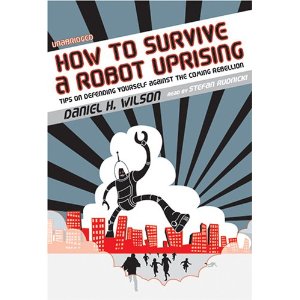
Pennsylvania seldom comes to mind when one thinks of a “big state” unless, that is, you have to drive across it. On the way to a family wedding in Ohio, I had to drive interstate 80 from the Delaware Water Gap to Sharon, Pennsylvania, and beyond. Having made this trip more times than I care to recount, I knew some diversion would be necessary. So it was that my family settled in to hear the audio version of Daniel H. Wilson’s How To Survive a Robot Uprising. Given my current status as a “Robot Dad” and my lifelong interest in both monsters and doomsday scenarios, this particular book was an apt choice.

Although the book is classified as humor, there was much that was thought-provoking in it (as there frequently is in quality humor). As Wilson systematically describes what makes robots tick, back five years ago, it became clear what it means to make a creature in one’s own image. Roboticists analyze how humans go about doing things and how we think in order to replicate these processes in mechanical formats. The results are machines that easily outperform humans, but which also have severe limitations – what Wilson frequently refers to as the benefits of evolution. Not only is the book funny, but it is also informative concerning what amazing robots are already in development. For those with the capital, there is little that robots can not be made to do.

All the while, I was also thinking of the human dilemma. Judeo-Christian tradition claims that we are made “in the image of God” without ever really explaining what that means. Perhaps it is the height of hubris to suggest that we are pale reflections of what we might have been, given a divine designer. When humans make robots, they are designed to surpass what we can do. Is there a reason people can’t see in the infrared or ultraviolet light ranges, like robots can? Why are we not able to hear all available sounds waves or smell all possible odors, such as our machines and dogs can? Could a team of human engineers have designed a better prototype than the God of Genesis?

While I do not really fear a robot uprising, I often ponder why things are the way they are and why human limitations often lead to such intense suffering. It is an idea that can be explored thoroughly when, after hours of driving, you realize that you still have 200 miles to go to the border.


Artificial Ugarit

Yesterday a friend pointed me to an article in the MIT News entitled “Computer automatically deciphers ancient language.” The language in question is Ugaritic. The article, by Larry Hardesty, narrates how three computer scientists have developed a program that may potentially decipher as yet non-readable languages. Ugaritic was chosen as a test-case because it has already been decoded and since it meets the specific criteria needed for the program to work. Results from the program could be measured against the standard translations already produced by specialists. Perhaps Ugarit will have another day in the sun.

The larger issue, of course, is technology and its role in understanding the human endeavor. Written texts are an extension of the human mind and those of us who practice it copiously know that the written piece is a piece of the author. Ancient texts may not suffer the same burden of individuality – some undoubtedly were rote pieces set to clay only after a lengthy oral life – nevertheless they participate in the constant paronomasia that is the human psyche. We invent the myths that Ilimilku and his colleagues inscribed so carefully over three millennia ago. Computers may indeed aid us in unlocking their often obtuse forms of expression, but how close will they put us to laughing at Ilimilku’s jokes or wondering deeply at his profundities?

Having been involved in a research project involving computerization and the Ugaritic texts (I was an editor in the now defunct Ugaritic Tablets Digital Edition) I am very aware of the benefits that technology brings to the table. As a sometime writer, I am also aware of the ironies involved. Our ancient predecessors, humans like ourselves, wrote texts that they considered worthy of preservation. Their civilization collapsed. Their language died. We rediscovered it and eagerly wanted to know what they had to say. We, however, have lost the ability to understand. Computers have taken on a dominant role in disseminating the written word. They daily participate in the human experience. Perhaps some day it will be AI that is scrutinizing our whimsical words and trying to decipher what in the world we meant. When they succeed they will find we are not that far from where Ilimilku began.


Faith Healing

Having dissociative reading habits sometimes leads to fortuitous coincidences. My interests have always been widely dispersed, and although I have a few perennial favorites that I keep coming back around to, reading about new interests predominates. One of my favorite reading topics is science. Apart from the requisite intro courses in college, I have unfortunately had little formal training in the sciences, so I read extensively in the field. A number of my recent reading projects, books on widely divergent areas of science, have coincidentally mentioned faith healing. Being books written by scientists, there is little by way of physical explanation except that people who believe they are improving generally do. The mechanism remains undiscovered, but the phenomenon is well documented.

Faith healing has long lain among the taboo subjects of snake handling and snake oil hawkers. Those who approach the phenomenon from a religious angle claim that it is no less than divine power that causes a person to heal. Physicians and scientists who rely on empirical evidence, however, declare that a physical cause must exist, albeit a yet undiscovered one. With no way to test results, the objective approach simply must accept that it happens, we know not why.

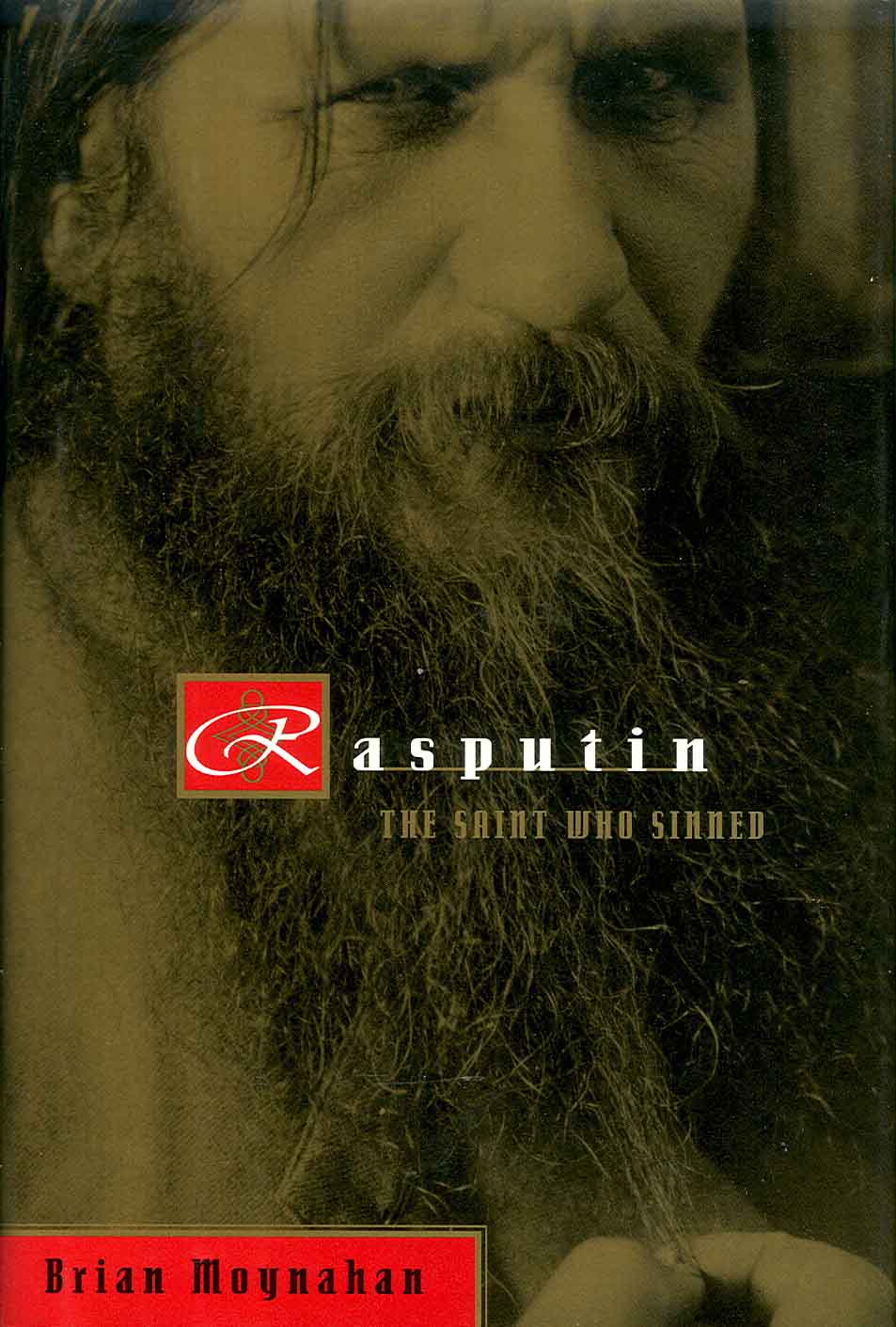
A number of years ago I read a book about Rasputin (Rasputin: The Saint Who Sinned by Brian Moynahan). At the time I was teaching at Nashotah House, a monastery-like seminary heavily influenced by Orthodox pretensions. “Rasputin” was a common slur on campus, particularly for a slovenly prelate-in-training. I had no idea who Rasputin was until I read this book. Apart from the distinctly creepy vibes his photographs give off, there are many documented cases of Rasputin’s ability as a faith healer. Few today would consider the “mad monk” as any kind of saint, but he apparently had a salubrious effect on those who believed in his power. This would shift the cause from supernatural to the suspect, unwashed hands of a notorious sinner.

Who wouldn’t want the ability to heal and make the world a place with a little less suffering? While faith healing has become a kind of holy grail for scientists, there are some not-so-holy religious folk who’ve unlocked a door that many never even suspected was there in the first place.