No FOMO

Some fringe websites (of course I do!) present the case for reincarnation via past lives memories, particularly of children.  You see, adults hear/read/see a lot of things as the years weigh down and we might misremember something we encountered somewhere else.  Children have less exposure and therefore make more credible witnesses.  I know perfectly rational adults who believe in past lives as well.  I must confess, however, that this is one of the scariest things I can imagine.  I’m glad to have lived, most of the time, and I’m not in a hurry to end it prematurely, but the thought of doing it all over again is terrifying.  Even if it’s a different and better life.  You see, I entered life with a lot of questions and I have to say, over six decades later, I’m still uncertain about many of the answers.

If reincarnation means starting from scratch all over again, that scares me.  I’ve spent much of my life building walls to protect myself from the things that hurt me.  I avoid overly risky activities.  I handle sharp objects with great care.  I spend quite a bit of time by myself.  I don’t like being hurt.  That may be one reason that I watch horror movies.  They help to desensitize that particular phobia.  Still, I have to think of all the hard lessons I’ve learned in this life and have to think about how I might improve upon it all with another go-round.  In religions of East and Southeast Asia, where belief in reincarnation is common, the idea is often that you want to break out at the end.  Nirvana.  The place were you don’t have to queue up again.  Even Plato thought reincarnation might explain a lot.  But the very thought makes me feel weary.

If you could be rebooted with the knowledge of your previous life intact, that’d be one thing.  The idea of one day finding myself in another mother’s arms, not knowing anything, learning each microsecond, well, it’s frightening.  My parents weren’t educated people.  They taught me the blue-collar hard knocks of life (which I don’t want to have to learn again).  The white-collar hard knocks are sometimes even worse.  I tried to live this life as a clergyman, but that never really panned out.  I sometimes wonder if the Abrahamic religions/monotheistic traditions, didn’t develop Heaven and Hell out of fear of reincarnation.  The idea certainly makes sense, in some contexts.  And it’s one of the scariest things I can imagine.


Books and Mormons

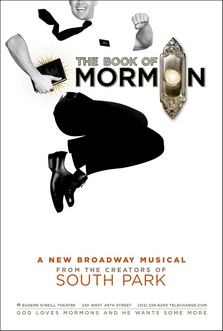
Some time ago we went to see Book of Mormon on tour.  I really knew very little about it other than it was consistently praised as being very funny.  I’m always a little concerned about poking fun at anyone else’s religion because I know people take their beliefs very seriously.  As I reflect on the show (which was quite funny) it seems that it wasn’t so much poking fun at the Latter-day Saints so much as it was poking fun at religion itself.  That’s less problematic as it’s not singling anyone out for ridicule.  It’s a system that’s being made light of.  Or at least any religion that is an effort to convert others.  There’s a kind of violence to it.  And if Book of Mormon is about anything, it’s about missionaries.  Amid the laughs it makes some valid points—trying to convert people without first trying to understand their culture is a fraught activity.

People want religious specialists who thoroughly understand their tradition.  I can say from experience, both as an erstwhile seminary student and a seminary professor, that the time given to become an expert is insufficient.  The older I’ve grown the wider the perspective I’ve tried to step back to see.  To be an expert on a religion really requires some facility with understanding other religions.  To understand, say, Methodism, you need to understand Anglicanism.  To understand Anglicanism, you need to understand Catholicism.  To understand Catholicism, you need to understand early Christianities.  To understand early Christianities, you need to understand Judaism.  And so the widening concentric circles go.  Nobody can be an expert in all of them, and each of these religions mentioned has, in its own right, sub-specializations that have their own experts.  Who has time to learn the religion of those they intend to convert?

Any religion that makes supernatural claims (and many of them do; it’s their nature) makes extraordinary allegations.  Those allegations, when examined closely, reveal some improbable elements.  Trey Parker and Matt Stone, two of the authors (most famous for South Park) apparently said that they had no intention of making fun of anyone’s religion and a spokesperson for the Latter-day Saints indicated that no real offense was taken, acknowledging that it’s parody and parody is only offensive if it’s taken seriously.  Many religions have thin skin when it comes to parody or satire.  The serious part is that some religions, in real life, take conversion of all others with a zeal that could (and does) become dangerous.  Still, this musical is very funny, as long as it’s not taken too seriously.


Banning Books

For many years I’ve celebrated Banned Books Week by reading a banned book.  What with Republicans wanting only white, hetero, history-denying titles approved, I’m pretty sure that most books I read are banned somewhere.  Banned books, of course, see sales bumps and benefit the publisher and author.  So instead of reading a noted banned book, this year I’ll hang out my shingle here with but shallow hopes that it will be read.  I’m pretty sure, any agents out there, that at least one of my novels would be a banned book.  Maybe all of them.  You see, in my fiction I’m not the mild-mannered, inoffensive person who blogs here everyday for free.  There’s a reason that I keep my pen name secret.  I’m pretty sure that most people who know me would be surprised, if not shocked, by what appears in my fiction.

Writing, you see, is where we express the ideas in our heads.  I may seem to yak about everything on this blog, but in reality, I’m quite guarded.  Many of the horror movies I discuss, for instance, have ideas or scenes that I simply leave unaddressed.  I’m trying not to offend anyone here.  (A friend of mine who does publish fiction mentioned recently that a significant other in her family suggested that her writing wasn’t controversial enough to be picked up by publishers.  I think there could be something to that.)  While my mother was alive, I took special care that she wouldn’t discover any of my fiction.  Now that she’s gone these two years, I still protect her name with my own nom de guerre.  I really don’t want to hurt anybody.  I do, however, need to express myself.

Some of my fiction is horror.  Some is just plain weird.  The novels are well written, I think, and I’m open to editing.  (Agents, I am an editor—I know how this game works!)  As long as we’re stuck in a morass of banning books, why not look at a writer who’s more controversial than you might believe?  I’ve been writing daily for going on half-a-century now.  Think about that.  Think about the sheer number of controversial thoughts one might have in that amount of time!  Add graphomania to the recipe, with just a squeeze of talent and you’ve got banned books to last a lifetime!  I’m not sure any of the books I’m currently reading (five actively, at this point) formally appear on a  banned list.  But if you want to find one that almost certainly will be, well, my shingle’s out there if you care to take a look.

A banned book, in some districts

Who Owns It?

Who owns the Bible?  No, you can put your hands down.  I mean who owns the concept of the Bible?  This question occurred to me while thinking about the Apocrypha.  Does the Apocrypha belong or does it not?  This became a polarizing issue with the Reformation and subsequent Protestant ownership of the concept of the Bible.  The Apocrypha was mostly written by Jews, but has never been part of the Hebrew Bible.  The process of narrowing down the books to include wasn’t straightforward and since God hasn’t spoken on the topic, has never really been settled.  The books of the Apocrypha circulated with the Bible, as did a few other books.  Sometimes they were even bound together inside one cover with the standard Protestant 66 books.  Obviously I’m discussing the Christian canon here.

I’m sure you’ve known someone this has happened to, if it hasn’t happened to you personally.  This person is an actual expert on a topic.  S/he goes to a place where an unexpected discussion on their specialization breaks out but nobody asks them to speak to it.  This person then becomes offended, sometimes even speaking out, loudly, that this is their area, they have expert knowledge of it and should be consulted, at the very least.  More likely than not, their opinion should be considered definitive.  This is the image I have in my head with Protestants and the Bible.  Sure, the Catholics had it long before, but they didn’t encourage individual study.  In fact, they discouraged laity from reading it.  Only when they, the Protestants, came along did anyone really pay attention to the Bible, and, it must be admitted, they do have a point.  All the Bible study that goes on today, no matter what faith tradition (if any) would not have happened without the extreme Protestant reverence for the Good Book.

But still, there are other branches of Christianity that disagree.  There are more Catholics than any single sect of Protestants.  And a great many Orthodox Christians as well.  Some of the latter include the books of 1 Enoch and Jubilees in their Bibles.  Even so, any publisher that wishes to make inroads on selling the Bible must defer to the Protestant canon.  This is the case even though the King James Bible included the Apocrypha.  So as I ponder who it is that owns the image of the Bible, my mind keeps coming back to the same place.  Those who make the loudest, and most prolonged claim are the Protestants.  They own the Bible, in the public eye.


Play Time

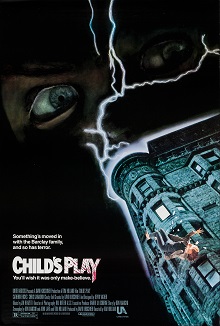
Of course I’ve seen Child’s Play before—what kind of poser do you think I am?  But that was back before I started blogging.  After writing a post about Puppet Master, I thought I should watch it again because it didn’t really strike me as memorable the first time around.  Probably the reason for that is I knew the basics of the story before I saw the movie and, like zombies, possessed dolls are a little hard to buy into.  Still, on this second viewing I was a bit more impressed.  The idea of the monster that won’t stop coming is a scary one, and I’d forgotten just how much Chucky had to be dismembered before being stopped.  And there are some legitimately scary scenes, despite unanswered questions.  In case you’re not familiar: criminal Charles Lee Ray is shot to death in a toy store, but not before transferring his soul, through voodoo, into a Good Guy doll.  This doll is bought on the black market by a widow who can’t afford one, for her son’s birthday.

Chucky befriends the boy but starts taking revenge on those who’ve wronged him, including the police officer called to investigate his first murder.  The officer happens to be the one that shot Ray at the beginning of the film.  Nobody believes that the doll is alive until it attacks them personally.  Nobody, that is, except Andy, the six-year-old owner of Chucky.  (Although it isn’t cited as such, I have to wonder if Toy Story’s Andy wasn’t actually based on this one; that’s not the official story, but still…)  Child’s Play wasn’t the first horror film to portray an animated doll, but it was perhaps the most influential.  Chucky went on to become a repeat slasher villain with wide recognition.

I’d completely forgotten the appropriation of voodoo as the animating force behind Chucky.  Of course, that leads to the very obvious weirdness of a doll using a voodoo doll to kill someone.  To modern sensitivities, the use of Vodou feels inappropriate, but this was in the eighties, and other religions were fair game for horror.  In fact, religion was fair game.  Without it, no animated Chucky, and no threat to Andy and his mother.  Religion and horror have played together from the very beginning.  The possession aspect also ties into religion and there have been no end of possessed dolls since Chucky first lunged out the screen with his knife.  It was a good play date, it turns out.


Folk Kill

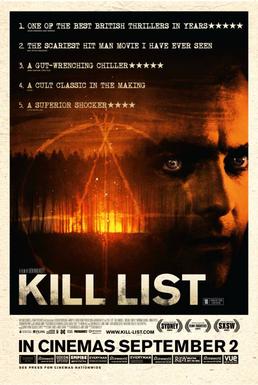
Kill List is a movie that I wish came with some interpretative material.  It’s a touch hard to follow.  The basic idea is that Jay and Gal are Army buds who take a job as hit men.  Jay is married, but not exactly happily.  Gal’s girlfriend leaves him early on.  It seems that Shel, Jay’s wife, knows what he does for a living but seems strangely unconcerned.  Jay is recognized by his victims, but he doesn’t know why.  He becomes insanely brutal on the second of their third jobs, torturing his victim before killing him and then going after his accomplices (not on the eponymous kill list).  At this point Gal and Jay want out of the deal but their unnamed employer won’t release them.  Jay is presented as a man traumatized by a past military action.  He fights frequently with Shel but is very devoted to their son.  Spoilers follow.

The last job is a hit on a member of parliament.  The MP, however, is in a folk religion group that requires human sacrifice.  Jay begins shooting them but he and Gal are outnumbered.  Gal is killed and Jay is subdued.  He then has to fight a hunchback in front of the masked believers.  He frees the knife and kills the hunchback only to discover it is his wife with their son attached to her back.  A rather bleak ending for a rather bleak film.  Kill List is generally considered folk horror.  That is to say that fear derives from both the landscape (less rural in this example) and from the native religion of the non-Christian traditions.  What exactly this religion is is never specified, and it seems that, unbeknownst to himself, Jay is a pretty major player in it.

Perhaps not surprising for a film titled Kill List, this is quite a violent movie.  The somewhat constant fighting of Jay and Shel is unnerving in its own right, and Jay’s berserker-like attacks are also disturbing.  There is a religious element involved, however, beyond paganism.  The first victim on the hit list is a priest.  The reason’s not explained, but the expected religious imagery is there.  This is never tied in with the folk religion exposed at the end.  Although effective as a horror film, it leaves quite a few questions unanswered.  That being said, this Euro-horror is one that I’m unlikely to go back to.  I’m not even sure who made the recommendation to me in the first place.  Folk horror is a fascinating genre and this movie has been compared to The Wicker Man in that regard.  Only in the latter case the plot was easy enough to understand.


Angles on Angels

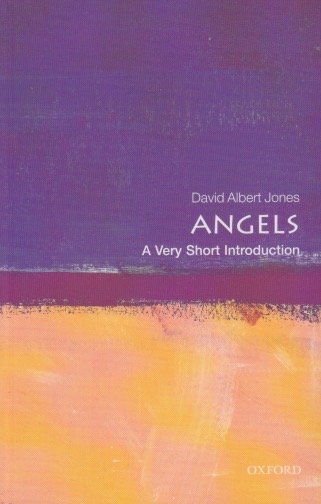
Angels and I go back a long ways.  They were mentally part of my childhood, as I suspect is true for many.  When I reached upper-level undergraduate work, I did an independent study on angels with a professor who didn’t provide much guidance.  About the only thing I recall from that class was reading Billy Graham’s book on angels.  Not exactly an academic authority.  In these times of modern Thomas Aquinases, plenty of scholars look at angels from various angles.  I suspect the task of writing a Very Short Introduction on them was taxing.  Although the word count was about 10,000 higher, I had trouble reining myself in on The Wicker Man.  There was so much more to say!  Of course, many academics are preferring shorter books these days.  In any case, angels.

After a brief history of angels, attempting to define them, considering the main ones individually, then looking at the collective as a hierarchy and according to various roles—messengers, guardians, warriors, David Albert Jones then looks at fallen angels.  Having written on this myself in the tragically overpriced Nightmares with the Bible, I found Jones’ approach here to be of interest.  Throughout Jones tries to give equal time to Judaism, Christianity, and Islam.  All three traditions have angels, but Muslims approach demons very differently.  Djinn aren’t fallen angels.  But then it’s time to move on to the conclusion.  Brief books like this are good for making a reader hungry.  Some decades after angels had a resurgence in pop culture, academics arose to explore them.

I enjoy getting a different perspective, or angle, on angels.  It’s so easy to assume that our parents taught us correctly about the layout of the spiritual world.  Culturally, unquestioning acceptance is rewarded (it’s clear that even demons know that).  But looking closely at things, even if just for a brief time, offers a chance to learn something new.  Personally I learned new things about Dionysius the Areopagite, Joan of Arc, and Hells Angels.  I also couldn’t help but think that such a little book written by anybody else would’ve had different nuggets included.  That’s one of the problems with picking up a short book on whose subject you’ve already done quite a bit of reading.  I do it for information, but beyond that, for finding new angles.  I can’t imagine ever learning everything there could possibly be to know about angels.  And we go back a long way.


Fighting over Chocolate

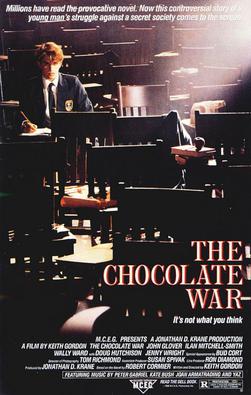
It’s really a teen movie, The Chocolate War is.  That may be the sweet spot for dark academia.  I’m maybe a bit old for such things, but being old tends to mean remembering how it was.  Not exactly how it was, though.  Chocolate War takes place in a Catholic boys school, Trinity by name.  Perpetually underfunded, the students have to sell chocolate (now we’re in territory I recall—remember me, Gertrude?) to help keep it running.  Meanwhile, the Vigils, a secret society, have a considerable amount of pull on campus.  Led by a prescient and overly mature boy for his age, Archie, the Vigils assign select students difficult tasks in a kind of high school hazing.  Jerry, a freshman whose mother recently died, is assigned to refuse to sell chocolates for ten days.  He then decides (for reasons never explained) not to sell them at all.

The refusal leads to a financial crisis for the school.  The Vigils try to force Jerry to sell, engaging in harassment tactics.  Nothing works.  Then Archie coerces him into a “boxing” assembly where students pay to have their specific punches thrown by one of the boys (a bully or Jerry) at the other, who simply has to take it.  Before the match begins, Archie, the Vigils’ leader, is tricked into taking the bully’s place.  Jerry, who’s on the football team, knocks him out, sending some teeth flying (probably why the film got an R rating).  In the end, Archie is demoted, but Jerry realizes that with his refusal to comply, he led to the result he was protesting against (the harassment and boxing match led to selling all the chocolate despite his refusal to participate).

Dated, yes (1988), Dead Poets Society, no.  Still, there’s much to ponder here.  Bullying—used by very high offices in this land—seems to be a growing problem.  And yes, when you get a bunch of adolescent boys together, trouble can arise.  It’s believable.  Although considered a flop, critics were kinder than the box office.  There are dark messages to decode here.  The price of nonconformity—an issue that doesn’t disappear with adulthood—and, perhaps looming larger, its effectiveness.  The teacher temporarily running the school, Brother Leon, is part of the problem, as is often the case in dark academia.  He’s not evil, however.  The film places the abuse of power on Archie, although he doesn’t condone violence.  Ultimately violence is used to unseat him.  With the result that the system (Trinity) prevails nonetheless.  Worth considering.


End of the Story

You know that feeling?  Like when you’re driving in thick fog and you know you should stop but you’re late and you have to keep going?  There comes a moment as you’re driving when you know that it’s going to end, and probably badly.  Yet you keep on going.  Trump has me thinking of the end of the world quite a bit.  I know there are many evangelicals out there praying for it fervently while the rest of us would like a little more time on this beautiful planet.  I’d be lying if I said I didn’t understand this outlook, because I do.  I grew up with it and I’ve never forgotten the sensation it caused.  And then I pondered that we are story-telling, and story-thinking creatures.  Perhaps other animals don’t think this way, but we constantly tell ourselves stories.

A story has a beginning, a middle, and well, eventually, an end.  We all know, at some level, that we’re mortal.  Life will end, and every completed story has an end.  Why not the world?  It’s a strangely haunting idea, the world continuing on without us here to make it interesting.  Plants will grow in any soil they can find, even microscopic cracks in the pavement.  Every year it’s like one day everything is suddenly green where only the day before we could see the sky through the branches.  And animals continue their quests for food, mates, and shelter.  Some live to hide while others strut.  Each has a role to play and if you watch them closely you’ll find yourself narrating their stories.  That rabbit.  That bluejay.  That fox.  They have a beginning, middle, and end.  If they can’t tell it, we can do it for them.  It comes naturally to us.

Long ago I learned how one version of Bible interpretation came up with the end of the world as we know it.  I also learned that this was contrived, just as all interpretations are.  This particular one has landed, like a seed, in the cracks of our mind.  It grows, just like that weed in the pavement.  This story must have an end.  We can imagine it no other way.  Even when we grow up and realize that the story was only one we told to children—children old enough to handle it, of course—we still have this certainty that an end is coming.  Like driving in the fog, we just know it.  Even when we realize that in reality we should be putting on the brakes.


Deadly Seven

Seven, styled Se7en, shades more toward the thriller end of the stick than horror.  The two are very closely related, of course, but as a gritty cop drama, the main horror element is the gore.  And the serial killer.  Indeed, it’s often compared to The Silence of the Lambs, a card-carrying horror club member.  My main complaint is that much of the movie is shot so dark that you can’t see what’s going on.  The unnamed city is about as cheerless as Bladerunner, and even when people aren’t being stalked by the serial killer they’re being murdered anyway.  So this dark setting brings together two detectives, one retiring (played by Morgan Freeman) and one with anger issues (Brad Pitt) set to take over.  The two are only supposed to overlap seven days, but the seven in the title refers also to the seven deadly sins.  

A literate cop drama—Freeman knows his literature (Milton, Chaucer, Dante, and even Thomas Aquinas)—it is a step above the standard crime drama.  The fact that Freeman spends his nights in the library may be the reason some people consider this dark academia.  The academic part is otherwise absent.  In any case, it is Freeman who recognizes that victims are being killed for their embrace of one of the seven deadly sins.  An obese man is fed to death, a greedy lawyer has to cut off a pound of his own flesh (in a hat-tip to Shakespeare).  When Freeman’s character tells Pitt’s that it’s from the Merchant of Venice, the later says “I’ve never seen it.”  Not read it, but watched it.  It’s Freeman who recognizes the endgame that the serial killer is playing and tries to warn Pitt.  But Pitt’s wrath is also a deadly sin.

The seven deadly sins aren’t biblical.  They emerge in early Christianity, taking shape through such writers as Tertullian, Evagrius, and Pope Gregory I.  They have remained in Catholicism as  pride, greed, wrath, envy, lust, gluttony, and sloth (which sounds like the profile of some narcissists in the news).  They’ve been used in proper horror films as well as in thrillers, giving a convenient number of infractions to pursue.  Seven is one of those films that has become more highly regarded over time.  One might say that a prophet is without honor in their own time.  In any case, the movie is gripping and sad and a bit bloody.  It doesn’t unfold exactly as you might expect.  And no matter its genre, it can leave you thinking.


Friendly Fear

I opened my book Holy Horror with an epigraph taken from Apocalypse Now, a movie I recently watched again.  That quote was from Col. Kurtz: “It’s impossible for words to describe what is necessary to those who do not know what horror means. Horror… Horror has a face… and you must make a friend of horror. Horror and moral terror are your friends. If they are not, then they are enemies to be feared.”  I’ve been thinking quite a lot about how you can make any progress in a discussion with anyone who’s already made up his or her mind (i.e., no matter what you say to them they will not take it seriously.  Think your favorite Trump supporter).  People far smarter than I have noted that the only way to combat this unthinking adherence is to get people to think critically.  That may be correct, but to preserve democracy we need a more assured method in the short term.  That of Col. Kurtz.

Apocalypse Now was based on Joseph Conrad’s The Heart of Darkness.  Both contain a vital truth—fear motivates people.  Democrats have been forward-looking in recent decades, but Republicans run on that fear playbook and it’s very difficult to defeat.  That’s because people are afraid.  It’s important to face fears, but to win elections, you need to seed them.  I know whereof I speak when it comes to phobias.  I was so riddled with fear as a young person that at times I could not leave the house.  At other times even the house didn’t feel safe to me.  I had multiple phobias and difficulty talking to other people.  I’ve grown out of many of these fears, but if I’m honest, I know they’re still with me.  I suspect many other people are also afraid.

Strong men (even if personally weak) appeal to the afraid.  They want someone who can protect them.  I tend to think Democrats think many Americans are better adjusted than they actually are.  You want their votes?  Make them afraid.  I’ve been writing books on fear and its many cinematic manifestations for several years now.  I grew up being afraid of everything.  I don’t advocate creating fear, but when a nation decides Hitler would be better than letting young people read, it’s reached a crisis point.  I do wish progressive political leaders would consider my humble observations.  When afraid people herd together and become the mob with torches.  And just such a mob became the mindless followers of Col. Kurtz.  Just saying.


Eschew Stupidity

Dietrich Bonhoeffer was a certified evangelical Christian.  His theology often feels a bit pat to some of us who work in religious studies, but there’s no doubt that Bonhoeffer was a brilliant man.   Bonhoeffer believed in Jesus but resisted Hitler.  In fact, that resistance cost him his life.  My brother recently sent me a Facebook Reels video on Bonhoeffer’s observations about stupidity, which Bonhoeffer believed was far more dangerous than evil.  I shared that video in my feed on Facebook yesterday, and it is well worth listening to.  Stupidity isn’t a badge most people would wear proudly.  We all do wear it from time to time since we’re only human.  The real problem, according to Bonhoeffer, is when crowds start becoming stupid.  We’ve seen it time and again.  We’re living in such a time right now.  The antics coming out of DC right now have thinking people everywhere wondering how this is even possible.  Listen to Bonhoeffer.

Photo source: Bundesarchiv, Bild 183-R0211-316 / CC-BY-SA 3.0, Wikimedia Commons

I don’t take Bonhoeffer uncritically.  Some of us—generally without tons of friends—think critically by default.  (The women in college all broke up with me because “You’re too intense.”  I credit my wife with sticking with me, although she tells me they were right.)  Anyone can learn critical thinking.  The problem is, keeping the skill is hard work.  And the internet doesn’t help.  Whenever anyone makes a claim, personally, my default response is “How do they know?”  Yes, I do look up references.  With my particular brand of neurodivergence, I seldom trust other people to know something unless they’re experts.  (This is something the current administration is a bit shy on.)  I even question experts if their conclusions look suspect.  “Nullius in verba” is written in my academic notebooks.  Something, however, is obviously clear.  Bonhoeffer was right about stupidity.

I’m not sure what an unfluencer like myself hopes to gain by discussing this.  I do hope that folks will listen to Bonhoeffer if they have concerns about my thought process.  My deeper concern is that the church often encourages stupidity.  Unquestioning adherence to something the facts expose as untrue is often lauded.  It makes some people saints.  Churches require followers and often distrust critical thinkers.  That once cost me my job, sending my career into a tailspin.  This was well pre-Trump, but some in authority didn’t appreciate critical thinking on the part of faculty.  (Ahem, that’s what we’re paid to do).  I’m not anti-belief.  Anyone who really knows me knows that I believe very deeply in the immaterial world.  And I know that Bonhoeffer did too, right up to the gallows.


Step Far

It made a bit of a splash when it came out, Longlegs did.  It took a while to get to a streaming service I can access, but I can say that it’s a movie with considerable thought behind it.  And religion through and through it.  I would’ve been able to have used it in Holy Horror, and it is one of the very few movies where a character corrects another, saying “Revelations” is singular, not plural.  Somebody did their homework.  Although the plot revolves around Satanism, you won’t be spoon-fed anything.  The connection’s not entirely clear, but it does seem to involve some form of possession.  The plot involves ESP and a literal deal with the Devil.  Things start off with a future FBI agent encountering Longlegs just before her ninth birthday.

As an adult, she’s forgotten the childhood encounter but a set of murders with a similar MO indicates that a serial killer, called Longlegs, is on the loose.  The murders are all inside jobs, and it turns out that a doll with some kind of possessing ability is responsible for inspiring fathers to murder their families.  No details of the connection between the dolls, Satan, and the reason for the killings ever emerges.  The movie unnerves by its consistent mood of threat and menace.  Satan, the guy “downstairs,” appears more properly to be chaos rather than a kind of literal Devil.  Satanic symbols are used and there are plenty of triple sixes throughout.  The Bible has a role in breaking the killer’s code, but talk of prayer and protection also find their way in the dialogue.  Longlegs uses a ruse of a church to get the dolls into his victims’ houses.

I’ll need to see it again to try to piece more of the story together, but Longlegs is another example of religion-based horror tout court.  Serial killers are scary enough on their own, but when their motivation is religious they become even more so.  Nicholas Cage plays Longlegs in a convincingly disturbing way, but there’s definitely some diegetic supernatural goings on here.  The art-house trappings make the plot a little difficult to follow, particularly early on.  Religion, however, shines through clearly.  The FBI agent, although psychic, has ceased believing in religion while trusting the supernatural.  Even as the credits rolled I had the feeling that I’d missed some important clues.  And those clues would be important, particularly if I ever do decide to write a follow-up to Holy Horror.


Saint Francis

With the death of the most saint-like Pope in living memory, it feels a little like fate that I’d seen Conclave just three days before.  Francis was the only Pope I’ve seen, and am likely to see.  He cared for people more than dusty doctrines that still repress.  He laid hands on the sick and genuinely loved human beings.  Given the reactionary world of politics, I suspect his successor will be conservative, but I would be glad to be wrong.  All this seesawing on the way to progress makes me a bit seasick.  And Francis was a man who, from a humble background, understood the necessity of moving forward rather than pretending things always stay the same.  I already miss him.

It was on the rare occasion of being invited to a New York City church to offer a program that I saw him.  Since I’d be staying a couple nights in Manhattan, my wife joined me.  On the way to meet her after work on that Friday, I saw large crowds along 34th Street in Herald Square.  The buzz indicated that the Pope would be going this way on his way out of town.  The police refused to confirm that, but it seemed like a good bet.  I asked Kay, “Do you want to see the Pope?”  We found a place in the crowd (this was pre-pandemic, of course) where we had a good view of the street and eventually the motorcade rolled through, Pope Francis in his trademark Fiat, the window down, waving at the crowd.  And then he was gone.  

In New York City you see motorcades.  I’d seen President Obama’s go by once, on the way to the United Nations, I think it was.  But still, seeing the Pope was incredible.  Not shielded behind bulletproof glass, his care for the nameless crowds felt genuine.  I empathize with those raised in humble circumstances who manage just to survive, let alone become the head of the largest branch of Christianity.  I like to think he was a reluctant Cardinal, and a reluctant Pope.  Conclave is fiction, of course, but the idea of choosing someone who really doesn’t want the job is immensely appealing.  How different from world leaders we’re now burdened with!  Men (almost always) who see themselves as God’s gift to us, clawing at power.  At the same time, Francis, who was a divine gift, actually remembered what Jesus said and did.  The world is poorer for his death but richer for the lessons he taught by example.


Easter Gathering

On Easter I’m thinking of Conclave.  My wife had been wanting to see it and we watched it on Good Friday—a work day, of course, in this “Christian” nation.  In any case, it’s fascinating for a couple of reasons.  One is that, as a drama surrounding the election of a new pope, it draws you in.  The politics and intrigue are, I assure you, quite real within in the church.  People are, in seems, incurably political.  Conclave is fiction, of course.  And in reality, very few people are ever admitted to the chambers where a world leader is elected by those priests who’ve risen to the highest levels of church hierarchy.  This fictional reconstruction may give a window into that.  The other reason that I found it so fascinating is that it was quite a box office success for being a movie about a religious subject that isn’t biblical.  Appropriate viewing for Easter weekend.

There were a few striking scenes.  Here’s the outline, though: a pope has died and Cardinal Lawrence is the deacon in charge of the conclave to elect a new one.  Four main candidates exist—one a staunch traditionalist, one a liberal, one an African who is conservative, and the last a moderate American who has a past.  The pope had appointed a new cardinal shortly before his death and some people think he’d make a good pope, despite his relative youth.  One of the striking scenes is Cardinal Lawrence’s homily to open the conclave.  He preaches against certainty.  Not only is this a powerful scene, for some of us watching he is absolutely correct.  Certainty is the death of faith.  That scene alone is worth watching the movie for.  Go ahead, it’s Easter.

The other striking scene is the twist ending, which I won’t reveal here.  Anyone who’s honest and who’s lived long enough to become a pope has secrets.  Not all of them reach to the level of scandal, but the movie also emphasizes that the pope is also a sinner but must be willing to seek forgiveness.  Indeed and amen.  The problem we face today is that, even and perhaps especially in Protestantism, many people look to condemn sinners without realizing their own faults.  The movie points out that even the holiest acknowledged person within Christendom can’t make any claims to perfection.  If we’d all admit that we’re doing the best we can not to offend deity or fellow human being, perhaps there really would be cause to celebrate this Easter.  Even without a conclave.