The Sin of Syncretism

Syncretism may not be dead, but it should be.  What is it?  Well, in my field it means a religion that has been “corrupted” by the adoption of some element(s) of another religion.  The term was all the rage while I was working on my doctorate which involved, of course, comparative religions.  By the time I was being edged out of academia, there was a recognition afoot that the concept of syncretism was itself corrupt.  It depends on the idea that there is a “pure” form of a religion and that foreign elements debase it.  There is no pure form of any religion, and the more we learn of the history of religions the more obvious it is that religions influence each other, and have always done so.

What prompts this post is that I increasingly see clergy using the term “syncretism.”  Now, clergy tend to run behind scholars by a fair pace.  Those of us out there trying to figure out what religion is and how it works have a daily duty to analyze and reassess and theorize.  Clergy have many other things to do and read scholarly tomes as time permits.  Syncretism is now only used by conservative scholars who believe a religion (usually the form of their religion that they personally happen to believe) is pure.  Other religions are corruptions.  Ironically, I once heard a Unitarian Universalist minister use the term.  For a religion that accepts all other religions as valid, it struck me as odd.

Photo by Noah Holm on Unsplash

As I used to tell my students, nobody knowingly believes “the wrong religion.”  By far the majority of people accept the religion that their parents taught them.  Often without question.  I know I did.  Then I studied religion.  I began to realize things weren’t as simple as “that old time religion” pretended they were.  Fundamentalism borrows from other religions just as much as any other tradition does.  Religions don’t have sharp boundaries.  There are fuzzy edges between them.  Those edges are permeable and quite wide.  Syncretism was a concept that religion scholars used, often in the context of monotheistic religions, to show where impurities entered.  The thing is, impurities were there from the conception on.  If one religion were born fully grown from the head of Yahweh, it would be obvious, wouldn’t it?  The Bible describes the religion of Israel and how it borrowed and adapted from other traditions.  Thus it was in the beginning, is now, and ever shall be.  The world would be a much better place if we made our peace with this and buried syncretism in the graveyard of obsolete ideas.


More Than It Seems

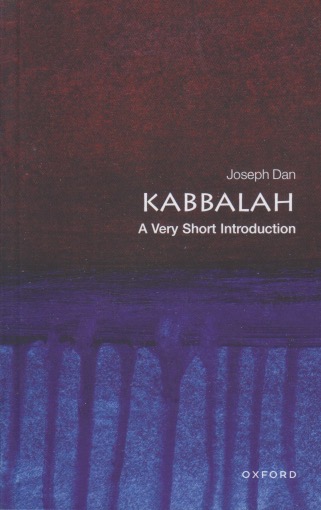
One of the most fascinating mystical concepts is the idea that words and individual letters have some kind of magical power.  This is perhaps illustrated by the way certain words gather an aura of mystery that can be quite unlike their original denotation.  “Kabbalah” is one such word.  The reason I read Joseph Dan’s Kabbalah: A Very Short Introduction is that I’d found myself growing increasingly confused by the usage of the word.  Given that this is me writing, it was a horror movie that got me wondering.  In one of the movies discussed on this blog (happy hunting and viewing!) one character tells another something like, “It’s the Kabbalah.”  This is said in reference to an ancient and mysterious book.  There is not ancient and mysterious book called The Kabbalah.  So what is it?

I’m not going to be able to give a satisfactory answer to that here.  Dan has about 30,000 words to describe it and he admits that’s not really sufficient.  Sometimes I think, if one could make a living doing it, I’d have been content to sit at the feet of rabbis to learn the depths of the many ancient books Judaism has given the world.  I first became aware of some of them in college, majoring in religion.  At each step of my education and career I’ve uncovered more and more.  Reading this little book added yet further examples.  Judaism, and its direct descendant Christianity, were full of books.  They still are.  And books are full of words and perhaps these words have some kind of mystical power.  But wait, the point of this brief tome is to suggest the word itself isn’t just about mysticism.

Kabbalah can refer to many different things, some of them hardly mystical at all.  For the modern usage of the word, which includes Christian as well as Jewish Kabbalah, we have to get to, well, modernity.  The concept stretches far back in Judaism and means basically, “what is received.”  The initial reference is to Moses on Mount Sinai.  Then there’s the oral Torah, codified in Mishnah and Talmud.  And books, so very many books!  The rabbi is one of those permitted to, and sometimes expected to, come to know these ancient texts and their modern applications.  That’s not to suggest Judaism is particularly mystical.  It can be, just as Christianity can be, but isn’t necessarily so.  It’s complicated.  If you’re curious, whether because of a horror movie or not, I can recommend this book.  It’ll give you plenty to think about, and even more to read and learn.


Learning Bunnies

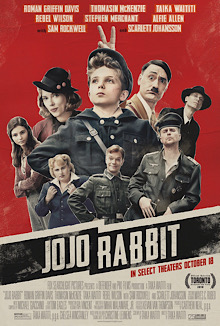
Although it was released during the first Trump administration, Jojo Rabbit was written before he was sharp bit of dust in the GOP’s eye.  Still, in the second debacle, it seemed like a good time to watch it.  Its message is appropriate for any time, but especially now.  Jojo is a ten-year-old boy who’s an enthusiastic member of the Hitler Youth.  So enthusiastic that he has Hitler as his imaginary friend.  He buys the party line without even thinking (he who has ears to hear, let him hear).  Jews are evil, according to the rhetoric.  Monsters even.  Jojo’s mother tries to help her son, missing his father, understand that love is the better way.  Then Jojo discovers something.  A girl his deceased sister’s age has been living in the walls of his sister’s room.  He quickly deduces that she is a Jew.  Were it not for her threats to implicate him and his mother, he would turn her in.

An unusual coming of age story, we see Jojo do something rare—he matures.  Getting to know Elsa he can’t reconcile what he sees with what he was taught.  She’s not evil.  She has no horns.  She’s not rich.  She fell in love with a guy and wants the same thing anyone wants.  The conflict faces Jojo every day as he decides he must learn about Jews to report this intelligence to the authorities.  The authorities, however, know Germany is losing the war.  It’s only a matter of days.  When Hitler dies by suicide, Jojo fully realizes that he has been simply following along instead of following the evidence.  His mother was hanged for not being loyal to the party and his father, he learns, was also helping the Jews.  In a moment of singular hope, Jojo grows up.

Movies can teach lessons.  Some are widely enough viewed to make a major impact on society.  Can any of us imagine a world without Darth Vader and Luke Skywalker?  In this era when sensible people seem to have forgotten that fascism is evil in its nature, films like Jojo Rabbit are important.  Thinking is not a crime.  Learning is not a crime.  Even if they’re being touted that way by the wealthy in order to protect their privilege.  We watched the movie for entertainment on a Friday night, but I received an education instead.  I wonder just when the message of love fell out of Christianity.  But then, I think it becomes clear when you think about particular movies and how we’ve come to be where we are.


What You Believe

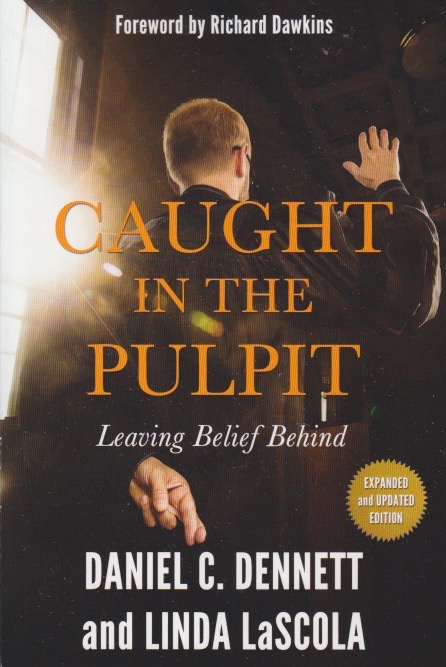
This is an important and frustrating book.  I just can’t figure out if the black-and-white thinking is disingenuous or if it was really believed.  I don’t mean about the subjects of Daniel Dennett and Lisa LeScola’s Caught in the Pulpit.  I wonder that about the near-arrogance of the model they propose while exploring the very real problem of, as their subtitle says Leafing Belief Behind (for clergy).  You see, I’ve read, and even walked a little way with the “new atheists” (my private beliefs are private but one thing I will say is that beliefs constantly change for anyone who seriously seeks the truth.  If you want to know them, get to know me).  This book, which explores clergy and other religious folk who’ve lost their faith, addresses something very real and very important.  It’s just that the framing feels wrong.  I appreciate that the authors exhibit such sympathy for their subjects—it is difficult to change the religion in which you were raised.  But it it’s not black-and-white.

Apart from the “either/or” outlook, there’s also the fact that what many people interviewed lost was not so much a belief in God as it was a belief in the Bible.  These are different things.  No doubt, our love of Bible has caused quite a lot of damage.  Since many believe the Bible to be a magic book, losing that particular lens can make things blurry.  I guess that’s what I missed in this book—a sense of blurriness.  Scientism is a belief system just as fundamentalism is.  Interestingly, I keep coming back to something that should be obvious to scientists—our brains did not evolve to learn “the truth.”  Our brains evolved to help us survive.  There is much we still don’t know.  What’s wrong with being humble about it?  Perhaps it’s sour grapes since I was ousted from a religious career just when this study was taking place, but I didn’t qualify because I believed.  Not that they’d have found me, in any case.

Many clergy, I know, do not believe what their congregations think they believe.  As you go into theological education some things are revealed that it is in nobody’s best interest to broadcast.  It might be good, however, if it weren’t atheists trying to lead the charge.  I was pleased to see Dennett himself suggest this in the book.  I was also glad to see him admit that “the new atheists” do not struggle with the very real issues raised by theological education (whether in formal settings, or through private reading).  There is a very real disconnect here, and this book serves a valuable function in bringing it to public attention.  What’s missing is a solution.


Indigenous Gods

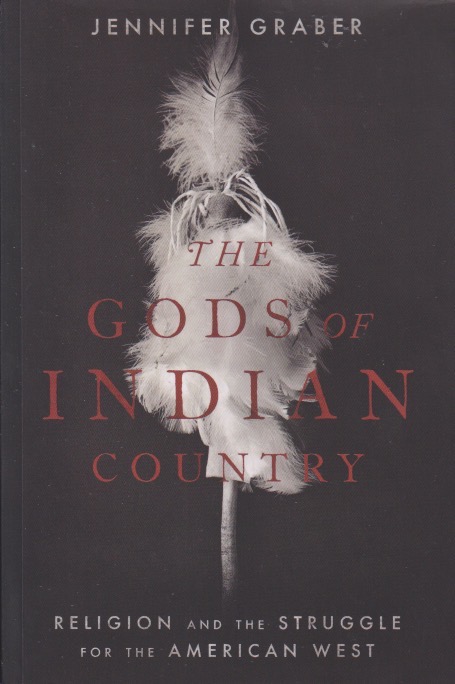
Engulfed by capitalism, it is too easy to ignore the indigenous population of this country.  I grew up thinking, in some way, that American Indians were extinct (this was small town America, after all).  Then we visited a place—in upstate New York, I think, but the recollection’s hazy—where there were real Indians.  This was before exoticism was a bad word, and I thought them quite exotic.  Maybe it was the way I was raised, but I’ve never thought of myself as better than anybody else.  Certainly not on the basis of race or gender, or even personal worth.  In any case, there were still Indians.  I’ve always been an admirer of their culture.  Jennifer Graber’s The Gods of Indian Country is an informative monograph on, as the subtitle says, Religion and the Struggle for the American West.

My interest in American history is relatively recent.  Growing up, I always found European history of greater interest, and then, for many years, the ancient history of the states along the eastern coast of the Mediterranean.  It was the antiquity of it all.  History feels safer when it’s at a great distance.  American history is not old.  When hearing that some of the events discussed by Graber took place in the 1910s, I kept thinking, “were we really that naive just over a century ago?”  Or was our nation willfully blind to the plight of the people who lived here before the Europeans arrived?  The narrative has changed.  And if it hasn’t, it must.  How would we like it if, say, aliens landed and assumed the right to take over capitalistic America?  It’s only our arrogance that prevents us from treating Indians better.

Religion, particularly Christianity, fueled many interactions with the Indians, as Graber ably demonstrates.  The assumption was that Indians had to assimilate to capitalistically-fueled Christianity.  Private ownership.  Free trade.  Otherwise the cultures could not share the land.  Treaties were broken because the “Christian” rules of the new overlords demanded it.  Graber also explores some Native American religious practices as well, chiefly among the Kiowa.  Since the book is fairly brief, it doesn’t include any kind of comprehensive coverage of Indian religion, nor, of course, of early American settler religion.  What happened is that religion and politics joined forces to justify stealing what belonged to someone else.  Those who study the history of religion recognize this pattern.  It isn’t a rarity, unfortunately.  Although my interest in American history is recent, it is growing.  What happened in your own backyard determines so much of how we’ve become who we are.


Firebrands

Although I’ve never lived there, I believe I have a fairly good idea of life in Ithaca, New York.  I’ve spent many, many days there over the past few years, often pondering how it is a city that would be an especially good fit for me, despite the fact I’m unhireable at Cornell and Ithaca College has never showed any interest.  It’s a liberal college town where even the street people appear to be educated.  The money of Ivy League students keeps it fresh and evolving.  And the shops in Ithaca Commons are set at eleven.  So it was that a headline in Publishers Weekly some months back caught my eye.  (I’m not behind only on movies, it seems.)  It showed a historical plaque for Firebrand Books, on the Commons.  The story stated that the plaque had to be placed on public land since the owner of the building where Firebrand started has a Christian prejudice against homosexuality.

I suppose I ought to take a step back and give a little history.  Firebrand was established as a feminist and lesbian publisher.  Its offices were on Ithaca Commons, but when the founder, Nancy K. Bereano, retired the press eventually found a buyer in Ann Arbor, Michigan.  (I have also lived in Ann Arbor, but for less than a year.  Likewise, it is the kind of place I felt instantly at home.)  Ithaca, meanwhile, wished to honor its contribution to literature and elected to put up a commemorative plaque.  The objection, however, was based on a particular reading of the Good Book.  (It must be stated that lesbianism is never explicitly forbidden in the Bible.)  To make a statement, the owner forced the plaque to the public domain.

We have a way of letting our prejudices become biblical.  I recently re-read 1 Corinthians—one of the infamous “clobber” texts for any number of people—and realized just how many of the words assumed to refer to “homosexuals” are words of uncertain Greek connotation.  King James, who seems to have preferred the company of gentlemen himself, was apparently not bothered by the text he had translated.  Of course, kings will be kings.  Our concern with sexual behavior is one of the hallmarks of our species.  We’re very concerned about how other people do it, even if it’s no business of ours.  And we consider it one of the highest moral concerns and a source of constant shame.  That was another thing that struck me while re-reading 1 Corinthians.  I wondered why Paul keeps coming back to it.  Maybe he was just being a firebrand.


Consciousness Conscience

Not so long ago—remember, I read old books—living to 60 was considered a full life.  I’ve passed that and while I’m in no hurry to shuffle off this mortal coil, I often think of how improved medical practice has prolonged many lives.  This is a good thing, but it does make death a more difficult fact to deal with.  If there is any good that came from my Fundamentalist upbringing, it was that it taught me early on to think about death with some frequency.  I’m not a particularly morbid person, but since we all have to face this, avoidance seems to lead to grief, shock, and acute mental pain.  I tend to consider watching horror movies a spiritual practice.  Little reminders, in case I forget to consider my own mortality today.

Our faith in science is a little bit misplaced.  Sure, it helps enormous numbers of people live longer, healthier lives.  But it may also detract from the necessity of attending to our spiritual lives.  I don’t care if you call it consciousness, your soul, psyche, or mind, but we have a life we’re accountable to, and it’s not all physical.  Since consciousness feels neutral enough, let’s go with that.  We don’t know what happens to our consciousness after death.  There are plenty of theories and ideas about it, but no certain knowledge.  There may be faith, and there may even be some evidence, but it is always disputed.  It does seem to me that facing death squarely on may help take care of at least some of the anxiety.  Fear of the unknown is probably the greatest fear our species possesses, so pondering it may take the edge off a bit.

Some people claim to remember past lives.  Sometimes I wonder if they might be tapping into the great unknown: consciousness.  Perhaps consciousness survives without a physical body.  Perhaps it’s large—expansive—and encompasses far more than we can imagine.  Maybe some people can access part of that consciousness that includes the past lives of others.  We have no way of knowing, but it seems worth thinking about on this All Souls Day.  Of course, I have the advantage of having lived what used to be considered a full life.  In it I have set aside at least a little time each day to consider what happens after this.  Do I have a definitive answer?  No.  I do have faith and I do have beliefs.  And I’m always reflective on All Souls Day.

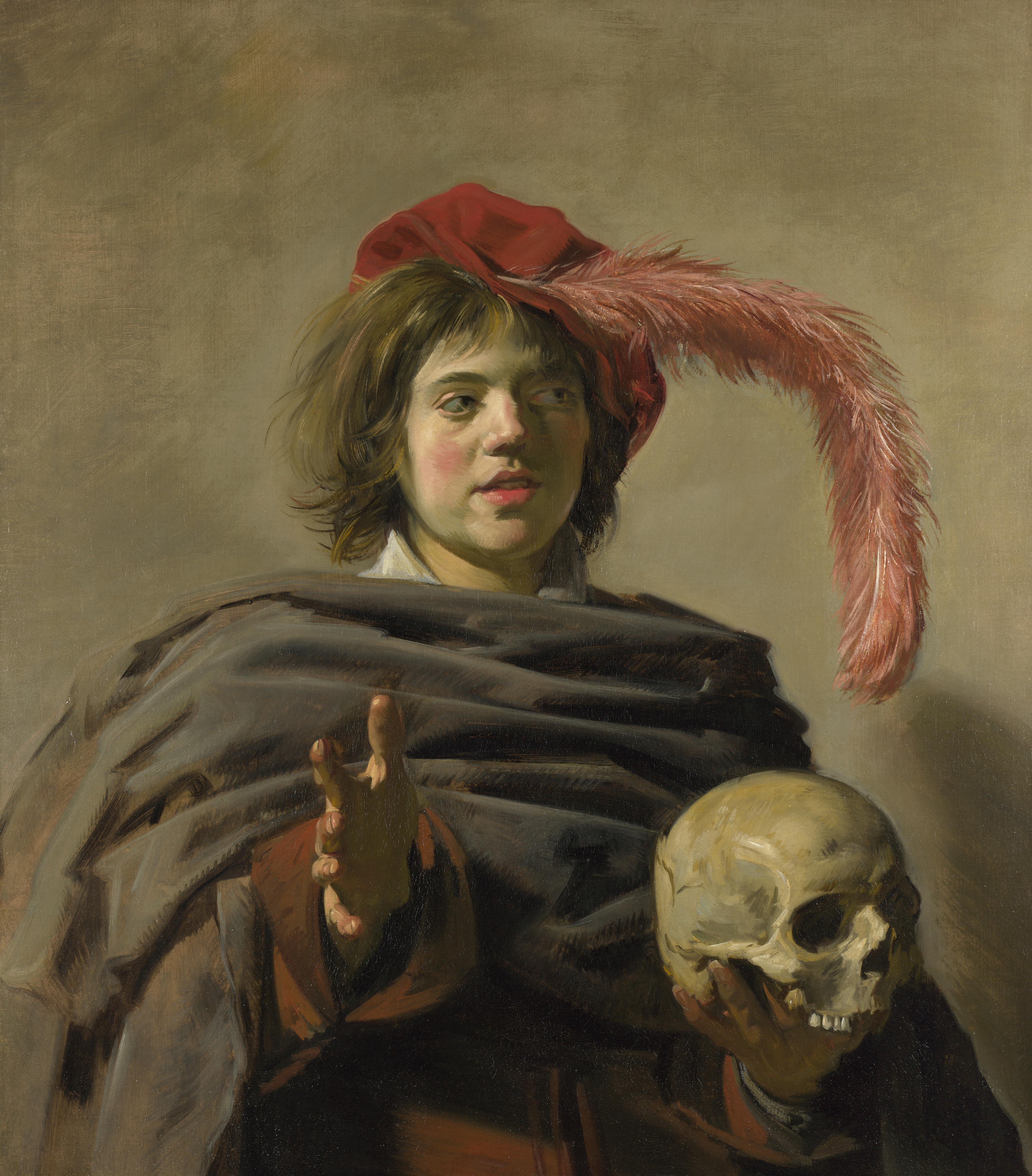
Frans Hals, Young Man holding a Skull (Vanitas), public domain via Wikimedia Commons


Pan Pandering

The Greek god Pan has had a rough go of it.  And I don’t mean that his name is a homophone for an essential kitchen item in English.  No, Pan was mistreated by early Christians, made evil, and then good, before finally being largely forgotten.  We’ll start with the bad and move to the good.  As I discuss in one of my publications, Pan was considered evil by medieval Christians for a few reasons, apart from being a “foreign god.”  First, he was associated with nature.  Early Christians weren’t naturalists.  They were looking to escape the world (a trait that continues to be manipulated by politicians even today).  Not only that, but Pan had goat legs and horns.  While horns could be used to represent any deity, including Yahweh, the combination with goat legs suggested Pan might be demonic.

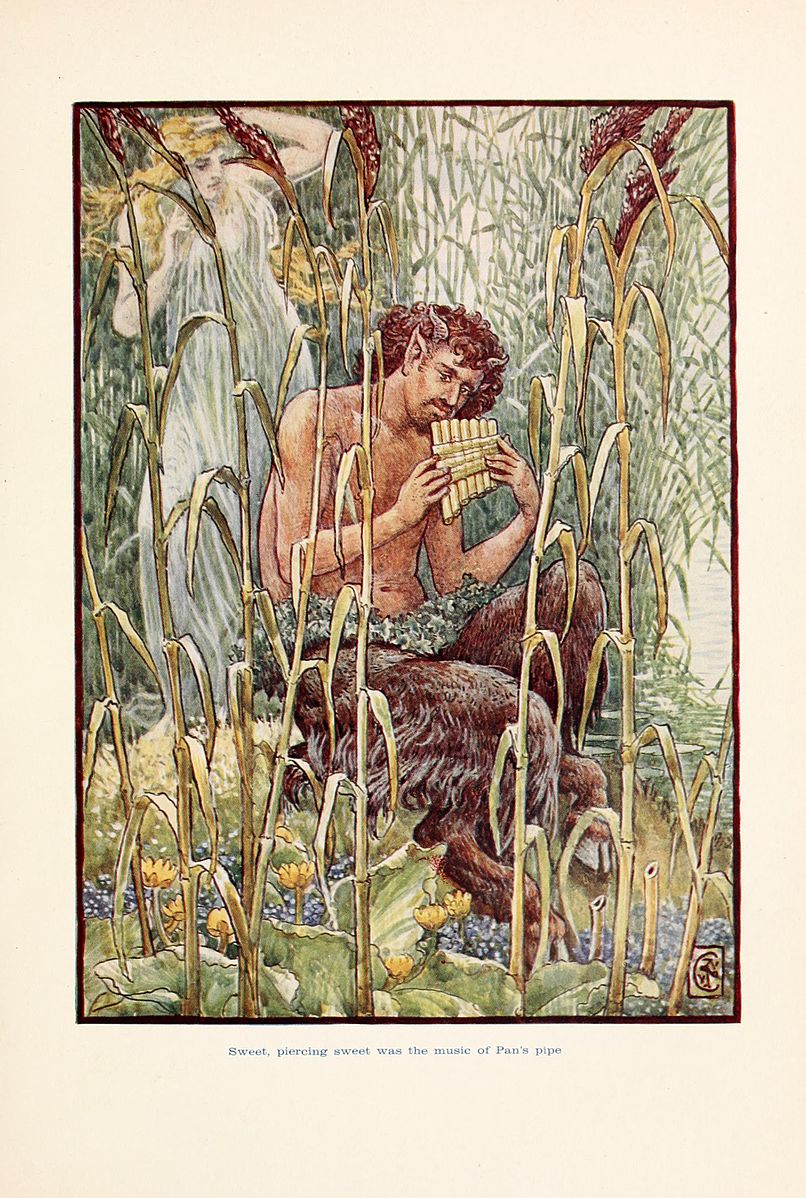
Image credit: Walter Crane, public domain via Wikimedia Commons

Nobody knew what demons looked like.  They are incorporeal, after all.  As I point out in Nightmares with the Bible, the fact that the rarely used Hebrew word for demons is roughly translated to “hairy ones” added to Pan’s sins.  This was a common Hebrew phrase for goats, and over the course of many centuries, when people had the irresistible urge to draw the invisible, they gave Satan the Pan treatment.  Goat lower half and horns on his head.  In many esoteric groups the goat, i.e., Pan, became a symbol of demons.  All of this has a rich and detailed history and it literally demonized Pan.  Yes, he was all for free love, but he was a musician, after all.  Then something interesting happened.  

When the King James Version of the Bible was first printed, the biblical books each began with an illuminated letter.  The book of Psalms began with an L.  This letter was inscribed with an image of Pan.  What the devil was he doing in the Good Book?  Well, by 1611 Pan was considered a type (or foreshadowing, if you will) of the good shepherd.  And we all know who the Good Shepherd is, right?  Not only that but his name, “Pan,” translates to “all” in English.  Since Jesus is “all” to Christians, it was appropriate that he be symbolized by Pan.  This ancient force of nature had gone from being the Devil to representing God.  Indeed, he could, at the same time, be symbolic of both.  Now this is quite an accomplishment for any entity, let alone a rustic god who was never an Olympian.  Pan isn’t much discussed in Christianity today, but he had a fascinating place in its view toward goats, both bad and good.


May I?

The thing about horror is that it’s an intensely personal preference.  Some people really like a movie while others find it, well, meh.  When the nights begin to lengthen you get lots of curated lists (I’ve never been asked to do any, but I’m working on one anyway) suggesting October viewing.  One such list that a friend sent me appealed to me because it was for movies on Netflix.  Since that’s one of the few streaming services to which I have access, it makes the movies seem free.  This particular list recommended May the Devil Take You, a 2018 movie from Indonesia.  The almost polite title suggests it wasn’t named in English.  In any case, I didn’t really find this one particularly scary and in part that was because of the apparent incongruity of the culture and the monster.  I knew that Indonesia was a highly Muslim majority country, and I know Islam also recognizes the Devil.  Still, Satanism feels kind of out of place here.

The story isn’t terribly deep: a man makes a deal with the Devil, through one of his dark concubines, to become rich, in exchange for the souls of his family.  His wife is the first to go, but he remarries a retired actress who has three children, two young adult.  His only biological child, from his first marriage, Alfie, feels herself estranged.  (It’s unclear to me whether the youngest daughter of the second wife was also biologically his, but it seems so.)  When the father falls into a serious, undiagnosed illness, the children, and actress, all converge on the house where the pact was made.  Of course they open the basement door—locked and with warnings posted—where the Devil’s concubine waits.  The actress becomes possessed and the two older daughters, Alfie and her stepsister, try to fight it off, only to have the stepsister become possessed.  She kills her brother and intends to kill Alfie and her own young sister as well, but the latter two manage to overcome her.

The plot is a bit convoluted but the basic story is maybe too familiar—make a deal with the Devil and all Hell will break loose.  I also wonder if some of the lack of real impact here comes from the subscript translation.  I don’t know how this is done, but I suspect it’s not dissimilar from Google translate.  That may be fine for academic purposes, but it does seem to lead to stilted dialogue among a group of twenty-somethings trying to fight the Devil in Indonesia.  My personal October list is more moody.  Seasonal.  And by no means complete.  The only way to find the movies, it seems, is trial and error via curated lists.


Word Undefined

It’s one of those amorphous, uncommon words that can be devilishly difficult to define.  It’s also a churchy word.  “Acedia” was considered both a sin and a demon by various monastics, although the basic idea is listlessness.  Kathleen Norris has made her mark as a spiritual writer, and my wife and I have read a few of her books.  Dakota, her first non-fiction, was stunning.  We just finished Acedia and Me: A Marriage, Monks, and a Writer’s Life.  It revolves around this concept of acedia and for a writer to admit it, it seems, takes courage.  But the question that remains unresolved for me is whether it really exists.  It seems that acedia was devised by monks to name their ennui with monastic existence.  When all you do is pray there comes a time when you just don’t want to.  Or can’t.  They called it acedia.

There is a rich vocabulary for such states, reminding me of The Dictionary of Obscure Sorrows as well as the Existentialist literature I grew up reading.  I think of Kafka.  Of Kierkegaard.  Of angst.  Of boredom.  More to the point in Norris’ case, writer’s block.  This is a terribly personal book for her.  She describes the death of her husband and coping with widowhood.  And on top of it all, that dreaded block of inspiration that is a plague upon writers.  Interestingly enough, the book took me back to my Nashotah House days.  Norris, as do many monks, appreciates the slow reading of the Psalms.  One of the points of contention at Nashotah House—I kid you not—was how long to pause between the halves of the verses in the Psalter.  But is this a demon or only human nature?

“The noontime demon” was another common term for acedia.  This connects it to yet another of its aspects: depression.  We tend to think of depression as a clinical problem, but Norris explores the possibility that it’s a spiritual problem.  Some claim acedia as a sin, as I’ve noted, which shoves it back on the experiencer.  Norris has some interesting definitions of sin in her exploration.  Tellingly, in an appendix she presents the Webster’s Dictionary (1913) words related to acedia and there are over 100 of them.  And these words range from lust to world-weariness.  Is the word too promiscuous to be really useful?  For a writer like Norris, influenced by monastic practice, a poet by trade, and yet a writer of New York Times bestsellers, she makes the word fit.  There’s much to ponder here.


Teaching Horror

Critics who complain that Aislinn Clarke’s The Devil’s Doorway has nothing new really have no appreciation for parables.  An Irish found-footage film, The Devil’s Doorway is, as it clearly states, a lament over the Magdalene Laundries in Ireland.  I’d never heard of these institutions that existed until less than 30 years ago.  Founded by the Catholic Church, these “asylums” were places where women in trouble were essentially treated as slave labor.  Women, who often have difficulty hiding the results of sexual promiscuity (something men more easily get away with), were put to work in these reformatories.  I don’t know if the conditions were as bad as presented in the movie, but they provide a springboard into a perfectly serviceable horror film.  The horror tropes may be familiar, but that’s true of most horror of these days.

Two priests are sent to a Magdalene Laundry to investigate a reported miracle of a bleeding statue of Mary.  Please pardon my invocation of Alice Cooper here, but “Only Women Bleed” would be appropriate to consider.  Fr. Thomas, older and skeptical, doesn’t believe in miracles while Fr. John, the “techie” (it’s set in 1960) films the proceedings.  The priests uncover layer after layer of hypocrisy and deceit.  The Mother Superior, who shows no deference to the priests, insists that many of the pregnant women that have passed through the asylum were impregnated by clergy.  But there’s more.  As the statues bleed, a young woman, a pregnant virgin, is found kept in a dungeon.  Ghosts of murdered children cavort through the night.  A satanic niche for a black mass is discovered.  And the pregnant virgin is also possessed by a demon.  There’s a lot going on here.

To mistake all of this as “just a horror movie” is to miss the point.  Such is the way with parables.  Clarke, the director, was an unwed mother at 17 who realized that, had this happened a few years earlier, she could well have found herself confined to a Magdalene Laundry.  The movie doesn’t, it seems to me, condemn Catholicism per se.  For example, the two priests documenting the activities seem to be good people.  Fr. Thomas, as it turns out, had been born in this selfsame institution.  Raised as an orphan, he became a priest who, not surprisingly, doesn’t believe in miracles.  He too, was a victim.  Religious horror serves many purposes.  Often the very unfamiliarity of religion itself can drive the fear.  Another purpose, however, is to educate.  The Devil’s Doorway educated me, and I appreciate the parable.


Prey Again

Let’s begin with the title.  Final Prayer was released in the United States as Borderlands.  I still found it on a free streaming service under its UK title, and I’m glad I did.  The movie falls under a a few different categories—cinéma vérité, found footage, and folk horror come immediately to mind.  The story follows a set of three very different Vatican-sent investigators, promotors of the faith, to check out a miracle claim in Devon.  I was a little confused at first, assuming this was an Anglican church, being in England.  One of the investigators, Deacon, a religious brother (monk not associated with a monastery), Gray, a techie who has some basic beliefs, and Mark, a priest technically in charge.  There’s tension between the men and between them and the locals.  The parish priest believes God appeared during a baptism at the parish that was being filmed by a family member.

The investigators come up with plausible explanations for the “miracles” caught on tape, but they also find some phenomena that are difficult to explain.  The local priest, distraught that they are disproving the “miracle,” jumps from the church tower, killing himself.  Mark, taking this as an admission of guilt for a hoax, closes the investigation.  Deacon, however, refuses to give up and calls in Fr. Calvino, who mentored both he and Mark.  Calvino believes the church was built on pagan sacred ground and it must be purified.  The ceremony, however, doesn’t end the way it was expected to.  All the while, the locals are—mostly passively, but at times overtly—hostile to the team.  Calvino’s revelation of the pagan background, however, makes clear that at least some of the locals haven’t given up pagan ways.

There are a number of elements worthy of commentary here.  It seems likely that a longer piece will be necessary to cover much of it.  A discussion in the local pub between Deacon and Gray, before calling in Calvino, raises the central question.  Gray, as a layman, suggests that pagans had to be worshipping something they believed was real before Christians came along.  He wonders if intruders (Christians, in this case) were unwelcome by this earlier deity.  Deacon, who is skeptical, but who’s come to believe that a former priest was involved in pagan worship, resists such thinking.  The ending makes clear what’s been going on, but getting to that point does involve quite a lot of religious discussion.  Horror and religion go naturally together, as I often opine, and this is a particularly good example of their common labor.


In Sheep’s Clothing

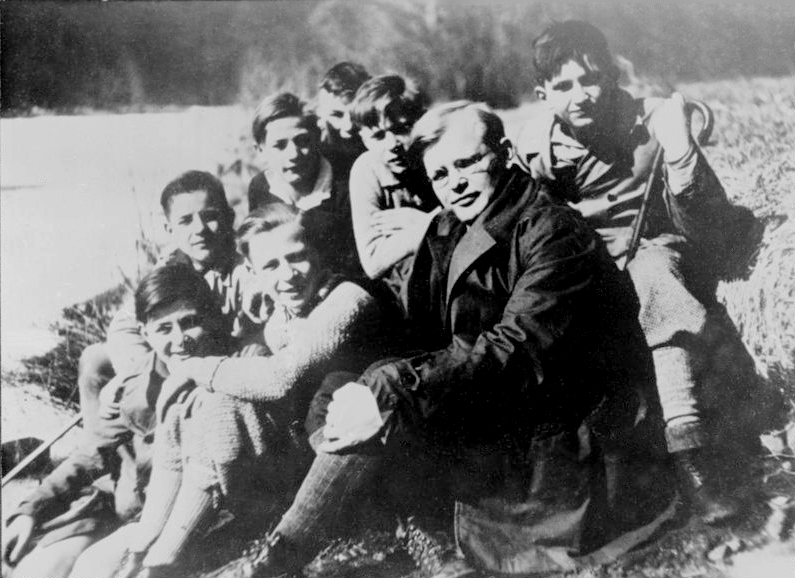
Evangelicals supporting Trump must experience some cognitive dissonance when they read Dietrich Bonhoeffer, one of their heroes.  Bonhoeffer, who could easily have remained in comfort in the United States, went back to his native Germany because he was deeply troubled by the fascist regime of Hitler.  Involved in Operation Valkyrie, the attempt to assassinate Hitler, Bonhoeffer was hanged for his faith.  He wrote, “If I sit next to a madman as he drives a car into a group of innocent bystanders, I can’t, as a Christian, simply wait for the catastrophe, then comfort the wounded and bury the dead. I must try to wrestle the steering wheel out of the hands of the driver.”  How far we have fallen!  Now evangelicals support someone with all the signs of being a madman.  A man who has said he intends to dismantle democracy itself, if elected.  How quickly Bonhoeffer and his important work is trampled underfoot by his own.

Some people express surprise that I still appreciate evangelicals such as C. S. Lewis and Dietrich Bonhoeffer.  They were believers who stood by their convictions, but who used reason to do so.  And yes, Hitler had messianic delusions as well.  A poor carpenter once warned of wolves in sheep’s clothing, but then, what did he know?  And can we compare Trump to Nazism?  Have you read the Project 2025 agenda?  An agenda so explosive that the publisher for the book on it (HarperCollins, with a foreword written by J. D. Vance) has put off publication until after the election.  You don’t want people to know what they’re voting for, now do you?  Wolves dressed up like what?  You can’t pull the wool over our eyes.

Photo by Tanner Yould on Unsplash

I have no problems with Evangelicals.  Faith is exceptionally important in people’s lives.  My concern is the weaponizing of religion by political cynics.  They select issues that they know will rile up religious conservatives and use them to glean votes.  One of the oldest tricks in the book—known by every stage magician who’s ever stood before an audience—is misdirection.  Get people to look over there so you can pull a trick over here.  I spent my formative years reading Bonhoeffer, and his reasoned evangelicalism made a lot of sense to me.  Of course, this was when the biggest threat we faced was characters like Richard Nixon and Ronald Reagan.  Now even they are trampled under the iron claws of what has become “conservatism.”  Even Dick Cheney has said he’ll vote for Harris.  If Hitler hadn’t had Bonhoeffer hanged, modern evangelicals, it seems, would’ve done the job.


Bible Lives

How well do we know our parents?  Occasionally I think about the things I’ve never told my daughter.  This was brought home to me when, looking through a box hurried packed after my mother’s funeral, I came across an artifact.  I should say that my mother died going on a year ago, and the emotions had been a bit too raw to look at the things I’d picked up in a moment of grief.  This particular artifact was one of her Bibles.  Mom never had as many Bibles as I do (or did).  I remember distinctly asking for, as my sole Christmas present, the New International Version when it came out in 1978.  I have no idea how I knew about it (pre-internet) but I was pretty tapped into evangelicalism then.  I still have that Bible.  I also have the Bible my grandmother gave me in 1970, when, at the age of eight, I was, as it is termed, “saved.”

What makes my mother’s Bible an artifact, to me, is the information inscribed on the various dedication pages.  The Bible was my mother’s sixteenth birthday gift.  That made me stop and think.  Mom used to tell me about being a rebellious youth (she did not get along with her mother).  She smoked and drank and eventually married someone her parents disapproved of.  She gave up smoking when she was pregnant and gave up drinking when she saw what it was doing to her alcoholic husband.  I wonder what my mother’s rebellious years were like.  My entire life she was just “Mom.”  As stable as she could be, religious as she needed to be, and as selfless as a saint.

How did she feel as a sixteen-year-old receiving a Bible as a birthday present?  I never got to ask her that, but she saved the Bible and even did a DIY recovering of it with shelf-paper when the faux leather cover began to come apart.  It was a King James Version, and I knew from conversations with her that she preferred The Living Bible because it was easier for her to read (she never finished high school).  Ours were lives defined by the Good Book.  I don’t know the story of what prompted that sixteenth birthday gift.  I was sixteen when I begged for the NIV.  Now I work surrounded by Bibles.  And I’m no closer to knowing what it was that my mother really wanted when she turned sixteen.  I do know, however, that it eventually defined my life.


Academic Politics

Being the curious sort, I followed up on the post I dropped the day before Valentines.  I had written about Scholars Press and how details were hard to find.  I kept digging after that post.  I learned some things.  The Society of Biblical Literature (SBL) used to meet regularly with the American Schools of Oriental Research (ASOR).  ASOR was all about archaeology.  Then, in the year 1969 SBL and the American Academy of Religion (AAR), formed the Council for the Study of Religion.  The next year they began holding their conferences together.  ASOR was still part of it.  In fact, the three societies, along with Brown University, formed Scholars Press.  (For those in the know, this is why SBL now publishes Brown Judaic Studies.)  Scholars Press churned along, but ASOR was increasingly being shunted aside.  The conference started being called AAR/SBL, with no ASOR.  In 1997 (I remember this personally) ASOR started holding separate conferences.

Two years later, in 1999, Scholars Press dissolved.  SBL, the oldest of the societies, began publishing as Society of Biblical Literature.  AAR partnered with Oxford University Press to do their publishing.  (By the by, AAR started out as Association of Biblical Instructors in American Colleges and Secondary Schools).  ASOR went its own way, and Brown settled on SBL to continue its religious studies publishing.  As a young scholar, I was a member of all three societies.  (I didn’t attend Brown, though.  But I did go to a graduation there once, if that counts.)  I wondered why they couldn’t get along.  In a word, it was because of politics.

Those who know me personally likely know that I have tried to pursue the ordination track in three different denominations.  What they may not know is that the reason I never got through the process was, you guessed it, politics.  I started to learn, when in college, just how many power plays were involved in covens of ministers.  When dealing with the ultimate power, I guess, everyone wants to get the upper hand.  That bothered me as a seminarian.  The second and third denominations both showed their politics up front, and those sharp, flashing teeth made me realize that I’d never be free of politicking had I moved ahead.  I suppose I could go be a hermit and live in the desert—I might escape it that way, but whenever two or three are gathered, the politics start to show.  ASOR, SBL, and AAR have quite a lot in common.  All are under threat as part of the dreaded “humanities” category, and yet that’s not enough to make them want to pull together.  Politics just go that way.