Nun too Soon

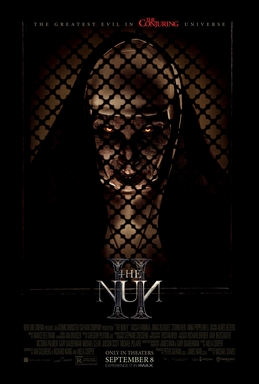
Following a horror franchise from the beginning is a rarity.  At least it is for me.  Now that I’ve seen The Nun II, I’m caught up on the Conjuring universe, for now.  I’ve written an article, still awaiting publication, on the Catholicism in this cinematic universe, and The Nun II has me wondering: how hard is it to find out the basics about Catholicism?  The movie is okay for big-budget horror, but not great.  The Catholicism in it feels like it’s imagined by writers who speculate on what it might be without ever, say, attending a mass to find out.  And the demon Valak isn’t exactly rank and file either.  The idea of using St. Lucy’s eyes as a relic was, however, pretty creepy.

So, after The Nun, Sr. Irene has gone to a convent in Italy.  A series of bizarre clerical deaths sweeps across Europe and all the Vatican can think to do is send the one young nun who’s faced this demon before.  No priest this time because Fr. Burke is dead, rather laconically stated.  Sister Debra sneaks along and the two nuns find themselves facing a demon that immolates priests because it can’t find a relic it wants that will make it even more powerful—the eyes of St. Lucy.  Said eyes are buried in a ruined chapel in a Catholic girls’ school in Aix-en-Provence.  This is the school where Frenchie (from The Nun) now works as a handyman.  We all know he was somehow possessed at the end of that film.  The girls’ school used to be a winery and Valak is defeated when the nuns consecrate a pool of wine that banishes the demon.

At this point in time, the Conjuring universe has grossed over two billion dollars.  All of the films are explicitly religion-based horror.  Putatively in a Catholic setting, they feel like Protestants trying to guess what Catholicism must be like.  At least they feel that way to me.  The Nun sequence in particular, has demons responding to defenses that would not, in a Catholic world, work.  As much as I may disagree on the theology, nuns can’t consecrate wine.  And it turns out that Sr. Irene is a descendant of St. Lucy, one of the virgin martyrs.  Although that title is sometimes given as an honorific, it does generally mean that such saints had no progeny.  Death by thurible is fairly clever, though.  Like all the films of the franchise, The Nun II is worth watching, but it fails to convince on the religion front.  It just doesn’t feel Catholic.


Sinful Thoughts

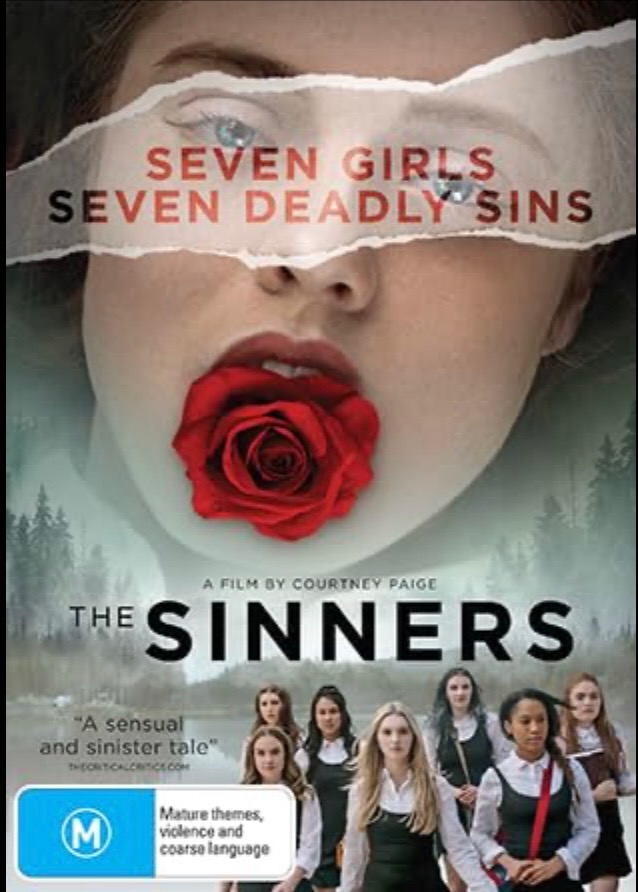
The driving force behind Holy Horror is the fact that the Bible appears in lots of horror movies.  More than might be expected.  Although I’ve moved on to other projects, I still keep an eye out.  There may not be time or opportunity in my life to write a sequel, but you can’t unnotice the Bible in The Sinners.  The title drew me in, as did its free status on Amazon Prime.  It’s a Bible-based flick, for sure, but even the basic description gets religion wrong.  I generally like movies by female directors, and this one was a project of Courtney Paige whose name, for some reason, sounds strangely familiar.  In any case, one of the biggest blunders movies like this make is that the religion doesn’t hang together.  Of course, it doesn’t say what variety of Christianity it is, but it’s of the literalist stripe.

Seven alpha females at a Christian school in a Christian community form a clique in which they’re each characterized by one of the seven deadly sins.  They’re lead by the pastor’s daughter, of course.  One of the girls keeps a journal in which she confides that she confessed their activities to the pastor.  The betrayed girls decide to scare the offender but she escapes when they’re intimidating her.  She’s found dead but then the other sinners start being murdered.  The police aren’t really effective and the girls try to figure out who’s behind this.  I won’t say who but I will say that it doesn’t really make much sense.  Scenes jump around and characters appear with little or no introduction—it’s disorienting.  But that religion…

I know enough PKs (preacher’s kids) to know they often aren’t as innocent as dad thinks (and it’s generally dad).  I also know that forced conformity of religion builds resentment and resistance.  But there’s something wrong here.  The pastor drinks wine.  Even the truly religious girls drop f-bombs.  One even attends a Satanist meeting with no explanation.  The pastor’s wife is having an affair.  The school librarian has sex with her husband at the school between classes.  They can all quote scripture, and often do.  What religion is this?  I couldn’t really engage with the movie because there were too many distracting religious gaffs.  Hey, I don’t mind when movies show the problems with religions—they’re fair game for commentary, after all.  But if you’re going to do it, try to understand the mindset of the religion you’re criticizing.  There’s a lot to think about in this movie, and it really isn’t that bad.  But for those who know religion there’ll be some question of which it is that’s under fire.  If I ever get back to Holy Horror I’ll say more.


Truthful Fiction

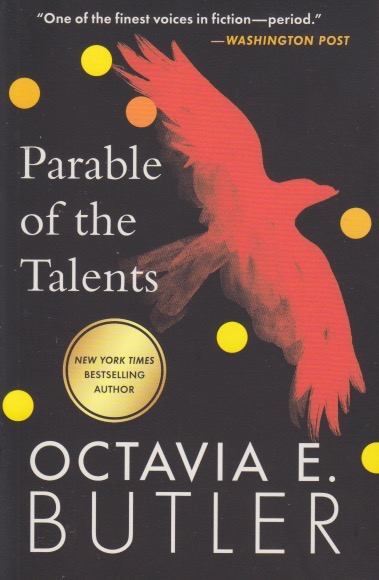
Octavia E. Butler is a name I’ve known for some time.  Various people, most of whom I don’t know, had recommended her books, particularly Parable of the Talents.  It turns out to have been one of the scariest novels I’ve ever read.  It’s not horror—it’s science fiction.  It’s scary because it’s just too plausible.  The first inkling I had that something was amiss was when I read how Andrew Steele Jarret ran for president to “make America great again.”  Jarret pretends to be Christian to get the vote and America suffers terribly when he’s elected.  I flipped back to the copyright page.  1998.  I read on anyway.  It’s not too often you find a sci-fi book about someone starting a religion.  And named after a biblical story, as well.  I was doing fine until Jarret’s supporters destroyed Olamina’s peaceful community and enslaved the survivors.

It’s all just too plausible.  Of course, there’s a lot going on here.  Butler was an African-American whose ancestors had been slaves.  The religions presented in the book are a bit too black-and-white, but the followers of Christian America behave like many followers of Trump.  Butler saw this two decades before it happened.  The slavery part of the book was difficult to read.  There was so much pathos here, so much deep memory.  Although Olamina is a flawed character, she is a visionary with the best interest of the human race at heart.  This dystopia is perhaps a little too close to reality.  Those who recommend the book say that it’s hopeful, so I kept on reading.  And yes, there is a hopeful ending.  Getting to it left me floored.

Religion defines us.  In the growing materialism—false, as anyone who feels deeply knows—the idea that a story could be built around religion seems unlikely.  Butler has done that, and done it in spades.  I was surprised to learn that she’d studied at the Clarion Workshop, not far from where I grew up.  Being from an uneducated family I never heard of the Workshop until I was an adult.  And besides, it left Clarion, Pennsylvania for Michigan before I even got to high school.  Still, it gives me a sense of connection with a woman who saw more than many did.  Although Parable of the Sower is earlier, I’m not sure that I have it in me to pick it up.  At least not right away.  I’m still trembling a bit from Butler’s second parable.


Salem Away

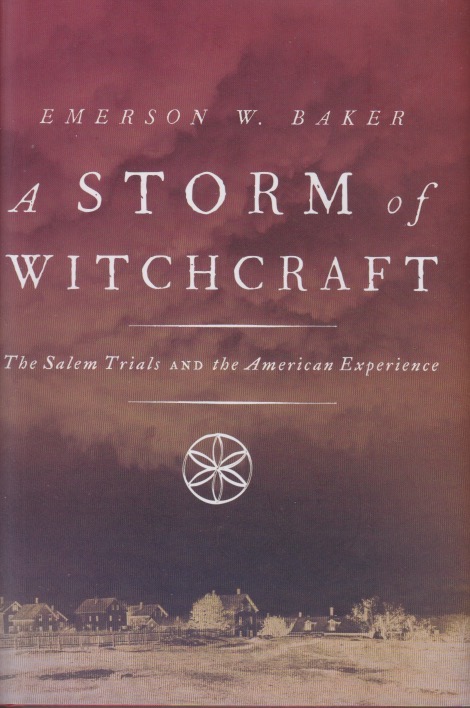
I can’t help but think the term “witch hunt” has been cheapened in recent years as a prominent, wealthy white man has been claiming to be the victim of one.  Nevertheless, America was actually home to an infamous witch hunt some centuries ago.  I’ve read a few books about it and there are many more yet to be read.  The thing Emerson W. Baker’s A Storm of Witchcraft has going for it is the broader context he gives the events.  Not only the events but the town of Salem also.  Older than Boston, and a major city in its day, Salem had more history than the trials for which it is famous.  Baker does a nice job of describing the ambivalence that residents have felt, and still feel, towards its past.  Tragic, yes, but fascinating also.

I fell in love with Boston the first time I set foot in it.  I made quite a few trips to Salem during my years there, drawn in by the history.  So much isn’t recoverable.  One of the aspects that comes clearly through Baker’s treatment is just how much of a Puritan problem witches were.   And not just witches.  Puritans didn’t care for those who differed from them.  Quakers could be just as bad as Devil worshippers.  And the tragedy of Salem illustrates that the Puritans didn’t much care for one another either.  Religion gets that way when it’s weaponized.  Baker points out the many pressures of what was essentially a frontier town on the coast.  War with American Indians was still a reality.  And Salem wouldn’t be innocent of the slave trade some decades later.  But it all seems to keep coming back to 1692.  And the death of the innocent.

Baker also points out how Cotton Mather covered his own tracks, justifying what he knew was wrong in order to keep privilege in its place.  We tend to think of that as a modern trait, but clearly clergy were well aware of it back in the early days of this nation.  Religions always do have a difficult time admitting it when they make mistakes.  I think they’d find that people can be pretty forgiving, though, especially since they often advocate forgiveness themselves.  This book is a thought-provoking treatment of Salem.  The events that took place there have shaped this county in unexpected ways.  They made the case, centuries ago, for tolerance of those who are different.  It’s a lesson we still have trouble learning.


Christmas Silence

Christmas seems to have come too fast and not fast enough this year.  Like Halloween, it’s one of those long anticipation holidays.  The older I get, the more I appreciate the silence about it.  Not in a Grinch-like way, I hope.  More along the lines of “Silent Night.”  We spend so much of the year—so much of our lives—hustling about, barely having time to think.  Speaking personally, it takes about a week off work just to begin to get to that phase.  I need time to let the daily onslaught of work and capitalism and angst tune down.  There’s a quietness about Christmas that’s profound.  I suppose that’s why I like to spend it with my small family and not feeling obligated to go anywhere.  It’s like those precious moments before sunrise that I experience daily, only all day long.  That’s truly a gift.

The newspapers and internet sites have been summarizing the year for the last couple of weeks.  That always seems premature to me.  I understand why they do it, but Christmas and the days following are some of the very best of the year, and it makes sense to include those along with the stress, darkness, and ugliness that are the daily headlines.  I can’t help but think of Simon and Garfunkel’s “7 O’Clock News/Silent Night.”  Especially this year.  Christmas is for everyone, and the insistence that we make it exclusive (putting Christ back into it) makes it divisive.  Why some people have to be right all the time I don’t know.  I prefer Hamilton Wright Mabie’s take: “Blessed is the season which engages the whole world in a conspiracy of love.”  Simon and Garfunkel are both Jewish and I think they understood “Silent Night” better than many Christians did back in 1966.

I’ve been writing quite a lot about horror movies this year.  The months and days leading up to Christmas have often been difficult ones.  Such movies are therapy.  They can even fit into the beautiful silence of this day.  That’s my hope, anyway.  May this day include enough silence for you.  The rest of the year has no difficulty filling itself with trouble.  We need holidays.  Christmas has always struck me as the most peaceful of them all.  Ministers, and even those of us who never made the cut, tend to be holiday experts.  Those who don’t get caught up in the dogmatism of it all are the most blessed.  Christmas is for everyone.  And may it be peaceful this year.


Bears Repeating

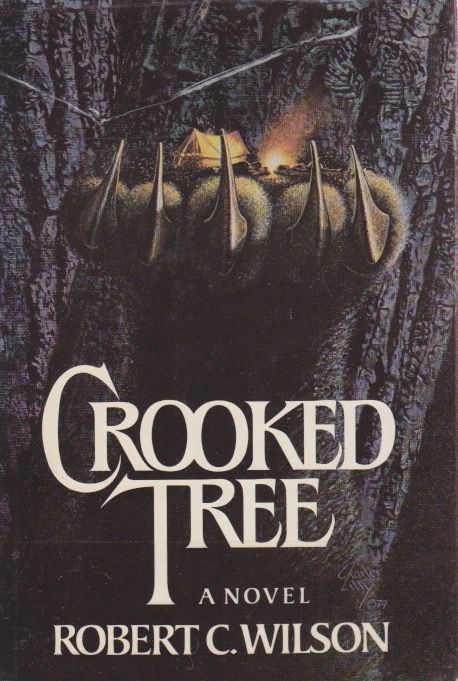
I read Robert C. Wilson’s Crooked Tree before I began this blog, I guess.  I remembered it being better than it seemed this time around, but it works as a horror novel.  In fact, the first third or so was quite unnerving, although I’d read it before.  After that the plot tends to require greater suspension of belief.  But then again, American Indian horror has come a long way since then.  Wilson, according to the limited information about him online, isn’t an Indian.  These days publishers are very concerned with appropriation—something that wasn’t an issue back in 1980.  And these days the work of Stephen Graham Jones, who is both a Blackfoot and an excellent horror writer, raises the bar considerably.  But Wilson is honest about the situation in his laying out of the novel.

Axel Michelson is a lawyer and he’s working to preserve the fictional Crooked Tree State Forest and prevent development.  Many of his colleagues and neighbors in Michigan are Indians, and so is his wife.  Axel’s efforts are hampered by a sudden onslaught of black bear attacks.  The description of the first three or four are scary enough to dissuade you from ever going camping again.  Axel’s assistant is an Ottawa and and he and his family suspect a bearwalk is involved.  This is the reason I read the novel the first time.  As a Native American folkloric monster, the bearwalk is difficult to uncover.  There are a couple more novels—one of them hard to find—that feature the tales, and there’s a university press book on folklore that has some accounts.  Not much more is out there that I can locate.

A bearwalk is a kind of shape-shifter.  A spirit that can control bears, in this case.  Axel becomes the white savior who uncovers the ancient ritual to stop the bearwalk, which has taken control of his wife—his main motivation for stopping it—while the Indians can’t figure out what to do about it.  They do tell him about the ritual, but mourning the loss of their culture, they fear it’s gone forever.  Meanwhile the bear attacks continue but once the shock of the first few attacks has worn off, they don’t scare so much.  There’s also a lot of supernatural involved, mostly drawn from native traditions.  It seems clear that, like Axel, Wilson did quite a bit of research on American Indian folklore.  He treats the Ottawa culture with respect and wrote a novel that might’ve had more influence than it seems. It’s well worth the read the first time around.


Modern Gnostics

It’s not exactly a standard church.  At least I don’t think it is, but I’m just learning.  (That’s my life’s motto—I’m just learning.)  A convoluted path brought me to the Gnostic Catholic Union’s website.  I’m quite curious about this group.  I’m kind of busy, however, and I’ll hope to come back to it later.  You see, Gnosticism and Catholicism don’t sit easily together in my mind.  There’s a standard myth, accepted by many, that Christianity grew in linear fashion from Jesus through today’s weaponized Evangelical.  Or today’s Roman Catholic.  Or today’s—you fill in the blank—denomination.  Those of us who study the history or religions know the story is much more complicated than that.  It’s more like cladistics than theology.

It wasn’t so simple as a baby born in a manger.  Christianities were a variety of thought pools (not quite think tanks) in the first century.  There was a mix of Jewish ideas and messianic fervor.  One of those pools developed into a type of Christianity known as Gnosticism.  Gnosticism also had branches but one of the main ideas was that only initiates know a hidden knowledge necessary to make it work.  We still see this at play in both religious and secular organizations.  You need to know the secret handshake to be on the winning team.  Meanwhile different Christianities grew different ideas.  We rather simplistically think that Constantine unified them at the Council of Nicaea but you can bet that the guys leaving the council room did so with different ideas on the way home.

Roman Catholicism today is a very diverse religion.  You see, religious identity is something you tend to be born into.  Many people never question it because they’ve got other things to do with their lives.  Still, if you look you can see just how different “Catholics” can be.  It’s perhaps ironic because “catholic” means “universal.”  What’s really universal, however, is that people think differently about religion.  It’s the human condition.  There’s no reason a person can’t be both Gnostic and Catholic, just like there’s no reason you can’t be, say, a Unitarian-Universalist and a Hindu.  Religion is perhaps the most misunderstood of human enterprises.  Since most of us are too busy with other things we hire experts to tell us what to believe.  When enough of these experts are close enough in thought a denomination is born.  And it has many, many siblings.  I ran across the Gnostic Catholic Union quite by accident, but even those of us who are religionists by profession have limited time for everything.  I’m just learning.


Feeling Elephants

There’s an old story about an elephant (the noble kind).  It involves visually impaired men—they always seem to be male—feeling said pachyderm and coming up with different ideas of what it is they’re touching.  I’m sure you’ve heard this before—it’s repeated constantly.  The other day I was reading yet another author using this analogy and he specified that there were three blind men.  I stopped.  Scratched my head.  Where did he come up with three?  An elephant has lots of parts and you need someone to touch at least the trunk, the tusks, the legs, and the tail.  At least.  So I decided to find out where this story came from.  This particular author said it was from India, which seemed likely enough.  And so I went looking.

Image credit: From The Heath readers by grades, D.C. Heath and Company (Boston), p. 69, public domain via Wikimedia Commons.

It turns out that the earliest rendition of this story is a Buddhist text from the sixth century BCE.  In case you’re biblically oriented, the sixth century is the era of Jeremiah and Ezekiel, as well as Deutero-Isaiah.  Things were happening, that is, religiously.  While the prophets were busy dealing with the fall of Jerusalem, someone during the lifetime of the Buddha was writing this story into the Tittha Sutta (the story spread to Hinduism and Jainism as well).  Now I’m quick to admit that I’m no specialist on Buddhism.  I know a few Buddhists, but they don’t talk to me much about the tenets of their religion.  Still, I marvel at how much our culture has been influenced by the religions of India, including Buddhism.  So how many men are there? I hear you ask.  Well, the most usual answer is “a group.”

A typical early version had men feeling the trunk, ear, leg, side, tail, and tusk—double the three I’d just read about.  But you see, literalism is the problem here, as it generally is.  Nobody has suggested, at least in my limited research on the topic, that an actual group of visually impaired males found an actual elephant to feel up.  And that these men weren’t curious enough to reach beyond the trunk to the head, or feel along its side.  The story is told to make a point, not to establish history.  And like all stories, it changes over time.  So much so that when innocently reading about something else, I discovered that somebody had heard that there were three men.  Rather like wise men, I expect, who are numbered by their gifts rather than Scripture.  Instead, wouldn’t it be best to feel the whole elephant and find out what it really is?


Not What It Seems

Now for the local news.  The ironic thing is I know very few people locally and even though folks are friendly around here nobody really wants to get to know you, it seems.  But that’s not unique to this area and it’s off point.  No, locally some months ago The Satanic Temple (which I’ve written about before) tried to start an after school club in an eastern Pennsylvania school in response to an explicitly Christian after-school club receiving sponsorship.  Of course it caused local furor.  That’s what the Satanic Temple intends to do.  The members do not believe in, let alone worship, Satan.  They exist to try to counter Christian hegemony, often in the form of courthouse lawn Christian imagery, or, as in this case, biased treatment to Christian groups wanting to use public property, such as school facilities, to promote their religion.

The reason I’m bringing this up is to show how the Christian agenda raises your taxes.  According to the ACLU, this school district, after challenged in court, has agreed to pay $200,000 and it must allow the Satanic Temple to meet if it allows Christian groups to meet.  That hefty chunk of change (enough to buy a house in this area) has to come from taxpayers because the school board (until a recent election) was controlled by a right-wing group that played the Christian narrative and apparently supposed the Satanic Temple was really a Satan-worshipping group.  It’s not.  The Satanic Temple is a national organization whose goal is to maintain freedom from religion in government and publicly funded spheres.  “Satanic” causes shock and panic and the sheep scatter.  And local citizens foot the bill.

Although I understand what they’re doing, I really don’t like to see my taxpayer dollars having to be spent to coddle the egos of groups who spread the narrative that Christianity is the only religion allowed in America.  In fact, one of the truly fascinating things about this country is the wide varieties of religions that exist in it.  Although the melting pot metaphor has fallen on hard times lately, I’ve always felt this was one of America’s biggest charms.  We’re a Frankenstein’s monster of a nation that’s just like the creature—not really a monster, but not like anything else you’ve seen.  Cookie-cutter populations seem to lead to wars and hatred.  Celebrating difference, indeed, encouraging it, leads to peace and shared prosperity, if we’ll let it.  It’s only when we want to keep all the good stuff for ourselves that things begin to break down.  And your local taxes go up because a faulty narrative is on the agenda.


Biggest Book

As a bibliophile it’s kind of embarrassing to admit that I’ve only just learned about the world’s largest book.  If you’re like me you’re probably imagining an enormous tome that required acres of trees and fifty-five-gallon drums of ink to print.  But that’s not it at all.  This particular book is located in Mandalay in Myanmar.  If I say it’s a religious text you might be clued in that it represents the Tripitaka, or Pali Canon.  These are Buddhist scriptures.  They are extensive, as scriptures tend to be.  I’m certainly no expert on religions in that part of the world, but it’s clear that the world’s largest book, as a monument, required a massive amount of effort to put together.  Housed at the Kuthodaw Pagoda, the texts were inscribed on stone housed in 729 stupas that are stunningly beautiful.  (Take a look for other photos online—it’s impressive!)

Photo credit: Wagaung at English Wikipedia, published under GNU Free Documentation License

The monument was completed in 1868.  When the British invaded southern Asia, however, there was much looting and damage was inflicted on the shrine.  It was eventually repaired and still stands as the largest book in the world.  It’s no real surprise that this honor would be relegated to a religious text.  Bibles of all sorts become symbols and their symbolic nature often supersedes what’s written inside.  The idea of the sacred book has an unyielding grip on the human psyche, whether we think the book comes from God or an enlightened human being.  Indeed, the sacred itself is an integral part of being human.  When one group wants to dominate another, it often goes for its sacred artifacts.  Cathedrals as bombing targets in the Second World War demonstrate that well enough.  Ironically, we’ve ceased paying much attention to the sacred but we still revere it.

Books represent the best of our civilizing nature.  They’re ways of coming to see the point of view of others.  It really is a privilege to read.  Banning books is, in its own form, a crime against humanity.  Those who ban almost inevitably end up promoting yet more sales of the offending book.  I often see books that make me angry or upset.  My knee-jerk reaction is to want to deface them—this is a human enough response.  But taking time to reflect, I realize that these writers are entitled to their opinions, benighted though they may be.  A civil exchange of ideas is essential to getting along in a world with billions of different opinions.  Every nation should have a monument that shows its love for books.


Not Grant

Grant Wood’s painting, “American Gothic,” is undoubtedly his most famous work.  The image is so evocative and suggestive that countless interpretations have been offered for it.  The idea of debilitating isolation suggests itself.  An unhappy self-reliance that has taken its toll on an aging couple (some say the woman is his daughter) often comes to mind.  For some it suggests a movie.  Normally I like horror films from the seventies and eighties.  There’s almost an innocence to them that gets lost in the new millennium.  On a rainy weekend afternoon when I couldn’t be mowing the lawn I found American Gothic on Amazon Prime and it had received four stars and even IMDb showed it as better than average.  The longer I watched the more I was inching toward “bad movie” territory, but I had to see how it ended.

Six young people, four of whom are distinctly unlikeable, have plane trouble and get stranded on a lonely island in the Pacific northwest.  They discover a house furnished from the twenties and it turns out there’s an older couple there who don’t really cotton onto strangers.  As the plot unfolds it turns out they have three adult children who think they’re still adolescents.  And—this is the good part—they are a very religious family (in part.  Again, as often happens in such films, the writers really don’t understand religion).  In any case, the predictable killing off of the kids starts to happen when they continue to be rude and insult the family.  Since we’re in slasher territory here, there’s a final girl—one of the two sympathetic women—who ultimately takes over the house.

Part of the problem with the film is the utter paranoia with which it treats mental illness.  The family clearly has problems and, in a way typical for the genre, they turn toward killing.  Ironically, Pa, when he finds his family has been killed by the one mentally ill visitor (everyone with psychological problems in this movie turns to murder), renounces God and sells himself to Satan.  Interestingly, he doesn’t survive long enough to do anything about it.  Reading about this movie after watching it I came across a new word: hixploitation.  Exploitation movies are familiar to anyone who watches much in this genre, but I’d never considered that Deliverance and company exploit “hicks.”  It’s all about how others look at you.  And, as a movie made in Canada and the UK, it shows us what others see when they look at us.  There’s some ground to explore here in a sequel to Holy Horror


Calculating Christians

I know some calculating Christians.  I use “Christian” as religion scholars do—it is the way people identify themselves, not necessarily what they are.  For example, I grew up learning that Christianity was God’s excuse for throwing a bunch of unknowing people into Hell.  Laughter all around!  Then I did something radical.  I started reading the Bible.  Spoiler alert: as you start to get near the end, you learn that Jesus and his early followers (except maybe Paul) promoted the idea that God is love and the only correct response to that is to love other people.  Of course, a religious founder, deity or not, can’t control what his/her followers will do.  Christianity quickly became judgmental.  “I’m going to Heaven and you’re not!”  Laughter all around!  In my life I’ve been the recipient of calculating Christians more than once.

Calculating Christians are those who, like ein U-boat Kapitän, try to figure out the best way to do the most damage to those they don’t like.  They will destroy your career—torpedoes away!—and then get on their knees to thank their vengeful god for sinking a satanic vessel.  And all the lives of Christians onboard are counted as collateral damage.  God’s good at sorting things out.  Laughter all around!  I’ve also known “Christians” who will target a family member when he’s down, and stressed out to the max, only to tell him he’s going to Hell and they’re just fine with it.  Laughter all around!  They do this without ever asking about the two seriously ill people in a family of three, or how you’re doing with that therapy you’ve had to start.  Jesus would do no less than kick a confessing sinner when he’s down.

There’s a reason Christianity is developing a bad name.  With the first compassionate Pope in centuries we find doctrinaire Catholics condemning his compassion.  Among the Fundamentalist camp we find those who would gladly die for the most hate-filled politician ever elected on these shores.  Calculating the end of the world is, after all, a tiring activity.  No matter that you’re wrong (you never consider the possibility and you never, ever try to weigh the facts), you calculate how to blow it up for everybody.  Laughter all around!  The only thing that keeps me sane, I believe, is knowing that many actual Christians out there know that such actions are taking God’s name in vain.  And that, they know, is against the commandments so prominently placed on courthouse lawns.

Pietro Perugino, The Crucifixion with the Virgin, Saint John, Saint Jerome, and Saint Mary Magdalene [middle panel], public domain, via Wikimedia Commons

Dental Dawn

Someone knowing my interest in religion and horror recommended Teeth.  A comedy horror film based on the concept of vagina dentata—an idea I first encountered in Neal Stephenson’s Snow Crash—it begins with a purity event.  Dawn, a teen leader in the abstinence movement, addresses other adolescents about the importance of maintaining, well, purity.  They all wear purity rings and vow themselves to chastity until marriage.  As might be expected, not all of them are able to uphold their pledges.  Being inexperienced, when Dawn finds herself in a compromised position with her boyfriend she learns she has, um, teeth.  Other guys, even when warned, can’t resist an opportunity and they too pay the price.  The point of the film seems to be female empowerment, but it’s also pretty funny.

After boyfriend number one has disappeared, Dawn again addresses the purity group only to have them quote Genesis 3 at her, clearly intimating that sin is the fault of women.  The Bible is there by implication and the sermonizing of the adult leader after Dawn has to leave the stage again takes up the religious outlook.  The underlying concept of purity movements is distinctly Christian.  While all religions have something to say about sex, generally the most negative about it is Christianity.  That’s not because other religions lack for spirituality, but Christianity tends to denigrate the body, and in the process tends to make natural things sinful.  This gives plenty of fuel to a movie like this where a woman has to make her own way in a man’s world.

What’s really interesting here is that no punches are pulled when it comes to the origins of patriarchy.  The Bible clearly views males as the standard of humanity and females as an adjunct.  That idea has had a death-grip on western society, particularly in America, from the beginning.  Teeth was written and directed by a man.  I suspect that the presumably well-intentioned use of an old mythical idea that makes females into monsters may not appeal to women writers or directors, empowering as it may be.  Nevertheless, if taken with the fun obviously intended from the opening playful music to the comically terrified responses of Dawn’s adolescent victims, the movie can still convey a positive message to women who might watch it.  Horror is often a repository of social commentary.  Not taken seriously by the mainstream, it nevertheless puts good messages out there.  And sometimes it bares its teeth.


Rocks and Philosophs

Porphyry is, apart from being a cool word, a kind of purplish stone that was prized for statue-making in antiquity.  It is also the name a Syrian philosopher gave himself in the third century of the Common Era.  Now, if you read widely about antiquity, as some of us have done, you’ll encounter the name Porphyry from time to time, but those of us who focused on older materials don’t pay him much mind.  I was reading about Porphyry recently, however, and did a little poking around to discover that he’d written a book called, in translation, Against the Christians.  Some historians speculate that Porphyry may have once been a Christian himself, but whether or not that’s true, he developed an antipathy to the sect.  I was curious about what his beef may have been only to discover that this book is lost.

Now lost works in antiquity are the rule rather than the exception.  Literacy may not have been widespread, but those who could write did write, and often prolifically.  Human history was very well documented.  But tonnes of it went missing.  Wars have been part of that history and wars are notorious for destroying written records.  Also, much writing was on perishable materials that, well, perished.  That wasn’t the case with Against the Christians, however.  Porphyry’s work was purposefully destroyed.  By this point Christianity had taken over the Roman Empire.  Rather than accepting the challenge of a philosopher, officials censored and destroyed his work.  Ironically, all that survives are quotes from books of theologians who were trying to refute him.

This made me reflect on the book bans that are currently all the rage among some “Christian” politicians.  Such rearguard actions belie the confidence that imperial religions showcase.  A religion that’s afraid others might see the holes raises many questions, does it not?  It seems to come down to the idea that nothing has changed in two millennia, even though Jesus didn’t have a cellphone—not even one of those old flip-open kind—and much of what we know of nature was still many centuries in the future.  The fact is that we only try to silence those who disagree when we fear them.  Book bans pretend that they can hold the hands of the clock still and that all will remain as it was decades ago.  Learning, however, is a genie let out of the bottle.  Back in Porphyry’s day powerful bishops and emperors ordered his book banned and destroyed.  And we are all the poorer for it.


Whence We Are

Rootless.  Or perhaps a better word is “wandering.”  Although I was born in Pennsylvania, neither of my parents were and back another generation, few of the grandparents stayed where they were born.  Being an American mutt also means not having terribly strong ties to a parent-land.  But still, I’m surprisingly attached to Pennsylvania.  It’s a fascinating place.  One of only two colonies to actively promote religious freedom, it seems an ideal place for spiritual seekers such as yours truly.  I’m driven by an obsession to find the truth and this takes me to some pretty strange places.  Pennsylvania has an interesting religious heritage.  Founded by Quakers who nevertheless wanted diversity (or at least permitted it), my home state attracted a wide range of—particularly German—religiosities.  Not only were there Lutherans, there were also Moravians (pietists),  Mennonites and mystics.

Rural Germans kept many superstitious practices alive.  Many early Americans did, actually.  Daniel Leeds was a banished Quaker.  Now, without doing a ton of research (for which I don’t have time at the moment) you can’t find out much about Daniel Leeds (i.e. he has no Wikipedia article).  He was a rival printer to Benjamin Franklin, and a bit of a freethinker.  His family was later literally demonized as being the origin of the Jersey Devil.  Leeds was influenced by the mystic Jacob Boehme (who does have a Wikipedia article).  Böhme, as his friends knew him, also influenced Johannes Kelpius, and thereby Johann Conrad Beissel, a couple of good Pennsylvania German mystics.  Leeds began to have ideas too outré for the Quakers, and, I like to think, inspired future Pennsylvania mystics.  Leeds died in 1720 and deserves at least a Wikipedia piece.

Pennsylvania housed some pretty interesting religions over the years.  The Germans with their folk beliefs (Benjamin Franklin didn’t care for Germans) would go on to influence a number of American folk traditions.  I often wonder whether, if Pennsylvania had not displayed religious tolerance, things would’ve developed radically different in the early United States.  It does happen that, although a mutt, much of my heritage is teutonic, and I seem to share the religious curiosity that these folk displayed over time.  Upstate New York also had its fair share of new religions as well—beating out their southern neighbor and longest border sharer.  Of course, I have ancestry in upstate as well.  Perhaps it was inevitable that, being born in Pennsylvania, I would turn out the way I did.  Wandering and all.