Z War to End

World_War_Z_posterWorld War Z is playing in theaters and I haven’t even had time to stock up on water and canned goods. Zombies are everywhere. And we can’t say that we didn’t see them coming. As movie critic Stephen Whitty points out, there are over 900 movies featuring zombies and the vast majority of them are recent productions. Major news corporations have been analyzing this undead interest for a few years now. No doubt the zombie is a populist monster, but why does it have such a potent effect on the modern imagination? Stepping back from the screen a minute, I think perhaps an answer is very obvious.

We live in an essentially programmed society. Philosophically we believe in free will, but economically much of our lives are predetermined. Among the happiest years—speaking strictly from the point of view of what I have been required to do for work—of my life were those of adjunct teaching. I had finally broken into the realm of the major university, and I had class after class of students who wanted to learn. Many disparage undergraduates. I never did. They come to college with what they have been taught, and that teaching comes at the behest of a society that informs them college is all about money. Who needs to really learn to not split infinitives? Or reason out that even if you know that Genesis 1-3 is a myth that evolution is not about religion at all? Who needs to learn to think when your boss will not want criticism? Do what you’re told. Be a good citizen. Be a zombie.

Our children are not stupid. I had many intelligent conversations with many bright young people at our state universities. I learned from them, and I hope they learned from me. The voice of the adjunct instructor, however, is nowhere near the decibel level of higher earnings. Is not the price of being a zombie worth having an adequate home, crippling debt, and access to wifi? The zombie, after all, is the antipode to the life of the mind. Zombies are, by definition, mindless. They carry around a carcass that does only what, in the classical sense, it is told to do. And so, if I loved that bohemian life so much, why did I hypocritically leave it? I have a family that requires healthcare. I have a child to support through college. I have a retirement fund that will not support a modest lifestyle for more than a single year. Yes, I too am a zombie. World War Z is indeed already here.


It’s All Gonna

When I first got married, I was distressed to learn that my wife was an organ donor. Still fresh from seminary, I had yet to outgrown the theological willies concerning earthly remains. Then she told me that she would prefer cremation to burial. My existential angst spiked. Scripture indicates a bodily resurrection, so what about those who are cremated? Obviously I hadn’t thought through the implications seriously. Even for those who are biblical literalists, all kinds of things have happened to Judeo-Christian bodies over the millennia. People have been eaten by wild beasts, fallen off boats, and been cremated without the benefit of being dead first. If the movies I’d watched growing up were to be believed, some might have even fallen into huge vats of acid like they have sitting around laboratories all over the mad scientist world. This week’s Time magazine has demonstrated, however, that my early angst was not a singular one.

In a story about the rise in popularity of cremation Josh Sanburn (with an ironically appropriate surname) addresses the religious objections head on. The reason America has been slow to adopt cremation has been largely religious. Apparently the factor that has turned up the heat on this motivation is financial. Let’s face it: money talks. Cremation costs much less than standard burial, and as much as I like a moody, whimsical cemetery, it just makes better sense. If you can get over the religious objections.

Resurrection has a powerful draw. Movies just wouldn’t be the same without it, whether it is a horror villain whose body disappears to come back in a sequel, or ET rising from his tomb to tell us all to be good. We want to keep it going forever. Life, that is. Funnily enough, resurrection is a miracle. A God who can raise the dead can surely reconstitute the parts, no matter how scattered or charred. Anyone who’s actually looked at a decayed body knows that bringing that thing to life would take a miracle, especially if other newly resurrected bodies want to hang out in the same room with it. As my critical faculties began to grow, I lost my fear of cremation. Maybe even having your ashes mixed with those of your spouse would be a very fitting symbol. Chances are, you won’t have much to say about it in any case. When I went back to the DMV to renew my license, after my wife talked some sense into me, I came out with an orange organ donor sticker affixed to the back. Perhaps life will go on, after all.

DSCN3300


Time in a Bottle

Portmann On of the intangible tangibles of my humble job is seeing a book move from an idea to a published product.  A little bit of joy rained down on my day yesterday as my first Routledge book appeared.  It also helped that this is an important book and no matter what the reader feels about the conclusions, it will be crucial in getting the question out in the open.  John Portmann’s The Ethics of Sex and Alzheimer’s places a face squarely on an issue that will only increase as time without a cure for Alzheimer’s grows.  As a culture, we don’t like to acknowledge aging.  We know it’s happening constantly, but we somehow think if we avoid it long enough, it might somehow, miraculously, disappear.  Portmann, an ethicist and religious studies scholar at the University of Virginia, puts the question boldly: what happens to marriage when one of the partners no longer recognizes the other?  This is a thorny issue.  And that’s an understatement.  We are conditioned to assume that wedding vows, with their origins in an era before people lived long enough for Alzheimer’s to become a plague, must still apply.  Portmann isn’t so sure.

I won’t spoil the book for you by giving away the conclusions of his carefully argued case, but I would like to consider for a moment the importance of ethics.  The religion in which I was reared knew little in the way of uncertainty about right and wrong.  Gray areas were scarce, and often diabolical.  I’ll never forget when I took my first ethics course as a religion major.  It was if someone had thrown open a door to a sunny Arctic day while I was seated in a warm, dark den.  It was blinding.  And disorienting.  I hadn’t thought of issues in that way before.  Simple answers wilted and died by the thousands.  Figuring things out, ethically, was costly and required an awful lot of mental energy.  No matter which answer I chose, there was a good case for an alternative choice to be made.  Morality is seldom black and white.  That’s why when Dr. Portmann pitched me his book, he had my attention from page one.

Ethics is the process of trying to figure out the best way to decide on the right course of action, given any alternative.  Little ethical issues crop up constantly: should I pretend I didn’t see that homeless person stealing an apple?  Should I tell that person who got the job that I wanted when he’s got a mustard splotch on his beard he can’t see?  Should I hold the elevator for that woman down the hall when I really want to get to work a few seconds early today?  Issues-issues everywhere!  Alzheimer’s forces the issues.  We know it is right and good to continue to care for the sufferer.  It’s no sin to forget who you are or when you are.  But what of the partner who’s not ill?  Immediately our moral sensibilities kick in.  And with a population rapidly aging (I know I’m doing my part in that department) the question will likely continue to press on our collective consciences.  Ethics reaches its fingers into those dark spaces we’d rather not put our hands.  There might be spiders in there, or bugs.  It might be something far worse.  Not everyone will agree with Portmann’s answers, but I think we can all agree that he has raised a very necessary, if prickly question.


Sleepy Jean

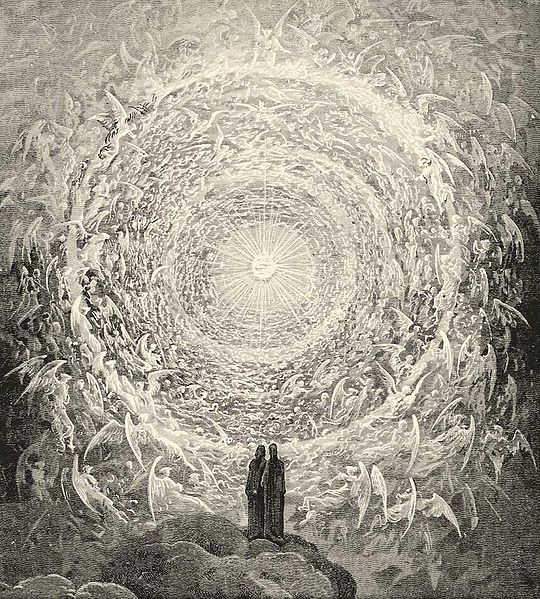
Last week in the Chronicle of Higher Education, an article by Cristina Richie entitled “The Scandal of the (Female) Evangelical Mind” appeared. Richie points out that despite great strides being made in employing women in religious studies positions, Evangelical institutions still fall behind. This dynamic is not unexpected, however. Those of us who grew up evangelical know that no matter how much it may talk the talk of equality, evangelicalism walks the masculine walk of deeply seated patriarchalism. For those who literally “believe the Bible” there is simply no way around a male Jesus. Even if you go that dangerously risqué step and suggest that the Holy Spirit is somehow feminine, when the divine couple gets together (and Father is always in charge), the offspring must be either male or female. In any literal reading, women cannot possibly claim equality. For their very salvation they are dependent on a male. A god with testosterone. As in heaven, so on earth.

Evangelical institutions have a difficult time with women leading men. They’re not alone. As early as the first century of the Common Era, Paul had the same issues. Literal religion in a biologically dimorphic world will always be problematic. Either there is one god, or there are three. In either scenario the males outnumber the females. Should we posit a divine couple (as some in ancient Israel appear to have done—please wave “hi” to Asherah for me) we still have a culture that is dominated by men. The divine couple will always have the goddess deferring to the will of the god. And you can be sure that he will never pull over and ask for directions. We already know which way this chariot is going.

Every once in a while, the Chronicle likes to sit back and take stock of the religious landscape. Religious studies is, despite the bad press, a thriving area of academic interest. Surely to those in more quantifiable fields, our little squabbles over whether god is a man or a woman must seem pedantic and a little pathetic. And yet, the evangelical institution has an instruction book. That book, if followed word-for-word, leads to eternal rewards for those who are willing to foot the hardships. And for at least half of those (and likely much more than half) that will mean living on an earth that mirrors that realm beyond the sky. Although you can’t see it with any telescope, if you believe hard enough, it is there. And in that ideal place, the god in charge is a man’s god.

540px-Paradiso_Canto_31


The Weather in Kansas

In a move that threatens intellectual whiplash, the Kansas State Board of Education has backed the Next Generation Science Standards. For a state historically at war with evolution, adopting a curriculum that (rightly) presents evolution and global warming as facts, there is cause for hope. As an average citizen sometimes just struggling to get by, I watch in stunned horror as our elected officials try to repeal Obamacare without touching their own health plans paid for by yours truly (and mine truly). I see them vote themselves pay raises while pension plans and salaries of ordinary citizens are frozen. I know where the buck actually does stop. So it is strangely encouraging to see a state that has declared war on science beginning to realize that yes, the truth does have consequences.

Science does not necessarily have all the answers, but it is the best that we know. The empirical method works, and our healthcare, transportation, and communication have all benefited enormously by it. Our way of life has grown easier because of our application of evolution and its ways to our understanding of microbes and the ways to hold off their attacks. Science has been warning us since I was a high schooler, over three decades ago, that our industrialization has been causing grave changes to our ecosystem. Unfortunately, those with money to make from it can simply afford to move to higher ground. Kansas is among the Great Plains states. It is wise to recognize that global warming threatens those who live close to the earth most of all.

The intolerance to science is not simply a religious reaction, as some would characterize it. Religion may be used in the interest of business. And any savvy entrepreneur knows, and exploits that fact. It matters not a jot or tittle if you evolved from a common ancestor with the apes, as long as you can climb, like King Kong, to the highest towers and look down on all the rest of humanity. The water from melting ice caps may be rising below, but the Great Ape need not worry. Until it becomes clear that without the little guys down below, even the top monkey is nobody.

NotInKansas


Lower Education

Many people have asked me, as a former professor, why universities are so expensive. Ironically, many of these people are in flourishing businesses where the story ought to be as tired as the excuse that’s usually trotted out: faculty are paid too much, mismanagement, etc., etc. The truth is much more insidious and it begins with governments and corporate executives who can’t handle the sharp sting of criticism. I have experienced this firsthand, and unlike many academics, I have an authentic blue-collar background so that my perspective is unclouded by generations of privilege. I recently found this post on The Homeless Adjunct, and I was glad that someone is actually willing to write the truth. The high cost of higher education is because a subtle series of changes—often deliberate—that have been instituted since the 1970s to change colleges and universities into engines to power capitalistic ventures rather than to educate potential critics. Those who have a hard time accepting conspiracy theories may be disturbed by how well documented this development is.

I realize that I am a mere proverbial voice crying out in an even more proverbial wilderness. The fact is, this change in higher education, implemented since the era of protest that was the 1960s, goes on without the knowledge of by far the majority of university faculty. They still tell their promising students to continue on to graduate school, that the bottleneck that has been holding up new, or even replacement, jobs is bound to burst. Things will get better. Not. As the Homeless Adjunct points out, corporate interests now run the universities, sucking up their prestige like bloated vampires, while endorsing their own manipulative interests. How can “educated” people believe global warming is a myth? Get corporations who “oppose” global warming to fund science programs and see what happens. The truth becomes quite malleable when lucre is involved.

Even more chilling, as our brave adjunct reveals, this model has begun to filter into high school, and down to Kindergarten. The way that educational decisions are made is based only, always, and ever on the bottom line. Not for our children, but for corporations that decide what our children can, and more importantly, can’t do. Their future is being undermined.

catalog

As a former adjunct who went blindly through the system, ending up with a doctorate from a major European research institution only to fall afoul of a thickly entrepreneurial administration, the clouds were wiped clean out of my eyes. I believe in higher education. And I believe that those of us with any moral sense are obligated to take it back. We will likely be destroyed in the process, since money is the only value our society recognizes, but if we want a world where our children can thrive, education must be true education.


Whatever Happened to Whimsy?

American Gothic is one of my favorite paintings. I’ve never seen the original, and I know of no other paintings that Grant Wood produced, although I’m sure there are some. The mood in what has been called “the most famous American painting” is unsettled. There’s something not quite right here. When one of my authors wanted to use the image on a book cover, it led to quite a bit of serious discussion. I was a bit surprised by the negative impressions—not of the painting, but of its use on a serious academic book. The discussion seemed to turn on money rather than on wit and whimsy. I confess to being a dreamer, and I admit that the aspects of life that truly inspire me are never financial. When I crave wealth it is so that I might free up some time for creativity. That’s not the way business works.

Sometimes I feel a stranger in my own country. The unquestioned triumph of unbridled capitalism means that you can go from city to city to city and not really be able to tell much of a difference. If you want to buy a bit of tubing or a piece of wood, it’s Home Depot or Lowe’s for you. Office supplies—Office Max or Staples are your only choices. If you want to buy intelligent books, well, you’re just plumb out of luck unless you go to Amazon. The big financial corporations have won. Just admit it. Every time I visit my hometown I come away depressed at all the vacant stores and lost hopes of the small businesses that offered something just a little different. Something to tickle my fancy. Something to tempt me to wonder. Something with a tinge of American Gothic.

AmGoth

The messages we receive from every angle echo Madonna’s hit song, “Material Girl.” Only this includes all genders. Reductionistic materialism tells us that we’re just proteins walking. Mind is an illusion. Soul is a myth. I work a job where the money I’m paid is transferred electronically and if I want to see some of it in paper form I face a robotic ATM rather than a human face. I went to the mall last night and wept. Call it a mid-life crisis if you will. Say nostalgia has no place in a forward-looking society. I just want a few more options besides the plastic, the smart-chipped, and the sterile. The world needs more whimsy. Maybe that’s why I insisted on American Gothic on the cover of the first book I put under contract.


Religion, Generally

Attempting to keep this blog focused on religion, has, of course, relegated it to the hopelessly outmoded pile for many people. I run into this all the time, professional, sophisticated individuals who have moved beyond the need for religion don’t see why we should waste our time with it. It’s about as useful as a room full of year-old newspapers. Like most people who end up studying religion, for me it began as an outgrowth of a religious upbringing. When you get to college they ask what you’re interested in. When your response is “Not going to Hell,” they’re likely to send you over to the Religion Department (if there happens to be one). One of the early lessons you learn as a religion major is (or at least should be) tolerance. Sure, the beliefs of other religions, when encountered for the first time, may seem weird. If you step outside your own tradition, however, chances are a great deal of what you believe could be considered odd as well. In such circumstances tolerance is perhaps the only way to avoid violence.

The few readers who leave comments on my posts give me pause to think. I largely study religion in isolation now, without the give-and-take of academic colleagues. It is not unusual for someone to point out the bizarre, or even unethical behavior of someone else’s religion (New Atheists do this all the time). When trying to understand religion, however, we have to be honest about the fact that all religions, and non-religions share instances of bad behavior. As my grade-school teachers said, “one bad one ruins it for everyone.” Religions are just as subject to human perversions as any other activity. People do bad things occasionally. Sometimes in the name of religion (or non-religion). Rationally it is obvious that we shouldn’t blame the religion for the poor behavior of some adherents. Yet we often do.

Religion-bashing is a popular sport. Those who engage in it, however, frequently fail to take into account just how widespread religion is. By far the vast majority of people in the world, educated or not, believe in a religion. This is complicated by the fact that an agreed definition of religion is still lacking. We don’t know what religion is, but we know it when we see it. Our universities and public intellectuals often ridicule it as unsophisticated and naive. As someone who has spent a lifetime thinking about religion, I suppose I’m obligated to say it, but there is a deep truth here: religions do motivate for good as well as for evil. Both non-religious and very religious people can be bad or good. What we require to get along in such a world is tolerance. And a willingness to listen to others. Otherwise both religion and non may not survive to criticize each other.

Jacob-angel


Monsters Incorporated

Monsters

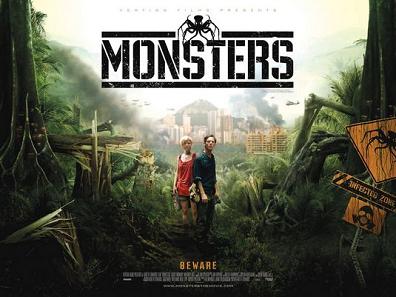
Monsters. What’s not to like? With a title so innocuous and limited US marketing, this 2010 British indie film only just came to my attention. I hadn’t even heard anything about it as I sat down to view it. The premise of invading aliens is as old as H. G. Wells, if not earlier, but this is a film without over-the-top CGI and a very human story. Showing far more tension than bloodshed, Andrew and Samantha, their Anglo names very prominent, are caught in alien-infested northern Mexico. Somewhat predictably, Samantha has a rich daddy who happens to be Andrew’s boss, but the couple has to find their way back to the United States as giant insectoid-octopi rampage through the night, destroying just about anything they can get their tentacles on. So far it sounds like standard Saturday-afternoon fare. As Andrew and Samantha reached the Rio Grande, however, overlooking the huge wall the US government built to keep out the aliens, I realized what the film is really about.

During the Bush years, shortly after the Berlin Wall had come down, a new wall was snaking its way along the Mexican border. America had become weary of “Give me your tired, your poor.” This was the land of opportunity, instead, for the chosen few. Never mind that we know that many of the jobs most of us don’t want are gratefully accepted by those who may not be technically legal in this country. Never mind that we deny social justice, in many ways, to those who make our lifestyle possible. Andrew and Samantha face the massive wall that says, “keep out.”

Of course, they make it back to Texas. They discover, however, that the aliens have breeched the walls as well. And they really pose no threat beyond wanting to draw strength from the abundant light-sources of a power-hungry world. The film’s ending is a bit ambiguous, but then again, the plight of the alien generally is. I watched the film with no expectation beyond a bit of sci-fi action to help give me the energy to make it through another week of work. Instead I saw a brash American coming to a deeper sense of humanity while standing in a church where hundreds were mourning their dead. The death of one small girl was as much a tragedy of as the breeching of the borders. Until humanity prevails over artificial borders, there will indeed be monsters. Were that they were only giant insectoid-octopi.


California Weeping

Once again, we as a nation are left to mourn. Gun violence against the young seems, according to the posturing of the NRA, to be a legitimate diversion. I remember watching Gilligan’s Island growing up. The episode “The Hunter”—where if Gilligan survives being stalked by big game hunter Jonathan Kincaid, the castaways will be rescued—now seems strangely prescient. The location changes every few months, however. Yesterday it was in Santa Monica, California. College kids studying for finals being shot at by a man with a semi-automatic rifle. And even after Sandy Hook, and Columbine, and Virginia Tech, we still do not have the will, as a nation, to safeguard our young. Such a perversion of evolution the natural world has never seen.

The logic of allowing widespread ownership of firearms doesn’t make me feel any safer. Judging from the number of young victims of various gunmen—most of whom end up dead so no questions may be asked—we are willing to allow our children to be collateral damage in the war to keep personal weapons. As city after city after city is scarred by the anonymous guy who’s got anger issues taking it out on the helpless, we still insist that guns are our friends. I’d rather be friendless.

My fingers grow fatigued scrolling through the increasing list of multiple shootings. It takes one of sterner constitution than this writer even to make it through the Wikipedia page listing school shootings. Those who die give us ample cause for tears. Those who survive will spend lives dealing with horrible memories. Schools are where we place our hopes for the future. The lessons learned there should give our young the knowledge they require for a lifetime in this complex society we’ve created. Unfortunately that society also includes facile access to deadly weapons that kill with ease. Our hearts raced as Gilligan outsmarted Mr. Kincaid, although we knew he would have to survive. The star always does. But television is a poor guide to reality, unless it’s the NRA telling us why the only reasonable response is to increase the number of guns and let civilization do its work.

IMG_0149


Going In, Coming Out

Being primates, perhaps it is no surprise that we are fascinated by who is doing whom. We, literally, by nature, find sexual alliances fascinating. Despite the fact that close observation of nature has indicated that homosexuality is indeed natural—it has been observed in many species, and isn’t even limited to mammals—we can’t help but make it a deciding factor in what an individual is. Two unrelated news stories over the past week have focused on homosexuality as the overwhelmingly defining trait of a person. In the first story, the Evangelical Lutheran Church of America (ELCA) has elected its first openly gay bishop. (Gay bishops, even in the pre-Reformation church, have not been exactly an endangered species.) The Rev. Dr. Guy Erwin, however, is so much more than a partnered gay man. He is a highly educated person who had held that most rare of positions—a bona fide academic position in higher education. He is also a member of the Osage Nation. His election as a Native American or as an academic would not be newsworthy. His orientation, well, that’s a whole different story.

Meanwhile, across the planet, the Southern Baptist Convention (SBC) is cutting its ties with the Boys Scouts of America because the BSA has decided to make honest men of its boys. BSA has recently voted to allow gay boys to remain in the Scouts, something that the Mormons had no problem accepting. Quite apart from the misguided SBC move, I was saddened to see CNN’s inaccurate headline, “Baptists plan exodus from Boy Scouts.” The story does not indicate that the Baptist brand of Christianity has withdrawn, so to speak, from BSA, but the Southern Baptist Convention. Baptists are much more broad-minded than the SBC brotherhood (I use the phallocentric collective intentionally) would indicate. All Baptists, it seems, are guilty by association.

SBC in the White House

SBC in the White House

People are complex. Putting them into neat categories is unfair to who a person really is. The category “gay” is notorious for subverting all other qualifiers for decent human beings. As the National Socialist Party recognized, the easiest way to build a case against a people is to put them together in a class that “deserves” our fear, mistrust, and hatred. Don’t look at the individual beneath the label. You might be forced to change your mind. Did that individual overcome the difficulties of being a “minority” in his or her own native land? Did that individual work hard to climb through the educational system to attain an advanced degree? Did that individual commit his or her life to another person, no matter what the social stigma? None of that matters, as long as we can talk about his or her “orientation.” It is society itself that requires reorientation.


Curing Fundamentally

Despite the many problems with Richard Dawkins’ religious reasoning, he correctly notes that children are religious because they are taught to be. (That’s actually further than Dawkins is willing to go, since in The God Delusion he states that children are not religious at all, but are only claimed to be so by parents.) Belief is something that we are only beginning to understand, but it is clear that children are taught their religion, generally, by those who raise them. By the time most of us finish high school or college, however, we have learned that religion is limited to a relatively brief segment of our otherwise busy, secular lives. Over the years I have met many people whose religion I have studied in more depth than they, mainly because it was of little interest to them. God made no sudden appearances in their lives, the miraculous never occurred, and so life is business as usual. Religion was for Sunday morning (or whenever).

481px-PhrenologyPix

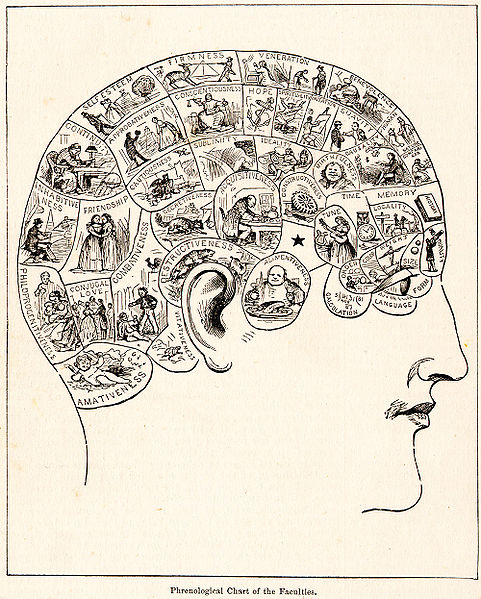
I was raised as a Fundamentalist. Although my readers may clearly see that I am no longer one, I do know that this bundle of neurons in my head has been made what it is, at least in part, because of that early training. Now a neuroscientist is suggesting that such thinking might be a curable mental illness. In an article in the Huffington Post, Kathleen Taylor, a neuroscientist at Oxford University, suggests fundamentalism may be a treatable disease. Looking over the secular headlines, there is no doubt that much of the misery in the world is caused by religious literalists acting out their fantasies in deadly ways. The suggestion that they might be treated for mental illness, however, raises profound—exceptionally profound—questions. Since I work in a city of millionaires and billionaires, I ponder how it is that extreme selfishness is not counted a mental illness. The desire of an individual to acquire far more wealth than one person can ever use seems to be an illness. Aesop might call it being a dog in the manger. No one is suggesting their brains be reprogrammed.

The even larger issue is who has the right to decide “the new normal.” Richard Dawkins may be correct that children reflect the religion of their parents, but as soon as adults declare what religion is acceptable we find other adults colonizing new continents, with the attendant misery that such migration entails. Where do we draw the line? If Fundamentalism programmed out, will Baptist neurons be allowed to remain? Methodist? Presbyterian? Mormon? The issue raised by Dawkins must be placed in context; if parents decide on a child’s beliefs do other adults have the right to decide on what is the correct belief? (Orthodoxy means precisely that.) Is a strict rationalist mentality what we want? A life without Hayden, Picasso, or Charlotte Brontë? What would Mr. Spock do? Will the real Randle Patrick McMurphy please stand up? Our rich fantasy lives are what make us human. If we are going to program out religious freedom perhaps the brave, new world is already here.


Suit Yourself

I guess I’m going to have to sue myself. In this litigious society I have few options left. Instead of understanding and forgiveness (some of the positive motivations that religions have encouraged) our culture is controlled by those parsing out the finest particles of the law, seeking violations, and making somebody else pay for their mistakes. Money makes everything better. It is like the new God. I have to sue someone for this coffee I spilled on myself.

You see, I’m an early riser. I’m not really a coffee addict—I have a cup first thing in the morning, something I’ve been doing since college, and that’s generally it. Still, that first jolt is helpful in the waking process. I shlep around in my Edinburgh University sweatshirt for a pajama top. I like to be reminded of my post-graduate days in Scotland, and I appreciate the irony that my PhD never got me anything but this comfy shirt. This morning, laptop humming on my, well, lap, I baubled my coffee and spilled it all down my Edinburgh sweatshirt. It seared my skin, but I couldn’t jump up because of the laptop and any sudden moves would only slosh more of the hot liquid onto my burning chest. My mind immediately went to Liebeck v. McDonald’s, where the fast food giant was sued for selling hot coffee. I don’t know about you, but I’d almost rather suffer a burn than to drink tepid coffee. But somebody has to be sued, right? The question is: whom? Mr. Coffee for making my morning cup so hot? JSW for making my Edinburgh sweatshirt so absorbent? The unnamed pottery house in England that made the mug that wobbled in my sleepy fingers? Or maybe God for making the morning so early? If there’s anyone to blame, it’s me. Oops—I’ve admitted culpability, so I’ll have to sue myself.

800px-SCOTUSbuilding_1st_Street_SE

For a society in love with the Bible, we’re far bigger on lawyers than forgiveness. Of course, the Bible is a pretty legalistic book. You can’t get very far in the Pentateuch without figuring that out. Only with the Bible it often isn’t a matter of suing; the stakes are considerably higher. Disrespecting parents can get you the death penalty, and mixing plant and animal fibers can get you expelled. Thumbing through my concordance I don’t see anything about coffee. I do see that I might be unclean for a day, but that’s okay because the Sabbath’s nigh. In any case, I’m too busy dreaming about what I’m going to do with all of that money.


Sacred Herstory

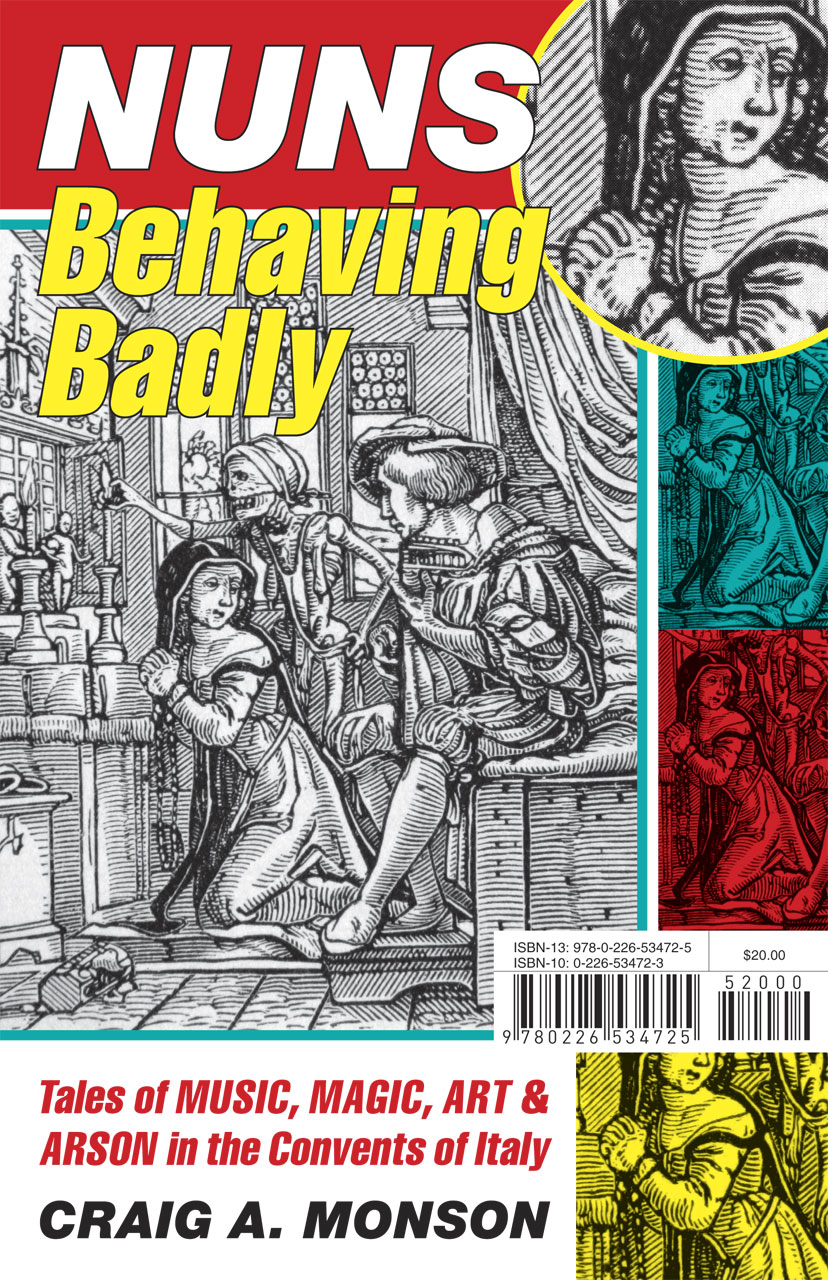
NunsBehavingBadlyHave you ever read a book thinking the author was a woman, but later learned that it was written by a man? Or vice-versa? This creates a disturbing kind of cognitive dissonance, and I suspect that it is hardwired to our communal instincts. We want to know whether it is a man or a woman who is talking to us. Expectations of gender are deeply embedded in all societies, and they become problematic when they ossify into rules. Gender roles, in earliest societies, were a matter of biological necessities. In a modern, urban context such roles are obsolete, and certainly damaging—especially to women. Craig A. Monson’s Nuns Behaving Badly: Tales of Music, Magic, Art and Arson in the Convents of Italy raised this issue to a conscious level once again. Christianity, always very sensitive to issues of sexuality, had developed in a social context of women as property. In the Middle Ages, where dowries were expected, families couldn’t afford to marry off all their daughters, and convents provided an easy, if not always spiritual, solution. Monson’s book, although not filled with salacious tales, illustrates the point well. In a society where wage-earning was limited to males, females had few options.

Monson narrates the stories of five different convents where a nun (or sometimes groups of nuns) refused to play by the rules established by the male hierarchy. The infractions, viewed from the twenty-first century, seem minor: playing with magic, singing, producing art work, wanting to go outside the cloister walls, visiting (gasp!) an opera! (There are a few more complex issues too, such as arson and the love that dare not Ave Maria its name.) In each case, the masculine authorities were called in to investigate, punish, and restore order. The end result is, although fascinating, somewhat melancholy. These willful women were often acting against boredom. Their lives had no impact beyond the convent wall, and, ironically, I learned, even their enclosures had prisons. A nun could be moved from her cell to the cell. And sometimes the only crime was wanting to hear a professional singer perform.

Nuns Behaving Badly is a clever title for a book. As I read the histories, however, I became increasingly convinced that those behaving poorly were not the nuns. A society fabricated on the premise that men are the divinely ordained masters of their universe is no stellar example of men behaving well. Even the occasional bishop, archbishop, or cardinal who sided with the accused had to bow to the will of the Holy Inquisition. The victims, although not physically tortured, were women who had thrown their entire futures into the service of the church, in one of the few roles allowed females in an era already pressing into the early modern age. The nuns were not behaving badly. They were simply being human. The truly bad behavior came in the form of a male hierarchy that brooked no dissent.


Scholar Universe

One of the resources that editors use to find scholars of obscure fields of study is a website called Scholar Universe. Now, before you all rush to the site and crash the system, I should warn you that you’ll need to purchase an account and get a password to use it. Frankly, for our society it really isn’t worth the effort or expense for most people. The information on Scholar Universe is often outdated, and not always accurate. Once, when searching for who’s who in classical mythology, I was surprised to find my own name. I did teach classical mythology at Montclair State University for three semesters, but my longer and more complete career of teaching biblical studies was nowhere to be found. How quickly our contributions, meager though they be, disappear. In any case, when a contact breaks down, the website lists the position of a scholar as “Last Known.” More than once I’ve searched for a more updated record to find “Last Known” as a circumlocution for “deceased.” There are a few things I think I’d like to ask some dead religion professors.

I recently came across a couple of academics who had, in separate instances, been murdered. One, rather gruesomely, attacked with a hammer as he walked home from the train. We tend to think that education will somehow protect us from the vicissitudes of a world caught up in its own madness. Some of us came to this profession grasping for some sort of immortality. Higher education, while based on great ideals, is nevertheless just as susceptible to taint as any human enterprise. I have been watching as higher education has followed after the role model of business for the past few decades. There was a time when learning was thought to be worth the investment, no matter what the cost. Now a pleasant deception will do, thank you, as long as there’s cash in it.

The history of higher education has been, from the beginning, tied up with religion. The earliest universities coalesced around theological faculties, while others studied law. The two are never far apart. Even in the “New World” our early universities were formed, initially, in the service of the church. Harvard, Yale, Princeton, William and Mary, and many other colleges and universities were founded with the ideal of theological education firmly in mind. Concerns for the affairs of the world, however, inevitably came to preoccupy higher education. Secular schools have little time to study real world phenomena such as religion and spirituality. Unfortunately, those are the areas, our news sources often inform us, that would benefit the most from a bit of sensible learning. But not as long as there is money to be made elsewhere.

IMG_0684