To Obey the Scout Law

Society’s prurient interests have been on display again with the intense media blitz concerning Boy Scouts of America and the fraught issue of sexual orientation. As is to be expected, certain religious bodies have sounded the final trump once again as they frenetically posture against equality. The story is so old it is difficult to see how it counts as news. When I saw that the Church of Jesus Christ of Latter-Day Saints (the oldest sponsor of Boy Scouts and the denomination with the highest numbers) had made a statement about the issue, I almost didn’t even click on the link. We already know the official stance of such conservative groups, right? So I was genuinely surprised when I saw the note. This Mormon Church has no problem with the admission of homosexual boys since, and rightly so for a youth organization, the members are expected to behave according to the code of conduct. That code forbids sexual relationships, no matter a boy’s orientation, no matter with whom.

800px-CAB_with_Scouts

We all know that ideals are seldom observed. We should lead by example. I spent my high school years deeply involved in the feeder program for future clergy in a major Christian denomination (the one with the second highest number of Scouts). The youth programs frequently involved having hundreds of youths together for multi-day events. Chaperoned, of course. But kids with active hormones are about the most clever creatures on the planet. I frequently heard that opportunities to find some time alone with your favorite “spiritual advisor” were not difficult to arrange. And when I enrolled in a program to study for the ministry officially, I learned that the name seminary was somehow overly appropriate. Codes of conduct exist for a reason, and those who hold to them reward the trust of adults who institute them. Society can’t operate without such rules. What happens in reality, however, is a different matter. Anyone who reads the headlines can see that.

I applaud the Mormon Church’s stance on this issue. The Boy Scouts is a social organization with nary a merit badge for sexual knowledge or experience (at least not in the Handbooks I’ve seen). Those matters, as with adults, are private. Religious groups often act as if admitting admitted homosexuals somehow changes the Jamboree into a Woodstock. The problem is with the imagination of puritan adults. The solution to the anxiety is rather simple. For those concerned, volunteer to lead a troop. Attend a meeting. See what actually goes on. The fact is, kids will be kids, and making rules to satisfy uptight adults will not change that. Many groups could learn from the Mormons here: Scouting is not about sex. It takes the imagination of adults to make it so. Boys, as the saying goes, will be boys.


Girls Rising

While I was home watching Bruce Almighty, my wife was attending a local screening of the documentary Girl Rising. (There was a good reason for this discrepancy; you’ll need to trust me on this one.) Chances are that many readers haven’t heard of Girl Rising; I know that if I weren’t the husband and father of Girl Scouts, I’d likely have missed it myself. Isn’t that part of the problem? Why does our society make females invisible, unless sex objects? Tabby Biddle has a thoughtful observation about this in the Huffington Post. She notes the importance of the film, but laments that the only way to make it through to the masculine mind is to pose the argument that educating girls will increase the GDP of less fortunate nations. Girls should be educated for their very humanness, Biddle suggests, but our view of a masculine God often prevents this from happening. While Biddle may have fallen a little under the spell of Marija Gimbutas, she makes a very valid point: there is no human reason that girls should not receive equal opportunities with boys. The fact that I even have to write that in the twenty-first century saddens me. It is not just “Third World” girls that have to struggle to gain what is rightfully theirs.

In my career I have been passed over more than once so that a woman might take the advertised position. (I have even been informed of this fact by friends on search committees.) Somehow I can’t find any injustice in this situation, as much as it has personally disappointed my hopes and dreams. Men have been frustrating female hopes and dreams for millennia. Maybe the matriarchy that Gimbutas envisioned never really existed, but the concept is sound: women and men both contribute to this thing we call civilization. Our religions, as they developed in our societies, have held the mirror up to the might-makes-right paradigm from the very beginning. Wouldn’t a male god with a more muscular upper body shove a fair, and giving goddess out of the way every time? Just ask Zeus. Or Odin. Or El. Divine civilization is only human projection, and we just can’t relate to a genderless God. So he becomes the excuse for female repression.

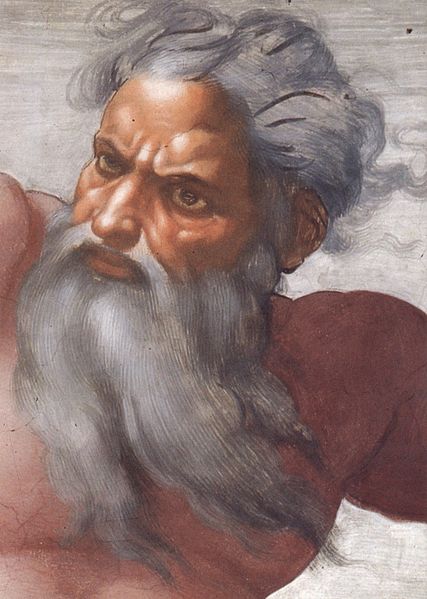
The face of divinity?

The face of divinity?

We’ve firmly entered a new millennium, and, looking at our treatment of half of our species, we still have an incredibly long way to go. In much of the western world, traditional religion has lost its grip, but I’m a little frightened by what I see taking its place. There are a few pockets of female-friendly religions awaking, but there are many more backlashes from the traditional male preserves of conservatism, patriarchy, and free enterprise. It is time for all men to consider that none of us would be here without our real-life goddesses. Some may rail against unorthodoxy, but unfair structures must be imploded for a new, and true, orthodoxy to be established. Women and men—not women for men, not women for profit—that is the only right teaching. So we should promote Girl Rising, and we should seek to move beyond the mere financial benefits for a free market to find the divine spark that masculine interest seems to have lost.


Inhumane Society

AnimalsMatter“I’m a member of PETA,” I’ve had more than one wag say, quoting bumper sticker wisdom as if it were profound, upon learning I’m a vegetarian. “People Eating Tasty Animals,” they then spell out with a smirk. I stopped eating animals at about the turn of the millennium, and since then I’ve discovered more and more reasons that it was the correct decision. I’ve just read Marc Bekoff’s Animals Matter: A Biologist Explains Why We Should Treat Animals with Compassion and Respect. It saddens me that in our world where nothing escapes being posted on Facebook, people still tend not to notice the suffering we impose upon animals as a matter of course. I’ve always been inclined to look closely at things, including animals. Watching them, it is clear that humans are indeed animals only differently evolved. Our mannerisms, our emotions, even our expressions, can be found among our animated kin. We share a planet on which we all evolved together, so why do we find it so easy to exploit other creatures?

One of the reasons Bekoff notes, without being judgmental, is that some religions inform us that people alone are special because we bear the image of God. Although God is supposed to be altruistic, we don’t wish to share that exalted status with any other species, apparently. Even in the twenty-first century many otherwise intelligent people still claim that animals feel no pain. Can’t reason. Are mere machines. We’ve been taught to distrust common sense that informs us that if an animal in distress acts like a human in distress that it experiences the same anxiety. The more we study animals the more human they become. The theology of Genesis has much for which it will be called to answer.

It seems, however, that the Bible is used as a mere excuse here. We exploit other animals because we can. We have taught bovines and ovines to trust us so that we may more easily slaughter them. Perhaps this is an exercise in divine image bearing, but somehow I doubt it. Reading Animals Matter in many ways felt like listening to a scientist who has taken the message of the Lorax to heart. We treat animals the way we do because we don’t understand their language, but we are morally obligated to speak for those who have no tongues. Although accessible to younger readers, Animals Matter is nevertheless a profoundly disturbing book. What does it say about the highly evolved when they exploit their relatives who’ve not learned the language of humans? Or, more accurately, who’ve not learned to vocalize like humans. Other animals speak, just like people sometimes, if we would only translate their actions into words.


Heaven Forbid

Cars can be a nuisance—they consume resources, pollute the environment, and have a habit of being very expensive to repair. We’ve been pretty good about taking our car in for its regularly scheduled Toyota check-up. Since the garage is several miles away and my wife and I both work, it is often a matter of the one who can most easily work from home the day of the car doctor appointment taking it in. Our Toyota dealer has in-store wifi for those who can’t live without the internet. For some of us, work is almost exclusively internet. So it was that I drew the short straw and dutifully drove out to the dealership. I was pleased that my VPN connected so easily; this was going to be a snap. I was working happily away when I had to find somebody on a university website. I googled the name and clicked. I received a forbidden website message (copied below) explaining tersely: “Block reason: Forbidden Category ‘Religion’.” I tried again on the Society of Biblical Literature website—same message.

ForbiddenReligion copy

Now I can understand workplaces blocking pornography sites, and even Facebook (I found the latter to be blocked at Toyota some time ago, but I’ve never tried the former), but religion? I am a religion editor. How am I to work when I can’t access websites that contain the word “religion”? The more I pondered this—I could still check my email, and do VPN-type work with files from the office—the more it bothered me. On the television in the background inane daytime talkshow hosts were interviewing someone who’d written a book about God. How many more businesses out there are biased against internet religion? That means my blog is blacklisted along with the scantily clad and overly chatty. I fully support the disestablishment clause, but I also subscribe to the freedom of religion. Smirks aside, there is a serious undertone to all of this.

I have no desire to be proselytized at work. I also agree that it is the right of others to expect the same. Sometimes, however, a little religion might help work go down like a poppinian spoonful of sugar. One time when I worked for Ritz Camera in Brookline, Massachusetts (I seem to have a knack for working for businesses that are on the way out), I had a tough day. Some of our customers could be quite abrasive, and since the customer is always right, we had to take personal insults with a smile. One lunch-hour I told my manager that I needed to recoup my moxy (I didn’t use those words). I ducked out the door and stomped to the first church I could find and asked if I could just sit in the pew for a few minutes. The church secretary, a complete stranger to me, said “of course.” Ten minutes later I returned to work collected and able to face more unreasonable customers for the rest of the afternoon. Maybe it wasn’t religion, maybe it was only the calm of sitting in what some believed to be a sacred space, but my capitalist company got better performance out of me that day because of it. Ironically, at Toyota, my religion editing is cast in with the tax collectors and prostitutes. Only the tax collectors, I’m pretty certain, are always permitted to work.


Godly Violence

Just a full-term human pregnancy ago, a disturbed young man murdered two grocery store employees in Old Bridge, New Jersey. He then shot himself dead. Of course, such events will never sway those who staunchly defend our right to bear arms. The ratio isn’t too severe after all. Just two to one. We’ve had worse. But that was nine months ago. Earlier this week a police report revealed that Terence Tyler, the perpetrator, had a tattoo on his chest that read, “If there is a God he loves violence. It is his gift to mankind. It is truly magnificent and for this I am thankful.” The newspaper used the understated adjective “disturbing” to describe it. As an erstwhile biblical scholar, my first inclination is to exegete this strange scripture a little bit.

411px-B_Facundus_145“If there is a God.” The mind of the shooter is one for hedging bets. God is an unscientific proposition, and, we are told even by theologians, unknowable. Long ago Pascal urged a wager: God may not be real, but the safer bet is on the divine—you can’t really lose by believing. “He loves violence.” I’m sure many believers disagree, but those who read the Bible will have to admit that Tyler had a point there. There is an ancient kind of bloodlust that hangs heavily over demands for genocide and animal sacrifices. Even, according to mainstream Christianity, the death of an only son will serve divine ends. “It is his gift to mankind.” This may seem counterintuitive, but again, the Bible would seem to back this up, at least in part. Without violence the 144,000 martyrs wouldn’t have much to sing about. “It is truly magnificent and for this I am thankful.” Were this a biblical passage we would probably have to posit a redactor here, or at least an interpolation. Such editorializing doesn’t fit the spirit of the previous three verses.

Religions, while generally abhorring violence, too often condone it. This mostly comes through literal readings of ancient texts whose contexts have changed so much that the originals are unrecognizable by today’s standards. Bibles and Qurans must be understood by those who’ve managed to outlive them. They become the basis for, the excuse for violence that, as a whole, they condemn. In the United States, however, we trust cordite over creed, and guns over gods. We have moved on from the Old Bridge shootings, already for those outside the families of the victims and the local community, the headlines took a minute to jangle the bells of distant recollection. Not much has changed; the NRA still claims, even more vehemently than ever, that guns are our best friends. And, one can almost hear as a subtext, in good eisegetical style, “if there is a god he loves violence.”


Divine Election

Jesus, it seems, has given up appearing on tortillas and hedgerows to start endorsing political candidates. Of course, this is not really new news. Rick Santorum, Herman Cain, Rick Perry, and now Anna Pierre, candidate for mayor of North Miami, all claimed their campaigns were endorsed by the Almighty. Seems that God isn’t that great at picking winners. Anna Pierre, according to a story on NBC, came in last in the polls. Is it any surprise? Jesus always did have a soft spot for the underdog.

pierrejesus

American culture is an odd mix of secular and religious. We seem to want it both ways. Citizens like to believe that they are autonomous in their daily lives, free to choose their non-religious professions and pass-times, and on Sunday God takes over for an hour or two. Charged up on religious conviction, we want society to become more sacred, less trashy. But we still want to watch Fox at night. This disconnect has long fascinated me. No matter how many times God loses the election, a new crop of candidates will spring up with divine endorsements. The electorate, at least a significant part of it, will mindlessly follow along. Perhaps we prefer to believe in a deity whose hand is too short to save. Perhaps omnipotence is best left to boasts rather than belief.

The divine approval of a candidate has become so hackneyed that it has become almost the starting point for political contests. Where do you go after you’ve invoked the highest trump in the deck? Whose word means more than the Lord’s? In the heat of the campaign when policies and platforms just don’t sway the masses, who else can you trust? Often those who play such tactics consider those of us on the liberal side of the spectrum to be cynical. Theirs is religion in the service of the higher good, apparently. We wouldn’t want to be thought of as cynical, now, would we? Otherwise we might note that although Jesus may save, it seems that he certainly can’t vote.


Running to Stand Still

“You have faith, Professor Barnhardt?” Klaatu asks the scientist in the classic The Day the Earth Stood Still. Barnhardt demurs, stating that curiosity is what makes good science, not faith. But sometimes I wonder if the professor or if the alien is correct. Science fiction was young in 1951, and Robert Wise would go on to give us such diverse fare as West Side Story, The Haunting, The Sound of Music, and the first Star Trek movie. Still, The Day the Earth Stood Still has always been my favorite movie that he directed. In 1951 quite a bit could be assumed about America’s religious sensibilities. Yes, diversity had been part of the mix from the very beginning, but the view of America as a “Christian nation,” although not in any way official, was not seriously challenged in those days. This shows through clearly in the movie. Although the opening sequence is intended to be a Klaatu eye-view of descending to earth in his space ship, it is reminiscent of the stock “creation” imagery that would become so familiar to those of us who watched Bible movies. It is a God’s eye-view as well.

Christ-like, Klaatu descends to earth to bring a message of peace, but also an apocalyptic threat, from the powers beyond. He is capable of miracles, such as the eponymous day the earth stood still—the ultimate in non-violent protest because hospitals and airplanes still have power and nobody is harmed. In his human incarnation Klaatu not so subtly takes the name Carpenter, making the corollary clear. In case you missed that, however, he is killed, resurrected and in the end ascends to heaven. Klaatu becomes the prototype of the messianic alien, a figure we would see in guises from ET to Starman. Believers in ancient astronauts or not, the makers of our space movies know that God is an alien.

daytheearthstoodstill

The Day the Earth Stood Still came early on in the Cold War. The obviousness of distrust in the Soviet Union is placed in the mouths and knowing glances of various characters. Some even suspect that Klaatu is a Russian rather than a spaceman. Sputnik was still six years in the future, but the atomic bomb was already in the past. We had learned to destroy ourselves before we had learned how to escape the only planet we have. Klaatu delivers his final homily not to politicians, but to scientists of all races (and, unspoken, creeds). Seated on folding chairs in the outdoors, as if at a revival meeting, they listen as Klaatu tells them the decision of how to live is up to us, but Gort, a kind of avenging angel, is always overhead. The invocation that can save humanity, however, is given to the female lead Helen Benson. She alone knows the sacred words “Klaatu barada nikto.” Amen.


Happy Mother’s Day

Women’s voices raised in prayer. What could be the objection to that? Religion, of course. A story from the Los Angeles Times reports that chaos broke out in Judaism’s most sacred site, the Wailing Wall in Jerusalem, as women prayed in a newly won, court-authorized action. The ultra-orthodox flooded in to block the sacrilege. No doubt religions have come a long way in trying to redress the wrongs perpetrated against women in their holy names, but true equality remains a distant dream. I’m not picking on Judaism here—nearly all religions contain knots, sometimes Gordian in stature, of males who hold their mythology close to their genitals. God made men first, gave them a few extra inches of flesh in a precisely designated region, showing that they are superior. Penis frenzy. Yes, manliness is more than next to godliness, it is divine. So we are taught.

Religions like to make universal claims. How is it that they cannot see that, at least on this planet, universal is half female? It certainly doesn’t make me feel secure knowing there’s an omnipotent guy with an almighty packet hovering in the sky above me. For five thousand years of human religions we’ve yet to see any solid evidence that such is the case. There are even places in the Hebrew Bible where God is referred to as female. Hosea has God say, “I led them with cords of human kindness, with ties of love. To them I was like one who lifts a little child to the cheek, and I bent down to feed them,” (11.4) a translation nearly obliterated by the good old King James. Those who bent down to feed children, in the days before Playtex, were mothers.

480px-Firmin_Baes_-_Doux_rêves

Women have, informally, been the keepers of religious teaching, in the home. Father might be the authority figure, but mother knew the facts of the faith. Even today, especially in the western world, active members of most religions are female. Men, however, reserve the right to make the rules. They say it is God. Our projections on the divine are reflections of our own wills, much of the time. Even patriarchal Paul would claim that in Christianity there is no male and female. But in fact there are. Since Paul’s day, and even before, there always have been. The three major monotheistic traditions agree that Adam was the first created, and Eve came tumbling after. Let the women pray at the Wailing Wall. They are the ones who have, in the name of religion, most cause to wail. Until men can learn the meaning of true equality, it is the least we can ask of common decency.


Down Will Come Baby

Princeton Theological Seminary is a school with a history. Unofficially allied with my alma mater, Edinburgh University, PTS is one of the powerhouses for supplying educated clergy to the Presbyterian tradition. And others as well, of course. And not a few PhDs into the ranks of the perpetually unemployed. Seminaries do offer all these services. Despite failing to be considered worthy of even an interview in what I count as five separate applications to the school, I still sympathize with its need to update its technology. I suspect that is what is behind its application for a half-million-plus-dollar New Jersey Higher Education Technology Infrastructure Fund grant. Education and technology surely go together as much as old-school loyalty and fairness, do they not? A front-page story in Tuesday’s New Jersey Star-Ledger proclaims the gnat that remains in the camel juice: state funds are being requested by a fully religious organization. The application for these state pork-bellies is also shared by Beth Medrash Govoha, a male-only Jewish seminary in Lakewood. Desperate times in higher education. What would Christie do?

PTS

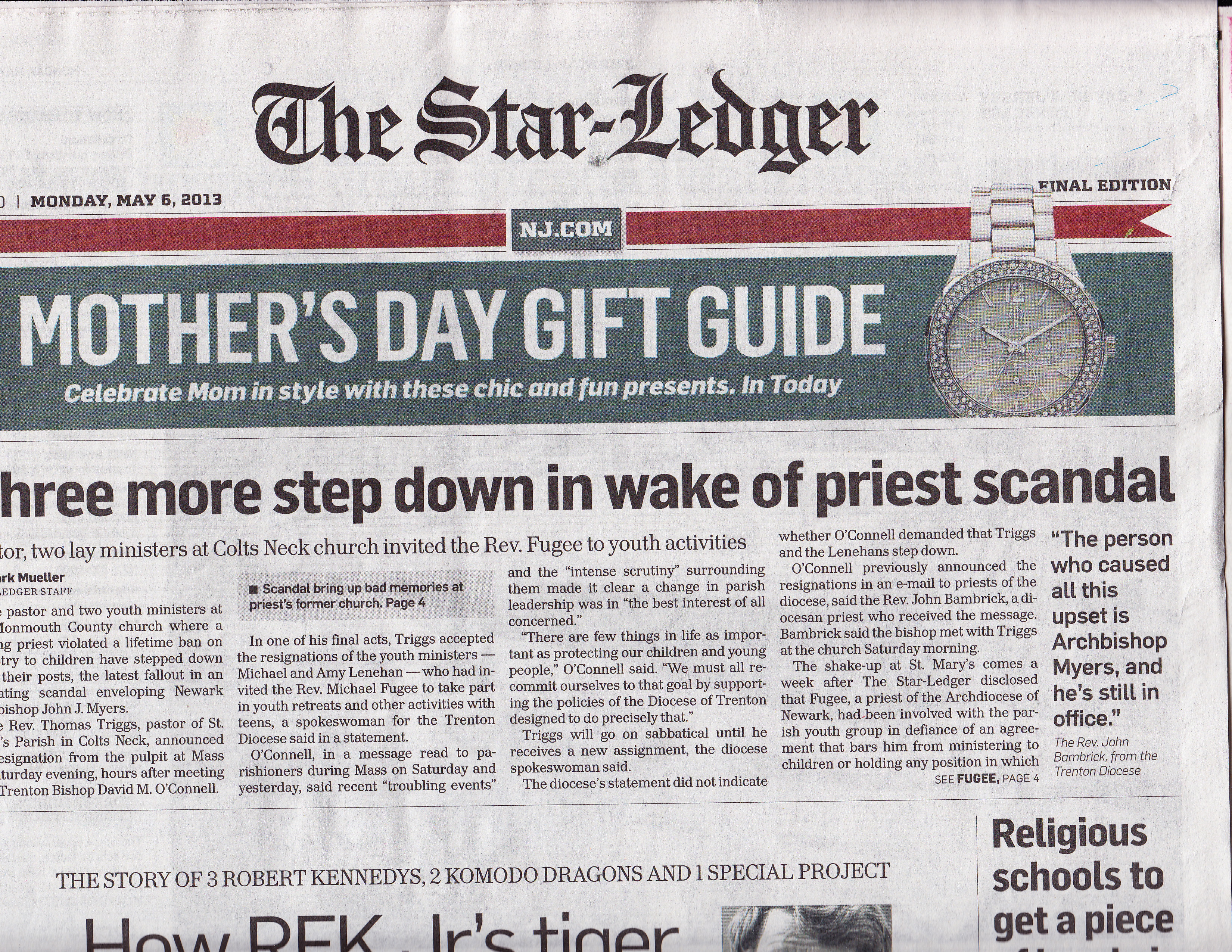
Turning the clock back twenty-four hours, another front page newspaper story places religion squarely in the public face. “Three more step down in wake of priest scandal” hit my bleary eyes on a Monday morning. This is the saga of Fr. Fugee, banned from interactions with children after a molestation case some time back. As seems to be par for this unholy course, such clergy are shifted around rather than defrocked—being seminary fodder myself I can honestly ask, what else would they do? Society has little enough use for those of us who worked our way through seminary for honest means and toward what seemed at the time noble ends. How much more so for those who mask deeply rooted neuroses under the sanctity of ordination?

Fugee_0001

Seeing religious news on the front page of the paper is nearly always cause to shudder. We will occasionally see a new Pope or maybe a genuine act of Christian (or any other religious) charity, but mostly we are served the seedy and sad and downright tawdry. Religion, although in the ascendent, is seeking hard to justify its existence. Or is it just the vaunted liberal media bias showing through? As primates we all like to watch the haughty topple. It’s even in the Bible—Isaiah got a thrill out of tall ships tipping over. Perhaps it is because religion presents itself as the unadulterated good that we like to see it stumble. I always felt a tad uncomfortable reading Goofus and Gallant while waiting for a doctor’s shot or the dentist’s chair. Yes, Goofus screwed up big time once in a while, but that confident little eagle-scout-in-waiting Gallant could do no wrong. I knew who I was supposed to emulate, but life’s just not that simple. Maybe that’s why religion makes the front page. Maybe Gallant is a myth after all.


The Four “R”s

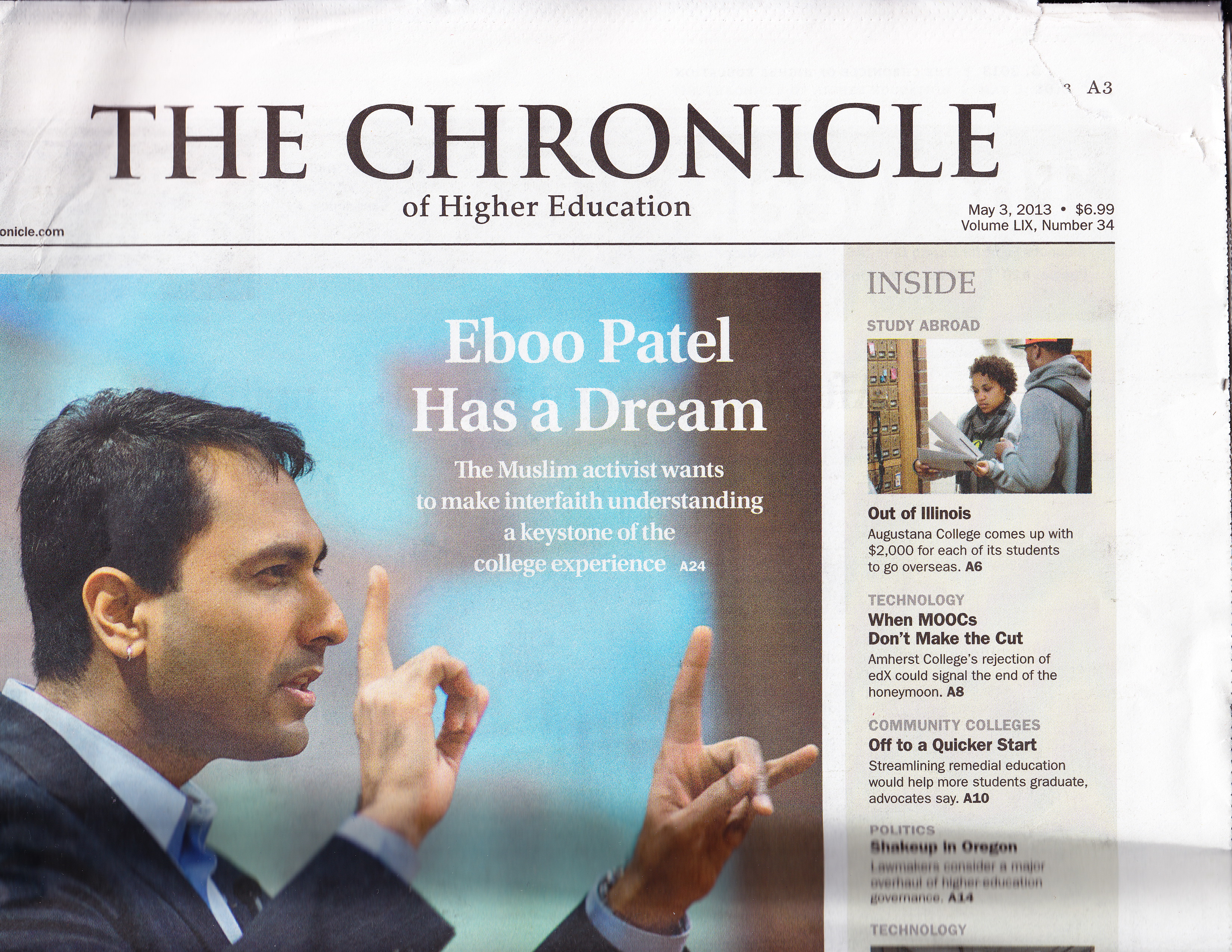
Last week the Chronicle of Higher Education feted Eboo Patel. As someone who has been on the receiving end of subtle religious violence, I appreciate what Patel is trying to do. He is a Muslim activist, the kind of which the world needs more. His last two books have been advocating for religious understanding to be considered a keystone of a college education. He’s right; religious understanding should stand right up there with the other three “r”s of education. The problem Patel faces is one I have personally faced, however; there is no money in religious studies.

Chronicle

That seems odd, even as I write it. We see lavish treasures owned by the Vatican. We see televangelists living in mansions that make Graceland seem tawdry. No huckster is more able than a skilled preacher at wheedling money out of people. Religious terrorist groups, our society conveniently ignores, are often well funded. We just don’t want to pay those professors of religion! We glory in our enlightened status and wonder why America consistently ranks among the most religious nations of the world. What department is first to receive the chop when the budget tightens? Well, it begins with an R.

What Eboo Patel is saying is what I’ve been preaching for all my adult life. We all think we know what religion is, but we actually have no idea. Universities, with rare exceptions, will do what they can to hide the study of religion like a zip on prom night. Patel is a Muslim and has good cause for wanting people to understand that his religion is not evil. He has written a couple of books advocating teaching our young about religious tolerance. It is a message America, especially, should be eager to embrace. Paradoxically, we don’t give a damn. We will cast caskets full of money into business and law departments. We will fund the research of medical and science students. Don’t ask for permission to hire a religion specialist of any description, however. Don’t you know that religion is dying out?

No doubt the electronic revolution has forever changed the way our young think about reading, writing, and yes, even arithmetic. If we had it the way our universities suggest, they would know as little as possible about the fourth, forgotten “r” that leads to much misery and meaning in our little world.


Duck and Cover

Although it is the twenty-first century, I’ve never had cable television. From my youngest days watching muddy black-and-white that sometimes revolved in a dizzying array up and down the screen, I’ve always considered television as a basic, constitutional right. You shouldn’t have to pay for it. Not far from New York City, even before digital boxes were required, analogue signals were so weak and unreliable that I just gave up on television all together. Except when I stay in a hotel. After a day out doing whatever a family does when not at home, we’ll stumble into a hotel room and flip on the TV. I am amazed at home many uncouth, self-made individual reality shows are on. Last hotel stay, I watched a show about heavily bearded guys in the Yukon trying to catch some lampreys so the dogs wouldn’t starve that winter. When they were about to shoot a moose, I switched channels to watch a family of over-fed, heavily bearded bayou store owners making turtle soup and sipping it from the very shell of the martyred terrapin. Manhattan felt like a slap in the face Monday morning.

200px-Duck_Dynasty_Promo

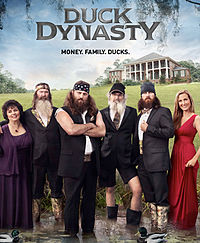
All of this is preamble to the fact that I’ve never watched Duck Dynasty, a show featured in this week’s Time magazine. Another heavily bearded family (I’ve had a beard since 1988 and it hasn’t landed me a reality show yet; how about Unemployed PhDs in the Land of Prayer?), now rich off of making duck calls and a reality show, are apparently one of the highest rated programs on the binary airwaves. The article, by Belinda Luscombe, makes the point that the Robertson family is a born-again clan whose religion is almost as important to them as shooting ducks. She notes that patriarch Phil grew up in extremely humble circumstances, and that his faith in the Lord doesn’t waver. People across the country are fascinated. The ducks, I presume, are nervous.

I am fascinated by this national obsession with hard-time, simple folk. From Ice Road Truckers to Dirty Jobs (not done dirt cheap), this country of sitting-behind-a-desk-staring-at-a-numbing-computer-screen culture is hungry for the authentic. The lived existence of those who face difficult times and get out of them with homespun ingenuity. The duck hunters whistle all the way to the bank. I grew up in humble circumstances, and to my recollection it was anything but glamorous. I’ve never seen Duck Dynasty, but Luscombe’s article reveals the hidden demon in the room as Phil Robertson laments his children building bigger houses and moving away from the Sears and Roebuck-toilet paper ways of his youth. The internet doesn’t help you much when you’re in the outhouse and the last catalogue arrived a decade ago. I wonder what would happen if more of us led meaningful lives. Would we still need the television to remind us that out there, far from the urban centers that define our civilization, godly duck hunters haunt the swamps of Louisiana? Would we even need television at all?


Fracking Insane

Do yourself a favor. Watch this video:

I have spent most of my lifetime living the fantasy of the helpless victim. Raised in a faith that insisted I really deserve Hell, and that if I manage to escape it will literally be a miracle, I guess I just internalized it. That kind of “Christian” thinking gets reflected and refracted through the lens of experience, and soon I was reading everything in its light. My parents’ divorce? Deserved. That move at the vulnerable early teen years? Inevitable. The verbal abuse of an overly stressed step-father? It should’ve been worse. Add to that the numerous rejections after professions of true love, and being fired from two jobs for no discernible cause—you start to get the picture. So when I learn that fracking is going on all around me, it seems like this is the fate of the perpetually sinful. Destroy the planet. Do you think you deserve better?

Life-denying religions walk a very thin line. When, like Siddhartha Gautama or Rishabha, the denial is a decision made after serious, personal reflection, this may be called enlightenment. When it is cast at you by a non-negotiable, self-despising cleric freely dispensing divine damnation to those incapable of much reflection, it is quite another beast. Children, although possessing freer minds, are easily impressed by authoritative adults. If that adult talks to God, you’d better sit up at the table and listen. So it is that generations are taught that “God” gave humans—let’s be literal here—man dominion over the earth. Pillage and plunder are part of the fracking package. If it’s down here below heaven, God wants you to use it up. After all, the sign on the door says “Back in Five Minutes.” (Dated 33 C.E.)

In a moment of weakness, I must confess (and I am told by religious experts that it is good for the soul), a few weekends ago I found Jesse Ventura’s Conspiracy Theory on YouTube. It was like eating Lays; you can’t stop at one. By the end of the afternoon, besides a nasty headache, I had a noggin full of improbable scenarios, courtesy of Jesse, “the Body,” Politic. Although a good night’s sleep at the rationality of another unapocalyptic dawn washed away his most outlandish claims, fracking is more frightening than a conspiracy. It is legal, it effects everyone who lives on earth where it is being done, and its record speaks for itself. I’m not proud of having wasted a few hours on humanzees and Bilderbergers reducing the world population to 500 million. But I am afraid that, if left to its own devices, however, “dominion over the earth” may be more than even the literalists bargained for.

Yes, that looks like a good idea...

Yes, that looks like a good idea…


More Witches

WitchHuntAronson It’s been some time since I’ve been to Salem. It’s been even longer since I’ve read Arthur Miller’s The Crucible. The events of 1692, however, continue to haunt me. I recently read Marc Aronson’s Witch-Hunt: Mysteries of the Salem Witch Trials. Intended for a young adult readership, Aronson’s book really isn’t proposing any new theories about why religious violence was perpetrated against the vulnerable, mostly female, pool of those living in a very superstitious society. It does, however, show some of the issues in sharp relief—more academic books sometimes cloud the issues with erudition. Historians will continue to debate what happened in Massachusetts at the end of the seventeenth century when the Enlightenment was getting underway and the explanatory value of science was overcoming the world of miracle and magic. Even with science on our side, however, adequate explanations of the sad social madness of Salem are still lacking.

As Aronson points out, there seems to have been a certain amount of greed involved as laws allowed the property of “witches” to be confiscated. Equally culpable are the learned clergy of the day, some of whom overrode their disinclination towards belief in witchcraft to hang a few women (and fewer men) for an imaginary crime. Lack of full historical documentation and the unrecorded lives of women often combine to raise many questions about Salem. It remains clear, however, that the outlook of the clergy influenced perceptions on the ground. Aronson suggests that Cotton Mather’s earlier accounts of Goodwife Glover of Boston—a woman executed as a witch without even her first name having been recorded—may have “inspired” similar violence among the population of Salem. When devils are suspected, the clergy are never far.

When the mania died down after a lethal year, the clergy, both Increase and Cotton Mather among them, recanted the easy execution of a few expendable women, and fewer, less expendable men, in Salem. Since we lack documentation, we will never know fully what was behind the witch-hunts, apart from misogyny and misperception.

Aronson ends his little book by asking us to consider modern terrorist hunts and the eerie similarities to the mindset of Salem. Listening to some media interviews, particularly on Fox, after the Boston Marathon bombings, we haven’t traveled so very far from Salem. In a world of high technology, where Satan is said to once again stroll the streets of Massachusetts, we have to wonder if the witch-hunts will ever truly end.


Neither Black nor White

What hath Rome to do with Lagos? In the portion of the newspaper where religion is freely discussed—the Sunday edition, of course—Jeff Kunerth published a thoughtful piece entitled “Black atheists might feel lonely, but they’re not alone.” Kunerth reveals a double dilemma for the African-American non-believer: strong emic social pressure to be religious and etic deconstruction of race by many atheists. I know African-American humanists, and I have been informed of the lack of attention given to humanism and race. Both, in many circles, are troubling concepts. We like to think we’d evolved to the point of “race” disappearing from the social spectrum, but we also feel pride concerning cultural achievements, some of which are tied to “race.” Where would our culture be without the influence of African-American music, story, and art? Is belief required to truly belong?

I often wonder why it is that skin tone is used to divide people. Inevitably my thought goes back to the Bible. In the ancient view reflected in the book of Genesis, all creatures, humanity included, were created with inviolable boundaries of “kind.” As mules and ligers demonstrate, however, boundaries are often only as strict as we permit them to be. “Can the Ethiopian change his skin?” Jeremiah rhetorically asks in 13.23 of his eponymous book, “or the leopard his spots?” Not only is race fixed, but gender as well. Each according to his own kind. It’s this easy division that’s troubling me. Humans of all “races” may interbreed, something not possible for the liger or mule. We are free to change our outlook. The leopard spots are in our minds.

None of this is meant to belittle the difficulties faced by black atheists, or any others who are excluded by their own “kind.” It is simply a suggestion that we might enlarge the pie, to borrow from Getting to Yes, before dividing it. Belief has to be a matter of conscience, and acceptance should be a matter of principle. Too often religious beliefs divide rather than unite. Atheists and true believers, of one “race” or many, have a common cause to make a better world for all. The prophet anticipates a negative answer to his rhetorical question. Allow me, Jeremiah, respectfully to disagree. Yes, a leopard may change its spots anywhere except in the prejudiced savannah of the human mind.

Leopard_africa


Fear of Religion

Two online articles have, in my limited reading, linked the bombing of the Boston Marathon by Tamerlan and Dzhokhar Tsarnaev to religion. Although the boys are/were not part of any radical sect, it was their belief that their Muslim faith, apparently, motivated the bombings. While such revelations will no doubt prompt Islamophobia in some, the true terror belongs to all exclusive religions. People want to be part of exclusive groups. Whether it is the ritziest country club or the most erudite book circle, we all want to be part of that group that is superior. I recall very clearly in my New Testament classes at Boston University how our professor explained that Christianity never grows as fast as when it excludes people. He claimed the writers of the Christian Scriptures knew that. Conversion is fine and good—it gives you a gold star when you save souls—but not too many. If everyone’s invited to the party, it loses its appeal. Here is the dilemma of proselytizing religions. We want to grow, but not too much.

Throughout history people have rejoiced at the troubles of the exclusive few. It does not explain fully or in any way excuse antisemitism, but the fact that Judaism doesn’t seek converts may raise the jealousy factor of those outside. Those religions most anxious to convert others are also the ones with the longest track records of violence. Nothing promotes hateful behavior like insecurity. Insecurity is frequently masked with evangelistic bravado. The fact is, even if one religion won out—especially if one religion won out—the violence would increase dramatically. This sounds rather crass, I know, but it reflects the state of world religions pretty well. Religions, after all, are made up of people.

Plenty of Muslims participate in sporting events like the Boston Marathon. Islam has contributed tremendously to western culture, laying the groundwork for much of our science and philosophy. It corners no market on religious terror. Religions are often outgrowths of human frustrations with our limited possibilities. We know we have to die, and we dream of gods but we can’t emulate their strength or majesty or immortality. We want the best for those we love. The world, however, doesn’t conform to the deep desires of humankind and religion, whatever its origin, helps us cope. Evolutionary psychologists are increasingly of the opinion that religion has utilitarian purposes in human development. Religions, however, also take their premises rather too seriously at times.

In the name of love

In the name of love