Pagan Fear

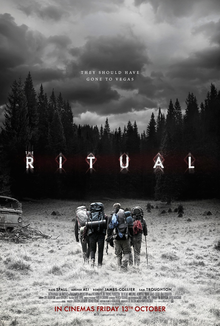
We still fear pagans.  Religion and horror are often tied up together, but when it comes to monsters we trust Catholics and fear pagans.  Of course, when Startefacts recommended The Ritual it was in the context of five pagan horror movies you should see.  I’d seen three of the others, so The Ritual seemed the next logical step.  Four friends are hiking through Sweden to honor the wishes of a fifth friend killed during a robbery.  When one of the them injures his knee, they decide to take a shortcut through the forest where a combination of the Blair Witch Project and Midsommar and Antlers takes place.  After finding a freshly gutted elk in a tree, they take shelter in an abandoned cabin surrounded by runic signs on the trees.  Soon they’re being hunted by a huge creature they can’t see clearly.

The final two are captured by a pagan group that worships one of the Jötnar—the monster that’s been hunting them.  The final boy escapes by getting out of the forest, where the Jötunn can’t go.  The choice of a Germanic monster is a bit different, and the creature design is fascinating.  Jötnar apparently straddle the line between gods and monsters, being a kind of frost giant.  The pagan group sees it as a deity that keeps them safe in return for sacrifices.  Given the number of bodies in the trees, other hikers had decided the shortcut was worth taking in the past.  But still, the pagans are cast as the bad guys.  This is in spite of the fact that the friend whose death started the whole thing was killed in England.

The religious convictions of the English robbers aren’t made clear, but they were raised in a Christian context and are every bit as brutal as the pagans.  In fact, the pagans, although they sacrifice strangers, do try to talk kindly to them (at least if they have the mark of the Jötunn on them).  Not just the pagans are savages.  At least they have a moral reason for what they’re doing, in their own minds.  The criminals are in it only for themselves.  We still fear those of other religions, although they’ve come to their beliefs in a way similar to how we’ve come to ours.  Whether born into it or converted, believers generally come to their conclusions honestly.  In the world of the film, this Jötunn is real.  And, until the end, it protects those who worship it.  So yes, this is a pagan horror film, but it makes the viewer wonder whence the horror really comes.


Admit This

I thought about writing a letter to the New York Times, but I know my chances of getting it accepted.  A piece run yesterday in said periodical on elite college admissions policies, which favor the affluent, presented an argument frequently used in defense: high-performing colleges are faced with the problem that the highest achieving students are affluent.  I’m here to call shenanigans on that.  I don’t often state explicitly what my background is here on this blog, knowing as I do that I had white privilege on my side, but this admissions reasoning is elitist to the hilt.  I grew up in a poverty-level household and yet when I reached college it was only to have professor after professor marvel at how well I did in their classes.  My GPA at graduation was 3.85, partially brought down by “freshman orientation” and senior ennui.  After graduating summa cum laude, I graduated seminary magna cum laude.  My doctorate was with a major European research university that didn’t use the cum laude system.

In short, a guy from a non-affluent background can succeed academically.  Professors who think otherwise don’t know what they might be missing.  There is a bias against the poor that assumes that intelligence is bred, not an innate ability.  My academic track-record demonstrates that this bias has no expiration date.  Despite my record of achievement, I was routinely passed over for positions at universities and colleges, many of them elite.  I used to keep my rejection letters but the file was getting pretty heavy to lift.  An academic unknown, I didn’t have connections in “the club” and was asked to check my working-class abilities at the door.  I’ll confess when I see such reasoning as “we can’t afford to take chances on the poor” my blood begins to boil.

Some of the smartest people I know never attended college.  Even as a child I could tell if someone was capable of deep thought or not.  I didn’t know many college-educated people; my social circle was among blue collars.  Clergy were the few exceptions, and not all of them had attended college.  Nevertheless, I could see what admissions committees (I used to serve on one) call “special intelligence.”  I also saw how terribly petty the discussions could be when it came to admissions.  Try as I might, I just can’t feel sorry for those in higher education who feel trapped by their own success.  There are gems located in mountains, even if they tend to be buried under tons of plain rock.  Admission teams admit those most like themselves.  Thus it has always been.  And we are poorer as a society because of it.

Not singling out UVA!

Ghosts and Spines

Guillermo del Toro’s early movies are thought-provoking and somewhat depressing.  The Devil’s Backbone, like Pan’s Labyrinth, puts children in the way of adult political unrest and war.  I suspect that sensitive people watching such movies can easily imagine that they could have been put in such circumstances, were things different.  Having said that, The Devil’s Backbone works as a sad, gothic horror movie.  Set during the Spanish Civil War, the film focuses on orphans not quite out of reach of the conflict.  There’s a ghost at the orphanage that, until near the end, we think that the bully among the kids had killed.  The point of view is that of Carlos, a new kid at the orphanage who encounters the ghost and eventually decides to find out what happened to him.  The movie’s nearly a quarter century old, but there will be spoilers below.  Maybe there have already been some—sorry!

As the children, war orphans, try to navigate how to become adults, they have limited male role models—the doctor, who is good, and the groundskeeper, who is not.  Jacinto, the groundskeeper, was raised in the orphanage and although he had a professional-level family, grew up alone and wanting better.  His response was to turn cruel.  We’re not given much of the doctor’s backstory, but due to his position at the orphanage, we have to assume there’s a sadness there as well.  A number of subplots are interlaced with this, one of which involves the title of the movie.  Originally set in Mexico rather than Spain, the Devil’s Backbone was named after a mountain range.  That has to be transferred to victims of spina bifida in the local village.  This medical name has to be explained to the audience and it adds to the gothic atmosphere.

This is an example of a bright, sunny location nevertheless being a fraught place.  The boys (there are no girls at the orphanage) make their own society—not quite on a Lord of the Flies level—because the adults are at their wits’ end due to the encroaching war.  In the end all the adults end up dead.  The future of the boys is uncertain, but they show themselves able to distinguish between good and evil.  Adults, meanwhile, perpetuate a war in which, in real life, half-a-million people were killed.  There’s a lesson here for those willing and able to learn it.  Horror often has a moral, and when the boys are carrying an old crucifix to the courtyard and one remarks that he’s “pretty heavy for a dead guy,” adults should be paying attention.


Outgrowing Fear

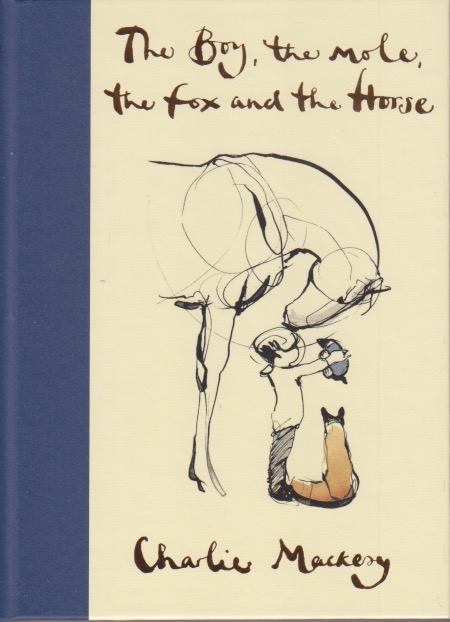
A friend, during a time of trouble, quoted from Charlie Mackesy’s The Boy, the Mole, the Fox and the Horse.  I immediately ordered a copy.  The word “magic” gets thrown around a lot, but this book holds real magic.  It is perhaps the wisest book I’ve ever read.  Do yourself a favor—if you haven’t read it, find it in a library, or order it from Bookshop.org or Amazon.  Visit a local bookstore, and if they don’t have it, ask them to order it.  If people read books like this we’d never need to worry about things.  And if everyone read it and took it to heart, we’d never need to worry about anything again.  There’s much to be said about believing in yourself and believing in the power of love.  At the end of the day they speak for themselves.

The book is for any age reader.  Handwritten and illustrated, it’s written at the level of a children’s book that takes less than an hour to read.  Its message feels almost radical, however.  That having been said, the young adult generation, I’m given to believe, grew up with the kind of outlook Mackesy offers.  The book struck me particularly relevant and necessary, something for those of us in the over forty crowd.  I understand the tendency to grow more conservative as we age and I believe it’s because we’re afraid.  Ironically, the book addresses the issue of fear, pondering how life might improve if we could get beyond being afraid of things.

The artwork is beautiful and the words are inspired.  This is an eminently quotable book.  Mackesy has been an artist by trade.  We can learn so much from such humble artists, if we’re willing to listen to them.  Kindness, love, and simplicity are gifts we often wish not to accept.  It’s very easy to hate and selfishness comes naturally to people.  And when we get together we tend to complicate things.  Once in a while we should set aside the complexities of life and make time for a simple story that reminds us of what’s really important.  Of course, those of us who read are prone to thinking of ways the world could be a better place.  Being open to love instead of hate, trust instead of fear, and hope instead of dread doesn’t come naturally.  That’s why it’s so helpful to have books to remind us of this.  Especially when such a book won’t even require an hour of your time.  I’ll be coming back to it time and again.


Next Gen AI, Truly

Okay, so it was a scary meeting.  It was about AI—artificial intelligence.  Specifically Generative IA.  That’s the kind that makes up answers to questions put to it, or does tasks it’s assigned.  The scary part, to me, is that we are being forced to deal with it because tech companies have unleashed it upon the world without thinking through the consequences.  Such hubris gets us into trouble again and again but it never stops us.  We’re sapiens!  You see, GAI (Generative AI) is under no obligation to tell the truth.  It likely can’t even understand the concept, which is a human concept based on perceptions of reality.  GAI simply provides answers based on the dataset it’s been fed.  It can generate texts, and photos (which are so doctored these days anyway that we need a photo-hospital), which means it can, to borrow the words of a sage, “make a lie sound just like truth.”  We already have politicians enough to do that, thank you.

My real fear is that the concept of truth itself is eroding.  With Trump’s “truth is whatever I say it is” administration, and its ongoing aftermath, many Americans have lost any grip on the idea.  Facts are no longer recognized as facts.  “Well I asked ChatGPT and it told me…”  It told you whatever its dataset told it and that dataset contains errors.  The other scary aspect here is that many people have difficulty distinguishing AI from human responses.  My humble advice is to spend more time with honest human beings.  Social media isn’t always the best way to acquaint yourself with truth.  And yet we’re forced to deal with it because we need to keep evolving.  Those Galapagos finches won’t even know what hit ‘em.

Grandma was born before heavier-than-air flight.  Before she died we’d walked on the moon.  About two decades ago cell phones were around, but weren’t ubiquitous.  Now any company that wants its products found has to optimize for mobile.  And mobile is just perfect for AI that fits in the palm of your hand.  But where has truth gone?  You never really could grasp it in your hands anyway, but we as a collective largely agreed that if you committed crimes you should be punished, not re-elected.  And that maybe, before releasing something with extinction-level potential that maybe you should at least stop and think about the consequences.  I guess that’s why it was a scary meeting.  The consequences.  All technological advances have consequences, but when it takes a lifetime to get to the moon, at least you’ve had some time to think about what might happen.  And that’s the truth.


Hoppy Fourth

Today is the one of the relatively rare summer holidays.  Modern industrialized nations tend to take a more relaxed view toward summers without having to give out too many prescribed company holidays.  This seems to follow on from school schedules because the kids are out in summer and adults need some flexibility when work demands collide with family needs.  The internet has made work-life balance a little tricker to achieve since work is always just a click away.  Some more generous employers gave yesterday as part of an extended four-day weekend, which is rejuvenating in a way that’s easily forgotten until you start to feel it.  The sense of obligation takes a couple of days to wind down, and then on Monday you realize “I’ve still got another day off!”  It’s a sublime feeling.  Why not watch holiday horror on it?

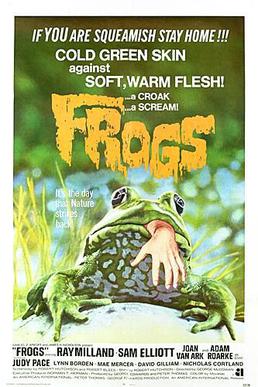
The Wicker Man is a holiday horror movie.  One of my arguments in the book is that holiday horror has to derive its energy from the holiday, and not just be set on it.  For example, I Know What You Did Last Summer and Return of the Living Dead are both set on or near Independence Day but the movies don’t really draw their horror from the holiday itself.  It falls into the same category.  Frogs?  Well, maybe.  Perhaps holiday horror, it’s definitely in bad movie territory.  A rich southern family is dominated by a Trump-like grandfather who controls the money and measures everyone by loyalty to him personally.  On his birthday, the fourth of July, nature revolts and his adult children and grandchildren (apart from one granddaughter), are killed by animals in this eco-revenge groaner.  But is it holiday horror?

One scene may suggest that perhaps it fits the category, but the real significance of that day is that grandpa won’t let it be celebrated any way other than by his prescribed plan.  Even as the estate is overrun by frogs (mostly), snakes, lizards, alligators,  tarantulas, and even some birds (thank you, Mr. Hitchcock), he insists that everyone do what they always do on the fourth of July/his birthday.  The only scene that suggests holiday horror is where the eponymous frogs hop onto a cake decorated like an American flag.  I normally like nature-revenge films, and this one starts out well but quickly goes downhill.  The environmental message is there, but underplayed.  There are some firecrackers and a number of dead rich folks, but otherwise the film seems to have no message at all.  It’s a bad movie.  Holiday horror?  Not really.  Something to watch for a day off work?  Definitely.


Good-Bad

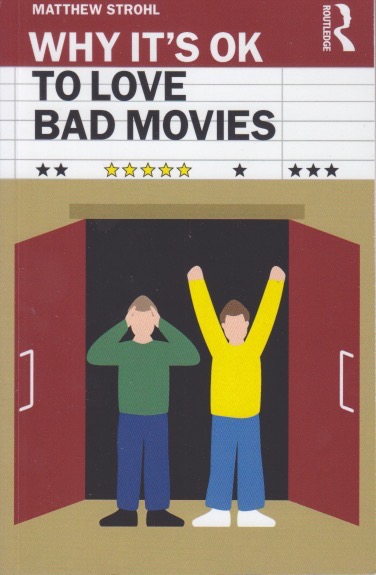
If anybody bothers to follow my movie viewing history, they’ll know that it includes a perhaps disproportionate number of “bad movies.”  In fact, I recently added that as a category for my blog posts.  In need of some reassurance, I read Matthew Strohl’s Why It’s OK To Love Bad Movies.  (As far as I can tell the Why It’s OK series was started by my old boss at Routledge—an inspired idea!)  Strohl is a philosopher, but one who admits to, and even advocates for, loving bad movies.  This book is fun but it does have a serious philosophical underpinning.  I can’t summarize it all here (you need to read the book anyway) but my main takeaways are that ridicule isn’t making the world a better place.  Movies that are so bad that they’re good are definitely a reality.  There’s a community built around it, but I haven’t had many visits from it in my lonely little corner of the internet here.

Strohl points out that not all bad movies are what he terms “good-bad.”  There are certain qualities—aesthetic qualities—that make a bad movie good.  And it doesn’t involve watching the movies to make fun of them.  One of the films that often tops the list is The Room.  When I first saw it I really couldn’t think of anything to write about it on this blog.  It was just another bad movie.  Now I want to see it again.  I do have to say that on my first viewing I didn’t feel like ridiculing.  I was more stunned than that.  And when I watched Plan 9 from Outer Space—another on the list—I felt inspired to learn more about Ed Wood, its famous director.  I’ve since watched a couple more of his movies and I appreciated them.  Now I have a better idea of why.

In addition to discussing the biggies, Strohl also takes forays into some collectives: the Twilight series, for example, and the movies of Nicholas Cage.  These are both often singled out for ridicule, but this book demonstrates that there’s an artistry to such things.  And Bad Movies underscores that not everyone likes the same bad movies.  Strohl also makes the salient point that if we only ever watch great movies we’d have no basis for comparison.  There’s a lot to like in this little book.  One thing it convinced me of (in addition to making me feel a bit better about myself) is that there’s a community out there that I’m missing out on.  Good books bring people together instead of dividing into factions.  This is a good book.


Employment Opportunities

It’s important to be reminded that stories can also be told by what’s not said.  Non-narrative fiction can be a little tricky to follow, but often contains admirable aphorisms.  Such as “I believe in the future.  I think you need to imagine a future and then live in it.“  This is from Olga Ravn’s The Employees: A Workplace Novel of the 22nd Century.  One of the many things driving me insane at the moment is where I found out about this book.  I know I ran across a recommendation somewhere and I can’t recall the place.  It would be helpful to know since I wonder what it was about the description that convinced me I had to read it.  In any case, there will likely be spoilers below since it’s difficult to describe the book without them.  I’ll start off by saying it’s classified as science fiction, but it’s not your typical 1950s kind.

The story’s told via a series of employee statements to the company that owns a space freighter.  The ship has a mixed crew of humans and humanoids—androids that aren’t easily distinguished from biological humans.  They discover some mysterious, perhaps organic, objects on a new planet and the humanoids begin to request, or even demand, equal treatment.  The outlooks from the two perspectives, human and non-human, are quite different, but they argue that fair treatment is only, well, fair.  The situation gets out of hand and the company, as such entities often do, decides on the economical solution of killing everyone aboard the ship but preserving the exotic objects.  Though generally described as “comic,” I picked up on the seriousness of the issues of prejudice and inequality.  The quote above is from the very last statement from the ship.

Ravn has established a reputation as a poet and that shows through in this novel.  The quote above is an example.  According to the article about her on Wikipedia, she graduated from the Danish School for Authors.  That made me wonder why we don’t have such things.  This isn’t the same as an MFA program.  Indeed, the nordic countries seem to have abandoned their viking ways for literature.  There’s a deep wisdom in this.  Costs of living are high in such places, but so are happiness levels.  What’s not to like about a school option where budding poets and novelists can become acquainted with one another and imagine a better world?  Writers sometimes give us challenging stories but the reason, I believe, is that we can learn from them, view a better future, and live it.


Liking Everyone

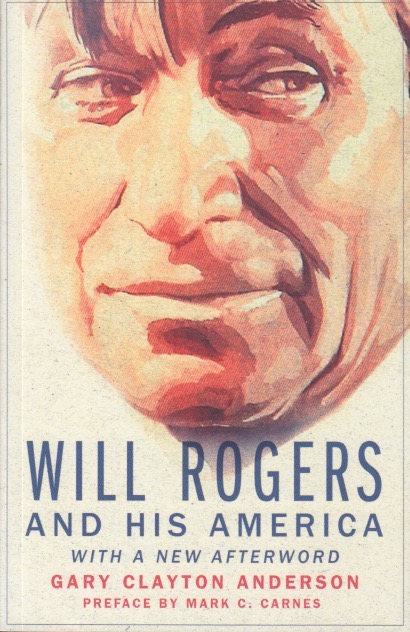
I’m not really interested in politics.  Powerful people deciding the fate of the rest of us seems inherently depressing.  We could use a good laugh.  I’ve been curious about Will Rogers for some time now.  He’s a name that everyone in my generation seems to recognize but few people know anything about him, beyond some of his famous quips.  So I read Gary Clayton Anderson’s Will Rogers and His America.  It was an eye-opening experience.  Rogers died in 1935, the year my mother was born.  What a difference less than a century can make!  At the time of his death he was one of the most famous people in the country, personal friend of U.S. Presidents, an international traveler, and widely syndicated newspaper columnist.  He was also a film actor and comedian.  When he traveled internationally world leaders gladly met him.  Not bad for a poor boy from Oklahoma.

Anderson’s book is a good introduction to who Rogers was, but it does tend to focus on the politics.  Arguably that’s where one’s greatest impact in life might reside.  Still, there’s a lot more to an individual than politics.  I’m curious about Rogers’ career as an entertainer.  He started out as a Vaudeville roper—literally, a rope act.  His noted wit, however, made him famous.  At various points he was one of the highest paid entertainers in the country.  His sympathies, like many of us born in humble circumstances, tended to be with the average person who, it seems, is always struggling against an economy that favors the wealthy.  See?  There I’ve done it myself, gone and got political.  It’s difficult to avoid.

Perhaps the most widely read columnist in the country, who influenced political opinions and could rake in the money at just about any form of comedic enterprise, Rogers nevertheless faded from view after his death in a plane crash.  He was part American Indian.  He never completed college.  He was homespun and yet influential around the world.  Fame comes with no guarantees, of course.  I guess it would be helpful to know what Roger’s motivations were.  Was he, like most people, simply trying to secure his future for himself and family?  Was he trying to change the world?  Can anyone manage to do that for very long before things come along and everything’s suddenly different?  (Think AI, for example.)  I’m glad to have met Will Rogers through Anderson’s book.  Even though I’m not really interested in politics, I learned something about them too, along the way.


Individuals All

When things grow stressful and distressing, it may help to remember how others had it worse.  It’s cold comfort, perhaps, but Juneteenth, although a celebration, reminds us that our African-American siblings have had, and continue to have, a struggle to be permitted to exist on equal terms with everyone else.  Racism is an ugly thing.  Getting over prejudice is often difficult, but it’s generally the result of getting to know people as individuals.  All my life I’ve learned anything I may know from small samples.  I’m not famous and I don’t know a ton of people.  I grew up in a small town that was mostly white.  But even so, one of my early childhood friends was Black.  I liked him a lot and his being different was only all the more intriguing.

You see, I grew up in a rural area that struggled (and still does) with racism.  Yet even there, those who got to know the few African (and some Asian) Americans liked them well enough.  It’s the mob mentality that’s often the problem.  And it is easily stirred back into action when prominent individuals espouse it.  We need to hear a much simpler message—get to know those who are different individually.  No race is superior.  We need to change the narrative.  It’s not easy to do, but as someone who’s always dealt with small samples, I know it can work if we give it a chance.  Mob mentality makes people feel included but it’s decidedly irrational.  It seems best to try to see the person in front of us rather than fear those who are different.  Being “white” doesn’t equate to sainthood.

Photo by Lawrence Crayton on Unsplash

Our Black friends and neighbors have had a difficult time being given rights and respect as Americans.  Most of their ancestors were brought here unwillingly and carefully honed attitudes were taught to ensure that they were seen as inferior.  I’ve often thought that making ourselves more homogeneous (and homogenerous) would solve a great many social ills.  Xenophobia is no excuse, but it does seem to have its hooks deep in us.  Questioning such assumptions just might help to make us all more humane.  I can’t claim that my experience or ways of thinking are normative, but it seems if we get to know individuals—my small samples—we can begin to see that we all deserve fair treatment.  Traffic offenses or taking a walk after dark shouldn’t be capital crimes for anyone.  Welcoming the stranger is even biblical.  Juneteenth is an important day and it reminds us that there’s still much work to be done to ensure justice and fair treatment for all.


Sailing Away

Out on the open water on a sailboat large enough to be categorized as a sloop.  We’re on the Hudson River learning about both sailing and the environment.  I’m here with a a Girl Scout troop, otherwise I wouldn’t have known about the sloop Clearwater at all.  The origins of the Clearwater go back to Pete Seeger, who, apart from being a famous folk artist, was also an environmentalist.  Based in Beacon, New York, the Clearwater is used in educational programs and it represents the only time I’ve been on an actual sailing ship.  Call me Ishmael.  Or not.  You see, I was there as a volunteer.  Specifically, a driver.  My daughter’s troop had scheduled the trip and I was afforded free passage as chauffeur.  I’d pretty much tucked this away into old memory banks until recent reading brought it to the surface.

Photo by by Anthony Pepitone; under the Creative Commons Attribution 3.0 Unported license, via Wikimedia Commons

I support environmental causes in the ways a guy in my position can.  We compost in our back yard.  We recycle anything that we can figure out how to.  We throw away one thirteen-gallon garbage bag every two weeks, and that’s sometimes half-empty.  Being vegan helps.  We don’t have a lot of money to give away, but lifestyle is the biggest way to try to help the planet.  So I’m out here soaking up my Melville vibes on a river wide enough to be a lake.  The Hudson, like all rivers, is worth saving.  I used to cross under it daily through the Lincoln Tunnel, trying not to think of all that water flowing above my head.  There was a reason I read on that long commute.

This blog, I guess, has become a repository for much of my past.  I’m grateful to you indulgent readers who find any of this interesting.  Still, I find human connections to places fascinating.  While I’ve never considered the Hudson home, some of my early relatives likely did (more likely Hessians than Dutch, but I’m told we fought on the right side during the Revolutionary War).  When I’ve had the opportunity to gaze out over the river without being in a rush, I’ve always felt a sense of belonging.  An artwork I made from artifacts I gathered awaiting our turn to board the Clearwater now hangs in our front hall.  Suddenly those twenty-something years feel like so long ago.  Even so, the Hudson suggests something homey to me.  Maybe it’s time to hire out a sloop again, go out on the river, and dream about belonging.


Baptist to the Future

Setting aside their smartphones and MAGA hats for a moment, the Southern Baptist Convention voted to exclude women pastors this week.  The photos seem to show a rather dour delegate pool that seems ready to head to the apothecary for some leeches to take care of this headache.  The conservative mind is a curious place.  I can understand wanting to slow change down—it is moving at a scary pace, leaving many of us concerned and confused.  Yet the idea that nothing has changed in two millennia isn’t only demonstrably wrong, it’s something that history demonstrates is a relatively recent, and reactionary, idea.  The fundamentalist brand of religion that elevates the Bible to godhood has only been around for about a century.  It’s a reaction to a hundred-year-old modernism that, in spite of all the evidence, closes its eyes.

Fear is natural enough.  Some of us actually watch horror movies voluntarily, after all.  But when fear overtly drives your religion isn’t it time to stop and ask what you’re doing?  The Southern Baptist Convention ejected its largest church, Saddleback, which had achieved national influence under Rick Warren.  According to the New York Times, Warren himself addressed the Convention citing none other than Billy Graham in his defense of women pastors.  The convention overwhelmingly voted to excise its most successful church for fear of that dreaded slippery slope of liberalism.  We’re fixated at some sexual level, it seems, and afraid of what might happen if we admit that even as AI is taking over our world, things may have changed.  At least a little.

The Bible is a sacred document with a context.  That context was patriarchal and it held considerable sway for about two millennia.  Power is difficult to relinquish.  When you get to call all the shots you don’t want to be reminded that those shots are wounding and killing innocent people.  “It was just better that way,” people think, ignoring the very Bible they worship.  It’s a point of view I understand, having grown up in it.  I remember reading with the juvenile furrowed brow of some tender twenty years how C. S. Lewis simply couldn’t see how women could be priests.  And then noticed how Baptists and other Protestants embraced Lewis although they condemned his idolatrous Anglicanism.  Sometimes it’s difficult to believe we’re actually in the twenty-first century with AI knocking at the door.  And we still can’t get over women wanting to be in the pulpit.

What would Roger Williams say?

Measuring Humanity

The humanities have fallen in love with data.  Let me put a finer point on it: those who use the humanities as a profession have had to turn to “evidence based” metrics in figuring out what it means to be human.  As an actual human, I’m feeling data fatigue.  Some of us aren’t good with numbers.  Our teachers encouraged us to move into the humanities.  Now, at an age of not young, many of us are being instructed that we now have to get good at numbers because numbers are the only truth.  I have philosophical and spiritual objections to this, but you can’t get a job as a philosophical and spiritual objector.  Numbers don’t, and can’t tell the whole story.  The term “calculating” used to be used to describe a person without feeling.  Now we’re all just calculators.

Whither can we go to experience true humanities again?  Professorships are “measured” by success factors.  “Key performance indicators” are applied to the gods.  There are immeasurables, but they can’t be slotted neatly into our computer’s algorithms, so they are swept off the table.  If you want to wear a white collar, you have to put business first.  The soul is dying, but that’s just fine as long as we can keep the body alive.  You see, the humanities used to be about those things that can’t be quantified with “evidence based” metrics.  How it feels to be in love, or why we cower in the presence of an unseen deity.  How do you put numbers on artistic inspiration?  Sure, we can “measure” aspects of Beethoven’s seventh symphony, but they don’t explain what it’s like to listen to it.

Kowtowing to capitalism feels shameful to me.  But challenging capitalism is like pacifists standing up to those with assault rifles.  Greed derives its power only from getting everyone to agree on its objects of value.  The humanities try to argue the point, but those with control of the money are in charge of hiring.  And they do it with their abacus always close to hand.  I never learned to use a slide rule but calculators were required to graduate from the academic track in high school.  Now when I’m being asked to apply that kind of thinking again, I have to cast my mind back nearly half a century while my human brain dreams of reading and writing novels, viewing paintings, and listening to beautiful music.  But it’s a work day, and when it’s all said and done, data rules.  Look for no empaths in upper management.


The Idea of Scripture

Although the academic field of biblical studies is slowly dying—this is something I wrote about a long while back on this blog—the Bible and its kin nevertheless continue to shape and control society.  I was recently reading that Islam takes quite a different view of the Qur’an than Christianity does of the Bible.  It’s also clear that Judaism has yet another way of looking at Scripture.  What underlies these Abrahamic faiths is, however, the idea of sacred texts.  They don’t have to be understood, let alone read, in order to alter perceptions of reality.  The idea that God wrote a book, combined with the idea that God doesn’t show Godself or intervene in the world for good in any obvious way, has transferred a kind of godhood onto sacred scripture.

People desire the second coming because of a deep-seated need for God to part the clouds and demonstrate that their way of looking at things is the correct way.  It may be influenced by Scripture or politics or a favorite news channel, but the result is the same—they want divine intervention and since it’s not forthcoming, their sacred texts become the rallying point around which they gather.  Like many people I’m puzzled how a man like Trump, known for his proud womanizing and lack of care for anyone other than himself, came to be seen as a messiah.  Perhaps the key is that moment he gassed American citizens for a photo op holding up a Bible he never reads.  How this comes to be interpreted as a kind of divine moment only makes sense when we realize it’s the idea of Scripture that becomes the reality of many.

I’ve read through the Bible many times.  I have to confess that trying to get through the Qur’an is a struggle for me, but I suspect quite a lot of that is cultural.  I’ve read a few other sacred texts over the years, and have found some wisdom in all of them.  It’s when they become divinities in their own rights that society begins to pay the price.  If a non-interventionist God remains invisible, that identity will be transferred to the divine surrogate—Scripture.  People will coalesce around the idol they can see rather than the invisible one they can’t, right Elijah?  These sacred books have survived partially because they contain old wisdom, and old wisdom is often better than new knowledge.  But they also survive because they have become, in some sense, gods.


Der Golem

The golem is a monster of fascination.  It has been the subject of movies from quite an early period.  The earliest, now mostly lost, seems to have been Paul Wegener’s Der Golem (1915).  This film became the first of a trilogy, with the second (also lost) being, The Golem and the Dancing Girl (also originally titled in German, 1917).  The third film mostly survives and is therefore often called The Golem, based on the fact that it is the one we can still see.  Der Golem: wie er in die Welt kam (The Golem: How He Came into the World, 1920) is considered a must-see early horror film, although that designation comes from the fact of there being a monster.  It’s not scary.  It is, after all, a silent film.

Having watched some recent examples of Jewish horror I realized that I’d missed this one and set out to rectify the situation.  This film is actually the prequel to the other two, with Wegener’s golem having already established a cinematic presence.  I wasn’t sure what to expect from the story, but I supposed that it would be the oppressed Jews creating a golem to protect them and that it would eventually go berserk, as soulless people generally do.  It may have helped to have seen the two missing films, I suspect.  This golem is made to protect the Jews, but the edict against them is cancelled by the fact that the golem exists.  The emperor is impressed with the Jewish magic and allows the Jews to remain in their ghetto.  The golem, however, develops feelings for Rabbi Loew’s daughter, which is an interesting twist.

The rabbi does lose control of his creation, and it refused to allow him to deactivate him by removing the secret word revealed by Astaroth, under a star on his chest.  A little girl outside the ghetto, picked up by the golem, playfully pulls off the star and saves the day.  This really isn’t Jewish horror, at least not in the sense of more recent films.  It’s not very close to the Jewish golem legend and saving the Jewish community is left up to a gentile girl.  The ending clearly inspired James Whale’s Frankenstein some eleven years later, but the messaging of the film is pretty much what you might expect for a non-Jew trying to tell a Jewish story.  The fact that a demon is involved in bringing the golem to life puts us into a more Christianized view of things.  Still, this historic film, which is just over an hour in length, started something that has grown more sophisticated as Jewish horror started to come into its own.