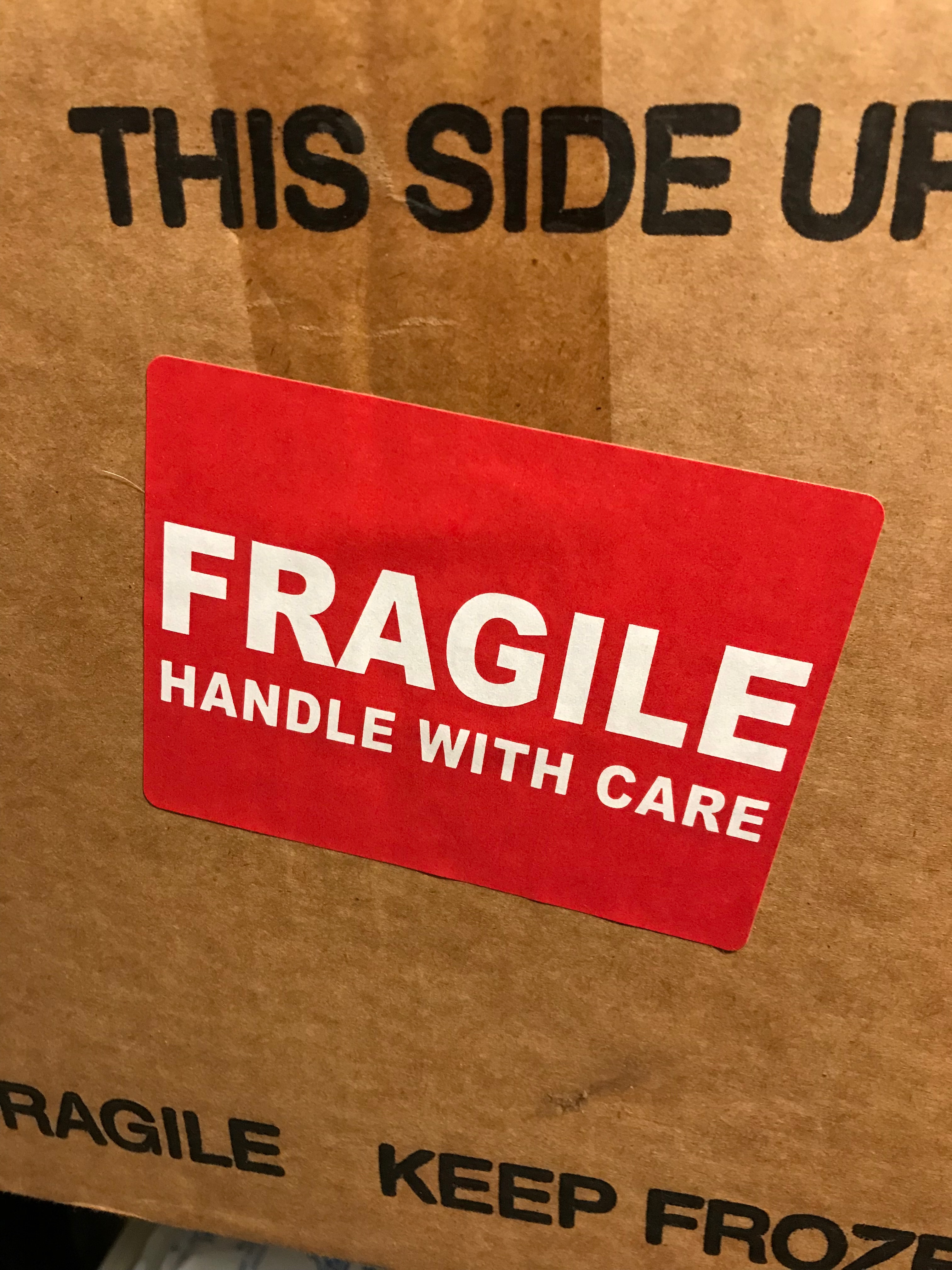
Handle with Care

It reminds me of that old Traveling Wilburys’ song, “Handle with Care.”  Hate is a strange and dangerous motivator.  It’s something that makes me consider demons as a real possibility.  Having experienced Zoom bombing during an online meeting about racism, I was greatly saddened.  The distress the bombers caused in just a few minutes was truly saddening.  With white supremacist comments and ideology, they seemed to have nothing better to do than to ruin the day of twenty-some people who want to make the world a better place for all.  I was reminded of a video that Arnold Schwarzenegger had posted earlier that same week.  The link is below and it is worth twelve minutes of your life.  I’ve been impressed by how Schwarzenegger has been using his influence to combat the evils of Trumpism, although himself a Republican.  Of course, he has a backbone that many elected officials lack.

As an Austrian, Schwarzenegger is aware of the damaged lives that Nazism left behind.  There’s no glamour here, just pain left behind for all.  We’ve unfortunately suffered through four years of leadership based on the rhetoric of hatred that has rubber-stamped this kind of thinking.  It will take many years to recover, if we ever do.  And the internet, for all the good it does, also offers a venue for those who find hateful activities enjoyable.  I do wish there were a way to channel such people to Schwartzenegger’s video.  It is the moral responsibility of the strong to protect the weak.  We have millennia of history to back that up.  What’s so hard about live and let live?
Opposites don’t always hold fast, but love certainly is the antithesis of hate.  One of the things watching horror movies has done for me is to reinforce what happens when hatred is allowed to take control.  The best of the genre contains morality that reinforces that those who love overcome while those who hate never end up in a happy place.  No belief system that promotes superiority is worth investing in.  There will always be those with nothing better to do than to trawl the internet to troll those who try to make the world a better place.  As a society we can reject such behavior and attempt to help those who are motivated by hatred.  The damage caused by hate is real.  Actual human beings are destroyed by it, and for no reason.  Many of us, most, I suspect, think love is the ultimate good.  We must do what we can to try to help those who disagree, no matter what certain political leaders espouse.  The Wilburys were right, all people deserve to be handled with care.

Love’s Life

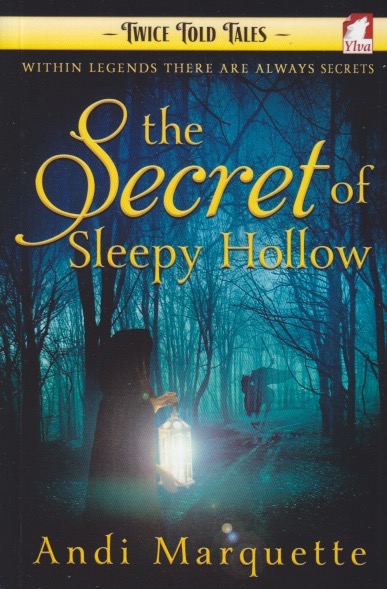
One of the things about literary classics is they open themselves to reinterpretation.  It’s often a lot of fun to trace these.  Andi Marquette is obviously an educated writer.  Her The Secret of Sleepy Hollow is one of those reinterpretations that has a unique take on the tale.  Set in modern times and featuring a member of the Crane family—Abby—as a graduate student, this story brings the tale into a contemporary context.  Abby meets another graduate student—Katie—in Sleepy Hollow and the two fall in love.  It turns out that Katie is a member of the Van Tassel family, thus bringing the two main families of Washington Irving’s “Legend of Sleepy Hollow” together again.  There’s even a headless horseman.

Like the biblical book of Ruth, this is a gentle tale of women’s love.  There’s no overt violence, no heads get chopped, but two women love and care for one another.  Many of the more modern repackaged versions of Sleepy Hollow tend to go for the violent, sometimes drug-fueled tales of bored youth in a small town facing an angry ghost.  Here the interest is more literary, a gothic romance.  The fact that it’s a lesbian love story makes me wonder why so many people have trouble with others’ love lives.  People are prone to curiosity about sex—that’s a simple fact.  What isn’t so simple is that mores based on culturally specific ideas from millennia ago don’t stand the test of time and yet cause misery in modern lives because they can’t accept what we now know—sex and love are anything but simple.

Marquette’s book is marked by that anxiety.  When people discover a love that’s often misunderstood, they face ridicule or worse.  The book of Ruth provides a good guide here—the acceptance of a normally forbidden love can bring good and happiness to people in what is often a difficult world.  There’s trouble enough—there are headless horsemen out there—that we don’t need to be causing more by judging the loves of others.  Even a cisgender heterosexual can understand that.  Life is complicated and we all try to find our way through.  Love is one of those things that can help to make it more bearable.  I found The Secret of Sleepy Hollow compelling in that way.  It may not be a literary classic—few books are—but it takes on a complex topic intelligently and with heart.  It’s a new take on an old story that still fits the modern world.


Off with Their

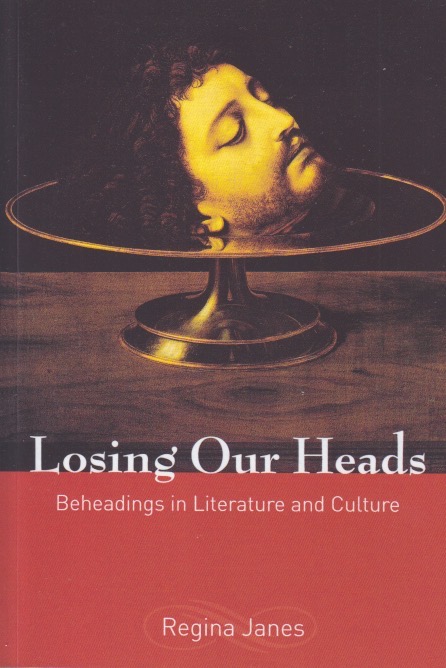
“Heads, I win,” is common enough as a call for flipping a coin.  That element of chance plays through Regina Janes’ Losing Our Heads: Beheadings in Literature and Culture.  You see, John the Baptist has a lasting place among the beheaded—indeed he’s featured on the cover of the book.  And since Janes is looking at the topic in literature and culture, you can’t very well leave John out.  I wonder what it says about humanity that there are so many other possible examples to include that this book is a mere sampler.  Applying literary theory to the process, it becomes, well, theoretical at points, but still it’s an eye-opening book.  Even if not always comfortable to read.  The first few chapters, which cover the development of European beheadings, aren’t sweetness and light.  There’s more happening here than meets the eye.  These heinous acts set the stage for symbolism, however.

The material on John the Baptist is fascinating and insightful.  It’s ironic, in some ways, that Jesus’ cousin is perhaps most famous for being beheaded.  He also sheds light on his more famous family member through literary parallels.  And, of course, it doesn’t end there.  The idea gets picked up and explored by others in various art forms.  You don’t really want to look, but since they’re there in the illustrations, you do.  Then the book moves on to African stories.  Playing off Conrad’s Heart of Darkness, Janes gives voice to African authors who explore beheading within their own cultural contexts.  All this goes back, historically, much further than John.  Indeed, beheading is part of very early myths as well.  It does make you stop and think.

I read books like this looking for clues.  There’s a larger object in mind.  And some of the insights I found were in examples afforded only a paragraph here or there.  I read this book because of a journey of which a colleague sent me through an innocent enough discussion.  There’s a reason we talk of excitement as “losing our heads,” and for some of us that excitement is research-laden.  Naturally squeamish, I’m an odd one for watching horror.  There’s something more to find here, however.  Although gruesome at points, you learn something from wandering through this museum of heads.  And when looked at through different lenses (of course, Freud is there) new perspectives emerge.  Beheading is violent and yet it’s been a part of human culture for a very long time.  There’s much to ponder here.


Just Justice

I don’t mean to be insensitive, but there’s so many injustices to address.   We need better vocabulary for the victims of patriarchy.  And patriarchy tends to be “white” in color.  February is Black History Month and March is Women’s History Month.  These are important reminders, but I have trouble focusing on an entire month, let alone a day—particularly if it’s a work day.  That doesn’t mean I don’t support my fellow human beings.  So today’s International Women’s Day.  I frequently wonder why it’s so hard for a particular type of man to see and treat women as equals.  I’m afraid that it often comes down to might making right, which we all know is wrong.  While power may not be inherently corrupting, many people are weak and are too susceptible to its blandishments.  And power likes nothing better than similar people and sycophants.  Women remind us that we can do better.

We don’t see those women elected to high political office grasping for the power to be queen for life (except queens, but that’s a different story).  Instead we find a spirit of cooperation instead of this constant atmosphere of competition that seems so testosterone-driven that it ought to be X-rated.  I don’t stereotype women as docile, but female leaders aren’t known for starting wars.  And none of us would be here if it weren’t for women.  The spirit of the times is one of wide representation—the principle of hearing all voices instead of only those of the powerful and ultra-wealthy.  I’m not sure why men feel so threatened by women that they try to deny them a place at the table.  Or pay them less for the same work.

Perhaps we fear societal change, but change finds us no matter what.  We now know that sex, gender, and race don’t make any person inferior.  Indeed, the struggle to be dominant often creates these categories in order to assert oneself over others.  As any mother of multiple siblings knows, teaching children cooperation leads to much better results than setting kids off against each other.  It’s a lesson that politics has yet to learn.  Culturally, it seems, this is well accepted.  People deserve to be treated equally.  That concept is called “justice” and our entire legal system is based on it.  Why don’t our politics match our culture?  I don’t want to stereotype, but it seems to me that far too many men are involved.  It’s International Women’s Day.  Let’s take the opportunity to rethink how half the human race is treated.


Just Being

You know, I sometimes resent being forced to be something I’m not.  In these days of tolerance and letting people be themselves, the bullies have taken over, forcing the rest of us to clean up their messes.  Take politics, for instance.  I have no interest in it.  From the beginning of this nation to the present the political inbreeding has been obvious.  Wealthy families presuming that riches mean you know how to govern—since the beginning they have set the tone.  Voting is always important, but how can you be anything else when you need to be a constant political activist just to assure politicians are actually doing their jobs?  I’m no micromanager—in fact I’m okay with just getting by.  Still, I feel compelled to spend my time keeping an eye on corrupt politicians.  How are you supposed to write books?  Imagine what we could accomplish if they’d just do their job!

Or consider business.  It’s tax season.  Every New Year marks the time when you need to keep track of what you spend on what because accountants, backed by politicians, can’t keep their noses out of other people’s money.  You want to eat?  Find a place to sleep out of the incessant rain?  Then you have to play the capitalist game.  There’s no opt out short of heading under the bridge and going through trash cans for your next meal.  Those of us who are creative don’t really impose our wills on others.  You don’t like what I write?  Don’t buy my book.  (And I speak with authority on this particular point!)  Nobody forces you to look at art.  (Although they do force you to listen to music in many stores, even if you’d rather shop in silence.  This, I think, is a business decision.)

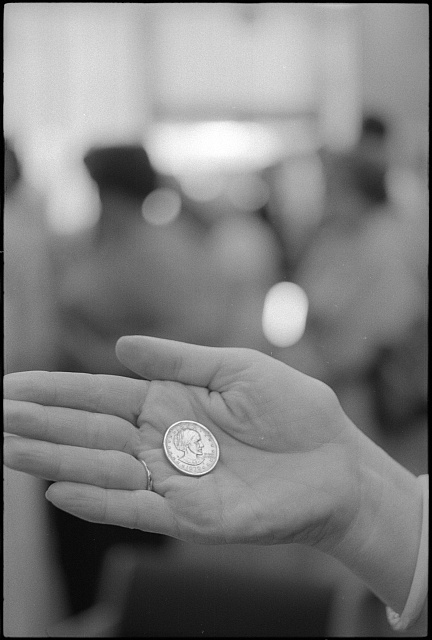
Image credit: Warren K. Leffler, public domain, via Library of Congress

One of the reasons a monastic vocation appealed to me even as a young Protestant was that I need time to think things through.  To contemplate.  To try to make sense of all of this.  I’m not motivated by money or power.  I want to be with others who just want to be.  I’m not lazy and I don’t mind being productive.  It’s just that, well, can’t things not be about money for a while?  Can’t politicians just act like actual adults with a moral center for a time?  The religious leaders who managed to do this were quickly commodified.  In this cloud-smitten winter I’m in the mood for lament.  Some of us want to live authenticly, but those with power and money simply won’t allow it.


Pentagrams

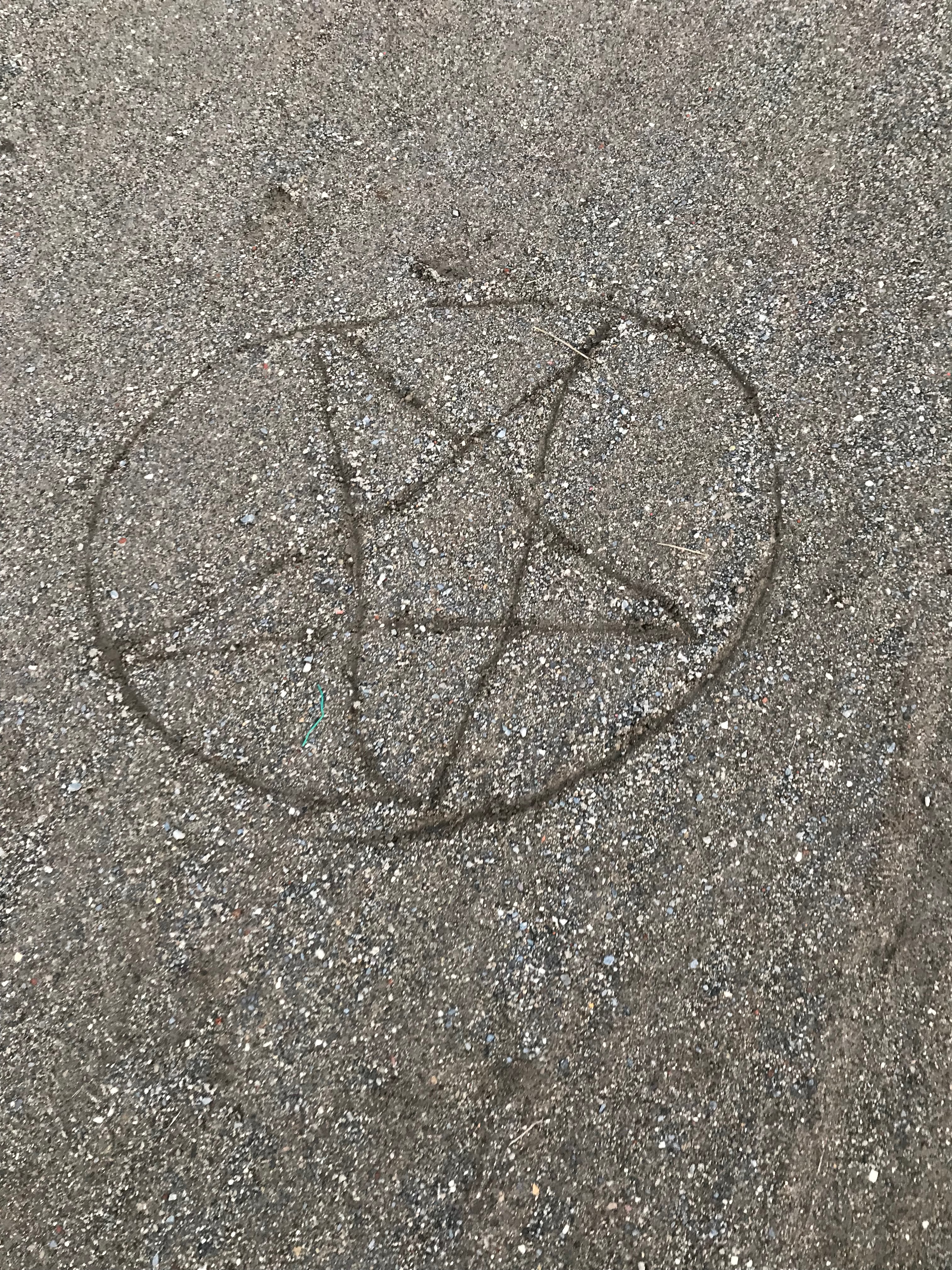
Not to dwell on Satanism, but the morning after my last post on the topic, while out on my morning jog, I came across a pentagram incised in the pea gravel of the bike path.  Then another.  Lest there was any lingering doubt that this had to do with the local school’s Satan club, a few feet further along a 666 appeared.  None of this was there the day before and, given that folks my age are too busy to be out scraping sigels in the sand, I suspect that it might’ve been someone younger.   Dare I say, school-aged.  Protesting or promoting I couldn’t tell.  As I jogged, I fell to thinking about pentagrams.  They’re not inherently evil and actually have an interesting history.  For most of that history it was morally neutral, if not a positive sign.

In the 1800s, during Romanticism’s heyday, it was supposed that an inverted pentagram—one with two points up instead of one at the top—was a sign of evil.  It was also in the 1800s that the contemporary king of outrage, Aleister Crowley, began what would eventually morph into modern Wicca.  Crowley liked to refer to himself as “the wickedest man on earth,” at least among his friends.  The upside-down pentagram was seen to represent a goat’s head, and if you’ve read my book you’ll know that some groups have long associated goats with demons.  Ironically, during the Nixon Administration the Grand Old Party began to use inverted pentagrams on their elephant logo.  Evangelicals who otherwise object to this “Satanic” symbol seem quite okay with it branding their political party.  Truth in advertising, I guess.

The thing about symbols is that they only have the power we give them.  The five points of a star symbol match well the pentagonal symmetry that we often see in nature: sea stars, sand dollars, strawberry flowers, and eucalyptus seed pods.  It’s pleasing to the eye for creatures with five fingers and five toes.  There’s a rightness about it, even if it doesn’t look a thing like the stars in the sky.  Is it Satanic?  No, only to those who believe it to be so.  Are there Satanists trying to take over public schools?  No.  That doesn’t mean people don’t think they aren’t.  (That last sentence is all tied up in nots, I guess.)  Symbols, by their nature, contain the meaning we assign to them.  They say to me that kids pay attention to what adults do,  so if we act grown-up perhaps—just perhaps—they will aspire to do the same.


Satanic Struggle

Around these parts folks are in an uproar about an after-school Satan Club.  The idea is an action to get Evangelical undies in a bunch, and it’s only proposed when a school system supports an overtly Christian club.  Reaction more than action, really.  Right now Nextdoor.com is bursting at the seams with indignation about something most people don’t understand.  I can’t claim to be an expert, but I’ve read plenty of books about Satan and many of them deal with Anton LaVey’s Church of Satan.  The Church of Satan believes in no literal Devil or Hell.  It was established to draw attention but also to make a statement when Christian Nationalists start to get too pushy.  Still, people are afraid of Satanism as the numerous international panics about it have shown.  And conspiracy theories don’t help.

It seems to me that the solution to all of this is education.  People, naturally enough, react to things emotionally.  I do it all the time.  (This is one reason that Artificial Intelligence will never be truly that—humans think with their emotions as well as with reason.)  The sad thing is, there are many easy ways to correct mistaken assumptions.  The information is out there and it’s easily found.  It’s easier, however, to spout off on social media like you’re an expert on something you know nothing about.  Trump introduced a culture of outrage—did his supporters suppose nobody else was capable of doing the same?  The Church of Satan was established as such an outrage.  In a nation of literalists, they hit a nerve.

The Church of Satan does not worship the Devil.  It supports social causes and it cooperates with law enforcement when some unbalanced individuals think it means something that it doesn’t.  To my way of thinking, this creative endeavor, despite getting the attention it sought, might’ve been better thought through.  Although extremism appeals to those who, like Herostratus, crave fame at any cost, does it really move us any closer to where we want to be?  Part of the problem is that many outspoken political figures want us all to be the same as them.  White, Christian, male, heterosexual.  I really can’t imagine a worse kind of nightmare.  Humans crave variety and new ideas.  As I sit here watching a new, uninformed Satanic Panic developing in my own backyard, I wonder if we all wouldn’t do our blood pressure a favor by sitting down with a book.  And maybe learning what this really is about.  Shoving matches seldom end well.


Learning English

English is a difficult language to learn.  Growing up monolingual, I was able to pick up German, Greek, and Hebrew (and other semitic languages) without too much trouble, through intensive schooling.  I have to wonder if those learning English as a foreign language don’t have a much more difficult task.  The other day I was looking at a document in Icelandic (don’t ask), and marveling how I simply couldn’t penetrate it, although it is Indo-European.  Then I sat down to read an article in English.  The topic was of interest to me but it was clear that the content wasn’t written by native speakers.  Indeed, it turns out the authors were from an Indonesia university.  The journal was published by an Indonesian press.  It’s peer reviewed, but those who run it aren’t native English speakers.

Interestingly enough, although the article wasn’t in the field in which I was technically trained, I was able to follow what the authors were saying.  Partially it was because of my familiarity with the topic, which I’d read about before, but partially it was that you can read English without the direct and indirect articles that are our usual guideposts, and with the wrong verb tenses and declensions.  It is possible.  You wouldn’t want this, I suspect, if you were building a rocket carrying people into space, but it isn’t that much different from trying to read the instructions that come with most devices that are manufactured in nations where English is a foreign—very foreign—form of communication.  I admire their pluck.  I still recall enough German that I can get through some documents without generating more gray hairs, but I wouldn’t dare try to write to someone in it.  Nein.

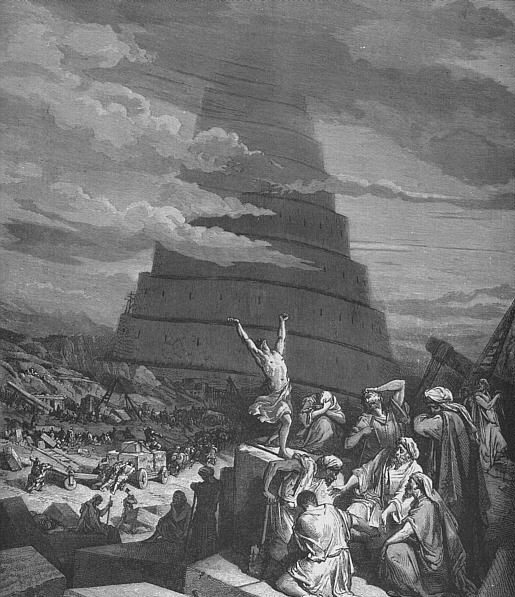
Languages are fascinating elements of human culture.  Although there was no literal tower of Babel to create them, our species, in isolated areas, learned a variety of different ways to communicate verbally.  It’s only with travel that these isolated groups met and generally they try to talk, unless they simply kill strangers on sight.  We want to understand one another.  We all know that our language learning skills are at their peak during our very youngest years.  Brains get ossified into using one language to think and as you age it’s harder to pick up new ones.  Still, we have that old isolationist tendency hardwired as well.  Us versus them.  And if we can’t understand we quickly distrust.  Language study is probably one of the best ways to ensure peace.  If we can’t do that, at least we can try to read our language through the eyes of someone who’s made the effort, even if it’s difficult for us.


Have a Little Hope

Optimism is a rare commodity these days.  Reading Scott Edwin Williams’ new book, Lightbulb Moments in Human History: From Cave to Colosseum, served to remind me of that.  The first of a projected three volumes, Williams’ book frames this rather like some of the other big picture attempts to summarize human history in a thousand pages or less, such as those of Yuval Noah Harari or Rutger Bregman.  In outlook he’s closer to Bregman, who unabashedly states that we have progressed—things are better than they used to be.  To explore this, in a (in his own words) smartass way, Williams has divided early human history into four main areas: STEM, religion, education, and culture.  This framing device isn’t heavy-handed, but it is interesting to see religion included, and not always negatively.

We live in an era when those I regularly talk to (admittedly a small group), generally feel pessimistic about where we are.  A good deal of that is because, as Williams rightly points out, we look at the small picture.  Yes, we have big problems such as Trump, Musk, Russia’s ambitions in Ukraine, and global warming.  Yes, people are suffering and dying needlessly.  If, however, we take a step back, things are far better for far more people now than they ever have been.  That doesn’t mean we don’t have big problems to solve—mostly spawned by capitalism and patriarchy—but if people follow historic trends, we may well end up in a better place.  Historians won’t take Williams’ book seriously—and indeed, he tries to inject quite a bit of humor along the way—but books that remind us to compare where we are with where we have been can provide much needed optimism.  Hope still huddles in Pandora’s box.

I was glad to see Williams including religion in his four keys areas to explore.  I am convinced that he doesn’t devalue any people in the world (the book covers prehistory, ancient Mesopotamia, Egypt, China, India, Meso-America, Greece, and Rome) but his chapter on Christianity is a bit of an outlier.  Although it’s not intentional, his “God of the Old Testament” versus “God of the New Testament” paradigm could been seen as antisemitic.  Again, I’m sure Williams doesn’t intend it that way, but those of us who have studied, and continue to study the history of religions realize that that model has been used to justify nefarious plots in the past.  Throughout the whole, Williams pokes fun at Erich van Däniken who influenced a young Williams just like he influenced a young me.  And growing up requires leaving some things behind, while nevertheless learning something from them.


Expiration Date

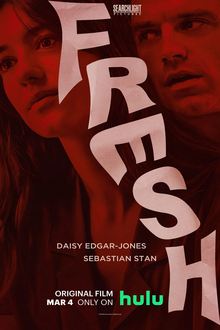
One of the perils of trying to understand others—something that is vitally necessary for a humane and civil world—is facing difficult truths.  Sometimes horror makes you do that.  I’ve recently been trying to watch horror directed by women, as this gives another perspective on what’s scary.  Directed by Mimi Cave and written by Lauryn Kahn, Fresh is very disturbing.  Noa is a young professional who’s not having much luck dating.  He best friend Mollie, who is African American, is the voice of reason in the film.  Noa finds internet dating services inadequate, matching her up with losers, but then she meets a handsome, funny guy in the grocery store.  She agrees to a date and they hit it off.  So far, so good.  Then he takes her to his place and abducts her.  He explains that he’s a supplier of human meat for an ultra-wealthy circle and she is to be consumed.

I won’t say much more about the plot since you may want to disturb yourself some day, but I will say that the movie reinforces something I get from reading Carmen Maria Machado:  women have to deal with men’s assumptions about their bodies.  Even the institution of marriage is all about ownership; men don’t want to pay (the key word) for supporting someone else’s child.  The nuclear family is intended to keep that at a minimum.  Just a glimpse at social standards reveals that men are held less accountable for cheating than women are, largely because there’s never a question of who someone’s mother is.  Noa’s captor is charming and nice.  He’s also a (as later revealed) Satanic psychopath.  He’s also also married, with children.

The film is disturbing on so many levels as it reflects on how a man feels he has the right, literally, to take women’s bodies.  Habeas corpus indeed.  It feels like being invited to dinner at Hannibal Lector’s house.  The religion element—for there often is one—is only revealed in two short glimpses.  One is the plate of one of the cannibals which has a Satanic symbol printed on it, and the other is a mid-credit shot of the butcher’s customers where the Satanic symbol reappears.  This theme isn’t really explored in the movie, but it is equated with “the one percent of the one percent.”  The clients are those who can afford anything and who crave the one thing they can’t have.  This is a movie to keep you up at night but it’s also one with a very strong social commentary.  That commentary is as disturbing as the entire premise of the film.


Valentines and Bombs

So what was I thinking, posting about bombs on Valentine’s Day?  Regular readers know my fascination with holidays.  Valentine’s Day is another one of those that simply gets plowed under by the sharp shares of capitalism.  We work on Valentine’s Day, of course, after waking to news of yet another multiple shooting at a university.  Is it any wonder that we think about bombs on Valentine’s Day?  As Tina asks, what’s love got to do with it?  In 2016 we were taught that the politics of hate is how elections are won.  Surveys consistently show Americans favor stricter gun laws but congressmen love money more.  Maybe love does have something to do with it after all, Ms. Turner.

Love, it seems to me, was the best thing Christianity had going for it.  While the Gospels aren’t entirely consistent on this point, the figure we call John (not the Baptist) focuses on it.  Jesus spoke of, indeed, insisted on love.  “God is love” some radical went so far as to write.  But love gets in the way of selfish agendas.  We can wave Bibles around, and hold them up for photo ops, but they do no good that way.  Besides, love might, in some instances lead to sex.  And we know that Augustine won that argument centuries ago.  We don’t have a widely recognized holiday celebrating that dour saint, however.  Perhaps we should take a cue from the fact that nobody knows which Valentine yesterday really commemorates.  Isn’t love best when it can even be anonymous?

Photo by Jamie Street on Unsplash

I often ponder why it seems so difficult for people to love universally.  Yes, we do annoy each other.  Yes, we have conflicting agendas.  If, however, we pause for a moment and consider we’ll see that other people have feelings just like us.  They too want to be loved and appreciated, and held by those closest to them.  This is not a bad thing.  What’s so wrong with love, after all?  We pour money into the military industrial complex and try to regulate who can love whom.  And we say we’re living the religion touted by the New Testament.  I always try to keep Valentine’s Day special.  It can be tricky on a Tuesday when work will bear its inevitable load of problems to solve.  Still, if we all paused when we faced a people-related frustration on Valentine’s Day, and said to ourselves (saying it aloud would only cause problems) “I love you” to the person causing our frustration, I wouldn’t have been thinking of bombs on Valentine’s Day.


How To Build a Bomb

We see footage of the tragedy in Ukraine.  Or the miles and miles of film documenting World War II with its hell from the skies bombings.  Bomb after bomb after bomb.  I recently wrote of how tragic this is in the light of the Turkey-Syria earthquake.  Just a few days before that, the New York Times ran an interest piece on how bombs are made.  Now, there’s no excusing it, but boys seem to like explosions.  Although I’m a pacifist, I was fascinated by how long the process is and how specialized the work, to make a bomb (technically a shell, but the result’s the same).  And then we see the footage and realize all this time, money, and technology are going into objects to be shot at other human beings.  Rise and kill.

It is an indictment of our species that we spend so terribly much on destroying others of our own kind.  Some of this is evolution, surely, but some of it is consciousness gone awry.  Nobody wants to be the victim of somebody else’s bombs.  At the same time, there are different political philosophies in the world and our history has made us distrust, and maybe even hate, one another.  I think of Putin and his hatred of the west.  And then I think how close we are.  From mainland to mainland, Russia and Alaska are only 55 miles apart.  If you include the islands, that figure drops to 3 or 4 miles.  And an entire ideological world.  This is such a strange fiction we’ve created.  

Some experts tell us that our systems of allowing strong men to rise to the top (and note, female belligerent national leaders are quite rare) will inevitably lead to war.  Of the making of bombs there is no end.  These guys in the news story require bomb making to take home paychecks to support their families.  Even now there are war zones throughout the world where it’s not safe to wander because of ordinance.  Some of them are even here in the United States.  On a visit to a friend in West Virginia we went to Dolly Sods Wilderness area.  It’s rugged and wild and beautiful.  Once used as an area for military training, unexploded ordinance still exists there.  Visitors are warned of this, of course.  But there are other mined and fought-over areas where the innocent are still killed long after the war has ended.  As an adult boy I’ve become less impressed with explosions.  If you live long enough, ideally, you should begin to understand life is a gift, and not something to be thrown away.  Or taken by someone else’s bombs.


Life Lessons

Most of us know a bad movie when we see it.  Some of us walk away.  The rest of us linger and wonder.  Some weeks ago now I watched Ed Wood’s Plan 9 from Outer Space.  “So bad that it’s good” is the mantra often chanted about it.  I lingered because of Ed Wood.  While it’s somewhat fictionalized, Tim Burton’s Ed Wood is itself an odd movie.  It performed poorly for a Burton film starring Johnny Depp.  Critically, however, it was praised and it eventually became a cult film about a cult film.  Or films.  Mainly, I suspect, because Ed Wood is such an interesting figure.  He was a man who wanted to make movies—knew he was meant to make movies—but never got the backing he needed to make them.  He did it anyhow.

Ed Wood starts with Glen or Glenda.  Written and directed by Wood, who also starred in it, this movie was about cross-dressing.  In real life Wood’s mother used to dress him up as a girl and although he was heterosexual, Wood became a transvestite.  This was, of course, in the days when such a thing was scandalous.  Making all of this surreal, and poignant, Wood had befriended an unemployable Bela Lugosi—known to be a drug addict—and had him star as God in the movie.  The next film Ed Wood focuses on is Bride of the Monster.  Again starring Lugosi, this one has a giant octopus in it and heads toward horror territory.  The film about a filmmaker ends with his notorious Plan 9 from Outer Space, the last film in which Lugosi appears and which was financed by a Baptist church.

Ed Wood ends before Wood becomes a poverty-stricken alcoholic and dies in his fifties.  There is a poignancy both to the stories of Wood and Lugosi that also applies to many people in life.  People who know, without a doubt, what they should be doing with their time on earth but who are kept from it by those, who like Lugosi’s God, pull the strings.  We all have limited time and as we grow older we realize that spending it doing a job that’s a drudgery is really a kind of crime.  Would Ed Wood have become a famous director if he’d been backed by the money to produce the movies he wanted to?  We have no way of knowing.  What we do have, however, is a tribute by a talented film maker to a fallen colleague, and that, it seems is the best part of human nature.


Natural Disasters

Like many, my heart goes out to those in Turkey and Syria suffering through the destruction and aftermath of a major earthquake.  Such natural disasters often bring out the best in people—empathy, love, and offers of support.  They lead to both tragedy and human warmth.  They also give us pause to reflect, if we will, on our worst behaviors.  Rescue efforts have been hampered, in Syria especially, by a weakened infrastructure, caused, at least in part, by foreign bombing.  And yes, the United States was part of that.  People who now feel our sympathy only months before faced death from us.  What is it about our species that makes us want to destroy one another through our own technology but then turns and wants to help when a “random” act of nature occurs?  We must prefer death on our own terms.

Image credit: Luca Comerio (1878-1940), Corpses of victims of the earthquake in Messina, via Wikimedia Commons

For me, part of this is reflected in how the so-called “culture of life” treats liberal social causes as the “culture of death.”  Those groups that support “the culture of life” are against abortion but desire no controls on gun ownership.  This is the same basic principle—we want to cause death on our own terms.  We want to play God and decide who is worth saving and who should be destroyed.  I have no doubt that if, say, a tornado destroyed an entire city block outside a convention center where the NRA was meeting that those at the conference would rush out to try to help find survivors.  When they reconvened, they would try to figure out how to protect their “right” to own and collect assault rifles.  Is this “culture of life” really worth preserving?

Meanwhile the people of Syria and Turkey are suffering.  Thousands are dead, winter is setting in, and Covid is still out there.  They need our help.  The amount we spend on aid will, however, pale next to the amount we spend on bombs, drones, and missiles.  I have to wonder if we never really stop to think about what we’re doing when we engage in behaviors that destroy others.  That weeping mother outside an earthquake-collapsed building could be the same mother outside a missile-collapsed structure.  With natural disasters we know that we all stand a chance of being victims.  We feel for those caught in the way.  Once politics enters the picture, however, and we have the ability to control who lives or dies, everything changes.


Urban Tiger

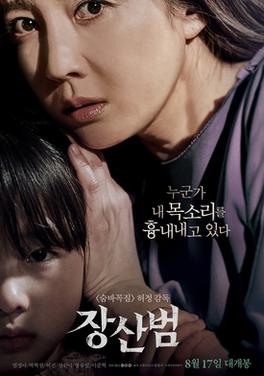
Many things are universal.  Ghosts, for example.  What ghosts do and how they behave, however, can be culturally specific.  The Jangsan Tiger is sort of a ghost and sort of a creature, and it has a religious backstory.  Of course, I’m referring to the Korean horror film, The Mimic.  I found it while looking for Mimic on Amazon Prime, but that definite article made this one free and it had received pretty good ratings.  Released by the careless trespass of a murderer, the Jangsan Tiger stalks a family that really just needs a break.  The parents, Hee-yeon and Min-ho, lost their son five years ago.  They move to Mt. Jang with their daughter (Joon-hee) and his mother, believing that the distance from Seoul will do them some good.  The Tiger, however, has other plans.

Apart from the well-timed jump-startles and stings (this movie “got” me more than once), the story is filled with pathos.  Parenting is probably the biggest emotional gamble a person can take.  The Jangsan Tiger imitates voices and convinces its victims that it is someone they love.  The children actors are particularly effective and their crying is difficult for any parent to watch.  This is horror that pulls at your heartstrings.  The family, as expected, begins to crumble under the pressure.  Religion comes into it because a shaman, ostracized from society, had summoned the Jangsan spirit in a kind of Faustian bargain.  He sacrificed his daughter and now that he’s released again, sacrifices others who are lured into the cave on Mt. Jang.

Interestingly enough, the actual mountain Jangsan—the movie is based on an urban legend—is in real life the site of an active mine field.  Somehow this moves the film from urban legend territory into that of parable.  Many of the scary stories we tell our children are intended to keep them safe from dangers they really can’t comprehend.  Adults plant minefields to make the land unsafe.  The real tiger prowling those lovely hills is one that walks on two legs.  And what that monster craves is human sacrifice.  Now, I can’t claim to understand the entire plot of the film.  Between subtitles and the lack of cultural experience, I’m merely a spectator to something that feels deeper than just a movie.  Those who spend time with horror know that it’s often sophisticated and intelligent.  It’s a genre that appeals to both the mind and to religion.  There’s a reason the shaman stands between worlds.