Clown King

Like many people, I enjoy a Stephen King novel from time to time. King has a talent for drawing you into his tales, and whether or not they’re scary you feel a kind of relief when they’re over. A few years back I read IT. I was prepared to be scared because many people talked about fears of bathrooms after reading it, and, of course, of the terrifying clown. Not being a fan of serialized television movies, I never saw the 1990 movie adaptation. Besides, reading a novel that long is a serious investment of time, and since I like to hear lots of different voices in my reading, I spread out the wealth. In any case, the novel didn’t scare me beyond the neighborhood bullies (who’ve since moved to Washington DC) and I moved on to other things. The new film adaptation has people talking about IT again, and clowns, and clowns always remind me of college.

During the late 1970s and early ‘80s, it was fashionable for Christians to clown around. Taking cues from Paul’s one-liner about being fools for Christ, evangelicals began to experiment with clowns as a means of witnessing. I got involved my freshman year at Grove City College. I researched clowns. Where had they come from? What was the proper way to do it? Was there a deeper meaning? A friend recently sent me a video from Origin of Everything on the subject. I see a lot has been added to the history that I once studied. The idea of the circus clown is one of the more recent innovations of a character that was, in origin, a bit frightening. In classic horror movie style, heavy makeup functions like a mask and we rely on faces to know if someone is friend or foe.

We were taught, in our rudimentary training, that clowns do not talk. To express yourself you had to exaggerate gestures. I learned that makeup did indeed free you from social constraints. The Christian clown, however, had to be good. We weren’t meant to scare anyone into heaven. As nights are growing longer and people’s thoughts are coming to grips with the end of summer, clowns make good companions in the dark. IT may not be King’s scariest novel, but he did understand that bullies and clowns are fears that never go away. And when you combine the two, and move them into the White House, vaunting white faces and corrosive social values, well, maybe it’s time to go to the movies and try to have artificial fears for a while.

Overlooked Scripture

In this great Trump Tower of capitalism in which we all live, I often wonder about the overlooked Bible. Fundamentalist Trump supporters certainly know how to thump it, but do they know how to read it? This thought occurred to me as I was rereading the story of Ananias and Sapphira in Acts 5 recently. The narrative isn’t hidden or obscure. Here’s how it goes: the earliest Christians were communists. Literally. Peter himself was involved. After Jesus’ ascension, his followers pooled their resources and divided them up by how much each person needed. Ananias and Sapphira, a husband and wife duo, sold their property and presented the money to Peter and the collective. They held a little back, though, just in case. The result? Peter saw through the lie and they died instantly. The point was pretty clear—Christians don’t hold anything back for themselves. They live communally.

Obviously, this didn’t last very long. Let the one without a savings account cast the first stone. In fact, by half-way through Acts the holy experiment is already forgotten. Nevertheless, it was the ideal. Christians were people who took care of one another, especially the poor. By the time communist governments (which didn’t work because people are people) took hold, Christians were dead-set against them. Okay, well, they were godless—but the idea behind them was biblical. Today any form of socialism is soundly condemned by most evangelicals. Apparently they don’t read the book of Acts any more. There was no moment when this commune was castigated in Holy Writ. It simply vanishes without a whimper to be condemned as utterly evil in these latter days.

The wedding between capitalism and Christianity has proven an enduring one. Capitalism allows, indeed pretty much mandates, selfishness. It’s difficult to live in such a system and not feel entitled to more than you already have. Who ever says, “No thanks, I don’t need a raise. I have enough”? Those who attempt communal living are generally called “cults” and the suspicion is omnipresent that the leader isn’t holding (usually) himself to the same standards as the pedestrian members. The story in Acts 5, however, is even more extreme. After Ananias lies to Peter and dies on the spot, his wife Sapphira comes in just as those who buried her husband are returning. Peter baits her with a question about how much money they received for their property and when she concurs with her late husband, the undertakers have a second job for the day. This is a faith taken seriously. It was bound not to last.


By Numbers

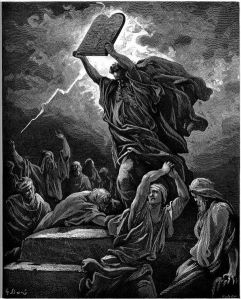
Numbers 12.3 always struck me as one of the oddest verses of the Pentateuch. This was back in the days when I’d been taught that Moses wrote Genesis through Deuteronomy, in toto. When I read “Now Moses was a very humble man, more humble than anyone else on the face of the earth,” I had to wonder about the literalness of Scripture. How can someone who is humble boast of being the humblest person on the planet? Humility is a commodity sorely lacking in contemporary times. This shortage, in an era of fake news and border walls, finds expression in some very odd places. The White House, for example.

Kellyanne Conway, who’s apparently still around, recently told televangelist Pat Robertson, on the air, that Trump’s most characteristic trait is his humility. It seems that good old Moses got one wrong. The most humble man on the face of the earth is Donald J. Trump. You can tell that by the way he took a horrific hurricane and managed to make every media appearance concerning it about himself. It is quite a burden, being so humble. Especially when your race is the best one on the planet and there’s bad behavior on all sides when a white supremacist murders an innocent person for disagreeing. What would Moses do? Pat Robertson—you’re a literalist—help us out here! Mirror, mirror, on the wall, who’s the humblest of them all? I surely hope the Bible isn’t participating in fake news.

It used to be called the good news. The message was one of love for all people and acceptance of the poor, the outcast, the widow, and yes, even the tax collector. I forget which chapter in Matthew it is where Jesus suggests building a wall to keep the gentiles out. It must be in there somewhere next to the chapter where Moses builds a tower up to heaven and then names it after himself. He was, after all, the humblest man in the world. He could afford to throw away entire calves made of gold, right? Humility will do that for you. Since we’ve just undergone a major natural disaster, we might as well start pushing our own self-image again. If Moses promised to build a wall, even if thousands and thousands are suffering and could better use the money, he must push through with his plan to erect a wall. And when he’s done he’ll put his name on it for all to see. That’s the price of humility.


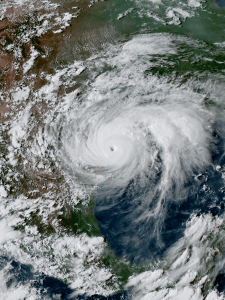
Hurricane Warming

Image credit: NOAA, public domain via Wikimedia Commons

My heart goes out to those suffering from Hurricane Harvey in Texas and Louisiana. Natural disasters like this are often tied to the “wrath of God” model, and outdated though it is, it still captures how it feels. The sheer amount of rain dumped by this one storm is literally inconceivable. Trillions of gallons. Coupled with a completely ineffectual president, the disaster is even greater. Like many others, I’ve been watching since the weekend as the numbers and statistics of woe rise. Lives lost. Property washed away. Once more it reminds us just how small we are in the face of the weather. Some of this same awe was in my mind as I wrote Weathering the Psalms. Ancient Israel did not experience hurricanes—the bodies of water nearby aren’t large enough to generate them. A single thunderstorm, however, is enough to put the fear of God into a person. In ancient times, with an under-developed meteorology, all of this was the provenance of providence. How else could you begin to explain such tragedy?

One of the books that got me started on my meteorotheological quest was Erik Larson’s Isaac’s Storm, about the Galveston hurricane of 1900. Thousands died in that storm, and it remains the most deadly natural disaster in US history. Although Hurricane Harvey developed quickly, there was warning. The death toll is remarkably small (at least at the moment) compared to the fury of the storm. The natural tendency of human psychology is to look to supernatural explanations for such devastation. What have I done to deserve this? How could God do this? Are we being punished? Questions such as these come to mind, although we know that hurricanes are entirely normal features of this planet. Somewhere in the back of our minds, though, we probably are aware that global warming causes more radical weather.

Even as Trump continues to surround himself with climate change deniers, we see what global warming looks like. The weather is an intricate mechanism. Small things effect it. Large-scale changes throw it into chaos. Those who see climate change as a pain in the pocketbook will do anything they can to deny its reality. More powerful than a freight train or battleship, the weather can’t slam on the brakes and suddenly resume a more milder form. No, we’ve already started the process, no matter how many billionaires disagree. My heart goes out to those who continue to suffer from the hurricane. We need strong leadership and clear thinking at such times as this. We will need more of that in years to come. But we must also keep in mind this isn’t the anger of God. Unfortunately the wrath of human greed can be just as devastating as the wrath of the Almighty.


Planet A

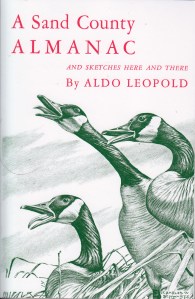
Two of the classics of ecology, A Sand County Almanac, by Aldo Leopold, and The Sea Around Us, by Rachel Carson, were published by Oxford University Press. In its present-day iteration the press has a Green Committee, on which I’ve sat from very nearly the beginning of my time there. As a committee, we’re reading these classics to see what we might learn some half-century-plus after they were published. I’d never read A Sand County Almanac before. It’s a pity, since I lived in southeast Wisconsin, from which the book takes its genesis, for about a dozen years. The writing is poetical prose, but the ideas are solid science—the land on which we’ve evolved knows how to take care of itself. When one species becomes too greedy, all suffer. Leopold ends his book by suggesting a land ethic should be put in place. Now, a human lifespan later, has it?

Hardly. Watching the Trump Administration doing everything it can to commodify any aspect of the environment that might make a buck—or at least a buck for the wealthy—is alarming in the extreme. There is no soul in the land, to this way of thinking. They believe that because they themselves lack a functional soul. A soul cannot exist without ethics. What we do to this planet is one of the largest ethical issues imaginable. No species, rational or not, destroys its own habitat. Except our own. Arrogant to the point of supposing ourselves divine, we think we can take what we want and give nothing back. And everything will be just fine. I wonder that we’ve had this inexpensive, readable guidebook this last seven decades and have continued to ignore its sage advice. Maybe we’re too busy making money to read something that sounds suspiciously like poetry.

One of the observations I had about the Almanac was how attuned to the philosophy of nature it is. Philosophy has many enemies these days, from prominent scientists to Republicans. Nobody seems to value the capacity for deep and thorough thinking through of a problem that is unbeholden to any orthodoxy. The philosopher can ask “what if?” without regret. When it comes to the environment, humans aren’t the only philosophers. We’ve convinced ourselves so completely that we’re more advanced than other species that we suppose they can’t teach us anything. One thing they do, however, without our interference, is create balance in nature. It’s an ethic to which even our species might aspire. If only we would listen to the wisdom of those who pay attention to the world that has given them life.


Birth of a Notion

Childhood is an impressionable time. Our phobias begin then. Children are vulnerable. (Of course our current government is intent on making us all afraid of bullies again.) This theme of childhood keeps coming up in interviews with directors of horror movies. A friend recently sent me a New York Times article by Erik Piepenburg about Annabelle: Creation. The piece includes some horror auteurs discussing what frightened them as children. We all experienced fear at a young age. For some of us it hung around awhile longer. Horror movies have, despite their low brow reputation, been reliable revenue streams from the beginning. People will pay to be scared, for a little while.

I have to confess to having fallen behind on The Conjuring diegesis. Since I’m the only one in the family who really likes to watch horror, I don’t see these movies in theaters and, well, there’s a lot to do besides watching movies these days. And finding DVDs is getting harder as well. Streaming scares me. Anyway, I missed The Conjuring 2 and the original Annabelle. I’ve read accounts of what supposedly happened in real life—Annabelle is one of the cases investigated by Ed and Lorraine Warren—and it has been written about a number of times. The Warren’s take on it was that a doll can’t actually be possessed. (Sorry Chuckie.) They suggested that it could act as a conduit that would’ve eventually allowed a demon to possess the two young women who kept the original Annabelle in their apartment. The doll showed up in The Conjuring, although it wasn’t part of the main story. The haunted doll trope is scary enough that the second knock-off in this universe focused on it.

Interviews with older horror directors reveal that they often grew up without fathers. Despite the gender profiling, for kids fathers are generally thought to represent protection. A child without a father often feels insecure. Even today when people talk of their fathers I have to remind myself that they can be a good thing. I often wonder if those of us who like horror films had childhood parental issues as a regular part of our pasts. I’m generalizing, of course. Growing up into Trump’s America has given us all plenty of things to fear in the present. Since January a number of high profile horror films have gotten notice in the press. Sometimes a real bully can cause as much fear as a possessed doll. That’s especially the case when our government wants us to submit like a bunch of frightened children. Childhood fears may, in some cases, serve us well.


Noah’s Parable

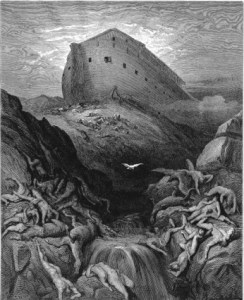
I write a lot about Noah. For those who didn’t know me before this blog, I was once invited to write a book on Noah for a series ironically published by Oxford University Press. I had been researching Noah for years, and I intended to write the book. Then, as the kids are saying these days, life happened. My interest in Noah has never waned, however. And part of the reason is that it is perhaps the most influential story in the entire Bible. I realize I’ll need to explain that, but stop and think about it—Evangelicals seldom talk about Jesus any more. Their concerns are with unborn babies, people making babies outside wedlock, and destroying our environment in the name of capitalism. It is the last of these that brings us back to Noah.

A friend recently sent me a story on Splinter by Brendan O’Connor titled “How Fossil Fuel Money Made Climate Change Denial the Word of God.” O’Connor is looking at the history of how a pro-environmentalism-inclined evangelical movement decided to shift its base to align with climate-change deniers. Behind the scenes are fundamentalist clergy. Oh, we like to laugh at them and their ways, but they are the power behind the throne and we should really not let them out of our sight. You see, as O’Connor points out, they believe that the God of Noah can protect the world from the worst that we can throw at it. It’s perfectly okay to try to destroy the planet because the magic man upstairs can fix everything right back up if he needs to before sending his son back to town on the final business meeting. Laugh if you will. These people are dead serious and many who hold power in Washington believe every lie they utter.

As a nation—perhaps as an entire western culture—we’ve laughed off religion. Secure that there’s no God up there to rain down, well, rain, we laugh and jeer at Noah. It’s a children’s story, after all, isn’t it? Okay, forget about the part where everyone in the entire world drowns, except eight people. And when he gets drunk and lays naked in his tent after it’s all over. Other than that, it’s a kid’s story, right? The story of the flood is one of the oldest myths in the world. It has been part of human story-telling for millennia. We now have very powerful people with smart phones in their pockets and access to vast hordes of money who believe it literally happened. And since God took care of his own once, he can do it again. The educated smirk. The smart start building arks.


American Caligula

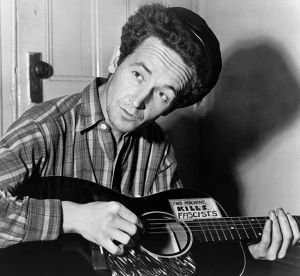
In the days before the American Caligula, the Trump family disgusted average Americans. I mean specifically one of those whose songs are considered essential Americana. Woody Guthrie is perhaps best known for his song, “This Land is Your Land.” Many of us were taught to sing it in school, back when public education was still a thing. Some of us were taught that Guthrie was the Dust Bowl crooner who railed against social injustice. The lyrics to “This Land” are not celebratory, according to those who knew Guthrie. They’re a condemnation. But then, it’s just like later interpreters to prettify the words of a prophet. “A young lady will conceive,” for Isaiah meant the horrid crisis of Assyria’s attack on Jerusalem would soon be over. A couple centuries later it was made into an angelic birth announcement. But I digress. Guthrie often wrote and sang about social injustice. He was known to perform with the words “This Machine Kills Fascists” appearing on his guitar.

Photo credit: Al Aumuller/New York World-Telegram and the Sun, from Wikimedia Commons

Those of us who write are never far from our notebooks. You don’t always have time to write out in full form ideas that come to you like a gray matter receiver, often at the most inconvenient times. Recently it was discovered that Woody Guthrie wrote a song called “Old Man Trump.” The song castigates the racism for the Donald’s father whose Beach Haven was once Guthrie’s home. Beach Haven was built to house returning veterans of World War II. It was off limits to African Americans. Guthrie responded in the way he did best, with poetry. The story of and words to “Old Man Trump” can be found in a Washington Post story written by Justin Wm. Moyer during Trump’s campaign. Although Guthrie never wrote the music, the song has been subsequently recorded, and in the light of the last few days, needs to be widely played.

Republican leaders, still hoping to profit from Trump, refuse to outright condemn his open and obvious racism. “This Land is Your Land” was written to protest just this kind of privileging of one “type” over another. It took some time before Romans realized their third emperor was insane. They may have know earlier, but there’s a social embarrassment to admit that the most powerful man in the world is off his rocker. Insanity and racism may not be the same thing, but neither is acceptable in a world leader. Ryan Harvey has put “Old Man Trump” to music and has made it available to the world. Give it a listen and think about where we are.


Power in the Blood

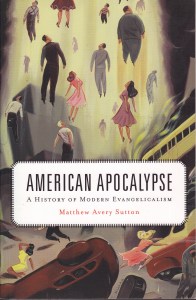
Converts, they say, are often the worst. It matters less what the conversion is to or from, since the zeal of the newly enlightened is impossible to match. The textbook example with religion, especially in America, is Evangelicalism. Those who’ve “found Jesus” are eager and too willing to tell others about it. You don’t often hear, however, of those who grew up Evangelical, but then had second thoughts. Often they disappear quietly. Evangelicalism is a potent force in American life. Intellectuals, embarrassed by it, tend to pretend it doesn’t exist. Or it’s on its way out. No need to approach, with nervous laughter, those who actually believe this stuff. Evangelicals, however, can get presidents elected and their zeal can take away any number of freedoms deemed “godless” by those who may have no more education than the local bartender. Matthew Avery Sutton’s American Apocalypse: A History of Modern Evangelicalism is masterful. Although not comprehensive (the movement is too large for that) this book does not shy from the unifying fact behind radical evangelicalism—the belief that the end is nigh.

Oh, I know. Those of us who are educated have no need to take such nonsense seriously, right? Sutton may change your mind on that. When you realize just how close to disaster after disaster this thinking has led (and continues to lead, under the current administration) us, you might want to take the Fundamentalists a bit more seriously. They constitute the largest religious bloc in the nation. One of the baffling things about them is their protean nature. What’s the difference between an Evangelical and a Fundamentalist? And what’s with the obvious differences between a Timothy LaHaye and a Billy Graham? And where do these people get all their money? (Fundamentalists have always been close to nearly endless, well, funding.) Republican presidents from far before Nixon realized that big business and conservative theology, although strange bedfellows, are remarkably compatible. (Each thinks the other side doesn’t realize it’s being used.)

American Apocalypse is an important book. Written before perhaps the strangest turn in US history last November, it might have helped to show that Trump was a serious threat from the beginning. If only the educated took it seriously. Evangelical antipathy to women’s rights, civil rights for minorities, and socialized medicine run very deep. It’s the Old Boys’ Club with a vengeance. Recent events have shown yet again how important it is to understand these ways of thinking. And those of us with insider knowledge have never been welcome in the academy. That’s okay, though. If I go back to my roots I’ll realize the world’s about to end any day now. Those who’re smart might think about taking equestrian training because I’m sure there will be white horses involved. If only I could get myself converted back.


Surface Tension

Montclair, New Jersey, is distinguished by having two bookstores. On Saturdays when my wife has to work there, I sometimes come along. Apart from the pleasant company, it isn’t every day that one can visit two bookstores. By supporting such shops, I am protesting the ignorance rampant in this nation. One, the Montclair Book Center, specializes in used books. Not always competitively priced, I nevertheless seldom leave empty-handed. It’s a healthy walk from there to Watchung Booksellers, a compact indie up by the train station. For a small store they always have an intriguing selection and I’ve never seen it empty on a Saturday. As I was walking the distance between the two, I noticed that Montclair’s downtown (and I’m not picking on Montclair, which I love) focuses on appearances. This is true of almost all shopping malls as well. Salons, clothing stores, eating places, tattoo parlors, health clubs. Places you go to help hone your image. Where are the stores catering to the mind?

Don’t get me wrong, I also have a body. I like to keep healthy too. I jog when I can, and I’m a vegetarian of nearly twenty years. Yes, there are the necessary places like drug stores and specialty shops where you can get your vacuum cleaner repaired, but few places to go explicitly to encourage mental growth. Hot, I stopped into a coffee shop for a bottle of juice. Patrons were busy at their phones and laptops. I recalled how there was a time when intellectuals hung out and conversed in coffee shops, exchanging ideas over mugs long grown cold. Even those sitting outside on the sociable, colorful chairs were busy texting, Instagramming, or tweeting away their weekends. I closed my book and walked on. I felt a vague but pressing need for intellectual engagement. I headed to the second bookstore.

On the way home one of those industrial-sized lawn-care vendors cut us off on the highway. Lawn-care is big business around here. It’s all about appearances. What has happened to the life of the mind? Allow me my curmudgeonly years—I recall walking downtown as a child and seeing the office supply store with actual paper, smoke-shops with their abundant magazines and wire spinner racks full of questionable paperbacks, and even the Christian bookstore with its tracts and Bibles. I didn’t have the benefit of living in a university town, but people I saw were talking to one another. Exchanging ideas with someone actually present. Self-consciously I look down. I’ve had these cargo pants for many years. This shirt I’m wearing I purchased in Wisconsin in another decade. Even these shoes haven’t been replaced after all these miles. This hat on my head is almost older than my college-graduate child. I can’t be bothered with my appearance right now, though, because there’s another bookstore just ahead.


Miracle on 34th Street

It smelled like Christmas. I was out of the office for a rare lunchtime errand, and I had just turned the corner from Madison Avenue onto 34th Street. It hit me like childhood—the scent of pine. I couldn’t believe it as I looked ahead. Wreaths lay piled up on the sidewalk. At least a dozen newly harvested trees were leaning on a makeshift frame along the street. Long disused store windows from B. Altman’s were fully decorated with Christmas scenes. Five minutes later, after my errand, I walked through the scene again. Tourists were snapping photos to paste on Instagram, Snapchat, or Facebook. Clearly the people responsible were getting ready for the holidays extremely early even for money-grubbing New York. Of course, it was all a set for a television shooting. Working in Manhattan is like being on a movie set most of the time.

It isn’t at all unusual to walk through the line of trucks and trailers parked along one of New York’s lesser used cross streets on my way to work. I see set artists working to make a store front look as if a fire had recently broken out there. Famous people lurk inside their trailers until handlers can get them out and away from hoi polloi. We’re all actors here. This isn’t an authentic existence. As I walk through today’s Christmas set, I step past the homeless with their grocery carts full of their worldly possessions. They’re the only ones on this street who aren’t actors.

I’ve been working in Manhattan for six years now. The dizzying extremes of wealth and poverty juxtaposed hard up against one another is disorienting. We would rather live in a fantasy world than help those who are suffering in real time. Yes, there are people who dwell in hells of their own making. I’m not naive. I also know that we create hells for those we don’t like. Those who “underperform” or who don’t value mammon as much as a red-blooded American should. We cast out those who have mental problems and politely ignore them as they rage on the street corner. We do, after all, have to get to work. New York is an experiment in which the virtues and vices of humanity are concentrated and magnified. We then project it onto the silver screen for all to see and covet. But just off the set there are hurting people. They won’t appear on the camera, but they’ll be there after the crew is gone. If we wanted to, amid all these trees and wreaths, we could find a way to help them. We could make this world a better, more authentic place. It’s my Christmas wish that we will.


Thy Fandom Come

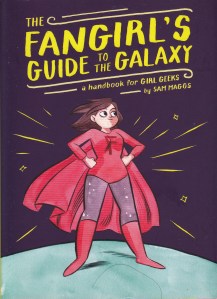
It’s not hard to feel that you’re from another planet. If you were born in the sixties and had kind of a rough transition to this whole internet thing, you know what I mean. Still, I want to be part of it—it’s kind of like New York City, only bigger. And faster. The commute doesn’t take nearly as long, now that dial-up’s a thing of the past. So I bought someone who was into fandom Sam Muggs’ The Fangirl’s Guide to the Galaxy: A Handbook for Geek Girls. This particular fandom, well, fan, gave me the book to read. I’m a feminist, so I don’t have any issues with reading a book intended for girls. What became clear to me, however, is that I don’t understand the internet nearly as well as I thought I did, and that girls find they’re oppressed there too. What is it with men and control?

It is an ethical issue. I don’t blame people in the past for not thinking like we do, but today there’s no excuse whatsoever for considering somebody a lesser person because of their gender. Women and girls have just as much right to “guy things” like geekdom as do males of the species. Fandom is all about fun. Enjoying the fantasy of living, for a little while, in other worlds. From the way many men treat women it’s no wonder that they feel that need just as much as my own self-identified gender. Religion, unfortunately, bears much of the blame for this. In the largest religious bodies in the world women are still excluded from leadership roles. Religion is kind of like fandom in that way, I suppose. It can be all about exclusion. We exclude others to make ourselves feel special. Why not celebrate difference and find a place for everyone?

It’s difficult to read The Fangirl’s Guide as a man simply because you’re constantly reminded (and not intentionally, because it’s written for girls) at how inhospitable men have made much of the world for their female earthling compatriots. I was reminded at several points in this book of how films like Wonder Woman and the recent Ghostbusters stand out in their sympathetic portrayal of women heroes. And equally how men find reasons to criticize them. Then I consider the White House and shudder. When a nation elects an open and avowed patriarchalist as president we all could use a fantasy world in which to hide. This little book didn’t make me into a fangirl, but I do hope it makes me a better man.


Implied of Course

The American terrorist attack in Charlottesville over the weekend should have us all frightened. Despite declarations of “it couldn’t happen here,” fascism is an adaptive disease that finds its way to new hosts quite readily. The atmosphere coming out of Washington only promotes contagion. Trump’s response—bad behavior all around, no one party to blame—left the supreme white commander open to criticism. The appropriately named “White” House spokespersons responded with an implied “Of course that includes white supremacists,” according to the Washington Post report. That’s an awful lot of weight for an adverb to bear. The past six months have given many of us reason to doubt it’s true at all. “Of course” 45 loves all Americans. Or at least their cash.

Of course, I could be making a lot out of an implied deflection. A national leader should not hesitate to point the blame squarely at any supremacist group. Listen closely: no group is superior to another. Anyone’s background, examined closely enough, is likely to turn up a character or two who would be suspect. Trump’s election gave a new boldness to fascist groups—this is the way America’s going, isn’t it? Republican leaders, full of squees and shivers, refuse to say anything negative about a man whose thumbs can’t even reach the humility emoji. Hate crimes are wrong. They used to be illegal. What has happened to leadership? It’s more than just the CFO, wait, I mean Commander in Chief, who’s implicated here. It’s an entire political party that won’t stand up against injustice. What ever happened to “truth, justice, and the American way,” Clark? There’s never a phone booth nearby when you need one.

Back when I worked at Nashotah House, we had a conflicted environment. One of my colleagues told me something that has stayed with me ever since: “silence implies consent.” If you don’t condemn evil, you are complicit with it. We all need to stand up and say racism isn’t just an opinion—it is evil. Human rights are more than just civil rights. All people have the right to be treated fairly. Someone who hates others enough to climb into a car, start the ignition, and accelerate toward a group of pedestrians is guilty of premeditation. A president who won’t say as much is tacitly saying it might just be okay. Of course, it might just be that he’s too self-absorbed to get the thumbs going on the words we’ll never read: “I’m sorry.” Of course I’d be glad to be proven wrong.


Prophecy of Hezekiah

Maybe my recollection of the Gospel’s a bit hazy. I seem to remember one of the main characters of the New Testament saying something about doing unto others as you would have them do unto you. And turning the other cheek. I may be recalling incorrectly, since Robert Jeffress, one of Trump’s “evangelical advisors” (and since when do Presidents need evangelical advisors?) has said the Bible gives you permission to take out your enemies. Granted, it takes a twisted exegesis of Romans, and twisted exegesis works best in twisted minds, but this runs full frontal in the gospel ideal of love just two books earlier in the Good Book. Forcing the Bible to say what you want it to say is a tactic as old as preaching itself, but still, those of us with training in Scripture shudder.

Pulling verses out of context like the Bible’s a magic book is called “prooftexting.” Not related to the current plague of texting, prooftexting means you can make the Bible say whatever you want it to. The classic example is that the Bible says “there is no God.” Check it out. I’ll even give you the reference: Psalm 14:1. What’s that? I’ve left out the most important part? “The fool says in his heart, ‘there is no God.’”? You see what I mean. The danger here is that a feeble-minded, biblically illiterate world leader could easily be swayed. Nukes, after all, are great for your ego. Who wouldn’t want the Bible to say that it’s fine to take out all your enemies, and horde all the money you possibly can (not it’s not the root of all evil—Paul is dead, after all.) Except Paul wrote Romans. How are we ever to decide?

The Washington Post story by Sarah Pulliam Bailey may not suggest that we should pay attention to Bible scholars—hey let’s not get too radical here!—but the world would be a very different place if we did. The Bible is a complex and difficult holy book. (As most holy books are.) The idea used to be that you had to spend a lifetime in a monastery, or at least a few years in a seminary, to say something intelligent about it. And that training wasn’t reinforcement of literalism. But we live in a brave new world. A world that re-envisions Jesus as the loving God with his finger firmly on the button. And sycophant preachers saying, “Go ahead, make my day.” It’s all there in the book of Hezekiah.


Bible Hobby

Hobby Lobby needs a hobby. Besides the Bible, I mean. The amorphous media has been buzzing about the new Bible Museum set to open in Washington DC soon. The Lobbyists seem to think the Bible will save America. Not the Bible exactly, but their narrow, constricted, and uncritical view of the Bible. Seems a lot to expect from a museum. Museums, the Green family apparently hasn’t considered, are monuments to the past. When I last saw the politically incorrect Elgin Marbles I didn’t feel inspired to run out and build a parthenon. Instead, I simply wondered about the past and how it must’ve been cool back then. I didn’t want to live there though.

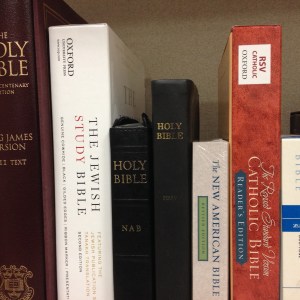
I’m sure there are great plans for the Good Book in the Bible Mausoleum. Looking at displays of the same text over and over can surely get a little dull, if we’re being honest with ourselves. I like Bibles as much as the next guy. Actually, I probably like them more than the next guy, but that’s beside the point. I don’t need to go to a museum to see them. There are Bibles all around my office, a mere arm’s length away. Here at home I can take in many of them at a glance—there are Bibles on three sides of me even as I write this from my favorite chair. Saving a nation that’s had the Bible from the very beginning sounds just a touch ambitious to me. But then, I’m no billionaire with nothing better to do with my money. There’s probably a tax write-off in there somewhere.

The thing about the Bible is, once you learn about it you can’t unlearn what becomes clear along the way. Cover your eyes or ears if you will, but we know the Bible had a long and complex history before becoming “the Bible.” It doesn’t have much of a plot without Revelation tacked onto the end—and seriously, that was one of the reasons it made it into Holy Writ to begin with! The circumstances that led to the Bible were often quite profane, in fact. It was the recognition of it as a sacred book that was a religious activity. The next step was to spread it as far as possible. That’s pretty much been done. The end result? The election of Donald Trump. If that’s salvation we’re all screwed. At least when we’re all standing in the bread line we’ll have a museum to visit while we wait. And it will be an encomium to something that was great once upon a time.