Science of Convenience

One thing I’ve noticed about employers is that they’re all for science, except when science contradicts capitalism.  Then they become all mystical.  I had a situation illustrate this particularly well with one of my many employers.  Touting everything to be “evidence based,” they liked to refer to the science behind their reasoning.  Then a study came out demonstrating, scientifically, that more breaks actually increase efficiency in learning and working.  Suddenly silence from management. Crickets chirped.  This observation was just as “evidence based” as daily operations, but it was ignored because, well, it would be giving too much to employees.  You see, science that benefits the upper levels of management is one thing, but by the time it trickles down, well, you know.

American culture is based on the premise that you need to drive people to work as hard as possible.  Perhaps anecdotally, the Covid-19 pandemic showed that workers at home were just as, if not more, productive than they were after enduring an often horrendous commute to get to the office.  Once pandemic strictures began to lift, however, it was all “we want you back in the office.”  Bosses like to look out over seas of employees in their cubicles and feel the surge of the galley master with his whip.  You need to keep workers in line, you understand.  That’s the way capitalism works.

I often wonder where the world would be if superpowers didn’t have cultures based on greed.  One of the seven deadly sins, or capital (!) vices, the worship of personal gain stands behind capitalism as we know it.  And we’ve seen the results.  A shrinking middle class as those with all the wealth make plutocracy out of what was intended to be a democracy.  (Of course, the wealthy founders of the country probably didn’t have a real grasp of what life was like for the poor, even at the start of things.)  Capitalism is good at using aspects of all human endeavors in order to increase its reach.  Science is one such tool.  Religion is another.  Science says more time off is good, and can increase productivity in our current world.  Religion says greed is evil.  These are the parts we’d like to ignore.  Even the Harvard Business Review suggests a four-day work week is beneficial.  Business leaders are skeptical, of course.  Skepticism is one of the elements of science.  And science can be very profitable, if it favors those who hold the reins of power.

Photo by Alex Kondratiev on Unsplash

Teaching Horror

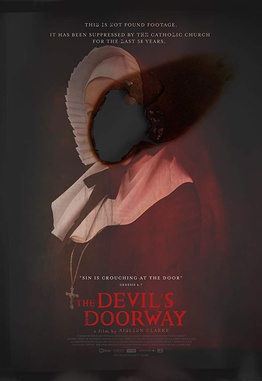
Critics who complain that Aislinn Clarke’s The Devil’s Doorway has nothing new really have no appreciation for parables.  An Irish found-footage film, The Devil’s Doorway is, as it clearly states, a lament over the Magdalene Laundries in Ireland.  I’d never heard of these institutions that existed until less than 30 years ago.  Founded by the Catholic Church, these “asylums” were places where women in trouble were essentially treated as slave labor.  Women, who often have difficulty hiding the results of sexual promiscuity (something men more easily get away with), were put to work in these reformatories.  I don’t know if the conditions were as bad as presented in the movie, but they provide a springboard into a perfectly serviceable horror film.  The horror tropes may be familiar, but that’s true of most horror of these days.

Two priests are sent to a Magdalene Laundry to investigate a reported miracle of a bleeding statue of Mary.  Please pardon my invocation of Alice Cooper here, but “Only Women Bleed” would be appropriate to consider.  Fr. Thomas, older and skeptical, doesn’t believe in miracles while Fr. John, the “techie” (it’s set in 1960) films the proceedings.  The priests uncover layer after layer of hypocrisy and deceit.  The Mother Superior, who shows no deference to the priests, insists that many of the pregnant women that have passed through the asylum were impregnated by clergy.  But there’s more.  As the statues bleed, a young woman, a pregnant virgin, is found kept in a dungeon.  Ghosts of murdered children cavort through the night.  A satanic niche for a black mass is discovered.  And the pregnant virgin is also possessed by a demon.  There’s a lot going on here.

To mistake all of this as “just a horror movie” is to miss the point.  Such is the way with parables.  Clarke, the director, was an unwed mother at 17 who realized that, had this happened a few years earlier, she could well have found herself confined to a Magdalene Laundry.  The movie doesn’t, it seems to me, condemn Catholicism per se.  For example, the two priests documenting the activities seem to be good people.  Fr. Thomas, as it turns out, had been born in this selfsame institution.  Raised as an orphan, he became a priest who, not surprisingly, doesn’t believe in miracles.  He too, was a victim.  Religious horror serves many purposes.  Often the very unfamiliarity of religion itself can drive the fear.  Another purpose, however, is to educate.  The Devil’s Doorway educated me, and I appreciate the parable.


In Sheep’s Clothing

Evangelicals supporting Trump must experience some cognitive dissonance when they read Dietrich Bonhoeffer, one of their heroes.  Bonhoeffer, who could easily have remained in comfort in the United States, went back to his native Germany because he was deeply troubled by the fascist regime of Hitler.  Involved in Operation Valkyrie, the attempt to assassinate Hitler, Bonhoeffer was hanged for his faith.  He wrote, “If I sit next to a madman as he drives a car into a group of innocent bystanders, I can’t, as a Christian, simply wait for the catastrophe, then comfort the wounded and bury the dead. I must try to wrestle the steering wheel out of the hands of the driver.”  How far we have fallen!  Now evangelicals support someone with all the signs of being a madman.  A man who has said he intends to dismantle democracy itself, if elected.  How quickly Bonhoeffer and his important work is trampled underfoot by his own.

Some people express surprise that I still appreciate evangelicals such as C. S. Lewis and Dietrich Bonhoeffer.  They were believers who stood by their convictions, but who used reason to do so.  And yes, Hitler had messianic delusions as well.  A poor carpenter once warned of wolves in sheep’s clothing, but then, what did he know?  And can we compare Trump to Nazism?  Have you read the Project 2025 agenda?  An agenda so explosive that the publisher for the book on it (HarperCollins, with a foreword written by J. D. Vance) has put off publication until after the election.  You don’t want people to know what they’re voting for, now do you?  Wolves dressed up like what?  You can’t pull the wool over our eyes.

Photo by Tanner Yould on Unsplash

I have no problems with Evangelicals.  Faith is exceptionally important in people’s lives.  My concern is the weaponizing of religion by political cynics.  They select issues that they know will rile up religious conservatives and use them to glean votes.  One of the oldest tricks in the book—known by every stage magician who’s ever stood before an audience—is misdirection.  Get people to look over there so you can pull a trick over here.  I spent my formative years reading Bonhoeffer, and his reasoned evangelicalism made a lot of sense to me.  Of course, this was when the biggest threat we faced was characters like Richard Nixon and Ronald Reagan.  Now even they are trampled under the iron claws of what has become “conservatism.”  Even Dick Cheney has said he’ll vote for Harris.  If Hitler hadn’t had Bonhoeffer hanged, modern evangelicals, it seems, would’ve done the job.


Free Word

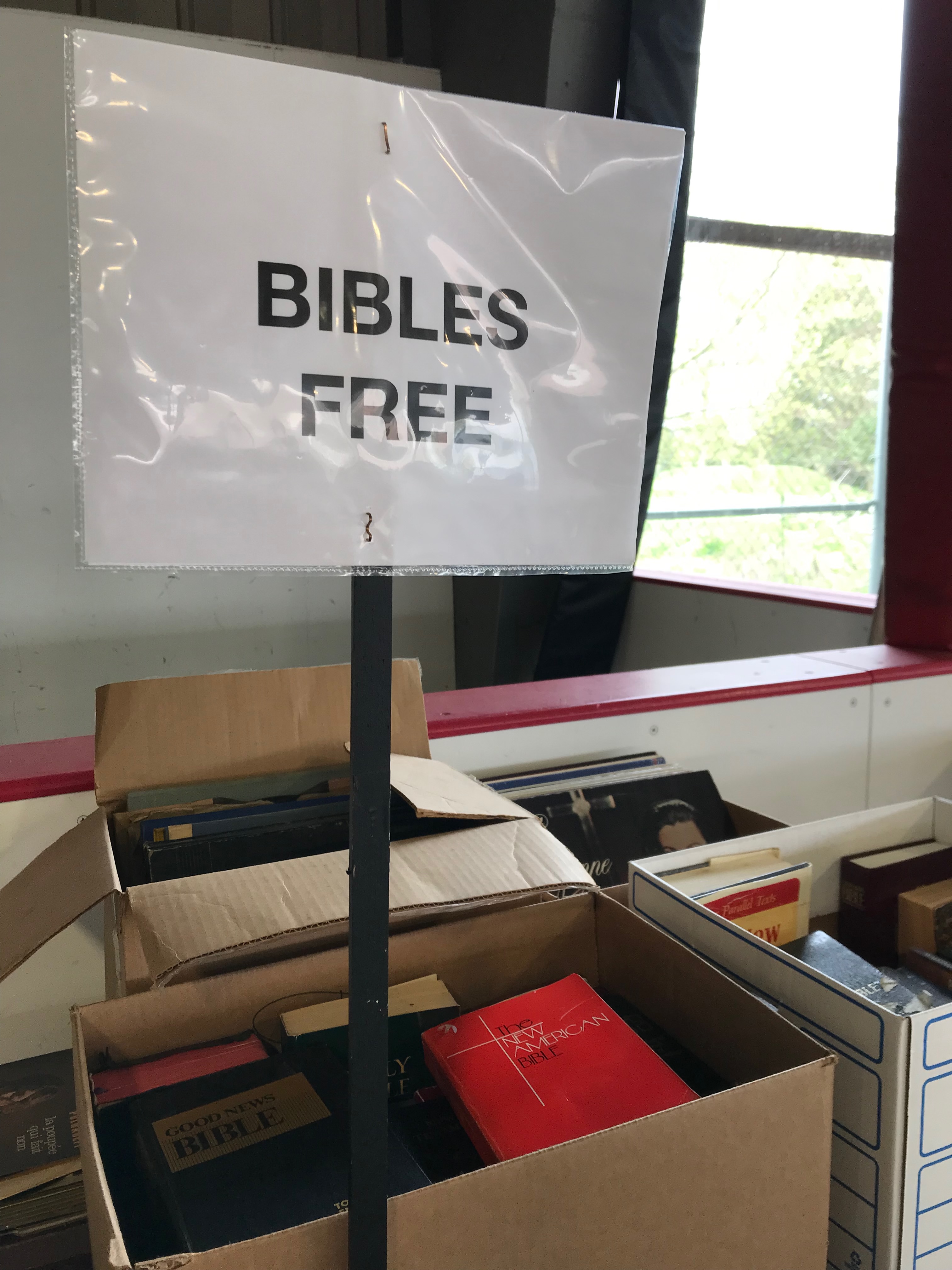
“Anything free is worth saving up for.”  That’s a line from one of my favorite movies of all time.   Free, though, can mean many things.  The “free cookie” is something good to entice you to buy more.  It often works.  Free, for a person, indicates the ability to do what we want (within the constraints of capitalism, of course).  But “free” can often mean cheap, overly abundant.  I like to decorate our lawn with rocks, which are often free, but if you want decorative rocks you’ve got to pay for even the ground beneath your feet.  So it is that when I attend book sales I marvel about the fact that Bibles are nearly always free.  It occurred to me again when I attended a spring book sale a few months back.  I always look through what’s on offer—call it an occupational hazard.

I used to attend the Friends of the Hunterdon County Library book sale in New Jersey.  I believe it is the largest I ever visited.  I used to get there early opening day to stand in line.  One year, one of the volunteer friends came out and announced that they had a really old Bible (only 1800s) that would be $100.  People do, however, tend to donate Bibles to book sales in great numbers.  I suspect organizers are reluctant to put Bibles in the trash.  They also know that people aren’t going to shell out money for them, so they try to give them away.  What does this say about being free?  Is it desirable to be so abundant that you’re left on that table in the back while everyone else is leaning over the more exciting items on offer?  There’s perhaps a message here.

Of course, Trump is selling Bibles for $60.  That’s a bit steep, even for an academic Bible (which his is not).  It might be suggested that this $60 is cheaper than free.  Now, I work with Bibles that are sold at a profit.  One thing I’ve learned is that Bibles sold are always for profit. Those who are honest admit what they do with the lucre.  Although he’s tried to keep it under cover, the Trump Bible does funnel profits to the GOP hopeful.  Yes, he is making money off the Bible and wants to be elected.  If that happens, freedom will disappear.  He’s said as much at his rallies.  Looks like stormy weather to me.  There are organizations that give away Bibles.  Somebody, however, pays for them.  In this strange experiment of a country, anything free is worth pondering.  Nothing, it seems, comes with no strings attached.


Mad Homework

Watching movies can be studying.  It’s all a matter of what the exams are.  I studied enough when I was young to know that Vincent Price was a horror star.  Probably I had no conscious idea what “horror” was yet, contenting myself with terms such as “scary movies” or “monster shows.”  The Mad Magician was one of his earlier efforts and not really a great film.  The Prestige, of course, makes any magician film pale in comparison.  Still, many special effects were new in 1954 and gimmicks could be used to lure audiences in.  Many of these movies, such as Mad Magician, are ironically difficult to locate these days, having had their distribution rights bought up by various companies who know that some of us still have homework to do.

Although classified as a horror movie, there are really only a few tense moments in the whole.  It seems pretty clear who’s going to be magiced to death before it happens.  One does wonder how you avoid massive blood splatter when cutting someone’s head off with a buzz-saw.  (It might’ve made quite a 3-D effect, had they decided to put it on camera.)  Audience tolerance (and the Hays Code) wasn’t up to that level in the fifties.  It seems there was a lot of learning going on in the day.  How to make a movie frightening without violating strict rules regarding what might be shown?  Of course, the combination of writers, directors, producers, and actors have to combine just right to make a winning film and stories that rely too much on 3-D tend to show.

The villain in this case, as is often true in early Price movies, has justification.  The murders begin because his sponsor insists that any trick he invents, on or off company time, belongs to him.   Many modern employers try to institute similar terms—their salary buys you, in essence—while claiming to offer a good work/life balance.  That’s a new and foreign concept to our farming ancestors, I suspect.  People (and corporations) like to own other people to do the hard work for them.  Our awareness of this too-human tendency led to the necessity of unionization and other ways for employees to push back against the machine.  In other words, there is a bit of pathos in this early Price horror film.  There isn’t much horror but there is some social commentary.  And, of course, Price would move on to other films that could better showcase his talents.  Not all studying feels rewarding, but it’s necessary.


Toothsome Books

A visit to the dentist always entails a certain amount of anxiety.  Will the sins of my mouth have caught up with me?  Are my sleepy nights’ brushings thorough enough?  Is that spot where I declined to have a false molar replace the missing one causing any problems for the teeth above?  That kind of thing.  In any case, I like our dentist.  The town we live in, which is small, has four dentist offices.  The one I selected is run by three women and instead of always getting the same mouth doctor, on a standard visit you meet with the one who has an opening in her schedule.  I like to support women-owned businesses.  But still, the anxiousness.  Something happened on my last visit that may help.  I’ll try to remember it.

Unlike anyone else I’ve ever seen, I always take a book with me for those minutes in the waiting room.  I have so much that I want to read and so little time, so as long as I’m cashing in a sick day, I might as well get some extra reading done.  Since it’s summer, I didn’t have a coat in which to leave my book, so I took it back to the room with me.  They’ve never said anything about me taking up a little of their medical counter with a book, so I figured it was okay.  The hygienist did the x-rays and cleaning, then the dentist stopped in.  I had never seen this particular doctor before, and she began the conversation by asking what the book was about.  Now, as strange as it may sound, I have wondered why nobody ever asks about the book I inevitably have.  I take books to every medical appointment—I’m not a magazine reader—and in all these years no one has asked me.  Until now.

This wasn’t just a polite query either.  She asked whether I thought it was good, and even suggested some similar things I might want to read.  It was, in fact, a literary conversation.  As I walked home (teeth are fine) I pondered how rare this is.  I’ve told people that I write books and the conversation usually dies when I say what they’re about.  Of course, I don’t go around reading copies of my own books.  I already know what they say.  I guess I miss a literate society where people discuss the books they read.  I do it on this blog, and on Goodreads, but engagement is low.  At least next time I won’t be afraid to go to the dentist.


Politics As Usual

What J. D. Vance does on, or to, his couch is his own business.  Sexual preferences between consenting adults, and furniture, is a private matter.  (Vance isn’t the first writer whose publications have come back to bite him.)   Forgive and forget.  And maybe reupholster.  What Vance has done that’s unforgivable is betray the poor.  I read Hillbilly Elegy years ago and was taken by his enumerating the harms visited on the poor by our capitalistic system.  Having grown up poor myself, I found many of those damages in my own self-inventory.  But even just after I read the book I heard whisperings that Vance really didn’t care for the poor, but for himself.  That puts him in the same category as Trump, I suppose.  A team that would only push what makes them personally look good, if elected.  It’s a mockery of democracy that a convicted felon is even permitted to run for president.

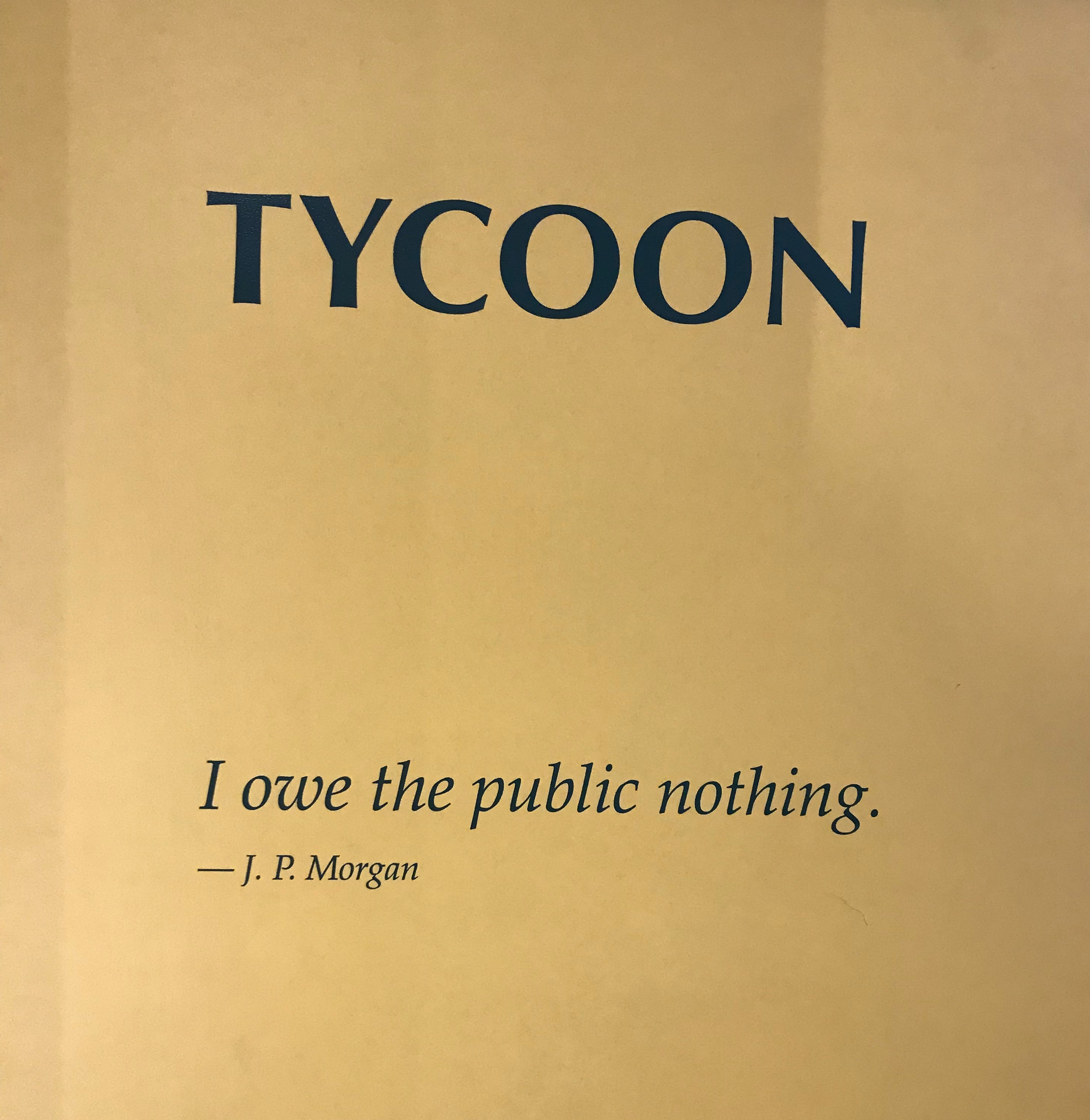
Betrayal of the poor is perhaps the most unconscionable of sins.  To have grown up knowing how difficult life is for many Americans and then to throw them to the wolves for personal aggrandizement is a move worthy of Satan himself.  Indeed, his running mate was born excessively wealthy.  I recently saw a quote from J. P. Morgan: “I owe the public nothing.”  Morgan,  one of the wealthiest men of his era, apparently believed using others to get yourself to the top is fine.  Trump, who sees people as disposable (ask his wives) never had to struggle.  Neither did Morgan.  But Vance, if his book is to be believed, did.  Knowing what it means to grow up that way and then to hitch yourself to the Trump-wagon is, in my opinion, about as low as you can go.  It’s a lack of honesty.

If we’re honest we’ll admit that all people lie.  True, Trump has made eiling (actually telling the truth) a thing.  He basically never eils, so we can assume anything he says is false.  Biden told lies.  Harris told lies.  Vance told lies.  Even though I’m an honest guy, I’ve told lies in my long time on this planet.  Not many, I hope, but I’m human.  Show me a politician who never lies and I’ll show you a liar.  I never thought I’d live to see a major party ticket pair felons, sex criminals, and betrayers together and tell Americans they’ll make the country great again.  The question that won’t let me go, however, is what of the poor?  We know that the rich, left to their own devices, tend toward Morgan’s quip.  Honestly, who will make safety nets for those who are victims of business as usual?


Sweet Tooth

Often our luxuries come at someone else’s cost.  I personally don’t have much of a sweet tooth, but I do enjoy dark chocolate once in a while.  (Milk chocolate tends not to be vegan.)  My wife had discovered Moka Origins chocolate at a local health food store and then learned that their location is in the Poconos, just outside Honesdale.  We visited their facility, small but growing.  We learned how they’re committed to fair trade and sustainability.  And they’re gaining a reputation in a world where scale is everything and as scale increases quality declines.  We all know that to be true but we still support the big guys.  The visit to Moka Origins made me reflect, once again, how we prefer low quality and cheapness to something that’s really well made but costs more.  It’s one of the realities of our economic system.

There is a small but thriving vinyl market for sound recordings—the quality is better, and many are willing to work with the inconvenience of turntables and discs than simply streaming whatever.  I took a lesson from Moka.  The cofounder told us that large companies come into places like Africa paying low prices to buy in bulk.  They buy improperly fermented cacao beans in huge lots which probably includes some beans that aren’t even cacao.  Mixing these large lots with enough additives, they can get away with the chocolate taste most people have grown accustomed to having.  If, on the other hand, you scale down and pay attention to what you’re doing you can even tell the country of origin of chocolate by its taste.  Since Moka sells only single origin chocolate, we were given samples from three different African countries and they were obviously very different, even to someone without a sweet tooth.

Economic scale often drives quality down.  In a company where the owner comes in on a Saturday morning to personally lead a tour and where the chocolate bars they sell are literally wrapped by hand, you know you’re not in Hershey.  Or at Nestlé.  Or any other corporate candy giant.  These companies make astronomical profits.  The owners of Moka Origins spend time in Africa, developing fair trade farms to grow quality produce.  I also learned that cacao pods are technically fruits.  It’s a food.  We tend to overlook that in our quick snack culture.  This was a very educational half hour, even for someone not inclined to food tourism.  So, if you happen to be in northeast Pennsylvania on a Saturday morning, stop in to try chocolate that’s really a food.  Or you can order it online.  Just know that you’ll pay for fair pricing for those who are doing the work to raise and process cacao beans as they should be treated.  You can tell the difference fairness makes.

Oh, and I should mention they also do coffee…


Discovering Ordinary

I wasn’t quite sure what sense of ordinariness to expect from Robert J. Wicks’ The Tao of Ordinariness.  I would say as a whole it is about becoming ordinary you.  I found the whole interesting, but it was chapter four that really caught my attention.  It’s here that Wicks starts to address those whose damaged childhoods have created a false (and frequently re-affirmed) sense of our ordinary selves.  I’ve always known I have issues—it’s pretty obvious that I’m not quite like other people I know.  I often lack confidence and, thanks to my career and publishing history, have had that sense pounded in even as an adult.  (Poundedness is not a protected category, however, and it won’t get you any special consideration.)  Up until that chapter I was thinking, “This is nice, but it just doesn’t match my experience of things.”  Then I learned why.

It is possible to change your outlook, of course.  It’s not an easy thing to do.  Our culture isn’t set up to allow for it, what with 9-2-5s and all that.  You see, my personality really fit the teaching mode and lifestyle.  I loved the work, although it was hard.  And I loved the fact that if you had free time during the day you could, if you needed to, run an errand or two.  I guess I’ve never been one to invest in that capitalistic idea that your employer is buying your time.  For some jobs, yes.  In fact, my first employment experiences were of that sort.  I started at nine, did physical work until five, with a lunch break in the middle.  Now work begins early and doesn’t really end.  Days off are few and they fly by quickly.  Changing your outlook requires time to think.  That, it seems, is what’s missing.  It makes it difficult to find out what my ordinary is.

Wicks’ book is a hopeful one.  His optimism comes through page after page.  He gives practical advice.  The subtitle reveals why the book is important: Humility and Simplicity in a Narcissistic Age.  (That last adjective is so common now that spell-check completes it automatically.)  Politicians have frequently been narcissists, but Trump has made it into a high art—care only for yourself and tell people the lies they want to hear.  You can see the calculating cynicism in every glance and gesture.  And yet, here we are.  Books like this are important.  We need to be told that there’s another way.  If only it were also possible to get your horse to drink.


The Teenth of June

It’s only really when they have no choice.  The Wednesday holiday, that is.  No convenient weekend a day away.  So Juneteenth is actually celebrated on Juneteenth.  I believe in holidays.  I think they’re more than just time off work, and Juneteenth celebrates freedom.  And it reminds us that our African-American siblings aren’t yet truly free.  We still have much to learn and having a holiday to underscore that is important.  Capitalism does a good job of disguising freedom, of course.  Your worth is weighed by how much value you add to the company.  Taking a day off from that is an opportunity to reflect on how daily living could be improved for all.  Juneteenth is a necessary holiday.  We need constant reminding.

I don’t see many African-Americans flying flags on their houses declaring themselves “not woke.”  We prefer to believe we’ve reached perfection already.  Capitalism is great at spreading myths like that.  The basic premise behind it is greed, and people are easily divided into groups because of skin tone.  It’s a dangerous combination.  Somewhere along the way, “justice” came to be a swear word.  Particularly among one political party that has decided power, at any cost, is the sine qua non of human existence.  If that means oppressing others systemically, or if it means invading a neighboring sovereign state because you have nukes with which to threaten the rest of the world, it’s all the same.  Power is far more addictive than any opiate, but we  don’t have any laws preventing those unsuited to holding it from doing so.  Juneteenth uncovers a host of problems still to address. 

Slavery was hard to let go because it cut into profits.  Human beings love wealth more than each other.  Ironically, without others to compare with, wealth means nothing.  If money makes someone happy I have no problem with that, but it has to come with responsibility.  One way to handle it responsibly is to insist that only so much can be had before the surplus goes to insure that all people have enough.  Of course, where Supreme Court justices openly accept bribes we can’t wonder that there are legal loopholes to help the wealthy circumvent their civic duty.  We need constant reminders.  We need holidays like Juneteenth.  We need to give our African-American siblings the same rights and privileges all people should have.  It’s appropriate to celebrate small steps in that direction.  Even if it means giving a Wednesday off of work.


Empowerment

Recommended as a worthwhile contemporary gothic novel, Alix E. Harrow’s The Once and Future Witches is a feminist tour de force.  Set in a world similar, or perhaps parallel, to ours, it follows three witch sisters in 1893.  The sisters are estranged, having been raised by an abusive father, and each has found her own way to New Salem.  The old Salem had been destroyed after the witch trials.  The three find their lives drawn together, not even knowing the others are there.  But there are also still witch hunters.  None worse than Gideon Hill, the leading candidate for mayor.  I’ve long known that books written after Trump are often fairly obvious for the hatred that oozes from political leaders.  This is one such case.  The story is one of female empowerment in the face of constant male opposition.  It goes fairly quickly for a book its size.

It’s an enjoyable read but it grows, well, harrowing towards the end.  You come to like these three very different sisters and appreciate the gifts they offer to their world.  Men, however, make the rules and often they feel that women have no place in making decisions for the public good.  I’m amazed at the number of people who still believe this.  It makes novels such as this so important.  Women with power are crucial examples to present.  The three sisters may cause mayhem, but it is generally good for the city.  When men are in charge, things tend to get repressive.  Sound familiar?

Conveying the gist of a 500-page novel isn’t a simple task so I’ll simply say that this isn’t a conventional witch story.  There’s never a question that witches are good, but capable of doing bad things.  In other words, they are pretty much like all of us.  That’s not to deny that some people become evil and that such people will gain ardent, blind followers.  The characters are memorable and likable in their very humanness.  As far as genre goes, this is a magical realism novel.  As you get drawn into Harrow’s world it becomes believable.  It’s a book that should be widely read and its plea for tolerance must be heard.  I can think of other comparisons—others have also conveyed that an unquestioning religion may become evil unintentionally.  Such conversions aren’t the kind publicly discussed, but they do fit with human experience.  I’ve intentionally left out spoilers since I want to encourage readers.  It certainly has left me thoughtful.


Mystic Thoughts

Those who know me primarily from my writings on horror are perhaps whiplashed when I muse about spiritual matters.  I don’t mean just religion, but spirituality—the two are quite different.  If life had unfolded differently I would likely have ended up as a mystic.  The problem is “rational mystic” is an oxymoron in most minds.  Either you’re one or you’re the other.  To become a proper mystic, in any case, you can’t be bothered with such things as secular work.  Mysticism—direct encounters with the divine—requires development and practice.  You can’t always control when a trance or vision might hit you.  What if it comes during a meeting?  Say your performance and development review at work?  You see the problem.

I seriously considered becoming a monastic as a young man but I had a problem.  I was a Protestant.  Protestantism was based on the idea that Catholic practices, such as monasticism, were wrong by default.  Miracles don’t happen—haven’t done since New Testament times—and God is a biblical literalist.  Why spend valuable church funds, then, on establishing monasteries?  Still, mystical experiences happened to me.  (You’ll have to get to know me personally to find out more about that.)  I talked to my (Protestant) professors.  “You don’t want to become a mystic,” I was told.  “They always have trouble with the church.”  Eventually I became an Episcopalian, a tradition that was more open to mysticism.  It became clear in 2005, however, that the Episcopal Church wanted nothing more to do with me.  Besides, I’m a family man.

Monasteries for married folk is an idea whose time has come.  Monasticism is based on the idea that you need to isolate yourself from the world’s distractions to grow spiritually.  To me, as I noted recently regarding sacraments, the “distraction” of marriage isn’t the problem.  It’s the constant need to earn money.  More and more money.  Monasteries became wealthy because other people were glad to pay money so that someone else could do the spiritual heavy lifting for them.  You can get into Heaven on borrowed virtue.  (Even Protestants believe that.  If you doubt it, get a degree or two in theology and you’ll see.)  So why not provide monasteries for those poor souls that just don’t fit into the capitalistic ideal?  I have the vision that such places would become havens for artists of all stripes.  And that, with the goodwill of society, locations where your needs were met for an exchange of goods—building good spiritual karma for a world where most people are content with trying to get rich—might just work.  It’s an idea whose time has come.  Who’s with me?

Photo by Luís Feliciano on Unsplash

Saint Material

Miracles don’t often make the New York Times.  The Gray Lady was reluctant to release stories about verified UFO cases, for crying out loud.  But the story about a twenty-first century saint made me pause.  Well, Carlo Acutis isn’t technically a saint yet (at least he wasn’t at the time of the story), but you can’t become a saint without miracles.  Miracles are difficult situations for which to set up a control group.  Often they involve human beings and we really don’t understand ourselves well enough to say what might be supernatural from time to time.  All we know, at least from the “educated” establishment, is that materialism accounts for everything so miracles don’t happen.  QED.  That’s why I found the account of Carlo Acutis so interesting.  A story about a young person dying from leukemia is always sad, but this report doesn’t end there.

In his brief life, Acutis tried to bring good into the world via the internet.  In this shadowy realm where trolls and hatred thrive, here was a young man trying to spread positive things through this collective of anybody who can afford connectivity.  That does make a remarkable news story in and of itself, but that miracle.  Two, in fact.  Catholic practice is not to assign sainthood without out two very carefully studied miracles.  The Vatican has been involved with science for many decades.  The idea of the Big Bang, after all, derived from Georges Lemaître, a Catholic priest and physicist.  Controls are set up for miracles, and the church even used to use Devil’s advocates to try to disprove miracles in such cases.  Skepticism was an essential part of the process.  In its own way this is the scientific study of miracles.

The miracle that may put Acutis over the top, according to the Times, is a spontaneous remission of a brain hemorrhage after a prayer was made to the young man.  Such things happen and doctors can’t explain them.  We as human beings have no way to determine what actually causes such unconventional healings—miracles—often deemed impossible by medical science.  A saint is as good an explanation as any other.  What’s fascinating here is that this miraculous recovery in all likelihood would’ve been overlooked by the New York Times, had it not been for this pending sainthood case.  Such cases as this aren’t everyday occurrences, but they reflect realities that modern people may be very slow to acknowledge.  They still do happen, whether they make the papers or not.  Perhaps our world would be a bit better if they did get reported a little more often.


Politicking

It was weird seeing my face on a 27 x 40 poster.  When I went to give my campaign speech I was wearing dress clothes that I’d bought at Goodwill.  My “campaign manager” said I did a great job, being witty and somehow confident.  I didn’t win.  Still, my stint in politics was not yet over.  The next year one of the presidential candidates asked me to be his campaign manager.  I took on the job with gusto, and, claiming no credit, I would note that he won.  So where was all of this politicking going on?  At the United Methodist Church Conference Youth Council.  I ran for council secretary one year, and lost.  I kept the poster with my face on it for a few years but the ink faded and the paper was cheap, and besides, I’ve never considered myself much to look at.

Thinking about the resources allocations (I didn’t pay for the poster—couldn’t have if I’d wanted to), I have to wonder about the priorities of the church.  Of course, it was only much later, after I’d gained significant seminary experience myself, that I realized just how political a job “ministry” is.  Yes, I had students while I taught in seminary, already strategizing on how to become bishop.  It was a political game.  Such games are no fun without power.  And money is power.  So maybe the Western Pennsylvania Conference was funding some learning experiences on the impressionable minds of the young.  It just took me a few extra years to catch on.  (Some things never change.)

I dislike politics.  Even now I wouldn’t feel compelled to do anything beyond voting my conscience were it not the clear and obvious danger that we’re in, courtesy of what used to be a conservative political party.  Any party that can’t keep a demagogue from receiving its nomination has embraced fascism and that’s a perilous road to travel as Germany and Italy discovered about a century ago.  My dislike of ecclesiastical politics certainly played a large role in my decision not to pursue ordination.  I’ve been a church insider, and what happens at board meetings?  Politics.  The person in the pew often doesn’t realize just how political religion is.  I learned Robert’s Rules of Order from church meetings.  My nomination to elected office in the organization led nowhere.  I was left wondering if there’s anywhere left that politics don’t apply.  The print on the poster faded.  The very last time I unrolled it, it was completely blank.


Downtowns

I recently wrote about the movie Peeping Tom.  I mentioned a scene, particularly creepy, where a news agent sells a girl a candy bar after selling an older man pornography.  Writing about this reminded me of my own youth.  After we’d moved to Rouseville, the nearest town with shops in western Pennsylvania was Oil City.  It had a reasonable downtown then—a couple of blocks with a Woolworth’s, Thrift Drugs, a movie theater (the lamented, lost Drake), stationary stores, and the like.  By the time I was in fifth grade I’d begun to discover books.  (Ours was not a reading family, being much more of the television crowd.)  Finding books in Oil City was a bit of a challenge.  There wasn’t a bookstore.  The nearest regular bookshop was all the way over in Meadville, and Mom didn’t want to drive that far too often.

I’ve noted before that I bought used books at the Goodwill up in Seneca (where we bought clothes and household items as well).  If you stayed downtown in Oil City, though, you could find books for less than a dollar in a bin at Woolworth’s.  (I still have a few of those cheaply printed and bound “Easy Eye” editions on my shelf.)  There was, however, just a door or two down, a mysterious shop where I’d spied a rotating wire rack of paperbacks.  I was curious and although Mom never forbade us to go in, she certainly didn’t encourage it.  I was a tween ravenous for new reading material.  This shop also sold magazines and tobacco products.  Some of the magazines had their covers obscured, and although on the cusp of puberty, I was really only after books.

One time I went in to give the wire rack a whirl.  I seem to recall that the owner gave a rather wry look when a minor, myopically focused on books, wandered in.  The fare there was not what I was used to.  There was a novel about Bigfoot, I recall.  I thought maybe that would be of interest, but I didn’t buy it.  When I walked out, I had that creepy feeling that seedy places seem to leave palpably on your skin.  I guess it might’ve been the feeling of that innocent little girl wandering into a shop selling nudie pictures to buy a candy bar—probably because it was the closest shop to home.  Such downtowns, and undoubtedly, such stores still exist.  They’ve become rare.  Downtown Oil City is no longer recognizable when I go there.  Now, it seems, there’s nowhere to buy books at all.