The Deal

Intellectual property is a concept that only arises where thought can be monetized. Think about that. (But don’t charge me, please!) It is a strange idea, when you ponder it. In any case, one of the problems with writing book reviews is that the reviews themselves become the intellectual property of the journal in which they appear. In a mental ménage à trois, everyone gets something out of it: the publisher gives away a book for free publicity, the journal gets copyright content of value to its readers, and the reviewer gets a free book. In the best of these encounters everyone goes home happy. I began doing book reviews when teaching at Nashotah House. Academic books are expensive and although professors make more than editors do, they are still hard-pressed to pay academic press prices. After my strictly platonic affair with higher education, I stopped doing reviews for a while, but now that I have hours on a bus to read, I’ve picked up the habit again.

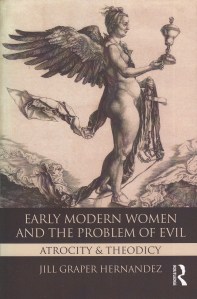
Most often I review books for the two societies of which I’m a member—the American Academy of Religion and the Society of Biblical Literature. There might, however, be a conflict of interest here. One of the main things I do on this blog is talk about books. Since I’m no longer a professor, but I still think like one, I figure it’s a compromise I can live with. The conflict arises because I post daily on my blog while publishers take weeks, or even months, to publish reviews. Despite technology, publishing is a slow business. That means that I read books I can’t really talk about until the review has appeared. That’s the case with Jill Graper Hernandez’s Early Modern Women and the Problem of Evil: Atrocity & Theodicy. I can’t say here what I say in my review since the review isn’t my intellectual property anymore. There’s another trade-off here: publishers get your name out there in return for owning your content—everything can come down to the level of business, it seems.

Still, I can use this post to reflect on theodicy—the justification of God in the face of evil. Since I don’t address this fact in my review I can say here that since Trump’s election it’s difficult to read a book about suffering without tying it to the current political situation. Many of the incumbent’s ardent supporters are coming to see that he doesn’t really care for them or their issues, and conservatives as well as liberals have four years of suffering to face. I was surprised how often in reading this philosophical treatise that our present national shame came to mind. Perhaps that’s inevitable in a book that discusses how women have been repressed in a world where they too have been relegated to the level of a commodity. Intellectual property seems less a concern when human beings are still trafficked as chattel. That’s not just bad business, it’s evil.



Basic Training

I recently sat through Sexual Harassment Prevention training. Not because of anything I’ve done, mind you, but because organizations have long realized that if training isn’t mandated, lawyers are ready to pounce when someone does do something illegal. I first started taking these trainings at Nashotah House and I’ve had them just about everywhere I’ve worked since then. Even so I sometimes see people who just don’t “get it,” even after training. Workplace harassment is, unfortunately, something we do need to be concerned about. I couldn’t help but think, however, while sitting in the training—does having a Commander in Chief with a history of sexual harassment make all of this merely academic? Sexual harassment is against the law, but the one who swears to uphold this law with an oath on the Bible breaks that very law. There are very deep implications here.

It might’ve been a different story if all of this weren’t known before going into the election, but it was. In the twenty-first century, who in good conscience could vote for a man on the record as a sexual harasser? In many situations you’d lose your job for less. In this case masses of hate-filled rhetoric topped common sense: don’t do as I say, don’t do as I do. I want to be your leader. This cultural schizophrenia takes its toll on our family values. Where all people are not treated equally there are no human values. I’m sitting in this training room being told of court case after court case where companies dismissed individuals for doing something the leader of the free world just doesn’t see as wrong.

How little it takes to undo the progress of centuries. I suppose that’s what we might expect when a bunch of educated people put democracy in place for a nation that prides itself on being anti-intellectual. Perhaps this was inevitable. We’ve become a nation where we have to try to lead our leadership. Politicians long out of touch with the quotidian training in the pedestrian lives of the masses. We know—and hopefully knew before we attended that seminar—that all people have a right not to be harassed based on gender or any other immutable characteristic. Instead we’ve become a nation where “President” is supposed to be a protected category and where, outside a very small Oval Office, the rest of the country is left to fend for itself.


Such a Happy Place

I fear anyone named Ronald. Being named’s something a kid can’t help, I know, but associations run deep and irrational fears are the flavor of the day. When a friend sent me a link to the original Ronald McDonald clown concept, I had to look. Now, I’m not one of those people who’s afraid of clowns. I know that perhaps puts me in the minority. In college I was introduced to, and even rebooted a club for, Christian clowns. Back in the days of Jesus Christ Superstar and Godspell, many were exegeting Paul’s phrase “fool for Christ” in a new way—the way of the clown. I’ve never been a particularly smiley guy, but I do research things before getting involved. Not only did I read about Christian clowns, I read about the history of clowning itself. It helped that this was before people started dressing up like clowns to assault others in imitation of cheap horror.

Clowns, it should come as no surprise, were originally peasants. The name itself means “rustic,” or “laborer,” even in classical languages, just as it does in English. The affluent have, it seems, always liked to laugh at the poor. The clods could be expected to goof up time and again and their brainless antics would humor the bored, but entitled classes. Buffoons becoming missionaries took a somewhat tortured path through a culture that cast religion in a rather stern, harsh tone. Children of the late ‘70s and early ‘80s were trying to say “lighten up,” laugh about your beliefs. Isn’t that what Paul said? Tertullian wrote, “prorsus credibile est, quia ineptum est”—believe by all means because it’s absurd— didn’t he?

In my greasepaint and mismatched clothes I joined a troop of unspeaking clowns, acting out stories of kindness and good will. We were, after all, made from dirt (the laborer tills the soil, and the word clown comes from the same root at “clod”). We like to think things might’ve evolved since then, but when we turn on the news we see that although it’s no longer Ronald, the antics of the plutocrats haven’t changed since my college days. What d’ya think of that Star Wars defense initiative? After all, we call “Mutually Assured Destruction” a doctrine, and doctrines have their origins in church councils. Ronald McDonald is recognized by his painted face. Beneath the makeup, however, he’s just a man. A clown has no business being leader of the free world. And yes, I’ll take fries with that. Supersize it, will ya?


Direct Address

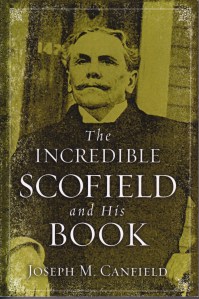
For a man as amazingly influential as he was, Cyrus I. Scofield hasn’t been the object of much curiosity. In the venerable academic tradition of ignoring those you disagree with, serious scholars dismiss Scofield as some kind of evangelical aberration, a theological leper, if you will. It’s difficult to locate book-length treatments of the man, although he may claim considerable credit for the elections of Ronald Reagan, George W. Bush, and the current incumbent. Somewhat skeptical of the obviously polemical The Incredible Scofield and His Book by Joseph M. Canfield, curiosity drove me to read it as an accessible and thoroughly researched account. Now, one evangelical going after another isn’t a pretty sight, but if you can get past the “this is what the Bible really means” oneupmanship, there is clear evidence of a sharp mind with legitimate historical accuracy as its priority in Canfield. This is especially clear where he demonstrates that scholars shown the evidence will choose to ignore it to preserve the sanctity of a man hardly a saint.

The strange religion that has developed from the Scofield Reference Bible has had an astoundingly long reach. If you know what “the Rapture” is, it’s probably because those who took their cues from Scofield’s Bible ensured that it became a standard American trope. It generally doesn’t have to be explained, even though the idea doesn’t occur in the Bible. It’s based on a set of “dispensations” developed among the Plymouth Brethren, a fairly small British and Irish sect that influenced the world through its prophet Scofield. (Scofield himself was not a member of the Brethren, but he learned his system of “history” from them.) Although the Scofield Reference Bible wasn’t technically the first study Bible, it was the first widely influential one. It is, in a sense, America’s Bible.

Scofield himself was hardly clergy material. Canfield documents this clearly and doggedly. Among the evangelicals, however, an admission of guilt—no matter how insincere—has to be taken at face value. If you’re caught “backsliding” after that, all you have to do is admit that too. They’re obligated to forgive you 490 times, if they’re truly literalists. We can see this at work in the bizarre evangelical backing of Trump, a Christian only by the loosest possible definition. If you say you’ve accepted Jesus they have to believe you. It’s the ultimate scam. Scofield himself seems to have been aware of this. Particularly wrenching was the account of how, after he was making a respectable income from his Bible, he refused to give money to one of his daughters from his first marriage when she wanted to buy a house. His will left no money to any charitable organization at all. You can take it with you, apparently. And so, we’re left with a world devised by such a man with no theological training. Since he’s so obviously low brow, however, we lack scholarly biographies that take the care of Canfield in exposing information readily available to those with open eyes.


Terms of Interment

In an early episode of The Simpsons Marge is commissioned to paint a portrait of Montgomery Burns. Angry with him because of his constant treatment of others as beneath him and his glib superiority granted by wealth, she paints him old and feeble, naked as he climbs from the shower. The crowd present for the unveiling is appropriately shocked. Marge explains her motivations for the painting and one of the voices in the crowd affirms, “He is evil, but he will die.” That scene was brought back to mind by an article a friend sent me on Archaeodeath. As someone who’s volunteered on an archaeological dig, I understand that the past is a history of death as well as of life. We read what historians choose to preserve. And, as Professor Howard M. R. Williams points out, the tomb often tells a tale that requires some subtlety in reading.

Never a great fan of the wealthy, some years ago I visited Sleepy Hollow. It was before the television series began, back in an October when the mind begins naturally to turn to death. I’d always liked the story by Washington Irving that had made this quiet town famous and it’s really not hard to get there from New Jersey. While in town we visited the famous cemetery, in search of Irving’s grave. Others are buried there, too. High on top of a hill stands a palatial tomb to some Rockefeller. As Prof. Williams makes clear, all must die and all tombs lie. Those who insist on the most opulent tombs are those who routinely overestimate their personal importance. So it is my mind turns from Montgomery Burns to Cyrus the Great.

There was a time when world conquerors possessed a dose of humility. It may seem strange in today’s world that an Iranian (in the days before there was an Iran, designed as it was by Europeans) would be considered a benevolent dictator. Cyrus reversed the deportation rules of the Babylonians and Assyrians. Subject peoples were permitted—encouraged even—to return to their lands. He even federally funded the building of temples and, to translate, centers for the arts. Cyrus understood that grateful people make good subjects. When Cyrus died, after being king of the world, he was interred in a decidedly understated tomb outside Pasargadae where, according to one account his inscription read, “I am Cyrus, who founded the Persian Empire. Grudge me not, therefore, this little earth that covers my body.” Archaeologists uncover the dead. Those who bill themselves grandly, as the diggers understand, seldom deserve the glory bestowed by their own minds. Marge Simpson, as usual, is a voice of wisdom.

Some president’s tomb


Animal Fights

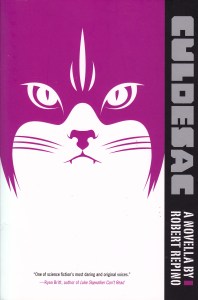
What does it mean to be human? The answer’s not as straightforward as it might seem. Reading Robert Repino’s Culdesac, that question came back to me time and again. This novella takes off from the story of Mort(e), about which I blogged shortly after its publication. Humans and animals that have acquired some human characteristics are at war. Most see those on the other side as inferior and that can make a human being reading the tale just a touch uncomfortable. We don’t have a great track record when it comes to dealing with non-human animals. We are all, after all, members of the same “kingdom.” Even down to the level of phylum and genus many of us show more general similarity than stark differences. Culdesac is a morphed bobcat who remembers all too well how humans treated animals before the war. And memory is a powerful thing.

Repino has a way of sweeping the human reader (here the enemy) into the story and making those foundational questions ring as if struck with a hammer. What does it mean to be human? Granted, reading such provocative work under the current administration adds a layer of poignancy that wasn’t there when Mort(e) stood alone. In fact, it is a question that we have to ask just about every day when we see the headlines. There’s no leadership on this point coming from above. The idea of other humans as chattels has a long and disgraceful history. You can differentiate anyone on some basis or another: female or male or intersex, black or white or brown, rich or middle class or poor, large or average or small. Differences working together might be the very definition of culture. Culdesac shows what can happen when one sees only the distinguishing characteristics rather than the commonalities. It’s a parable.

Education, the one weapon in our arsenal that actually dismantles prejudice and intolerance, was one of the first targets our government sought to dismantle after 11/9. Indeed, the antipathy—if not downright hostility—toward education has been a characteristic of which Americans have long been unduly proud. We are not self-made, none of us. We all had our teachers. We all had our books. As we stand on the rim of this smoking crater and wonder how hatred toward one’s own species could be allowed to be nominated, let alone win, I believe the answer lies in our personal belief in education. We must all use the opportunities we have to educate. Get caught reading a book. Or helping a stranger. Or just being kind. As Culdesac emphasizes, wars are long-term events. Results won’t change after only one skirmish. If we all valued education—reading, learning—enough such aberrations as this could never happen. If you’re casting about for something to read that will make you ponder things at a most human level, I would suggest Culdesac.


Informed Deceit

I sign a lot of petitions. That’s because the job of prophet doesn’t pay well enough to support a family any more. What it does mean is that I get a lot of emails from causes looking for supporters. I don’t sign blindly. That was brought home to me the other day when I had an email from the “White House.” A more obvious effort at trying to scramble for table scraps of respectability I cannot imagine. Already since January our government has swooped to new lows of deception and now false news comes right to your inbox. This email informed me that Neil Gorsuch has overwhelming bipartisan support for his Supreme Court nomination. Being an individual with a working brain, I know that’s not true. The “White House” wanted me to sign a petition supporting Gorsuch when I’ve already signed several protesting his candidacy. It’s clear that our government wants a court prophet.

Isn’t it odd, I mused, that a government that has no intention of listening to the majority is sending a petition to support one of its own? We know that the Russian Party (formerly known as the GOP) will support anything Thurston Howell the President hands them. Such a petition is only a way of saying “I told you so.” I miss the days when Isaiah could walk right into king Hezekiah’s bedroom and say “Thus saith the Lord…” These days the Lord tweets and the chirplings in the nest beg for more worms. You see, court prophets know which side their palms are crossed on. This isn’t Ash Wednesday, it’s Ash Administration.

Court prophets, in ancient times, were those paid by the government to support what the king wanted to do. It was a cushy job. What the reigning Trump wants at the moment he or she (for the modern court prophet can double-cross her own gender) proclaims it as God’s will. No experience necessary. The thing about the Bible, though, is that court prophets are pretty roundly condemned. The real prophet could generally be told by the fact that he (less commonly she in those days) was dead. Or soon to be. Those in power seldom care for criticism. Especially when skeletons are fighting each other for elbow room in their closets. Even so, Holy Writ says, figuratively, that it’s better to be a living politician than a dead prophet. If that doesn’t sound biblical, read the words of the prophet: “Nevertheless the sun hides not Virginia’s Dismal Swamp… and break the green damp mould with unfathomably wondrous Solomon.”


Who Knew?

Reading about Jesus is an occupational expectation for an editor of biblical studies. Not that this is anything new for someone who grew up thinking of him constantly. One of the issues often raised about the son of Mary and Joseph is what he did during his childhood. There are apocryphal gospels that address that question since the canonical ones don’t, other than a Lukan visit to the temple in Jerusalem where the professors were stumped by the student. A query that’s pondered from time to time is why nobody thought to write down the early years. A related question is less often asked: who knew in the early days that Jesus would amount to what he did? It’s pretty much accepted that the tales of a miraculous birth were borrowed from the common stock of quotidian cultural heroes of the day. Anybody famous had to have had a spectacular start. If they knew from the beginning, however, that he was going to be great, why didn’t they write his story?

Unless, of course, they didn’t know. Jesus was born, according to the best that we can reconstruct, in a working class family. He had brothers and sisters, according to the gospels, and since Joseph disappears from the story rather early, he was likely raised in by a single mother. Who pays attention to such mill-fodder as this? One of the common people who will, more likely than not, come to nothing? A statistic to make great the egos of Herods and Caesars. Who bothers to write such things down? It’s only after fame that we become interested. What made him so? How did his meteoric rise get started? Before then, who really cared?

Stuck here in the middle of Lent, it’s easy to forget that even Jesus started life as a nobody. Many who start life privileged end up obscure. There’s perhaps a cosmic balancing act taking place here. The fulcrum—and who thinks of the fulcrum while riding on the teeter-totter?—the fulcrum is the common person. Fame may ease the path to halls of power. Cronies will fall over themselves to kiss the hem of any robe headed toward the Oval Office. Those who claim such rights will do so on the back of a guy so occluded we don’t really even know where he was born. Or what he did before he was thirty. And had he lived out his life like the rest of his neighbors we wouldn’t be asking the question even now.


Sell-by Date

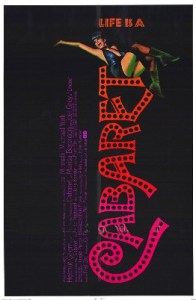
Labels give us the information we need to enact our prejudices immediately. Having been on the receiving end of great cruelty by “conservatives,” for example, I’m immediately cautious of anyone bearing that brand. A strange confession, perhaps, from someone who grew up in that camp. I struggle to remind myself that a label’s not a person. For example, I had a very good education at Grove City College, a conservative school. It wasn’t uniformly that way, of course. Now having a better sense of higher education politics I can see how this might happen—how a school committed to a doctrine might inadvertently challenge that view in the name of education. Quite a few things swayed me to broaden my view as a religion major at Grove City. One of those collegiate experiences was watching Cabaret.

Enough time has passed that I can’t recall the exact context of the film. I suspect it was a weekend entertainment required by some humanities intro course. For a kid from the sticks, seeing a ménage à trois on the big screen made a deep impression when I’d always thought of the world in binary terms. The larger message of the film was not lost on me, however, that those who are prejudiced will always find ways of expressing their hatred, if society will let them. Last night I watched Cabaret again. As a movie it hasn’t aged a day. Society, however, seems to have regressed back to those days when a Nazi could stand and proudly sing at a social gathering and others, distressed by economic hardship, would willingly  overlook the evil that lay in plain sight in the hope of change.

Back when the film was made I suspect the Vietnam War was on the public mind. We thought we’d safely gotten beyond the fascist threat. In the scene where the boarding house residents are complaining about conspiracies between “Jewish bankers and Communists” it became clear that people fall for the same tactics time and again. Rumors, fear, and economic disappointment are a dangerous combination in a democracy. The players have changed but the fact of fascism hasn’t. We can see it being enacted plainly, as it has been every day since 11/9. Accommodation is more deadly than conservatism. As the story opens Nazis aren’t welcome at the Cabaret. By the end they predominate there. Their hateful agenda had been accommodated, normalized by the press. And who can forget the song that could well be the anthem of the current administration, “Money Makes the World Go Round”? There’s an accurate label for that, I’m sure.


Rising of the Sun

“When the trumpet of the Lord shall sound,” the old hymn goes, “and time shall be no more…” Before Trump’s election I always supposed this might have something to do with the useless ritual of setting our clocks ahead. Apart from the fact that we’re all a bit cranky because, well, we lost an hour of sleep last night, this day is a fine illustration of how rituals form. Daylight Saving Time was a wartime initiative to help keep things going during the darker months of the year. Since things seem pretty dark all the time now I’m not sure that changing the clocks will do any good, but it does call to mind many religious rituals that started out for practical purposes and accreted symbolic meaning over time. One of my favorites is the use of candles.

Photo credit: 4028mdk09, Wikimedia Commons

In the days before electricity, sanctuaries (which were sometimes devoid of windows) required a source of light. The menorah in Jerusalem is perhaps the most famous example, but by no means the only one, of a necessary piece of furniture that grew religious significance. Oil lamps were widely used before candles were invented and they work on the same principle. It didn’t require any special illumination to realize that light is symbolic for creatures that rely heavily upon sight. If you see something, say something. And before you know it candles themselves acquire religious meaning. Just last month some Christians celebrated Candlemas where the title of the day appears to suggest the candles themselves are somehow sacred. Ritual begets ritual. We are meaning-making beings.

Now that we’ve somewhat ironically set the clocks ahead under Trump it might be a good time to reassess. “Rage,” Dylan Thomas wrote in a more modern hymn, “rage against the dying of the light.” Even though Thomas’ light itself extinguished prematurely his message lives on. We’ve lost a month’s worth of morning light. When I step outside this morning it will be darker than it was this time yesterday. But humans habitually look ahead. If I allow myself that luxury as the roll’s being called up yonder, I can perhaps make my way home in the light now that time’s changed. Nature took the light and is now giving it back. Maybe this isn’t the final trump after all. In my more optimistic moments I do believe that candles can be magical in their own right. That’s the power of ritual.


Heal Thyself

One thing we can say about the misguided leadership of this country is that they’re taking the Bible seriously. As the Republicans roll out a “healthcare” plan that would leave the elderly and poor at the mercy of the rich—known for their compassion—they’ve clearly displayed their belief that the followers of Jesus who voted them into office will once again rely on the carpenter from Nazareth for their healing. Those of us who’ve spent more than a few devotional hours with the Good Book may be a little less sanguine about the prospects for our aging parents (and let’s be honest, none of us is getting any younger). I guess we can call “Trumpcare” a blatant trumpet blast for the Second Coming.

It truly amazes me that Trump supporters don’t see the shady practices of the age-old business deal at work here. Cut my costs, offer you something that you don’t really want, and walk away looking like the guy who was only trying to help. As Kenny Rogers reminded us decades ago, you’ve got to “know when to hold ‘em, and know when to fold ‘em.” Only folding’s not on the table any more. If enough dissatisfied people die off in the next couple of years you won’t even have to worry about midterm elections, I guess. As a member of the human race who’s watched my elders age I don’t see how anyone could ask to have the healthcare taken away from their parents. But then again, this will save the uber-rich in this country quite a bit of money, so there must be a silver lining after all.

It’s unfortunate that nobody seems to care that irony is in such short supply. Presidential campaigns waged on hate deliver when it comes to taking away the services of those who voted them into power. Swamp dwellers all. A healthcare bill to make our country sick and weak—who could’ve thought of such a stroke of genius? You’ve just got to trust the rich to have everyone’s best interests at heart. Isn’t it clear that they always do? I often see them hobnobbing with the people who live in cardboard boxes on the streets of Manhattan. I seem to recall a guy with a reputation for healing once saying something about it being easier for a camel to pass through the eye of a needle than for a rich person to get into his hospital. Only he didn’t come up with a healthcare plan before he left. Does anybody have Jesus’ smartphone number?


Do unto Yourself

Selfishness goes by many names. One of the strangest is “Christianity.” I wouldn’t presume to define a religion, but some time back my wife sent me a story about the prosperity gospel. Written by Michael Horton, himself an evangelical, the pre-greatest inauguration of all time piece is called “Evangelicals should be deeply troubled by Donald Trump’s attempt to mainstream heresy.” Horton goes on to describe the belief system of the prosperity gospel that includes people becoming gods and the idea of positive thoughts drawing good things to you. Quite apart from completely ignoring most of what Jesus is recorded to have taught, the prosperity folk tend to think the Almighty wants them to be, of all things that most shallow, wealthy. “More for me” also goes by many names. The most common is “selfish.”

I grew up evangelical as well. One of the messages drilled into my malleable head was that Jesus taught putting other people before yourself. “Do unto others” was the least you could get away with and still call yourself “Christian.” Part of the disconnect here is that nobody has the authority to define a religion. Not even the Pope can say unilaterally what Christianity is. Protestants aren’t obligated to agree. And with prosperity gospelers with their enormous cash flow telling us that it’s God’s will, well, heresy looks mighty attractive. We’ve come to see the error of heresy, however. Nobody can claim their brand alone has the answer. It’s a theological anything goes. I suggest we go old school and call a cad a cad. Selfishness by any other name would smell as bad.

It’s poor taste to claim your own self-gain as a benefit to society. I, of all people, would handle my wealth properly so that nobody suffers. Except those I don’t like. Doth not Scripture saith, “ I have said, Ye are gods”? Yet earlier in the same Psalm come those easily ignored words, “Defend the poor and fatherless: do justice to the afflicted and needy.” Missing are “build a wall across your southern border,” and “speak untruths when it is convenient to do so,” and “distrust those who speak a language not your own.” Oh what the Bible would say if only we could write it ourselves! But fear not, for we have many who believe the prosperity gospel. And they’ve already got the task well in hand. And their lexicon doesn’t even include the word “selfish,” so you need not worry about such uncomfortable thoughts. Get rich and all will be well.

Photo credit: Kriplozoik, Wikimedia Commons


An Apple a Day

Have you ever bitten into a piece of rotten fruit? I suspect most of us have had the unpleasant experience. From the outside the apple looks fine but that first bite sinks into a brown and corrupt interior that turns your stomach. There’s no rehabilitating it—once fruit’s gone bad it’s bad. Jesus is once said to have said “by their fruits you will know them,” them being the righteous. Over the last several days we’ve watched, not exactly surprised, as the news revealed Attorney General Jeff Sessions lied under oath—what used to be a very serious crime—about consorting with the Russians. The difference between that and the apple I described is that this one didn’t look so good from the outside either. Eve, I think, would’ve chosen a different piece.

The strange thing about this is that evangelical Christians of the sort that voted for Trump should know about the fruits passage. Not the Eve one, the other one. Growing up in a Fundamentalist context I frequently heard about knowing others by their fruits. People are capable of deception, even under oath. That’s why we have a name for it. Thing is, we expect better from those who hold the highest offices in the land. And we’d expect honesty on the part of the evangelical crowd. Once you’ve bitten into that apple there’s no turning back. Ideology trumps theology, it seems. Even the Bible. That’s one of the great mysteries of our time—those who loudly proclaim they live their lives by the Bible count on others not having read it. Kind of embarrassing to be caught with your bias showing. Those whose sins you’re willing to overlook in the name of principle.

As the rogue’s gallery that we now recognize as the presidential cabinet was being nominated, many in this nation suffered shock wave after shock wave of incredulity. Steve Bannon later admitted that their role was to dismantle the agencies they’d inherited—so much for the meek inheriting the earth bit—while power-blinded Republican leaders followed like, well, sheep. The evangelical crowd, ignoring that troublesome leather-bound book they love, refuse to criticize. Who hasn’t forgotten meeting with the Russian Ambassador from time to time? I’m old fashioned enough to believe there’s a difference between biting into an apple that to all appearances is fine and one that’s obviously rotten from the start. In one case you end up disappointed. In the other you get what you deserve.


Beating around the Bush

You know things are bad when another president who couldn’t win the popular vote criticizes you. Don’t get me wrong—criticism is good. In my academic existence (on life-support for over a decade now) I’ve received plenty. The point is you can’t improve if you’re not willing to take a few blows. Defensive academics don’t survive long. The problem seems to be, if I may speculate from my knowledge of biblical studies, the word “criticism.” Growing up, one of the last things I wanted to have was criticism. Already overly self-conscious of my sins, criticism only felt like making an already bad situation even worse. Then I was introduced to biblical criticism.

Biblical criticism sounds like the worst kind, but in reality it’s absolutely necessary. The idea is to study the Good Book rationally. I knew, and still know, many people who believe biblical criticism to be evil. If you trust any history—either secular or divine doesn’t matter—you quickly learn that nothing is simply one-sided. The Bible itself offers examples of this: did God or the Devil tempt David to take a census? Just how many angels were in that tomb on Easter morning and who arrived there first? Only one answer can be right. Criticism is, typical of academics too long out of the sun, a poor word choice. Nobody’s picking on the Bible. All the biblical critic is trying to do is to find out what it really says by asking questions of the text.

IMG_1163

That’s the heart of the matter. Autocrats don’t like questions. The assumption that the inherent authority of a position should be unquestioned undermines any attempt at democracy. As I was often told in church—Christianity isn’t a democracy. Our political system, we’re told, is. That why checks and balances were built into it. Either extreme and the applecart is upset. No matter what believers believe the same applies to biblical studies. Some rampant Harvard toadyism remains, but for the most part we recognize that a scholar with—shall we call them “critical skills”? may emerge from even a school shorn of ivy. We understand that’s how learning works. No one’s above criticism. Only those with something to hide can’t take their lumps like the populace that allow them to claim the name populist. Nobody likes it, but we all have to take criticism from time to time. Even the Good Book.


Doing the Math

Erich Fromm once defined evil as “attraction to what is dead, decaying, lifeless, and purely mechanical.” Certainly Fromm doesn’t hold the cachet he once did, but this way of thinking about evil has stuck with me. It’s not so much the dead, decaying, or lifeless part—that’s part of nature—but the purely mechanical. I don’t disparage the many machines we have that make life easier, and modern life possible—can you imagine your job without computers? The problem in my mind, as Fromm defines it, lies in the word “purely.” Purely mechanical. By the numbers. You see, we often forget that being human, and thought itself, isn’t about pure logic. Our brains evolved to be half emotive and have rational. Our feelings can be smart. When we reduce all of life to numbers, according to Fromm’s definition, we’ve entered the realm of evil.

Some, in the past as well as present, have posited numbers as the only real truth. No matter where you are in the universe 2 + 2 = 4. It’s about the only certainty we have. I think what Fromm was concerned about was not this kind of certainty, but rather that which sees only numbers as being important. Think of the multibillionaire who’s lost sight of the human misery he (and it’s generally a he) has caused to become so wealthy. It’s not something towards which an enlightened individual would aspire. Purely mechanical it is, by definition, evil. We’ve all known people like that—those who just can’t get beyond the numbers whether they be the bottom line or the instructions for the doomsday device. The human element is missing. Are we truly beyond good and evil?

Does it add up?  Photo credit: Cpl. Jovane Holland, Wikimedia Commons

Does it add up? Photo credit: Cpl. Jovane Holland, Wikimedia Commons

Governments, once upon a time, were put in place in democracies to protect the interests of the people. When people are mere marks—numbers at an inauguration or cheated at the polls—we’ve entered the realm of purely mechanical. Of course, intellectuals are out of favor now. Why be troubled with the news when you can make up your own? 2 + 2 need not equal 4 if you say it loud enough. Behind stage, however, you’ll make sure your accountants know the score. Those who wish to start a New World Order must insist that the classics are outdated. While we’re counting out the days in our prison cell it might be a good opportunity to read. I plan to have Erich Fromm on my list. I’m only human after all.