Moral Money

Yesterday I spent at the Mid-Atlantic Regional American Academy of Religion and Society of Biblical Literature meeting. Not a registered guest, I was there in mufti. Those who know me stopped by to greet me, even without a name tag, but I noticed, as I increasingly do, the youth of the attendees. Apart from the business discussed, the issue of these younger colleagues kept arising. It’s as if the tap was left on but the glass is already full. Presidential aspirants aside, we live in a world where people are increasingly realizing that you can’t squander resources. We have compulsory education to try to make the next generation smarter, more fortunate than our own. And those who have the inclination and ability to go on for advanced study, we throw into menial jobs and poverty because, despite the myth, a doctorate doesn’t help your financial prospects. Universities have become businesses and one of their top-end products is the doctorate. The doctorate with no future.

Sitting in the lobby between appointments, I can’t help but thinking back to a younger me. I am part of what older colleagues are calling “the lost generation” of humanities scholars. Those who have the credentials but no opportunities. A wasted resource of a nation that loves reality TV and blustering windbags, as long as the windbags are billionaires. It makes me sad to think that instead of making a place for those driven to high achievement, that we’ll offer them poverty-level adjunct positions with Obamacare, food stamps, and excessive hours. When they burn out, like a high wattage bulb, we’ll go to the closet and screw in another to replace them. Just don’t turn off the tap. Graduate students bring in money.

This is a moral issue. Since it involves what are scare-quoted as “the elite” we seem not to care. Isn’t it fun to knock down those who think they know too much? I sit in the lobby and watch the bearded young men, the young ladies with heavy backpacks thrown over their shoulders, and I want to warn them all. And it’s not just me. My colleagues, lost generation or not, all agree. We’re sending our best students to oblivion. In the most prosperous nation in the world. You can tell we’re prosperous because all it takes to gain the confidence of a political party is lots of money. Lots and lots of money. I won’t mention the obvious that such loose lucre could be put to good ends, making jobs for those who’ve poured their lives into bettering their minds. Or maybe I will. It is a moral issue, after all.

IMG_0213


Long Live Life

Horseshoe CrabsShortsighted and arrogant. No, I’m not describing Richard Fortey’s Horseshoe Crabs and Velvet Worms, but rather the collective human race. I love people—I really do. Collectively, however, we sometimes act in the most inexplicable ways. This thought came to me repeatedly while reading Fortey’s book. The subtitle might explain the subject a bit fuller: The Story of the Animals and Plants That Time Has Left Behind. Fortey is a paleontologist who tells the stories, almost biographies, of various creatures that have survived eons with little change. He is quick to point out that all creatures evolve, but in the case of some, evolution has been minimal. Animals, such as his titular examples, and many others (cyanobacteria, tuataras, and, of course, coelacanths, just as a sampling) can sometimes be so well adapted to their environments that they change very little over time. In this book Fortey travels to see the living examples of those creatures he’s studied in fossils, and tells the story of an amazing continuity in a world of constant change.

Some of the species, particularly the plants and microscopic organisms, I’d never heard of before. I also have to admit to being surprised at how many very old life forms still exist. And admittedly, this is only a snippet of a much larger cloth. Throughout, I was pleased to see, Fortey mentions various religions—themselves often throwbacks—but not disparagingly (except the creationists). Noting that some creatures have a Buddhist-like calm, or that the Bible occasionally provides the phrase a naturalist writer seeks, here is an irenic meeting of science and religion that is so much needed. So why did I say “shortsighted and arrogant” at the start of this post?

One of the more disturbing truths revealed, and not just about charismatic megafauna, is that people have often hunted animals to extinction. Fortey suggests it has always been so. Large animals (megafauna) are easy targets and we have repeatedly hunted (and continue to hunt) them to extinction. We destroy habitats and thereby drive species extinct that we haven’t even yet discovered. What could be more arrogant of a single species? Looking back over 4 billion years of evolution should give us some perspective. We’re relative newcomers on this planet, and it isn’t ours to do with as we please. Fortey is gentle, but he does remind us that some of the creatures in this book will likely, no matter how great the catastrophe, long outlive us on the planet. Ours is a brief day in the sun. Shouldn’t we care for our planet rather than pillage it for our own gain? Ask the horseshoe crab. When we understand its language we might be able to begin to call ourselves wise.


Mere Monsters

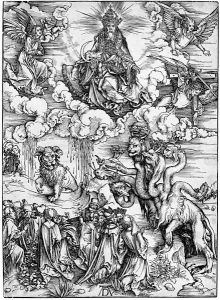
While my colleagues and I wait to hear if our monster session will be approved, my thoughts naturally turn to the taxonomy of monsters. One of the perennial problems in the study of monsters is that definitions vary widely. We might all agree that a werewolf is a monster, but what of Cthulhu? Or of a horribly deformed, but completely natural animal? What about demons? Should we all agree that we know what a monster is, how do we divide them into categories for easy study? One way of doing this might be to rely on binaries. For example: natural monsters versus unnatural monsters, living monsters versus undead monsters, monsters from earth versus monsters not from earth, monsters created by humans versus naturally occurring monsters, fictional monsters versus monsters reported in nature. It soon becomes obvious that monsters are a widely divergent group of creatures.

Monsters have won an enduring place in popular culture. I think of The X-Files. Apart from the “mythology” of the series, many episodes featured a weekly scary monster. The same is true of Sleepy Hollow, now in its third season. Monster movies, although perhaps taking a back seat to super heroes of late, are regulars on the silver screen. We just can’t seem to live without our monsters. I’ve mentioned in my many posts about monsters that the connection with religion is so obvious that it hardly requires apology. But a deeper question has occurred to me. It has to do with the nature of religion (itself not well defined).

439px-Durer,_apocalisse,_12_il_mostro_marino_e_la_bestia

Religions exist to deliver people from the trials they face. Offering Nirvana to break the endless cycles of reincarnation, or Heaven when we die after one go-round, religions claim to give us something of an assurance that things will work out. (Mostly.) In the light of this, why does religion give us monsters as well? Surely they are more than mere metaphors for the misfortunes of daily life. There has to be something more to it. What that more is, I’m not certain. I’m not even sure of how to approach the question. Monsters will, for me and many other Monster Boomers, remain a guilty pleasure that we are pleased to be able to address as adults. I am becoming more and more convinced that the more we learn about them, the more we learn about religion itself. And perhaps also about those who give shape to religious thought.


Seminary History

Seminary is where you go to learn what they didn’t tell you growing up.  Many people have rather idealized views about clergy and somewhat untrained views about their church (the same may apply for religions outside Christianity, but I wouldn’t be so bold as to say so).  Since church membership is declining, albeit not drastically, seminaries are finding themselves less in demand.  Meanwhile all manner of political candidates can claim a biblical literacy they don’t rightly deserve, and who’s to challenge them?  It is sobering to read The Christian Century and see just how sickly theological education appears to be.  Seminaries closing, seminaries merging, seminaries not really appearing on anybody’s radar scope.  As the founding institutes for nearly all the Ivy League universities (which are not closing), it seems that few people appreciate just how much our seminaries have contributed to our culture.  Our culture, however, is focused on more material pursuits now.  Let history bury the dead.

IMG_2694

The days when clergy were a step away from royalty and political power are long gone.  Figures like Increase Mather could personally pull cords with the crown to select a governor for colonial Massachusetts.  Rev. Martin Luther King, Jr. could almost single-handedly lead to the beginnings of the demise of one of the greatest social injustices in a democracy.  Even Fred Rogers could daily assure us that it was a beautiful day in the neighborhood.  Seminary graduates all. None of that matters now, as long as my back pocket’s heavy with greenbacks and one of the rich elite inherits the White House.  The thing is, seminary helped many of our past leaders to mature.  Not just spiritually, but intellectually.  Obviously seminaries aren’t perfect.  They can leave you with PTSD just as easily as a PhD.  Still, I wonder at the loss.

I didn’t know about seminaries, growing up.  Those who attend fundamentalist, non-denominational churches seldom do.  When I learned that there were specialized schools to attend to become a minister, I was intrigued.  I guess the idea of a monastery was somewhere in the back of my head.  Little did I realize that seminary was about forcing you to think about things you’d always assumed.  Yes, seminaries have their casualties.  Some leave with as simplistic an outlook as when they entered.  For the majority, however, it is the opportunity to find out that the world of religious belief is much more complicated than people would ever, ever imagine.  Angels dancing on the head of a pin, this is not.  Any computer could calculate that with the right algorithm.  Those who think deeply about what they say they believe are rare.  They do a service to society in general, but only if we are willing to listen.  When the doors are closing, this will become increasingly difficult.  As long as the money flows, I guess it really doesn’t matter.


Making History

We should learn from our mistakes. This is something of which historians are keenly aware. James Grossman, executive director of the American Historical Association addresses the recent concerns raised on campuses throughout the world of removing monuments to historical founders who’ve fallen from grace. The dead white man has been out of favor for some decades now, but Grossman, as an academic, is keenly aware that we can’t take only the good from history. Who would ever read it if it was all sweetness and light? History is who we are, and there are unlit corners in every soul and although we prefer to think of ourselves as victims, we sometimes find ourselves asserting our will over that of others. It’s only human. The related question Grossman addresses is that of monuments. The winners of the moment, after all, incise the figures in stone and cast them in bronze.

IMG_0814

As an example, he notes, Stone Mountain in Georgia commemorates leaders of the Confederacy. Knowing that slavery is, was, and always has been wrong, casts a strong shadow of emotion over such monuments. The question is how to handle them ethically. I recently mentioned female figurines from ancient Israel in a post. Although they offend some, we know not to destroy them because they tell us something of how we became who we are. We have a moral obligation not to run from the darkness. We need to be willing to face who we really are.

History is interpretation. Everything that has ever happened is potentially a part of it. None of us has the scope, the breadth, the depth, to understand where any of this may be ultimately leading. We can only interpret. Religions, often positive, but also often negative, play an important part in that history. We can be assured they will continue to make history in the future. We have, as a society, decided religion isn’t worth our time to learn about. Our institutions of higher learning can less about history or religion than about business and economics. Ethics? Isn’t that somewhere in the philosophy department? You’re welcome to it, if you can find it. Meanwhile monuments are raised to trump the naysayers, and history becomes what we decide to make it.


Used Bookends

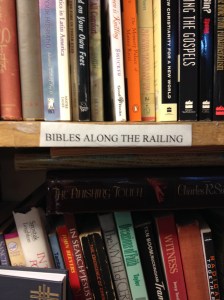
There’s nothing like spending a Saturday in a bookstore. It is actually a rare treat these days with Borders gone and some of the smaller indies having trouble keeping up. I particularly like used bookstores. Unlike most durable goods, books—at least some of them—grow in character with renewed ownership. Like most academics, I have books that had previously been owned by big names in the field. Sometimes because I was a student of one of their students, at other times because their library went for sale and I found the tome in a second-hand shop. A few years back I had to go to Boston for work, and I stopped at the Boston Book Annex only to find it closed. It’s sad when even a used bookstore can’t keep up.

So when my wife told me she had to work on Saturday, and it was in Montclair, my thoughts turned to the Montclair Book Center. It isn’t the largest bookstore around, but it does have used books and it is a healthy walk from my wife’s office. I never go planning to spend much, but being in a bookstore, you see things you didn’t know existed. When the staff comes up to ask if they can help me find anything I just smile and say, “No thanks, I just want to browse.” Maybe it’s because I have no idea what I’m looking for. I’ll know it when I see it.

IMG_2685

I used to visit the Cranbury Bookworm. In a sprawling old house outside Princeton, I often found pleasant, used surprises there. Then the landlord evicted them. They sold off most of their stock and moved to a closet down the street. Even though it’s tiny, there are always others there. I’m never alone in a bookstore. Other patrons feel the draw. I wonder if everyone who reads doesn’t owe a debt of obligation to stop into their local bookstore and pitch in. I grew up in a town without any bookstores at all. The nearest one I knew of was thirty miles away. I know what it is to be book-deprived. It’s Saturday, and a little too cold to spend much time outdoors. It’s probably just an excuse, but you’ll find me in the bookstore nevertheless.


Camera Obscura

There’s a certain etiquette to being on the bus. There has to be, when you pack fifty strangers together for an hour and shake gently. The seats on New Jersey Transit are somewhat intimate and it’s rare to make it through the journey without somehow touching the person next to you—elbows, knees, hips, or general body mass—worlds collide. I’ve mentioned before that not many people read old-fashioned books on the bus, but one of those unspoken rules of etiquette is that you don’t look at a stranger’s book. I’ve benefitted from that any number of times myself. People think odd things about you when you’re reading a book about religion in a public space. Not odd enough thoughts to earn you a seat alone, but still.

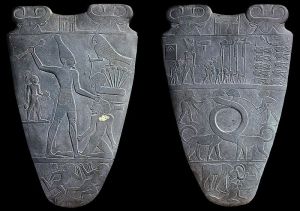
I was reading a book about an ancient Near Eastern religion the other day. For me it’s an occupational hazard. Those of us who have studied this stuff for a living keep on cranking out the books and somebody has to read them. Amid all the blue light from all the devices I often feel like I should be in a museum myself. It was with great surprise then, that my eye wandered onto the book next to me that day. I really couldn’t help it, you see. The woman who sat next to me and was using her cell phone to shed light on her book (the overhead lights don’t always work). She went to make a phone call but forgot to turn off the light so that it hit me right in the eye. Realizing her faux pas, she quickly turned it off, but my attention had been caught. In the book in front of her was a picture of the Narmer Palette. Narmer was the king who united ancient Egypt, according to the lore, and this stone ornament was the commemoration of his achievement. Anyone who’s studied ancient Near Eastern history would instantly recognize it. What were the chances? Two people sitting on a bus, reading actual books, both about the ancient Near East?

800px-Narmer_Palette

Bus etiquette, as I understand it, doesn’t allow me to ask a stranger, “What’re you reading?” It’s kind of a personal question, really. I’ve been doing this commute for going on five years now. The number of books next to me has been negligible. But one related to the very topic I was reading about? Was this one of those “if you see something, say something” things? Instead I practiced custody of the eyes and went back to my own book. Then the other unthinkable: she talked to me. “Do you know where,” she began—“ancient Egypt!” I thought. But then she asked where a certain restaurant was. I apologized. I never pay attention to the businesses along the highway. I’ve always got a book to read. I thought about asking her about the book. She had, after all, breeched the dam of silence. Instead I turned back to my own book and didn’t notice when the bus reached a restaurant whose name I didn’t even know. That’s what etiquette demands.


Presidential Race

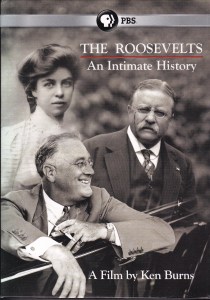
RooseveltsMy wife and I have been working our way through Ken Burns’ documentary, The Roosevelts. At first, it took a little persuading on my wife’s part. Of course I thought Teddy Roosevelt was an interesting character, and FDR may have been the last true Democrat to inhabit the Oval Office, but they were a rich family. American aristocrats. I’m glad she convinced me. Subtitled “An Intimate Portrait,” the fourteen-hour mini-series doesn’t idealize the three most famous Roosevelts (Eleanor is included too); they have their faults and foibles. One thing, however, has won me over time and again—these three genuinely cared for other people. Sure, there was ambition and fame involved, but their personal writings reveal that they believed it was the obligation of the wealthy to give back to society. Industry bosses hated them.

More than once I’ve found tears in my eyes as the narrative unfolds that includes people writing personal letters of praise, petition, and always hope, to a president whose New Deal was intended to ensure that as many people could be helped were. I keep thinking to myself—when is the last time we had a president who really cared about the people? I voted for Carter, Clinton, and Obama. I think they did, and are doing, okay. Of the three I saw Carter building houses for the homeless after his administration. I have seen Obama fighting back emotion at the senseless shooting of black youths by police. I think they care about people. Franklin Roosevelt, even after an assassination attempt, however, rode in open-topped cars. He drove on his own to talk to people and ask them how they were. He was a president who cared. Our presidents are now behind bulletproof glass.

Politics has a disenchantment in its wings. It has become a game the wealthy play. Even the most well-meaning Democrat has no hope against the wealthiest one-tenth of one-percent who hold all the power in their hands. Watching The Roosevelts it’s clear that it has been so since industrialization. Seeing the J. P. Morgans and even the less enlightened Roosevelts declaring politics had no business stopping their astronomical earnings is down-heartening. I almost cut up my Chase card in protest. The wealthy despise the poor against whom only they can be declared extraordinary. Today our presidents, well-meaning or not, are behind bulletproof glass. They are in the shadow of big money. And some of the hopefuls have even convinced many of their fellow citizens that the only way forward is to follow their cash all the way to the banks they own. It’s not a presidential race, it’s a game where diamonds are trump.


Philistines in Midtown

It’s an old story. In fact, it’s in the Bible. The enemies of Yahweh perish. Since Israel’s god could not be represented iconically, the story goes, an iconic ark stood in for the divine presence. After a certain unpleasantness with the Philistines, the ark was captured and taken to the temple of Dagon. There, the statue of Dagon fell down in worship before the ark. Philistine priests, embarrassed for their deity, set the statue upright again only to come back the next morning to find their god not only toppled, but decapitated. I’ve always found this story intriguing. I wrote an academic article about it some years ago, which, as far as I can tell, has been ignored by subsequent scholars of Dagon. Of course, the Philistine god eventually went on to fame at the hands of H. P. Lovecraft. Today most scholars are far too parsimonious to care about that, so I’m left to follow my imagination when it comes to the old gods.

IMG_2671

This past week, on my way to work, I spied a mannequin fallen in the Garment District. There used to be hundreds of fabric stores around here. I’m always interested in those that remain. Cloth is so basic to human needs. The mannequin was behind glass, behind a chain fence. She’d clearly fallen in the night. She was decapitated. Of course, Dagon came to mind. I’m sure that others walking by the store had the same thought. Fallen before the invisible almighty, an idol meets its end.

Once upon a time, I’m told, biblical literacy was common. I don’t mourn its passing because I believe society has become sinful, but I do mourn it because the stories are timeless and important. There is something very poignant about the idea of a foreign deity falling, headless, before an even more powerful, invisible foe. That foe these days is the equally omnipresent and omnipotent dollar. After all, I am standing in Midtown Manhattan where the only language that everyone can speak is that of Mammon. Writers of fiction and erudite scholars beyond the reach of mere mortals ponder the great mysteries of ancient gods. The rest of us walk the streets to our assigned places so that we may participate in its endless worship.


Chilling Thoughts

GlaciersI don’t think much about glaciers. At least I didn’t. Now they keep me awake at night. Literally. I just finished Jorge Daniel Taillant’s Glaciers: The Politics of Ice. Never have these ice sheets ever seemed to have so much personality before. I don’t live near glaciers, but I have seen a couple. A number of years ago I visited Glacier National Park in Montana. It was summer and the one glacier that was right by the road (Highway to the Sun) was melting. It was the first glacier that I knowingly saw, and I went my usual way, not thinking any more about them. Taillant’s book, however, indicates why everyone should be concerned about ice sheets. Not only is global warming a reality, our ice caps are melting on what appears to be a runaway timetable and we are not likely able to reverse the process until the damage is done. Not only our ice caps endangered, but our glaciers as well.

Why should anyone care about glaciers? For purely selfish reasons, I might point out that they are crucial to supplying drinking water for much of the world. Looking at the globe, it seems there is plenty of water to go around. Only about 3 percent of all water on the planet is fresh water, however. And of that 3 percent about three quarters of it is locked up in glaciers. Glaciers are the only source of fresh water in dry climates during years of drought or excessive heat. Whatever water isn’t used as these ice giants melt flows into the ocean, becoming part of the salt water majority. When the glaciers are gone, they’re gone. They are part of the fine balance that makes life on earth possible. The politics enter the picture when Taillant reveals that large mining interests, particularly in South America, have been destroying glaciers to get at the gold underneath. They block legislation and provide disinformation, all in the name of wealth. When they destroy glaciers, they destroy future prospects for life in the regions they mine. It’s an issue of social justice.

On our little planet that seems so big, we don’t often stop to consider that we didn’t really show up here by accident. We evolved with the features that our planet gave us—notably water—and we have continued to thrive only in the presence of water. It has often been said that future wars will not be fought over petroleum, but water. We can live without oil. We can’t survive without water. And our industrial action is blithely wasting away the largest reserves of drinkable water on the planet. I don’t live near any glaciers. I’ve only seen one or two in my lifetime, but I now worry for their health. Their future is, in many respects, our future. And that makes me want to pour a glass of water and reflect.


The Problem with Love

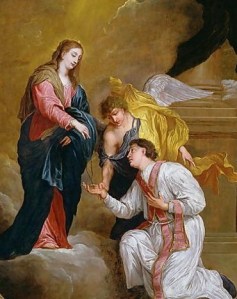
As far as we can tell, historically there is no Saint Valentine that is particularly connected to February 14. Even if there were, it is difficult to imagine a saint promoting what we know as love. Love is a slippery topic. The ancient Greeks (who did not marry for love) were so perplexed that they came up with three different words for it, and the nascent Christian community tended to prefer agape-type love. Love that expresses well-being for the community and has little to do with the physical attraction that people everywhere find so compelling. It is safe to say that Christianity has always been uncomfortable with the kind of love that Valentines Day celebrates. The holiday, because of its associations, has often been removed from the liturgical calendar a time or two. People are already prone to express their biological urges, so it is best not to give them an excuse, sanctioned by the church.

This is an odd situation, thinking love is wrong, or at best, tolerated. As far as we can tell, the earliest Christians had no particular concerns in this way. We can’t measure, of course, how people loved their spouses, but there was nothing inherent in the new religion to suggest physical attraction was bad. By the time Paul of Tarsus started writing his letters a couple of decades after Jesus’ life, at the earliest, some doubts had crept in. They seem to have been largely personal. We know little of Paul’s life, but we are aware that he saw the kind of love known as eros to be a problem. Concession had to be made to those who couldn’t control themselves, but otherwise, in good stoic fashion, love was to be ignored. By the time of Augustine of Hippo, some three centuries later, sex passed on original sin and love had become decidedly dark.

St-Valentine-Kneeling-In-Supplication

Attitudes change with time, of course. After two millennia a certain practicality sets in. We have moved through the troubadours and courtly love to psychology and deep human needs. Arranged marriages are, for the most part, considered like shackles from the past. And love, that feeling that we never completely outgrow, is believed to be a positive thing. Saint Valentine (and there were at least two of them) would likely have disagreed. While the Romans celebrated sexuality, they also believed in restraint most of the time. Valentines Day, however, still has something to teach us. Despite the commercialization of the holiday, in a world with a surplus of hatred, any kind of love is, as long as it’s mutual, is worth celebrating.


Universal Universities

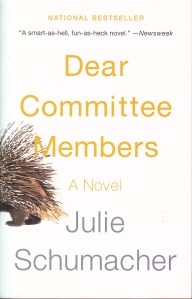
DearCommitteeHaving been in academia for nearly two decades, and having watched from the sidelines ever since being benched, I found Dear Committee Members a little too true to life. This novel by Julie Schumacher is presented as a series of letters of recommendation by an embattled English professor at Payne University. Set over the course of an academic year, the reader watches as the fictional university eviscerates the humanities to make the life of more “practical” departments like Economics much more comfortable. Sarcastic, bitter, and full of pathos, the novel is frequently funny, but it runs so true to life that it would be difficult to say whether it is indeed fiction or not. The book was a national bestseller, but universities continue down this very road, with all seriousness.

I have said before: it is time for those of us who really believe in education to take on, challenge, and overthrow this paradigm. Education is not about making money. There is more to life than that. My reading, which coalesces somewhat coincidentally around these themes (Dear Committee Members was recommended to me by a bookseller that I don’t know personally), paints a larger picture that is disturbing. The capitalist economy is growing out of control, its own dictates now excluding human decision (see my post on At the Altar of Wall Street earlier this week), and one of its strongest investors is higher education. It is a business, you see. The utter and complete devotion to the economy cannot take place without new generations of students indoctrinated into money as the meaning of life. Some of us—many of us—disagree, but we are not organized and we have no funding. We are the human resistance.

Setting out to make money was never my goal in entering the professorate. Motivated by finding authentic meaning in life, I have found that those departments where such a search resides—religion, philosophy, English, music, the arts—are under siege and constantly have to justify their existence to the administration. Dear Committee Members is funny in its overstatement, and in having a protagonist actually say what many of us think. And thinking is what it is all about. Education is about learning to think. Not earning a mint. We are in need of an altar call. The only ones with power to take back education from corporations are people. Who’s willing to join the cause with me? At this point I’d even be willing to consider sympathetic robots.


Faith for Sale

Materialism can be defined in a number of different ways. One of the more common is that people desire material things. We want stuff. Now, we all need things to survive. My sympathies are always with the poor for whom each decision can be a potential tragedy. Spend too much on something and you may not have enough left to purchase something you need. As people, though, we all long for nice things. So it is that places like dollar stores exist. The dollar store is not the same as the “five and dimes” with which I grew up. The latter stocked things that were, in large measure, practical. Things you might need: pencils, string, soap. A dollar store, however, may lead you down a different path. A lot can be had for a dollar. Some of it may seem to promise more than it can deliver.

IMG_2670

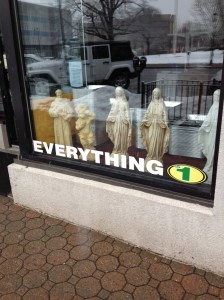
My wife sent me a photo of a dollar store where the window was lined with what appears to be religious statuary. I’d be lying if I weren’t to admit that my first impulse was to go and purchase some cheap salvation. I’m sure the statues aren’t made of stone. I’m not even Catholic, so I’m not sure a one-dollar Mary would help with much of anything. Still, it is something to buy. Something material. Something that seems to make promises beyond itself. Here is the danger of the dollar store. It’s only a dollar!

Every now and again I play with this thought-experiment: if I knew that I would only survive one more year, what would I buy? Many things seem superfluous in the face of eternity. Would material comforts, or larks, do anything more than depreciate the little I would leave to others? That game tends to show materialism in a rather crass light. What do I really need to buy? We all have our weaknesses, for sure, but it can’t hurt once in a while to think that the material is just that: material. And we might have a very different set of values if we didn’t measure worth in terms of material gain. Faux-stone Mary would likely back me up on that.


Commitment

Marriage is a human institution. As those who invented it, we should be able to define it. Biology may not help here, since animals become mating pairs in many different ways. Besides, we’re selective in our application of science to the question. Not only that, human views of marriage have changed quite a bit over time, and the practice of marriage is still not uniform today. Back in biblical times, for example, polygamy was more or less normal. Marriages were arranged for tactical and economic reasons, and bonding for love had, one can only guess, very little to do with it. It was practical, pragmatic, and of use to the state. Prior to that, if the evidence is to be believed, “marriage” was a communal practice among groups of maybe 150 individuals. The purpose was the same: social harmony and cooperation.

An article on The Wild Hunt has me thinking about this again. (And you thought I was going to be discussing gay marriage, didn’t you?) According to a recent piece by Christina Harrington, handfasting, the marriage among pagan communities, has now been legally recognized in England and Wales. As far as we can tell, again delving back to the Bible, marriage was not considered a religious matter in antiquity. Part of life, it was handled by families who were witnesses to the promises made. Over time, various religious bodies came to give their blessings to people pledged to each other. In fact, for some religions marriage is perhaps the most important sacrament. Once this happened, however, dominant religions became jealous of their right to declare a marriage binding or not. Even as a child I remember a stigma attached to a merely civil wedding. It is, however, the state the declares a marriage binding.

Photo credit: the ShahMai Network (from WikiMedia Commons)

Photo credit: the ShahMai Network (from WikiMedia Commons)

Marriage is a convenient method to sort out tax statuses among genders with earning disparities. A government has no interest in whether a couple marries for love or not. Even gender doesn’t really matter. Can you tick that “married” box on your tax form or not? So it is that recognizing handfasting is likely, on some level, politically expedient. Meanwhile, those who marry for love have the added benefit of being with someone they chose and having a friend at hand. Tax season is upon us. Valentines Day will soon be here. And in some parts of the world the government is catching up with the times and realizing that marriage is what people make it.


The Bottom Line

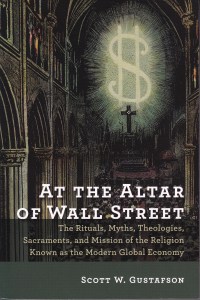
AltarWallStUnderstanding, or even caring about, economics has been one of my abiding weaknesses. I suppose growing up poor, excess money was a foreign concept—at least on a quotidian basis—the possibility of acquiring much of it remote. The poor know their place. Still, I was intrigued by Scott W. Gustafson’s At the Altar of Wall Street: The Rituals, Myths, Theologies, Sacraments, and Mission of the Religion Known as the Modern Global Economy. It has turned out to be one of those very important books that could be world-changing, if enough people read it. The basic idea is simple enough: Economics is a religion. Immediately many people will put the book down. Economics may be the dismal science, but at least it’s a science, right? Not so. Not completely. While economics uses scientific principles (as does theology), it is a belief system based on an underlying myth that has pushed us to the place where the rich are far too rich and we’re convinced that the plight of the poor is simply a reality with which we must live. It’s all based on a myth of barter.

There are places I quibble with Gustafson, but he makes a very compelling case that the Global Economy, through a series of historically discernible steps, has come to be money making money for money’s sake. As he clearly demonstrates, developments in stock trading have made this an enterprise where people are completely left out of the equation and understanding what has happened impossible. As long as money has been made, the Economy is happy. This way of thinking, which is de rigueur for business schools and presidential wannabes, believes with the conviction of an evangelical that as long as money circulates everything will be fine. Those who believe this walk down Fifth Avenue with blinders on.

Step by step Gustafson demonstrates that Economics has all the trappings of any religion: a priesthood, mythology, rites and rituals, and an overarching theology. And this belief structure, like that of many religions, persecutes heretics. Indeed, human sacrifice is an innate part of this religion called Economy. It has sent missionaries out to the far reaches of the world to convert other ways of living to that of the Global Economy. And in this religion, it is safe to say, those who make it to Heaven are remarkably few. This book does offer potential solutions. They are solutions the wealthy and powerful will not like, so they are probably not going to be enacted any time soon, if at all. So while the rest of us are standing in line at the soup kitchen, I would suggest some reading that will make far more sense than you think it might. At the Altar of Wall Street could change the world for the better, if the Economy allows it.