Fashions to Slaves

Howard Thurman was a theologian who held saintly status in my days at Boston University. As an African-American he’d experienced episodes while growing up that nobody should have to face. I remember him writing about being stuck with a pin in the hand by a caucasian girl who declared, “you don’t feel pain.” That image has stayed with me for decades. Unfortunately, that image hasn’t remained alone. I’ve been reading about slavery in the ancient world. No matter your race, slavery was considered a kind of ontological state. The color of your skin didn’t matter; your social status did. Slaves, you see, were less than human. When the slave trade began its hideous trans-Atlantic business ventures, essentially an entire race was classed as subhuman, because it is easier to feel good about mistreating a subhuman than it is a fellow being with a soul just like yours, if only purer.

This is not to deny the very real and troubling, criminal mistreatment that African-Americans experienced during the colonial period. The deeper problem with slaves was that of social status. If you look closely enough, you can always make someone “the other.” Heck, we’ve done it for millennia with those of the female gender. Something that has always bothered me has been how sociologists, political scientists, and historians constantly overlook the concomitant issue of class. In the new world we like to image we’re a classless society, but we’re not. The plight of many African-Americans today is economic. If you prevent people from having access to education and good jobs, they become much more easy to repress. It doesn’t take a genius to figure that out, just someone with the will to look. Those who write the history are those comfortably ensconced in offices and with research assistants, and people who empty the departmental garbage for them after hours.
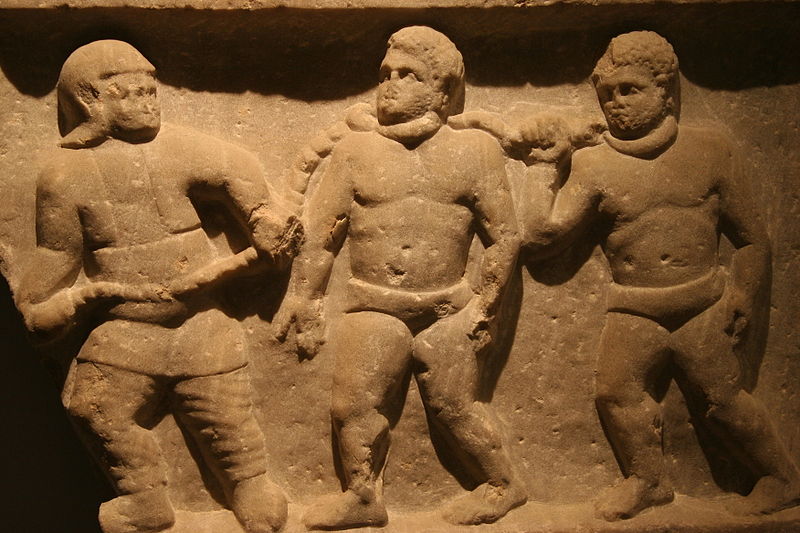
Photo credit: Jun, Wikimedia Commons

Photo credit: Jun, Wikimedia Commons

How easy it is to suppose that the other is not the same as me! Most people do not like to challenge their preconceived notions. This is one of the real values of an education in religious studies. Take that intimate belief and put it under a microscope. Many would leave the lab screaming. Those who remain, patiently probing, learn uncomfortable truths. If the biologists are right—and there seems to be no reason to doubt it—all people evolved from common ancestors and we have more in common than we have that separates us. Skin color is only skin deep. Gender differentiation is merely in the service of species reproduction. What really makes us different is culture. And culture always requires classes. As even the ancients knew, some tasks are odious, and it is far more pleasant if we can compel someone else to do them. First, however, we must use our religion to explain why they can be made our slaves. If anyone doubts this, read Howard Thurman and see if he can’t change your mind.
What I Mean

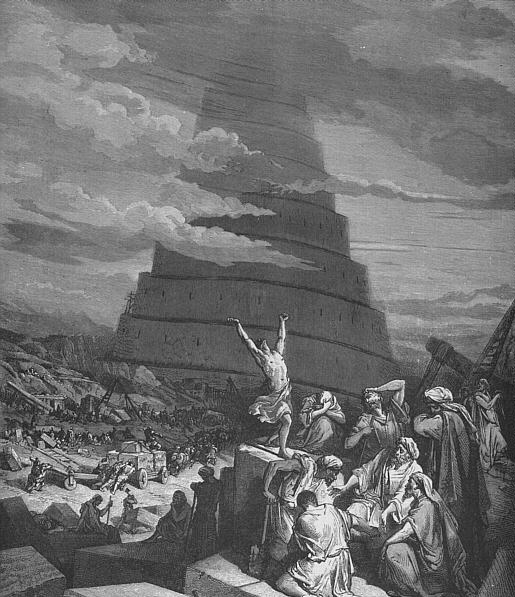
It might seem, in this world of constant misunderstanding, that we might get along better were it not for the Tower of Babel. I mean, we call it a language barrier, right? So why are some people upset about the extinction of languages? Rebecca Morelle writes of how economic success may be behind language extinction in an article on the BBC science and environment page. There are some—many entrepreneurs—who see no cause for mourning. I have to wonder, though. I cut my academic teeth studying dead languages. Koine Greek and “Classical” Hebrew are no longer regularly spoken, and really haven’t been for centuries. Then I moved on to rediscovered languages: Ugaritic, Akkadian, Epigraphic South Arabian, each sounding more exotic than the last. Would world commerce exist if we were all hampered with Sumerian? We got on fine without the wisdom of the past—why should we even care?

I see politicians, mostly male, arguing in the “most advanced” government in the world, that women shouldn’t be given the full benefits of health care because they misunderstand the Bible. It is easily done. As I told my many students of biblical Hebrew over the years, language is not just words. Languages are ways of thinking. No translation is truly perfect. If you want to understand the Bible, you must do it on its own terms: learn to conceptualize in Hebrew and Greek, then come back and tell me what you think. It is, however, much easier to let King James do the talking. A man’s man. Just don’t ask what he did after hours, right Robert Carr? Something seems to have gotten lost in translation.

Languages are more than just ways of expressing ideas. They are the basis of cultures. When languages die off, cultures soon follow. Do you suppose that everyone on Papua New Guinea goes to work wearing a tie? Just give it some time. We call it progress, and it is inevitable. It has happened even closer to home, for those bound to the States like me. It used to be that academics had a language that didn’t necessarily included economics. The rarified domiciles of words like trenchant and salient and boustrophedon soon became superannuated. What are you trying to sell here? Dictionaries? As business marches unstoppably ahead, consuming all in its path, our lesser languages quietly die. With those languages ideas also pass away. With each demise, the world becomes a poorer place. Maybe it’s time to start building a tower.

Confusion_of_Tongues


Sustain This

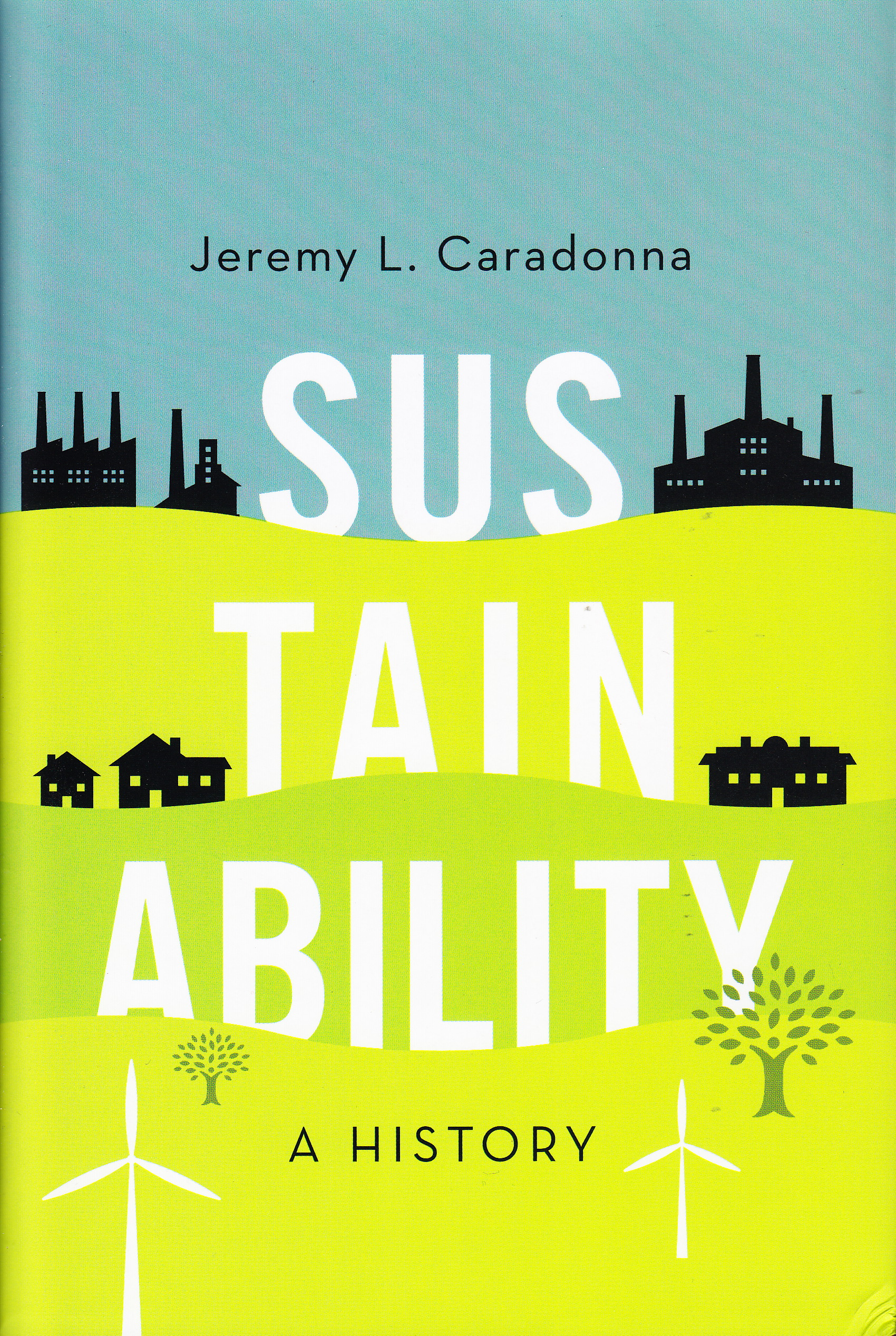
Sustainability“Grant me chastity and continence,” Augustine famously prayed, “but not yet.” That tragicomic scene kept coming to me as I read Jeremy L. Caradonna’s Sustainability: A History. Few ideas can bear the sheer weight of irony than that of a human population destroying their own and only planet. We know we’re doing it, and yet for a few more greenbacks to flash before our fabulously wealthy peers, we don’t mind warming the place up by a few degrees. There’ll be time to throw on the brakes right before the crash. I once took a ride, perhaps unwisely, with a friend who believed nothing could go wrong. Although the car didn’t actually roll, it came awfully close, and I am haunted by what might have happened. The difference between that incident and destruction of the environment is that the latter has already happened.

I’m cynical enough not to believe in simple solutions to complex problems, and reading Caradonna was a sobering finish to a day that had started out optimistically. Such books are not easy to read. Science does not come charging over the hill like the cavalry to save us at the end of the picture. You can’t take your marbles and go home when the marble is home. Sustainability does not set out to be a bleak book. There is a guarded optimism to it, and I was particularly pleased to see that sustainists readily recognize that without some kind of just distribution of goods, no system will ever be sustainable. I had no idea, until I read this book, that some economists advocate for a steady state economic existence instead of the ridiculously illogical constant growth. Constant growth in a world of limited resources is the worst kind of delusion.

We’ve gone pretty far down the road to destroying our planet. Already it will take many decades to repair the damage done. If we can muster the will to address corporate greed with a good old dose of primate ethics. Society, in all honesty, may have to collapse before that happens. If it does, of course, the strong will survive. I have a prediction to make, and it’s one that rationalists won’t like. If we can’t avoid the wall that is right before us, and if society as we know it buckles under its own greed, the survivors will, as sure as gray matter, devise a religion to explain it. As a species we are all about myths. Like fabled saints we believe we can have our fossil fuels and consume them too. Before rising sea levels wash us all away, do yourself a favor and read Sustainability. And when you’re awake for nights afterward, tell everyone else you know to read it too.


Dystopian Paradise

Dystopias resonate with me. As I ponder why, two factors seem to rise to the surface: dystopias are inevitably populist in orientation, and I was raised religious. Each of these factors requires some explanation, but so does the choice of addressing dystopian topics on a cheerful September day. In an article by Debbie Siegelbaum in the BBC News Magazine, Project Hieroglyph is featured. Project Hieroglyph, which involves some people I know, is an attempt to write a more optimistic future back into science fiction. To understand my reservations, I have to confess to having grown up as a nerdy science fiction reader. The stories from the 1950s and ’60s to which I had access (growing up poor, and buying books at Goodwill and second-hand shops) tended to be optimistic—people colonizing other planets, creating great labor-saving inventions, traveling time itself. In the meanwhile I slept in torn sheets in a ratty room and had to work to buy my own school clothes, inevitably cheap. For a few years our house didn’t even have a bathtub or shower. It wasn’t an easy existence, and I found solace in religion and science fiction, both of which promised a better future.

Today, forward-looking literature tends to be pretty bleak. With reason. Optimistic futures are the luxury of the elite. The average working person labors under a constant threat of unemployment and no jobs to replace the one you have. Hey, some of the people I see begging in Midtown are not dressed in the rags of the classic ne’er-do-well. Their signs asking for help are articulate and neatly written. The elite may look to a brighter future, but from street-level things appear a bit more challenging. There’s no question that politicians long ago lost touch with the commoner. They have no idea what life is like for most of us. Same is true of most university folk (cited in the article); unless they’ve been cast out, I suspect, they can conjure a pretty rosy future. With tenure.

That’s the populist angle. Now for the religious. The basic idea of Project Hieroglyph is as old as Buddhism, or perhaps even older than that. Salvation. Religions promulgate the idea that people require salvation. Otherwise it’s pretty difficult to get people up on a Sunday morning and convince them to drop their money in the plate. Look, however, at what has been happening to mainstream churches. So technocrats and other elites think technology, rather than the gods, will save us. Those devices of optimistic 1950’s and ’60’s sci fi have turned on us, and we have become slaves to our own technology. Gee, it’s awfully gloomy in here! Perhaps we need a brighter vision of the future where technology makes things better. It sounds like a return to the stories I read as a child. Still, I can’t help noticing all the closed churches I see, and how much the penmanship of the indigent has improved with the passing of time. If only I could decipher hieroglyphs my future might look shinier too.

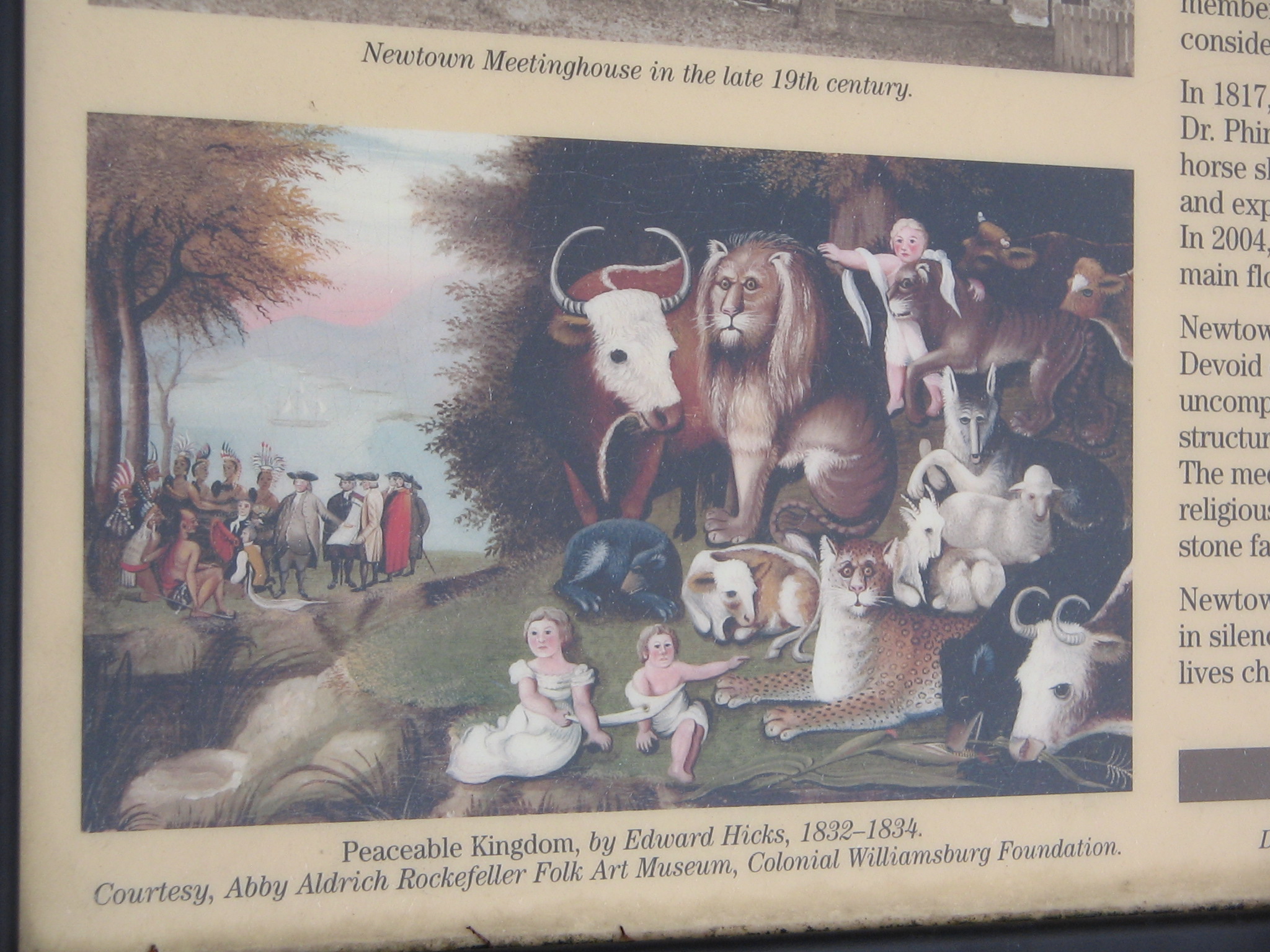
Is this paradise or what?

Is this paradise or what?


Religion, Technically

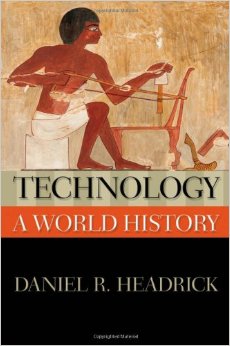
Technology World HistoryOne of the truths of history is that technology has always been with us. Reading Steampunk stories always boosts my historical sense of the interaction of technology and civilization. Civilization, to the best of our knowledge, coalesced around the idea of religion. Kings rule at the behest of gods because, if it came down to just a matter of swords and games of thrones, there’s always somebody who’s willing to die for the sake of challenging authority, or taking it over. Unless the gods give it to someone. With this in mind I read Daniel R. Headrick’s Technology: A World History, a brief exploration into how we progressed to a hive mind (not his word) through smartphones from an initial band of scared apes two-footing it across the savanna with pointy rocks. The whole trip may have taken millennia, but once we reached a couple of flash points (the “Big Bang” of about 70,000 years ago when abstract artifacts began to appear, and then the birth of civilization about the time Sumer was organized) things sped up at a dizzying pace. Despite the anti-science rhetoric of the Religious Right, there’s no denying that we’re not in Eden any more.

We are accustomed to think of technological development as being cold and rational. Trial and error, based on brute mental power willing to bully through the dark forest of superstition, leading us to new heights. But from the early technology that led to Stonehenge and the pyramids to the coded message “What hath God wrought?” religious wonder has stood behind technological development. Indeed, in reading Technology it became clear that up until very recent times scientists got along with god, and sometimes even shared the credit for the devices they created. Reading about the Antikythera mechanism had me thinking along these lines: if someone had invented a kind of computer millennia ago, why didn’t it transform society in the first century before the Common Era? The answer can’t be that it sank beneath the Mediterranean, because other such devices likely existed. Why no Roman Empire Industrial Revolution?

Headrick makes it clear that early societies sometimes did not promote technologies. Technology was not just a matter of what we could do, but it was a means of social control. Those who charted the flow of wealth and power would have interest only in technologies that enabled the continued growth of that system. All the rest was just icing. People knew the basics of electricity long before a practical use was found for it. Petroleum products were known even to the Sumerians. The wheels of industry, however, are greased by more than just oil. We construct worlds, and gods used to direct our efforts. Now we let our technocrats call the shots. We write blogs wondering how religion fits into a nano-tech world. There may be some logic in it, but once we’ve left our footprints on the moon—who used to be a god—we’ve replaced the deities in the celestial sphere with those in our own heads. And there’s no going back.


Sentence

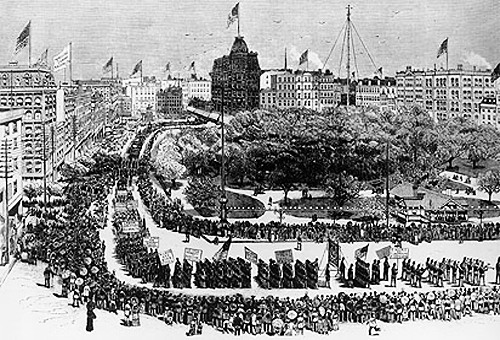
Labor Day marks the end of summer. Originally a day to commemorate all that the common laborer has contributed to society, it is now always a slightly melancholy day with the equinox fast approaching and the mighty rays of the sun growing enfeebled. Although the vast majority of us don’t have summers off any more, our employers sometimes devise summer hours to make the monotony of a commuting life a little less onerous. My academic colleagues have all switched their minds back to full engagement as students, lamenting the shortness of summer, stumble resentfully into classrooms to find out what they don’t know. To learn how to be laborers, increasingly. Once upon a time, children, higher education opened doors for you. You would climb that ladder. As an adjunct teaching night classes, I would often pass the janitor cleaning up and I would know s/he was making better money than I was. Labor Day must be upon us again.

Labor_Day_New_York_1882

Unashamedly a populist, I still think of myself as a laborer. In fact, the longer I work in Manhattan the more like my blue-collar upbringing I become. Yes, I have stood in the presence of Lords of the realm, knights in academic armor, and even a Coptic pope. I can mind my p’s and q’s. If you keep your mouth shut, you’ll appear wise even before those who are truly smart. That’s not my wisdom—I paraphrased it from the Bible. I read the Bible daily when my jobs were labor jobs. My first opportunities were heavy work—moving, pulling, brushing, and occasionally smashing. The sun was so hot that I would find a vending machine and down three Mello Yellos in a row. Summer had no time for beaches, but it offered warmer working conditions and a sense of identity.

Labor Day brings us back to work. Summer’s bright grasp has begun to slip, and already the trees have started to yawn. Like the migrating birds I feel the draw to return. Even an animal knows the place s/he belongs. Perhaps we’ve wandered a little too far from the path that should’ve been evident before us. We paid the costs and went to college and found ourselves back where we started. Labor Day is one of those holidays with no religious connections. It is purely secular. Moved from May because of the Haymarket Massacre, we put it at not the beginning of sunnier times, but at the end. I would jealously watch the sun set, but there clouds forecasted to be in the way. Besides, I have to turn in early because tomorrow is just another work day. We only have to hold out to Memorial Day, so let’s enjoy our last taste of summer and wait for its eventual return.


Esau and Jacob

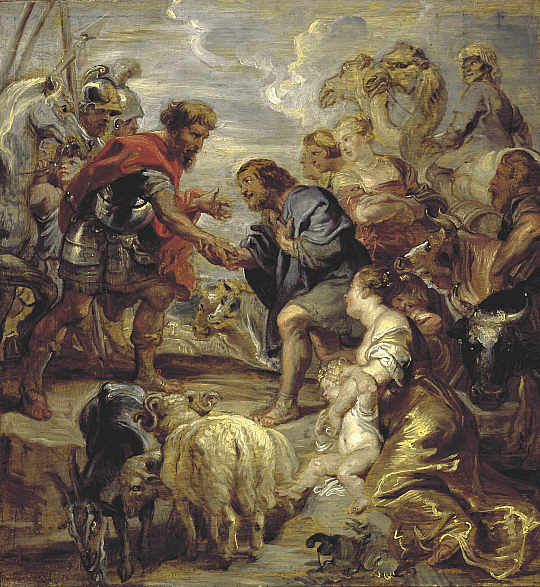
“Jacob have I loved, but Esau have I hated,” at least according to the recollection of Paul in Romans. One of the most poignant scenes in the Hebrew Bible is the story of Esau. Born as the elder brother, in ancient times one could expect certain privileges. Yes, Esau sold his birthright to his brother over a rumbling stomach, but he still knew that the blessing—the true gift—was still his. That, however, Jacob took from him by deception. Isaac, their aged father, was blind but wanted to bless his firstborn before he died. While Esau was out hunting, Jacob slipped in, in disguise, and stole the blessing before fleeing to Iraq. In Genesis 27, Esau came in as instructed only to find the blessing gone. His weeping has never ceased through the ages as his father blessed him with a sword. Years later, Jacob returned to find his brother a wealthy and powerful man. A man who forgave and forgot. But Paul remembered.

Rubens, The Reconciliation of Jacob and Esau

Rubens, The Reconciliation of Jacob and Esau

Hate is a strong word. As a child the worst punishment I can recall came from saying that I hated someone. That word was worse than a swear. Hatred was not worthy of a loving god. Like Esau, however, we don’t stay young forever. By our sword we make our living. For some of us that sword was the written word that we were told was sacred. The image of big, hairy Esau weeping before his blind father disturbed me. He’d done nothing wrong. In fact, he was simply doing what his father asked him to do when his brother snuck in and took something that my young mind couldn’t even parse out from the birthright earlier bargained. Clearly, however, it was important.

Upon returning home six chapters later, Jacob fears Esau’s righteous wrath. He knows his brother has legitimate cause to hate him. Esau, however, aware that he has enough, welcomes the prodigal home with open arms. There is enough to go around. Even today, with the will to do so, the hatred could be removed. This is a metaphor, not literalism. Genesis is, after all, not history. Stories, however, can convey what facts cannot. Millennia have passed and myths have come and gone. In the simple, if primitive justice of my childhood, you dare not say you hate your brother. Having grown up with brothers I learned that despite conflicts that inevitably arise, hatred is never the answer. Esau forgave, according to Genesis 33. And the land was wide enough for all.


Founding Principles

That feeling is in the air. Autumn began to stretch its melancholy fingers into August this year. Even before the month was half over the mornings had that chill in them that sparked the trees to begin their slow process of shutting down for the winter. Not wanting to admit that it was time to send my daughter back to college, I resisted what is one of the most compelling senses of self-abnegation that can be known—fall, in all its glory. When I saw a blog post on the Salem Witch Trials, I knew I wasn’t alone. The nights are already longer, and that sunset over summer’s beach comes earlier each day. Salem has a way of bringing that home to me. Innocent people murdered for fictitious crimes. Much of the fear that led to this miscarriage of justice was, of course, inspired by religion. The colonials had a great fear of new religious movements. Although it is difficult to believe, Baptists were such a new religion at the time. Considering how Baptist sensibilities now drive much of the Religious Right, it is difficult to imagine that once upon a time, being a Baptist could lead to accusations of being a witch.

As much as the Religious Right likes to make claims to a primitivism that is completely fiction (Christianity has always been this way), we have lost touch with what it meant to be a Christian in early America. States (still colonies) had their religious preferences, some even established. If you were a Baptist you’d be most comfortable in Rhode Island. If you leaned Quaker, Pennsylvania was for you. When these disparate colonies banded together into a country, it was quickly realized that religious freedom was the only way for them to work together. The government, the state, could not determine matters of individual conscience. Until, that is, that we could declare that the views of particular individuals on birth control—as informed by their religious authorities—could legally deny their employees full health benefits. Oyer and Terminer, anyone?

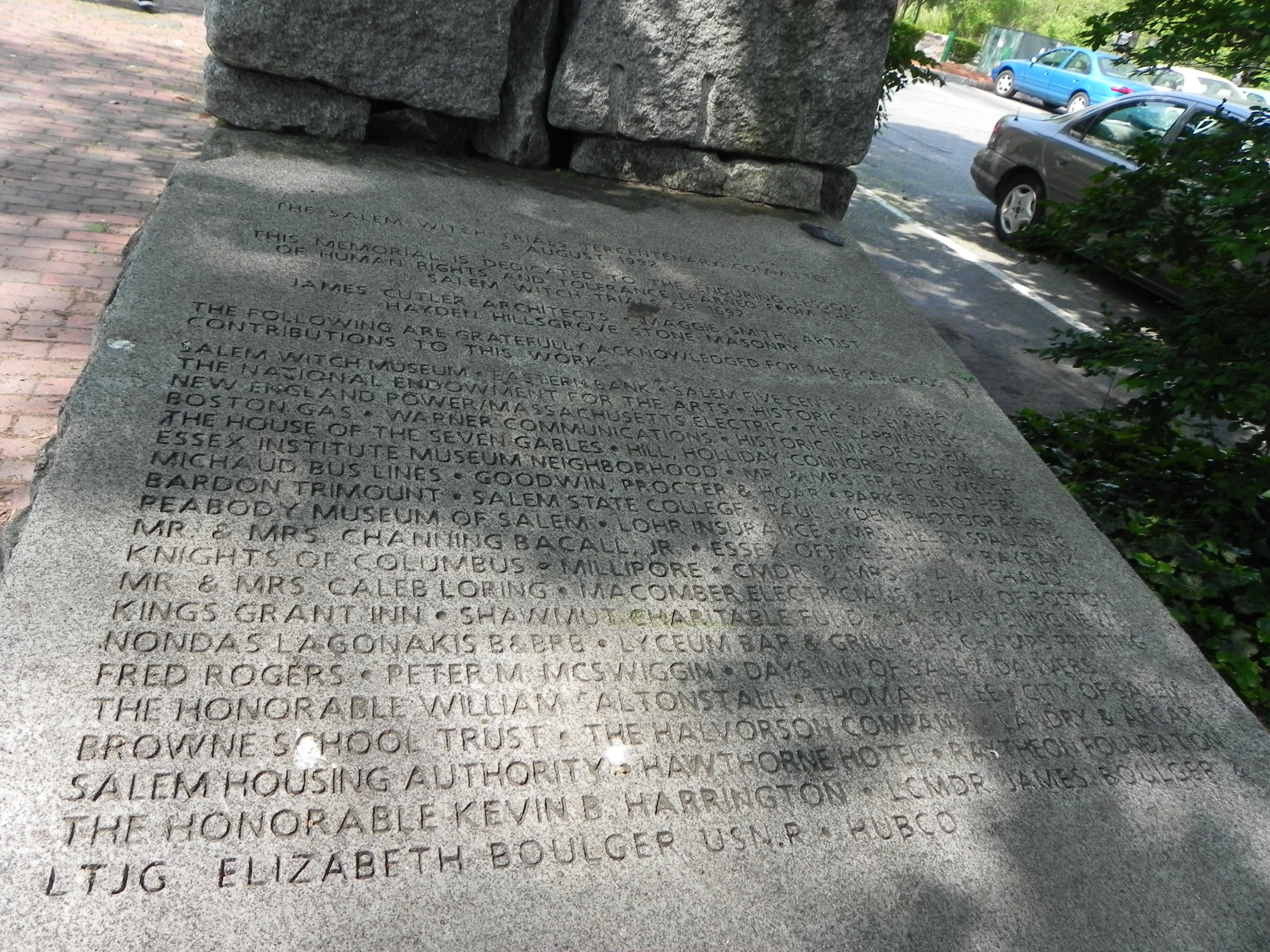
Freedom is a beautiful idea. It is a concept that only works, however, if it is shared equally. When one faction claims liberty for itself while limiting it for others, we’ve fallen back into times when the Baptist at your door was more dangerous than the Devil in his Hell. And so we revise our history and make claims that America was founded as a Christian nation. Evidence can be ignored, or, failing that, revised. Nothing is written in stone. When you visit Salem, there is a quiet little park, off the beaten path. Under some weary old trees are a set of stone benches against a stone wall. On each of the benches are engraved the names of those executed for being imaginary monsters. The leaves on those trees are, I’m sure, beginning to turn. Soon they will silently fall, and only those who are made of stone will deny that autumn is upon us again.

DSCN0562


Future of an Illusion

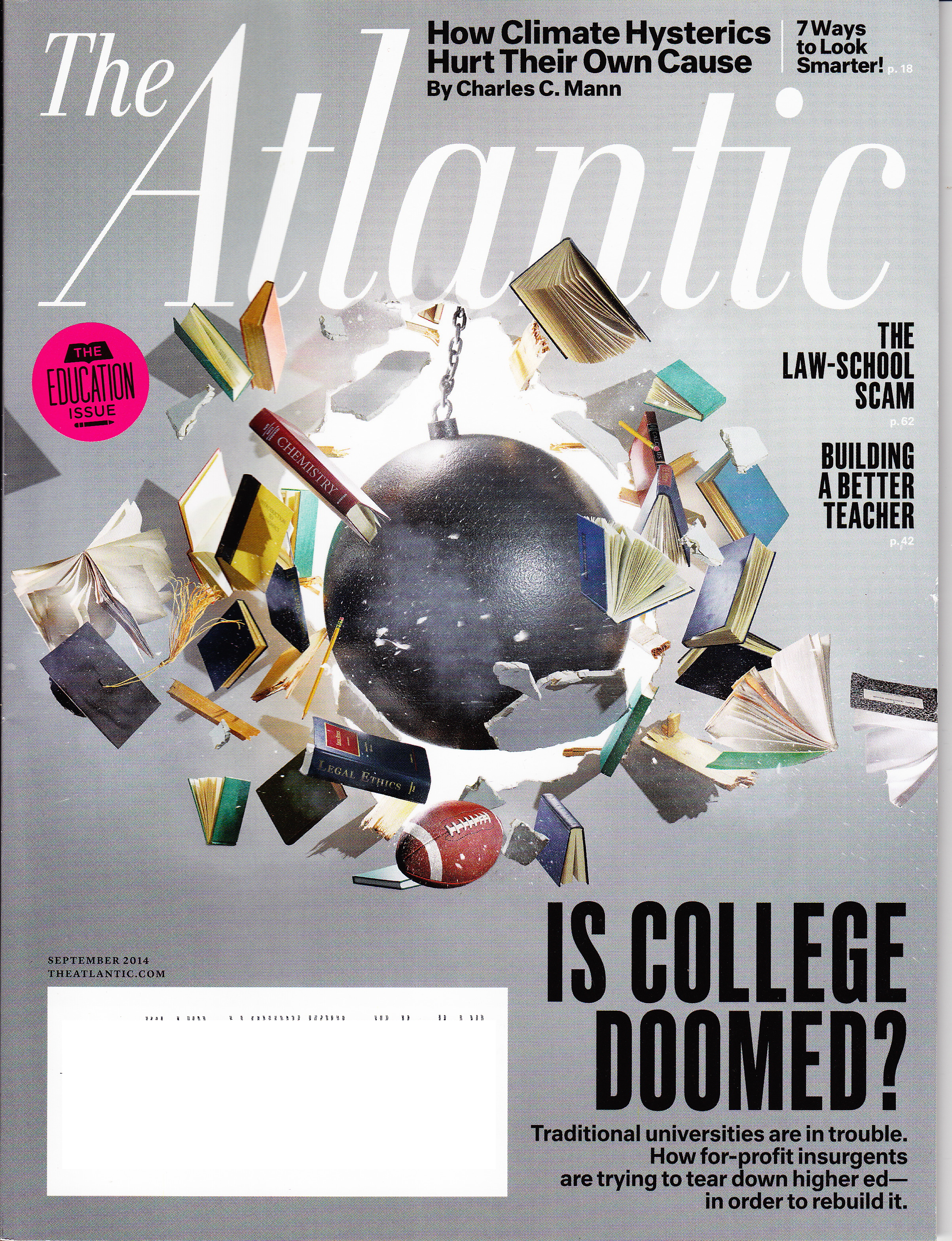
AtlanticHEIf anyone’s premature death has been announced more than Mark Twain’s, it is that of higher education. September’s The Atlantic arrived in my mailbox proclaiming itself the “Education Issue” leading with an article “Is College Doomed?” While I appreciate the headiness of Atlantic articles, they run long and my time runs in the opposite direction. I have to read selectively. Things like paying bills and work vie for my time as well. I flipped it open to the article actually entitled “The Future of College?” by Graeme Wood. Four words in, and I froze. The fourth word is “entrepreneur.” Don’t get me wrong; I’m open-minded. Having seen higher education showing its teeth and claws, I know it isn’t the nice pet that the dean will tell you that it is. Nevertheless, from my viewpoint, the main problem higher education is experiencing right now is entrepreneurial in character. Perhaps it’s old school to say, “if it ain’t broke, don’t fix it,” but it is perhaps the most apt phrase to apply to colleges and universities prior to the twenty-first century. And, in my humble opinion, today, while some vestiges can be salvaged.

Oh, I know I’m a dinosaur. I literally finished my formal higher education last century. Still, the experience worked well enough. I can’t express, even with daily posts on this little blog, how much I learned sitting through bachelors, masters, and doctoral programs. None of the institutions I attended was perfect (although Edinburgh came pretty close), but they were largely faculty led, and they all recognized that their primary function was to educate, not to prep for entrepreneurial enterprises. There were business schools for that. You couldn’t learn dead languages in business schools. Or even great ideas beyond those with an economic twist. What hath Nietzsche to do with supply-chain optimization? Oh yes, the death of God. My mistake.

In my younger years, I had no preconceived notion about higher education. My high school teachers and the clergy in my life encouraged me to go to college, despite the fact that nobody in my family ever had. Even though it was only Grove City College, as soon as I got over the homesickness, I realized I was home. Higher education—my assumptions were challenged. I had to learn to weigh the evidence. By the time I was finished, I had learned to create content as well. And then I started to hear that higher education had one purpose only—to prepare the young for the job market. A place that is too often unthinking and uninspiring. We aren’t educating, we are teaching conformity. And those who don’t have jobs don’t have healthcare coverage. Survival of the fittest. Entrepreneurs by definition. A quarter of a century ago I didn’t even know that higher education was sick, let alone dying. When the future begins with entrepreneurs, however, I’m going to side with Mark Twain, even if he is really dead.


Beyond Redemption?

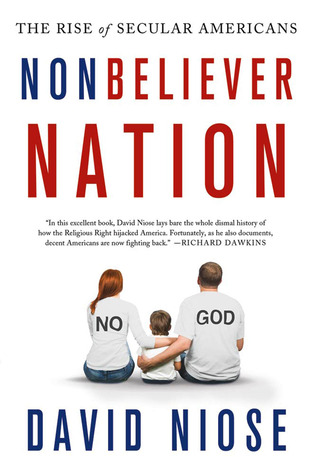
NonbelieverNation The Roman emperor Gaius, it is said, was insane. He perpetrated such antics as declaring war on the North Sea, making his horse a senator, and appearing in public dressed as various gods. Better known as Caligula, Gaius is often presented as evidence of the decadence that would eventually lead to the fall of the Roman Empire. Civilization, we’re told, has progressed enormously since then. We put people on the moon, and we carry in our pockets technology that appears, to mere mortals, as if it’s magic. We have elected an African-American to the White House and men have magnanimously granted females the right to vote. Oh how far we’ve come! And yet, in the midst of our self-congratulation, we have not one, but a plethora of high-ranking politicians in all three branches of the government who believe the world is only 6000 years old. They firmly believe Jesus will return on a white horse (presumably to be made a senator) any day now. And there will be a massive battle of good (us, or at least some of us) versus evil (those not evangelical in orientation) that will lead to the end of the world. And they are easily elected. Is that a knowing smile I see on Gaius’ face?

David Niose, president of the Secular Coalition for America, has written an important book entitled Nonbeliever Nation: The Rise of Secular Americans. Before you run for your shotguns, be assured that Niose is—like most secularists—not trying to do away with religion. Secularity is all about the founding principles of this country: freedom of conscience, the right to believe what we will. Or won’t. Up until the 1950’s the secular aspect of this country was taken more or less for granted. Tellingly, Niose opens his book by looking at the presidential elections of 1912 in which not one of the four candidates had a problem with evolution and even the most religious of them was very much a moderate. A century later and we have rampant Fundamentalists well funded and ready to push other nations toward initiating Armageddon. “Well, they started it!” And still, secular Americans are consistently portrayed as insidious snakes in the garden, trying to destroy everything.

It is difficult to read Nonbeliever Nation and not feel embarrassed as we see the promise of an advanced nation winding back its clock to the point that the educated are presented as ignorant at best—or more likely, evil. Where churches and corporations are increasingly difficult to tell apart, and where basic civil liberties for women and gays are still considered somewhat suspect, as if they hadn’t cleared the desk of the Big Man upstairs. Yes, he does have a beard and a son. And yet, despite the message of that putative son—known as a pacifist with radical ideas about social equality—the faithful bar the way for the oppressed while building the most massive arsenal in the world’s history. Rome, they say, was not built in a day. It didn’t even fall until 476, but already in the first century, large cracks had begun to appear. The difference is that America is far more religious. Does that give us any better chances, or worse? Read David Niose and decide. And, since global warming is real, the North Sea will eventually win in the end.


True Literalism

Biblical literalists make strong claims for selectively obeying the Bible. It isn’t so hard to do in the short term, as numerous books on people “living biblically” have shown. You can get by for a year without trimming your beard or going out on a Saturday. You can even survive without eating pigs. Still, the moral codes that political literalists cite tend to have their own empowerment in mind: prevent women, gays, or those of other races from getting ahead. Stone adulterers and sassy kids. The Bible will set us straight! The finer points of the law, however, have likely never been observed. Even biblical scholars will confess that Leviticus can be a tough go. It sometimes helps to make diagrams as you read along to try to follow the intricate rules. Still, since Leviticus is the only place to find anti-homosexual rhetoric in the Hebrew Bible, we’d better go on reading it, right? It is worth it to feel better about ourselves. Superiority rules!

I was thinking about Leviticus 25 recently, the chapter about the sabbaths of the land. The concept may have sound environmental principles encoded in it: after working the land for six years, you leave it fallow on the seventh and live off of what you’ve stored up during the presumably bumper-crop years. The same principle lies behind rotating crops—the land needs a rest. There’s no evidence, however, that this was ever really put into practice. It is notoriously difficult to feed everyone in a subsistence economy, and deliberately not growing food for a year will almost certainly lead to disaster. Read a little further though. Every fiftieth year, Leviticus 25 mandates, that which you have bought from your neighbor should be returned. “Ye shall not therefore oppress one another” is one of the more easily overlooked rules in the Good Book. Any land sold is only on loan for, at most, forty-nine years. I’m still waiting for the book entitled My Fifty Years of Living Biblically.

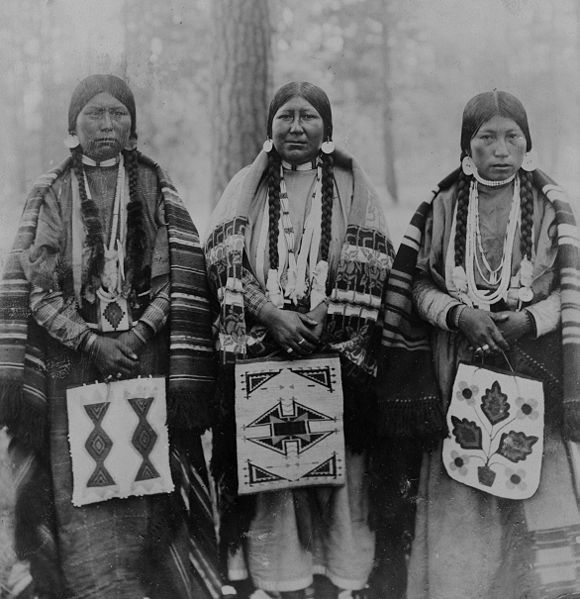
The biblical term for this collective lack of selfishness is called Jubilee Year. Ancient Israel was, at least on vellum, an egalitarian society. Each person had promised land allotted to them. Economic hardship (such as sending a child to college) might necessitate selling all you have. Fear not—hopefully before you die—what you sold will be retuned to you and the system will even itself out again. It is a profoundly beautiful idea. It has, of course, never been taken seriously. So as we see the literalists massing as candidates begin gearing up for another cycle of elections, I think it is only fair to ask to see their mortgage papers. A visit to the county records bureau might be in order. I think maybe somebody has been holding out on land I’m biblically owed in upstate New York. Just don’t tell any Native Americans about this, for it seems maybe they have the most of all to benefit from taking the Bible literally.

580px-Warm_Springs


A Run-By Fruiting

Photo credit: Eva Rinaldi, Wikimedia Common

Photo credit: Eva Rinaldi, Wikimedia Common

I’ve never been enticed by the cult of celebrity. Becoming famous is frequently a matter of being in the right place at the right time to get noticed. Interviews with stars inevitably come across as lacking in substance. Some of the funniest people I’ve known have worked in camera shops, administrative offices, and IT departments. Still, the suicide of Robin Williams a week ago has impacted a wide swath of the nation. We hate to see a funny man die. It is such a truism as to be trite that those who are clowns often host inner demons. Laughter, Reader’s Digest proclaims monthly, is the best medicine. Who better to heal than those who know what it’s like to have been wounded? Yet we want the funny to keep on making us laugh until we move on to the next diversion.

For this past week I’ve been pondering how one man’s tragic death has jolted a nation into a reflective moment of silence. I can’t say I was Robin Williams’ biggest fan, but I’d seen a number of his movies, and I was devoted to Mork and Mindy growing up (aliens have a way of getting prime-time exposure that has never really been explained). I thought he was good at what he did. He was famous and had money, but it wasn’t enough to buy off the demons. Suicides hit me hard since I’ve known a few and have struggled with depression myself. There are times, truth be told, when no direction is up. It is at those times, however, that others tend to ignore you, lest you bring them down. People like to laugh.

There is something profoundly religious about the idea of a wounded healer. Anthropologists as well as theologians have noticed it. They need have only looked as far as the Bible to find examples. Yet the Christian tradition treats suicide as a great sin against God and the plan is that we all live to die either at the hands of nature or of someone else, so the guilt doesn’t cling to us. Death always leads to a remorse that entails such guilt. And yet it is inevitable. As a nation we are used to seeing comedians overdose or live reckless lives that end tragically. Deliberate action, however, feels the most horrendous of all. We’ll ask “why?” for a while, and we’ll make tributes and tearful speeches. And meanwhile some of the funniest people we can claim will be sweeping our floors or asking “would you like fries with that?”


Diminishing Returns

You know that phenomenon where in movies or on television spinning wheels reach a point where they suddenly shift to spin the opposite direction? Of course it’s an illusion, since physics is not kind to fast-moving bodies that suddenly reverse direction. A friend of mine had an uncle, now sadly deceased, who studied this phenomenon (he was an academic of course). He figured out in terms I’ll never comprehend why this actually happens. To my mind, however, it seems like the maximum efficiency has been overreached. It’s like when you screw a fastener in too far, stripping the screw. So far is all you need. Anything more is too much. It seems that we’ve lost that fair concept of excess. An article in The Guardian that my wife sent me illustrates this as well as endlessly spinning wheels. “Out of office, out of mind – free yourself from inbox tyranny on holiday” by Steven Poole makes a lot of sense. Of course, in the “Old World” they take time off much more seriously than Americans do.

I didn’t get a vacation this year, but I remember what breaks from work feel like. Since I get up at 3:30 a.m., that’s saying something. I don’t have any sadistic intent that drives me to rise so early—just a killer commute and a job where no matter how much you give you could always be giving more. I could snooze and catch the next bus, but that puts me home at the time when all things being equal, nothing is equal. As it is evening is spent eating supper, doing dishes, getting ready for work again the next day, and checking my personal email. Reboot at 3:30. What my fellow Steve is writing about is the out of office message on your email that assures your clients you will check your email once in a while, even on vacation. Is it really vacation? Does your company give you a massive bonus for squandering that pittance of ten days off they graciously allow you? Have you improved from indentured servitude? With the abysmal job market any threat of employment lost is exploitation. Make no mistake—you are owned.

Spinning_Wheel_Drawing

What quality work do the exhausted produce? Those whose eyes are red and for whom a cup of coffee in hand is as close to a transfusion as you can humanly get? Yet the company will gladly give you a Blackberry to stay in touch after hours. Blackberry or raspberry? Don’t check your personal email on it—that’s against company policy. What do you think, you’re on your own time at home or on vacation? Germany, known for its legendary efficiency, has a company called Daimler that, Poole tells us, has the out of office email instruct you to contact someone else because your email to a vacationing employee will be deleted and not delivered. Daimler is a car manufacturer. And cars have wheels that seem to spin in the opposite direction when they start moving too fast. Maybe I just need sleep, but it looks to me like such wheels have reached the point of maximum efficiency.


Nazis with Bibles

Some years back, when the Internet was young, I had just learned about email. Even today it seems incredible that only twenty years ago we still sent physical letters to communicate, and that we used paper maps and telephone books to get information. The main problem with email then was that not everyone was on it. I signed up for an Ancient Near East/Biblical studies discussion group. My barren inbox (being a scholar at a non-prestige school) was suddenly full every day. New discoveries, research ideas, online debates. It was all very exciting. Then someone voiced the fraught question: should we ignore the research of scholars who were later revealed to have been Nazis? The rancor raised forced the moderator of the discussion group eventually to make this a forbidden topic. Because I could not keep up with the inundation of emails and because of the vitriol (do people use the world vitriol anymore?) on the Internet universe, I eventually unsubscribed. Nothing raises hackles like Nazis. Especially in the field of biblical studies, which, naturally enough, revolves around issues of Jewish interest. I saw a blog post recently which brought this whole episode back to mind.

Photo from German Federal Archives, Wikimedia Commons

Photo from German Federal Archives, Wikimedia Commons

The issue of political conviction and professional neutrality is a vexed one. Critical study of the Bible began, to a large extent, in German universities. Biblical studies in higher education was mainly a Christian enterprise, and many of the questions were, well, only academic. If someone was a Nazi, did he (and they were pretty much all he’s) have a hidden agenda? Today the question of agenda is often raised with conservative biblical scholars. Can someone who believes in the Virgin Birth and in Moses parting the Red Sea really interact critically with the biblical text? Just throw that question out there and watch the fun. (It helps if it is tossed out on a blog that actually has readers, rather than my insignificant efforts here.) Who can make the claims for true objectivity? Can a Nazi correctly parse that verb? Do one’s political views gainsay one’s credibility?

We are all children of our environment. Even the most empirical of scientists will admit that true objectivity is not what it seems. We are not, after all, gods. And even the gods seem to have distinct tastes. Evil done in the name of politics seems slightly less heinous than evil done in the name of religion, but people are people and we have convictions sprouting out all over the place. Nobody intentionally believes falsehoods. Motivations are notoriously difficult to untangle. Can’t we all be professional about this? Emotions, however, do play favorites. If there’s any doubt, consider the question of using a person as an experimental subject with no regard for what they feel. We know it’s wrong. We won’t allow it. Of course, that’s in an ideal world. Right now there are more pressing matters at hand, such as how to hire more adjuncts without destroying our credibility. It’s not a matter of wanting to hurt others, it’s just good business. Everything else is merely academic.


Daydream Believer

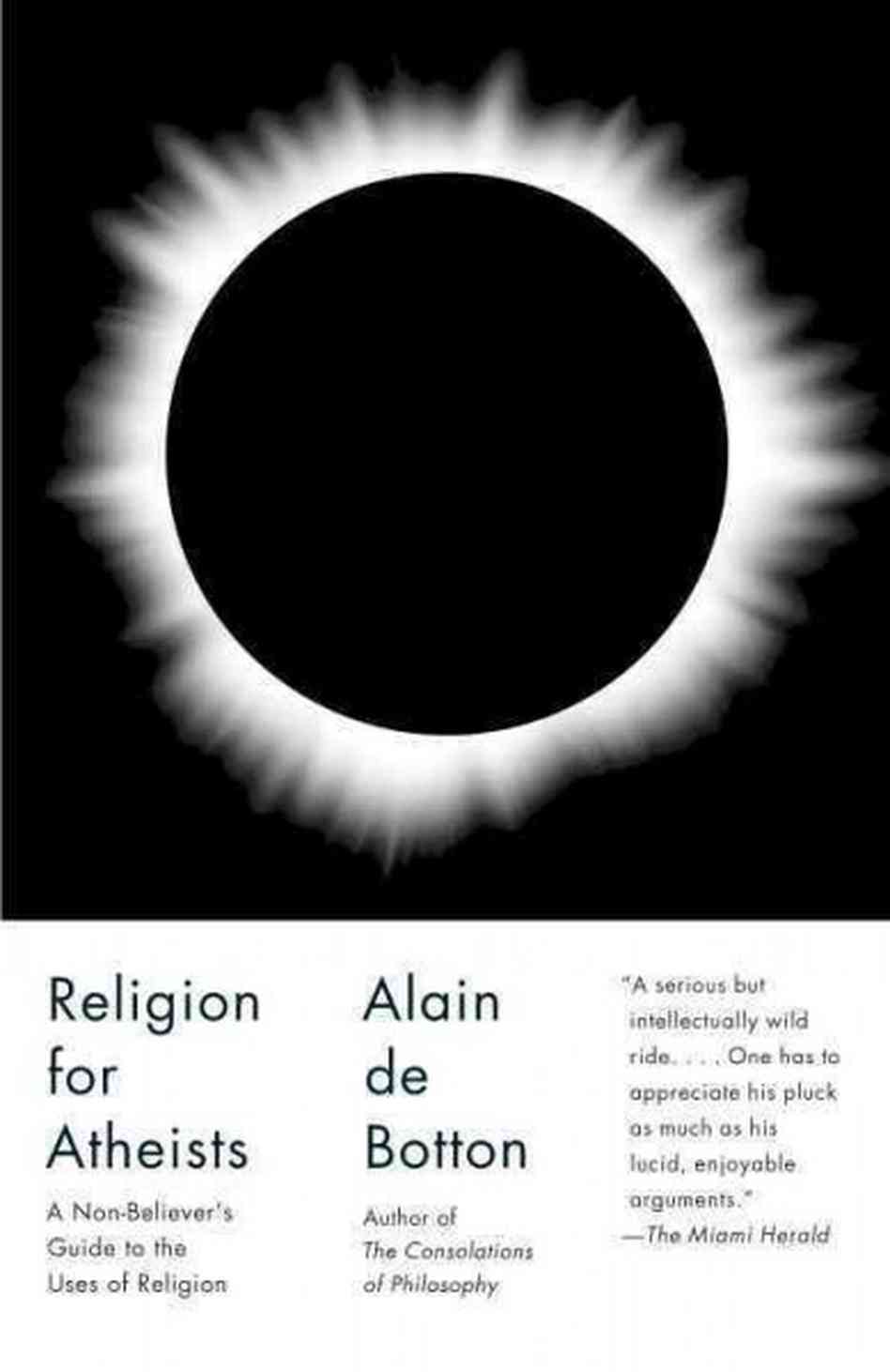
ReligionForAtheistsI have finally found a book that will sit next to my copy of Marcus Aurelius’s Meditations. In this disjointed age of angry Fundamentalists and even angrier atheists, where people bowl alone and don’t sleep well, Alain de Botton has shined a ray of hope. Well, pessimistic hope, but still, I felt more invigorated by Religion for Atheists than I have by a book for a long time (search my category “books” and you’ll see what I mean). Raised as an atheist, de Botton doesn’t share the rabid fury that converted atheists often exhibit. More importantly, he recognizes that, despite its supernatural teachings, religion got a lot of things right. Basic issues such as kindness and compassion have little place in a society that is built around acquiring as much for yourself as you can. Even his chapter on pessimism rang true.

Subtitled A Non-Believer’s Guide to the Uses of Religion, some might consider the book opportunistic, but de Botton approaches religion from a purely practical and openminded angle: it often works. Religion supports (or supported) education. Numerically most of our colleges and universities in the United States have (or had) religious beginnings or affiliations. Religions also supported beauty in art, architecture, and liturgy. The religious culture provided places to meet others who thought like you, and where you felt safe. It was not afraid to be blunt about values. Many would dispute these positives, tending instead to focus on suicide bombers and child abusers. No doubt these evils also exist, and probably draw their inspiration from skewed religious views. Still, as a sincere outsider can see, religion offers much that society has no backups in mind to replace in this secular age.

In a pointed discussion of influence, de Botton mentions the power of institutions. Secular society has demonstrated repeatedly that it lacks the will to finance higher education. Secularists are terrible at organizing themselves. Reading de Botton’s suggestions for secular institutions, I almost rose from my bus seat and applauded. If Bill Gates or Jeff Bezos would put up the money for an institution on de Botton’s model, I’d be first in line to apply for a place in the Non-Religion Department. (A disclaimer here—although I met Jeff Bazos once, I can’t pretend to know his or Bill Gates’s religious outlooks; I only recognize success when I see it.) In any case, until we learn that one voice alone—no matter how many books s/he sells—cannot change anything substantial, we will be mired in impotence. To influence social change you need the combined resources of an institution. And, choose to like it or not, history tells us that in the long run the most successful institutions have been formed by religions. Alain de Botton has, I believe, given us something to believe.