Clash of the Watchers

NoahMovie

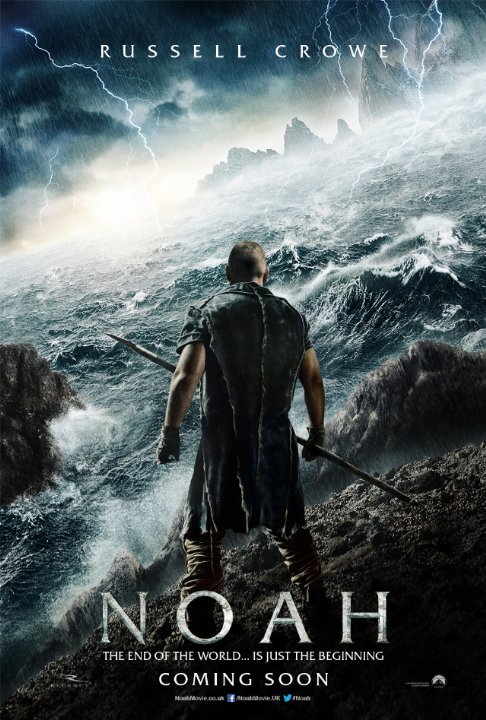
I don’t know about you, but I think I got gypped with my Bible. I have just come out of Noah where I saw amazing sights and a seriously troubled Noah to whom God refuses to say a single word. Controversy still swirls around the web concerning the movie, but I honestly have to say that it was more like Clash of the Titans (2010) than anything else. Except a thin part of the plot—and a few character names—that were borrowed from the Bible, this could have been Herodotus rather than Moses. I don’t recall finding any exploding lava angels in Genesis 1-11, and magic rocks that seem to fit better into a Mormon worldview than a biblical one. Gopher-wood trees grow incredibly fast, and Noah sure fights very well for being a six-hundred year-old man. So why all the fuss? This is a movie folks, not scripture. For the price of the ticket you can buy yourself a new Bible and read the entire story in fifteen minutes (it’s just over two chapters long). If it’s an action movie you’re looking for, I thought The Avengers was better.

What struck me most about the movie, apart from the watchers, which were admittedly an improvement on Holy Writ, was the subtext of evangelicalism. Noah, when he decides to build the ark appears suddenly with an evangelically approved haircut. He also had grown decided misanthropic, insisting that the ark is only for the animals’ sake, and that he only allows Shem to have a wife because he thinks she is barren. When he considers finding wives for Ham and Japheth, there is a huge meat for sex kind of deal going on in Tubal-Cain’s city that disgusts Noah so much that his vegetarian righteousness declares that all people will die off once the ark runs aground. And, of course, he will have to kill his granddaughters. This is a dark and tormented Noah who drinks to forget his problems in a world where God only speaks in cryptic dreams and one gets the sense that Noah is very Republican in his lack of compassion. Take out the whole human race while you’ve got the chance.

The movie is filled with mixed messages. Noah certainly doesn’t appear to live up to his name (“comfort,” by simple translation), and although the supernatural is everywhere, a compassionate deity is utterly lacking. Species die off when Tubal-Cain gets hungry. And the very sign of blessing is the skin shed by the serpent that led to the fall. What are we supposed to learn from this? A vague, Avatar-esque “the planet is good” message does give me a little hope, but seeing Noah poising a knife above an infant’s head only because she’s female makes me a bit squeamish. Noah obeys simply for obedience’s sake and people are mere stains on an otherwise ideal world. Before the fall Adam and Eve veritably glowed. Adam stoops to pick up the serpent’s skin while Eve engineers the fall of all. The special effects are good, but the story, it seems to me, is all wet. That’s the gospel truth.

Inhabit Eden

InhabitingEdenNashotah House, although now a name recognized by only a handful of mostly disgruntled Episcopalians, used to have a name in higher education. Real intellectuals found their way there—scholars who saw that spiritual life did not equal brain-death. Of course, for some that may be the case. While I was on the faculty there, one of the student wives (it is a fully residential campus) was castigated by others for going through the garbage and pulling out discarded recyclables. “How extreme can you get?” they’d say in disbelief. Not extreme enough, I’d say. I just finished reading Patricia K. Tull’s Inhabiting Eden: Christians, the Bible, and the Ecological Crisis. Tull, a retired seminary professor from Louisville Presbyterian, offers a much-needed perspective on the real apocalypse we’re bringing upon ourselves, often justified by the Bible. Many Fundamentalist sects declare the world to be short-lived and for our “domination” because of Genesis. Tull, a biblical scholar, challenges that myopic view of Genesis and suggests that the Bible commends care for our planet. Christians, she indicates, should lead the way in caring for our ailing planet.

Although it is written for the average educated reader, this is not an easy book. It is distressing to read about the many ways that we have blindly (and that’s only putting it in the least culpable language imaginable) set about destroying our environment. Misreading “have dominion over” as “dominate,” Christians have often seen their prerogative as mastery, frequently cruel, over all others. Pollution? The world’s going to end soon, so let’s get the rapture out of here—and throw your waste on those left behind. Economic inequality? You’ll always have the poor, so exploit them. Agri-business? People cannot live by bread alone, so let’s make a huge, exploitative business out of growing crops and processing them to death. Ironically, and not in the good sense, much of this thinking comes from “Christian” entrepreneurs, people who see nothing wrong with making a few extra bucks on the way off the planet. We fry ourselves with our greenhouse gasses and poison ourselves with our drinking water. It’s all gonna burn.

Tull gives the lie to all these misplaced concepts that some claim are biblical. Sure, the Bible is no environmentalist handbook, but then, things weren’t so extreme a couple of millennia ago. We hadn’t yet developed the technology truly to dominate, radiate, and eradicate this planet. Besides, the early Christians figured they’d be long gone a couple hundred centuries ago. It should’ve been clear, even as the Enlightenment lit up, that we were in this for the long haul. And we’ve got only one home. The ethical implications fall thick and fast—those who destroy the environment are worse than war criminals, for it is the entire planet that pays the price for such thoughtless greed. Many turn their noses up at the humble street person collecting bottles and cans for a few pennies. It may not be their motivation to clean up the planet, but then, saints who are willing to dig through the garbage are seldom recognized for what they are.


Apes and Atheists

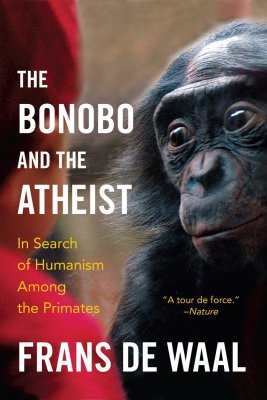
Bonobo&AtheistFrans de Waal is among the sanest of popular science writers. I’ve been following his non-technical work since Our Inner Ape through The Age of Empathy to The Bonobo and the Atheist. As de Waal himself explains, he tended to leave religion out of his earlier works since, for a scientist such topics are generally taboo. His direct address to religion in The Bonobo and the Atheist is refreshing and enlightened. As he notes, de Waal does not believe in God, but he doesn’t believe in the abolition of religion either. This sets him against his fellow biologist Richard Dawkins, who is so bright that the rest of us are burnt out dimmer bulbs by comparison. As de Waal soberly asks: what does science offer in place of religion? What is the point of taking away something that has evolved from our early primate days without offering anything to fill its spot? Even an ape would object.

What makes The Bonobo and the Atheist so engaging, apart from de Waal’s writing, is the openness of his outlook. De Waal suggests that the origins of morality and empathy can be glimpsed in apes and monkeys. He cites the reaction of chimpanzees to rain storms and even waterfalls that hint at early religious development. As I’ve suggested on this forum before, religion may even be allowed to animals. Their experience of religion is certainly not the same as ours, but there is evidence of both thought and feeling. When these are brought together they form religious belief in Homo sapiens. Why not in our ancestors and fellow animals? No, animals don’t develop elaborate doctrines or precious rituals. They do, however, reverence the powerful, ponder death, and feel emotion. Some of our great thinkers are ready to cast all that aside in the name of progress. More humbly, and circumspectly, de Waal considers that evolution is telling us something. And when evolution speaks, its children should pay attention.

Descriptions of reactions and behaviors that we consider unique to humans among the animal world draw me to de Waal’s books. As a scientist de Waal has to draw logical conclusions, and those conclusions point to an inner world that is not so much unique in humans as it is evolved. Religion, I believe, is one of those traits. If animals show some of the early stages of religious development, including a basic form of ethics, how does that devalue our human efforts to explain our universe? Religion is in good company, along with opposable thumbs and basic language comprehension. Looking at how we treat each other, I consider being related to animals a compliment most of the time. Without a doubt some of the ethics Frans de Waal illustrates among the bonobos exceed those I’ve experienced at the hands of many who think of themselves as made in the image of God.


42 Shots

Many of us were raised with the figure of a divine father who is ready to whip off the belt for any infraction we may make, intended or not. On a more human scale, our criminal justice system locks people in prison often on the basis of race rather than purely objective considerations. The infographic below demonstrates this clearly. African-Americans are disproportionately represented in the prison population in a society that is still reluctant to offer true justice to all citizens. When these numbers are wrenched from statistics and brought down to personal levels, the results are distressing indeed. I recently read of the case of a promising youth who was in the wrong place at the wrong time. His lawyer, a prominent African-American, pled with the judge for leniency for this young man who had great potential. Time in jail, even in one for youth, would probably scuttle this boy’s hopes for a productive future. Being an American, though, I had no hope that this might end well for the boy. Still I read on as the judge sentenced him to jail.

None of us likes to be reduced to statistics. At the same time, some social-justice disparities are easily overlooked until they are placed in such stark terms. Xenophobia is a normal human reaction. In fact, it is displayed in apes and other social animals as well as in people. Its biological function seems to be group cohesion and safety. We’ve evolved beyond that, however. The great promise of the New World was freedom. Unless you were imported as a slave. The Bible, being a document of its time, lent its voice to the approval of keeping slaves and those who wanted to justify their horrid treatment of fellow humans in the name of God relied heavily on the Good Book. We still put considerable roadblocks in the way of African-Americans and others of minority status, believing that we are somehow justified in the myth of Caucasian superiority. Humans are humans. Society benefits from the gifts that different traditions bring to the cultural table. And yet, we continue to lock up those who look different.

Justice shouldn’t be a distant dream. We know that for those who do commit crimes reformation is a possibility. Critics cite the expense, but I have to wonder whose bank account is being audited. As a society as a whole we could all benefit from some reform. The profession from which I have been repeatedly blocked is one of the few that has taken demographic configuration seriously. Some must pay the cost for others to be given an opportunity. Of course, opportunity itself is a rare commodity these days of hoarding and one-percenters. Perhaps those who build towers and remove themselves from the rest of society have put themselves in a kind of luxurious arrest. Until they are forced to share, however, those of us on the street level have to do our best to help each other out. Take a look at this infographic from arrestrecords.com and see if I’m right.


For Love or Money

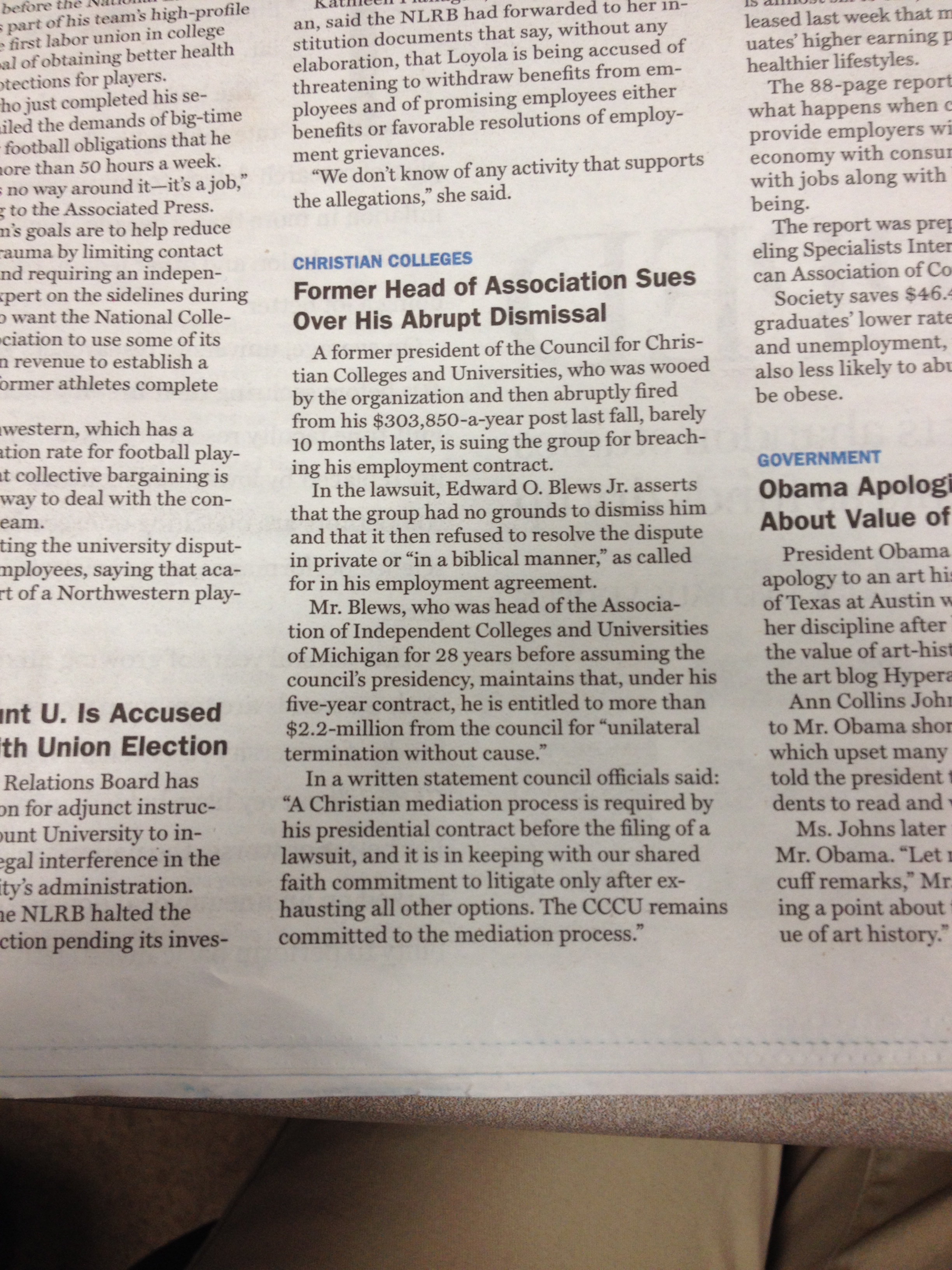
IMG_1258The Council for Christian Colleges and Universities is seeking a Christian way out of a contract. It seems, according to a recent Chronicle of Higher Education article, that Edward Blews was released from his $300,000 position “without cause” (I know how that feels—not the $300K part, but the “without cause” aspect), and he wants this resolved “in a Christian manner.” To the tune of two million dollars. That’s Christian if anything is. Christian higher education counts for a fair proportion of schools in the United States, while the CCCU, defining itself as “Christ centered” has only 120 members in North America at the moment. It was founded in 1976. Ironically, my old alma mater does not find itself on the list, although Grove City College often proclaimed itself as God’s Country Club during my years on campus. Among the services listed on the CCCU website is advocacy and public policy, that will allow them the “crucial right” to hire “only persons who profess faith in Jesus Christ.” And perhaps, who can’t afford a lawyer.

Academic freedom has been on my mind a lot lately. Conservative Christian views seldom benefit from academic inquiry. These views, most of which are decidedly modern, are passed along as a package with political riders, and strive to see themselves as counter-cultural, although, in fact, they resemble the 1950s more than the 2010s. I have no idea why Blews was let go, but I do know that “without cause” hides a multitude of sins. In my case, it was shorthand, I think, for just being too liberal. I was doing a great job, but endangering the morals of majors, I guess. Teaching critical thinking does have a price tag. I don’t see seminaries on the CCCU member’s A-list at all.

It is becoming increasingly obvious that we need to understand more about human religious motivations. Reason alone cannot satisfy brains where emotion may be just as critical to thinking as logic is. I know that when I’m depressed all thoughts seem to flee, except the most dismal of the lot. Reason can’t penetrate this fog. Yet reason itself cannot be ignored. The facts it teaches are frequently uncomfortable—to scientists as well as religionists. There’s nothing fair about it. When it comes to legal agreements, however, we are at the mercy of lawyers. Ironically, those who head Christian coalitions of various sorts feel the need for financial compensation. A little lucre to wash down the humility of dismissal. “Without cause” can be the most unkindest cut of all, eh Marcus? Even Judas got his 30 pieces of silver, but the cash never satisfies.


Frozen Few

It’s that time of year, neither winter nor spring, when ambivalence is in the air. Gray skies with just the first damp aromas of a change in the season, followed by another snow storm and icy winds custom-made in the arctic. So we turn to movies. Frozen is continuing to make headlines and break records. And although the critics voice strong opinions, ambivalence about a powerful message still rocks a society that can’t decide if a woman director having success is an anomaly or an idea far past its time. Stories about the animated feature crop up on the internet on a daily basis, five months after its theatrical release. Some claim it is the most Christian movie in years while others claim it has homosexual marriage at its core. The queen doesn’t need a man and the world’s most conservative, progressive society is in a muddle.

Perhaps I’m just showing my age, but I noticed what I thought was an older child in the sauna when Anna first meets Kristoff. The movie didn’t give me any clues as to his being a gay partner to the shopkeeper, although it’s none of my business if he is. Disney movies have had subtle clues to a kind of radical equality that I’ve noticed over the years, from Edgar’s license plate that reads RU-1 in The Aristocats to two masculine creatures sharing a pad in Monsters Inc. I even remember some people staring suspiciously at Ernie and Bert while the insanely ambiguous Teletubbies were faulted for carrying purses and dressing in primary colors. (Even Judas Iscariot kept a purse, according to the Bible.) A good, empowering story is suspect if we think something more is going on when the lights go out in cartoon-land. Our culture can seem to think of little else beyond mores and how to enforce them.

Globalization has repeatedly demonstrated that there are many different ways of being in the world. And yet, when worlds collide the more conservative culture inevitably makes claims on its more “progressive” neighbor. We see this happening as the church in Africa, now larger than the church in America, drives social policy through denominations that somehow feel guilt at promoting equality. Perhaps proselytization is, at the core, of our fear of difference. What if the other guy is right and we are wrong? Read that back into all our misguided ancestors and we feel chilled indeed. How far do we really trust objective truth? My guess is that ice ages have come and gone that have forged the truth of the moment. Only when the cold faces us do we really admit just how slippery truth might be.

The beauty of ice.

The beauty of ice.


Wee People

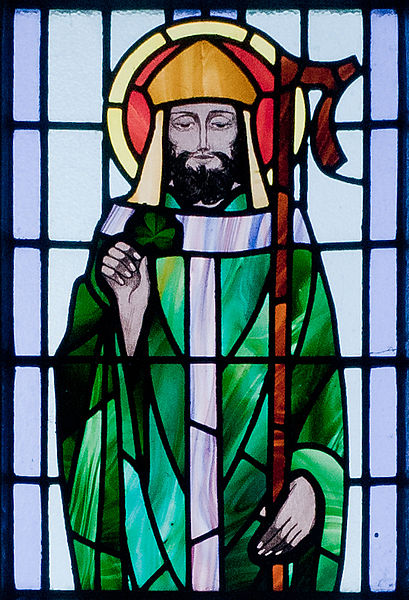
Whence we come influences our outlook. Sometimes invisibly, at other time quite consciously. I remember as a child, wanting to be honest about the wearing of the green on St Patrick’s Day, asking whether we were Irish or not. Of course, for many Americans being Irish, German, or Swedish really means having ancestors long ago from a different country. Most of my ancestors had been in America for some time—a couple hundred years at least. In New Jersey, where many people are literally from elsewhere, that can seem exotic. Great-great-grandparents in one of my lines can be traced to another country, but most of my ancestry is already settled in the United States long before that. Unknown to my mother at the time of that question, one of my ancestors was indeed from Ireland, a stowaway, as I understand it, and thus I could wear green without being dishonest. (Children can be so parsimonious.) When I saw the locals walking away from yesterday’s St. Patrick’s Day parade in my local town it was obvious that not all of them were Irish (or American with an Irish ancestor), but they nevertheless came out on a cheerless, chilly day to join in the Celtic spirit of celebration. St Patrick’s Day is all about belonging.

Photo credit: Andreas F. Borchert, Wikicommons

Photo credit: Andreas F. Borchert, Wikicommons

The rich mythology of Ireland was never supplanted completely by the Catholic influence that became synonymous with many parts of the country. Leprechauns, the little people with their pots of gold, have been fused into a mythology of St Patrick and his magical clover that somehow explained the Trinity, while it is the four-leaved variety that brings good luck. And Ireland’s snake-free evolution was attributed to sacred innovation rather than the Ice Age, the true culprit. It is our myths who make us who we are, however. Where would Ireland be with a massive chunk of ice preventing snakes from evolving in a land where a genetic variation sometimes leads to a fourth leaf on a common grass of the field? And where is that pot of gold anyway?

And yet, within the last year construction on a highway was halted in Iceland (I know I’ve island-hopped here, despite the difference of a single consonant) because locals protested that it would disturb the habitat of the little people. While a post-graduate representative to the Faculty of Divinity in Edinburgh (switching islands yet again), one of the faculty admitted to a fascination with Celtic folklore. A more rational theologian challenged him saying, “what about the farmer who loses valuable space in his field because he leaves a ‘magical’ tree standing—isn’t that tragic?” The renegade faculty member allowed that this too was especially wonderful. A world enchanted is swiftly disappearing beneath the unrelenting tires and blades of scraper and cold planer, or the axe-bearing lord of ultimate efficiency. The soul is just another casualty on the road to enlightenment. And yet yesterday, those with ancestry from Africa, India, China, Italy, and even England, gathered to watch the parade where the mythology of an island that never had an empire nevertheless draws together people of all ancestries to wear a bit of green and to celebrate whence we came. St Patrick’s is a day to celebrate whoever we are. And to leave the door ajar for the wee folk that might still be around.


Any Witch Way

Witches&WitchHuntsIt’s easy to feel smug over the past. At every moment of human civilization we deem ourselves higher than those who came before. There’s no doubt that the eradication of the thought-processes that led to the witch hunts of past centuries seems decidedly positive for all parties involved. Wolfgang Behringer’s Witches and Witch-Hunts, however, is a surprising book. I’ve read a fair number of studies of those dark ages when people were cruelly tortured and murdered in horrendous ways because they were deemed to be in league with Satan. As usual in such books, Behringer begins with that history. What makes his study surprising, however, is that he doesn’t stop in the eighteenth century when, in what we’re usually told, the witch trials ended. Behringer points out that witch hunts are still happening, and that the rates of those killed perhaps rival those, per capita, of the numbers during the Middle Ages. How can this be? In an era of global awareness, we sometimes forget that the focus isn’t always on Europe or America.

In many parts of the world, witches are still part of local belief systems. Not all of these are women, by the way. Many cultures favor the male witch. What these cultures do have in common, however, is their natural fear of black magic being suppressed by colonialism. More “civilized” westerners came and enacted laws which, to the minds of the locals, protected the witches! Local tradition of eradicating those who practice black magic was considered righteous, and now the government forbids it? That seems strange, especially when many of the colonizing forces were also interested in Christianizing as well. Missionaries wanted to affirm belief in the supernatural, and, ironically, often became the vehicles that allowed beliefs in witchcraft to continue. As Behringer points out, some populations converted to Christianity precisely because it allowed the continued belief in physical evil—therefore witches—and the eradication thereof.

This creates a vexing problem. When cultures meet they inevitably attempt to assert their values. When the technologically superior force their ways of life on those behind on that front, a kind of pressure of misunderstanding builds. Instead of bringing witches to trial, they lynch them instead. It seems we may have underestimated the pull that belief in witches has on people. Traditional societies uninfluenced by the developments in Europe also came up with the idea of witchcraft independently. Witches, it seems, stand for the classic issue of theodicy—explaining why things go wrong in a world that should be ordered by deities. Coincidence is always cold comfort in explaining loss. Even the rule of law breaks down. At the same time, how can it be right to allow the murdering of those suspected of witchery even in the enlightened twenty-first century? This fear is one of our most abiding demons, and the solution remains out of reach, unless, of course, we allow ourselves to resort to magic.


Royal Reading

Post-Christian America still reads its Bible. One of the perks, such as it is, of working with Bibles is getting such vital news early. The Center for the Study of Religion and American Culture at Indiana University-Purdue University Indianapolis (IUPUI) has just released a study that was underway when I visited the school a couple years back. “The Bible in American Life,” available online, presents the results of a scientific survey of Bible reading in the US. Suffice it to say, we’re not done with Holy Writ just yet. In our world of high tech gadgets where the waves and particles that make the internet possible penetrate our bodies constantly, it is sometimes easy to forget that the Bible in many ways made this all possible. Both the good and the evil that drove western civilization to colonize its world had at least some dusty memory of “manifest destiny” embedded in sacred writ about it. And those who take the Bible seriously have continued to read, mark, and inwardly digest it.

The Bible in American Life, already picked up on by major media, indicates that about half of the population of the United States reads the Bible outside of worship. Perhaps not surprising given the still faltering civil rights dream, African-Americans are the biggest Bible reading demographic in the country. In fact, the study states, race is the single largest indicator of probable Bible reading. Those who are low on the economic scale also tend to read Scripture more. Those for whom “success” isn’t what it seems to be at first. Those whom “success” has passed by. Even Hispanic readers outnumber the white majority. People who have been distracted by material success, predictably, have little time for ancient wisdom. Still, half the country does turn to the Bible on occasion. Among the more interesting demographics is the fact that nones—those who are unaffiliated with any religion—also turn to the Bible for learning about life.

434px-King_James_I_of_England_and_VI_of_Scotland_by_John_De_Critz_the_ElderThe media seems to have picked up one of the major points as well—few Bible readers turn to Holy Writ for political advice. To hear the news weavers tell it, politicians and rabble-rousers trawl the Bible for its scant words about homosexuality and abortion—issues ignored by Moses and his ilk, for the most part. In fact, most people rate such issues very low on their scale of why they turn to the Bible. It is read more for consolation than for political intrigue. Having just about finished my formatting of my book on the Psalms, it warms my heart to read that the Psalter tops the list of favorite books of the Bible, narrowly inching out the Gospel of John. The study doesn’t, and can’t, come right out and say it, but the Bible is read by people to help them feel better. They still prefer the King James by a considerable margin. And in this world of self first, they can still read, “For what shall it profit a man, if he shall gain the whole world, and lose his own soul?” Even though Bible readers are, in the majority, women. Good old King James still shows the way, as the ruling white man always has.


Med Ed

I’m not really the one who should be on oxygen in this situation. It was a routine, scheduled oral surgery for a impacted wisdom tooth. Not mine, but my wife’s. I sat in the recovery room and they wheeled her in on oxygen. When the doctor stopped in to check on her, he looked at me and said, “My God, get that man on oxygen! He’s going to pass out!” So they took the gas from my wife and laid me down instead. My wife had the magnanimity to think it was cute, but I felt embarrassed nevertheless. I couldn’t go into medicine even if I wanted to. I haven’t the stomach for it. So as I write this in the Urgent Care unit, I’m a bit light-headed. We came in for treatment of a snow-shoveling-related injury for my wife, and my mirror neurons are firing overtime. I hear them call a code red, and I think I hear the helicopter coming down and I think I might pass out. I can’t stand the pain-filled groans coming from the next room.

Compassion is one of the most overlooked of human virtues. I haven’t taken a sick day since 1987, but I’ve had companies tell me I hadn’t earned any yet. You have to earn the right to be sick. Even when I threw up on public transit two weeks ago, in one of the most embarrassing moments of half a century, I still got up at 3:30 the next morning to climb aboard again. So I’m sitting here, feeling ill, although I’m fine, and thinking about how people naturally feel for others. Only practiced cynicism can erode that. Or maybe I’m just a wimp.

It is no coincidence that most religions feature healers or healing as one of their central tenets. Life involves suffering, anticipated or not. There is something more than the physical going on here. Pain is the enemy, and I’m the one who’s well. There may be atheists in foxholes and even in hospitals, but they must be aware that the chemicals chasing one another around the neurons upstairs believe something else. Religion is a coping mechanism, perhaps something even more. So the winter takes its toll, and the snow claims another victim. All those instruments on the wall are beginning to creep me out. My mirror neurons suggest that if only those made of ice could melt with a little compassion, this world would be a more humane place. And when you get a moment, could I get a little oxygen over here?

Scare-Yous


Witch Way

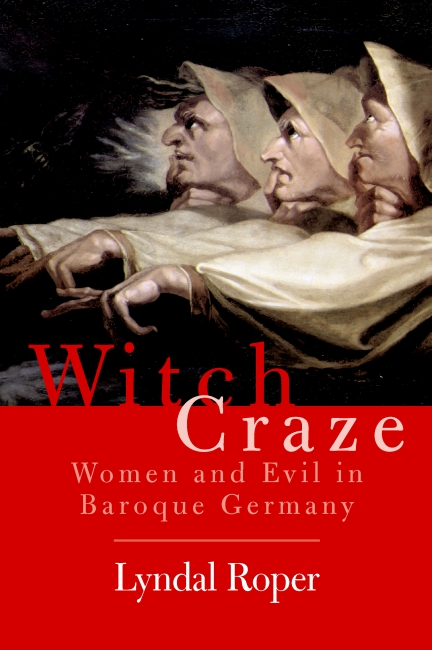
WitchCraze2Women generally bear the brunt of religious intolerance. This is an evil that has proven tenacious and insidious, and which has played out in history far too many times. Lyndal Roper’s Witch Craze: Terror and Fantasy in Baroque Germany brought this home to me once again. Books on witch hunts are deeply disturbing, but we need to engage with the brutality of the past if we want to prevent its reappearance. Roper points out that although many nations persecuted “witches” in the Middle Ages, even into the early modern period, Germany by far had the highest numbers. There were probably many reasons—no simplistic answer meets all the clues. One is clearly related to politics. Germany lacked the central cohesion of other European nations in this period. Feuding princedoms from a fragmented Holy Roman Empire had no strong central authority. When it is everyone for themselves, scapegoats are never far off. Roper doesn’t leave it at that. She points out that the central characteristic of the witch is the intent to harm Christians. Indeed, the witch is a monster born of religion, and which murdered thousands of women in the name of Christianity.

Compounding this unrealistic fear that Christians have always seem to have had, was the emerging Reformation. Distrust erupted in Germany. Was one’s neighbor a Lutheran or a Catholic? In either case, the other was heretical, from someone’s point of view. Distrust ran at premium prices. And women picked up the bill. Yes, there were male witches, most of them associated with women who’d been accused, as Roper points out. Even as the Enlightenment was burgeoning, renewed hunts for witches broke out, leaving innocent women dead in a land that valued fertility perhaps above all else. Women’s bodies, as Roper notes, were to focus of suspicion and fear on the part of a male power structure that dealt with its phobias by the use of violence. Even the Enlightenment couldn’t wipe this slate clean.

Today in the western world, secular thought has replaced superstition for many people. Women are not longer accused of witchcraft. Besides, witchcraft is a chic new religion in many places. But the longed-for equality is still not here. In many parts of the world religious violence is still directed at females by male power structures that should’ve died out with the fading of medieval Teutonic anxieties. Those who perpetrate such violence hide behind scriptures—even the Hebrew Bible acknowledges the reality of witches. Religion creates its own cadre of monsters, and those with stout conviction look for women to blame. The flames of the pyres did not lead to a universal enlightenment and the Tea Party tells us Christianity is still endangered in a world where it may spread largely unhindered. One truth, however, remains. The truly endangered are women, and men who don’t fight against the real monsters do not deserve to be called defenders of the faith.


Under Fire

The tragedy that has been unfolding in the Ukraine has brought to light some unlikely heroes. A story on NBC last week showcased, albeit briefly, priests on the front lines. In a world where joining the clergy is often a way to avoid the dark and dreary reality of war and want, it is strangely heartening to see (in this case) men of the cloth willing to walk into danger. These are people who truly do believe. Sometimes it is easy, sitting safely behind a computer monitor in a relatively quiet neighborhood, to believe that the world is a peaceful place. Even a walk through the “cleaned up” parts of Manhattan will reveal, however, that human need is very real and omnipresent. Perhaps it is just the times when I’m out—it is winter after all, and we do value our comfort—but I seldom see clearly identifiable clergy on the streets of Manhattan unless they are trying to convert. The homeless almost always are sitting alone. The chill this winter has been almost Siberian. Where do the helpless turn?

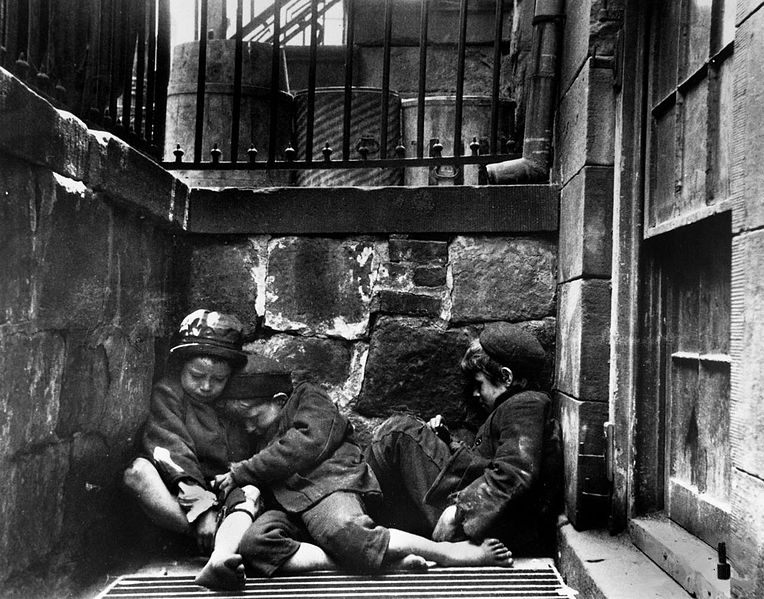
Seminary is not the training ground for combat. At least not in the way that armed conflict brings. As a student and teacher in a seminary setting, I was constantly watching for signs of hope. It takes a truly remarkable individual to engage in caring for those who need it. Far too often “minister” is a job, with benefits, because that is the only way to get along in a world enamored of capitalism. That clerical shirt can be quite costly—who wants to sully it with human need? The world inside the church is often artificial. If the people are not inspired to go out and help, then we’ve just wasted another hour in a feel-good social gathering. We’ve learned to tune out the bitter lessons of life. Yes, there are war zones. Some with real guns and the dead we see in photographs used to be people just like us. Who cares for them? A cassock can cost upward of 600 dollars. How many warm meals would that buy for the woman sitting on the sidewalk with a baby on her lap and a handwritten sign on cardboard in front of her nearly empty paper cup?

764px-Riischildren

Too often religions become ingrown. The job of missionaries is to convert, not to comfort. We would like to crawl into a world where people are safe and happy, but the moment we wander outdoors—and the mall doesn’t count—we find a different reality at work. It is difficult for me to read about current events. The Olympics are not the only reality of the world of the former Soviet Union. There are others who will never be recognized with gold, silver, or bronze, They may walk into the crossfire holding aloft a brass cross to indicate that they are there to try to help. No great cheer arises, no great ceremony for torches that have fictionally burned since ancient times. There is a fire here, however. It is the fire of human warmth. In this long winter, it is an honest flame of hope.


Not Narnia

The snow fountain from a fast-moving snow-plow is a thing of beauty.  Unless you’re standing in the way.  It’s been that way this winter.  The sidewalk where I usually stand to wait for the bus is an arctic wasteland of waist-high snow piles shoved higher and higher by weary plow-drivers.  So I stand in the road, near a streetlamp in winter, but this is not Narnia.  I decided to try out New Jersey Transit’s highly anticipated “real time” bus locator—that way I know when to step out into the blowing wind to wait for the bus.  After I’d been sprayed by passing cars and the occasional snow-plow for 20 minutes, I became convinced that “real time” is just academic; it is the time that the bus would arrive, were the bus actually on time, if it ever left the garage.  Not that I blame the drivers—theirs is a thankless job that must lead to early retirement, or at least support the state mental hospitals.

Where's Mr. Tumnus?

Where’s Mr. Tumnus?

Now, I’m not the only one to be standing in the street, a hooker for capitalism, under my lamppost,  and some of the stops are completely snowed in.  When three passengers ganged up on the driver for nearly missing them because they weren’t at the stop because of all the snow, I began to feel a bit uncomfortable.  Springs can be wound too tightly, you know.  All of this is an issue because businesses don’t want to close for inclement weather.  During last week’s blizzard, I ended up taking the PATH train into New York, not knowing where it was going.  A young lady was fretting—she was going to be late for work.  An older African American gentleman comforted her.  “Don’t worry.  They don’t care if you come in late on a day like today.  They just want you to show up.”  They just want you to show up.  His words have haunted me. Businesses want you to show up because that reinforces the power of capitalism.  You don’t show and you don’t eat.  You lose healthcare.  Cobra is aptly named—you pay far more than unemployment’s pittance for monthly coverage.  Obamacare is about thirty years too late.

Every time I see the Mayor of New York justifying his decision to keep schools open when literally nine inches of well-predicted snow fall on the city—dressed in his trendy action-figure jacket, just like Christie after Hurricane Sandy—I wonder who is really being cared for.  The Mayor claims that of the over 1 million kids in the school system, a substantial proportion go to school so they can get their only hot meal of the day.  Is this the purpose of schools?  Is it not the humane duty of the largest city in the country to make sure fair opportunity is offered to those who wish to contribute?  Their parents, he adds, as an aside, have to go to work.  Why aren’t they being paid enough to feed their kids?  Oh, there is a blizzard coming, and it’s one of our own making.  As for me, it’s time to step back because I think I see another snow-plow coming.


Retire Me This…

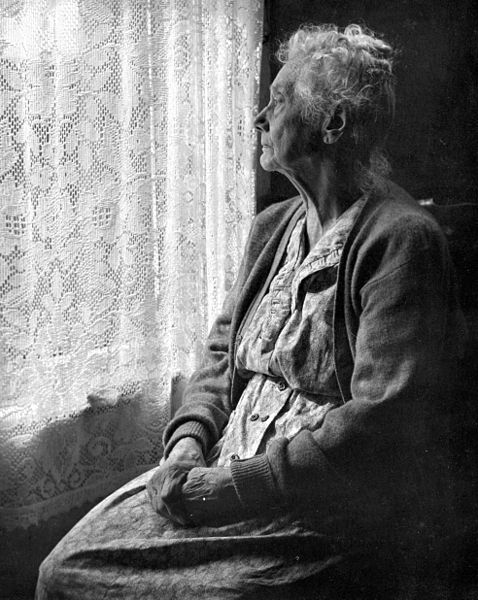
We’re all getting older.  My daily, grudging glimpse in the mirror reminds me that my beard wasn’t always gray, and there was a time *gasp* when no beard grew at all.  One of the realities of the brave new world we inhabit is that career stability has become a myth.  My father, in the brief time I knew him, worked as a house painter.  My stepfather worked in a sewage plant for a small town and drove a snowplow in winter to make ends meet.  These utilitarian jobs seemed never to end.  I made the mistake of going into higher education, not realizing that the risks were much higher and that I would make more money working in a sewage plant than I have ever made in my professional career, PhD in hand.  So it rankles me when I hear professors complaining about being too busy in retirement.  Retirement: what a concept.  When the guy who has custodianship of my minuscule retirement account from Nashotah House, after his gentle awaking from the defibrillator, looks at my records he always informs me, “you’re not well placed for retirement.”  Talking to my big brother we agree—our retirement plan is to die on the job.  So, when someone asks you to write another book, remember maybe it is some guy your own age who is trying not to starve.

As a society we’re aging.  Those who managed not to be fired by Fundamentalists have had a secure, tenure-ridden ride through the occupation that some of the rest of us were denied.  Busy in retirement?  Some of us will never have that privilege.  Funny thing is, it’s not funny.  I sometimes lean back in my editorial chair and realize, if this hadn’t happened to me, I would probably look at it the same way.  I would have published that second, third, and fourth book, and people would actually think my opinion mattered.  I would’ve become a resource to be tapped rather than a dancing monkey who hopes for anything shiny.  Is that another gray hair?

I don’t belittle the hard work of higher education—it’s not an easy profession. But writing books? That’s the fun part! Privilege induces blindness. How rare an opportunity it is to teach! While we as a nation devalue it, in many parts of the world those who shape future minds are revered. Yet elsewhere in the world there are those who are far worse off even than an editor—those for whom life is constant suffering and surviving another day is not reasonably assured. How easily I forget this as I neglect to balance my checkbook for fear of what I might find. We shouldn’t complain when someone asks us to give back, even in retirement. Those of us capable of writing books sometimes lack only the bona fide of a college or university position to do so. Otherwise I might hope to retire as well some day.

"Photo by Chalmers Butterfield"

“Photo by Chalmers Butterfield”


In Saecula Saeculorum

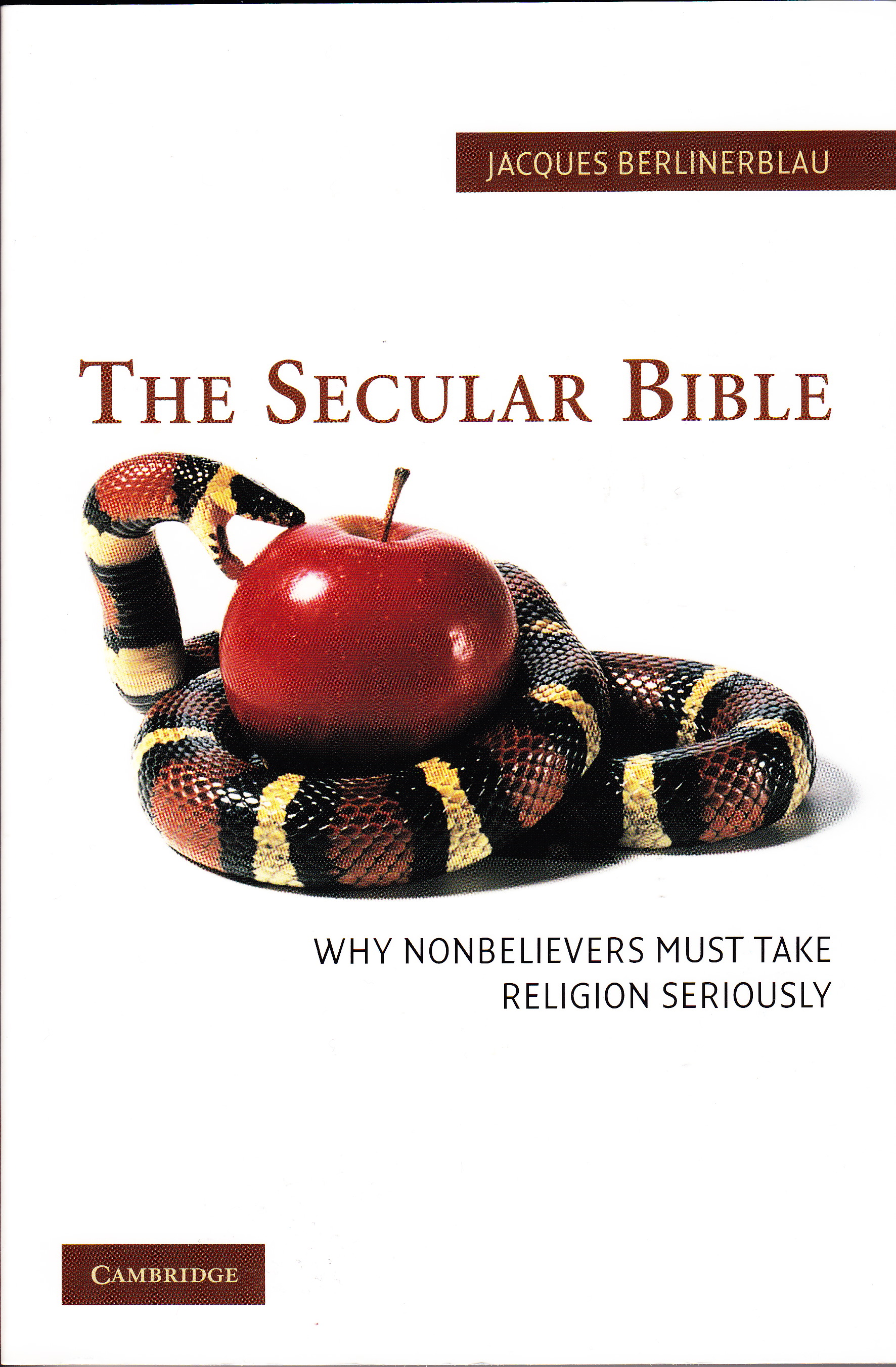
SecularBible“The Hebrew Bible is a misreading waiting to happen.” Jacques Berlinerblau’s The Secular Bible is a book containing much wisdom. My only real concern is that by having published it with a university press Berlinerblau may have inadvertently ensured that it would be read only by biblical scholars. Although yours truly was once such a credentialed scholar, I read The Secular Bible with its intriguing subtitle, Why Nonbelievers Must Take Religion Seriously, looming in my mind like a great raptor. This is an important book. With so very much of our lives heavily influenced by the Bible, eloquently argued by Berlinerblau, we have secularists who don’t know the Bible fighting the impossible battle to subvert it. The rationalizing, leveling influence, for the past two centuries, has come from the much castigated and discarded biblical scholar. Can I get an “Amen”?

Berlinerblau demonstrates unequivocally that we need Bible scholars and Qur’an scholars who know how to speak to their own traditions. Instead we have secularists who belittle and then wonder why the religious strike out. The pattern has repeated itself so many times that it defies reason that intelligent people would delude themselves that religion is a passing fancy. The Secular Bible argues what I’ve said time and again: if we want to avoid the dangers religion can bring, we must spend the resources to understand it. Instead we close departments and force those who know the field credibly well into unemployment. And we wonder why there’s a reaction.

“Self-critical religious intellectuals have never been much appreciated.” Instead we put the extremists on television so we can laugh at them or gape at their ability to do the unthinkable in the name of religion. Ironically, there are thousands of trained experts in the field, many of them languishing in un- or under-employment while towers crumble and mobs burst into violence. I do wonder what future generations will think of us. We have the resources handy, indeed, many of them willing to serve for a fraction of the cost of a business professor or basketball coach, but we choose to ignore them. As Berlinerblau states emphatically, we in the western world have the Bible so deeply ingrained that we can no longer even exegete all the ways in which it plays out in our society. If such influences were at work in a human body, we’d pay a doctor well to understand. Instead, we let the most foundational text in our society be used for duplicitous purposes while the simple reading of a book like The Secular Bible could save us all an eon of grief.