Unexpected Gifts

Sometimes horror movie therapy doesn’t go the way expected.  (No surprises there, so no snarky comments, please.  No therapy is “one size fits all.”)  This was brought home to me when watching The Gift.  I was attracted to the speculative aspect of the premise and although it came out over twenty years ago I hadn’t heard of it before.  Although there are speculative elements—at least two ghosts—it is largely a human drama and one that hit me unexpectedly.  As a public service for those who also practice horror movie therapy, I thought I’d consider it here.  (Then call my regular therapist.)  Annie Wilson is a psychic in rural Georgia.  She gives readings for donations to help supplement Social Security since she’s a widow and she has three young sons.  I don’t know why this didn’t start the warning bells a-jangling, but when it was over I realized her situation was like mine, growing up.  (My father was alive, but nobody knew where he was, otherwise I’m on board.)
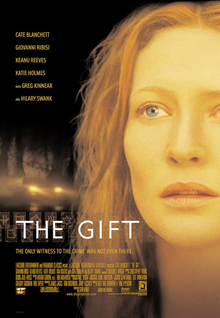
A violent neighbor, scarily played by Keanu Reeves (forever Neo in my mind), keeps threatening the family since he’s a wife-beater and Annie recommends his wife leave him.  Then a woman is murdered and her body is in his pond (or better, bayou).  Annie realizes that this threatening bully, who’s convicted of the crime, is actually innocent.  Her lawyer, however, doesn’t see the problem—the guy was a menace to society and he’s locked up.  Annie, however, insists on finding the truth.  I have to say that this movie genuinely scared me.  I almost stopped watching.  It wasn’t the speculative part, though.  It was the human part.

Religious locals accuse Annie of being a witch and a Satan-worshipper.  She is, however, simply trying to get by in a society that has failed her.  Having an unstable neighbor threatening her kids doesn’t help.  What’s so scary is that this isn’t far from real life.  For those of us who grew up poor, safety nets are few and the weave is very, very loose.  And you’re made, even as a kid, to feel the social stigma of the crime of being poor.  Annie has a good heart.  She tries to get a man wrongly accused released from jail, knowing that he’ll probably begin threatening her again, if not actually harming her.  Society, however, doesn’t really care.  Raising three small children on welfare on your own isn’t easy.  And, in fact, those kids may well grow up needing therapy.  Even if it’s watching horror to try to make sense of life.

Asking Questions

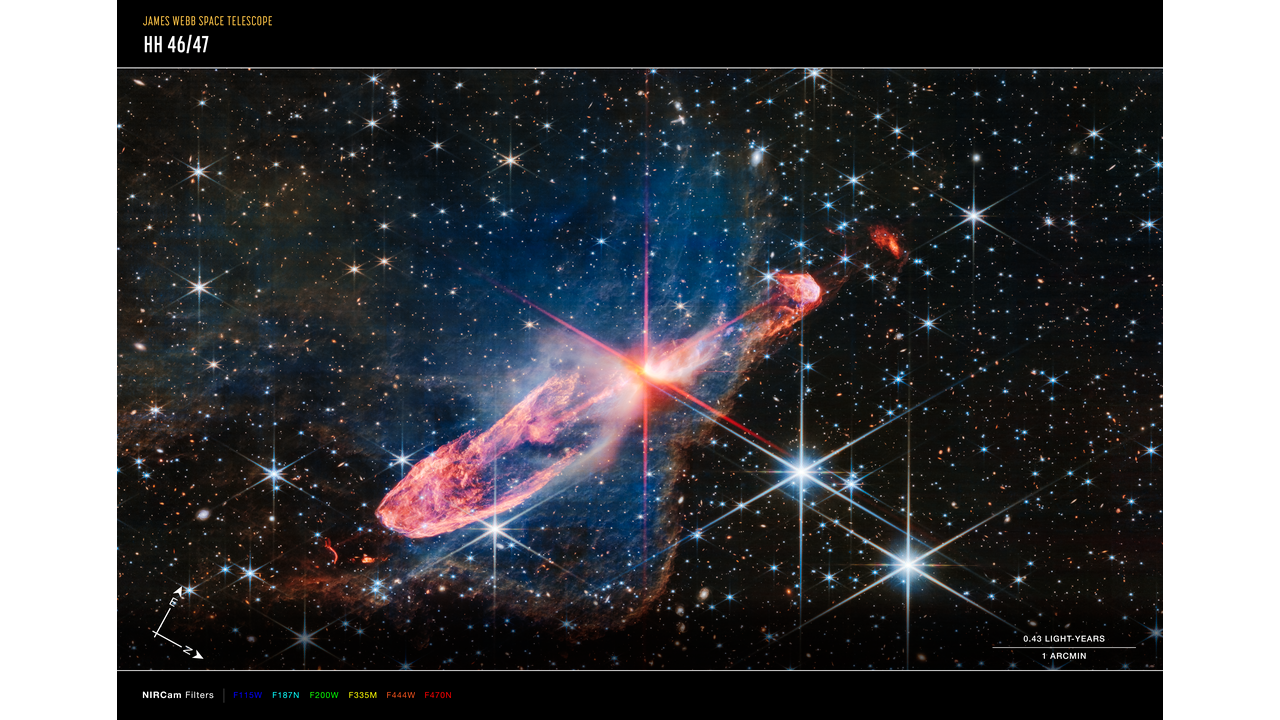
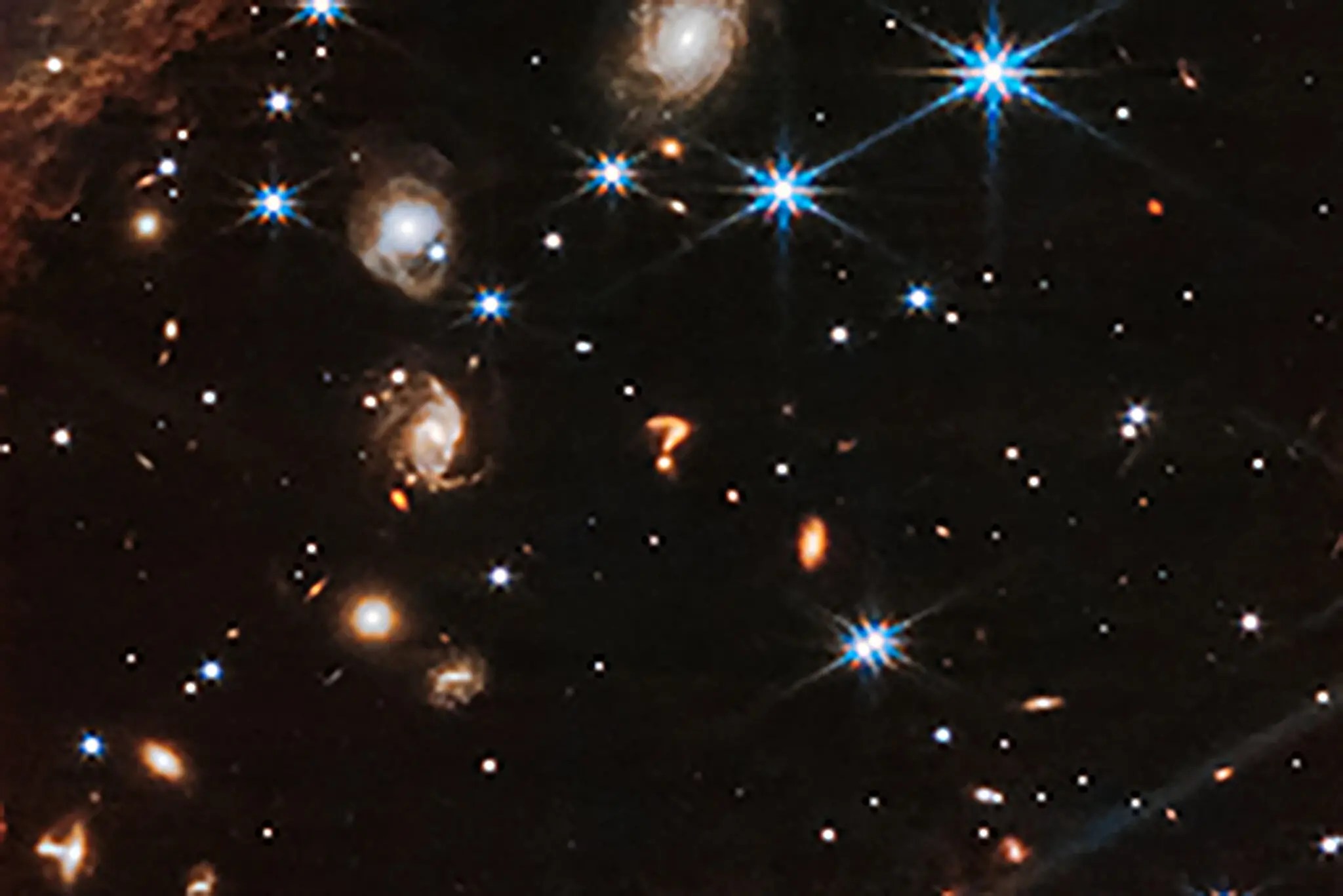
Strangely appropriate pareidolia is one of those oddly specific things that generates a lot of internet interest.  I was late to find out about the “question mark” in space photographed by the James Webb Space Telescope.  Okay, a couple of things: photographs, like the one below, taken by U.S. Government agencies are in the public domain (thanks, NASA!).  This one can be easily enlarged on the James Webb Space Telescope webpage.  To see the “question mark” you need to start from the center red star and look down to the two bright blue stars just to the left of center.  The image I’m using has been enlarged so that it’s obvious.  Serious news outlets have discussed this, but it’s clearly a case of pareidolia, or the human ability to attribute specific meaning, or design, to something that’s random.  We see faces everywhere, but question marks are somewhat less common.

Photo credit NASA: public domain

Given the state of the world—people like Trump able to continue scamming millions of willing believers for his own benefit, hurricanes hitting California, Putin going to war against the rest of the world, capitalism, war in the Holy Land—it’s no wonder that people like to think a big question mark is hanging over everything.  Looking into the sky we expect to see God.  Isn’t it a little disconcerting to see a huge query instead?  I, for one, think it might be best if we learn to recognize false signals rather than seeing some giant message tucked away in some small corner of the universe in the hopes that we’ll turn our seeing-eye telescope that way.  What font is it anyway?  Does it violate some cosmic copyright?

Some signs are, I’m convinced, for real.  I think they tend to be on a much smaller scale.  Way down here where  we can see them.  What appears to be, from our viewpoint, a question mark may be seen as an exclamation point from a different angle.  It’s all a matter of how we look at things.  One of the most important lessons of life is that people see the same thing from different points of view.  If we can accept that, others don’t seem so threatening and strange.  In a small planet plagued with xenophobia, it’s important to discover strangely appropriate pareidolia every now and again to get us thinking about the deeper issues.  We may not find the answers, but often asking the question is the more important thing to do.


All of Us

All Souls is a democratic holiday.   Since Halloween is really the start of the holiday season, we really should keep it, together with All Saints and All Souls, as a time off work.  (If I had the vacation days to do it, I would.)  I realize these are holidays of Christian origin, and some object to even getting Christmas off because of that—hey, some of us think holidays are a great and necessary part of life!  Of course, I’d be happy having Jewish or Wiccan holidays off too.  Halloween and Christmas are generally secular holidays these days, but that makes them no less meaningful.  In any case, All Souls is the day we commemorate the dead who may not have been recognized as saints.  Like the Day of the Dead, it’s a time to reflect on those we’ve loved and lost.  I always find the naming of our departed especially moving.

Doris Ruth Miller

Among northern Europeans (they aren’t all bad guys) the steps into November were a liminal time.  The restless dead might attempt to return and the living should pay their respects.  The church tried to address this through All Saints Day with its exalted music and ceremony.  Like an afterthought, it seems, All Souls was a time to remember those who are the majority.  The unrecognized, the non-famous, but often very good folk without whom sainthood would be impossible.  You see, I truly believe that most people try to live the best way they know how.  They struggle, yes, and they may have made bad decisions based on what they knew at the moment.  They were, after all, human.  The church set aside November 2 to pause and consider that death comes to all of us.  Winter is on the way.

Winter, in many ways, defines life.  It’s a time in which disaster comes to those who fail to plan ahead.  Food must be stored in advance since it will be scarce.  Nights will be long.  Even keeping warm will be a challenge.  And it can come at any time now.  Some years snowstorms come on Halloween.  And even if no snow falls we enter that fallow time when we’re forced to sit and wait.  It is nature’s way of saying, “Stop.  Reflect.”  Those already departed on All Souls are missed by those of us who remain.  We put on another layer, or perhaps turn up the thermostat, trying to distance ourselves from the chill.  We look to Thanksgiving, and Christmas soon to follow.  And those who perceive subtleties know that hope of spring begins early in February.  The souls who’ve already gone on know more than we, and the least we can do is remember them once a year on the holiday meant for all.


Halloween Tale

Halloween movies are hit or miss. Anthology movies are the same. My interest in holiday horror keeps me coming back for more nevertheless. Tales of Halloween has been fairly well reviewed over the years. As intimated, it’s an anthology film. There are ten separate stories squeezed in, leading to an average of nine minutes per episode. To make matters more interesting, each story has a different director. The end result is kind of like a pillowcase after trick-or-treating, you get some good stuff and some you’d rather not have received. The movie’s also a comedy horror so you’re meant to laugh throughout. Kind of like Halloween itself, I suppose. At least for some people. The movie didn’t do anything for me. There were no takeaways, and nothing really memorable.

Halloween is an unusual holiday.  For one thing, the way it’s celebrated is fairly recent.  Childhood memories of costumes and trick-or-treating and ghosts and goblins are all pretty new.  Well, maybe not the ghosts.  For some of us it’s a spiritual time.  A reflective season.  I’m not sure how anybody can not try to figure out what life’s all about.  Some of us have steered our lives (in as far as we actually steer them) in the direction of trying to figure these things out.  For me, Halloween is a time of spiritual growth.  Not exactly fun, but enjoyable nevertheless.  I know it’s different for different people.  Some people live for the fun and the partying.  It’s like that pillowcase all over again.  There is, at least in my experience, no perfect Halloween movie.  I won’t stop trying to find it, however.

John Carpenter’s Halloween is the movie that really kickstarted films based on this particular holiday.  Although I’m no fan of slashers, I do enjoy this one from time to time.  It’s a well-made movie, moody like autumn.  In Tales of Halloween, the background movie in two segments is Night of the Living Dead, a classic by any standards.  Carnival of Souls is shown in another episode.  Horror is a notoriously self-referential genre.  Last year I watched Trick ‘r Treat, another such anthology film.  It likewise made little impact.  On me, anyway.  Perhaps Halloween isn’t about horror after all.  It’s a time for reflection.  And pretending.  Since we all pretend most of the time it is perhaps the most natural of holidays.  Pretense on other holidays, although it happens, is considered in bad taste.  At least on Halloween we can be honest about it.  Some day someone may actually capture that in a movie.


Learning too Late

Threads of this, crumbs of that.  My life has been a grasping at small bits.  I know the things I like, but which circumstances keep me from.  Nobody is paid to read only, and writing brings in so very little money.  I’ve read Edgar Allan Poe since I was a child, but I haven’t read all of his written works.  (The same is true of the many other writers I admire.)  When I wrote Nightmares with the Bible, I tried to tie the theme of demons to Poe.  I began a chapter with an epigram from “The Raven”—“And his eyes have all the seeming of a demon’s that is dreaming.”  At this point in my life I had not read, or if I had I’d forgotten, “Alone.”  Not published in his lifetime, Poe wrote the poem at 21.  It ends with words that would’ve been appropriate for my Nightmares venture:

From the lightning in the sky

As it pass’d me flying by—

From the thunder, and the storm—

And the cloud that took the form

(When the rest of Heaven was blue)

Of a demon in my view—

Some printed editions end the poem with a period.  The ambiguity of that final em-dash, however, would’ve made particularly well the point I was struggling to convey.  Demons are not what we think they are.  As I continue to read about The Exorcist and its impact, it becomes clear that media mediates reality.  That view of demons has become canonical, but many, from Poe both backward and forward, have wrestled with them.  Not every entity with which we struggle through the night ends up blessing us in the morning, disjointed hip or not.  “Demon” is a very slippery word.  And concept.  In a materialistic world we boldly claim there are no such things.  As Poe wrote, “Of a demon in my view—”

There’s more going on beneath the surface than most people would be able to guess.  This is perhaps why I have a penchant for staring at the ocean.  Misunderstood, certainly.  But never, I hope, shallow.  There are great depths to be explored, but as the ocean teaches us, humans can’t stand the immense pressure at the bottom of the sea.  No, our lives are more like the bits and pieces of seashells plucked from beaches.  We don’t have the whole picture.  All writing reflects a stage on a journey.  Those who embark must earn their keep as they go.  And finding validation after the fact is one of the small joys of life that keep the traveler moving forward.


Horror Therapy

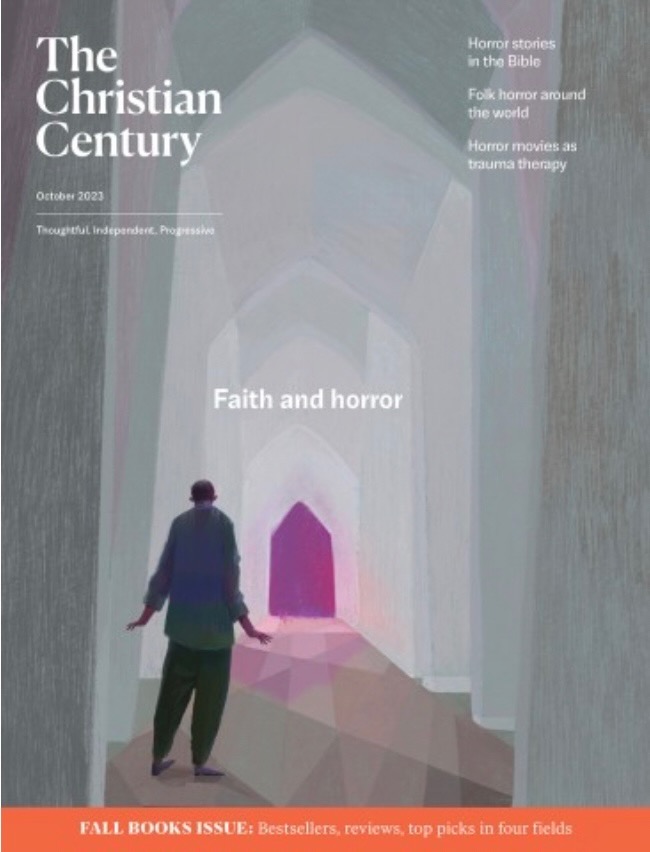
It’s Friday the 13th.  Like Barbra and Johnny I’m driving to rural western Pennsylvania to visit a cemetery.  It must be October.  I’m not a magazine reader (this has probably hampered my development as a writer [I prefer books]), but the October issue of The Christian Century is devoted to religion and horror.  This morning I watched an interview with Jessica Mesman on her article on horror as therapy.  In it she discusses her mother’s death.  Since we have this in common, I was intrigued.  Mesman states that studies substantiate that watching horror functions as therapy for people with PTSD.  It has been suggested to me more than once that my career malfunction at Nashotah House led to PTSD.  It may be no coincidence, then, that I started watching horror after that happened.  When The Incarcerated Christian podcast was still going, I was interviewed three times and the topic was, broadly, how horror acts as therapy.

Until today I’ve had to work daily and then make arrangements for an unplanned trip to celebrate my mother’s life as I could.  I’ve never met Jessica Mesman, but I sense that she would understand what I’m going through.  As I grapple with grief, loss, and relief (my mother was ready to die, but I had been unable to see her for a few years because of the pandemic and other circumstances) what I feel I really need is to watch a horror movie or two.  I have found—and 2023 has been a traumatic year for me—that when I’m feeling overwrought, taking ninety minutes to watch a horror film can get me back on track.  It helps me cope.

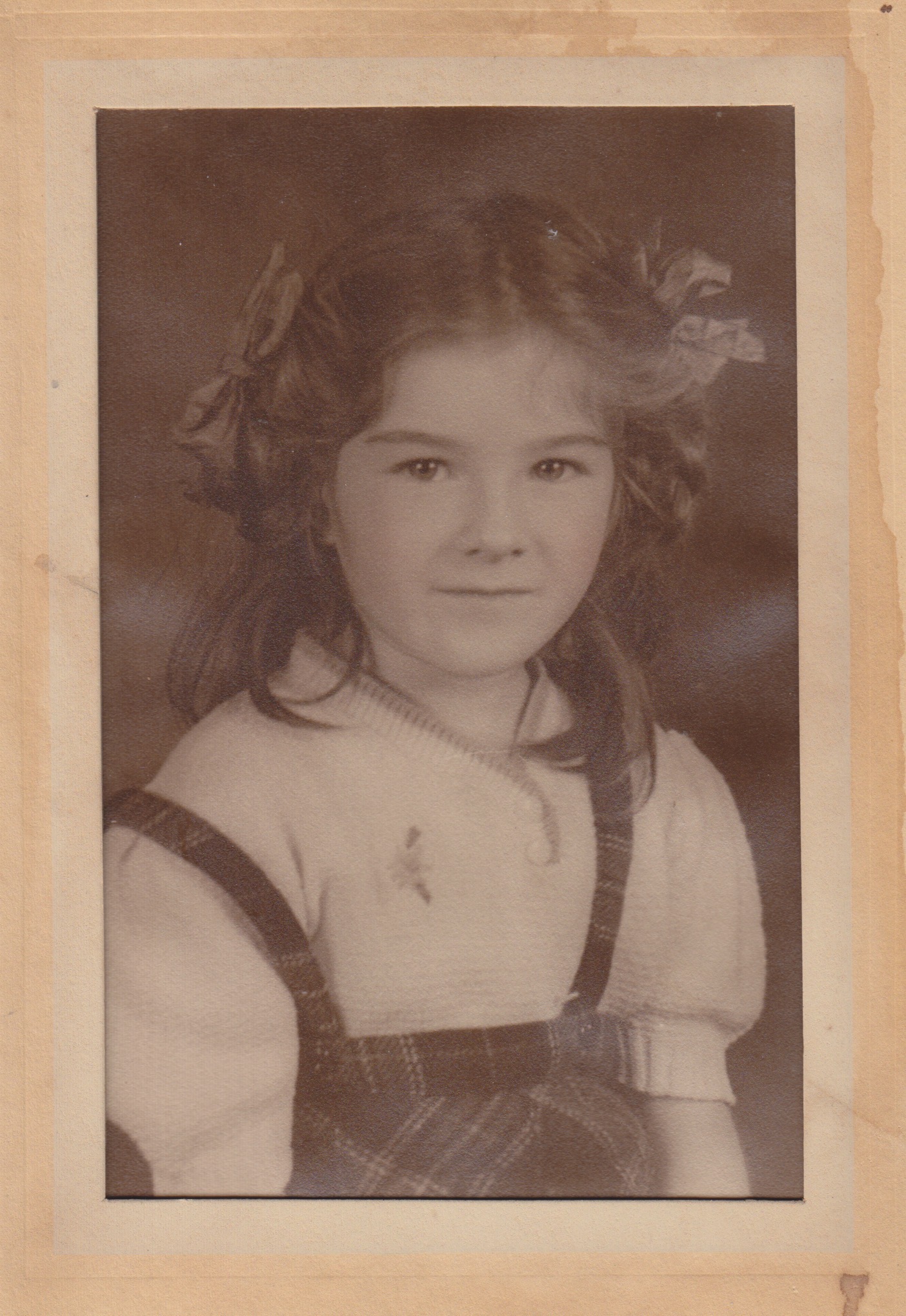
None of this is intended as any disrespect for my mother, whom I love deeply.  Although she didn’t read my books, she knew I watched monster movies as a kid.  She occasionally grew annoyed with me when such things made me too clingy—she had two other sons and her own dying mother in our home and she was trying to keep it together with my father gone.  Looking at photos of my young self, I wonder if that early loss of a parent translated to a kind of childhood PTSD.  Once I’d successfully (?) made it to adulthood, Mom told me—“you were the one I worried about; you seemed to have difficulty adjusting.”  I sought therapy in religion.  I’ve dedicated my life to it.  Until it too became a source of grief, horror, and pain.  As I prepare to drive to her funeral, I’m pretty sure that Mom understands.


Calculating Christians

I know some calculating Christians.  I use “Christian” as religion scholars do—it is the way people identify themselves, not necessarily what they are.  For example, I grew up learning that Christianity was God’s excuse for throwing a bunch of unknowing people into Hell.  Laughter all around!  Then I did something radical.  I started reading the Bible.  Spoiler alert: as you start to get near the end, you learn that Jesus and his early followers (except maybe Paul) promoted the idea that God is love and the only correct response to that is to love other people.  Of course, a religious founder, deity or not, can’t control what his/her followers will do.  Christianity quickly became judgmental.  “I’m going to Heaven and you’re not!”  Laughter all around!  In my life I’ve been the recipient of calculating Christians more than once.

Calculating Christians are those who, like ein U-boat Kapitän, try to figure out the best way to do the most damage to those they don’t like.  They will destroy your career—torpedoes away!—and then get on their knees to thank their vengeful god for sinking a satanic vessel.  And all the lives of Christians onboard are counted as collateral damage.  God’s good at sorting things out.  Laughter all around!  I’ve also known “Christians” who will target a family member when he’s down, and stressed out to the max, only to tell him he’s going to Hell and they’re just fine with it.  Laughter all around!  They do this without ever asking about the two seriously ill people in a family of three, or how you’re doing with that therapy you’ve had to start.  Jesus would do no less than kick a confessing sinner when he’s down.

There’s a reason Christianity is developing a bad name.  With the first compassionate Pope in centuries we find doctrinaire Catholics condemning his compassion.  Among the Fundamentalist camp we find those who would gladly die for the most hate-filled politician ever elected on these shores.  Calculating the end of the world is, after all, a tiring activity.  No matter that you’re wrong (you never consider the possibility and you never, ever try to weigh the facts), you calculate how to blow it up for everybody.  Laughter all around!  The only thing that keeps me sane, I believe, is knowing that many actual Christians out there know that such actions are taking God’s name in vain.  And that, they know, is against the commandments so prominently placed on courthouse lawns.

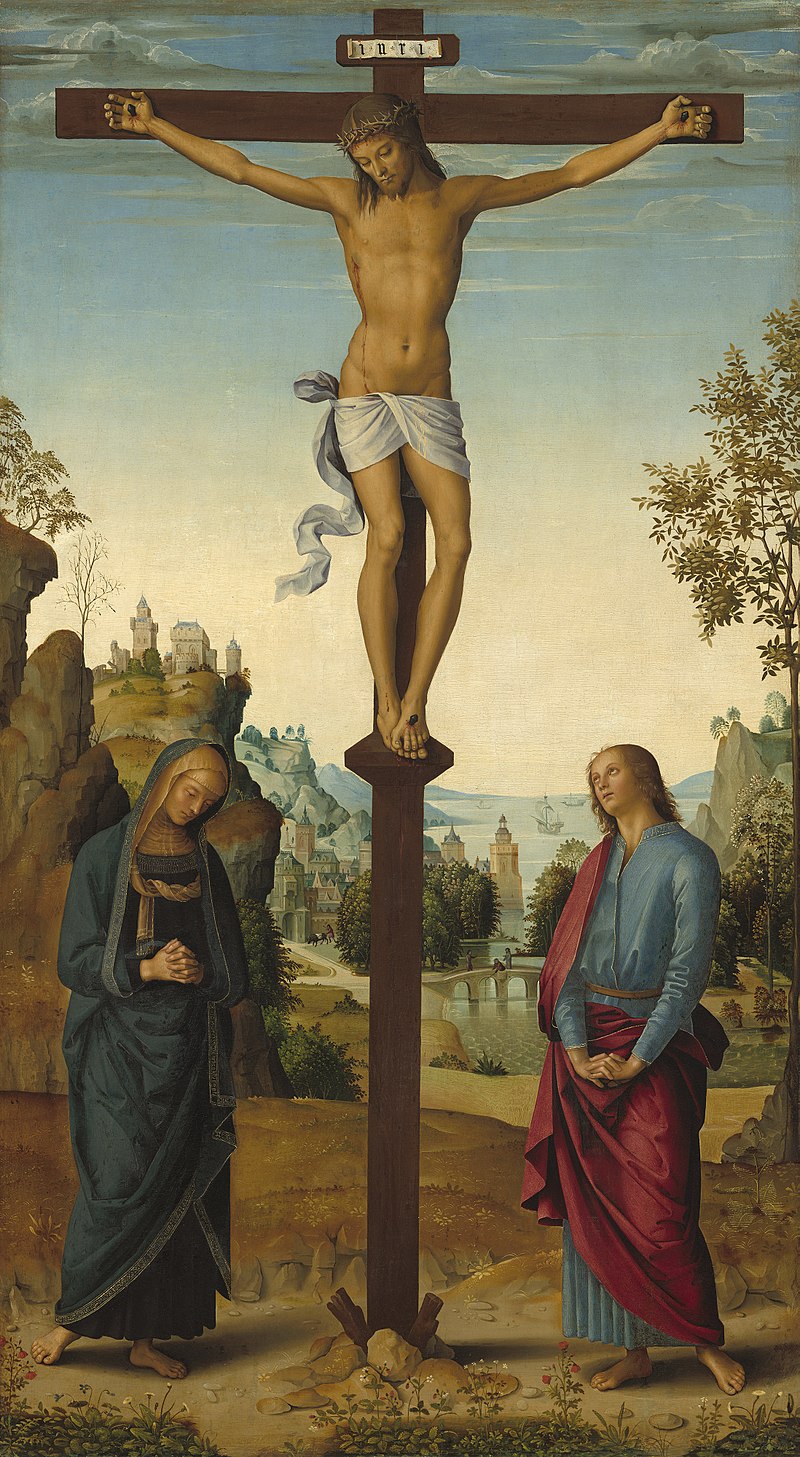
Pietro Perugino, The Crucifixion with the Virgin, Saint John, Saint Jerome, and Saint Mary Magdalene [middle panel], public domain, via Wikimedia Commons

Rocks and Philosophs

Porphyry is, apart from being a cool word, a kind of purplish stone that was prized for statue-making in antiquity.  It is also the name a Syrian philosopher gave himself in the third century of the Common Era.  Now, if you read widely about antiquity, as some of us have done, you’ll encounter the name Porphyry from time to time, but those of us who focused on older materials don’t pay him much mind.  I was reading about Porphyry recently, however, and did a little poking around to discover that he’d written a book called, in translation, Against the Christians.  Some historians speculate that Porphyry may have once been a Christian himself, but whether or not that’s true, he developed an antipathy to the sect.  I was curious about what his beef may have been only to discover that this book is lost.

Now lost works in antiquity are the rule rather than the exception.  Literacy may not have been widespread, but those who could write did write, and often prolifically.  Human history was very well documented.  But tonnes of it went missing.  Wars have been part of that history and wars are notorious for destroying written records.  Also, much writing was on perishable materials that, well, perished.  That wasn’t the case with Against the Christians, however.  Porphyry’s work was purposefully destroyed.  By this point Christianity had taken over the Roman Empire.  Rather than accepting the challenge of a philosopher, officials censored and destroyed his work.  Ironically, all that survives are quotes from books of theologians who were trying to refute him.

This made me reflect on the book bans that are currently all the rage among some “Christian” politicians.  Such rearguard actions belie the confidence that imperial religions showcase.  A religion that’s afraid others might see the holes raises many questions, does it not?  It seems to come down to the idea that nothing has changed in two millennia, even though Jesus didn’t have a cellphone—not even one of those old flip-open kind—and much of what we know of nature was still many centuries in the future.  The fact is that we only try to silence those who disagree when we fear them.  Book bans pretend that they can hold the hands of the clock still and that all will remain as it was decades ago.  Learning, however, is a genie let out of the bottle.  Back in Porphyry’s day powerful bishops and emperors ordered his book banned and destroyed.  And we are all the poorer for it.


Quick Writing

On the very same day I saw two emails that began with phrases that indicated they were clearly sent by text.  One began “Hell all.”  This was a friendly message from a friendly person sent to a friendly group and I’m pretty sure the final o dropped off the first word.  The second seemed to have AI in mind as it read “Thank you bot.”  It was sent from a phone to two individuals (or androids?).  There’s a reason I don’t text.  Apart from being cheap and having to pay for each text I receive or send, that is.  The reason is that it’s far too easy to misunderstand when someone is trying to dash something off quickly.  Add to that the AI tendency to think it knows what you want to say (I’m pretty sure it has difficulty guessing, at least in my case, and likely in yours, too) and errors occur.  We write to each other in order to communicate.  If we can’t do it clearly, it’s time to ask why.

Those who email as if they’re texting—short, abrupt sentences—come across as angry.  And an angry message often inspires an angry response.  Wouldn’t it make more sense to slow down a bit and express what you want to say clearly?  We all make typos.  Taking the time to email is no guarantee that you’ll not mess something up in your message.  Still, it helps.  I think back to the days of actual letter writing.  Those who were truly cultured copied out the letter (another chance to check for errors!) before sending it.  There were misunderstandings then, I’m sure, but I don’t think anyone was suggesting someone else is a robot.  Or cussing at them from word one.

The ease of constant communication has led to its own set of complications.  Mainly, it seems to me, that since abbreviated communication has become so terribly common, opportunities for misunderstanding increase exponentially.  I’m well aware that I’ll be accused of being “old school,” if not downright “old fashioned,” but if life’s become so busy that we don’t have time for other people isn’t it time to slow down a bit?  Technology’s become the driver and it doesn’t know where the hello we want to go.  The other day I forgot where I put my phone.  I signed on for work but couldn’t get started because it requires two-step authentication.  Try to walk away from your phone.  I dare you.  Thank you bot, indeed.


Look it up

Does anybody else find the internet too limiting?  I regularly find that what I’m searching for flummoxes even Google when it comes to trying to find things.  The internet doesn’t encompass all of reality, I guess.  For example, the other day I encountered the word “evemerized.”  Even Google vociferously insisted that I meant to search for “euhemerized,” which is a different thing.  It did, however, reluctantly give me a couple of websites that use, and even define the word.  What is it that the search engines are not showing us?  Oftentimes in my searching I admit to being at fault.  I don’t know the correct string of words to use to get algorithms to understand me.  I guess I’ll be one of those up against the wall when AI takes over.  “Does not compute,” it will say in its sci-fi robot voice.

Some of us still like to unplug and pick up a real book.  Or take a walk in the woods.  I do have to admit, however, I wouldn’t complain if the internet could find a way to mow my lawn.  (I don’t mean giving me a list of those companies that haul around inverted-helicopter mowers that make every summer morning sound like Apocalypse Now.  “I love the smell of cut grass in the morning.”)  I am, and hope I always will be, a seeker.  I’m aware that our brains did not evolve to find “the Truth,” but I’m compelled to keep looking in any case.  There’s so much in this world and we’ve tried to distill it to what you can accomplish with a keyboard and a screen.  And even with those I can’t find what I’m looking for in this virtual collective unconscious that we call the web.  There are others better than me at web searching, I’m certain of it.

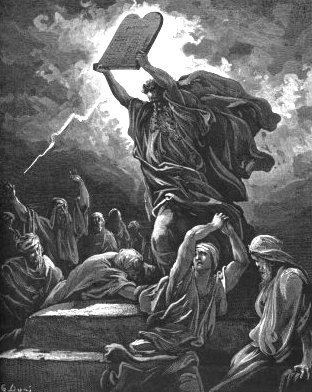
Despite our current understanding of the virtue of curiosity, there have been periods of history (and pockets of it still exist now) when religions have presented curiosity as evil.  This is generally the case with revealed religions that invest a great deal in having the truth delivered to them tied up with a bow.  I can’t believe in a deity that created curiosity as a sin.  Early explorers of religion exhibited curiosity—if Moses hadn’t wondered what that burning bush was no Bible would ever have been written.  Of course, the internet didn’t exist in those days and seeking was, perhaps, a little bit simpler.  Even if Moses was evemerized.

Moses gets curious

Friendly Bug

The Beetle and I go way back.  I’m unapologetically a child of the sixties and I’ve always loved Volkswagen Beetles.  My second car was a used Beetle, one of the older kind before they were discontinued.  I had to sell it to pay for seminary.  Since things tend to happen in cycles, I was teaching in seminary when we could finally afford car payments and we bought one of the New Beetles before they discontinued them.  That was back in 2003.  I mentioned in a previous post that I had to trade in a twenty-year old car for a new one.  That was the Beetle.  Cleaning it out was an exercise in history.  And it brought a few tears.  We’d only put 113,000 miles on that car—it had electronics issues that kept it in the shop a lot—but it was more the years than the distance.  There were memories.  It wasn’t unlike having your dog die.

I remember buying the Beetle on Blue Mound Road.  This was back in Wisconsin.  Waiting for it to arrive (only a matter of days instead of months).  Driving a stick-shift again.  It was basic driving.  Each little artifact I pulled out from under the seat, or tucked away in the trunk, triggered another memory.  A tear or two escaped, I confess.  We were unaware that just a couple short years after buying it that Nashotah House would turn savage and we would have to drive the Beetle halfway across the country to find work.  Registering a car in New Jersey is a surreal experience.  I used it for commuting to Gorgias Press until that ended, then commuting to Rutgers and Montclair State.  Then came the long, long years of commuting by bus to New York when the Beetle sat mostly neglected in the driveway.  All those trips up to Binghamton, then Ithaca.

The move to Pennsylvania involved yet more paperwork, since cars are more complicated than any other commodity.  The Beetle became our short-trip car.  I love shifting gears manually.  Feeling a sense, however illusory, of control.  Of longevity.  We kept the car for two full decades, making memories along the way.  It was alas, aging.  At twenty it was like fifty in dog years and the check engine light was on again although it just passed inspection.  It felt wrong pulling all the accoutrements out, getting ready to hand an old friend over to a stranger’s care.  We’d been the car’s only owners in three states.  Through four presidential administrations.  There was a lot of personal history there.  It’s the end of an era.  Goodbye, old friend.


Little Bang

I’ve always been interested in the sky.  At times it feels like I’m in love with it.  Having attended a Sputnik-era high school—a rural high school with an actual planetarium!—I took the offered astronomy course.  Buoyed up by this, I also enrolled in a college astronomy class only to discover that that career track involved far too much math for my humble abilities.  Still, I learned a lot about the nighttime sky.  I’ve also been a lifelong reader of lay science.  I very much appreciate scientists who write so that nonspecialists can understand them.  So it was that I was glad to see a New York Times letter by Adam Frank and Marcelo Gleiser titled “The Story of Our Universe May Be Starting to Unravel.”  I’ve mentioned Gleiser here before because I’ve read a couple of his wonderful books.  But this article was mind-expanding.

Frank and Gleiser suggest that the Big Bang Theory may, eventually, need to be replaced.  They point out that small inconsistencies have crept into it over the years (keep in mind that it was really only “confirmed” within my lifetime, back in the sixties).  Most of these have been patched up with quilt-work astrophysics, but the James Webb Space Telescope is making some of those past patches strain a bit at the seams.  Fully formed galaxies are being spied too far back in time (for stargazing is looking into the deep past) for the standard model.  They shouldn’t be there, but they are.  The letter interestingly raises the point that the scientific study of quantum physics, as well as that of consciousness, also strain the standard models.  Perhaps it’s time for a rethinking of reality?

Image credit: NASA, public domain

Isn’t this breathtakingly exciting?  To be alive when a major leap of understanding the universe we call home may be discovered?  The authors point out that cosmology and philosophy often have to interact.  Our understanding of the universe is a human understanding, not sacred writ.  The scientific method is built to be falsifiable.  If it’s not, it’s not science.  (This often separates it from some religions which declare themselves unfalsifiable, and therefore likely wrong.)  New scientific discoveries are made daily, of course, but new paradigms only tend to come on the scale of lifetimes, or several generations.  We don’t see them all the time.  I guess it’s heartening to see that the system works.  When science becomes orthodoxy, we run into similar problems that we encounter with religions.  A bit of humility and a ship-load of wonder can go a long, long way.


Moving Hope

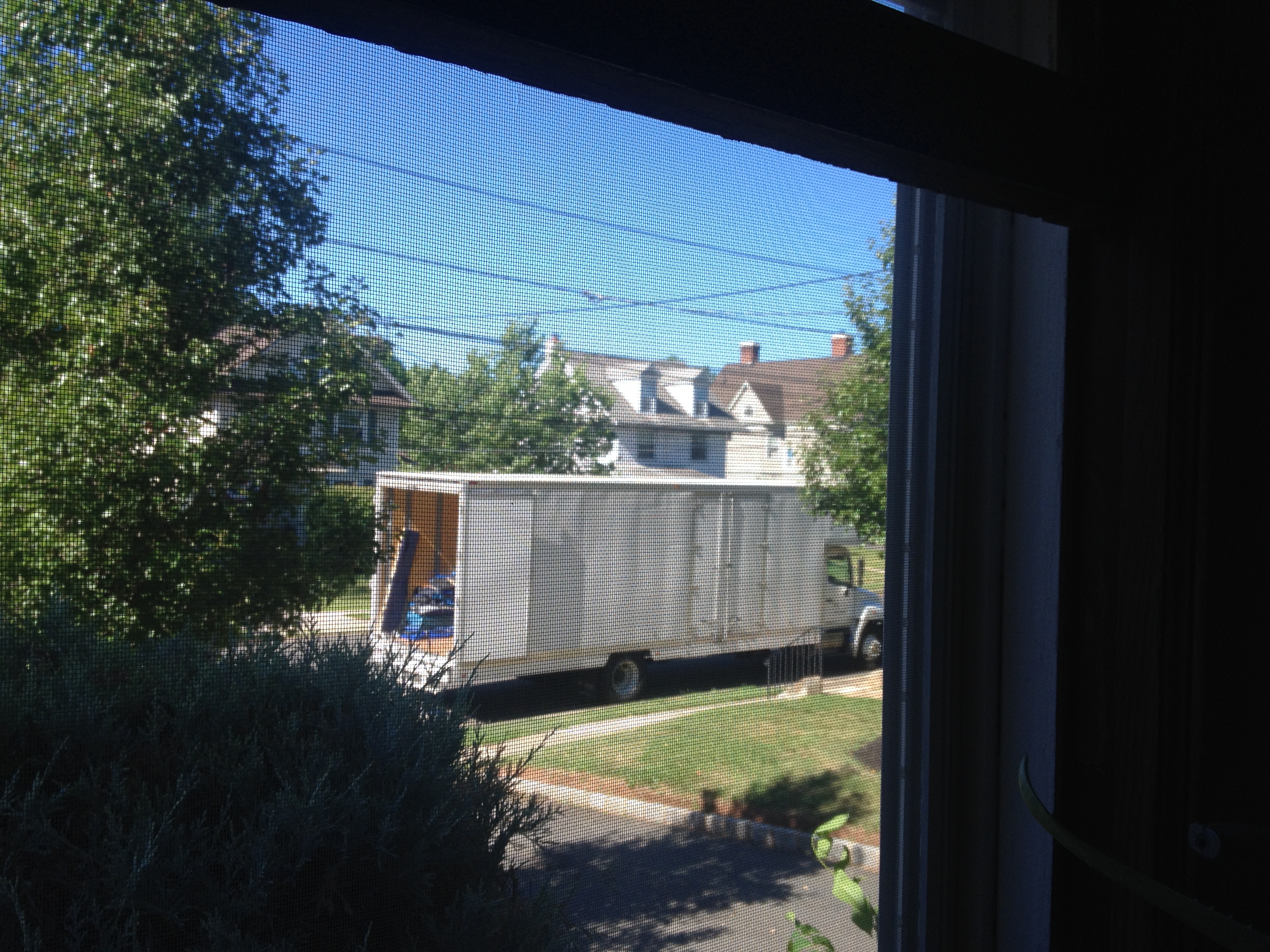
We were young and recently engaged.  I had to move from Boston to Ann Arbor, and all my worldly possessions fit into the trunk and back seat of a rental car.  I don’t remember the model, but I know it was white.  It wasn’t a large car.  Details have escaped into the ether, but I was driven by the soul purpose to be with my fiancée, soon to be wife.  In those days sleep and food deprivation of an almost Lindberghian degree seemed negligible.  Google maps tells me it’s a twelve-hour drive, but back then the speed limit in Pennsylvania was still 55 so it had to’ve been more than that.  By myself, with little money (how did I pay for that rental car?  Probably credit card, borrowing against the future) I drove all day—or was it night?  I seem to recall arriving in the afternoon.

People are capable of great endurance feats, but they get a bit trickier as you age.  I like to think they’re compensated for by increased mental powers.  It takes time—many years—to learn how to be in the world.  To learn, as Morpheus indicates, which rules can be bent, and which broken.  If you pay attention you can see that there are events, incidents, not easily explained.  We influence the world as the world influences us.  And our minds influence our bodies just as our bodies influence our minds.  We seem to enjoy drawing sharp distinctions where fuzzy lines are more natural.  As I think back on my move to the Midwest, it seems to me that courage and conviction ran strong, despite the unlikeliness of success.

From Ann Arbor my wife and I moved to Edinburgh with, again, very little money and nothing but hopes to keep us going.  You see, when you grow up in a poor family there are no buffers.  Yet Edinburgh became a reality and after the Ph.D., still with little money, we managed a transAtlantic move to a job that proved as unreliable as the usual support systems for the poor.  Once again we found ourselves making yet another low-budget move across the miles.  We move to find our futures.  Wisconsin became our home for a decade and a half before the search for work brought us back east again.  Moves are filled with hope.  If we were convinced things would always be the way they are, why would we bother to move on?  Moving shows just how optimistic we can be.  Without hope, why would we ever move?


Consider the Ant

Ants, the Bible suggests, are worth both watching and learning from. I was reminded of this while at the Easton VegFest a couple weeks back. The VegFest is an annual event promoting vegan food in a riverside park. I’d given someone a ride and ended up finishing earlier. I could either walk all the way back to the car or spend the time outdoors. It was a pleasant enough day and there were places to sit (with no back support, however). One such sitting venue is a concrete retaining wall about 12-feet high, that borders a walking trail along the river. Since there’s a lively inner tubing business along the Delaware and Lehigh Rivers, you could watch groups float by, looking very relaxed in the way that only being on the water can make you. It was while sitting along the top of this wall that I realized I was on an ant highway.

Image credit: Fir0002/Flagstaffotos, under CC BY-NC license, via Wikimedia Commons

While individual ants don’t live very long, colonies (and their lives are very interconnected) can last several years. Some queens even make it to 30, which is impressive for an insect. As I was sitting (more like leaning, since the wall has a rounded top and I have a fear of falling) I’d notice some larger ants approaching with great determination. I would stand to let them pass. They weren’t in a close line or anything, so if I didn’t notice one in time, I became part of the trail. Looking confused—if an ant can look confused—at missing the chemical trail, they’d nevertheless continue in the same general direction unless some microscopic bit of a dropped piece of lunch on my lap caught their attention. Their determination was a lesson. They simply don’t give up.

Although the wall predates any of their individual lives, it has become their highway just as any interstate becomes ours. They didn’t build it, but it has become their recognized and known pathway. This was clear because in the course of my hour there, several members of what I presume was the same hive came by. I suspect the writer of Proverbs wanted readers to notice their busyness, but what I saw was their marked will power. Not even a giant wearily resting on their road deterred them. There was an utter conviction about what they were doing. Obstacles were simply climbed or gone around in the assurance that the trail would resume on the other side. Their sense of hope was admirable and, in its way, contagious.


Hope by Butterflies

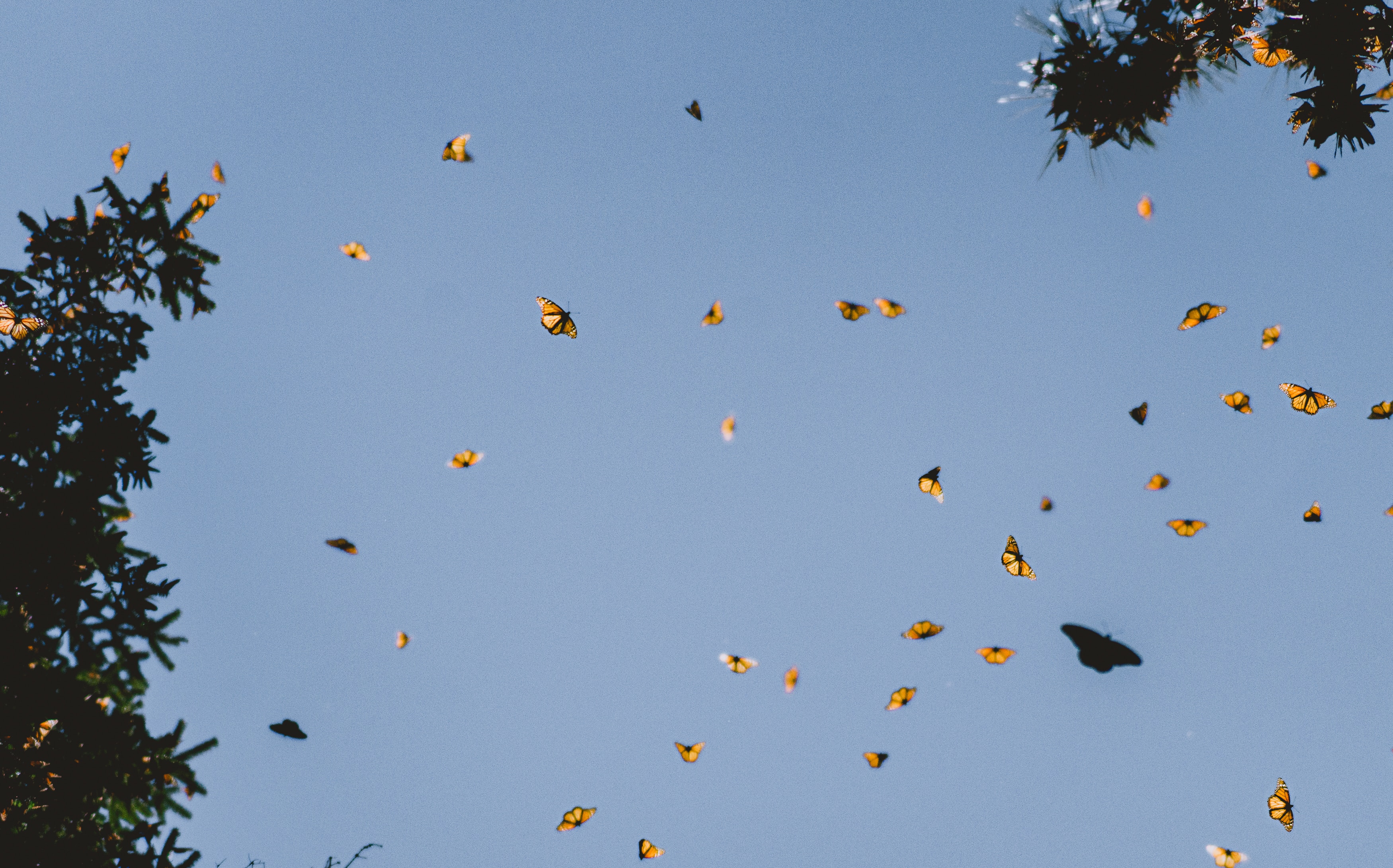
Butterflies are the most hopeful of animals.  I’m always thrilled when I see the first ones of spring and I silently cheer on those that last until autumn.  One of the three insects I didn’t fear as a child (ladybugs and fireflies were the other two), butterflies seemed like nothing so much as goodness incarnated in insect form.  While at the 4-H Fair a couple weeks back, we were fortunate enough to be there for a butterfly release.  Volunteers handed butterflies to children who were eagerly awaiting the opportunity to hold one.  It’s like touching a rainbow.  It reminded me of the butterfly rooms at various museums or zoos where even adults wear bright colors and hold still, hoping an insect will select them for a temporary perch.  We want to be kissed by butterflies.

Photo by Shiebi AL on Unsplash

Their hope goes beyond their bright colors and the cheer they spread.  To become a butterfly is to be willing to undergo transformation.  A caterpillar is an eating machine.  When its biology gives it the cue, it forms a chrysalis and inside that temporary shelter made from its own body, it literally dissolves.  Nature, knowing what to do, reconstructs that goo into the flowers of the animal world.  Could there be anything more hopeful?  More able to draw tears of joy?  Butterflies don’t bite—some don’t eat at all—they don’t dig into you with sharp chitin, they don’t fly into your eyes or ears.  Gentle and delicate, their sole purpose seems to be the bringing of happiness to other creatures.

I know I’m over-simplifying here, but I’m in a poet’s skin this morning.  Life transforms us.  We don’t know what’s ahead and some things melt us down and make us into something else.  The butterfly shows us how to do it with grace and light.  When times are difficult we realize, often only later, that we have been transformed.  We had built a cocoon around ourselves, we dissolved and became something even more beautiful than we were before.  Winter came and froze our world, but when we felt the warmth of spring, we responded, not even knowing how we did.  And looking back we can see that we bring color and light and joy into a world that had formerly been gray.  There’s a reason that butterflies are widely recognized as symbols of hope.  They’re brave without even knowing it.  And they give the world just the optimism it needs.