False Focus

I seldom use my iPhone.  I admit that I like having a camera with me most of the time and I don’t look like a tourist.  I don’t text and when I feel like tweeting I do it from my laptop.  I often forget where I put my phone and walk out of the house without it.  What I’m trying to say is that it’s not a distraction.  Now I realize companies (which seldom undertake to comprehend those of us who are anomalous) have to appeal to the lowest common denominator.  In iPhone world this means that they now want you to use “Focus.”  In other words, if you’re behind the wheel or in danger of losing your job for being distracted all the time, you can filter what gets through.  I recently had a request from my phone to send me Focus notifications when I’m home.  Of course it knows when I’m home!

It seems unnerving to me that we need to have our devices remind us not to use them.  What does it say about our love-love relationship with devices?  We use them to guide us when we’re driving—no longer experiencing the wonder of getting lost.  We read on them, forgetting the feel, smell, and non-reflective look of a book.  Some people even smoke their devices.  Many people now protect their houses with devices that allow them to see who’s at the door.  Do we really feel safer with our devices taking care of us all the time?  Perhaps we do.  Perhaps the cyborg revolution has already begun.

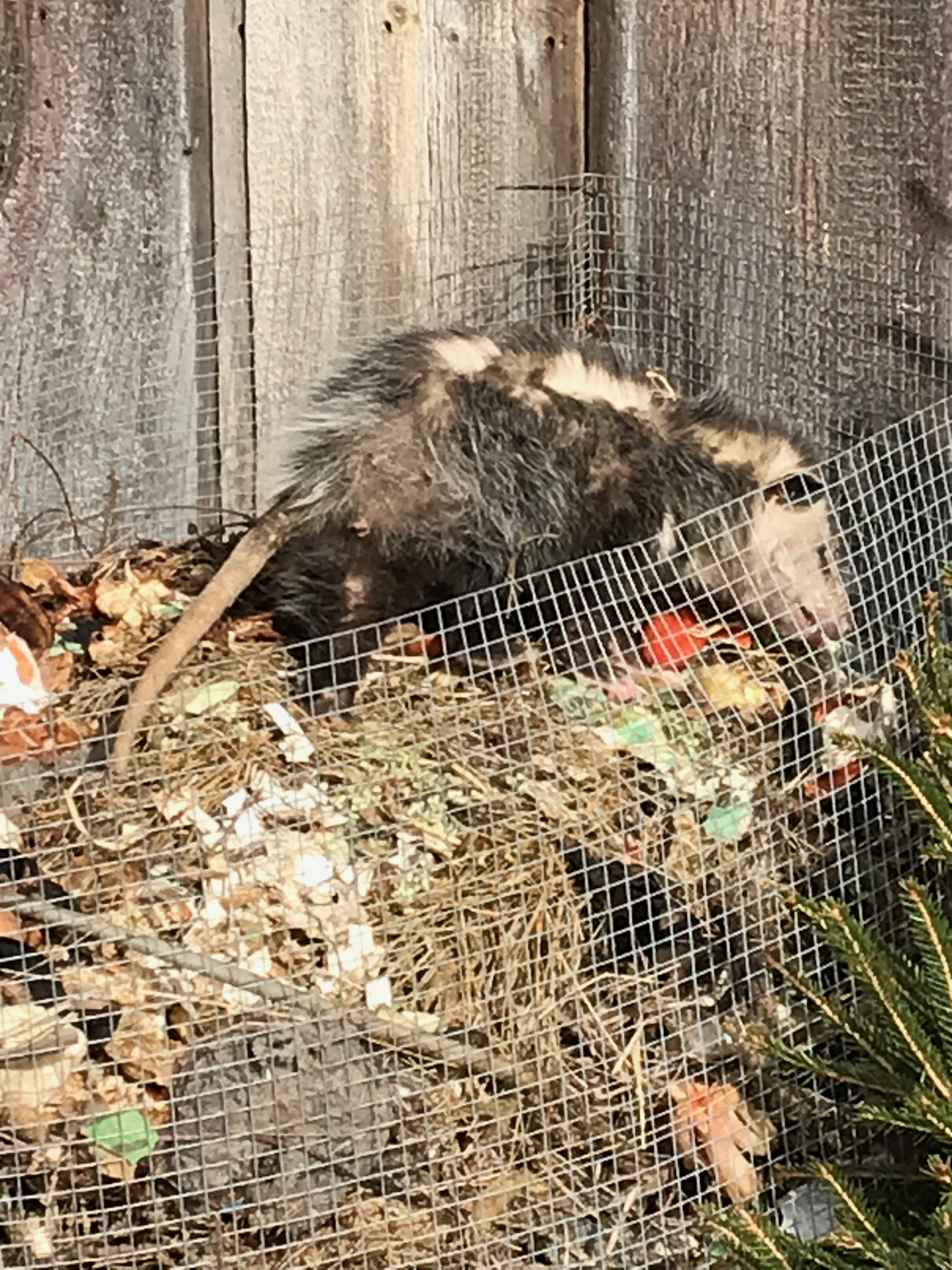
When I see how simple things like telling an apple from a tomato still flummox machine sensors (and even if they learn to tell this difference, the point remains the same), I realize just how much life experience teaches us.  We’re constantly taking in sensory data and interpreting it.  Often subconsciously.  I can smell and feel the difference if the same shirt is dried in a dryer or on a line.  I know which is better but I struggle to find the words to describe why.  I can tell the difference between the taste of this peanut and that one.  Some scents can trigger euphoria while others warn that a mustelid is nearby and wants to be left alone.  I know to look around for a skunk, to honor its wishes.  I can infer that the apples that have started to go bad are why that opossum is in our compost bin.  Perhaps I’ll pull out my phone and take a picture.

Evening Out

It feels like magic.  The morning after staying up late for something special has a transcendent quality to it.  You can almost touch the veil.  Now, for me it’s an admittedly low bar.  I get up around 3:00 a.m. most days, so “late” is when I venture past about 8:00 p.m.  And I don’t mean for a board meeting where you’re trying to solve the problems of the world.  No, I mean staying up for something you anticipate.  Or even if it’s something you experience only by association.  I had to pick somebody up in Easton after an evening event recently.  It wasn’t over until after I’m normally asleep, but I made plans to hole up in Dunkin’ Donuts and perhaps even sip a coffee if I had to, for the drive home.

This was a Tuesday night so most businesses were closed.  After parking the car I found out that Dunkin’ wasn’t keeping evening hours either.  I try always to travel with a book.  The one thing I learned from my brief stint in Boy Scouts was “be prepared.”  With no Dunkin’ the only places open were bars and clubs.  Thankfully it was a warm evening, so I found a free bit of curb on which to sit to read my book.  Easton’s a college town so young people were out and about.  It was good to see other folks enjoying life.  Then a woman stopped and leaned down.  She was looking at the cover of my book.  “Just wondering what you’re reading,” she said.  “I’m always on the look out for something good.”

Reading in public

I can’t recall the last time a stranger struck up a conversation with me.  Especially about literature.  I was reading Toni Morrison’s Beloved (more anon) and she asked what it was about.  (You, dear reader, will need to wait a few more days if you don’t already know.)   I told her as best I could in a sentence or two, but I was in shock that someone I didn’t know was taking a moment out of her busy life to ask me about a book.  Her companion was ready to get going, so she left.  Shortly after that the event ended and I picked up my charge and headed home.  The next morning had that magic feeling.  I slept later than normal although it was a work day and when I went for my morning walk a startled bald eagle took off from the ground and flew less than twenty feet over my head.  Staying up late, talking about books, and a dawn-time walk in the morning.  Even everyday life can be magical, when it’s rare enough.


Status Check

It took many months, but one of my few Twitter followers was removed not for trying to take the nation by force, but because he’d died.  If I learn to tweet from beyond perhaps I’ll score a few more followers.  The situation, however, is one of the oddities of our socially mediated world.  I was trying to find some information on a potential author the other day and the only online presence I could locate was LinkedIn.  I clicked on the profile only to see the latest update was “Deceased.”  More than that, the Experience column indicated that “Deceased” continued from the date of passing up to the present.  I guess once you’re gone, your gone for good.  Social media, however, will perhaps find a way to keep you alive.

When I’m gone, I imagine WordPress will shut this blog down because nobody will be paying for it.  It’ll probably take a while for Facebook or Twitter to figure out I’m in the new category of “deceased.”  I do hope Academia.edu will keep my downloaded papers there for free. Real immortality, it seems to me, lies in the writing of books.  They too will eventually disappear, and who knows about the real longevity of social media.  It’s pretty difficult to believe Facebook wasn’t even around at the turn of the millennium.  I drive a car that’s older than Facebook.  I keep thinking of LinkedIn listing “Deceased” as a vocation.  Isn’t it really the ultimate vocation for all of us?  If you can’t be found online, do your really exist at all?

While experts debate social media, my job prevents me from using Facebook or Twitter during the day.  After work I’m anxious to get on to the other things in life that virtual friends and followers have to wait.  Early in the mornings I write and research.  I have mere minutes a day to look over social media.  I check Facebook only for alerts.  Life is short.  Is social media making it better?  It’s easy enough to be overlooked in real life, so why indulge in it virtually as well?  Of course, many see social media as a place to vent their spleen.  Why not try to inject some good into the virtual world instead?  There is hope for the dead, for they may still publish.  Their tweets may become somewhat less frequent.  Only the most callous, however, would drop them as friends for being dead.  Let’s just wait for Zuckerberg or Musk to notice.  It may take a few months.


Tweets from Heaven

What do the ultra-rich know about morals?  I read recently that now that Elon Musk has purchased Twitter for billions and billions of dollars, that he’s going to allow Trump back on because it’s “morally wrong” to prevent him.  Heaven help us when the plutocrats start dictating morals.  One of the odd things about my strange career is that I was an undecided major in college.  I settled eventually on religion, but my transcript shows a restless mind.  One subject that I came back to time and again was ethics.  I want to know what is right.  Shutting up a deranged narcissist who wants to run the country only to enhance his image of himself seems a moral no-brainer.  The case was different before he was elected the first time.  Now we know.  Now we have a responsibility.

Those who can afford to buy the moon shouldn’t make declarations on what is moral.  The church, however, has largely become irrelevant.  “It’s easier for a camel to pass through the eye of a needle,” a famous moralist, whose name is unfortunately forgotten, once said.  The moral compass of the uberwealthy is irrevocably squewed by a massive loadstone known as personal wealth.  Indeed, our very laws are made by the wealthy to protect the interests of the wealthy.  They do this by courting biblicists who seem to have forgotten—what is his name again?  You know, the one who seemed to have a problem with the rich?

Photo by Sharon McCutcheon on Unsplash

Morality has somehow become confused with concerns about other people’s genitalia.  We don’t ask what the wealthy do with theirs—it’s pretty clear what one tweeting resident of Mar-a-Lago has done with his.  Ironically Protestants broke away from the Catholic Church largely because of the sale of indulgences.  The idea that the rich could buy their way out of sins rankled sixteenth-century moralists into saying sola scriptura.  But now they have lost even their solaScriptura, for its part, is unequivocal about one thing—the problem of the rich.  The poor aren’t the problem.  In this new gospel, however, victims are blamed while the powerful rightly rule all.  The divine right of riches.  The wealthy, so misunderstood; the poor are the way they are because they’re lazy.  There’s no systemic cause for anyone not to have as much money as he wants (and it seems they’re generally he’s).  And they have a right to say whatever they want because their word comes down from heaven, echoing out from their private space rockets to the stars.


Heat Pump

We’re preparing our home to welcome a new resident.  It’s not human.  Those of you who are home owners know how you move from crisis to crisis, paying to repair this just in time to start paying for that.  Our current issue is a dead dryer.  We knew it wasn’t long for this world when we moved in.  The previous owners, as most working class folk do, let things go until a machine forces  the issue by dying.  Being concerned for the environment, we like to replace appliances with more environmentally friendly ones, if we can.  They are, of course, much more expensive.  With the dryer it was also a space issue.  Snuggled together like young lovers in bed, the washer and dryer leave less than an inch clearance total from either wall.  The first issue we faced—modern dryers are bigger.

Small and energy efficient is what we wanted.  I learned about heat-pump dryers.  They don’t require a vent and they’ve been used for decades in Europe because of both space issues and environmental friendliness.  Here they cost more and you’ll have to wait because they’re in demand.  We decided to side with the environment.  Then there’s the problem of the old vent.  I gingerly walked out the old dryer and was amazed at the detritus I found.  Now, I’m an archaeologist at heart, so instead of sweeping it all in the trash, I sorted through it.  I found a dollar bill.  And 32 cents—this helps defray the cost of the new dryer.  Three guitar picks and a heap of cosmetics.  A box of rubber bands for braces.  There was ancient history in this pile!  The lighting’s bad in that corner so I put on a headlamp like a phylactery.  Let there be light.

I had to use most of my tools to tug the old vent out.  You have to stuff the hole with insulation and put some furring strips in place to hold the new drywall.  Cut out the patch to fit the hole and mud the whole thing up.  Why bother painting where nobody will see?  By the end of the weekend we were ready for our new resident.  It still wouldn’t be here for at least a couple of weeks.  The clothesline is strung in the backyard where the even better method of using nature’s dryer is free.  For those days without sun and on which we have time to do a load, we’ll be glad for our heat-pump dryer.  Particularly when the weather starts growing cold again and global warming enacts its chaos.  Hopefully we’ll have a stop-gap solution by then.


Places and Books

I recently had the opportunity to travel to a new town and spend the night there.  This is a rarity in the days of pandemic and I’d forgotten the magic of waking early in a new place and looking out the windows at the deserted, artificially lit streets.  It’s so peaceful and full of wonder.  The place we were staying was next to a public library and I noticed that there was a light on in the cupola in the pre-dawn hours.  I like the idea of books watching over us in the night.  Often when I’ve traveled to conferences I’ll arise early and look out on that orangey, artificial light while most other people are still asleep.  Even the city in pre-dawn can be a peaceful place.  This is a pleasant displacement since it’s only temporary.

One of the things about the pandemic is that it has accustomed us to life just so.  The controlled environment of home.  There’s a comfort to routine, but there’s wonder in breaking it as well.  When it’s not a conference and still a new city, I begin to look for a bookstore.  One of the common misconceptions—perhaps bolstered by the cookie-cutter experience that has been Barnes and Noble—is that bookstores are all the same.  They aren’t.  Each reflects the minds of the owners.  They reflect their knowledge of their public.  New ways of looking at things.  I suppose this fascination with books has been enhanced by my starting to read some Jorge Luis Borges again.  Those of us who read for pleasure are in the minority and we find the open book to be open arms welcoming us in.  Welcoming us home.

I always travel with books.  My travel bag carries my laptop and my reading.  New technology having to learn to adjust to the old.  I’m not a particular fan of technocracy.  I’ve always preferred paper to plastic.  In a new town I look for authenticity.  We lived for many years in Somerville, New Jersey and one of my concerns was that it couldn’t seem able to support a bookstore in the shadow of that equalizing Barnes and Noble.  The new owner, James Daunt, believes that bookstores should reflect local interests.  His own stores in Britain are cathedrals to books.  Unlike other industries, bookselling isn’t all about the business.  Much of it is about the place.  We travel to see new places, and we read to visit them as well.  And perhaps to reflect in the artificial orange glow before the city awakes.


Beauty of Ruins

One of the things I most miss about living in Scotland is the relative dearth of stone ruins in my home country.  In no way to diminish the culture of American Indians, there’s a particular poignancy about stone—which is supposed to be forever—falling apart.  As a homeowner I’ve discovered that you constantly have to repair to keep any kind of building up—something better suited to those with more money than we have.  In any case, my memories of Scotland quite often center on ruined castles and the gothic dreams that accompanied visiting them.  I can’r recall how many we actually had a chance to explore, but it was many.  And not only castles, but other crumbling structures, including monasteries.  Monasteries are, if possible, even more gothic in ruin.

On a rare sunny day this spring I visited the remains of Bethlehem Steel’s silent behemoth.  This industrial powerhouse took up much of the valley dividing the south side of Bethlehem from the older, more genteel colonial part of town.  While these ruins are modern—the factory shut down only in 1995—and steel, it nevertheless caters to gothic sensibilities.  There is a raised platform that allows visitors to examine the exterior from a safe distance, but still close enough to get a sense of its enormity.  The great steel furnaces and blowers and train cars are rusty after nearly three decades of sitting in the elements.  The roofs are falling in on some of the buildings.  Others have been repurposed or replaced with contemporary businesses.  Walking through, however, you can’t help but to imagine past lives.  This was hard, dangerous work.  For most it meant small rewards.  A living wage.  A modest house.

The Bethlehem Steel stacks are a landmark.  Allentown and Bethlehem merge into one another and out driving backroads it’s sometimes hard to tell which you’re in.  Once you spot the steel stacks from afar, however, you know where Bethlehem is.  Like a star guiding magi, the ruins proclaim that something significant once happened here.  Lives in Scottish castles, I expect, were often boring.  Our “something new every second” culture didn’t exist and news traveled slowly.  There was surely humdrum jobs in Bethlehem Steel as well.  Days when remembering that during World War One this factory produced a battleship per day.  Or when the realization that Manhattan’s skyscrapers couldn’t have existed without the I-beam developed in this plant.  There’s a sense of history about such places.  What makes them fascinating is that they’re falling apart.


Welcome to the Labyrinth

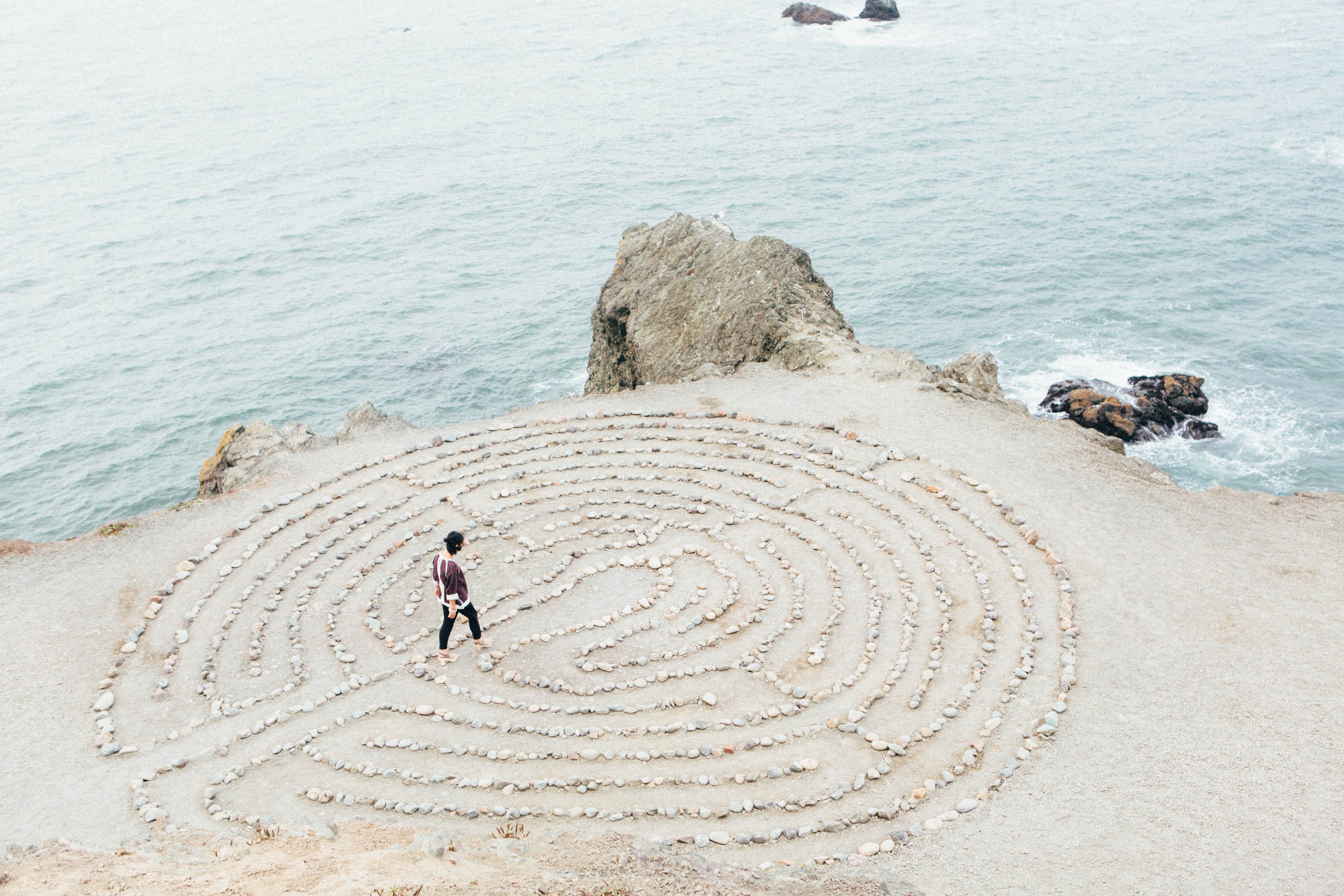
Do anything long enough and you’ll produce a labyrinth.  I started this blog back in 2009 with the idea of perhaps continuing in the biblical studies/ancient Near East (actually west Asia) studies, where I began.  I always knew this would be a place to talk about books and movies and sometimes current events.  Often it would address American religion because, well, it’s so bizarre.  Over the years the blog has ranged pretty widely.  My interests are fairly diverse and I tend to get obsessed with a subject for some time and then move on.  I suspect that’s one reason followers are few.  People want the same thing—should I dedicate the site to horror films, religion, or social justice?  The weather?  Instead, it’s what catches my interest at the moment.  Thus the labyrinth.

On the rare occasion when someone actually comments on an older post this blog (there was a healthy chain about the Highgate Vampire some years back), I often have to ask myself, “Did I write about that?” “What did I say about it?”   The human mind is a labyrinth.  And life is too short to ever stop learning.  Even if it means that few will be interested in what you’re doing.  The few who’ve known me a long time and read this blog (I know who you are), might be surprised at the horror themes that have become pronounced.  These were, however, part of my childhood.  When I tried to get away from them, they pursued me.  Monsters are like that, of course.  They like to hide in labyrinths.

But labyrinths are contemplative spaces.  Contemporary spirituality has rediscovered labyrinths.  You walk them in intentional thought.  In the moment.  We might be able to forget for some time that the original labyrinth was built to house the minotaur.  And without Ariadne Theseus would’ve never survived.  When he left her on Naxos his actions spoke louder, much louder than his fight with the monster.  Labyrinths make you forget where you are.  One saved Danny Torrance.  And perhaps one might save your soul.  Those who make enough chairs, or write enough books, or design enough skyscrapers leave labyrinths behind.  Manhattan may be a grid, but it’s a labyrinth nevertheless.  It seems to be a part of every story.  The thing about labyrinths is that they have no one goal.  There is no single answer to this mystery.  When you begin making one you may not even realize it.  Until you stop to contemplate it.

Photo by Ashley Batz on Unsplash

A Bird’s Life

Among the early signs of spring are birds.  Cold and silent, winter mornings have their own form of beauty, but hearing the birds is cause for hope.  The bird world looks cheerful and peaceable but it is a competitive and often harsh place.  My office window looks out onto a porch roof and a stand of trees across the street.  Electric wires constitute a part of the scene as well, giving birds plenty of places to alight and negotiate their bird business.  Like humans, birds are vulnerable, particularly when they’re young.  While teaching at Nashotah House, walking home from chapel one morning after a thunderstorm, I found a baby bird, not yet fully fledged, dying on the sidewalk.  I glanced up and couldn’t see any nests.  I’m not much of climber anyway.  Not knowing what to do I scooped it up and took it home where I could put it in a box.

I didn’t have an early class that day so I called a wildlife rescue center.  Being the days before the internet took over, this was a matter of looking it up in the yellow pages.  We piled the family in the car and drove it down.  They’d told me to keep it warm and try to comfort it.  My daughter held it.  Once we got there they said they weren’t sure if it would survive.  It was weak and chilled, but they would do what they could to revive it.  For several days we all worried about that hatchling.  I thought it might’ve been a finch because of the beak, but otherwise we knew little about it.  Several weeks later the rescue center called.  Our rescue was ready to be released—did we want to do it?

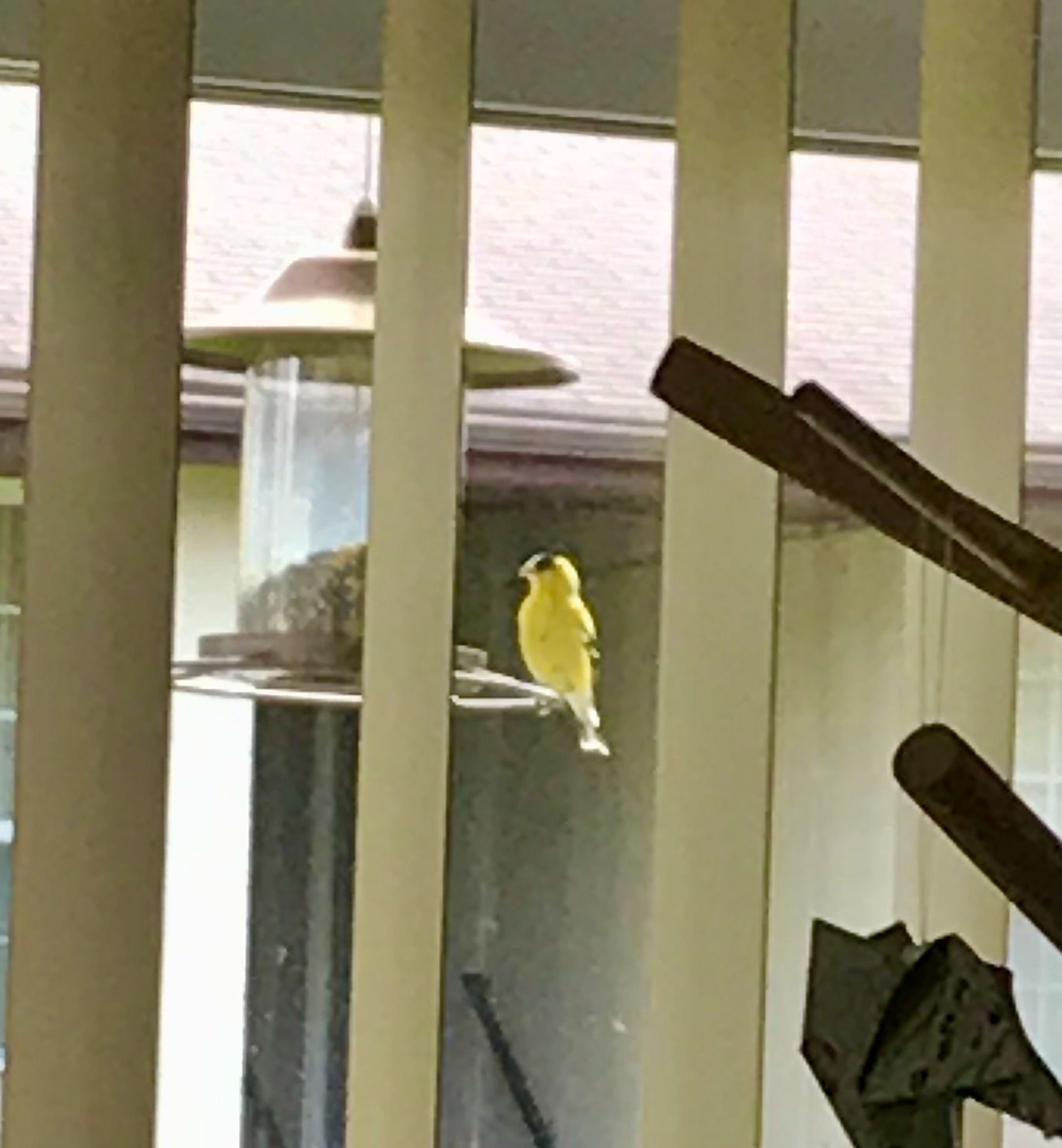
They handed us a brown grocery bag that weighed next to nothing.  “Open it when you’re outside near where you found it,” they said.  Back on campus we opened the bag and our foundling flew off so fast we could barely see it.  Adult birds, confident and socialized, seem more sure of themselves.  They perch out in the open even though hawks scan the area, and even the occasional eagle.  They go about their bird business with a confidence I sometimes envy.  They don’t worry about a 925.  They know what nature’s about.  They may have survived a near-fatal childhood.  They may have pushed siblings out of the nest to have thrived.  They peck and flap at each other in their efforts to mate.  And, above all, they carry spring on their wings.


Shadows of Childhood

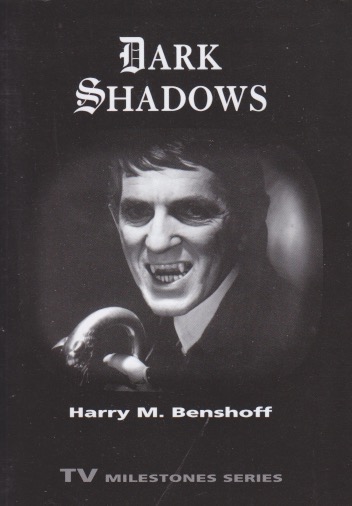
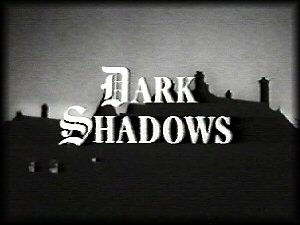
While it may not seem to fit my current re-fascination, I’m not really a “fan”personality.  My interests are far too diverse.  Since I’ve been thinking about Dark Shadows a lot lately I decided to do some reading on it.  There’s a genre of nonfiction that involves small format, short introductions to various media.  I’ve read a few of the Devil’s Advocates series about horror movies and I recently discovered the similar TV Milestones series about, well, TV.  They have a volume on Dark Shadows by Harry M. Benshoff, and I knew it would help scratch my current itch.  You see, I wasn’t really a devoted fan of the show—I watched it after school like a lot of kids did in the late sixties and into the early seventies.  I read a few of the novels.  I never attended any conferences (they exist) and never wrote any fan fiction.  I think my level of engagement was different.

Nevertheless, this is an informative little book.  I found out that there’s even more to the phenomenon than I already knew I didn’t know.  I never really followed the whole plot line.  I didn’t realize just how complex the story is.  Perhaps on some level I knew the series was culturally significant.  As a child I didn’t know much about the wider culture.  We were working class poor, how was I to find out about such things?  For me, Dark Shadows was a kind of escapism, I suppose.  A fantasy that met a need, not a plot to be unraveled.  I wasn’t aware of how sophisticated, if cheap, it was.

By the time I got to college and started to meet different people, it was a moment that had passed.  I really didn’t think much about Dark Shadows again until after my own gothic tragedy of Nashotah House.  During the days of my career malfunction I rediscovered my childhood, perhaps looking for something better.  I started collecting and reading the novels again, and if I’m honest, were it not so expensive I’d consider watching the original series again.  Like all things nostalgic, I know my Rosebud will never be today what it was back then.  My reading sense wasn’t developed enough to see what might’ve been going on behind the scenes.  Benshoff does a good job of bringing much of that to the light.  I’ll likely read more on the series as time goes on, but I now have a better framework for looking at this particular milestone.  Not, however, as a fanatic.


Sexist Instructions

The thing about cars is there’s so much that can go wrong.  And when it does it’s costly to fix it.  Yet, even when working from home, we need them.  We have two, both quite old in car years.  One is approaching twenty.  We bought it new—the first time we’d ever been able to achieve such a feat.  This was one of the new Beetles and it has had never-ending electronic issues.  Warning lights come on that seem to be a malfunction of the warning lights—if you ever wanted an existential situation that’s one right there.  How do you know if there’s something wrong with your engine or is it just something wrong with the warning light?  A worrisome one came on just as winter was settling in and we didn’t need to drive it much before inspection time and we let it sit a little too long.

The battery, naturally, died.  We have an old, seldom used battery jump-starter, which, in the cold of the garage, also died.  We’ve been trying to find time on the weekend when both my wife and I are free (rare) so that I can drive it a ways to try to recharge the battery, but with someone home who can rescue me if I get stuck.  So it was we came to buy a new jump-starter.  These new ones are the size of a cell phone on steroids—much smaller than the old kind.  Ours came from China, I’m guessing, and the instructions are sexist.  They imply that women can use this because it’s easy.  Part of the description reads “It can be used more than 30 times, giving you peace of mind, no matter where you are, if the battery runs out, you can start it without looking for women who are not smart at night in an empty parking lot, such as a college campus or forget you.”  I don’t know about you, but this sounds like the writer had a past he’s trying to deal with.

I was indeed once left stranded because of a dead car battery.  It’s a story I’m saving for my autobiography, if I ever write one, but let me assure you all the people responsible for that abandonment were men.  Men with a car that wouldn’t start while I sat in the middle of nowhere in the dark.  (This was before cell phones.)  I didn’t want to buy a sexist device.  Both men and women have batteries die and I’m always a little scared to jump-start a car.  At least now we can get the Beetle rolling again and drive toward a future where women are rightfully seen as equal to men.  And I hope that instruction writer has found some help, perhaps with therapy.


The Campus Library

Perhaps it’s an odd kind of nostalgia.  Many people can’t wait to be done with school and get on with “life.” Some of us remain fixated at the learning stage and society used to shuffle us into colleges and universities where we could be safely ignored.  One of the refrains in the very long song that is this blog has been the lack of a university library.  Although I’ve tried to get to know the academics in the Lehigh Valley really only one has made an effort to befriend me and when I was asking him about library access he actually did something about it.  Such acts of kindness are rare and require a kind of thinking that takes into account the circumstances of the academically othered.  I’ll be forever grateful.

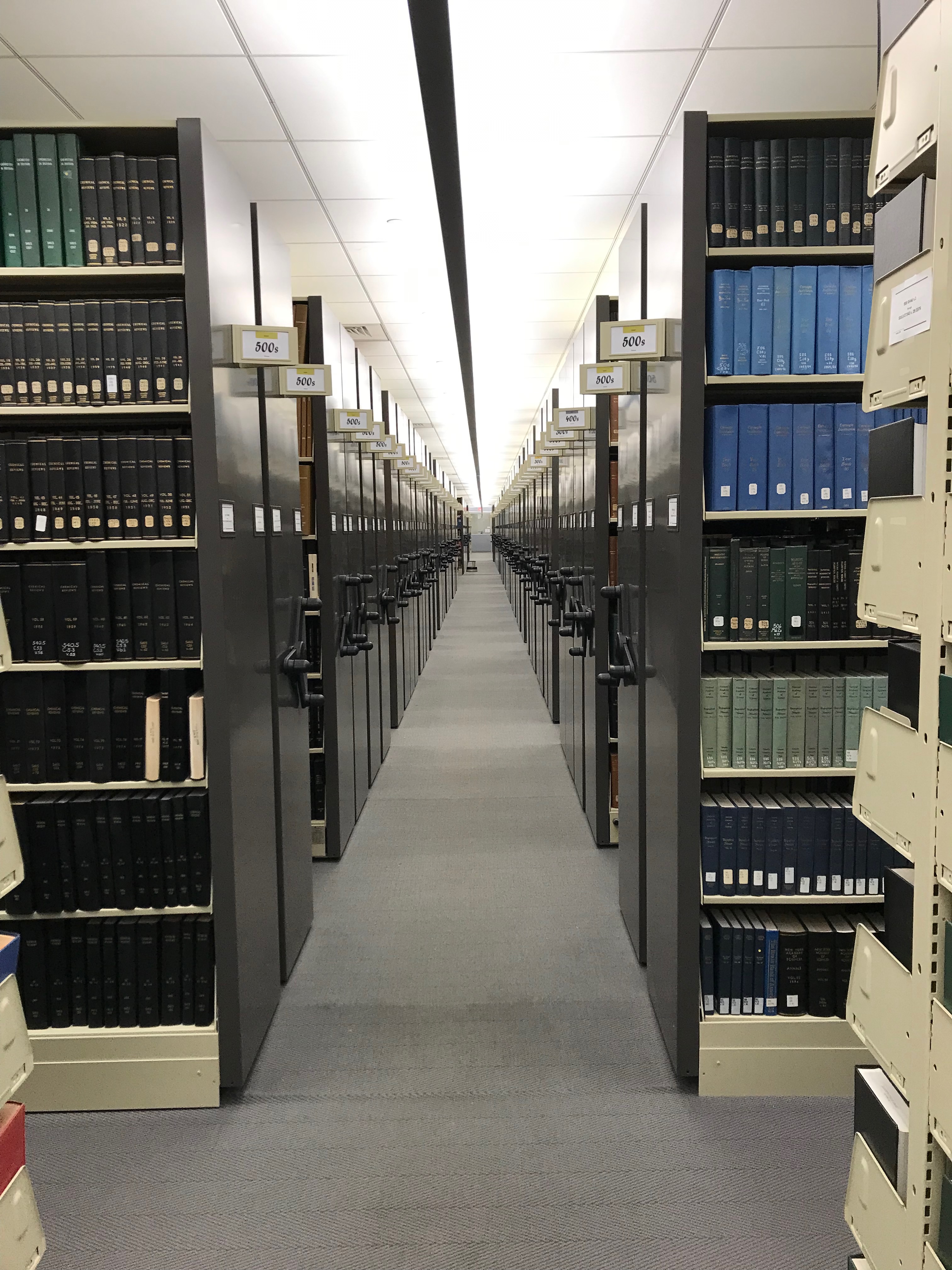
It’s been a long time since I’ve been in a college or university library.  Many are protective and/or restrictive, as if knowledge is only for those academically employed.  I had to look up a couple of references for an article I was writing.  My colleague checked with his institution and yes, I was welcome to come in and use their collection.  The night before going to campus I had a series of nightmares of various librarians barring my attempt to get to the books.  I’d been trying to get there (in real life) for weeks.  Between family work schedules, the occasional weekend blizzard, and the library being closed for spring break, it ended up taking about six weeks to find the time to drive there, negotiate parking, and look up the references.

Everyone has a place they belong.  Mine has unwaveringly been the college campus.  It is home to me, even if it doesn’t recognize me.  I’d almost forgotten the feeling of being let loose in the stacks.  It was a Saturday morning and there was almost nobody else there.  As early as Grove City College I cherished the feeling of spending time in the library.  Few other students were hanging out there, but those of us who belong on campuses know that being surrounded by books is the only place that will ever feel like home.  Having looked up my references I wished that I had more to do.  I’d been to both the Dewey and the Library of Congress sections and, being a weekend, I had much else to do.  Stepping back out onto campus I was filled once again with a poignant nostalgia.  Getting to where you know you belong is a lengthy journey.


Spring Holidays

March and April, despite having their holidays, tend to be months of pretty solid capitalistic work.  Congress may take its April recess and universities have their spring break, but the working stiffs just keep going.  I’ve worked for a couple of British companies and they have a dilemma in the Human Resources department.  Britain has a lot more days off per year than American business practice does.  The dilemma?  How to tell your colonials that the head offices will be closed around Easter when those of the New World will remain open.  You see, very few American companies recognize what some Christians call Holy Week as a time for anything other than work.  Back in the days when I was still trying to work myself into the Episcopal priesthood, I had to ask my manager for Good Friday off and permission was only reluctantly given.

The two major Christian holidays of Christmas and Easter are vastly different in their public expression.  Despite the outlook of Scrooge, most companies consider Christmas a holiday, even to the point of giving you a Friday or Monday off if it falls on a weekend.  A present, as it were.  Easter, on the other hand, reliably falls on a Sunday.  Viewed in isolation there’s no need to give people any days off.  Since I was a teen, however, I took Maundy Thursday and Good Friday seriously.  You were, even in the Methodist church, encouraged to spend the latter in church, especially around the middle of the day.  If at all possible, it should be raining.  It wasn’t a day off for rest and relaxation, but for contemplating sin and its costs (hardly conducive to capitalism).

Universities, however, have tended to shift spring break to St. Patrick’s Day so as to get the damage of drunken students off campus.  Indeed, Purim, the Jewish spring holiday, also advocates drinking until Haman and Mordecai become indistinguishable when spoken.  Sort of like Hamilton, it was the holiday that saved the book of Esther, just like the Broadway show preserved the ten-dollar bill.  When it comes to business, however, Americans are all business.  (Did someone  mention a ten-dollar bill?!)  Money, as MC reminds us, makes the vorld go round.  And holidays are viewed as constant interruptions.  The typical work calendar will have no holidays from President’s Day in February until Memorial Day at the end of May.  It’s typically the longest stretch without a paid holiday.  Just when the weather’s starting to get nicer.  But let’s not forget, money is fully in charge here, for where your treasure is, there your heart shall be also.


Raven about this Book

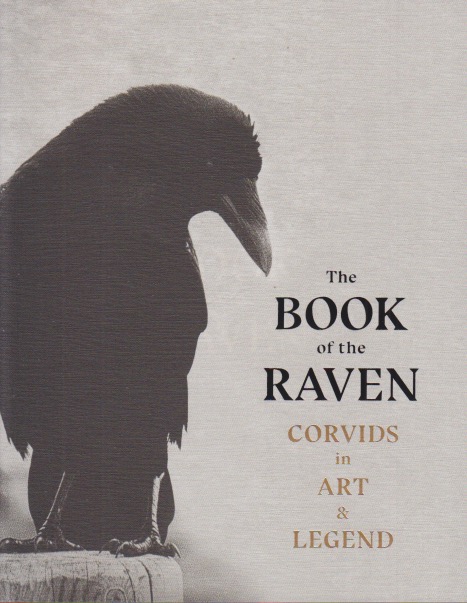
Some books are meant to be looked at.  Being busy most of the time, even on weekends, I’m guilty of not enjoying art enough.  The Book of the Raven: Corvids in Art and Legend is a work of art.  In it Caroline Roberts and Angus Hyland have compiled paintings, photographs, and prints that feature ravens, crows, magpies, and jays, interspersed with facts, poems, excerpts, and bits of lore.  It’s not a comprehensive book, nor is it intended to be.  It is, however, a deeply moving book for a certain kind of person.  It was an accidental find in a visit to The Book & Puppet Company in Easton.  When we’re in town we like to support the independent bookstores.  (I was saddened to discover that Delaware River Books, one of the two used bookstores in town, had recently closed.)

Corvids are, on a scale, about as intelligent as we are.  They think, solve problems, make tools, and recognize human faces.  They remember acts of kindness and reciprocate.  They recognize their dead and they also play.  They’re very much like us.  The book includes, of course, Poe’s “The Raven,” but also other poems that draw inspiration from these smart, magnificent birds.  The artwork is arresting.  One of the great sins of modern life is its busyness that robs us of the time for appreciating art.  And reading.  Learning how to thrive in a world that has become purely about profit and ownership.  Art is intended to be shared.  An artist produces so that others might see.  A author writes so that others might read.  And corvids exist to bring wonder into our lives.

I find the strident call of jays comforting.  I often hear them even on my winter walks.  There are murders of crows in the neighborhood from time to time.  They gather on roofs and in the trees across the street.  Recently I spied a large black bird while on my daily constitutional.  It had left a tree full of crows and was flying straight down the path toward me.  As it flew overhead I had a good look at its tail in flight—one of the best ways to tell a raven from a crow.  It was indeed a raven, and even common ravens are rare in this area.  We live on the edge of their habitat.   I was honored by its momentary attention.  I wished I had more time, perhaps to follow that magnificent corvid and to learn from it.  Instead, I will ponder The Book of the Raven with wonder.


Son of Comfort

So the other day I was reading a book proposal for another editor.  It mentioned the mononymous Barnabas.  Since the proposal wasn’t from a biblical scholar I wondered if this was the same Barnabas mentioned in Acts as the sometime traveling companion to Paul of Tarsus.  As I began to type this into the search box—and this was on my work computer, which, I hope, doesn’t know my reading habits—it autosuggested Barnabas Collins as the first choice.  One of the frustrating things about devices these days is they know who we are and sometimes we want an objective opinion from the internet.  Is Barnabas Collins as popular as I like to think he is, or is it just a case of my work computer anticipating my off-hour whims?  I sincerely hope it’s the former.

The proposal, by the way, was surprisingly referencing Paul’s Barnabas.  I wasn’t aware that he was much known outside biblical studies circles.  Probably about as rarely as Barnabas Collins is known in such circles.  There has been a resurgence of interest in Dark Shadows that has taken place in spite of, or perhaps partially because of, Tim Burton’s movie.  The film made many missteps, but people from my generation who’d never heard of him before began to reference Barnabas Collins to me.  I’ve never been a soap opera watcher.  It does seem that many college students used to go through such a phase—again, it’s the story that draws them in—but that never really happened to me.  I’d grown up watching Dark Shadows, however, and I’ve been tempted a time or two to start watching the series again.  With well over a thousand episodes, some of which are lost, it would be a major time commitment.  And besides, it wouldn’t recapture those grade-school afternoons watching what my mom thought was a waste of time.

The name Barnabas probably means something like “son of comfort.” I don’t know how the somewhat desperate writers, trying to gain back a slipping audience, came up with the name.  Their introduction of the supernatural into the daily drama did, however, transform television.  The usual demographic for the show was a bit older than me when it was being aired and I didn’t by any stretch see the entire series.  I did see enough, however, to forever frame my view of vampires.  There have been efforts, including one current, to reboot the series on television.  It may eventually rise again from its coffin. Featuring, of course, Barnabas.