Black Swain

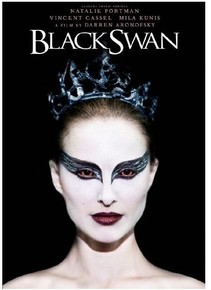
In a somewhat rare move, I watched a film that was released less than five years ago this weekend. Black Swan is difficult to classify since it crosses so many genres with relative ease and it left me strangely reflective. Although called a “thriller,” the frenetic pacing and sense of outside menace of most thrillers is lacking. Black Swan includes some horror elements, but little in the film defies rational explanation if Nina Sayers is really going insane. The underlying story, however, is something that every religion would recognize—the need for transformation. Even before John Calvin dreamed up the laughable doctrine of total depravity (and for any Presbyterian readers, I was predestined to write that), all religions have at their heart the concept that people need to change. Sometimes the transformation is subtle and gentle, at other times fiery and dramatic. If you end life the same way you began it, you are a religious failure. This premise lies behind every movie where a character transforms into something else, be it werewolf, Mr. Hyde, Mrs. Doubtfire, or a wereswan.

Our perceptions of who we are cause us considerable introspection. Nina Sayers is a timid yet ambitious girl, living with her mother yet wanting to be the seductive black swan. She really doesn’t comprehend what she is wanting to become, but she knows that it must be better than what she presently is. Again, the parallels with religion are striking. I have known good people who’ve transformed into black swans under the influence of noble religions such as Christianity and its monotheistic siblings. People who have become intolerant and judgmental, insisting that their way is the only possible correct way. In the mirror they see a white swan, but the audience sees the black one.

Black Swan is heavily symbolic and provocatively mythic. Like any honest account of life it refuses to provide any definitive answers. Since each experience we undergo leaves its mark upon us, we cannot help but transform. Volition, however, can lead us toward paradise or perdition and any ambiguous place in between. Is the Nina Sayers dying on stage the greatest sinner of all, or a saint who has been beatified as fully human? The answer to the riddle the film stubbornly refuses to relinquish. So it is with life. We will transform over its course. Religion will declare whether it is good or bad, right or wrong. At the end of the script, however, we are both the white and the black swan.
Hope for the Flowers

Resurrection can become a tired trope, but it is the stuff of both religion and science. Last week it was reported that Russian scientists revivified a plant frozen on the tundra 30,000 years ago. Quite apart from proving that Siberia was already in place 24,000 years before God got around to creating the planet, this amazing feat teaches us lessons about life and its resilience, and also of the possibilities beyond the great pale. The scientists regrew the plant without the benefit of using seeds, making this a kind of virgin birth of the florid kind. Using plant versions of stem cells (the kind of science forbidden in the USA: “won’t somebody think of the seedlings!”), the dead plant was rejuvenated and is alive and healthy in a world vastly different than the mammoth-infested, frosty plains of northern Russia where it first saw daylight. Still, that environment was less hostile to science than the Religious Right. This resurrection shows that we don’t need miracles to bring inert matter back from the dead. No doubt there are covert Creationists trying to sneak into Russia with travel-sized bottles of Roundup in their carry-on bags.

Science has brought us to incredible places by its continued, self-critical process. Religion, preferring no critique, has given us characters like Rush Limbaugh, Glenn Beck, and Rick Santorum. And a really big book. Looking at the religious scene today it is difficult to believe that religions began as exercises in optimism—the world could be better if only we’d progress. Regress now characterizes the religion in the public eye—men (occasionally women) claiming that things were better when we were tilting with mammoths than they are now with people advocating equality for people of other genders, races, and sexual orientations. Science represents our progress, and the vocal theocrats claim we should be going backward. Back to when men were measured by the size of their spears.

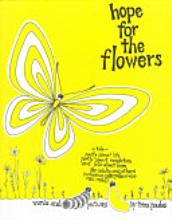
Back when I was a teenager I discovered the book Hope for the Flowers, by Trina Paulus. Not really a graphic novel, and not really a children’s book, it tells the story of two caterpillars with the courage to reject the constant, heartless climbing so often required by the world. In the end, of course, they become butterflies. The story has a religious subtext, naturally, but it was for a religion that believed butterflies should be valued rather than smashed between the pages of a heavy Bible. Butterflies bring the pollen that allows flowers to thrive. We live in a world where butterflies have become soft and defenseless while religion is aggressive and offensive. Science has shown us the way to bring flowers back from the grave, but old-time religion is waiting in the shadows with its rusty scythe.


Profit Priest and the King

As a staid academic with the internal passion of a Bruce Springsteen or Lou Reed, if I had any musical ability I’d have opted for a life on the stage. As I struggle to forge my passion into words on paper (or in electrons) I consider those who should have perhaps considered other options as well. I have never really been a fan of Christian Rock. The whole rebelliousness and sense of sticking it to the man lose something when you bow your head in submission the Sunday after and ask some ordained member of the establishment for forgiveness. It tastes even worse than Light Rock, the talc of real rock world. Nevertheless, there have emerged in the strange history of Christian Rock a few true innovators who have not only challenged Christian convention, but who have taken music itself in new directions.

Norman's Iconic Look

Norman\’s Iconic Look

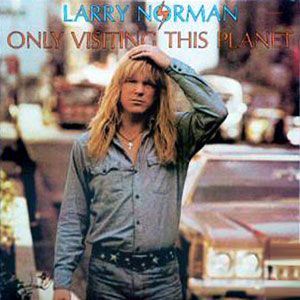
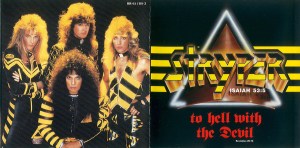
My favorite among the innovators has always been Larry Norman. The original “Jesus Freak,” Norman appeared on the San Francisco rock scene only to be rebuffed by Christian artists who held Pat Boone as a kind of icon, and rejected by mainstream rock as being some kind of Christian fanatic (he was). Norman’s music, however, was a strange blend of tradition and visionary foresight. When they saw there was money to be made, along came other artists trying hard to match Norman’s footsteps, most of them falling far short. Daniel Amos, probably one of the most unusual Christian groups ever, proved themselves way ahead of the curve, and if they’d had a good publicist might have made secular airtime based on their forays into retro and punk before they were trendy. Stryper, a hair band of heavy metal stripe, threw Bibles into the crowd at concerts.

Yes, they're dudes, Father forgive them!

Yes, they\’re dudes, Father forgive them!

They later disbanded because of their concern with hypocrisy, something a true rock-n-roller would never feel compelled to do. Meanwhile, mainstream Christian Rock rendered itself into treacle that would easily wash off with a shower of pure intentions.

Rock addresses head-on those gritty, messy, and even dangerous elements of human life — our emotions. After some 4000-plus years of organized religion we still have difficulty addressing or accounting for their insatiable pull on us. Staring out over the lecture theater and toting up the number of ipods present, I would have to guess that music still meets a need that religion might have missed.

A few years back, in a wave of nostalgia, I went to see Larry Norman in concert. I’d grown beyond any real enjoyment in the genre, but here was a true innovator, one whose name very few Christian Rock aficionados even recognized. The concert was held at a Christian college where there were maybe forty folding chairs arrayed in a depressingly small space in the gym. Norman could still rock, his acoustic guitar and spare band providing all the support he needed. I even had the chance to chat with him after the show; no security guards need apply. As I later reflected, perhaps this is what my life would have been like if I’d had some ability and taken to the stage instead of rocking the glamorous adjunct professor gig. While having my eardrums taken through their paces at an Alice Cooper concert last fall along with a bunch of other fat, balding, wannabe rebels I experienced a kind of secular epiphany. Alice had converted to Christianity some years back — seen chumming with none other than Pat Boone himself — and his music at the time suffered. Now that he’s returned to his macabre fantasy world, his ability to churn out compelling music has returned. Outside, away from the cannabis fumes and liquor-enhanced air, although I didn’t personally participate in their consumption, for a moment it felt like I’d lived my rebellious dream.


Anat, Kali and the Violent Femmes

“Women and men,” runs the chorus of the They Might Be Giants song of that same title, “… everywhere they go love will grow.” Women and men. Thus it has always been. The Sumerians seem to have speculated, on a broken tablet concerning the creation of humanity, that some six varieties of gender had been ordained by the gods. This story reminds me of just how dicey gender definition can be. Despite the howls of protestation from man + woman = marriage crowd, the concept of gender is actually complex and diverse. The lowly slime mold of the genus Physarum has a combination of multiple sex-controling genes mixed with several different types of sex-cells, leading to a bewildering 500 different sexes. You’ve got to wonder what the Physarum bar-scene is like! So the whole women and men combination seems a little tame by comparison.

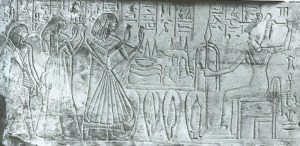
The ancients did, however, toy with standard gender role concepts. The Ugaritic goddess Anat, sometimes described as a “tomboy,” was perceived as a literal femme fatale, joining her in the company of Ishtar and Kali as warrior women-goddesses. She was a proto-Amazon (before they laid aside their male-bashing and set up a very lucrative web-site). Anat wears the severed heads and hands of slain warriors and stomps in blood-puddles, laughing all the while. Where did the ancients derive such violent feminine images as Anat and Kali? Some sociologists suggest that these myths were intended to solidify gender roles, although they seem to confuse the violent male with the shy and retiring female stereotypes. Perhaps the Ugaritians and other ancient folk knew deep down that gender is only a vague attempt to classify something that is really far more complex than it seems. Just when gender is nailed down you find yourself in a bloody mess as Anat swats at you again and again.

Anat ready to smite Egyptians who just don't understand the Violent Femmes

Anat ready to smite Egyptians who just don\’t understand the Violent Femmes

Nashotah is not far from Milwaukee where the folk-punk, genre-defining band the Violent Femmes started out. In college many of my overtly Christian radical friends told tales of how the Violent Femmes were a closet Christian rock group, based on some of the religious themes in Gordon Gano’s lyrics. When I listen to their CDs, however, I hear the same old angst that has plagued humankind for ages — what does a guy have to do to impress a girl (the same question may be reversed, turned upside-down, or dis-and-re-articulated, depending on whether you are female, male, or slime mold). At Ugarit they would have understood the Violent Femmes — listen to “to the kill” and tell me it’s not so! I would suggest that Gordon and the guys aren’t as much closet Christians as closet Ugaritians, struggling with the Anats and other violent femmes of their world and trying to make sense of it all.


The Dark Light

Like many Americans, last year I was fascinated by Christopher Nolan’s gripping and gritty Batman film, The Dark Knight. Admittedly, the untimely death of Heath Ledger added to the poignancy of the film, but his unfaltering performance as the Joker was no laughing matter. I was transfixed. Not only was this vision of the character previously immortalized by Cesar Romero and Jack Nicholson a sea-change, it was also an epiphany.

In attempting to understand ancient religion, you can’t get far without having to address priests and prophets. Priests appear at the dawn of civilization, the establishment’s religious functionaries. They had (have) a vested interest in the continuation of the reigning power structures. Priests make their living from a population settled enough to tax. Prophets, however, have a far older pedigree. Israel recognized prophets as we all know from the Hebrew Bible, but other ancient religions also had their prophets too. Prophets were religious functionaries from outside the established power structures — they challenged conventions, demanded radical changes, and caused migraines for more than one priest. The prophet seems to have evolved from the shaman.

Not a Joker! An Amazonian shaman

Not a Joker! An Amazonian shaman

The shaman was what anthropologist call a “liminal character,” an outsider. They simply do not play by society’s rules, but they are feared and respected by society. The shaman may see or hear things that are beyond the perception of your average citizen. The shaman may be dangerous. This is what I saw in Heath Ledger’s Joker. A disturbing character who challenges and yet at the same time brings focus and resolution to a fractured society. A wounded healer. He represents a fossil, a shaman in twenty-first century Gotham. The other Jokers, Romero and Nicholson, didn’t quite attain this level of spiritual catharsis. Although I knew Batman was the good-guy, the Joker, laughing when he should have been crying, the agent of chaos, was the most religious character in the movie. He was the Dark Light to Batman’s Dark Knight.


Graven Images

Religious statuary was ubiquitous among the ancients. That which the eye can perceive is so much better for focusing the attention than the amorphous unknown. In methods reminiscent of my days of toy soldiers and action figures (not dolls!), priests of Near Eastern temples would dress their statues, offer them refreshment, and take them for a public parade to reassure the populace that they were still being cared for. Citizens didn’t regularly “go to church” or synagogue, the temple was the work-space of the priesthood. So regularly scheduled public jaunts with the goods, or gods, on the shoulders helped to reassure ancient folk that all was well. If a city-state or nation lost in battle, their statuary was taken captive by the victors — what could you do if they’d taken your gods? Even in the Bible the ark is taken as spoils of war by the Philistines. They knew the drill.

Monotheism and aniconic religion go hand-in-glove. If there is only one god, then multiple images only cause confusion. Although the ancients were more sophisticated than we often suppose — they knew the statues were not the actual gods, thank you Second Isaiah — when monotheism took hold in emergent Judaism, the divine images had to go. Early Christianity shared this antipathy for graven images, for a while. Soon paintings in catacombs represented Jesus and an industry in religious art was about to boom. If the image represents a holy person, the image itself must be holy. It’s a hard idea to shake.

In the paper the other day, an article explained how a couple of people stole Jesus in Hackensack, New Jersey. “2 charged in theft of Jesus” the headline read (in part). Our would-be godnappers tried to sell a 200-pound bronze statue of Jesus for scrap metal. Even with advanced training in religious studies, and a skepticism borne of too many years as a professional religionist, I wouldn’t try to scrap Jesus for cash. The image might have some ark-of-the-covenant-type power! Once while jogging through a church parking lot, a pagan bug flew into my mouth.

An ethical morass

An ethical morass

This posed a serious ethical dilemma — if I swallowed it my decade-long clean record as a vegetarian went down the drain; on the other hand, expectoration on consecrated ground surely posed a potentially personal apocalypse with The Landlord! As I forcefully released the confused (and slightly gooey) insect back into nature, I had a moment of Kierkegaardian aangst that the job I’d recently applied for would now go to someone else. I had defiled a church parking lot with a little spittle! Religious symbols indeed have power. It takes a brave thief to sell a stolen divinity into the hands of sinners. And I didn’t get that job after all.


Religious Origins

There’s no question that religion is a distinctly human phenomenon. Although the concept of “religion” is used to lump together all kinds of belief and praxis systems around the world, it is now an aspect of every culture ever studied. When on an interview recently for a religion teaching post, I pondered whether to be entirely frank or to play it safe: should I discuss the origins of religion or a more conventional topic? (I went the safe route and did not get the job, if anyone wonders if there might be a moral to all this…)

For several years now I have been exploring whether it is possible to trace religion back to the animal coinhabitants of our planet. While my musings have taken me from singing Neanderthals to mourning penguins, it has become quite clear that at least the most basic levels of religion also exist in what is often termed “lower” life forms. My epiphany began while watching David Attenborough discussing the purpose of birdsong. Religion and music have been nearly inseparable in human experience (if one can overlook some extremist reformers). My thoughts turned to elephants who “bury” their dead with branches and penguins who clearly mourn the loss of their young — watch March of the Penguins if you doubt it! Death and religion have walked the long and disjointed journey of humankind hand in bony hand. By the time we get to primates we find baboons stopping to watch the rising sun (an act the ancient Egyptians supposed to be solar worship) and chimpanzees raging against thunderstorms as if they despise Baal even more than Hosea. A bonobo was recently documented as uttering the word “yes” to a keeper’s question, officially making her more articulate than some clergy I’ve known. Even today there are churches that still call their leaders Primates! For those who doubt that animals are capable of worship I would suggest the true acid test — purchase a dog.

The C of E's newest primate?

The C of E\’s newest primate?

We guard far too jealously that which makes us better than our animal companions. As observation and research progress and that line in the speciological sand grows ever more effaced, I wonder why religion might not have its roots in our very animal nature. While reading a book on biblical flora recently, I pondered if a even larger step back might be taken. Consider the heliotropes, for indeed they do toil and spin.


Bible Guy

Strange bedfellows?

Strange bedfellows?

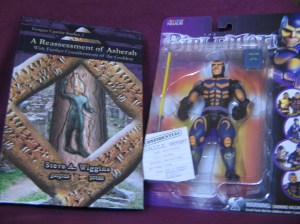
In my Nashotah House teaching days, standing sentinel in my office was the 8″ action figure of Bibleman. I first discovered Bibleman while surreptitiously skulking through a Christian bookstore seeking Veggie Tales paraphernalia (don’t ask). I quickly rounded the corner in the kids’ section and there he was, encased in purple-and-yellow body armor, packing a Bible and laser sword and a packet sealed forever from the curious eyes of Biblegirl. I knew then and there that I had to have him. I sent my wife back to buy him later.

Naturally curious, I found a website and learned that an entire culture and money-making industry had grown around this ultimate good guy. He had a sidekick called Cypher (sold separately), and arch-enemies with such names as Primordious Drool and Wacky Protestor. I marveled at the missed opportunity here — they could have called them Text Critic and Doctor Mentary Hypothesis! Fascinated, I watched video clips of Bibleman’s deft swordplay in a scene that brought back the poignant death scene in Robocop. This was certainly not the old-fashioned fundamentalism I’d grown up with. But even with a Schwarzenegger build and phallic light sword, this guy was KJV and GOP all the way.

Shortly after taking another surreal job, this time at Gorgias Press, my wife showed me a related article in the newspaper. Wal-Mart announced that it was planning to carry Bible action figures, manufactured by One2believe. The line includes Noah, Moses, Daniel, Goliath, and of course, Jesus. I must admit that I was let down that David and Bathsheba figures did not seem to be available. Jesus does have a pull-string, however, for quoting his favorite Bible verses. Even as I throw the paper aside in vexation, I know that come fall, when I find my way back into a classroom at Rutgers, Bibleman will likely have a new companion on my office shelf, and it may be the son of the Big Guy himself.