Things about Pennsylvania

When I used to pick up my daughter from college in upstate New York, we’d sometimes come up with ways to keep the conversation going for the three-to-four hours it’d take us to drive home.  One trip we thought of doing a parody of “Sweet Home Alabama,” namely, “Sweet Home Pennsylvania” (same number of syllables).  We sketched out some verses by her asking me what Pennsylvania was known for.  Now, I was born and reared in this state, but my ancestral states are more properly New York, North and South Carolina, and the District of Columbia.  Still, I feel at home in PA, but I’ve always felt it was one of those places that people think “Philadelphia” then call it quits.  Pittsburgh used to be much larger than it now is; it was the 16th largest city in the country when I was in high school.  So, the Liberty Bell/Declaration of Independence, and steel (also in Bethlehem), were obvious gimmes.  But what else?

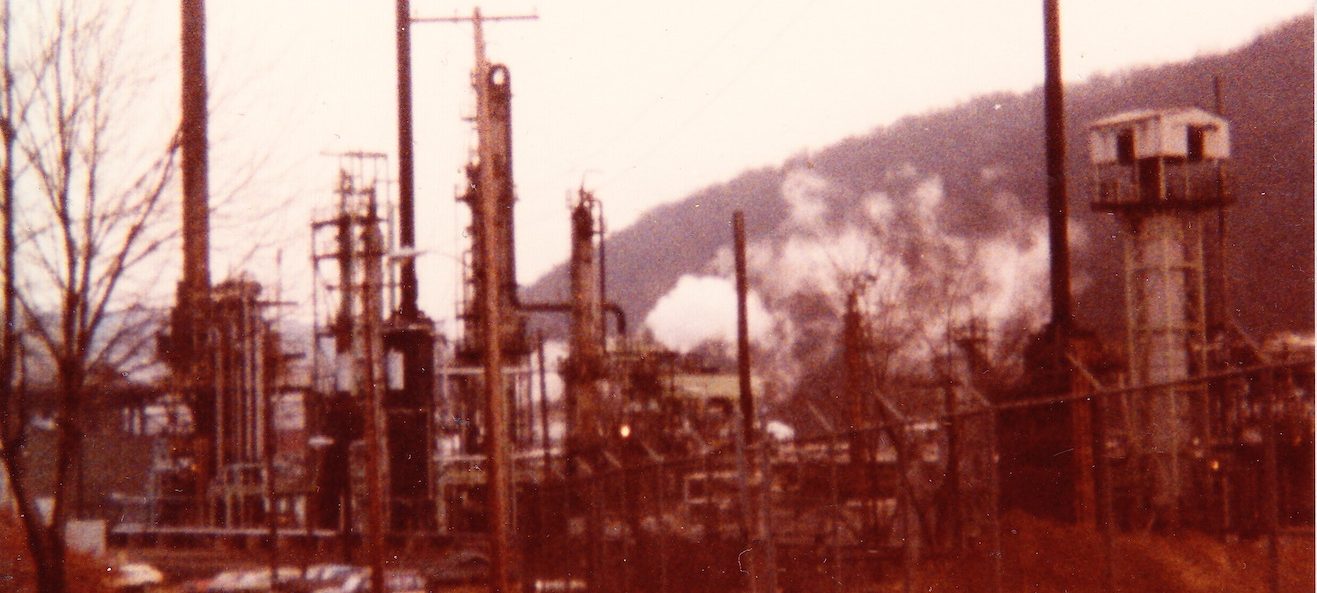
The Amish.  Yes, they have colonies in many states, but Pennsylvania has Lancaster County.  The state may not be widely known for this, but it is the second biggest supplier of fossil fuels in the lower 48, right after Texas.  Indeed, the petroleum industry was born right here, not far from where I grew up.  So we have the Mennonite farmers and heavy industry.  It is really quite a varied state, my home.  We have lakefront property on Erie, and a tiny part of the Atlantic in Philly.  We have a good dose of the Appalachian Mountains.  Lots of forests, even some with elk.  We were the second state, after Delaware, and Pennsylvania is properly a commonwealth instead of a state.  Our European founding was by means of the Quakers.  Pennsylvania housed several Indian tribes.  It was known for religious tolerance.  Daniel Boone was born here.  So was Stephen Foster.  And two US Presidents.  Not bad.  Not bad at all.

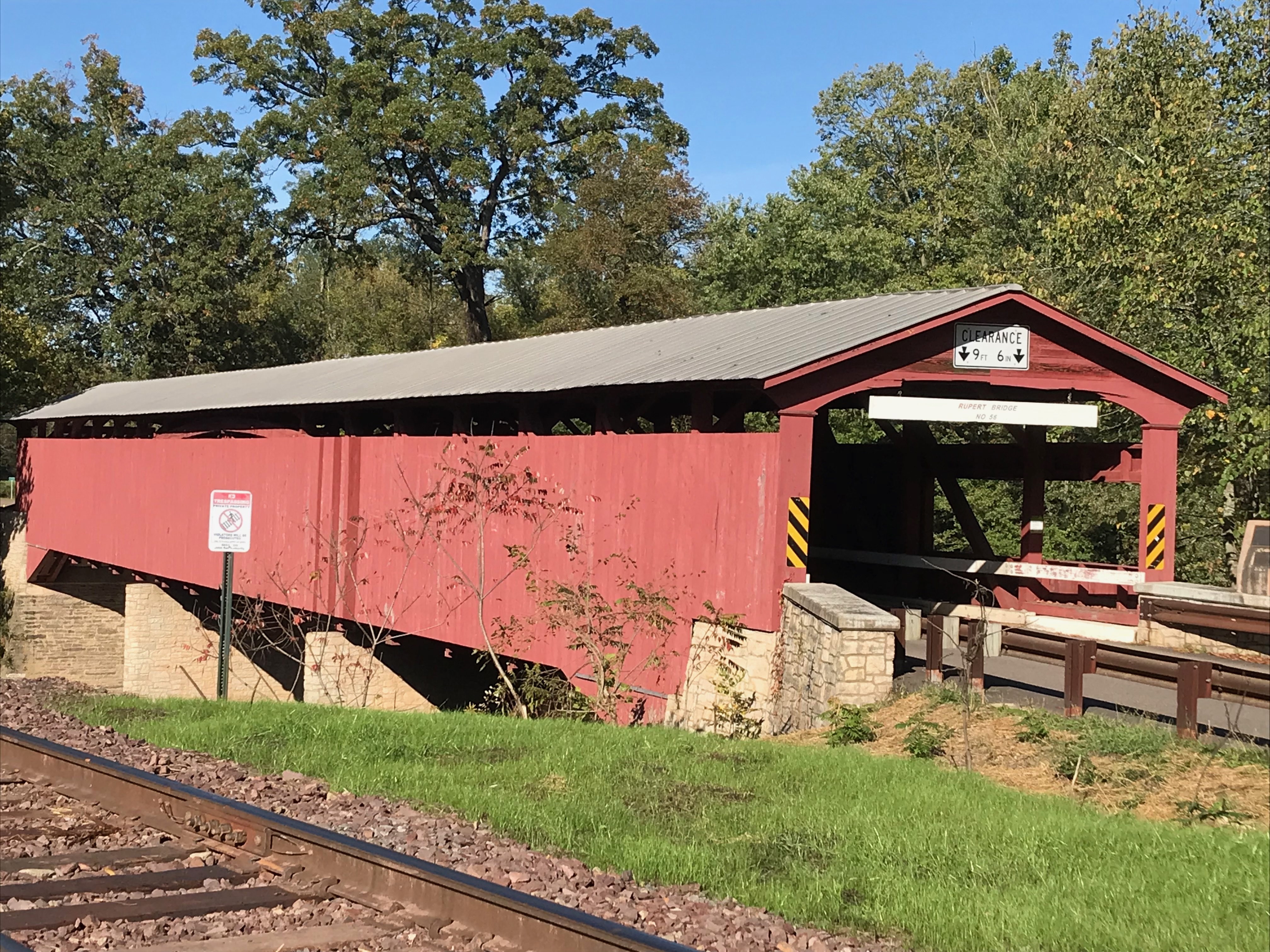
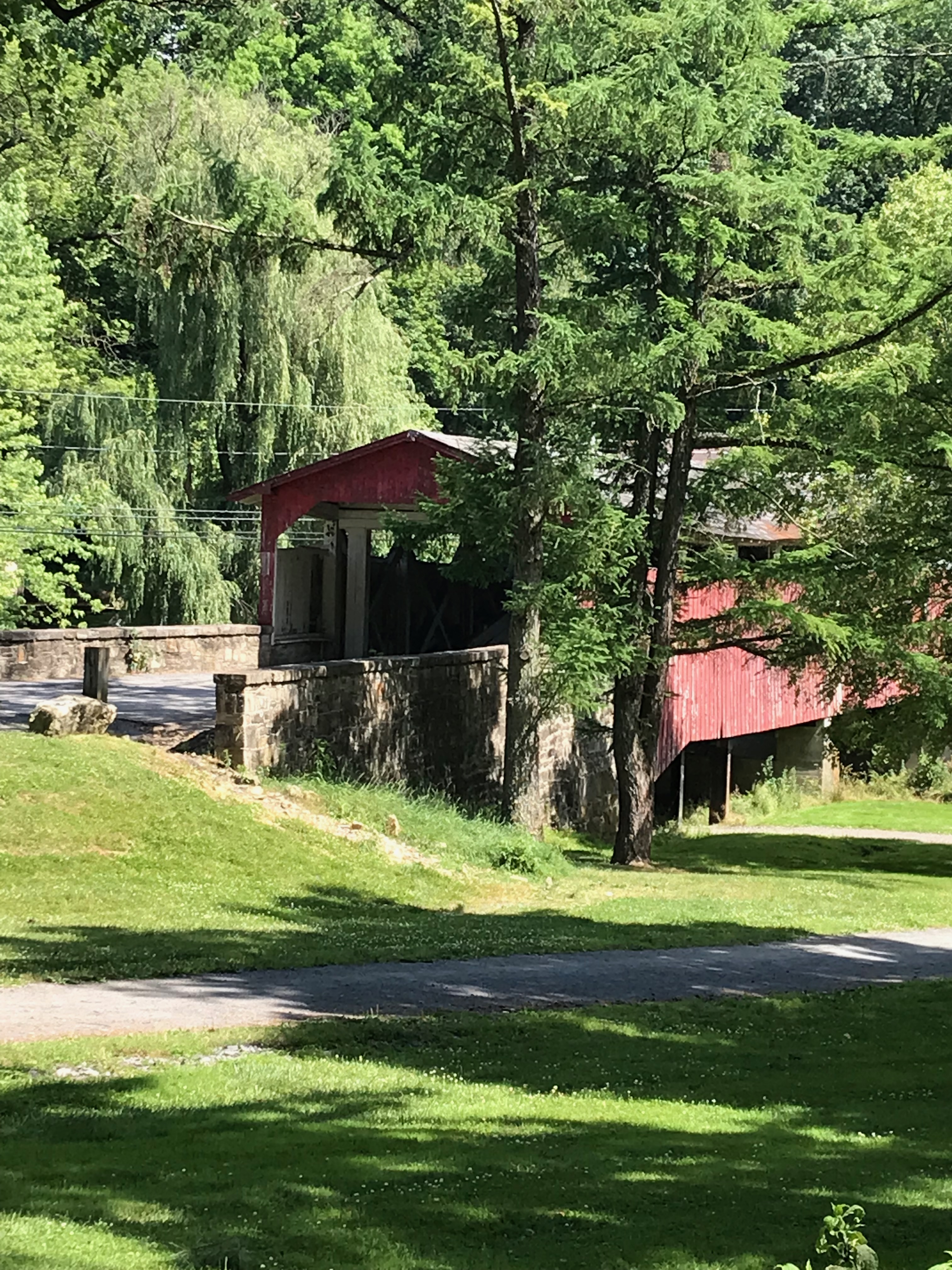
Only recently did I learn that the covered bridge was invented in Pennsylvania and that we have more still standing than any other state.  The current count is about 209.  Now, there’s a romance to covered bridges.  During this summer of staycations, we started to visit some.  You can’t go shopping there, and you can’t stay overnight or even order food, but these old-timey structures are a draw all on their own.  Part of the fascination is that we don’t build them anymore.  We have cars to keep the rain off and our vehicles don’t get spooked by the sight of open water or slip unduly on wooden planks.  Back when we were trying to make up alternatives to Alabama’s charms, I wasn’t aware we had so many covered bridges.  I saw a few growing up, of course, but paid little attention.  Now they’re another part of what makes this a sweet home.


A Touch of Poe

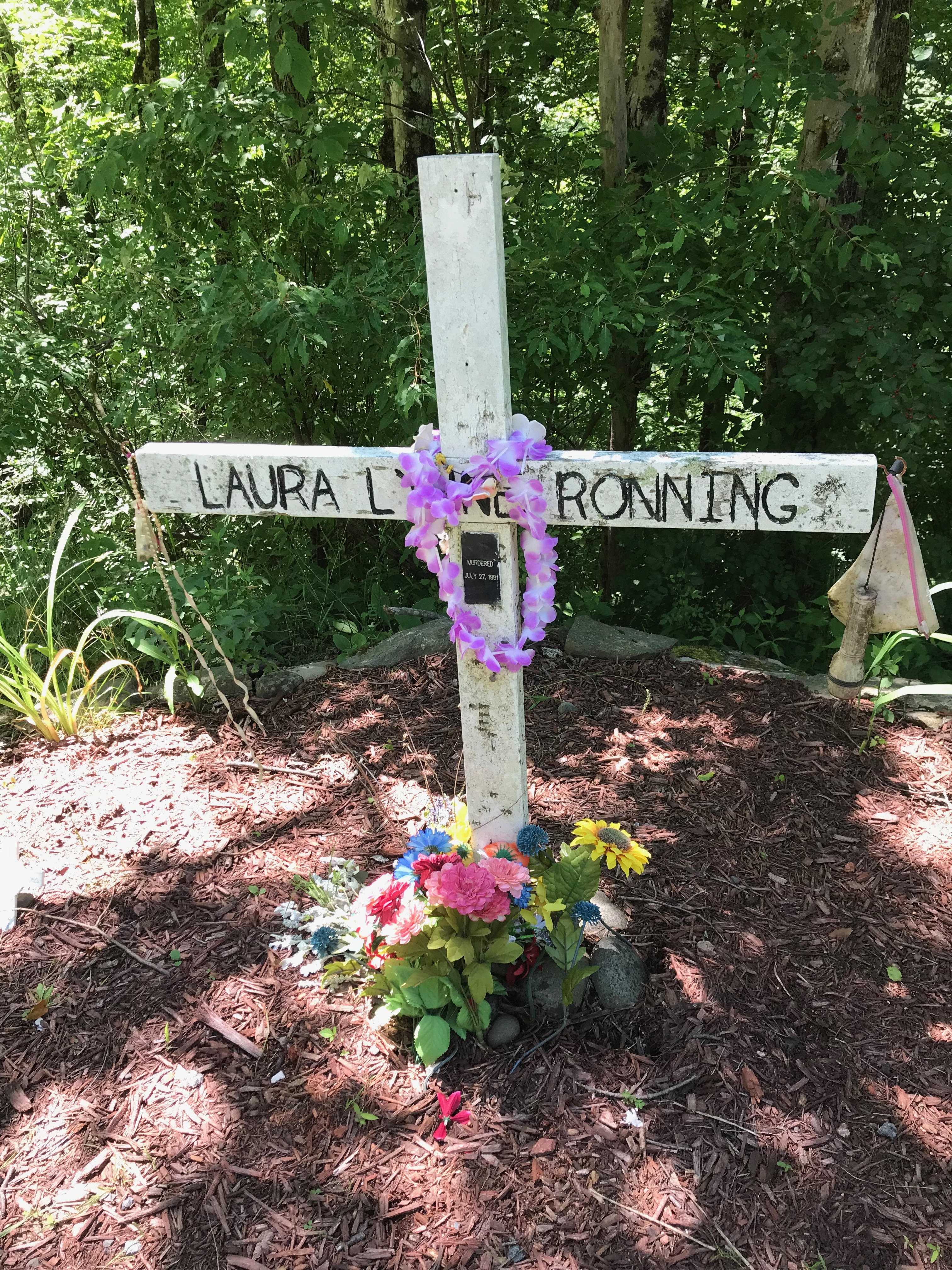
One of the more somber aspects of our staycation in the Poconos occurred on our search for Tanners Falls.  It brought to mind a story by Edgar Allan Poe.  Here’s why:  Tanners Falls is not well signposted.  This is quite a rural area.  We were following our GPS when the signal died right after she said “arrived.”  The problem was there were no signs and although we tried a couple of tick-trails that ended up at a stream, nothing like a cataract was anywhere near.  Finally we realized that a tiny sign reading “Tanners Falls” was posted on a “Road Closed” barricade.  Since to road was actually open to the Falls, my wife brought the car but I wanted the exercise and went by foot. Walking along the way I found a roadside shrine and noted that in addition to the name Laura Lynne Ronning was a small plaque stating “Murdered July 27, 1991.”  Now, there was no signal out here, and I was alone on the road.  And I had no desire to bring my family down so I kept it to myself.

At the hotel (with wifi) I learned that Laura Ronning’s murder was never solved.  She was a counselor at a nearby camp walking to the waterfall on her day off when she was raped and shot and thrown into the woods.  The only suspect was a mentally unstable man (now since deceased) and the evidence was all circumstantial.  He was, unlike some known criminals of high profile, found not guilty.  The Ronning family moved out of the state, not wanting to be where someone could literally get away with murdering an innocent young woman.  This is where Poe came in.  His “The Mystery of Marie Rogêt” is the first detective fiction based on a true case—Poe was often, figuratively, first on the scene.  The murder of Mary Cecilia Rogers, whose body was found in the Hudson, was never solved.  Poe tried his hand at the by then famous unsolved case.

The murder of a young woman was a tragedy that Poe felt deeply, I suspect.  I took some academic flak for including Poe’s observation that the death of a beautiful woman was the most poetic theme in Nightmares with the Bible.  I realize this is a masculinist thing to write, but the fact is that some men feel very protective of women.  I know there’s a psychological name for this, but it isn’t chauvinism.  It is a sense of sadness, for what Goethe tried to express by writing “Girls we love for what they are; young men for what they promise to be.”  On staycations I try to look for literary angles, even when they are, from time to time, sad.


Sweet Tooth

Often our luxuries come at someone else’s cost.  I personally don’t have much of a sweet tooth, but I do enjoy dark chocolate once in a while.  (Milk chocolate tends not to be vegan.)  My wife had discovered Moka Origins chocolate at a local health food store and then learned that their location is in the Poconos, just outside Honesdale.  We visited their facility, small but growing.  We learned how they’re committed to fair trade and sustainability.  And they’re gaining a reputation in a world where scale is everything and as scale increases quality declines.  We all know that to be true but we still support the big guys.  The visit to Moka Origins made me reflect, once again, how we prefer low quality and cheapness to something that’s really well made but costs more.  It’s one of the realities of our economic system.

There is a small but thriving vinyl market for sound recordings—the quality is better, and many are willing to work with the inconvenience of turntables and discs than simply streaming whatever.  I took a lesson from Moka.  The cofounder told us that large companies come into places like Africa paying low prices to buy in bulk.  They buy improperly fermented cacao beans in huge lots which probably includes some beans that aren’t even cacao.  Mixing these large lots with enough additives, they can get away with the chocolate taste most people have grown accustomed to having.  If, on the other hand, you scale down and pay attention to what you’re doing you can even tell the country of origin of chocolate by its taste.  Since Moka sells only single origin chocolate, we were given samples from three different African countries and they were obviously very different, even to someone without a sweet tooth.

Economic scale often drives quality down.  In a company where the owner comes in on a Saturday morning to personally lead a tour and where the chocolate bars they sell are literally wrapped by hand, you know you’re not in Hershey.  Or at Nestlé.  Or any other corporate candy giant.  These companies make astronomical profits.  The owners of Moka Origins spend time in Africa, developing fair trade farms to grow quality produce.  I also learned that cacao pods are technically fruits.  It’s a food.  We tend to overlook that in our quick snack culture.  This was a very educational half hour, even for someone not inclined to food tourism.  So, if you happen to be in northeast Pennsylvania on a Saturday morning, stop in to try chocolate that’s really a food.  Or you can order it online.  Just know that you’ll pay for fair pricing for those who are doing the work to raise and process cacao beans as they should be treated.  You can tell the difference fairness makes.

Oh, and I should mention they also do coffee…


Following Irving

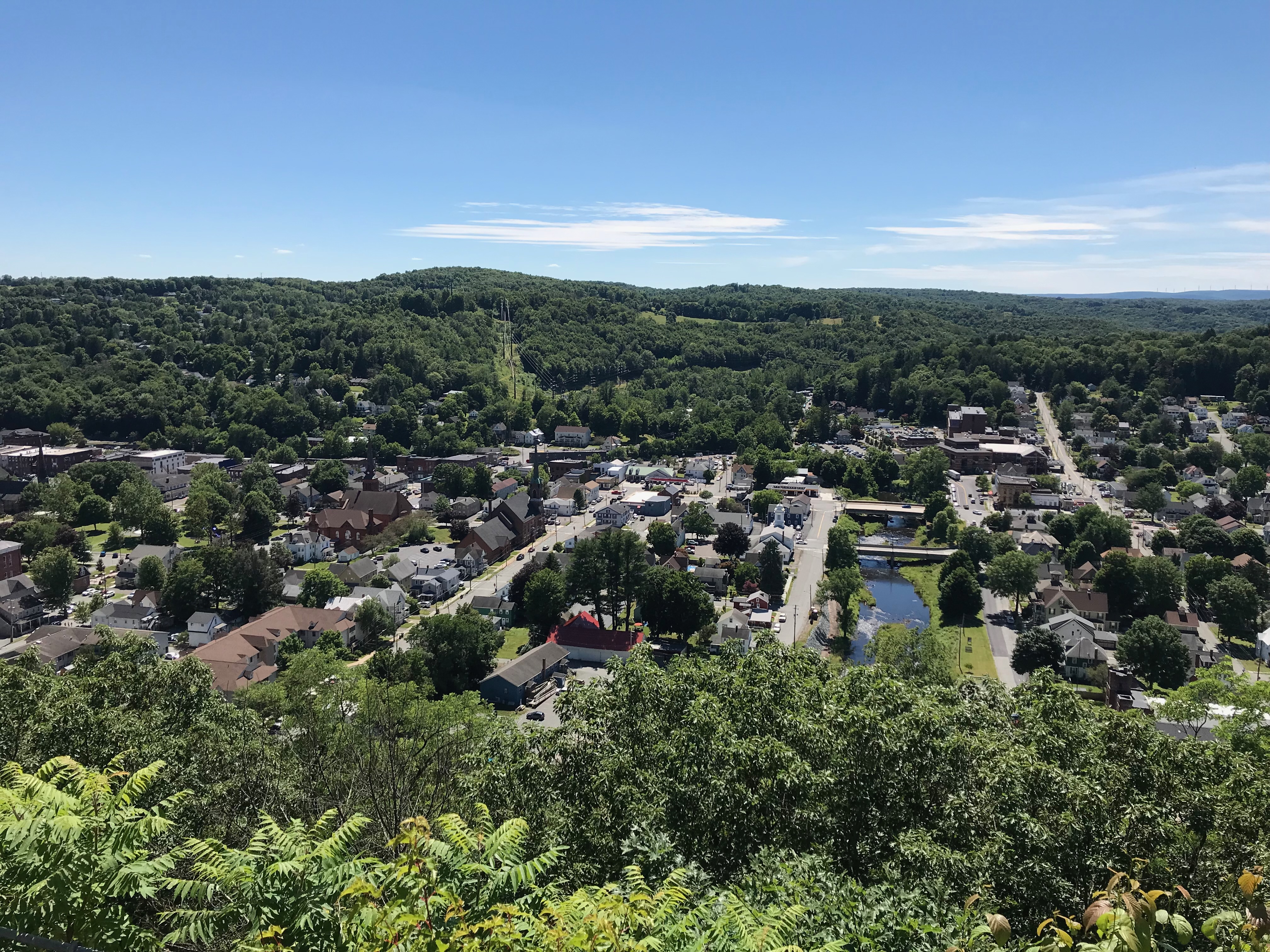
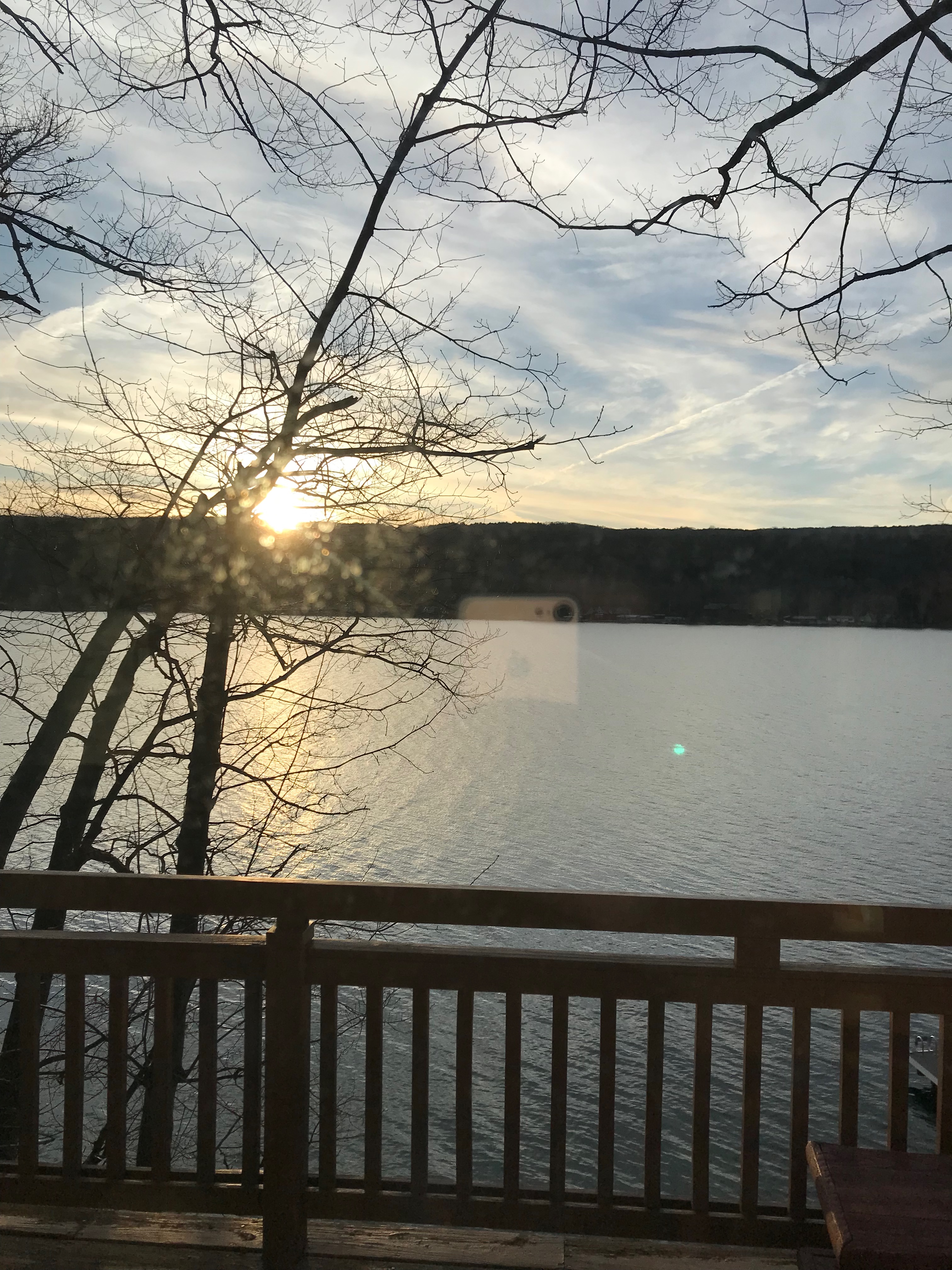
I’m growing fond of staycations.  Maybe it’s because I’ve become such a creature of habit that major disruptions seem daunting, but I still like a change of scenery with my family.  We settled on the Poconos because of, well, a chocolate factory.  More on that anon.  In any case, said location was near Honesdale, Pennsylvania.  Before setting out we learned that Honesdale is one of those quaint downtowns that has made it an island of culture in a sea of red, if you get my drift.  While researching things to do we learned about Irving’s Cliff.  This is an overlook of the town from a bluff atop one of the many hills.  What really caught my attention is that the Irving was none other than Washington Irving, the author of “The Legend of Sleepy Hollow.”  This cliff was a view he enjoyed, so it was named after him.

The view from Irving’s Cliff

Honesdale is a small town.  Less than 5,000 people call it home.  Growing up in western Pennsylvania I heard about more affluent people going to “the Poconos” out east.  It was a “romantic” getaway for some lucky high schoolers while the rest of us had to use our imagination regarding what such a place might be like.  Of course, living just south of the Poconos now we’ve driven through them many times, but we never stopped to linger here.  As I tried to commune with the spirit of Irving on his cliff, it occurred to me that he had been a world traveler.  Nipping across the border from his native New York to Pennsylvania must’ve been no big deal.  Still, he wrote incessantly and the locals obviously appreciated that a famous writer had tarried in their town.  Standing here, I knew the view he took in was quite different.  The hills would’ve been here, but a much smaller town and, above all, no cars.

My forthcoming book on Sleepy Hollow will have a thing or two to say about Washington Irving, of course.  It’d be a fool’s errand to try to follow in his footsteps, just as it would be to try the same for his namesake George Washington.  Besides, I was born in a western Pennsylvania town visited by our first president.  Although we couldn’t afford accommodation in Honesdale itself (it is a quaint town), we checked into our hotel knowing that “Washington Irving slept here.”  And when you’ve spent a few years writing a book about a guy’s work, well, a staycation to a place where he had one is worthy of comment.


Personal History

Being an historian by disposition has its own rewards.  I relate to the chronicling monks of the Middle Ages and their eagerness to record things.  On a much smaller scale, I try to keep track of what has passed in my own small life.  As we all know, most days consist of a stunning sameness, particularly if you work 9-2-5.  Although your soul is evolving, capitalism’s cookie-cutter ensures a kind of ennui that vacation time, and travel in particular, breaks.  Travel is expensive, however.  A luxury item.  It’s also an education.  My wife and I began our life together overseas, living three years in Scotland.  We traveled as much as grad students could afford.  Gainfully employed in the United States, we made regular summer trips to Idaho, and often shorter trips closer to home in Wisconsin.

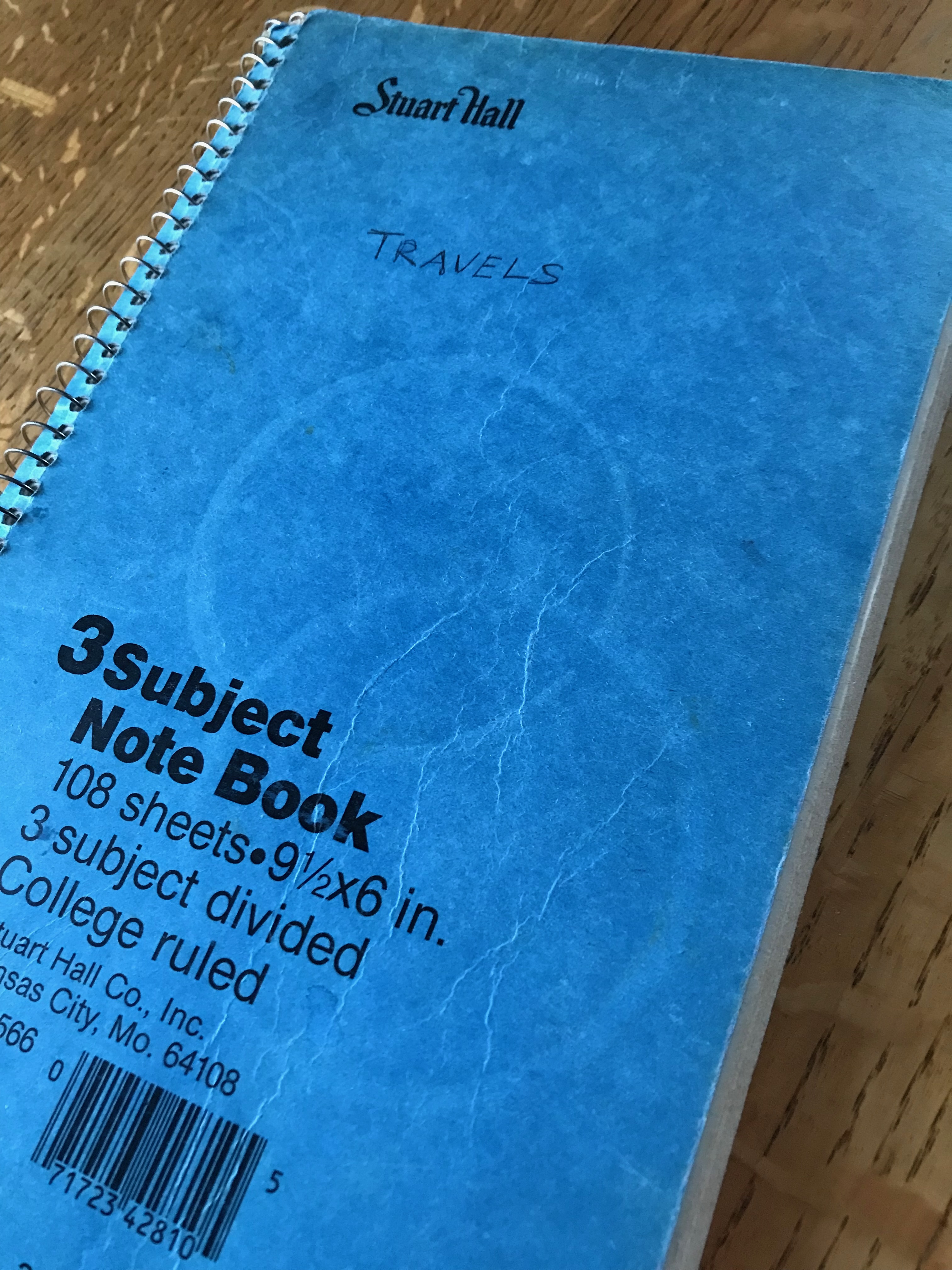
We repurposed an old, spiral bound, three-subject notebook to record our adventures.  It spanned twenty-two years.  When we moved to our house in 2018, this notebook was lost.  (A similar thing happened with an Historic Scotland booklet where we’d inscribed all the dates of properties visited.  It vanished somewhere in central Illinois in 1992.)  Recently, looking for an empty three-ring binder for my wife to use, I unexpectedly came across our old three-subject notebook.  The relief—maybe even ecstasy—it released was something only an historian could appreciate.  Here were the dates, times, and places that I thought had been lost from my life.  In that morass of years after Nashotah House my mind had gone into a kind of twilight of half-remembered forays to bring light to this harsh 9-2-5 world.  I carried the notebook around with me for days, not wanting to lose sight of it.

Those of us who write need to record things.  I’ve never been able to afford to be a world traveler.  The company’s dime sent me to the United Kingdom a few times, but overseas after Scotland has been more a reverie than a reality.  But now, at least, I could remember our domestic trips.  The notebook included ventures I’d forgotten.  You see, when you get back from a trip you have to begin the 9-2-5 the very next day, particularly if your company isn’t fond of holidays.  (This explains why I write so much about them.)  Pleasant memories get lost in the mundane cookie-cutter problems of everyday life.  And yet I could now face them with that rare joy known to historians.  I had a notebook next to me, ready for transcribing.  It was going to be a good day.


Eclipsing the Earth

We need a new word.  One for the high an eclipse brings you.  I’m finding myself having difficulty coming down from it.  It seems so mundane to have to do something as ordinary as work after experiencing totality.  We only caught very brief glimpses of the moon over the sun through small breaks in the clouds, but we did get to experience totality.  How do you come down from that?  The next day we had a several-hour drive to get home so that we could all be at work yesterday morning.  What could be more ordinary than that?  And the eclipse happened on a Monday, not an unusual day for a holiday.  Only it wasn’t a holiday, but a “vacation day.”  So was the driving day.  At my age you need a day to recover from all the driving too.

Several friends have posted their amazing photos and videos of the event, so I’ve decided to “release” my video to the wild.  A few explanatory notes: we were in upstate New York, on the shore of Lake Ontario.  It was chilly and we were bundled up (we came home to 80-degree temperatures, which was quite a shock).  The video may seem to have not much happening for the first couple of minutes and this is because electronic cameras tend to “even out” the light (film photography is much better).  When I started filming this it was getting dusky but the phone smilingly tried to make it look like normal daylight.  That wasn’t the case.  (Be patient—drama takes time to build!)

It occurred to me that many people (who had clearer skies) thought totality was all about the moon over the sun.  I take a more Buddhist approach.  The Buddha admonished not to mistake the hand pointing at the moon for the moon itself.  The real experience of an eclipse is what is going on down here on earth.  My video shows how the sun faded, and then went completely dark and back again in a matter of minutes.  My experience of this was quite a spiritual one.  If I’d been looking up I very well might have missed it all.  In other words, being in a cloudy situation, totality was an opportunity to take in what was happening on earth, in real time.  There is a lesson in this.  Life tends to deceive us into thinking the most important thing is the peripheral one.  Experiencing an eclipse is all about being, and living, on earth. 


Eclipse 2024

Eclipses.  They’re fully explainable.  Or are they?  Yesterday’s solar eclipse, with totality within driving distance of many Americans, led to an inexplicable need to see it.  April, we’re told, is the cruelest month and upstate New York is known for its “ever-changing skies.”  I admit I was skeptical.  Together with some friends we arranged to meet near the umbra, in Penn Yan, and to drive from there to totality up on Lake Ontario.  As is typical in New York, the day started out fair, with a few high clouds.  It was chilly, but this is April.  Our destination: Fair Haven Beach State Park.  The location was nice; we arrived early and found a good spot.  The clouds, however, were willful and wanted to remind us, like last week’s earthquake, that we’re not really in charge here.

As the day went on—totality for us was 3:20 p.m.—more and more people came into the park.  To its credit, with what must be a limited state budget, it absorbed many eclipse seekers without any trouble.  By 3:00 the cloud cover was heavy-ish.  Our friends had heard a sponsored eclipse speaker, however.  Totality was nothing like even 99%.  This would be of a different magnitude, even with clouds.  I remember three previous eclipses.  One in school with the pin-hole method where you really don’t see anything, one in Wisconsin after teaching one morning at Nashotah House, and the 2017 which I saw in midtown Manhattan.  None of this prepared me for totality.  Around 3:18 it started to look dusky.  We could catch glimpses (but no photos) of the crescent sun.  Within seconds it was completely dark.  It was another of those transcendent earthly things, like the earthquake three days earlier.

Perhaps I’m getting old enough to realize that you can’t really describe such feelings.  Maybe I’m getting sensible enough to understand such things are called ineffable for a reason.  All the planning, worrying, anticipating, was for this moment.  Yes, there were clouds overhead, but the park was full of cheering people.  They too had come here for something extraordinary and to my surprise I found tears in my own eyes.  I captured no photos of stunning clarity, but I had experienced something I’d heard about since childhood but had only glimpsed in the most crude of facsimiles before.  We were able to experience a kind of rebirth that comes only after night.  Conditions weren’t ideal, but are they ever?  And an encounter with the numinous always comes on its own terms.

The sun, hours before being eclipsed

Wild Moose Chase

I don’t remember the details, but I’m pretty sure we didn’t ask permission.  It was summer and a seminary friend and I were going camping in Maine.  You see, Maine has always been my favorite state.  Not only does it have dramatic cliffs over the gray north Atlantic, it’s also home to moose.  I always wanted to see a moose in the wild.  So I talked a friend into camping in Maine so we could see a moose.  He was from North Carolina and hadn’t ever seen one either—moose are limited to the very northern states in the US, those that border Canada.  Like many seminary students, I worked during the summer, but weekends were made for Maine.  We trundled up into the wooded part (the largest part) of the state, and drove up an old logging road that looked like it hadn’t been used for quite a long time, and set up a tent.  We didn’t see any moose, though.

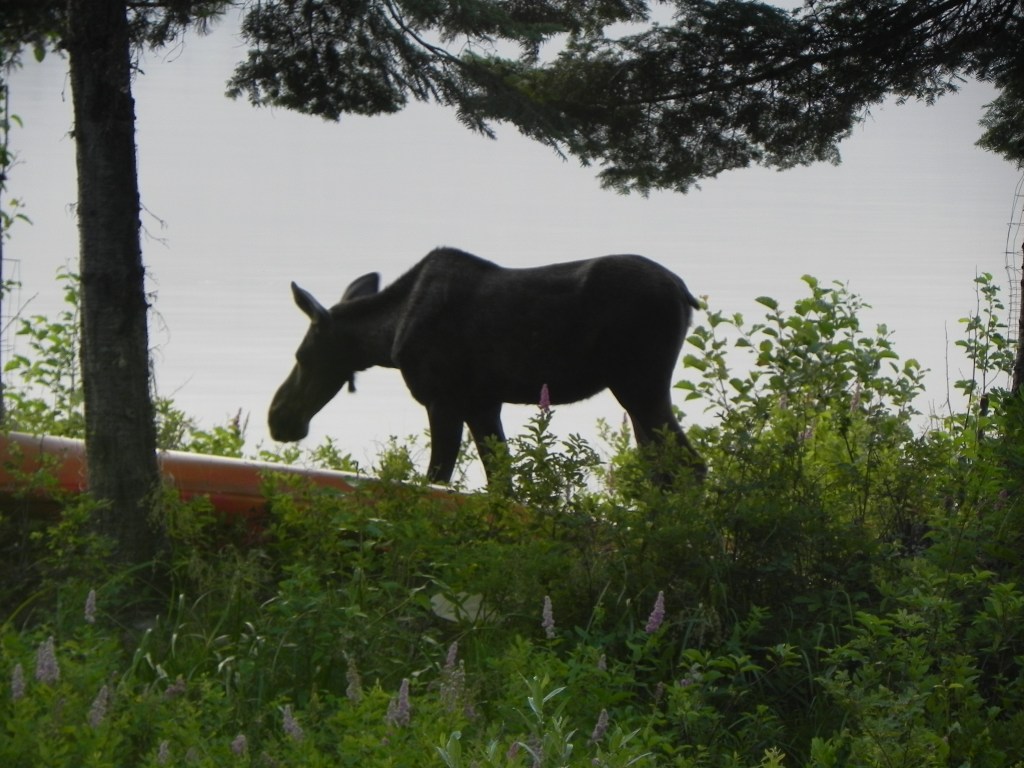
A few weeks later I was able to persuade my friend to try again.  This time we drove to Mooselookmeguntic Lake.  We stayed at a proper campground.  The very name of the place means “moose feeding place.”  We saw no moose.  The next morning we asked the park ranger if they we around that area.  “I saw two on my way home last night,” he said.  So it often is in life.  Things abundant to the locals are exotic to those from elsewhere.  I never did see a moose in Maine until my honeymoon many years later.  They are elusive creatures, large but shy, particularly around those “not from around here.”  Eventually my path crossed those of the majestic moose.  Mostly in Idaho.

An Idaho moose

What’s behind my moose obsession?  I can’t really say.  I first became consciously aware of moose as a teenager and I knew that we didn’t have them in Pennsylvania (there are still, however, a few elk left in the state).  And besides, Maine was my favorite state.  That was because of childhood reading—there was no internet, and books are amazing for the imagination.  I suppose my love of Maine with its Dark Shadows and rocky coast may have spurred my desire to witness a moose in its chosen habitat.  There are giants in the woods of Maine.  They walk silently through the night.  For those fortunate enough to live in the state, they may be common.  For some of the rest of us, at least, they are transcendent.


Old Oak Tree

Trees have much to teach us, if only we’ll pay attention.  They are fascinating plants in their own right, living longer than just about anything else.  During our years in New Jersey we made pilgrimages to two ancient trees in that state: the Basking Ridge White Oak (unfortunately cut down in 2017), and the Great Swamp Oak in Lord Stirling Park, also in Basking Ridge.  Naturally enough, then, when in Charleston last month we had to visit Angel Oak.  Our Charleston visit was not a solo venture, therefore our timing was somewhat off.  Our flight to South Carolina was delayed by about three hours, cancelling our plans for that Saturday afternoon, one of which was to see Angel Oak.  When we arrived at the oak on Sunday we discovered the venerable tree had visiting hours that started after we had an engagement on Sullivan’s Island.  We had to see it through a fence.  (In our defense, several others arrived at around that time, equally surprised to learn they couldn’t get in.)

Regardless, there’s something awe-inspiring about being next to a being four-or-five-hundred years old.  Unlike its departed cousin, the Basking Ridge White Oak, Angel Oak is of the live oak variety.  (Live oak is the rather awkward name for a type of oak tree, not necessarily a designation that the tree is alive.  People sometimes have strange ideas about naming things.)  Like many ancient things, folklore has accumulated around this tree.  Although the name derives from former estate owners, lore has it that ghosts of slaves appear at the tree in the form of angels.  Folklore has a way of saying something important in this materialistic era.  There can be something spiritual about trees.

Although we had only a few minutes outside the fence to appreciate what we were seeing on John’s Island, the experience is one that sticks.  One of the most hopeful things a person can do is plant a tree.  Back at Nashotah House I planted an apple tree that I’d grown from a seed.  I planted it the year my father died (2003) and I often wonder if it’s still there.  After buying our first house we planted a scarlet oak.  A local nursery indicated that oaks help the environment by providing the habitat for the highest number of species here in Pennsylvania.  We used A Tree to Remember after my mother’s passing to plant a memorial.  (Other trees I’ve planted have been snipped off by squirrels before they can live on their own.)  Although outside the fence, I reached up and touched some of the outer leaves of Angel Oak and connected, if only for a moment, with something great.


An EAP

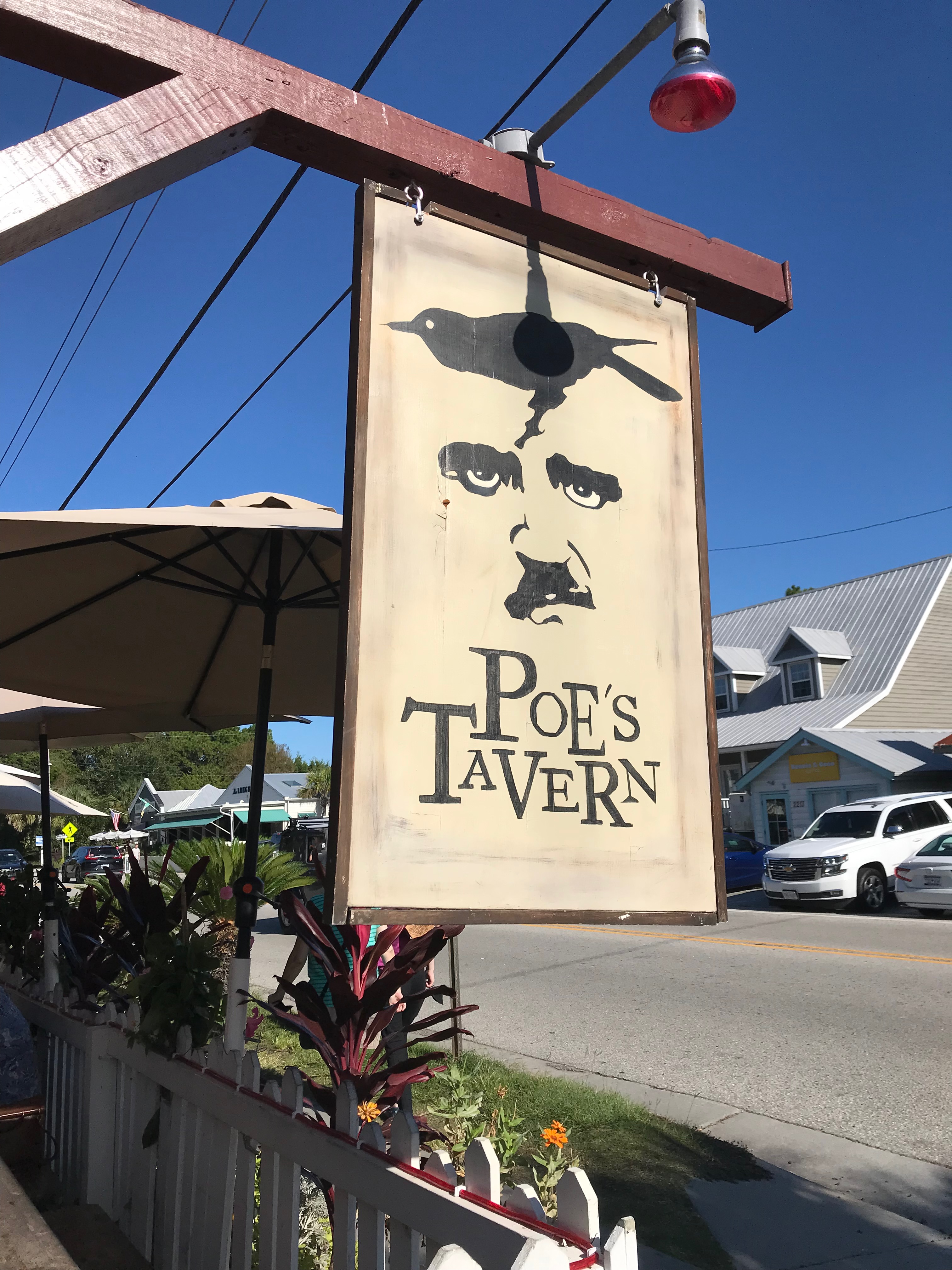
It may be superstitious, but one of the best ways to assure something else going wrong is to say, “I need something to go right just now.”  This year, since June, has been that way.  In the midst of dealing with everything, small moments of joy slip away—moments we want to hold onto during trying times.  One of the touristy things we did in Charleston—or Sullivan’s Island, more precisely—was to visit Poe’s Tavern.  We knew we had to grab a bite to eat there since Charleston is one of the many places to lay claim to America’s iconic writer.  Poe was stationed at Fort Moultrie, perhaps a mile from the modern tavern, in his short-lived military days.  His story “The Gold Bug” is set on the island, and it’s rumored “Annabel Lee” was about a girl he met in Charleston.  We’d wandered around the fort and were shortly to meet family for the gathering that drew us here.  But first we went to see Poe.

Poe himself never ate here—the establishment only dates back to 2003 (opened April 24)—but it participates in the mythology of Edgar Allan Poe.  We have followed Poe—who lived and died as a writer—along the east coast.  My family has visited his birthplace in Boston, his home in Philadelphia, his college dorm room in Charlottesville, his grave in Baltimore, and his Sullivan’s Island home at Fort Moultrie.  There are many more places to visit, and although much of this is mythology, that makes it no less real.

Poe is a controversial figure.  Both the anonymous peer reviewer and a named reviewer objected to my use of Poe in Nightmares with the Bible.  What they perhaps misunderstand is that books are deeply personal effects.  Something few understood about even my academic books is that they were intended as somewhat artistic pieces.  Holy Horror and Nightmares with the Bible are bookends, carefully crafted to go together (and both priced beyond the reach of regular readers, and not marketed at all).  Poe may well be the most recognizable American writer, largely because of an image that has taken hold.  The Poe Tavern has Poe-themed artwork throughout and it participates in that image.  It was crowded already around 4 p.m. when we stopped in for a nosh on a Sunday afternoon in October.  Such drawing power speaks to the mystique of Poe all these many years after his short life and strange death.  And of the fascination he holds for those of us who wish to write, driven by the same bug.


Final Thoughts

You feel kind of special running stop signs and red lights.  I’ve never driven in a funeral cortege before but this one is somehow taking place on an obligingly rainy October afternoon.  Although I was in that kind of emotional shock that you feel at the death of a close family member (it isn’t my first), I couldn’t help but consider all those behind the scenes who work in the death industry.  From the mortician at the Gardinier-Warren Funeral Home—where my grandmother’s funeral was also held—to the undertaker getting soaked in the chilly rain, everyone was friendly and kind.  I also reflected that watching horror movies is homework in a world where death is inevitable.  As a child I already knew about death, and although I’m not afraid to die, I’m not eager to have that particular experience just yet.

Horror movies are all about learning to cope.  Not so different from the book of Job, they’re reflections on why “the good life” doesn’t continue as it sometimes does for various stretches of a human life.  And as we age, death more and more naturally comes to mind.  I’ve written before about the therapeutic aspect of my odd avocation.  One of the realities of growing up religious is that my mother—may she rest in peace—taught me early on that this would be my bodily fate.  I found it disturbing seeing my grandmother in her casket.  I remember distinctly Mom telling me, “this is just her shell,” that her soul had moved on.  That didn’t prevent nightmares of that shell rising and walking again.  Is it any wonder I grew up watching horror films?

Reflecting afterwards with my brothers on our physical ailments—we aren’t young any more—my thoughts wandered back from time to time to horror movies that had made this just a little easier for me.  Life is full of opportunities to do our homework.  As I grew up reading the Bible and watching horror, I didn’t think of it as studying, but it was.  Many kids with whom I went to high school have died over the years.  I tend to look at the alumni magazine necrologies even as medical science improves our chances of surviving some of nature’s more dreaded diseases.  Life comes with no guarantees and horror films reinforce that it’s not a bad idea to think of some of these things ahead of time.  Afterwards, at one of my mother’s favorite local overlooks, I reflected on how I have a lot yet to process.  Homework never ends.


Hotelling

Perhaps I’m just sleep-deprived, but staying in a hotel is a collective experience.  It’s a place where communal consciousness should run high.  You’re stacked (in many cases) on top of and/or beside strangers.  And strangers have different habits.  Back in my hometown of Franklin for my mother’s funeral, there aren’t many options for accommodation.  Her last years in this region were spent in the small “suburb” of Oil City called Seneca.  An ambitious Holiday Inn Express visionary put a not-exactly-cheap establishment in this economically depressed area.  It’s generally a pretty comfortable place to stay.  I am, however, an early riser.  (I know this can’t be easy on my family since I go to bed early and that means televisions have to be kept low after 8 p.m. I’m part of the problem.)  As I say, it’s a collective experience.  I’m constitutionally incapable of sleeping in, so late nights lead to sleep-deprived days.

Around 1:30 new upstairs neighbors checked in.  Walker, Texas stranger types.  Heavy-footed with a penchant for running.  Their arrival awoke me at a dangerous hour since any time after midnight my body says, “You’ve had a few hours’ sleep, and dawn’s not that far off.”  As I groggily tried to remember relaxation techniques, my mind kept getting sucked back to our New Jersey apartment.  We rented the first floor of a house and one set of upstairs neighbors had a son who would run back and forth the length of the apartment, shaking all the light fixtures, knocking down plaster, and breaking concentration.  And sleep.  One particularly memorable work night, said urchin was leaping off a bed and running at about the same time as our late visitor last night.  The husband had a police record but we had to call the landlord for an intervention (I had to get up at 3:00 to be ready for my early bus).

When staying in a hotel, we’re living a model of life in community.  I think of this as a parable.  Societies thrive only when everyone considers the effects of their actions on others.  Arriving at a hotel after a long drive, kids are full of energy (I was, believe it or not, once one myself).  Still, if children aren’t taught that strangers are sleeping below, as adults will they ever internalize the message?  Or maybe it’s simply the trauma of those disturbed and frustrating years of constantly pounding feet above my head that have come back to me at an inopportune 2 a.m.  I have a funeral later today, but perhaps I’m just sleep deprived.

Who might be staying upstairs?

Horror Therapy

It’s Friday the 13th.  Like Barbra and Johnny I’m driving to rural western Pennsylvania to visit a cemetery.  It must be October.  I’m not a magazine reader (this has probably hampered my development as a writer [I prefer books]), but the October issue of The Christian Century is devoted to religion and horror.  This morning I watched an interview with Jessica Mesman on her article on horror as therapy.  In it she discusses her mother’s death.  Since we have this in common, I was intrigued.  Mesman states that studies substantiate that watching horror functions as therapy for people with PTSD.  It has been suggested to me more than once that my career malfunction at Nashotah House led to PTSD.  It may be no coincidence, then, that I started watching horror after that happened.  When The Incarcerated Christian podcast was still going, I was interviewed three times and the topic was, broadly, how horror acts as therapy.

Until today I’ve had to work daily and then make arrangements for an unplanned trip to celebrate my mother’s life as I could.  I’ve never met Jessica Mesman, but I sense that she would understand what I’m going through.  As I grapple with grief, loss, and relief (my mother was ready to die, but I had been unable to see her for a few years because of the pandemic and other circumstances) what I feel I really need is to watch a horror movie or two.  I have found—and 2023 has been a traumatic year for me—that when I’m feeling overwrought, taking ninety minutes to watch a horror film can get me back on track.  It helps me cope.

None of this is intended as any disrespect for my mother, whom I love deeply.  Although she didn’t read my books, she knew I watched monster movies as a kid.  She occasionally grew annoyed with me when such things made me too clingy—she had two other sons and her own dying mother in our home and she was trying to keep it together with my father gone.  Looking at photos of my young self, I wonder if that early loss of a parent translated to a kind of childhood PTSD.  Once I’d successfully (?) made it to adulthood, Mom told me—“you were the one I worried about; you seemed to have difficulty adjusting.”  I sought therapy in religion.  I’ve dedicated my life to it.  Until it too became a source of grief, horror, and pain.  As I prepare to drive to her funeral, I’m pretty sure that Mom understands.


Simple Arithmetic?

Arithmetic progressions.  They can boggle the mind.  I think I’ve noted before—I’ve been doing this so long that it’s difficult to be sure—that the exponential increase of ancestors is astounding.  We have two parents but by the time we add ten greats to the grandparents we’ve got a crowd larger than the small town I grew up in.  Typical of a child of an alcoholic, I have no idea of what normal is, but I’ve had a rare and precious gift more than once in my life, and that has been finding that I had hidden family.  My father, unable to afford child support, made his way back to his family to survive.  Nobody in my household knew that he’d done that.  In fact, I had no idea he had siblings and I had unknown cousins.  It was a gift to discover that just as I was graduating from high school.  My mother encouraged me to stay in touch with them.  That was the reason behind my recent brief trip to South Carolina.

A few years back I learned that I had a cousin on my mother’s side that nobody in my family knew of.  People drift apart, even in families, and some people have to be rediscovered.  Call it redemption.  That’s what it feels the most like.  This cousin made the effort to travel across the country, in part to see me.  Kinship is like that.  Families feel for each other.  Being long apart can raise questions of motivation.  It’s awkward when, due to circumstances, you can’t see someone for some time.  I have a half-sibling in that boat and have recently re-connected.  I can only say that it feels like being a prodigal coming home.

I suppose that in a perfect world families would have no dysfunctional members, and everybody’d live next to each other in harmony and good will.  Right, Pangloss?  Economic circumstances would never force someone to live near where jobs might be found, and nobody would ever marry someone from another state, let alone half-way across the country.  And marriages sometimes double the arithmetic progressions, sometimes perhaps triple or more.  Families are complex and complicated, in reality.  I’ve seen pain in more eyes, and heard it in more voices than I would care to.  And I have a very difficult time letting such things go.  Charlie Bucket, according to Tim Burton’s version, says that families make you feel better in an imperfect world.  A world in which family reunions take place with individuals not being notified.  A world in which arithmetic progressions are mere fictions. Never in a perfect world like ours.


Down to the Sea in Ships

On the final day of our Charleston odyssey we toured the USS Yorktown, an aircraft carrier dry-docked at Point Pleasant.  One of my uncles served on the Yorktown between the Korean and Vietnam wars and was able to show us around.  What really struck me, as often does with military matters, is just how advanced our engineering is when it comes to war.  The aircraft carrier was invented to meet a belligerent need: to convey aircraft close enough to other nations to support air strikes against “targets” there.  These targets consist of living, breathing human beings, at least in part.  But the technical problems, where I’d rather focus this post, were formidable.  How do you land a plane moving at 200 miles per hour on a moving ship with limited runway?  And how do you do it without tearing the plane apart from the sudden deceleration?

Carriers have steel cables stretched across the landing strip.  A tail hook on the plane, or later jet, would catch a cable, wound several times below deck to increase the ratio of force (as with a pulley), to add enough play to stop a plane without the forward motion tearing it apart.  Five cables stretched across the deck and the ideal was to catch the third one for an optimal landing.  Each landing (which could take place 30 seconds apart) was filmed and analyzed for improvements.  Listening to the technical nature of all this, and knowing that such things had been invented some eighty years ago, made me wonder, yet again, at how creative human beings are.  And made me ponder why so much of our creativity goes toward war machines.  Just think of the problems we could solve if we all worked together!  Instead, Putin covets Ukraine, Trump covets everything, and we fall in line behind them.

I’ve written on such topics before.  I took a self-tour of the USS Midway while in San Diego as part of a business trip back in 2014.  The tech there was perhaps a bit more advanced as this was a nuclear carrier.  Standing on this deck, however, thinking how this one ship costs more than I will earn with a lifetime of education and employment, leaves me a bit reflective.  Those who push for wars are often those on their knees praying for the second coming.  The rest of us, content with the first coming, think how the message of love and peace seems to have been swallowed by a whale.  But this ship is larger than any whale, and, I’m told, much, much more expensive.