For Love of English

One of my most frequent imaginary dalliances is wondering what I would have done with my life if I hadn’t been raised religious. Like many young boys I found “exciting” jobs enticing—soldier, firefighter, explorer—but scientist also loomed large in my imaginary horizon. By the time I was a teen I was firmly ensconced in books. My upbringing meant that many of these books were religious in nature, and my concern with ultimate consequences meant religion was the only possible career track to make any sense. It certainly never made dollars. As someone who professionally looks backwards, I’ve found myself wondering if I shouldn’t have focused on English rather than Hebrew and Ugaritic as a career. After all, the Bible has been available in English for centuries now. Besides that, the canon is larger—from Beowulf to Bible and beyond. Reading is, after all, fundamental.
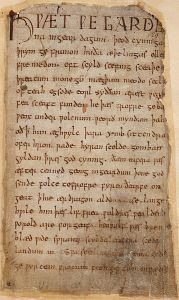
Beowulf, from Wikimedia Commons.

Beowulf, from Wikimedia Commons.

I only discovered BookRiot recently, and that through the mediation of my wife. For the writer of a blog I really don’t spend that much time online outside of work. I like real books, and being outdoors. Too much time staring at a screen brings me down. Nevertheless, BookRiot has stories that cause me to question my career choices from time to time. For instance, I have never knowingly heard of The Exeter Book. Dating to the tenth century, this medieval manuscript is among the earliest of English writings. Showing the interests of the monk who likely inscribed it, it has religiously themed material and riddles. As E. H. Kern’s post on BookRiot points out, The Exeter Book has inspired many later writers and has, through them, made its way into mainstream popular culture. Not bad for a book that I suspect many, like myself, have never heard of.

Old English has the same kind of draw as other ancient languages. Not nearly as dusty as ancient Semitic tongues, it contains the roots to the form of expression I find most familiar. I love looking back at the Old English of Beowulf and spotting the points where my native language has remained relatively unchanged over the centuries. Modern English even begrudgingly owes a considerable debt to the Bible of King James. Our language is our spiritual heritage. We have trouble expressing our deepest thoughts without it. Perhaps had BookRiot existed when I was young, I might have made a rather more informed decision about the direction of my career. Or, then again, religion might have found me nevertheless. From some things there is just no hiding.


Good Goddess

This past week Asherah has been on my mind. Some of my readers will know that I wrote a book on Asherah, based on my doctoral dissertation. Those who’ve read it (admittedly few) will know that in it I lament the easy association of generic goddesses with a mythological figure with a distinct background and character. The complication has a number of sources, but became particularly acute when inscriptions reading “I bless you by Yahweh… and his asherah” were discovered at Kuntillet Ajrud a few decades back. Since then it has become neo-orthodoxy that Asherah was Yahweh’s wife and she represented trees, lions, goats, fertility, water, wisdom, and any number of other phenomena. Those who question this are called “conservatives” and evidence deniers. Those who write popular books on this assumption end up on news programs and some start appearing at conferences in very nice clothes.

Photo credit: Deror avi, Wikimedia Commons

Photo credit: Deror avi, Wikimedia Commons

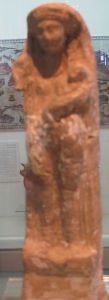
So why am I thinking of Asherah? A friend sent me the news story of a female figurine discovered in an accidental find at Tel Rehov in Israel. Upon seeing the story, I was awaiting the inevitable equation with Asherah, but was surprised to read that Amihai Mazar, the archaeologist consulted, suggested it might be Astarte, or someone else. You see, figurines of naked females were quite common in ancient Israel. No consensus has arisen as to which goddess is represented, if any. They don’t have names inscribed, and they may have been like, ahem, action figures for the woman hoping for a child, or for the safe delivery of a child. We simply don’t know. The other reason I’m thinking of Asherah is that I recently read a book where it was simply assumed that Asherah was Yahweh’s wife.

Don’t get me wrong—I’d like to see Yahweh as happily married as any other god. In fact, I think it would be odd if nobody thought he was. There is a difference, however, between thinking this makes sense and grasping at minimal evidence to declare it a fact. If someone were to discover an unambiguous inscription reading, for instance, “Asherah and Yahweh sitting in a tree, k-i-s-s-i-n-g,” then I’d be the first to say mazel tov. I have no theological bias against it. The problem is we simply do not know enough about the goddesses of antiquity. We know there were many. And we know there were women who didn’t claim divinity as well. Who these figurines represent, we just don’t know. Perhaps Yahweh, even now out on a date with Asherah, is smiling down knowingly. If so, I wish them well. Until I see some unambiguous evidence, however, I will be a doubter.


Scholarly Synchronicity

Simon Parker STH Professor April 2, 1999 PORTRAIT

Simon Parker
STH Professor
April 2, 1999
PORTRAIT

One of the great ironies in my life is having been basically ignored while I was employed in higher education only to have people make overtures to me once I no longer had the resources to undertake the task. I’ve been asked to peer review articles, and write articles and contribute to books. I even had a series editor try to get me to write a monograph. Thing is, I don’t have regular access to a library, and I spend eleven hours a day either at work or getting to and from work. When am I going to find time to write a well-researched book or article? Well, I’ve been working on my Society of Biblical Literature article since May and it should be ready by November. If it weren’t based on pop culture, I could never have managed it under present circumstances. Still, when a colleague asked me to contribute to Simon Parker’s Festschrift I couldn’t say no. Although I didn’t take classes with Simon, he was Academic Dean when I was at Boston University School of Theology. Although I didn’t know it at the time, we shared an interest in Ugaritic studies, and we exchanged articles and ideas via letter when I was in Edinburgh. We became friends. Simon died suddenly the year I lost my job at Nashotah House.

Since that time I’ve written over a couple thousand blog posts, and read a few hundred books, but that’s not the same as academic research. I’ve been worried about what I might contribute to do honor to a scholar and a gentleman. Then I tried looking at some old files from two laptops ago. Of course the new laptop can’t open them (that’s why Scrivener is a lifesaver). I pulled out a paper that I wrote the year I lost my job. I never did finish it, but it was well underway when my confidence began to crumble. After translating it to the new decade, I opened it only to find the first footnote dedicating it to Simon Parker. I stopped, stunned. That can’t be right. When I wrote this I knew nothing of a Festschrift. Then it hit me. I had originally written the article just after I learned of Simon’s untimely death. Do I still believe in signs?

So now I have a base from which to start. I have only a couple months to bang it into shape, and I also have to finish my SBL article. While at Nashotah House I produced an article a year and a second book (published only last year), i.e., the “academic standard.” Nobody invited me to contribute. Now that I have no time, people are finally interested in what I might have to say. Not interested enough, of course, to offer me an academic position, but it does look like the publication record might continue after all. It won’t be what it could have been had I had a library, but I am nevertheless honored. One of the accolades that academics covet is having colleagues care enough to write something for you. I guess that’s been on my mind for a decade in the case of Simon Parker. I only hope that I can do him proud from where I am.


The Fate of Goddesses

The goddesses Asherah and Astarte are sometimes confused, even by experts. Astarte, also known as Ashtart, Ashtarte, Athtart, and Astaroth, among other names, is the lesser attested of the two among the Ugaritic texts. Indeed, to read some accounts of the latter goddess, she becomes dangerously close to being labelled generic, the sort of all-purpose female deity embodying love and war, and sometimes horses. In the Bible Astarte lived on to become the bad-girl of Canaanite goddesses. Her corrupting ways were a conscious danger to the orthodox (as much as that is read back into the texts). She became, over time, literally demonized. It seems that originally she, like most goddesses, had a soft spot for humans. Since she wasn’t the one true (male) God, however, she had to be made evil. It is an unfortunate pattern as old as monotheism. One of my original interests in studying Asherah (not Astarte) was precisely that—the obviously benevolent divine female seems to have been chucked wholesale when the divine masculine walked into the room. Why? Well, many explanations and excuses have been given, but whatever the ultimate cause, Astarte lingered on.

IMG_1620

In a local pharmacy the other day, I was looking over the Halloween tchotchkes. Amid the usual assortment of pumpkins, skeletons, and ghosts, I found bottle labels reading “Ashtaroth Demon Essence.” Although I’ve spent a good deal of my life cloistered in academia, I was not surprised by this. I know that in popular culture the goddesses of antiquity live on as supernatural powers, sometimes good, sometimes evil. Astarte, once depicted as the friend to at least some of the humans devoted to her, is now commonly a demonic force. The image on the bottle label, however, was most unflattering. I know, this is just kid’s stuff. Still, as I stood there among last-minute costume seekers and distracted parents, I knew that I was witnessing the influence of ancient religions in an unexpected way. Did any of the goddesses survive as a force for good? How could they when the only god was male?

We know very little about ancient Astarte beyond the fact that she took away some of the luster of the omnipotent (as now conceived) deity of the Bible. A jealous God, as Holy Writ readily admits, visiting iniquity down to the third and fourth generation. (That might explain a lot.) Prior to monotheism benevolence and malevolence could arise from goddesses as well as gods. Compassion, it was believed, was largely a feminine trait. Monotheism decided for the jealous male instead. We won’t find a bottle label for the Almighty, although the accouterment of the arch-enemy are everywhere evident this time of year. And speaking of the diabolical, the Ashtaroth Demon Essence, I noted, was available at a steep discount.


Dead See Scrolls

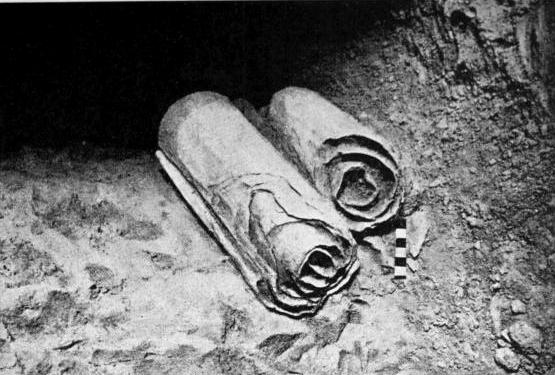
Despite her ability to overlook my obvious deficiencies, my wife has good eyesight. Last week she spotted an article carried by the Associated Press entitled “Dispute over ancient scrolls changes modern law.” Although many ancient documents (notably those from Ugarit) outweigh the importance of the Dead Sea Scrolls for understanding the religion of ancient Israel, the Scrolls have continued to be headliners. There never seems to be some sort of scandal very far from the Scrolls, and this article by Jennifer Pletz reaffirms that assessment. The name of Norman Golb is familiar to just about any Hebrew Bible scholar. His work on the Scrolls is highly regarded. The story, however, brings the scandal down a generation to Golb’s son Raphael, a lawyer and literature scholar. In a case whose details rival the minutiae of the Scrolls themselves, the younger Golb is accused of sending emails putatively said to have been sent from his father’s rivals confessing plagiarism. To what point, beyond alleged family honor, one hesitates to speculate.

Dead_Sea_Scrolls_Before_Unraveled

“Sculduggery,” J. C. L. Gibson once said, “is always just around the corner in archaeological circles.” The same might be said to apply to the Scrolls. Episode after episode of scholars behaving badly have attended the controversial documents since their accidental discovery on the eve of Israel becoming a state. Ironically, the Scrolls in some symbolic ways represent the struggles of the Israelis. No one doubts their importance, but access has always been an issue. Careers were made and secured by the Scrolls, reaching to the highest academic offices in the land. And yet, we can learn more by turning back the pages of history just a little further.

The Scrolls date from that troubled time period when Christianity was just beginning to emerge from Judaism. Tempers flare at implications masked or insinuated. As if the Scrolls were really the much sought philosopher’s stone. The original generation of Scroll readers is going the way of all nature. Those associated with the more solid tablets of Ugarit have long passed that way already. And yet we still have Bible museums being built and implications left dangling. Law suits are filed and ownership of the Scrolls is disputed. In the twenty-first century scholars are still willing to risk it all on some parchment fragments that have the appeal of the esoteric. Hidden truths, almost apocalyptic, squirreled away in desert caves. Knowledge is indeed money, unless, of course, you actually know how to read the Scrolls for yourself.


Uisge Beatha

Water is essential for life. Life as we know it, in any case. It is no surprise, then, that many religions incorporate water into their rituals. Last week I posted about the biblical stories of Jonah and Noah, both of which involve acts that were later interpreted by Christians as baptism. Muslims use ritual ablutions as part of their worship tradition. Water is life, after all.

IMG_1392

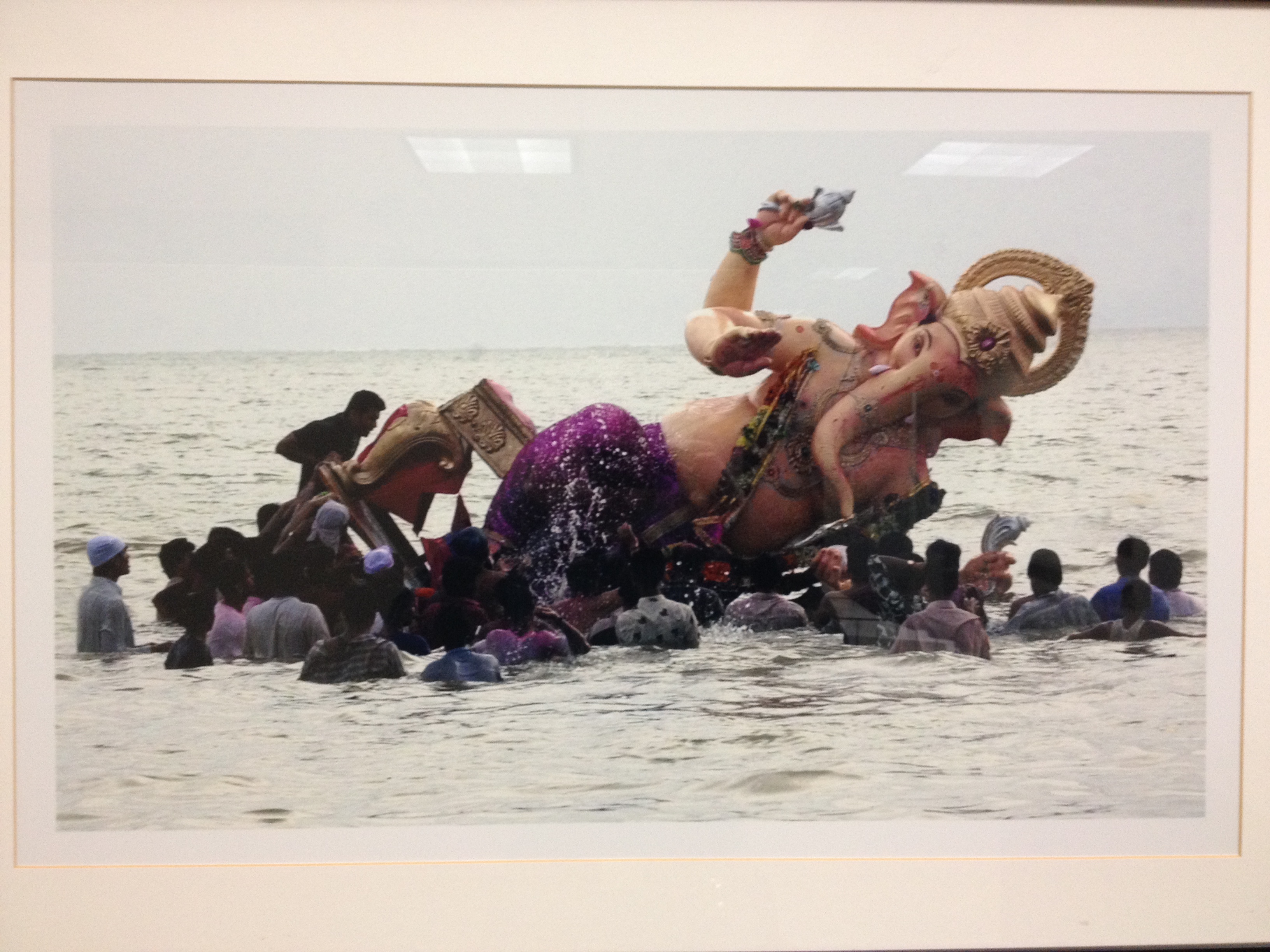
While wandering the halls at work, I notice the various artwork on the walls. One large, framed image has frequently caught my attention: several men are shown carrying a statue of Genesha, the Hindu elephant-headed god, through the water. Coming at this from a Christian background, I wondered what was going on since it looks like baptism. Hinduism, I know, is not a unified religion, but rather a conglomeration of many folk traditions from ancient India—one of the two seats of ancient religiosity. The stories of ancient India are colorful and diverse, and a bit of research suggests that this particular photo is likely the festival Ganesha Chaturthi, commemorating the story of how Ganesha came to have an elephant’s head. Crafted from inert matter by his mother Parvati, Ganesha was posted to watch the door while his mother bathed. Parvati’s consort Shiva returned and not knowing who the boy was, the lad’s refusal to allow anyone to enter led to a war. Eventually the Ganesha was beheaded and to appease his consort, Shiva supplied him with the head of a dead elephant and the boy resurrected. The immersion of Ganesha statues, or Visarjan, takes place as part of the Ganesha Chaturthi, during August or September.

I admit I’m not an expert on Hinduism, so some of the details may be a little off here. What strikes me, however, is the similarity between this story and that of Jesus. Like Ganesha, Jesus was associated with a modest mother, slain, and resurrected. He, too, is associated with ritual baptism. Growing up, we were taught of the many unique aspects of Christianity. We had, we were led to believe, the only resurrecting deity in the world. Our God alone could bring back from the dead, and the way in was through immersion in water. While learning about Ugaritic religion I read of Baal’s death and resurrection. Although stories of baptism haven’t survived, he also battled the sea and came out victorious. Some ideas, it seems, are particularly fit for religious reflection. The details may be unique, but the archetypes are very similar. Religions may be many things, but in the end, unique is a word that must be applied with the greatest of care. In the meanwhile, the next time I read of walking on the water, I will recall that even Asherah was know as “she who treads upon the sea.”


The Plague

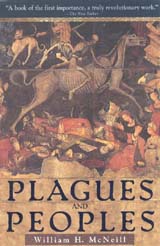
Plagues&Peoples Sitting on the bus next to some guy with a consumptive cough may not be the best place to read Plagues and Peoples. But William H. McNeill’s book is considered a kind of modern classic, and since the Middle Ages have been on my mind, I persisted anyway. I did wrap my scarf around my face, though. Plagues and Peoples isn’t just the story of the Black Death, however. It is a sweeping account of pandemic and endemic outbreaks and how they form recognizable patterns with human populations. Perhaps the most striking aspect of McNeill’s study is how determinative plagues have been for many decisive aspects of human history, including religious ones. Indeed, religion keeps cropping up in the book. One reason is because of the roles religions play in human suffering—to be more precise, I should say in trying to alleviate human suffering. (Yes, some religions definitely cause it as well, but that’s a story for another time.) McNeill even suggests that fear of disease might have led to the parting of the ways between Swiss and German Reformers, playing a role in the divergence of what would become the Presbyterian and Lutheran flavors of Protestantism. The spread of some religions was facilitated by the ravages of disease.

During the period of the spread of the Plague, however, McNeill notes that those cultures attended by Christian and Buddhist institutions managed to fare better than irreligious, or, perhaps more accurately, folk-religion ones. Once people figured out Plague was contagious, they sensibly kept away from the sick, but the moral teachings of Christianity and Buddhism compelled the religious to tend to the ill, with the result that more people in those religious traditions survived. That’s not a universal declaration on McNeill’s part, but it is a fact worth bearing in mind. The risk to self paid off when more individuals cared for each other rather than just heading for the hills when the Black Death came along. On the other hand, religions frequently insist on behavior that spreads disease as well. The great pilgrimages to Mecca or the Ganges often brought great crowds together where disease could quickly spread. The passing of the peace in some churches is more like the passing of the plague.

In ancient, pagan times, disease had its own deities. In ancient Ugarit, Resheph, the archer, was also the god of pestilence. Pestilence frequently accompanied the horrors of warfare, and even Apollo opens the Trojan War by firing his arrows at the Greek troops. Gods are the source of disease. One of the ancient truisms, which may not be taken as true today, is that the force that wounds is also the force that heals. Instead of ignoring Resheph, you pray to him, make offerings to him. He can slay, but he can also heal. In the monotheistic and even non-theistic traditions McNeill mentions, the focus shifted to the care of those suffering rather than the offering of sacrifice to unhearing gods. Even the Romans were impressed by Christian care for one another. Of course, that was well before Obamacare offered the hope of medical treatment for those cut off from lucrative employment. The Christian response now, it seems, is to complain about others taking advantage of my surplus cash made over to a program to prevent illness in one’s fellow citizens. Take the bus to work, you’ll see what I mean.


They Call it Civilization

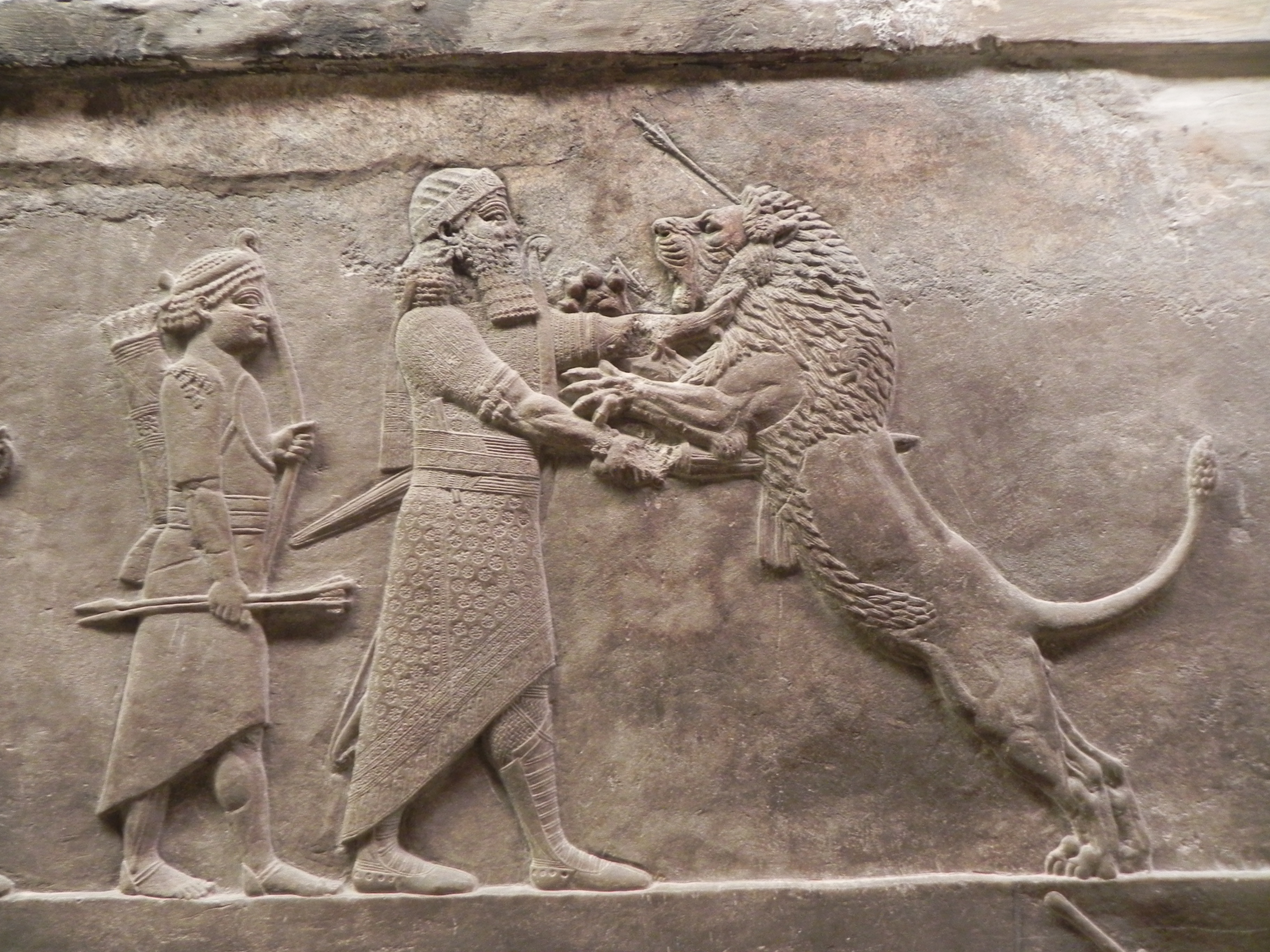
An interesting article about the Assyrians appeared in last week’s Guardian, On Art blog. The piece by Jonathan Jones, describes a piece of ancient Assyrian art on auction that the British Museum is not interested in buying. Having toured the Assyrian galleries a time or two, more’s the pity, but Jones puckishly suggests that the museum may be afraid of the curse inscribed on the piece. We all know of the story of ancient artifacts that come with value-added supernatural attributes—it’s a standard staple of Hollywood horror. Jones knows, however, that the museum isn’t really afraid of a curse, but he does display an interesting attitude toward the Assyrians. You see, the Assyrians were conquerors. They knew how to intimidate potential enemies long before their armies ever set out on the move. The imagery displays powerful men, ripped and ready, killing lions in hand-to-claw combat. Jones rightly points out that some of this is disturbing. What strikes me as interesting is a probably unintended subtext.

DSCN1837

“Assyrian art is certainly awe-inspiring – but perhaps not civilised,” Jones writes. As if civilization necessitates politeness. Perhaps it should, but civilization began in the very region south of ancient Assyria, among the Sumerians who were a culture emulated by later Mesopotamians. There is no doubt that the Mesopotamians gave us many of our beloved Bible stories, in their original, unedited form. They gave us organized religion, writing, and the wheel. Comparing the Assyrians to the Egyptians and Greeks, Jones suggests they were uncivilized. I would beg to differ. The Egyptians and Greeks could also be quite violent. The Assyrian aesthetic was a bit different, to be sure, but there is a raw beauty to it. And I have to wonder why, from our western perspective, what comes out of Iraq seems to hint at something insidious or sinister.

I’ve always been a fan of the Mesopotamians. Since a Ph.D. program only lasts so long (for those of us perpetually struggling to make ends meet), I did not have time to indulge my Assyriological fantasies once I learned of them. I was deep into Ugarit, and although I loved the tales of Asherah and Baal, there was something more ancient, more powerful, lying to the east. I often thought that if I could’ve had more time, my interests would’ve definitely drifted toward the progenitors of civilization. Yes, some of the art-work is deeply troubling, but the Assyrians, indeed, the Babylonians and Sumerians, looked at the world from the viewpoint of cultural creators. Civilization involves violence, no matter how we try to hide it. When I stand in London, taking in those Assyrian reliefs I see an honesty that is carefully hidden by the Egyptians and Greeks. And I think I prefer to know the truth of the situation, curse or not.


The Importance of Being Published

AtlanticThe crowd over at The Atlantic Monthly magazine are a formidable lot. Even with a Ph.D. and a modicum of writing ability, I’ve been frightened off from ever submitting to such an intellectual periodical. These are people whose opinions count. When The Atlantic named, in last month’s issue, the fifty most important inventions since the wheel how could I not peek? Especially when number 39 included a picture I recognized from my childhood in the cradle of the oil industry: Col. Edwin Drake standing outside a fledgling oil derrick in Titusville, Pennsylvania—just the next town up route 8. I felt like I might be somebody, by association. We all know that number one is best, so I wondered, as I flipped through the pages, what the most important invention was, although I suspected I already knew. The printing press, dating back to the 1430s, is certainly a contender, and was Atlantic‘s winner. Those of us historically inclined tend to think in regressions. The internet has forever changed our lives, but what is the internet without reading? (Okay, well, it is lots of funny pictures of cats and pornography, but you still have to be able to type in “cat” or “nude” or whatever, to bring you there.) It took the printing press to catapult reading from the academy to the hearth, and to reach that critical mass so that the Kindle could surpass the printed book.

My interest in studying the Hebrew Bible for a doctorate actually included an ulterior motive. You see, the Bible was among the first books printed. As much as western civilization owes to the New Testament, my regressive thinking insisted that the New Testament was based on the Old. As I learned in seminary, the Old was based on an older, and that on an even older, in a pleasing kind of regression. I ended up in Ugaritic, the earliest known alphabetic language. The alphabet, I might contend, vies with the printing press for most important invention since the wheel. Before the alphabet writing was so cumbersome that only very skilled specialists could read written languages cobbled together from signs that represented letters and symbols and entire words and entire classes of words. But, ah, it was writing! Mesopotamians seem to have brought the idea into existence, specifically, those of ancient southern Mesopotamia that we call the Sumerians, who, incidentally, also invented the wheel.

Those of us in the book industry feel a constant worry in our stomachs when we look at book sales figures. Even in the most highly literate of social periods a very small percentage of people would actually purchase books (especially in the New World). With electronic media, that number has declined alarmingly. Still, the internet—number 9 on The Atlantic list—owes its life to good old paper (number 6) and pen (which failed to make the list at all). And paper wouldn’t have evolved without clay—the very substance of which early written myths claim that humans are made—and stylus. Thoughts locked in our clay heads cry out for expression. Some of us are compelled to put them in the form of written words for others to see. It’s just that we know our place and wouldn’t presume to send them to The Atlantic Monthly, or any other magazine, where they would be certain not to make the cut.


Esoteric Goddesses

250px-Statuette_Goddess_Louvre_AO20127One of the nice things about the internet is that you can indulge your unorthodox interests and nobody will much care (except, of course, the US government). The other day, while reading about monsters, I found a fellow WordPress site, EsoterX. More specifically, I found a blog post on Ashtaroth. Those who have more than a passing interest in my background know that I spent a few years of my life writing about the goddess Asherah. Asherah and Ashtaroth are sometimes easily confused by anyone not reading about them in the original languages, but I settled on Asherah because we simply don’t have much textual information on Ashtaroth. Ashtaroth has gone by a number of names over time: Athtart, Astarte, and, as I just learned from EsoterX, Lord Treasurer of Hell. I won’t try to repeat the clever observations of EsoterX, but I can’t help myself add my own two shekels’ worth.

Ashtaroth is clearly one of the bad girls of the Hebrew Bible. She tempts the upright astray, and she seems to have been a perennial favorite among the less-than-orthodox Israelites. The Bible doesn’t take much care to flesh her out fully, and she appears only in minor roles in the Ugaritic texts. Some in the ancient world easily associated her with Ishtar, and their names do seem to bear some kind of relationship. Ashtaroth is connected to the planet Venus, as was the latter goddess Aphrodite—named, appropriately enough by the Romans, as Venus. Ashtaroth was also a militaristic goddess associated with horses. That girl got around.

Unfortunately, in the literature that survives from the earliest period, we are left with only the sketchiest of outlines of this once important goddess. Many of the Semitic deities have been revived in popular mythology of the modern age, and Ashtaroth, with her sexy, yet belligerent nature, is always appealing to the puerile imagination of pubescent boys. She was taken with great seriousness long ago, however, although her origins are lost to history and her attributes have become general enough to fit just about any old generic goddess. I’m glad to see that EsoterX has given her a shout-out and has traced a brief history of the goddess through the ages. Maybe someday we’ll find some accurate information on her early days. If we do, will somebody please give me a poke? I will probably be busy reading EsoterX.


Caledonia Dreamin’

“Edinburgh is a mad god’s dream.” So penned poet Hugh MacDiarmid with sentiments that could’ve been composed by H. P. Lovecraft. My association with Edinburgh seems accidental, but there is little in my life that compares to this mad god’s dream. The Gnostics used to believe that there was nothing in divinity that precluded a kind of divine madness. Philosophers, back when they still considered god a postulate, argued about whether the deity was good or evil. If they’d come to Edinburgh, I suspect, the debate would’ve taken on a whole new cast. In his poem “Edinburgh,” MacDiarmid captures the untamed nature of a city that has never been given the accolades of Paris, London, or New York, but is just as edgy and twice as beautiful.

Dreaming gods, of course, are nothing new. Vishnu, according to some strains of Hinduism, is the god whose dream is the universe. In the Ugaritic Baal Cycle, it is a dream that reveals to the ancient god El that Baal has returned from the land of death. And, of course, Cthulhu lies dead but dreaming in the city of R’lyeh. To me, Edinburgh is a wonderful alchemy of divine dreams. I was a young man, still so very naive when I moved here. Looking back at those old photos, I see a much younger face from the past, telling the camera that yes, he’d found paradise, the very place of God’s dreaming. Our human politics, however, trump divine dreams every time. Although I never wanted to leave, I was not permitted to remain. Yes, the camera does, at times, capture the soul.

DSCN3490

I am on the train that will take me from Edinburgh, having seen it anew through my daughter’s eyes. I came here penniless some twenty-four years ago, but with a head full of dreams. Life has taught me the cost of dreams since that time, and I have had to pay with wrecked careers and uncertain futures, trusting that the god who is dreaming all this is mad indeed. Nevertheless, like the gods, I refuse to stop dreaming. As much as Hugh MacDiarmid captures the spirit of Edinburgh, as I sit here, with a wee bit of mist in my eyes, my mind is on the words of another poet, Baroness Nairne. To her I will have to leave the last words, from this south-bound train. “Fareweel, Edinburgh, where happy we hae been.”


Like Virgins

If you are reading this, I have safely arrived in the United Kingdom, courtesy of Virgin Atlantic. Given the lens through which I view everything, I somehow supposed that Virgin Atlantic was named after one of history’s two most famous Madonnas—the Blessed Virgin Mary, or just plain Madonna. It turns out that I was wrong on both counts. Virgin Atlantic, famously under the leadership of Richard Branson, borrowed its name from its older sister company, Virgin Records, also founded by Sir Branson. Virgin Records, I had supposed, was named after the only musical Madonna, but again, not so. The record company, new to an inexperienced Branson, was named by a colleague who noted that they were business neophytes, like virgins. The original logo showed an Eve-like virgin with a snake and everything.

Steve Fitzgerald's pic from WikiCommons

Steve Fitzgerald’s pic from WikiCommons

While in the UK I always call on Nick Wyatt, one of my doctoral advisors and now a good friend. As my mentor in Ugaritic, we always joke that I fly Virgin Atlantic because of the Virgin Anat, Baal’s famous warrior sister and sometimes lover. Anat was, of course, not the first perpetual virgin. The Mesopotamians had the idea that a goddess could be a perpetual virgin and still have kids, and what led up to said motherhood. Virginity is a status marker, still unfairly applied to women. I suspect a good part of it is biology (and if this seems weird, blame it on the jet lag), because the essential male reproductive function occurs whether or not a female is present, and even the most saintly men can not, from time-to-time, barring very extreme measures, avoid it. It is difficult to measure virginity in men, so why the double standard?

In this early morning haze (or is it really afternoon?), I suppose it comes down to not wanting to support somebody else’s child. Looks are at best a lackluster proof of paternity, and in the days before effective birth control, the only way you could be absolutely sure was to make sure your spouse was a virgin. Goddesses could get away with sex and still retain their purity. It was less sanguine for the human woman. Thus the Virgin Mary is accorded a special, but not unique status. But it turns out that none of this really matters because the Virgin I fly is merely a business virgin. And with a bit of experience, provides some of the best care in the air.


AAR/SBL Chicago

On just about any playground you’ll spot the kid who’s watching from the side, instead of playing with the others. That’s me. I don’t suspect that anyone starts life wanting to be left out, but some of us—attuned to the subtler messages of life—become aware that we’re not really invited or welcome. That sensation bathed me in its eldritch light once again while waiting for my flight to Chicago for the American Academy of Religion and Society of Biblical Literature annual meeting. I’ve often wondered what it must be like for those innocent aeronauts not clued in that the Friday before Black Friday (the real holiday, I’m led to believe) that flights to a specified city will be choked with crusty professors of religion. Sitting in Newark Airport and hearing the word “Ugaritic” from the seat behind me, I knew it had begun. I turned around. No flash of recognition. If was as if I hadn’t spent years learning that obscure language and publishing in the main journals. The invisible man.

The airport before the AAR/SBL annual meeting is a theological locker room where the guys gather to compare the size of their, um, theses. It’s pretty hard not to overhear, once you’re tuned in to your specialization, as colleagues lay out their publications, invited papers, international travel plans. I’ll admit to being jealous. They’re living the life for which I trained. I had taught for nearly twenty years and was never really invited to play. Now here I sit, knowing what Ugaritic is among the perplexed business travelers, but I’m not one of the big boys.

I realize that outside the rarified world of higher education Ugaritic matters even less than the homeless unfortunates shivering in the streets of Manhattan or Chicago. Back in the brief days when I tried to be a player, I remember attending an Ugaritic conference here in Illinois. Crowded into an elevator with renowned colleagues, one of them joked, “If this elevator falls, the field of Ugaritic studies may never recover.” An exaggeration, but not by much. Present company excepted. Of that august group, only one was asked to step off into the void. His exit was barely noticed. Ugaritic studies thrives. The poor beg for alms. And one kid, even though he now understands the rules of the game, still watches from outside.


Religious Studies Project

Edinburgh University is often the overlooked gem in the academic crown of the British Isles. I have to confess that that declaration is in part based on the natural pride of an alum, but it also arises from seeing the various projects the university has in some way sponsored or spawned. The study of religion is still taken quite seriously at my alma mater, and among the more recent incarnations is a website called The Religious Studies Project. (It at first reminded me of the Edinburgh Ras Shamra Project, with nearly the same initials, initiated by a couple of talented chaps just after I left town.) Founded by a couple of post-graduate students in religious studies, the RSP offers weekly podcasts and various articles on topics of interest in the realm of my erstwhile and eternal profession.

The Internet has forever changed the way that people learn about religion. This democratization of knowledge is generally a good thing, especially for those who test what they read (or hear) against other sources. This is the heart of the academic enterprise. Many people think that higher education is all about getting the answers. This may be true in some fields, but the disciplines known as the humanities—the things that make us human—find education in the perennial raising of questions. Religions should be the source of questions, not the monolithic bastions of all-answers. You can always tell when you meet someone truly educated in religion—s/he will be the one admitting that s/he doesn’t know.

In our cost-effective society we live under a prevailing myth that when you pay for something you should get a certain commodity in return. In fact, education often works just the opposite way, robbing the learner of easy certitudes, leaving him or her wondering more deeply. So I’m pleased to give my colleagues a shout-out.

If you’ve found this blog you likely have some passing interest in religion. Having been trained in Edinburgh I laud the method I learned: ask questions. Seek answers. Ask more questions. This is the tradition of religious studies. Even if it doesn’t lead to jobs, we hopefully emerge from it a little bit wiser.


Sleeping with Darwin

Although I’m hardly capitalism’s biggest fan, it would be difficult to overestimate how much the closing of Borders last year has affected my life. It is formidable to explain, as I sometimes must, to friends who don’t find books as irresistible as I do, how the simple pleasures of knowing a friendly bookstore was in town could make the world seem a little less cruel. There were towns that I instantly identified with the Borders located within their borders. Towns I rarely visit any more. All of this is by way of preface to explain the book I just finished. As the last desultory books lugubriously lined the shelves, my wife and I went through picking up titles we supposed we might have not found any other way. One of those titles was the little travelogue Darwin Slept Here by Eric Simons.

My admiration for Charles Darwin began when I realized that the Creationist venom I’d been bloated with from early days had been misguided. There was a fascination with this “evil” of evolution I’d been taught to shun. As I began to read more objective accounts, I realized Darwin possessed a keen, if tortured, mind that could not rest with half-truths and theological figure-fudging. In his account of following Darwin’s tracks in South America, Simons’ narrative not so much takes evolution any further, but presents a portrait of a world that has continued to evolve. In lives filled with uber-capitalism, where would a young person find five years to sail off on a voyage of discovery? Where would the health insurance come from? The 401K? The dental? As a species, humanity has been utterly domesticated.

Once in a while I dream of the Galapagos. I think of Easter Island and smile. So many places I will never be able to go. I spent three years specializing in Ugaritic studies and I will never make it to Syria—not on an editor’s salary. Not as an American. The world that we’ve constructed opens travel to the young who rarely have the resources to enjoy it. After seminary I spent six weeks in Israel. Young and healthy and heavily in debt, I at least glimpsed the sun setting over Jerusalem before getting hog-tied into the economy. Simons’ little book will not make him a millionaire, but as I read his reflections of rainforests, youth hostels, and rental cars on the Pampas, I thought where our world would be now had Darwin not been of a family of means. So much of our health care is based on understanding evolution. We would not be chained to our desks by threats of a slow, painful, and perfectly legal death without health insurance. We would be subject to biblical literalists who rejected the tenets of science— Come to think of it, perhaps we’d all better make tracks while we still can.