Two Unrelated Stories

Harvard University’s been in the news. Well, Harvard makes the news, so that not news. The first story that has appeared is that Harvard, like me, is giving it away. Information on religion, that is. Like a fire sale. Or making room for next season’s fashions. According to the Anglican Journal, Harvard is offering a free world religions class online. Some of us who have degrees in various world religions offer similar services but, well, we are not Harvard, are we? This isn’t really sour grapes, but I see my colleagues’ blogs—those who teach anywhere, not necessarily at Harvard—and they get plenty of hits. They have institutional backing. That job offer is a seal of quality, don’t you know. Freelancers, well, who trusts them? I’ll professionally prattle on about religion anyway.

Then a colleague sent me a story by Charlotte Allen entitled “Jesus’ Wife: The Final Debunking,” from The Weekly Standard. For those of you not up on the scholarly gossip of the deity’s latest amorous exploits, some time ago a Harvard professor advocated for a fragment of a lost gospel purporting to mention Jesus’ wife. The media had it’s little frenzy (like father, like son, so it seemed), and scholars argued—which is what they do. Most saw this fragment as an obvious fake, but when someone from Harvard declares otherwise the media listens. Now, in a piece of investigative reporting soon to appear in The Atlantic, the origins of this fake manuscript are pretty much laid out for all to see. It seems that being at the only true university in this country isn’t really the basis for not being taken in by forgers. I’m not picking on the professor—we’ve all been taken in by clever forgers—we want to believe. Deception happens all the time and all over the place: “ancient” documents are faked, someone makes money or notoriety, and we all go home shamefaced at the end of the day. Still, there’s a point to be made.
DSCN3510

Humans are worshipful beings. If you want a job in higher education your best bet is to attend Harvard. It opens doors for you. While in seminary at Boston University School of Theology, I applied for transfer to Harvard Divinity School and was accepted. I decided not to cross that river, however. Edinburgh was my future. In Scotland, I spent my dissertation attempting to show just how thin the evidence was for Yahweh’s wife, if you take the time to look at each piece. Naturally, the dissertation and subsequent book were largely ignored. Edinburgh used to be the Athens of the North, but it’s not Harvard, though. Now scholars are beginning to question the new orthodoxy of a happily married deity. While the academic dispute goes from one bed to another, it begins to sound like Days of Our Lives. Scholarly drama may not be front page news, but it doesn’t fail to entertain.
GSP

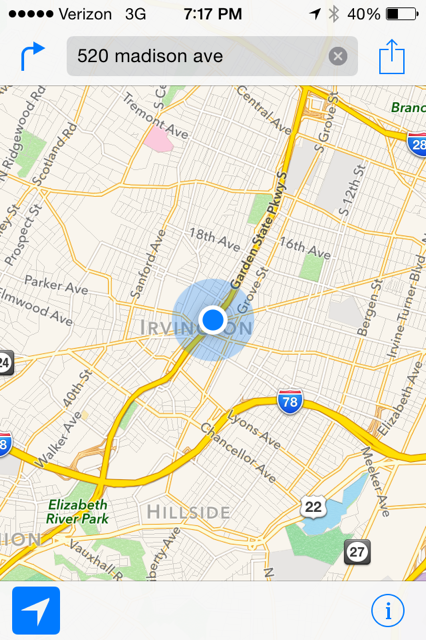
According to New Jersey Transit, rates for services will go up by 9 percent in October. I may still be on this bus by then. It was like many evening commutes–late. My usual driver didn’t make it to the Port Authority Bus Terminal, and a new driver pulled up tardy. Par for the course. After about an hour on the bus, I realized we were still on the Garden State Parkway, locally known as the Garden State “Parking Lot.” I texted my wife who told me there had been an accident, so that would explain things. We crept along. I read on the bus. I can’t stand just sitting for a two hour commute, staring out the window. My stomach started rumbling. I had to pee. These things don’t usually happen on the trip, since I take care of the latter before I leave work. But this bus is cold, and you know how it is in winter…
Glancing out the window, I realized we’d driven into the Twilight Zone. I had no idea where we were. I pulled out my phone and opened the Google Maps app. We were in Irvington, about 20 miles off course. Widening out the map, I could see no way even to reach highway 22 from where we were. I wouldn’t have been surprised to see a kangaroo come hopping by. At this point I realized that in less than 12 hours I’d be back on a bus in the opposite direction. I hadn’t had supper or sleep, but maybe I should just stay the night? We are very well acquainted, this bus and I. With a shudder I remember that the driver got out to pee before he started this run. Did he have an alternate plan?


Now I’m not one to tell a driver how to do his job, and I was, I suppose, secretly cheering him on in his personal quest to find the Northwest Passage. When we finally came to the first stop I became a believer in miracles. It was 7:30, and I had another hour to home. It occurred to me that New Jersey Transit must be raising its fares to pay for the extra gas. Who wouldn’t want to see Elizabeth in the evening? Or at least smell it? There are no toilets on NJ Transit buses. Maybe that accounts for the smell. I’ve been riding New Jersey Transit for four years now, not always contiguously, and I’ve had some epic commutes. A simple accident leading to a three-and-a-half hour trip home was some kind of new record. A personal best for the driver. Get Guinness on the phone, and get one out of the fridge. I still need a bathroom. That can wait. The only thing that really matters is that life is a journey. And for those of us with unpaid past sins, it’s a journey on New Jersey Transit.


For the Birds

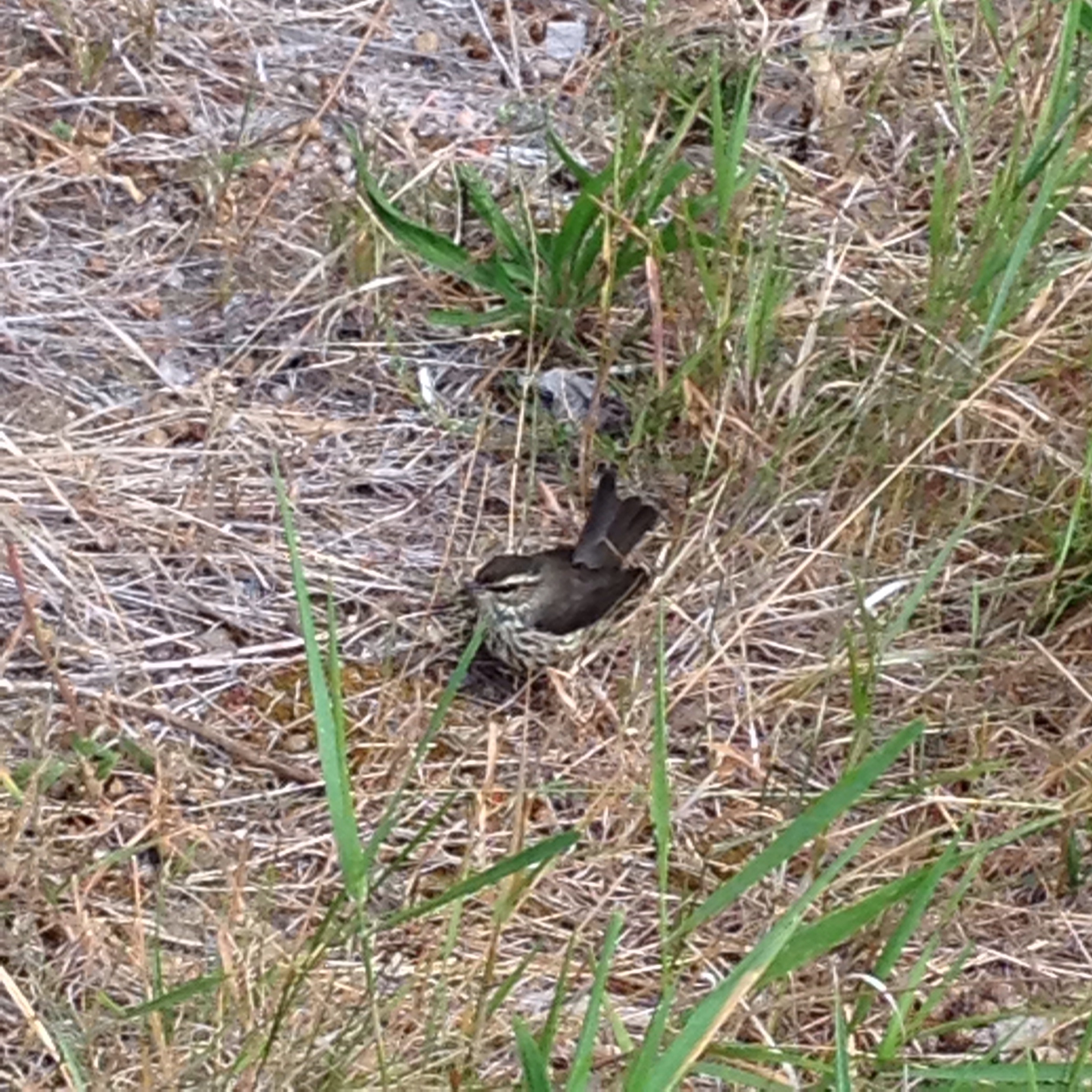
Identifying birds has never been my strongest skill, although I spend hours pouring over animal indentification books.  Ever since I was a child, I’ve wanted to be able to correctly identify what I’ve seen. So many birds, however,have similar coloration and a morphology designed by evolution to do similar things (fly, hide from predators, move quickly, etc.) that even with a good nature guide I still get lost. Yesterday was our last day at the cabin. Always sad to let paradise melt back into the mundane, I was looking out the window when a blur of motion startled me. A bird–I don’t know what kind–had flown into the window and had fallen, stunned, to the ground. Not knowing what I could do, I went out to see if I could help. I’ve only ever rescued one bird, and that was with the help of an animal shelter’s advice in Wisconsin.
Cautiously, because I’m very squeamish, I rounded the corner to find two birds. One, sitting on the ground with its eyes closed, was obviously the one who’d hit the window. Nearby stood another bird of the same species (I can usually tell that much), looking as concerned as a bird can. Spying me, it began the chirp and limp technique to draw me away from its fallen mate. I used to spend a lot of time outdoors, so this wasn’t entirely new to me, but as I was close enough to touch either bird, I began to consider animal intelligence again.  Nesting birds will use this ruse to draw enemies away from their mates and young, and it may cost them their own lives. In this case, an artificial scenario (a cabin with very clean windows) had intervened in nature. Nature, In turn, kicked in to save the fallen one.  How did the healthy bird know to do that? It wasn’t protecting a nesting mate, but it had transferred the appropriate behavior to a novel situation.  Instinct, it seems to me, is the ultimate fudge factor. There was some thinking going on here. Not only was thinking evident, but specifically a kind of thinking more advanced than some human thought (yes, I’m thinking of you, one percenters). The Sermon on the Mount mentions God’s concern over one sparrow falling to the ground. That concern is evident in the show of nature.


Nearing midnight, my plane circled New York City, with its fortresses of wealth. Sparkling like its own galaxy in the night, it seemed a world unto itself.  Just that morning I’d awoken, as it were, far from the madding crowd, but where the fate of one little bird had brought out the willing sacrifice of a friend. Not for the first time in this week away from civilization, I was forced to wonder why, if capitalism is so great, so many people are eager to get away from it. Up in the north woods, getaway cabin building is booming. People want to make enough money to get away from making enough money. I stepped back outside to check on the little bird again.  It cocked its head at me, curiously. Its mate was standing by. If only its lesson could be learned, my day’s destination might have seemed just a little more like paradise.


Call It Civilization

Being in nature inspires a Psalm-like awe. Civilized to the point of spending virtually all my time indoors, spending all day in the lake or among the trees, it is easy to understand how religions began. Our consciousness tells us that we’re somehow special, but nature has a way of giving the lie to that conceit. Out here in grizzly bear habitat, I’m not the top predator (vegetarians seldom are). Not a swimmer, I’m bound to either boat or dry land in order to survive. Out here I’m just a part of nature.
  
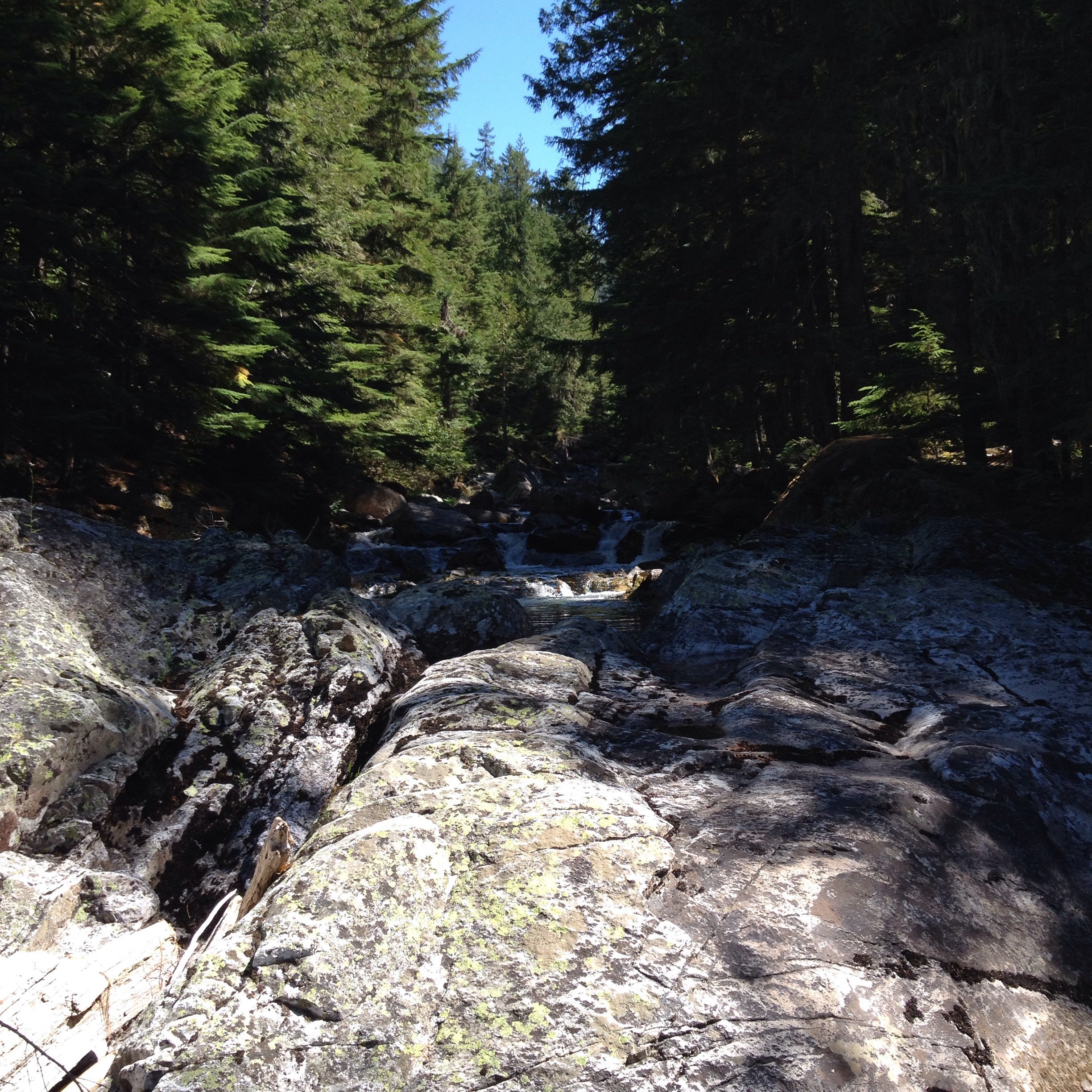
Mountains, as the sites of tremendous geological forces, bring rare resources to the surface. The entrepreneur sees this as an opportunity while the mystic sees it as a chance to worship. Miners have long excavated for metals and gems. Loggers have trucked away timber for everything from houses to match sticks.  The outflow of the lake is dammed to create energy and keeps the water level steady. Standing on a mountain trail dwarfed by mammoth cedars, tripping over rocks, feeling the chill of the cold water straight from last winter’s melt, I am no monarch here. I am but a creature among other creatures.

  
Some feel threatened by such belittlement. I lay on my back and watch the stars begin to twinkle to life and I know the truth is on the side of nature. Out in the wilderness civilization feels like the real predator. The years I’ve spent away from this place have somehow depleted my soul. I’ve been mined and lumberjacked and dammed by a society that sees only money where the mystic feels nature. Yes, religion is found here in the dying gasp of freedom about to be conformed to the uncomfortable clothes and unforgiving pavement of something I’m told is better than this. The sky above me, I know, stretches out to eternity. The “reality” to which I’m about to return reaches only as far as the bank.  Nature is the true civilization.


Wireless

Routine.  That’s how many of us make it through the day.  If it weren’t for routine, I’m sure I couldn’t force myself out of bed each day at 3:30 without an alarm.  What makes me stand on a street corner, often in the dark with wind chafing my neck or rain soaking my feet, waiting for a bus?  Routine.  Sitting before a computer all day in a windowless cubicle?  Routine.  One of the little joys in this regimented life is this blog where I can discuss academic topics or monsters, books or movies, things that are anything but routine.  But the blog is a creature of the internet.  Now that our lives revolve around it, what do we do when the internet is gone?  Interpocalypse.

Last night I arrived home to find our internet service had ended.  Knowing that my service provider is one bill I always pay, I had to call to find out what had gone wrong.  My panic-struck mind kept coming back to the same thing: how will I post on my blog tomorrow?  It may seem a small thing, a first-world problem, but it has become a matter of identity for me.  I’ve had to go overseas three times over the past four years for my jobs.  I’ve had to travel all around the United States to universities that would never consider hiring me.  Even with all this disruptive travel I’ve managed to post on my blog every day.  Holidays and weekends are no exceptions since my mind doesn’t take days off.  One of the first things I did when the power came back on after Hurriane Sandy, was post on my blog.  Now, I was cut off at the very ground of being.  Paul Tillich would’ve dissolved into tears.  Martin Luther would’ve thrown an ink pot.  My service provider walked me through dark corners of my basement and asked technical questions about blinking lights.  “We’ll have to send someone out tomorrow,” he grudgingly announced.

Tomorrow?  Is it possible before 3:30 a.m.?  I have a bus to catch—a routine to fulfill!  How am I to track my packages? Find out what the weather will be?  See just how few people read this drivel?  This little hiccup in daily existence has made me aware of just how vulnerable we are, at the mercy of the world of our internet avatars.  Pull the plug and it shuts off.  Twenty years ago, I barely checked email.  Today I don’t know how to pay bills without the internet.  I can’t fruitlessly show my wares—daily writing going on six years—I can’t impress all those people who don’t read my blog anyway.  Helpless, I stand before my router with its green Internet light firmly off.  I guess you’d call it mourning.  The death of a god is never an easy thing to behold.


Tweeting Treason

Partisan politics can be very depressing. Religion seldom helps. Good ol’ boys hepped up on Jesus and lynchings creep me out a bit, especially when they’ve got political ambitions. Florida’s continual struggle with reality reawakened this fear when I read, in a Huffington Post story about Joshua Black’s recent tweet. A Republican candidate for the state house, Black is a former street evangelist who allegedly tweeted that a hanging is the way to solve, in his not-so-humble opinion, ills in the White House. To be fair, Black suggests that a trial for war crimes should precede the stout rope, but I’m afraid I’ve lost faith in due process. Anyone who’s tangled with the evangelical version of justice knows that there’s just no way to win. And yet, despite the many compromises on the political front, the religious right takes any excuse to make ever more outlandish claims.

Looking back over the history of Christianity, I wonder where hatred entered the mix. Jesus, according to the Gospels, had a temper but he never suggested the death penalty for his political enemies. Even standing before Pilate and Herod, he didn’t trump their human political ambitions with the divine trump card to win earthly power, hands down. As I recall, the early evangelists spent quite a bit of time huddled in dark corners for fear of the rule of government. They didn’t suggest hanging Tiberius, although one has to wonder what even the Romans made of Caligula. There were, no doubt, multiple Christianities as play in those early centuries, but the biblical picture, the one that evangelicals claim as their own, shows the true believers frightened and utterly subservient to the dictates of empire.

That haircut will never pass Evangelical muster

That haircut will never pass Evangelical muster

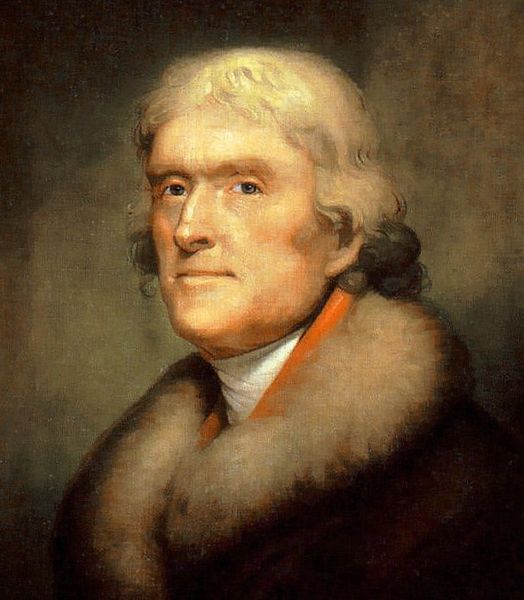
Constantine may be the most important figure in western history. The religions we recognize as Christianity today may have largely been crafted by Paul of Tarsus, but they would never have become the foundation of empire without Constantine’s conversion. The Christianization of the Roman Empire grew into the immense power of the Vatican in the Middle Ages, and fueled the political ambitions of colonists to this land that they claimed theirs by manifest destiny. And our presidents, no matter their personal predilections, have become more and more Christian ever since. Thomas Jefferson could not be elected in today’s political climate. Even Jefferson repented of having held slaves. There was a time when accusing a law-abiding president of war crimes would itself have been considered treason. A lot of water has passed under the Watergate since then, and partisan politics now holds hands with an uncompromising Christianity that suggests the death penalty is more to be desired than health care for all.


Divine Fury

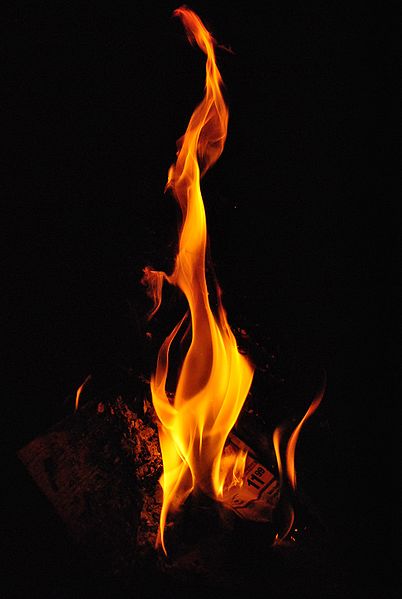
“It was like Armageddon,” a woman in Colorado Springs told a reporter, according to CNN, after seeing the wildfires raging down the mountains onto the city. The article opens with a reference to Godzilla. The story is a wrenching reminder of how helpless humans are in the face of disaster. When facing danger far bigger than ourselves, language of God is never far behind. The things we control—the future we engineer—is bright in prospect. We’ve impacted our own chances for the better in a steady surge since the Middle Ages. Of course, there have been notable blips along the way where we’ve fallen victim to our own paranoias, but generally, things are better. Controlling fire was among the first of human innovations that eventually led to civilization. Humans took a natural force and put it to work for us. It is easy to forget that fire serves no master. Until nature reminds us.

Earth, wind, fire, and water. The ancient Greek philosophers had narrowed the basic environment down to four features. Each of them holds profound dangers for a small species like our own. No wonder the ancients ascribed each of these elements a guardian deity or two. On driving trips to the west, I have gone past fires whose intense heat could be felt hundreds of yards away in the air-conditioned comfort of our car. Still, I shuddered. In this day of advanced transportation, most people can drive themselves away from the danger of wildfires. The problem is that material goods take up space, and in a world that values material goods above all things, well, you still can’t take it with you. My heart goes out to those who tell their stories of impossible decisions of what to take. What in our lives can’t be replaced? What do we truly value?

Funny thing is, we’ve known since I was in high school at least, that our own actions were changing the climate. The wildfires may not be directly related—I don’t know—but I do know that we’ve been in deep denial. We’ve been caught in a sin so black that the only way out is to lie until we’re even deeper in it. We’ve been destroying our own environment for money. Money with which to buy material possessions. Earthquake, hurricane, wildfire, and flood. None of the four elements are safe. We can put our material goods in a secure house in a mountain stronghold and still lose everything. It is the fate of a culture that puts too much faith in material goods. Colorado is beautiful and peaceful, much of the time. But nature respects no human. Yet we put our faith in material things. Maybe she was right after all, it is like Armageddon.

Friend and foe.


Naked Before the Almighty

Okay, so I’m a bearded white man traveling alone. Perhaps I look like I have nothing to lose. So at the Raleigh-Durham Airport I’m singled out for a full-body scan. I told the very serious-looking woman that it was against my religion. She said, “You can have a pat-down then.” Oh boy! I was very stoic as the stranger with a southern accent told me just how he was going to touch me, using the back of his hands until he met “resistance.” Echoes of Pulp Fiction. By the time it was all over, I think he kinda liked me.

We, as Americans, have allowed our government to subject us to horror. My younger colleagues tell me that the terror of high school after-gym shower time has finally been eliminated. I grew up taught that no one, not least myself, had a right to look “down there.” Naked in a windowless room with a bunch of boys whose hormones are tearing them apart was never comfortable for me. One gym teacher sadistically told us if we could hold our hand under the hot water tap wide open for a full minute we’d get an A in phys ed without having to do a thing more. Pain makes the man.

Now I go to the airport where some voyeur I don’t know and will never meet makes an assessment of my endowment, analyzes my assets. Thank you, no. Who gives him the right? Of course, the Bush Administration did. We, as citizens, stand bare before our rich and powerful leaders. I don’t think that’s what the right to bare arms is all about. From a shop below wafts Bob Dylan’s “Subterranean Homesick Blues.” The irony seems lost on all but me. But then, a stranger’s hands are down my pants. Bush’s legacy in the Patriot Act is that all are guilty until proven innocent. After being felt up, I feel like I need a shower. I need to check my “resistance.”

Then again, maybe my government will do it for me.