Sowing the Wind

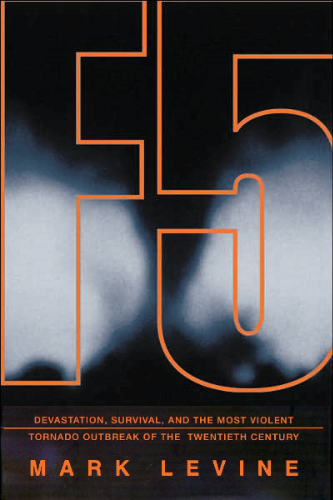
F5On May 31 in 1985, I was working at a church camp outside Uniontown, Pennsylvania when some severe storms rolled through the area. I had trouble sleeping through the thunder and lightning. I awoke the next morning to hear the news, in groggy disbelief, that tornadoes had invaded the county where my family lived. Frantic for their safety I tried to phone, but lines were down. It turned out all right—the nearest twister had been about five miles away from my home. This event was a shock because I grew up believing we never had tornadoes in Pennsylvania. I have always been terrified of them. I suppose that’s why I wrote my little book on weather in the Psalms. I just finished reading Mark Levine’s F5: Devastation, Survival, and the Most Violent Tornado Outbreak of the Twentieth Century. I’m not sure why I’m compelled to read about what scares me so much, but I suspect it’s because tornadoes have a whiff of the divine about them. Indeed, Levine’s book makes several reference to religious imagery when describing the utter destruction of Limestone, Alabama during the Super Outbreak of April 1974. It gives me little comfort that the storms that raked Ohio, Pennsylvania and Ontario eleven years later were the second deadliest outbreak following that of the book’s exploration, up to that time. There’s so much left to chance, with tornadoes.

Despite the complete lack of any intentionality behind the raw forces of nature, the phrase “finger of God” has become a fixture in the tornadic lexicon. Perhaps it is because the human perception of divine intervention has always been sporadically applied. One person’s miracle is another’s nightmare. Obeying only the complex rules of meteorology, the weather has ways of its own that even computer models cannot yet fathom. We still stand helpless in the face of the tornado. I have often thought, without a whole lot of data to back me up, that weather has played a major role in the human understanding of the divine. Quite apart from the obvious celestial orientation, the weather is easily forgotten until it turns bad, and when it does there is nothing humanly possible to do about it.

In April of 2011 a super outbreak of 358 tornadoes swept through the eastern United States and Canada, killing 348 people. In terms of damage, it was one of the costliest natural disasters in US history. And the capriciousness of the tornado stands at the center of it all. F5 is a hard book to read. The story practically turns its own pages, but the loss in human terms in the cold face of a planet that doesn’t exist for us is sobering indeed. Many religious people in the south were asking how God could allow children to be killed and hundreds of people maimed both physically and mentally for the rest of their lives. They prayed for answers that never came. And this may be the cruelest aspect of the apparently random nature of the weather. It maintains the right to kill, and prayers seem to bounce back from that brazen sky that comes just before a tornado strikes, and especially afterwards. Skies are silent. When they are not, it is time to duck and cover.


Backyard Archaeology

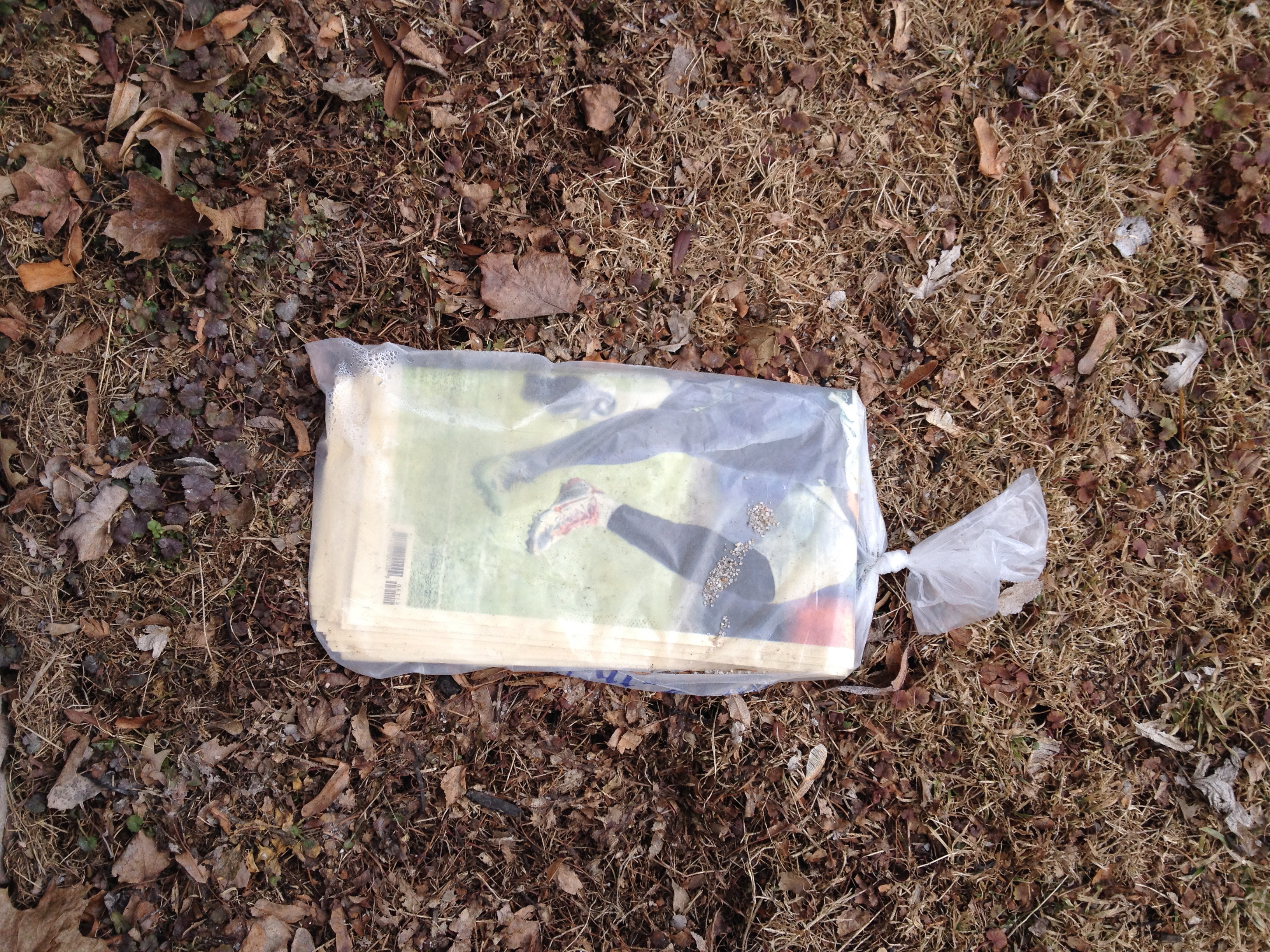
Among safe topics for discussion among strangers and casual acquaintances, the weather tops the list. It affects each and every one of us continually, and there’s nothing we can do about it. The ideal neutral subject. In fact, however, the weather is highly freighted with religious thinking, deeply sublimated. If you listen closely, you will hear it. Well, this year, at least in the northeast of the United States, winter has been the topic. We still have snow on the ground in New Jersey, and it has been here continually since January. The thaw has begun, however, and when I went to fetch the paper I noticed a newly melted item on the lawn—an archaic newspaper. Obviously the paper-deliverer missed the front steps that day, and by the time I stepped outside it had already been buried. Curious, I brought it inside to get a first-hand look at the past. It was the Monday, February 3 paper. The day after the Super Bowl. Apparently nothing much else was happening in the world a month ago. I don’t even know who played in the game.

IMG_1237

Religion and sports have a long pedigree. One of the first books I signed up at Routledge was on religion and sports in American culture. Routledge decided to sack me before the book was published, so I haven’t had the opportunity to see it yet. Nevertheless, it is clear that the meaning once provided by the strong arm of the Lord is now covered by the stronger arm of the athlete. I’ve watched in fascination as reporters question the players after the game, panning for bits of wisdom as if they might actually get us up off the couch and lead us to a few minutes of physical glory. Instead cliches trickle out: “we saw what needed to be done and did it.” “I took it to the next level.” “First of all, I want to thank Jesus.” Each one like a nugget of pure gold. I still don’t even know who was playing.

On my kitchen table, however, sits a soggy newspaper with the answers to that. The news is old news. And damp. We’ve had an entire Olympics since then, and war seems to be breaking out in the Crimea. Wait a minute, what century is this again? It seems that no matter how old the news is, it still isn’t old enough. One of the oldest news flashes received by humankind, if the Mesopotamians are to be believed, is that there is a huge flood coming. I turn on my browser and lo, a flood indeed! Noah will be released later this month. Posters began to appear in Manhattan as soon as the Super Bowl cleared out. Move on to the next big thing. And, unbeknownst to me, a newspaper laid buried beneath the snow, containing all the information I needed to know. I’m still wondering how that flood turned out.


Weathering Qohelet

Over the weekend I finished the initial formatting of Weathering the Psalms, my long-suffering book on the weather terminology in the Psalter. While I’ll have to give it another going over, a strange cocktail of feelings has come over me in the process. Scholars age quickly. The time between putting that last period on that last sentence and the book showing up in a few dozen hands is generally over a year. You feel outdated. Not only that, but this book was finished, for all practical purposes, a dozen years ago. In this world of endless, indeed, almost insane academic publishing, many books and even more articles have appeared that I should have read, pondered deeply, and incorporated into my work. That, however, is a luxury reserved for those society deems fit to place in colleges, universities, and seminaries. The predominant feeling, apart from relief, was a kind of melancholy, however. The book represents a world that no longer exists. Indeed, a young scholar who no longer exists.

From the day I started teaching at Nashotah House in 1992 (or even before), I knew it would be a limited-time engagement. The then dean, interviewing me, knew that I was too liberal to fit the medieval theology then current (and still current) at the school. As a teacher of the “Old Testament,” however, the damage I might do was deemed minimal. I wrote several articles on my beloved Ugaritic, but no job interviews came. Those who’d sussed the system suggested I try publishing biblical material—after all, that’s where the jobs are. (Ha!) So I began. Weathering the Psalms took several years to research and write in scholarly isolation. I began rising at 4 a.m. to find the time to do the writing. Most of the book was written between four and six in the morning. Yes, it’s rough. And tentative. A young scholar unsure of himself. Now I’m an old man even more unsure of himself. Still, there are insights in that outdated tome that I hope some will find worth their time.

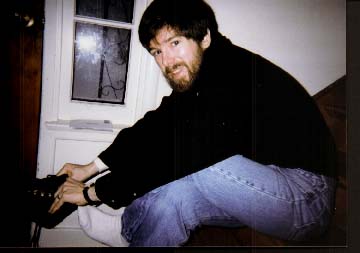
I have a photograph of myself that my daughter took at the time. I was putting on my boots to go shovel some snow. The face in the photograph is young. Optimistic, even. I was facing the weather. I’ve come to realize that all photographs are lies. They capture an instant of time that has already vanished. In my case, a livelihood. A dream that was shredded on the plains of some theologian’s ideological Somme. Winters seem to have become much harsher since then. Colleagues who’ve found jobs prosper while the rest of us fight against nightmares and that sense that all we ever tried to do was, in the end, vanity. One of the questions in the study, The Bible in American Life is, which is your favorite book of the Bible? Mine has always been Ecclesiastes. And even as I make final preparations to ship my manuscript to Wipf and Stock, I know that the preacher is right: there is nothing new under the sun.

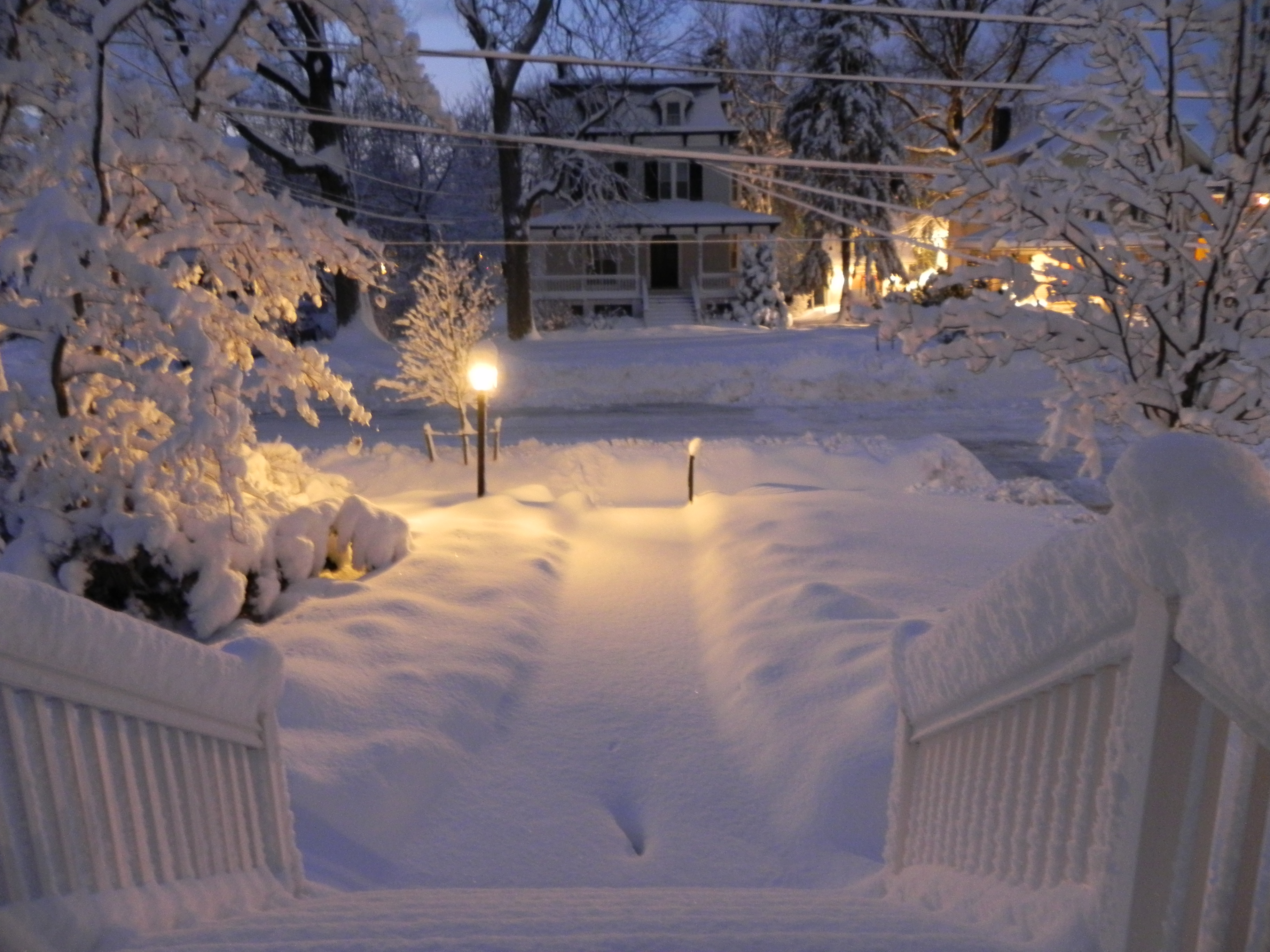
snowman


Med Ed

I’m not really the one who should be on oxygen in this situation. It was a routine, scheduled oral surgery for a impacted wisdom tooth. Not mine, but my wife’s. I sat in the recovery room and they wheeled her in on oxygen. When the doctor stopped in to check on her, he looked at me and said, “My God, get that man on oxygen! He’s going to pass out!” So they took the gas from my wife and laid me down instead. My wife had the magnanimity to think it was cute, but I felt embarrassed nevertheless. I couldn’t go into medicine even if I wanted to. I haven’t the stomach for it. So as I write this in the Urgent Care unit, I’m a bit light-headed. We came in for treatment of a snow-shoveling-related injury for my wife, and my mirror neurons are firing overtime. I hear them call a code red, and I think I hear the helicopter coming down and I think I might pass out. I can’t stand the pain-filled groans coming from the next room.

Compassion is one of the most overlooked of human virtues. I haven’t taken a sick day since 1987, but I’ve had companies tell me I hadn’t earned any yet. You have to earn the right to be sick. Even when I threw up on public transit two weeks ago, in one of the most embarrassing moments of half a century, I still got up at 3:30 the next morning to climb aboard again. So I’m sitting here, feeling ill, although I’m fine, and thinking about how people naturally feel for others. Only practiced cynicism can erode that. Or maybe I’m just a wimp.

It is no coincidence that most religions feature healers or healing as one of their central tenets. Life involves suffering, anticipated or not. There is something more than the physical going on here. Pain is the enemy, and I’m the one who’s well. There may be atheists in foxholes and even in hospitals, but they must be aware that the chemicals chasing one another around the neurons upstairs believe something else. Religion is a coping mechanism, perhaps something even more. So the winter takes its toll, and the snow claims another victim. All those instruments on the wall are beginning to creep me out. My mirror neurons suggest that if only those made of ice could melt with a little compassion, this world would be a more humane place. And when you get a moment, could I get a little oxygen over here?

Scare-Yous


Weathering the Psalms

Book contracts make me happy. In the case of an academic out of water, they are rare. Few people care what a PhD has to say unless s/he has a university appointment to back him or her up. Still, I wrote Weathering the Psalms while I was fully employed at Nashotah House. I carved the time out by waking at 4 a.m. to do my writing (a practice that has stayed with me ever since), and from 1995 to 2000, the bulk of the book slowly emerged. The day I was terminated at Nashotah I was working on a revision of the manuscript, a bit uncertain of what direction to go. After the trauma of that day, I couldn’t face my little project without the anxiety of association tainting the effort. It seemed to represent my failures in finding the job I knew I was meant to do. Such potent reminders soon weary even those of us who awake well before the sun.

Working in isolation, I had noticed that the weather is a very common motif in the Psalms. The problem is, any attempt to fit the evidence into an overarching scheme is artificial. I undertook a survey of all the weather references in the Psalms, and explained them as scientifically as a layman could. The result was not the smoothest reading, nor was it tied together with a strong thesis, but it was important. Although I have not been in a position to keep up with the research such a project requires, I’ve not seen anything similar emerge. The weather, however, still happens. And people still blame it on the divine. In ancient times there was no natural world. What we call nature was actively directed by the divine. The weather is probably only the most obvious example. We all know the phrase “everything happens for a reason.” This encapsulates the biblical view of the weather. This winter with its series of storms has reminded me of this, forcefully.

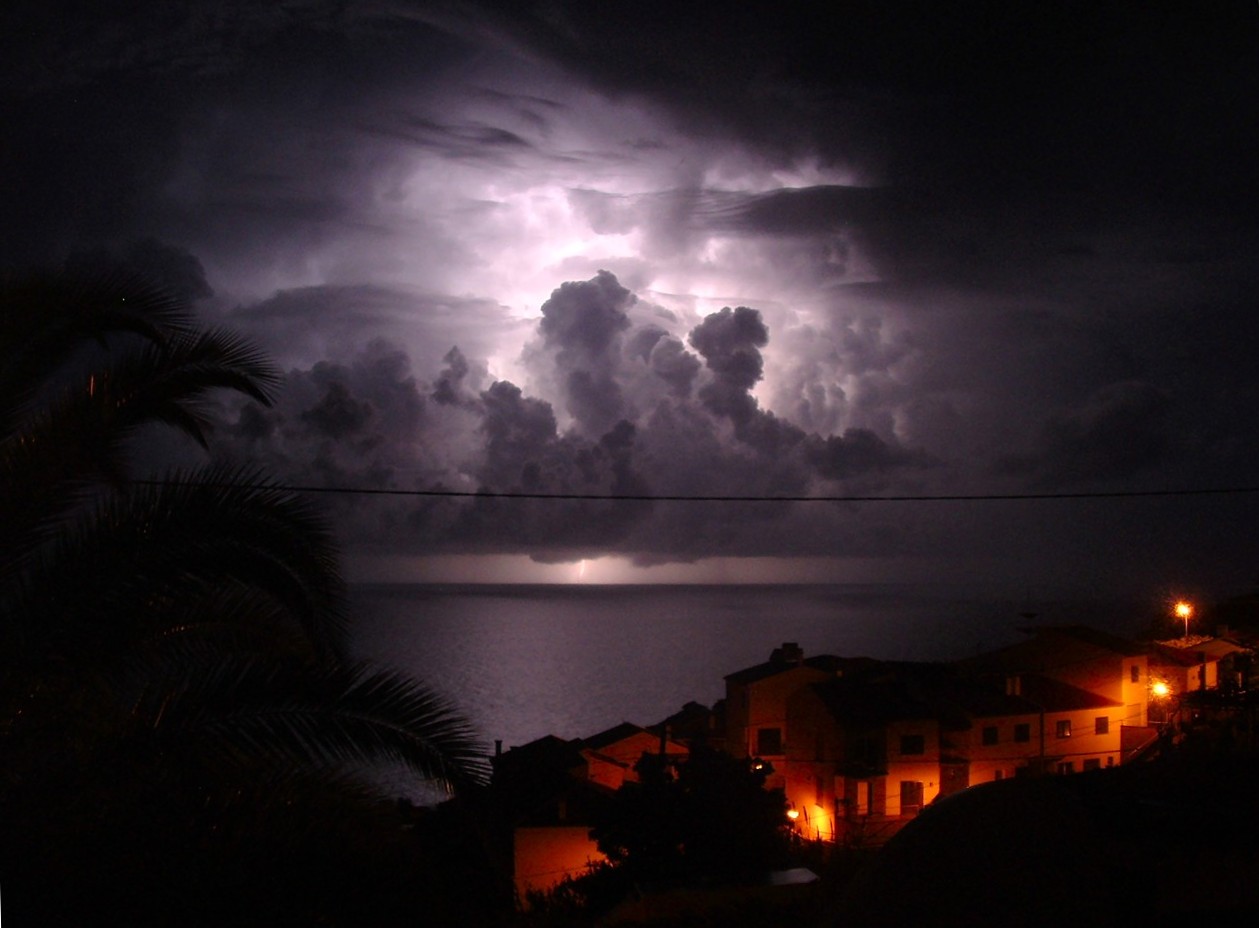
Photo credit: Don Amaro, wiki commons

Photo credit: Don Amaro, wiki commons

Ironically, editors started to show interest in the project only after I’d abandoned hope of ever getting it published. It was the fruit of my despair. It represented several years of my academic life, but, like its creator, it was growing older. So last week when a contract landed on my desk from Wipf and Stock, a profound happiness settled in. A sense of completion. I am not in a position to update the contents, but at least one academic publishing house sees the worth in the manuscript that came from so much personal experience. A decade is a long gestation period. I suppose if I had to write the book today it would reflect much more the experience of world-weariness that comes from not ever finding the job you know you were meant to do. Nevertheless, it is a small offering to the deity of the weather, and I am glad that, come next year, others will be able to share in my struggles to make sense of that world.


Not Narnia

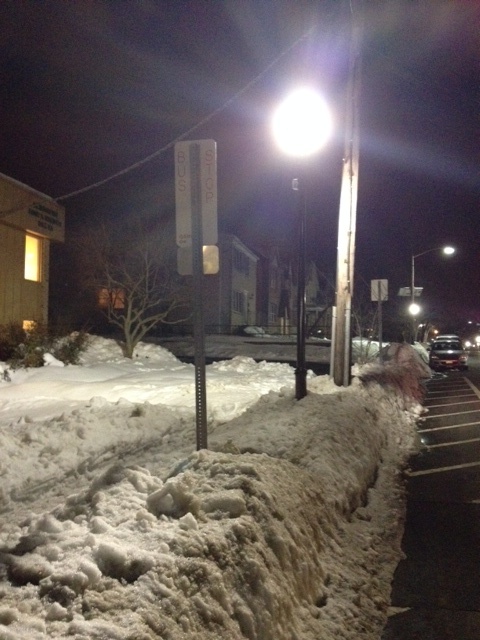
The snow fountain from a fast-moving snow-plow is a thing of beauty.  Unless you’re standing in the way.  It’s been that way this winter.  The sidewalk where I usually stand to wait for the bus is an arctic wasteland of waist-high snow piles shoved higher and higher by weary plow-drivers.  So I stand in the road, near a streetlamp in winter, but this is not Narnia.  I decided to try out New Jersey Transit’s highly anticipated “real time” bus locator—that way I know when to step out into the blowing wind to wait for the bus.  After I’d been sprayed by passing cars and the occasional snow-plow for 20 minutes, I became convinced that “real time” is just academic; it is the time that the bus would arrive, were the bus actually on time, if it ever left the garage.  Not that I blame the drivers—theirs is a thankless job that must lead to early retirement, or at least support the state mental hospitals.

Where's Mr. Tumnus?

Where’s Mr. Tumnus?

Now, I’m not the only one to be standing in the street, a hooker for capitalism, under my lamppost,  and some of the stops are completely snowed in.  When three passengers ganged up on the driver for nearly missing them because they weren’t at the stop because of all the snow, I began to feel a bit uncomfortable.  Springs can be wound too tightly, you know.  All of this is an issue because businesses don’t want to close for inclement weather.  During last week’s blizzard, I ended up taking the PATH train into New York, not knowing where it was going.  A young lady was fretting—she was going to be late for work.  An older African American gentleman comforted her.  “Don’t worry.  They don’t care if you come in late on a day like today.  They just want you to show up.”  They just want you to show up.  His words have haunted me. Businesses want you to show up because that reinforces the power of capitalism.  You don’t show and you don’t eat.  You lose healthcare.  Cobra is aptly named—you pay far more than unemployment’s pittance for monthly coverage.  Obamacare is about thirty years too late.

Every time I see the Mayor of New York justifying his decision to keep schools open when literally nine inches of well-predicted snow fall on the city—dressed in his trendy action-figure jacket, just like Christie after Hurricane Sandy—I wonder who is really being cared for.  The Mayor claims that of the over 1 million kids in the school system, a substantial proportion go to school so they can get their only hot meal of the day.  Is this the purpose of schools?  Is it not the humane duty of the largest city in the country to make sure fair opportunity is offered to those who wish to contribute?  Their parents, he adds, as an aside, have to go to work.  Why aren’t they being paid enough to feed their kids?  Oh, there is a blizzard coming, and it’s one of our own making.  As for me, it’s time to step back because I think I see another snow-plow coming.


Snow Job

Snow does not get mentioned very often in the Psalms. Sometimes it surprises people unfamiliar with Israel that the Bible mentions snow at all. It does, and snow does fall once in a while on the higher elevations of the hills of the Levant. This year has been a memorable one for snow in the New York City area. Generally speaking, the coastal cities of the northeast are not known for their snow. This year, however, global warming is flexing its muscles as erratic weather brings storm after storm to the region. Interestingly, an internet rumor of a thirty-inch snowstorm (supposed to have come earlier this week) demonstrates just how gullible we’ve become. If it’s on the internet it must be true.

A story in the New Jersey Star-Ledger traces how the rumor began, starting with an experimental weather model by a credentialed meteorologist, which, in the keyboards of novices, grew to biblical proportions. Fact checking is something we just don’t bother with any more. The facile understanding of “global warming” as tropics for everyone shows that. The internet makes information—true or false—available at nearly the speed of light anywhere on the globe. Except where the power is out, perhaps due to weather. Not only does knowledge spread quickly, ignorance is just as fast. People weary of snow are perhaps more open to suggestion than others. We don’t hear our Minnesota or Wisconsin friends complaining (at least not too much).

There was a time when the standard sources of authority determined what we would believe. We didn’t accept just anybody’s word for it just because they had a Facebook account. For all the debunking that we hear about, it is easier to preach than to practice. Don’t get me wrong, sledging to work through piles of snow is not fun and the old circulation isn’t as vital as it used to be, so I have to add more layers than is practical to keep warm. But I’m not expecting palm trees and rain forests in Manhattan any time soon. Nor am I expecting a three-foot dump of snow. I know better than to trust what I read on the internet. After all, they even let me post things on it every day. Talk about your theoretical blizzard…

DSCN0099


‘S No Day in New York

“You’re waiting for a train. A train that’ll take you far away. You know where you hope this train will take you. But you can’t know for sure.” Yet you’ve been standing on the windy platform in Newark for twenty minutes and they’ve announced the next train to New York will be an hour late.  A man you don’t know says the PATH train will take you to New York, but New York is a big city, and you only go there to work.  It must be a snow day.  Well, almost.  I work for a company that only closes when New York City Public Schools close for weather.  Today, kids, school’s open; but all is not lost—field trips are cancelled.  And so, the constellation of companies who take their cue from NYPS truck (sometimes literally) their New Jersey-based employees across or under the river, into a city where slush half a foot deep awaits them on every street corner, and that doesn’t slow those muck-flinging cabs down at all. 

With the weather we’ve been experiencing this year, I hear a lot of people saying that Mother Nature is still in charge.  Allow me to differ.  You see, I’ve been researching the weather and the Bible for years now and I’ve come to a slightly different conclusion.  In the Psalms, anyway, it is clear that God is in charge of the weather.  Given that New York is such a sinful place, I guess none of us should be surprised.  Still, I’m not sure the Bible has got this one quite right either.  After all, I’ve walked through ice-crusted snow up to my knees for a good part of my walk to the station, and I have my coat open so the cold breeze will cool me down a little bit before I have to walk into work with crazy hair and a scowl frozen on my face.  Didn’t some great theologian once say “sin boldly?”  No, it is not Mother Nature in charge.  It is not even the deity.  It is something far more powerful than God—money.  Can’t lose a red cent when there are human resources to be utilized.

I’ve never been on a Port Authority Trans-Hudson train before, and I’m not sure where this one stops.  I heard someone say 33rd Street, and that sounds encouraging, so when the train stops I follow him across the platform.  Sheep, as any shepherd knows, will follow a random person who looks confident enough.  I emerge from the dark underground, not quite sure where I am, and I just can’t find a Psalm in my heart at the moment, unless it’s an imprecatory one.  I stepped out of my front door into freezing rain three hours ago.  My trousers are wet to the knees, and I’m a little sick from facing the wrong way on the PATH train for a lengthy ride.  The cars, I notice, are shaped like Krell.  Yes, this is a forbidden planet and I don’t know where I might end up.  Excuse me, Mr. Mayor, but I think you got it wrong.  Field trips are not cancelled after all.  And I’m not sure I’m even worshipping the right god.

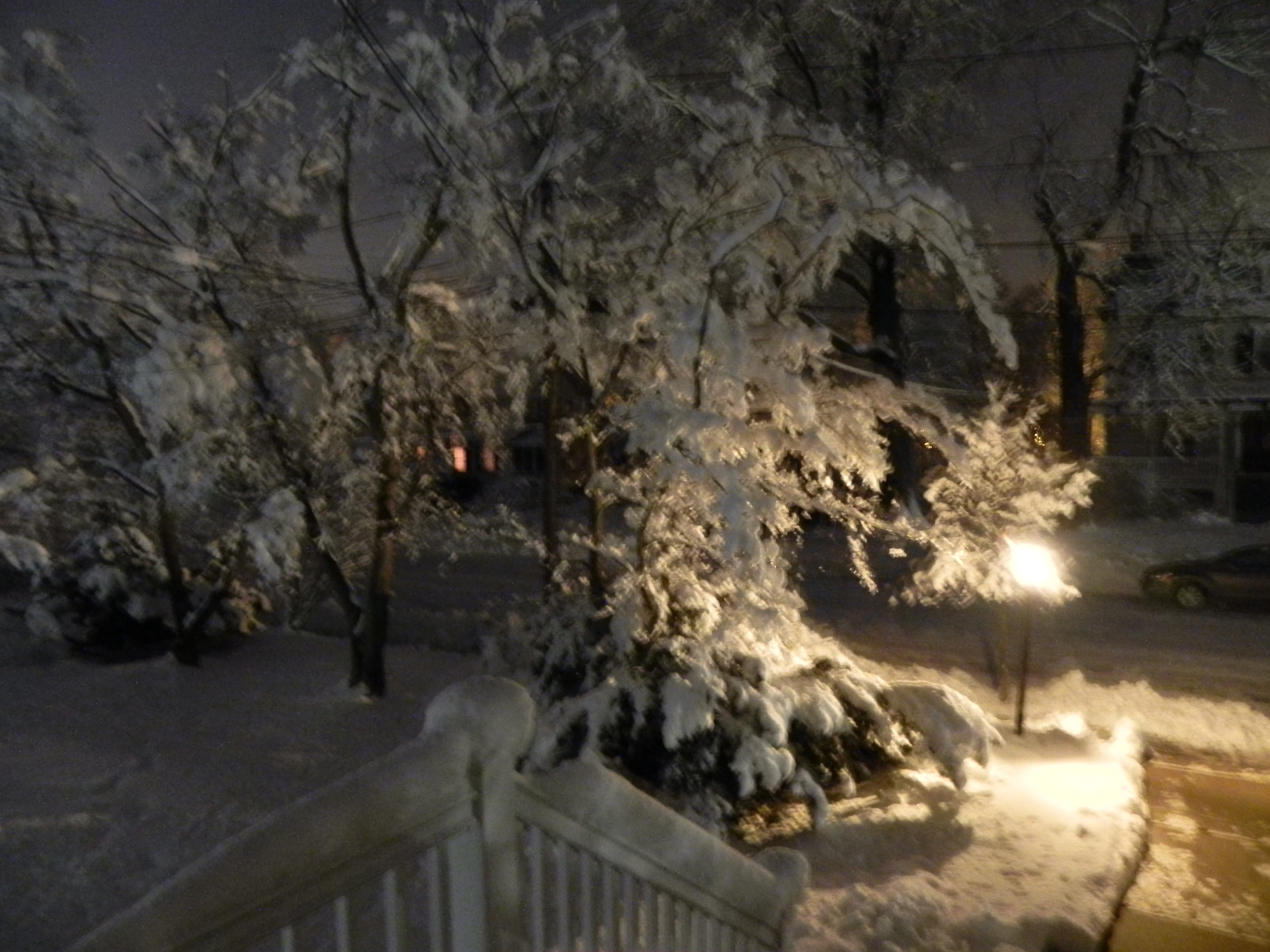
Deceptively peaceful

Deceptively peaceful


Porcine Prognostication

Punxsutawney Phil phled his shadow this morning, leaving many despairing another six weeks of winter, which meteorology seems to dictate anyway. I used to tell my students that Phil is a most peculiar prophet, in that he is, presumably, neither Christian nor Jew, but rather of the rodent religion (whatever that may be). People pretend the little guy has powers beyond those of the average mammal when it comes to predicting vast, chaotic systems. If a groundhog flaps his eyelids in Pennsylvania, prepare for plows and shovels and more thermal underwear. Playing into this annual phenomenon is the provocative persistence of the idea that prophecy is prediction. As much as scholars attempt to expunge the idea that foretelling wasn’t what prophets were ever really about, the populace likely wouldn’t have paid them any attention, had the possibility not presented itself that these preachers knew something the rest of people didn’t.

Prophecy is a strange phenomenon. We claim that we would like to know the future, but I’m not sure that we really would. Knowing that we’ve set ourselves on many tracks that inevitably lead to tears, do we really want to know? After taking my daughter back to college, we sat in a fast-food place to grab a bite on the way home. It had been snowing again, as it will do in the winter, and the television in the corner was blaring on about another apocalyptic band of snow. A bearded and burly Pennsylvanian at the next table turned to me, attracted, I supposed by my own facial hair, and said, “What about this global warming?” I nodded politely, not being very burly myself, but I thought of the fact that global warming does mean more severe winters in some places and warmer conditions in others. It is marked, scientists predict, by erratic weather, not a constant sauna in those regions accustomed to snow.

Although a Pennsylvanian by birth, I have noticed that my ancestral New Jersey does not receive much snow. Until this year. We’ve had the white stuff on the ground for over two weeks in a row. Yes, it snows in winter, but not usually here. I shiver and think of global warming. It is a chilling thought. Punxsutawney Phil may live far enough inland not to have to worry about learning to swim, but the same can’t be said of the inhabitants of most of the major cities of this country. We know it is coming, but we turn a blind eye. Progress in the name of unbridled big business interests brighten a future otherwise a bit more gloomy than we might prefer. Phil ducks back into his burrow and the rest of us clutch our coats a little tighter around us. Prophecy is a mixed blessing indeed. We already know the outcome before the groundhog awakes.

An agnostic groundhog ponders the inevitable (photo credit: I. EIC)

An agnostic groundhog ponders the inevitable (photo credit: I. EIC)


Weather or Not

The internet’s nothing if not self-referential. A post by Fred Clark over on Patheos, pointed out to me by my brother-in-law, has received 235 comments (at the time of this writing) for a topic I’ve addressed repeatedly, to no avail. I know my place. In any case, the topic which brought such furor was that severe weather is caused by divine displeasure, something I’ve addressed a time or two. In fact, I’ve written a book about it. Never mind, some of us revel in obscurity. Fred is writing about the remarks of former Tory David Silvester that the UK has been suffering unusually severe weather because of homosexual marriage. That’s really old news to those of us over here in the colonies; Pat Robertson told us as much after Katrina (although he didn’t limit the sins to homosexuality). Sex tends to stir up storms of its own, regardless of divine voyeurism, while we ignore the obvious culprit—global warming. (Culprit of unusually severe weather, not of sex.)

Global warming, as a recent conversation with a very smart undergraduate confirmed, is a poor name choice. Those of us on the northeastern coastal corridor have been shivering a lot this winter, and snow has remained on the sidewalks of Manhattan for more than a single day at a time. You call this global warming? Yes. The science behind climatology tells us that warming the overall temperatures of the globe will result in erratic weather, including uncharacteristically cold and freezing in some locations, dampness in others, while yet others experience, yes, warming. We know it is real, we know it is happening. We just don’t know what to call it. Some choose to call it God’s wrath. Others choose to name it more properly human shortsightedness. After we hunted the last mammoth down, we decided to start building bigger fires to warm the ice age up a bit. Those fires have been burning ever since.

IMG_3659

My book on the weather, by the way, suggests that divine control of the elements is an essential part of the biblical mindset. To ancient folk this was a no-brainer. God is in (his) heaven and messing with the HVAC system is one of the ways (he) passes the time. Down here we may shiver, become parched, or get washed away. It’s all a matter of the divine thermostat. As Fred Clark points out, the divine temperament sets the temperature based on human activity. Sin leads to unusual weather. Unwittingly, however, David Silvester may have gotten it right. There is a sin involved, and that sin is called global warming. No deity need be involved. We have shown that humans are quite capable of messing with the thermostat on our own. And the day I get 235 comments on anything it will be a very cold day in a place famed for its heat.


Flash Freeze

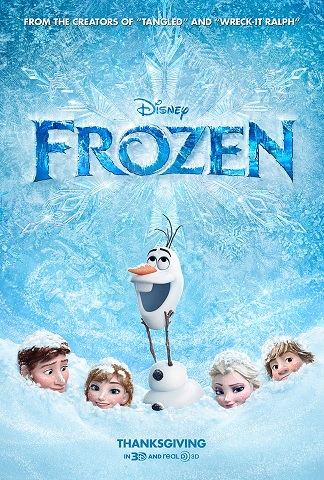
Frozen_(2013_film)_poster

One industry has, in this era of leisure, proven itself powerfully recession-proof. Entertainment, conceived broadly enough to include the sellers of strong drink, always seems to do well when the bread-and-butter parts of the economy tank. Among the entertainment giants is Disney, making it an easy target for curmudgeons like yours truly. Every once in a while, however, the cynicism has to melt. Frozen induced one of those experiences. I left the theater feeling that this may have been the best Disney movie of all time. You see, I grew up largely without Disney. We didn’t vacation in fantasy-lands like Disney World (when we could afford to vacation at all), and watching a movie was a rare treat. We did see some of the old style animations that came to our small town, such as Bambi and Dumbo, and we did watch the television program, I want to say on Sunday night. My real experience of Disney, however, came with parenthood where VHS and then CD then online versions of the movies made them accessible any time, in nearly any place. In the past decade or so, I’ve noticed, Disney has been putting considerable money behind the crafting of story, something many movie moguls fail to attempt. Frozen, however, stunned me.

The visual beauty of the Scandinavian world is no doubt part of it. I don’t often mention C. S. Lewis on this blog—he has been so thoroughly appropriated by the evangelical crowd that it is often difficult to admit how influential his work was to my college-age self. Lewis was unashamed of his Christianity, but in his fiction it isn’t always in your face. When I read Surprised by Joy, his autobiography, a scene—just a sentence really—lodged in my head. Joy, he noted, could be brought on by visions of the grandeur of the frozen far north. Lewis noted that not everyone has that perception, but I certainly share it with him. Elsa’s icy world impales with its beauty. Although I’m sensitive to cold, a deep desire stirred in the construction of that isolated ice castle. Elsa could, as an appropriately messianic figure, walk on water and ascend to heaven.

Of course, as I’ve observed before, the central trope of cinema is resurrection. Anna takes on the self-sacrificial role for her sister, marking Disney’s move away from the magic of the heterosexual kiss as the cure to all female ills. No, here are women who thrive not only without, but in spite of strong male characters. This is a world where not one, but two female protagonists are needed to carry the plot to fulfillment. Self-sacrifice, in fantasy worlds, often leads to resurrection. With Anna’s act of love for her sister, the cinematic world has reached an important pinnacle in its lesson to children: love comes in many forms, and if it is really love it is never bad. Elsa ends up satisfied without a king to guide her, a woman who reigns as she is, not as society says she should be. If only the ice of our patriarchal world could be melted so easily.


Blown Away

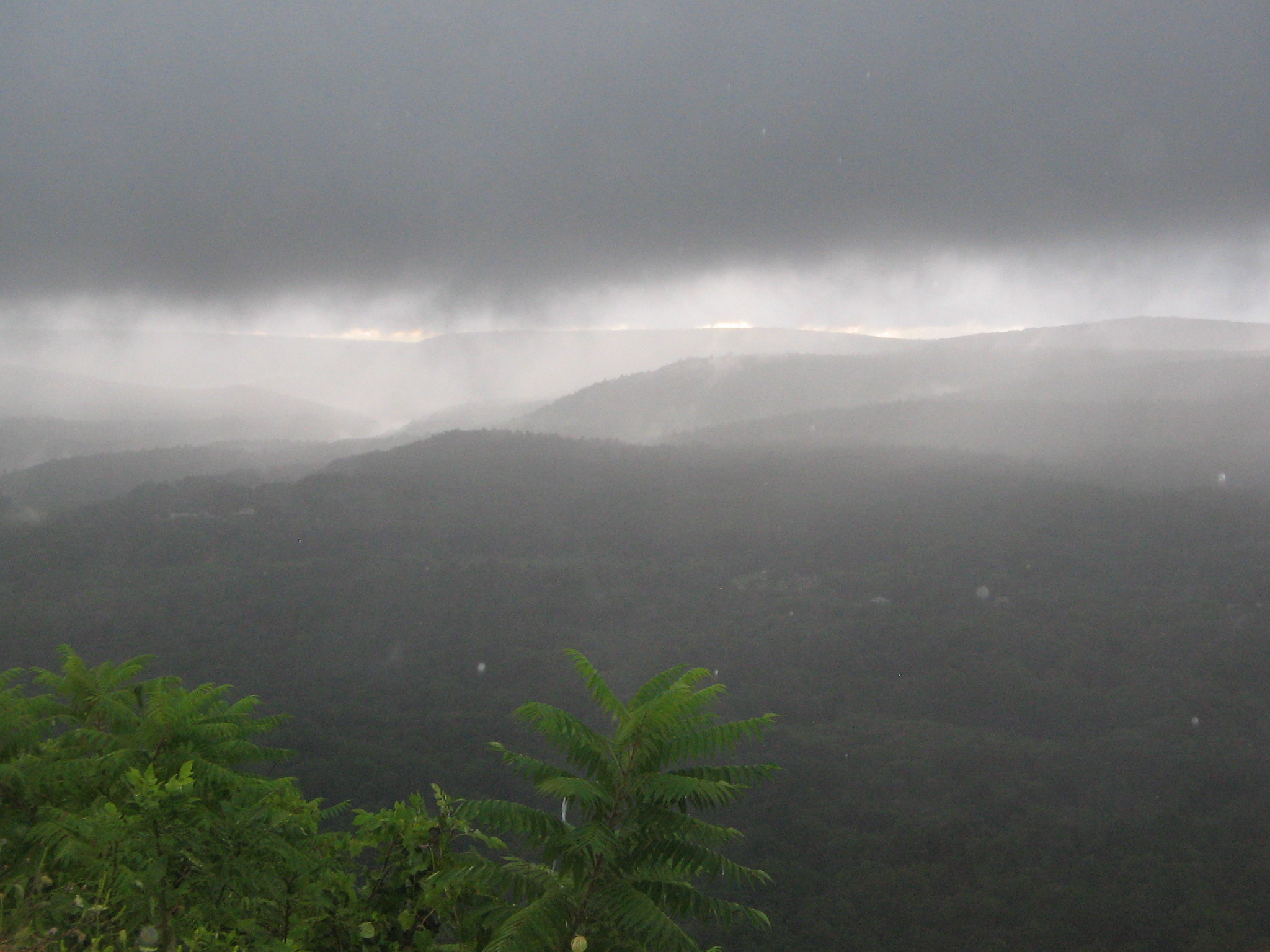
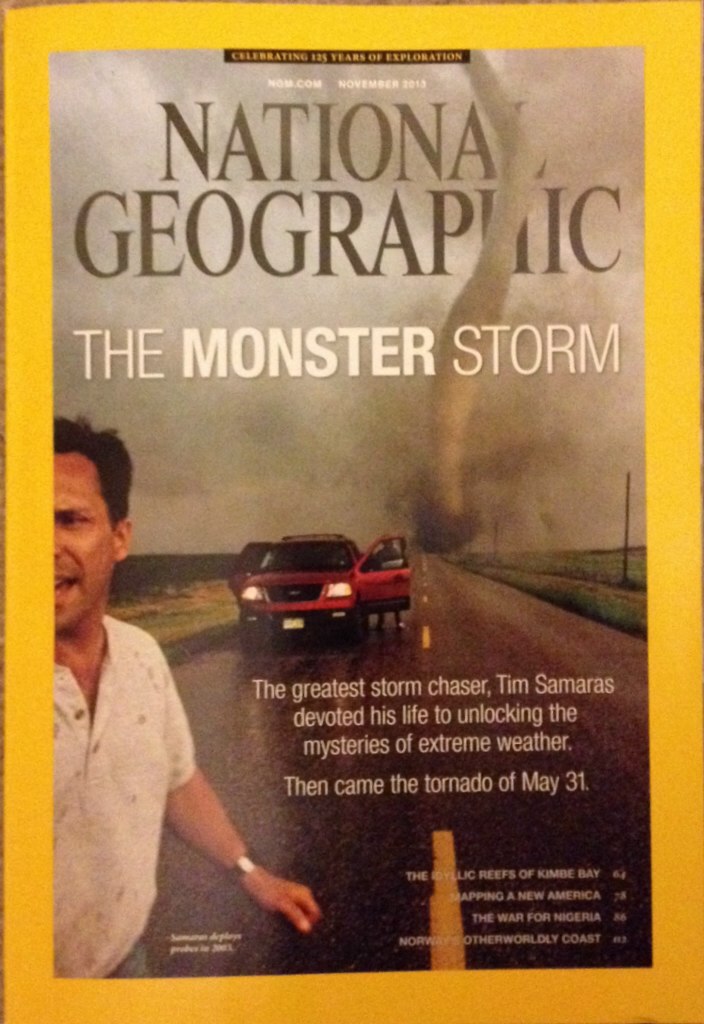
NovNationalGeoWith the weather that has dropped down over much of the US this past week, I can’t help but think of the religious implications of the weather once again. I’ve had a couple of discussions of my weather book, and perhaps it will be worth reviving; meanwhile the meteorological divine is alive and well. I recently had the chance to look through a November edition of National Geographic. We used to subscribe, but with the loss of too many jobs and the attendant moves, they became literally too heavy, and since the magazine is relentlessly prolific we finally had to donate our back issues to a loving home. In any case, this November’s issue proffers a cover story on Tim Samaras, the storm chaser who was killed by a tornado back in May. It was tornados that first led to my interest in the divine implications of the weather since the twister is often described as the symbol of an angry deity. The article on Samaras, however, took a different approach to the tornadic.

Describing the fatal May 31 tornado in El Reno, Oklahoma, Robert Draper, the article’s author, tends more toward language of the diabolical. Defining the terminal whirlwind as a “dense, moist leviathan,” Draper adopts the language of the chaos monster of antiquity. Over time leviathan came to be associated with evil (although originally it was morally neutral), even with the devil. That isn’t a biblical assessment but in a modern world swiftly becoming depleted of superlatives, leviathan has come to stand in for Satan. A few sentences later the trees are shaking “as if possessed by the devil.” Weather is often the provenance of the divine, but it can also be the tool of the devil. And since this was a fatal storm, one must be careful of blasphemy.

I have never witnessed a tornado first-hand, but I have been within a few miles of one or two. The utterly savage and random nature of the destruction translate to one of the most frightening atmospheric conditions imaginable. Reading about the growing storm, knowing that it will eventually murder the protagonist, reminds me of the stresses that led to my line of research at the very beginning. We have overcome so many of our natural predators that being completely vulnerable to the weather bestows a kind of metaphysical cast to it. We can still be frozen, washed or blown away, or overheated by the weather. It can desiccate us and begin wildfires to consume us. Its scale is immense. The origins may seem celestial, but the results infernal. Perhaps I will return to my book on the weather; it is clear that it remains one place where human power must bow before something so immense that it can only be divine or diabolical. Or both.


I See Only Nothing

Once considered to be bad omens, comets are becoming a fad for those who can take their eyes off the screen for a few moments to look at the sky. Comet ISON (C/2012 S1), apart from falling trippingly from the tongue, is apparently now visible with the naked eye. I’ve been looking forward to this comet since at least January, although living just to the west of New York City complicates viewing possibilities quite a bit. You see, although I am now an urbanite, I’m really a rural rube at heart. I grew up in a town of less than 1000, and was born in a town of less than 15000. I attended college in a small town and my first teaching job was in a rural setting in Wisconsin. Apart from the fact that I’m now convinced people have very little control over their own destinies, I have preferred to live in places where I can see the night-time sky. Perhaps it was my love of science fiction as a child, but for whatever reason, space has always captured my imagination. I used to drag my brother out on frigid nights to look at the stars, and even tried to teach myself the azimuth coordinate system to document precisely where I’d seen something. I took astronomy classes in high school and in college. In middle school I did an intensive report on comets that saved my science grade that year.

Hyakutake, 1996.  My first comet.

Hyakutake, 1996. My first comet.

Comet ISON, however, has been refusing to behave as it was projected that it might. Although it could still turn into a very bright sky-show, so far it has been difficult to spot, and, at least for my location, at inconvenient hours of the day. Much to the chagrin of creationists, ISON is 4.6 billion years old, although it is just getting out for it’s first tour of the solar system. Part of the Oort cloud region, Comet ISON is probably a piece of a never-formed planet out past Neptune that decided to take its first cosmic stroll about a million years ago. It’s had a date with the sun since that time. The scientific jury’s still out as to whether ISON will go out with a blaze of glory after its close encounter with our sun and if it will come back around again to wow generations of our distant progeny (presuming we survive that long). For me it will be a matter of seeing if the clouds ever break in the east at 4 a.m. so that I can actually get a glimpse of the sky.

Hale-Bopp, 1997; a little over-exposed--one of the hazards of amateur photography with film.

Hale-Bopp, 1997; a little over-exposed–one of the hazards of amateur photography with film.

Comets were once thought to be heralds of the gods. Like other variable objects in an otherwise pretty predictable night-time sky, they can be either very bright or very dim (even invisible, for all practical purposes). When Halley’s Comet came around in 1986 I was living in Boston and couldn’t see the heavenly visitor. In 1996 Hyakutake buzzed earth, I stood in wonder in the woods of Wisconsin, photographing my first comet. A year later when Hale-Bopp blazed through the sky, I was out with my camera trying to capture it on film (a medium, I understand, that is about as old as Comet ISON). Were these visitors bad omens? One comet may have been decidedly devastating for our dinosaur friends, while some speculate that life on earth was seeded by a comet (making it a kind of secular god, I suppose). I’m only convinced that we have no control over our fate as I stand outside at 4 a.m. yet again, only to find clouds in the east and a comet in my heart.


World War 1.2

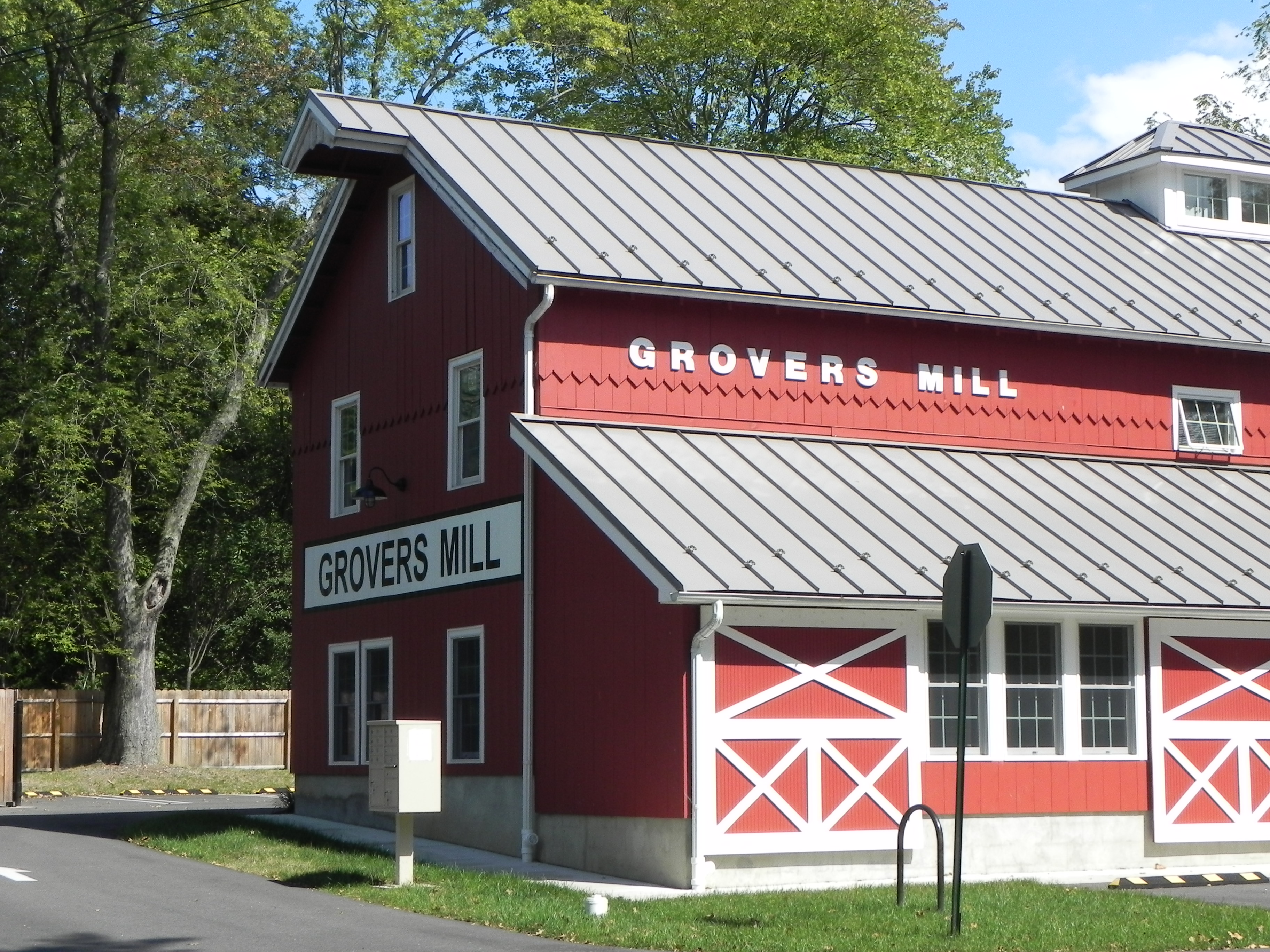
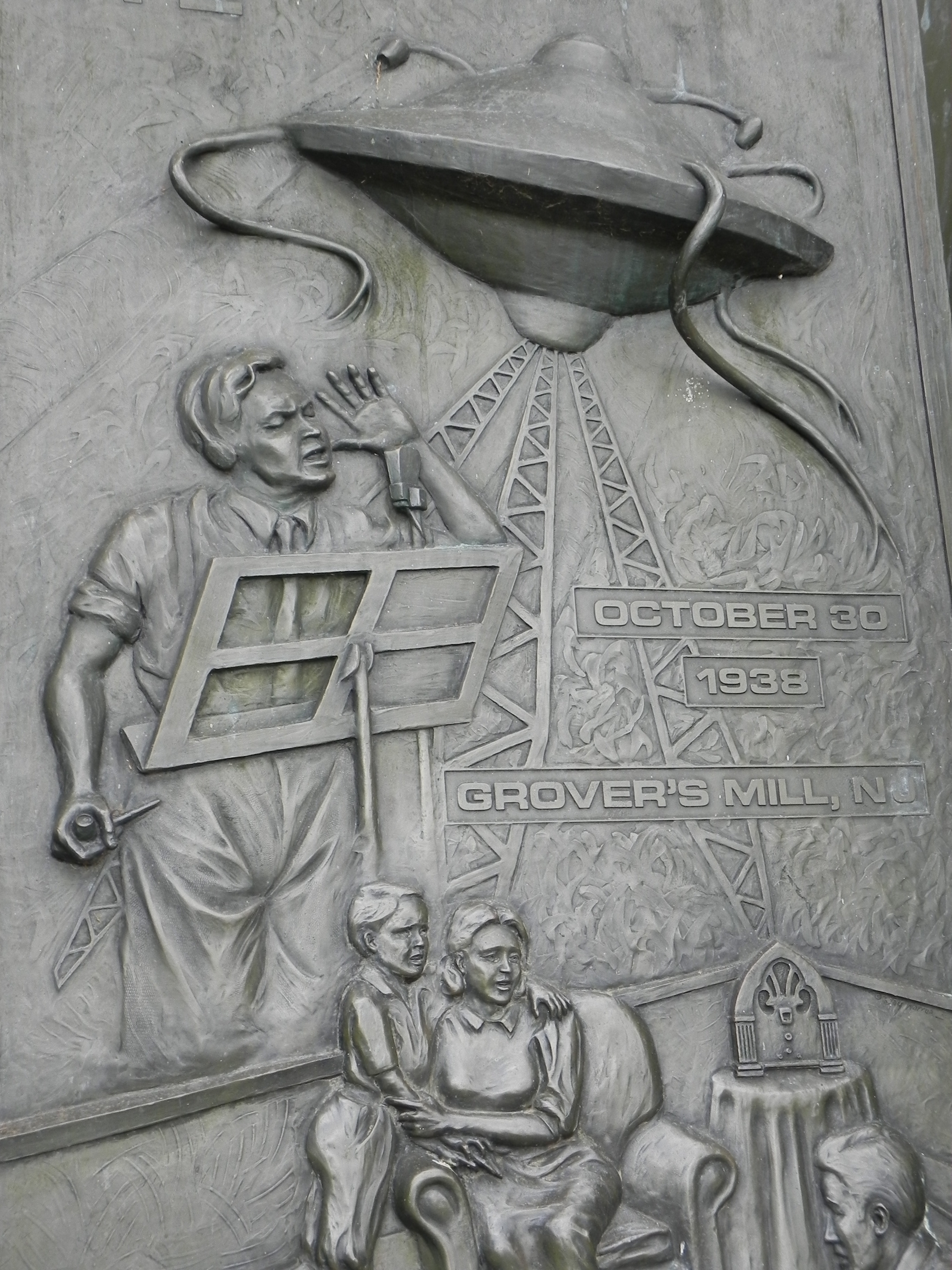
75 years ago today Orson Welles presented a radio drama version of The War of the Worlds. Perhaps it was the looming fear of the Second World War in a society that hadn’t yet overcome the trauma of the First, or perhaps too few people had read H. G. Wells’ novel, but the result was surprisingly catastrophic. Panic arose as listeners supposed that the invasion was real—the broadcast, although announced as a radio drama, followed a news bulletin format that overrode the rational faculties of many. This episode would influence government decisions about what to reveal to the public for years. And, naturally, it all began in New Jersey. Unlike the novel, the radio broadcast set the invasion, initially, in Grover’s Mill, New Jersey. This tiny town is difficult to locate even today, falling as it does between the busy north-south roadways that run through the central part of the state.

DSCN4241

The Hindenburg disaster had taken place the previous year in Lakehurst, New Jersey. Welles, impressed by the radio coverage of that celestial fear, used those broadcasts as models for his play. A few weeks ago I ventured to Grover’s Mill to let my imagination roam free for a while. A great deal of history may have been determined by that broadcast and the public reaction. We are ready to believe that danger lurks above. The First World War began to make early use of the airplane as a weapon. The sky, previously, had been obtainable only with the slowly moving balloon. Only eleven years earlier Charles Lindbergh had crossed the Atlantic by plane for the first time. The Second World War would see air combat as a major component of victory, also for the first time. My mother grew up in New Jersey, watching planes searching for German U-boats off the shore. The skies were not so friendly then.

DSCN4239

As I stood in Grover’s Mill, I recollected an unpublished book I once wrote about the weather in the book of Psalms. The thesis, somewhat loosely, suggested that for the average person the sky reflects the mood of the divine. Dramatic clouds still look angry, even when God is removed from the equation. The Reagan era gave us all new things to fear raining down on us from the skies. September 11, 2001, brought the skies crashing to the earth again. Invasion from above is an apt way to add a chill to Halloween, for it takes the prerogative of the deity and makes it either human or alien. At least most people who believe in God think he’s on their side. When the Wright brothers took their heavier-than-air craft briefly to the skies in 1903, The War of the Worlds had only been on the market for five years. The coming decades would drive God from the skies and we would come to learn that what falls from above would no longer have our best interests at heart.


Sun Devils

Unbelievable. The unrelenting sun of Arizona is unbelievable. Even a “cloudless day” back east is only an approximation. Here it is literal. And like all things literal, it attracts the Fundamentalists. I spent the day on the campus of Arizona State University, the country’s largest university by enrollment. Outside the student union, a couple of bands were banging away in the heat, but when I passed by in mid-afternoon they’d been replaced by a street preacher. He was nattily dressed and provocative. When I first walked by he was talking about students being either “a wicked homosexual, a wicked pot-smoker, or a wicked feminist” and went on to throw in some choice words such as “Obama-loving sinner.” Nobody seemed to be paying him much mind. I went on to a couple of appointments and when I passed that way again, at least ninety minutes later, he was still at it. Now he had a small crowd. Students virtuously challenged him as he claimed that he was without sin, “yes, I am Christ-like” he said to one question, and proceeded to tell anyone that challenged him that they were not children of God and that they should run to Hell because they would enjoy it so much.

Preachit

The more I watched this charade, the more trouble I had believing that the preacher was sincere. He quoted, out of context, of course, chapter and verse. He literally thumped his Bible. His hatred for anyone who disagreed with him was plainly evident. I felt embarrassed on so many levels. This is a state university, and the man had a clear agenda of hatred and intolerance. I was here to meet the religion faculty. Everything students were being taught in their classes was being shot down by an ancient book that had relevance only by being quoted out of context. And all of this on a campus whose mascot is the Sun Devil. Devils abound on campus, but the worst, it seemed to me, preached loudest.

Somewhere along the way to enlightenment, this kind of Christianity slipped the rails to become its own self-righteous force. What right had this man to tell students they were wicked? To me they seemed hospitable, peace-loving, and kind to the stranger in their midst. The preacher, self-fascinated, claimed to be without sin. I guess that gave him the scripture-sanctioned right to cast the first stone. Good thing he wasn’t in the crowd when Jesus rescued the woman caught in adultery. When a few students pointed out his flaws in reasoning, which were many, others applauded before he flew back to his out-of-context biblical backbone. More quoting, more thumping. The sun was out in full force in Arizona, but somehow it failed to fall on one man who proclaimed himself better than all others.