Implausible Deniability

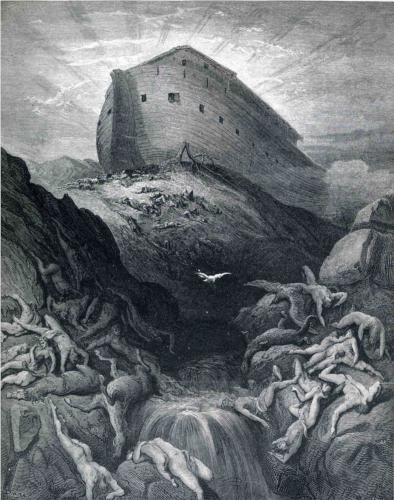
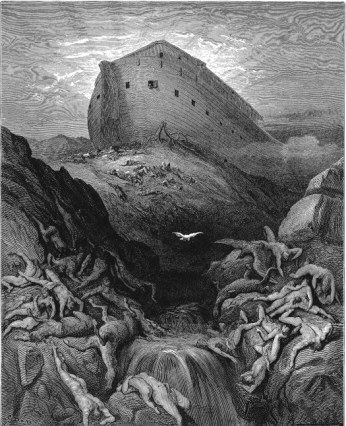
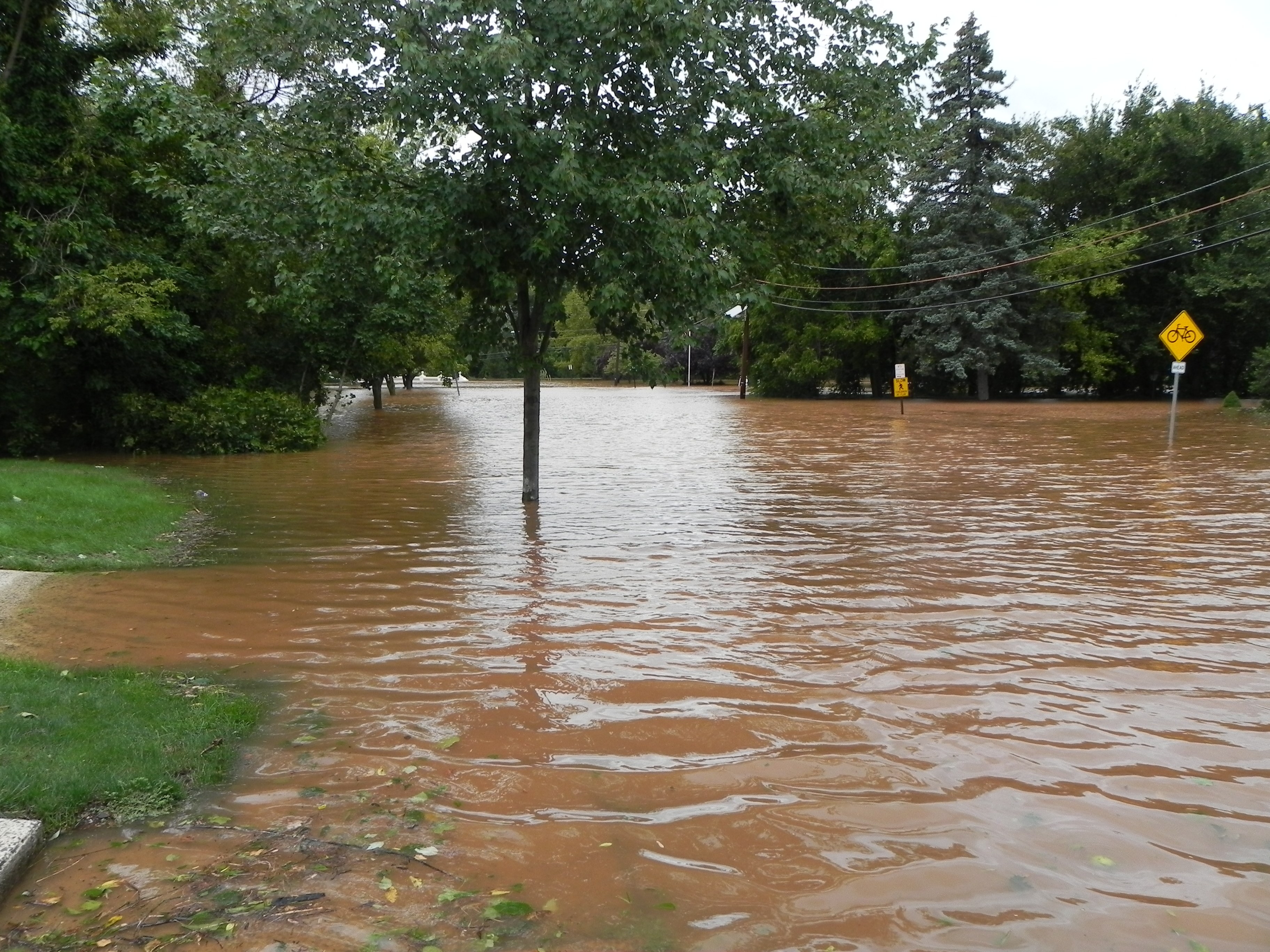
Sandy gave us a little taste of dampness under the gunnel. You see, people live by the water because it beckons to us. That was actually Rachel Carson’s idea, but nevertheless, we do find ourselves drawn to the sea around us. Historically our great cities grew in the littoral because communication across the big water was, prior to jet travel and trans-oceanic cables, the best way to stay in touch. Have a business meeting in London, but live in New York? No problem. We can get you there in two-to-three weeks. And the ship sets sail. Since that day we’ve become more electronic. Those of us who experienced Sandy near New York City know that one of the biggest problems was that salt water and electrified trains don’t mix. Of course, conservative lobbies have insisted that Congress and the White House keep their eyes firmly shut about the possibility that a more unstoppable flood is coming. We may not need an ark, but we’re going to have to take some steps back.

A story on the Weather Channel shows the “smoking gun” of global warming. Oh wait, that’s just a myth. Industrialists tell us so. But what a devastating myth! The Gulf Stream waters of yore have kept the climate mild in northern latitudes. While in Scotland we spent a wonderful weekend with some friends on the Island of Arran in the Hebrides. Palm trees growing in Scotland? Yes! The warm Gulf Stream means that much of the British Isles remains relatively temperate despite their latitude. The Gulf Stream, due to climate change, is slowing. In less than a century, climatologists now predict, the oceans will rise three feet. Looks like I’ll need to wear my gaiters to work. We’ve known for about half of my life that we’ve been changing our environment. And not for the better. Those who are too wealthy stand to lose a little so we do what we can to protect them, the poor dears. The rest of us had better learn to swim.

We don’t worry when the people of some Indonesian island point out that their entire world may submerge. Put a little ocean water in the subway and, well, that’s an entirely other story. How are the peons to get to work? Let them wear hip-boots. Word from the top one percent is that there is no global warming. If the Gulf Stream is slowing down it’s because it’s lazy. What a moocher! Suppose it will be wanting a health plan next. That’s the problem with the weather—it changes like, uh, the weather. Unlike the minds of some people that are already made up and never change, no matter what the facts. When the one-percenters start speaking, I’m glad I’m wearing my hip-boots after all.

Where can I get me one of those?

Where can I get me one of those?


Umbrella Apocalypse

Broken ribs and twisted, tortured limbs hanging useless under a leaden sky. It was a scene of carnage. I knew the world was supposed to end yesterday, but I didn’t believe I would experience it, but the evidence was indisputable. It was the apocalypse. For umbrellas. Winter storm Draco had melted by the time he reached the East Coast. I awoke to the apartment shuddering in the wind, and I could hear the rain pelting the windows. I had one more day to go to work before two things: the end of the year and the end of the world. And I would be relying on New Jersey Transit. The very thought makes me want to cower in the closet. My bus stop has no shelter—it’s just an exposed street corner, not far enough away to justify a drive. I stood in the rain, faithful umbrella held like a shield in the blast of Draco’s breath. The bus, of course, was nearly half an hour late. I stumbled up the stairs, glasses dripping, and decided that today, only today, I would take the subway across Manhattan. After all, the world was ending.

The lines from the Port Authority to the bowels of the subway are like those old documentaries of massive lemming migrations off a cliff. My turn. The card reader said “Card Already Expired.” Metrocards don’t expire; you charge them up and recharge them when they’re empty. I still had money on my account, but with other lemmings close behind, and rush-hour grade lines at the recharging machines, I decided to fight the dragon on the streets. It was with a certain Cervantesque tilting at the wind that I made my way across West 41st Street, umbrella forced into a tiny cone by Manhattan’s famous wind tunnels. Twice I was blown off the curb. Then at 5th Avenue the wind defied both the laws of physics and the agreed conventions of meteorology and slammed me from north and south simultaneously, my umbrella bucking in my hands like a terrified stallion. It sustained two broken ribs, metal twisted in opposite directions, flesh flapping uselessly. By the time I reached Grand Central, it couldn’t close, so I dumped my companion into a garbage can with other umbrellas and went on alone.

When I got to the office I discovered my hat was missing. While it would be more dramatic to say that a stocking cap blew right off my head, the truth is that it must’ve fallen out of my coat pocket. I was wet, buffeted, and without two items with which I began the day. The sky was still black as I looked out on the scene of the final battle from The Avengers movie. It had been an apocalypse all right, for the umbrellas. Chicago may be the Windy City, but New York is the Umbrella Killer. When I made it home as early as 6 p.m., I knew the world had ended for certain. I read the Cajun Night Before Christmas and went to bed, thinking of all those poor, dismembered umbrellas. Today is the day after the end of the world, and I am huddled here waiting for the dawn.

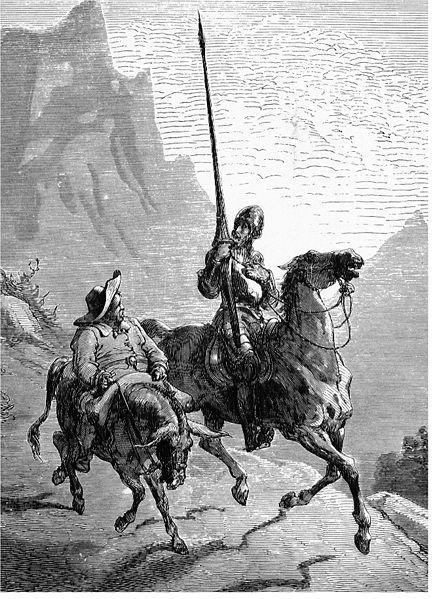
Don Quixote rides out of Manhattan yesterday with Sancho Panza wondering at his denuded umbrella.

Don Quixote rides out of Manhattan yesterday with Sancho Panza wondering at his denuded umbrella.


Blame it on the Rain

I’ve been on the losing side of my share of elections (although it feels like far more than my share), but I’m amazed at the character of the GOP that has come through these last few days. The quote that keeps running through my mind comes from The Dark Knight when the Joker says to the Chechen that if they cut him up and fed him to his hounds, “then we’ll see how loyal a hungry dog really is.” Blame has been flying thick and fast, but one thing I don’t hear any Tea Partiers suggesting is that Hurricane Sandy was sent by God to seal the election for Obama. Hurricane Katrina may have been sent by God to wipe out the sinners in New Orleans, but when Sandy gave a chance for Obama to show his true colors, it was just a freak storm. I’ve never been a fan of Chris Christie, New Jersey’s bully governor. During Hurricane Sandy and its aftermath, however, I was very impressed how he handled the situation. He showed a rare side full of compassion for those who were suffering. He vowed to help President Obama make things right again. When the storm of the election was over, however, Christie’s own party verbally crucified him for doing the right thing. Does this not show us just what white privilege spawns?

Turning back the clock is an exercise best left for post-apocalyptic scenarios of rebuilding society and the occasional spring or fall weekend. As our world makes progress—and yes, it is slowly making it—we must constantly reassess the situation. The ethics of the 1950s favored white men, the mores were blithely uninformed that an entire world exists outside this strange isolationism that could only be broken when Communists threatened our way of life. We are over half-a-century beyond that: the Berlin Wall has fallen, the Cuban missiles are gone, and those seeking to move to America are by and large the tired, the poor, and those yearning to breathe free. Not all of them are “white.” Not all of them are male. They are, like the rest of us, human beings.

I have never wished want or deprivation on anyone. I know what moderate want feel like (I lost an entire day of my college education searching for three dollars that fell out of my pocket, wondering how I would make it through the week without it). I have spent several years of my life tip-toeing around unemployment, and sometimes falling into that crevasse for a year or two at a time. Each time I claw my way out I earnestly wish that no one would ever have to face that. A political party that puts such a strong emphasis on giving up all the good we’ve managed to obtain, and cries about health care that doesn’t even approach the humane, universal care available in just about every other “first world” nation, is a party in need of serious, prolonged soul-searching. On this day when we honor veterans who, despite personal differences, stood side-by-side for the good of their country, perhaps those attacking their own might in days of privilege spend a few moments in serious thought.

Blame it on the rain…


Gitche Gumee

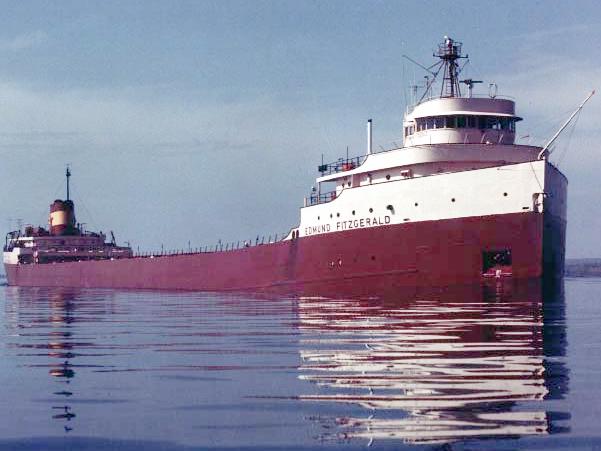
Up on the rugged western shore of Lake Superior the lamp atop Split Rock Lighthouse will be illuminated for the only time this year tonight. Immensities and superlatives fail at some sites, and as the cold waves lap eternally at the shore, this is one of them. Split Rock illumines its beacon in commemoration of the sinking of the Edmund Fitzgerald on the far end of that great lake on this date many years ago. While not as large as the Titanic, the Edmund Fitzgerald outstretched two football fields and carried more than fifty million pounds of cargo, immeasurables we are forced to recalibrate into yardage and tonnage. When the Fitzgerald sank during an unnamed November storm in 1975 only twenty-nine people died, but the tragedy soon became part of American legend. The image of immensities battling for the souls of twenty-nine human lives possesses an eerie, epic quality. When faced with the raw rage of nature, we are helpless indeed.

Shipwrecks may be the ultimate metaphor, for like ships we are consciousness in a protective vessel. Of course some deny that a soul exists, but in November it is difficult to doubt. A century ago the Titanic sank, and we still wonder in fascination. Human life is fragile when confronting the north Atlantic, or Lake Superior, or even the great waves that wash ashore and sweep some away. Great bodies of water, some psychologists say, represent forces larger than ourselves in the human psyche. Some suggest the ocean in dreams represents sex, but others would say it’s God. In the realm of metaphor anything is possible. It is no accident that many Christian sects begin the rite of membership with total immersion in water. When the Fitzgerald was baptized, twenty-nine men died.

Standing on the vast shoreline of a gray Lake Superior has a way of making you feel insignificant. Enormity was easily related to divinity in the primitive mind, but standing next to something truly vast still sends me into a protective crouch as I ponder just how little I really am. In this year of destructive storms, as we’ve taken to naming the winter squalls that whip across the continent with noble names such as Athena and Brutus, we are still at the mercy of something unspeakably large. The weather is the ocean above us, and it bears children named Andrew, Irene, Katrina, and Sandy. Each reminds us that we are constantly at the mercy of something far larger than human comprehension. Every year as the tenth of November rolls around I think of the Edmund Fitzgerald and the overwhelming forces that surround us. There is indeed a metaphor hidden here, for those willing to plunge into the frigid depths to find it.


New Prometheus

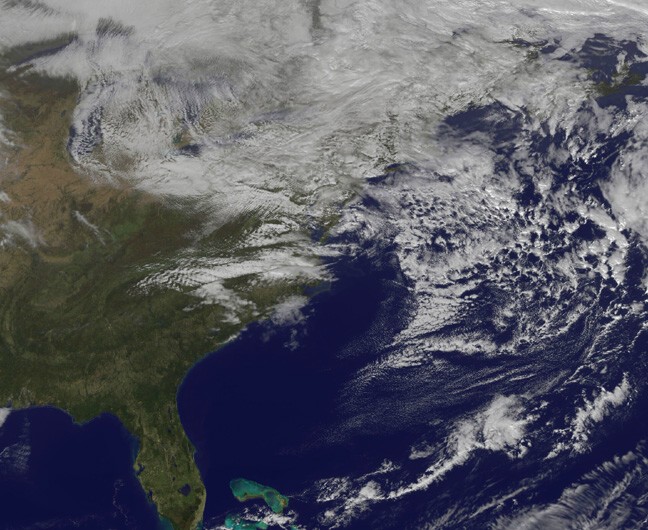
Nothing portends the wrath of the Almighty like an unseasonal storm. The late season Hurricane Sandy, now dubbed the Frankenstorm because of its potential hookup with two wintery systems making their way east and south, is poised to make an apocalyptic scenario on the east coast, we’re told. Well, it is 2012, the year of apocalypses, after all. In an interesting shift, however, this storm is named after not a divine character, but Frankenstein’s monster, the human-made nightmare. I first read Mary Wollstonecraft’s Frankenstein back in high school, and I was immediately subdued. The story, undoubtedly frightening when first heard, is unremittingly sad. The “monster,” like all of us, finds himself in a cold and lonely world where he is rejected because he is different. It is cruel and Republican kind of world. All the monster seeks is companionship, acceptance. I found the story so sad that I’ve had trouble reading it ever since.

The naming of a storm after a terror created by humanity may be prescient, in a regrettable way. Only the most gullible (read “greedy”) believe that industrialization had nothing to do with it. We toasted our own planet for a buck or two. In biblical terms we have sowed the wind, for which there is only one kind of produce. Hurricanes are quite natural, and although the irregular weather of 2012 may prove simply a meteorological anomaly, it may be the result of our tinkering with the baubles of divinity. They certainly seem to be getting bigger than they used to be.

I have to admit to having a persistent fear of those doing the cobbling. Too often their motivation appears to be flat and green and indigestible. And nothing like stockpiling it makes a person somehow less human. Mary Wollstonecraft wrote Frankenstein not for money, but for love of words. The modern chimeras we construct are mere carnival side-shows by comparison. And like Victor Frankenstein we have engineered beyond our capability to understand. Our best option may be to stand silently and wonder at the forces that hold us enthralled. For in the novel, at least, the real monster is not the cadaver stitched together underneath the sheet.


Pipe Dreams

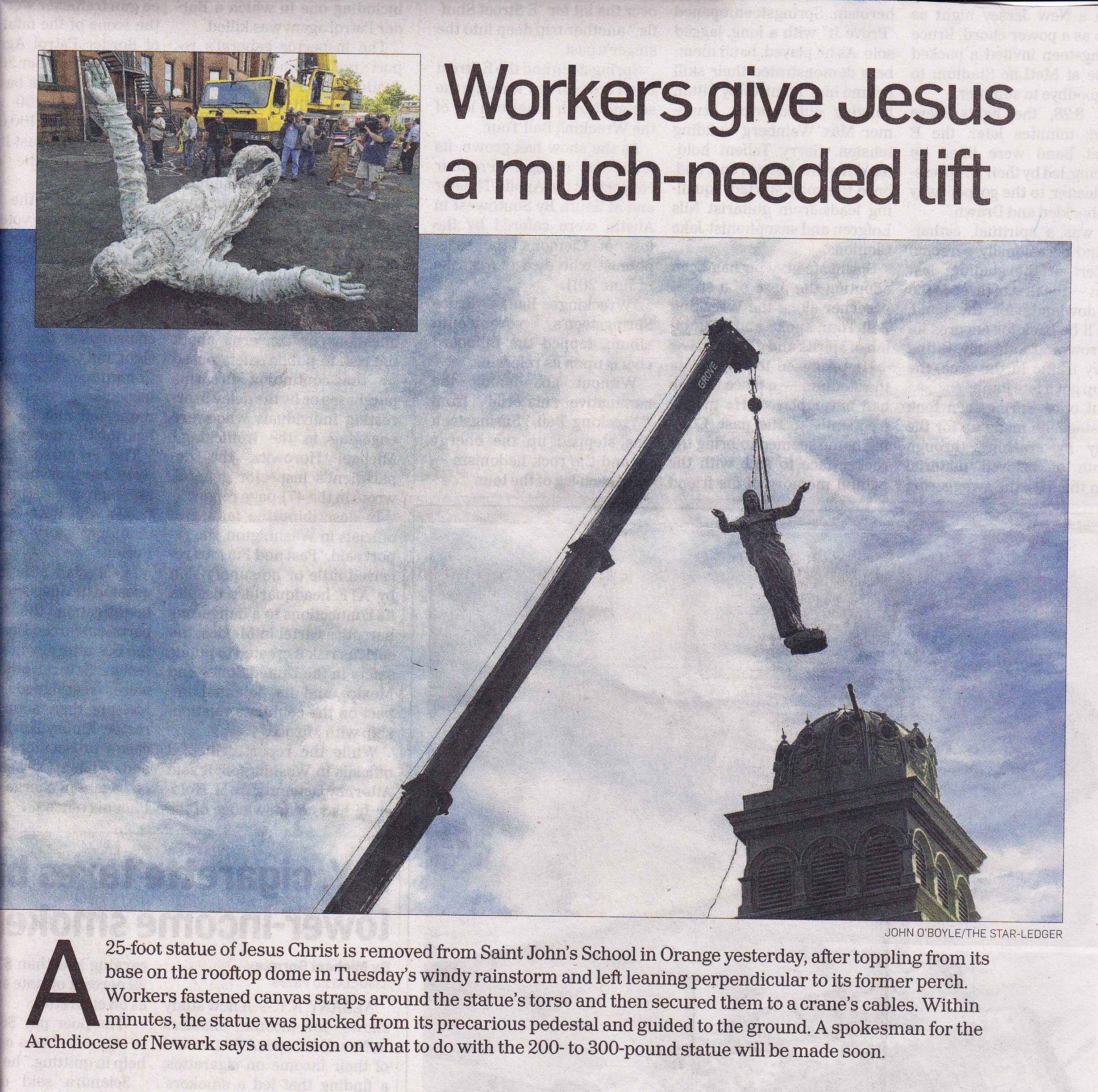
While I was off in Indiana, Jesus was coming down in New Jersey. Well, at least a graven image was. My wife saved the front page of Thursday’s New Jersey Star-Ledger that had a front-page, above the fold headline, “Workers give Jesus a much-needed lift.” The caption notes that in a gusty storm on Tuesday the 200-300 pound Jesus (this is America, after all) tumbled off his pedestal at Saint John’s School in Orange. A crane hoisting the fallen Lord dominates the first page. Clearly a bit of irony on a slow news day, the social commentary is thick indeed. Despite Magritte’s assertion, we still say the painting is a pipe. The representation is the object. This is the native logic behind the “idols” of old—to capture an image is to somehow to encompass some of the essence. This is precisely why the Hebrew Bible forbids images to be made.

I realize that “essence” is a disputed concept these days. Some scientists have declared that no such thing exists, along with souls, deities, and free will. Nevertheless, most mornings I wake up aware that I am me and not you, that my physical body is relatively near where I last remember it being, and that it faces the same hopes and limitations it did the day before and before and before. Perhaps this continuity is an illusion, but I can’t afford to treat it as such. It’s hard for an identity-less person to hold down a job. As usual, it is money that comes back to define us.

We recognize that it is disrespectful to mistreat representations of what we hold sacred. Does Jesus suffer any real harm for his image laid out on the ground? The nuance necessary to separate likeness from reality is something we obviously possess, but as we deal with the physical world the distinction frequently fades. Religion may have lost much of its explanatory value for the material world we inhabit, but images of a fallen savior demonstrate that we still operate otherwise. Much of our religious life concerns appearances. And for many people that step between appearances and reality is a very small step indeed.


Whirling Spirits

A photograph and video of a “fire tornado” in Australia have been lighting up the web the last few days. Well, technically there is no such thing as a fire tornado, although that term serves perfectly well as a colloquial expression for the phenomenon. Having spent several years studying vortices for a project on weather language in the Bible, I came to know tornados particularly intimately. Dust devils, caused by surface heating, look and act like tornados, but a true tornado is cloud-based. The fire tornado is probably better termed a “fire whirl” or a “fire devil”—an expression that has a particularly ominous tone. Such vortices occur in wildfires in other parts of the world as well, and they are, obviously, very dangerous. When my wife pointed out the comments on this site (which also has a photograph and a link to the video), however, the implications for a blog on religion became clear.

One of the points I made in my weather work was that severe weather is almost always attributed to God. The comments on boingboing affirm that the concept retains its currency. Now, reading comments on most websites reveals just how juvenile the web readership generally is. On many sites the comments are so annoying that even Spongebob Squarepants would seem an intellectual heavyweight by comparison with the writers. Nevertheless on boingboing, by comment seven God had been brought into the conversation. In this instance, reference was aptly made to the movie The Ten Commandments, with others chiming in that nature here far outdid Cecil B. DeMille’s efforts at a realistic fire devil to represent God. The comments then move on to the guiding of the Israelites by a pillar of fire in the wilderness. Intermingled with the biblical references are meteorological comments attempting to classify the whirl a bit more precisely.

When something out of the ordinary occurs, our default seems to be God. This in no way discounts the scientific discussion for what is really going on. The religion and science comments simply talk past one another—they have the same referent, but entirely different levels of engagement with it. Although not the scientific names, “devils” and “tornados” represent different, if visually similar, phenomena. Vortices seem natural on a round planet that follows a round orbit while rotating swiftly on its axis, and yet they remain comparatively rare. The name “dust devil” probably goes back to indigenous traditions associating the whirls with ghosts or spirits. For Christians encountering these concepts, heathen gods were devils (as is evident in the name Devil’s Lake, Wisconsin, named “Spirit Lake” by the Native Americans. The same applies to Devil’s Lake, North Dakota, but I haven’t been there.) It seems to me that these vortices neatly summarize religious sensibilities: an awe-inspiring event is one culture’s deity, another culture’s devil, and a third culture’s natural phenomenon empirically explained.

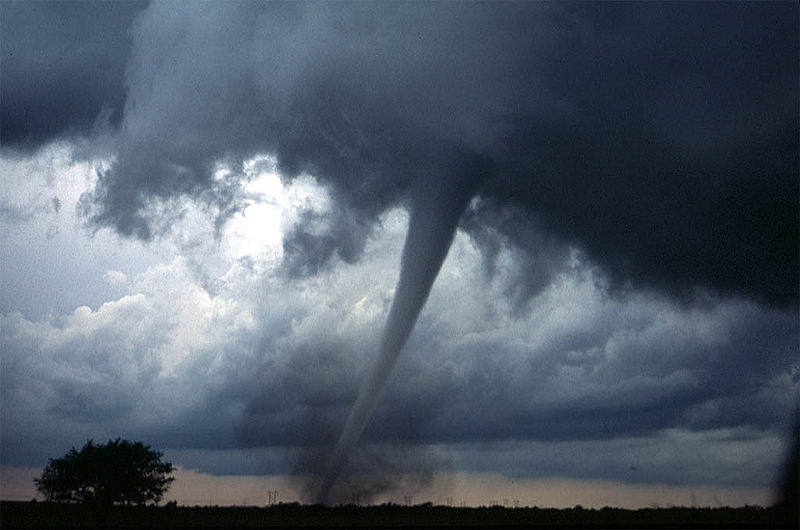
A real tornado


Under the Rainbow

Great irony attends the bearing down of Hurricane Isaac on Florida, disrupting the start of the Republican National Convention. Ironic not because of the damage or destruction that normally accompanies hurricanes, but because of the silence concerning divine intent. When natural disasters—does anyone remember Katrina?—have struck against “sinful” collections of people in the past, the religious right has always been swift to designate them examples of God’s wrath. Now that God’s Own Party is being inconvenienced by a hurricane this time, well, it’s just nature. I wonder what it is that so easily distinguishes divine punishment hurricanes from benign, natural ones? In a perfect world we would perhaps have a God that saw no need to create hurricanes at all. In the world we inhabit, however, we face disasters of all sorts and have the added burden of deciding which God has sent and which s/he has not.

One of the main strands of this skein of tangled thinking is the blithe unawareness that politicians often use religion insincerely. People, just like our other primate cousins, learn to respect the alpha male and acquiesce when we might get hurt. Politicians, at least for centuries, have known that few people will chase down the logic of their muddled theological declarations. We all know and experience gut-level, emotional responses to issues that matter to us. We all desire to claim the sanction of higher power—who wants to come out and admit that their opponent has some aspects of the truth and that this is purely a human matter to be decided by reason? Reason tells us that certain behaviors are not tolerated by group leaders—just ask a chimpanzee—and those in power have trouble facing up to the facts.

In one of the saddest legacies of championing nationalism is the unshakeable belief, for any nation or leader that has not embraced an atheistic approach, that God is on their side. Both Allies and Axis powers claimed divine support in both wars to end all wars. During Vietnam Bob Dylan wrote “With God on Our Side.” Politicians still hum along but they have forgotten the words. No, it does not please me that once again a hurricane threatens life and property. I’ve been told that every cloud has a silver lining, however, and I wonder if that applies even to hurricanes. If Isaac, like his biblical namesake, can change perceptions of what God requires, maybe we can see politicians without their masks and ask what it is they really want. That, I believe, would be more stunning than any divine punishment delivered via giant bags of wind.


Seedtime and Harvest

With the drought deepening over about half the United States, it is with not inconsiderable irony that I am reading the story of Noah’s flood. I have been tweeting the Bible for some months now and am just reaching the end of the fascinating account of the deluge. The difference in the case of the drought is obvious, but similar. Having spent some time in the Midwest, I came to know how intimately and intensely many of the citizens trust God’s providential care (this is true elsewhere, of course, but I noticed it more in that region). When disasters come, however, just like an animist would suggest, answers will be sought in the divine world. “While the earth remaineth, seedtime and harvest, and cold and heat, and summer and winter, and day and night shall not cease.” Genesis 8.22 rounds out God’s plan for the perpetuity of nature’s cycles, stating in just the previous verse that he knows people to be wicked and will never punish them for it again, as he did in the flood. Such biblical assurances, however, do little to allay fears when crops are dying in the field.

The problem in looking for answers in nature is their ambiguity. Just consider the record number of church picnics that haven’t been rained out this year—the number of prayers I’ve heard for the staying of rain for human convenience is surely a reflection of how intimate divine interaction with the workings of nature is supposed to be. One of the benefits of science has been its ability to straighten out all the cards in the deck, tapping them on the table-top and squeezing them into line. How would God weigh prayers for no rain so that an outdoor wedding of a devout couple could take place versus the prayers of a backslidden farmer for much needed precipitation (without hail)? Are decisions made by majority request? Wouldn’t that be excessively dangerous, given humanity’s track record of deciding what is good for itself?

The drought is a serious concern, and I do not mean to suggest otherwise or make light of the situation. What concerns me is the human tendency to look for a divine bailout. Many politicians of certain persuasion (usually the greenback kind) tell us that the climate is just fine. Our greenhouse gasses are not unduly affecting it. Now that a drought is upon us—and even a child can understand that all weather is related—the focus shifts to God. This dancing around the elephant in the room is tiring and dizzying. We can spend billions of dollars making bombers that are almost invisible to radar and so oddly shaped that they get reported as UFOs and yet we can’t get politicians to consider our impact on the very skies they fly in on their bombing missions. The atmosphere is larger than us all and it is warming up. And when we bake ourselves out of existence isn’t it a comforting thought that seedtime and harvest will continue, at least until our sun burns out?


Secret Life of Clouds

As April showers linger into May, I am reminded of April’s issue of Discover magazine. I picked up a copy on my way to Santa Barbara, and although much of it is beyond me, the article about microbes causing rain seems apt on days like today. Although I move in small circles, I hear many people commenting on how weird the weather has been this year. Mornings cold enough as to require a winter jacket, and evenings where a light sweater is almost too much. And the rain. Now, I realize that weather is always a decidedly local phenomenon, but apart from the rare reader in Antarctica or the Atacama Desert, we all know rain. In the biblical world the rain, as with so many inexplicable things before the birth of science, was in the provenance of providence. God sent the rain as a kind of blessing to a parched land. Thunder and hail, however, we sure signs of his displeasure. Discover suggests that maybe the answer lies in some being that is tiny rather than astronomically large.

The question that has frequently eluded answer among meteorologists is why some rain clouds rain while others don’t. No one really knows what the trigger might be—thus cloud seeding has often been a hit-or-miss proposition. Douglas Fox explores the possibility that, in his words, “The Clouds Are Alive.” Scientists can now measure the microbial life that survives in the sub-frigid temperatures high in the atmosphere above us. Amazingly we continue to discover that where we once thought conditions were too hostile, life manages to thrive. When I was a child scientific orthodoxy declared deep ocean trenches near volcanic vents far too acidic for anything to survive. Now we look at the clouds and see life. Not exactly the angels some theologians expected to find hovering above, but life nonetheless. And if the microbes are there, they might survive on a world as chilly as Mars (which, I hear, is even chillier than our apartment in winter).

One of the favorite gaps for the famous God-of-the, is the weather. As a symbol of what is beyond human control, indeed, the largest perceptible environment in inner space, the sky remains aloof from our tampering. Even so we’ve found ways to pollute our firmament. And now we’re discovering we’re not alone up there. The idea that the clouds are full of microbes sounds more like a Stephen King plot than an intelligent design. Actually, it is good old evolution in action. Life is surprising in its ubiquity. We’d once convinced ourselves that it was rare and could only thrive in environments similar to ours. Now we know that even on a terrestrial scale of survival, we are wimps. Every cloud, they say, has a silver lining. Little did they suspect that the light might be shining off of microscopic life.

The life from above


Renters, All

Ownership is an odd concept for mortal creatures. With limited time to spend on a finite planet, we devise rules that give exclusive rights to some while denying access to others. I have never owned property (tellingly called “real estate”)—the life of those who stumble into higher education doesn’t really lend lenders any confidence of one’s ability to repay debts. I spent too much income, I guess, on my education. In any case, the concept of ownership seems to be endemically human. In most societies we want that thing that we found, that we picked up and moved with us, to remain where we put it so that we can access it again. That particular stick or stone that caught our eye for utility or beauty—it is that we wish to own. Soon humans are building vacation homes in the regions of stunning natural beauty that dot an industrialized landscape, vacation homes where they can get away from it all. Humans owning nature.

Recently I read a story in the New Jersey Star-Ledger about beachfront property “owners” in New Jersey suing over beach reclamation. Now before bursting out into peals of laughter, please be aware that those who claim New Jersey lacks natural beauty have never visited the state in the spring. Once outside the urban sprawl surrounding New York City, Jersey is, for the most part, very pleasant. Many of the beaches are pristine. Of course, pristinity invites affluence. The wealthy like to settle where the views are nice. And so when the state tried to prevent beach erosion by building dunes the rich cried foul and began to sue. It looks like the state will have to pay out. The very state that I, along with countless others who can’t afford a single house, support by our taxes. That money is now being piped into the pockets of those whose summer homes now have a slightly diminished view. My heart bleeds.

One of the facts of life on the Atlantic coast is hurricanes. Another is nor’easters. Both of these storms erode beaches at a terrifying rate. And when the beach is gone, whose house will be in the ocean? Those who wanted the dunes removed. Money is just distilled ownership. Those flimsy pieces of paper have no inherent value. It is difficult even to believe in money when you never see it. Electrons zipping through the Internet are the only sign that I’ve been paid. Yet we value it above all else. I’m not sure how this fits in with a gospel that condemns money and a Jesus who suggests the only way to heaven is to give it all away. Well, maybe it all fits, as long as you don’t block my view of the ocean. After all, owning part of a planet entitles you to some feeling of self-importance. Or so I suppose.

Who's really in charge here?


Tortured Gospel

Tornadoes? I don't see any tornadoes.

It is a little difficult to force yourself to think of tornadoes when you’re in sunny California. On my flight into Santa Barbara I could see the tail end of the gray whale migration from a few thousand feet in the air. Outside the tiny municipal airport (with its full-body scanner) I see palm trees swaying in the wind. The air smells like flowers. Life is too easy in California for me ever to live here. I need more angst in my diet. I can’t come to the sunny coast, however, without the Eagle’s “Hotel California” replaying endlessly in my head. It was the running joke at Nashotah House that the real Hotel California was located in the woods just outside Delafield, Wisconsin. The haunting lyrics by Don Felder, Don Henley, and Glenn Frey managed to capture the witch’s brew of mind control, humiliation, and desire that laced that little, gothic seminary in the woods. Yet even sitting in California with its full greenery in March, I see that Pat Robertson is blaming the devastation of the recent tornadoes on lack of prayer.

Blaming the victim is a classic fascist technique, and it is very easy to proclaim one’s own righteousness when not in harm’s way. Herein lies the darkest sin of the self-justified; they think themselves specially blessed and therefore not responsible to help the victims. While flying over the Santa Ynez Mountains, seeing the smoke from California wildfires climbing like the terminal flames of Babylon, I could hear a voice like a choir of fascists singing, “Alleluia And her smoke rose up for ever and ever.” Schadenfreude fuels too much of the evangelical worldview. According the Gospel writers, when Jesus foresaw the destruction of Jerusalem, he wept. WWJD, Rev. Robertson?

Tornadoes look so much like divine judgment that it is almost understandable how a naïve believer might see them as coming from God. We, however, are the gods destroying our own planet with the accompanying degradation of the weather. Neo-cons deny the fact of global warming. It is not a myth or a theory, there is inconvertible proof that it is happening. Still, it is more convenient to blame God. After all, chances of him showing up to deny false charges, as history repeatedly shows, are very slim. Ask any innocent woman tied to a stake in Medieval Europe accused of being a witch. Apparently the divine calendar is too full to worry about the troubles of hundreds of thousands, or even a few millions who are falsely accused. Why not send some terror from the sky? It is hard to think of such things in sunny California. Yet as the “good news” of the televangelists spreads to the ends of the earth, even those forever in the sun will need to stand in judgment before a very capricious deity.


Denying Truth, For Profit

Sometimes I’m questioned about why I bother with creationism. Everyone who’s intelligent knows it is religious ideology masquerading as science and people will eventually figure it out. But will there be time? An editorial in yesterday’s New Jersey Star-Ledger pulls the curtain back on creationism’s incestuous cousin, climate-change denial. As the editorial notes, key documents of the Heartland Institute—one of the major propagators of climate change as “just a theory”—have been leaked and show that they have learned their lesson from creationist tactics. They want “debate the question” instilled in science classes in lieu of facts. And much of their money comes from big oil. It is the hope of such institutes that an American public already woefully pathetic at understanding science will be led to believe “just a theory” equals “likely not true.” The data are stacked completely against them and the entire rest of the developed world knows that.

While the issue may seem less religious than creationism—which is based on getting Genesis 1 in the classroom as science, no matter what you call it—it has deep roots in that same insidious cocktail of politics, religion, and dirty money. Biblical literalists tend to believe the world is about to end. The belief has been around for at least two millennia. It is a damning and damaging belief that declares the world was made for raping because it is about to end. This deranged thinking is fueled, literally, by unrestrained economic interests. Sometimes the groups can’t see beyond the Bible to realize that they too are being screwed. Science is objective, and it is science that has been challenged by various religious and political groups since the 1920s. Today, when there is far too much information for anyone to stay on top of it all, and in an American society deeply distrustful of higher education, I smell an explosive amount of methane in the air.

Climate change is real. The “theory” is so well supported by evidence as to be fact. Is anyone really surprised that supporters of the Heartland Institute have also backed Newt Gingrich’s campaign? We have placed ourselves in a very dangerous position as the last remaining “superpower.” I tried to read a book on environmental issues that Routledge published, but was so scared after the first three pages that I had to put it down. What is the lesson here, class? Is it not that money is the root of evil? And that, my dear literalists, is biblical.

The future of human economic evolution


Frozen Falls

Some weather we’ve been having! New Jersey has just completed its mildest January on record. Weather has always been a favorite mode of resort to the divine since it is one of those things we people just haven’t been able to control yet. And it makes perfect sense. The atmosphere is, by definition, bigger than the planet’s surface itself, and we people are pretty tiny, all things considered. I’ve stood next to some trees in the northwest that give me a flea’s eye view of the world.

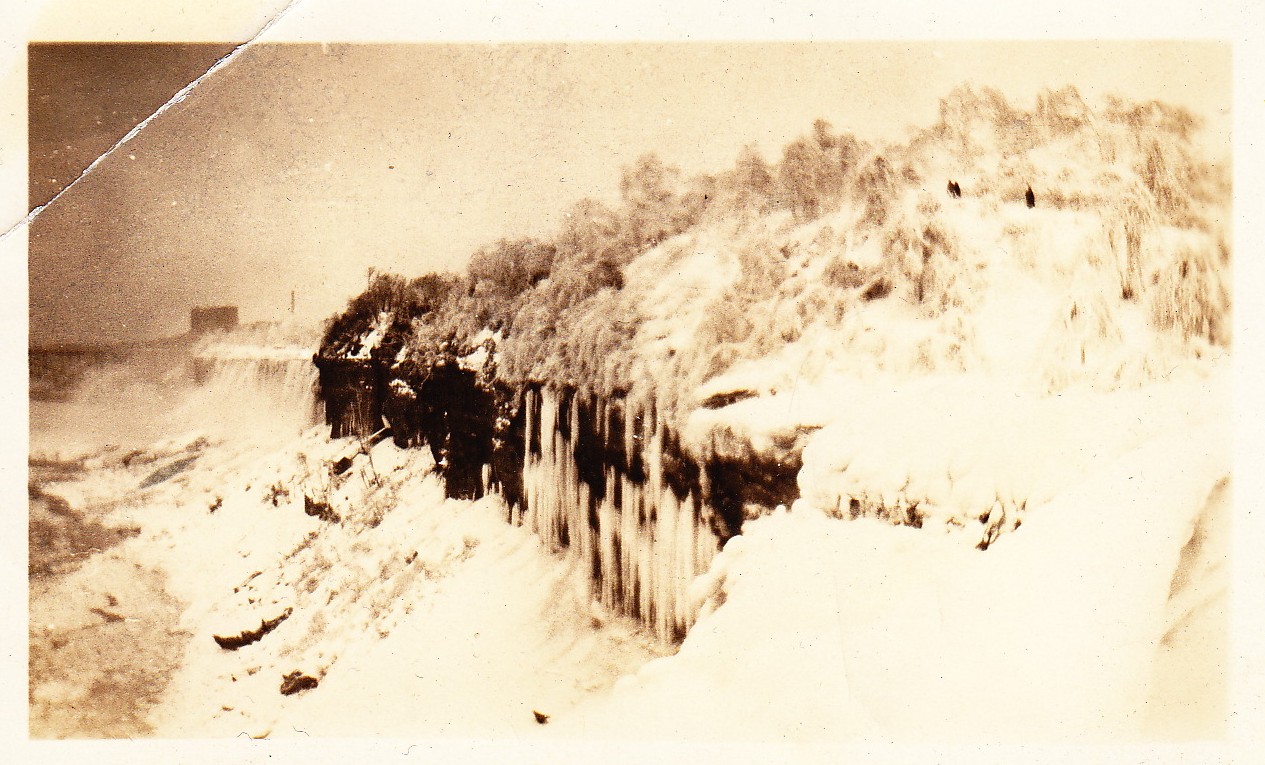
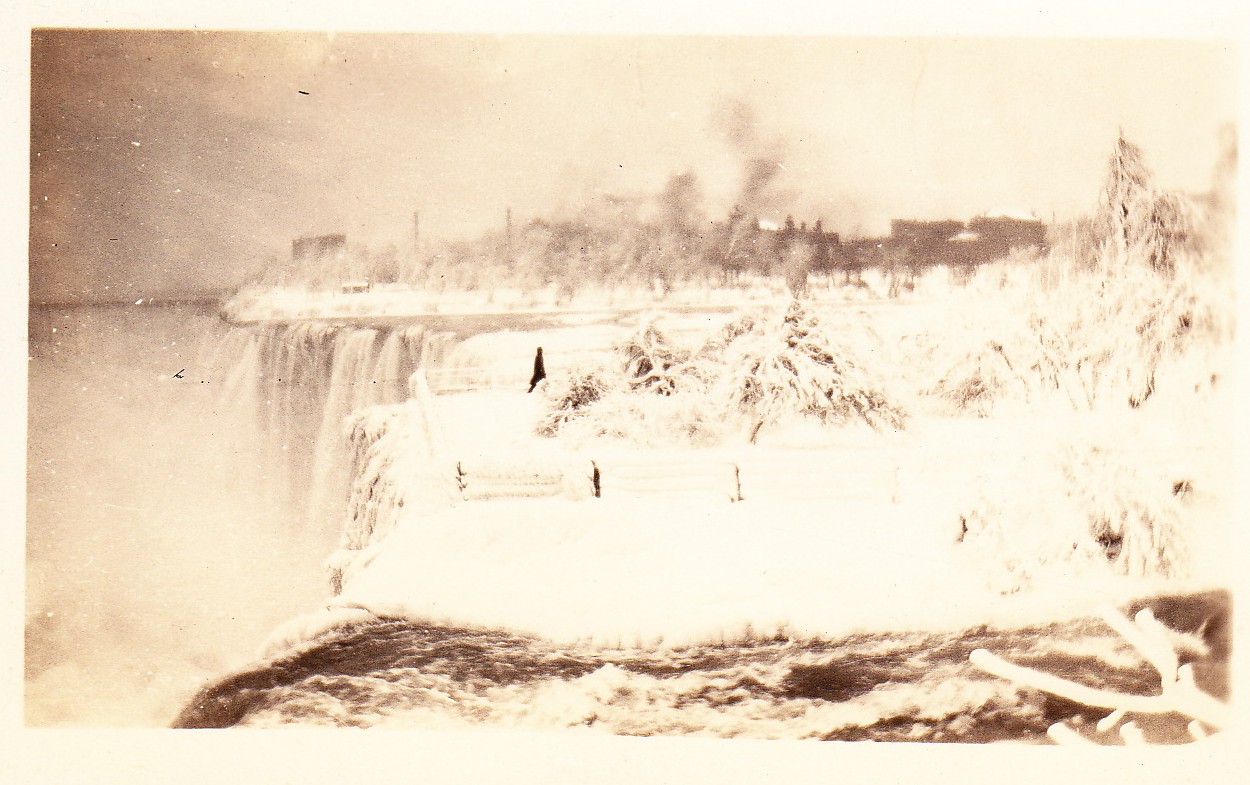
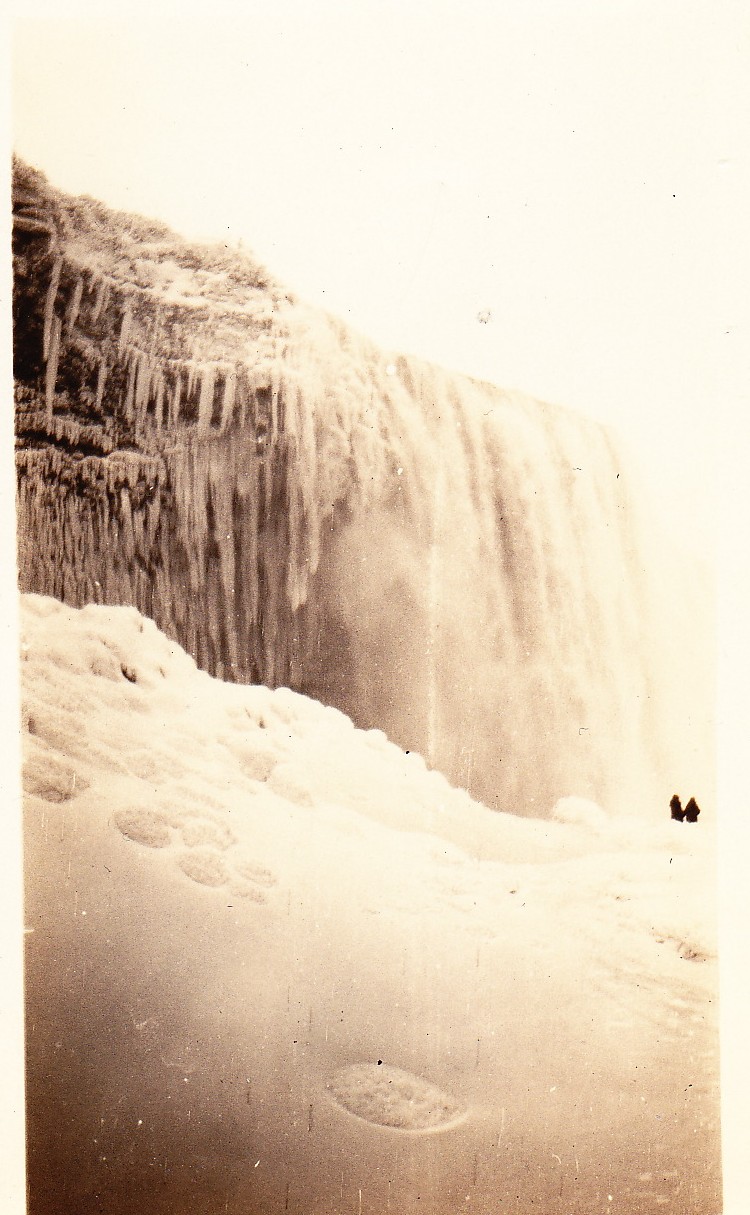
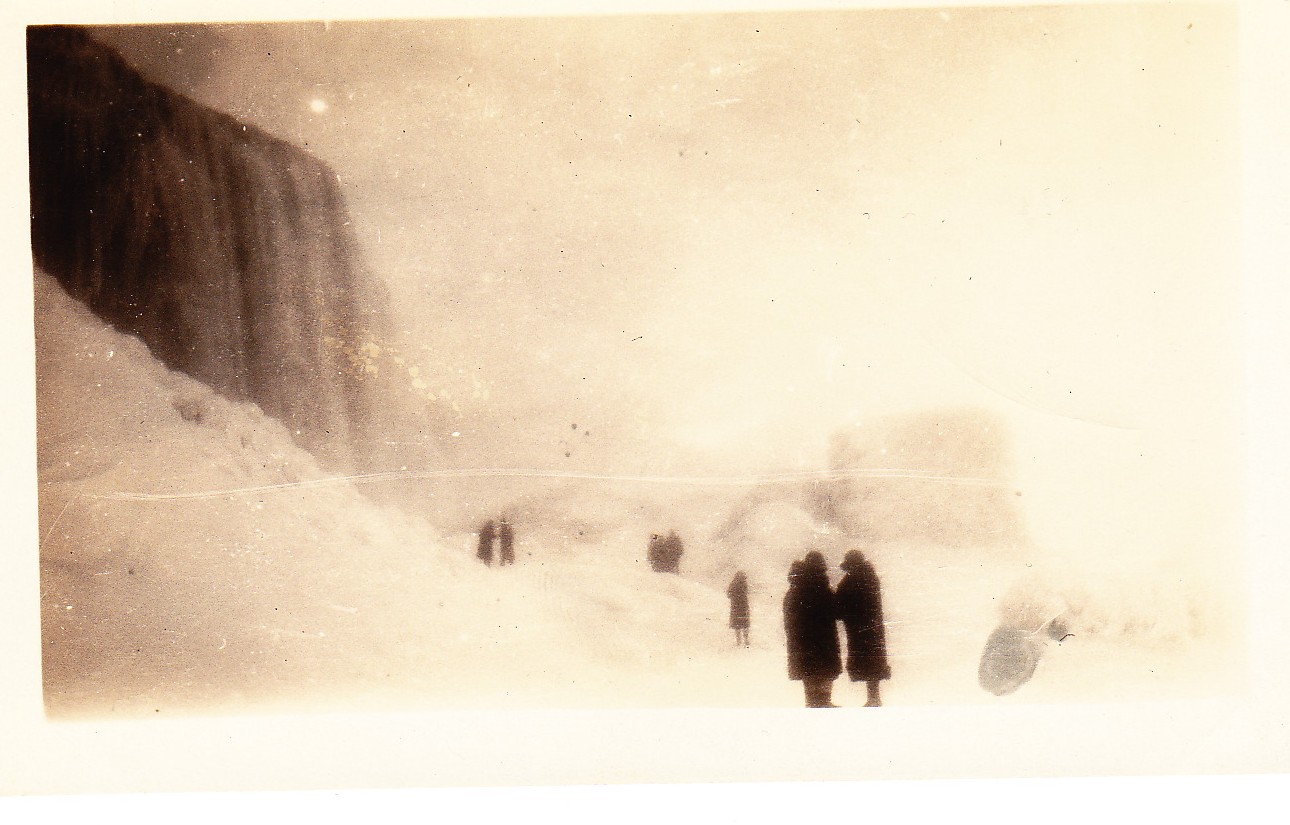
I remember one of my teachers telling us that Niagara Falls doesn’t freeze over. When I told my mother this, her response was to pull out these photos and send them to school with me. Someone in the family back in my grandfather’s younger days owned a photography business. The photos are unfortunately not dated, but they have been iconic images for me ever since that day in grade school. Yes, even Niagara Falls can freeze over. My best guess for the dates here must be sometime around 1920.

Back when we still had television, I was an avid fan of the PBS Naked Planet series. One of the episodes was on Niagara Falls. In the late 1950s and early 60’s the hydro-electric potential of the falls had been tapped to such an extent that now between 50 and 75 percent of the water flow of the thundering falls is diverted upriver. I first visited Niagara Falls as a child, but I have never experienced the falls with the full force that nature intended. Likely no one ever will again, at least as long as we are in charge of planet.

These pictures remind me of the awe of nature. They were taken when the falls were pretty much at full flow, and yet they are frozen solid and people are walking around on a river that boasts class 6 rapids, the highest the whitewater scale goes. Sometimes when people assert too much control on their planet, it is nice to be reminded that our tired orthodoxies aren’t always what they seem to be. It may be an unseasonably mild winter this year, but nature may still have a few tricks up her sleeves.


Timing God

Two weeks in a row now God has made it into the pages of Time magazine. You’d think he was Rick Perry or something (no insult to God intended). This week’s Commentary, written by Harvard physicist Lisa Randall, argues for the importance of believing what science forces us to conclude. The world is warming up, ice caps are melting, and those in low-lying regions are in hot water. I am fully in agreement with her sentiments, but it’s the practicality that bothers me. Not the practicality of listening to science—that’s just common sense—but the practicality of doing so in a world where religion reigns. Despite cries of oppression and suppression and repression—just about any pression you choose—religions dominate the world. What particular brand you prefer does not matter; the fact is most people are religious. Randall believes that religion and science must learn to live together. Her problem is that she is looking at it rationally.

Science has given us excellent leads on tracing the origins of religion itself. Between psychology, anthropology, sociology, and biology we’ve got a fair idea how religion came about. The same brain that shows us the way, however, has evolved with religion still intact. In short, it has learned to accept the unlearned. With our brains acting like dogs chasing their own tails, is it any wonder that as a species we are confused? We see only what we choose to. In the great, artificial landscape of Manhattan many very wealthy people traverse the streets. Every day I see suits that would cost my entire paycheck casually strolling up Madison Avenue. I also see the beggars in the same doorways day after day, blending in with their surroundings. The solution of choice is to pretend they aren’t there, to not accept the evidence of our eyes. The wealthy have a knack for it, it seems. And when they work their way into politics their vision doesn’t improve much.

The problem that Randall points out is very real and deadly serious. Trouble is, those who pretend not to see are among the best actors on the planet. Faced with incontrovertible evidence the rational mind has no choice but to acquiesce. Religion, however, offers the perfect escape clause. If global warming discomforts you too much try fanning yourself with a Bible. Soon the excess degrees will simply melt away. And when the religious enemies of science find themselves sitting on the ocean floor like the victims of the Titanic, they too will have the satisfaction of knowing that they were privileged above all people for the time they had on earth. Everyone wins. The insatiably greedy and the abjectly poor both share a spot on an overheated planet. And if the pattern holds true we’ll evolve eyes to read under water, along with our gills, so that we can continue to read our waterlogged Bibles to find out what’s coming next.

Iceberg? What iceberg?