Liminal Time

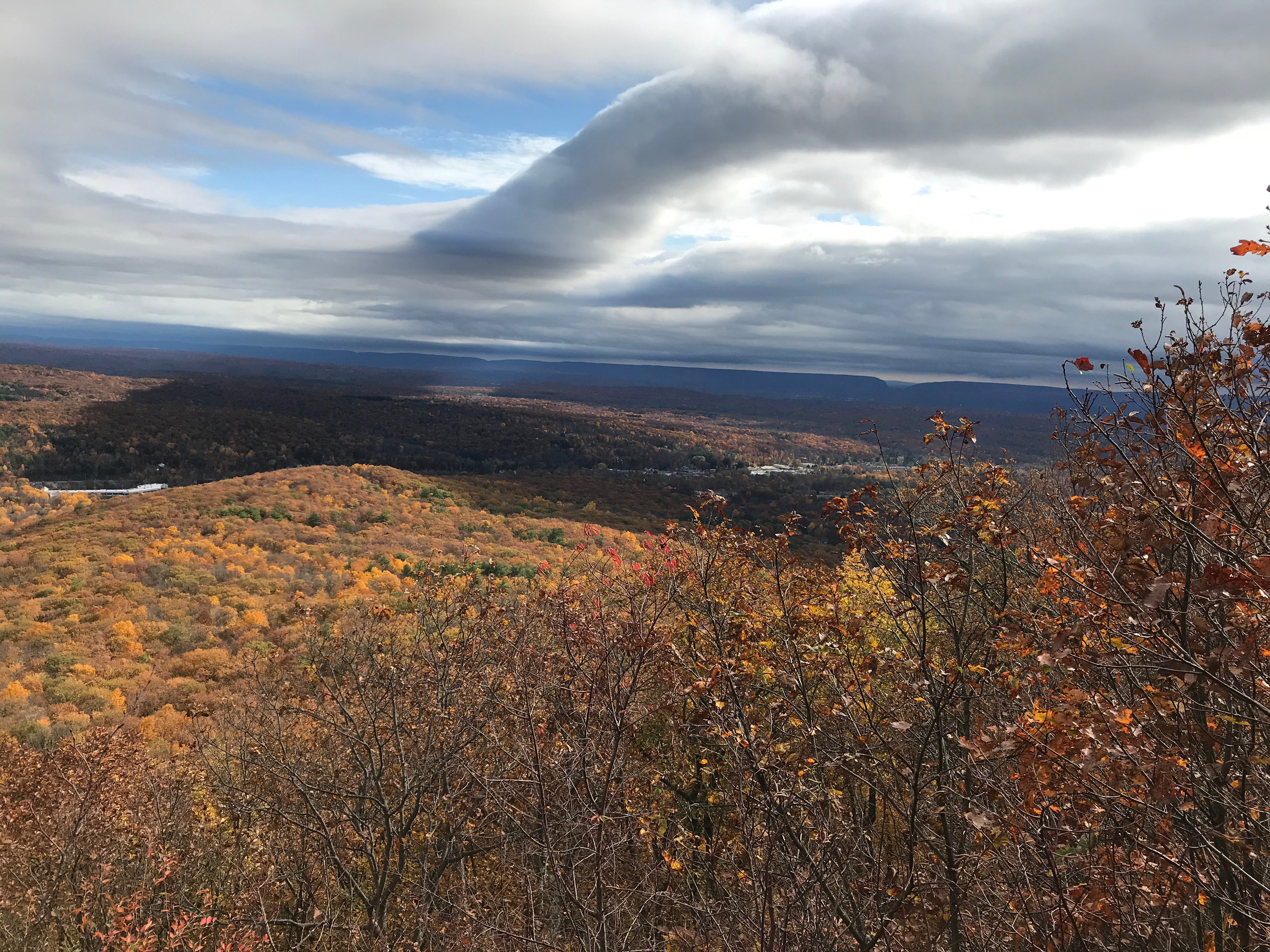
Considering the number of people who declare autumn their favorite season, the equinox receives pretty slim press.  This year it falls on the 22nd and, as always, it is one of the four quarter days of the pre-Christian European calendar.  Even among pagans it seems not to have had the same level of celebration as the other solstices and equinox.  I sometimes wonder if that’s because things are generally good already in September.  The intense heat of summer is over but the chill of October hasn’t yet arrived.  We stop using the air conditioning and don’t have to turn on the furnace.  It’s the Goldilocks month.  It’s part summer when living is easy, and part fall when the world is beautiful.  Like its fellow quarter days it is truly a liminal time.  

Liminal periods are always good for reflection.  No matter how much I want to savor this time of year, I have a feeling that it always catches me off guard.  There are changes afoot.  Starting Monday it will be dark more than it is light, and that will hold true until the sister equinox visits us in March.  These longer nights have traditionally made room for ghosts and goblins.  If we haven’t begun to store up supplies for winter, now is the time to start.  It’s the season when we all believe in magic, if just a little bit.  I’m one of those people who finds melancholy somewhat lovely.  It’s not depression (believe me, I know!), but a kind of happy sadness that the season itself is ephemeral.  Pretty soon people will be watching scary movies, but not quite yet.

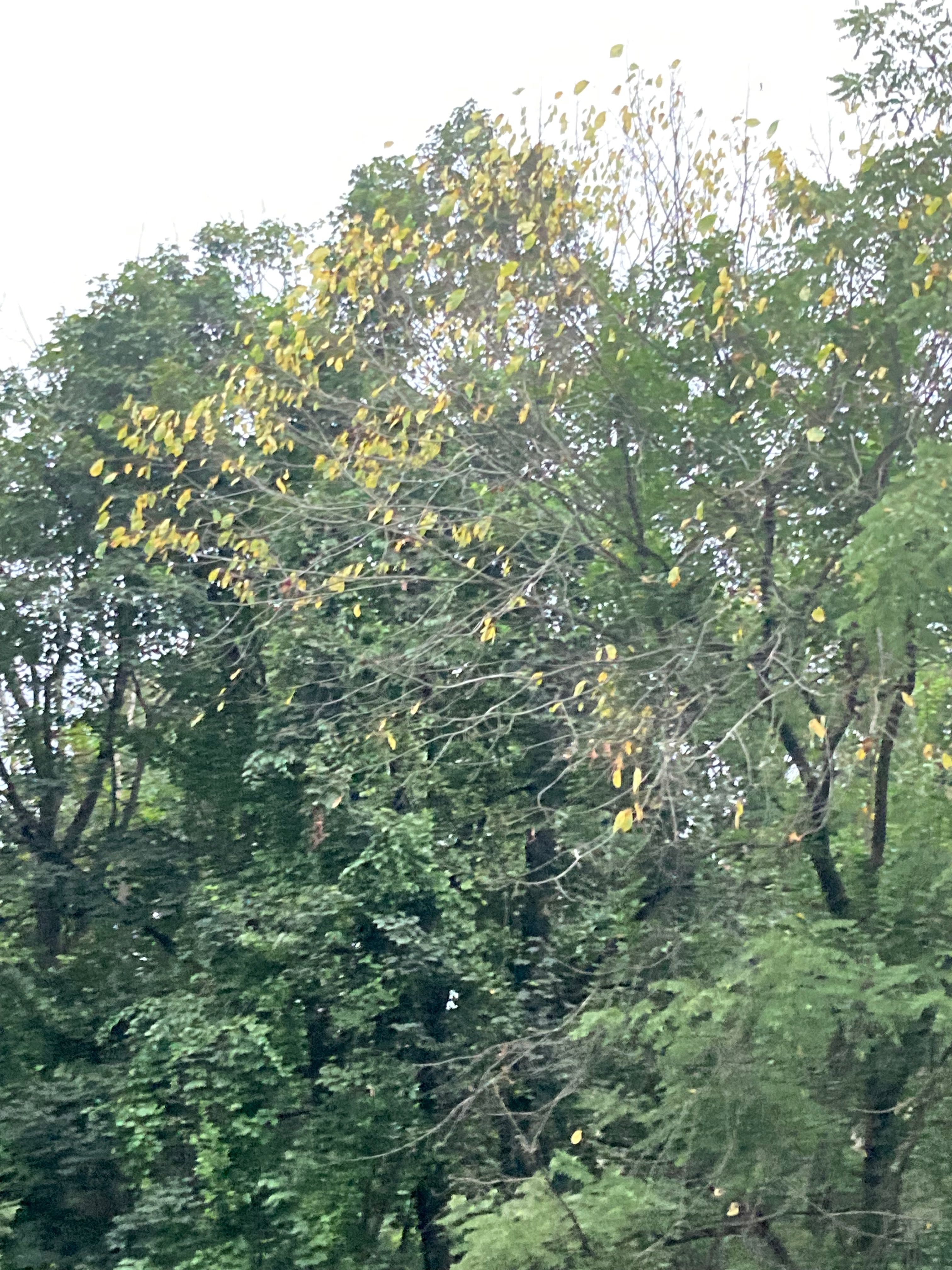
Harvest is a joyful, spooky time.  Those trees that have been green since April now put on their colorful winter coats but soon will spend the colder months bravely naked.  Snow may come.  Fall is a prophetic season, warning us of what might come.  Monsters may be set free from their chains.  And yet there will be cozy indoor holidays when we can hunker down and recollect the year that has just been spent.  There’s a wisdom to seeing the quarter days as the spokes on the wheel of the year.  Like many wheels already rolling it’s futile to attempt to stop them.  They’re moving us to the next place that we’re meant to be.  It’s true that the autumnal equinox falls on a weekend this year, but it does seem to me a natural holiday.  And a time, like all holidays, for reflection.


Dictionary Dreams

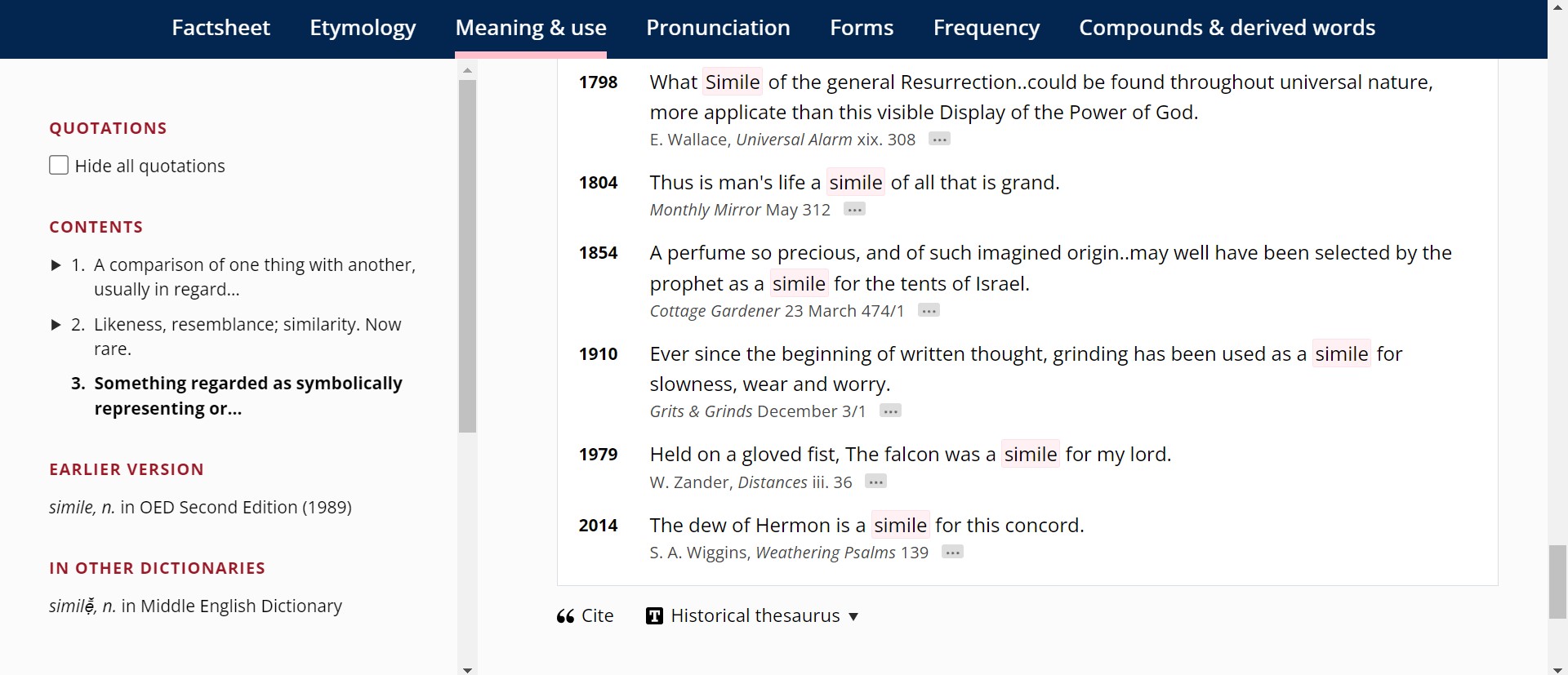
“Lord, now lettest thou thy servant depart in peace.”  Thus begins the venerated Nunc dimittis, familiar from so many years of chanting evensong at Nashotah House.  It comes to mind when I’ve reached a milestone I never dreamed of attaining.  One that makes me feel as if I’ve accomplished my life’s work.  Strangely, it didn’t occur when my name ended up in a study Bible’s front matter.  But a friend recently sent me a note that immediately brought old Simeon’s words to mind.  I have been cited in the Oxford English Dictionary.  My book Weathering the Psalms is quoted (in the web version) under “simile.”  I have no idea how examples are selected for the OED.  It used to be scraps of paper sent in by astute readers, but I suspect things have changed.  How my obscure book ended up there, I haven’t a clue.

There’s an irony here as well.  Like most academics clueless about publication, I initially proposed Weathering the Psalms to Oxford University Press, assuming they published such things.  It was turned down on the basis of a reviewer—one or two I know not—that I later met at a social function, where he was clearly embarrassed.  I really just wonder how the OED found the book to cite in the first place.  In terms of copies sold, it has been my most successful book, but that’s not saying much.  As far as I can tell, it’s only sold less than 400 copies (the royalty statements don’t have the total and I haven’t received a check in years).  I guess all things in the world are connected, whether we notice it or not.

Those who know me personally are aware that validation is a huge thing for me.  I suspect that is true of most people who grew up in difficult circumstances and who managed—and this is never a certain thing—to pull themselves out.  Having been fired from my long-term teaching post (where I was working on this book) only made me want to prove myself more, I guess.  Insignificant things like getting a Choice review for one of my books (which continues to sell poorly) and having that behemoth of a dictionary notice that I used a fairly common word in a fairly common way do tend to release the endorphins.  It’s like maybe someone noticed that I’ve passed this way.  Maybe there was a reason for trying to capture the Wisconsin thunderstorms in a book about the Psalms.  Maybe there’s a reason each working day there concluded with the Nunc dimittis.


August Thoughts

The other day I saw a headline on a BookRiot email blast: “August is Spooky Season Jr.”  I’ve often wondered why more horror fans haven’t emphasized this.  It’s not just that stores start putting out their Halloween merch, and it’s not that Summerween has taken hold.  No, it’s a feeling in the air.  When I was younger, August always seemed like the hottest month, the dog days of summer.  For many years now, however, I’ve begun to feel autumn’s approach in this month.  Some of the earliest trees begin to change (some start even in late July).  And if I take the time to smell the air when I step outside on an August morning, the first hints of harvest greet me.  The produce at the farmers’ markets should be a regular alert to that.  And my mind turns to the half of the year with which I most resonate.

It’s as if nature wears a mask, lulling us to suppose the weather will always be warm enough to sustain us, dropping rain in appropriate amounts at the correct time.  Yet we know that we have attacked our planet and it knows so too.  The true nature of all of this is change.  And change is scary.  A deep-seated fear accompanies autumn.  Did we store enough away for winter?  Is the house winterized?  What if the furnace breaks down?  What if the cold truly becomes too intense to stand?  I spend most of the year wearing multiple layers and fingerless gloves indoors.  Cloudy days make my office so chilly I can barely stand the lower thermostat setting until the end of the work day.  What if snow prevents me from getting to the store?  What if there truly is something scary in the dark?  All of this begins in August.

I watch horror movies year round.  I like to read creepy tales.  I even try my hand at writing a few.  Even so, I’m glad to learn that I’m not the only one whose thoughts turn toward Samhain even as Lughnasadh dawns.  A cool day in August is enough to start the chain-reaction going.  Some of us feel the respiration of fall even now.  Hear its slow heartbeat.  See its rictus grin.   Harvest tells us something about our own souls.  Our sins catch up with us as the nights grow longer.  The sun sets nearly an hour earlier than it did in late June, have you noticed?  And it rises nearly an hour later, I’ve noted.  Let spooky season jr. begin!


Spirit Storm

Some time ago, we experienced quite a windstorm.  More than wind, there was a dump of rain, thunder, hail, and all that.  My wife and I were attending a Tibetan singing bowls sound-bath with some others in the cancer support community.  I’ve described this practice before, here.  In any case, the meditation is held in a large room with a tin roof—the kind of place you don’t want to be during a tornado.  We’d just got inside when the gust front hit and knocked out the power.  The instructor still went through the meditation, but the storm sounds blended with those of the singing bowls.  Afterwards my wife asked about Job.  Specifically, God speaking from the whirlwind.  I told her that was God on a bad day, but I understood what she was getting at—there’s a spirituality to the weather.  (I was going to suggest Elijah instead, but “but the Lord was not in the wind.”  Alas.

I thought of Weathering the Psalms.  My contribution to biblical studies, had I been allowed to remain in academia, would’ve been further explorations of weather terminology in the Bible.  But the Lord was not in the wind.  I wrote that book because I noticed the juxtaposition of severe weather with daily chapel at Nashotah House.  We were required to attend, no matter what the weather.  (Such is life on a fully residential campus.)  We were reciting the Psalms one day when a storm blew the power out.  It may have happened more than once, since we’re getting on past two decades hence my memory’s a touch imprecise on the point.  In any case, the spirituality of the power of the storm fascinated me.

It still does.  The next morning, out for my jog, I marveled at the number of branches down.  Thousands in the Lehigh Valley were without power.  This is probably why the ancients considered the storm god chief of the rest.  The violence of nature is something that suggests divinity.  Other primates have been observed screeching back at the sky during thunderstorms.  It’s deep in our DNA.  That doesn’t make it any less spiritual.  There’s a lot of weather in the Bible.  I only explored a tiny piece of it by trying to tackle the Psalms.  The Good Book, however, doesn’t say much about the spirituality of weather.  It’s there nevertheless.  Anything that can snap a tree a foot in diameter like a toothpick has a spiritual message for us.  I mused on the way home—we had to take a detour because of downed trees—that had the storm claimed us as victims, dying while meditating is probably not the worst way to go.  Now I wonder, what might God’s nice words from the whirlwind be?


Doing Without

I’m a creature of habit.  Although I’m no internet junkie (I still read books made of paper), I’ve come to rely on it for how I start my day.  I get up early and do my writing and reading before work.  I generally check my email first thing, and that’s where something went wrong.  No internet.  We’ve been going through one of those popular heat waves, and a band of thunderstorms (tried to check on their progress so I could see if it’s okay to open the windows, but wait—I need the internet to do that) had rolled through three hours ago, at about midnight.  Maybe they’d knocked out power?  The phone was out too so I had to call our provider on my cell.  The robovoice cheerily told me there was a service outage and that for updates I could check their website.  Hmmm.

I can read and write without the internet.  I’m on Facebook for, literally, less than two minutes a day.  I stop long enough to post my blog entry and check my notices.  I hit what used to be Twitter a few times a day, but since people tend to communicate (if they do) via email, that’s how the day begins.  This morning I had no internet and I wondered how tech giants would live without it.  I’m no fan of AI.  I use technology and I believe it has many good points, but mistaking it for human—or thinking that human brains are biological computers—flies in the face of all the evidence.  Our brains evolved to help our biological bodies survive.  And more.  The older I get the more I’m certain that there’s a soul tucked in there somewhere too.  Call it a mind, a psyche, a spirit, a personality, or consciousness itself, it’s there.  And it’s not a computer.

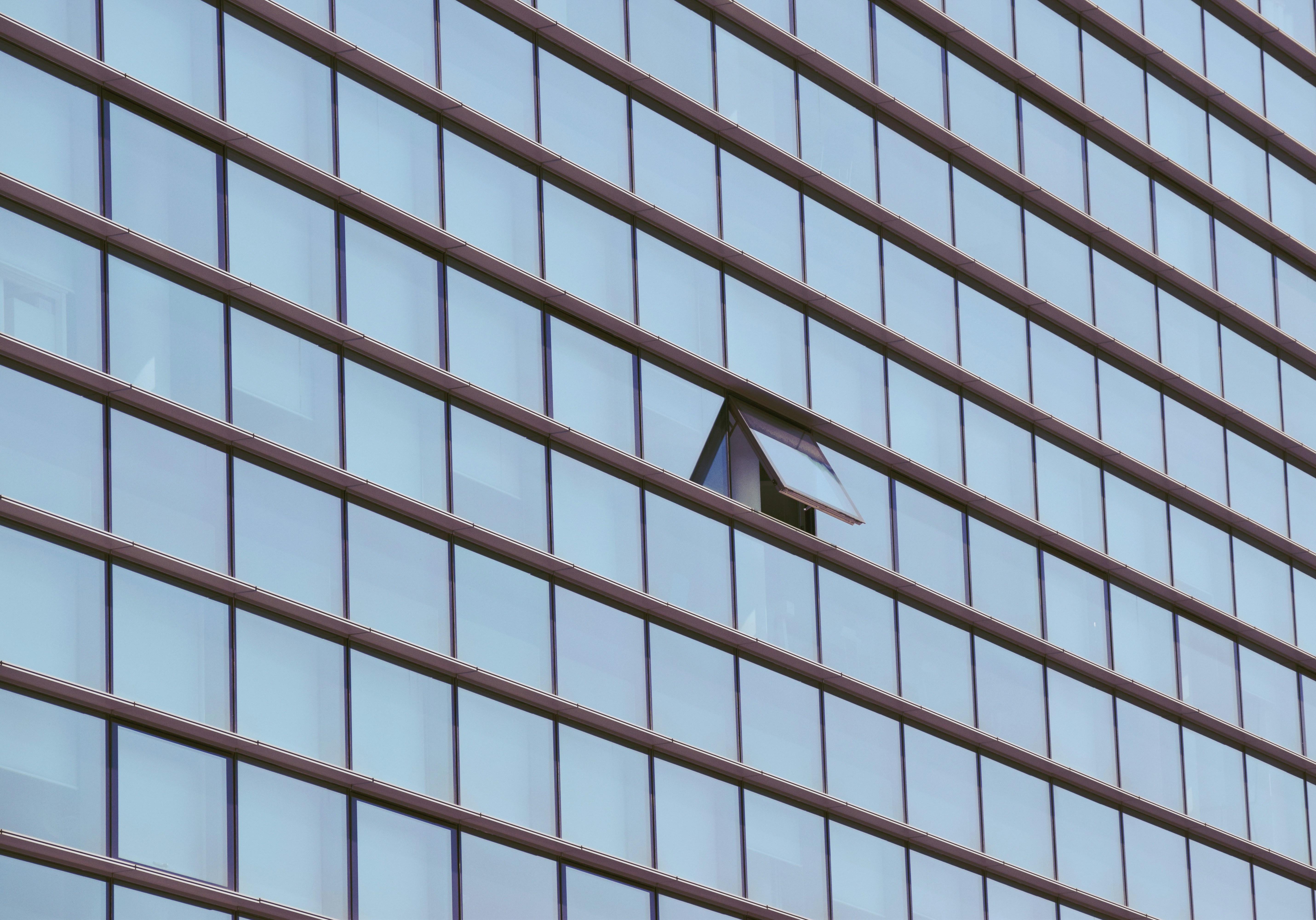
Our brains rely on emotion as well as rationality.  How we feel affects our reality.  Our perspective can change a bad situation into a good one.  So I’m sitting here in my study, sweating since, well, heat wave.  It was storming just a few hours ago and I can’t check the radar to see if the system has cleared out or not.  What to do?  Open the windows.  I’ll feel better at any rate.  And in case the coffee hasn’t kicked in yet, “open the windows” is a metaphor as well as a literal act on my part.  And I don’t think AI gets metaphors.  At least not without being told directly.  And they call it “intelligence.”

Photo by Chris Barbalis on Unsplash

Storming Fourth

Our founders picked a day of uncertain weather to declare independence.  One gets the sense that people were more stoic about the weather in those days.  Of course, we’ve increased global warming and made things more extreme.  Nevertheless, I can remember very few fourths of July when the possibility of storms was zero.  The weather around here has been odd this year with a suddenly hot June, with a dry spell that killed quite a few plants, followed by a cool start to July and some very intense storms.  And now, on the fourth, the possibility of rain in the forecast.  The grass hadn’t been growing in the dry spell, but I’m hoping the rain will hold off today long enough for me to get that job done.  In fact, on this secular holiday I’d been hoping to get quite a few outdoors chores checked off the list.

When I was younger and fireworks were the main draw to the day, I noticed that just about every year rain fell, or threatened to, on July fourth.  I’m sure it’s not that way everywhere, but here in Pennsylvania, where the declaration was signed, it’s a reality of life.  Of course, the modern Independence Day celebrations evolved over time to include the cookout and fireworks—outdoor activities both.  For me, apart from the outdoor chores on a day off work, a movie seems like an indoor celebratory alternative.  Perhaps Return of the Living Dead, set on the fourth.  Or I Know What You Did Last Summer.  Or Graveyard Shift.  Maybe something else.

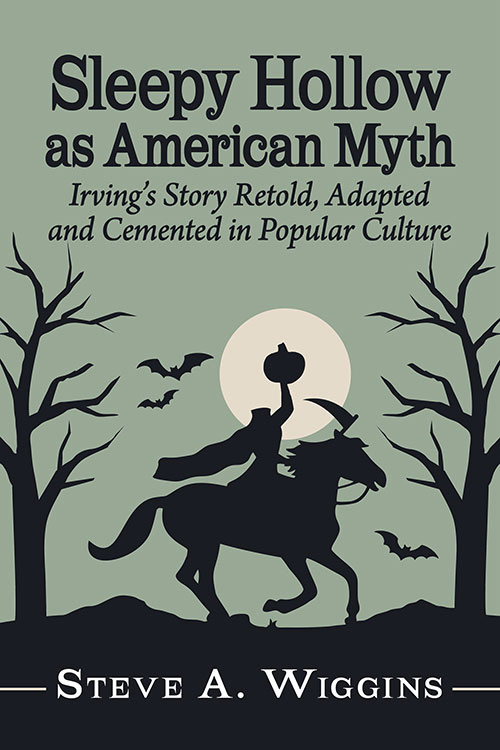
Watching the political theater unfold—and my, what a dramatic election year it’s been—perhaps a comedy horror is just about right for today.  This is going to take some thought.  Something to occupy my mind while doing those outdoor chores.  Of course, I’ve got a book to get submitted as well.  If the weeds can hold off for another day or two—is it wise to paint the porch when rain’s in the forecast?—maybe I can finish up Sleepy Hollow.  It’s a good American ghost story.  That might be appropriate as well.  You see, holidays are so rare that too many things crowd in on them.  They’re breaks from the constant earning of more money, which is the American way.  Of course, our founders were largely restless gentry.  For me a day off work is always a busy day.  Especially when the rains have returned and the grass has grown.  It must be the fourth of July.


Springing

Life, for everyone, has difficult times.  Katherine May has a reassuring, but not always cheerful way about her.  She calls troubled times Wintering.  The subtitle of her book explains that it’s about The Power of Rest and Retreat in Difficult Times.  My wife and I read this one together.  It reminded me, in some ways, of Barbara Brown Taylor’s Learning to Walk in the Dark.  In a society vapidly preoccupied with an often shallow happiness, admitting, even pondering the things that are difficult is an act of courage.  May has a disarming way of writing, a humility and self-deprecation that are an antidote to the brazen self-assurance we too often see in the media.  She looks for lessons in her own experiences of pain and loss, and yes, surviving through winter. 

Winter is often a quiet time of reflection.  In our bright, loud, beeping, buzzing world we don’t take much time for such things.  Indeed, capitalism (which is generally not deep, although deeply engrained) doesn’t encourage it.  “The more you can work,” it whispers in your ear, even while sleeping, “the better you’ll feel.”  Winter slows things down.  Makes life a bit harder.  Think of all those days when you just don’t feel like going outside in the cold, snow, and sleet.  When the chill drives you next to the radiator, covered in lap blankets.  When it’s dark most of the time.  Such are good times to think.  As May shows, when you turn a difficult situation around and look at it from different angles, truths about yourself, about life, begin to emerge.  What is it we’re after that keeps us running all the time, dangerously overheating?  We need winter.

The anecdotes here are deeply personal.  This is particularly difficult for a writer because many of us face rejection frequently.  When you’ve poured yourself into a book, blithe casting aside by agents and publishers hurts.  I admire the bravery and the wisdom of writers like May.  She shows that wintering is possible, and that it is followed by spring.  Lives, she notes, are cyclical.  We can find quite a lot of meaning in that.  I often find myself fearing winter.  The heating bills.  The wearing of many layers of clothes for months at a time.  The dark and cloudy days.  Yet a good part of me welcomes the retreat.  I know that, in the cycle of the year with few days off from work, that if I can make it to Halloween, some rest—some wintering—awaits.  And that is a hopeful thought indeed.


Eclipsing the Earth

We need a new word.  One for the high an eclipse brings you.  I’m finding myself having difficulty coming down from it.  It seems so mundane to have to do something as ordinary as work after experiencing totality.  We only caught very brief glimpses of the moon over the sun through small breaks in the clouds, but we did get to experience totality.  How do you come down from that?  The next day we had a several-hour drive to get home so that we could all be at work yesterday morning.  What could be more ordinary than that?  And the eclipse happened on a Monday, not an unusual day for a holiday.  Only it wasn’t a holiday, but a “vacation day.”  So was the driving day.  At my age you need a day to recover from all the driving too.

Several friends have posted their amazing photos and videos of the event, so I’ve decided to “release” my video to the wild.  A few explanatory notes: we were in upstate New York, on the shore of Lake Ontario.  It was chilly and we were bundled up (we came home to 80-degree temperatures, which was quite a shock).  The video may seem to have not much happening for the first couple of minutes and this is because electronic cameras tend to “even out” the light (film photography is much better).  When I started filming this it was getting dusky but the phone smilingly tried to make it look like normal daylight.  That wasn’t the case.  (Be patient—drama takes time to build!)

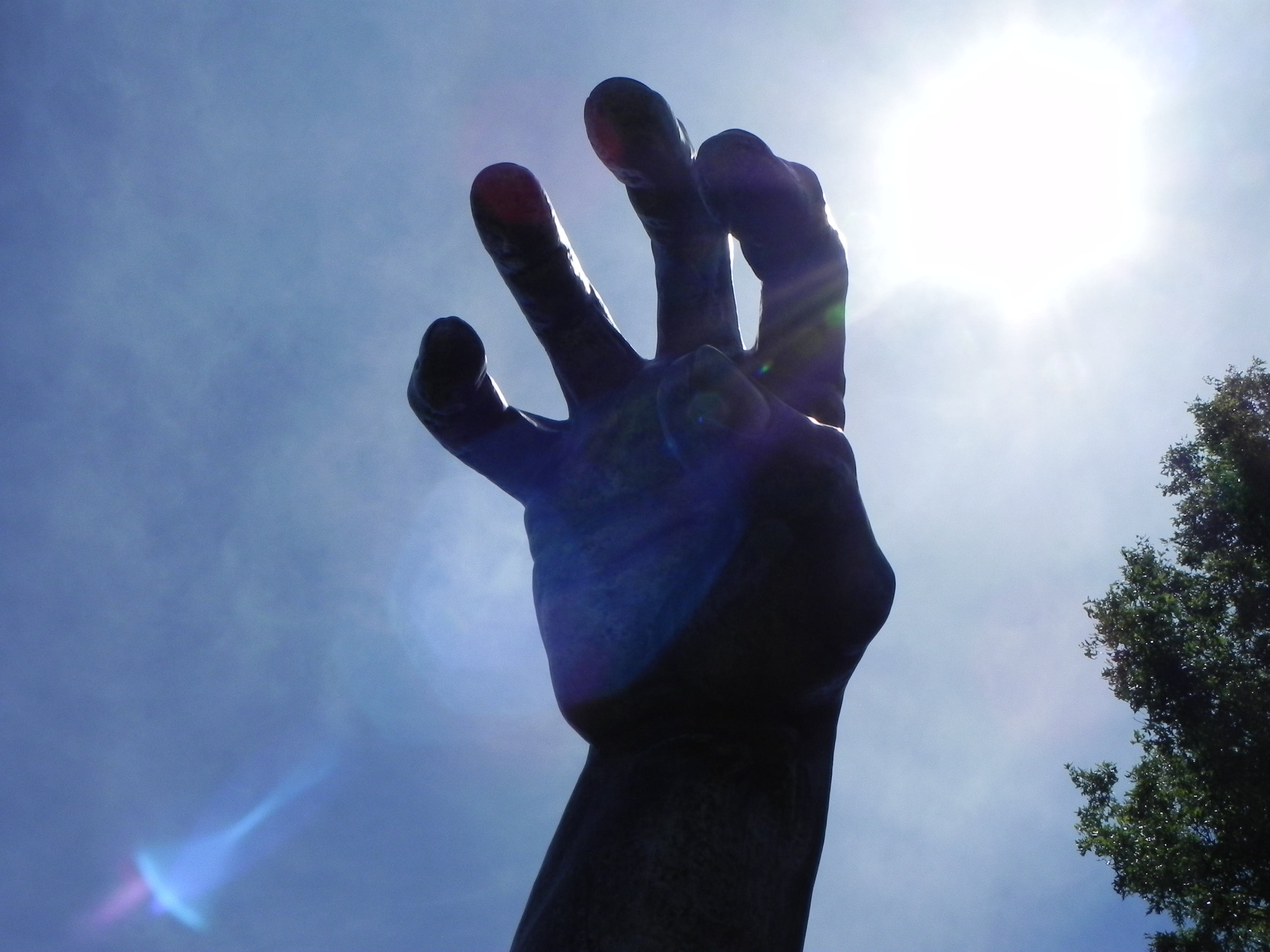
It occurred to me that many people (who had clearer skies) thought totality was all about the moon over the sun.  I take a more Buddhist approach.  The Buddha admonished not to mistake the hand pointing at the moon for the moon itself.  The real experience of an eclipse is what is going on down here on earth.  My video shows how the sun faded, and then went completely dark and back again in a matter of minutes.  My experience of this was quite a spiritual one.  If I’d been looking up I very well might have missed it all.  In other words, being in a cloudy situation, totality was an opportunity to take in what was happening on earth, in real time.  There is a lesson in this.  Life tends to deceive us into thinking the most important thing is the peripheral one.  Experiencing an eclipse is all about being, and living, on earth. 


Eclipse 2024

Eclipses.  They’re fully explainable.  Or are they?  Yesterday’s solar eclipse, with totality within driving distance of many Americans, led to an inexplicable need to see it.  April, we’re told, is the cruelest month and upstate New York is known for its “ever-changing skies.”  I admit I was skeptical.  Together with some friends we arranged to meet near the umbra, in Penn Yan, and to drive from there to totality up on Lake Ontario.  As is typical in New York, the day started out fair, with a few high clouds.  It was chilly, but this is April.  Our destination: Fair Haven Beach State Park.  The location was nice; we arrived early and found a good spot.  The clouds, however, were willful and wanted to remind us, like last week’s earthquake, that we’re not really in charge here.

As the day went on—totality for us was 3:20 p.m.—more and more people came into the park.  To its credit, with what must be a limited state budget, it absorbed many eclipse seekers without any trouble.  By 3:00 the cloud cover was heavy-ish.  Our friends had heard a sponsored eclipse speaker, however.  Totality was nothing like even 99%.  This would be of a different magnitude, even with clouds.  I remember three previous eclipses.  One in school with the pin-hole method where you really don’t see anything, one in Wisconsin after teaching one morning at Nashotah House, and the 2017 which I saw in midtown Manhattan.  None of this prepared me for totality.  Around 3:18 it started to look dusky.  We could catch glimpses (but no photos) of the crescent sun.  Within seconds it was completely dark.  It was another of those transcendent earthly things, like the earthquake three days earlier.

Perhaps I’m getting old enough to realize that you can’t really describe such feelings.  Maybe I’m getting sensible enough to understand such things are called ineffable for a reason.  All the planning, worrying, anticipating, was for this moment.  Yes, there were clouds overhead, but the park was full of cheering people.  They too had come here for something extraordinary and to my surprise I found tears in my own eyes.  I captured no photos of stunning clarity, but I had experienced something I’d heard about since childhood but had only glimpsed in the most crude of facsimiles before.  We were able to experience a kind of rebirth that comes only after night.  Conditions weren’t ideal, but are they ever?  And an encounter with the numinous always comes on its own terms.

The sun, hours before being eclipsed

Easter Fools

One of the most interesting aspects of Easter is its peripatetic nature.  It wanders around the calendar awaiting the first Sunday after the first full moon after the vernal equinox.  By definition it’s always in spring, but it can range widely as to when it actually falls.  This year it meets up with another unusual holiday—one with very uncertain origins.  April Fools’ Day is poorly documented and understudied.  This is one of the reasons I find holidays so fascinating.  Scholars seldom take them seriously and, well, April fools.  Who’s going to look into that?  When working on The Wicker Man (which is about holiday horror), I found there was little to find about April Fools’ Day.  There’s no agreement as to why it’s called that or how it started.  I have a pet theory, but no evidence to back it up.

Image credit: Heinrich Vogtherr the Younger, public domain via Wikimedia Commons

We tend to think of April Fools’ as a day for practical jokes.  Indeed, the horror movie based on it is a big, long practical joke.  I wonder, however, if it goes back to my other old avocation, the weather.  The weather led me to write a book as well, of course.  For those in the northern hemisphere—particularly up in the more temperate parts of that hemisphere—April can indeed fool.  Around here it’s been decidedly cool for spring after a real warm spell a couple weeks back.  One year while living in Wisconsin we took a family trip for my wife’s mid-April birthday only to end up playing mini-golf in the snow.  April fools, you see.  We’re not out of the woods yet, regarding winter.  This understanding of seasons makes me think April Fools’ Day evolved from a statement about the weather.

Irish Celts believed spring began at Imbolc, at the start of February.  In that viewpoint, summer begins on May Day (Beltane), just a month away.  Now that Easter has fallen on the last day of March we’re left with an April bereft of official holidays, other than April Fools’ Day.  In fact, work-wise it’s a barren period from Presidents Day, in mid February, through Memorial Day at the end of May.  Just as the weather’s warming up to make the occasional long walk through the woods a magical journey of discovery, we’re confined to our offices—virtual or physical—gazing longingly out the window as nature invites us out to play.  Well, April fools, does it not?


Bugging Out

There’s a scene in Disney’s Hercules where Thebes has just been through a bunch of unnatural disasters sent by Hades to lure Hercules into the open.  The people, visibly shaken by the tragedies are talking about their need for a hero.  Then a locust hops in.  An old man says that does it, he’s moving to another city.  So with yesterday’s super soaker around here—we’ve had our roof completely replaced—water was still getting in.  I’m no expert, but it looks like it was condensation rather than roof leaks proper.  The air was saturated and cold, while inside it was at least a few degrees warmer.  I got up to find buckets scattered around that my wife had set up after I’d fallen asleep.  Then a boxelder bug appeared on the curtain in my study.  The insect on top of other misfortune.  It’s classic.

That’s because insects swarm.  We live in an older house (the only kind designed with space that can be used for books).  It doesn’t have wooden siding, but boxelder bugs like to overwinter in the walls.  I really can’t figure out why because in nature they winter in, well, boxelder trees.  Or a maple.  There are no boxelder or maple trees near our house, but they seem to like it nevertheless.  The problem is they get inside, in numbers.  We try to run a catch and release business.  It seems decidedly unfair to kill a harmless bug for doing what human-altered climate tells it to do.  When the heating kicks on, their insectoid brains tell them it’s spring and they crawl out looking for food.  Well, we don’t have any trees they like growing inside, so they wander about aimlessly.  I catch them and take them outside, figuring maybe they can find, I don’t know, a tree?

Usually when winter’s serious chill sets in, they go dormant.  This year we’ve been hovering between freezing and not, and when the sun comes out—which it sometimes does—they awaken.  They must be confused.  Somehow they don’t realize that the world has changed around them.  Going about their daily bug business (nothing seems to eat them—apparently they taste bad) the climate has broken their hibernation into segments of a few days at a time.  Perhaps they’re cranky when they crawl up the curtains, or across my desk (they pretty much stay in my study).  At least they don’t sting.  They’re not bad enough to make us leave Thebes, but it would be wonderful if they’d wise up to global warming, and maybe plan in advance.  Or maybe they’re waiting for a hero.


Waiting for the Sun

Waiting.  It’s difficult in the best of circumstances.  It’s even harder when dealing with multiple sources of delay.  For example: it has been unseasonably cool around here for a few months.  Looking at the US weather maps, it looks like we’ve got just about the coolest temperatures in the lower 48.  September is usually reliably a month where you don’t need the furnace in these here parts, but that’s not the case now.  A slowly moving weather system has blocked the sun for days and our poor old house just can’t warm up.  I feel like Noah waiting for some sign of hope.  The weather apps all say, “oh, two or three more days…”  Endurance, I remind myself.  Stoicism.  Still, we need some sun about now.  But that’s not all.

In addition to wearing three heavy layers and my fingerless gloves (in September—and this will last until May!), I’m also doing my prep for a colonoscopy.  In case it’s been a while—that means a liquid diet for a day.  I need to wait until this time tomorrow to have anything to eat and my teeth are on edge because the allowable fluids tend to be sweet and I really need something salty with a bit of crunch about now.  I see I’m allowed ice pops.  But did I mention that it’s cold in here?  If it were a normal year at least one of these two things wouldn’t been an issue at this point in time.  Nobody that I know of looks forward to a colonoscopy.  I know I’ll barely sleep tonight and the whole situation ends up looking downright Dickensian.  Chilly, hungry, persistent rain.  All I really need at a time like this is just some indication that the following days might improve.  Don’t look to the Weather Channel for support.  No, rely on your Stoicism.  Endure.

The trick I usually use on myself is to dangle a small carrot—lunch will be in just three hours!—to get through a long, chilly day.  (You’ll be able to eat something hot…)  I suppose giving up caffeinated beverages a few years back (when the last colonoscopy was well forgotten), might’ve been a poor decision.  I sure could use a Thermos of coffee right about now.  And one of those solar headbands that tricks you into believing you’re getting some sun.  Hey, September’s my second favorite month, after October, so shouldn’t waiting be just a smidge easier?  I’ve been waiting for September since last November.  And still I wait.  Such is the human lot in life.  Endurance is important, I know.  But a peek of sunshine (haven’t seen anything like it for three days) in September—is that too much to ask?  Or at least a hot meal.  What would Zeno do?  (Of course, he did live in sunny Greece…)


Self-Correcting

A comment by a friend regarding Wikipedia recently got me thinking about self-correcting systems.  When I was teaching, I didn’t eschew Wikipedia like many of my colleagues did.  In case you’ve been living in a cave the last two decades, Wikipedia can be edited by anyone.  When I had more time than I do now, I used to correct errors I found there.  The thing is Wikipedia shouldn’t be used as the final word.  It’s a good place to start and, if you’re concerned about the truth, you’ll follow up by checking footnotes and looking up the references.  (Standard operating procedure for academics.)  Readers always need to keep in mind that what they’re reading may have been manipulated and distorted, which is why you want to check with established sources—some of us still prefer print, which isn’t so easily altered.  Still, Wikipedia is self-correcting and it works fairly well.

This got me to thinking about other self-correcting systems.  Those who know me know that I take criticism pretty hard.  That’s because I was raised with a crippling fear of Hell that let me to self-correct whenever I discovered an error.  And to scan my thoughts and motivations constantly for mistakes.  Sensitive bosses know that I only need to learn about an error I made, even obliquely, and that I don’t need to be told to fix it.  Of course I don’t!  Hell awaits those who let mistakes fester.  I’m not sure this is a good kind of self-correcting system, but it keeps me on my toes, and at times, even on my toenails.

The human body is often a self-correcting system.  We need the help of physicians when disease or injury occurs, but healing is part of a self-righting system.  (I’m indebted to an episode of Northern Exposure for reminding me of this recently.)  On an even larger scale, life on earth is self-correcting.  We humans have done more than our fair share of damage, and the self-correction (e.g., extreme weather because of global warming) may not be to our liking, but it is a system doing what it does best—righting the ship.  This kind of self-correction is inspiring and inspirational although we often take it for granted.  If healing didn’t occur none of us would be here to notice just how remarkable it is.  I don’t dismiss Wikipedia just because we can’t be sure everything’s written by experts.  Self-correcting systems are often the way of the world.


What Kind of Night?

“It was a dark and stormy night.”  If you’re like me, this evokes images of Snoopy sitting atop his doghouse, clacking away at his typewriter, trying to write the great American novel.  Many of us have tried a hand at that.  And as a writer, finding that allusive incipit, or opening line, is a major preoccupation.  For many years I believed the sentence “It was a dark and stormy night” originated with Edward Bulwer-Lytton since his 1830 novel Paul Clifford begins with this sentence.  Now considered melodramatic prose of the purplest kind, it may have been serious back then.  1830 was early in the days of novel writing.  Then I found the phrase from an even earlier work, Washington Irving’s A History of New York, from 1809.  Had Bulwer-Lytton read it?  Irving was quite popular in the pre-Dickens days.

This raises a question encapsulated in the other old phrase, “You can lead a horse to water but you can’t make it drink.”  Unless someone tells us explicitly that they read something—journals and footnotes often convey this information—it’s difficult to know.  There’s a whole genre of history books these days that examine the libraries of deceased historical individuals to determine what they read.  I suppose in the days before mass book sales there was a better chance that owning a book meant you’d read it, but not necessarily.  In college I worked as the secretary for the chaplain, Bruce Thielemann.  When he read a book he wrote a category of note in the margin and paid a secretary to go through and write the citation under a heading in a set of looseleaf binders he kept, with several pages dedicated to each category.  For sermon preparation he’d look up his theme and immediately see what he’d read.  I knew he’d read those books.

So, was Washington Irving the origin of the phrase, “It was a dark and stormy night”?  Many websites, many of them authoritatively, insist that the credit goes to Bulwer-Lytton.  I located an edition of A History of New York that replicates, word for word, the 1809 edition.  You see, Irving, like many writers, revised after publication and not all (or even most) modern editions tell you which version they use.  Irving indeed used the phrase in 1809, I confirmed.  The internet is wrongly giving credit to Edward Bulwer-Lytton for a phrase first printed by Washington Irving.  The two were contemporaries and ironically, Wikipedia points out that Irving first used “almighty dollar,” another phrased credited to Bulwer-Lytton.  It doesn’t however, point out that “it was a dark and stormy night” also belongs to Irving.  Something to ponder on a dark and stormy night.


Balance

Psych!  Yesterday was actually the vernal equinox.  And speaking of psychs, it was about the coldest morning jog I’ve had all winter.  (The equinox itself didn’t occur until 5:24 p.m., which is way it was the 20th instead of the 21st.  And I honestly can’t understand how that works since don’t you need 24 hours for night and day to be equal?  There’s a reason I went into the humanities.)  Interestingly, in the pagan Wheel of the Year, it was Ostara.  And the similarity of that title to Easter isn’t really coincidence.  (By the by, I discuss this to some extent in The Wicker Man, due out in September.)  Easter is, in essence, a spring holiday.  Ēostre, a germanic goddess of spring, seems to have been its namesake. 

First light comes suddenly, for those awake early enough to see it.  I keep a close eye on the diminishing darkness so that I can get out and jog in the twilight.  It will be too dusky to see and then suddenly it’s not.  Sunrise is like an epiphany each day.  From now on light will increase both morning and evening until the summer solstice, or Midsummer.  Between Ostara and Midsummer lies May Day, or, as it was also known, Beltane.  Beltane is the fuel behind The Wicker Man, or so I argue in my book.  Holidays are important.  More of them should be recognized.  If the pandemic taught us anything it’s that most of us probably work too hard.  At any rate, spring is now here.

The mornings are still below freezing, at least around here.  The winter never got very cold and we had very little snow.  Some would argue that it was more like an extended, chilly spring.  The light, however, was missing.  I spend a lot of time awake in the predawn hours.  There’s a stillness to that time that’s a daily gift.  Yesterday was a brief moment of balance.  Soon it will be time to start mowing the lawn and to do the endless weeding of summer.  Those will last until long after the other equinox, awaiting in September.  Climate change has assured us that the weather will be erratic, but the waxing and waning of the light is as old as the spinning of this weary planet.  We’ve entered the light half of the year.  Equinoxes remind us that balance is rare and should be appreciated when it arrives.  It’s worth making into a holiday once more.