Author Pages

It takes me awhile, sometimes.  Maybe it’s a generational thing.  I’ve been blogging for sixteen years now (my blog is a teenager!) and it only just occurred to me that I should be putting links to authors’ pages when I post about their books.  I know links are what makes the web go round but I assumed that anyone whose book I’ve read is already better known than yours truly.  Why would they need my humble help?  Well, I’ve been trying to carve out the time to go back and edit my old posts about books, linking to authors’ pages—there are so many!  In any case, this has led to some observations about writers.  And at least this reader.  Most commercial authors have a website.  Not all, of course.  People my age who had earlier success with writing tend not to have a site since they already have a fan base (I’m guessing).  Most fiction writers in the cohort younger than me have pages, and I’m linking to those.

I’ve noticed, during this exercise, that my reading falls into two main categories: novels and academic books.  I suppose that’s no surprise, although I do read intelligent nonfiction from non-professors as well.  In the nonfiction category, it’s fairly rare to find academics with their own websites.  They probably get the validation they require from work, and being featured on the school webpages.  Or some will use Academia.edu to make a website.  As an editor I know that promoting yourself is important, even for academic authors.  Few do it.  Then I took a look around here and realized, as always, that I fall between categories.  No longer an academic, neither have I had any commercial success with my books.  I’ve fallen between two stools with this here website.  I do pay for it, of course.  Nothing’s free. 

Almost nobody links to my website.  This isn’t self-pity; WordPress informs you when someone links to your site and that hasn’t happened in years.  Links help with discoverability on the web, so my little website sits in a very tiny nook in a low-rent apartment in the part of town where you don’t want to be after dark.  And I thought to myself, maybe other authors feel the same.  Maybe they too need links.  So I’m adding them.  As I do so I hope that I’ll also learn a thing or two.  I’m trying to learn how to be a writer.  It just takes me some time before things dawn.  Maybe it’s just my generation.


Hungry Madness

It’s been on my wishlist of movies to watch for a few years, In the Mouth of Madness.  A tribute to Lovecraftian horror, as well as a probing of insanity, it is a heady mix.  In keeping with my usual rules for movie watching, I hadn’t pre-read anything about it that would give away the plot.  Coming to it fresh, a number of things stood out.  There were some very good scenes and parts of the movie made me want to like it a lot.  It is a great movie for religion and horror analysis, and in that regard it’s much better than Prince of Darkness (despite Alice Cooper).  In fact, had I been able to see it years ago, it would’ve been included in Holy Horror.  That itself is noteworthy since two of John Carpenter’s other movies were in it: The Fog and the aforementioned Prince.  I suppose I should provide a little summary (if possible) in case you haven’t seen.

Trent is an insurance investigator, and a hardened skeptic.  A horror writer who outsells Stephen King, Sutter Cane, has gone missing and Trent’s sent to investigate.  He discovers that Cane is in a town that doesn’t exist (Hobb’s End) and that his books are not fiction.  In fact, Trent is a character in one of his novels.  When people read his latest book, In the Mouth of Madness (a title adapted from Lovecraft), they go insane and begin killing others.  The plot gets a bit busy because people are starting to transform into slimy, Lovecraftian monsters and this reality, if the book is read, or movie watched, will spread to all of humanity, leading to our extinction.  A bit too ambitious, the plot can’t hold all this weight, but it really isn’t bad.  There’s just too much going on.

The religion elements come in because Cane has holed himself up in an unholy church.  He refers to his latest novel as the “new Bible.”  “More people,” he says, “believe in my work than believe in the Bible.”  He later refers to himself as God.  I haven’t seen all of Carpenter’s films, but there seems to be a trajectory of his earliest major films being his best.  Halloween and The Thing are classics.  The Fog isn’t bad.  When he brings religion into his stories, as in The Fog, things begin to cloud over a bit.  Prince of Darkness doesn’t deliver a believable Devil.  In the Mouth of Madness doesn’t quite hang together well enough.  It’s not a bad movie, though.  It has given me some ideas for another book, if I can stay sane long enough to write it.


Hallowed Halls

Every time I read a short story collection I tell myself I should do so more often.  Knowing that you’re only committing yourself for maybe thirty or forty minutes at a time is one way to incorporate more reading into a life that’s incredibly busy.  I read In These Hallowed Halls, edited by Marie O’Regan and Paul Kane, because, as its subtitle declares, it’s A Dark Academia Anthology.  As with nonfiction anthologies, it is a mixed bag.  The stories are all well written and all were enjoyable to read.  They also display some of the breadth of dark academia.  Most of the stories are literary (as a genre), others dip into science fiction and horror.  Dark academia doesn’t specify whether a book (or story) will be speculative or not.  As someone who writes short fiction, it seems that some of my tales might wag that way.

In any case, discussing a collection is tricky because there is such variety.  Some of the stories stayed with me beyond reading the next, which could be quite different.  Others I have to go back to remind myself what happened.  These days it can take several weeks to finish a book and a lot can happen in real life in that time span.  The stories that stay with me the most have obsessive narrators, or characters who are obsessed.  This kind of story, I know from experience, is difficult to get published.  Many of us who write, I suspect, do get obsessed.  An idea latches on and won’t let go.  Of course, most of us also have jobs that force the jaws open and drop us down in the world of the ordinary again.

Another thread that runs through many of these stories is how students struggle for money.  That’s true to life.  Thinking back to both college and seminary, there were times in both settings that I was working two part-time jobs as well as being a full-time student.  And living like, well, a student.  That experience, except for the truly privileged, is fairly common and our writers here recognize, and perhaps remember, that.  The other unavoidable theme when writing about young people in college is, shall we say, hooking up.  For many of us, college is that period in life when, thinking of our futures, and following our hormones, we start looking for love.  (I know, high schoolers do that too, but college has a way of focusing your energies.)  All of that swirling around the darkness that sometimes falls over our tender years makes this dark academia collection worth reading cover to cover.


House Spiders

I give them names, the spiders who choose to live in our house.  That’s how I named Henry, shown in the photo.  I grew up with an almost debilitating arachnophobia, and as with most of my fears, worked hard to overcome it.  So when a spider moves in, I let them stay.  Unless they’re too big.  Here’s where it becomes interesting.  Like quantum mechanics, there seems to be an arbitrary point when something is “too big” for the rules to apply.  What is that tipping point?  The other day I bumbled into the kitchen early to get some water, having given up coffee years ago.  There was a spider that I could see from across the room.  It was very large.  It’s a sign of how much I’ve overcome my phobia that I was able to walk around the counter and to the sink to fill up.  I kept a wary eye across the room, however, in case Octavian made any funny moves.

The spider held very still, as arachnids often do when they know they’ve been spotted.  I sometimes wonder if they know how scary they are to other creatures.  I searched around for a jar large enough to catch and release, without pinching any legs, and crept over.  Turns out Octavian was faster than I am first thing in the morning.  And, honestly, I was still recovering from a vaccine that had knocked me out the day before.  At least I can blame that.  I wonder if that’s one of the reasons fear of spiders is so widespread—they’re fast.  Or is it something inherently menacing about those eight legs?  I’ve never experienced any kind of octopus phobia, so I can’t think that it’s merely the number.  The jointed legs?  That seem disproportionate to the body size?  Whatever it is, days later I’m still cautious in the kitchen.

I have a great appreciation for spiders.  I don’t like to be startled by them, but otherwise, if they keep their distance, I’m fine with them.  I do wonder what they think, living in a world of giants.  Some insects, in the same size range as arachnids, seem ignorant of the human threat.  It’s not unusual for an ant to find its way inside and walk right up your foot and leg, oblivious to the danger.  They seem to have no fear.  Spiders, however, do.  They’re very good at running and hiding.  I like to think they know our house is generally a safe space, until the vacuum cleaner comes out.  When I’m behind it, I always try to give Henry and his friends a chance to get out of the way.


Colorful Space

Lovecraftian horror translates to film unevenly.  Even when it’s successful, as in Color Out of Space, it really isn’t that close to reading Lovecraft.  “The Colour Out of Space” is among my favorite Lovecraft stories.  To me, it feels perhaps his closest to Poe, and Poe is my personal muse.  I knew that it couldn’t be made cinematic without changing things a bit, and that it would be pretty gnarly.  I was correct on both counts.  In very broad brush strokes, the movie follows the story: a colorful meteorite on an isolated farm begins changing the crops and the people who live there.  Instead of crumbling, however, they are struck by the color and become other.  The mother and her youngest son, for example, are fused together creating one of the most cringe-worthy scenes I’ve watched in a long while.  The movie emphasizes family, even when things go horribly awry.

Defying Lovecraft’s well-known avoidance of focus on female characters, the movie’s focal point in Lavinia accords with Poe’s concern for threats against beautiful women.  She’s the teenage daughter of the family and the film opens with a scene where she uses Wicca to try to heal her mother of cancer.  The love between Nathan (Nicolas Cage) and his wife is movingly shown.  The movie was recommended to me during a conversation about Nicolas Cage in horror.  Maybe it’s because he’s in so many movies in total, I’d never really considered him a scream king, but he’s nailed the role quite capably, with the notable exception of The Wicker ManColor Out of Space is pretty extreme body horror but the movie is artistically done.  You almost don’t mind feeling violated in that way because of the visual appeal of the non-horror focused parts.

The acting is uniformly strong.  In a nod to Lovecraftian fans, Lavinia uses the Necronomicon as the basis for her Wiccan rites.  Some of the scenes seem to reference Evolution and others eXistenZ.  Transforming the action from Lovecraft’s setting in the early twentieth century to the early twenty-first is done pretty well.  The family is isolated when the meteorite prevents electronics, including cars, from working.  The movie does offer some alien creatures, unlike Lovecraft’s basic story.  And these creatures point to a planet with tentacly beings that naturally tie this story into the Cthulhu mythos.  Lovecraft’s own story doesn’t make this move, but of course, the Cthulhu mythos only really developed among his fans.  In all, Color Out of Space exceeded my expectations, even though it was a box office flop. 


Unwritten

It has been clear to me for some time now that I won’t live long enough to finish all the books I’m writing in my head.  A good number of them have a head start on my hard disc, but as Morpheus says, “Time is always against us.”  The largest culprit in the 9-2-5 job.  Eight hours is a huge amount of time to devote each day, no matter how you slice it.  Since eight hours are required for sleep, or trying to sleep, that means work is half of each day’s waking hours.  The other half includes things like making meals, washing clothes, family time, paying bills, running the vacuum, exercising because you sit in front of a screen all day, and, of course, yard work.  Plants don’t have the same constraints that humans do and can get to the business of growing larger 24/7, as long as the weather cooperates.

Some days I grow reflective about this.  My daughter often asks why I don’t draw or paint more.  I love doing both.  The answer is time.  Even weekends are eaten up with shopping for the food you need to get through the week, and yes, the yard was bigger than I realized, and the house needed more repair work than anticipated.  You see, writing well requires a lot of practice.  And even more reading.  Any successful writer (which I am not yet) will tell you that reading is essential.  I do read a lot.  A friend recently sent me an article about a writer whose heirs calculated he’d read at least 4,000 books.  I know that I’ve read about 1,200 since 2013.  I also know that I can’t count them all before that time.  I went through our living room shelves and counted 500 I’d read there, and that’s only one room.  

Ironically, as a professor reading time is limited.  Unless you have a research only post.  I read a lot as a kid and a ton as a student.  When I started teaching I had less time, except on semester breaks and I tried to read as many books as possible during those interludes.  Then the 9-2-5 began.  My current pace of reading began when trying to live as an adjunct between Rutgers and Montclair State.  Montclair was a 70-mile drive, so between classes I started reading voraciously.  Ironically, the commute to my 9-2-5 spurred me to start writing books again.  By then I was practically fifty.  Since my nonfiction books take about five years to write, well, the math’s not in my favor.  Time to stop my musing, because the 9-2-5 begins shortly.


Aging

M. Night Shyamalan’s horror is thoughtful.  Old is a little difficult to accept because it’s very difficult to keep artificially aging actors at a steady rate, either by make-up or substitution.  And it seems that the mysterious beach that ages people but also heals them should, in some way, make exploring its medical possibilities somewhat difficult.  Still, it is a noteworthy day-light horror offering that has an underlying ethical question.  I will need to include a spoiler to discuss that ethical issue, but before I get there, a vacation brochure.  Individuals, and families, are brought to a resort where everything’s perfect.  Then they are driven to a remote beach and discover that they really can’t leave.  And they age at a rapid rate.  (This may make you think of a Gilligan’s Island episode, but this one has no laughs.)  The aging is first noticed with the children and by the time the adults realize what is happening, it’s too late.

Here comes a spoiler.  Old was released during the pandemic’s second year, so I suspect it wasn’t widely seen.  If you’re still waiting, here’s your chance.  Ready?  Okay.  So, this island’s aging properties have been tapped by a pharmaceutical company to test new drugs on patients with various diseases.  Instead of waiting years for results, they can know in a day whether a treatment, unwittingly taken by the clients when they first arrived, worked.  If a “client” has no symptoms for a day, it is the equivalent of years.  The company, although it is responsible for the deaths of the people in the trial, give the results away, saving many lives for free.  Here is the ethical dilemma—do you save thousands, or millions, by having one person die to test the drug?  The real issue is that it’s done without consent.  Those aging have no idea they’re test subjects. 

Consent is an ideal, but in fact life happens to us and we seldom have the right of refusal.  Perhaps that’s the more insidious message here—giving consent furthers the illusion that we’re in charge of our lives.  I’m sure all of us can think of things that happened to us not because we chose them, but because we were at the right or wrong place at the wrong or right time.  When some such thing transpires, it often takes us considerable time to regain our balance, to feel like we’re “in control” again.  I chose to watch Old, perhaps when it wasn’t a good time to do so.  Or did I choose it?  And whose morals are these?


Booking Halloween

I’ve met several people who say that Halloween is their favorite holiday.  One of the (likely commercially-driven) realities, however, is that not many nonfiction books on Halloween exist.  I mean the kind with a known publisher behind them, the sort that have been vetted.  My recent book, Sleepy Hollow as American Myth has a chapter on Halloween in it, and I’ve often considered writing a book on the topic.  Halloween and Other Festivals of Death and Life is an edited collection brought together by Jack Santino.  It is one of the (few) academic books on Halloween that I hadn’t read.  Although I learned a lot from it, it suffers that inevitable trait of books that are assemblages of essays: they are uneven in focus, scope, and execution.  Santino is known for a couple of influential articles on Halloween, so editing such a book seems a natural development.

Some of the essays in this book were quite helpful to me.  The problem with drawing together anthropologists, however, is that they have discrete regional as well as thematic interests.  In some ways this is very appropriate for Halloween.  The holiday, as most holidays, has regional variations.  Reading about how it’s celebrated elsewhere, or elsewhen, gives you an idea just how lacking it is of any kind of “top-down” authority.  For all of its variations, Christmas has a somewhat “canonical” narrative (although this isn’t the full story).  Halloween grew from folk traditions and when the church got ahold of them it tried to focus them on All Saints Day, and later, All Souls Day.  But Halloween and it adjutants comes the day before All Saints, thus allowing the varied influences of the day to come to light, if they can be found.

The part of this tradition that I’ve always found disturbing, highlighted in this book, is the pranking.  I suppose that growing up poor, the idea that someone could damage your stuff when it’s really what you feel you need to survive, is quite distressing.  A light-hearted prank feels less insidious, but reading what some regional celebrations in North America included made me realize why many local authorities have tried to contain and control celebrations.  Nobody wants to lose everything due to a thoughtless prank.  Trick or treat was sometimes trick and treat.  I recall being in a crowd in England celebrating New Year’s.  Some partiers threw lit firecrackers into the crowd.  My only thought was to the damage or injury this might cause.  Halloween is that way, however.  And it is likely impossible to write a book that captures it in its fullness.


Fly by Night

Nightwing is a movie I learned about by reading Stephen King’s Danse Macabre.  The idea has merit but falls below the expected level of any horror film of the era—and I’m a fan of seventies horror.  Those in the know suggest that this was supposed to be Jaws with vampire bats in the era when horror movies started to re-realize the dangerous potential of nature itself.  A basic problem underlies the dull pacing, non-indigenous actors playing Indians, and fatally overstuffed plot: vampire bats aren’t dangerous.  Bats are highly advantageous to the ecosystems in which they thrive and the idea that six or seven bites could drain a person of blood is ridiculous on the surface and looks rather silly in execution.  At least the later movie Bats (also bad) had genetically mutated mammals.  Eco-horror can be effective.  Natural bats are difficult villains, though.  

So, on Hopi lands an elderly priest summons the end of the world.  Releasing a god, the bats form the precursor to a native apocalypse.  Two tribes with differing views of white drilling rights on their lands argue over this while killer vampire bats attack.  They kill a group of Quaker missionaries.  Luckily, a British vampire bat killer is after the swarm.  He travels around killing bats, which, he says, are pure evil.  The deputy of the “good” tribe, which resists white incursion, eventually teams up with the bat killer because he saved his girlfriend who was going to leave him for medical school.  For some reason, two kinds of plague (including bubonic) are released but when the tribal priests all die during a rain dance it’s because of natural causes.  The leaders of the two tribes keep trying to catch each other out.

As the movie plods along, making the viewer root for the bats, the several dropped plot lines are left dangling like so many participles at the end.  The plagues?  Red herrings.  The tribal conflict?  Unresolved.  The special poison brought in to kill the bats?  Unused.  Total number of people killed to justify a wholesale bat massacre?  Nine.  Anytime I’m viewing a horror movie and I find myself repeatedly glancing at my watch, I know that something’s off.  It’s October and bats are a typical aspect of Halloween decor.  Nightwing, however, just doesn’t make them scary.  The movie was based on a novel which I’m now strangely tempted to read.  By all accounts, even though the author was partially credited with the screenplay, the book, as usual, is better.


Professionalism

We’re all tightly packed together here on the internet.  Social media is a fuzzy category and now includes such platforms as LinkedIn, which I think of mainly as a place to hang your shingle while looking for a job.  I chose, many years ago, to make myself available online.  This sometimes leads to a strange familiarity.  It isn’t unusual for me to have an author hopeful to contact me through my personal email or through LinkedIn, especially, to try to push their project.  (Such people have not read this blog deeply.)  One thing acquisitions editors crave most highly is professionalism.  Being accosted on LinkedIn, or in your personal email, is not the way to win an editor’s favor.  Some of us have lives outside of work.  Some of us write books of our own and don’t blast them out to all of our contacts on LinkedIn.  Professionalism.

It’s tough, I know.  You want to promote your book.  (I certainly do.)  It seems strange to say that blogging is old-fashioned, but it is.  (Things change so fast around here.)  But you could start a blog.  Or better yet, a podcast.  Or a YouTube channel.  You can blast all you want through X, Bluesky, Facebook, Tumblr, or Instagram.  I admit to being old fashioned, but LinkedIn is for professional networking, not doing quotidian business.  It may surprise some denizens of this web world that some publishers don’t permit official business through social media.  Email (I know, the dark ages!) is still the medium preferred.  Work email, not personal accounts.  Some authors (believe it or not) still try to snail mail things in.  Publishing is odd in that many people, and I count my younger self among them, suppose you can just do it without learning how it works.  Most editors, I suspect, would be glad to say a word or two about professionalism.

Photo by Ben Rosett on Unsplash

Professionalism is what makes a commute to the office on a crowded NYC subway train possible.  We all know what’s permissible in this crowded situation.  We know to wait until someone checks in at work before asking them about a project we have in mind.  (If you’re friends with an editor that’s different, but you need to get to know us first.)  When I started this blog I was “making a living” as an adjunct professor.  I was hanging out my shingle.  I also started a LinkedIn account.  Then I started writing nonfiction books again.  Since those days I’ve been trying to figure out the best way to promote them.  Professionally done, if at all possible.


Reptile Puppet

I read about Reptilicus, but I can’t remember where.  A monster movie shot simultaneously in English and Danish in 1960, with two different directors, it was universally panned.  Some times you just have to see a bad movie.  This one qualifies.  I actually laughed out loud a time or two.  The idea behind the story holds promise: some animals can regenerate lost limbs, or even entire bodies from a severed piece.  What if a giant reptile could do the same?  The film’s problem is in the execution.  So, a team drilling for copper above the arctic circle—they’re sweating and working with their sleeves rolled up in a temperate forest—hits a frozen animal in the permafrost under the tundra.  Taken to an aquarium in Copenhagen, the animal’s tail is kept frozen until someone leaves the door open overnight.  When it thaws it begins to regenerate.

Once fully formed—and nobody could see this coming—it breaks out and terrorizes Denmark.  There are some scenes thrown in to show off Copenhagen, and the film makes liberal use of stock footage from military exercises.  The dialogue, poorly written, is delivered with wooden earnestness by actors who struggle to be convincing in their roles.  The monster, Reptilicus, is so obviously a puppet that it could scare no-one.  But it’s a monster movie!  Those of us who grew up on such fare sometimes feel a need to go back to the well.  To appreciate a bad movie, I always approach it with a certain hopefulness.  Here I am, over six decades later, watching the film.  If that can happen, perhaps someone will see that publishing my novels isn’t the worst you could do?  It makes for a crooked kind of logic.  

The main thing Reptilicus has going for it is its near indestructibility and its ability to regenerate.  How is it finally destroyed?  We’re not shown.  In one scene the general asks the head scientist, something like, “If we can knock it out, you can kill it?”  Receiving an affirmative answer, they drug the monster and send the scientist off to do his work (after he’s suffered a heart attack).  I’ve read novels where it seems pretty clear that the author was unsure how the resolution actually goes—I’ve painted myself into that corner a time or two, so I know how it feels.  If you’ve got a budget and backers, however, you have to deliver something.  The movie performed reasonably well at the box office, which shows just how indestructible some monsters can be.


October’s Poetry

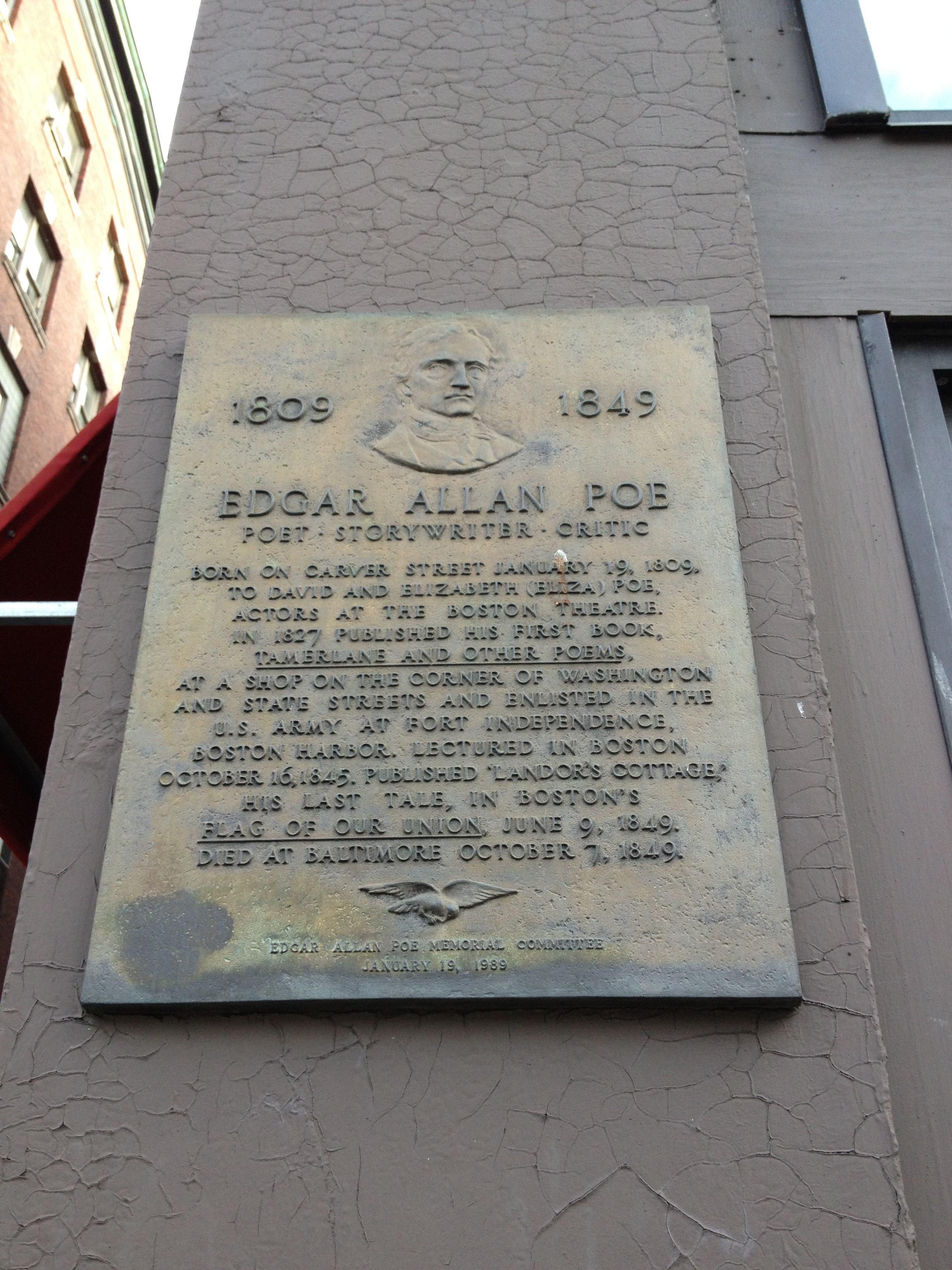
October is a beautiful, melancholy time of year.  Edgar Allan Poe died on October 7.  Two years ago today, my mother died.  This was brought home to me forcefully yesterday.  A colleague had invited me to address her class at Princeton Theological Seminary about Weathering the Psalms.  I had vacation days that have to be used up or lost, so I took the day off.  My wife and I drove to Princeton, a town we know well.  When we lived in Somerville, about 15 miles north of there, we’d visit Princeton not infrequently.  I wasn’t really familiar with the seminary grounds, however.  My colleague informed me that her class, on the Princeton Farminary (where a program in ecology and theology is housed) would be meeting in a barn so I should dress appropriately for the weather.  A cold front had come through, so I went for the tweed and turtleneck combo.

So we set off on a beautiful drive along the Delaware.  The leaves aren’t at peak yet, but there was plenty of fall color as we navigated our way toward Frenchtown, where there is a bridge across the river.  The GPS also told us this was the way to go.  On River Road, still in Pennsylvania, a flagman refused to let us on the bridge, although the signs did not say it was closed.  He impassively waved us on.  The GPS insisted we “return to the route.”  We soon found out why.  The next crossing is seven miles further down, along winding roads with a 25 mph speed limit.  The drive was beautiful, but suddenly I was going to be late for my appointment.  The new route added 45 minutes to the estimated travel time.  After uttering some choice words about unplanned bridge closures on a road where there are only a very few ways to emulate Washington’s crossing, we eventually arrived.

The weather beautiful, if a little chilly, the class decided to meet outdoors.  I hadn’t forgotten how much I love teaching.  It was brought back to me with force.  With the trees reminding us that winter is not far off, and the students eagerly asking questions, I felt at home for the first time in many years.  It was a temporary shelter, I knew, but it was a kind of personal homecoming.  Carefully avoiding the Frenchtown bridge, we drove north, crossing to River Road at Milford.  If the GPS had known that to go forward you sometimes need to go backward, it would’ve sent us to Milford that morning.  We arrived home tired but glowing from a day out of the ordinary.  As I put my tweed away that evening I found a pencil from the the funeral home where I last saw my mother in the pocket.  It had been the last time I’d worn this jacket, two years before.  October is a beautiful, melancholy time of year. 


Banning Books

For many years I’ve celebrated Banned Books Week by reading a banned book.  What with Republicans wanting only white, hetero, history-denying titles approved, I’m pretty sure that most books I read are banned somewhere.  Banned books, of course, see sales bumps and benefit the publisher and author.  So instead of reading a noted banned book, this year I’ll hang out my shingle here with but shallow hopes that it will be read.  I’m pretty sure, any agents out there, that at least one of my novels would be a banned book.  Maybe all of them.  You see, in my fiction I’m not the mild-mannered, inoffensive person who blogs here everyday for free.  There’s a reason that I keep my pen name secret.  I’m pretty sure that most people who know me would be surprised, if not shocked, by what appears in my fiction.

Writing, you see, is where we express the ideas in our heads.  I may seem to yak about everything on this blog, but in reality, I’m quite guarded.  Many of the horror movies I discuss, for instance, have ideas or scenes that I simply leave unaddressed.  I’m trying not to offend anyone here.  (A friend of mine who does publish fiction mentioned recently that a significant other in her family suggested that her writing wasn’t controversial enough to be picked up by publishers.  I think there could be something to that.)  While my mother was alive, I took special care that she wouldn’t discover any of my fiction.  Now that she’s gone these two years, I still protect her name with my own nom de guerre.  I really don’t want to hurt anybody.  I do, however, need to express myself.

Some of my fiction is horror.  Some is just plain weird.  The novels are well written, I think, and I’m open to editing.  (Agents, I am an editor—I know how this game works!)  As long as we’re stuck in a morass of banning books, why not look at a writer who’s more controversial than you might believe?  I’ve been writing daily for going on half-a-century now.  Think about that.  Think about the sheer number of controversial thoughts one might have in that amount of time!  Add graphomania to the recipe, with just a squeeze of talent and you’ve got banned books to last a lifetime!  I’m not sure any of the books I’m currently reading (five actively, at this point) formally appear on a  banned list.  But if you want to find one that almost certainly will be, well, my shingle’s out there if you care to take a look.

A banned book, in some districts

In the Water

On a list of hard-to-watch horror, I found the South Korean offering The Isle.  I was feeling particularly brave that day, I guess.  I was unfamiliar with Kim Ki-duk’s work, and looking for something that wouldn’t cost me any money to watch.  I found out this was one of those vomit or faint body horrors, but it is otherwise filmed so beautifully and gently that the contrast is downright shocking.  It all takes place at a low budget fishing platform rental business where the proprietor is a mute woman.  She ferries customers to their platforms, delivers food, and female companions, and occasionally takes revenge when customers treat her badly.  One day a fugitive arrives.  She doesn’t immediately know that he’s on the run, but she’s intrigued by him.  She prevents a suicide attempt and the two begin to bond.

Wanting to make sure her customer is satisfied, she starts bringing him a prostitute, but she gets jealous when they start to bond.  When the police come to find potential fugitives, he again tries to kill himself in a particularly gruesome way.  (Probably one on the vomit scenes.)  The proprietor again saves him and hides him from the police.  Apparently drawn to that type, she gets close to him and sees the prostitute as a threat.  She kidnaps the woman and when the prostitute falls in the water, hands and feet tied, she drowns.  The proprietor sinks her body and when the pimp comes looking for her, she drowns him.  The fugitive now realizes that they both have murder in common, but he feels trapped and escapes with her boat until she uses a reverse method of his suicide (another vomit scene) and he rescues her.  The police discover the bodies of their victims and the two take the platform house to a hidden location.  Apparently Kim Ki-duk likes enigmatic endings because the final scene is the proprietor drowned in a partially sunken boat.

I’m not quite sure what to make of this one.  I would agree with the hard-to-watch assessment.  Not only are there gruesome, self-destructive acts, I’m pretty sure that some animals were harmed in the making of the film—particularly fish.  I’m not often in the mood for body horror, but sometimes when I’m trying to save money, I’ll settle.  I very much doubt I’ll ever watch The Isle again.  K-horror is sometimes compelling, though.  This one manages to be emotional, and of art-house quality, but the only monsters are humans and they seem more to be misunderstood than anything else.  And I didn’t vomit or faint.


The Season

I learned about the Horror Writers Association years ago, shortly after I started publishing horror stories in 2009.  I couldn’t join because you had to have earned at least $30 from a publication.  I took this to mean a fictional one and I never made it beyond that benchmark until this year.  (It’s possible I misunderstood and could’ve joined for Holy Horror and beyond.  I think the point is they want to know you’re serious.)  In any case, these folks may be my tribe.  During the month of October the website has a set of free blog posts available to the public.  Mine—located here—dropped yesterday.  It deals with nonfiction, of course, since I’m still not finding much traction in getting novels published.  One of the weird things about book publishing is that you don’t know, unless you’re already successful, how well your sales are going until after about six months or so.  Sleepy Hollow as American Myth may be flopping for all I know. 

I’ve tried to promote this one as much as I can.  I contacted bookstores and libraries in Sleepy Hollow itself.  I had bookmarks printed and put them in local libraries and bookstores.  I arranged a discussion at the upcoming Easton Book Festival.  I told my local writers’ group about it.  Posted on a Halloween Facebook group.  All of this is tricky rather than treaty when a book is priced near $40.  That’s quite a trick, I know.  As Halloween approaches I keep seeing memes and posts about the Headless Horseman.  But I’m not sure if anyone’s finding my book or not.  It’s an anxious period when you write.

Working in publishing for nearly two decades now, I’m starting to realize that there are two ways to relevancy.  One is to be hired by an institution with name recognition—that automatically makes you an expert and everyone want to know what you think.  They’ll even pay you for it.  The second way is to write a book that sells well.  That one’s a bit of a catch-22, however.  To get published these days you need to already have a following.  I suppose that’s what the internet is for.  The best forums at the moment seem to be YouTube and TikTok, but there’s more much traffic there than on a Los Angeles freeway during rush hour.  I’m not sure if many people read the Horror Writers Association Halloween Haunts blog posts.  These folks, however, seem to look at this from a similar perspective.  Maybe a few of them will buy Sleepy Hollow as American Myth.  ’Tis the season.