Protected?

I like Macs.  Really, I do.  Ever since I realized that “Windows” was a cut-rate way to imitate Macintosh’s integral operating system, I’ve never been able to look back.  (I don’t have a tech background so I may be wrong in the details.)  Every time I use a work laptop—inevitably PCs—I realize just how unintuitive they are.  Something about Apple engineers is that they understand the way ordinary people think.  I sometimes use software, not designed for a Mac, where I swear the engineers have no basic comprehension of English words at all.  And nobody ever bothers to correct them.  In any case, I find Macs intuitive and I’ve been using them for going on 40 years now.  But the intuitive element isn’t as strong as it used to be.  As we’re all expected to become more tech savvy, some of the ease of use has eroded.

For example, when I have to create a password for a website—not quite daily, but a frequent activity—Mac helpfully offers to create a strong password that I will never have to remember.  Now before you point out to me that software exists that will keep all your passwords together, please be advised that I know about such things.  The initial data entry to get set up requires more time off than I typically get in a year, so that’ll need to wait for retirement.  But I was talking about intuitive programming.  Often, when I think I won’t be visiting a website often, I’ll opt for the strong password.  Maybe I’ve got something pressing that I’m trying to accomplish and I can’t think of my three-thousandth unique password.  I let Mac drive.  That’s fine and good until there’s an OS update.  This too happens not quite daily, but it does sometimes occur more than once a week.

After restarting I go back to a website and the autofill blinks at me innocently as if it doesn’t recognize my username.  It doesn’t remember the strong password, and I certainly don’t.  So I need to come up with yet another new one.  At work I’m told you should change all your passwords every few months.  To me that seems like a full-time job.  For grey matter as time-honored as mine, it’s not an easy task.  I’m not about to ditch Macs because of this, but why offer me a strong password that only lasts until the next system update?  Truth be told, I’m a little afraid to post this because if by some miraculous chance a software engineer reads it and decides to act, a new systems update will be required again tonight.
To the Maxxx

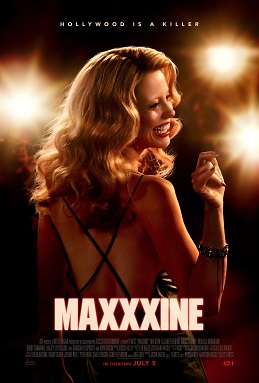
Okay, so Maxxxine will be difficult to discuss in my usual format here, but I’ll give it the old college try.  Ti West is quite a stylist when it comes to horror movies.  Friends recommended X a couple years back, and then it was revealed that it would be part of a trilogy, with Pearl coming next.  I’d seen these two and knew that I would watch Maxxxine when it came out.  More than just closure, these films all make heavy and obvious use of religion.  So much so that an extended piece could be written on that aspect alone.  I’ll try to restrain myself here.  Maxxxine is a direct sequel to X (Pearl was a prequel), following Maxine as an actress trying to break through in Hollywood.  Following the death of her X-rated film colleagues, she found an agent and has been trying to be cast in a horror film.  The movie starts with a home movie shot by her evangelist father advising her never to give up.

Just as Maxine wins the horror film role, a number of her friends in the adult entertainment industry are murdered.  Maxine refuses to assist the police, even when her best friend, who runs a video store, becomes a victim.  A private investigator is following her and she has him killed.  Those who saw X know she killed Pearl, and she’s willing to do as her daddy said, whatever it takes.  She decides to go to the PI’s client to try to stop the murders.  She discovers the man behind the violence is her father, who has learned about her X-rated work and believes she has a demon.  He has been killing her friends to lure her in and is about to brand her as a follower of Satan when the police arrive and a shootout occurs.

The publicity doesn’t hurt Maxine’s career prospects, even though she ends up killing her own father.  The movie is commentary on movie-making, fame, and Hollywood, as well as the potential evils wrought by religion.  My usual critique of the portrayal of religion applies.  Although Maxine’s father is made out to be a fundamentalist, when his plot is revealed it actually portrays him wearing a cassock.  He’s also shooting a snuff film to demonstrate the Devil’s doings.  A real fundamentalist wouldn’t wear such Catholic getup.  Many films that portray fundamentalists clearly don’t understand what separates them from other Christian denominations.  The entire X-trilogy is based on religion and how its constraints lead to horror.  There’s a lot to unpack here, even with the occasional gaff.


Four-leaf Clover

It was recently my late mother’s birthday.  I didn’t post about it on that that day since it might become a security question some day.  In any case, it was a somber day for me.  It’d been raining on and off for several days straight and I was wanting a picture of her for my bulletin board.  I remembered that I had inherited one of her photo albums.  This was the old kind with black paper onto which you had to lick and stick corners to hold the pictures.  Many of the photos had fallen out even back when she asked me to hold onto it, but there were some still there of her as a young woman.  As I was looking through them, something inside the front cover caught my attention—the crumbly brown remains of three four-leaf clovers that she’d glued there.

Since this isn’t likely to be a security question, I can say that her home life wasn’t ideal.  The page with the young photos of her were obviously from a day that she and my father were taking pictures of each other as young lovers.  They were outside a house on a summery-looking day.  Smiling and looking for a better future.  Four-leaf clovers.  My father was an alcoholic, and my mother knew that, but hoped that she might change him.  I don’t know the dates of the photos so I’m not sure if they yet knew they’d be parents.  One of the oddities of life is that about the time the questions occur to you, your parents might already be gone.  I wanted to ask about that happy day.  Those clover leaves.  The sunshine.

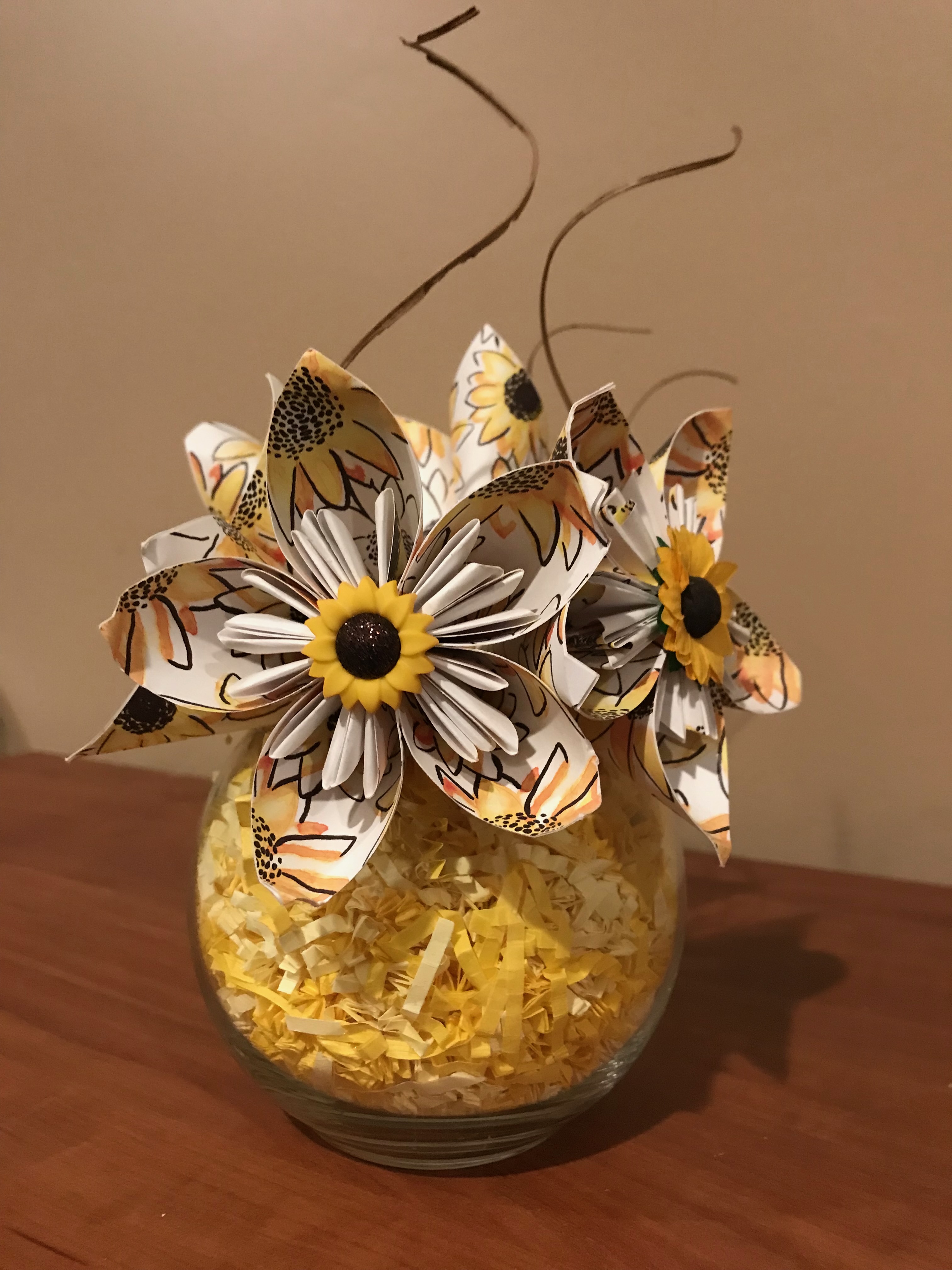
Rain and gray clouds persisted.  That particular day I had little human interaction, and I felt her presence with me.  I’m not a minister, as she always hoped I would be.  I could never find a job closer to home, as she wished time and again.  I didn’t even get to see her before she died.  Instead I had a photo album on my lap and rain falling.  And work for the day looming.  Her birthday is an engrained date in my mind.  Those last years we tried to find appropriate gifts for a woman who always said, “I don’t need anything.”  A few of those gifts are scattered around our house now.  One that gives me hope is a vase with flowers made from colorful paper that we purchased at a craft show for her.  I look at it and think of crumbled four-leaf clovers.


Going Viral

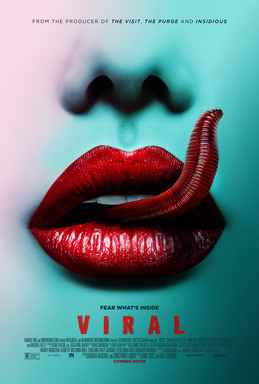
Okay, so there are some pretty big plot holes, but Viral is nevertheless an effective horror film.  The “virus” is actually a parasite spread by blood, which carriers cough in your face, if they don’t kill you first in a fit of parasite-induced rage.  The really scary thing is that this movie was produced before Covid-19 and the government response, as presented in the movie, is somewhat believable.  Nevertheless, it retains its ability to be a story about family and loyalty.  There are some missed opportunities in that regard, but overall it’s fairly well done.  It certainly keeps the tension going and I feel some spoilers coming on so I’ll warn you here.  A Blumhouse production, it seems to have had a reasonable budget.  And there’s a solid attempt to have a storyline with characters you care about.

Sisters Stacy and Emma are trying to adjust to a new school system as news reports increasingly focus on a new, and lethal, virus.  Their California community is the site of the first U.S. outbreak and the initial panic isn’t unlike what happened in 2019.  I’m a little surprised that, given that development, the movie didn’t gain more residual watching.  In any case, a quarantine and curfew are set up, but the teens of the housing development decide to have a party.  Kids will be kids, after all.  Of course, an infected guy is there and Stacy, the older sister, gets infected.  Their parents were caught outside the quarantine zone, so they have to try to survive on their own.  Emma has a new boyfriend—the guy next door—and he urges Emma to leave her sister, but she won’t.  Martial law is declared and “nests” of the infected are being bombed by the government.  Emma and boyfriend manage to survive, but the rest of the town’s a wasteland.

As I say, the implications are the really scary part.  Governments have the mandate to protect the greatest number of people—isn’t that utilitarianism, by default?—and decide to cut their losses and destroy infected communities because there’s no stopping the disease.  Even as the gaps in the story kept coming up, I was asking myself would our government do such a thing.  I could find nothing to dissuade me that it would.  Self-preservation is human nature.  As is might makes right.  Our government, for my entire life, has consisted of the wealthy and one thing we know about those with money is that they’ll do whatever they can to protect their interests.  Oh, and there are a number of effective jump startles as well. But they’re not as scary as the government.


Remembering Consciousness

I recently inadvertently read—it happens!—about anesthesia.  I’ve been relatively healthy for most of my adult life and have experienced anesthesia only for dental surgery and colonoscopies.  I’ve actually written about the experience here before: the experience of anesthesia is not like sleep.  You awake like you’ve just been born.  You weren’t, and then suddenly you are.  This always puzzled me because consciousness is something nobody fully understands and there is a wide opinion-spread on what happens to it when your body dies.  (I have opinions, backed by evidence, about this, but that’s for another time.)  What I read about anesthesia made a lot of sense of this conundrum, but it doesn’t answer the question of what consciousness is.  What I learned is this: anesthesiologists often include amnestics (chemicals that make you forget) in their cocktail.  That is, you may be awake, or partially so, during the procedure, but when you become conscious again you can’t remember it.

Now, that may bother some people, but for me it raises very interesting issues.  One is that I had no idea amnestics existed.  (It certainly sheds new light on those who claim alien abduction but who only remember under hypnosis.)  Who knew that even we have the ability to make people forget, chemically?  That, dear reader, is a very scary thought.  Tip your anesthesiologist well!  For me, I don’t mind so much if I can’t remember it, but it does help answer that question of why emerging from anesthesia is not the same as waking up.  Quite unrelated to this reading, I once watched a YouTube video of some prominent YouTubers (yes, that is a full-time job now) undergoing colonoscopies together.  They filmed each other talking during the procedure, often to hilarious results.  The point being, they were not fully asleep.  The blankness I experience after my own colonoscopies is born of being made to forget.

I think I have a pretty good memory.  Like most guys my age, I do forget things more easily—especially when work throws a thousand things at you simultaneously and you’re expected to catch and remember all of them.  Forgetting things really bothers me.  If you haven’t watched Christopher Nolan’s early film Memento, you should.  I think I remember including it in Holy Horror.  In any case, I don’t mind if anesthesiologists determine that it’s better to forget what might’ve happened when the last thing I remember is having been in an extremely compromised position in front of total strangers of both genders.  My accidental reading has solved one mystery for me, but it leaves open that persistent question of what consciousness really is.


Seeing the Forster

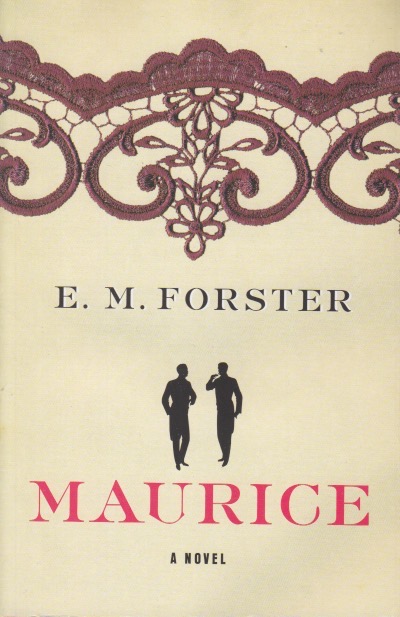
The thing about exploring dark academia is that its recognition is fairly new.  It seems that the “concept” emerged only ten years ago and the longer that it’s around the more sources it gathers, like a dust bunny growing under the bed.  I’ve never read E. M. Forster before, although I’ve seen movies based on his novels.  He was an interesting chap, trying out sci-fi (or at least dystopian fiction) as well as his literary novels.  Maurice was not published during his life because it explored homosexuality.  Forster was gay when it was technically illegal, and this novel reveals much of the struggle faced by homosexuals during the early decades of the twentieth century.  The novel has been cited as an example of dark academia, I suspect because much of the early part takes place in Cambridge.  Although it has a happy ending it’s not an easy novel to read.

Quite apart from the hideous paranoia of society at the time towards any kind of homosexuality, Forster’s style was, for me, difficult to decipher.  I know this is my issue, and not his.  His use of British expressions underscored for me how difficult it is to understand idiom in another culture.  At more than one place I was unsure what the speaker meant because the British slang used was so different from what I encountered living in the UK in the early nineties.  Not that the story is difficult to follow.  It is movingly written, demonstrating the torment of those who realized their orientation as they faced in an intolerant society.  Maurice even tries to “cure” his homosexuality, but efforts fail.  There is a darkness here, appropriate for dark academia.

Forster died in 1970, just when homosexuality was beginning to be understood not as a sickness, but a disposition.  It’s not a choice, and as the animal kingdom tells us, it’s certainly not limited to human beings.  The novel makes note of the fact that Greece, the origin of much of western culture, approved and promoted homosexual relationships.  Maurice is told that he could move to France of Italy where such relationships were not illegal.  There’s no question that the societal stance toward homosexuality was based on particular understandings of biblical texts, some now thoroughly discredited by biblical scholars (Sodom was not destroyed for homosexuality as biblical intertexts clearly show).  Generations of people, including Forster, were put through lives of torment in order to keep a prejudice alive.  Academia may be dark indeed.


Dark Smile

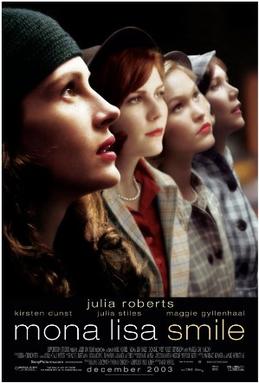
Romance.  It’s not the same thing as Romanticism, but it’s often part of drama.  It can, and often does, feature in horror.  Tender feelings toward someone we really love seem to be a human universal, even if social structures don’t always support such feelings.  Maybe I’m trying to make excuses for why I watched Mona Lisa Smile, but there is an underlying reason.  More than one expert considers it an example of dark academia.  I was curious, and honestly, it’s easier to get my wife to watch dark academia than it is horror (for that I’m on my own).  This was a film I’d heard about many times, but hadn’t watched any trailers for, so I wondered what it was all about.  In short, Wellesley.  One of the seven sisters.  But more than that—women struggling for equality in the 1950s.

A fictional Katherine Ann Watson takes up a post teaching art history at Wellesley, back in the day when a doctorate wasn’t required.  In order to demonstrate her expertise to her very well prepared students (I never, in nearly 20 years teaching, had students show that level of eagerness for any subject) she introduces them to modern art.  Traditional Wellesley isn’t prepared for that.  Moreover, she encourages them to develop careers of their own in a period when the MRS degree was still a main reason for women to attend college.  Watson’s own life isn’t without romance; a boyfriend back home in California and another professor at Wellesley both vie for her affections.  Some powerful students, however, make her life difficult and despite her popularity as a teacher, the administration allows her to remain, but with severely clipped wings.  She decides to fly instead.

Amid all the social commentary, a darkness remains.  A large part of it is patriarchy, but academic politics—driven by money—is the main culprit.  As Watson is essentially forced out, her students see her off with a display of camaraderie, making this, in some ways, quite similar to Dead Poets Society.  There were a few triggers for me.  Years ago I was indeed called into the Dean’s office and handed a letter to read.  While not nearly as dramatic as either Dead Poets Society or Mona Lisa Smile, I had students demonstrate their support for me as I was forced out.  Katherine Ann Watson seems to have had better prospects than John Keating, but both movies remind us that academic politics are dark indeed.  Even if it’s couched in the genre of romance.


Craving Enchantment

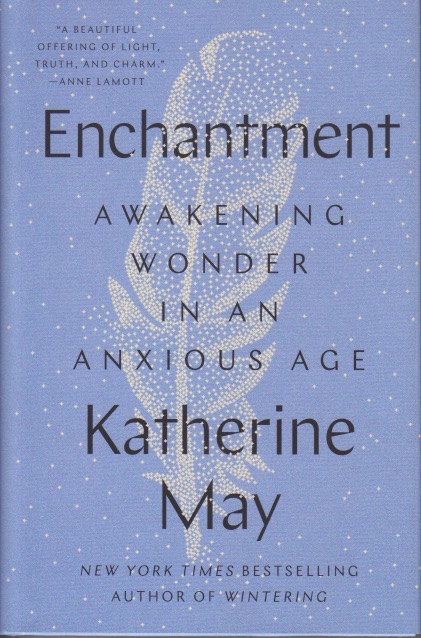
I really want to know, but just can’t figure out, how to write like Katherine May.  My wife and I read her book Wintering and now have added Enchantment.  In many ways I seem to be like May; we may be different shades of neurodivergent, but I understand what she says.  Indeed, at one point in Enchantment she talked me down from a writer’s dilemma that had me worked up for days.  But I can’t write like her.  I have times when my rhetoric for a blog post or two might come close, but I have tried to sustain it for an entire book, so far without success.  My background was perhaps too sullied by academic writing, although May is also an academic, so I may simply be making excuses for lack of talent.

That’s too bad because Enchantment is meant to improve your outlook.  Subtitled Awaking Wonder in an Anxious Age, it consists of life lessons the author learned during the pandemic.  I often, if I allow myself in this constant struggle for my time, experience the sense of wonder May describes.  I enjoy walking in the woods, watching heavenly bodies, staring into a river or pond, and trying to draw lessons from such things.  Lately, however, I find myself rushing through them because I have something else I have to do.  Daily, it’s the 9-2-5, of course.  That schedule overloads my weekends with things that have to be done even if I want to spend time appreciating the enchantment I can find, if I have the time.  Sorry, I’m letting the anxious part take center stage.

This is a wonderful book.  I admire the way that May is able to face down her own struggles with grace and remain open to possibilities.  I found such things much more readily when I was at Nashotah House.  There were moments between classes and there were semester breaks.  We lived in the woods.  By a lake.  There was wonder there, for the taking.  Having a young child to introduce to the wonders of nature definitely helped as well.  Children force you to see through new eyes (it’s not a surprise that May has a young son when writing).  Too quickly we grow up and let capitalism tell us what to do.  It takes so much from us and gives so little.  I’m looking out my window at nature, as I write this.  I know it has enchantment to offer.  I also know that work begins in fifteen minutes.


Fabric of Time

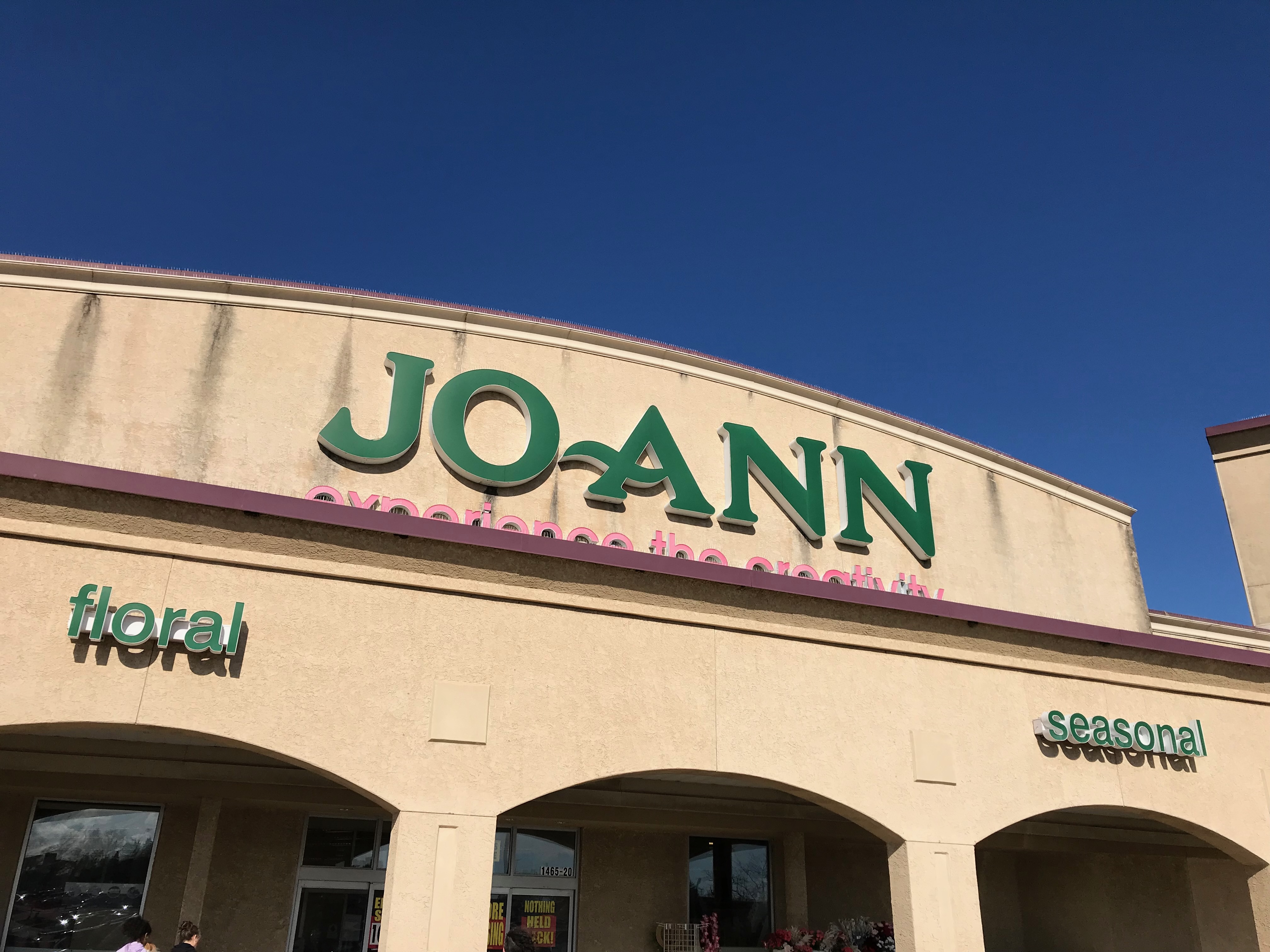
I’m not a sewer.  I mean, a person who sews.  I know people who are, though, who are quite distressed that JoAnn Fabrics is going out of business.  In an effort to console such folk, I indulged in an online search for fabric shops that led to a couple of conclusions.  One is that the internet is lousy at clean-up, and the second is that big box stores have ruined the ability to find things, funneling all purchasing to Amazon.  Let’s take these one at a time. 

If you’ve ever searched for a physical store (fabric or otherwise) online, you know that sites like Yelp are full of artifacts.  Stores that closed a long time ago and have never been removed.  In fact, when I commuted to New York City I sometimes walked several blocks on my lunchtime, looking for a store only to learn that it had closed five or ten years ago.  It still beamed happily on the web, though.  I have driven to bookstores that no longer exist, based on their location being proclaimed loudly online.  Regarding fabric, I located directories for Enright’s Fabric Warehouse, in nearby Bethlehem.  Nothing online indicated that they were long out of business.  I street-leveled the address on Google Maps and found a building I’d driven past many times; I’d actually driven by it the day before.  It obviously was a large factory-like building, but it hadn’t been a fabric store in the seven years I’ve lived in the Lehigh Valley.  This isn’t the only time I’ve searched specifically for a company/store with the query word “bankrupt” or “out of business” to find Hal-9000 saying, “I can’t let you do that, Steve.”

The second point.  Big box stories come to town, drive smaller stores out of business, then fold themselves, leaving us all poorer for it.  As big boxes go, I liked JoAnn’s.  Probably because they were failing, they had lots of things besides fabrics that I could look at on family outings.  But the fact is smaller fabric stores (which still appear online as existing) went out of business when JoAnn came to town.  There were two JoAnn stores in the Lehigh Valley.  Smaller places closed, and now we’ll be running around naked before we can find a fabric store willing to sell.  I’ve seen this happen with other industries as well.  There was a fine office supply store in Oconomowoc, Wisconsin when I was at Nashotah House.  Staples came to town and closed them down.  If you’ve been in a Staples lately, you know the writing’s on the wall.  I know we’re stuck with big boxes.  More often we turn to Amazon where a few keystrokes will get you what you need.  Check and mate.


Unholy Conception

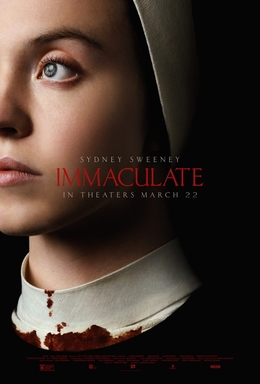
Religious horror is difficult to get right.  Immaculate received reasonably positive reviews, and did well enough at the box office.  Its message of women being forced into reproductive roles unwillingly is certainly timely.  Viewers with religious training, as well as experience viewing quite a lot of horror, might be less impressed.  The basic premise isn’t bad: a convent in Italy, which has one of the nails from Jesus’ crucifixion, is using the biological material on the nail to genetically engineer a new messiah.  The movie follows the novice/nun Sister Cecilia, a virgin, as she joins the convent and discovers that she’s pregnant.  The entire community—apart from a jealous nun and a friend trying to warn Cecilia—welcomes the news, presenting Cecilia as the new Mary.

The convent, which has a history of torture, realizes that Cecilia might be reluctant.  Past sisters have, and she isn’t the first immaculate conception the resident priest (a former biologist) has engineered.  Realizing, by the second trimester, that something sinister is going on, Cecilia tries to escape but is caught and confined, and her soles are branded to prevent her from running away.  After killing the Mother Superior, a Cardinal, and the resident priest, she does escape, gives birth, and kills the baby.  It’s not difficult to see the social commentary involved, but this is body horror and it’s not about gross outs.  It is pretty tense and has several scary moments, but the plot leaves some rather large holes that might following it difficult.  It’s never explained, for example, how the genetic material ends up inside Cecilia without her knowing it.  For those who’ve spent years reading about Marian devotion, this is not an unexpected question.

Although this would be a candidate for Holy Sequel, there’s just something off about the religious elements of the film.  Having never been a nun, I can’t say for sure, but the convent life (apart from the engineering a messiah) seems inaccurate.  And although the Bible is quoted, it’s presented in an almost Protestant way.  The underlying religious imagery feels slightly askew.  Judging from what critics have said, that doesn’t seem to bother many viewers.  If you’re going to make a religious horror movie, it is possible to get away without doing your homework.  In the end, however, it shows.  The acting is quite good and the theological message is worth arguing over, but like many other religious horror films, it has been weighed in the scales and found wanting.


Late Shift

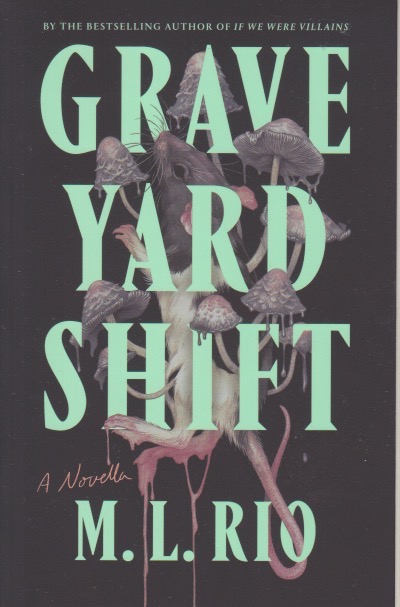
M. L. Rio is best known for If We Were Villains, a book I have on my shelf but haven’t read yet.  She’s one of those rare PhDs who can write, and her punchy, irreverent style has a way of drawing you in.  Graveyard Shift is actually a novella (a cynic would say a way to get you to pay a full novel price on a piece a bit too short to qualify), so it’s a quick read.  It’s a little difficult to classify, genre-wise.  The copyright page suggests thriller, which means not-quite-horror, but with elements of it.  Taking place over one night (and just over 100 pages), its the story of how a college student journalist and her friends crack the case of a mysterious shallow grave they discover one night at their usual hangout, behind an abandoned church, Saint Anthony the Anchorite.  Edie, the journalist, has to find a story to headline the next day’s edition, and the grave provides it.

The story involves mushrooms and rats, sleep deprivation, and lots of smoking.  Still, it’s a well-crafted tale that holds your interest.  Of course, I noticed the centrality of the church to the story.  It’s so much a part of things that the disparate group of friends identify themselves as Anchorites.  An anchorite is essentially a hermit—a monk who prefers not to live communally (cenobites, a name taken up by the Hellraiser franchise, are monks in community).  Of course, the friends aren’t monks, just young people in a college town who like to be out at night, and maybe solve mysteries.  The church is both a focal point and a kind of vector in this world where unusual activities take place after dark.  It shouldn’t be a spoiler to say the friends solve the mystery and begin to help address one another’s problems.

I like brief books.  I don’t mind moderately long novels—when they start getting over 400 pages I get a bit anxious.  I have to admit that Goodreads has made me conscious of how many books I read in a year.  And since I like to blog about books, it also helps to finish them in a timely way.  Besides, escapism is especially important at the moment.  If you like stories about college kids, under-employed professors, bartenders and others who manage to eke out a living before family and mortgage change everything in your life, you’ll probably like this one.  It’s not really a horror story, but it’ll keep you turning pages, which is what books of any size are meant to do.


A Different Village

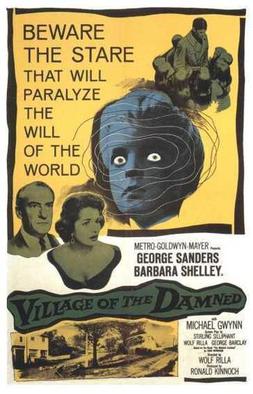
If I’m honest I’ll admit that I first found out about John Wyndham’s The Midwich Cuckoos from The Simpsons.  In one of the episodes, “Wild Barts Can’t Be Broken,” a “clip” is shown of a horror movie called The Bloodening.  A spoof on Village of the Damned, the scene caught my imagination and I was able to learn that it’d been taken from this movie.  This was many years ago, of course.  In any case, I went out and found a DVD of Village and found it less frightening than anticipated, but it left me curious.  It was easy enough to find out the book it was based on (it’s in the credits).  Now, well over a decade later I finally read it, but I’d forgotten nearly everything about the movie but the glowing eyes.  Having read the novel, I had to see the movie again.

Interestingly, the book is generally considered science fiction and the movie horror.  The two genres are closely related, of course.  The explanation for the children in the movie is a little sci-fi, but the framing is horror.  So much so that in Britain in 1960 it was nearly given an X rating (the censors didn’t like the glowing eyes).  As typical, when compared to today’s fare this is a tame little piece about some unruly children.  Of course they do get blown up at the end.  That may have been a spoiler.  I guess I can be unruly too.  In any case, sequences of self-harm, and even suicide, make this a reasonably scary movie.  The film has the same stiff upper lip that the book does, but otherwise it’s a modern horror classic.  I haven’t seen the 1995 remake, but it didn’t get very good reviews.

The movie doesn’t have as much moralizing as the novel does, but it raises the very real issue of how we socialize children.  I do suspect, however, that blowing them up when they’re all together is probably not the message they wanted us to take home.  Although far from a flawless film, this is quite intelligent for horror of the period.  Consensus is that horror “grew up” in 1968, but there were some premies, it seems.  Night of the Demon is another one from the period.  Horror has, I would argue, been intelligent from the start.  Dracula, although not a perfect story, has become a bona fide classic, and Frankenstein before it, had already been a literary touchstone for decades by the time the former was published.  Not bad for watching an episode of The Simpsons.


Think

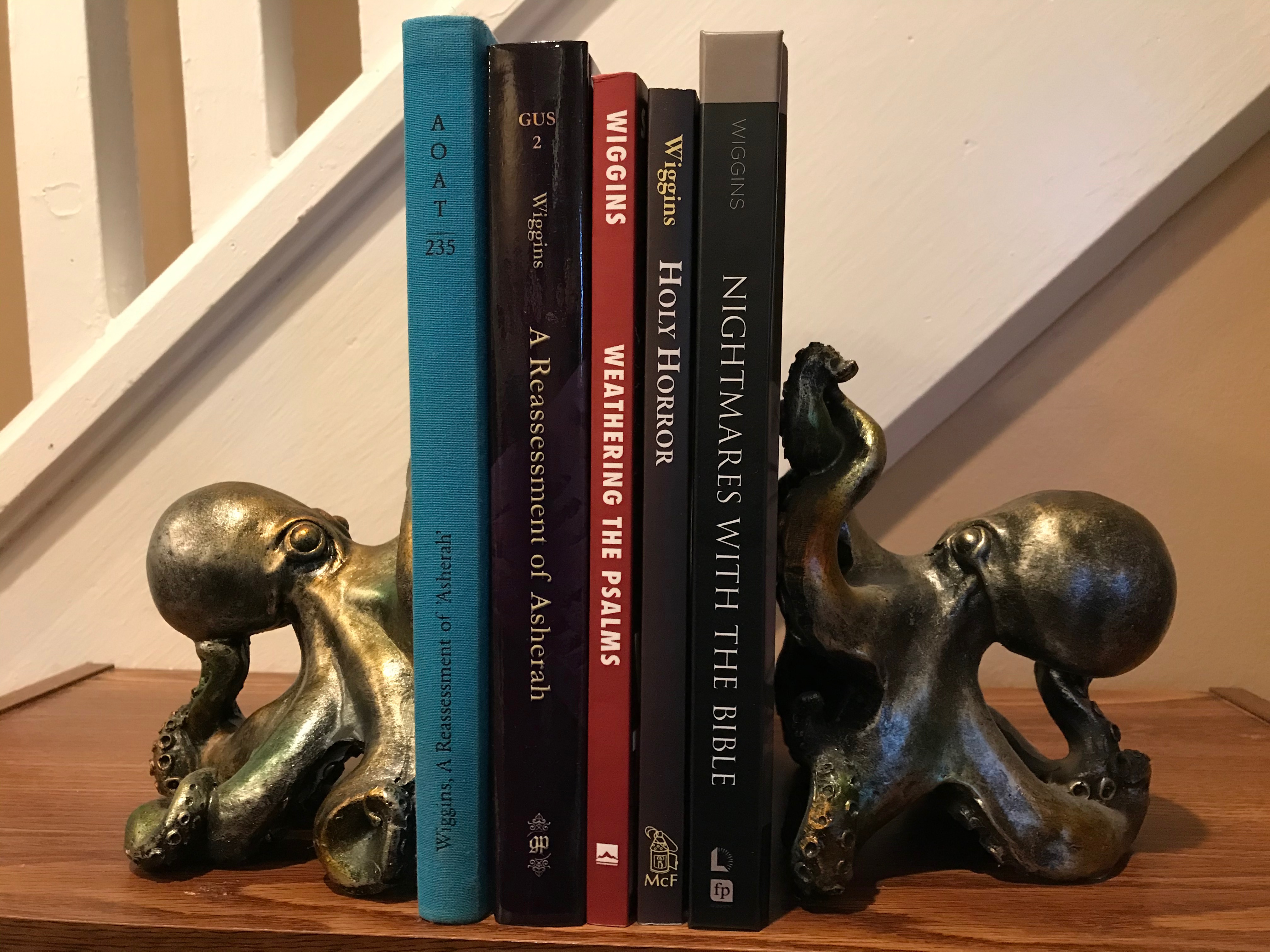
Those of us who write books have been victims of theft.  One of the culprits is Meta, owner of Facebook.  The Atlantic recently released a tool that allows authors to check if LibGen, a pirated book site used by Meta and others, has their work in its system.  Considering that I have yet to earn enough on my writing to pay even one month’s rent/mortgage, you get a little touchy about being stolen from by corporate giants.  Three of my books (A Reassessment of Asherah, Weathering the Psalms, and Nightmares with the Bible) are in LibGen’s collection.  To put it plainly, they have been stolen.  Now the first thing I noticed was that my McFarland books weren’t listed (Holy Horror and Sleepy Hollow as American Myth, of course, the latter is not yet published).  I also know that McFarland, unlike many other publishers, proactively lets authors know when they are discussing AI use of their content, and informing us that if deals are made we will be compensated.

I dislike nearly everything about AI, but especially its hubris.  Machines can’t think like biological organisms can and biological organisms that they can teach machines to “think” have another think coming.  Is it mere coincidence that this kind of thing happens at the same time reading the classics, with their pointed lessons about hubris, has declined?  I think not.  The humanities education teaches you something you can’t get at your local tech training school—how to think.  And I mean actually think.  Not parrot what you see on the news or social media, but to use your brain to do the hard work of thinking.  Programmers program, they don’t teach thinking.

Meanwhile, programmers have made theft easy but difficult to prosecute.  Companies like Meta feel entitled to use stolen goods so their programmers can make you think your machine can think.  Think about it!  Have we really become this stupid as a society that we can’t see how all of this is simply the rich using their influence to steal from the poor?  LibGen, and similar sites, flaunt copyright laws because they can.  In general, I think knowledge should be freely shared—there’s never been a paywall for this blog, for instance.  But I also know that when I sit down to write a book, and spend years doing so, I hope to be paid something for doing so.  And I don’t appreciate social media companies that have enough money to buy the moon stealing from me.  There’s a reason my social media use is minimal.  I’d rather think.


A Different Lord

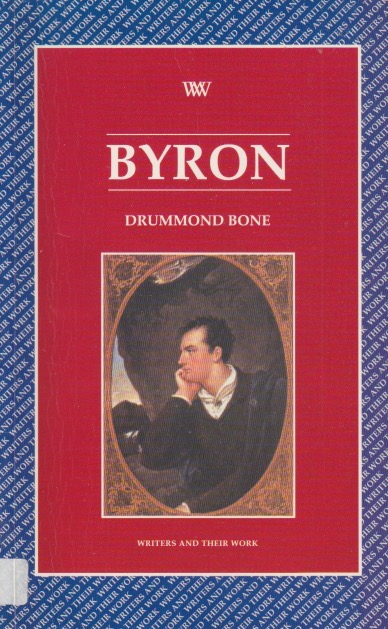
I just wanted to learn the basic outline of Lord Byron’s life without having to commit to the hundreds of pages most of his biographies boast.  Something brief, but authoritative.  Something for which I could be sure the author was vetted.  I hadn’t read any of the Writers and their Works series before.  It gets good reviews and here was the story of Byron in less than 100 pages!  I was excited to get started.  Then I discovered this is mostly about his poems rather than his life.  It contains 21 pages of biography and 60 of poetic analysis.  I really should’ve checked more reviews.  I’m not really into poetic analysis.  I know that those of us who create tend to think of our creations as extensions of ourselves.  I’ve made 3-D art (kind of like sculpture), I’ve drawn, I’ve painted, I’ve written.  These are parts of me that exist in the world.  But really, I just wanted to know what Byron’s life was like.

Actually, I did learn the answers to some of my questions.  Although a “lord,” he didn’t inherit much wealth.  Indeed, the opposite.  His eventual wealth came from his poetry.  This is nearly an impossible dream these days, of course.  His fame brought the spotlight onto his personal life and politics.  A man who easily “fell in love”—he was a Romantic, after all—he had affairs and his politics weren’t those of the majority.  He left England at the advice of a friend, never to return.  He was friends with Percy Shelley, which is common knowledge.  As he made a home, actually several homes, in Europe, he continued to earn good money for his poems.  He was famous and feared, it seems.  Although the book doesn’t describe it, he gave the world its Byronic hero.

I haven’t read much of Byron’s poetry.  That style of writing has never appealed to me.  The poetic life, however, is of endless interest.  Shelley drowned on a boat trip home after visiting him in Italy, and Byron was present at the cremation.  (And I got yelled at in the New York Public Library for trying to snap a picture of the fragments of Shelley’s skull that were on a special display.  Byron had been there in person, of course.)  A few short years later Byron also died while helping to plan and finance the Greek war for independence.  Still, there is more I’d like to know.  But probably not enough to read a biography of several hundred pages, though.


Special Delivery

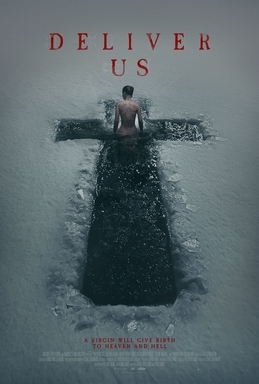
Deliver Us is a horror movie intentionally built around religion.  It hasn’t been discussed much on the sites I frequent, but I suspect that it should be more.  Yes, it gets aspects of religion wrong, but then most religious horror does.  And it leaves a lot unexplained.   Again, most religious horror also does.  The cinematography is bleak and beautiful, evoking a winter chill.  The story is built around a made up prophecy, but do I really need to say it a third time?  Fr. Fox is a Catholic priest in Russia and a former exorcist.  Like Fr. Karras, he doesn’t believe in demons, but his bishop really wants him to go to a convent to check out a possible genuine miracle.  Fr. Fox is about to become Mr. so he can marry his pregnant girlfriend.  Since she has to go to Estonia for a while, she encourages him to do this one last thing for the church.

Meanwhile, signs are occurring that the end times are arriving.  In the convent a secret society called Vox Dei is harvesting prophecies from people’s backs.  What sways Fox to go is that a renowned cuneiformist, Cardinal Russo, is there.  Fox wrote his dissertation on “alphabetic cuneiform”—that’d be Ugaritic, folks.  Not explaining where they got the human-skin scrolls, Russo needs Fox’s help in figuring out the language (it turns out to be cuneiform Zoroastrian).  The miracle is a weeping Madonna statue, but there’s also an immaculately pregnant nun.  She has twins in her, one the Messiah and the other the Antichrist.  Fox doesn’t believe any of this but when he learns that the Cardinal is going to kill the babies to prevent the end of the world, Fox convinces him to give up the wicked plan and they escape with the nun.

This is enough to give you a flavor of the movie.  I won’t give up the resolution but I will say it ends up revolving around the end of the world.  In general this is a pretty intelligent movie.  It borrows quite a lot from other films, including The Omen and The Shining, but it is fun to watch (if you don’t mind a bit of gore).  The tension mounts as Vox Dei tries to find the escaped priest, Cardinal, and nun and there are some legitimately scary scenes.  It was written and directed by Lee Roy Kunz, who also plays Fox.  I do think this deserves more in-depth consideration and had it been out in time, and had I known of it, I would’ve included it in Holy Horror.