A Different Legion

Religion and horror can play well together.  They can also be unevenly matched.  Although Legion has been on my list since shortly after it came out, my impression after having watched it is that the angels are strangely corporeal.  Their fights are physical with very little supernatural involved.  I suppose that’s why it’s generally classified as “action,” but the premise is one that suggests a bit more supernatural would’ve been welcome.  The writing suffers from any number of ailments, and the ending leaves you wondering just how good God is supposed to be in this telling.  I suppose a plot synopsis might help.
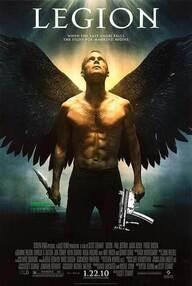
A pregnant waitress in a remote diner is nearly at term.  The Archangel Michael has come to earth in Los Angeles (get it?) and has armed himself to protect this unborn baby.  He comes to the diner where the owner and his son, his cook, and four customers are holed up against what they think is a demon attack.  Michael eventually reveals that the arriving hordes are not demons, but humans possessed by angels.  God has decided to wipe out the human race again, this time with angelic mercenaries.  If the waitress’s baby survives, however, the world will be saved.  So there’s lots of shooting, and although a white guy dies first, the only two Black characters are the next victims, of course.  To kill angels, it turns out, you have to shoot them.  Who knew?  In the end, which pits Gabriel against Michael, it’s revealed that God was testing the loyalty of his angels by giving them this task.  Mindless obedience, God thinks, is wrong.  If people have to be killed to prove it, so be it.

The theme of the messianic baby stays intact but goes nowhere.  At the end it’s unclear if the angel attacks are still going on, but the waitress and her boyfriend, along with the baby, drive around heavily armed, ready to fight.  Did the angels get the message that they are being tested by God or are they, like many Republicans, simply following the “leader”?  Seeing the title and knowing nothing of the story, I had assumed this was a movie about demons.  The “Legion,” of course, is angelic but there’s not a lot transcendent about them.  Even the use of wings (which are bulletproof), makes this feel like Dogma without the humor.  I knew religion would be involved in this horror, but I didn’t know how poorly it was played out.  Still, it would fit into Holy Sequel, if it ever happens.

Hooting in the Dark

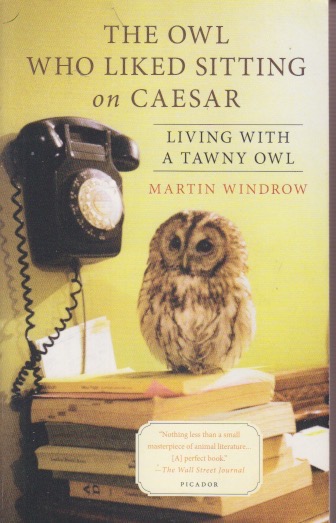
Animals fascinate me.  I picked up Martin Windrow’s The Owl Who Liked Sitting on Caesar: Living with a Tawny Owl at a used book sale.  Honestly, the cute photo on the cover swayed me.  Although some animals like living with humans, and although I grew up with lots of pets, I’ve tended away from that.  Reading about how an owl became a close companion to, and lived a good life with a human was somewhat bittersweet.  In the wild Mumble (the owl’s name) would’ve likely lived a far shorter span.  But I do wonder if she missed out on the challenges that make life rewarding.  (I sometimes wonder the same about those born rich among our own species.)  The struggle is part of nature inside us.  And although this book is generally fun, it does raise some deeper questions in my mind.

When describing the natural life of Tawny Owls, Windrow notes that they have an ability, not understood, to adjust their brood sizes by the amount of prey that will be available during a given year.  Such things always give me pause for a couple of reasons.  One is that we seem to assume we have all the data—that we know all that can be known of our world.  Animals prove that wrong time and again.  The other reason is that we are convinced there is no, for lack of a better term, spiritual world.  Or maybe better, paranormal existence.  Might it not be that owls have some ability to know the future?  Some people seem to have the ability to predict some short-term developments with accuracy.  Perhaps we’re missing something is all I’m saying.

In the end, however, I was surprised how Windrow couldn’t quite bring himself to reject a materialist view of her death.  I’ve had pets die on me—one of the reasons that I have no desire to “own” one—but as Windrow writes it, the relationship grew humdrum before Mumble’s death.  He had to work and she had to perch.  We do tend to take those closest to us for granted, I fear.  Life is so busy that we have to try to squeeze family in next to the demands of capitalism.  So the story towards the end winds down to a kind of “I had a pet owl but I had a life to live too” kind of narrative.  I’m glad to have read the book and I learned a little bit about Tawny Owls.  But I was also left reflecting on some of the larger implications.


Filming the Void

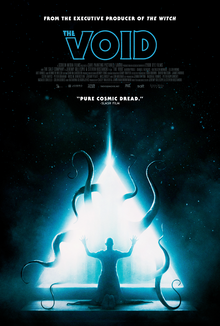
Once you move away from major studios, it turns out that Lovecraftian horror is rather prevalent.  Seeing that The Void was rated higher than many offerings on FreeVee, well, why not.  It was compared to the intellectual works of Benson and Morehead, but to me it matches more closely with Older Gods.  Like many movies in this genre, The Void isn’t easy to follow and having commercial interruptions doesn’t help.  (In movies made for television, directors know to offer cues at specified times to allow for a break.  I’m not sure that those at FreeVee, or Tubi, or Plex, or their ilk, or even Hulu, know how to do this well.)  So there are these mysterious cultists—somehow “new religionists” just doesn’t seem to cut it—who apparently want to bring about the apotheosis of their leader in a rural setting. 

Meanwhile a local sheriff finds a young man fleeing from a couple of guys who are killing people and takes him to the hospital.  This hospital, however, is being closed down and there’s only a skeleton crew there to handle emergencies until it can be decommissioned.  Once the guys trying to kill the young man arrive, the hospital is surrounded by the cultists.  By the way, there will be spoilers—just saying.  It never is adequately explained how these killing guys know who these cultists are, unless it happened so fast that I missed it.  In any case, all trapped in the hospital there’s the problem with a monster that has tentacles (Lovecraftian) that takes over the body of a nurse, then a tries to get a state policeman.  Lots of axes and gunfire, and the numbers in the hospital are reducing.

It turns out that the kindly old doctor is the leader of the cult and he’s trying to raise the old gods so that he can bring his daughter back to life.  The sheriff, who’s been the protagonist all along, knocks said doctor into the eponymous void, leaving only two people alive in the hospital.  It’s not really explained where the cultists, who made it into the hospital, went.  Nevertheless, this is a good example of horror and religion (which is ironically Lovecraftian).  The doctor’s unconventional religion is the cause behind the hospital mayhem, and, apparently the killings being conducted by the interlopers are attempts to stop it.  As a horror film it’s effective, if a bit disjointed.  It seems that there’s still a lot to unpack from films that try to bring Lovecraft’s ideas onto the silver screen, major studio or not.


Time Flees

I can’t speak for all early risers, of course, but for me the absolute worst thing about this useless tradition of switching to Daylight Saving Time is the loss of morning light.  I’m in favor of keeping DST all the time, as the US Senate has voted to do.  The only reason this is still an issue is to give the House yet something else to fight about.  How dysfunctional are we, really?  This one’s a no brainer!  Look, I start work early every day.  I jog before work because I’m too tired afterward.  In late February to early March I can get out and back before seven.  (In the summer before six!)  Then DST happens.  I’m plunged into another month of waiting until seven to be able to jog.  DST is just one of those ridiculous things we just keep doing because we don’t have the will to change it.  We’d rather fight.

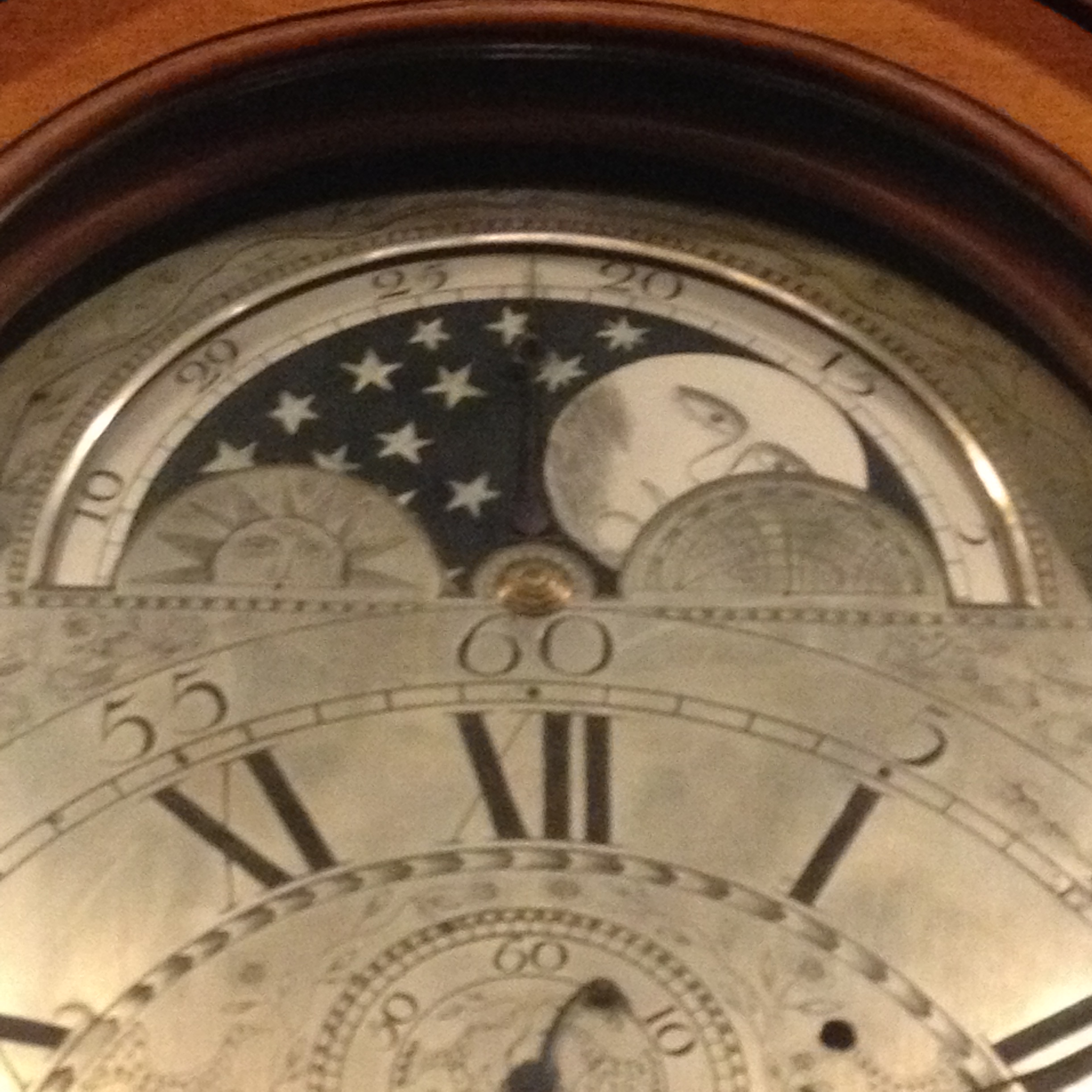
I’ve been thinking a lot about time lately.  How we think of it, how we divide it.  We sometimes lose sight of the larger picture.  If relativity is right, the stars we see at night are, many of them, long gone.  We’re seeing light trudging through the near vacuum of space, or maybe dark matter, and thinking how we’ve got to get to our meeting on time.  How we need to be at work from 9-2-5.  How somebody with money owns that portion of our time.  There’s a reason that DST starts on a weekend.  Time.  We can’t grasp it but we can waste it.  What are we waiting for?  Some of us are seeking the truth.  Even so we know that Morpheus was right—time is always against us.  It’s a limited commodity, but even that language cheapens it.

Those of us of a philosophical bent allow ourselves time to ponder such things.  We call time a dimension, but what does that really mean?  Theoretically it can be traveled along in either direction (again, pending relativity) but we only experience it in one.  So what do we do?  We interrupt its flow because during a war during the last century it was deemed that industry could be more productive if it were light an hour later.  Maybe we should just all agree to shift our perception of time ahead by an hour permanently.  That’s forward thinking.  And who knows, it might just save us all a lot of time.


Look Out Beneath

Rainy weekend afternoons were made for monster flicks.  That’s what I was thinking when I settled on The Devil Below.  I was also thinking, “this is free on Amazon Prime.”  The best word  I can think to describe it is lackluster.  Sometimes I’ll see a movie and a couple weeks later will have trouble remembering what it was about without severe prompting.  This may fall into that category.  We’ll see.  In any case, Arianne—is she Ariadne?—researches and leads groups to inaccessible locations for a fee.  She can find anywhere.  A group of “scientists” want to find a coal mine in Kentucky that caught fire (like Centralia), and explore it for possible high-grade anthracite.  What they don’t know is that monsters live in the mine and they escape from time to time.  The former mine owner has formed a ragtag group of helpers who keep the monsters at bay.  They don’t ask for help.

So far, nothing really stands out.  What makes this movie worth discussing is the dialogue about religion and science that the scientists have.  Unfortunately the writing is poor and that means the dialogue isn’t very sophisticated.  For example, one of the geologists argues that intelligent design isn’t opposed to science.  What said scientist doesn’t know is that intelligent design was intentionally invented by creationists as an alternative to science.  Its roots are clear and unambiguous.  This member of the team doesn’t believe they should really be doing this—the mine is behind an electrified fence and the locals keep trying to chase them off.  And he’s talking about God while there’s, well, devils below.

It’s never really explained why these creatures are considered devils, unless they live close to “Hell,” being underground and all.  We don’t get many clear views of these monsters but they eat what they can get, which makes you wonder what they survived on before miners showed up on the menu.  In the end, all the scientists get eaten—it turns out that their leader was actually working for big industry, not a university, as he’d claimed—and you don’t feel too bad for them.  Arianne survives and decides to stay with the locals to fight the monsters.  There’s some faith talk among them as well, which makes me wonder if the writers maybe had a hidden agenda.  Although the article does score a Wikipedia article, many of those involved, including the writer and the star, don’t have their own entries.  And who has the time to mine the internet for more answers?  There you might find the devil below, I suppose.


Boo-Boo

After an unfortunate encounter with a paper-cutter in which one of my thumbs didn’t fare so well, I sought a bandage.  This led me on a reverie since the bandage I found was in a box that I’d brought home from my mother’s apartment.  Mom was a practical woman and I’m sure she would’ve approved, although the item was selected in a moment of grief that still hasn’t completely dissipated.  As my wife was binding my wound the thought recurred that my mother wouldn’t be needing these physical assuagements any longer.  Like all of us, if cut she bled.  She’s beyond that now.  A person’s affects linger and contain pieces of their memories.  This particular box was plastic and therefore reusable—which is precisely what Mom did.  She taught me how to bandage myself and I’ve used that knowledge many times over the decades.  It’s something I don’t need YouTube to figure out.  Time is a gift.

When writing about recent times, I recently learned new vocabulary regarding decades.  For example, the first two decades when I was culturally aware were the seventies and eighties.  Together they’re known as the xennial period, named, presumably, after “generation X.”  (I’m a very late boomer, as well as a late bloomer.)  I found that fascinating.  Then I was reading something that made reference to the “noughties.”  This delightful word is the British term for “aughts” or “aughties”—the years between ’00 and ’09 of any given century.  We hear plenty about the “twenties,” “thirties,” and so on, so I became curious about the correct term for the second decade of a century.  Either “tens” or “teens” is acceptable, but it seems that in formal writing this should be transcribed by numbers. I guess teen ages are always difficult.

Our divisions of time demonstrate our preoccupation with both mortality and round numbers.  More and more people are living the entire way through a century, from aughties through nineties.  For most of us, however, we can, if things go well, use our birth decade as a rough guide.  I’m not likely to make it through the fifties, but it isn’t impossible.  If I do I guess I’ll need to upgrade my WordPress account because my daily posts will have used up my allotted memory by then.  In the meantime, I do need to buy some new bandages for the time in between.  When I do I’ll put them in a simple plastic box, and I will remember the gift of time I shared with my mother.


The Third

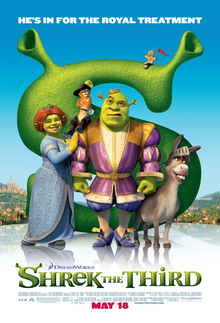
I don’t know what possessed me—and I use that verb intentionally—to suggest Shrek the Third for weekend viewing.  Apart from a Rosemary’s Baby and Exorcist mashup scene, it is a bad movie.  I’ve been watching bad movies over the past few months, and developing an aesthetic for them, but I just can’t warm to Shrek the Third.  The first two movies were quite good, and sequels frequently struggle.  I’m trying to put my finger on why this one leaves such a bad taste in a viewer’s mouth.  For one thing, it’s the writing.  Not as snappy or crisp as the first two, it drags with politically correct emotional adjustment as Arthur tries to learn to be king and Shrek reconciles with being a father.  What happened to the histrionics of Lord Farquad?  Or the cluelessness of the fairy tale creatures with no leader?  Instead there are hugs and reassurances.

Not that hugs and reassurances are bad, but they’re not Shrek material.  Sudden character shifts don’t help either.  The real thing, however, seems to me, to be the music.  Many movies patch in contemporary songs to set the mood.  The first two Shreks did this remarkably well, with one narrowly edging out two in several places.  The Third lacks this artistry.   The pop songs chosen just don’t fit.  They tank the mood time and again.  Music is important.  It can make or break a film.  In this case it’s only one problem.  To me even the animation seems rushed.

There is an aesthetic to bad movies.  I guess I was hoping to find it here (I’d seen it before, years ago).  Maybe badness in movies is harder to make good when they’re animated.  There’s an intentionality about everything when you know everything on screen was planned to appear exactly as it does.  Good bad movies entertain.  There’s a reason we come back to them, even knowing they’re not great.  As someone who’s written for his entire literate life, I tend to think that good writing can redeem most movies.  We can put up with low budget effects if the writing is strong.  There’s a reason Casablanca is a classic, despite the low budget.  The Third has the tag line, “The best Shrek yet.”  Considering the bar set by the first two, that was a boast not likely based on anything like facts.  Or taste.  I’ve got to wonder, however, when big budget animations start going off the rails, when is it decided to simply let them go and hope that a classic will emerge?


Verb Choice

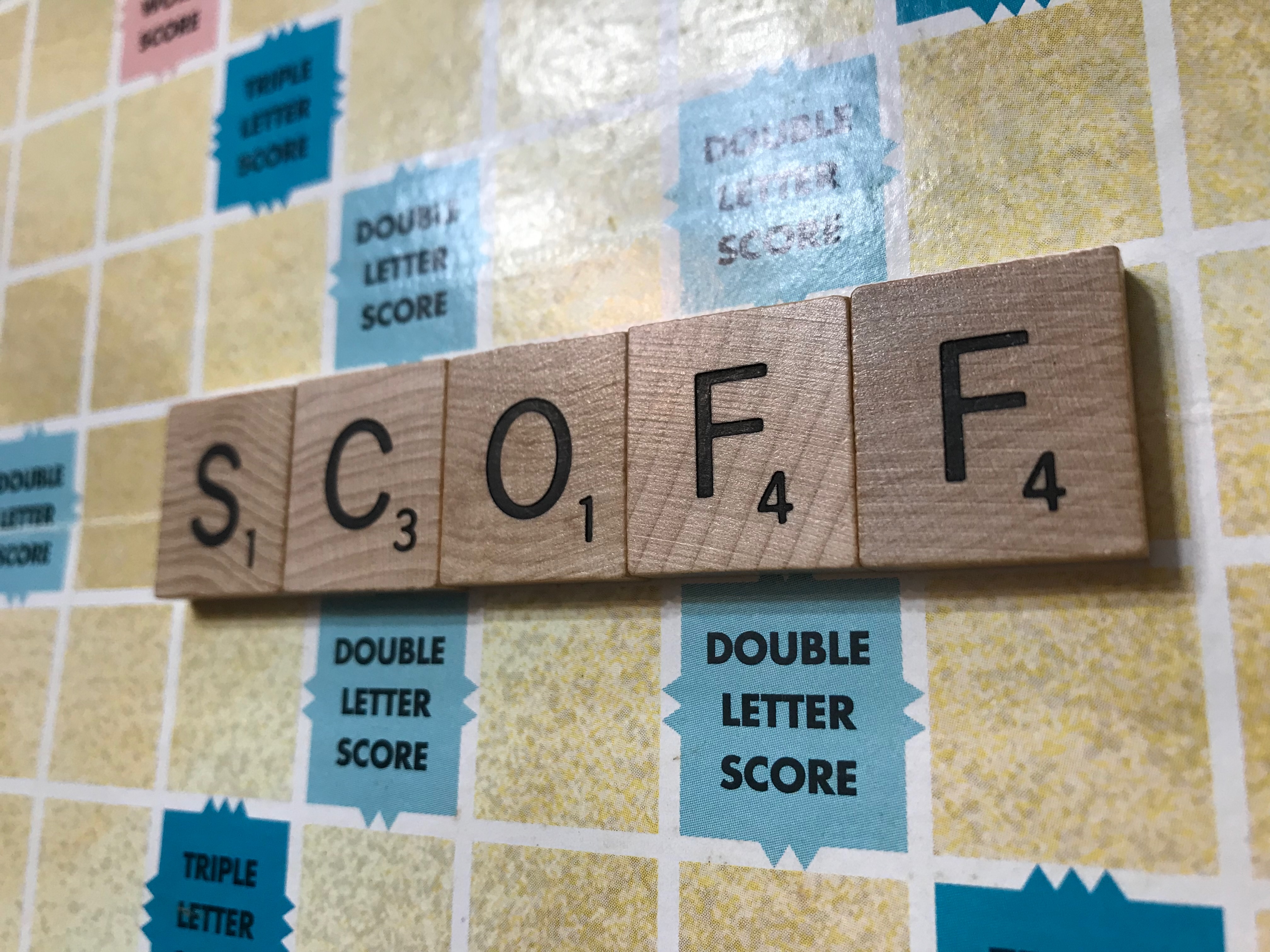
I can’t remember who started it.  Somehow, though, when I watch movies on Amazon Prime, the closed captioning kicks in.  I generally don’t mind this too much since some dialogue is whispered or indistinct.  I also presume some kind of AI does it and it makes mistakes.  That’s not my concern today, however.  Today it’s word choice.  Humans of a certain stripe are good at picking the correct verb for an action.  I’ve been noticing that the closed captions often select the wrong word and it distracts me from the movie.  (Plus, they include some diegetic sounds but not others, and I wonder why.)  For example, when a character snorts (we’re all human, we know what that is), AI often selects “scoffs.”  Sometimes snorting is scoffing, but often it’s not.  Maybe it’s good the robots don’t pick up on the subtle cues.

This isn’t just an AI problem—I first noticed it a long time ago.  When our daughter was young we used to get those Disney movie summary books with an accompanying cassette tape (I said it was a long time ago) that would read the story.  Besides ruining a few movies for me, I sometimes found the verb choices wrong.  For example, in Oliver (which I saw only once), the narrator at one point boldly proclaims that “Fagan strode into the room.”  Fagan did not stride.  A stride is not the same thing as a shuffle, or a slump.  Words have connotations.  They’re easily found in a dictionary.  Why do those who produce such things not check whether their word choice accurately describes the action?

So when I’m watching my weekend afternoon movies, I want the correct word to appear in the closed captioning.  Since the nouns generally occur in the dialogue itself, it’s the verbs that often appear off.  Another favorite AI term is “mock.”  Does a computer know when it’s being mocked?  Can it tell the scoff in my keystrokes?  Does it have any feelings so as to care?  AI may be here to stay, but human it is not.  I’ve always resented it a bit when some scientists have claimed our brains are nothing but computers.  We’re more visceral than that.  We evolved naturally (organically) and had to earn the leisure to sit and make words.  Then we made them fine.  So fine that we called them belles lettres.  They can be replicated by machine, but they can’t be felt by them.  And I have to admit that a well-placed snort can work wonders on a dreary day.


A Different Zone

I haven’t read Stephen King’s The Dead Zone yet, but it’s on my list.  That’s why I was a little reluctant to watch the movie.  It was free on Amazon Prime, however, and I reasoned to myself that I’d seen The Shining and Carrie before reading the books.  Indeed, my earliest introduction to Stephen King was through movies.  (Well, I did read one of his short stories in high school, but the novel side of things came later.)  When the opening credits revealed it was directed by David Cronenberg I wondered what I was in for.  I didn’t know the story, but I hadn’t heard of this as a Cronenberg body horror spectacle either.  It was quite cold outside and I was nodding off, so why not.

The thing is, it’s not always listed as horror.  That’s a faulty genre designation, as is sci-fi.  There’s one futuristic scene in the movie and it lasts for just over a minute.  Does that make it sci-fi?  Also, I  realized, it deals with clairvoyance and for similar reasons the X-Files are also listed as science fiction.  Paranormal, it seems, is permanently ruled out of the realm of possibility by assigning it an improbable genre.  Well, back to the zone.  I figure the title will be better explained by King, but there is a brief scene explaining what a dead zone is.  The story follows Johnny Smith, a schoolteacher who becomes clairvoyant, although it manifests itself only after a car accident and a coma.  The main purpose of this, at least through the movie lens, is to prevent a Trump-like populist from being elected president.  That is the horror part, I guess.  And it’s becoming clear to me that writers were warning about these things since the seventies.

Unlike many of my weekend movies, I’d actually heard of The Dead Zone before.  There are some horror tropes present.  It begins with Edgar Allan Poe’s “The Raven,” and has a few other horror references tossed in.  Still, it’s a very human story.  The movie probes the difficulties of a life with special abilities.  Johnny never gets over the woman he was going to marry before his coma, and he feels for those whose futures he sees.  The movie is fairly slowly paced and it drops a few threads, again, likely found in the novel.  In the book or movie debate I generally go for book first, but that often leads to disappointment on the silver screen.  Maybe this was the right order to go this time around.  Once I read the novel I guess I’ll know.  Or at least have an opinion.


Web Dark

I know, I know.  My hours are odd, but I’m not the only one awake at this time.  So home alone one weekend—hands slapping sides of face, mouth gaping open—I decided to go grocery shopping at six, when the store opens.  It was a frosty morning and I hadn’t yet shaken the chill from getting out from the covers and throwing on clothes before the thermostat fully awoke.  I checked the store website.  Hours: six to eleven.  Off I drove.  Not trusting any kind of authority, really, I was glad to see several cars in the parking lot.  I gathered my reusable bags and approached.  The sliding doors weren’t welcoming that morning.  I tried the other side since sometimes they lock the south doors until later.  Same results.  Then I saw the hours: seven to eleven.  Trust no one.

I had an hour to wait and the car was still cold.  I drove back home, pondering the unreliability of the web.  At least with a phone book you could take a big, thick tome in and point to the ad—“it says six a.m.!”  Websites are, of course, not always updated.  Maybe the six a.m. opening was a pandemic thing.  (I’m still waiting for the web to tell me the pandemic is over.)  Somebody, however, didn’t bother to update the website.  And I was shivering.  Steam coming out of my ears would’ve been welcome to warm my fingers at this point.  Now, I know that neglected things fall apart.  Abandoned houses can have trees growing through them, for goodness sake.  But if you’re a colossal food chain can you not pay to have your website updated?

Broken links lie scattered like glass shards across the internet.  The other day I tried to check out an independent small publisher only to land on the entry page to a porno site.  The publisher had gone under and the domain name sold.  Look, all I want to do is get groceries and get back home so that I can get my weekend activities underway.  I may be on my own for the day but that doesn’t mean I’m planning to waste my time.  Instead I have to go back home, back the car into its slot, unlock the back door (which is friendly), put my hands on the radiator for a few minutes, and then turn around, go out, and try again.  I suppose I could use the time to surf the web, but honestly, I don’t really trust what I might find there.


A Little Flat

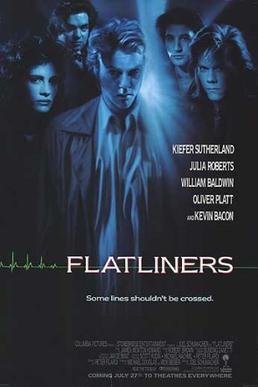
I remember hearing about Flatliners when it came out.  It was during an era when I wasn’t watching many movies and the idea of a movie all about dying bothered me.  Well, I’m older now and I watch movies because I write about them.  So I gave Flatliners a try.  It wasn’t bad—a cut above what I often end up watching on a lazy winter weekend afternoon.  In case your memory’s rusty, here’s how it goes: five med school students decide to experiment with controlled death and resuscitation.  They do this to find out what’s after death.  Confident in both science and their abilities, they one-by-one undergo the procedure to see what awaits beyond.  The experience is different for each of the four that does it.  It can be pleasant, or not.  More not.

Then the experiences from the beyond begin to break through into their alive lives.  But not the good stuff.  The word that these scientists use is, interestingly, “sin.”  The sins of their pasts come back to them.  One of them realizes that to free himself from this haunting, he has to make amends to a person he offended as a child.  The apology—and forgiveness—works.  Eventually the four pay the price and, perhaps, are a bit wiser for it.  This isn’t a great film but it does raise a number of issues that demonstrate how religion and horror relate.  Death is a religious issue, no matter how secular someone is.  As the definition of life becomes more complex, its cessation becomes more fraught.  Here medical students are grappling with their very vocation.  They ease suffering and prolong life.

I suspect one of the reasons the movie failed to make it big was that the “sins” are unevenly repaid.  An accidental death from a childhood of bullying is the worst.  A past of womanizing seems to have a relatively light, and predictable outcome.  And what is the sin in discovering a war veteran parent’s addiction to an opioid?  In a sense it’s classic Sunday school—you get punished for your wrongs.  Some suffer, however, from mistakes that others made.  Or for which others egged them on, and in which others participated.  And for us vegans, even egging someone on might be a sin.  The value of the movie seems to be less how it’s executed and more about the potential for discussion that it raises.  Death is no stranger to cinema, and it can’t fail to make the living curious.  That seems worth talking about. 


A Bookseller’s Son

Be kind.  One of the best reasons, apart from innate rightness, is that we don’t know the burdens other people carry.  Yes, some will tell us and others will not, but one thing is certain: we all bear scars.  I met Andrew Laties because of the Easton Book Festival that he organized.  Andy is half-owner of Book and Puppet Company, an independent bookstore in that town.  A colleague of mine from Lafayette College introduced us back in 2019.  Whenever I go to Easton I stop in the store and pick something up.  Andy has kindly slotted me into each annual Book Festival, except last year, because of a burden I happened to be carrying.  I recently finished his book, co-authored with his son Samuel, Son of Rebel Bookseller: A Very Large Homework Assignment.  Andy had revealed one of his burdens before I read it, and I appreciated the slight cushioning of the shock.

Samuel is a posthumous co-author.  I have had friends—too many—who have lost children.  It is a devastating blow.  I’d casually chatted with Andy for five years without realizing he had this to bear.  This book is an unflinching stare at the unfairness of life.  You get a good idea of what Sam must’ve been like, through his writing and his father’s description.  His brilliance is evident, even as we learn of his mental illness.  The two often go together, and even contemporary successful authors, such as John Green, have  revealed their mental struggles to the world.  There are many great writers, like Edgar Allan Poe, who clearly had some issues.  The stigma must disappear.  Our culture would be so very poverty-bound without it.

Son of Rebel Bookseller is available on Bookshop.org.  Or, if you’re in Easton you can stop into the shop.  The title makes reference to Andy’s previous book, Rebel Bookseller, which I mentioned here a couple years back.  This, however, is a much more personal story.  An anguish screaming to be released.  Something that I’ve picked up on during editorial board meetings at work is that books by authors with a compelling personal story have something special about them.  They may not end up published by the Big Five, and they may really find only a local readership.  That doesn’t mean, however, that they can’t have an impact.  The vast majority of books have limited readerships, and some of them are far more important than those that line bestseller lists.  And this one reminds me once again the importance of kindness, and striving to be as humane as a human can be.


Keeping Time

How we keep time (or better, mark time) is fascinating to me.  Unlike our concept of schedules, the earth’s revolution and rotation do not give us evenly long days or years.  Yet we still work 9-2-5 and even though many studies show a four-day work week is more productive, we just can’t give up old ways of marking time.  A weekend (a fairly new development) is two days only.  A leap year, however, contains an extra day for “the man.”  That’s because today is not a holiday.  It’s a necessary day to keep months in sync with years, otherwise March would slowly have September weather.  All of this is human convention, of course.  As is capitalism and its “more is always better” outlook.

Our lives have changed with both the internet and the pandemic.  We work more, not less.  And I, for one, think we need to give working stiffs another day off.  We could start with today.  (I know, big man, that you fear losing money—I realize this is important to you!  What I’m suggesting might make you wealthier, however.)  After all, today is a gimme.  What would we do with a whole other day if we had one?  I know, our standard answer is work, but what if life were more than just what you were paid to do?  It would be a holiday.  The thing about holidays is that we don’t know what ancient events prompted the origins of some of them.  Those for solstices and equinoxes are obvious enough, but other days became special for unknown reasons.  Why can’t February 29th be such a day?

Some employers make up the difference by making election day a holiday.  That one should be a national holiday, really.  And since presidential elections fall on leap years, I guess we get February 29 off on the first Tuesday in November.  Holidays have always fascinated me since they project an aura of something special happening on that particular day.  Something that makes it different from other days.  People born on this day joke about aging four times slower or faster, depending on your perspective.  Doesn’t that seem enough to qualify as a special day?  For most of us, however, today is just another Thursday, and for many it’s just another Thursday at the office.  And it propels other marked days in the year ahead so your birthday next time around skips a day.  There’s a kind of magic to today.  Maybe we should mark it in some way.


Though This Be Madness

Shakespeare could turn a phrase, alright.  Along with the Bible he’s one of the two most unwittingly quoted sources in the English language.  But he liked to borrow ideas.  Writers have always done this, and it came home to me again watching Robert Egger’s The Northman.  My wife and I intended to see it in the theater two years ago—life gets too busy even to get out to a movie, it seems.  So we had to settle for Amazon Prime.  In any case, I don’t read about films in advance and I avoid trailers when possible.  I couldn’t help hearing, however, that it was a viking revenge story.  Still, it wasn’t until my wife said, “Isn’t this like Hamlet?” that I made the connection—Amleth.  Hamlet.  Scandinavian. Danish.  Okay, so The Northman is based on the legend of Amleth which is the direct basis for Shakespeare’s Hamlet.

Like all of Egger’s feature films so far this one is meticulously researched and very moody.  More than once it made me glad that we live in a civilized society, such as it is.  Those of us who were the runts of our family litters know that bigger kids often get their way by dint of physical intimidation.  The vikings—and this was a good representation of a berserker—took what they wanted because they could.  But Amleth couldn’t have what he really wanted.  He witnessed, as a child, his uncle murder his father, the king.  Said uncle takes the throne and the queen and Amleth vows revenge, but what can a young boy do?  Then as an adult, he’s told by a seer that he made a promise so the viking heads home to exact revenge.

The Northman really isn’t a standard horror movie, although Egger’s previous two films fall into the genre fairly handily.  His next project is Nosferatu, after all.  And The Northman isn’t a retelling of HamletHamlet was a retelling of Amleth, and this is another retelling.  Those who’ve been following Egger’s rise know that his films are intelligent and melancholy and literate.  They also have a way of disturbing that peaceful acquiescence that comes after viewing a less thoughtful movie.  It would probably have made even more of an impact had we been able to get to it in a theater.  If it weren’t for Shakespeare most of us probably wouldn’t know the story of Amleth, but Norse mythology has a way of remaining relevant, despite the fact that we tend to credit the ideas to others.  Just check the name of the day of the week and see if that’s right.


Demons Again

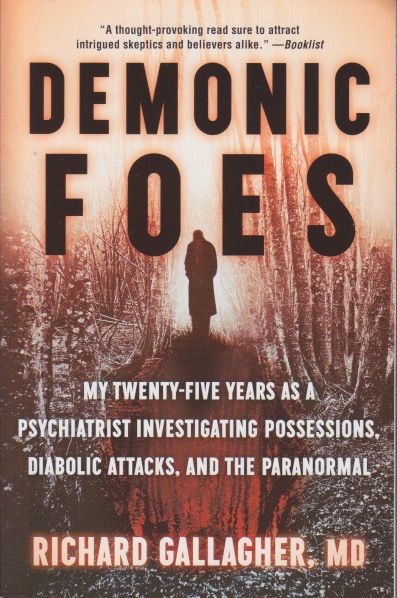
Exorcism is sexy these days.  I fully understand why $100 books on it escape attention, but I’d been looking for Richard Gallagher’s treatment since 2016 when I learned that he was writing it.  Demonic Foes is, however, a little disappointing.  As I am wont to do, I tried to find information on the author only to discover that he appears on many webpages but really has no online presence himself.  He teaches as Columbia but his page there is minimal as they come.  The book, which I suspect easily caught an agent’s eye (see my opening sentence), is a rambling tour—very roughly chronological—through the author’s experiences with and thoughts about demons.  I’m left puzzled, however, about why he maintains the secrecy around his priest mentors, although they are dead.  Believe me, I understand withholding names, but if you’re trying to convince people, we need something to go on.

There are some interesting, and scary cases here.  But Gallagher also gives nods (somewhat skeptically) to Malachi Martin, but also to Lorraine Warren, and Fr. Gabriele Amorth.  At times he easily moves between movies and actual events.  His writing style at times obfuscates, unintentionally, I expect.  Before too long it becomes clear that, as a Catholic, the author distrusts anything occult, paranormal, or parapsychological.  At one point he suggests assuming spirits are demonic until you can prove otherwise.  At the same time, he suggests possessions are rare.  I’m left wondering about a number of things.  There’s no bibliography and his knowledge of the ancient world isn’t that of a specialist.  Even his history of demons doesn’t address the nuanced issue of how Christianity came to understand demons as the New Testament seems to.  He gets some facts wrong about other religions.

I’m no stranger to cobbling books together while working full-time and trying to hold daily life together.  You can hire book coaches (if you afford them) and not all editors are willing to tamper with money.  (Trade publishers do what they do for lucre, don’t you know.)  Demons are a controversial subject.  The tired orthodoxy of demonizing other religions still holds for some, and it seems to here as well.  This rambling book raises more questions than it answers: which exorcisms did the author witness?  Why are non-Catholics said to have rosaries?  Why are verifying names kept secret?  If wanting to convince people, why are so few dates or precise places given? I appreciate what Gallagher is trying to do and I agree with him that we need to avoid dismissing demons because they don’t fit a scientific worldview.  As he admits in the epilogue, he holds a traditional view of what demons are.  I’m left wondering what we might find if science would take the paranormal seriously.