Hopeful Flowers

Our front yard is a bit of a wreck this year.  You see, none of us are natural gardeners and with two chronic illnesses among the three of us we’ve had some multi-day hospital visits and shifting of priorities.  The front yard hasn’t been one of them.  I’m able to get out around 6 a.m. on a Saturday, however, to do some weeding.  My philosophy this year is that if it’s not something people would consider an “ugly weed” and if it stays under six inches tall, I’ll let it grow.  We’ve planted some deliberate ground cover that doesn’t seem very deliberate, but it’s slowly taking hold.  And, of course, there are the ubiquitous dandelions.  I don’t really have a problem with dandelions but others think of them as weeds and they do, admittedly, have no sense of personal space.  They’ll grow right up under some intentionally planted flower and crowd it out.

If you’ve dealt with dandelions, you know they have deep roots.  Well, it rained yesterday and the ground was soft enough that I was actually able to gentle one out the whole way today.  It was impressive.  Usually the root breaks off (a brilliant, if frustrating adaptation) less than an inch beneath the surface.  I thought to snap a picture before tossing this one on the compost pile (in the back yard, of course, inside the fence where it can’t be seen).  Talk about depth!  These yellow wildflowers with edible leaves and wine-making potential, are tenacious.  They have a very strong will.  Dandelions are perhaps the most strong-willed of plants.

With chronic illnesses, hope is essential.  Instead of getting angry at “weeds” I look at them as examples of just how mighty hope can be.  They find cracks that are so small that we overlook them.  The soil can’t always be great there, but they carry on.  Dandelions can reach impressive sizes (trust me on that one—I’m no gardener) and they don’t take “no” for an answer.  Such resilience gives me hope.  Were they more conscious (I’m sure they are at some level, but I surely hope it’s beneath the threshold of pain degree) they might well be dominant among the plants.  I missed mowing the lawn last weekend for being in the hospital with family, and it’s clear the dandelions have designs on taking over the place.  I see them and I find a deep peace.  Life finds a way, in spite of difficulty.  

Animate Magnetism

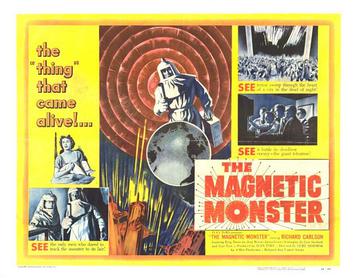
The Magnetic Monster is listed as sci-fi and horror on industry websites.  It falls into that period when horror had shifted to Hammer Studios in the UK and the US had entered that white-shirt, button-down period known as the fifties.  There were still monsters out there but they generally had to do with radiation.  In this case, it’s magnetism and its relationship to electricity.  The movie came out in 1953 and introduces what may have been the forerunner of the X-Files, namely the Office of Scientific Investigation, the OSI.  This team of A-men (yes, this was the fifties) study anomalies in order to keep America safe.  There were a total of three OSI films, of which this is the first.  The eponymous magnetic monster is alive only in a philosophical sense—it’s actually an irradiated element gone wild.

An unrestrained scientist had subjected a radioactive isotope to alpha particles for several days and this started a chain reaction.  He takes the substance onto a commercial airline—in his carry-on, no less (it was the fifties)—but the plane is diverted so the A-men can intercept it.  Every eleven hours this isotope divides and doubles, eating all the energy around itself to do so.  This creates an immense magnetic field.  So immense, in fact, that in a mere matter of days it will throw off the earth’s core and our planet will spin helplessly off into space!  Don’t panic, dear reader, the A-men are on the job.  They find a scientific means of overfeeding this monster and destroying it, which is why we’re all still here.

Interestingly, this is one of the more highly rated movies of the era, perhaps because of its scientific optimism.  Scientists can solve all our problems.  And yet you’ll find them without fail in church on Sunday morning.  The fifties were developing a kind of split personality for this country that was trying to hold two conflicting impulses together in an attempted fusion.  The problem is, overthinking either (or both) of them would demonstrate that they really have separate paths to take.  They may well be compatible, but in ways that relegating religion to Sunday morning simply doesn’t work.  Even today many scientists—generally not the outspoken kind—still hold religion and science in tension.  There is something to this impulse we call religion, but it always seems to have to wait while we use science to destroy the monsters we create ourselves. 


Literary Criticism

One of the drawbacks to being an editor becomes apparent with much reading.  Some people have writing skills.  Others don’t.  That’s no reflection on intelligence, insight, or even brilliance.  Good writing is part talent and part hard work.  The drawback is when someone thinks they’ve got what it takes, but they don’t.  I’m a gentle guy.  I don’t like to hurt feelings and yet I have a job to do.  You see, good writing involves a few things—writing for your readership, being aware of what that readership likes, and giving new information without being all technical about it.  I’ve read academics who write very high-level monographs, sprinkled with “wells” and “you sees,” which come off like a guy my age trying to impress a twenty-year old by being groovy.  Just admit you’re writing for other scholars and get down to it.

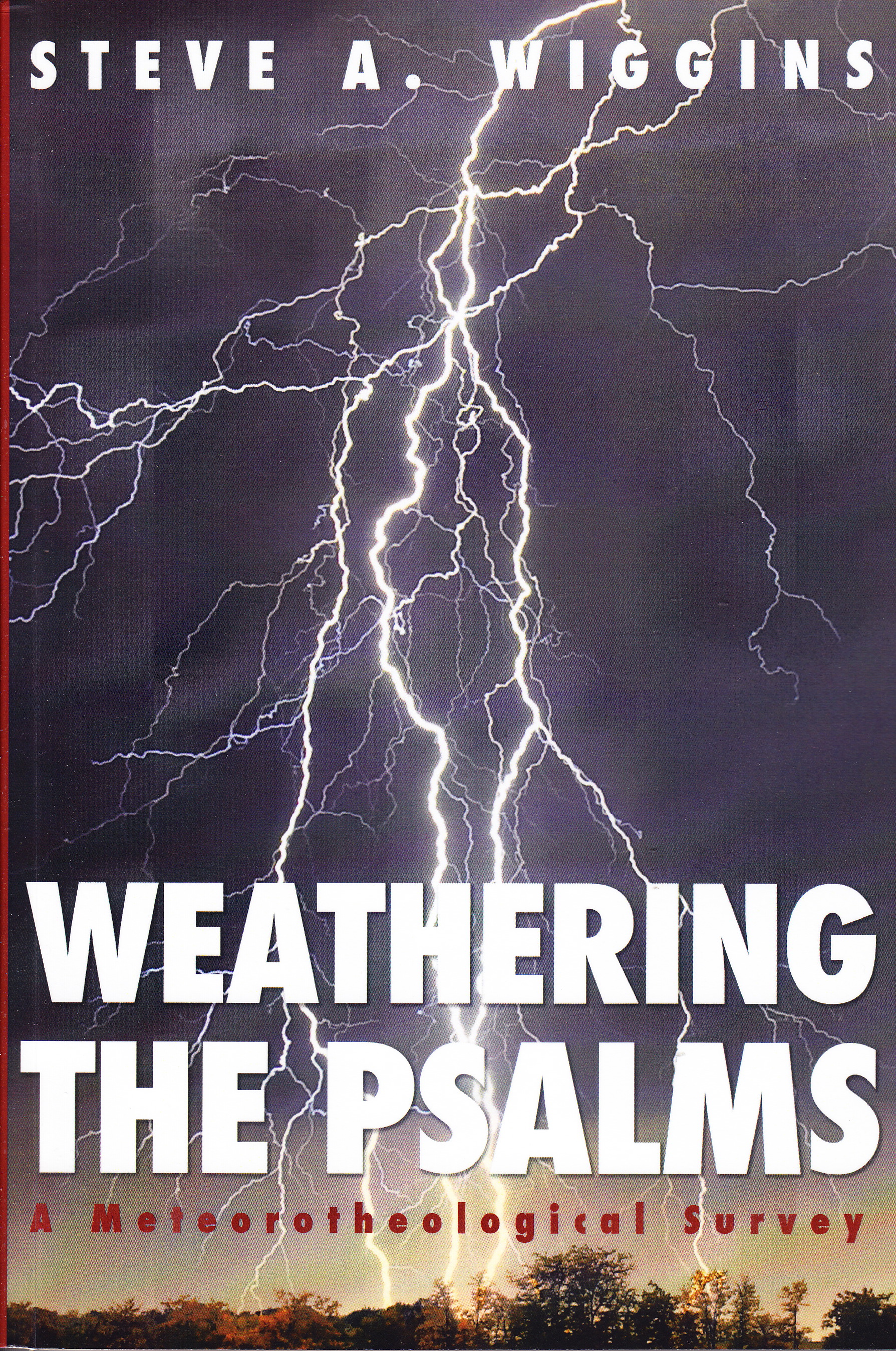
Then there’s the verbless sentence.  You know what I mean—a literary rim-shot, usually at the end of a paragraph, to heighten the drama.  Solid technique.  This only works, however, if you don’t overuse it.  I’ve read books where nearly every paragraph ends with such rim-shots.  Then the author started writing one-liner paragraphs.  This isn’t a Saturday Night Live cold opening.  The writing has to have a certain amount of gravitas.  Especially if you’re wanting to publish with a university press.  I realize that the dream of many academics is to write for a wider readership, but honesty is still a virtue.  When I wrote Weathering the Psalms I pitched it as for general readers.  Ha!  Not even specialized readers have found it that engaging.  It was a book for specialists.  I see that now.

Don’t get me wrong—I read plenty of good writing.  Some of it’s even beautiful.  Editors, however, have to read an awful lot to be able to pick out the gems.  I remember my volunteer experience on the archaeological dig at Tel Dor.  At the pottery reading sessions, a specialist would quickly sort through a box of four-thousand year-old fragments and say within seconds if there was anything interesting (“indicative” was the term she used) or not.  She did this by reading pottery like an editor reads proposals and manuscripts.  You get to a point when you can just tell.  Writing well can be learned.  Some people have an innate talent for it.  Being a gentle guy, it’s hard to be honest sometimes.  I have to keep reminding myself, however, that it’s still a virtue.


Earth Colors

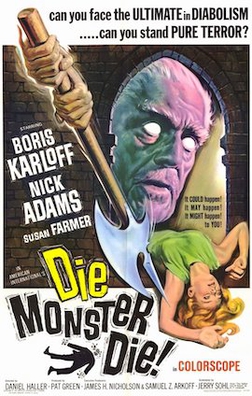
Bad movies can be therapeutic.  While trying to find hope it sometimes helps to see that others are even worse off.  This isn’t exactly Schadenfreude, but rather an awareness that your own efforts  at self-righting aren’t so bad.  Then there’s the hopeful monster theory, but that’s something different.  Already the title of Die, Monster, Die! warns the viewer that this won’t be Oscar-worthy material.  And despite his fame by 1965 Boris Karloff was still landing sub-par roles in such movies as this.  Both the directing and editing are noticeably lacking, evident even to an amateur.  A step backward may help; this movie is based one of my favorite H. P. Lovecraft stories, “The Colour out of Space.”  This is, to me, his most Poe-like tale and could well serve as the basis for a film.  Too much is changed here, however, to make it work.

Arkham is transplanted from its native New England to the old one.  The love theme manages to interrupt the mood of dread Lovecraft used in his story.  Nahum Witley’s use of the meteorite runs counter to the family’s reaction in the original.  The screenwriting doesn’t build much confidence either.  On the positive side, it feels like a fine little haunted house film from time to time, when the plodding plot doesn’t get in the way.  For a scientifically aware visitor, Stephen Reinhart has no concerns about lingering, unprotected, around a major source of radiation.  Although a few of the jump-startles work, the whole ends up feeling just a bit silly.  Of course, I was watching to escape, for a moment, what life throws at you.

Like reading poorly written books, watching bad movies can teach you mistakes not to make.  Movies can be an education rather than simply entertainment.  Cinema is one of the great myth-making vehicles for modern culture and, unfortunately, big budgets are often (but not always) necessary to make them believable.  Here is the hidden element of optimism, perhaps.  H. P. Lovecraft stories can sell films.  They also attach those who may be excluded from studio A-lists because, let’s face it, Lovecraft appeals only to a specific demographic.  The title of this particular film buries the lede, however.  No Lovecraft keywords (Dagon, Dunwich, Arkham, Cthulhu, or any of a host of others) clue readers in to what they might expect.  Learning the film business from Roger Corman might’ve steered director Daniel Haller is this direction, I suppose.  Whether he intended to or not, he produced a therapeutic result.


Here and There

There’s nothing like forgetting to make you remember.  Although we could scarcely afford it, we made many budget trips once we moved to New Jersey from Wisconsin.  As a family we used to keep detailed travel logs and we’d type up the results so that we could remember our trips.  For some reason, drifting about after losing a career, I stopped taking such notes.  Fortunately our digital camera time-stamped the photos.  I spent months organizing them only to have the external hard drive on which they were stored fail.  I’m now getting around to piecing together a bit of a chronology.  “Blog” was originally a portmanteau for “web log,” and since I’ve had no instruction on how it should be done, I mix an actual log with mental musings.  I’ve been doing so daily since 2009. Results may vary.

This blog has helped me keep track of travel, but those hazy days after the Nashotah House incident in 2004 up until blogging in 2009 remain undocumented.  Looking at the time stamps on those photos, it’s clear we traveled quite a bit.  Of course, New Jersey is a somewhat of a feast and it’s within easy reach of quite a few fascinating places.  Even a weekend was enough to explore someplace exotic, relatively local.  We used to make literary road trips on Memorial and Labor Day weekends.  Sometimes even later into the season.  Somewhere in that fog we made road trips to Maine, Connecticut, and upstate New York.  And although I grumble about technology sometimes, were it not for those digital timestamps the dates would be lost forever.  Of course, if we’d kept up our travel notebook…

As an historian, looking back comes naturally enough.  Gorgias Press downsized in 2009 and for a couple of years I made a living as an adjunct professor.  Even so, we managed a few trips (some of them mentioned on this blog).  Things must’ve been less expensive then.  Or else having a mortgage changes your perspective (the roofers are coming yet again this summer).  And the pandemic kept us at home for three years.  Whatever the cause, the urge to stretch wings and see new places remains.  Of course, it’s important to recollect where you’ve been.  In the meantime, I’m trying to piece together what happened those first few years in New Jersey.  That’s the historian’s task—putting together the events of the past from bits of evidence.  It’s pretty clear why historians get excited when they have diaries or notebooks from which to work.  We are, after all, the historians of our own lives.


Who Are We?

I wonder who I am.  Beyond my usual existential angst, I tried to access some online learning modules at work only to have so many barriers thrown up that I couldn’t log in.  Largely it’s because I have an online presence (be it ever so humble) outside of work.  Verification software wants to send codes to my personal email and my company has a policy against running personal emails on work computers.  Then they want to send a phone verification, but I don’t have a work cell.  I don’t need one and I have no desire to carry around two all the time because I barely use the one I have.  By the way, my cell does seem to recognize me most of the time, so maybe I should ask it who I am.

Frustrated at the learning module, I remembered that we’d been asked to explore ChatGPT for possible work applications.  I’d never used it before so I had to sign up.  I shortly ran into the very same issue.  I can’t verify through my personal phone and I found myself in the ironic position of having an artificial intelligence asking me to verify that I was human!  I know ChatGPT is not, but I do suspect it might be a politician, given all the red tape it so liberally used to get me to sign in.  Not that I plan to use it much—I was simply trying to do what a higher-up at work had asked me to do.  So now my work computer seems to doubt my identity.  I don’t doubt its—I can recognize the feel of its keyboard even in the dark.  And the way my right hand gets too hot from the battery on sweltering summer days.  It’s an unequal relationship.

My personal computer, which isn’t as paranoid as the work computer, seems to accept me for who I say I am.  I try to keep passwords secure and complex.  I have regular habits—at least most days.  I should be a compatible user.  I don’t want ChatGPT on my personal space, however, since I’m not sure I trust it.  I did try to log into the learning module on my laptop but it couldn’t be verified by the work server (because the computer’s mine, I expect).  Oh well, I didn’t really feel like chatting anyway.  But I did end the day with a computer-induced identity crisis.  If you know who I am, please let me know in the comments.  (You’ll have to authenticate with WordPress first, however.)


Hidden Wood

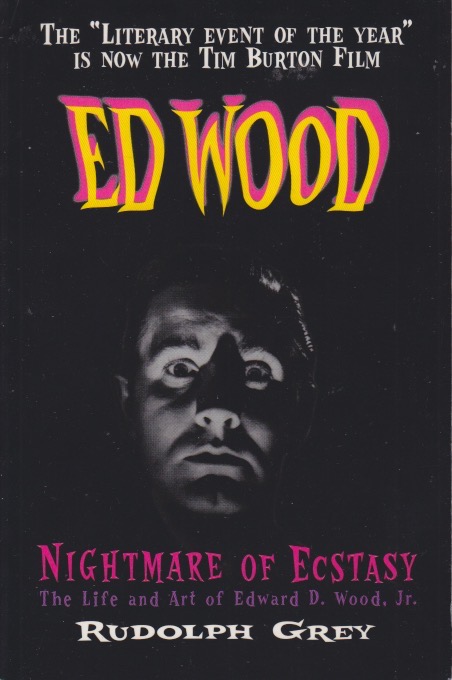
Fandom can lead to fame, even if it’s just cult fandom.  The nature of Ed Wood’s films is such that he could’ve been among those forgotten had he not posthumously developed a following.  Unfortunately it didn’t arise in time to ameliorate the tragic final years of his life when he died pretty much penniless, drinking away the pain.  Rudolph Grey’s Nightmare of Ecstasy: The Life and Work of Edward D. Wood, Jr. may have helped rescue him from obscurity.  Of course, Wood had gained a following earlier than the book, but nobody had really thought to document his life.  What I find so compelling is that Wood was like so many of us—trying hard to gain some recognition only to be shut out of what we love by a huge industry that calls the shots.  It’s difficult to get notice as an independent filmmaker, or even as a writer publishing with smaller presses.

Wood lived a most unusual life.  A straight transvestite, he fought as a Marine in World War Two.  He moved to California to try to break into filmmaking and wrote and directed several movies.  When this failed to make enough money to support him, he turned to writing pornographic novels and film scripts.  Wood had, interestingly, befriended a lonely and washed up Bela Lugosi.  His last two movies were Wood’s work.  Wood found camaraderie with other outsiders in Hollywood and he cast them in his low-budget productions.  He would try to shoot his films in less than a week.  Considering the constraints under which he operated, his movies really aren’t that bad.  They aren’t good by conventional standards, but they’re better than many other people could’ve made them in his circumstances.

This book isn’t a conventional biography.  There’s no narrative apart from the recollections culled from interviews of those who knew him and occasional letters and writings of Wood himself.  As with any biography there are gaps and lacunae.  From a writer’s point of view perhaps the saddest part of the story is how Wood and his wife were evicted from their final apartment and he had to leave his papers and manuscripts behind.  These were reportedly thrown into a dumpster and lost forever.  Although his movies may have been bad, Wood was a capable writer.  And like any writer he felt the loss of his work keenly.  He only lived about three more days after that.  His friends had largely abandoned him, alienated by his drinking and its effects on him.  Next year will mark the fiftieth anniversary of his death and, I hope, the commemorative watching of some bad movies that deserve to be remembered.


Ghosts and Spines

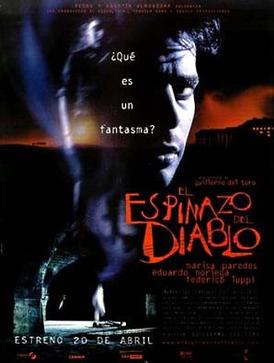
Guillermo del Toro’s early movies are thought-provoking and somewhat depressing.  The Devil’s Backbone, like Pan’s Labyrinth, puts children in the way of adult political unrest and war.  I suspect that sensitive people watching such movies can easily imagine that they could have been put in such circumstances, were things different.  Having said that, The Devil’s Backbone works as a sad, gothic horror movie.  Set during the Spanish Civil War, the film focuses on orphans not quite out of reach of the conflict.  There’s a ghost at the orphanage that, until near the end, we think that the bully among the kids had killed.  The point of view is that of Carlos, a new kid at the orphanage who encounters the ghost and eventually decides to find out what happened to him.  The movie’s nearly a quarter century old, but there will be spoilers below.  Maybe there have already been some—sorry!

As the children, war orphans, try to navigate how to become adults, they have limited male role models—the doctor, who is good, and the groundskeeper, who is not.  Jacinto, the groundskeeper, was raised in the orphanage and although he had a professional-level family, grew up alone and wanting better.  His response was to turn cruel.  We’re not given much of the doctor’s backstory, but due to his position at the orphanage, we have to assume there’s a sadness there as well.  A number of subplots are interlaced with this, one of which involves the title of the movie.  Originally set in Mexico rather than Spain, the Devil’s Backbone was named after a mountain range.  That has to be transferred to victims of spina bifida in the local village.  This medical name has to be explained to the audience and it adds to the gothic atmosphere.

This is an example of a bright, sunny location nevertheless being a fraught place.  The boys (there are no girls at the orphanage) make their own society—not quite on a Lord of the Flies level—because the adults are at their wits’ end due to the encroaching war.  In the end all the adults end up dead.  The future of the boys is uncertain, but they show themselves able to distinguish between good and evil.  Adults, meanwhile, perpetuate a war in which, in real life, half-a-million people were killed.  There’s a lesson here for those willing and able to learn it.  Horror often has a moral, and when the boys are carrying an old crucifix to the courtyard and one remarks that he’s “pretty heavy for a dead guy,” adults should be paying attention.


Outgrowing Fear

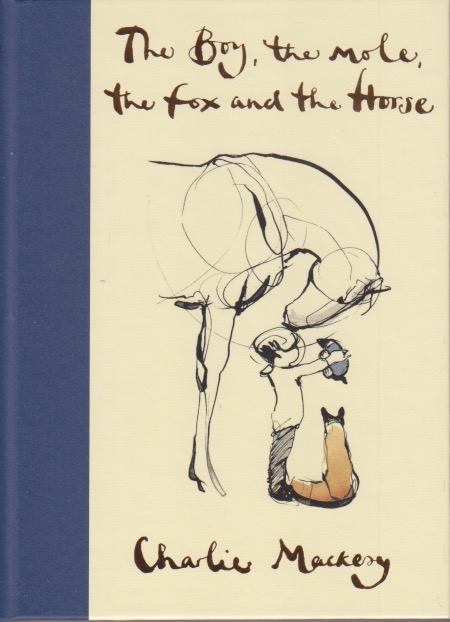
A friend, during a time of trouble, quoted from Charlie Mackesy’s The Boy, the Mole, the Fox and the Horse.  I immediately ordered a copy.  The word “magic” gets thrown around a lot, but this book holds real magic.  It is perhaps the wisest book I’ve ever read.  Do yourself a favor—if you haven’t read it, find it in a library, or order it from Bookshop.org or Amazon.  Visit a local bookstore, and if they don’t have it, ask them to order it.  If people read books like this we’d never need to worry about things.  And if everyone read it and took it to heart, we’d never need to worry about anything again.  There’s much to be said about believing in yourself and believing in the power of love.  At the end of the day they speak for themselves.

The book is for any age reader.  Handwritten and illustrated, it’s written at the level of a children’s book that takes less than an hour to read.  Its message feels almost radical, however.  That having been said, the young adult generation, I’m given to believe, grew up with the kind of outlook Mackesy offers.  The book struck me particularly relevant and necessary, something for those of us in the over forty crowd.  I understand the tendency to grow more conservative as we age and I believe it’s because we’re afraid.  Ironically, the book addresses the issue of fear, pondering how life might improve if we could get beyond being afraid of things.

The artwork is beautiful and the words are inspired.  This is an eminently quotable book.  Mackesy has been an artist by trade.  We can learn so much from such humble artists, if we’re willing to listen to them.  Kindness, love, and simplicity are gifts we often wish not to accept.  It’s very easy to hate and selfishness comes naturally to people.  And when we get together we tend to complicate things.  Once in a while we should set aside the complexities of life and make time for a simple story that reminds us of what’s really important.  Of course, those of us who read are prone to thinking of ways the world could be a better place.  Being open to love instead of hate, trust instead of fear, and hope instead of dread doesn’t come naturally.  That’s why it’s so helpful to have books to remind us of this.  Especially when such a book won’t even require an hour of your time.  I’ll be coming back to it time and again.


The Skinny on Asherah

After being removed from academia, my work on Asherah started to receive notice.  You see, I’m not part of some academic dynasty and I never landed that prestigious job that would convince people I had something worthwhile to contribute.  Besides, it turned out that several other scholars were writing books on Asherah at the same time I was.  The subject, however, has proven “evergreen.”  Asherah holds a lot of explanatory power, it seems.  She solves mysteries like an antique Holmes or Dupin.  And the Bible is full of mysteries.  The other day I saw an article by Raanan Eichler suggesting that Aaron’s rod might’ve been an asherah.  This is an intriguing idea.  In case your Exodus is a bit rusty, there are two staffs (or staves, if you prefer) that feature in, well, the exodus.  One belongs to Moses and the other to Aaron.  (Keep in mind that they were octogenarians when they began the trek.) Their stories continue through Deuteronomy.

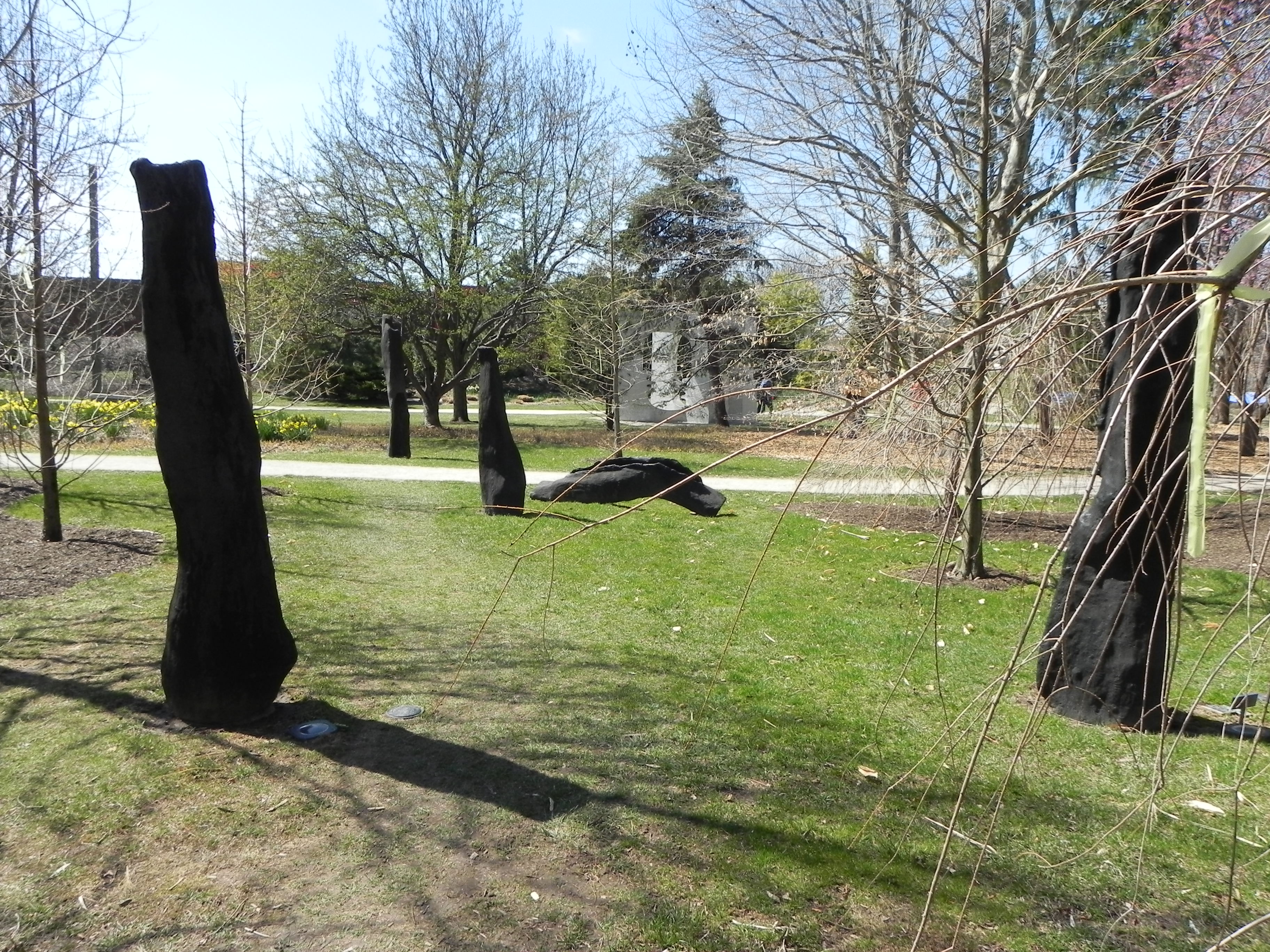
Tova Beck-Friedman ‘s “Excerpts of a Lost Forest: Homage to Ashera,” Grounds for Sculpture

In the narrative sometimes the stick is Aaron’s and sometimes it belongs to Moses.  It transforms into a snake, it turns dust into biting gnats, it divides the Reed Sea.  In short, it’s the kind of staff you’d see advertised as a miracle-working purchase on infomercials these days.  One of its many features is that it produces water from a rock when it strikes said stone.  The problem is God had told Moses to be a stone-whisperer, not a stone-striker.  Because he hits the rock with the staff he’s barred from entering the promised land.  It seems like harsh punishment for a bit of dramatic flair and I suspect that’s why Eichler suggested that the staff was an asherah.  

Of course, the biblical account doesn’t use the word “asherah” for the staff at all.  Although it accompanies the Israelites through the wilderness, and in some accounts is placed inside the ark of the covenant, it isn’t called an “asherah.”  But being in the ark puts it into the tent of meeting, and therefore later the temple.  And we do find an asherah in the temple later in the biblical story.  The thing about asherim is that they’re never defined in the Good Book.  We simply don’t know what they were.  They were made of wood and they could’ve been poles.  They might’ve been trees or statues.  A rod or staff seems to be a slimmed-down version of a full-blown pillar, so who knows?  Maybe an asherah accompanied Israel from the beginning.  Of course, being outside the academy (my own promised land), I’ll never know for sure.


Early Halloween

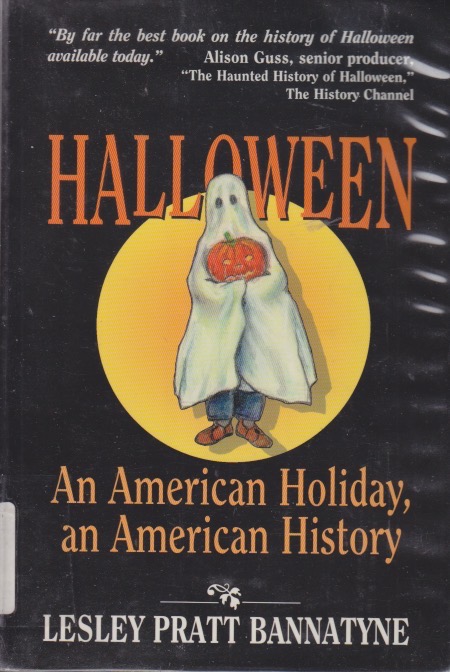
Call it seasonal disorientation syndrome, but I’ve been reading about Halloween.  I’m pretty sure I’m not the only one thinking about it.  Stores will begin Halloween displays next month, if the usual pattern recurs.  So why not do a little advanced study?  Although I’ve written about holidays myself, they’re unruly subjects to handle.  Lesley Pratt Bannatyne is a name familiar to many fans of Halloween.  Her 1990 book Halloween: An American Holiday, an American History kickstarted renewed interest in the holiday and has been followed by other studies, even occasionally with academic presses.  Still, holidays are difficult to pin down.  One of the most obvious reasons for this lies in the fact that before the world became über-connected, holidays were largely local celebrations.  Trends traveled slowly and not everybody agreed on which holidays to celebrate.

The early days of Halloween are the most difficult to piece together.  This is clear in Bannatyne’s book also; we simply don’t have the written sources we’d like.  The ancient Celts, although great strides have been made through archaeology and close examination of ancient writings of outsiders, remain poorly documented.  They didn’t leave archives like the classical writers of Greece and Rome did.  And clearly Halloween has its earliest known celebration as Samhain among the Celts.  Once Bannatyne gets to America, however, there’s a trove of information in her book.  Her chapter on the celebrations among the original thirteen colonies is quite good at demonstrating regional differences not only for religions, but for tolerance for something like Halloween.  Fall festivals predated Halloween as we know it (if we really do know it), and she does a good job of demonstrating how the melting pot effect made Halloween national.

One of the problems with any history is that one event can change everything.  This book was written three decades before Covid-19 and the pandemic was one of those events that did change everything.  It makes it seem as if we were much more carefree back in the eighties when Bannatyne’s book was written.  Halloween was just starting to become an adult holiday again back then.  In the ensuing years it has become even more so.  Communities are seldom what they used to be with the extreme mobility of much of our society, but many still find a way to agree to the terms of Halloween.  Historians of holidays have a difficult task, and we’re still learning about ancient cultures and their modern manifestations.  This is a good book to start that exploration—I know it taught me a thing or two.


What You Can’t Show

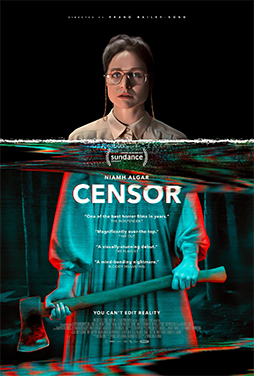
As I spend my life trying to figure out why I do what I do, I take book and movie recommendations.  I really should note who recommends what because it often drives me crazy trying to figure that out after the fact.  A friend recommended Censor, and since this friend told me where it was streaming for free I’m sure I got the right one.  Like several one-word title movies, there are several with the same sobriquet.  This was the 2021 movie and it’s a British horror film which raises the question of why we watch horror.  It does this through the eyes of the eponymous censor (Enid) who’s particularly tough on movies.  Set during the “video nasty” scare of eighties Britain, the question is whether such movies motivate real violence but with the twist that the censor is the one who turns violent.

Enid is haunted by her missing sister and she finds a video nasty star who looks like her sibling and becomes convinced that it’s her.  Enid gets to the set where her movie’s being shot (a remote cabin in the woods) and ends up killing the star and director (after accidentally killing the producer earlier, in self-defense).  She kidnaps her “sister,” and in her imagination—rainbows are everywhere—takes her home.  That’s where the real social commentary comes in because during this imaginary drive the radio announcer says these kinds of movies have stopped, and all crime and violence have ceased, and social harmony has returned to Britain.  This is revealed, of course, as a delusion.

Left to my own devices, I probably wouldn’t have watched this movie.  I don’t like blood and gore—I’m more looking for gothic themes like haunted houses—but it turns out that this is a smart film.  That’s probably why it was recommended to me.  Intelligent but also with tongue in cheek at times.  Still, it’s a movie about reconciling with childhood trauma, which is something that speaks to me personally.  That’s a wound I don’t always like to have poked.  It’s one of those movies on which I’d like to see more analysis, maybe talk to Prano Bailey-Bond, the writer and director.  Horror with female directors is often thoughtful, and movies are really meant to be discussed (just like books are).  The question remains—why do we watch disturbing movies?  I know I’m not the only one who does.  And in this case I remember who recommended it, so perhaps I’ll be able to get some closure.


Small Hops

It was about the cutest thing I’d seen in a month of Saturdays—a baby rabbit.  It was no bigger than my fist and it was looking lost on the sidewalk.  The front “lawn” of the next neighbor’s house is paved and there’s only a wide street in the opposite direction.  Our front lawn has a retaining wall well about the jumping height of the little guy.  I didn’t want it dashing into the street, so I circled around from that direction, but the poor thing couldn’t get high enough to reach our lawn.  It was young enough not to be certain something at least twenty-five times its size meant it harm.  It allowed me to get close enough to scoop it up and put it on our lawn.  It immediately leapt away and sheltered under a bush, before eventually disappearing down a hole that I hoped might be its home.

Besides being a hope-filled chance encounter with the wonder of nature, the incident also caused me to ponder what that leporine brain made of this learning experience.  For human brains, any sufficiently large animal is a monster, and anything even larger is a god.  While there are some bad folks out there, people don’t seem evil to me.  And although we’re certainly not gods, I wonder what that little rabbit thought.  What I was attempting was an act of kindness.  I’m sure it scared the timid tyke—I can imagine being lifted by an enormous creature that I can’t understand and it is a most frightening prospect.  But what if that monster were to set me down just where I needed to be?  Might not my assumptions about it change?

We don’t know what other animals think, yet it’s clear that they do.  Our yard has a fence and we have no dogs, so rabbits tend to like it here.  I often mutter softly and try to avoid direct eye contact and sometimes they let me get fairly close.  I like to think some of the larger ones recognize me, and maybe can tell that a vegan has nothing but their goodwill in mind.  We like to think this about God.  Larger, easily able to harm us, but that somehow being divine also conveys good will.  The bunny incident cast a pleasant glow over the rest of an otherwise anxious day.  It had calmed me and conveyed a sense of appreciation for just how helpful the world of nature can be.  I hope for some tiny rabbits in your life too.


Next Gen AI, Truly

Okay, so it was a scary meeting.  It was about AI—artificial intelligence.  Specifically Generative IA.  That’s the kind that makes up answers to questions put to it, or does tasks it’s assigned.  The scary part, to me, is that we are being forced to deal with it because tech companies have unleashed it upon the world without thinking through the consequences.  Such hubris gets us into trouble again and again but it never stops us.  We’re sapiens!  You see, GAI (Generative AI) is under no obligation to tell the truth.  It likely can’t even understand the concept, which is a human concept based on perceptions of reality.  GAI simply provides answers based on the dataset it’s been fed.  It can generate texts, and photos (which are so doctored these days anyway that we need a photo-hospital), which means it can, to borrow the words of a sage, “make a lie sound just like truth.”  We already have politicians enough to do that, thank you.

My real fear is that the concept of truth itself is eroding.  With Trump’s “truth is whatever I say it is” administration, and its ongoing aftermath, many Americans have lost any grip on the idea.  Facts are no longer recognized as facts.  “Well I asked ChatGPT and it told me…”  It told you whatever its dataset told it and that dataset contains errors.  The other scary aspect here is that many people have difficulty distinguishing AI from human responses.  My humble advice is to spend more time with honest human beings.  Social media isn’t always the best way to acquaint yourself with truth.  And yet we’re forced to deal with it because we need to keep evolving.  Those Galapagos finches won’t even know what hit ‘em.

Grandma was born before heavier-than-air flight.  Before she died we’d walked on the moon.  About two decades ago cell phones were around, but weren’t ubiquitous.  Now any company that wants its products found has to optimize for mobile.  And mobile is just perfect for AI that fits in the palm of your hand.  But where has truth gone?  You never really could grasp it in your hands anyway, but we as a collective largely agreed that if you committed crimes you should be punished, not re-elected.  And that maybe, before releasing something with extinction-level potential that maybe you should at least stop and think about the consequences.  I guess that’s why it was a scary meeting.  The consequences.  All technological advances have consequences, but when it takes a lifetime to get to the moon, at least you’ve had some time to think about what might happen.  And that’s the truth.


Movies about Movies

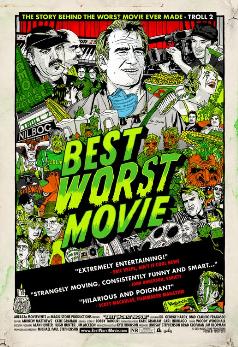
The category of movies so bad that they’re good sometimes spawns the phenomenon of a movie about the bad movie.  The Room, generally on the list of worst movies of all time, was followed by The Disaster Artist.  Not exactly a documentary, it was a movie about the making of the movie.  There’s a macabre fascination with films that dare to be so very bad.  They’re released nevertheless, and if they’re the right kind of bad they grow a following.  Ed Wood’s movies inspired Tim Burton’s movie Ed Wood—dramatized, but apparently not far from the truth.  Troll 2 was followed up by Best Worst Movie, directed by the child star of the original, Michael Stephenson.  Such movies are irresistible in their own right.  So when I finally saw Troll 2 I turned around and immediately watched Best Worst Movie.

A few things stood out in this documentary.  One is that being part of something larger, it’s not always clear what this larger thing will be.  Most of the people in the movie (which was released directly to video) found out about the release by accident.  Many of them never acted again but one thing they all knew: when they did see it, it was clear that it was a bad movie.  The one person in the documentary who doesn’t accept this is Claudio Fragasso, the director.  Fragasso is Italian and he still maintains that this is a great movie and everybody else is wrong about it.  He skulks around the tributes made to the movie and insists to both actors and viewers, that the movie isn’t bad.  They are wrong, he is right.

There’s nothing wrong with pride in achievement, of course.  Sometimes, however, it’s more graceful to admit that you simply got it wrong.  Best Worst Movie follows some of the actors to conferences where they expected huge lines and great attention, only to find a handful of disinterested spectators wondering what all the fuss was about.  At the same time, there are screenings of Troll 2 in major US cities that draw sell-out crowds.  Bad movies don’t appeal to everyone, of course.  They can, however, serve some good and might even add some enjoyment to life.  Best Worst Movie underscores that not all film fans have the same taste.  It also shows that those who enjoy traditionally bad movies aren’t alone.  There’s an aesthetic to being bad enough to be good, and even that can spin off sequels of its own.  And please, Mr. Fragasso, don’t make the sequel you’re touting—this kind of magic only comes once, unless you’re a genius like Ed Wood.