Half Full

Is the glass half full or half empty?  Perhaps trite, this is the textbook example of optimism.  In times when hope is important—and that may be always, but at times it’s really much more keenly felt—we need to see the glass filling again.  Emily Dickinson famously wrote “‘Hope’ is the thing with feathers.”  Although published posthumously, many refer to this poem when the glass starts to look empty.  Recently a friend pointed us to a more realistic version of this by the contemporary poet Caitlin Seida titled “Hope Is Not a Bird, Emily, It’s a Sewer Rat.”  It’s easily found with a web search but I’m hoping to buy Seida’s book because most poets have a difficult time of things.  The gist of it is that hope is a scrappy, gritty rodent that knows how to survive in a dark, noisome world.

Of course, the Bible has a lot to say about hope as well.  Sometimes we tend to see the half-empty glass of the judgment verses, but what truly makes it Scripture is the hope.  In fact, hope is all around if we look for it.  For example, I recently had to get a new set of glasses.  I really liked my old frames and they had stopped being produced.  I had to try something new.  This pair, instead of screw-hinges holding the arms on, has a mechanism that uses tension between the two pieces of metal so they retain their shape but can also be folded.  The end result is they don’t have a solid fixed “normal” position, but one which can be slightly adjusted because they’re more pliable than fixed screws (it’s clear why I’m not a technical writer).  In any case, their ability to adjust is a sign of hope. If things don’t look right, literally, a nudge can fix it.  You can find resilience even in your eyeglasses.

In times of difficulty doubt can be the thing with feathers.  What we need is one of those water-drinking birds.  You know, the kind that’s made of glass filled with a red liquid that bobs its head up and down into a glass of water.  (It turns out they have their own Wikipedia article under the title “Drinking bird.”)  Here is the ultimate symbol of hope that spans both Seida and Scripture.  The bobbing head always dips into the glass even though it can’t actually drink.  We might be tempted to say it’s a foolish waste of time.  With the correct perspective, however, it shows the glass to be half full. At least when seen through the lenses of hope.

This bird knows hope! Photo by Matt Flores on Unsplash

Parthenogenesis

It’s only a matter of degree, isn’t it?  I mean between reptiles and mammals.  While our common ancestor was quite a bit older than Lucy, we’re still fam, right?  I’m not the only one, I’m sure, who read with interest the New York Times story about the female crocodile who recently gave birth without the help of a male.  It’s called parthenogenesis and, according to the article, it’s not as rare as we might think.  Birds and amphibians do it.  Some fish even change gender under reproductive pressure.  And if you’ve seen Jurassic Park you know the implications might be larger by an order of magnitude or two.  My mind, however, wanders to mammals.  Then primates.  Then humans.  If our distant cladistic cousins can do it, can we?

The key appears to be males leaving females alone long enough.  As Malcolm says, “life will find a way.”  Life amazes me.  While we can’t count on it happening for each individual, life has a way of reemerging when you think it’s gone.  Previous owners of our house neglected a green ash tree growing in a location far too close to the house itself for many years.  Granted, it was on the north side where you seldom have any reason to go, but that tree sent out progeny that I’ve had to try to eradicate for five years now.  As much as I love trees, when they’re growing into the foundations of your house, they’re a bit of a problem.  I snip off the water shoots whenever I find them but they keep coming back.  I’m sad to cut them but I admire their persistence.  Life’s persistence. It’s will to carry on.  It continues even when we think it can’t.  Never forget the water bears!

Just a few days later the Times ran an article about the strong possibility of life on Enceladus, one of Saturn’s moons.  Personally, I wouldn’t be surprised.  I’m absolutely certain there’s life elsewhere.  It makes no sense for it not to be.  Life evolves to a point, it seems, where the “intelligent” variety seems to become arrogant.  I embrace our reptilian and amphibious and piscine cousins.  Even our insect and arthropod family.  Our plants and fungi.  Life is amazing and we seldom stop to ponder just how wonderful and mysterious and resilient it is.  A lonely female crocodile decides to have a family.  Phosphates spewing from an ice-cold moon whirling around a colossal planet that wanted to be a star.  Life!  How can we not be stunned into trying to admire it in its many, many forms?


Solstice Wonders

It’s difficult to tell where summer begins and spring ends.  Transitions are like that.  Today’s the summer solstice.  Since I’m an early riser I keep track of when the sun comes up so that I can go for a jog.  Actually, I tend to get out just before sunrise when twilight is enough to see by.  You see, the solstice is a day of hope.  My jogging path is on the edge of town and it borders some woods that, all things considered, are quite shallow.  There’s development on the other side of the river, although you can’t see it from here.  As I’m out before most other crepuscular exercisers I often see critters along the trail.  I’m not sure I can catalogue all the animals I’ve seen but a partial list includes fox, coyote, raccoon, bald eagle, raven, ducks, herons, and the ubiquitous rabbits, squirrels, and deer.  Last month I saw a doe giving birth as I jogged by, something I felt it inappropriate to watch beyond a passing glance.

At times when it’s too dark to go before work I have occasionally gone on a slightly later schedule.  Then I’ve seen groundhogs, a snapping turtle, and red efts (newts).  The thing is these woods are rather thin and they support (along with the towns, I’m sure) a variety of creatures, many of which I don’t see.  Appearances can be deceptive.  Things that appear certain are often wrong.  Those who wake later and don’t spend their evenings on the trail (and animals, I expect, are shy after people have been out all day) may not believe there is so much fauna in the area.  I know there’s even more: opossum, bear, and frogs among them.  I believe they are there.  And believing is just as important as knowing.

Summer is thought of as a more relaxed time, but that’s really only an appearance as well.  It’s actually quite a busy time—what’s relaxed is our capitalistic drive for work.  We realize the warmer days (hopefully not too rainy) afford us the opportunity to do the things the long, dark, cold months prevent.  And those of us in northern latitudes tend to think of it as a magical time.  Shakespeare’s A Midsummer Night’s Dream captures the traditions of fairy activity during this short night with long, sunny days either side of it.  A family member recently reminded me of this connection, and it seems to me that we should be reminded once in a while of the miracles that surround us.  The solstice is one of them.  It’s a matter of believing and a cause for hope.


Optimism

On the homepage of my website (of which this blog is a part) is the statement that jaded optimism lurks here.  I’ve been thinking a lot about optimism and hope lately.  Trying to change the way you think is difficult.  Musing with my wife the other day I realized—and this should’ve been obvious—that my optimism became “jaded” when I lost my job at Nashotah House.  You see, our lives have been uncertain since then.  The steady income of an academic job with a retirement plan, a future mapped out (at least a little) with summers free for research and travel, the flexibility to have time to contemplate; all of this fits my neurodivergent way of thinking.  Having suddenly to cope with finding an apartment, finding jobs (not vocations), losing retirement options, all of this has led to a turmoil that has lasted going on two decades now.

I need to challenge my jaded optimism into becoming real.  I keep coming back to Mark 9.24, “Lord, I believe; help thou mine unbelief.”  I’m not a materialist, although academia led me close to it a time or two.  The universe, however, is an untamed place.  We don’t know the trillionth of it, let alone the half.  We’ve figured out a good bit of the physics of this world and think that it applies the same everywhere in this infinite, expanding space-time.  Then we discovered quantum physics and quantum entanglement which looks more like religion than science.  It seems to me that optimism—hope—lies in a combination of what science tells us and what is traditionally called religion tells us.  You may call it “belief,” “intuition,” or “hope.”  Yes, when Pandora’s box was opened, only hope remained.

John William Waterhouse, Pandora (1896), public domain, via Wikimedia commons

There’s a parable in the story of Pandora.  As told by Hesiod, Pandora’s jar contained the gifts of the gods which escaped when Pandora opened it.  Thereby evil entered the world.  Yet one gift of the gods remained for humankind, and that was hope.  Arguably the most valuable gift of them all.  I have been letting my career malfunction at Nashotah House dominate and drive my outlook for far too long.  It will never cease to hurt, I know, but it’s time I learned the meaning of what the Pandora myth teaches us.  Myth, please understand, functions like religion.  It provides insight and guidance.  And the tale of Pandora, especially when things turn unexpectedly frightening, reminds us that hope is the only necessary gift of the gods.


Individuals All

When things grow stressful and distressing, it may help to remember how others had it worse.  It’s cold comfort, perhaps, but Juneteenth, although a celebration, reminds us that our African-American siblings have had, and continue to have, a struggle to be permitted to exist on equal terms with everyone else.  Racism is an ugly thing.  Getting over prejudice is often difficult, but it’s generally the result of getting to know people as individuals.  All my life I’ve learned anything I may know from small samples.  I’m not famous and I don’t know a ton of people.  I grew up in a small town that was mostly white.  But even so, one of my early childhood friends was Black.  I liked him a lot and his being different was only all the more intriguing.

You see, I grew up in a rural area that struggled (and still does) with racism.  Yet even there, those who got to know the few African (and some Asian) Americans liked them well enough.  It’s the mob mentality that’s often the problem.  And it is easily stirred back into action when prominent individuals espouse it.  We need to hear a much simpler message—get to know those who are different individually.  No race is superior.  We need to change the narrative.  It’s not easy to do, but as someone who’s always dealt with small samples, I know it can work if we give it a chance.  Mob mentality makes people feel included but it’s decidedly irrational.  It seems best to try to see the person in front of us rather than fear those who are different.  Being “white” doesn’t equate to sainthood.

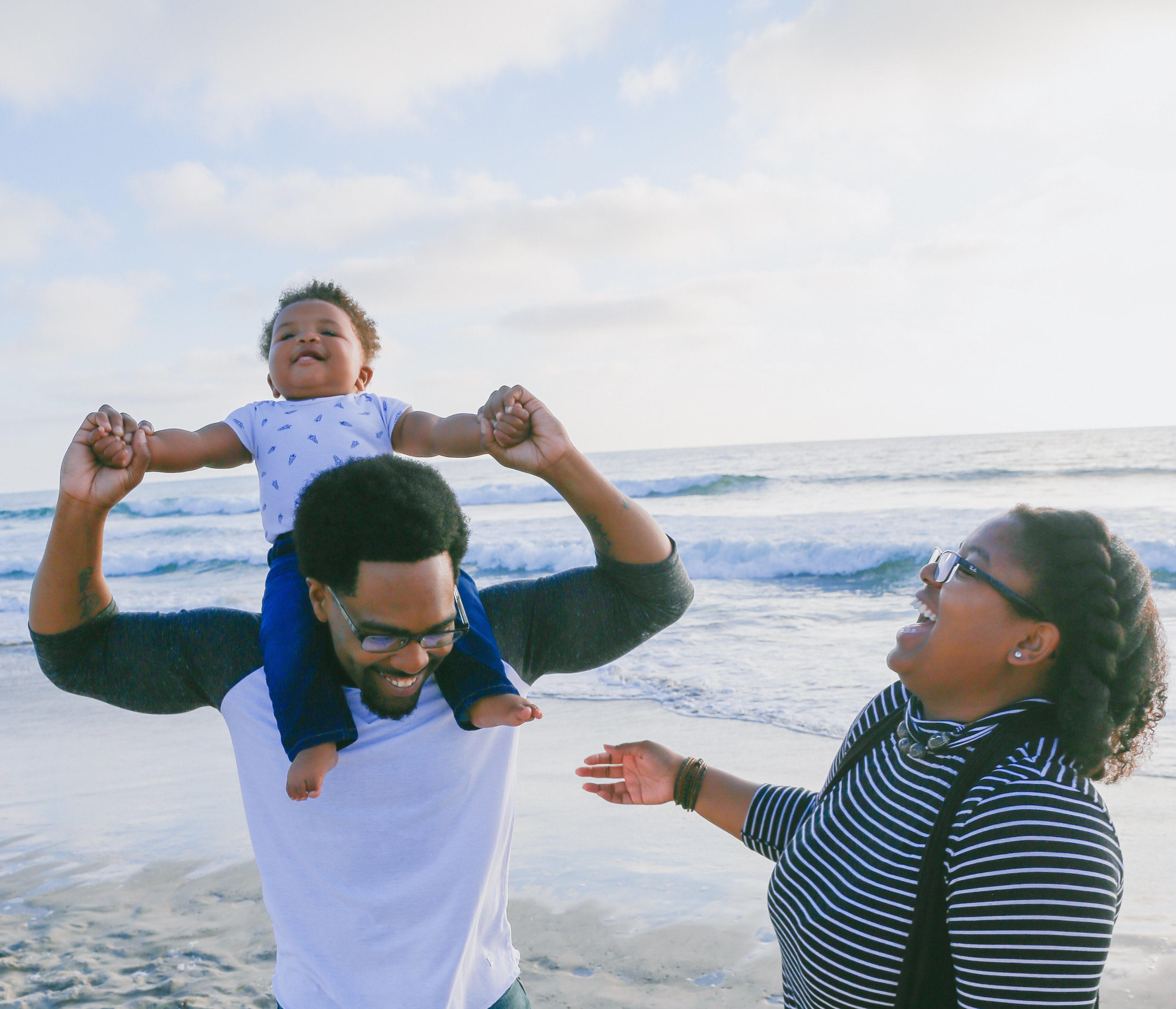
Photo by Lawrence Crayton on Unsplash

Our Black friends and neighbors have had a difficult time being given rights and respect as Americans.  Most of their ancestors were brought here unwillingly and carefully honed attitudes were taught to ensure that they were seen as inferior.  I’ve often thought that making ourselves more homogeneous (and homogenerous) would solve a great many social ills.  Xenophobia is no excuse, but it does seem to have its hooks deep in us.  Questioning such assumptions just might help to make us all more humane.  I can’t claim that my experience or ways of thinking are normative, but it seems if we get to know individuals—my small samples—we can begin to see that we all deserve fair treatment.  Traffic offenses or taking a walk after dark shouldn’t be capital crimes for anyone.  Welcoming the stranger is even biblical.  Juneteenth is an important day and it reminds us that there’s still much work to be done to ensure justice and fair treatment for all.


Sailing Away

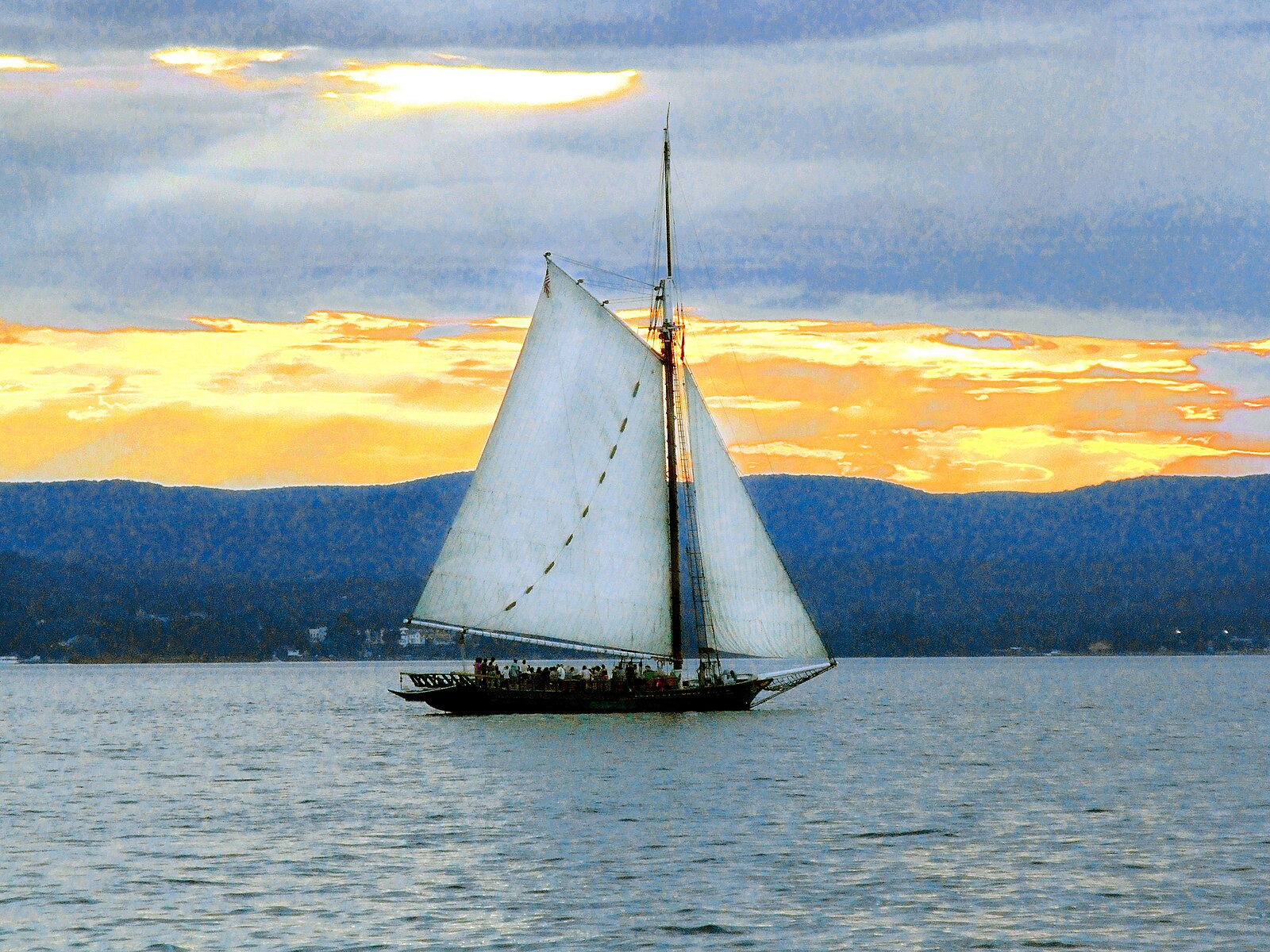
Out on the open water on a sailboat large enough to be categorized as a sloop.  We’re on the Hudson River learning about both sailing and the environment.  I’m here with a a Girl Scout troop, otherwise I wouldn’t have known about the sloop Clearwater at all.  The origins of the Clearwater go back to Pete Seeger, who, apart from being a famous folk artist, was also an environmentalist.  Based in Beacon, New York, the Clearwater is used in educational programs and it represents the only time I’ve been on an actual sailing ship.  Call me Ishmael.  Or not.  You see, I was there as a volunteer.  Specifically, a driver.  My daughter’s troop had scheduled the trip and I was afforded free passage as chauffeur.  I’d pretty much tucked this away into old memory banks until recent reading brought it to the surface.

Photo by by Anthony Pepitone; under the Creative Commons Attribution 3.0 Unported license, via Wikimedia Commons

I support environmental causes in the ways a guy in my position can.  We compost in our back yard.  We recycle anything that we can figure out how to.  We throw away one thirteen-gallon garbage bag every two weeks, and that’s sometimes half-empty.  Being vegan helps.  We don’t have a lot of money to give away, but lifestyle is the biggest way to try to help the planet.  So I’m out here soaking up my Melville vibes on a river wide enough to be a lake.  The Hudson, like all rivers, is worth saving.  I used to cross under it daily through the Lincoln Tunnel, trying not to think of all that water flowing above my head.  There was a reason I read on that long commute.

This blog, I guess, has become a repository for much of my past.  I’m grateful to you indulgent readers who find any of this interesting.  Still, I find human connections to places fascinating.  While I’ve never considered the Hudson home, some of my early relatives likely did (more likely Hessians than Dutch, but I’m told we fought on the right side during the Revolutionary War).  When I’ve had the opportunity to gaze out over the river without being in a rush, I’ve always felt a sense of belonging.  An artwork I made from artifacts I gathered awaiting our turn to board the Clearwater now hangs in our front hall.  Suddenly those twenty-something years feel like so long ago.  Even so, the Hudson suggests something homey to me.  Maybe it’s time to hire out a sloop again, go out on the river, and dream about belonging.


Baptist to the Future

Setting aside their smartphones and MAGA hats for a moment, the Southern Baptist Convention voted to exclude women pastors this week.  The photos seem to show a rather dour delegate pool that seems ready to head to the apothecary for some leeches to take care of this headache.  The conservative mind is a curious place.  I can understand wanting to slow change down—it is moving at a scary pace, leaving many of us concerned and confused.  Yet the idea that nothing has changed in two millennia isn’t only demonstrably wrong, it’s something that history demonstrates is a relatively recent, and reactionary, idea.  The fundamentalist brand of religion that elevates the Bible to godhood has only been around for about a century.  It’s a reaction to a hundred-year-old modernism that, in spite of all the evidence, closes its eyes.

Fear is natural enough.  Some of us actually watch horror movies voluntarily, after all.  But when fear overtly drives your religion isn’t it time to stop and ask what you’re doing?  The Southern Baptist Convention ejected its largest church, Saddleback, which had achieved national influence under Rick Warren.  According to the New York Times, Warren himself addressed the Convention citing none other than Billy Graham in his defense of women pastors.  The convention overwhelmingly voted to excise its most successful church for fear of that dreaded slippery slope of liberalism.  We’re fixated at some sexual level, it seems, and afraid of what might happen if we admit that even as AI is taking over our world, things may have changed.  At least a little.

The Bible is a sacred document with a context.  That context was patriarchal and it held considerable sway for about two millennia.  Power is difficult to relinquish.  When you get to call all the shots you don’t want to be reminded that those shots are wounding and killing innocent people.  “It was just better that way,” people think, ignoring the very Bible they worship.  It’s a point of view I understand, having grown up in it.  I remember reading with the juvenile furrowed brow of some tender twenty years how C. S. Lewis simply couldn’t see how women could be priests.  And then noticed how Baptists and other Protestants embraced Lewis although they condemned his idolatrous Anglicanism.  Sometimes it’s difficult to believe we’re actually in the twenty-first century with AI knocking at the door.  And we still can’t get over women wanting to be in the pulpit.

What would Roger Williams say?

A Tumble

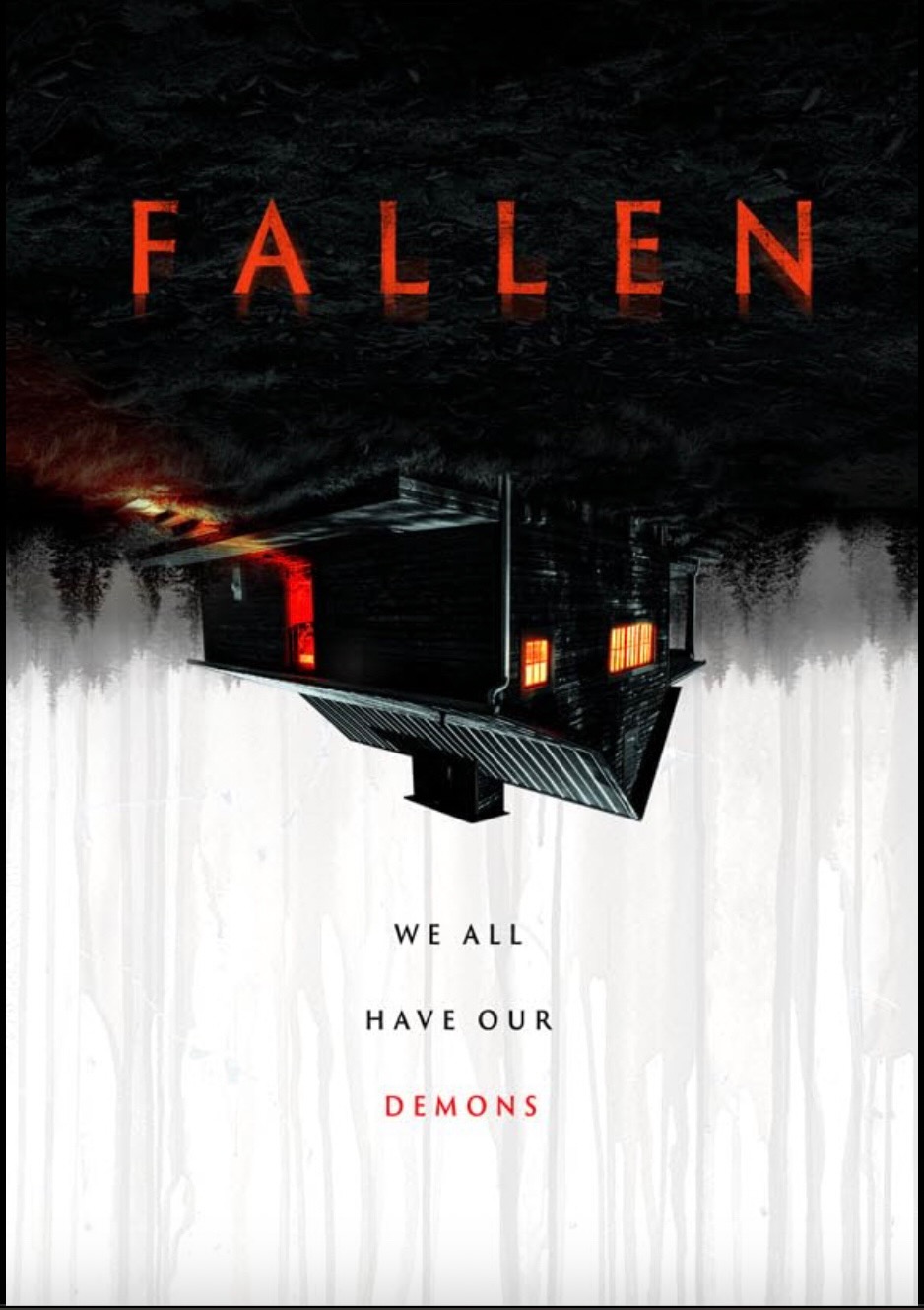
So beautifully shot, Fallen is a movie worth watching despite its disjointed plot.  Worth watching for horror fans, that is.  Apart from the night scenes, this is art house cinematography, and that may be because it’s an independent movie.  What’s it about?  That’s difficult to say, definitively.  The night scenes are so dark that you can’t tell what’s happening and the plot seems to have been intentionally obscure.  (That’s hard to substantiate because the 2022 film hasn’t generated too much discussion.)  This may have been another case of mistaken identity, like The Entity, because my notes only had the title down.  There are at least three movies with this title.  I’m learning my lesson to jot down the year when I add a movie to my “to see” list.  In any case, here goes…

A young priest (?) is warned by an older priest that it is time to take up violence because the darkness has started.  The younger priest is called “Father Abraham,” but he wears a tie in church services, and a small pectoral cross, making identification of the denomination difficult.  Since this is religion-based horror you’d think that that much, at least, ought to have been sorted out.  The heavily accented dialogue is often delivered so low that it’s difficult to follow.  In any case, this minister, after fighting “darkness” for many years, is in an isolated farmhouse with his disabled daughter.  He hunts and traps for their needs and a local boy delivers groceries, and is secretly in love with the daughter.  The minister, who seems to be presented as a tortured soul, isn’t really likable.  At night the house is attacked by physical demons.  There will be spoilers in the next paragraph.

It’s finally revealed that Fr. Fallen (apparently that’s his surname) had killed his wife for being a witch.  His daughter is also a witch, out for revenge for her mother’s death.  She summoned the demons and eventually kills her father and leaves the farm.  Religious imagery is everywhere in this film and begs for interpretation.  The lack of coherence, however, makes that very problematic.  The disabled daughter is the only survivor at the farmhouse, and is healed at the end.  By the demons?  Or because she’s a witch?  The influence of M. Night Shyamalan is evident, but his clean plotting is absent.  Online discussion is minimal, but there could be something of substance here.  If only it were better put together.  If only it were more discussed.


More Proof

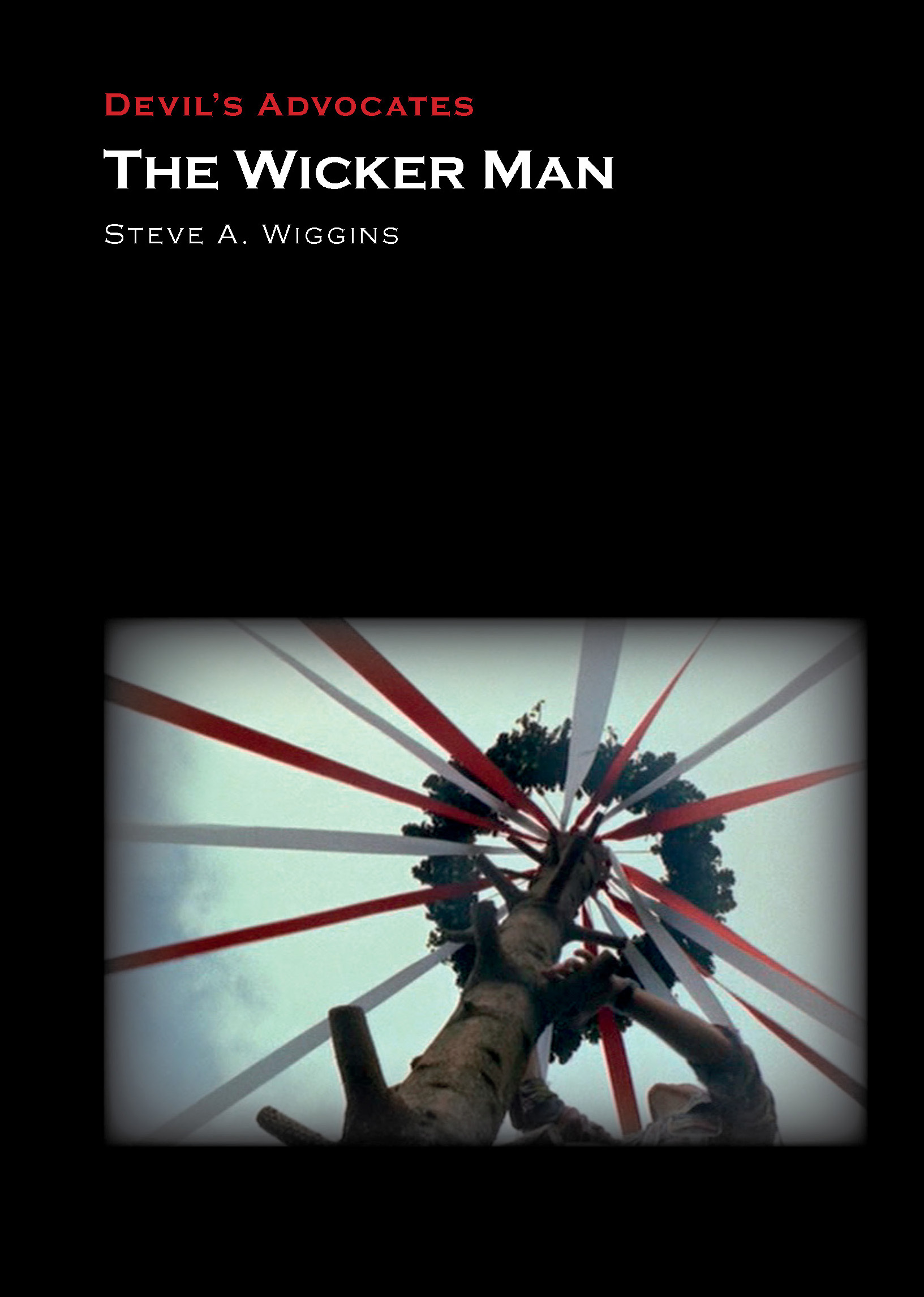
They’re here!  The second proofs for The Wicker Man have arrived.  Nothing makes you feel like a book will actually happen than seeing the stages unfold.  In the meantime I’ve begun seeking an agent for the next book.  This is always a tricky process—work a ton on a pitch, send it, and try to forget about it because most agents simply won’t respond.  If they do it won’t be for a month or two.  And even then they may not like what you’ve written.  It’s a weird system.  Meanwhile at least I’ve got proofs to read.  Proofreading is stressful enough.  I’ve read my new book proposal lots of times.  It was only after I’d sent it to a couple of agents that I found the typos.  You are your own worst editor.  Even if you’re an editor.

Still, you feel like proofs arriving should be occasion for a day off work.  Like your boss would say, “That’s quite an accomplishment!  Why don’t you take a day off to get started with it?”  I live in a fantasy world, I guess.  The proofs arrive with their shot of adrenaline and then you’ve got to read other people’s ideas for less interesting books (or so it seems).  Maybe this is why not so many editors write any more.  It’s exhausting.  Of course, I’m writing this post instead of reading the proofs.  Every diet should have some variety, even the literary kind.

I’m not a fussy author.  Some turns of phrase I will fight over, but I know copyeditors mean well.  I’ve done some copyediting myself, and I meant well.  Authors are people who are in for the long haul.  From the time you start working on a book (and if finding an agent is part of the process, you need to add several more months) to completion is generally measured in years.  It’s not unusual to get no pay at all for this work.  As Ivan Klima wrote: “A truly literary work comes into being as its creator’s cry of protest against the forgetting that looms over him, over his predecessors and his contemporaries alike, and over his time, and the language he speaks.  A literary work is something that defies death.”  If you can forgive the sexist language, there’s a great deal of truth there.  And part of that process is the effort to locate an agent who shares your vision.  And, of course, getting proofs back to the publisher on time.


Measuring Humanity

The humanities have fallen in love with data.  Let me put a finer point on it: those who use the humanities as a profession have had to turn to “evidence based” metrics in figuring out what it means to be human.  As an actual human, I’m feeling data fatigue.  Some of us aren’t good with numbers.  Our teachers encouraged us to move into the humanities.  Now, at an age of not young, many of us are being instructed that we now have to get good at numbers because numbers are the only truth.  I have philosophical and spiritual objections to this, but you can’t get a job as a philosophical and spiritual objector.  Numbers don’t, and can’t tell the whole story.  The term “calculating” used to be used to describe a person without feeling.  Now we’re all just calculators.

Whither can we go to experience true humanities again?  Professorships are “measured” by success factors.  “Key performance indicators” are applied to the gods.  There are immeasurables, but they can’t be slotted neatly into our computer’s algorithms, so they are swept off the table.  If you want to wear a white collar, you have to put business first.  The soul is dying, but that’s just fine as long as we can keep the body alive.  You see, the humanities used to be about those things that can’t be quantified with “evidence based” metrics.  How it feels to be in love, or why we cower in the presence of an unseen deity.  How do you put numbers on artistic inspiration?  Sure, we can “measure” aspects of Beethoven’s seventh symphony, but they don’t explain what it’s like to listen to it.

Kowtowing to capitalism feels shameful to me.  But challenging capitalism is like pacifists standing up to those with assault rifles.  Greed derives its power only from getting everyone to agree on its objects of value.  The humanities try to argue the point, but those with control of the money are in charge of hiring.  And they do it with their abacus always close to hand.  I never learned to use a slide rule but calculators were required to graduate from the academic track in high school.  Now when I’m being asked to apply that kind of thinking again, I have to cast my mind back nearly half a century while my human brain dreams of reading and writing novels, viewing paintings, and listening to beautiful music.  But it’s a work day, and when it’s all said and done, data rules.  Look for no empaths in upper management.


World’s End?

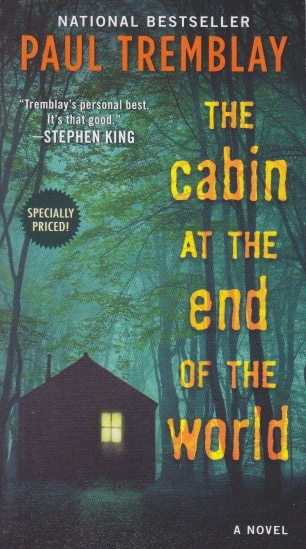
I’ve been writing on religion and horror for quite a few years now.  Sometimes you come across a horror movie, or novel, which addresses this directly.  Paul Tremblay’s The Cabin at the End of the World is one such novel.  A friend strongly recommended this, and indeed, the first half went impossibly fast.  This despite my dislike of home invasion stories.  It nevertheless kept me on the edge of my seat.  I should probably say there will be spoilers here (there will), in case you haven’t read this but intend to.  I’ll hold off on them until the next paragraph, though, so if you’re a faster reader than I am a writer you won’t accidentally run upon them.  So, a family consisting of two fathers and an adopted daughter find the cabin, where they’re vacationing, invaded by four people who believe the world is going to end.  Spoilers follow!

The world is going to end unless the family agree to sacrifice one of themselves to stop the apocalypse.  The strangers are armed while the vacationers are not.  And, as usually happens when those with weapons confront the innocent, the armed prevail.  But.  But the family refuses to sacrifice anyone.  Then the brainwashed four do something unexpected—they kill one of their own.  They continue to do this, attempting to convince the men that if the invaders all die, and neither of the men is sacrificed, the world will end.  Quite a bit of the novel then becomes a theological discussion regarding what kind of god would make such a demand.  Of course, if you read Genesis you’ll already know the answer, right Isaac?

Tremblay knows not to tip his authorial hand as to what’s really happening.  As the cabin becomes a mess of blood and gore, the television seems to be showing predicted apocalyptic events.  The invaders can’t reveal their source of secret knowledge because they receive visions telling them what to do.  The whole thing raises that most troubling of questions: who is really in charge?  Is there a bloodthirsty deity who requires a willing death or are the invaders simply good at acting out their paranoia and interpreting events to meet their expectations?  So it is that Cabin becomes a disturbing story—nearly a theodicy—asking age-old questions of what happens when religious belief conflicts with rational materialism.  There are enough hints of supernatural happenings to make the reader wonder.  And when it ends it affirms something many of us are exploring these days—religion and horror have much in common but neither is clearly understood.


Not Dagon

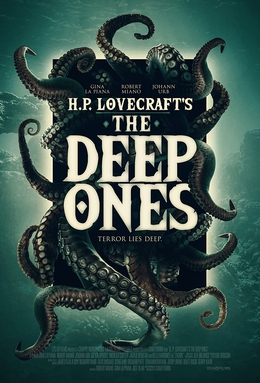
There’s an aesthetic to bad movies.  And when your production company is Crappy World Films you’ve got to wonder if it’s intentional.  Chad Ferrin’s H. P. Lovecraft’s The Deep Ones, which was released in 2020, isn’t a great movie.  It is kinda fun, though.  I’ve had a weakness for explicit Lovecraft films ever since Stuart Gordon’s very moody Dagon.  That film was clearly the inspiration for this one.  With the “low” budget of only a million dollars (it feels strange to write that), it nevertheless has a clean cinematography that shows some artistry.  The story just isn’t that good.  A young couple is seeking a getaway at an oceanfront AirBNB only to discover it’s part of a “gated” community.  Their hosts, who are living in the boat down at the marina, keep on stopping in, not leaving them much privacy.

The set-up is very much a Rosemary’s Baby scenario.  The community, as the title suggests, worship the Old Ones.  They introduce Cthulhu early on, but the young man of the couple has never heard of him (he obviously doesn’t spend much time on the internet).  Speaking of the internet, the film makes the point that everyone spends too much time on it, and there’s perhaps some truth to that, but, if you’re streaming the movie you’re also participating.  In any case, the community wants women to offer to Dagon—and the monster here is clearly low-budget—so they can bear more children for the Deep Ones.  Well, not so much bear children for them as to be pregnant with tentacles that can somehow convert newcomers.  Once you’ve been tentacled, it seems, you’re a member of the community.

There is a kind of Lovecraft vibe to the film despite the often wooden acting and throwaway dialogue.  One thing Lovecraft had learned from Poe was the consistency of mood.  It’s here that the movie runs into some trouble.  At times it’s a little scary, at times dramatic, but too much of it just feels silly.  The case could be made that Lovecraft’s writing tends toward the puerile and there’s some truth to that.  It is never silly, however.  Sometimes when translated to the screen the outlandishness of Lovecraft’s view of the world comes across as so weird as to be funny.  It takes an able director, and a strong writer, to adapt him to cinema successfully.  It’s no accident, then, that the movie is dedicated to Stuart Gordon, whose Dagon is still difficult for me to watch, so full of Lovecraft as it is.


Ultimate Collectables

“Collectible ebook” is a phrase you never hear.  That’s because such a thing doesn’t exist.  Even though I work in the publishing industry, I’m not really a fan of ebooks.  I don’t write my books anticipating pointing to some screen and crowing, “I wrote that!”  No, books exist as entities and there’s a kind of contempt associated with making them disposable by creating them out of ephemera.  I’m not wealthy enough to be a serious book collector, but when I buy used books I notice the rare category of “collectible” with some envy.  This is a book that has been treasured.  You see, I know that when I die I’ll leave little behind apart from my books.  If they were ebooks they’d be worthless.  You can’t sell them or trade them in.  Or even put them into a little free library.

Sometimes buying electrons seems to be more convenient than the alternative.  For example, we’ve pretty much run out of space for DVDs and Amazon seems unlikely to fold soon (like UltraViolet did), so subscribing to a streaming for a movie seems safe enough.  Yes, you can resell DVDs, but often for a pittance and you gain by opening more space.  The space books take up demonstrates their importance.  We bought our house with an eye toward book space, and even though we don’t have many books that would be considered “collectible,” we do have many that are interesting.  Unusual.  They have been conversation-starters when we’ve had the curious over.  (I always look at other people’s books when invited to someone’s place, if they’re publicly displayed.  It’s how people get to know each other.  I’ve never looked at anyone’s ebooks.)

Books are a cultural object.  The big tech companies have been trying to drive traffic to ebooks for years.  The pandemic gave them a leg up, but book sales—print book sales—also increased.  You can watch only so much Netflix, I guess.  I have yet to find a study that shows something read on a screen stays longer, or receives deeper engagement than something in print does.  To be sure, electronic reading has its place, but its place isn’t to replace actual books.  I guess I’m suspicious of the electronic revolution.  It feels fragile and tenuous to me.  If the power goes out we’re left without our gadgets and their contents.  You can still light a candle, however, and read an actual book.  And if bought and treated wisely, you may even find something collectable on your hands.


The Other Mississippi

Salmon aren’t the only animals that head back to their ancestral homes late in life.  There’s a draw to where we’re from.  Many humans can’t physically return for socio-economic or emotional reasons, but there’s an urge that may transcend generations.  For me it’s always been traced through my maternal line to upstate New York.  My mother’s [redacted for security question purposes] family had been in the upstate region around Schenectady for generations, as traced back as far as the 1770s.  It was my maternal grandfather, branching off from his father (who made it as far as central New York) who eventually left the state, after teaching in a one-room schoolhouse, for which, in those days, you didn’t need to be a college graduate.  In any case, I have a fondness for the Hudson Valley and an interest in its history.  

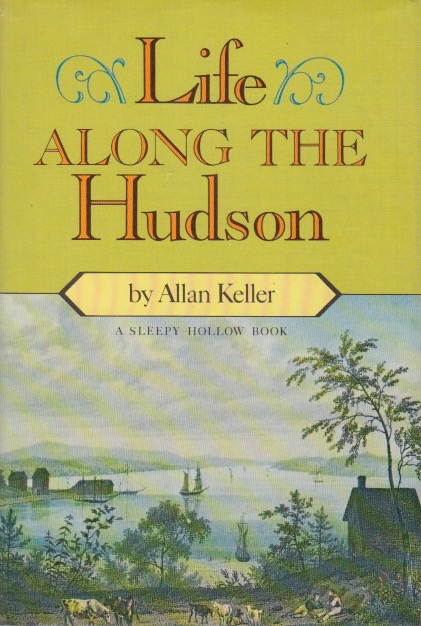
Allan Keller was a journalism professor who never became famous.  His Life along the Hudson is one of those charming, dreamy books about yesteryear.  Richly illustrated, it really isn’t a history (Keller wasn’t an historian) so much as a set of vignettes illustrating the role and importance that the river has had not only for New York state, but for the United States as a whole.  There are chapters about famous residents, battles of the Revolutionary War, historic houses, quirky facts, boating, and railroads.  It’s an interesting cross-section of a forgotten part of America.  Today when we hear Hudson River we tend to think New York City.  And while that’s not wrong, it certainly isn’t the whole story.  The Hudson early on connected Albany with Manhattan as they grew to be the two major points around which the Empire State expanded.

The book was never a bestseller.  It’s not particularly rare.  It is, however, a series of snapshots.  One of those was 1976, when the book was published.  The Hudson had become so polluted that major remediation efforts had to be put in place to redefine it from a cesspool to a beautiful waterway that took the breath away from many early travelers.  This valley was once considered one of the truly scenic spaces in the United States.  Now it’s pretty much a suburb of New York City, but it retains much of its earlier appeal, if you know where to look.  I’ve tried to find jobs that would allow me to move back to this region of upstate New York, but I’ve ended up in my own immediate home state of Pennsylvania.  I’d go back a couple more generations, if I could, but even salmon sometimes never make it back home.


Bad Movies

It’s embarrassing.  No, really it is.  The other day I was posting on yet another bad movie I’d watched and I realized that I should add a new Category (although I’m likely the only one who uses them) on this blog.  Now, it’s a pain to add a new Category to a blog with over 5,000 posts.  I reasoned that my bad movie watching, although a lifetime pursuit, really only appeared on this blog recently.  I had to scroll through the existing Category, “Movies,” to remind myself of what I’d posted on.  I found a few to add to my new Category, then a few more.  Finally the number grew to embarrassing portions.  I kept scrolling until it made me dizzy.  I couldn’t remember whether I’d posted on The Room or not.  It’s not a horror film, but it is very bad.  So bad I watched a parody of it.  Using the search function “The Room” brought up just too many hits and I was already woozy.  Maybe I didn’t want to admit to that one.

Photo by Denise Jans on Unsplash

There’s an aesthetic to watching bad movies.  In fact, there are books written justifying the practice.  I thought maybe I had started my bad movie watching posts with Ed Wood’s Plan 9 from Outer Space, but no.  No, it went back further than that.  As someone who writes books about movies (maybe bad books about movies?) I need to do my homework.  Not only do I write books on movies, I also write on them for Horror Homeroom on occasion.  I’m scheduled to teach a class on a movie this fall.  I’ve even presented on movies to church groups (they never invite me back to talk on that topic again, however).  I know the reason lies much deeper, though.

Part of it derives from a childhood of watching bad movies.  There’s nostalgia involved.  More than that, however, I grew up poor.  Unless you’re a rags-to-riches story (I’m not) that mentality stays with you your entire life.  I’m always trying to cut costs, but I love movies.  On weekends I look for what’s free, with or without ads, on Amazon Prime.  They cater to bad movies, it turns out.  And before long it becomes like an addiction.  There’s a fascination to watching something so obviously poor that nevertheless ended up in theaters.  In other words, hope glimmers through.  My books are far too expensive to sell well.  My name isn’t widely known.  There is, in other words, a validation in watching bad movies.  I’ve got a well-populated Category for them right here.