Young Reading

It was more the lede line than the story.  Melissa Kirsch’s “The books we read when we’re young help shape the adults we become in ways we don’t always grasp” caught my attention.  My own current rereading of Dark Shadows books certainly reflects that.  As my You Tube video on Dark Shadows considers, it was the books more than the television show that shaped my young mind.  Consciously, I know that’s probably the main reason I’ve always wanted to live in Maine.  It may seem strange to some to want to move where a vampire frequently visits, but there was more going on in those stories than I realized.  It would be enough to make me tremble were I a young persons’ fiction writer.  They have so much influence.  Spending my younger years searching for a father took me some strange places.

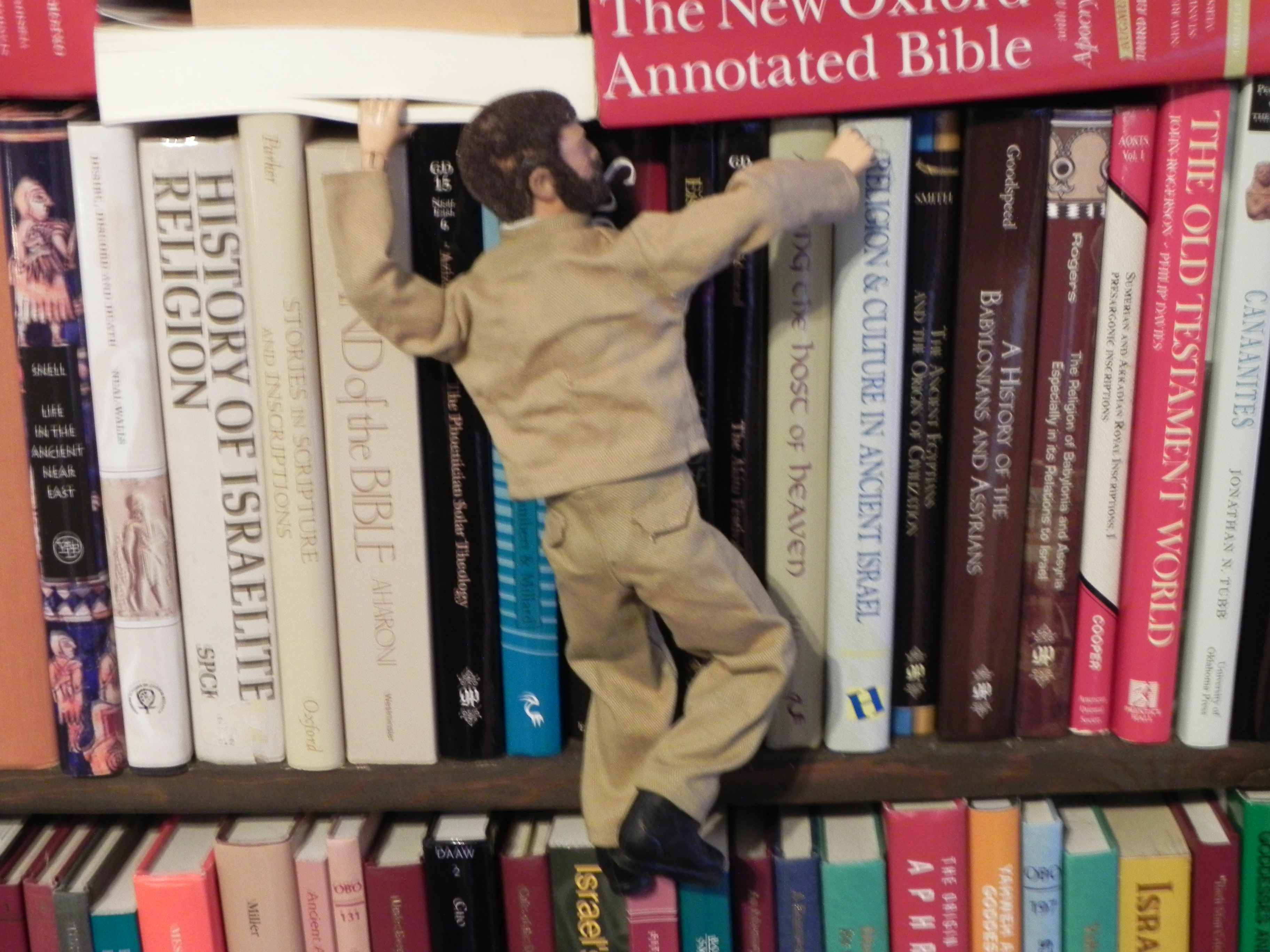
My other young reading was, naturally, the Bible.  I can’t remember how young I was when I began to try to read through the King James.  Eventually I did get through, and then I started all over again.  Clearly my entire life has been impacted by that early fear of Hell that drove me to the Scriptures.  Perhaps that combination of Bible and Dark Shadows novels led to Holy Horror and its aftermath.  In other words, my youthful reading led to what has become a vocation, of sorts.  That elusive university, or college job in Maine never came to fruition.  I tried many times to get a toehold there, Bible in hand.  I’ve ended up back in Pennsylvania, where I started.  And I’m still reading.

I’ve read a good number of good books, but it has been some time since one set my life off on a different trajectory.  Some books have lead me to write books, and books I read often suggest even more books.  Whether I die today or thirty years from now, books will have defined my life.  I grew up reading them and wanting to write them, with no real idea how to do the latter.  One of those childhood books convinced me that a career outside the church was one not worth having.  Indeed, were I clergy now my enjoyment of horror would certainly garner more attention than it does in my current role as “some guy.”  I am, however, that person who grew from a worried-looking kid who’d not yet figured out that my reading choices would lead to a life measured by books.
The ultimate adventure…

Many Days

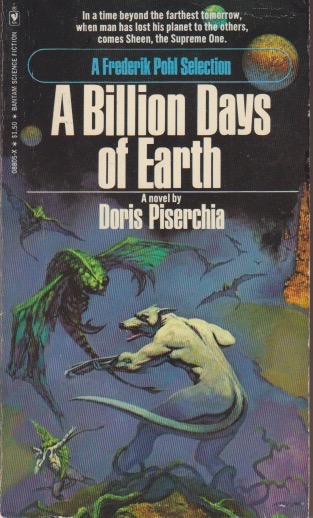
Science fiction.  I used to consume it by the bookful, and even now I occasionally turn back to it.  Having read Doris Piserchia’s A Billion Days of Earth, I do have a confession to make.  I don’t know why I read it.  Literally.  As I’ve indicated many times before, I keep a reading wishlist.  It’s comprised of books that others recommend and things that catch my eye.  Every now and again a used book sale will bring something unexpected into the mix, but overall, I rely on my list.  I can’t remember who recommended A Billion Days of Earth, or why.  The cover is striking in that 1970s sci-fi way, and it took me back to the actual seventies when I was reading sci-fi quite a bit.  Some of that cover art still mesmerizes me.  So, about the book…

I didn’t know what to expect and received what I was expecting.  This is a philosophically heavy novel that, in the style of some other seventies fiction I read, was a bit difficult to follow.  The main idea (and there will be spoilers) is that Sheen, a silvery, shape-shifting being, emerges a billion days along.  Evolution has taken multiple tracks with animals such as dogs and rats becoming essentially what humans are today (or were in the seventies) and humans evolving into what the other animals call gods.  Sheen slithers about the world taking the egos from all creatures, kind of assimilating them.  A rat person and a dog person resist the relinquishing of their egos while the world around them begins to collapse.  The “gods” refuse to help.  Then, at the end, the gods board their spaceship, and released by Sheen, leave for another planet.

Although I was confused most of the way through, the book leaves a lot to exegete.  This is definitely a retelling of Genesis 1–3.  Sheen offers people (and animals) paradise in exchange for their egos.  Nearly everyone, except those who think (a small number) accepts this offer.  Even the gods are tempted.  We’ve got the snake (Sheen), the expulsion from paradise, and the gods who separate themselves from humanity.  But still, I’m sure there’s something more that I missed.  There are subplots for Rik (rat man) and Jak (dog man) and the rich Filly family that seem to evade conclusion or resolution.  Or maybe once the gods are gone there’s nothing more to say.  This seventies classic left me thinking.  And wondering who it was that recommended it to me.


Wicker Proofing

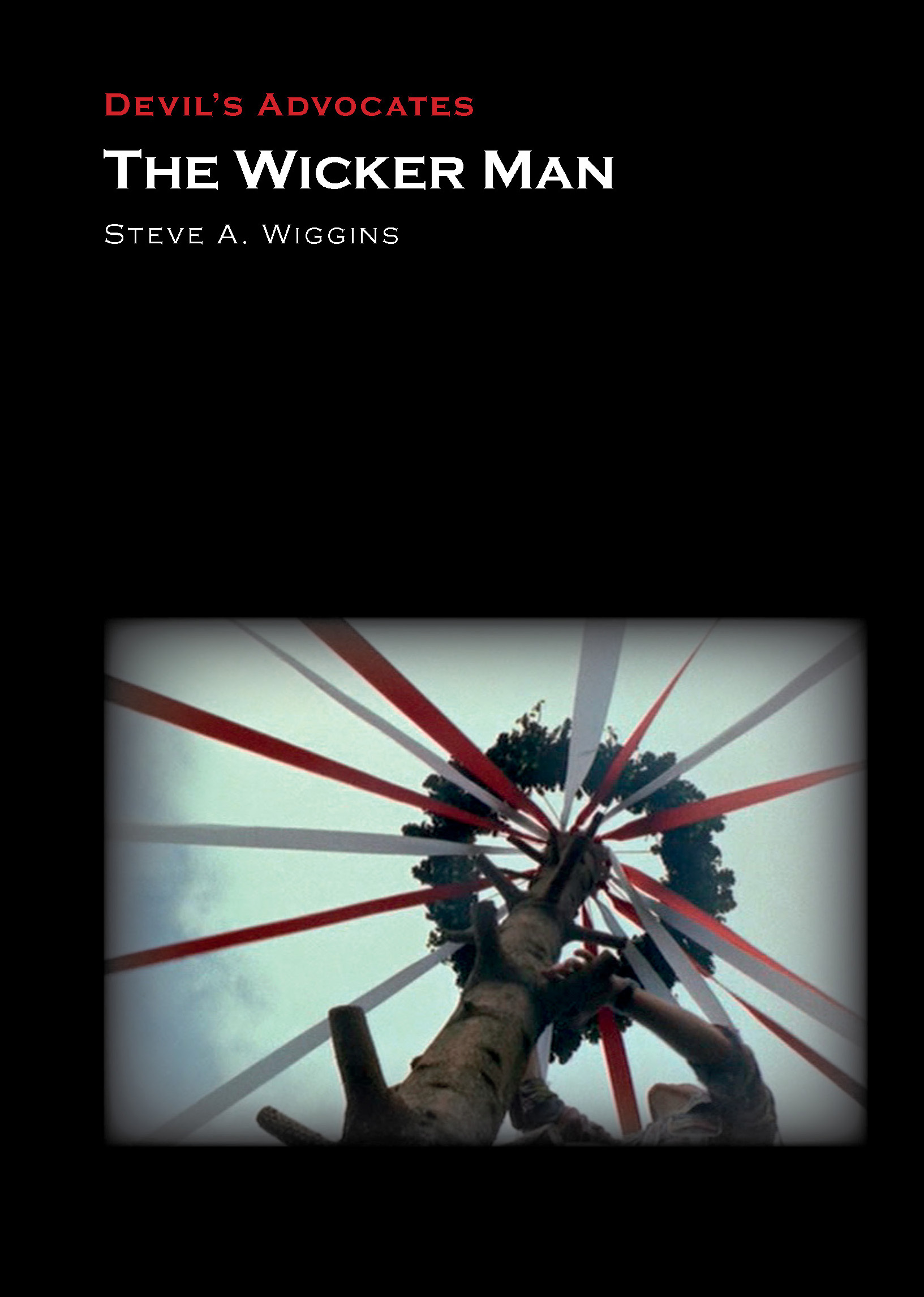
I’m currently reading the first proofs of The Wicker Man (due out in August).  While necessary, proofreading is a pain (and I work in publishing!).  You have to put everything else aside and concentrate on what you’ve already written, and if you’re like me, moved on from, to get your earlier work out.  I’m extremely time conscious.  I have many things that I would like to accomplish in the time I have left.  Right now one of my priorities is book six.  It’s already written, but I’m revising it for the umpteenth time.  Then the proofs come.  This is one of the issues a graphomaniac faces.  It’s part of trying to make a life from words.  And it distorts time.  I submitted my Wicker manuscript back in December.  Since then my mind has largely been elsewhere.

Proofreading—or is it proof reading?  I’m not a proofreader—isn’t the same as it used to be.  These days you proofread a PDF and use the markup tools for changes.  I had developed a kind of nostalgia for the old-fashioned proof markings.  Now you highlight the offending text and add a note to explain what you would like changed.  This makes me worry about time too, since I’m probably among the last generation who will even known what proof markings are, apart from historians of publishing (and yes, there are historians of publishing).  I am fortunate in having had a good copyeditor for The Wicker Man.  S/he didn’t change much but pointed out where my wording was ambiguous.  Those of you who’ve read me for a while know that some of that ambiguity is intentional, no?

A quick turnaround time on proofs is necessary.  Of course, mine would arrive on a Wednesday.  That very same day I was asked to be a reader-responder to a journal article, also with a brief turnaround time.  I wanted to say “No,” but as an editor I know how difficult it is to find reviewers.  Anyone who publishes should consider it a moral obligation to review when asked.  Just like jury duty.  Thursday and Friday mornings were spent reviewing the article (which I hope will be published, whoever wrote it).  All of this was done without picking up a pen (as much as I wanted to) or leaving my laptop.  As much as I enjoy those proof markings, nobody has the time for them anymore.  Even now I’m playing hooky from proofreading to write this blog post.  I’d better get back before someone notices that I’m gone.


Entitled Titles

Movies have a tremendous impact.  Nowhere is this more obvious than in movie titles moving into standard vocabulary.  “McGuffin” (which autocorrect thinks is “McMuffin”) and the Wilhelm scream may not be household terms, but many people know what they are without being movie experts.  Even more impressive is when a movie title becomes its own noun.  I learned about the Rashomon effect not from movies, but from history.  When a story is told from more than one point of view, often with contradictory accounts, this is known as “the Rashomon effect.”  It’s named after a movie, Rashomon, that I’ve never seen.  I suspect I’m not the only one to use the phrase who hasn’t.  Movies can become points of reference.  We’re quite often visual creatures and movies can reach large audiences. The title plays a crucial role.

As the writer of a small blog with a small readership, and of books with small circulation, I often think of how movies manage to reach so many people.  I’m constantly discovering movies from before when I was born, or from countries far away.  They ask, like this blog, for only a little bit of time and yet they provide so many things to think about.  In many ways they are the mythology of our age, and no matter whether you watch on your phone or the big screen, you’re joining the ranks of believers.  Sometimes a movie becomes a cultural reference, such as is the case of “the Rashomon effect.”  But this can lead to its own set of problems.  Movies, like some bestselling books, often have one-word titles.  Sometimes that word fits many movies (as in Entity/The Entity).  Or sometimes it has a wider meaning, such as Avatar.  Or it refers to another well-known reference, such as Titanic.  I’m not picking on James Cameron here, but making a point that movies may make meaning, but they also bear the weight of their titles.

Titles are often sticking points with authors.  Many academic writers like the draw of the clever or pithy title, but such titles often hurt the sales of their book.  Using a quote as a title, apart from making confusion, also runs into duplicates.  Titles can’t be copyrighted, so multiple books (or movies) can use the same one. Quotes have long been favorites, so using them for titles is not a good idea.  I was distressed (mildly) when I realized that my fifth book, The Wicker Man, would bear the same title as the movie.  (That’s the way the series rolls.)  I’m now reading the proofs and thinking about titles.  My next book may not have a one-word title, but I hope I’m getting close.  And maybe it will have a little impact?


Drifting

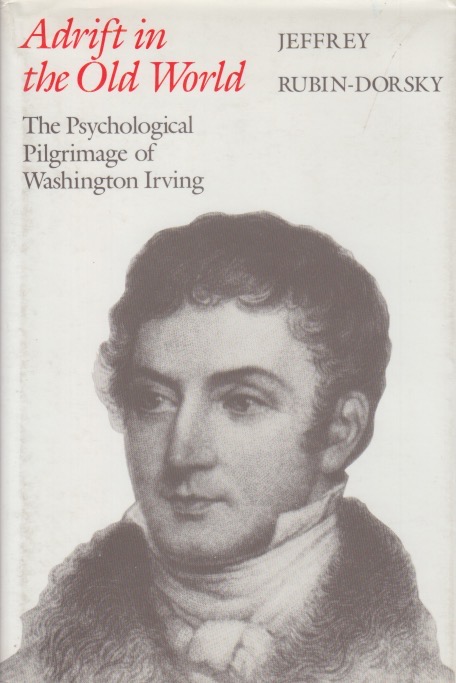
What really goes on in somebody else’s mind?  At best we can guess, and when that person’s been dead for a long time that guessing involves some reasoned speculation.  I enjoyed Jeffrey Rubin-Dorsky’s reasoned speculation in Adrift in the Old World: The Psychological Pilgrimage of Washington Irving.  The book itself is a few decades old now, but it does raise many relevant issues.  For me personally, it was, in parts, like reading my own psychological profile.  Irving is an interesting study.  (Unlike me) he had early success as a writer but he was a continual self-doubter.  He was also a poor investor, making money on his writing only to lose large sums investing in ventures that failed.  He also had a sense of not belonging which would seem strange for a New Yorker today.  Although he finally felt he fit in when he settled, as a famous writer, in Tarrytown, this book really only covers his European years.

While traveling for seventeen years in mainly Britain, France, Germany, and Spain, Irving wrote four very different “Sketch Books.”  These weren’t really short stories as we’ve come to understand them, at least not always, but they affirmed his place in the literary firmament.  Adrift in the Old World covers these four books while bringing incidental mention of several others into the picture.  Irving must be a difficult writer to cover.  He was not only prolific, but he wrote about diverse topics and sometimes at great length.  Of course, he was trying to make a living as a writer and people in those days had more time to read.  Breaking out a set of only four of his books makes this more digestible.

Even though I learned a lot from this book, it wasn’t always easy reading.  It gets a bit academic in parts and the paragraphs are far too long.  Still, there’s good information here.  I’ve been trying to wrap my head around Irving for some time now, as a glance at the books I’ve covered recently ought to suggest.  Although he’s not ignored by literary scholars, there aren’t many general interest books written on him.  There are other writers that more capture the modern imagination.  Still, literary history of the early United States is a fascinating venture in its own right.  For those who like to try to figure out what other people are thinking (and I have to admit to that avocation) this is a good entryway into what may have been the mental world of Washington Irving.


Wrong Entity

In one of those weird synchronicities the universe likes to play, the very next day after I watched The Entity (2015) and wrote a blog post on it, this happened.  In yesterday’s post I noted that I couldn’t remember where I’d read about the movie, or who had recommended it to me.  I couldn’t even be sure which The Entity it was, since I didn’t write down the movie’s date.  The next morning I had the privilege of watching Claire Donner, of the Miskatonic Institute, talking about The Entity and it immediately came to mind that it was she who’d suggested I might like it (or might not).  Also, that I got the wrong one.  I haven’t had the opportunity to watch the one actually recommended yet, but it brings back to mind just how the Miskatonic Institute contributes to understanding horror.

The Institute has asked me to present a course this coming October and I will be posting more on that closer to the time.  It got me to thinking about a couple of things.  One is that I missed some major horror films growing up.  When I “got religion” in high school (I always had it, of course, and saw no problem with enjoying monsters too) I began to steer away from horror.  In college I had a dating occasion or two to watch horror, but it really only started again in earnest after being booted out of academia.  I was interviewed in seminary by a sociology grad student interested in why people watch horror, but my watching was (and still is) circumscribed by lack of cash flow.  The Entity made quite a splash in the early eighties, but it took someone in the 2020s telling me about it before I realized I probably should watch it.

The other thing Donner’s talk brought to mind is how religion and horror relate.  Such films are scary because of an existential threat—THE existential threat.  There’s nothing more powerful than God, but in such movies God can do nothing.  I haven’t seen the movie yet, but I suspect that’s true.  It’s certainly true of The Exorcist, with which it’s sometimes compared.  God doesn’t deliver Regan McNeil, no, Fr. Karras does.  And only by sacrificing himself to do so.  The existential threat has to involve a universe entirely out of kilter.  What is a God that’s powerless (it’s implied) to drive out evil?  The exorcism in The Exorcist doesn’t work, does it?  Yet there’s some benevolent force in the universe that gives us synchronicities and, it seems, is looking out for goodness in an often cruel world.


Entities

When you’re a regular scholar, you take notes.  I’m not a regular anything, I guess, and I’ve fallen out of the habit of noting who makes movie recommendations to me.  Many of these come from books, but I don’t always remember which book made what suggestion.  In my list of movies to watch is The Entity.  The thing is, there are at least five movies by that title.  One of them was free on Freevee, so that was the one I watched.  I’m not sure it was the right one, but since it featured something like a demon it represents my interests in Nightmares with the Bible.  This one was, for the record, from 2016, or 2015, and directed by Eduardo Schuldt.  Like Paranormal Activity, it’s “found footage” from hand-held cameras and it made me more woozy than scared.

Based in Lima, it’s in Spanish and claims to be from the dark web.  I don’t have any desire to go there (the dark web, that is.  Lima would be okay), but the movie wasn’t that frightening.  It was like Sinister and Ringu’s unholy offspring.  With a bit of Blair Witch Project as a sibling.  A curse from the Inquisition brings this into the realm of religion and horror.  Film students working on a class project learn that those who see a certain film are going to die.  Being modern people, they’re skeptical so, of course they watch it.  The thing about religion is that it’s unrelenting.  It doesn’t give up just because people stop believing.  Movies like this underscore how we keep turning back to religion to frighten ourselves.  You can guess what happens to the students.

The thing is, I’m not sure that I watched the correct one.  Film scholars now make a habit of citing movies by not only title and year, but also director’s name.  There are a lot of “Entities” out there, and if you take the article off there are even more.  I’ll probably end up watching a few of them, but since I didn’t write down which book, or which friend, made the recommendation, I’ll never know if I got the right one.  I keep a list to try to prevent myself from just going for whatever’s free on the weekend because you generally get what you pay for when you do that.  Even though I ended up a bit nauseous (from the camera movement) I was glad to have seen this.  There were some good moments in it.  And I can tick one off my Entity list. 


Reading Early America

Reading about Washington Irving is reading about early America.  And reading about early America is to read about what’s happening in politics today.  One thing that’s very clear, even among the founders of this nation, is the fear that politicians like those we have today would arise.  You see, nothing like America had happened before—a nation deciding to govern itself without a king or queen.  A democracy.  The founders weren’t blind to human weakness, however.  They repeatedly warned against what we now have—a two-party system (which will naturally deeply divide a people) that backs ambitious, wealthy individuals who crave power rather than the good of the country.  Instead of bravery, we elect cowards who dodged the draft because of their personal wealth, and then called veterans “losers” when they’re elected.

There’s some comfort in this long view, however.  The fear we all constantly feel is nothing new.  From 1776 onward, those who were architects and analysts of this republic have warned that we’re always on the brink.  Reading about such things at the same time as reading about the history of Russia is enlightening.  Russia was a monarchy.  It’s sometimes hard to remember that it has only been a hundred and five years since the Romanov family was executed and “rule by the people” became the norm in that nation.  That Mikhail Gorbachev was the first leader of post-Soviet Russia and that was only less than 25 years ago.  We are all part of history.  And history is very old.

America only works as long as those who lead it are dedicated to the nation, not to themselves.  What is the sense of a nation if not putting the needs of others on the same level, or even above, your own?  Sacrificial thinking is behind what used to be called “servant leadership.”  Instead, we tend to see those who find out how to game the system rising to the top through money, grift, or high self-regard.  And when multiple nations have such people in leadership roles we find ourselves in the situation that we face in the twenty-first century.  But we faced it also in the twentieth century.  And in the nineteenth.  People, it seems, do not change.  Monarchs, through no right other than extreme wealth, rule nations.  The idea never dies.  The thought that wealth equates with worth is a poison to all political systems.  This is something you learn by reading about early America.  Today’s an election day.  If you support democracy, make time to get out and vote.


Lost at Sea

Where do books come from?  It still comes as a surprise to many authors, but books tend to be shipped by, well, ship.  When publishers use overseas facilities, it’s far too expensive to send books across the ocean by air.  I had many people express disbelief when I explained their books were delayed by the Suez Canal blockage, but if most of the world’s international goods are sent by ship (and they are) what might seem like a quirky news story has very real ramifications worldwide.  I was reminded of this by a recent NPR story of two new cookbooks having been lost at sea.  The ship from Taiwan, bound for New York, ran afoul of a storm in the Azores, resulting in the loss of 60 shipping containers—including those holding the newly printed books.  There is a worldwide shortage of shipping containers (seriously) and one of the problems is they keep falling off ships.

Photo by Elias E on Unsplash

If you haven’t googled “cargo ships” and looked at the image options, do.  You’ll see astonishingly large ships with what look to be entire cities worth of cargo containers stacked on the deck.  Many of these containers are lost at sea.  Current estimates are that about 1,000 containers fall off of ships per year.  Although the authors of these particular cookbooks took a lighthearted approach to the news, the book that really brought this home to me was Moby-Duck, which I blogged about some years back (you can read it here).  That book was about trying to follow the plastic “rubber duckies” that fell off a ship back in 1992.  This isn’t, in other words, a new problem.

Videos posted of these massive ships being tossed about and losing cargo are impressive in their own right—they make the ocean seem omnipotent.  But the fact is, we’ve littered it pretty badly.  Books, in their defense, will decompose naturally.  We live in a society defined by consumerism.  We see things and we want them.  In order to make them inexpensive, American companies buy the items from overseas where labor costs are much cheaper (and where many nations have socialized medicine, I might add, making employees cheaper to pay).  As ships grow larger we might expect these kinds of accidents to increase.  The older I get, the more I pay attention to economics.  The dismal science does hold a macabre fascination, especially when entire printings of a new book end up at the bottom of the ocean.  Authors, if they’re curious, ought to consider where books come from.


Learning from Mother’s Day

Looking back over the past year, I see that we’ve still got a lot of progress to make.  It’s only been about five millennia of “civilization,” but we still haven’t figured our that women are just as important as men.  Probably more.  This Mother’s Day we stop to think of our moms and many of us wish we were closer to home so that being there this day were possible.  Even the spineless men who degrade women are probably on the phone to their moms today, or maybe sending flowers.  The real truth emerges tomorrow.  Did we learn the lesson?  Are women to be accorded the same rights as men?  And who, really, has the right to decide who’s more human than anyone else?

Born as human beings, we need our mothers to survive.  They nurture and comfort and provide for us, even if fathers step out of the picture.  I’m reminded of an experiment that I learned about in some science class along the way.  A baby monkey (I can’t recall the species) was given a choice of two artificial “mothers.”  One, made of wire, monkey shaped, had a bottle where the baby could feed.  The other had no bottle, but was covered in fur.  The picture of that poor monkey clinging to the bottle-less but “comforting” fur-covered mother has haunted me ever since.  The look of desperation on its face makes me want to weep.  Why can’t we treat all people equitably?  We require no experiments to reveal the truth here. I look forward to the day when such messages will no longer be needed.

Too often we allow our holidays to assuage our guilt over poor treatment for the rest of the year.  Churches used to be plagued with those living sinful lives making it to Sunday’s absolution only to start it all over again.  If only we would learn the lessons Mother’s Day has to teach us.  People depend on one another to survive.  We like to think of ourselves as independent and not requiring help from anyone.  That’s a lie on a Trumpian scale.  We need each other.  Every live deserves fair treatment.  The same wage for the same work.  The right to protect their bodies and their health.  The right to show us a better way of being in the world.  It’s Mother’s Day, and if you’re reading this you have a mother to thank for this very modest possibility.  When a new sun arises tomorrow, let’s remember what we learned today.  Thank you, Mom!


Mutant Madness

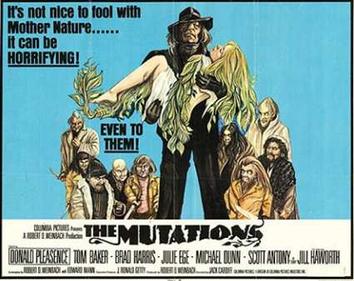
I’ve never seen Freaks, nor have I ever wanted to.  It’s an exploitation film of carnival actors that  Tod Browning, for some reason, thought might make a good follow-up to Dracula.  Most of us are aware that it’s bad enough exploiting  those with unfortunate deformities for money, and making a movie out of it doesn’t help.  I have to confess that I stumbled onto Jack Cardiff’s The Mutations thinking it was a creature feature, without realizing it was a seventies version of Freaks.  With a mad scientist thrown in for good measure.  Honestly, though, the carnies are the characters with the highest moral standards of anyone in the movie, so at least it has that going for it.  You’d have thought that by 1974, however, that people would’ve known better than to reprise a movie that wasn’t well accepted forty years before.

Professor Nolter, the mad scientist, is a university professor trying to force evolution’s hand by blending animals and plants.  So far, so good.  He uses his students as victims, which makes you wonder why their wealthy families don’t start any investigations when they go missing.  The professor is assisted in his experiments by one of the co-owners of the carnival, which allows for a presentation of the carnies in a most awkward piece of cinematography.  Two of his students are successfully made into plant hybrids, but one dies shortly afterward.  The other escapes, so he decides to replace him with yet another student.  Meanwhile, the carnies tire of their exploitation—rightfully so—and turn on the henchman/co-owner of the show.

The only real payoff here is the successful hybrid that turns into a student into a human Venus flytrap.  If he hugs you in his rubber-suited arms, you’re a goner.  And the film starts off with several minutes of time-lapse photography of plants growing, which is pretty cool, even amid the strangeness that’s to follow.  When I saw that the movie starred Donald Pleasence, and having Halloween on my mind,  I figured, “How bad can it be?”  It was, after all, free on Amazon Prime.  As with many exploitation movies, it’s poorly written and the props aren’t believable.  Some of the giant plant-animal hybrids are worth looking at, even though they’re never explained.  In the end the mad scientist’s creations kill him, as expected.  I would normally consider such information as a spoiler, however, considering that the movie spoils itself, I won’t worry too much about it.


Iron Man?

As a vegan, I sometimes end up thinking more about nutrition than I used to.  Back when I first became a vegetarian colleagues wondered how I got my iron.  I’m one of those apparently rare individuals who really likes broccoli.  I could eat it nearly every day of the week without tiring of it.  In any case, iron is important for health.  I’ve known people with iron deficiencies and it can be a real problem.  Doctors recommend ferrous gluconate as a dietary supplement since the body absorbs iron better from it.  (It’s best on an empty stomach, I’m told, followed by orange juice.)  But I’m no physician.  In fact, I’m quite squeamish, which may seem strange for someone who watches horror.  Still, thinking about iron took me back to my childhood.

I was a sickly child.  Couple this with a tendency to think too much and I must’ve been a handful for my mother.  I remember trying to explain to her once that I didn’t believe reality was real.  I was maybe twelve at the time.  She prescribed ironized yeast.  Now, Mom’s no doctor.  She didn’t even finish high school.  So thinking about broccoli made me wonder about ironized yeast.  First a web search revealed it’s not sold any more.  Further, it was a health food fad beginning in the 1930s.  Although I remember the taste and scent distinctly, I couldn’t find a website saying what it was or how it was made.  More to the point, why did my poor, frustrated mother think that it would help me couple reality with what was happening around me again?  (And was that even such a good idea?)

Questioning perceptions seems to run in my family.  I’ve long known that my thought process is very different from that of other people.  My saintly wife still says the reason she was attracted to me is that she’d never met anyone who thinks the way I do.  My thought process has had plenty of opportunities to drive her crazy since those early days, I suspect.  My brother and I sometimes talk about what it’s like being, I suspect, were we diagnosed, neurodiverse.  It’s easy to fall into the perception that others think like we do.  I suspect all people do that.  Few, at least among those I’ve met, question the reality that their senses tell them really exists.  Physics tells us it’s mostly empty space.  And yet although I still don’t know what it is, maybe I’d better find someone with an old stockpile of ironized yeast to get back to business. It is, after all, a work day.

Who knows what goes on in the mind of others?

Final (not) Thoughts

One thing I’ve noticed as I’ve aged is that I pay attention to necrologies a lot more.  Few people from my college and seminary days stay in touch, and the same is true of my teaching days.  People are busy, I know, but I always look at alumni magazines memorial pages.  Whenever I get on the Society of Biblical Literature website a morbid curiosity draws me to the list of departed members.  I’ve known several of them in past years.  Still, it was a shock to see Michael S. Heiser on the list recently.  For one thing, Michael was younger than me, and for another, I knew him for a long time.  Theologically we were pretty far apart, but that never stopped us from being friends.  We both lived in Wisconsin and we both ended up in academic-adjacent jobs.  We shared an interest in unusual things and we were even blog buddies for awhile.  Michael died back in February.

I hadn’t heard because SBL moved its recently deceased list off the home page (I suspect that’s not the best marketing), so you have to click through.  But when I did I was saddened to see Michael there.  Then I notice two colleagues even younger who’d died in the last few months.  It gives you pause.  There are no guarantees in life, I know.  Those who manage to make it to my age are fortunate, but can generally expect to have a few more years.  That’s not a promise, however.  Having watched a lot (possibly too much) television in my life, it brought to mind a Frasier episode where a colleague the famous psychologist’s age died, sending Frasier into a search for reasons why.  That’s something those older than me tell me that I’d better get used to.

We tend not to want to think about it, but I’ve had both a parent and parent-in-law say how strange it is to find yourself old while still thinking like a young person.  It is bewildering.  And it’s one of the reasons I write so frenetically.  It was after I finished my third book, I think, that I realized I didn’t have all the time in the world left.  I have lots of books I want to write, many of them already started and slumbering on my hard drive.  Michael was also a prolific writer, and a more successful one than I have become.  His blog had more followers.  And it seems like only yesterday that I ran into him at an SBL meeting and he did an impromptu interview with me.  Life’s too short not to stay in better touch.


Connecting Many Leagues

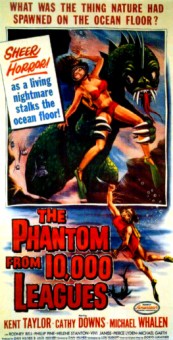
Much of movie viewing life is about making connections.  Many, many films have been made and I’m not the first to suggest that cinema is a form of modern mythology.  But those connections!  Pressed for time one busy weekend, I found the brief, low-budget The Phantom from 10,000 Leagues.  It was included with Amazon Prime and I had an obligation in about 90 minutes.  I could just squeeze it in.  As I’d anticipated, it was another of those poorly written, cheeky teen-magnets from the fifties.  The monster created by radiation, the threat to the world that the government sends only two guys to handle, and lots of lingering shots of men in business suits walking on the beach, it’s about what you’d expect.  It did well at the 1955 box office, though.

My first thought was that it was an attempted marriage between The Creature from the Black Lagoon and The Beast from 20,000 Fathoms.  Indeed, Black Lagoon had been released the year before, opening the realm of underwater filming for monster movies.  It, however, had a believable monster that wasn’t so monstrous.  The “phantom”—the name is never explained—is obviously a person in a cheap monster suit that can barely open its mouth.  It kills by holding people under water, or getting them into a radioactive beam, or preventing them from getting away from dynamite.  Oops, that last one’s a spoiler, I guess.  The Beast from 20,000 Fathoms came out a year before Black Lagoon.  The title of The Phantom from 10,000 Leagues title was obviously ripped off from it, and the atomic connection and undersea beast are common to both.  Connections.

The Beast had the benefit of a monster by the master, Ray Harryhausen.  And it was based on a story by Ray Bradbury.  That was a winning combination.  The Phantom claims to be based on a story by Dorys Lukather.  This movie is all she’s known for writing, God rest her soul.  Produced by the subtly named American Releasing Corporation, the production company would go on to become the respectable American International Pictures.  Interestingly, given the sexism of the era—reflected fairly clearly in the writing—the monster was played by a woman.  Norma Hanson, like Milicent Patrick, brought a monster to life only to be largely forgotten.  Patrick was rediscovered by Mallory O’Meara, but Hanson—one time a diving world-record holder—seems to have faded.  Had I but more time, I would enjoy diving those 10,000 leagues to bring another forgotten Hollywood monster woman to life.  And if I had the connections.


Know Your Books

Used books have many virtues.  They’re good for the environment, being the ultimate primary duo of the triad “reduce, reuse, recycle.”  They feel like handling the wisdom of the ages itself with their brittle pages and scuffed covers.  These books didn’t have a quiet life just sitting on the shelf.  I understand and respect that.  Still, when classifying such books for sale, I often find myself at odds with the sellers’ descriptions.  I wrote earlier of a book that had been listed as “very good” having two pages stuck together by a wad of gum.  What if what I needed to read was beneath that gum?  And no, not all books are available electronically online.  Copyright still exists.  You see, I once toyed with the idea, while trying to live as an adjunct professor, of selling used books.  There are accepted standards for poor, acceptable, fair, good, very good, and like new.

A recent “good purchase” arrived battered and a bit too well loved for my liking.  “Good,” however, indicates that a book is readable—the underlining shouldn’t obscure text, and God help us, there should be no gum.  This one, however, had several ripped pages.  That’s not good.  Then I came across a page where the corner had obviously been dog-eared only to eventually fall off before it reached me, carrying the page numbers with it.  Writing in books I understand, but bending down pages ought to be a crime.  Further along, another dog-eared missing bit took some text with it.  That part, at least wasn’t readable.  This puts us in “poor” territory, in fact.  Then I came to the page that was two-thirds missing, apparently ripped out from top to bottom leaving only a tonsure of text.  Who rated this book?

Those who buy used books can be tough customers, I realize.  Sometimes they are forced to be.  A used book in good condition, by definition, is missing no pages.  Technically I suppose that’s true—a stub of the page is there.  I suspect the real problem, however, is that the seller doesn’t take the loving time with each and every book that s/he should.  Books are meant to be read, yes.  They convey knowledge.  And once you buy one (this was, however, ex libris, and from a university library, no less) you are free to bend, fold, spindle, or mutilate.  Perhaps someone preowned this poor orphan of a tome once it left the library, and if so they were a cruel owner.  If not, libraries, it appears, should be making more aggressive use of fines.  But mostly, sellers should spend some time getting to know their books.