Boggy Down

Okay, so after watching The Creature of Black Lake I realized that I’d never seen The Legend of Boggy Creek.  I did watch The Mysterious Monsters, a documentary that came out in 1975, in the Drake Theater in Oil City.  I was struck by Peter Graves’ serious tone and the information the film conveyed.  I’d not knowingly heard of Boggy Creek then (Graves does list “the Fouke monster” as another name for sasquatch), and besides, Arkansas was far, far away.  Well, to make an honest man of myself, I decided I’d better see it.  The opening of Boggy Creek is clearly the inspiration for the opening of Black Lake.  Their opening shots are very similar.  (I guess I watched them in the wrong order.)

Although Boggy Creek does have a guy in a costume (better makeup than Black Lake), many of those in the film are the actual eyewitnesses to the events it portrays.  They’re clearly not professional actors.  Interestingly, the narrator constantly insists that there’s only one such creature and that it acts out of loneliness.  If there are sasquatch they, out of biological necessity, must have a breeding population.  There had to be a Mrs. Boggy Creek somewhere in the picture—at least on a national scale.  In any case, this movie has become a cult classic, but I can’t help but think it’s so that people can laugh at it.  The acting’s not great and the long, long shots of hunters getting their dogs out of the truck  show the problems with the pacing.  Then there’s that folksy song (also echoed in Black Lake) about the lonely monster.

Boggy Creek came out in 1972, making it one of the earliest Bigfoot documentaries.  Given that sasquatch has gone mainstream (lawn art and Christmas ornaments featuring Bigfoot are common), the movie perhaps started a new cultural meme.  In the movie the poor critter gets shot several times, engaging viewer sympathy (but maybe not enough to write a song about it).  The narrator reflects if this particular southern hospitality might not’ve been overkill.  After all, some of the armed witnesses said they couldn’t shoot it because it looked too human.  The pacing was slow enough to make keeping my weekend weary eyes open a challenging prospect a time or two, but overall it’s a film worth watching.  I have the feeling, however, that this chain of events might lead me back to The Mysterious Monsters.

Day of Earth

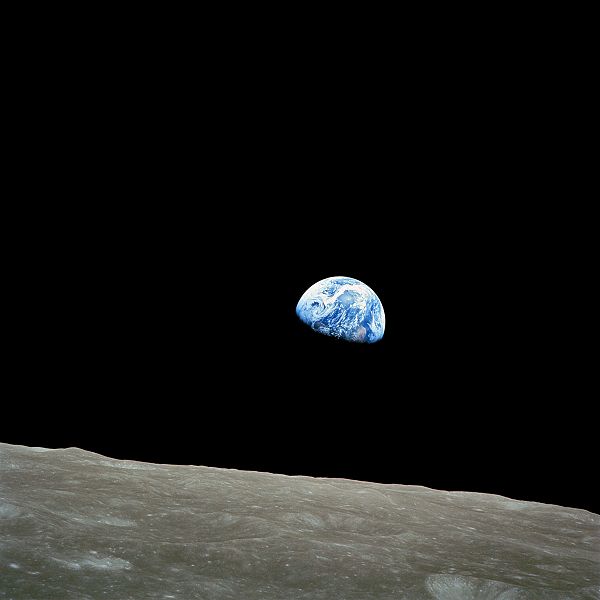
One of the questions thoughtful and mission-based publishers ask is why books on environmentalism don’t sell.  Since it’s Earth Day (by the way, Happy Earth Day!), I thought I’d ponder it here.  My own amateur sense, as a personal eco-warrior, is that younger people are very focused on fixing environmental issues.  In fact, it is often THE issue for them.  And honestly, reading books about our many, many failures to sustain our environment is downright depressing.  I’ve read several, and seldom do I put the book down without a profound sense of grief and hopelessness.  Many of us do what we can while watching others thoughtlessly carrying on as if our modern lifestyle is normal.  I don’t advocate getting out of the matrix and hunting mammoths with spears, but I do wonder how to get through to those who don’t think about it.

I’ve been on the “Green Committee” at work for many years.  I sense the hopelessness there as well.  Our business has gone about as green as it can but unless you can convince other, less concerned industries to reduce their footprints too, we’re all still walking through the new carboniferous age.  Little things matter.  Some of us may not be able to afford an electric car, but hybrids are somewhat reasonably priced (in as far as car prices are ever reasonable).  LED lightbulbs have dropped from over $10 a pop to two for a buck.  And why are we still using natural gas when electricity can be produced by wind?  My young next-door neighbor has been encouraging us to get solar panels.  We would, but we have to get the garage roof fixed first.  And so it goes.

Caring for the environment is a big job.  These days, however, we also have to keep an eye on politicians who get elected to serve only themselves.  And Supreme Court justices who do things that would get many of us fired for bribery.  Here’s the thing: justice doesn’t work unless it applies to everyone.  We share this planet.  It’s difficult to build forward momentum to save our home when corruption is so deeply entrenched among those who control budgets and who have so many unthinking followers.  Even so, we as individuals can do what we’re able.  We may not be able to afford to repair that garage roof yet to get solar panels installed—it really is in a prime location with uninterrupted southern exposure—but we can compost.  And be conscious of our energy use.  And even, if we’re brave enough, read some books on how to help make things better.  The earth, it seems, is something worth saving.

Image credit: NASA

Black Lagoon, er, Lake

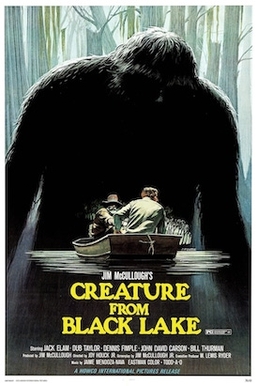
There’s value in watching bad movies.  For one thing, it’s a learning opportunity.  (For another, they’re more likely to be found for free on streaming services.)  The Creature from Black Lake drew me in with its title similar to The Creature from the Black Lagoon, and its very low price tag.  It kept me watching with its poor dialogue and obviously low budget.  One of the spate of “Bigfoot movies” that came out in the seventies, this one is the story of two (unintentionally) inept college students looking into a Louisiana swamp creature, based on the beast of Boggy Creek legend.  They end up in Oil City (I had to keep watching now), Louisiana where the local sheriff warns them off and where his daughter is, naturally, attracted to them.

I won’t spoil it for you (although the creature of this creature-feature is so clearly a man with a gorilla mask) but the movie does have a cast of some recognized B-list (or C-list) actors.   And it was a very early effort by Dean Cundey, a cinematographer who went on to work with horror auteur John Carpenter on Halloween and The Thing.  (And also The Fog, although that one’s lesser known, but covered in Holy Horror.)   You’ve got to start somewhere and the premise is good enough, being “based on a true story”—something the movie doesn’t claim for itself since the events, as portrayed, never happened.

Riffing off the earlier Legend of Boggy Creek—a cryptid docudrama from three years earlier (1973), it fictionalizes the Fouke monster incident.  The Fouke monster (which my autocorrect hates) was a creature reported around Fouke (no, I don’t mean Fluke), Arkansas, starting in the 1940s.  This earlier film went on to become a cult classic.  Black Lake suffers from poor direction and even worse writing.  College students, one obviously suffering from post-traumatic Vietnam issues, try to make out with girls they know are in high school only to be saved from criminal offense by a monster attack?  They wind up in jail anyway only to be released by a tough but gullible sheriff who simply trusts them to leave Oil City since he told them to.  I grew up near the earlier and, I’m tempted to say, original Oil City, and I know of no movies set in that town with all its drama and weirdness.  Even with its issues (Jack Elam is a delight to watch, however) this film is a bit of bad movie homework that’s hard to pass up when it’s free.


Funny about Irving

The successful writer, John Green, has been on a tuberculosis kick lately.  You see, writers swing that way.  As the writer of books few people read, I’ve had my own little Washington Irving obsession lately.  So it is that I read Martin Roth’s Comedy and America: The Lost World of Washington Irving.  Roth knew a lot about comedy and he framed Irving’s early work as burlesque, rather than the more usual categorization as satire.  In doing this, he groups Irving together with other writers in the genre such as Laurence Sterne (who sounds like a fascinating character) and François Rabelais, among others.  (Jonathan Swift and Oliver Goldsmith also make appearances.)  Irving is analyzed in comparison to these other writers and his comic style is considered as polite satire, political satire, and domestic humor, as well as burlesque.

Insightful while occasionally assuming quite a bit on the part of the reader’s background, Roth provides quite a bit of good chewing here.  Roth was, by reputation, an unorthodox thinker.  He sounds like the kind of professor you would’ve wanted to have had in the classroom.  A book trying to parse comedy is a good sign, I suppose.  I learned a lot from reading it, and was pleased to see that I had independently come to some of the same conclusions he had.  That signals to me, anyway, that I’m not too far off track.  The benefit for those interested Irving is that, while critical, Roth isn’t judgmental.  It has always seemed odd to me that the premier biography of Irving had been written by a scholar who really seemed to hate him.  Roth, on the other hand, likes a good laugh.

As a used book my copy had lots of pencil marks in it.  So many that I had to erase them so that I could spot my own.  When I worked in the theology library at Boston University one summer I was introduced to the electric pencil eraser.  This was a device for heavy-duty removing of the marks of thoughtless patrons.  Before working for the library I stared in wonder when I would see students (perhaps not the brightest) sitting in the library, underlining in books they’d pulled off the shelf.  I think I was always too well aware that library books were not my own.  Because such folks, I’m sure, the electric pencil eraser was invented.  None of this took away from my enjoyment of Roth’s book.  I learned quite a bit about Irving’s context and, as an added bonus, got to remember using an electric eraser.

I would like to have had an image of the book cover, but mine lacks the dust jacket and finding it without violating copyright was difficult. I tried to trace this image to its origin, but I found it on Pinterest and the link didn’t take me back to the original poster. If you see and own this and want me to erase it, just let me know.

Pondering Origins

I’m not a numbers guy.  I never had any interest in statistics, and I tremble when I see my accountant’s number pop up on my phone at tax time.  But exponential sequences have an inherent fascination.  Think about your ancestry (I recently wrote about genealogy and that got me pondering).  You have two parents.  And they each had two parents.  By the time you get back to ten generations (eight greats before grandparents) you have 1,024 ancestors of roughly the same generation.  That’s a lot of people just to make one individual.  Think of all the circumstances that might’ve led to any two of them having been kept apart—then where would you be?  Of course the numbers double each generation which is where my reasoning capacity shuts down.

At some point, doesn’t it seem, that there wouldn’t be enough people available to make you?  I know that’s not true—you’re reading this and that proves this false—but it does make each individual life a thing of wonder.  Or even at the level of your own parents.  If you have siblings you know how different even biologically similar people can be.  And there are many others who could’ve been conceived instead of you or me.  The chances are astronomical that we’re here at all.  I often wonder if such circumstances are why our minds seek religious answers.  People are meaning-seeking creatures.  And against such long odds, it seems that maybe we’re a miracle after all.  Naturally, a driving force behind it all suggests itself.

Photo credit: NASA

Science has been a real boon for the billions of us alive today.  There’s no doubt that dispassionate, rational thought can lead to amazing outcomes.  At the same time, the doubt creeps in that this is the only explanation.  It occurs to me when watching the birds in the spring.  How do they know their own species and with whom to mate?  Is all of this driven by that notorious fudge factor we call “instinct”?  I have no answer to what the source of that will to keep life going is.  Biology tends to be among the slipperiest of sciences.  Life is difficult to define when we don’t even know everything that’s out there in our infinite but expanding universe.  The numbers are just too massive.  All I know is that by the time you get back to twenty generations (eighteen greats) it took over a million people to make just one of us.  And that’s by the numbers.


Human Humanities

The New Yorker, if it didn’t take so much time to read, would be on my magazine list.  I’m primarily a book man, and there’s so little time these days that magazines seem mere ephemera.  However, someone at work pointed me to a story on the end of the English major that was really about the end of the humanities.  It was most disturbing.  Making the case that college students really prefer the humanities, they nevertheless go to STEM because that, and business, are the only place to find jobs.  In a world where work increasingly demands more hours a day, these young people take employment that kills their souls in order to keep their bodies alive.  The “starving artist” is no joke.  Society has deemed humanity unimportant.

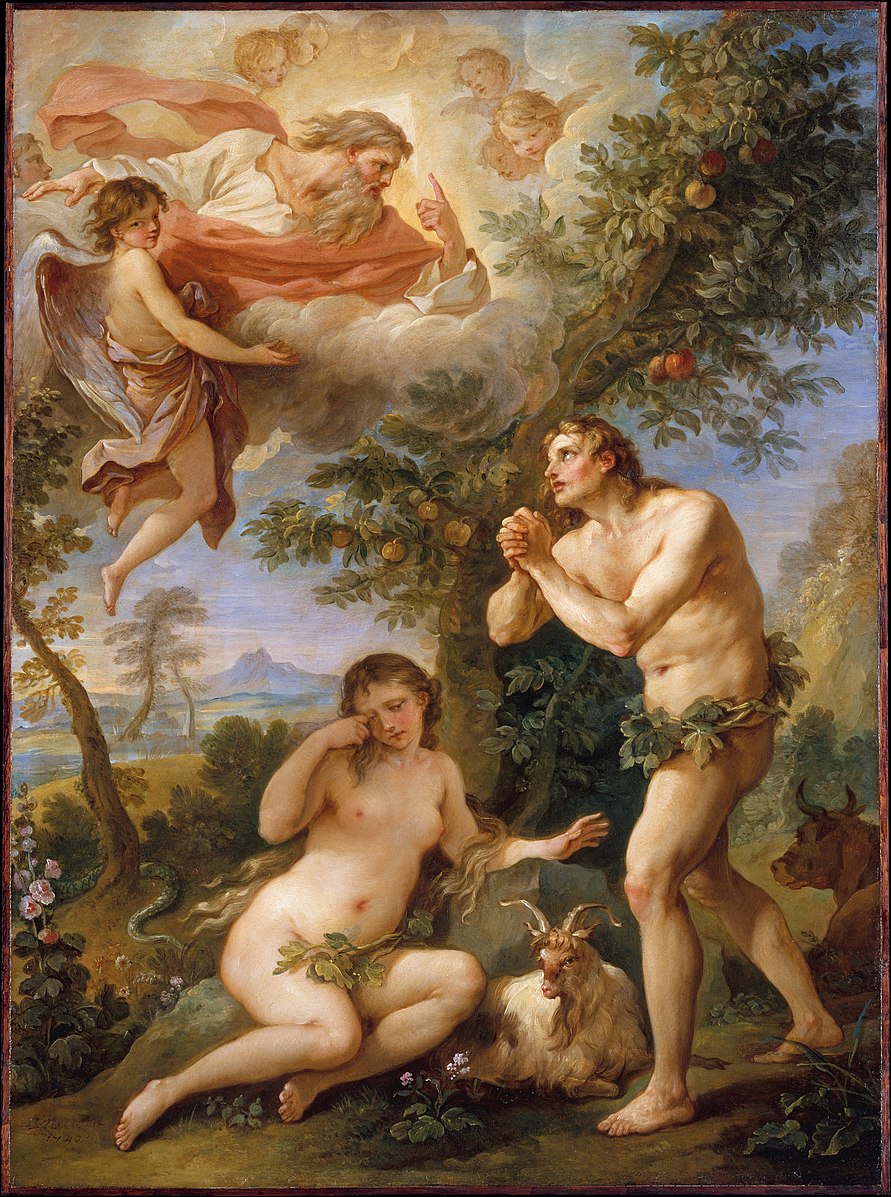
The Rebuke of Adam and Eve, by Charles-Joseph Natoire, Creative Commons CC0 1.0 Universal Public Domain Dedication, via Wikimedia Commons

What happens when we cease to be human?  Artificial intelligence and robots and capitalism.  It’s a cold world where only numbers matter.  I’m not a great one for metrics and “evidence-based” humanities.  No, Romanticism is not dead.  The world where imagination reigns and Adam Smith is not even a shiny shekel in his great-grandfather’s blue eye.  How do I know it was blue?  Imagination.  You see, I’ve written a few novels (unsuccessfully), and I know a few (very few) colleagues who do as well.  Mainly I know that because their novels find publishing houses that know how to get them in the public eye.  I jealously guard those friendships because I’m a Romantic.  I tilt the electronic windmills telling me all of life is statistics and figures.  No, those slowly spinning blades are liable to chop your head off, if you let them.

My friends often express surprise when I reveal that I’m a Romantic.  Books should be evidence enough.  Ideally, work would allow us to bring our gifts to the table—or more accurately, screen.  It would find a way of saying, “be human here because we really mean what we say about diversity and inclusion.”  Instead, evaluations are metrics-based.  The numbers.  The bottom line.  At moments such as these, I throw off my hat and let my thoughts run free.  I daydream about the books I’ve read and those I’ve written.  I imagine life as a place to truly be human.  The humanities are all about understanding what it means to be authentically human.  And let me tell you something—it’s not all about numbers.  In fact, if I had it all to do over again, I think I would be an English major.  With no regrets.


Female Future

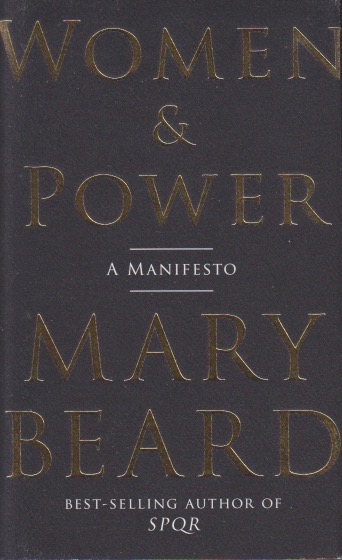
One thing we repeatedly heard during the early days of the pandemic is that people couldn’t wait for things to get back to business as usual (BAU, in corporate speak).  I told others then that we shouldn’t strive for “as usual,” but we should try for something better.  I got that same sense from Mary Beard’s Women and Power: A Manifesto.  Beard is a classicist.  She’s studied ancient Rome and earned her reputation in that area.  Women and Power is the publication of two public lectures on, broadly speaking, why women aren’t ever truly allowed to share power.  The first essay focuses on how women’s voices are routinely silenced, as they have been since classical times.  The second essay, more akin to what I was hoping about the rebuilding of society, is that we need to redefine power and how it is ascribed.

You see, as a society we have the opportunity—mandate even—to decide what’s truly important.  Electing angry old men like Trump only served to set back our progress by refusing to address the problem.  The idea, and this has been true throughout history, is that what men value is more important than what women value.  And we can’t assume all women value the same thing.  In other words, some serious thinking has to be done.  It doesn’t surprise me that some of this thinking has been undertaken by a classicist.  Those of us interested in how ideas began can have insights into why things are the way they are.  That won’t hand us the answer to the dilemma—as Beard says, hard thinking must be done—but it does show that we can begin to understand.  Beginning to understand is the first step to coming up with a solution.

Biology, and the history of biology, has something to do with the dilemma.  Childcare is a necessity and although we might be able to train brains, it does seem that women tend to have more empathy than men.  History tells us that prior to the invention of baby bottles women had to be available to unweaned children to meet their nutritional needs.  Meanwhile, men had to provide  the social structure that made the agricultural revolution possible.  As far as we can tell, hunter-gatherers (and there’s no going back to that) were more egalitarian.  Beard is right—we haven’t hit an impenetrable wall.  There are ways forward.  Equitable ways.  Different ways.  We need to stop longing for “business as usual” and imagine a better future.


What Kind of Night?

“It was a dark and stormy night.”  If you’re like me, this evokes images of Snoopy sitting atop his doghouse, clacking away at his typewriter, trying to write the great American novel.  Many of us have tried a hand at that.  And as a writer, finding that allusive incipit, or opening line, is a major preoccupation.  For many years I believed the sentence “It was a dark and stormy night” originated with Edward Bulwer-Lytton since his 1830 novel Paul Clifford begins with this sentence.  Now considered melodramatic prose of the purplest kind, it may have been serious back then.  1830 was early in the days of novel writing.  Then I found the phrase from an even earlier work, Washington Irving’s A History of New York, from 1809.  Had Bulwer-Lytton read it?  Irving was quite popular in the pre-Dickens days.

This raises a question encapsulated in the other old phrase, “You can lead a horse to water but you can’t make it drink.”  Unless someone tells us explicitly that they read something—journals and footnotes often convey this information—it’s difficult to know.  There’s a whole genre of history books these days that examine the libraries of deceased historical individuals to determine what they read.  I suppose in the days before mass book sales there was a better chance that owning a book meant you’d read it, but not necessarily.  In college I worked as the secretary for the chaplain, Bruce Thielemann.  When he read a book he wrote a category of note in the margin and paid a secretary to go through and write the citation under a heading in a set of looseleaf binders he kept, with several pages dedicated to each category.  For sermon preparation he’d look up his theme and immediately see what he’d read.  I knew he’d read those books.

So, was Washington Irving the origin of the phrase, “It was a dark and stormy night”?  Many websites, many of them authoritatively, insist that the credit goes to Bulwer-Lytton.  I located an edition of A History of New York that replicates, word for word, the 1809 edition.  You see, Irving, like many writers, revised after publication and not all (or even most) modern editions tell you which version they use.  Irving indeed used the phrase in 1809, I confirmed.  The internet is wrongly giving credit to Edward Bulwer-Lytton for a phrase first printed by Washington Irving.  The two were contemporaries and ironically, Wikipedia points out that Irving first used “almighty dollar,” another phrased credited to Bulwer-Lytton.  It doesn’t however, point out that “it was a dark and stormy night” also belongs to Irving.  Something to ponder on a dark and stormy night.


Finally, Therapy

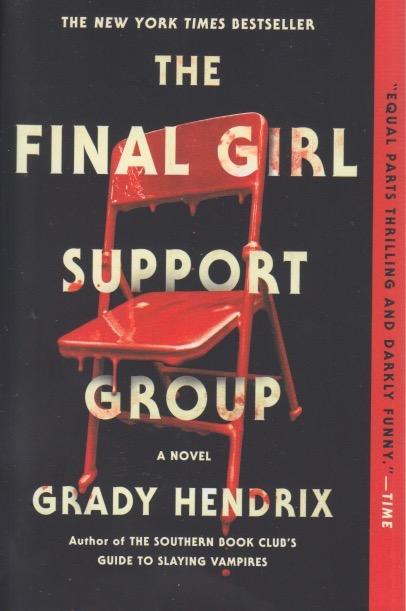
Like religion and horror, humor and horror can also get along well.  As an aesthetic, it’s not for everyone, but Grady Hendrix does it well.  It took some convincing for me to read The Final Girl Support Group.  I’d read one of Hendrix’s nonfiction books and was impressed, and that led me to his fiction.  It also demonstrates how an academic might actually be able to make a difference.  As you might guess, the novel features “final girls” from several fictional events, made into fictional movies, who get together for therapy.  It’s a funny idea and yet it’s not.  Hendrix clearly wants women to be treated fairly, but he’s also clearly a horror fan.  It’s sometimes a tricky balance to hold.  He does it pretty well in this novel.

The idea of a “final girl” comes from Carol Clover’s crossover academic book, Men, Women and Chain Saws.  This is the book that introduced the concept to the world.  As with most analytic concepts it’s only an approximation.  Clover noted the way that, in slasher films, the only survivor tends to be the virginal girl who doesn’t join in substance abuse.  Since the slasher genre is usually first credited to John Carpenter’s Halloween (Hendrix suggests in his acknowledgments that it’s Psycho), I’ve always wondered because Laurie Strode does take a toke in the car and we’re not really told much about her dating life.  I’m not a big fan of sequels, so maybe I’m missing something.  In any case, slashers have never been my favorites, and as sexist as it might sound, Poe’s observation about threats to beautiful women is something the “final girl” relies heavily upon.

The novel itself is pretty gripping.  I’m not going to put any spoilers here.  I was reluctant to read it but I’m glad that I did.  It’s classed as “horror” because of the theme but there’s definitely a lot of literary finesse as well.  It’s the kind of thing that doesn’t really seem to be deep, but upon reflection, it has more to say than you think it does.  The resolution of the novel is messy.  I suppose that’s one thing that makes it literary.  The characterization is amazing well done.  I had trouble keeping track of the back stories of all the final girls but that’s part of the fun.  While there are definitely horror moments, Hendrix never lets you forget that you are supposed to be laughing too.  It’s a fine balance and he manages to hold it together throughout while giving agency to final girls.


Eternal Return

Amazon gets a lot of bad press.  For me, anyone that sends me books gets a warm fuzzy association.  Besides, returns are a snap.  Amazon has sent me the wrong item a time or two.  You simply let them know and they’ll refund you.  No fuss, no muss.  Twice recently, in my effort to support both the planet and used book vendors, I have received the wrong item.  Here’s where I praise Amazon.  The most recent vendor (reputable and an old player in the used book market) required a multi-step effort to even make the claim of a wrong item, and then wouldn’t pay for the return.  Let me get this right: it is your mistake and I have to pay for it?  Just because someone who apparently can’t read the title put the wrong book in the bag and it took two weeks for me to receive it?  Is there any wonder people buy from Amazon?

To err is human.  I get that, believe me I do.  But if you make a mistake you fess up, you don’t charge the customer for your error.  Have they not realized that looking at the price tag after a trip to the grocery store is more effective than watching a horror movie?  I can’t afford to pay for their mistakes.  Then my existentialist friends come to the rescue.  Yes, they remind me, this is all absurd.  A world based on inheritance and privilege, where an active and alert mind sees that when an error is made, the one who did not make it takes responsibility.  I’m no fan of capitalism, but Amazon doesn’t make me pay for what I didn’t order.  I guess size matters after all.

Perhaps there should be caveats plastered across the internet: buy at your own risk.  If we make a mistake with your order, you will be responsible for it.  It just kills me to complain about book vendors.  Probably I care for books a little too much.  I try to buy responsibly, otherwise there’d be no house to, well, house the books.  I just don’t like feeling cheated when purchasing a used book.  It’s out of character for book vendors.  They’re the modern saints, those who are looking out for the good of the world.  Eventually the seller relented, but not happily.  My associations of Amazon will always go back to when I first discovered that there was a website on which you could find just about any book and have it delivered, and often cheaply.  I miss those days and their optimism.  I need that warm, fuzzy feeling again.  I need to buy a book.


New York History

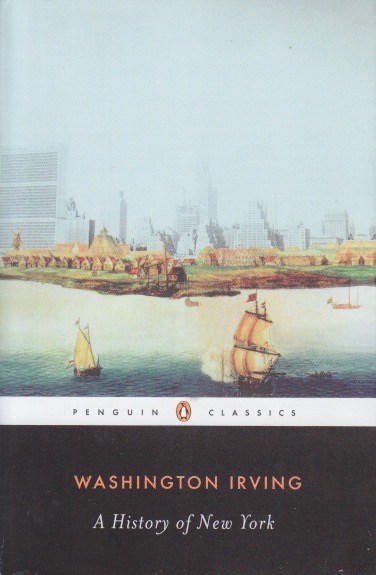
Regular readers know I’ve been on a Washington Irving kick.  My wife kindly agreed to read his History of New York to me as I was doing the dishes (we’ve read over 150 books this way, over the years).  This was the book that brought the then 26-year-old Irving to fame.  A satire of the early European history of Manhattan, it contains many of the Irving quirks that would reappear in some of his later humorous writing.  Today Irving isn’t noted as a great stylist, and his work isn’t considered particularly original.  And the reviews on Goodreads reveal that some people read this book thinking it’s an actual history.  Well, I guess it is, but it’s an unreliable one.  Satire rolls that way.

The book was attributed to Diedrich Knickerbocker, as part of a hoax.  Irving ran ads in the papers for a landlord seeking Knickerbocker for skipping out on paying his rent.  The book begins with the landlord explaining that Knickerbocker had left in arrears, and so he is publishing this manuscript he found in his rooms in order to help pay the bill.  In what would become the fashion of the time, the book was lengthy, a set of seven “books,” beginning with the creation of the world and lasting through the governorship of Peter Stuyvesant, the last Dutch administrator of the New Netherlands.  Interestingly, nobody before Irving really took any interest or wrote about the Dutch period of the city.  Since then, of course, serious histories have been undertaken.

Irving was an early example of a writer who blurred fiction and history.  You can learn a lot by reading A History of New York, but you have to do a lot of fact-checking.  My wife had previously read a serious history of the Dutch in New York (Island at the Center of the World) to me, making me curious about Irving’s book.  It is humorous, but no doubt, the butt of some jokes gets lost with the passage of two centuries.  And satire, depending on how it’s done, may not age well.  Irving would go on to write what is still his best received book, The Sketch Book of Geoffrey Crayon, Gent., about ten years later.   And he would continue writing after that as well, but never quite recapturing the glow of the work of his youth.  For those of us who’ve worked in, and for those who’ve lived in, New York City, there’s quite a lot to like here.  Even if you can’t get all the jokes.


Disputing Tradition

I respect tradition.  Normally.  Once in a while tradition should be disputed.  The other day I was reminded of the seventeenth-century aphorism, “The early bird gets the worm.”  As a lifelong struggler against literalism, I had to get over the bird and worm part, and was thinking early meant, well, early.  This, combined with even earlier saying “Early to bed and early to rise makes a man [sic] healthy, wealthy, and wise,” convinced me that early did reference waking.  And these saying require some revision.  I’m an early riser.  I don’t get many worms and although I seem to be mostly healthy, I’m certainly not wealthy, and many would question my wisdom.  So why do we encourage people to wake up early?  The fact is most people stay awake late.

I’ve noticed a few things about early rising.  One is that I can get a lot of creative work done with no interruptions.  My last three books were mostly written between three and five in the morning.  (The royalties, however, never even approach the cost of the materials required to write them, so strike the “wealthy” part of the equation.)  I’m ready for early meetings at work.  I can think of six impossible things before breakfast.  But.  (There’s always a but.)  Afternoons are my evening hours.  I lose my focus and dread late (i.e., after 3 p.m.) meetings.  As my family is beginning their fun part of the day, I’m heading to bed.  I can’t do evening meetings, clubs, or hobbies.

So why do I do it?  For one thing, I can’t not do it.  I awake early as a matter of biology.  Over the years it’s slipped back from about 5 a.m. to 3:00.  I remember being a child at sleepovers at a friend’s house and waking early, watching the sun stream through the blinds, wondering when somebody else might wake up to play.  In college it was an advantage to get to the showers first.  As I professor I did my research before the duties of the day took over, preventing any real progress.  None of this, however, has made me wealthy.  I do have to admit that I could probably get worms, if that were something I desired.  I see animals out and about when I’m jogging during morning twilight.  There are likely worms about too.  I’m usually awake before the birds.  And this has made me question traditional wisdom.  Of course, I don’t claim to be wise, either.


Dinosaur Planet

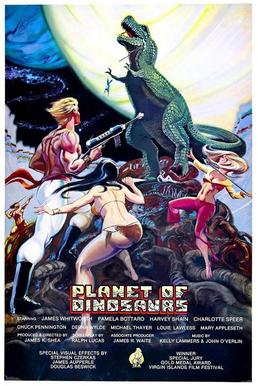
Time, as the crew of the Odyssey finds out, can cast things in a different light.  Admittedly I watched Planet of the Dinosaurs because it was free on Amazon Prime and I was having trouble keeping awake on a weekend afternoon.  It’s the kind of bad movie I’d’ve loved as a kid, and if I’m honest, I still do.  Although it was released in 1977 (it’s hard to believe Star Wars was the same year) the award-winning (!) stop-motion dinosaurs are so unbelievable that it hardly seems possible that the film’s budget was almost all spent on them.  It certainly didn’t go to pay a writer because the dialogue is about the cheesiest I recall ever hearing.  Jurassic Park was still a decade and a half away, after which no stop-motion dinosaur would ever be credible again.

Still, bad movies aren’t all bad.  In fact, there’s an aesthetic to them.  For me the real draw, as with an Ed Wood movie, is that these directors were struggling against an inadequate budget.  This isn’t in the Spielberg league.  And you can only afford so much.  The idea is akin to that of Planet of the Apes—which benefitted not only by a better budget but by a script by Rod Serling.  A planet similar to earth but caught in a different time.  And it’s a chance to explore what it would’ve meant for people and dinosaurs to coexist, which, despite some ark hawkers, never happened.  If it had we probably wouldn’t be here to make bad movies about it.

Our set of nine castaways manage to survive with only four eaten by dinosaurs.  And when these stop-motion reptiles aren’t on screen, the people are filmed walking, inanely talking, or thinking that a stockade of sticks and twine will keep out nine metric tons of Tyrannosaurus Rex.  There’s an attempt at social commentary when the vice-president of the company funding the mission realizes that he’s not the boss among castaways.  Where there’s no money, the balance of power shifts.  Of course, he gets impaled by a Centrosaurus.  At the end, the five survivors have settled down, built a house, and started having children.  They look pretty good for having survived on dinosaur meat and berries.  It helps that the corporate VP isn’t around.  I watch movies like this because, like James Shea, I’m on a tight budget.  And Amazon Prime often dictates what I watch when I’m having trouble keeping my eyes open. 


Literary Detective

A writer’s life can take many forms.  Alexandre Dumas, for example, (the father, just to be clear) had tremendous success with his novels The Three Musketeers and The Count of Monte Cristo.  Due to the politics in his lifetime, he was exiled and repatriated.  Of the upper classes, he had many affairs.  And finally, in 2002, was reinterred in the Panthéon in Paris with the president of the nation renouncing past racism.  You see, his father was a creole born in Haiti and apparently for that reason he’d been denied burial with France’s other luminaries.  I’ve been reading early European and American novels lately.   I just finished Dumas’ lesser known The Woman with a Velvet Necklace, which was originally published together with some other “stories” (this one alone is over 200 pages) in French, of course.

The story itself seems to have been based on a short ghost story by Washington Irving titled “The Adventure of the German Student.”  In brief, a student meets his dream girl in Paris during the revolution.  She wears a cloth necklace and when it’s removed her head falls off.  Tracing the origin of Dumas’ version on the internet took considerable detective work.  It involved learning the book in which it was originally published (long out of print), translating the title into French, and reading the French article in French Wikipedia since there’s no English article on it.  The story was originally published in 1850, some quarter-century after Irving’s tale, and logic compels one to conclude that either Dumas knew Irving or that Irving was using an old French ghost story that was in circulation at the time.

Since few internet sources exist on the novel, its origins remain somewhat of a mystery.  The French Wikipedia article doesn’t address them.  We know that Washington Irving was a writer appreciated both in America and Europe, having spent many of his years living in the latter.  We also know that Irving borrowed the basis of the story from materials he picked up while traveling.  There’s more literary detective work to be done here, but we live in an age when literary scholarship is devalued (it doesn’t bring in money) and until someone who’s an academic gets on this trail, Dumas’ use of Irving will always remain speculative.  The novel itself does reveal, after the first forty or so pages, why Dumas was a popular writer.  He has a way of drawing the reader in.  The story itself is odd and sad but has a message.  And, as it turns out, a mystery as well.


Miracles

“Expect a miracle,” Oral Roberts used to say, “and a miracle is yours today.”  The famed Evangelical probably didn’t have Catholic-variety miracles in mind, although a story on the Catholic News Agency does.  Miracles come in big and small varieties.  In case you’re feeling encrusted in materialism, there are plenty of things science hasn’t yet explained.  It helps to have a little wonder in your quotidian routine.  So what was this miracle?  It took place in Hartford, Connecticut.  Specifically, at St. Thomas in Thomaston.  In case you’re not Catholic, or high church Episcopalian, a brief explanation: after the consecration of the host (communion bread), ordained clergy pass communion wafers to those who come forward to receive them.  Believing in transubstantiation, this is done with a great deal of attention to detail.

Photo by Josh Applegate on Unsplash

The vessel that holds communion wafers is called a ciborium.  (My years at Nashotah House were good training for this.)   Since consecrated wafers should never be defiled, only a certain amount are consecrated at a time—enough to cover those present for the Eucharist, usually.  Any extras are locked in a tabernacle for future use.  In this miracle, a minister handing out the wafers noticed he was running out.  Believe me, this is something to which clergy pay close attention.  Then suddenly there were more wafers in the ciborium.  A multiplication of loaves, but in much smaller and pre-ordered form.  One child called them, I once heard, “tiny little quesadillas.”  Perhaps a small miracle, but we take what we can get.

A miracle is defined as “an extraordinary and welcome event that is not explicable by natural or scientific laws and is therefore attributed to a divine agency.”  Since we can’t observe all phenomena all the time, they do occur now and again.  What happened in Connecticut?  I don’t know.  No scientist was observing, and no vestment cams were in use.  We have the word of a clergyman with no cause to lie.  Maybe something unusual did happen.  Yet I can hear the evangelicals protesting that if God were to perform a miracle it would have something to do with Donald Trump rather than some popish fetish.  That’s the problem once religions get involved around miracles.  Too much is left to interpretation.  Sometimes I think of the miracle of the sun at Fatima, Portugal.  Or of people miraculously healed from late-stage fatal diseases without medical intervention.  These things happen and when people are pressed for an explanation they tend to turn to the divine.  Perhaps, however, things just aren’t what they appear to be.