Double Feature

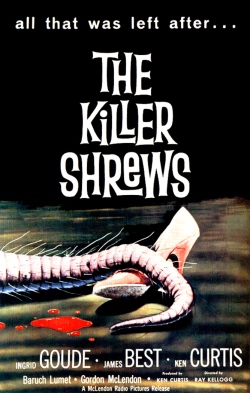
Creature features were a regular part of my youth, and, I suspect, where my appreciation of horror films began.  Nobody was really afraid of Godzilla or other monsters that were clearly people in rubber suits.  The use of forced perspective to make regular-sized animals into giants was obvious even to a child, but that didn’t make such movies any less fun to watch.  The Giant Gila Monster and The Killer Shrews both involve gigantic versions of rather small animals and both of them were produced outside of the studio system by Gordon McLendon, the owner of a chain of drive-in theaters.  Looking for B-movies for double features, he decided to make a couple of his own.  These two didn’t cost that much, but the special effects artist, Ray Kellogg, agreed to do them if he could be the director.  Together they make quite a double-feature of their own.
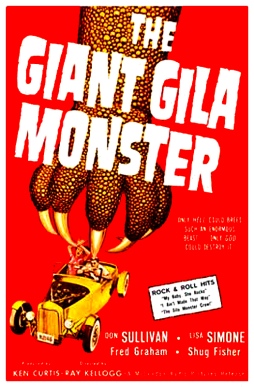
The Giant Gila Monster is never explained beyond the effectively shot beginning stating the who knows how big some things grow in the unexplored west.  Not even using a real gila monster, the lizard (unlike Komodo dragons, which one expects, were too expensive and untamable) isn’t aggressive and seems, from my perspective, to be just barely putting up with the fake trees and models it has to crawl over and around.  And everyone, apart from Mr. Wheeler, is nice.  The local Texas teens want to drag race but Chase Winstead, the gold-hearted mechanic, keeps them in line.  It’s a perfect world, in a Republican kind of vision, except for that darned giant lizard.  Winstead even figures out a way of getting rid of it so the authorities don’t have to.

The Killer Shrews, in reality puppets and dogs dressed up as shrews, is more adult-themed.  Four scientists on an island—contradicting the voiceover at the opening—have bred giant shrews.  The supply-boat captain and his Black mate are trapped on the island by a hurricane, where the mate predictably gets eaten by the escaped shrews.  McLendon himself appears as an over-the-top nerdy scientist while the producer, Ken Curtis, appears as another, more action-oriented man of science.  In a move a little unexpected for the fifties, Dr. Craigis’ bombshell blonde daughter is also a scientist.  But she’d be willing to be a sea-captain’s housewife if only she could get away from these awful shrews!  There’s a bit more tension in this one as one of the scientists is already engaged to Miss Craigis, but he’s a drunk and she wants out.  So might some audience members, but both films found international distribution and made money.  Now widely available for free, they are a slice of childhood served up in giant proportions.

First Choice

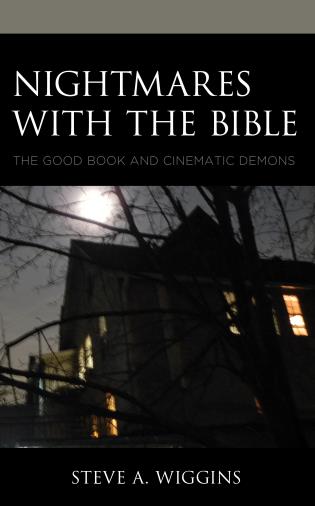
One of the first things I do when I finish a book, unless I know about the author already, is ecosia (google) her or him.  I want to know who it is that wrote this, and the internet’s right there!  So it came as a surprise to see my first (two-star) review for Nightmares with the Bible on Amazon, where the reviewer did no follow-up.  The reviewer is quite upset that I don’t take the Bible literally, but at least s/he bothered to leave a review.  A more positive rating might bring me up to three stars, but I’ve failed classes before.  I’m a big boy, I can handle it.  In any case, if you ecosia me you’ll quickly come upon this humble website that’ll tell you what you need to know.  No, I am no longer a Fundamentalist.  And the book was about demons in movies.  (I was actually searching for reviews of the series.)

I scrolled down.  The named reviews solicited for the book I knew, so I was surprised, and delighted, that further down the page I had a Choice review.  Even a disgruntled evangelical couldn’t bring me down after that!  In case you’re not a librarian, or an academic publisher, Choice is THE periodical librarians use for deciding on which books to buy.  It is very difficult to get a review in it—I work at a prestige publisher and seldom see our books in there.  If you’re a trade author that’s not so important, but if the only sales, or majority of sales, are for libraries, to get a “recommended” status is a big deal.  That’s worth celebrating.

If you’re wondering, authors do not get notified of reviews.  Some editors will let them know (my editor at McFarland hasn’t been in touch for years).  The journals are too busy doing what journals do to send every author a copy of their review.  So I swung by Amazon’s Holy Horror page.  I’ve got four ratings there now, mostly on the lower end of the scale.  If you’ve read it and liked it (not something I assume, of course) a nice review would go a long way.  Disgruntled evangelicals (aren’t they all, these days?) may make the books look bad, but colleagues who’ve read them seem to think differently.  I hold to the publishing adage that there’s no such thing as a bad review, but good reviews feel so pleasant.  I’ve only written one negative book review in my life, and that was because I felt any other would be utterly dishonest in that particular case.  It’s a choice I make because of the Bible: “For with what judgment ye judge, ye shall be judged: and with what measure ye mete, it shall be measured to you again.”


Religious Monsters

It began with monsters.  A religious monster-boomer, I couldn’t get enough of these scary creatures as a child.  For some reason they made me feel happy, secure.  With the real monster of parental alcoholism lurking outside the door this is perhaps understandable.  Growing up I soon learned that these were childish things—religion was adult.  And very serious.  Always trying to be a good boy, I followed the trajectory to seminary and then further study.  Monsters had faded.  I still liked them, but seldom encountered them and acted disinterested if I did.  Fortunately I came out of it.  Probably it was being ousted from academia that awakened what had once been my reality.  That, and I’d learned that some academics—mostly in religion departments—were now studying monsters.  Monster may I?

Maybe a decade ago, I’d read, I thought, just about every academic book on monsters.  Then the slight shift of focus from monsters to horror films started.  You see, movies are often where we learn of monsters.  There weren’t too many academic books on the topic, and the internet sites I found often lacked depth.  (Although a shout-out is due to Horror Lex here, if you’re not visiting, you should be. And of course, Horror Homeroom.)  Editors, you have to understand, are for some reason discouraged from writing books.  I’d been noodling away on the ideas behind Holy Horror for years.  Suddenly it occurred to me—I could write a book on monsters from an angle unused before.  (Later I discovered an academic had written an article on the topic, but seems to have dropped it after that.)  Writing about horror is really my sublimated love of monsters arising.  And they do rise.

Of course, those who know the religious Steve, still trying to be the good boy, are confused.  Our culture has poisoned the well for horror, I fear.  Not everyone likes slashers.  I personally don’t care for them.  A quiet haunting is more my style.  Still, what’s available on Hulu or Amazon Prime often dictates what I see.  If you’re going to write about horror movies you have to read about them.  Lately that’s driven me more toward film department studies.  That’s the thing about curiosity—it never rests.  There are always doors to open and rocks to turn over.  And books to read.  There’s no end to it, kind of like a good scary movie.  Like a monster you have to cross boundaries to learn anything.  Religion has its monsters, and denying that will only lead to complications.


Things that Appear

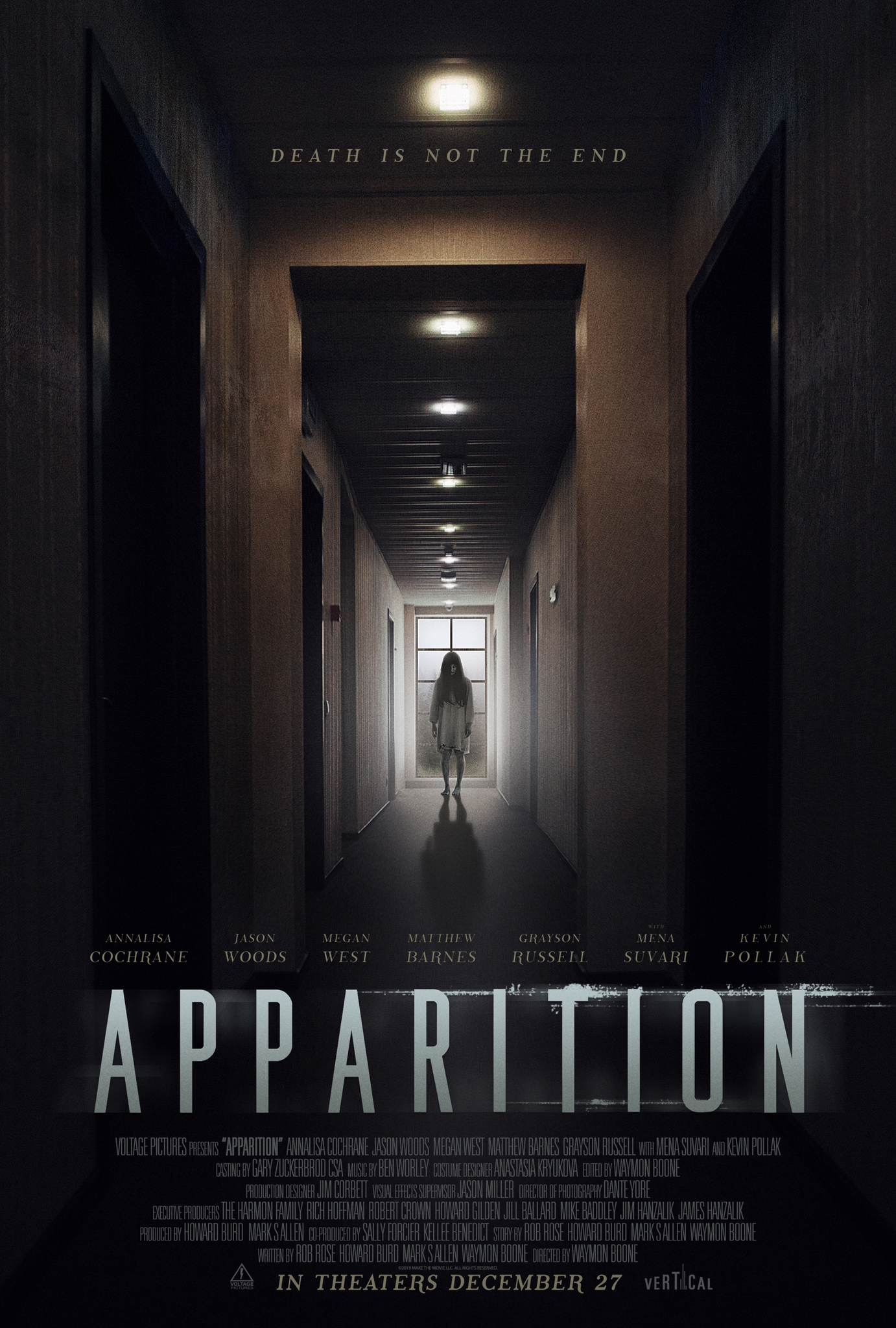
As a movie, Apparition fails on many levels.  One way that it passes is being free on Amazon Prime, which is how I found it.  The trick with Prime, of course, is that really good movies tend to be available for a limited time, keeping you on the website.  Time is money, after all.  I was drawn into Apparition from the “based on real events” tagline, even though I should know better.  It was a hot, sleepy weekend afternoon, and I’m not a good napper.  I’m not going to worry too much about spoilers here, so if you’re into penance, you might want to wait until after you’ve seen it.  Set at the real life Preston School of Industry—a boy’s correctional institution in California—the boys are tortured and sometimes murdered by the warden and guards.  This is one of the few real-life parts: a housekeeper at the facility was murdered in an unsolved crime at the site.

Fast-forward two decades.  The former warden (the place has been closed), is hosting the lavish rehearsal dinner for his son’s wedding.  The son is unloved (his father is a sociopath, after all), and doesn’t treat his fiancée very well.  Meanwhile a younger son is a nerd who’s developed an app called Apparition.  Through some unexplained technological wizardry, it allows the user to connect to the dead.  Another couple, son and daughter of two of the former prison guards, decide to try it and discover that it works.  When the bride gives it a try it leads the five young people to the Preston School.  There various ghost-hunter startles are used as the ghosts of the murdered boys take their revenge on the offspring of the warden and guards.  The bride discovers her father was a “good cop” and that’s why she wasn’t killed.  The younger son is actually the son of the murdered housekeeper, another of his father’s dark secrets.  The parents come and get what’s due to them.

What makes this unremarkable film (and very little comment has been given on it) worth discussing here is that during the opening credits a Bible is shown open to Exodus.  The verse called out is 20.5: “Thou shalt not bow down thyself to them, nor serve them: for I the Lord thy God am a jealous God, visiting the iniquity of the fathers upon the children unto the third and fourth generation of them that hate me.”  This isn’t referenced per se in the film, but the warden does suggest the school is a righteous place.  That’s a fairly brief reward for watching, but I hate to waste even a lazy weekend afternoon when it’s too hot to work outdoors.


Social Horror

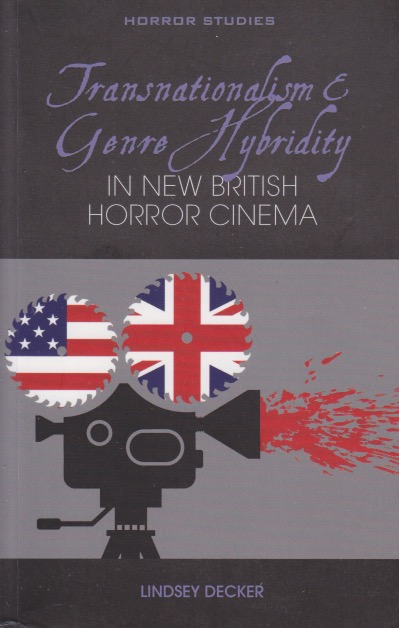
Some books get you thinking in ways you don’t expect.  That’s one of the pleasures of reading.  Lindsey Decker’s Transnationalism and Genre Hybridity in New British Horror Cinema may sound terribly specific—there are a lot of qualifiers in that title—but it actually has some very broad implications.  I was reading it specifically from the horror angle for a project I’m currently working on, but I was surprised at the social commentary I found while doing so.  One of Decker’s main ideas is to show that British horror is, well, transnational while maintaining its Britishness.  She focuses mainly on five films in the book, only two of which I’ve seen.  Very aware of the history of British cinema, she points out many characteristic features and situations that make British horror what it is.

The social commentary comes in when discussing “hoodie” horror films.  These are movies showing how the working class, particularly the youth, are dangerous and anti-society.  The more I read the more it occurred to me that imperialist, capitalist systems are built on the corpses of the poor.  Even good kids from bad situations have difficulty getting ahead in life and those above them on the “social ladder” more or less despise them and make policies to keep them in poverty.  This leads to anger and resentment, and often, in reality, this spills over into violence.  It all comes down to those who benefit from the system refusing to make it more equitable.  When the inevitable happens—those pressured without sufficient means boil over—they are blamed for their own circumstances.

Having grown up in a working class system and having struggled all my life to somehow maintain a comfortable existence for my family, I know the kinds of obstacles faced.  In my particular case, retirement is not a likely outcome.  I’ve worked, except for (and often even) when I was in higher education, since fourteen.  I’ve seen others with connections, educated parents or influential friends, get ahead.  I’ve also watched while many of us get shunted aside because, well, who are you?  Some people wonder why I watch horror.  There are many reasons for it, and at times I think maybe I’ve seen enough.  But then I look around at the corpse-strewn foundations of our current system and I see how reality plays into that fear.  Decker, I’m pretty sure, was meaning for her words to apply to mainly the fiction of horror, but there was a different kind of hybridity there as well, at least for me.


The Truth, for Free

The Book of Common Prayer, reaching back to my Anglican days, is and always has been in the public domain.  Although the poetic language and culturally relevant phrases could by charged for use, they’re not.  The idea seems right-headed to me.  Although the Church of England, like many other religious bodies, has its own specific theology and approach to things, which it believes is right, as opposed to all other belief systems, it shows its conviction in making its sacred text free.  Copyright exists to protect intellectual property.  If an individual or an institution, or a company, creates something, copyright assures them that nobody else can monetize it without the creator’s permission, and often such permission involves a royalty.  The C of E has foregone that.  Print away!

I tarried many years among the Episcopalians before it became clear to me that I wasn’t exactly the kind of saint they were looking for.  I’ve had to move on, but I very deeply appreciate the integrity of an institution that says, “I made this, but you can have it.  I really believe in it.”  If you’ve decided to print and sell religious books, however, beware the Bible.  Most of the common translations in circulation (apart from the good old King James) are covered by copyright.  Unlike the Church of England, the bodies that sponsor Bible translations expect to be paid for the use of said translation.  This is, in part, a business decision.  They have valuable property—for many the keys of salvation itself—and if you want it you should be willing to pay for it.

This contrast has often struck me as very odd.  How capitalist religion has become!  In what do Bible translating bodies really believe?  Believe me, I know that any large publishing effort requires a lot of work.  Resources.  Still, those who do the translating generally have church or university jobs.  They’ve already got a steady stream of income, no?  And yet they will expect to be paid their billed hours for bringing the truth to the world.  I’m not a good investment thinker.  Money doesn’t really motivate me.  This is one of the reasons I have tried several times to find acceptance as a clergy person.  My values seem out of sync with the rest of the world.  I even bothered to learn the original languages in which the Bible was written, the better to read, mark, and inwardly digest them.  Still, I wonder if those who truly believe would not feel more authentic giving away all they have in order to attain the kingdom of Heaven.


Hollow

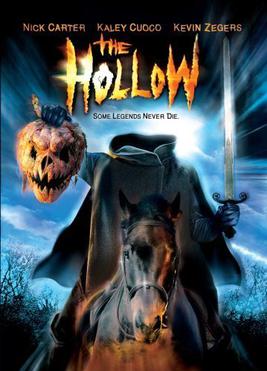
Now that we’re officially in September, it’s kosher to talk of Halloween horror (I’ve seen Christmas decorations in the stores already).  Well, around here we don’t really need an excuse, but since it’s handy I’ll use it.  Regular readers know I’ve been on a Sleepy Hollow kick lately, and I’d been wanting to see The Hollow.  Released as an ABC television movie, it had a fairly modest budget of only about $900,000 but managed to pull in stars with name recognition.  A pre-Penny Kaley Couco also appears as the new version of Katrina Van Tassel.  Let me back up a bit.  This is set in the present day.  Halloween eve.  Karen (not Katrina) is watching a Sleepy Hollow retelling being done by Ian Cranston, but her bored escort, Brody (Brom, anyone?), goes to the graveyard instead with some of his friends.  Two of them are killed.  Oh yes, there will be spoilers.

It turns out that Ian, who’s just moved to the area, is the last remaining descendant of Ichabod Crane.  You see, after Ichabod fled, and settled in New York City, he changed his name for fear that the Horseman would find him.  Now that a Crane is back in town, the Horseman rides again.  The teen-rivalry between Ian and Brody plays out at Karen takes a shine to the newcomer.  A descendant of Hans Van Ripper, who unaccountably talks like a pirate—lots of “ye”s thrown in—realizes that the Horseman’s after the young Cranston.  Since he’s the town drunk, though, nobody really believes anything he says.  On Halloween the town has a haunted hay ride in which each side of the love triangle is involved.  Brody plays the Horseman, but suddenly there are two of them—uh oh!

Cranston, who’s on the fencing team (to the everlasting shame of his football-coach father), is able to engage the fiend in swordplay and eventually destroys him.  He gets the girl and impresses his father all in one predictable way.  There are some laughs along the way, but for the most part this is played as teen drama.  Some racy scenes (and head-chopping) led to an R rating, but there’s little that’s surprising here.  For anyone who’s interested in the various ways Washington Irving’s “Legend of Sleepy Hollow” has been repackaged over the years, it’s a reasonable enough diversion.  When Halloween draws closer, however, it may well be time to try something a bit more appropriate for the harvest season.


The Time Is Nigh

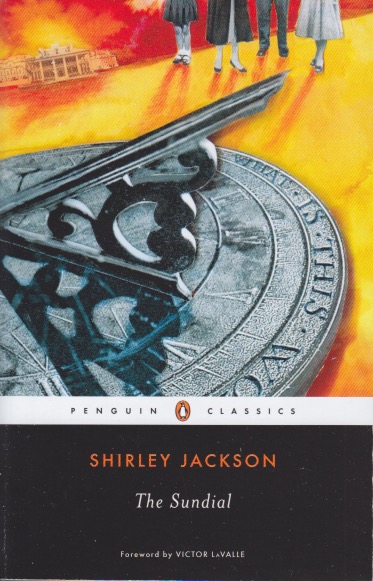
Although I have many authors I like to read, I haven’t fully explored the oeuvre of many.  I’m an eclectic reader and I’m also often limited by bookstores as to what I pick up.  I’ve read Shirley Jackson’s two biggest successes, The Haunting of Hill House and We Have Always Lived in the Castle, as well as her famous short story, “The Lottery.”  I knew she had written much else, but I couldn’t really tell you what.  When I go into a small, independent bookstore I hate to leave with nothing, and seeing Jackson’s The Sundial on the shelf, I decided to give it a try.  In some ways it was quite a departure from her usual style in that it is openly humorous.  Nevertheless, it’s clear that this is the same thinker who gave us the Castle.

Plotwise, the story is about anticipating the end of the world.  The Halloran family lives in a large mansion on the money made by the original patriarch,  but is beset by interpersonal issues.  A wealthy family, there are at least three contenders for control of the fortune.  When one of the family members has a premonition about the end of the world, they come to believe it and prepare for the event with personality quirks becoming more and more pronounced as they realize the only people that are going to be left to judge them will be themselves.  Various guests stop by and the matriarch decides on who might stay, and survive, and who must go.  A group of twelve, including two domestics, is finally settled upon.

As with all Jackson novels, there are layers here.  Things to think about.  One of the funny scenarios involves the goodhearted maid—perhaps the most innocent of all the survivors—revealing to a local villager what’s about to happen.  Not believing her, he refers her to a group of religious believers that have come to a similar conclusion.  This leads to a meeting between the matriarch of the Halloran family and the leaders of the religious group.  Not surprisingly, it turns out that their versions of the end of all things are different, and Mrs. Halloran turns them away since she can’t relinquish her secular beliefs about the matter.  As the time grows closer, the reader is drawn in by the conviction of those in the house.  Their isolation and reflections on life with no other people beyond themselves grows in intensity.  After putting the book down a sense of doom lingers.  And that, it seems, is what Shirley Jackson is very capable of doing, even if in a comedic gothic setting.


Not a Scholar

It’s insensitive.  And behind the times.  Google Scholar, I mean.  They send me emails telling me that people can’t read my research because I don’t have a verified email.  When I sign on and enter my email, it tells me to enter an institutional email instead.  I don’t have one.  So it sends an error message implying I’m not really a scholar after all.  Like hundreds, perhaps thousands, of academics, I had to settle for a job in the corporate sector.  Unlike some of my colleagues, I still research and write and try to maintain a web presence so I can be found.  Compared to non-academics those of us who’ve been through the system are few.  Even so, this can be an exclusive lot.

There are quite a few academic websites these days.  I’m not sure which is the biggest or best regarded—I’m not verified, after all.  I have an active account on Academia.edu, and recently, to gain access to an article I needed, I joined Research Gate (dot net).  Academia is after me every day to upgrade—they follow the “free cookie” model.  It’s free but if you really want to be discovered you can pay a modest fee for an upgrade.  I suspect Research Gate is the same.  And Google Scholar.  These websites aren’t out simply to promote you for your own benefit.  Of course, real scholars can be naive.  I’ve been in the business world long enough to be suspicious.  There’s no such thing as a free account.

What such websites don’t take into account is that academia is a harsh and punishing place.  Institutions are almost always run by businessmen these days and professors are deemed too expensive to maintain.  (Nobody’s talking about how university president salaries are too high, I notice, but they’re verified.)  To push knowledge forward we get rid of those who’ve dedicated their lives to study.  Those departments that bring in money—greed is not an academic field—thrive.  The academy was founded to further religious knowledge.  Soon study of the law was added, but law was considered something handed down from on high.  Some of us, and not a few, were naive and unverified enough to believe that fields that had been around for a millennia or so would be around for at least long enough to get us through to retirement.  Instead, learning has shifted online.  And to be part of that club, you must be verified.  At least according to Google Scholar.


Headlines

I see many headlines in a day.  One from Book Riot caught my attention with its linked story on BoingBoing.  This particular story is poignant and points to the ridiculous polarization politicians are stoking to play for our votes.  (I swear, politicians should be made into their own country so they can ruin their own lives without affecting the rest of us.)  This headline deals with the remarkable person George Dawson.  The son of a farmer, and descendant of slaves, Dawson made a living as a laborer in Texas.  His life was probably no more noteworthy than those of many other working-class individuals, but Dawson had a story to tell.  Illiterate, he learned to read at the age of 98—let that sink in.  At two years shy of a century he decided to improve his life.  He subsequently wrote a memoir, Life Is So Good.  So far, so good.

For reading, not banning!

His story was so inspirational that the Carroll Independent School District named a middle school for him.  He became a adult “poster child” for literacy.  Now, here’s where the headline comes in.  The very school that is named after him is trying to ban his book.  As part of the reactionary Republican response to race relations, politicians—local and national—are trying to rewrite American history so the white guy is always right.  Always good.  Always Christian.  Always moral.  It doesn’t matter how many times he cheats on his wife and his taxes, he is the paragon of virtue and respectability.  To suggest that he promoted slavery and treated Black people as property and beat and lynched and left them in poverty, well, that’s just too powerful of a pill to swallow.

Banned Book Week begins this month, on the 18th.  Every year I try to read a banned or challenged book in honor of the occasion.  Censorship has been on the playlist of fascists from the beginning.  Propaganda works.  All you need to do is use emotional appeal to short-circuit the rational faculties and then laugh all the way to the bank.  Slavery?  What’s slavery?  Do you mean to suggest that white men used slaves?  Poppycock.  We have always been as upright with the same moral rectitude as the Donald.  And the Ronald.  And all white men who stand under the big R.  Pay no attention to the Black man who learned to read at an age when most of us are dead.  Is that such a big deal?  What need do you have to read when Fox News can provide all the (mis)information you need?


Naming Conventions

Okay, I confess.  Every now and then I do it, but then, a lot of people do.  Perhaps because I’m trying to figure out who I really am, or perhaps because I’m looking for any reviews of my books, I search for myself online.  Various search engines (I prefer Ecosia) bring up different websites near the top, generally those with large numbers of hits.  I was surprised to find a website that gives away lots of personal information, even in the description so you don’t have to click on it.  One bit that caught my attention about myself was where it said “Steve also answers to Steve A. Miller.”  That’s incorrect.  My mother’s second husband was a Miller.  He never adopted us.  One thing that kids fear, however, is being teased and the name “Wiggins” came in for quite a bit of teasing in rural Pennsylvania.  We started using “Miller” since both our mother and stepfather used that name.

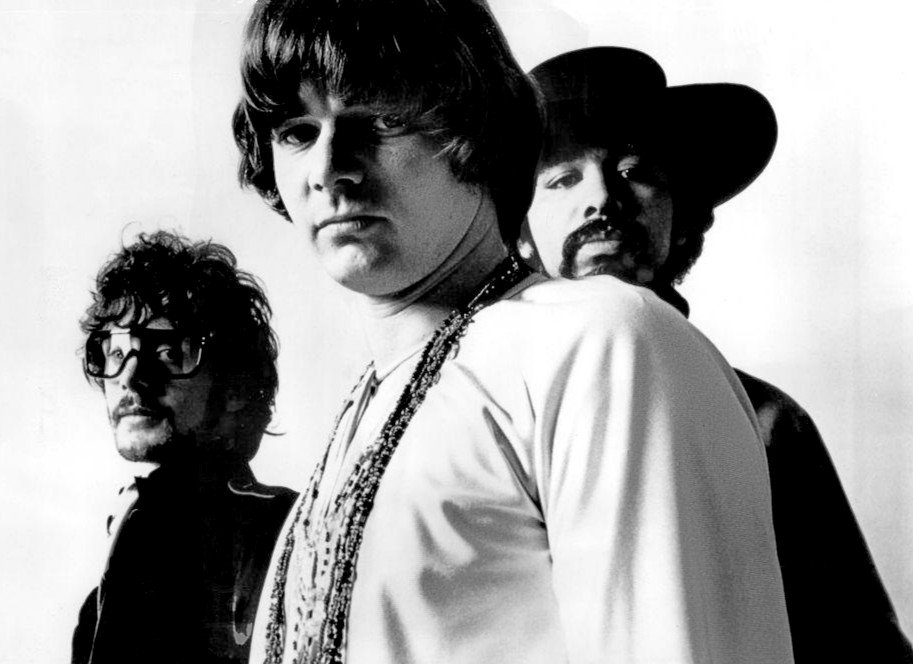
What is it with the singers? Photo credit: Capitol Records, public domain via Wikimedia Commons

Of course, I only later found out that “Steve Miller” was an up-and-coming pop artist at the time.  That singled me out for more teasing.  It didn’t help that I didn’t like Steve Miller’s musical style.  I still don’t.  I kept the name Miller up through seminary.  When I was preparing for ordination I was also rediscovering who I was.  A wise minister I knew told me that since there were two names out there for me, I’d need to nail down one to keep.  Although we’d only recently officially changed names to Miller, my brothers and I had to officially change them back to our birth names.  In a way perhaps inconceivable today, as I recall it, we simply introduced ourselves at our new schools (we had to move after the wedding) as “Miller.”  We registered for Social Security under that name, and nobody batted a lash.  Maybe we talked with an inexpensive lawyer at some point?

Only as an adult did I feel that my birth name was my heritage.  I suppose some of those who friend me on social media, who knew me in high school or college, wonder who “Steve Wiggins” is.  They only knew me as “Miller.”  Changing names is a pain.  I can understand, and support women who want to keep their “maiden” names.  It confuses our dowdy society even now, but one thing about marriage is that it generally involves two individuals.  But then I glanced down at the next entry.  This person, apart from living in a state where I’ve never resided, had even the same middle name as me.  Who’s the joker now?  I don’t answer to that name any more. And no, I didn’t find any reviews.


Pitfalls

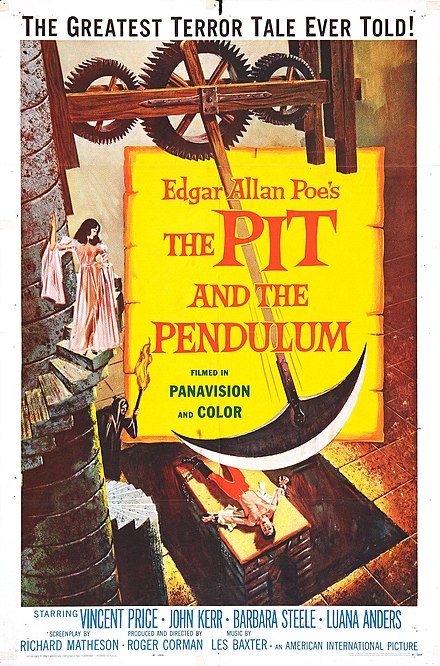
While watching Roger Corman’s The Pit and the Pendulum, it occurred to me that these movies have improved with age.  The series of American International Pictures’ Corman Poe productions do manage to capture a mood.  One of the reasons, I suppose, is that Vincent Price was an able, often underrated, stage performer.  No, these aren’t like modern movies.  They’re clearly fictional and the backdrops are pretty obviously fake and it always seems to be thunder-storming outside. They are going for a mood, and for those who watch films for the feelings they generate, this can work.  Although based—very loosely—on Edgar Allan Poe, The Pit and the Pendulum was screen-written by Richard Matheson, an able novelist in his own regard.

The Poe story hinges on the terror of the slowly descending pendulum and it has been used and reused in various guises over the years in everything from horror films to James Bond movies.  Corman’s Poe movies often set trends.  For example, in the backstory to Pit and the Pendulum, Nicholas’ (Price) father was a member of the Inquisition.  He kept a personal torture chamber in his basement—well, he lived in a castle, after all.  One of the victims of his father was Nicholas’ mother, an event the young Nicholas witnessed.  A very similar scenario, with even some similar shots, occurs in Tim Burton’s Sleepy Hollow.  I’m sure it must occur elsewhere as well, but in making a narrative of the story, this is my own unprofessional observation.

Yes, Corman is often over the top.  His films know they’re for entertainment purposes.  He’s not above camp and gimmicks.  The strange juxtaposition, in my own case, is that movies are meaningful.  Ninety-minutes to a couple of hours relieved from the constantly pressing demands of work and trying to maintain some sort of social life.  (And yard work.)  In ancient times, I suspect, myths served a similar purpose.  They still do.  Our myths have become more Technicolor over the years and have evolved from celluloid to pixels.  Their function has also evolved from escapism to a location of meaning.  On a recent weekend on my own I ended up watching five movies, feeling guilty between times for not painting the porch or doing that plastering that’s requiring attention in the attic.  The movies, however, give meaning to these other more mundane tasks such as work or housekeeping.  They’re not literally true, I know, but we need not disparage Roger Corman for stating the obvious.  Myths entertain as well as inform.


Dedication

Formulas are convenient, even if they don’t always work.  I’m thinking specifically of areas I know, such as writing.  And I compare this against the advice of those who do it for a living.  How do you know you’ve made it (and it has nothing to do with not being paid for it, although I suspect that’s in the back of everyone’s mind)?  One formula I’ve heard is the hundred-thousand-word rule.  Write a hundred-thousand words then throw them away.  After that you’re a writer.  I passed that particular benchmark decades ago, but it hasn’t really led to any income (so it comes to money again).  Then there’s Malcolm Gladwell’s more stringent hundred-thousand-hour rule.  To be an expert, you need to do the activity (say writing) for a hundred-thousand hours.  

Let’s try to break that down because big numbers can be scary.  Presuming it’s not your job—remember this point—those hours, if you can spend an hour a day on what you really love—translate to twenty-seven years.  You’ve got to add a decade or so for childhood, I suspect, when, in my case, you were simply doing stupid things and being amazed you’d survived them.  There’s a certain amount of maturity required.  So, let’s say you started writing when you were ten.  If you did it an hour a day without fail by the time you’re thirty-seven you should be an expert.  But are you?  What if circumstances dictate that you can’t dedicate a full hour a day?  One of the most influential teachers in my life said that it was a matter of constancy, not duration.  “Write every day,” was his advice, “even if it’s just for fifteen minutes.”  According to the Gladwell formula, that’d take over a century to become an expert.  But it’s more doable.

Life is busy.  Remember work?  It will end up eating up far more than forty hours every week.  And if you’ve decided you’d like to read once in a while—other writers suggest that the key to success in writing is reading—that too will cut into your time.  If you belong to any community organizations, because people like to see other people once in a while, or if you have a family, and if you like to eat and sleep, time soon gets fractured.  What all these formulas have in common is the idea of dedication.  If you want to be an expert, do what you love and do it as much as you can.  Yes, there will be obstacles.  And you might not be able to tell when you’ve arrived.  But at least you’ve enjoyed the time you spent getting there.


The Persistence of Streaming

I’ve had to start keeping a list.  If I don’t I’ll forget which movies I’ve streamed.  I suspect I’m not alone in this.  Electronic information is vapid and eminently forgettable.  If you go see a movie in a theater, you’re likely to remember it.  Memory of place and occasion aid the memory of plot and effects, I suspect.  To my knowledge I’ve never had anyone ask if I’ve seen a movie that I didn’t remember, if I saw it in a theater.  Streaming—maybe yes, maybe no.  A few weeks back I found myself streaming a film and thinking “this looks awfully familiar.”  The longer I watched the more convinced I was that I’d seen it before.  When it was over I checked.  I had watched it only a few months earlier.

When you buy a DVD or Blu-ray (or even a VHS tape), the physicality of it serves as a reminder.  Unwrapping the package, handling the case, loading it into your player—these are all keys, hooks upon which memories hang.  As I’ve intimated before, movies are, I believe, our modern mythology.  The idea’s not original with me, but think about how movies are often our frame of reference around the water cooler or with friends.  What did you think of Nope?  It’s a safe way to express our beliefs and aspirations.  Even if it’s not great, it’s helpful to be able to remember it when you want to.  Streaming, it seems, often lacks commitment.  Particularly if it’s from a free site.  (I use such only when the media are otherwise unavailable.)  Maybe there’s a reason it’s free.

Streaming asks little by way of investment, financially or psychologically.  It costs time, of course, and perhaps that’s the greatest siphon of all.  If you’re a busy person time is a commodity.  Spending some of it watching a movie—depending on who you are—isn’t simply entertainment.  Mythology gives us meaning.  I suspect that’s why we value those auteurs who break through the noise and manage to stand out in our minds.  Those who know what it is to captivate an audience.  Those who are really invested in their projects.  Like most books I read, the movies I watch come from a list.  I have a reason for watching them, often related to research.  And if you put the time into it, you want to remember it.  For that, I recommend keeping a list. (Have a written a post like this before?)


Like Sheep

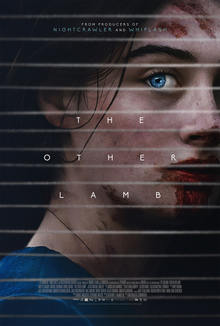
Since horror grew up in the late 1960s, religion has become a favorite theme in the genre.  Although religion had been in horror from the beginning, Rosemary’s Baby marked a definite sea change.  More and more religion has been moving from a subsidiary theme to the main vehicle of horror.  Małgorzata Szumowska’s The Other Lamb is a case in point.  “Shepherd” is the leader of a separatist religion that consists only of women.  The premise itself is creepy enough, but it becomes clear that Shepherd—the group literally has a flock of sheep—physically abuses the women.  They are divided into two groups: sisters and wives.  When unexplained things happen, Shepherd gives prophetic pronouncements.  His followers are expected to accept everything he says on blind faith.  Many religions do this by proclaiming faith against evidence a virtue.

One thing that I’ve emphasized in various presentations I’ve done is that Christianity, and perhaps all religions, work because believers are great followers.  While Shepherd uses biblical-sounding language, there are no Bibles in the film.  There are recognizably Christian themes, but the doctrine isn’t familiar.  Part of the reason, obviously, is that Christianity has a negative view of sex and Shepherd treats his flock as his harem.  The women follow because he “rescued” them from worse situations and their communal life is better.  Only it’s not.  When a woman director stands behind such a film, there’s clearly a message being sent about male privilege.  Any system set up with male superiority will lead to abuse.  When Shepherd’s enclave in the woods is discovered, they must move.  He instructs the women that they are going to find Eden.

Throughout, the movie is more creepy than scary in the traditional sense.  There are no jump-startles, but the situation makes you sense that something’s not right.  The women, acclimated to this lifestyle, many of them for years, know no other way of being or even where to go.  They have no vehicles.  Forced to move, they walk—Shepherd carries nothing while the women backpack out supplies.  Once Eden, on the shore of a lake, is reached, Shepherd baptizes the sisters and drowns the wives so the younger women can take their place.  You get the sense throughout that this movie is a parable.  Men like to take the privilege of determining women’s fates without understanding women’s needs.  This new kind of horror is insightful and symbolic.  There is no final girl when women band together.  The Other Lamb deserves wider exposure than it’s had.  It’s a good example of what religion can do to those who simply follow.