From Russia

A New York Times headline recently caught my eye.  “Russia opened a murder investigation into a car blast near Moscow.”  I wondered how a country that’s an aggressor at war, killing civilians in Ukraine every day, would be interested in something so petty as murder.  Then I saw the rest of the headline: “that killed the daughter of an influential ally of President Vladimir Putin.”  So there it is—some lives are more valuable than others.  Don’t get me wrong—I’m saddened by this (and any) murder.  And the use of violence to get what one wants is unethical.  Justice in this world, however, is based on unequal standards.  The supporters of Putins and Trumps matter more than any other people.  Death should not effect them the same way it effects civilians being missiled and shot.

Throughout all this we might wonder where the voice of the church is.  Churches, as institutions interested in power, are political players even when there’s no state religion.  The Patriarch of the Russian Orthodox Church supports Putin implicitly.  With the power of Russia, the power of the church rises.  A few thousand dead civilians, well, let God sort them out.  Churches become corrupt when they become politically powerful.  Politics is one of the most polluting things humans can do.  Long ago Lord Acton put it this way: “All power tends to corrupt; absolute power corrupts absolutely.”  Churches got into power-brokering in the fourth century and we’ve seen the results ever since.  It’s not just Christianity, however; Islam makes it political and yes, even Buddhism and Hinduism incite violence when they become politicized.  A religious body that takes its mythology too seriously becomes dangerous when it tastes political power.  The world has many mythological figures.

What really took my breath away, however, is how many state resources will be devoted to finding and prosecuting those who killed one government supporter—we must find and punish those responsible—while thousands lie dead with the Russian government as their killers.  Other nations are just as guilty of course, but there’s a karmic imbalance when that nation is an aggressor in war.  Would you have ever expected a fair trial in Nazi Germany?  Does not unprovoked war make a mockery of the very concept of justice itself?  Justice, of course, means fair treatment.  For all.  She’s pictured as wearing a blindfold, after all.  She’s perhaps one of those mythical figures as well.


The Invasion

So I’m sitting here thinking it would be great if Liz Cheney were to run for president.  Then I think, have things really got so bad that Dick Cheney’s daughter would be an improvement for the Republican party?  At least she believes in democracy.  And something has to break this trumpstipation that seems to have plugged up the GOP.  You don’t want to stand behind a constipated elephant.  I look at the hero worship spawned by a man who’s been known for lying his entire life and wonder where our critical thinking failed.  People far smarter than me have been writing about how democracies die, and this seems to be the case, all because a guy ran six years ago to give his personal business a boost and has been showing us the extreme distortions money causes ever since.

It’s sad really.  Once in a while I think about how Eisenhower was a Republican.  He was a smart man and he clearly had the best interest of America at heart.  Nixon not so much.  Some politicians are motivated by ego rather than the good of others.  I stopped being Republican when Reagan got the nomination.  Maybe it was at Watergate, but I was really too young to grasp what was going on then.  Of course, that was before politics became a real life soap opera.  As the GOP became less G with each passing president, the party seems to have lost its fortitude.  Young people are progressive so we take measures to prevent them from voting.  When Blacks vote we find ways of tossing out their ballots.  Minority rule rules.

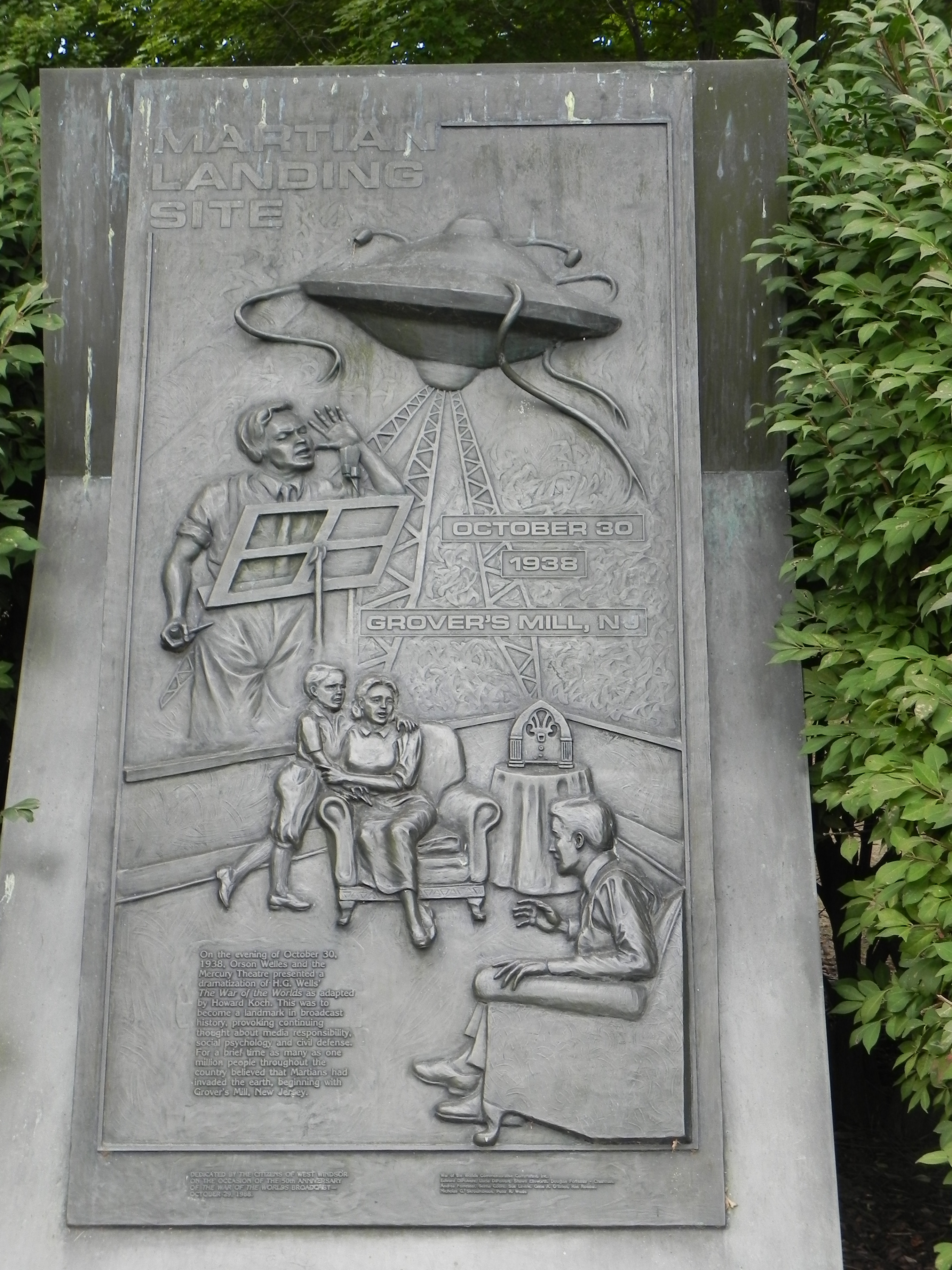
Cheney was ousted from her own party for stating the obvious.  Trump is a sore loser.  Not only that, he’s willing to take the entire country down with him rather than admit he was ever wrong.  Stealing government secrets is just another day in office in Margo-la-la land.  I sit here and scratch my head.  It used to be that no matter which party ran things they at least believed they were doing things for the sake of the country, not for the sake of the country club.  All that’s changed in our new plutocracy.  I’m no politician, but I am a guy who tries to make sense of the world.  I see a country of people who go so riled up when they thought Martians were invading not even a century ago.  An event so important that there’s a plaque in Downer’s Grove.  And when a real invasion takes place we now side with the Martians.


Walking Home Alone

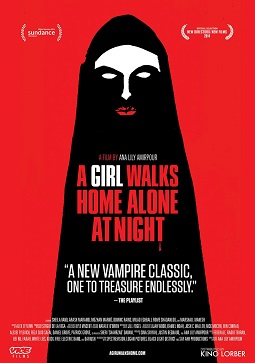
It is an American-Iranian, female-directed vampire movie.  Shot in black-and-white and entirely in subtitled Persian, A Girl Walks Home Alone at Night is a very unusual and artsy movie.  The film has been described as a “spaghetti western” as well, but that’s a bit more difficult for me to see.  If all these disparate elements seem odd, the director’s background may help explain it.  Ana Lily Amirpour was born in England, but of Iranian heritage.  She moved to the United States as a child and began making movies quite early.  A Girl Walks Home Alone at Night is her best-known film to date (I only found out about it by reading a book about horror films that recommended it.)

The title may set certain expectations that will be subverted by the film.  There will be spoilers here, so if you’re likely to see the film you might want to wait to read on.  Who knows?  Maybe spoilers will make you want to see it.  The girl who walks home alone is the vampire.  She’s perfectly safe at night.  The story involves her falling in love with a compassionate young man who’s trying to support his heroin-addicted father.  The movie is quite gritty.  The girl is a conflicted vampire, which happens to be my favorite kind.  She’s never explained.  She simply is.  Her first victim that we see is the drug-dealer and pimp who’s pressuring the young man’s family.  Although they live in poverty, he takes their car in payment.  He’s a nasty piece of work.

The young man, also conflicted, takes over the dead thug’s drug-selling business, but doesn’t take advantage of people.  The vampire is attracted to his virtue.  She also befriends one of the thug’s prostitutes because she’s sad.  Apart from the dead petty crime boss, everyone in Bad City lives in humble circumstances.  The young man finally throws his father out of the house.  The vampire attacks him, leaving him dead.  The young man, in love with the vampire but not knowing she’s a vampire, talks her into leaving with him although he can see she’s implicated in his father’s death.  This is a most unusual film, praised for its feminine outlook.  That’s unusual in both vampire movies and horror, but there’s no reason that it should be rare.  More of an art-house movie than a cineplex blockbuster, A Girl Walks Home Alone at Night is a movie that will leave you wondering.  And that, it seems to me, is a good thing.


Wicker Back

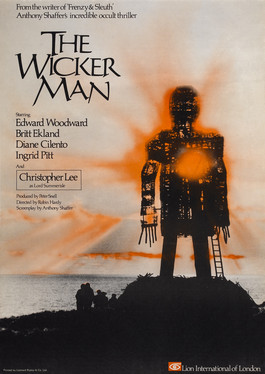
The dilemma of my eclectic interests sometimes runs up against the natural slowness of publishing.  My book on The Wicker Man has been given the green light by Auteur Publishing and should be out next year.  I just received the readers’ reports and they were positive enough to make me blush.  The thing is, I submitted the manuscript back in January and I’ve nearly finished writing my next book since then.  It’s on a different topic for which I’ve been collecting sources since January.  I really hope this next one won’t publish with an academic press.  The endless rounds of revision from peer review can wear a body out.  Reviewers, you see, have university jobs.  Libraries at their fingertips.  Sabbaticals.  (I work with authors who won’t write unless they have one of the latter.) Now my reading shifts back to Summerisle.

For those of us with 925s that get a paltry number of holidays per year (which are spent holidaying) and paid like most working stiffs, with no academic library access, this can present somewhat of a challenge.  I see peer reviews all the time.  Academics so deeply into the subject that they don’t (can’t) think of the practicalities.  When I see a reviewer write that a book is ready for publication, but if the author could only restructure the whole thing and approach it from this angle instead… I have to chuckle.  During my teaching career I worked in situations that didn’t allow for sabbaticals.  Even among academia those given such rare benefits are privileged.  It’s a wonder that so many books get written, all things considered.

Like waking from a dream world, I suddenly have to downshift to a previous project.  I haven’t really thought much about the Wicker Man since January.  My next book, which is eclectic, has been slowly gestating over the months.  My reading has been geared towards it and is financed personally.  I’ve tried contacting the local college and university libraries.  I can’t borrow, or do inter-library loan, so the weird resources I need I have to buy.  Preferably used.  One thing reviewers like to do is point out new resources.  And yes, I have to agree that my argument would be stronger with them.  I have a strategy to the way I write my books, now that I’ve found a receptive readership, so none of this is mishap, I hope.  (Ironically, now I get quite a few readers of my revised dissertation asking me questions about ancient West Asian studies.)  That trireme paddled from shore long ago.  I’ve moved my current project to another burner, and you’ll be hearing more about The Wicker Man in coming weeks.  Next year is the film’s fiftieth anniversary, so I have a deadline that I just can’t miss. It’s time to get reacquainted with an old friend.


The Burton of Thought

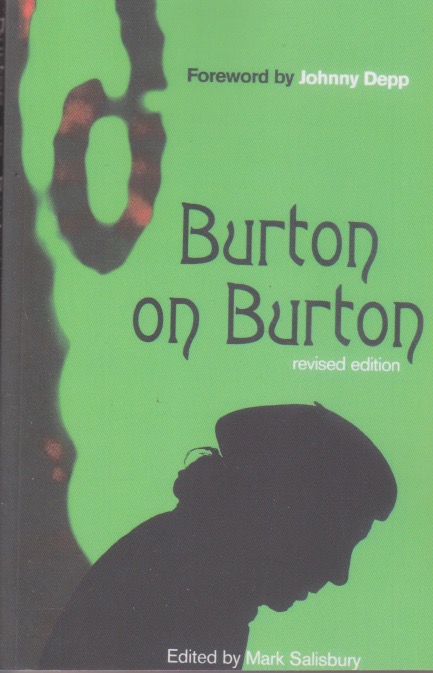
I haven’t seen all of his films.  Some of them I have seen I didn’t really like.  When Tim Burton does strike a chord, however, he does so hard.  Burton on Burton is one of a series of books of interviews with directors.  This one covers all of Burton’s films up to Corpse Bride with free-ranging answers to what are really more remarks than questions.  (The book is edited by Mark Salisbury.)  Although I’ve not experienced his entire oeuvre, it’s pretty clear that I share quite a few sensibilities with Burton.  He expresses that what he’s looking for in movies is feeling.  A good plot helps, but it’s the emotion he’s after.  And he knows that the dark isn’t bad.  At many points I had to shake my head and say, “I thought I was the only one who thought like that.”

This memoir is also full of information on the way movies get made—not the technical side, but from the studio or creative side.  Someone has an idea.  It may be original or it may be an adaptation of a well-known tale.  Sometimes, especially in Burton originals, they begin as a series of sketches.  Anybody who’s watched DVD extras knows about storyboarding.  A movie is sometimes laid out in a series of cards that show, step-by-step, the action.  Before that, or maybe during, a script is written.  In order to get funded—for all this costs money—a studio or production company has to pick up the concept.  The person pitching it might be a screenwriter or a potential director.  And, as in every avenue of life, money talks.  Once you’ve had a breakout success they start to pay attention to you.

Although Burton and I grew up with similar outlooks, he notes that he never did like to read.  Being a visual artist (he got his start at Disney), that’s perhaps no surprise.  You start to realize, once you get a sense of the number of people involved, why film credits go on and on.  It takes a village to make a movie.  Not only that, directors may be involved with several projects simultaneously.  That’s not so different from being an (unofficial) writer, I suppose.  At any one time, from my experience, I’ve got at least a half-dozen projects going.  Some will never be finished, most will never be published.  And who knows?  Maybe someday one of my fiction stories might catch a sympathetic (or perhaps simply pathetic) director’s eye?  In the meantime, we go on creating.


Gorilla Thinking

We don’t understand consciousness, but we want to keep it all to ourselves.  That’s the human way.  Or at least the biblically defined human way.  Animals, however, delight in defying our expectations because they too share in consciousness.  Take gorillas, for example.  Or maybe start with cats and work our way up to gorillas.  We all know that cats “meow.”  Many of us don’t realize that this sound is generally reserved for getting human attention.  Cats tend not to meow to get each others’ attention.  According to Science Alert, gorillas in captivity have come up with a unique vocalization to get zookeepers’ attention.  Not exactly a word, more like a sneeze-cough, this sound is used by gorillas at multiple zoos for getting human attention.  Even if the gorillas have never met in person.

Photo by Joshua J. Cotten on Unsplash

This is a pretty remarkable demonstration of consciousness.  What’s more, it’s an example of shared consciousness.  The same vocalization shared over hundreds of miles without a chance to tell each other about it.  We’re very protective of consciousness.  As a species we like to think that consciousness is uniquely human and that it’s limited to our brains.  Moments of shared consciousness we chalk up to coincidence or laugh off as “ESP.”  Funny things happen, however, when you start to keep track of how often such things occur.  It might make more sense to attribute this to moments of shared consciousness.  In our materialist paradigm, however, that’s not possible so we just shake our heads and claim it’s “one of those things.”

Animals share in consciousness.  We don’t always know what their experience of it is—indeed, we have no way to test it—but it’s clear they think.  I live in a town, so my experience of observing wild animals is limited to birds, squirrels, and rabbits, for the most part.  I often see deer while jogging, and the occasional fox or coyote, but not long enough to watch them interact much.  But interact they do.  Constantly.  These are not automatons going through the motions—they are thinking creatures who have sophisticated ways of communicating with each other.  Ours includes vocalization, so far uniquely so in the form of spoken language.  The great apes—chimpanzees and orangutans, according to Tessa Koumoundouros—also vocalize and do so with humans.  Now we know that gorillas do too.  And we all know that a barking dog is trying to tell us something.  If we took consciousness seriously, and were willing to share it a bit more, we might learn a thing or two.


October Early

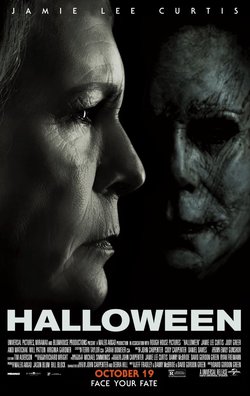
Still feeling that August is the new October, although that particular day happened to reach over ninety degrees, I watched Halloween.  Not the John Carpenter original; I’ve seen that one a few times before.  No, I watched the 2018 version only to learn it’s a retcon.  If you’re like me you’ll wonder what a retcon is.  It’s a portmanteau of “retroactive continuity.”  That’s where a sequel goes back and makes adjustments, or simply ignores, story elements from the original to take the story forward.  I haven’t followed the Halloween franchise.  There are too many movies I want to see that are original, with fresh ideas, to be spending my time trying to find my way through an emerging mythology of a serial killer.  Michael Myers, as horror fans know, inexplicably killed his sister as a child.  As an adult he terrorized Haddonfield, Illinois  one Halloween and Laurie Strode was the final girl.

What drew me to this sequel was that Jamie Lee Curtis was back as Strode, all grown up.  Michael predictably escapes again and goes for an even higher body count in Haddonfield.  Laurie, meanwhile, has gone NRA and booby-trapped her entire house in anticipation of this day.  You can see the draw, I hope.  You kind of want to see how this ends.  The original had Michael’s apparently dead body disappear at the end.  In the retcon he was arrested after that and re-institutionalized.  The thing is, you can never really kill a monster.  Original scenes and scenarios are revisited, and those familiar with the Carpenter story are rewarded by situations that subvert expectations.  Where is he hiding this time?  You always watch the credits roll wondering how “the authorities” don’t realize that a guy shot, stabbed, and incinerated and keeps coming back might be something other than human to be put in an asylum.

I should know better than to watch these kinds of movies when I’m home alone, but I don’t.  So it’s a good thing that I try to piece all these things together.  We have three strong women—three generations of final girls here, and the obligatory basis for a sequel.  (At least two, in fact, bringing the franchise up to thirteen movies.)  Laurie’s granddaughter is among the virginal, non-drinking final-girl prototypes.  Her less Puritan friends are killed off, although her worthless boyfriend survives the night.  You’ve got to love the endless self-references of such situations.  That’s why we keep on coming back.  We’ve seen it before but we still want more.  Even if it’s only August.


Aging Writers

The fact that V. C. Andrews didn’t have any success as a novelist until her late fifties (a benchmark that has already slipped for me), gives me hope.  Another thing I didn’t realize about Cleo Virginia Andrews is that she was confined to a wheelchair.  She didn’t want that fact advertised and she didn’t want peoples’ pity.  She wanted to write.  Many of the books published under her name were ideas she had but that were only brought to fruition by others after her death.  She became a legacy.  Writers are fascinating people.  I only recently learned that Anne Rice was transgender.  I had assumed from her public persona something that I had taken for granted.  Gender is a complex thing, no matter how loudly religions shout.  The sheer number of people born intersex should make that obvious.

Writers express the human experience.  Some perspectives aren’t really considered worth pursuing, as I know from personal experience.  But learning about writers’ lives always gives me hope.  There are those whose lives will always contain mystery—was Washington Irving homosexual or just inept with women?  What really happened to Edgar Allan Poe in Baltimore?  Who was Homer, really?  No matter how much those of us inclined to write do so, there are still huge swaths of life that are left off the page.  (Much of it boring, spent at work, or mowing the lawn.  I try to imagine Herman Melville on a riding mower, but I just can’t do it.)  Writing successfully involves a publisher or agent willing to take a chance on you.  But if you’re old enough to be a one-hit wonder (sorry John Kennedy Toole), they don’t see dollar signs down the road, so move on down to the next door, please.

I had a novel under contract a decade and a half ago.  It never materialized, so don’t look for it.  My nepenthe consists of learning about writers, whether one-hit wonders or not.  I can still look to the Frank McCourts, Laura Ingalls Wilders, and Harriet Doerrs of the literary world.  For most writers it’s the story of what happened before success that is the most compelling part.  Especially those who were older and just kept on trying.  Some had to die, ironically, before the world realized they had something important to say.  You can’t blame the world.  The world’s busy.  But the fact is nobody would remember what it was like if somebody hadn’t bothered to write it down.  So we continue to chronicle the human experience.


Is It That Time Already?

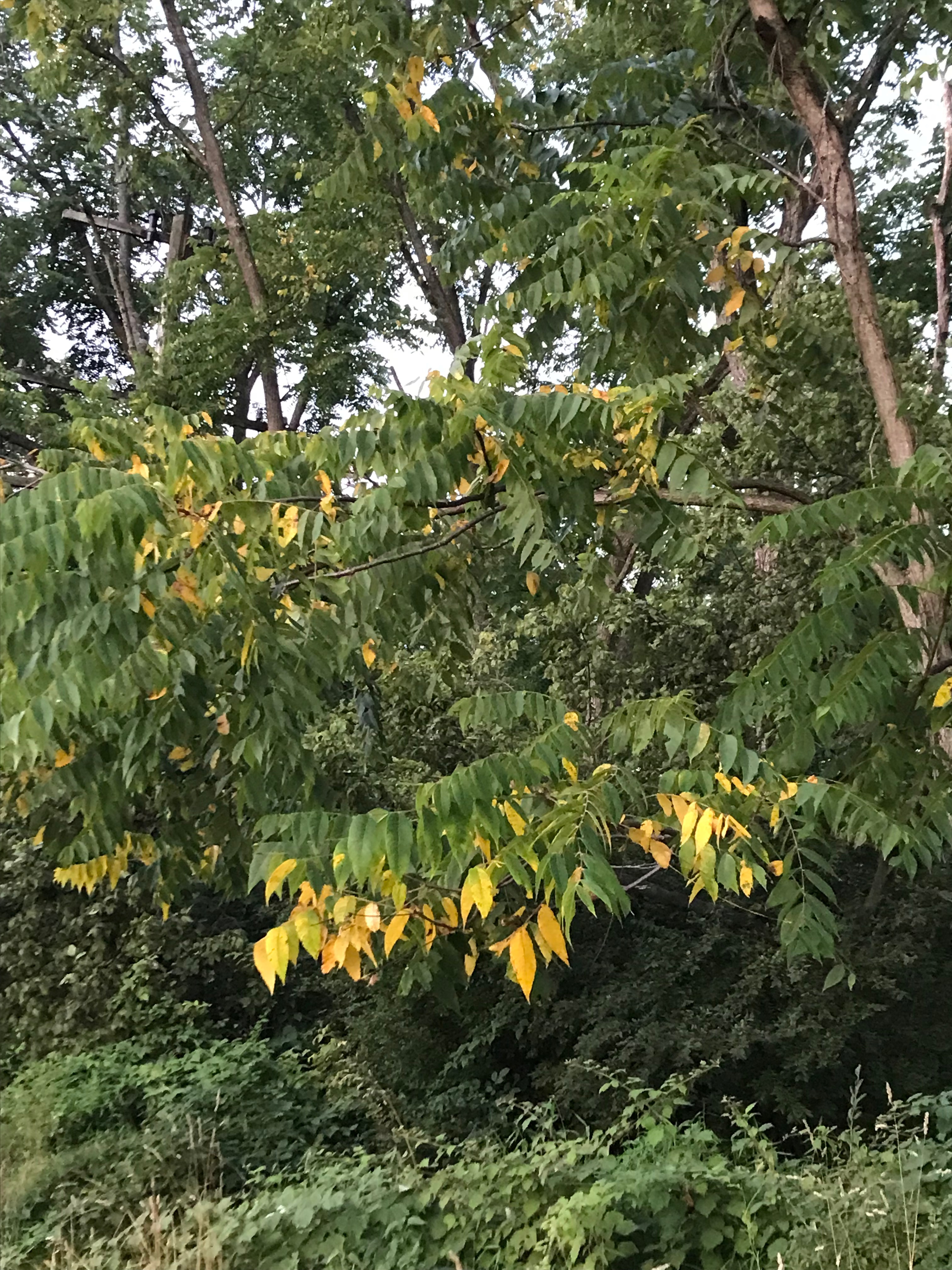
Maybe it’s just me, but August seems to be the new October.  If any of you are experiencing the heat wave that’s (oddly enough) like global warming, my apologies.  Around here—and local is what we all are—nights are cool enough to require blankets after our very hot July.  In fact, I need long sleeves and long pants in the mornings, it’s so chilly.  By mid-afternoon I’m starting to roast, but the grass is brown and that October feeling is in the air.  Or maybe it’s just that I’m awake at odd hours and the perspective from this time of day is somehow prescient.  Who knows?  As I try to sneak a jog in before work I see the walnuts have already gone yellow.  And I wonder.

We idealize the weather of our youth.  That sense of oughtness sets in early.  This is the way the weather should go.  We’ve been pouring greenhouse gasses into the atmosphere, however, for all of my life and before.  The warning signs have been around for decades but somehow liars with false hair convince us that any progress ought to be reversed.  I wonder if he’s been outside lately.  The planet is constantly changing based on the larger picture.  It has been doing this for eons, well before our species evolved.  Thinking it was created for us distorts our thinking.  The real question is whether we’ll be able to adapt.  I can’t say the prognosis is rosy, given how we’re constantly trying to kill those who live just across that mountain range, or that wide river.  We can’t seem to coexist.

I like October.  Still, I can’t help but think of all the things we didn’t get done this summer because it was too hot to be working outside.  Or we couldn’t get contractors to return our calls.  Seasons change as the atmosphere tries to adjust to all the chemicals we cough out.  October and its monsters seem to arrive earlier each year.  I’ve been feeling it for weeks already.  Seasons are really negotiations.  Around here, in this temperate zone, we spend most of the year with the furnace on, taking the edge off cold mornings and trying to keep this drafty house habitable for about six months of the year.  Everything’s constantly in flux and we simply try to adjust.  Not even the sun will last forever.  But for now I see the signs of harvest season beginning, and I feel the change in the air.  And I can sense October just around the corner. So goes August.


Some High School

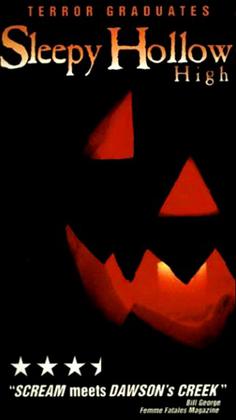
I have a soft spot for bad horror.  And Sleepy Hollow High isn’t exactly good horror.  It’s not horrible horror either.  It follows the story of five teenage delinquents at Sleepy Hollow High School.  Threatened with expulsion, their only choice is to do community service.  In this case that means picking up trash in the eerily secluded town park.  I won’t give away the one big spoiler, but it’s fair to say not is all that it seems.  It’s very low budget (paid for by credit cards and estimated to be $16,500) shows in several places, but it does keep you watching.  And wondering, to an extent.  It claims that the legend of Sleepy Hollow is true, but not exactly in the way you might think.  (Sorry for being cryptic—I don’t want to give too much away.)

One of the reasons I appreciate efforts like this is that I know what it’s like to be possessed by a story you want to tell but being unable to find a publisher—or in this case, a distributor/studio—who’s willing to take a chance on you.  The movie is largely the effort of Kevin Summerfield and Chris Arth.  They are listed as co-directors and co-producers, and each has credited roles beyond that.  Neither one is famous, and yet they made the film anyway.  It’s the same impetus behind self-publishing, I suspect.  The problem with the latter is that anyone can do it, and it often shows.  Most of us don’t have access to proper movie equipment, props, and actors willing to work for free.  Heck, I don’t even know most of my neighbors.

Movies like this stand a chance of becoming cult favorites.  I have no idea how that happens or who makes the call on it.  Low budget (often), cult films catch the imagination of a certain kind of fan and eventually generates some buzz of its own.  Wikipedia articles will appear about some of the people involved because those who watch grow curious.  Our highly developed publicity systems make decisions on who or what gets exposure.  That doesn’t mean the rest of us can’t get a small dose of attention now and again, but those who’ve made it have had some help.  Sleepy Hollow High was perhaps able to cash in a bit on the previous year’s Tim Burton effort, Sleepy Hollow.  But there are horror movies—and stories—out there that nobody knows about.  And which might, if discovered, have their fifteen minutes.


The Roll of Churches

I really don’t have time to follow any social media religiously, generally glancing at a page and perhaps scrolling down an inch or two when I have a moment.  I tend to glance at headlines, often pre-selected for me by a non-human intelligence, I expect.  Nextdoor dot com occasionally has a story that looks important to read, because it’s local.  Recently a poster from Bethlehem noted meeting a homeless person and was asking virtual neighbors where to turn for help (for the homeless person).  The answers weren’t surprising but reminded me of something I recently heard elsewhere—this is where churches still have a chance to shine.  While I’m tired of all the doctrinal and theological nonsense that arises from those who didn’t pay close enough attention in seminary, I do lament the plight of our churches.

Society has been too Republican for too long to care for those who can’t make it in an uber-capitalist environment.  Those with mental illnesses turned out when Reagan-era “reforms” “improved” our system for handling them.  Those who, through no fault of their own, can’t hold down a job.  Those who just happened to end up on the wrong side of a wave and find that a new wave breaks over them before they can properly take a fresh breath.  As the most affluent nation in the world, each homeless person is a reminder of the terrible price we pay for living within a system that rewards greed far above anything else.  Churches do have their problems—I’ve experienced many of them firsthand—but they often feel an obligation to take care of the sick, the homeless, the elderly.  Those not of value to a capitalist system because they don’t “contribute.”

When I commuted to Manhattan my bus arrived early.  I often saw the many homeless sleeping on the street as I made my way across Midtown.  Many days I wished I had an extra peanut butter sandwich with me so that I could give them something.  Anything.  Churches that aren’t caught up bickering about whose genitals belong where, or whether females are equal to males, often turn their sights to those who need help.  These churches are supported by the donations of members (for which said members can claim a tax break).  These are members who care for those they’ve never met, simply because they are human and in need.  Churches themselves are now facing difficult times and, unless they support Republican causes, can be assured they won’t receive a government bail out.  Compassion may be a dying species.


Scary Cosmology

In many ways a harrowing book, A Cosmology of Monsters, by Shaun Hamill, is a real achievement.  A monster story, it’s less a story about monsters than it is about people—which, upon thinking it over, is generally the case.  This story is about the suffering people undergo, sometimes simply for being who they are.  Hamill gets his hooks in early and drags you through this wonderful, terrible story.  Even now that I’ve finished it I’m not quite sure what to make of it.  What’s it about?  Maybe I can try to give you a few signposts and pointers.  To find out more you’ll need to read it and check my work.

The Turner family, through no fault of its own, has been living under a strange kind of curse.  It involves monsters, from what is probably another dimension, kidnapping and enslaving them.  The Turners aren’t alone in this.  Others who’ve been suffering from various causes are also targeted and treated.  Perhaps this is partially a parable on suffering and depression.  The Turner family faces death, missing children, forbidden love, and regret.  They run a local haunted house around Halloween, which the father’s regular job finances.  They do it for fun and it’s free.  It keeps them going when a terrible diagnosis is given.  Stressed financially and emotionally, they barely manage to stay together.  Noah, the narrator and only son, checks out the competition, including a Christian Hell House.  There he meets the girl he’ll eventually marry.  But the monsters don’t stop coming.  He befriends one.

An intricately interwoven story, you might call this horror but you would probably be closer to the truth with literary fiction.  There are uncomfortable facts about families.  Things we tend to overlook or ignore in order to keep society running smoothly.  These kinds of issues are brought out into the open here and mixed in with monsters.  On both the human and monster sides, the emotionally wrenching ideas have to do with relationships.  Noah, who was born just as his father was dying, establishes relationships both with his family and a monster.  As the story progresses over the years, his wife is added to this complex of relationships and they all end up, in a way, competing.  Decisions have to be made and someone you love must lose.  This novel makes monsters and humans the objects of the reader’s sympathy.  What’s more, it works.  I hope I haven’t given too many spoilers here, because this is quite an accomplishment, and well worth a reader’s time.


Lovecraft’s Palace

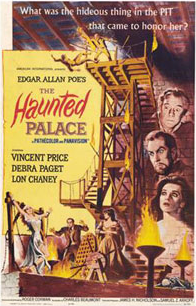
So, to see Witchfinder General I had to buy a set of Vincent Price movies.  Complex copyright deals mean that not everything can be streamed—there’s a movie I’ve been waiting months to see because Amazon Prime says “not currently available in your area.”  That word “currently” tells you that it’s a rights issue.  In any case, that box of Price movies contained a few goodies I’d never seen and had wanted to.  And one that I hadn’t heard of: The Haunted Palace.  Legendary producer Roger Corman had Price star in a variety of Edgar Allan Poe adaptations.  (Witchfinder General wasn’t one of them.)  Corman wanted to make an H. P. Lovecraft movie, but the studio insisted it stay within the identity of this Poe series.  This movie is an adaptation of Lovecraft’s “The Case of Charles Dexter Ward,” but titled after a Poe poem, “The Haunted Palace.”

Suffice it to say, I knew little of this before I sat down to watch it.  I didn’t know, for example, that this was the first big-time movie based on Lovecraft’s Cthulhu mythos.  I didn’t realize it would involve the Necronomicon and perhaps the first, blurry—to preserve the sanity of viewers—view of maybe Cthulhu.  The movie doesn’t specify which of the Old Gods is kept in this pit, so it could be Yog-Sothoth instead.  You see, as a child I watched some of the movies in this series.  They would’ve had to have been the ones showing on television, likely on Saturday afternoon.  The one that I clearly recall, and remember thinking “that’s not how it goes!” was The Raven.  And as a child I had never been exposed to H. P. Lovecraft.

Some of us have our own brand of cheap or free entertainment.  The small number of friends I had growing up didn’t care to read.  My family wasn’t literate, and most high school teachers couldn’t suggest much to a kid who’d somehow found Poe and liked what he read.  As I’ve said before, Goodwill was my bookstore.  I discovered Lovecraft on the internet during a lonely stretch of teaching at the University of Wisconsin, Oshkosh.  Like many visionaries, Lovecraft didn’t achieve fame in his lifetime, but is now considered a bizarre American treasure.  The Cthulhu mythos is everywhere.  Even my auto-suggest is quick to fill in his name as I type.  The Haunted Palace isn’t a great movie—this is Roger Corman—but it’s a pretty good movie.  And its history in the cinematography of Lovecraft makes it worth part of a Saturday afternoon.


Sabbatical Request

I don’t know when I became one of them.  It seems that I was pretty busy in my early teaching days, and starting a family.  I didn’t feel, however, that every single minute was programmed down to the second.  I had time for writing, vacation, and family, as well as work.  The other day when I was sending out those reminders to authors that their books are a bit (years) overdue, I realized just how busy they are.  Then I took a moment and considered that I’m not sure how I became one of them.  The people who are too busy.  Clearly buying a house was a big part of it.  I’d been pretty busy before, but now I need to invent time in order to get everything done.  The staycations I allow myself end up with feelings of guilt for all that’s been left undone.

Maybe it doesn’t help that I can see the neighbors out my office window.  When I see one of them weed-whacking or mowing during the day, I think I need to do the same.  But I’m also out of string for the whacker.  I really need to get to Lowes so I can stock up—last time they had only one spool left, which is probably why I ran out.  To get to Lowes I need a weekend.  Preferably not one with temperatures in the high nineties.  And without meetings cutting into weekend time.  And when it’s not raining.  Time is slippery.  Even as I work I often have other things—many other things—I have to do running through the back of my mind.  How did I become so busy?

Speaking only for myself, there’s nothing I’d rather be doing than reading and writing.  I do these daily only by carving out inviolable time for them.  It is costly time, I know, but to me it’s beyond price.  Thinking of these colleagues too busy to submit their books, I think back to my own professor days.  There’s no doubt that I read and write more now than I did then.  There were times (grading, accrediting body visits, commencement, etc.) when there simply wasn’t time to do anything else.  Many colleagues mention health issues on top of all this.  Academics, as those who supply (partially, but responsible for a goodly number of) books, the number published each year truly boggles the mind.  I would try to figure all this out, but I’m afraid I simply don’t have the time.


Burdens

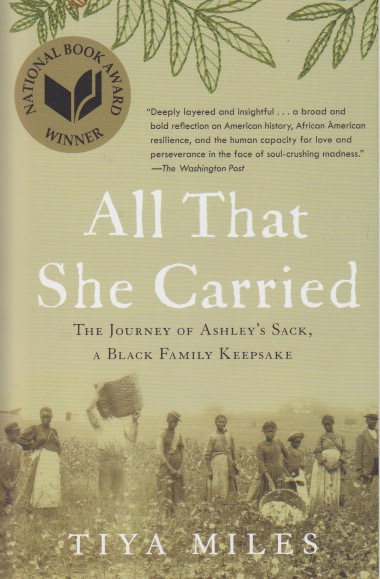
Listening is very important.  Sometimes there’s nothing really to say but “I hear you.”  This kept occurring to me during All That She Carried: The Journey of Ashley’s Sack, A Black Family Keepsake.  Tiya Miles is a history professor, and she helpfully includes an afterword telling how she came upon the topic for this book.  Ashley’s sack is just that, a sack.  On it, the owner, a female descendent of enslaved African-Americans, stitched a short inscription about the history of the sack, how her grandmother had given it to her mother when the latter was a child under ten, sold away from her mother in South Carolina.  This isn’t an easy book to read.  I have difficulty being faced with what “religious” “white” folks did to Blacks and justified themselves that people can be bought and sold.  Listen, I told myself, just listen.

Those who would deny that any of this ever happened need to learn to listen.  In order to capitalize on the resources this country offered, our ancestors engaged in morally reprehensible acts.  And the cruelty didn’t end with the shipping and the selling.  The treatment of unfree Black people itself was a crime, and their white captors knew full well what they were doing.  Preventing their slaves from having nice things while they themselves lived in luxury.  Beating, raping, and murdering when they didn’t get their way.  Selling their own offspring born of slaves to make a profit.  All the while claiming to be good Christians.  It’s often this part that I have trouble understanding.  Even a literalistic reading gives no license for treating other human beings this way.  Only money does that.

The style of history in this book isn’t that to which many of us are accustomed.  At the point of raising mental critiques I repeated, “You must learn to listen.”  Those who have made the rules showed themselves to be corrupt, and they must be willing to consider alternative ways of telling a story.  Miles makes the point that the history of unfree Blacks was largely erased, leaving the possibilities for histories and heritages slim; if the regular rules are themselves oppressive then it may be time to listen to those of others.  It seems impossible in the age of the world-wide web and all that it implies that we live on a planet where people repeatedly deny their sins while clutching their Bibles in their fists.  We need to learn to listen.