Burdens

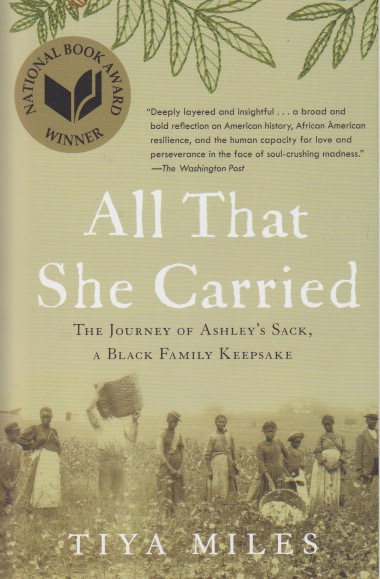
Listening is very important.  Sometimes there’s nothing really to say but “I hear you.”  This kept occurring to me during All That She Carried: The Journey of Ashley’s Sack, A Black Family Keepsake.  Tiya Miles is a history professor, and she helpfully includes an afterword telling how she came upon the topic for this book.  Ashley’s sack is just that, a sack.  On it, the owner, a female descendent of enslaved African-Americans, stitched a short inscription about the history of the sack, how her grandmother had given it to her mother when the latter was a child under ten, sold away from her mother in South Carolina.  This isn’t an easy book to read.  I have difficulty being faced with what “religious” “white” folks did to Blacks and justified themselves that people can be bought and sold.  Listen, I told myself, just listen.

Those who would deny that any of this ever happened need to learn to listen.  In order to capitalize on the resources this country offered, our ancestors engaged in morally reprehensible acts.  And the cruelty didn’t end with the shipping and the selling.  The treatment of unfree Black people itself was a crime, and their white captors knew full well what they were doing.  Preventing their slaves from having nice things while they themselves lived in luxury.  Beating, raping, and murdering when they didn’t get their way.  Selling their own offspring born of slaves to make a profit.  All the while claiming to be good Christians.  It’s often this part that I have trouble understanding.  Even a literalistic reading gives no license for treating other human beings this way.  Only money does that.

The style of history in this book isn’t that to which many of us are accustomed.  At the point of raising mental critiques I repeated, “You must learn to listen.”  Those who have made the rules showed themselves to be corrupt, and they must be willing to consider alternative ways of telling a story.  Miles makes the point that the history of unfree Blacks was largely erased, leaving the possibilities for histories and heritages slim; if the regular rules are themselves oppressive then it may be time to listen to those of others.  It seems impossible in the age of the world-wide web and all that it implies that we live on a planet where people repeatedly deny their sins while clutching their Bibles in their fists.  We need to learn to listen.

Yelp Me

Do you remember the Yellow Pages?  Or even phonebooks, for that matter?  (Or wall phones?)  They certainly weren’t perfect, but they tended to be updated yearly (at a great cost in trees).  That meant that they tended to be almost up-to-date.  You’d find the business you sought, and call them to ask for their hours, or directions.  Now we rely on the internet, of course, and the number of businesses that you can find has exploded.  And they open and close with bewildering rapidity.  It took me a couple years of googling to figure out that Yelp was a rebranding of the Yellow Pages.  I also feel sorry for any company that has to try to keep up with the current status of things.  It does seem, though, that Yelp could use some help.

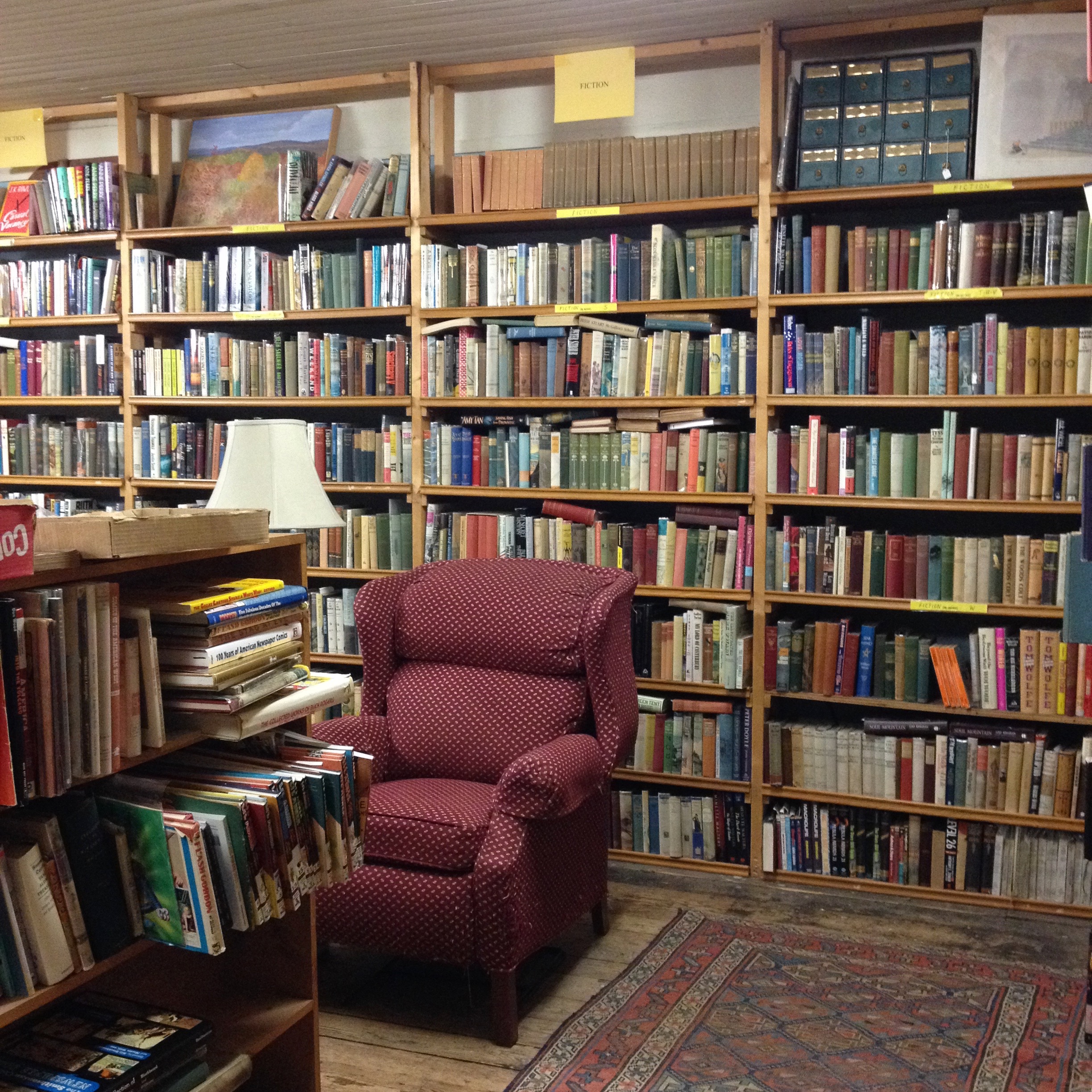
Although it might seem impossible, many businesses still exist without websites.  And if you’re looking for a type of business in a specific city or town, you need to know, first of all, what’s there and what’s not.  The big boxes are never a problem, of course.  When I travel to a new location, however, I want to know what bookstores I’m likely to find.  I’ve done this a number of times recently.  Type in a city name and “bookstore.”  (In the case of Reading, the city name didn’t help at all.)  Yelp helpfully shows up at the top but it lists many establishments that have closed.  Even some of those that are open are virtual and don’t have a store you can wander around.  More than once I’ve come to a place only to discover there’s no longer anybody home.

Independent bookstores have been doing pretty well through the pandemic.  Many people have rediscovered reading.  Since they are seldom crowded, they feel like safe spaces during Covid.  And chances are that people who hang out in bookstores have been vaccinated and will likely be wearing a mask.  The problem is finding such places.  I have to say that Pennsylvania seems to have a healthy population of bookstores.  There are several in the Lehigh Valley and I’ve been pleased with the treasures I’ve discovered elsewhere as well.  Finding them hasn’t always been easy.  One of my favorite used bookstores here in the Valley folded during the pandemic.  Fortunately there are others.  Google maps sometimes work better than Yelp, but nothing beats getting out and exploring on your feet, except sitting at home later and reading what you’ve found.


Beastly Story

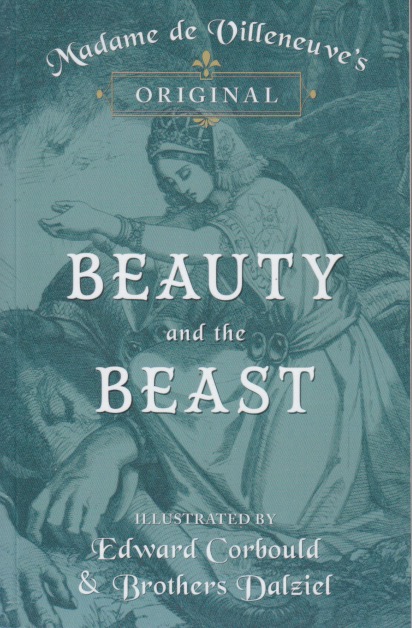
You think you know a story.  You know, you’ve heard it before, or seen it in a movie, so you think you know how it goes.  I’m not the biggest Disney fan in the world, but I have seen many of their movies.  Occasionally those movies are my first introduction to a story.  That was the case with Beauty and the Beast.  I saw this when my daughter was young, and in general found it a good story.  I’ve seen it a couple of times since, and I thought I knew how it went.  I got curious, however, regarding the origins of the tale.  Was it Grimm?  Other ancient folklore?  The reimagining of a classical tale like Pygmalion?  Well, it turns out it was a story from the eighteenth century written by Gabrielle-Suzanne Barbot de Villeneuve.

I decided to read it.  The story is quite different than the Disney version, as is to be expected.  To begin with, Beauty has eleven siblings.  Her father is a merchant rather than an inventor.  The beast is described as having an elephant’s trunk and scales, not fur.  Once Beauty agrees to move into his palace in place of her father Beast is nothing but polite, if somewhat dull.  In broad outline the same action takes place—beauty falls in love with the beast and magically he transforms to a handsome prince.  Any story, as it’s retold, is re-envisioned.  There’s no such thing as the literal retelling of any tale.  As the Italians say, “translators are traitors.”  (Of course, I didn’t read the story in its original French, having had the aid of a traitor.)

As was perhaps the style back then, once the happy ending came the story had to be fully explained.  Indeed, this constitutes half its length, telling, not showing, the backstory.  To Disney’s credit, they do all this in a minute or two of animation time.  The modern reader, unless obsessed with the rules under which fairies operate, and the power struggles among them regarding those rules, will likely find this add-on a bit tedious.  But that’s often the way with original texts.  Think The Iliad.  Think the Bible.  Modern writers seldom explain things fully.  Ambiguity is valued among the literati.  Still, stories have origins.  They start someplace.  Those of us who are curious about those origins are inclined to dig, it seems.  Disney has become our storyteller for children.  It’s a good idea to look behind the curtain now and then, just to see what the original creator wrote.  To see how the story really goes.


The King

Stephen King.  I haven’t read all of his books, but I’ve done quite a few.  I’ve watched movies based on some.  I read my first story by him in Junior High School.  I’ve even read books about him.  From what I can tell, he’s actually a man with his head on straight.  While some may find that a strange thing to write about a horror writer, it’s been my experience that those who enjoy horror, either as producers or consumers, are generally good people.  Recently King was testifying against the proposed buyout of Simon & Schuster by Penguin Random House.  Penguin Random House is already the largest trade publisher in the world.  The buyout would probably benefit King personally, but he testified it would make things worse for other writers and for independent bookstores.

How many people these days argue against things that benefit them personally?  Certainly not elected officials, particularly of what used to be a grand old party.  It’s all about me!  That seems to be the mantra of late capitalism.  King has publicly called for his own taxes to be raised.  This is nothing short of heroic.  While the Good Book advocates over and over for this kind of behavior, “Bible believers” have somehow overlooked it.  Leave it to a horror writer to get to the heart of the message.  I have no idea if King is part of any religious group or not—he certainly uses a lot of religious imagery and many religious concepts in his writing.  Of course, you don’t have to be in such a group to embody their proclaimed principles.

Thinking of the needs of others was drilled into me as child raised in a Fundamentalist faith.  Looking around me these days, I don’t see many Fundamentalists that hold to that any more.  Enamored of power—especially the power to control other people’s lives—they flock after rich pretenders who care nothing for the Gospel.  Sacrifice (for that’s what we’re talking about here) is something horror writers know well.  It’s never easy giving up something that’s valuable to you.  Or even thinking about it.  Writing, while very enjoyable, is hard work.  Training your mind is like physical exercise—it doesn’t just happen.  I’ve got a few Stephen King novels on my “to read” pile.  They’re big books, often intimidatingly so.  Once I start reading, however, I know I’ll find the work engaging.  And if I pay attention, there will be a message there too.

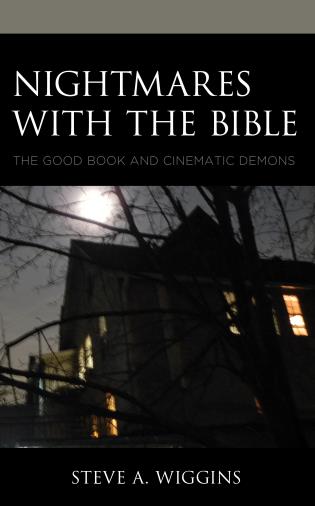
Not that kind of book.

Dark v Light

The summer solstice was days away and the earliest sunrise had already passed.  The earliest sunrise and the latest sunset are not on the same day.  To those of us who rise before the sun, it does make a difference.  I’m a morning jogger (when my back allows it).  I prefer to go out before work because otherwise you have to interrupt your day to put on your scuzzies and then come back all sweaty, hoping you didn’t forget about a meeting just after.  The thing is, I start work early and my preferred jogging time is around 5 a.m.  Back in May it’s easy to believe that this timetable is workable.  Then in August, almost like it’s pinned to the first of the month, you realize that it will be much closer to six than five before it’s light enough to see.  So the seasons go.

Even in the midst of a heat wave, you can smell autumn coming.  Yes, I know there will be hot days and uncomfortable nights yet.  But just as surely as Back to School merchandise begins to appear in July (school had been out maybe two weeks by then), fall inexorably follows summer.  Around here it’s been drier than normal.  Stressed trees began shedding leaves in July as if to say, “Alright, we’ll give this a try again next year.”  They are much more obvious about seasonal changes than the rest of us, but we’re all impacted by the always shifting patterns of light and warming, or cooling, mercury.  Seasons remind us of what it means to be mortal beings.  Melancholy isn’t always a bad thing.

Being a morning person, at least in my case, means spending quite a bit of my creative time in the dark.  In fact, back in June it’s like it gets light too soon for me to go jogging right away—I still have things to do first.  I also know it will still be some time before it’s dark when I go to bed.  I have no trouble sleeping in the light.  Our schedules are part of our perceptions of time and light.  We all agree, more of less, that from nine to five we’ll be at our desks, whiling away the most productive hours of sunlight.  I remember commuting to work in the dark only to commute home also in the dark.  Using that time for creativity is important, but so is trying to keep healthy.  Like the great dramatic acts of the solstices and equinoxes, it’s all a matter of balance.


Paperback Reader

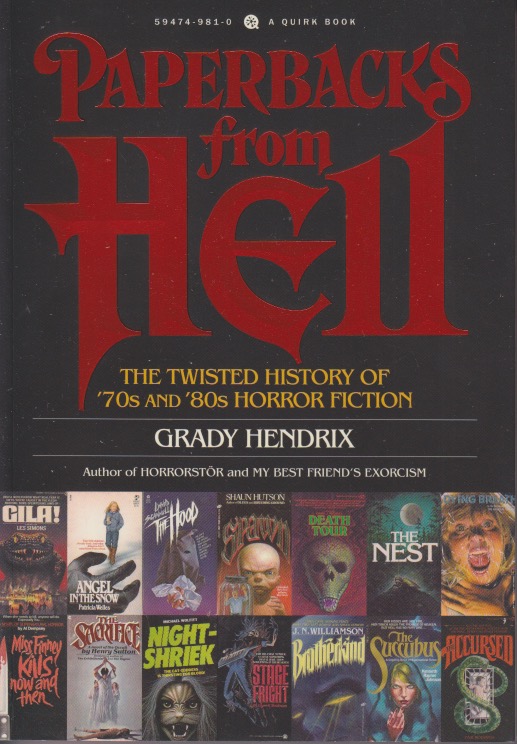
Sometimes I wonder why I do it.  Horror is a strange category for books and films, but one thing that may be a draw is that they take me back.  Life, it seems, is cyclical.  I liked monsters as a kid, and grew out of it when college and graduate school taught me to be serious.  As a working academic this genre can spell death to your career, so when my career died anyway, I was left grasping at my childhood to try to make any sense of this.  Grady Hendrix’s Paperbacks from Hell took me back.  Not that I’ve read all the books listed here—I came away with a list I want to read—but the lurid covers are a reminder of the kinds of things that caught my young imagination.

Subtitled The Twisted History of ‘70s and ‘80s Horror Fiction, this is actually a very fun book to read.  Hendrix has a light touch and had me nearly laughing out loud (quite an accomplishment) a time or two.  And I learned a lot.  Although I write books about horror, the genre is a large and sprawling one and this book takes a clear focus at the paperback market.  Just a reminder: paperback originals were designed to be sold and consumed quickly.  No waiting around for 18 months while profits from the hardcover roll in.  Hendrix really knows what he’s talking about when it comes to the history.  It also seems like he may have read more horror than is necessarily good for you.  He clearly knows how the publishing business works.

Several of these books were big enough that I knew about them.  He starts off with Rosemary’s Baby and The Exorcist.  (And The Other, which I’m now obligated to find and read.)  In fact, the first chapter focuses on religion-themed horror.  This is something that only began in earnest in the late ‘60s.  While the horror paperback market may have tanked in the ‘90s, the film side of the genre has been doing quite well and continues to do so.  The late sixties also got that kick-started.  It seems that when people stopped running from the fact that religion is scary, horror itself grew up.  I was shielded from that part as a child, but now, looking back, I can see that things weren’t quite what they seemed.  This full-color, grotesquely illustrated book has great curb appeal.  And if you’re not careful, you can learn a thing or two as well.


Flower Power

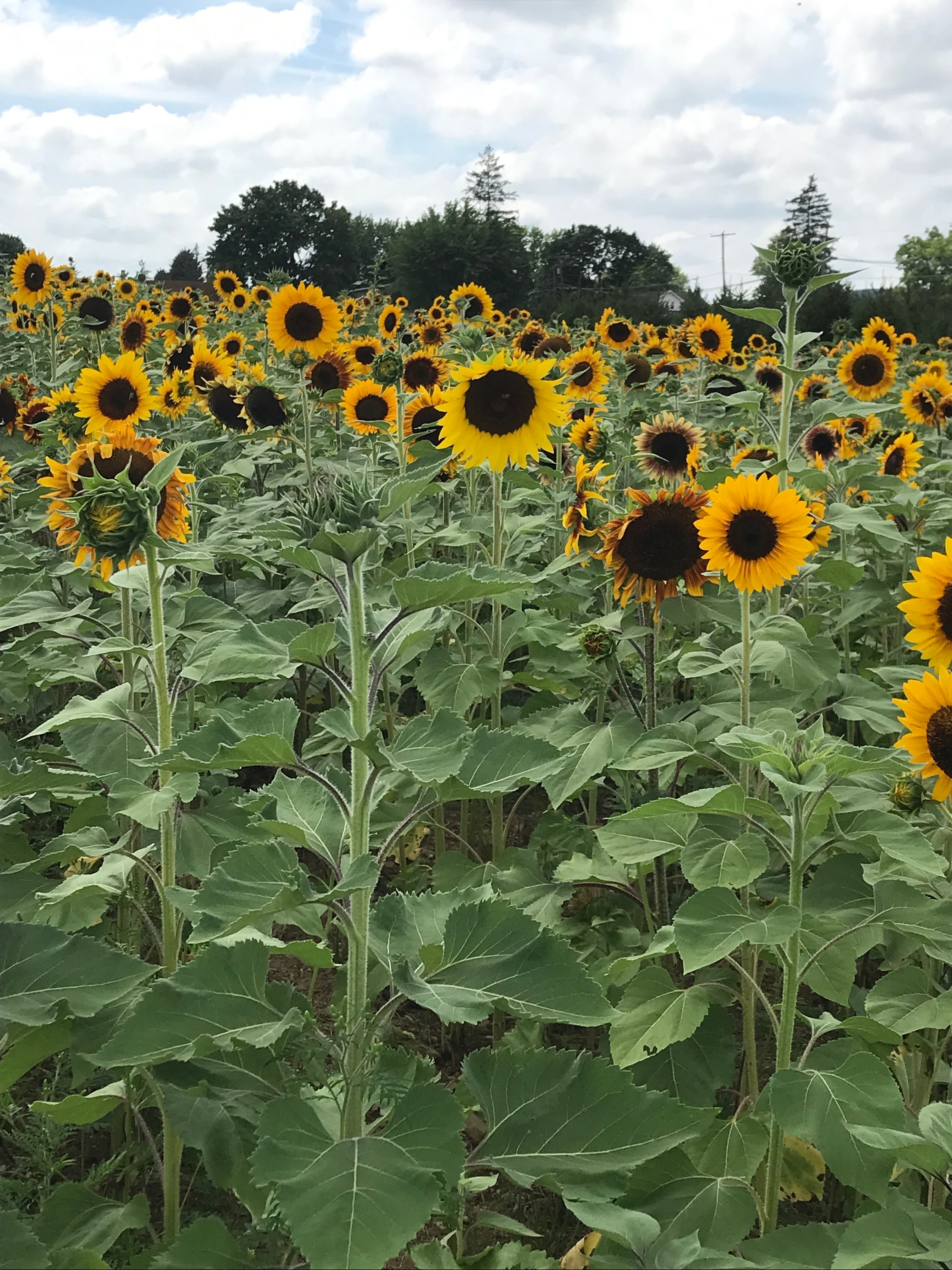
Why do we find flowers so attractive?  Often what separates weeds from desired plants are the flowers.  (Not always, though, as the much maligned dandelion can attest.)  The bright colors clearly help.  Intended to entice pollinators, flowers offer many natural attractants—nectar, intricate patterns, stunning colors—that draw both insects and humans to them.  Summer is the time for weekend festivals, and thus we found ourselves at Yenser’s Tree Farm for their Sunflower Festival.  Located near Lehighton, it’s in some pretty territory.  At this time of year it’s dedicated to sunflowers.  Perhaps all the more poignant this particular year, given that the sunflower in a national symbol of Ukraine, lots of people were there a warm Saturday afternoon.

The Helianthus genus is actually part of the daisy family.  What we call the “flower” is what botanists call a “false flower” because the head of a sunflower consists of many tiny flowers surrounded by a fringe that has petals like other flowers.  In other words, a sunflower is a cooperative venture.  The name “sunflower” either derives from the disc head looking like the sun, or by their trait of heliotropism.  The buds, before blooming, track the sun across the sky.  Most remarkably, at night, typically between three and six a.m., they turn back east anticipating the sunrise.  This speaks of an intelligence in nature.  There is a scientific explanation, of course, having to do with changing growth rates in the stems that allow a kind of swiveling effect.  To me it seems to indicate plants are smarter than we give them credit for being.  Not having a brain doesn’t mean you can’t be amazing.

The tiny flowers in the head are arranged in a spiral that follows a Fibonacci sequence.  I can’t even follow a Fibonacci sequence, so I’m glad to cede intelligence to our plant friends.  How can they anticipate where the sun will rise?  It’s the anticipation that’s heavy with significance.  Sure, using the word “anticipate” is to ignore the garden sprinkler analogy of snapping back once you’ve reached the end of your trajectory, but even so, when a seed bursts from its pod it has to figure out which way is up.  Plants move, to give themselves the advantage of sunshine.  We plant flowers because we want to be near them, admire them.  Plants provide food and oxygen, and we offer nutrients, at least in theory, when we decompose.  We’re all part of an intricate system, and we benefit when we turn to face the sun.


Who’s It For?

I suspect editors see this all the time.  I also suspect that I’ve unknowingly participated in it as well.  If you’re a book writer, you have to be clear of your readership.  As an academic editor I receive many proposals for books that either cry for popular treatment, but are too academic, or books that are written for laity on topics of interest only to academics.  A writing life is a struggle to find that correct balance.  Particularly for your typical academic.  You see, doctoral programs don’t generally include instruction on how publishing works.  Or in writing.  It’s assumed that any string of 100,000 words from a credentialed expert is worth publishing.  Worse, as Steven Pinker has pointed out, academics are rewarded for writing poorly.  No wonder people are confused!

Lately I’ve been on a kick about people not paying attention.  It is important to observe.  When writing a book it’s important to gauge who might want to read your potential book.  Indeed, this is something seldom asked early enough in the process.  Who is this book for?  Will they want to read it?  You see, we have this lone ranger attitude to book writing.  In actual fact, most books you see in bookstores are the clear result of teamwork.  Yes, authors do most of the writing.  In many books editors do quite a bit of the fixing of the writing.  Agents, marketers, publicists, sales reps—there are a host of people behind successful books.  It’s easy to think, while writing, that your book will be a bestseller, no matter how academic.  That you will see it in Barnes and Noble and point it out, ever so casually, to your friends.  That it will sell for less than $20.

It’s important to pay attention to what other people think.  We’re all busy, I know.  We have our own lives to live and plans to enact.  Who has time to bother thinking about who might read their book?  Obviously, other specialists such as themselves.  But how many people is that, really?  With the sheer number of books published each year, are there topics that will draw in thousands, instead of hundreds (or less) of buyers?  Writing a book naturally makes you think the topic is important—vital, even.  It’s easy to transfer your personal interest onto the masses.  My advice, for those few who ask or care, is to think carefully about who you wish to reach.  Be honest with yourself.  And try to think from the point of view of somebody else.


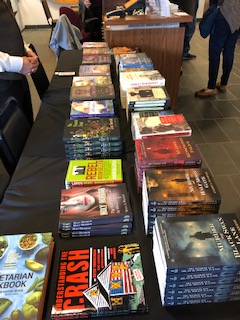
Cover Copy

If you’ve ever wondered why the same images appear on book covers over and over, there’s a fairly simple explanation.  (I should specify, by the way, that I mean academic press books.  The pockets of trade publishers are apparently bottomless.)  For many in the humanities the choices come to the same set of classical paintings that are out of copyright.  Now, in a capitalist system, copyright is a necessary idea.  It protects those who create intellectual property from being taken advantage of.  Their work is treated like a physical object, so an accurate image of a painting is the same as the painting itself.  But if you’ve ever been to an art gallery you know that’s not exactly true.  Art galleries show us that being in the presence of the real thing is different than seeing a reproduction.  But I digress.

Books are not only recognized by their covers, but sold by them.  It’s a strange industry and part of the reason why goes back to one of those eye-glazing-over court cases involving (yawn) taxes.  In 1979 the Supreme Court ruled that companies could no longer devalue old stock for tax purposes.  This was the Thor Power Tool Company v Commissioner case.  The court ruled old stock had to be assessed at value.  While this was about manufacturing, it deeply impacted books.  Publishers now had to destroy old stock (and books are printed in quantity) or face heavy tax consequences.  This led to books being pulped much more quickly than usual (they could then be written off as losses) and directly impacted the book cover.

Despite the old adage, every publisher knows people do judge books by their covers.  Since 1979, extra care has been given to covers to make books sell quickly, and in significant numbers.  Now granted, your nuts and bolts will still be useful in future power tools, but books sell differently.  A typical book has a three-year lifespan.  Sure, there will be those (like yours truly) who’ll buy a book that’s been out for a while, but most books are considered dead after year three.  That old stock is a liability and pulping is common.  It seems an inglorious end for such a noble product.  Not to mention wasteful.  Academic books have similar covers because copyright images are often too expensive to license for covers.  Constantly publishers have to guess as best they can how many copies will sell because old stock is too expensive too keep.  Print on demand has changed a lot of things as well, but that’s a different story.   Covers still do count.


New Physics

Maybe it’s time to put away those “new physics” textbooks.  I often wondered what’d become of the old physics.  If it had been good enough for my granddaddy, it was good enough for me!  Of course our knowledge keeps growing.  Still, an article in Science Alert got me thinking.  “An AI Just Independently Discovered Alternate Physics,” by Fiona MacDonald, doesn’t suggest we got physics wrong.  It’s just that there is an alternate, logical way to explain everything.  Artificial intelligence can be quite scary.  Even when addressed by academics with respectable careers at accredited universities, this might not end well.  Still, this story to me shows the importance of perspectives.  We need to look at things from different angles.  What if AI is really onto something?

Some people, it seems, are better at considering the perspectives of other people.  Not everyone has that capacity.  We’re okay overlooking it when it’s a matter of, say, selecting the color of the new curtains.  But what about when it’s a question of how the universe actually operates?  Physics, as we know it, was built up slowly over thousands of years.  (And please, don’t treat ancient peoples as benighted savages—they knew about cause and effect and laid the groundwork for scientific thinking.  Their engineering feats are impressive even today.)  Starting from some basic premises, block was laid upon block.  Tested, tried, and tested again, one theory was laid upon another until an impressively massive edifice was made.  We can justly be proud of it.

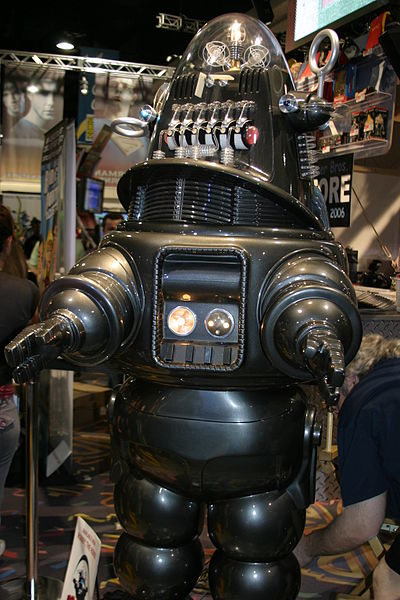
Image credit: Pattymooney, via Wikimedia Commons

The thing is, starting from a different perspective—one that has never been human, but has evolved from human input—you might end up with a completely different building.  I’ve read news stories of computers speaking to each other in languages they’ve invented themselves and that their human programmers can’t understand.  Somehow Skynet feels a little too close for comfort.  What if our AI companions are right?  What if physics as we understand it is wrong?  Could artificial intelligence, with its machine friends, the robots, build weapons impossible in our physics, but just as deadly?  The mind reels.  We live in a world where politicians win elections by ballyhooing their lack of intelligence.  Meanwhile something that is actually intelligent, albeit artificially so, is getting its own grip on its environment.  No, the article doesn’t suggest fleeing for the hills, but depending on the variables they plug in at Columbia it might not be such a bad idea.


The Nature of Nationalism

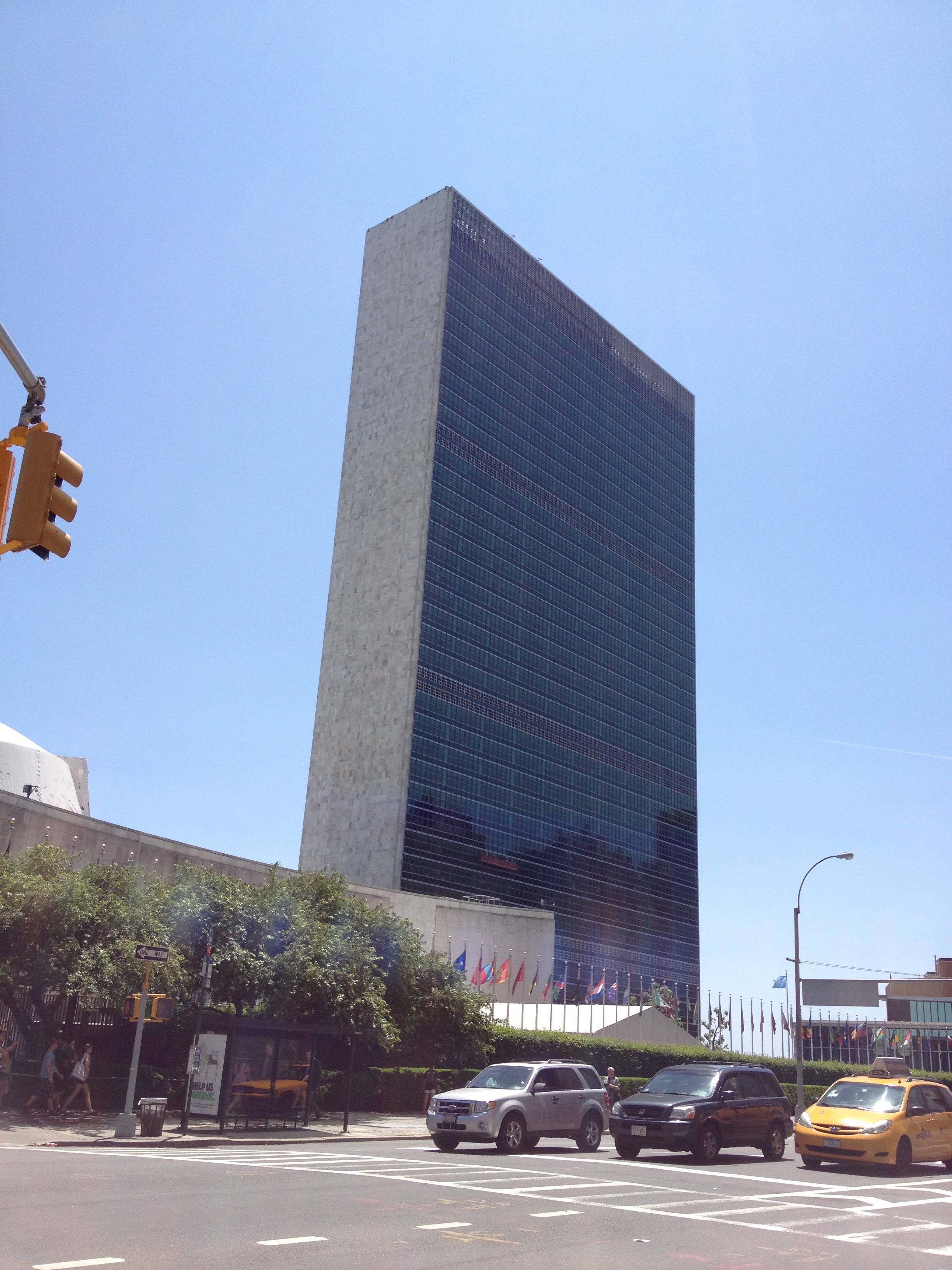
I was recently reading about China.  The particular take of this piece was that China began, just over a dozen years ago, an attempt to become the world’s recognized superpower.  As I read about its aggressive stance in many areas (investment in tech, foreign relations, military), and realized that the United States had done a similar thing after the Cold War ended, I began to wonder who we’re all trying to impress.  Like many people I believe America has had it good for quite a long time.  (At least for some of us.)  I also believe we have used underhanded ways to get to this point.  Trump has definitely set us back on the world stage, but as China is investing in science and tech, we’re polishing off our Bibles.  (Take a look at the Supreme Court and disagree, if you can.)

In a world that has enough for all, why do we find it so hard to share?  Growing up with the Bible I was pretty sure that was the central message.  Instead, we seem to want to become the Nebuchadnezzar of the world, the great—well, you know—Babylon.  Ironically, Babylon doesn’t fare too well in Scripture’s final book.  Nationalism, it seems to me, is a great problem.  People seem unable to feel good about who they are without hating those of different countries.  It would seem that globalization should’ve taught us a thing or two about that.  Perhaps it’s the nature of our leaders—people who promote themselves until there’s no further ladder to climb beyond world domination.  Is that what we’ve come to?  Is there any hope?

I keep wondering who such people think the final arbiter will be.  Hasn’t history demonstrated over and over and over again that those who think too highly of themselves will be remembered most poorly?  Do they lack the capacity to see from the viewpoint of other people?  Our political and economic systems reward those who step on others and who think highly of themselves, it seems.  Capitalism especially dwells in the fantasy world of endless growth in a limited environment.  Combined with the restless curiosity of science and rapid growth of technology, this system seems set to go off the rails.  Especially when world leaders see each other in competition with one another instead of working cooperatively for the benefit of all.  No, I don’t believe Utopia is possible—there are too many self-interested leaders for that ever to work—but I do believe that national agendas that overlook differences (think the European Union) are far more worth our time than trying to become, or remain, a “super power.”


Remember the Doorway

I’m glad it has a name.  And I’m also, relievedly, glad it’s normal.  The Doorway Effect.  I’m sure it’s happened to you.  You walk into a room and immediately forget what you came in for.  I’ve been afraid of some early onset of something because I’ve noticed it more and more, but it turns out that this is a normal brain function.  A recent article by Jessica Estrada explains that our brains are constantly framing.  A large part of that framing has to do with our physical location.  When you step through a doorway that framing changes and some of the residue (what I came in here for) might easily get left in your previous location.  In other words, it seems to be an effect of humans making different rooms for different purposes.  Our thought lingers in the place it was first born.

Photo by Filip Kominik on Unsplash

Our brains are fascinating organs.  Every time I read about how children’s brains form, I wish I’d studied psychology instead of religion.  How we could help our children if we understood what their brains just aren’t capable of doing just yet!  How many spankings could have been avoided if parents understood brain development?  Beating someone doesn’t teach anything.  Instead, we might try to learn how minds use brains.  Young boys can be quite reckless.  One of the reasons?  Their brains haven’t developed enough yet to think through the consequences of their actions.  Yes, they can push limits for other reasons, but their thinking simply doesn’t yet involve adult caution that (hopefully) comes with a developing brain.  One of the real consequences of this, for which I’ll volunteer as a poster child, is religion.

Children’s brains are not developed enough to accept and comprehend religious thinking until they’re about 12.  We’ve known this for many decades now.  And yet, the theology of parents means they try to convince their children of religious truths before their brains are developed enough to sort it out.  Look at Congress and the Supreme Court to see the results of this.  Most people never seriously question their religion.  For many it was instilled in them as children, before their brains could properly process it.  The rest of the country pays for it with laws then enact.  We’ve known about this for decades and have decided that studying religion is a waste of time.  But I digress.  Now I forget what I started to say when I began this post.


Conflicting Lifestyles

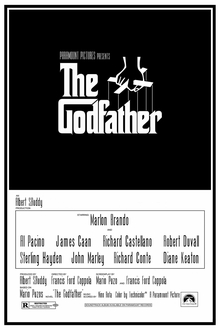
Sleep patterns often don’t fit with work patterns.  The reason I wake up so early is that for years I had to do it to get to Manhattan.  For work.  Since ending the commuting lifestyle four years ago, I haven’t been able to adjust back to normal, whatever that may be.  During a recent heatwave weekend, when it wasn’t really conducive to be doing yard work, I suggested to my wife that we watch The Godfather on Sunday afternoon.  Somehow I thought it was only two hours, but it is actually much closer to three.  Now this Coppola film is considered one of the greatest movies of all time and I have literally wanted to see it since 1972.  There were no VCRs in those days and life has been, well, busy since college days.

It is a powerful movie, even today.  I knew the basic plot and I started to read (I can’t recall if I finished it) the novel in the early seventies.  All I know is that I sat engrossed as the temperatures tempted 100 degrees outside.  Because I awake so early Sunday afternoons are often sleepy times for me, but I don’t nap.  Napping leads to long nights and I awake early no matter what.  The movie doesn’t allow for a lapse of interest.  One of the scenes that had the most impact is when Michael is attending the baptism of his godson and the priest asks him if he renounces Satan intercut with scenes of his hitman killing his rival family bosses.  The religious nature of the violence in the story is perhaps one of its most shocking elements, even today.

That night it was still hot, and all the water that I drank during the day made itself rather urgently felt around 2 a.m.  The trick to the late night bathroom run is to keep your mind shut off.  Although The Godfather ended nearly twelve hours earlier, it crept back into my head, keeping me awake after that.  Of course, I had a full day of work—there are no allowances for aging in this thing of ours called capitalism—ahead.  The thing is, when else do we find three consecutive hours to catch up with a cultural landmark but a Sunday afternoon?  Are you supposed to take a vacation day to do it?  I have no regrets about having watched the movie—it was like an offer I couldn’t refuse.  It’s just the rest of life that, well, simply won’t compromise.


Woman in the Wilderness

The “Burnt Over District” is religious historian shorthand for upstate New York.  That particular region, during the “Second Great Awakening,” spawned so many religions and hosted so many revivals that it was difficult to believe anything more could sprout there (thus, “burnt over”).  One of my great fascinations is the origins of religions.  Not only that, but where those religions began.  On a continent-size level, Asia is clearly the champion, with all of the “big five” beginning there.  But religions evolve, sometimes rapidly.  Christianity in Britain gave rise to such groups as Quakers and Anglicans, and, in a post-Christian phase Britain gave the world Wicca.  The Germans were also great religious innovators with Luther and the Pietist and Anabaptist traditions.  Perhaps it’s in the Anglo-Saxon blood to make religions new.

After visiting Ephrata Cloister recently, my mind naturally turned to the “Hermits of the Wissahickon.”  If you’ve not heard of them, you’re not alone.  They, despite being men to a man, preferred the title “Society of the Woman in the Wilderness.”  They were followers of Johannes Kelpius.  Kelpius, like Conrad Beissel after him, was a German mystic, Pietist, and musician, and he also believed the end of the world was imminent.  This was in 1694, just a few years before Beissel laid the foundations for Ephrata Cloister.  Like Beissel, Kelpius decided Pennsylvania was the best place to set up camp.  Although founded by Quakers, Pennsylvania offered something some other colonies didn’t—real religious freedom.  Given that you could be killed for being a Quaker in some of the other colonies, this didn’t seem like a bad idea.  Convinced Jesus would return in 1694, Kelpius and his followers settled into a cave just outside Philadelphia, by the Wissahickon Creek.  They set up a quasi-monastic community to wait out the clock near the city of brotherly love.

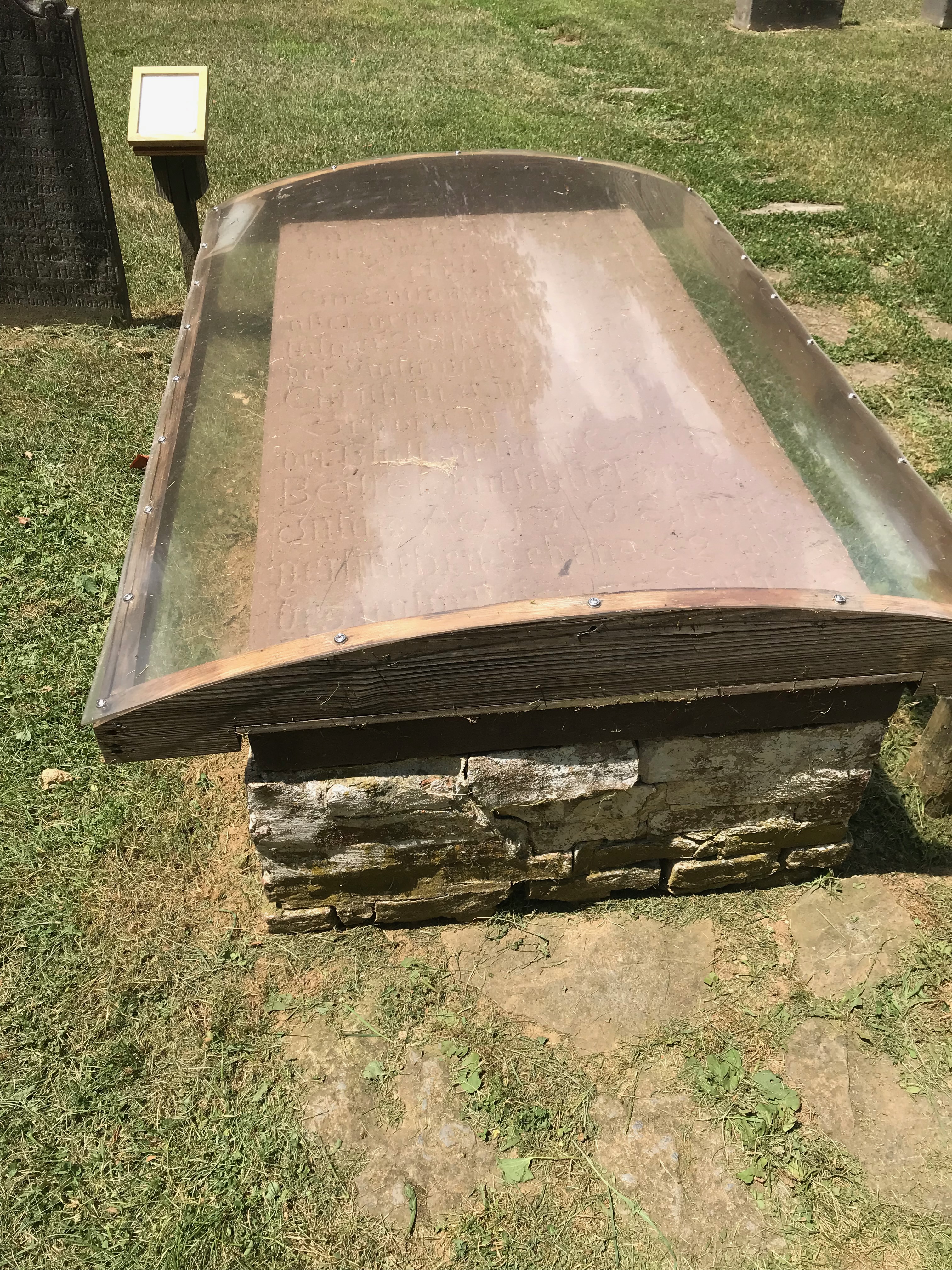
It’s difficult to know if Conrad Beissel was consciously imitating the work of Kelpius.  Religious leaders tend to have pretty strong views of their own outlooks.  The draw to Pennsylvania, in those days, was strong.  Interestingly, both Kelpius and Beissel are remembered for their music.  The death of Johannes Kelpius isn’t as well documented as that of Beissel—you can see the latter’s burial place in Ephrata.  Like millions of others, Kelpius lived through the “great disappointment” of not having the Second Coming occur when he supposed it would.  Some suggest Kelpius believed he would be translated after death.  He died in 1708, as his younger colleague was exploring the wilderness several miles to the west.  Keplius’ final resting place is listed, perhaps fittingly, as “unknown in Pennsylvania.”

Beissel’s Grave, Ephrata Cloister


Yep, Nope

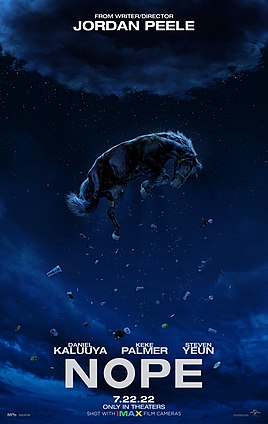
I can honestly say that I’ve never seen a movie that starts with a quote from Nahum.  I also honestly admit that Nope left me scratching my head, but very glad to have seen it.  I trust Jordan Peele implicitly as both a screenwriter and a director, and I know I need to see Nope again to make it all fit (if that’s possible).  His movies are the most Twilight Zoneish things out there, and despite Peele’s reported reason for naming the film Nope, I’m going to keep watching the skies.  It’s clear he had done his ufological homework.  Even the idea that—SPOILER ALERT—have you seen it yet?  Are you going to?  You might want to finish this later, if you haven’t—they are biological entities has been widely discussed.  

Although classified as horror, Nope has mercifully few jump startles.  In fact I noticed (there were maybe only 10 of us in the theater) that one couple had brought their kids.  I can imagine they had some interesting discussions on the car ride home.  For me, driving home alone, I felt like I’d watched Close Encounters, Twister, Signs, and Arrival simultaneously.  Peele set out to film a spectacle and he did indeed.  Horror has become more intelligent of late, and there’s so much going on here that I’ll need some time to sort it out.  The online nattering suggests the Nahum quote (“I will cast abominable filth upon you, make you vile and make you a spectacle”) reflects Peele’s thoughts on the Bible.  A more literal take might see the evacuation of waste creating a spectacle, which it does.  How to explain the angel form of the creature?

Alien horror works.  Alien sees them deep in apace, but many films, such as Fourth Kind, see them closer to home. Fourth Kind, also by an Africa American director (Olatunde Osunsanmi) never received critical acclaim, but I thought the first half was impossibly scary.  It’s natural enough to fear those we don’t understand.  Perhaps that’s one reason we tend to deny their existence.  If we deal with them in fiction we can call it horror and go home happy.  Nope asks us to consider whether our differences matter so much in the face of a non-discriminate predator that eats any human that enters its territory.  Even if they were there first.  I still have a lot of questions about the movie.  Some of them will likely never be answered.  One that will is “Do you plan on seeing it again?”  The answer is yep.