Reflecting on Light

Now that we’re approaching the winter solstice, light is pretty much on the minds of those of us in the northern hemisphere.  Or lights.  The use of Christmas lights and Hanukkah lights may have symbolic value to the religions that promote them, but both also reflect the pagan use of sympathetic magic to bring back the light.  Human beings tend to be visually oriented, and many of us feel the increasing darkness deeply.  Days are brief enough to be awake for the entirety of daylight’s duration, and then you still have to get home after work.  After dark.  All our enlightened hours are spent for the benefit of the company.  It takes its toll.  And so we string holiday lights, bringing cheer into the preternaturally long hours starved for illumination.

Although the snow hasn’t stayed around here, I did notice an interesting reflection of light outdoors the other day.  The windows of a house were casting a light-shadow on a fence that had the look of a cross.   It took some convincing to assure me that this was pareidolia—the assigning of intentionality to random “signal.”  We see faces where they don’t really exist, and when we see crosses in this evangelical haven of America we have to assume they’re intentional.  Sometimes, however, they’re simply a trick of the light.  The sun has a low angle this time of year, and the light that is otherwise scattered back into what is wonderfully termed airglow—the natural illumination caused by sunlight as its luminosity brightens the daytime sky—is focused lower.  Light takes shape and sometimes it seems religious.
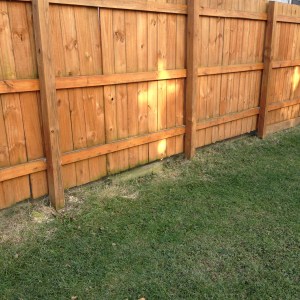
 

In New York City, where repeated patterns are pervasive, such reflections often appear on neighboring buildings as “X-Files” symbols of Xs in circles, giving the city a mysterious look.  Out here, however, they appear as crosses.  You see what you want to see.  Or, sometimes you can’t help seeing what appears utterly obvious to credulous eyes.  I’ve had people insist that crosses like this are intentional.  In reality, they’re a natural result of rectangles reflecting the morning light when the sun follows its low profile ecliptic during the waning of the year.  That doesn’t mean that it can’t be read for something else, of course,  Religion is all about interpretation.  Light forms patterns and seems strong enough to banish darkness.  And given how many hours it’s dark these days, I’m willing to take what help I can get.  The solstice will soon be here.

Exegeting for Peanuts

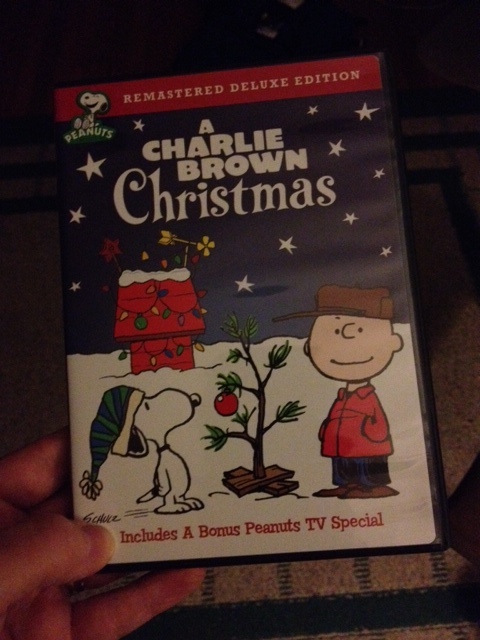
Peanuts, the cartoon, is about as pure as the Bible itself. Like the Bible it is included in ritual, as in the annual viewing of A Charlie Brown Christmas in our home. I grew up in the generation that eagerly awaited the special to be aired on television (if you don’t know what I’m talking about, ask your parents). When we were finally feeling affluent we purchased the DVD to continue the tradition with our daughter. Last night as we watched, however, it struck me that, like the Bible, many variant traditions are present in A Charlie Brown Christmas. I began to suspect a kind of documentary hypothesis. The program begins with Charlie Brown, in his house, wearing his famous yellow zigzag shirt and black shorts, getting ready to go outside. This must be the oldest tradition since wearing shorts in the winter is the lectio difficilior, or the more difficult reading—any good Bible scholar knows the more difficult text is most likely to be the original because later scribes try to make the story make sense. I’ll call this Urtext C. The crisis is evident because as Charlie Brown pulls on his coat to go outdoors, he is wearing shorts. He steps outside in the next scene wearing long pants. This represents a harmonization by a scribe uncomfortable with a child on a snowy day outdoors in shorts—a simple scribal correction. This source, designated H for long pants (lange Hosen in German), subsequently appropriates the script since Charlie Brown is not shown wearing shorts again.

When Charlie Brown consults with his psychiatrist, Lucy van Pelt, however, the real evidence emerges. Lucy’s sign on the front of her stand originally reads “The doctor is out,” each of the first three words occupying its own line. When Lucy spies Charlie Brown she runs over and switches the “out” sign to one that reads “real in,” representing the story line of H. When the tight shot to emphasize “real in” closes on the desk, however, “The doctor is” has now come to occupy two lines instead of three, “The doctor” sharing the top register, and ‘Is” on the line with the new status of the analyst. This is the work of S, the Schilderhersteller, or Sign Maker. A further variant tradition appears in the shot of the two characters talking since “The doctor is real in” once again occupies three lines. Either H is reasserting itself or D, the Deutero-Schilderhersteller has tampered with the text. When the desk is then shown with epigraph “The doctor is in” on three lines, we are clearly dealing with a redactor with literalist tendencies, L, or perhaps this is C, our Urtext, having been further elaborated as “real in” by S, for obviously theological reasons.

The composite nature of the script is even more evident with the Christmas tree. When purchased by Charlie Brown and Linus, the tree has three branches, obviously a reference to the Trinity, so a later addition. It is easier to explain branches taken off a tree than a dead plant growing new ones. In the auditorium, however, the tree has five branches. In the next scene, six. When Linus gives his hortatory address, the tree is shown with four branches. Then in the following scene, seven. When Charlie Brown attaches an ornament, the tree again has five branches (an obvious nod to the Pentateuch), but when the children decorate it, it has transformed into a full tree on which it is impossible to count the number of branches. This will take a more adept scholar than me to unravel. I’ve lost track of the Urtext. Could a university-employed academic help me out here?

If any of this sounds far-fetched to you, remember that Charles M. Schulz bore a German name. Like Moses, he gave us the original text, and like Graf and Wellhausen, he forever changed the way we viewed the faith tradition. It is my hope that you enjoy the holiday season. I’m going to be too busy trying to piece together the corrupt tradition of that miraculous tree.

Final, canonical form.

Final, canonical form.