More Than It Seems

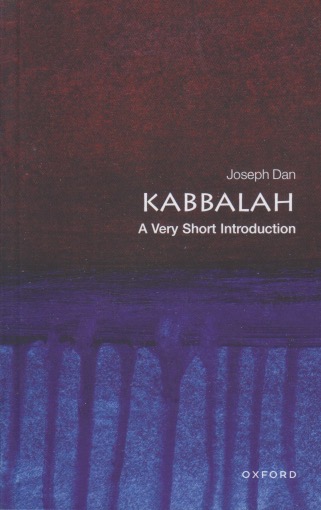
One of the most fascinating mystical concepts is the idea that words and individual letters have some kind of magical power.  This is perhaps illustrated by the way certain words gather an aura of mystery that can be quite unlike their original denotation.  “Kabbalah” is one such word.  The reason I read Joseph Dan’s Kabbalah: A Very Short Introduction is that I’d found myself growing increasingly confused by the usage of the word.  Given that this is me writing, it was a horror movie that got me wondering.  In one of the movies discussed on this blog (happy hunting and viewing!) one character tells another something like, “It’s the Kabbalah.”  This is said in reference to an ancient and mysterious book.  There is not ancient and mysterious book called The Kabbalah.  So what is it?

I’m not going to be able to give a satisfactory answer to that here.  Dan has about 30,000 words to describe it and he admits that’s not really sufficient.  Sometimes I think, if one could make a living doing it, I’d have been content to sit at the feet of rabbis to learn the depths of the many ancient books Judaism has given the world.  I first became aware of some of them in college, majoring in religion.  At each step of my education and career I’ve uncovered more and more.  Reading this little book added yet further examples.  Judaism, and its direct descendant Christianity, were full of books.  They still are.  And books are full of words and perhaps these words have some kind of mystical power.  But wait, the point of this brief tome is to suggest the word itself isn’t just about mysticism.

Kabbalah can refer to many different things, some of them hardly mystical at all.  For the modern usage of the word, which includes Christian as well as Jewish Kabbalah, we have to get to, well, modernity.  The concept stretches far back in Judaism and means basically, “what is received.”  The initial reference is to Moses on Mount Sinai.  Then there’s the oral Torah, codified in Mishnah and Talmud.  And books, so very many books!  The rabbi is one of those permitted to, and sometimes expected to, come to know these ancient texts and their modern applications.  That’s not to suggest Judaism is particularly mystical.  It can be, just as Christianity can be, but isn’t necessarily so.  It’s complicated.  If you’re curious, whether because of a horror movie or not, I can recommend this book.  It’ll give you plenty to think about, and even more to read and learn.


Movie Ancestors

I’ve read quite a few Very Short Introductions, but this one struck me as particularly good.  Donna Kornhaber knows how to write for non-specialists, and she knows how to single out what’s interesting in the vast collective known as Silent Film.  As is the series trademark, this book is very brief, but it covers the essentials.  Kornhaber divides the silent film era, roughly 1895 to 1927, into three periods: early cinema, the transitional period, and the classic era.  During each of these, new developments demonstrated the sophistication of the industry and groundwork was laid for cinema as we know it today.  I learned quite a lot from this short treatment—so much that it’s difficult to know how to summarize it here.  Of course, it’s short so you can read it for yourself if you’d like to learn more. 

Perhaps what stood out to me the most was the correction of a misperception that, I hope, is not unique to me alone.  I’ve always thought of silent films as being grainy, poorly exposed, and choppy when showing people’s movements.  Kornhaber explains that most movies were of sound quality in their day, when projected properly.  Early film stock deteriorates, however, and not all stock was properly preserved.  This accounts for the graininess and the sometimes “overexposed” look of such films.  Even modern projectionists don’t use the proper speed and that leads to choppy motion.  In their own day, and with film handled by people who knew their business, early movie goers would have experienced realistic, well-rendered images.   These issues are our issues, not those of the original footage.

Another feature of the book is its focus on diversity in filmmaking.  Early silent film was dominated by France and the United States, but several other nations contributed to what we now think of as standard elements of cinema.  And the fact is that until sound was introduced many women played important roles in the development of what we expect from films.  Women directed.  Became business-savvy.  Ran their own studios.  Once the industry established itself as particularly lucrative, men began to edge women out.  The majority of early films—Kornhaber suggests around 80%—were lost as studios saw no reason to preserve them once “talkies” were the way to make money.  Consequently we’ve lost a good part of that early history.  We pretty much take movies for granted.  We can stream them any time, and we know what to expect (roughly, anyway).  What we don’t often consider is how much we owe to those who established what the movie-going experience should be, and did so before sound was added to the mix.