Absalom v. Occam

Getting a haircut is like going to confession.  You don’t go as often as you probably should, and you feel embarrassed and awkward when they ask how much you want taken off.  The penance of looking funny several days afterward ought to be punishment enough, without your head feeling cold once shorn of its natural covering.  At least in my experience.  The truth is I like long hair.  Biblical-length hair.  The truth is also that many people think it inappropriate for a guy my age.  I always eventually bow to peer pressure, but it can take a while.  Beautician forgive me, it has been six months since my last haircut.  Absalom, after all died because of his long hair. O Absalom!

This isn’t just idle musing on my part.  I grew up in the Evangelical tradition that is now ripping our nation apart.  One of the greatest markers of that faith is conformity.  In college I learned to call it the “Evangelical haircut.”  Any guy who had hair over his collar or ears was suspect of not being “Christian.”  I began to notice that this same mindset preferred well manicured lawns, cutting down trees and keeping outward appearances neat and tidy.  There’s no better way to mask what goes on internally than to present an outward look of a well-ordered world.  Getting a haircut always brings this back to me—it is a statement being made.  I’m not sure how to explain this to the poor girl standing there with scissors in her hand.  I don’t want to look Evangelical!

Of course, the beard helps.  Until recently Evangelicals didn’t permit beards.  The girls in college said they made men look unclean.  As if they were never washed.  And these days some Evangelicals have come to support the stubble beard—electric razors, those allies of Occam, can be purchased to keep the half-way bearded look fresh.  I prefer to get my money’s worth out of a haircut.  I also prefer to signal that I am not one of them.  Absalom may have been an overly ambitious young man, but despite Michelangelo’s famous statue, David the man was himself in all likelihood bearded and might’ve sported a mullet.  Samson wore dreds.  Uncomfortable with history, Evangelical illustrators in the ‘80s began portraying Jesus with a Roman haircut and neatly trimmed beard.  Perhaps I’m overthinking this, but now that I’ve got Samson’s fate in mind I find it difficult to open the door, knowing I’ll walk out after confession not feeling so much redeemed as just plain chilly.  Even Absalom, I remind myself, had his hair cut once a year.

O Absalom

It feels like confession every time I go to get my hair cut. I sit in the chair and a girl younger than my daughter looks perplexed when I explain it’s been a few months since my last shearing. “Forgive me, daughter, for I have sinned…” Haircuts take too much time is the truth of it. I’ve never been one to worry overmuch about outward appearances. I’m an internal kind of guy. I’ve never liked shaving and I can’t really see giving up ten more minutes of my busy morning than I have to, only to hover a sharp blade near my already beauty-challenged face. No, the scissors trim takes just a few minutes once a week or so, and everything’s good for a few more days. But the haircut is more on Absalom’s time schedule. Frankly, I just don’t think about it. Suddenly hirsute.

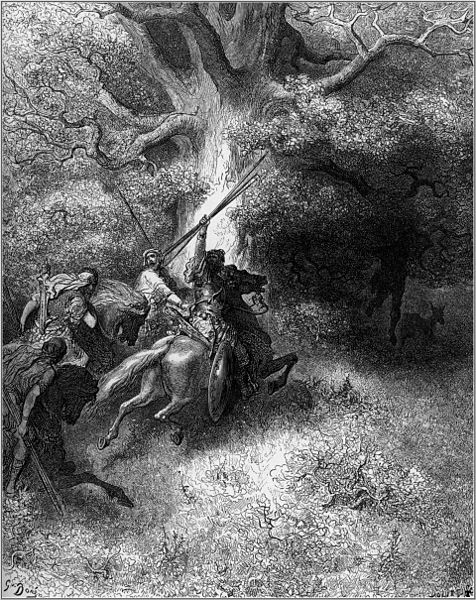
Absalom’s hair was both his pride and his fall. Usurping the kingdom from David, Absalom had a head of hair that left the girls screaming. Then, routed in the forest, his head got caught in a tree. The Bible doesn’t say specifically that it was his hair, but use your imagination. In antiquity, hair meant something. Alexander the Great was known for his luxurious locks. Even the word “Caesar” means “hairy.” Hair was considered a natural head covering, a kind of piety that required little effort. Ironically in evangelical circuits the Roman haircut and clean-shaven look predominated. I had a job after college that required me to shave my beard since “customers don’t trust a man with facial hair.”

But I’m not into hair for the fame. I just don’t have the time. Weekends are scarce and short and I’ve got a lot to do. I’ve got a book that needs publishing and a life that needs living. I can do it with long hair. I can’t do it without time. Absalom spent his free time plotting. His coup was the result of careful planning. I’m sure he didn’t stand there outside the city gates thinking, “people would like me better if I had short hair.” Quite the opposite. In this country of clean, biblical living, however, we’ve opted for the razor and scissors. I’ve had people ask if a beard is hard to keep clean, as if I’m a dirty old man under these silver strands. Hair and beards can be washed and be as hygienic as any person can be in New York City. I just take care to duck when I go under trees.


Hair to the Throne

Absalom was the first of the big-hair rock stars. According to the book of 2 Samuel, his hair was so luxuriant that he had it cut once a year and it weighed two hundred shekels (about five pounds, not sterling). This little bit of foreshadowing in 2 Samuel 14 will appear again in the story of Absalom’s demise, as he is caught in a great oak tree by his untrimmed hair. I’ve always related to Absalom on the coiffure issue—I don’t like getting my hair cut. In my more self-analytical moods, I relate it to having stepped on a bee’s nest as a child and having received multiple stings on my bare legs. That horrible buzzing of bees in my ears stayed with me, and whenever the girl at SuperCuts grabs the clippers and the bee-like drone nears my ears I flinch in terror. Like Absalom I have rather an abundance of hair, and so when I’m shorn, it is easily noticeable. I don’t like people to comment on it, however. One of the most banal phrases, not to mention an utter tautology, is when someone smartly observes, “you got a haircut.” With what am I to follow this up? “Yes—I was feeling a bit too much like Absalom in the forest of Ephraim where Joab found him dangling in the tree after David followed the advice of Hushai instead of Ahithophel”?

Gustave_dore_bibel_death_of_absalom

While walking through a mall recently, I commented to a friend how all the stores seemed to be clothing and shoe stores. You never find a bookstore any more, or museum shops, or anything approaching profundity. People really mostly care about what they look like on the outside. I’m more of an interior guy. Not among those generally cast among the hunky, good-looking examples of masculinity, I’m small, bookish, and still wear clothes that I’ve owned for two decades. My hair is usually out of control as well, but not in a fashionable Einsteinian way. I am, I fear, the heir of Absalom.

Religion used to be a source of profundity. It was, once upon a time, the queen of sciences, and philosophy was her handmaid. Seeing the way that religion appears in the media today, however, I’d have to guess she’s been shopping at the mall. Those who measure religion by the cut of her hem rather than by how deep her thoughts may be, have brought her into the limelight of popular culture. She used to be all about the meaning of life and offered a reason for many of us to get out of bed in the morning. Absalom’s trouble started out when he fell in lust with his half-sister Tamar. His addiction to appearances led him to bad decisions that ultimately divided David’s kingdom and cost him his very life. And I guess that’s the price you pay for not getting a haircut on a regular basis.


Hair Cut

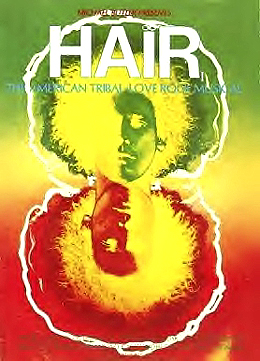
“This is the dawning of the age of Aquarius.” So we hear in the first number of the musical Hair. Since my daughter is learning about the 1960’s counter-culture in US History, she asked her middle-aged parents what life was like then. Well, my wife and I were both born in the early sixties and were a little young to get the full scope of things through juvenile eyes. Besides, I was raised in a biblically literalist family—probably not the best place to gain a great deal of insight into popular culture. We decided to watch Hair instead. One of the few aspects of that era I recall is the Vietnam War (something George W. Bush apparently didn’t remember). The optimism of the hippie movement never really came to fruition leaving an entire era of disillusionment to hang over the remaining years of the millennium. Nevertheless, there is a sense of freedom in Hair that conveys the exuberance of young idealism—something I can honestly claim to have never outgrown. Without idealism we, as a species, are lost.

As I watched the movie for the first time in years its biblical subtext occurred to me this time around. The identity of the youthful protestors is in their counter-cultural hair. Indeed, the show takes its very name from that aspect. Apart from the ubiquity of the hirsute righteousness on the screen, it is essential to the plot. As Claude Bukowski stops in New York City on his way to join the army, he falls in with the Philistine element of society—the long-haired (read uncircumcised) misfits who defy the principles of decency. The dinner party at the Franklin residence makes that perfectly clear. When thrown in jail Woof protests over-strenuously to having his hair cut, leading to the title number. When the friends decide to visit Claude on the army base on the eve of his departure for Vietnam, George Berger has his hair shorn (by a woman) and subsequently loses his strength. His vital force of arguing his way out of any predicament is sapped as he marches to the troop transport plane that flies him to his death. Singing about believing in God as he goes.

I have never used drugs—life has a way of being weird enough already without them—but the sixties seem to have had a moral righteousness that the Tea Party just can’t claim. It was a righteousness borne of speaking the uncomfortable truth to a society that honored the status quo above all else. The very status quo ante the Tea Party craves—a society of bigotry and inequality. A society of privilege and strict conformity. A balding society that has lost its voice. Drugs are not necessary to see unbelievable things. One of the Bible’s original Avengers, Samson tears his Hulk-like way through any crowd, felled only by the cutting of his hair. Hair also led to the death of Absalom, the son whose life David valued more than his own. At the end of the show it is quite clear where the righteousness really lies.


Athtar in Wonderland

Last night I finally got around to seeing Alice in Wonderland, the Tim Burton version. As a child I don’t recall having seen the overly optimistic Disney original, and I only read Lewis Carroll’s two-part, disturbing original after I had finished my undergraduate degree. When I first discovered Wonderland I was in one of my periodic phases of questioning reality and Carroll’s provocative prose and ingenious lyric ability only made the inquiry more complex. Strangely, it felt as if I had rediscovered a missing piece of my own childhood.

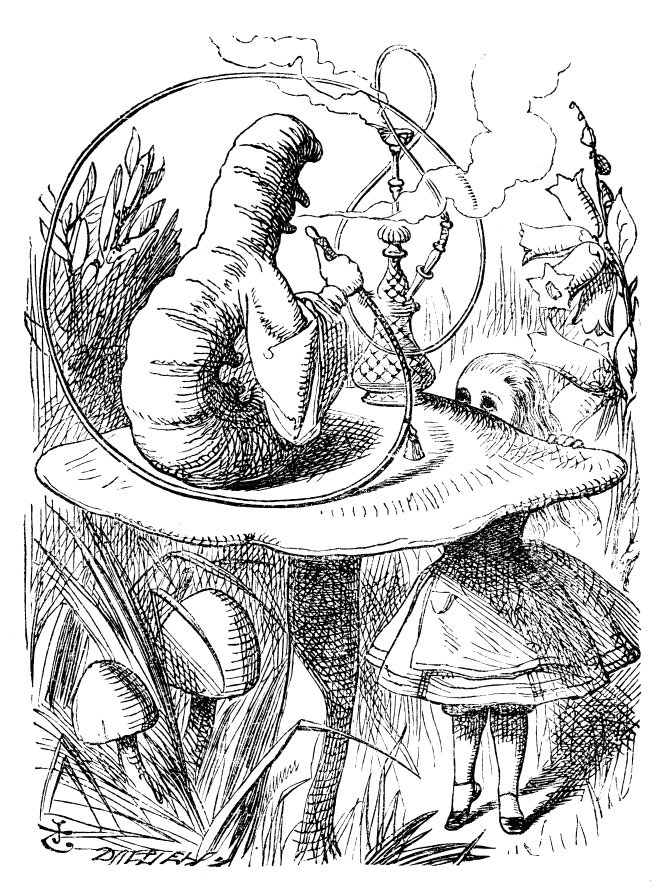
Burton’s versions of childhood stories would likely have been my preferred fare had they been available when I was young. Eerie without the overt horror of an R rating, the vision is one of a world where uncertainty reigns supreme. Then came the hookah-smoking caterpillar. It has been a few years since I’ve read the book, but I don’t recall the larval character as having a name. Linda Woolverton, the screenwriter, presumably gave him the name Absalom. Supposing this to be nothing more than the reassignment of a fated biblical name associated with failed attempts at kingship, I simply let the reference pass. Until the chrysalis scene. There he was, Absalom hanging from a plant, just like David’s son swayed from a tree according to 2 Samuel. This mysterious scene in the battle of Ephraim Forest had captured my attention before when I wrote an article on Absalom, eventually published in the Journal of Northwest Semitic Languages.

Noticing the strange phrase that Absalom was suspended between heaven and earth, I suspected that this might be a reflex of the ancient morning star (Venus) myth. The story of Athtar, the god who would be king but who must decline the throne, is a brief tale preserved in the Ugaritic Baal Cycle. As I watched the sage caterpillar giving wise advice to a confused Alice, the name Absalom took on new significance for me. I have no way of knowing if the reference was intentional or not, but in a culture deeply suffused by the Bible it would appear to be a logical guess. And if I was correct in my article, I was seeing a cinematographic reference to Athtar as a blue caterpillar last night. Wonderland indeed.

Curiouser and curiouser