Little Bang

I’ve always been interested in the sky.  At times it feels like I’m in love with it.  Having attended a Sputnik-era high school—a rural high school with an actual planetarium!—I took the offered astronomy course.  Buoyed up by this, I also enrolled in a college astronomy class only to discover that that career track involved far too much math for my humble abilities.  Still, I learned a lot about the nighttime sky.  I’ve also been a lifelong reader of lay science.  I very much appreciate scientists who write so that nonspecialists can understand them.  So it was that I was glad to see a New York Times letter by Adam Frank and Marcelo Gleiser titled “The Story of Our Universe May Be Starting to Unravel.”  I’ve mentioned Gleiser here before because I’ve read a couple of his wonderful books.  But this article was mind-expanding.

Frank and Gleiser suggest that the Big Bang Theory may, eventually, need to be replaced.  They point out that small inconsistencies have crept into it over the years (keep in mind that it was really only “confirmed” within my lifetime, back in the sixties).  Most of these have been patched up with quilt-work astrophysics, but the James Webb Space Telescope is making some of those past patches strain a bit at the seams.  Fully formed galaxies are being spied too far back in time (for stargazing is looking into the deep past) for the standard model.  They shouldn’t be there, but they are.  The letter interestingly raises the point that the scientific study of quantum physics, as well as that of consciousness, also strain the standard models.  Perhaps it’s time for a rethinking of reality?
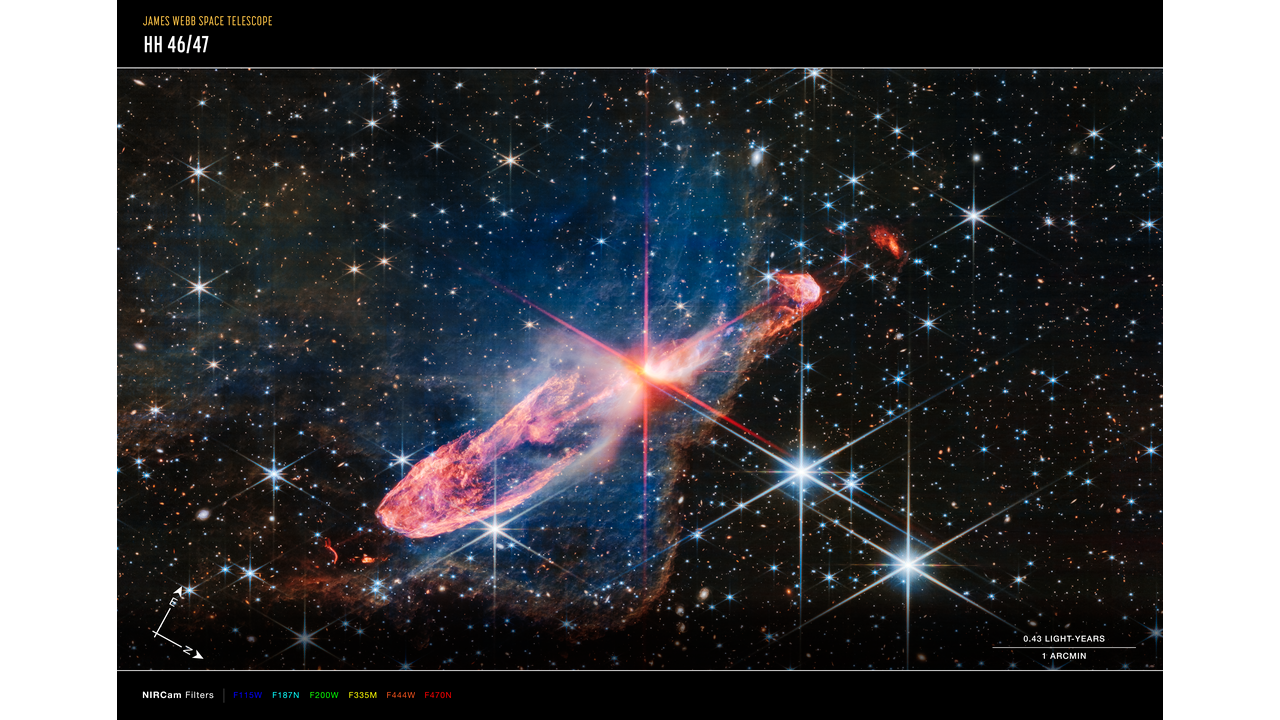
Image credit: NASA, public domain

Isn’t this breathtakingly exciting?  To be alive when a major leap of understanding the universe we call home may be discovered?  The authors point out that cosmology and philosophy often have to interact.  Our understanding of the universe is a human understanding, not sacred writ.  The scientific method is built to be falsifiable.  If it’s not, it’s not science.  (This often separates it from some religions which declare themselves unfalsifiable, and therefore likely wrong.)  New scientific discoveries are made daily, of course, but new paradigms only tend to come on the scale of lifetimes, or several generations.  We don’t see them all the time.  I guess it’s heartening to see that the system works.  When science becomes orthodoxy, we run into similar problems that we encounter with religions.  A bit of humility and a ship-load of wonder can go a long, long way.

The Whole Truth

In a thoughtful piece on NPR, Adam Frank discusses “Are Scientific Truths Better Than Other Truths?(.)” He describes a Ivy League conference called to discuss this point, and although I get about as much attention as adults give Barney, I’ve been blogging about this topic for years now. If only I had an institution. Or an ivy leaf. But never mind that. The topic’s the thing, and indeed it is long overdue. Science works (at least most of the time) and so we don’t require any convincing on that point. The very title of the article, however, raises the specter of the question: are scientific truths better? There’s a lot of unpacking to do and I haven’t even left home yet. First of all, “truths.” Science provides the best explanation of phenomena that we have, given the data at the moment. Since science is, by definition, falsifiable, it doesn’t provide truths. As much as scientists must begrudgingly admit it, truths are spun out by philosophers and—God help us!—theologians. The scientists who want to give us truths should probably take philosophy 101.

microgaphia_schem_1_instruments

Then there’s that surprisingly difficult adverb “better.” Good, better, best. These are value words. Science cannot assess value. Gold is “worth” more than the lint in my pockets because humans have agreed that it is. Inherently, both substances are made of the same thing: atoms. The lint in my pocket may have more exotic elements than pure gold, but nobody’s going to pay anything for it. Value, as has been endlessly demonstrated, is in the purview of religion, ethics, and philosophy. If you have to you can add the dismal science to the mix, but even that is just a social science. No physicist can tell you if this meal is better than that. It’s a matter of perspective. If I value my beans enough, not even your pâté will tempt me.

I want to stick with this latter word “better” just a little longer. Perhaps because as an underemployed thinker I’m especially sensitive to the subject. In what sense is science “better” than humanities? Show me a scientist who’s never listened to music and I’ll show you a sad individual. When we come home from the lab we still want the creature comforts that people have devised whether through science, culture, or even religion. If you value that weekend, be sure to thank a monotheist. Science tells us no day of the week is any different than any other. In my experience there’s a world of difference between Saturday and Monday. For this inveterate and unrepentant humanities student, that’s the truth.