42 Shots

Many of us were raised with the figure of a divine father who is ready to whip off the belt for any infraction we may make, intended or not. On a more human scale, our criminal justice system locks people in prison often on the basis of race rather than purely objective considerations. The infographic below demonstrates this clearly. African-Americans are disproportionately represented in the prison population in a society that is still reluctant to offer true justice to all citizens. When these numbers are wrenched from statistics and brought down to personal levels, the results are distressing indeed. I recently read of the case of a promising youth who was in the wrong place at the wrong time. His lawyer, a prominent African-American, pled with the judge for leniency for this young man who had great potential. Time in jail, even in one for youth, would probably scuttle this boy’s hopes for a productive future. Being an American, though, I had no hope that this might end well for the boy. Still I read on as the judge sentenced him to jail.

None of us likes to be reduced to statistics. At the same time, some social-justice disparities are easily overlooked until they are placed in such stark terms. Xenophobia is a normal human reaction. In fact, it is displayed in apes and other social animals as well as in people. Its biological function seems to be group cohesion and safety. We’ve evolved beyond that, however. The great promise of the New World was freedom. Unless you were imported as a slave. The Bible, being a document of its time, lent its voice to the approval of keeping slaves and those who wanted to justify their horrid treatment of fellow humans in the name of God relied heavily on the Good Book. We still put considerable roadblocks in the way of African-Americans and others of minority status, believing that we are somehow justified in the myth of Caucasian superiority. Humans are humans. Society benefits from the gifts that different traditions bring to the cultural table. And yet, we continue to lock up those who look different.

Justice shouldn’t be a distant dream. We know that for those who do commit crimes reformation is a possibility. Critics cite the expense, but I have to wonder whose bank account is being audited. As a society as a whole we could all benefit from some reform. The profession from which I have been repeatedly blocked is one of the few that has taken demographic configuration seriously. Some must pay the cost for others to be given an opportunity. Of course, opportunity itself is a rare commodity these days of hoarding and one-percenters. Perhaps those who build towers and remove themselves from the rest of society have put themselves in a kind of luxurious arrest. Until they are forced to share, however, those of us on the street level have to do our best to help each other out. Take a look at this infographic from arrestrecords.com and see if I’m right.


Royal Reading

Post-Christian America still reads its Bible. One of the perks, such as it is, of working with Bibles is getting such vital news early. The Center for the Study of Religion and American Culture at Indiana University-Purdue University Indianapolis (IUPUI) has just released a study that was underway when I visited the school a couple years back. “The Bible in American Life,” available online, presents the results of a scientific survey of Bible reading in the US. Suffice it to say, we’re not done with Holy Writ just yet. In our world of high tech gadgets where the waves and particles that make the internet possible penetrate our bodies constantly, it is sometimes easy to forget that the Bible in many ways made this all possible. Both the good and the evil that drove western civilization to colonize its world had at least some dusty memory of “manifest destiny” embedded in sacred writ about it. And those who take the Bible seriously have continued to read, mark, and inwardly digest it.

The Bible in American Life, already picked up on by major media, indicates that about half of the population of the United States reads the Bible outside of worship. Perhaps not surprising given the still faltering civil rights dream, African-Americans are the biggest Bible reading demographic in the country. In fact, the study states, race is the single largest indicator of probable Bible reading. Those who are low on the economic scale also tend to read Scripture more. Those for whom “success” isn’t what it seems to be at first. Those whom “success” has passed by. Even Hispanic readers outnumber the white majority. People who have been distracted by material success, predictably, have little time for ancient wisdom. Still, half the country does turn to the Bible on occasion. Among the more interesting demographics is the fact that nones—those who are unaffiliated with any religion—also turn to the Bible for learning about life.

434px-King_James_I_of_England_and_VI_of_Scotland_by_John_De_Critz_the_ElderThe media seems to have picked up one of the major points as well—few Bible readers turn to Holy Writ for political advice. To hear the news weavers tell it, politicians and rabble-rousers trawl the Bible for its scant words about homosexuality and abortion—issues ignored by Moses and his ilk, for the most part. In fact, most people rate such issues very low on their scale of why they turn to the Bible. It is read more for consolation than for political intrigue. Having just about finished my formatting of my book on the Psalms, it warms my heart to read that the Psalter tops the list of favorite books of the Bible, narrowly inching out the Gospel of John. The study doesn’t, and can’t, come right out and say it, but the Bible is read by people to help them feel better. They still prefer the King James by a considerable margin. And in this world of self first, they can still read, “For what shall it profit a man, if he shall gain the whole world, and lose his own soul?” Even though Bible readers are, in the majority, women. Good old King James still shows the way, as the ruling white man always has.


Neither Black nor White

What hath Rome to do with Lagos? In the portion of the newspaper where religion is freely discussed—the Sunday edition, of course—Jeff Kunerth published a thoughtful piece entitled “Black atheists might feel lonely, but they’re not alone.” Kunerth reveals a double dilemma for the African-American non-believer: strong emic social pressure to be religious and etic deconstruction of race by many atheists. I know African-American humanists, and I have been informed of the lack of attention given to humanism and race. Both, in many circles, are troubling concepts. We like to think we’d evolved to the point of “race” disappearing from the social spectrum, but we also feel pride concerning cultural achievements, some of which are tied to “race.” Where would our culture be without the influence of African-American music, story, and art? Is belief required to truly belong?

I often wonder why it is that skin tone is used to divide people. Inevitably my thought goes back to the Bible. In the ancient view reflected in the book of Genesis, all creatures, humanity included, were created with inviolable boundaries of “kind.” As mules and ligers demonstrate, however, boundaries are often only as strict as we permit them to be. “Can the Ethiopian change his skin?” Jeremiah rhetorically asks in 13.23 of his eponymous book, “or the leopard his spots?” Not only is race fixed, but gender as well. Each according to his own kind. It’s this easy division that’s troubling me. Humans of all “races” may interbreed, something not possible for the liger or mule. We are free to change our outlook. The leopard spots are in our minds.

None of this is meant to belittle the difficulties faced by black atheists, or any others who are excluded by their own “kind.” It is simply a suggestion that we might enlarge the pie, to borrow from Getting to Yes, before dividing it. Belief has to be a matter of conscience, and acceptance should be a matter of principle. Too often religious beliefs divide rather than unite. Atheists and true believers, of one “race” or many, have a common cause to make a better world for all. The prophet anticipates a negative answer to his rhetorical question. Allow me, Jeremiah, respectfully to disagree. Yes, a leopard may change its spots anywhere except in the prejudiced savannah of the human mind.

Leopard_africa


Trouble Feature

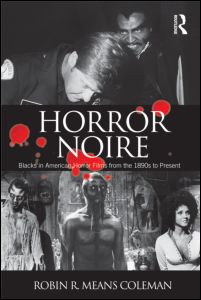
HorrorNoire I must be a glutton for punishment. My fascination with horror films grew more out of enjoying the unsettling mood these movies used to set. That creepy, shadowy world that resembles in such a degree my experience of the everyday world. Like most people I don’t enjoy being scared, and as a pacifist I find violence extremely distasteful. And yet, horror movies. I suppose they serve to remind me that no matter how bad things might seem, they could be worse. This fascination also accompanies reading about scary movies as well. Robin R. Means Coleman’s Horror Noire: Blacks in American Horror Films from the 1890s to Present is a fascinating study of how race perceptions have found expression in horror movies. As Coleman points out, it’s not a pretty picture. I suppose, however, that it could be argued that no one should want to find themselves the subject of a horror film. They tend to be a form of self-punishment, and, psychologically speaking, that makes a lot of sense.

African-American characters, I had noticed, in early horror films are portrayed as easily frightened and their reactions are used for comic effect. I still squirm when I see such representations in early movies: the cultural and racial arrogance rises like bile in the throat. What I hadn’t realized, however, is that the Black role in horror films is frequently tied to religion. Coleman makes this clear—from early films centering on African-American issues to Caucasian efforts to portray Blacks, religion is often the vehicle. Black films make a strong use of Christian themes, while White films not infrequently present Africans as purveyors of voodoo or some mysterious, and dangerous religion. This is a fascinating trend and it shows mixed perceptions of how religion is understood. Christians who dismiss the “superstition” of other faiths should have no fear of “false gods.” Yet it makes for great horror fare.

Despite their low-brow reputation, horror films are among the most successful genre of movies. Many people find them cathartic, I would guess. It is uncomfortable, however, to be faced with how race self-perception is embedded in such films. Like any artistic effort, movies reflect the values of those who write, produce, and direct them. At the same time they reinforce or even channel the expectations of the viewing public. Reading Coleman’s study, I was given a glimpse of the perception of one of my favorite genres from the perspective of “outsiders.” It is not always a comfortable place to be. Horror movies sometimes showcase terrors more frightful than the special effects and improbable beasts flashed upon the big screen. The realities of our own past can be the worst of monsters.


Winter’s Music

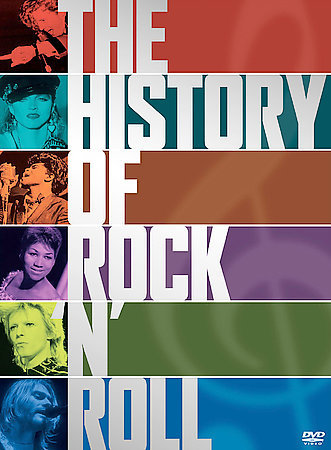
An editorial in this morning’s paper once again raised the question of whether we need a politically correct version of Huckleberry Finn or not. The story led me to recall the origins of rock-and-roll – not that Mark Twain was a rocker, but because I’d recently viewed the first installment of Time-Life’s History of Rock ‘n’ Roll. Both Huckleberry Finn and rock-and-roll owe a vast debt of gratitude to African-American culture, and both bear the scars of prejudice. An unfortunate aspect of life is that few people willingly subject themselves to hard labor when they realize an easier lifestyle is available (thus, Brave New World). This has been true since civilization began. With the advent of the Sumerians we begin to read about the slavery of war-captives. Even today, dressed up in fancy clothes, slavery of various degrees continues to persist. The reprehensible treatment especially of Africans for slavery is a heritage that will not easily be overcome. And yet American culture owes much to its African components.

While already in the back of my head, this was once again brought to the front by the “Rock ‘n’ Roll Explodes” episode of the Time-Life series. Now, being a musically deficient individual, I claim nothing particularly insightful here – my wife and daughter are the musically accomplished ones in this household – rock clearly has its roots in the blues and gospel. In the documentary Little Richard explains how rock was often simply music of the black churches transposed to secular clubs. Xenophobic “white” culture of the 1950s felt threatened by this catchy music and sought to disarm it. Calling it “race music” producers had the more popular songs covered by white singers such as Pat Boone. (His cover of “Tutti-Frutti” always makes me smirk.) The real element at work here was the prejudice against the other.

As a youth I recall literally throwing my rock albums in the trash because of a Fundamentalist tract that declared in no uncertain terms that it was the “Devil’s music.” I’d bought those albums with my own hard-earned money, but sacrificed them to save my soul. Little did I know that “Devil” was a code word for “African” in this fundie literature. Otherwise, why was it alright when Pat Boone (of The Cross and the Switchblade fame) sang the same song? Mistrust runs very deeply in monotheistic religions. Even today many branches of Christianity inveigh against the horrors of rock without acknowledging that the music has its roots in the cry for liberation on the part of slaves, as expressed in Christian worship. Civilization will always insist on retaining its slaves. At the very least modern western culture should say “thank you” for the unrequited gift of the musical voice of the twentieth century.