
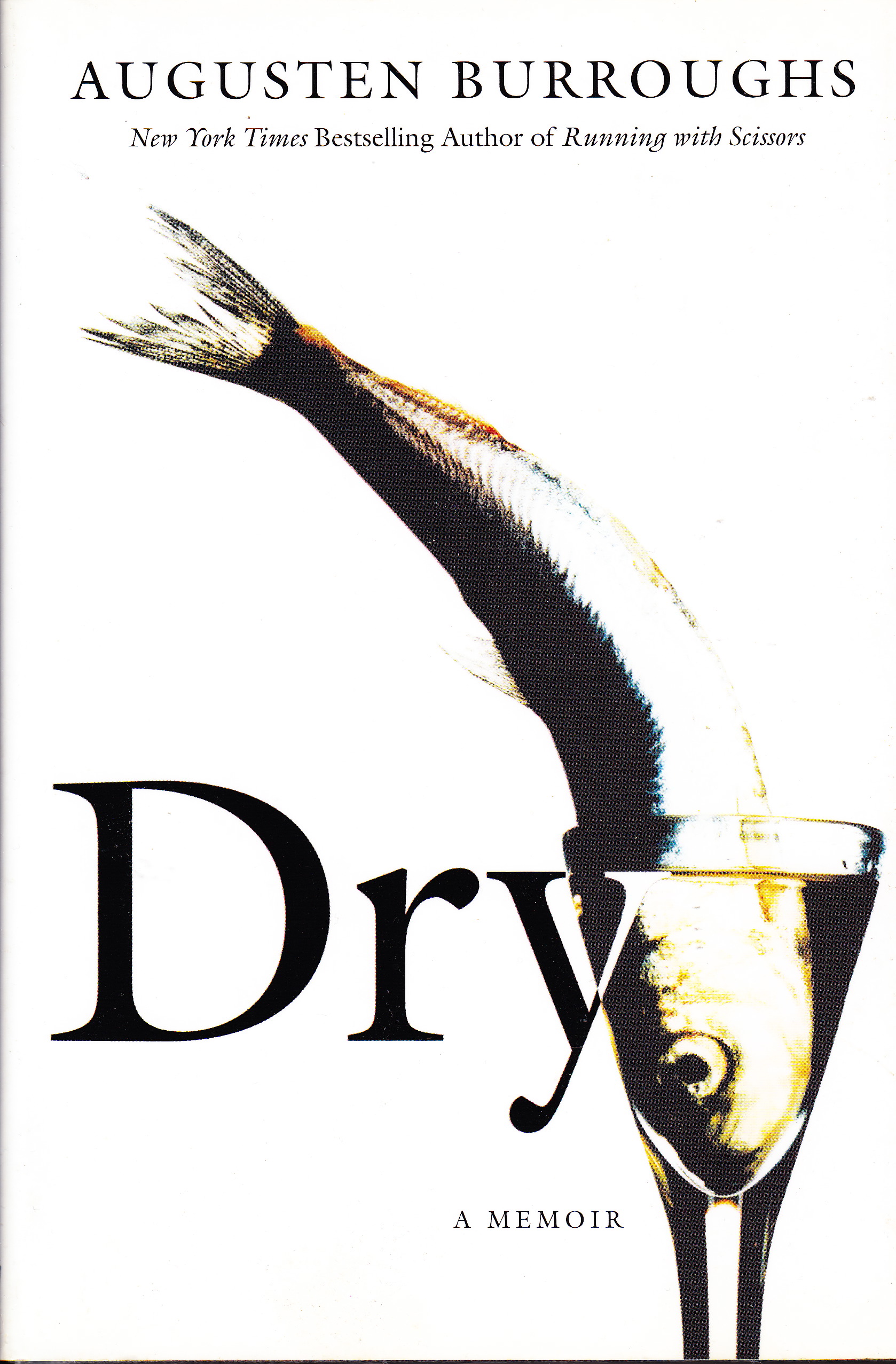
 Although I frequently, and unapologetically, express my opinions on this blog, I try not to reveal too much about myself. The books we read, however, are formative for who we are. Anyone looking over the hundreds of books on which I’ve posted over the last few years will have a reasonable idea about my inner life. One aspect I don’t often discuss is the fact that I grew up in an alcoholic household. It is difficult for me to discuss and I tend not to read about such things because it is too much like therapy and I end up feeling pretty lousy afterwards. Nevertheless, a friend who is a recovering alcoholic gave me a copy of Augusten Burroughs’s memoir Dry a few years back. Guilt at not having ever read it caught up with me and so I decided to make an honest friend of myself. Despite the very clever language and some laugh-out-loud moments, it was hard for me to read. Time flew by as I had the book open, but too much turmoil attended it.
Once I attended an Al-Anon session. This was a seminary assignment; we were to observe and take notes and write up a report for a sociology of religion class. Instead, I found myself participating. I know recovering alcoholics who dislike Al-Anon—it is an organization for families of alcoholics—because it can be judgmental. The fact is, however, that those who are part of an alcoholic family do suffer. I didn’t go back to Al-Anon, and I religiously avoid self-help books. I do know, nevertheless, that my outlook was profoundly shaped by my youngest years and the insecurity that dogs me every day of my life has its origins then. I also thought about how memoirs of alcoholics can become bestsellers. The jacket blurbs say how funny they are. I don’t hear so much about memoirs of those who were collateral victims. Don’t get me wrong—I’m not blaming alcoholics. Alcoholism is a disease. It may be treatable, but it is tragic for those afflicted with it. That doesn’t diminish the impact of having to live with it when you’re too young to have a choice.
When I was in college an erstwhile friend took me to see Arthur. Dudley Moore was rocking the critics with his performance. I smiled through my horror. There was nothing here to laugh at. So a book like Dry makes me feel…? Conflicted. What do I understand now that I haven’t before? I read about how even prestigious colleges are increasingly renowned for their parties, lurching about under their laurels. Some will experience it as a temporary fling and will move on. Some will never graduate. What can be done? We can listen. I suppose that’s why my friend gave me the book in the first place. I need to put aside my pain and fear. I need to listen.
The Power of Magic
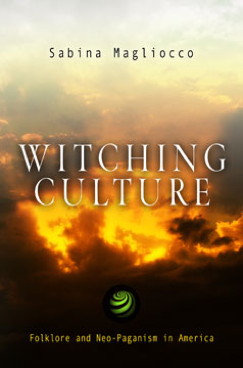 Open-minded academics are somewhat hard to find much of the time. This stands to reason when jobs are already rare and having a reputation for thinking outside the box frequently equals thinking outside the academy. I am always pleased, therefore, to find unconventional works by credentialed authors. I just finished reading Sabina Magliocco’s Witching Culture: Folklore and Neo-Paganism in America. Magliocco takes head on the dilemma that non-empirically verified experiences sometimes do happen. Of course, Paganism accepts that as a matter of course, and Magliocco notes that many Pagans hold advanced degrees in the sciences and some even have university posts. Experiences have a way of defying the rules. Most of us have had a bizarre coincidence or uncanny occurrence or two transpire in our lives. We are trained, via our scientific worldview, to shake our heads and try to dismiss it. Magliocco pauses to wonder if we’re perhaps being too hasty.
Sabina Magliocco is an anthropologist with a legitimate doctorate and a university post. Witching Culture is largely an analytical study of Paganism, but it also allows for the possibility that experiential knowledge might complement academic knowledge. This remains a debated issue among specialists: who can really know a phenomenon objectively? Many argue that empirical data reveal the truth of the matter, but truth remains a slippery concept. At the opposite debating table sit the smaller coterie that argue that you can’t study magic until you’ve experienced it firsthand. The debate does not divide along even lines and this is reflected in society at large. We accept the utility of science, but many still pray for divine intervention. Specialists in religion fear to take sides—after all, jobs are hard to find and increasingly harder to keep.
Fully aware that the modern Pagan movement is a revival movement following the hiatus of Christendom in Europe, Magliocco nevertheless admits to being a practitioner. Fascinating her readers with first-hand accounts of mystical experiences, she draws back to try to analyze what has just happened. And she tells us so. Years ago, as part of a seminary assignment, I attended an Al-Anon meeting as an observer. I am, however, the adult child of an alcoholic and when the circle came around to me I confessed to being both an observer and a person seeking healing. It was a difficult place to be, so I respect what Sabina Magliocco is offering us here. Anthropologists increasingly doubt the possibility of pure objectivity, and even physicist Werner Heisenberg realized that to observe is to be part of the experiment. And so are we all.
 Steve A. Wiggins